






Abstract
Calcium copper titanate (CaCu3Ti4O12; CCTO)/polyimide (PI) composite films were synthesized by 4,4′-oxydianiline, CCTO, and 3,3′,4,4′-biphenyltetracarboxylic dianhydride through ultrasonic dispersion in situ polymerization. Scanning electron microscopic images clearly confirmed that 10 wt% CCTO particles dispersed uniformly in composite films. When the content was 20–80 wt%, CCTO particles were coated by PI in good condition, and globular particles dispersed in the composite films. PI and CCTO/PI were found to exhibit excellent thermal stability. The addition of CCTO has influence on the thermal properties of PI. Weight loss temperatures (5% and 10%) of the composite films containing 70 wt% CCTO reached 612°C and 673.9°C, respectively. The strong interfacial interaction between PI and CCTO improved the dielectric properties of the composite films. The dielectric permittivity and conductivity of the CCTO/PI composite films increase with the increase of CCTO content. In addition, the dielectric permittivity of films containing 40–70 wt% increased rapidly.
Introduction
With the rapid development of the electronics industry, people demand more from materials. A single material cannot meet all the requirements, electronic materials should have characteristics such as being smaller, lighter, thinner, and with lower cost. While capacitors in the market cannot meet present standards, high dielectric composite films have attracted extensive attention 1,2 because of their high relative dielectric permittivity and low dielectric loss. 3
The way to enhance the dielectric constant of composites is to use dielectric materials with barium and lead, such as barium titanate, 4,5 lead zirconate titanate. 6,7 However, dielectric constants of materials are greatly influenced by temperature. So, people have switched attention to calcium copper titanate (CaCu3Ti4O12; CCTO), which has a body-centered cubic perovskite structure. 8,9 Researchers paid attention to the exploration of CCTO as a filler due to its high permittivity even over 105, and its dielectric constant did not vary with temperature changes. 10 –12 CCTO belongs to the ACu3Ti4O12 family (where A = Ca, Cd), which has been extended to the general formula, (AC3)(B 4)O12, where A = Ca, Cd, Sr, Na, or Th; B = Ti or (Ti + M5+, in which M = Ta, Sb, or Nb; and C = Cu2+or Mn3+). 13,14
By suitable incorporation of inorganic nanoparticles with matrix polymer, one could obtain new materials with excellent performance. This is why CCTO/polymer composites have attracted much attention. Thomas et al. 15 synthesized CaCu3Ti4O12/polyaniline (PANI) composites via in situ polymerization, and the dielectric constant increased as the CCTO content increased in PANI but decreased with increasing frequency (100 Hz–1 MHz). The dielectric loss is two times less than the value obtained for pure PANI around 100 Hz. Yang et al. 16 discussed that CCTO has an effect on the dielectric behavior of CCTO/polyvinylidene fluoride composites. Microsized CCTO may be suitable for embedded device applications, while the one with nanosized CCTO is probably applicable in temperature sensor. Polyimide (PI) is a kind of good polymer with high temperature resistance, film-forming performance, and mechanical properties. 17,18 It has been applied in high-tech fields. PI has comprehensive performance and is also a good high dielectric constant of polymer matrix. PI/CCTO composite film has high dielectric permittivity and good thermal stability. 19,20 However, the aggregation of nanoparticles is likely caused by its high energy on the surface and its instability. 21
The simple method is solution polymerization. 22,23 However, the breakdown strength of the composite film was low using this method, which greatly reduces its application. To remedy surface defect and improve the dispersion level of CCTO in composites, a new method of ultrasonic dispersion in situ synthesis of CCTO/PI composites was used in this experiment.
Experimental
Materials
The materials, 3,3′,4,4′-biphenyl tetracarboxylic dianhydride (BPDA) and 4,4′-oxydianiline (ODA) were supplied by Hebei Academy of Science (China). CCTO was supplied by Shang Hai DianYang Industry Co. Ltd (China). ODA was placed in a vacuum oven for 2 h at 130°C. BPDA was dehydrated in a vacuum oven at 200°C for 8 h. N, N′-Dimethylacetamide (DMAc, Tianjin Yongda Chemical Reagent Company Limited) was dehydrated by molecular sieve before use.
Synthesis of PI
First, the precursor of PI was prepared by reacting ODA (0.0105 mol, 2.1 g) with BPDA (0.0102 mol, 3 g) at room temperature for 4 h under nitrogen atmosphere. Then, the suspension solution was cast onto a glass plate, and after step curing (1 h at each temperature of 100°C, 200°C, and 300°C), PI was obtained.
Synthesis of CCTO/PI
ODA (0.0105 mol, 2.1 g) was dissolved in DMAc (30 mL), and CCTO was dispersed in the system by sonication for 1 h. BPDA (0.0102 mol, 3 g) was added to the system under nitrogen atmosphere and magnetic stirring for 4 h. Suspension solution was cast onto a glass plate, and after step curing (1 h at each temperature of 100°C, 200°C, and 300°C), the CCTO/PI composite film was obtained.
Characterization
Fourier transform infrared (FTIR) spectra of the products were collected on a Nicolet 6700/Fourier transform–Raman modules (ThermoFisher, Waltham, Massachusetts, USA). The sample structure was characterized using X-ray diffraction (XRD;D/MAX-2500, Rigaku Co. Tokyo, Japan) with copper K α radiation operated at 40 kV and 40 mA. Scanning electron microscope (SEM) was used to measure the surface morphology of the composites. The thermal properties of the samples were determined by Sta449C Netzsch (Germany) thermogravimetric analyzer under nitrogen atmosphere, and the temperature was raised to 900°C at 10°C min−1. The capacitance and dielectric loss performance of the samples were determined by LCR bridge (TH2828A). First, the capacitance and dielectric loss of samples under different frequencies (100 Hz–1MHz) were measured through contact electrode, and then dielectric constant was calculated. The disruptive strength of the composite films was collected using a withstand voltage tester (MS2671B).
Results and discussion
FTIR analysis
Figure 1 presents the FTIR spectra of polyamide acid (PAA) and PI. The C–N stretching vibration at 1547 cm− 1 disappeared gradually with increasing temperature, and the characteristic absorption peaks of C=O in the imide group near 1771, 1703, and 736 cm− 1 and C–N stretching at 1370 cm−1 appeared. These results suggest that PAA was successfully dehydrated to form PI.
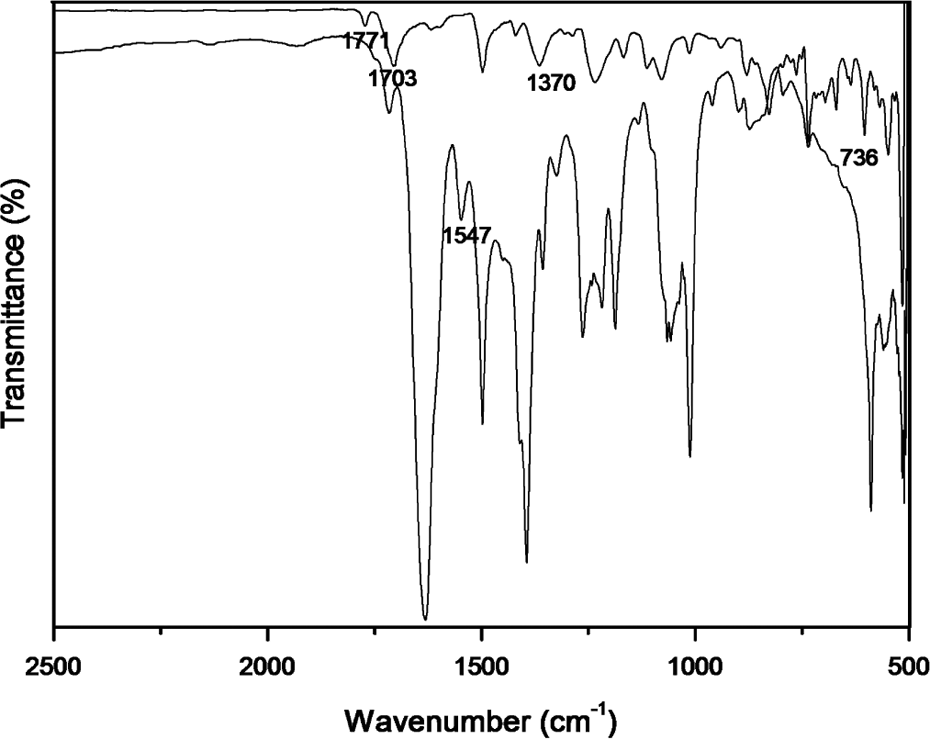
FTIR spectra of PAA and PI. FTIR: Fourier transform infrared; PAA: polyamide acid; PI: polyimide.
XRD studies
XRD curves of pure PI, CCTO, CCTO/PI composite films are shown in Figure 2. In Figure 2(a), the broad peak at about 2θ = 19° is the pure PI, and the XRD pattern obtained for the composite is depicted in Figure 2(b). It is evident from the figure that the peaks corresponding to CCTO being dominant. In Figure 2(c), the peaks are consistent with the peaks of the pure CCTO. The peak at 19° in the composite (80 wt% PI + 20 wt% CCTO) always exists in comparison with the pure PI.
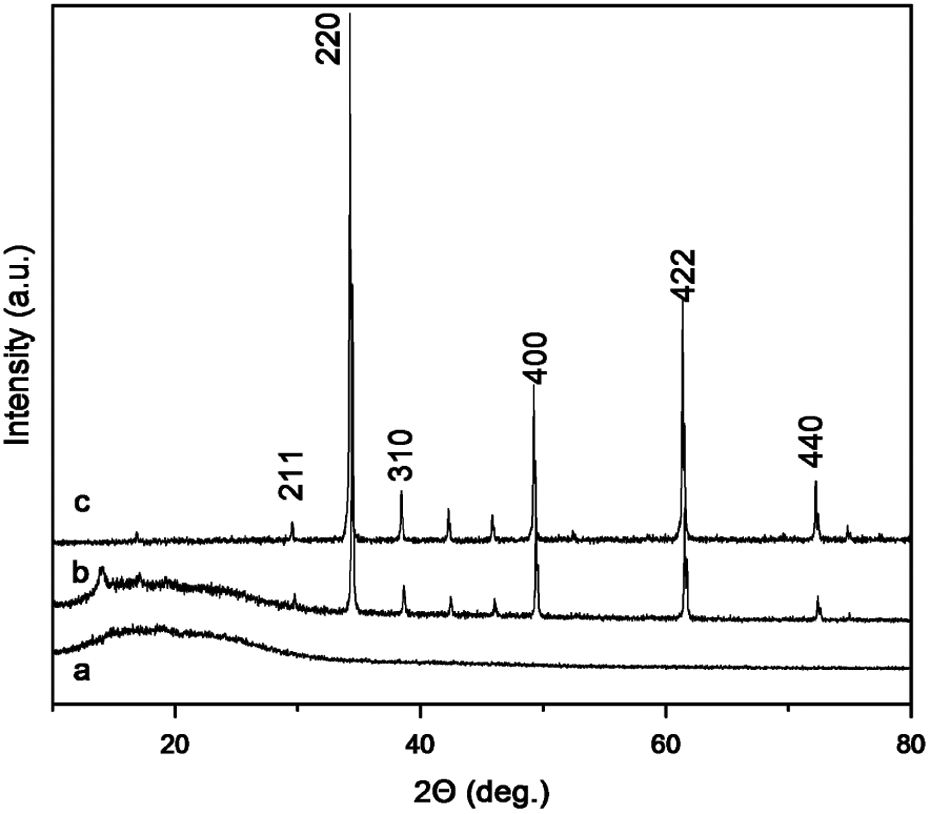
The XRD diffraction pattern for (a) PI, (b) 80 wt% PI + 20 wt% CCTO, (c) CCTO. XRD: X-ray diffraction; PI: polyimide; CCTO: calcium copper titanate.
SEM observations
To improve the performance of breakdown strength, through ultrasonic dispersion make up for the membrane surface defects of composites. SEM was performed to observe the microstructure of CCTO/PI composites. Figure 3 shows the morphology of CCTO/PI composite films containing 10, 30, 50, 60, 70, and 80 wt% CCTO, respectively. SEM images clearly confirmed that 10 wt% CCTO particles dispersed uniformly in the composite film. When the content is 20–80 wt%, CCTO particles were coated by PI in good condition and globular particles dispersed in the composite films. The different content of CCTO nanoparticles dispersion is relatively homogeneous in the material, with no obvious aggregation phenomenon, thereby largely attributing to ultrasonic dispersion in situ polymerization.
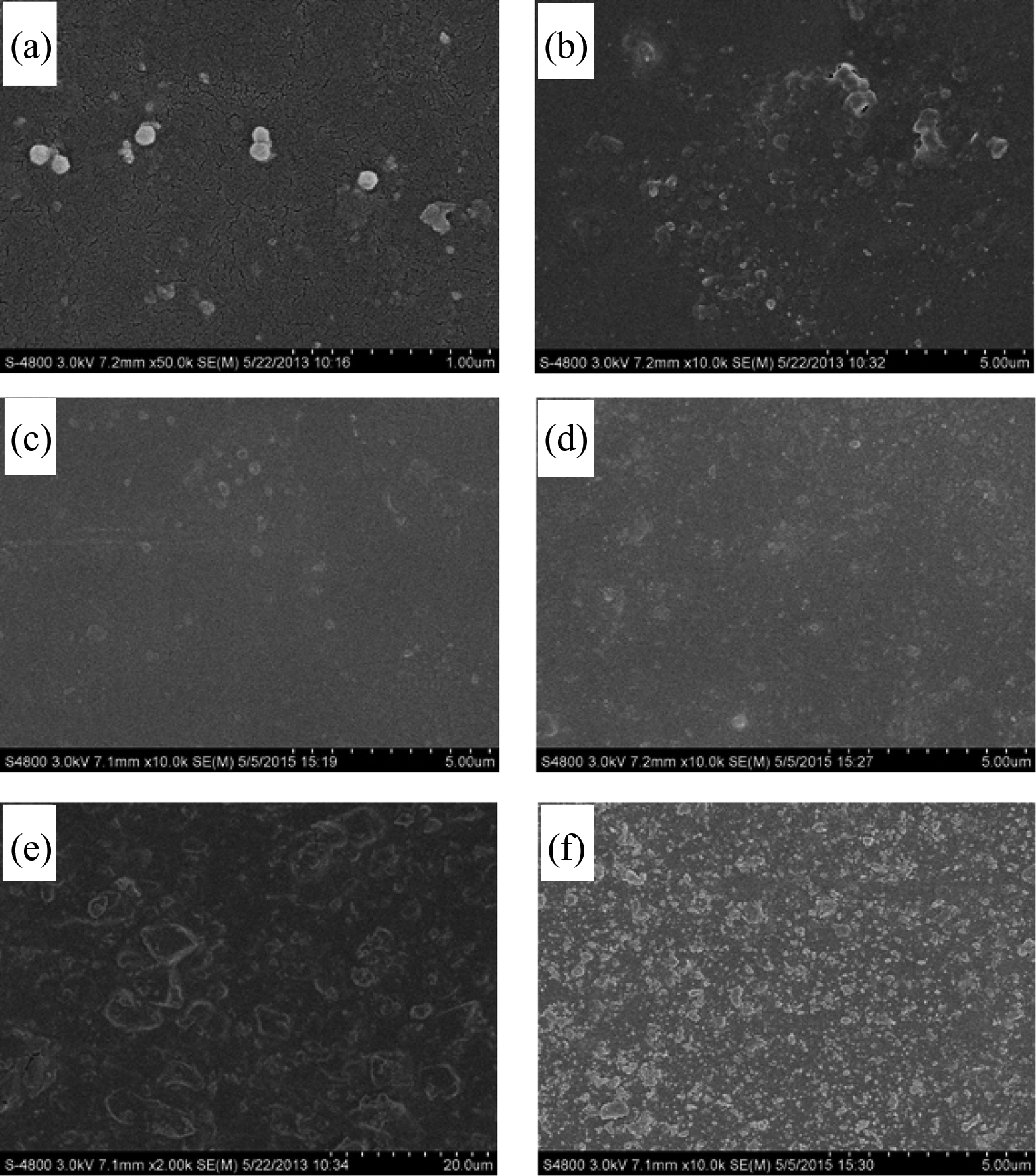
Morphology of CCTO/PI composite films containing (a) 10 wt%, (b) 30 wt%, (c) 50 wt%, (d) 60 wt%, (e) 70 wt%, and (f) 80 wt% CCTO. CCTO: calcium copper titanate; PI: polyimide.
Thermogravimetric analysis
Thermogravimetric analysis results of the PI and CCTO/PI composite films are shown in Figure. 4. The results show that all composites have high thermal stability, and the starting decomposition temperatures are up to 500°C. With the increasing CCTO content, the weight loss temperature (5% and 10%) is significantly increased. The weight loss temperature (5% and 10%) of composite films containing 70 wt% CCTO reached 612°C and 673.9°C, respectively.
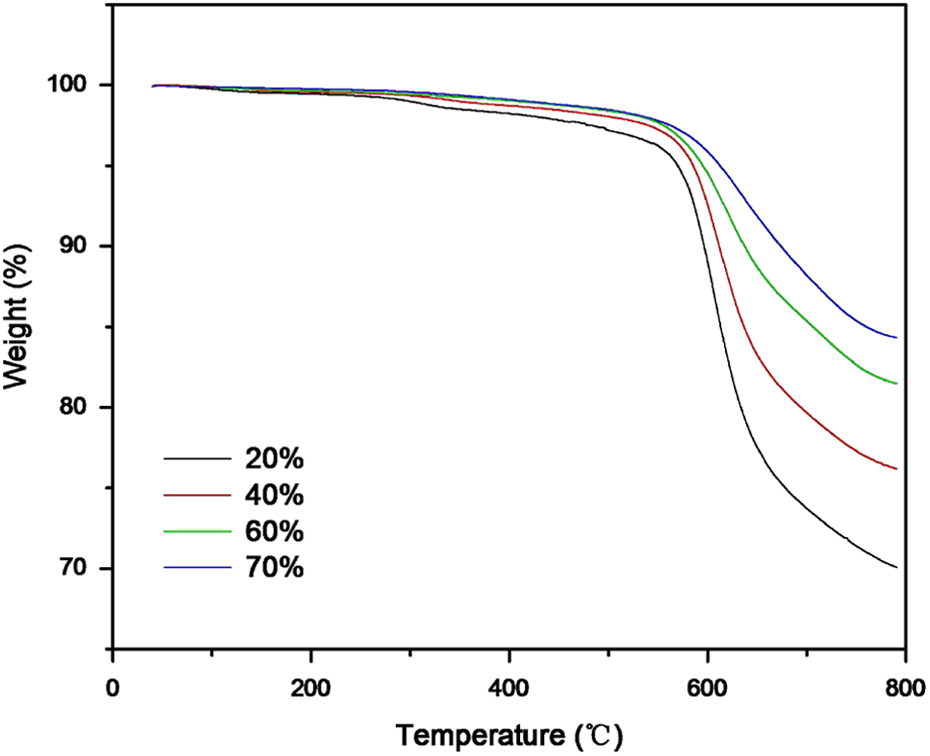
TGA curves of the PI and CCTO/PI composite films. TGA: thermogravimetric analysis; CCTO: calcium copper titanate; PI: polyimide.
Dielectric properties
CCTO mass fraction
The dielectric permittivity of composite films containing 10–70 wt% was tested in 100 Hz, the results of which are shown in Figure 5. Along with the increase in CCTO content, the dielectric constant of composite films continuously increased. In general, pure PI has little dielectric constant, while the dielectric constant of CCTO (20,000) is much higher than that of PI. The dielectric permittivity of CCTO/PI composite films containing 0–30 wt% CCTO increases slowly. While with increasing CCTO, CCTO turned into major components, PI-transformed filler. So, the dielectric permittivity of films containing 40–70 wt% increased rapidly.
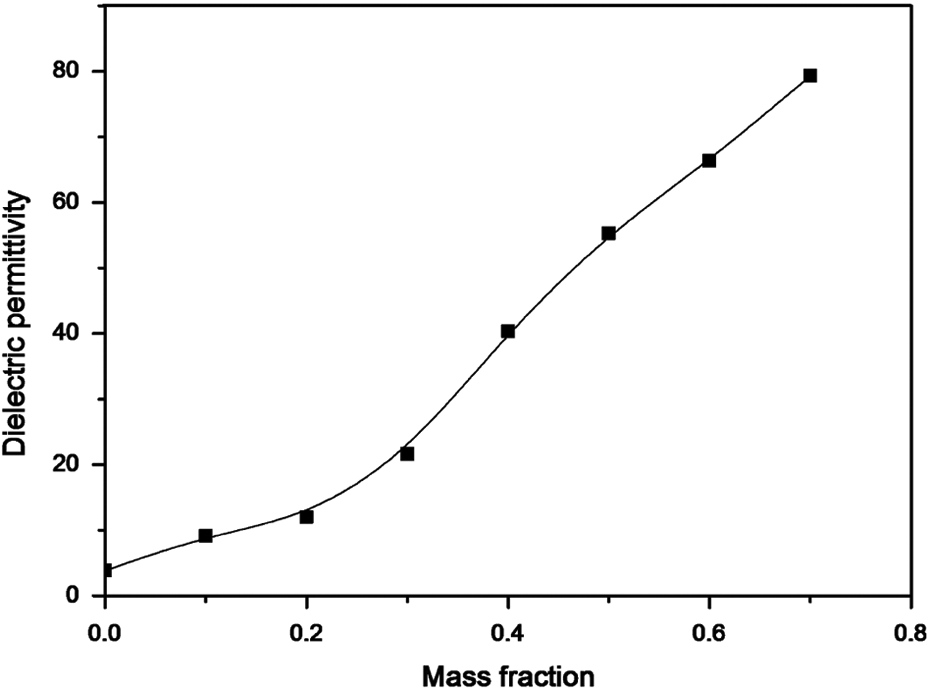
The relationship between dielectric permittivity and CCTO content. CCTO: calcium copper titanate.
Similarly, we have measured the relationship between conductivity and mass fraction at 100 Hz. As shown in Figure 6, the conductivity of composite films increases with the increase in CCTO content. Performance was reflected by the conductivity of material with the addition of CCTO, the electron of the composites was gathered on the surface to make interfacial polarization. Thus, the conductivity of composite films has significantly increased.
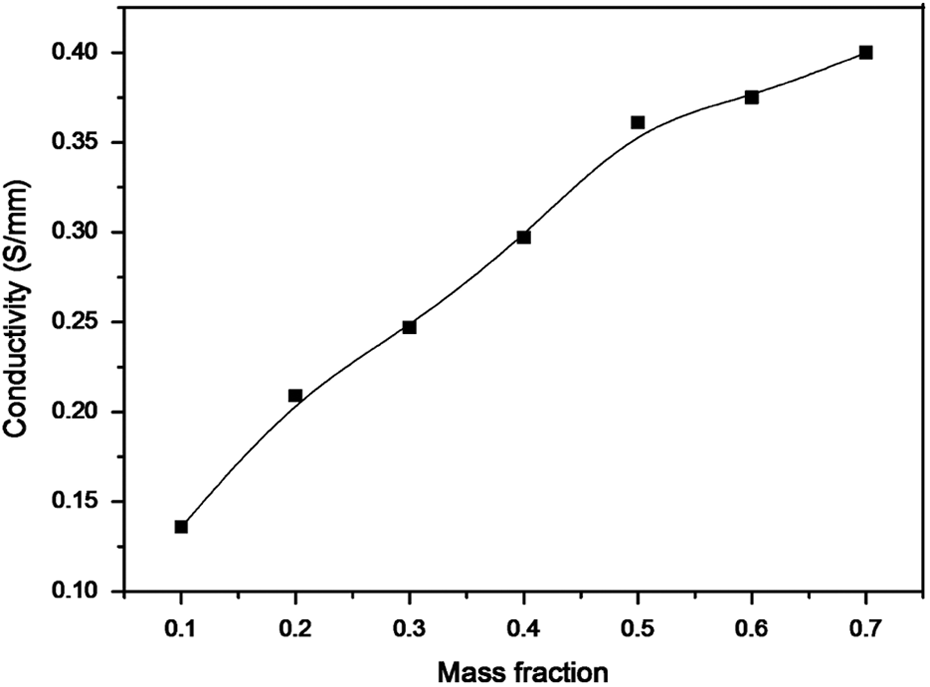
The relationship between conductivity and CCTO content. CCTO: calcium copper titanate.
Figure 7 shows the variation of loss tangent as a function of the mass fraction. With an increase in dopant concentration, loss tangent also showed an increase. This phenomenon was attributed to the leakage waves made by CCTO that influenced the dielectric loss of composite films.
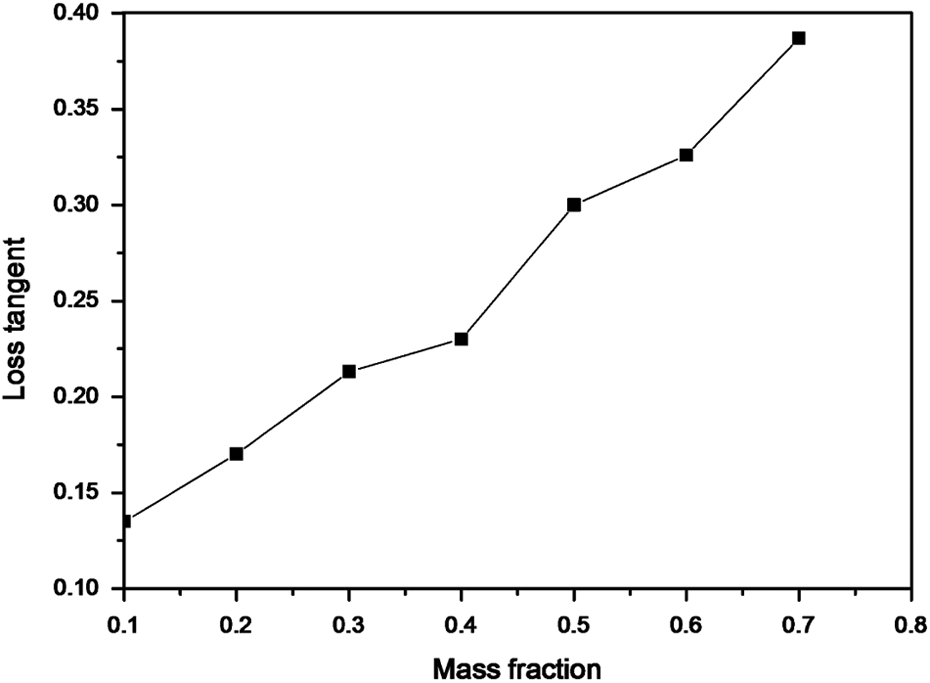
The relationship between loss tangent and CCTO content. CCTO: calcium copper titanate.
Frequency
The frequency dependence of the dielectric permittivity and the dielectric loss of composite films are shown in Figures 8 and 9, where dielectric permittivity and dielectric loss of CCTO/PI composite films decreased with the increase in frequency. When CCTO content is low, the dielectric performance of composite films is almost not influenced by frequency. When CCTO content is higher, the dielectric constant and loss tangent of CCTO/PI composite films rapidly decrease with the increase in frequency.
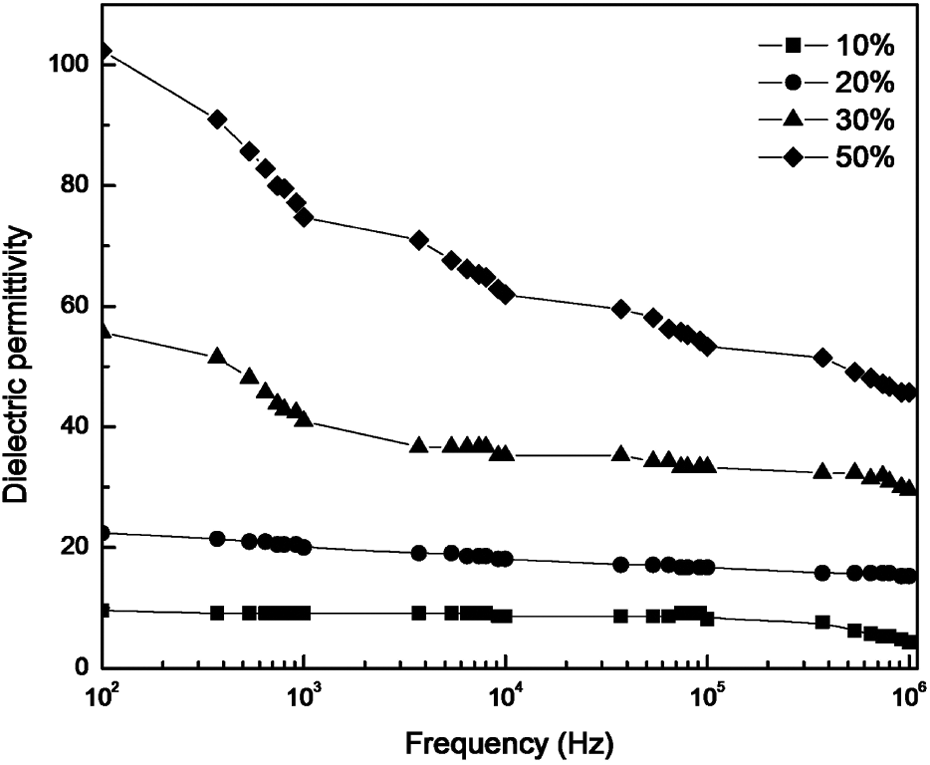
Dielectric permittivity of CCTO/PI for different frequency. CCTO: calcium copper titanate; PI: polyimide.
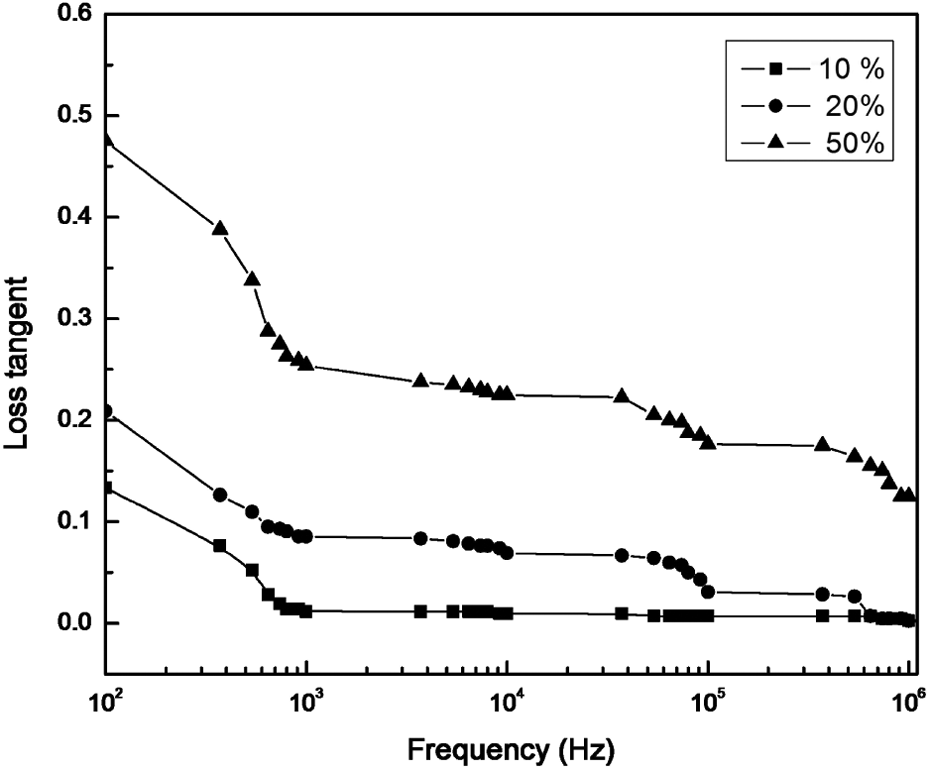
Loss tangent of CCTO/PI for different frequency. CCTO: calcium copper titanate; PI: polyimide.
Figure 10 shows the conductivity of composite films at different frequencies and with different CCTO contents. The conductivities of composite films containing 10, 20, and 50 wt% CCTO have changed minimally as frequency was less than 105 Hz. The conductivity of composite films containing 50 wt% CCTO increased rapidly in the range of 105–106 Hz. It is probably relevant to the smaller space formed between the nanoparticles that makes the conductive network.
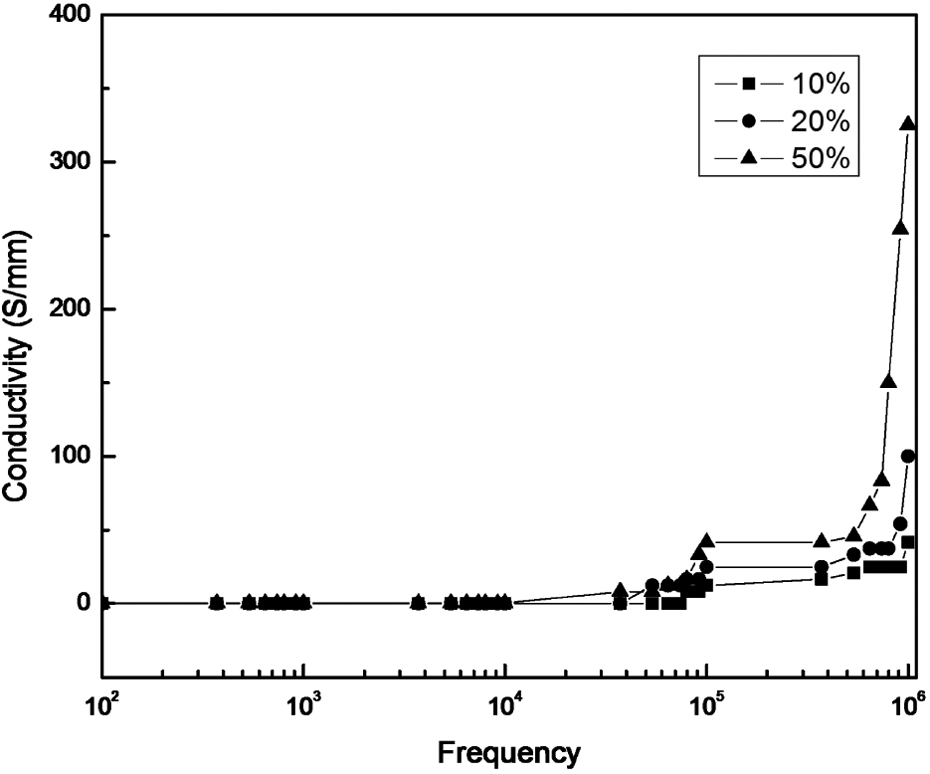
Conductivity of CCTO/PI for different frequencies. CCTO: calcium copper titanate; PI: polyimide.
Disruptive strength
To study the disruptive strength of the composite films, puncture voltage measurements were conducted. With the method of slowly rising pressure, breakdown voltage (U) of the composite membranes was measured, and disruptive strength is calculated using the following equation:

where E b is the disruptive strength, U b is the breakdown voltage, and d is the thickness of the composites.
Figure 11 shows a curve of the disruptive strength of the PI/CCTO composites. When the disruptive strength of pure PI film is about 100 kV mm−1, the breakdown strength of composite films significantly decreases with the increase in CCTO particle content. Because CCTO nanoparticles are regarded as rigid particles, it is easy to produce holes or shortcomings. Therefore, even if there are only a few defects, the breakdown strength of composite films can still be reduced.
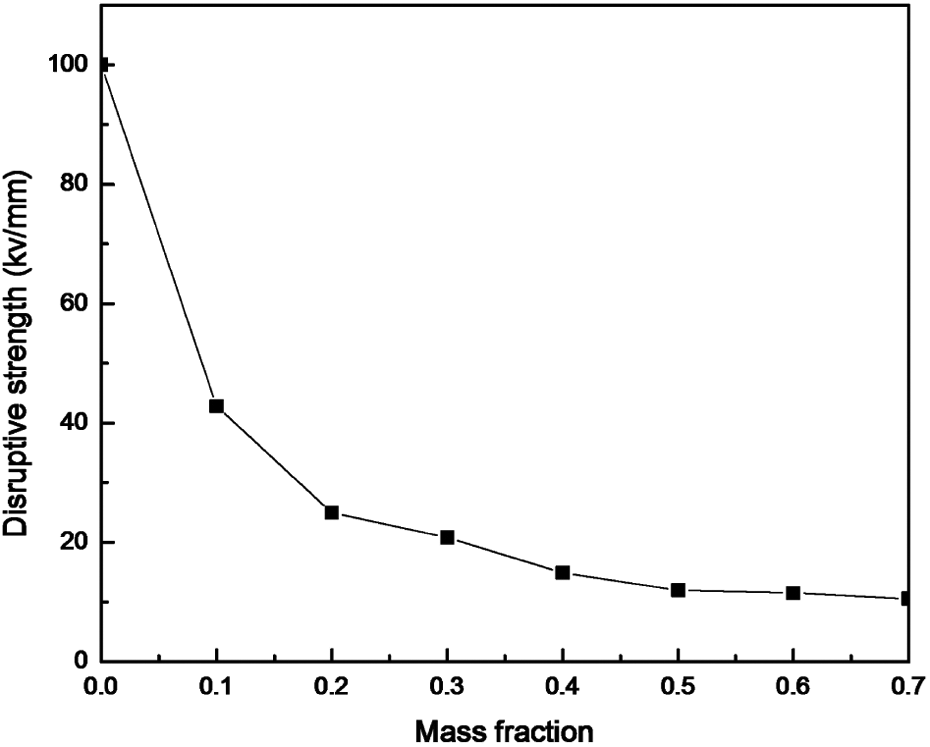
The relationship between disruptive strength and CCTO constant. CCTO: calcium copper titanate.
Conclusions
SEM images clearly confirmed that 10 wt% CCTO particles dispersed uniformly on the composite film. When the content is 20–80 wt%, CCTO particles were coated by PI in good condition, and globular particles dispersed in composite films. PI and CCTO/PI were found to exhibit excellent thermal stability, and the addition of CCTO is beneficial to the enhancement of the thermal properties of PI. The strong interfacial interaction between PI and CCTO improved the dielectric properties of composite films. The dielectric properties and conductive performance were enhanced due to the good performance of the CCTO. When the disruptive strength of the pure PI film is about 100 kV mm−1, the breakdown strength of composite films significantly decreases with the increase in CCTO particle content.
Footnotes
Declaration of Conflicting Interests
The author(s) declared no potential conflicts of interest with respect to the research, authorship, and/or publication of this article.
Funding
The author(s) received no financial support for the research, authorship, and/or publication of this article.