







Abstract
Carbon nanotubes (CNTs) are difficult to be dispersed into a polymer matrix. For effective reinforcement, the strong interfacial interaction between nanotubes and the matrix is essential to donate the efficient thermal transfer from the matrix to nanotubes. In this study, multiwalled carbon nanotubes (MWCNTs) were modified with glucose and fructose carbohydrates as biomolecules to obtain Gl-MWCNTs and Fr-MWCNTs. Good water solubilization of MWCNTs was obtained, and these hybrids were expected to be biocompatible. Functionalized MWCNTs were incorporated into a poly(amide–imide) (PAI) matrix-containing alanine through a simple ultrasonication-assisted solution blending procedure. Then, it was tried to compare the obtained nanocomposites morphologically and thermally to study the compatibility between PAI matrix with Gl-MWCNTs and Fr-MWCNTs. Surface morphology observations suggested strong interfacial adhesion between the functionalized MWCNTs and the PAI matrix. This leads to homogeneous distribution of nanotubes throughout the matrix. Significantly better thermal properties of PAI were achieved by introducing Gl-MWCNT into the PAI matrix than that was achieved by similar incorporation of Fr-MWCNTs.
Keywords
Introduction
Carbon nanotubes (CNTs) are one or more concentric cylindrical graphite empty tubes that may be cylindrical in shape with several micrometer long and diameters as small as a few nanometers. 1,2 The combination of CNT properties, such as excellent mechanical, electrical, and thermal features with very low densities, suggests that CNTs with small quantity are ideal fillers for the high-performance CNT/polymer nanocomposites (NCs). 3,4
Surface functionalization of CNTs is performed mainly for two reasons. First, CNTs tend to form tight bundles that present a serious limitation to their properties. One of the main problems in CNT composite research is to achieve a suitable distribution of the reinforcing agent. 5,6 Second, modification may provide compatibility with a matrix. For example, the compound, which has been proposed as a CNT-based sensor, can interact with the molecules surrounding the CNT. 5,7 The connection of molecules to the surface of CNT can be by covalent bonding or by a non-covalent interaction. The best stability of the functionalized nanotubes will be achieved through covalent bonding. Covalent bonding offers the capability of functionalization and reducing leaching. 8 Surfactants, polymers, oligonucleotides, and biomolecules can be attached to the surface of CNTs. Thus, surface functionalization causes increase in the dispersion ability of CNTs and decreases their cytotoxicity. 9
Glucose is a simple aldosic monosaccharide found in plants and also known as D-glucose, dextrose, or grape sugar. The cells use it as a secondary source of energy and a metabolic intermediate so it is an important carbohydrate in biology. Fructose also known as D-fructose or levulose is an isomer of glucose. Both have the same molecular formula (C6H12O6) but with a different structure. 10,11
The characterization and functionalization of multiwalled CNTs (MWCNTs) with D-glucose and D-fructose to generate adducts (Gl-MWCNT and Fr-MWCNT) are described here. There are many research works about surface functionalization of nanotubes with different organic molecules. In this study, carbohydrates were used for the surface functionalization of nanotubes because they are safe and green molecules. The use of biomolecules is worthwhile and can decrease the environment pollution. On the other hand, the introduction of several hydroxyl (OH) groups on the surface of nanotubes resulted in decreased intermolecular interactions, leading to better interaction of the polymer chains with carbohydrate-functionalized MWCNTs. Previously, Fr-MWCNT has been incorporated into an alanine-based poly(amide–imide) (PAI) matrix. 12 Here, novel alanine-based PAI/Gl-MWCNT NCs have been prepared. The influence of functionalization on dispersion of MWCNTs in the PAI matrix has been examined. The thermal stability of PAI/Gl-MWCNT and PAI/Fr-MWCNT compositions was evaluated and compared too.
Experimental procedure
Materials
The carboxylic acid-functionalized MWCNTs (CA-MWCNT; carboxyl content 2.56 wt% and purity >95 wt%) used in this work were purchased from Neutrino Co. (Iran). The outer diameter of CA-MWCNT was 8–15 nm, and it has an inner diameter of 3–5 nm with length of about 50 µm. D-Glucose, D-frucose, N,N-carbonyldiimidazole (CDI), N,N-dimethylacetamide (DMAc; d = 0.94 g cm−3 at 20°C) as solvent, tetra-n-butylammonium bromide and triphenyl phosphite were purchased from Merck Chemical Co. (Germany). These chemicals were used as received without further purification. Other reagents from commercial sources were used.
Characterization
MISONIX ultrasonic XL-2000 SERIES (Raleigh, North Carolina, USA) instrument was applied for this purpose. Fourier transform infrared (FTIR) spectroscopic measurements were carried out using a Jasco-680 (Tokyo, Japan) spectrometer. Pellets of potassium bromide were used for obtaining spectra of solids. X-Ray diffraction (XRD) was measured using a Philips X’Pert MPD (Eindhoven, Netherlands) with a copper (Cu) target (Cu Kαλ = 1.54 Å) at 40 kV and 35 mA in the range of 10–80° at the scan rate of 0.05°/min−1. Thermogravimetric analysis (TGA) was performed using STA503 Thermogravimetric analyzer system. Mass loss was monitored from 25°C to 800°C at a heating rate of 20°C min−1 in the presence of argon. Field-emission scanning electron microscopy (FESEM) images were obtained using a Hitachi S-4160 electron microscope instrument (Tokyo, Japan) after sample coating with gold. Transmission electron microscopy (TEM) analysis was carried out using a Philips CM 120 electron microscope (Germany) with an accelerating voltage of 150 kV.
Procedures
For the manufacture of PAI/Gl-MWCNT NCs, the following procedures were utilized. Firstly, PAI based on alanine was prepared as previously reported. 12 Secondly, the surface of CA-MWCNT was modified with D-glucose as a biomolecule as reported in our previous study. 13 Briefly, CA-MWCNT (50 mg) was dispersed in 10 mg mL−1 aqueous solution of CDI. After stirring the solution at room temperature for 2 h, D-glucose (100 mg) was added to the solution. The mixture was stirred at room temperature for 2 h and then ultrasonicated for 1 h. The solid was isolated by centrifugation, washed with deionized water, and dried at 60°C for 24 h for the removal of any unreacted residue carbohydrates. Finally, the Gl-MWCNTs (5, 10, and 15 wt% of PAI) were dispersed in 4 mL of DMAc and stirred for 2 h at 30–40°C. Then, dissolved PAI in DMAc was added to this solution. The mixture was stirred for 24 h and sonicated in water bath for 1 h. The solution was poured into an uncovered glass petri dish and was heated at 60°C for evaporation of the solvent. Also, CA-MWCNT was modified with D-fructose, and PAI/Fr-MWCNT NCs (5, 10, and 15 wt%) were prepared as previously described. 12
Results and discussion
MWCNT functionalization
There are two approaches to obtain covalent functionalization of CNTs: direct chemical functionalization, which involves direct attachment of functional groups to the graphitic surface; and the second approach known as the “defect chemistry method”, wherein the functional groups are connected to CNT-bound CAs. Actually, these CA groups act as the defect sites on the CNT surface. 14 Glucose and fructose are monosaccharides with five OH groups in their structure. Esterification of the primary OH groups of glucose and fructose molecules with the CA group of the CA-MWCNT’s surface in aqueous medium was served to attach these entities. The reaction was catalyzed by CDI. 15 The preparation way of Gl-MWCNT and Fr-MWCNT is illustrated in Figure 1.
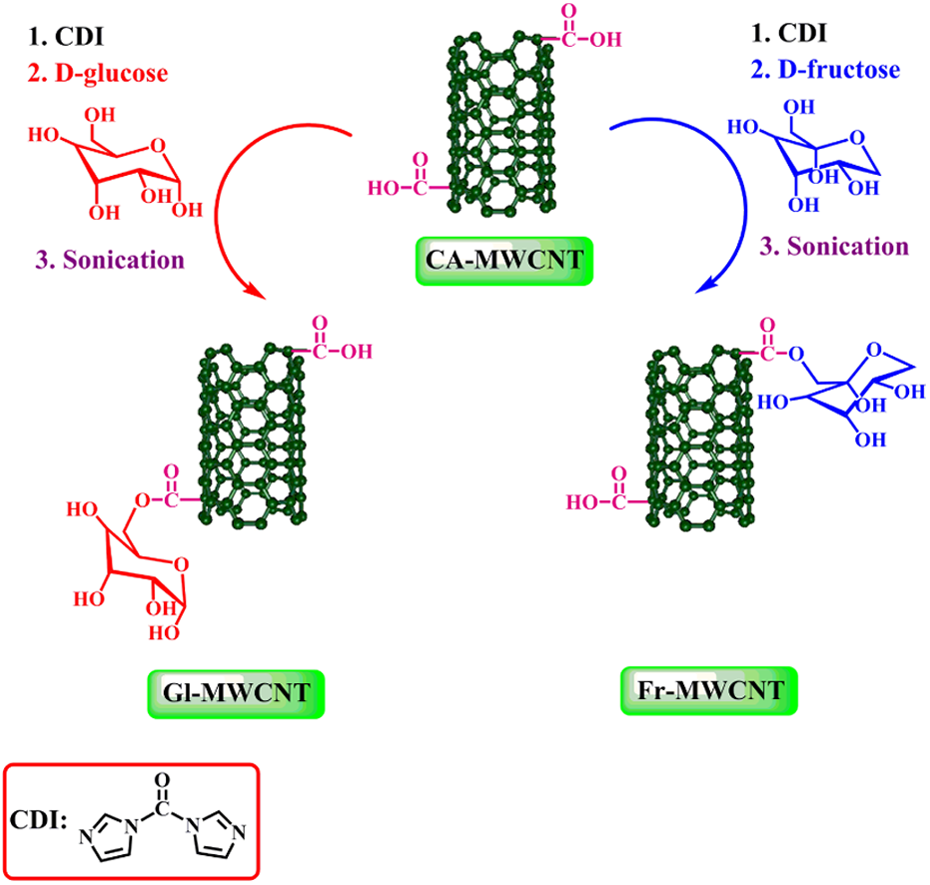
Schematic representation of functionalization processes of MWCNTs with
Polymer synthesis
The aromatic PAI containing alanine was optically active and soluble in various organic solvents with good thermal stability. 16 Polymers with optically active features have interesting applications as a chiral medium in asymmetric synthesis and chiral stationary phases in high-performance liquid chromatography for the resolution of racemic mixtures. The presence of amino acid as a biodegradable segment in the PAI backbone makes it more susceptible for better biodegradation process. 17
Preparation of NCs
The ultrasonication-assisted solution blending procedure was used for the preparation of PAI/Gl-MWCNT and PAI/Fr-MWCNT NCs. Dispersed CNTs in DMAc as a suitable solvent and PAI were mixed in solution. It is well recognized that the good dispersion of MWCNTs in a solvent by simple stirring is very difficult. Therefore, the obtained composites were sonicated after stirring to brreak down the aggregates and entanglements of CNTs effectively. 3 Furthermore, the presence of glucose and fructose molecules causes introduction of several –OH groups on the surface of MWCNTs. Thus, many hydrogen interactions could be resulted between the functional groups of PAI matrix, MWCNT-Gl and MWCNT-Fr. In this way, good dispersion of MWCNT will be attained in the PAI matrix.
Characterizations
Fourier transform infrared
The FTIR spectra of the CA-MWCNT,
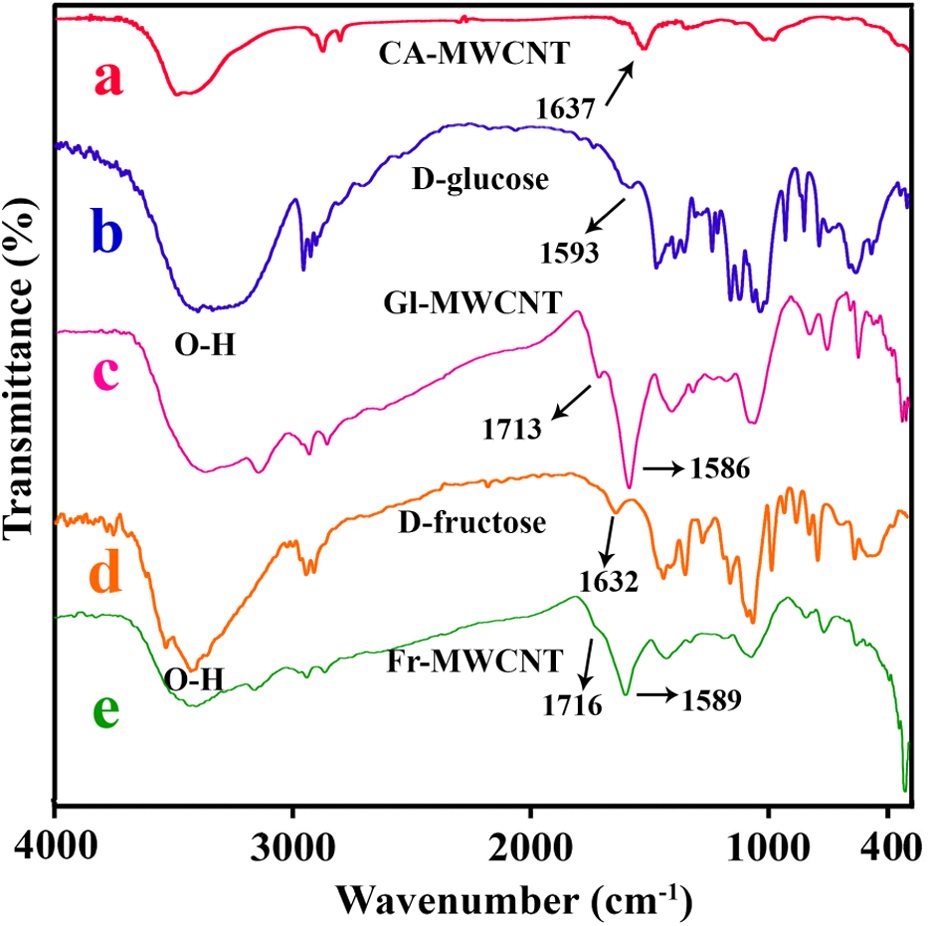
FTIR spectra of (a) CA-MWCNT, (b)
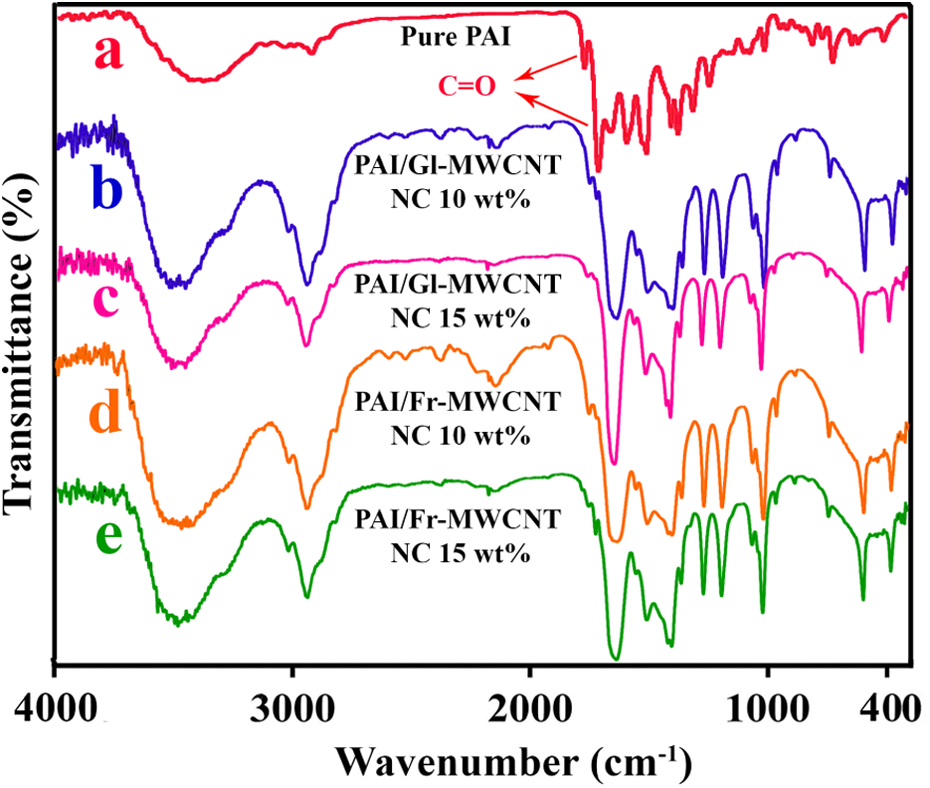
FTIR spectra of (a) pure PAI, (b) PAI/Gl-MWCNT NC 10 wt.%, (c) PAI/Gl-MWCNT NC 15 wt%, (d) PAI/Fr-MWCNT NC 10 wt% and (e) PAI/Fr-MWCNT NC 15 wt%. FTIR: Fourier transform infrared; PAI: poly(amide–imide); NC: nanocomposite; Gl-MWCNT: multiwalled carbon nanotubes with glucose modifier; Fr-MWCNT: multiwalled carbon nanotubes with fructose modifier.
Structural analysis
To determine the crystallographic structure of the inorganic constituent of the composite, XRD technique was applied. XRD patterns of CA-MWCNT, Gl-MWCNT, and Fr-MWCNT are presented in Figure 4. 12 The X-ray patterns of the CA-MWCNT displayed the (002) plane at 2θ = 26° associated with diffraction metal impurities and the peak at 2θ = 44° is corresponded to α-Fe (110) and/or Ni (111) diffractions which were in good agreement with the literature. 13,22 It could be distinguished that the XRD patterns of Gl-MWCNT and Fr-MWCNT are very similar to the CA-MWCNT. Figure 4 also shows XRD patterns of pure PAI, PAI/Gl-MWCNT NCs (10 and 15 wt%), and PAI/Fr-MWCNT NCs (10 and 15 wt%). A broad peak was observed for PAI which is derived from the amorphous phase region of its structure. The peaks appearing for the MWCNT and the pure PAI were observed in the X-ray patterns of all composites. Much lower diffraction intensity was detected for the composites containing Gl-MWCNT and Fr-MWCNT in comparison with the pure PAI. Similar results were obtained by Alhosiny et al. and Won-Chun Oh et al. 23,24 It confirms a homogeneous dispersion of functionalized MWCNT in the PAI matrix.
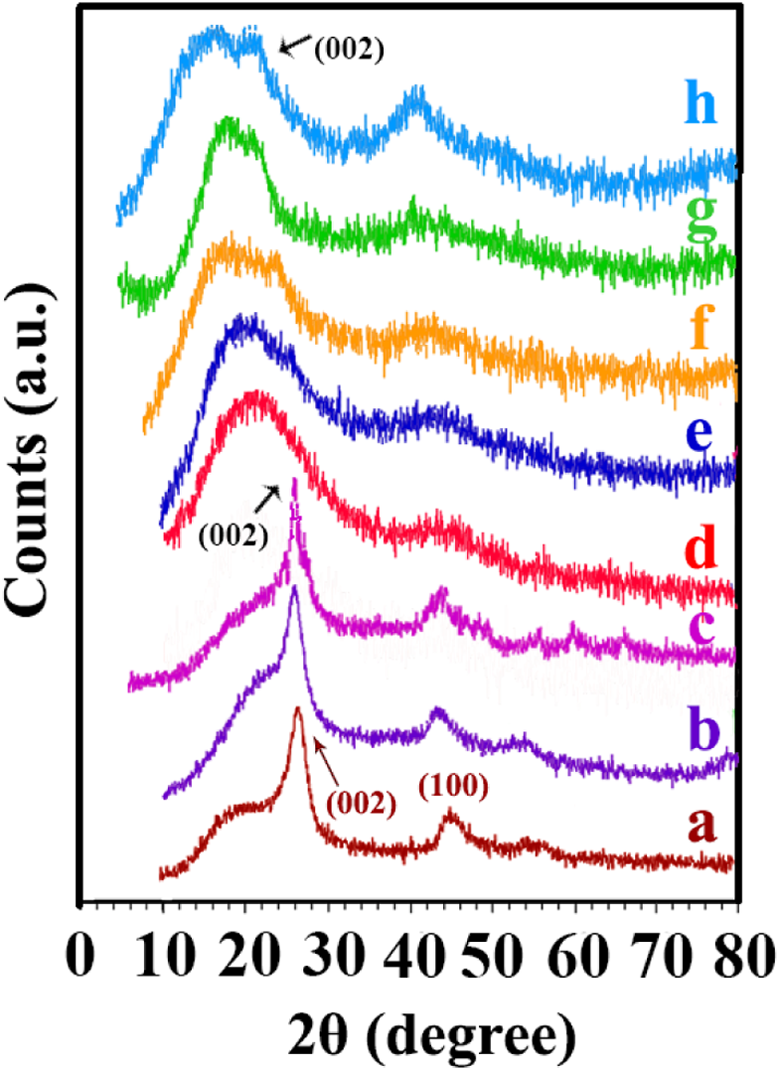
XRD patterns of (a) CA-MWCNT, (b) Gl-MWCNT, (c) Fr-MWCNT, (d) pure PAI, (e) PAI/Gl-MWCNT NC 10 wt%, (f) PAI/Gl-MWCNT NC 15 wt%, (g) PAI/Fr-MWCNT NC 10 wt%, and (h) PAI/Fr-MWCNT NC 15 wt%. XRD: X-ray diffraction; CA-MWCNT: carboxylic acid-functionalized multiwalled carbon nanotubes; Gl-MWCNT: multiwalled carbon nanotubes with glucose modifier; Fr-MWCNT: multiwalled carbon nanotubes with fructose modifier; PAI: poly(amide–imide).
FESEM observations
Figure 5(a) to (d) demonstrates FESEM micrographs of the pure PAI before and after sonication process. Pure PAI had a heart-like shape before sonication. PAI was sonicated for 1 h in ethanol solvent. It is interesting to mention that remarkable changes in size and shape of polymer were observed after sonication as can be seen in Figures 5(c) and (d). Generally, the size of PAI particles got smaller under ultrasonic irradiations.
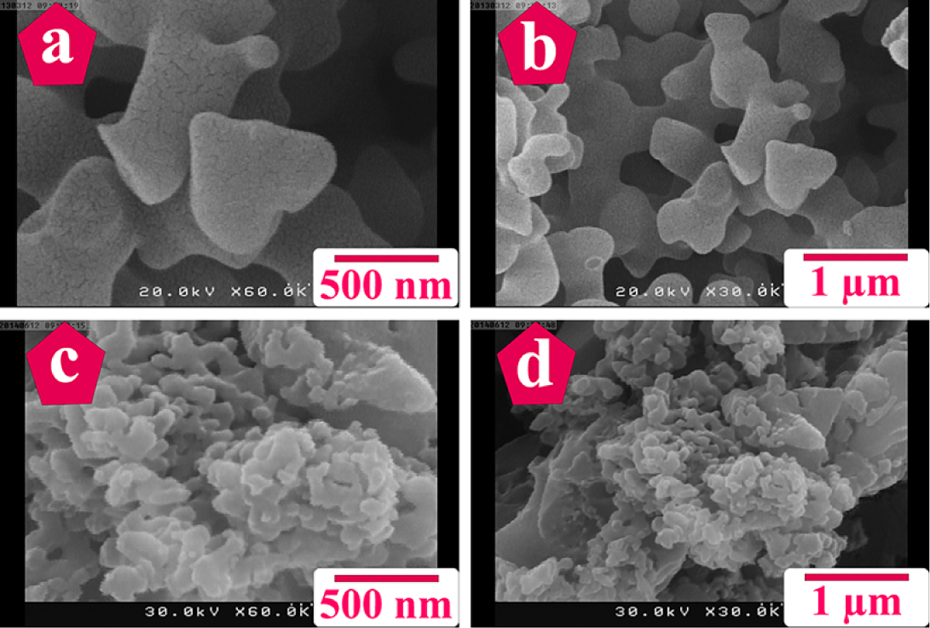
FESEM images of (a, b) pure PAI before sonication and (c, d) pure PAI after sonication. FESEM: field-emission scanning electron microscopic; PAI: poly(amide–imide).
Figure 6 shows the FESEM micrographs of pristine MWCNT, 25 CA-MWCNT, Gl-MWCNT, and Fr-MWCNT. 12,13 As can be seen, the average diameter of MWCNTs was increased due to the grafted glucose and fructose molecules. FESEM micrographs of PAI/Gl-MWCNT NCs (5, 10, and 15 wt%) are presented in Figure 7. It is obviously observed that the Gl-MWCNTs have a complete uniform dispersion in the PAI matrix. It indicated good compatibility between two components. The interconnected structure was observed for PAI/Gl-MWCNT NCs 5 wt% which is consistent with other nano-filled structures and propose a nanotube network. 26 Most of the Gl-MWCNTs were broken rather than pulled out and embedded in the PAI matrix, which indicated the strong interfacial bonding between Gl-MWCNTs and polymer matrix.
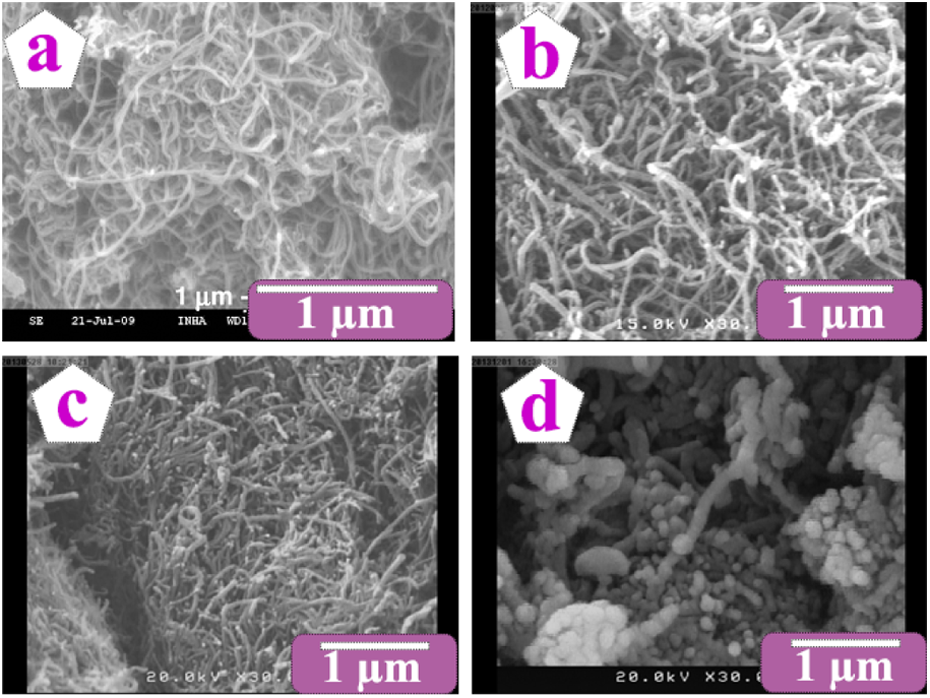
FESEM images of (a) pristine MWCNT, (b) CA-MWCNT, (c) Gl-MWCNT and (d) Fr-MWCNT. FESEM: field-emission scanning electron microscopic; PAI: poly(amide–imide); MWCNT: multiwalled carbon nanotubes; CA-MWCNT: carboxylic acid-functionalized multiwalled carbon nanotubes; Gl-MWCNT: multiwalled carbon nanotubes with glucose modifier; Fr-MWCNT: multiwalled carbon nanotubes with fructose modifier.
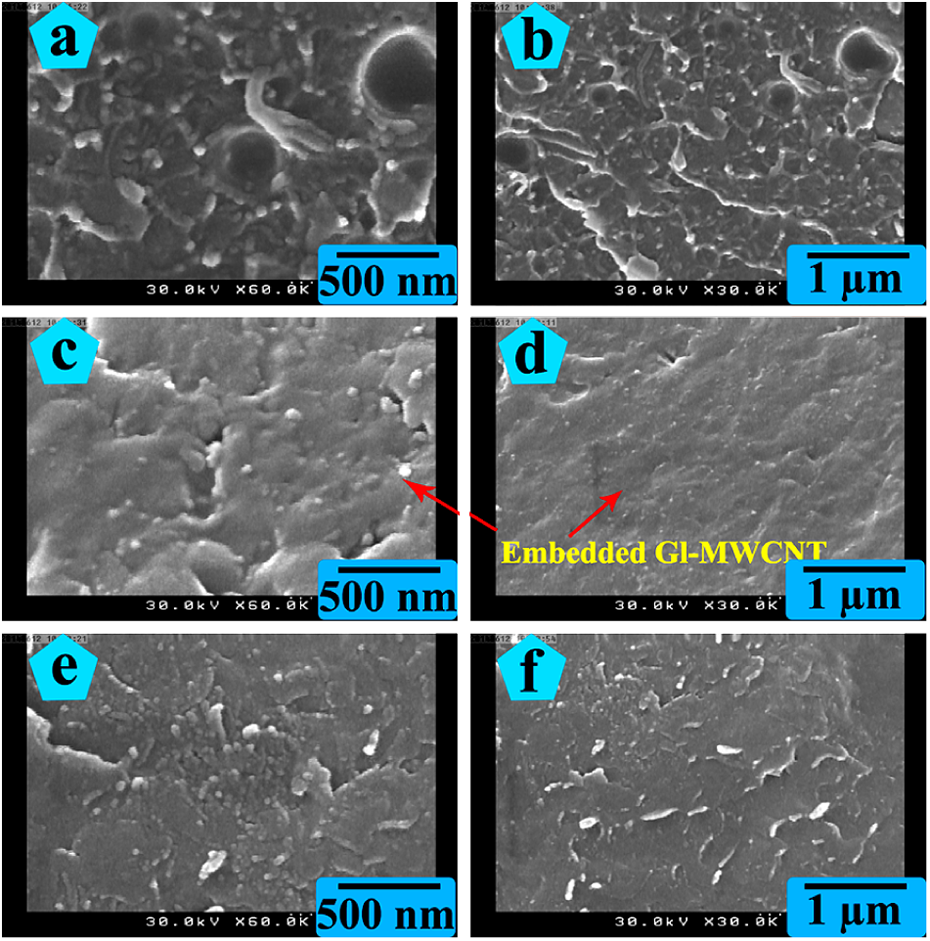
FESEM images of (a, b) PAI/Gl-MWCNT NC 5 wt%, (c, d) PAI/Gl-MWCNT NC 10 wt% and (e, f) PAI/Gl-MWCNT NC 15 wt%. FESEM: field-emission scanning electron microscopic; PAI: poly(amide–imide); MWCNT: multiwalled carbon nanotubes; CA-MWCNT: carboxylic acid-functionalized multiwalled carbon nanotubes; Gl-MWCNT: multiwalled carbon nanotubes with glucose modifier; Fr-MWCNT: multiwalled carbon nanotubes with fructose modifier.
Figure 8 presents the FESEM micrographs of the PAI/Fr-MWCNT NCs (5, 10, and 15 wt%). 12 The well-dispersed Fr-MWCNTs in the PAI matrix was observed from FESEM micrographs of PAI/Fr-MWCNT NCs of 5 and 15 wt% corresponding to the presence of bright dots, respectively. The few bright sticks were distinguished in the images. They are proposed to be the broken ends of Fr-MWCNTs pulled out from the PAI matrix during process. It suggests that all nanotubes were not functionalized. Totally, it can be said that the polarity of the MWCNTs increased after functionalization due to the functional groups of glucose and fructose.
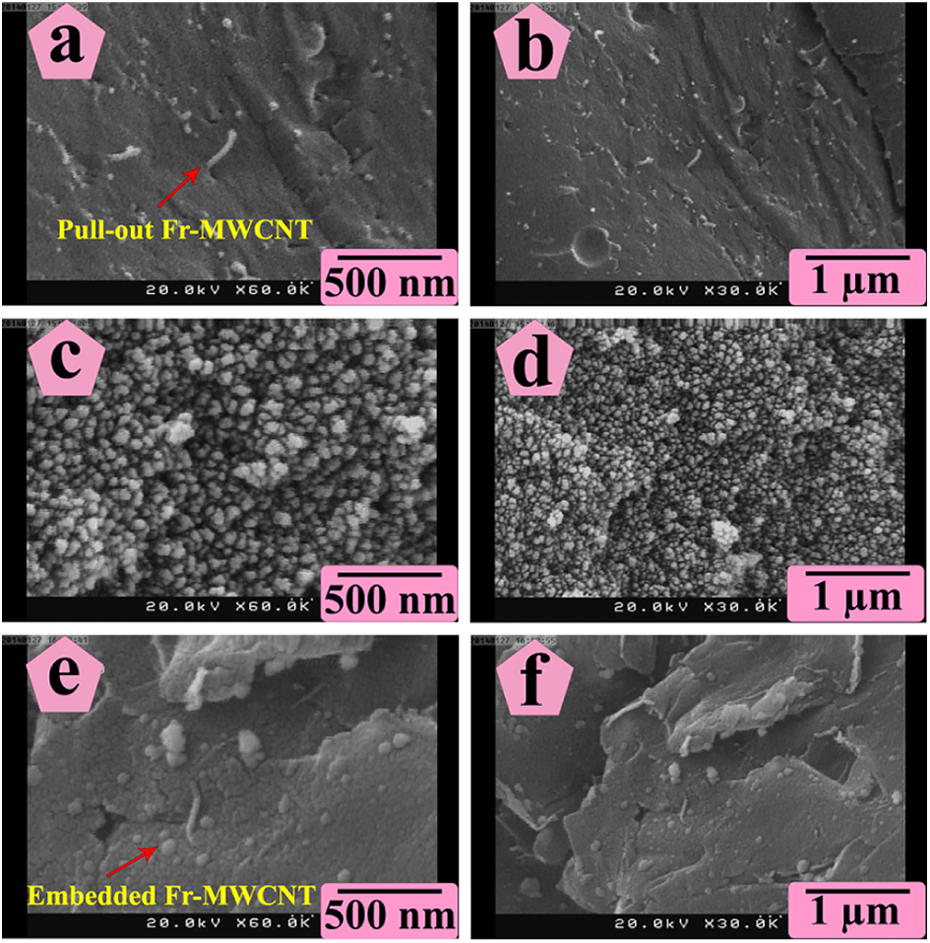
FESEM images of (a, b) PAI/Fr-MWCNT NC 5 wt%, (c, d) PAI/Fr-MWCNT NC 10 wt% and (e, f) PAI/Fr-MWCNT NC 15 wt%. FESEM: field-emission scanning electron microscopic; PAI: poly(amide–imide); MWCNT: multiwalled carbon nanotubes; CA-MWCNT: carboxylic acid-functionalized multiwalled carbon nanotubes; Gl-MWCNT: multiwalled carbon nanotubes with glucose modifier; Fr-MWCNT: multiwalled carbon nanotubes with fructose modifier.
TEM study
TEM micrographs of the CA-MWCNT, Gl-MWCNT, and Fr-MWCNT are shown in Figure 9. 12,13 Figure 9(a) showed the CA-MWCNTs with smooth surfaces while increased roughness of the nanotubes surface is obvious in the TEM images of Gl-MWCNT and Fr-MWCNT. The influence of surface functionalization on dispersion of MWCNT is clear. As can be seen, the agglomeration of CNTs decreased and MWCNTs were dispersed uniformly after functionalization with glucose and fructose. Figure 9 also demonstrates distribution histograms for CA-MWCNT, Gl-MWCNT, and Fr-MWCNT. The average external diameter for CA-MWCNT was 8 ± 2 nm. The average outer diameter of the tubes increased to 15 ± 3 nm and 14 ± 3 nm for Gl-MWCNT and Fr-MWCNT. Increased external diameters and rough surfaces of the functionalized MWCNTs confirmed coating of glucose and fructose on the surface of nanotubes (Figure 9(b) and (c)).
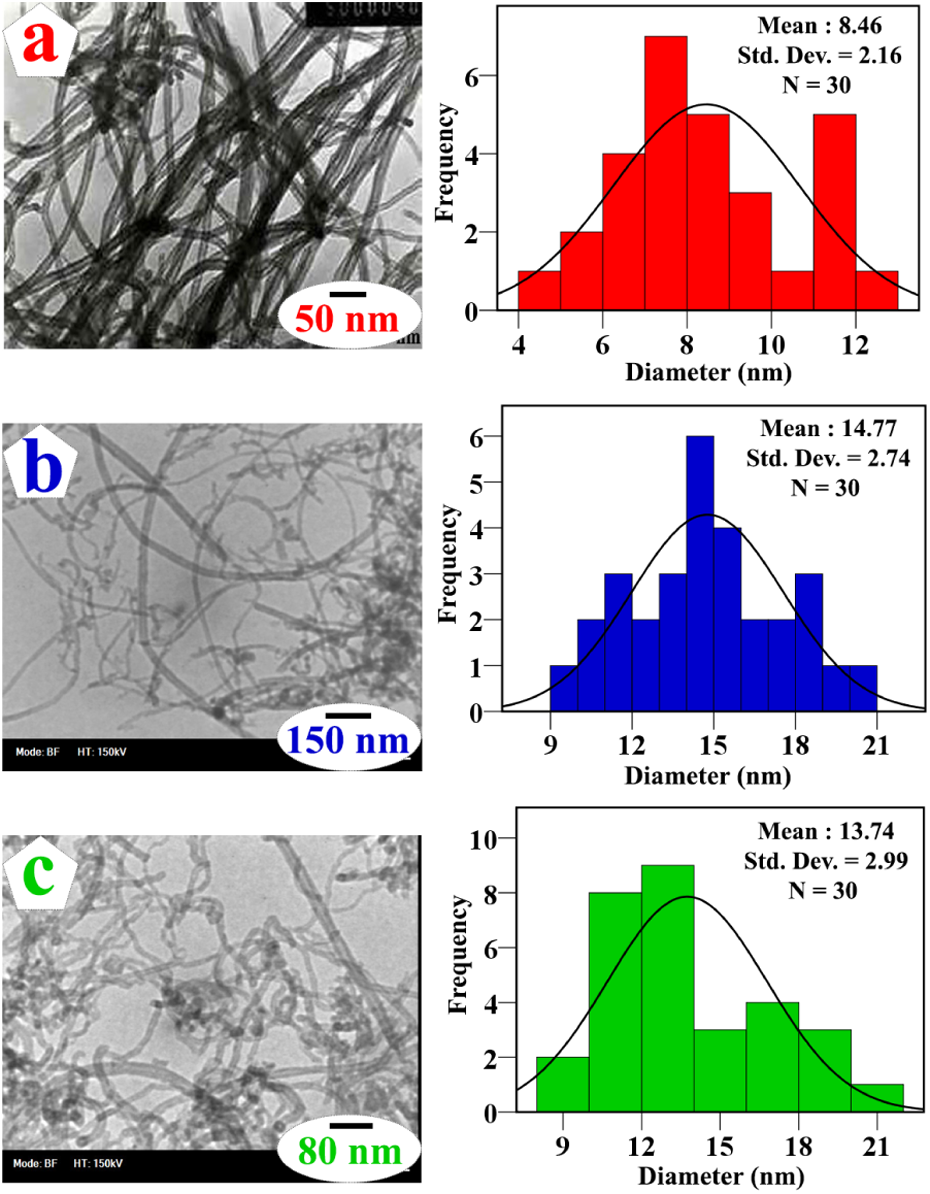
TEM photographs of (a) CA-MWCNT, (b) Gl-MWCNT and (c) Fr-MWCNT. TEM: transmission electron microscopic; CA-MWCNT: carboxylic acid-functionalized multiwalled carbon nanotubes; Gl-MWCNT: multiwalled carbon nanotubes with glucose modifier; Fr-MWCNT: multiwalled carbon nanotubes with fructose modifier.
Figure 10 shows TEM micrographs of PAI/Gl-MWCNT NC 10 wt%. Also, TEM micrographs of PAI/Fr-MWCNT NC 10 wt% are observed in Figure 11. 12 A group of worm-like objects in the PAI matrix was observed in TEM micrographs of PAI/Gl-MWCNT NC 10 wt%. TEM images represented that the reinforced PAI with Gl-MWCNT by worm-like form appear better dispersion than PAI/Fr-MWCNT NC. It clearly presents more thermodynamically favored interactions between the glucose-coated MWCNTs and the PAI matrix.
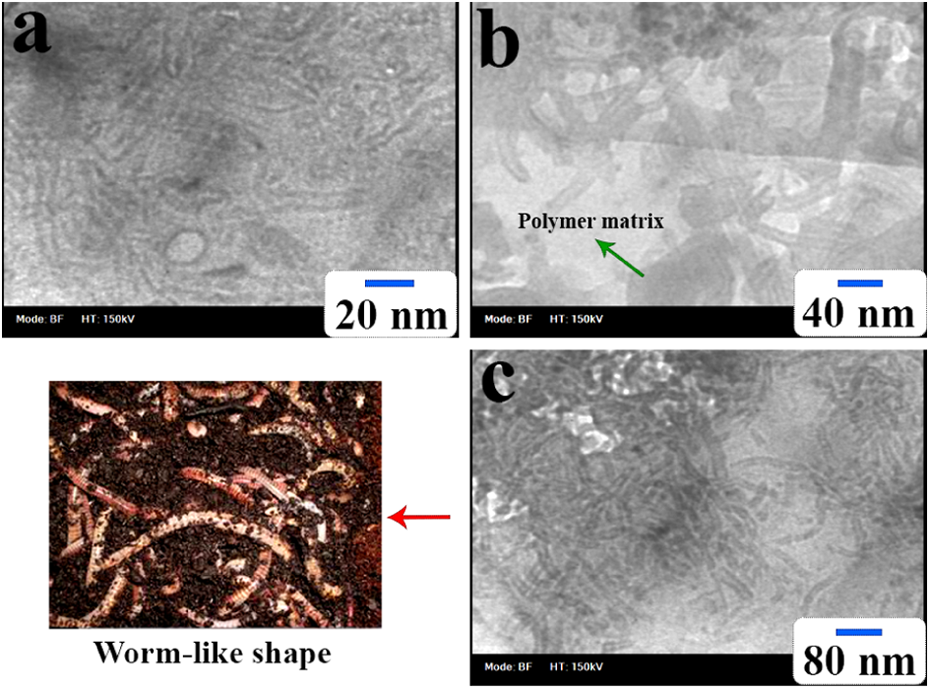
TEM images of Gl-MWCNTs dispersed in the PAI matrix at three different magnifications (a-c). TEM: transmission electron microscopic; PAI: poly(amide–imide); Gl-MWCNT: multiwalled carbon nanotubes with glucose modifier.
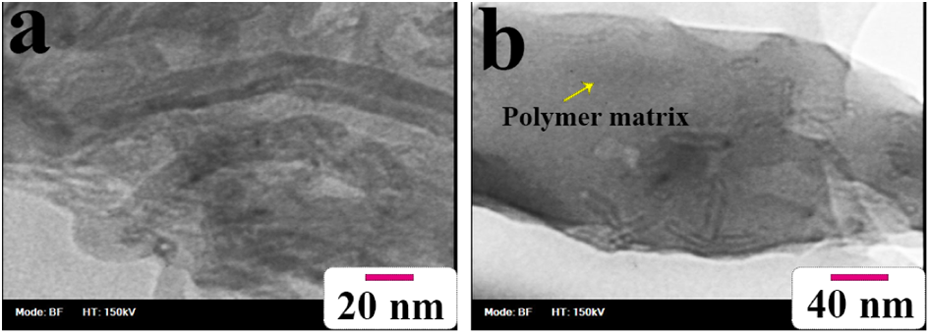
TEM micrographs of PAI/Fr-MWCNT NC 10 wt.% at two different magnifications. TEM: transmission electron microscopic; Fr-MWCNT: multiwalled carbon nanotubes with fructose modifier.
Dispersion stability (sedimentation test)
Indirect way for the study of successful functionalization is a better dispersion of samples in water. Figure 12 shows the photographs of functionalized MWCNT dispersed in deionized (DI) water. For the sedimentation test, 4 mL DI water was added into the 4 mg of MWCNTs (Gl-MWCNT and Fr-MWCNT) in glass tubes. The mixtures were sonicated for 30 min. Then, the suspensions were put aside and their sedimentation times were measured. As shown before, 27,28 pristine MWCNTs immediately settle in water and organic solvents even by ultrasonication. Figure 12 shows highly dispersed and stable dark solutions for Gl-MWCNT in glass tube (b) and Fr-MWCNT in glass tube (c). The presence of functional groups on the CNT surfaces not only debundles assembled CNTs and generates a barrier but also these OH groups increase the polarity of the tubes and increase the dispersion of the CNT in water as a polar solvent. However, the surface functionalization of MWCNTs with glucose and fructose significantly changed their solubility in water, but it should be mentioned that their sedimentation times were not the same. Fr-MWCNT remained stable for a period of about 3 weeks and completely aggregated after this time, while Gl-MWCNT remained well dispersed in water even after 2 months. To examine the effect of ultrasonic irradiations on dispersion of samples, 4 mg of Gl-MWCNT was dispersed in 4 mL DI water, and the mixture was kept stagnant and was not sonicated. As can be observed from Figure 12(a), high levels of Gl-MWCNT aggregation happened without sonication. In fact, ultrasonication could not only disperse CNTs but also cut CNTs into shorter ones, which is essential for embedding them into the polymer matrix. 29
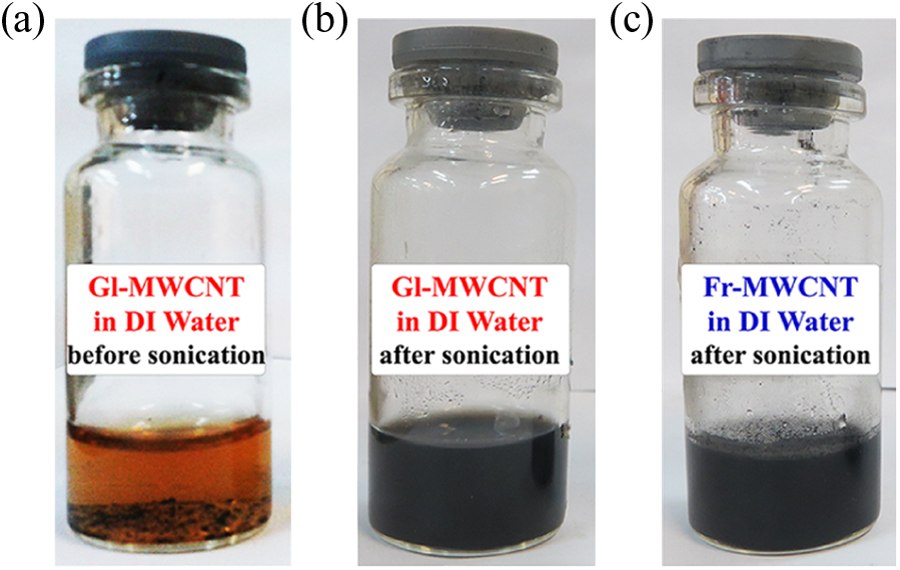
Stability of dispersions of (a) Gl-MWCNT before sonication, (b) Gl-MWCNT after sonication, and (c) Fr-MWCNT after sonication. Gl-MWCNT: multiwalled carbon nanotubes with glucose modifier; Fr-MWCNT: multiwalled carbon nanotubes with fructose modifier.
Thermal properties of composites
The degree of functionalization was measured by TGA. For comparison, TGA plots of CA-MWCNT and functionalized MWCNTs are also shown in Figure 13. 12,13 CA-MWCNT shows a small mass loss and high thermal stability up to 600°C. However, significant mass losses due to the degradation of surface-grafted glucose and fructose moieties were started from 275 and 183°C. Using the mass loss of the CA-MWCNT as the reference obtained observed percent mass losses of nanotubes as follows: 10 wt% (CA-MWCNT), 42 wt% (Gl-MWCNT), and 52 wt% (Fr-MWCNT; Figure 14).
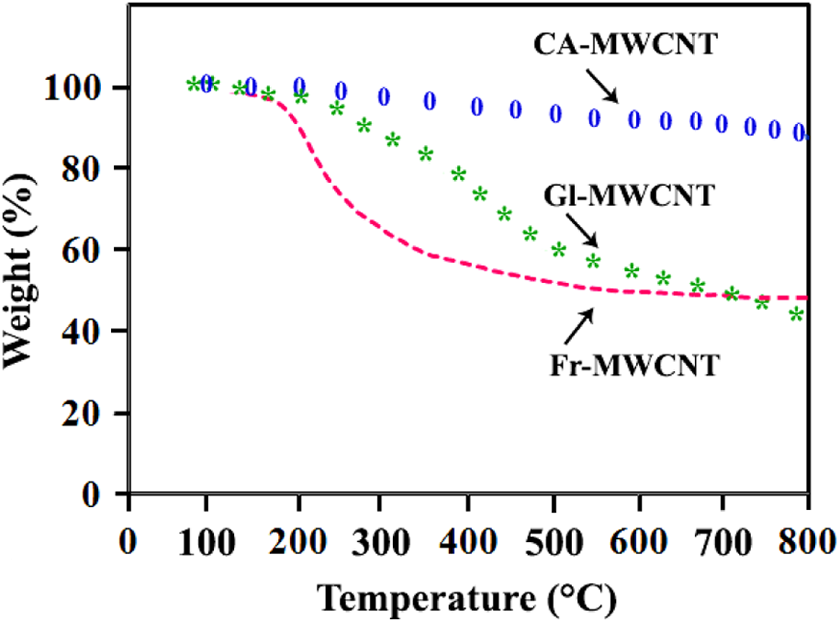
TGA thermograms of CA-MWCNT, Gl-MWCNT and Fr-MWCNT. TGA: thermogravimetric analysis; CA-MWCNT: carboxylic acid-functionalized multiwalled carbon nanotubes; Gl-MWCNT: multiwalled carbon nanotubes with glucose modifier; Fr-MWCNT: multiwalled carbon nanotubes with fructose modifier.
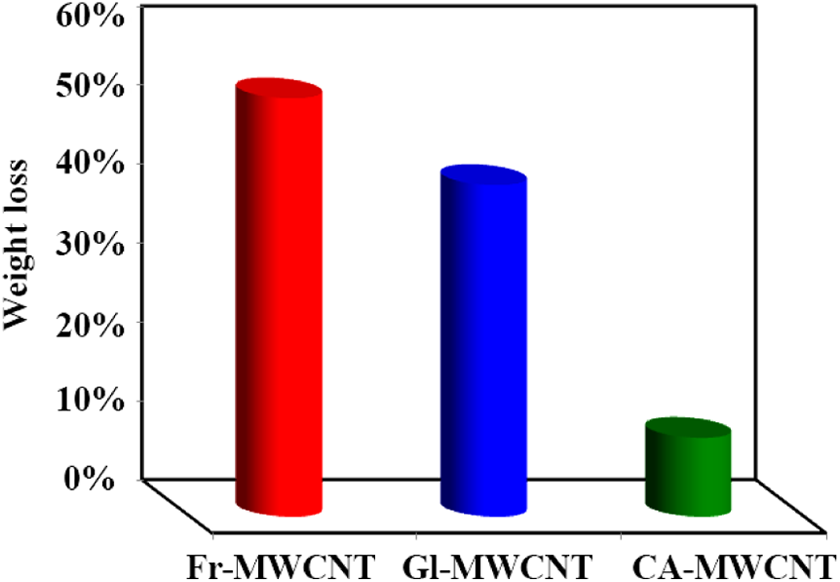
Comparison of grafted amounts of modifiers on the surface of MWCNT according to TGA data. MWCNT: multiwalled carbon nanotubes; TGA: thermogravimetric analysis.
Thermal stability of the obtained composites was investigated by TGA, and the results are shown in Figures 15 and 16. 12 Figure 15 shows thermograms of PAI/Gl-MWCNT NCs, and the obtained data containing char yield (CR), limiting oxygen index (LOI), and initial degradation temperatures are presented in the table. To compare the initial step of sample degradation, the temperatures of 5% and 10% weight loss (T 5% and T 10%) were determined. Pure PAI began to decompose at about 259°C. A considerable increase of the T 5% and T 10% was observed for the PAI-containing Gl-MWCNT and T 5% increased to 330, 303, and 335°C for the PAI/Gl-MWCNT NCs of 5, 10, and 15 wt%. Also, CR enhanced by the incorporation of Gl-MWCNT into the PAI matrix in comparison with the pure polymer. In the case of PAI/Fr-MWCNT NCs, the initial decomposition temperatures were started at lower temperatures compared to the pure polymer. The TGA results indicated that the reinforcement of Gl-MWCNT into the polymer matrix increased thermal stability of the PAI more than Fr-MWCNT incorporation.
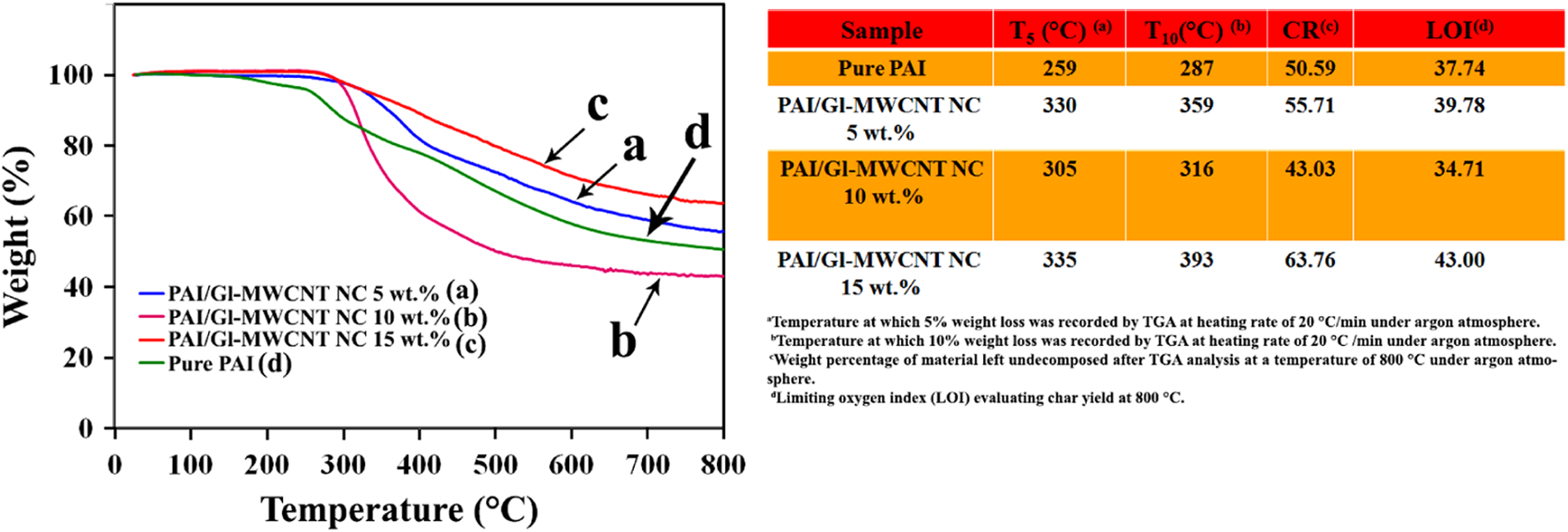
TGA plots of (a) PAI/Gl-MWCNT NC 5 wt%, (b) PAI/Gl-MWCNT NC 10 wt%, (c) PAI/Gl-MWCNT NC 15 wt%, and (d) pure PAI. TGA: thermogravimetric analysis; PAI: poly(amide–imide); Gl-MWCNT: multiwalled carbon nanotubes with glucose modifier; Fr-MWCNT: multiwalled carbon nanotubes with fructose modifier; NC: nanocomposite.
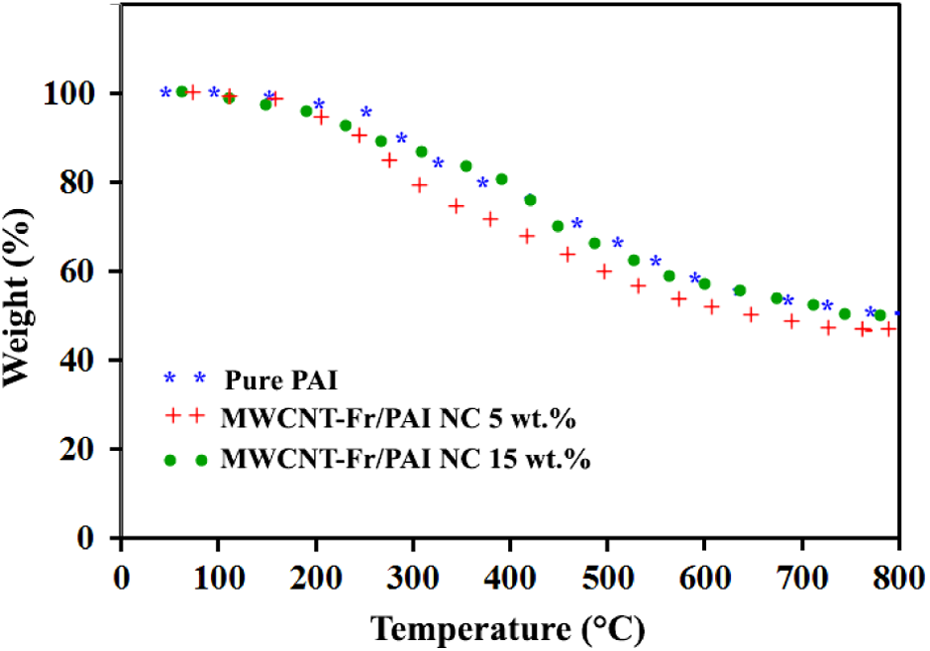
Thermograms of pure PAI, PAI/Fr-MWCNT NC 5 wt%, and PAI/Fr-MWCNT NC 15 wt%. PAI: poly(amide–imide); Gl-MWCNT: multiwalled carbon nanotubes with glucose modifier; Fr-MWCNT: multiwalled carbon nanotubes with fructose modifier; NC: nanocomposite.
The minimum concentration of oxygen that is necessary to ignite a flame is named LOI. The LOI values of the obtained NCs-containing MWCNT-Gl according to Van Krevelen 15 (equation (1)) ranged from 34% to 43% and for MWCNT-Fr-reinforced PAI were from 33% to 38%. These values indicated high flame-retardant characteristics for all samples.

Conclusions
PAI/Gl-MWCNT and PAI/Fr-MWCNT composites were prepared using glucose and fructose-functionalized MWCNTs. It was observed from FESEM and TEM images that the kind of modifier has profound influence on the CNT morphology. Dispersion stability of the Gl-MWCNT in water solvent was better than that for fructose. Successful functionalization of nanotubes provided homogeneous dispersion of them in the PAI matrix. The graft yields obtained after the modification of MWCNTs with glucose and fructose carbohydrates were 42 and 52 wt%. The PAI/Gl-MWCNT composites showed larger amounts of residue at the end of the degradation and higher thermal decomposition temperatures in comparison with the pure PAI. This proved better interfacial interaction between the functionalized MWCNTs with glucose and PAI. All samples indicated LOI values higher than 26%, which can be categorized as self-extinguishing materials and may be applied for many applications requiring good flame resistance and thermal stability.
Footnotes
Acknowledgments
The authors would like to acknowledge support from the Research Affairs Division Isfahan University of Technology (IUT) Isfahan and the National Elite Foundation (NEF).
Declaration of Conflicting Interest
The author(s) declared no potential conflicts of interest with respect to the research, authorship, and/or publication of this article.
Funding
The author(s) received no financial support for the research, authorship, and/or publication of this article.