






Abstract
Low-generation poly(amido amine) (PAMAM)-grafted carbon fibers (CFs) emerged as a new reinforcement for improving the mechanical properties of fiber composites. In this work, hybrid reinforcement, which could greatly enhance the surface roughness and wettability of CF, was prepared via growing PAMAM onto fiber surface by in situ polymerization.The modified surface morphology and chemical composition were investigated by scanning electron microscopy, atomic force microscopy, dynamic contact angle analysis test, and X-ray photoelectron spectroscopy. Experimental results indicated PAMAM dendrimers grown on the CF significantly enhanced interfacial properties of the resulting composites. In addition, compared with the desized CF composites, the CF grafted with PAMAM composites exhibited 34.65% enhancement in the interfacial shear strength.
Introduction
Carbon fiber (CF)-reinforced composites are widely used in aerospace, aeronautics, sport, and recreation goods due to their excellent in-plane and mechanical properties. 1 –4 The performances of fiber composites are closely related with the properties of fiber–matrix interface. However, the smooth and inert surface of CF would lead to poor intherfacial strength between CF and epoxy matrix. 5 Therefore, the extensive research studies, changing the CF surface from non-polar to polar properties in order to enhance the surface energy and wettability of fiber, have been carried out. 6 –10
Recently, active nanoparticles have been widely used to modified CF in an attempt to produce high-performance composites. Especially, the poly(amido amine) (PAMAM) dendrimer grafted on the CF could significantly increase the mechanical properties of the resulting composites with low melting viscosity, many amino groups, and high solubility. 11,12 To improve control over PAMAM dendrimers synthesis, two general strategies involving the “grafting to” 13 –15 strategy and the “grafting-from” 16 –18 strategy can be considered. The grafting to strategy is based on attachment of premade polymer onto the CFs via chemical reactions, while the grafting-from strategy is based on propagation of PAMAM dendrimer on the CF by in situ polymerization of appropriate monomers. 19 In contrast of preformed dendritic polymers, the movability and the small size of the monomers are more expected to improve the interfacial strength of fiber composites. PAMAM dendrimers were grown on the fiber surface by repeating Michael addition and amidation. 20,21 The peripheral functional groups of PAMAM on CF surface can be adjusted by controlling synthetic generation of PAMAM to meet different applications. 19
In this article, we used the grafting-from method to propagate PAMAM onto the CF surface and investigated the influence of this effective reinforcement on improving the interfacial strength between CF and epoxy matrix. The functionalized CFs and its composites were characterized by scanning electron microscopy (SEM), atomic force microscopy (AFM), X-ray photoelectron spectroscopy (XPS), and interfacial shear strengths (IFSS).
Experiments
Materials
The commercial CFs (JT-400A-3 K, average diameter 6.8 μm, the linear density 0.175 ± 6 g m−1, the density 1.76 g cm−3) were procured from Jilin Shen Zhou Carbon Fiber Co., Ltd., China. The matrix system were Epoxy 618 (molecular weight 350–400 g mol−1) and the hardener was H-256 (3,3′-diethyl-4,4′-diaminodiphenyl methane). Other experimental reagents involved in this study were purchased from vicinal market. All chemicals were used as received unless stated otherwise.
Preparation of the modified fiber
In the functionalization process, CFs were typically done by soxhlet extraction using acetone in the 76°C with 72 h (denoted as desized CF), followed by oxidization with nitric acid at 60°C for 2 h. After oxidized, the CFs were reacted with the mixture solution of 100 mL thionyl chloride (SOCl2) and 5 mL dimethylformamide at 78°C for 48 h, drying in a vacuum at 100°C for 6 h to generate the SOCl2-functionalized CFs (CFs-COCl). The final step was that CFs-COCl were reacted with 100 mL ethylenediamine (EDA) at 80°C for 24 h and dried at 80°C under vacuum for 6 h to generate the EDA-functionalized CFs(CFs-NH2).
Michael addition of MA to peripheral amino groups amidation of terminal ester groups by EDA were used to grow PAMAM on to CFs. The CFs-NH2 were put into 150 mL of methanol/MA (2:1) solution, reacting at 30°C for 24 h. The resultant was dried at 80°C under vacuum for 6 h, yielding CFs functionalized by generation 0.5 PAMAM (CFs-G0.5-PAMAM). The propagation to higher generations was accomplished by repeating Michael addition and amidation. The functionalization progress is shown in Figure 1.
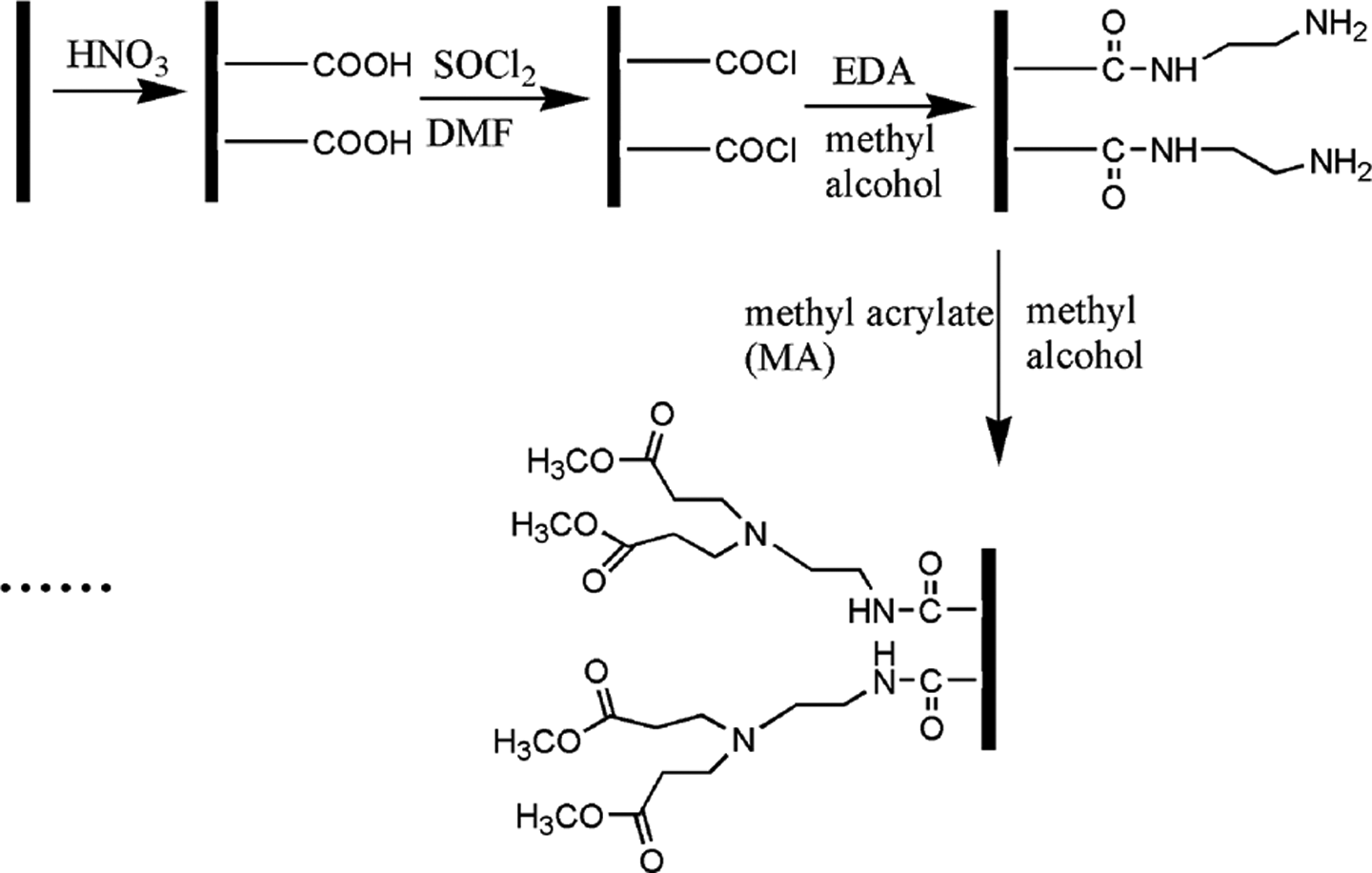
The functionalized progress of CFs. CF: carbon fiber.
Characterization
Surface morphology of grafted CFs and the failure surfaces of the composites were determined by SEM (FEI Sirion 200 scanning electron microscope, Royal Dutch Philips Electronics Ltd., the Netherlands). The surface roughness of CF was characterized by AFM (Bruker Corporation, Germany). All AFM images of CFs were obtained by the tapping mode.
Fourier transform infrared (FTIR) spectroscopy was performed with a Perkin Elmer spectrometer (Spectrum one, Waltham, Massachusetts, USA) to characterize the surface functional groups of CFs. The weight ratio between grafting fibers and potassium bromide was 1:1000.
Thermogravimetric analysis (TG/1600LF, Switzerland) was performed to assess the effectiveness of the functionalized process under a nitrogen atmosphere with the flow rate of 50 mL min−1. Samples of 10–15 mg were heated from 100°C to 600°C at a heating rate of 10°C min−1.
XPS (Kratos Axis Ultra VG, UK) was carried out to verify the chemical state of different CFs using a monochromated Al Ka source (hm=1486.6 eV) at 1 keV.
The surface energies (γ) and its dispersive (γ d) and polar (γ p) components of desized and grafted CFs were measured by dynamic contact angle analysis test (DCAT-21, Germany). The wettability of CF was characterized in two immiscible liquid (deionized water/non-polar diiodomethane) systems.
IFSS was examined by single fiber micro-debond test (Tohei Sayon Corporation, Japan). The IFSS values were obtained by pulling a fiber out of the cured epoxy resin droplets with a loading rate of 0.5 µm s−1. The values of IFSS were calculated according to equation (1):

where F max is the maximum load recorded, d f is CF diameter, and l e is the embedded length.
Results and discussion
Surface morphology of CFs
Surface morphology of desized CF and CFs-G0.5-PAMAMA was observed by SEM (Figure 2(a) and (b)). Compared with desized CFs (Figure 2(a)), there were no significant changes except that the ravine increased on the surface of CFs arising from the functionalizing process (Figure 2(b)). This indicated that PAMAM dendrimers on the fiber surface did not give rise to the obvious change because PAMAM is only in the size of nanometers and is transparent. 11,22,23 However, the surface roughness of CFs increased, which could increase the surface wettability of CF.
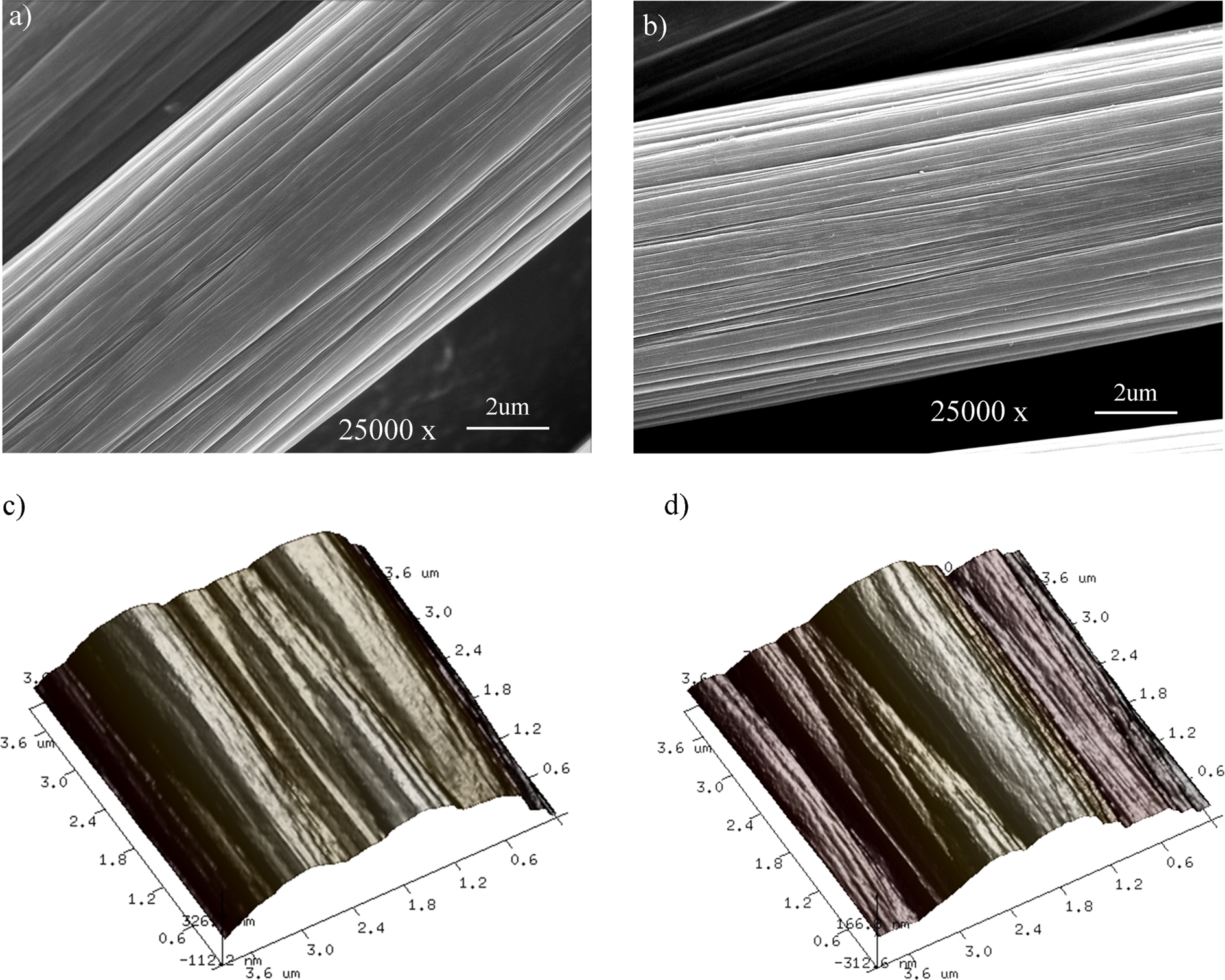
SEM images of CFs: (a) desized and (b) PAMAM-grafted; AFM images of CFs: (c) desized and (d) PAMAM-grafted. CF: carbon fiber; PAMAM: poly(amido amine); AFM: atomic force microscopy.
AFM was further performed to investigate the surface topography and roughness of different CFs. Figure 2(c) and (d) shows the AFM images of desized CFs and CFs-G0.5-PAMAM. As shown in Figure 2(c), the desized CF surface had many shallow grooves and the surface was very smooth and neat. In contrast, the surface topography of CFs-G0.5-PAMAM became rougher because a layer of PAMAM nanoparticles were scattered on the surface of CF (Figure 2(d)). The increased roughness could enhance the fiber surface energy and wettability.
Surface chemical composition
The functional groups of PAMAM on the surface of CFs can be determined by FTIR spectroscopy. Figure 3 presents FTIR spectra of desized and CFs-G0.5-PAMAM and different absorption peaks were observed. The absorption band at around 2930 cm−1 indicated the existence of CH2 in CFs-G0.5-PAMAM. 24 As shown in Figure 3, the peaks at 1640 and 1520 cm−1 were attributed to amide I (primarily C=O) stretch and C–N stretch. 19 In addition, the peak at 1740 cm−1 indicated the ester groups existed in CFs-G0.5-PAMAM, which indicated that the methyl acrylate was successfully reacted with amino group on fiber surface. 25 The FTIR results revealed that the PAMAM was chemically propagated on the surface of CFs. In a word, the CFs-G0.5-PAMAM could be confirmed by the appearance of C–N stretch at 1520 cm−1, primarily –N–C=O peak at 1630 cm−1 and ester groups peak at 1740 cm−1. 26,27
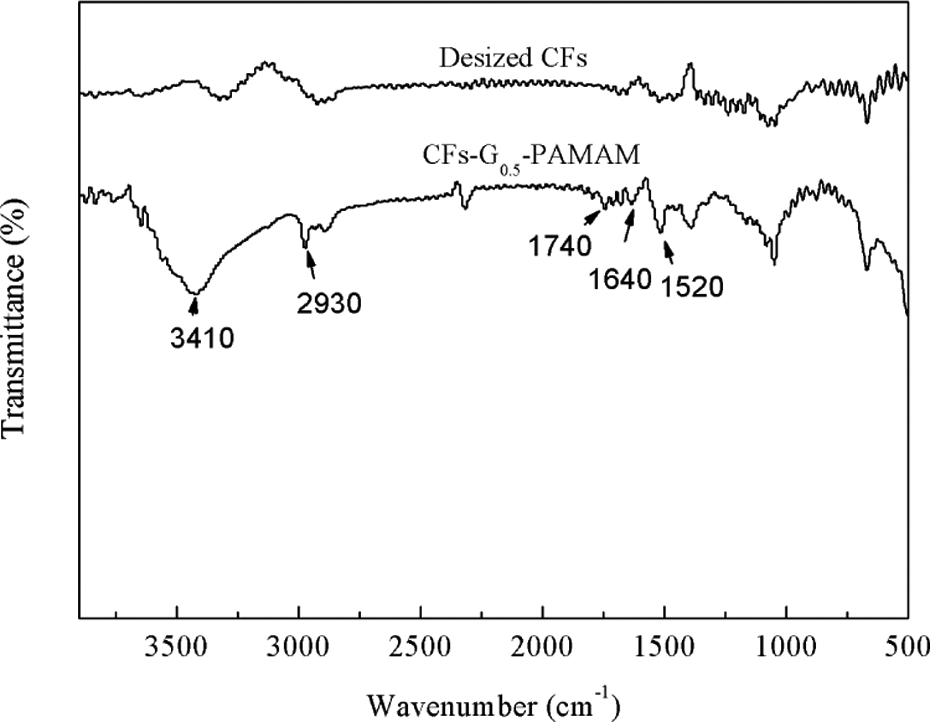
FITR spectra of desized and modified CFs. FTIR: Fourier transform infrared; CF: carbon fiber.
TG was also carried out to confirm the grafted content on the CF surface by measuring the weight loss from 100°C to 600°C (Figure 4). 11,28 The weight loss of the CFs–NH2 was mainly attributed to functional groups of EDA (–NH2) and the weight decreased by 0.5%. For PAMAM-grafted CFs, the weight loss was mainly attributed to the degradation of PAMAM 11,25,27 and the weight loss was estimated as 0.74%. The weight loss indicated that the PAMAM dendrimers were successfully grafted on the CFs.
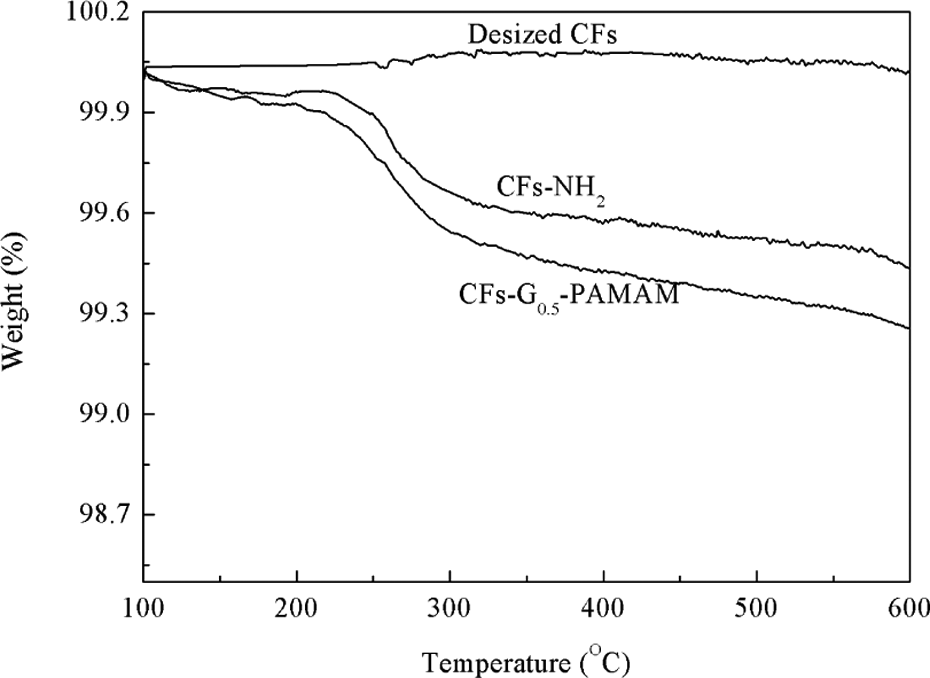
TG analysis of desized CFs and CFs-G0.5-PAMAM. TG: thermogravimetry; CF: carbon fiber; PAMAM: poly(amido amine).
Chemical and elemental composition of CF surface were analyzed by XPS in order to elucidate and discuss the differences/similarities of CFs more in detail. XPS can monitor different treatment stage of CFs by the appropriate sensitivity. 29 Specifically, information about precise carbon-containing functional groups can be obtained. 30 After PAMAM functionalized, the N, O element on the CF surface increased from 1.67%, 4.80% to 1.91%, 9.89%, respectively (Table 1). The O/C and N/C ratio emerged an obvious increase from 5.24%, 1.82% to 11.46%, 2.21%, respectively.
Summary of element composition on CF surface.
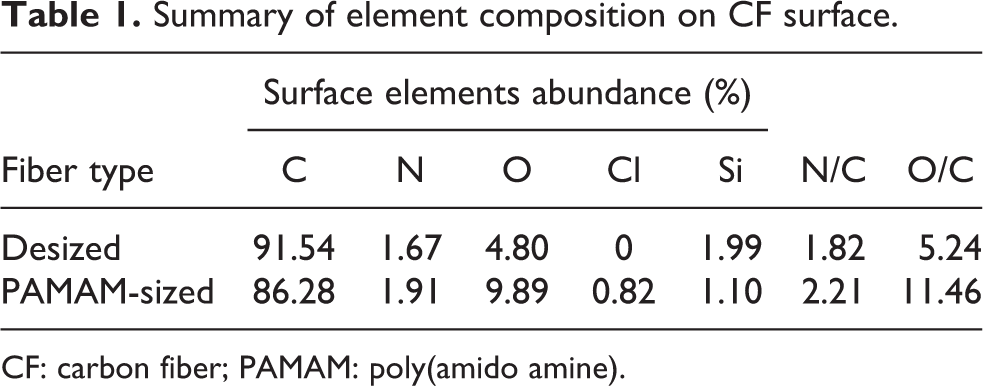
CF: carbon fiber; PAMAM: poly(amido amine).
XPS C1 s spectra in various organic compounds was reported to assign different functional groups between desized and grafted CFs. There were five peaks in C1 s region, including sp 2 C (284.9 eV), C–N groups (285.5 eV), C–O groups (286.3 eV), C=O groups (287.4 eV), and O=C–O groups (288.3 eV). 31 The results of each spectrum of C1 s region are shown in Figure 5. For CFs-G0.5-PAMAM, the N–C=O content greatly increased to 14.57% due to amidization between EDA and MA on the CF surface (Figure 5(b)). In addition, the increased ester groups (288.4 eV) indicated that the MA was successfully reacted with amino groups on the CFs. These results can therefore be used to characterize the synthesis of PAMAM on the surface of CFs. The PAMAM grafted on the fiber surface can introduce lots of functional groups, which would improve surface energy and wettability of CF.
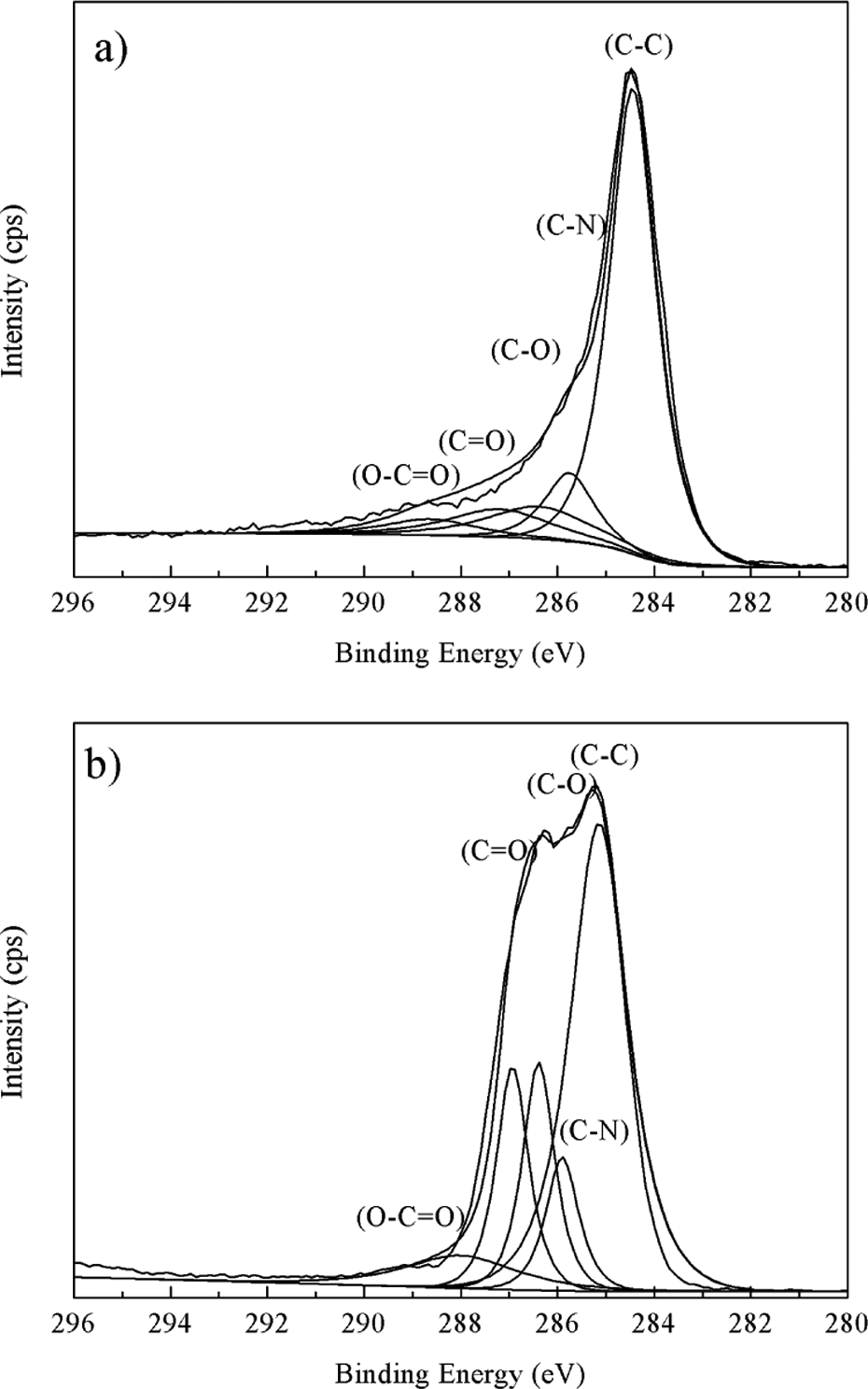
XPS spectra of C1s: (a) desized CF and (b) CFs-G0.5-PAMAM. XPS: X-ray photoelectron spectroscopy; CF: carbon fiber; PAMAM: poly(amido amine).
Surface energy of CF
The surface energy of CFs and their components can be affected by the elemental content and roughness of CF surface. 32 The distilled water and diiodomethane were used to measure dynamic contact angles of different CFs in our experiments. The surface free energy of distilled water and diiodomethane are 72.3 m Nm−1 and 50.8 m Nm−1, respectively. 33 The results of the advancing contact angle (θ), the surface energy (γ), the dispersion component (γ d), and polar component (γ p) in desized CF and CFs-G0.5-PAMAM are summarized in Table 2. As shown in Table 2, contact angles decreased from 69.42° (water), 54.50° (diiodomethane) for desized CFs to 59.97° (water), 39.19° (diiodomethane) for CFs-G0.5-PAMAM. As investigated by XPS, the C–O, C=O, and C=O–O groups on CF surface increased significantly, which could improve the surface activity of CFs. Therefore, the surface energy (γ) with dispersion component (γ d) and polar component (γ p) increased from 42.01, 31.73, and 10.28 m Nm−1 to 52.20, 40.02, and 12.18 m Nm−1, respectively. The increased polar component of the functionalized fibers was attributed to the active groups introduced by PAMAM and the increased surface roughness caused by PAMAM nanoparticles grafted on the CF surface.
Contact angles and surface energy of CFs.

CF: carbon fiber; PAMAM: poly(amido amine).
IFSS of CF/epoxy composites
The IFSS of the composites was measured by single fiber pull-out test. 34 The IFSS values of desized CF composites and CFs-G0.5-PAMAM composites are shown in Figure 6. As shown in Figure 6, the PAMAM on the fiber surface significantly enhanced the interfacial adhesion of CF composites. The IFSS value of CFs-G0.5-PAMAM composites (78.23 MPa) increased by 31.19% from 59.63 MPa for desized CF composites. These results suggested that PAMAM on the fiber surface significantly improved the mechanical properties of the CF composites by introducing many functional groups and increasing surface energy and wettability. After PAMAM grafting, the active elements of PAMAM dendrimers on CF surface played an important role in enhanced properties of fiber–matrix interface.
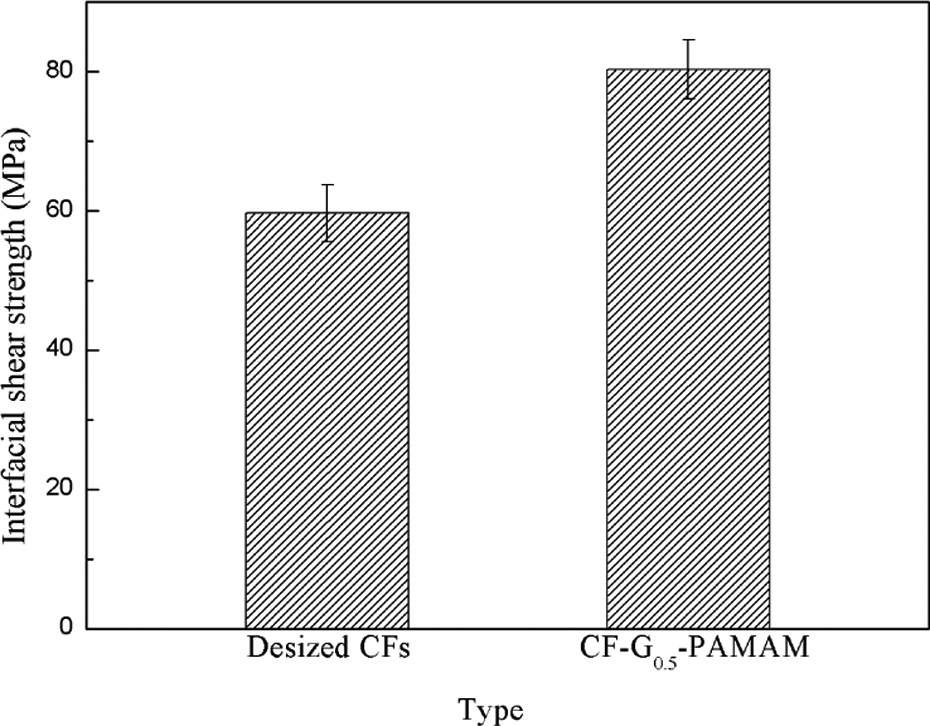
IFSS of CFs composites. IFSS: interfacial shear strengths; CF: carbon fiber.
Fracture surface morphology of CF/epoxy composites
The fractured surfaces of different composites were investigated by SEM in order to further understand the mechanism of improved mechanical properties of CF composites. 2,35 The SEM images of fractured surface of fiber composites, providing direct evidence for the enhanced interfacial properties between fiber and epoxy matrix, are shown in Figure 7. Many holes were formed in the fractured surface of desized CF composites by pulling out CFs out of the matrix resin. The smooth trace on CF surface can be observed in the vertical direction. There were no resin fragments adhered on the fiber surface, which indicated that the interfacial strength between fiber and matrix was weak (Figure 7(a)). After PAMAM grafted, lack of pulled-out fibers and fracture steps revealed that both the surface wettability of CF and mechanical properties of the resulting composites were significantly improved by the introduced PAMAM on the CF surface.
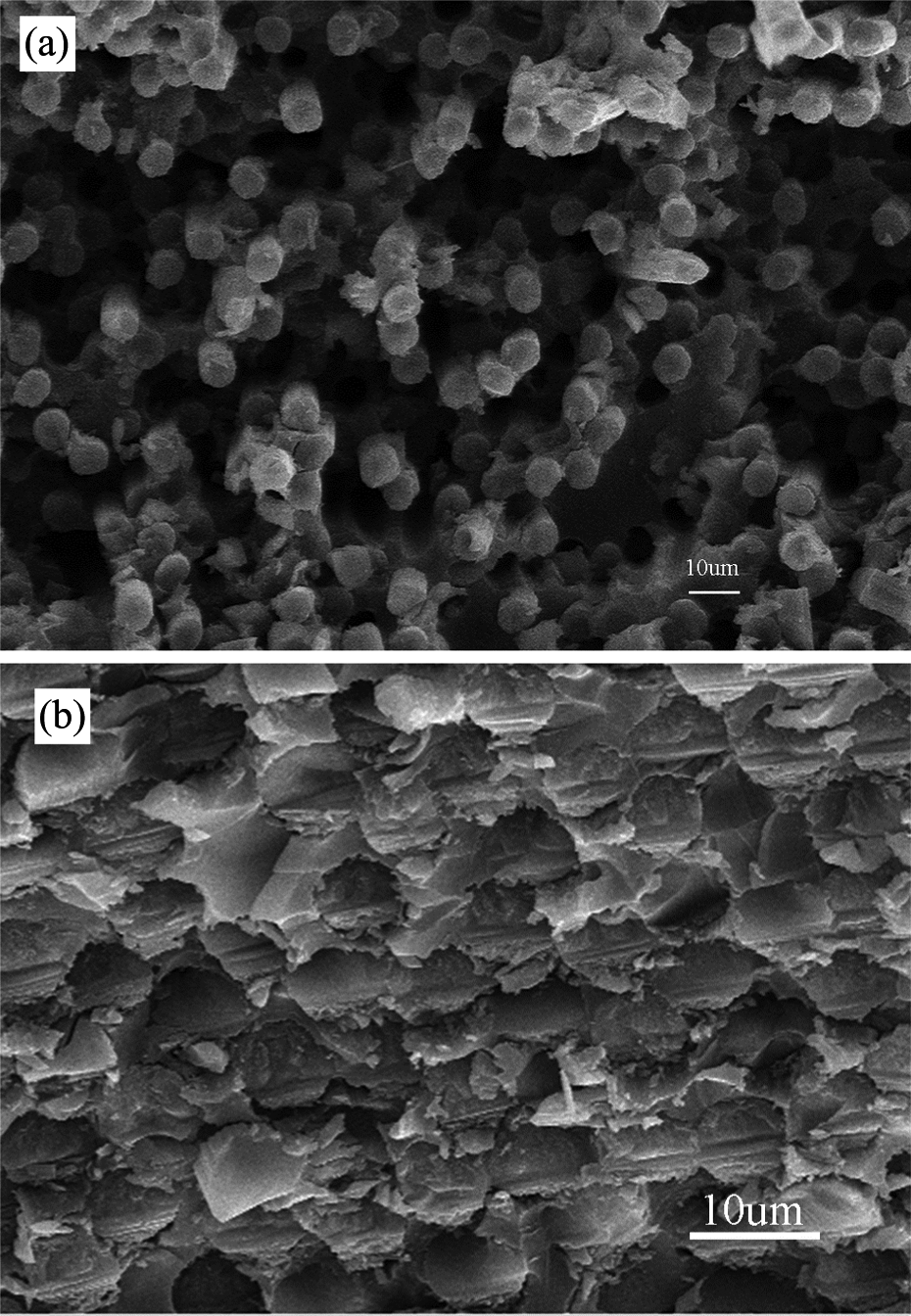
The fractured surface of composites: (a) desized CFs and (b) CF-G0.5-PAMAM. CF: carbon fiber; PAMAM: poly(amido amine).
As shown in Figure 8, we also investigated the fractured surfaces of desized CF and CFs-G0.5-PAMAM composites in the weft direction. The regular trace formed on the cambered surface of epoxy resin was relatively neat (Figure 8(a)). The regular trace was also identical with the narrow parallel grooves of CF surface. This phenomenon indicated that no resin fragments were adhered on the CF surface. However, more debris around the cracks along the yarn boundary existed in CFs-G0.5-PAMAM composites. In addition, epoxy resin covered on the CF surface due to the increased polar groups on CF surface could form strong chemical bond at the interface of the composites by reacting with the epoxy. 2 The observations were consistent with the results of XPS and properties as discussed above.
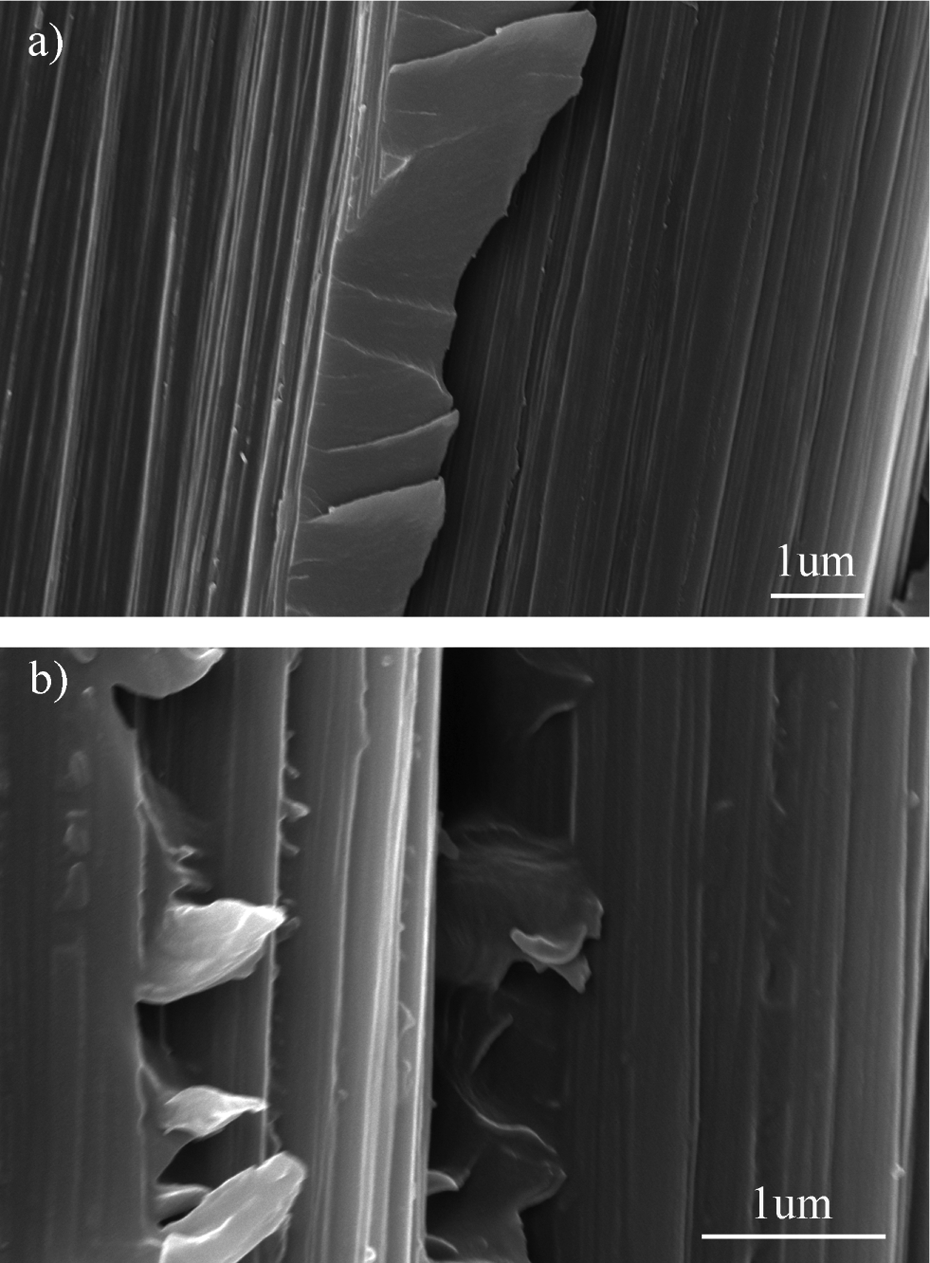
The fractured surface of composites: (a) desized CFs and (b) CF-G0.5-PAMAM. CF: carbon fiber; PAMAM: poly(amido amine).
Conclusion
An effective method of generating PAMAM dendrimers onto CF surface was investigated in an attempt to improve the properties of fiber–matrix interface. PAMAM dendrimers were propagated on the surface of CFs by in situ polymerization. DCAT results indicated that the surface energy was significantly improved. Assisted by AFM, it was revealed that the PAMAM grafted onto CF could increase surface roughness, which could improve the interfacial properties of fiber composites. Furthermore, the IFSS of the CF-G0.5-PAMAM composites was 78.23 MPa, significantly higher than that of the desized CF composites (59.63 MPa). In conclusion, the hierarchical reinforcement significantly improved the mechanical properties of composites through supplying sufficient functional groups and strong mechanical interlocking.
Footnotes
Declaration of Conflicting Interests
The author(s) declared no potential conflicts of interest with respect to the research, authorship, and/or publication of this article.
Funding
The author(s) disclosed receipt of the following financial support for the research, authorship, and/or publication of this article: This work was supported by the funding from Project funded by China Post doctoral Science Foundation (Grant no. 2014M551903) and National Natural Science Fund Program of China (Grant no. 51403119).