






Abstract
A series of polyimide (PI) membranes were prepared based on three triphenylamine-based diamines, namely 4,4′-diaminotriphenylamine, 4,4′-diamino-3′′,5′′-dimethyltriphenylamine, and 4,4′-diamino-3′′,5′′-ditrifluoromethyltriphenylamine, via thermal imidization procedure. The PI membranes displayed good thermal properties, with glass transition temperatures of 279–341°C and 5% weight loss temperatures above 515°C under a nitrogen atmosphere. The gas permeation properties of the membranes were investigated and interpreted from the viewpoint of the PI backbone structure. The gas permeation coefficients increased as the substituent pendant groups at the 3′′,5′′ positions of the triphenylamine varied from –H to –CH3 and –CF3, and the permselectivity of gas pairs (including hydrogen/nitrogen (N2), oxygen/N2, carbon dioxide (CO2)/N2, and CO2/methane) decreased in this order. The diffusion coefficients and solubility coefficients were calculated, and the results revealed the variation of the substituted triphenylamine units principally influenced the diffusion coefficients, indicating that the substituted triphenylamine affected the gas transport properties by “diffusivity-controlled” modification.
Introduction
Polyimides (PIs) have been widely investigated for the use of gas separation membranes due to the favorable combination of properties, such as good gas transport properties, thermal and chemical properties, and outstanding mechanical properties. 1 –6 Studies on the structure–property relationship of PI gas separation membranes revealed that the gas permeation performance could be improved by inhibiting intersegmental chain packing while simultaneously hindering backbone mobility. 7 –9 This is the prevailing design principle of the “diffusivity-controlled” modifications, 10,11 and polymer chain structures could be adjusted to manipulate the gas transport properties according to this idea. Based on this concept, the incorporation of bulky and rigid group into the PI backbone would enhance the gas permeation of the membranes.
Triphenylamine unit has been considered to be a bulky rigid structure in the polymer backbone for its specific steric configuration. There has been investigations on the microporous PIs based on tris(4-aminophenyl)amine, which reacted with rigid tetracarboxylic dianhydrides to form PI networks with large surface areas. 12 –14 The rigid triphenylamine unit was the prerequisite to support the microporous structures of the networks. The thermoplastic polymers based on triphenylamine derivatives are well known for the photoactive and electroactive properties, and the applications of photoconductors, light emitters, and memory devices have been intensively studied. 15,16 Besides, the polymers containing triphenylamine unit tended to have good solubility, as the triangular triphenylamine moiety would have disrupted intermolecular stacking. However, there were less comprehensive investigations on the gas permeation properties of triphenylamine-based PI membranes. 17,18
In this contribution, we have synthesized three substituted triphenylamine-based diamines: 4,4′-diaminotriphenylamine, 4,4′-diamino-3′′,5′′-dimethyltriphenylamine, and 4,4′-diamino-3′′,5′′-ditrifluoromethyltriphenylamine, and PI membranes derived from the diamines and 4,4′-(hexafluoroisopropylidene)diphthalic anhydride (6FDA) or 3,3′,4,4′-biphenyltetracarboxylic dianhydride (BPDA) were prepared. The gas permeability and selectivity of the PI membranes have been examined, and the influence of the polymer backbone structures on the properties has been discussed. Furthermore, the diffusion coefficients and solubility coefficients were calculated and associated with the PI chain structures, to illustrate the diffusivity-controlled mechanism.
Experimental
Chemicals and materials
4-Fluronitrobenzene, 3,5-di(trifluoromethyl)aniline, and 3,5-dimethylaniline were the products of Energy Chemical (Shanghai, China). Aniline, cesium fluoride (CsF) and dimethyl sulfoxide (DMSO) were purchased from Aladdin Reagent (Shanghai, China). N,N′-dimethylacetamide (DMAc) and ethanol were supplied by Kermel Chemical Reagent Co., Ltd (Tianjin, China). Ten percent palladium on charcoal (Pd/C) was provided by Dalian Tongyong Chemical Co., Ltd (Dalian, China). Eighty percent hydrazine monohydrate was purchased from Tianjin Guangfu Fine Chemical Research Institute (Tianjin, China). 6FDA and BPDA were purchased from Fluorochem Ltd (Derbyshire, Britain) and Pome Sci-tech Co., Ltd (Beijing, China), respectively. The tetracarboxylic dianhydride monomers were dried at 150°C under vacuum for 10 h prior to use. All the other chemicals were of analytical grade and used without further purification.
Characterization
Measurement of gas permeability
Permeation properties of membranes were tested in pure gas system. The permeability (P) of hydrogen (H2), nitrogen (N2), oxygen (O2), methane (CH4), and carbon dioxide (CO2) were measured using a variable–pressure constant volume method, as described in our previous works.
19,20
Gas permeability was expressed with the units of Barrer:
The gas permeation properties can be explained by the solution–diffusion mechanism and could be represented by the equation: P = D × S, where D (cm2 s−1) is the diffusion coefficient and S (cm3(STP) cm−3 cmHg−1) is the solubility coefficient. The diffusion coefficient is calculated by the time-lag method, represented by the equation D = L2/6θ, where θ is the time lag and L is the membrane thickness. After the values of P and D are obtained, the solubility coefficient could be calculated by the equation S = P/D.
Ideal selectivity (α) of gas pairs was the ratio of P of the two gases. The tests of the permeation properties were conducted at 35°C and 0.2 MPa.
Other characterizations
The infrared (IR) spectra were obtained by a Thermo Scientific Nicolet iS5 Fourier transform infrared spectrometer (Waltham, Massachusetts, USA), equipped with an attenuated total reflection setup. Nuclear magnetic resonance (NMR) spectra were determined on a Bruker-400 M spectrometer (Billerica, Massachusetts, USA) at 400 MHz for proton (1H) spectra with the solvent of deuterated chloroform or deuterated DMSO (DMSO-d6). The densities of PI membranes were measured using a density gradient column (xylene-carbon tetrachloride system). Fractional free volume (FFV) was calculated from the equation: FFV = (V−Vo)/V, where V and Vo are the specific volume and chain occupied volume, respectively. Vo was calculated from the van der Waals volume (Vo = 1.3 Vw), which could be obtained from Bondi’s group contribution method.
21,22
Thermogravimetric analysis (TGA) was performed using TA 2050 analyzer (New Castle, Delaware, USA), and membrane samples were heated at a temperature ramp of 10°C min−1 under a N2 atmosphere. Temperatures at which 5% weight loss (
Synthesis of diamines
Synthesis of 4,4′-diaminotriphenylamine (diamine I)
The synthesis scheme of the diamines is shown in Figure 1, with the dinitro compound as the intermediate product, followed by catalysis reduction reaction in the presence of hydrazine and Pd/C. Into a 100-mL three-necked flask equipped with a stirrer, a condenser, and a N2 inlet were charged 1.40 g (15 mmol) of aniline, 4.52 g (32 mmol) of 4-fluronitrobenzene, 4.86 g (32 mmol) of CsF, and 30 mL of DMSO. The mixture was heated to 140°C and kept for 10 h under nitrogen atmosphere. After cooling to 60°C, the reaction mixture was poured into 300 mL ice/water, yellow precipitate was collected by filtration and washed with water. The crude product was dried and recrystallized with glacial acetic acid to afford 2.7 g yellow powder (65%); melting point (mp): 197°C (DSC); IR (cm−1): 1577, 1312 (–NO2); 1H NMR (DMSO-d6, ppm): 8.21(d, J = 9.2, 4H), 7.54–7.50 (m, 2H), 7.40–7.36 (m, 1H), 7.29 (d, J = 7.2, 2H), 7.22 (d, J = 9.2, 4H).
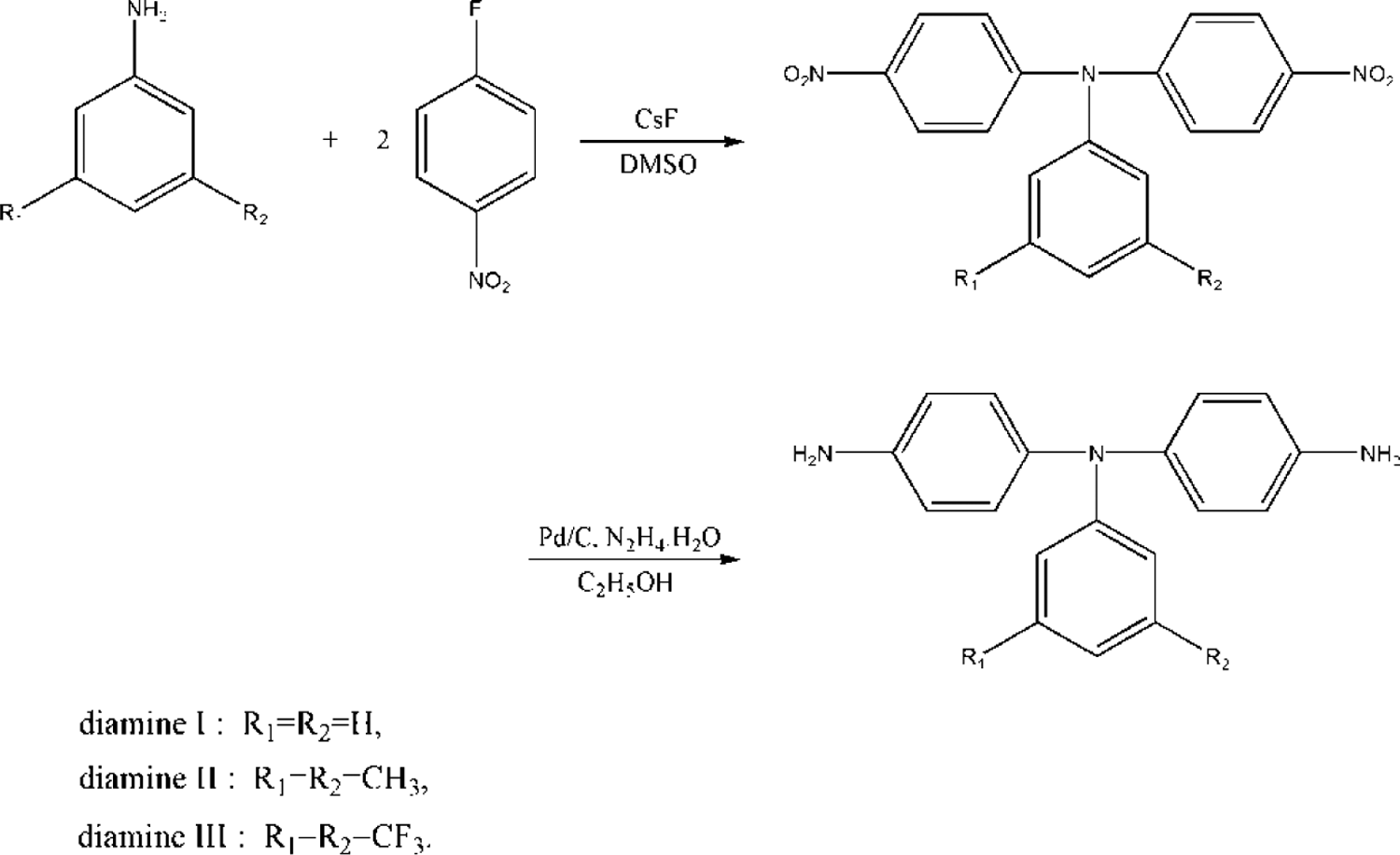
Synthesis of the diamines.
1.5 g (4.5 mmol) of the dinitro compound, 0.15 g of Pd/C, and 30 mL of ethanol were added into a 100-mL three-necked flask. The mixture was heated to reflux under nitrogen purge, and 5.5 g of 80% hydrazine monohydrate was added dropwise into the mixture for 10 min. The reaction was monitored by thin-layer chromatography (ethyl acetate and petroleum ether). After 5 h of reflux, the hot mixture was filtered to remove the catalyst, and the filtrate was distilled under reduced pressure to remove the solvent. The product was washed thoroughly with water and dried under vacuum. 1.0 g of off-white powder was obtained (yield: 81%); MS: 275.1; mp: 190°C (DSC); IR (cm−1): 3422, 3342 (–NH2); 1H NMR (DMSO-d6, ppm): 7.07–7.03 (m, 2H), 6.78 (d, J = 8.4, 4H), 6.65–6.58 (m, 3H), 6.54 (d, J = 8.4, 4H), 4.96 (s, 4H, –NH2).
Synthesis of 4,4′-diamino-3′′,5′′-dimethyltriphenylamine (diamine II)
The diamine monomer was synthesized with a similar procedure as diamine I. The dinitro compound was obtained as yellow powder with yield of 51%; mp: 188°C (DSC); IR (cm−1): 2915 (–CH3), 1578, 1334 (–NO2); 1H NMR (DMSO-d6, ppm): 8.19 (d, J = 9.2, 4H), 7.20 (d, J = 9.2, 4H), 7.02 (s, 1H), 6.90 (s, 2H), 2.27 (s, 6H, –CH3).
Diamine II was obtained as off-white powder with the yield of 82%; Mass Spectrometry (MS): 303.1; mp: 196°C (DSC); IR (cm−1): 3409, 3316 (–NH2), 2916 (–CH3); 1H NMR (DMSO-d6, ppm): 6.75 (d, J = 8.8, 4H), 6.52 (d, J = 8.4, 4H), 6.29 (s, 1H), 6.22 (s, 2H), 4.93 (s, 4H, –NH2), 2.06 (s, 6H, –CH3).
Synthesis of 4,4′-diamino-3′′,5′′-ditrifluoromethyltriphenylamine (diamine III)
The diamine monomer was synthesized with a similar procedure as diamine I. The dinitro compound was obtained as yellow powder with the yield of 48%; mp: 189°C (DSC); IR (cm−1): 1583, 1338 (–NO2); 1H NMR (DMSO-d6, ppm): 8.22 (d, J = 9.2, 4H), 8.04 (s, 1H), 7.94 (s, 2H), 7.33 (d, J = 9.2, 4H).
Diamine III was obtained as light orange powder with the yield of 81%; MS: 441.0; mp: 176°C (DSC); IR (cm−1): 3309, 3311 (–NH2); 1H NMR (DMSO-d6, ppm): 7.16 (s, 1H), 6.96 (d, J = 8.8, 4H), 6.87 (s, 2H), 6.62 (d, J = 8.8, 4H), 5.25 (s, 4H, –NH2).
Preparation of PI membranes
Dense PI membranes were prepared via a two-step polymerization procedure, with poly(amic acid) (PAA) as precursor, followed by thermal imidization, as shown in Figure 2. Preparation of PI derived from diamine II and 6FDA was taken as example: 1.403 g of diamine II (4.6 mmol) was gradually added into DMAc solution of 6FDA (2.057 g, 4.6 mmol), with the solid concentration adjusted to 20 wt% The mixture was stirred at room temperature for 10 h to afford a homogeneous PAA solution. The PAA solution was filtered and stored in refrigerator overnight.
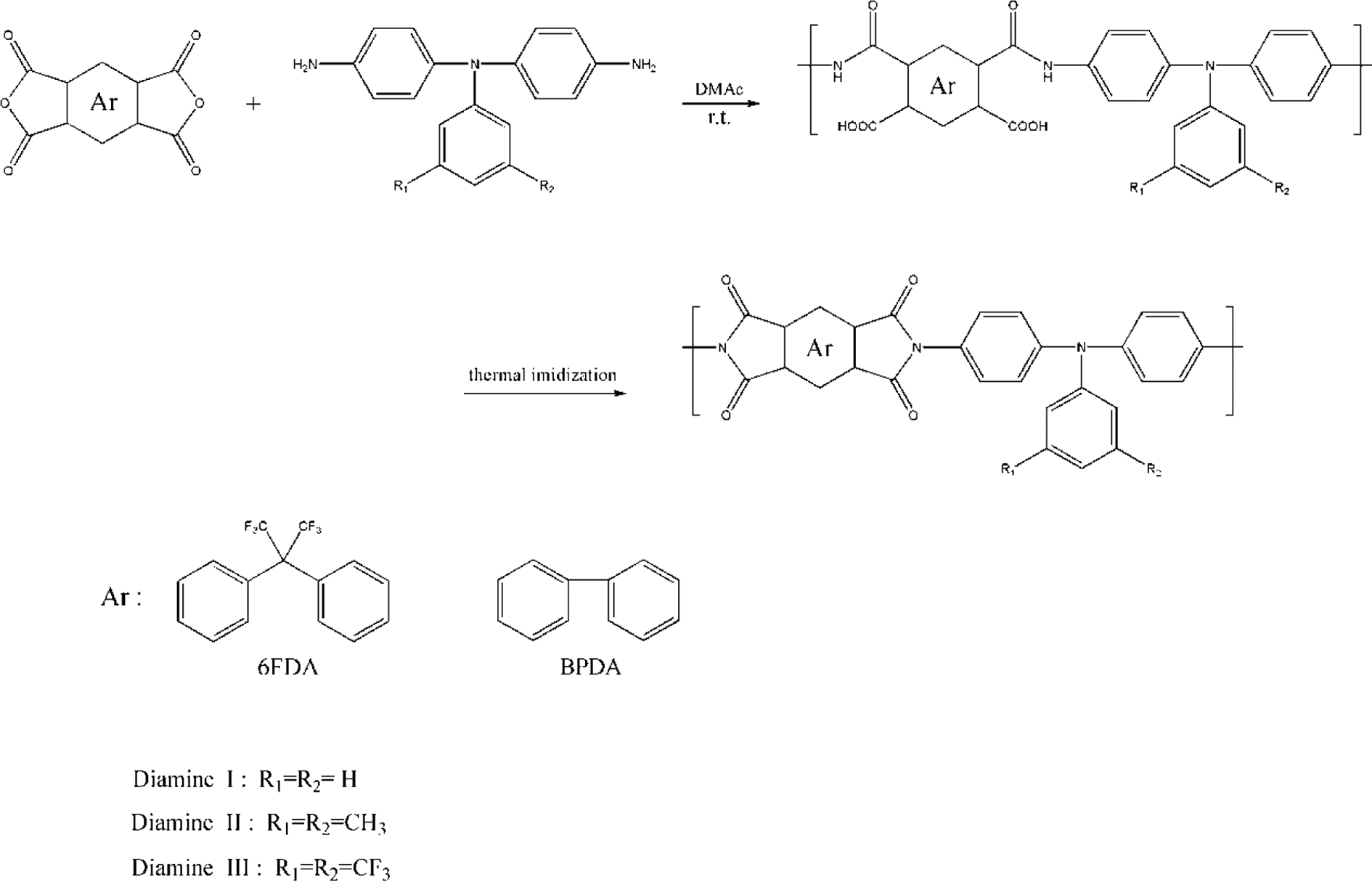
Preparation of the polyimide membranes.
Polymer film was cast from PAA–DMAc solution onto a flat glass plate and preheated in air convection oven; then, the film was heated to 300°C and kept for 1 h under a N2 atmosphere to afford thermal imidization. The freestanding PI membrane was obtained by soaking in water in order to release from the substrate.
Results and discussion
Preparation of monomers and PI membranes
The diamines bearing triphenylamine unit were synthesized by the amination reaction between 4-fluronitrobenzene and anilines with various substituent pendant groups, followed by hydrazine Pd/C catalytic reduction. IR and NMR spectra were used to identify the chemical structures of the nitro intermediates and diamines. IR spectra of the compounds were shown in Figure 1, 2 and 3 of the Online Supplementary Material, the spectra showed the characteristic –NO2 absorption appeared in the vicinity of 1580 cm−1 for the dinitro intermediate compounds, and –NH2 absorption bands appeared after the reduction reaction. Figure 3 illustrates the 1H NMR spectra of the three diamines, each proton agrees well with the proposed structures, and the resonance signals at around 5.0 ppm correspond to the amino protons. 1H NMR spectra of the nitro compounds were displayed in Online Supplementary Figure 4.
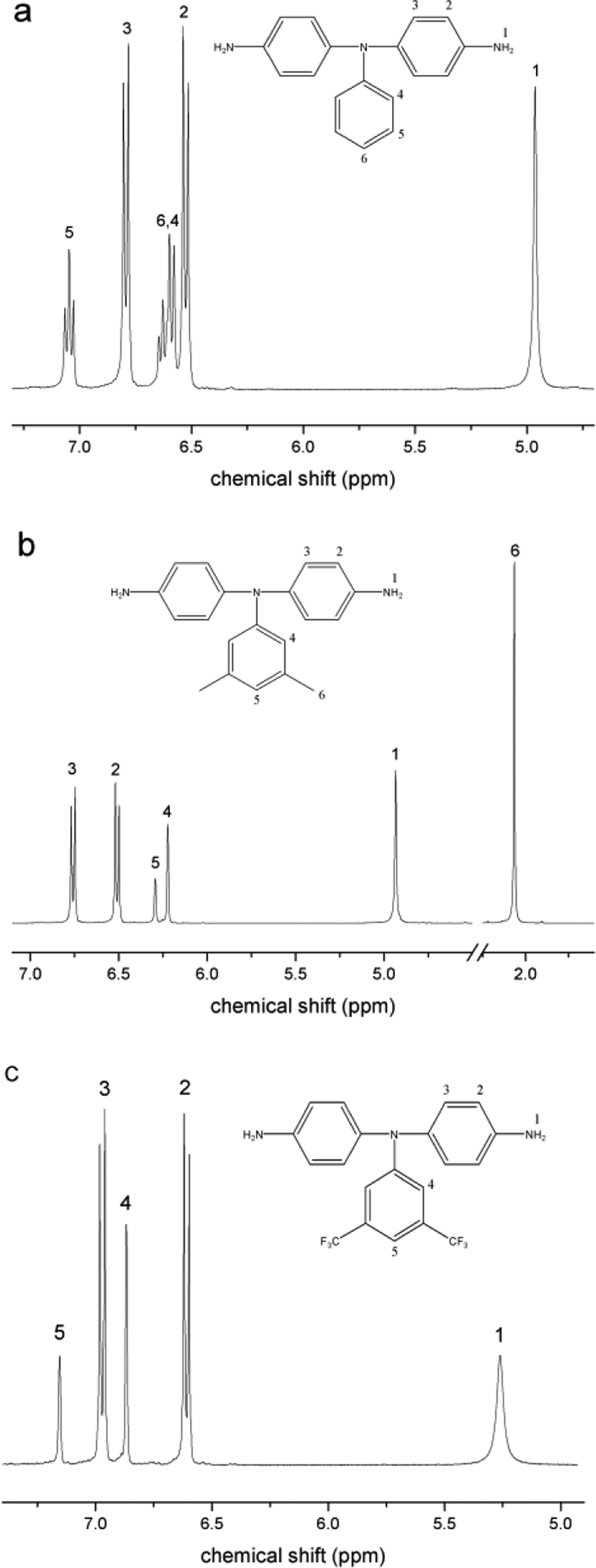
1H NMR spectra of the diamines. 1H NMR: proton nuclear magnetic resonance.
PI membranes were prepared by polycondensation of the diamines with 6FDA or BPDA in DMAc to form the precursor PAAs, followed by thermal imidization. Flexible and freestanding membranes could be obtained after imidization, except that PI membrane derived from BPDA and diamine III was slightly brittle. The colors of the membranes were from yellowish to reddish, which could be attributed to charge-transfer complex (CTC) formation between the electron-donating triphenylamine unit and the strongly electron-accepting phthalimide unit. 23 Figure 4 showed the IR spectrum of PI-I, which exhibited characteristic imide absorption bands around 1780 (C=O asymmetric stretching), 1720 (C=O symmetric stretching), 1375 (C–N stretching), and 735 cm−1 (C=O bending). The chemical structure of PI-III was confirmed by 1H NMR spectrum, as shown in Figure 5. The resonance peaks could be assigned to the PI backbone composition, and no peaks appeared in the region of 12–10 ppm (assigned to –NH–CO–) or 6–4 ppm (–NH2).
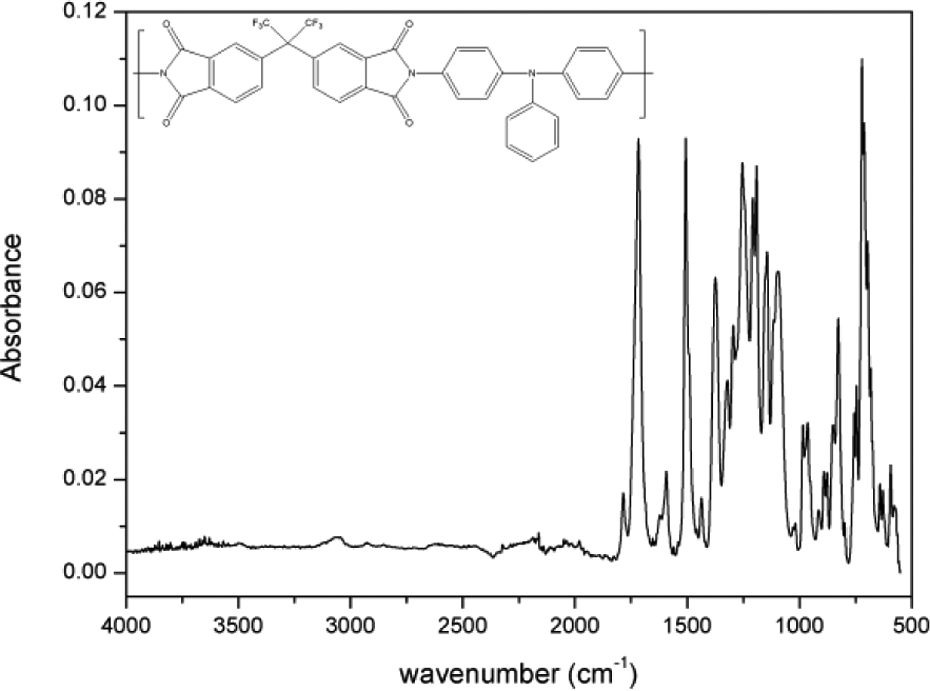
IR spectrum of PI (6FDA/I). IR: infrared; PI: polyimide; 6FDA: 4,4′-(hexafluoroisopropylidene)diphthalic anhydride.
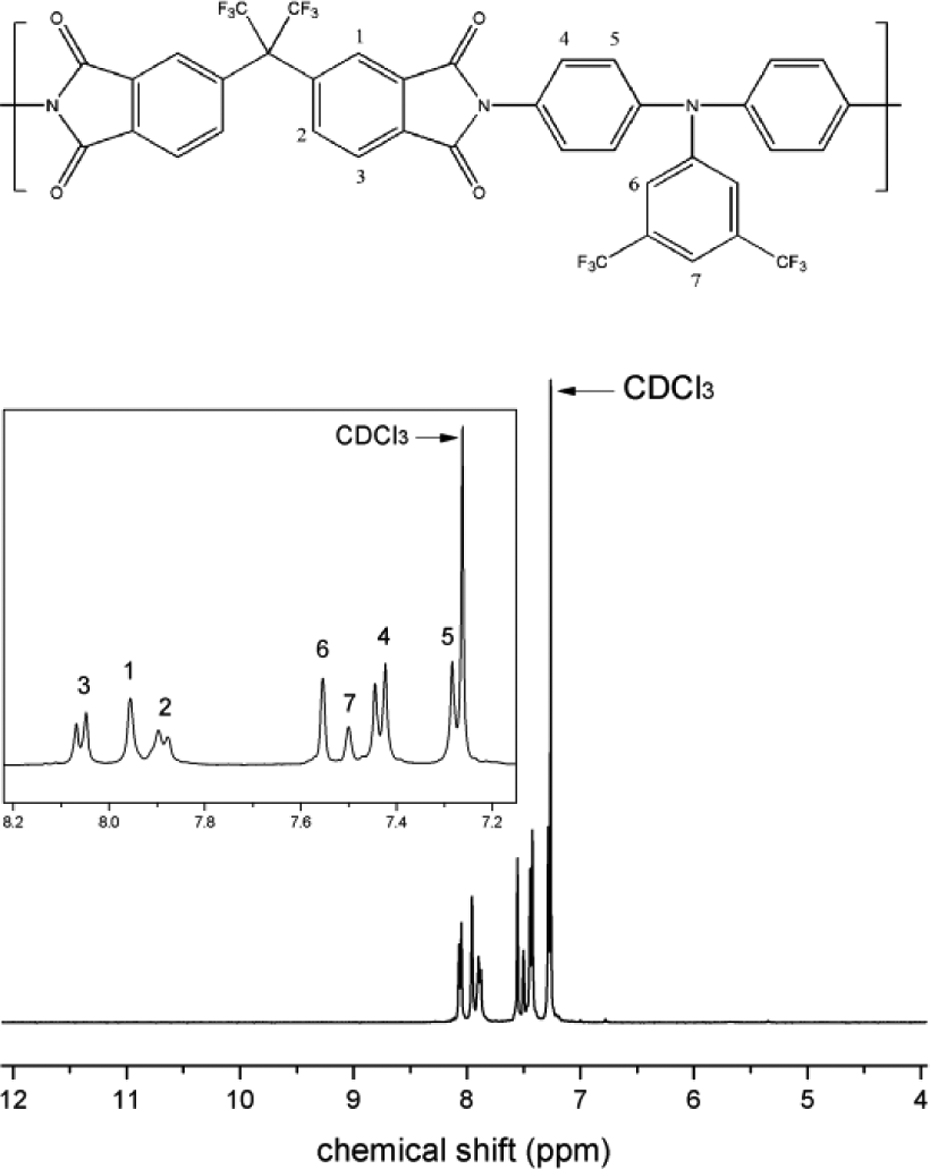
1H NMR spectrum of PI (6FDA/III). 1H NMR: proton nuclear magnetic resonance; PI: polyimide; 6FDA: 4,4′-(hexafluoroisopropylidene)diphthalic anhydride.
Physical properties of PI membranes
Thermal properties of the PI membranes were identified by DSC, DMA, and TGA, and the results are summarized in Table 1. TGA curves of 6FDA-derived PI membranes are shown in Figure 6, no obvious thermal degradation was observed before 400°C, and the
Characterization of PI membranes.
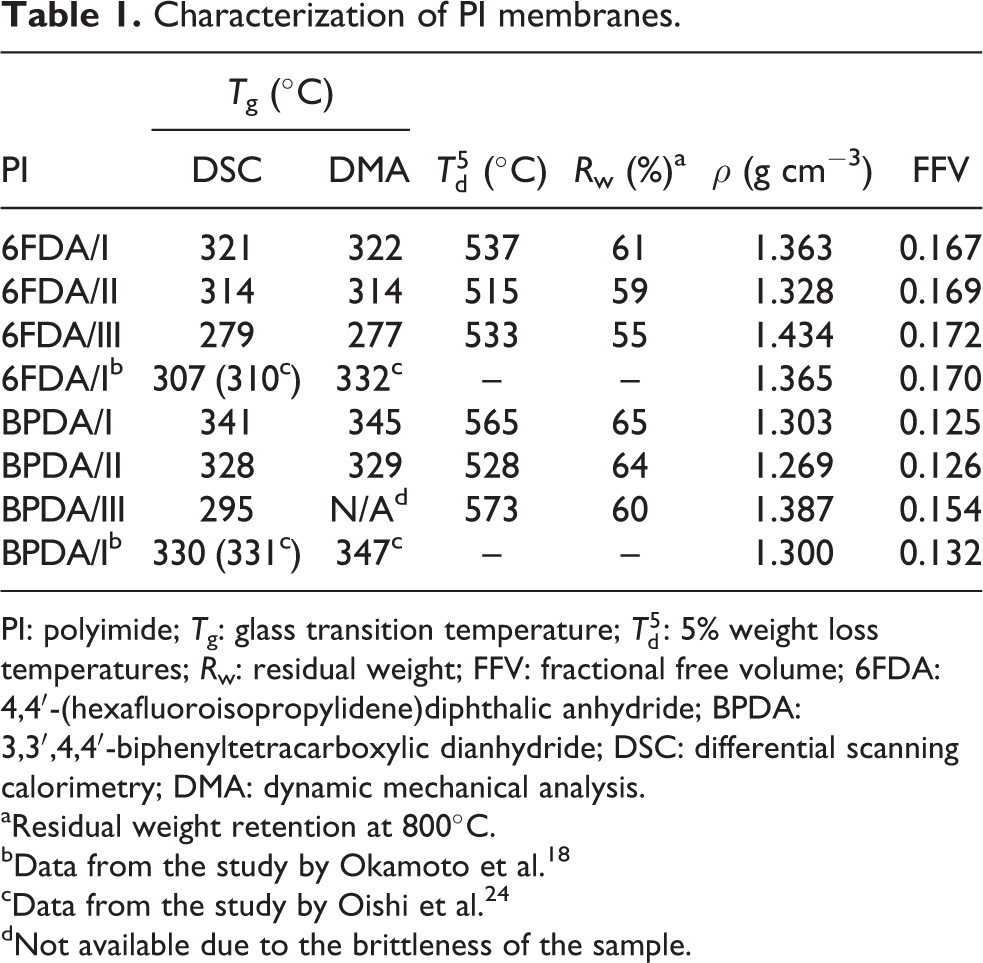
PI: polyimide; Tg: glass transition temperature;
aResidual weight retention at 800°C.
bData from the study by Okamoto et al. 18
cData from the study by Oishi et al. 24
dNot available due to the brittleness of the sample.
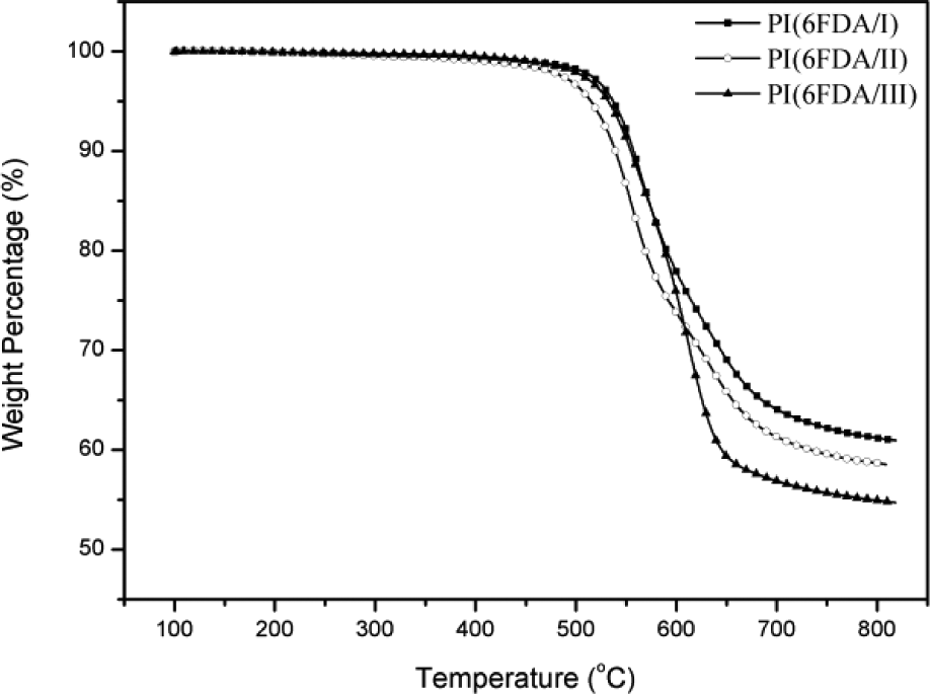
TGA curves of 6FDA-derived PI membranes in N2. TGA: thermogravimetric analysis; PI: polyimide; 6FDA: 4,4′-(hexafluoroisopropylidene)diphthalic anhydride; N2: nitrogen.
DMA could also be used to estimate molecular mobility above Tg of the polymer materials, since the data of dynamic mechanical properties obtained from DMA results could be used to estimate the degree of intermolecular interaction. 25,26 Storage modulus and dissipation factor curves of PI (BPDA/I) are shown in Figure 7. The storage modulus decreased drastically at the glass transition region, and peak value of loss tangent was larger than 1.1, indicating that the intermolecular interaction was rather weak. This is because dense intermolecular packing was hindered by the triangular triphenylamine structure. The other PI membranes derived from 6FDA or having substituents at 3′′,5′′ positions displayed similar DMA curves as in Figure 7.
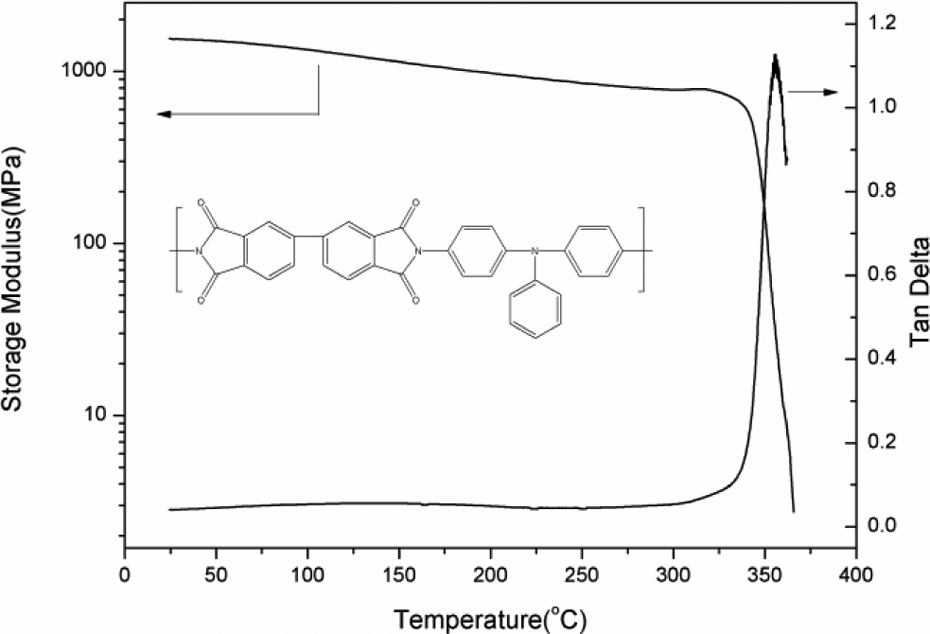
DMA curves of PI (BPDA/I). DMA: dynamic mechanical analysis; PI: polyimide; BPDA: 3,3′,4,4′-biphenyltetracarboxylic dianhydride.
The densities of the PI membranes and the values of FFV are listed in Table 1. 6FDA-type PIs had larger FFV values than BPDA type. Besides, the FFV values increased monotonously as the substituent in the triphenylamine unit changed from –H to –CH3 and –CF3, which can be interpreted by the gradual deficient intermolecular packing caused by the bulky pendant group. It has been well perceived that the gas permeability of the glassy polymers is strongly correlated to its FFV, and higher FFV materials typically have larger gas permeation coefficients than their lower FFV counterparts. 7 More details of the relationship between FFV and gas permeation properties will be discussed in the latter section.
The solubility of the PI membranes was qualitatively tested at 10% w/v concentration and the results are summarized in Table 2. PI based on diamine I and II showed inferior solubility in the organic solvents, and type III PIs were highly soluble in the solvents, which could be attributed to the bulky pendant –CF3 group.
Solubility of PIs.
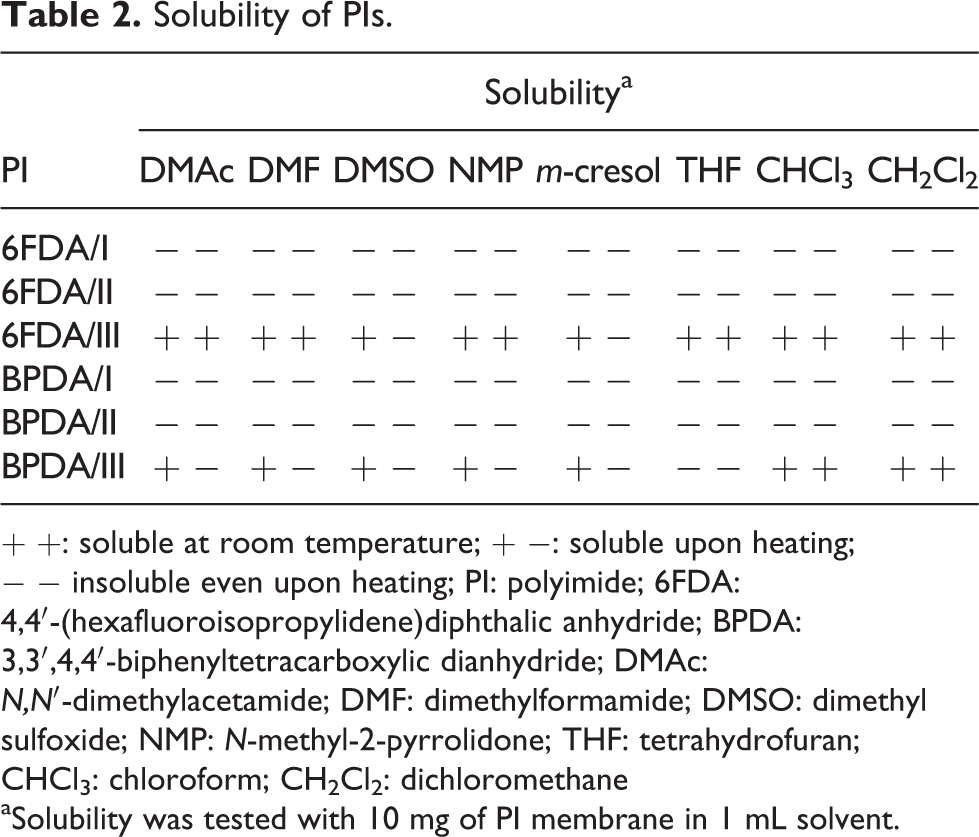
+ +: soluble at room temperature; + −: soluble upon heating; − − insoluble even upon heating; PI: polyimide; 6FDA: 4,4′-(hexafluoroisopropylidene)diphthalic anhydride; BPDA: 3,3′,4,4′-biphenyltetracarboxylic dianhydride; DMAc: N,N′-dimethylacetamide; DMF: dimethylformamide; DMSO: dimethyl sulfoxide; NMP: N-methyl-2-pyrrolidone; THF: tetrahydrofuran; CHCl3: chloroform; CH2Cl2: dichloromethane
aSolubility was tested with 10 mg of PI membrane in 1 mL solvent.
WAXD was used to estimate the crystallinity of the PI membranes. All the PIs displayed less structured halos and were proved to be amorphous. The results could be interpreted by the loose and irregular molecular packing, which was attributed to the hexafluoroisopropyl and triphenylamine structures. The typical WAXD patterns of PI (6FDA/I) and PI (BPDA/I) are shown in Figure 8.
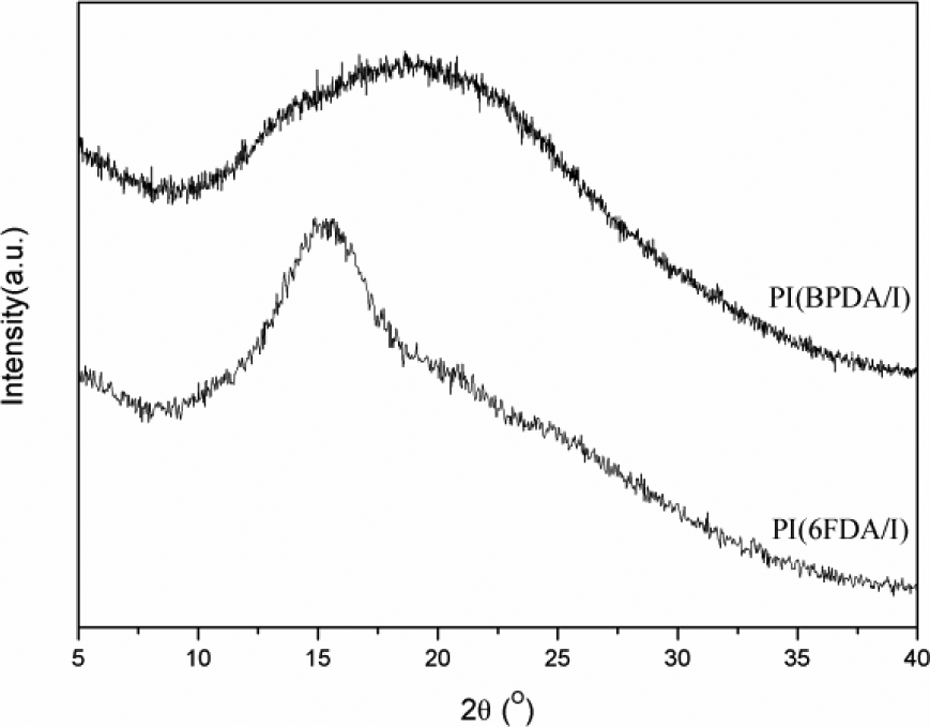
XRD patterns of PI (6FDA/I) and PI (BPDA/I). XRD: X-ray diffraction; PI: polyimide; 6FDA: 4,4′-(hexafluoroisopropylidene)diphthalic anhydride; BPDA: 3,3′,4,4′-biphenyltetracarboxylic dianhydride.
Gas permeation properties
The gas permeability coefficients and ideal selectivity of the PI membranes for various gas penetrants are summarized in Table 3, and the gas transport properties of PI-I, as reported in the study by Okamoto et al., 18 are also listed in the table. For each PI membrane studied in this work, the gas permeability coefficients decreased in the following order: P (H2) > P (CO2) > P (O2) > P (N2) > P (CH4), which agrees well with the order of kinetic diameters of the penetrant gas molecules. 19 For PIs bearing the same diamine component, gas permeation coefficients of 6FDA-derived PI were larger than BPDA type, as the same with the FFV results. Regarding the effect of substituted triphenylamine moiety, the gas permeation coefficients increased in the order of PI-I < PI-II < PI-III, and the values of the ideal selectivity decreased in the order PI-I > PI-II > PI-III. Since the substituent pendant groups at the 3′′,5′′ positions of the triphenylamine changed from –H to –CH3 and –CF3, the intermolecular packing was weakened, leading to expanded amount of transient void space (i.e. free volume) thus increased frequency of diffusive jumps for the penetrant gases. The difference of the gas permeability between PI-II and PI-III was markedly larger than that between PI-I and PI-II, resulting from the function of large –CF3 to loosen the intermolecular packing. The ideal selectivity of the membranes tended to be smaller than other 6FDA-based PI membranes with similar gas permeation coefficients, 27,28 especially the α values of CO2/CH4, and this result was in accordance with the reported triphenylamine-based PI membranes. 17,23 The results of the gas permeation tests of PI-I were similar with the data reported in the study by Okamoto et al., 18 except that the gas permeability coefficient of CO2 is obviously larger than the reported data, this is probably due to that the tests were carried out under different pressures.
Permeability coefficients and permselectivity of PI membranes at 35°C and 0.2 MPa.
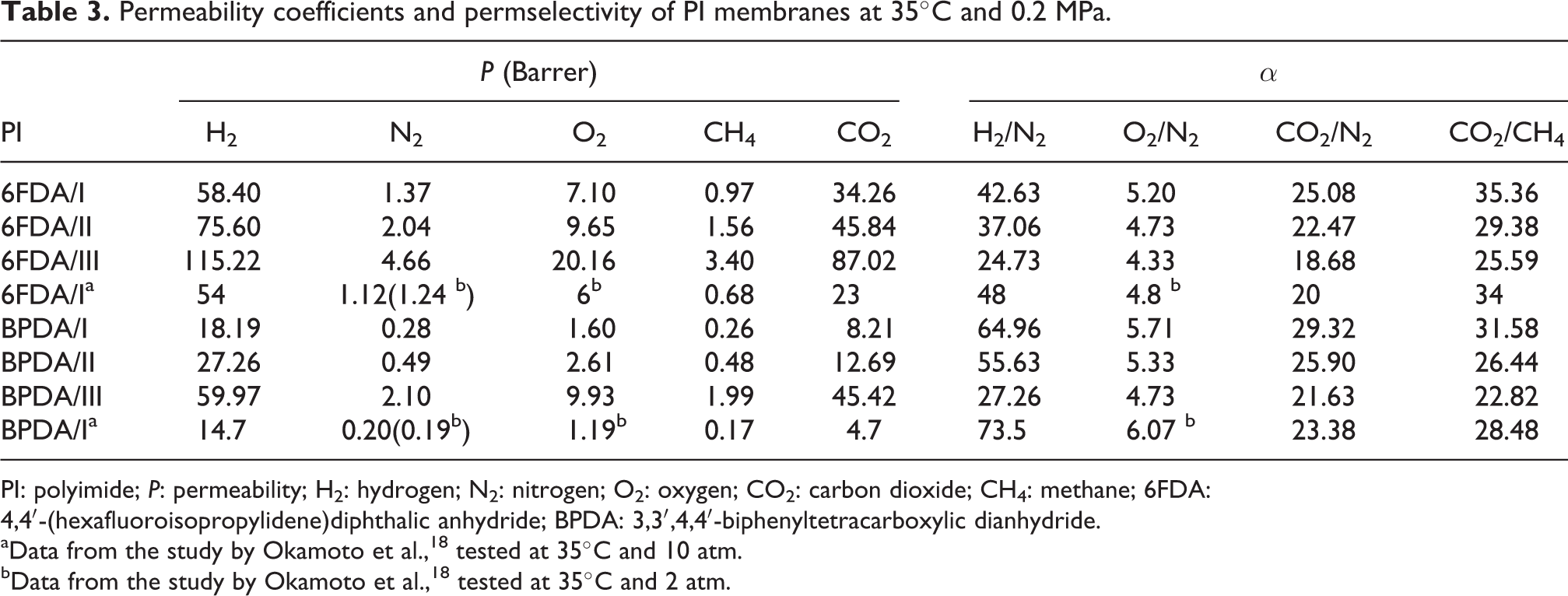
PI: polyimide; P: permeability; H2: hydrogen; N2: nitrogen; O2: oxygen; CO2: carbon dioxide; CH4: methane; 6FDA: 4,4′-(hexafluoroisopropylidene)diphthalic anhydride; BPDA: 3,3′,4,4′-biphenyltetracarboxylic dianhydride.
aData from the study by Okamoto et al., 18 tested at 35°C and 10 atm.
bData from the study by Okamoto et al., 18 tested at 35°C and 2 atm.
Gas permeability/separation data of H2/N2 of the present PI membranes were compared with the Robeson upper bound, 29 as shown in Figure 9. The effect of the molecular structures on the gas transport properties could be clearly seen.
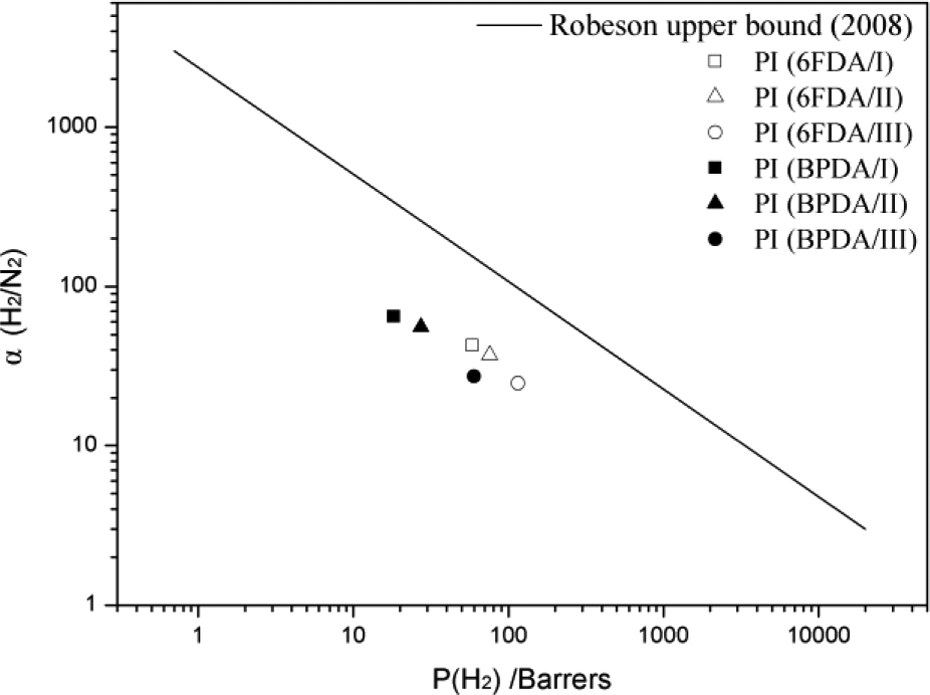
Gas separation properties of PI in this work compared with Robeson upper bound. PI: polyimide.
Since gas permeation through the dense polymer membranes could be explained by the solution–diffusion process, the P coefficients have been decoupled into diffusion coefficients and solubility coefficients by the equation of P = D × S. The diffusion coefficients (D) and the diffusivity selectivity of N2, O2, CH4, and CO2 are summarized in Table 4. The diffusion coefficients and selectivity of the membranes in this work are consistent with the features of typical PI membranes, and the diffusion coefficients of the gases follow the order: D (O2) > D (CO2) > D (N2) > D (CH4), as determined by the characteristics of the penetrant gases. As the same with the results of gas permeation coefficients, the diffusion coefficients of 6FDA-type membranes were larger than BPDA-derived PI membranes. With the incorporation of the substituted pendant groups to the triphenylamine unit, the diffusion coefficients increased from PI-I to PI-III, and gradual decrease of the diffusion selectivity was observed. This is because the diffusion coefficient significantly depends on the free volume of the polymer. 21 The influence of the PI backbone structure on the diffusion coefficients is in accordance with the concept of diffusivity-controlled mechanism. Larger difference of diffusion coefficients was observed between PI-II and PI-III, which was also the function of the bulky –CF3 group.
Diffusion coefficients and diffusivity selectivity of PI membranes at 35°C and 0.2 MPa.
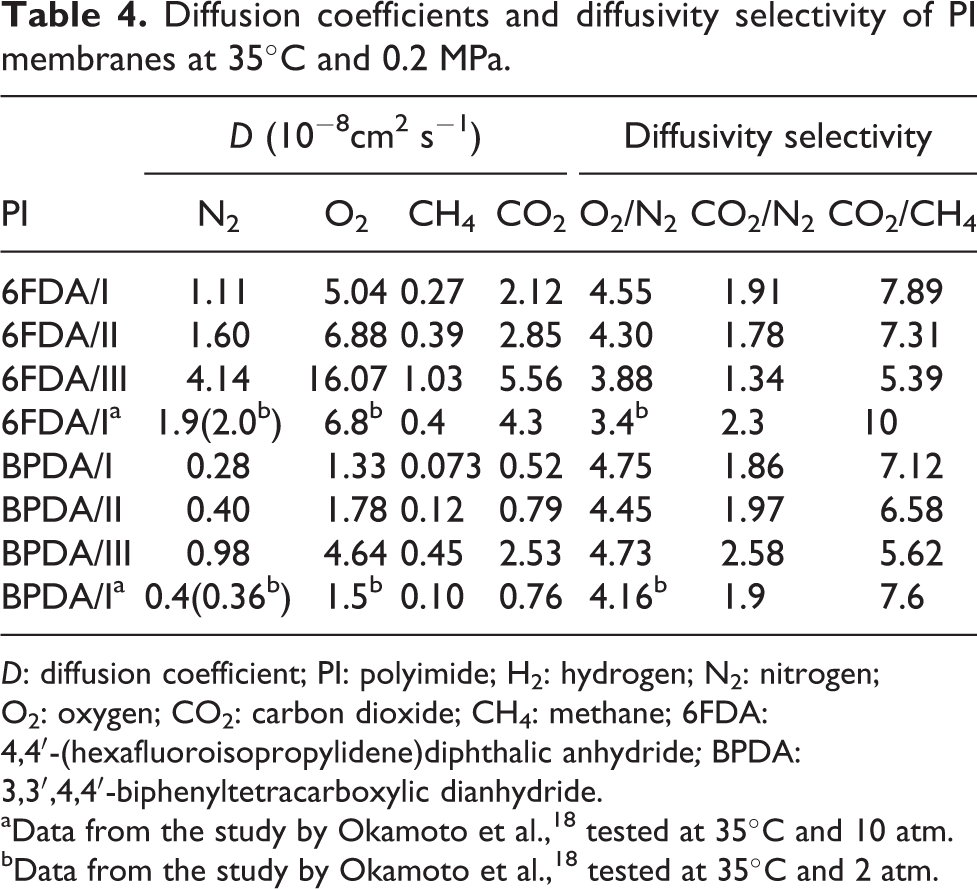
D: diffusion coefficient; PI: polyimide; H2: hydrogen; N2: nitrogen; O2: oxygen; CO2: carbon dioxide; CH4: methane; 6FDA: 4,4′-(hexafluoroisopropylidene)diphthalic anhydride; BPDA: 3,3′,4,4′-biphenyltetracarboxylic dianhydride.
aData from the study by Okamoto et al., 18 tested at 35°C and 10 atm.
bData from the study by Okamoto et al., 18 tested at 35°C and 2 atm.
The values of the solubility coefficients (S) and selectivity are listed in Table 5. The solubility coefficients of the PI membranes decreased in the order of S (CO2) > S (CH4) > S (O2) > S (N2), which was consistent with the order of the critical temperatures of the gases. 19 The solubility coefficients of CO2 were remarkably larger than the other gas molecules, which was due to the higher condensability of CO2 molecules in the PI matrix.
Solubility coefficients and solubility selectivity of PI membranes at 35°C and 0.2 MPa.
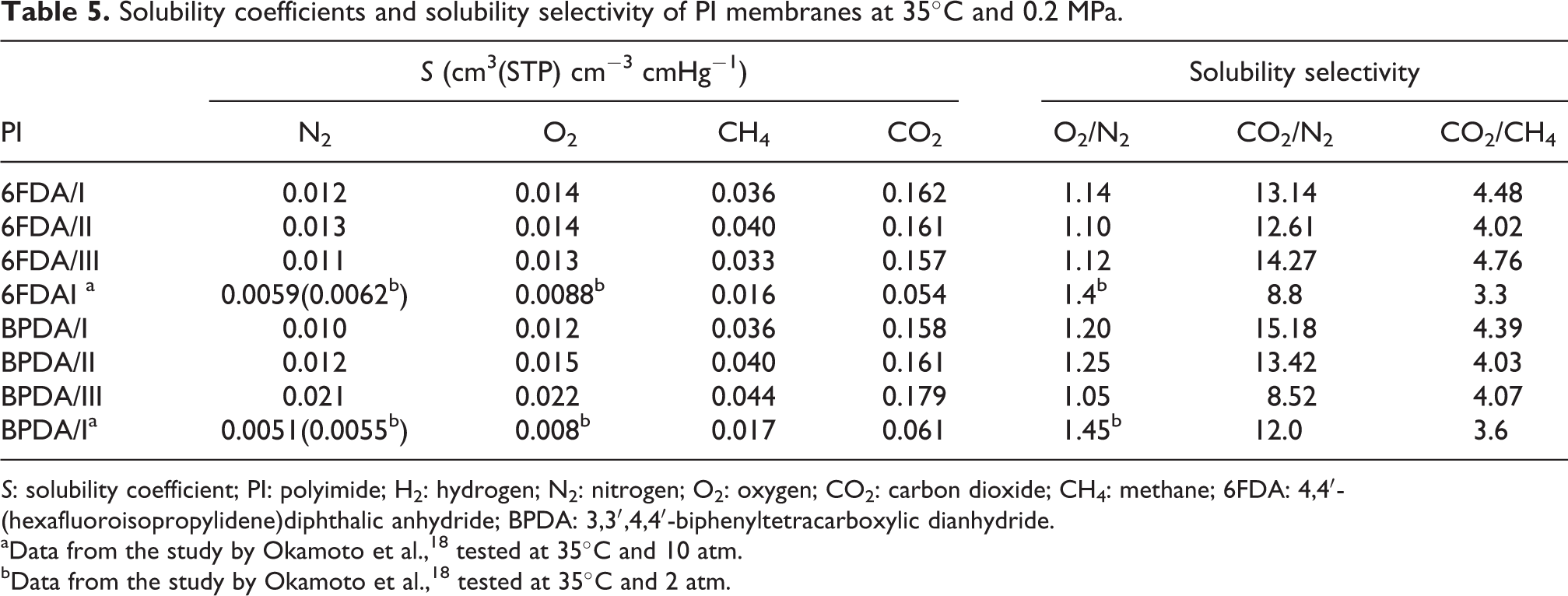
S: solubility coefficient; PI: polyimide; H2: hydrogen; N2: nitrogen; O2: oxygen; CO2: carbon dioxide; CH4: methane; 6FDA: 4,4′-(hexafluoroisopropylidene)diphthalic anhydride; BPDA: 3,3′,4,4′-biphenyltetracarboxylic dianhydride.
aData from the study by Okamoto et al., 18 tested at 35°C and 10 atm.
bData from the study by Okamoto et al., 18 tested at 35°C and 2 atm.
Conclusions
In order to improve the gas transport properties of PI membranes, triphenylamine unit was incorporated to synthesize three diamine monomers: 4,4′-diaminotriphenylamine, 4,4′-diamino-3′′,5′′-dimethyltriphenylamine, and 4,4′-diamino-3′′,5′′-ditrifluoromethyltriphenylamine, and PI membranes derived from the diamines and 6FDA or BPDA were prepared via thermal imidization procedure. The PI membranes exhibited good thermal properties, with Tg of 279–341°C, and
Footnotes
Declaration of Conflicting Interests
The author(s) declared no potential conflicts of interest with respect to the research, authorship, and/or publication of this article.
Funding
The author(s) disclosed receipt of the following financial support for the research, authorship, and/or publication of this article: Financial support is gratefully acknowledged from the National Natural Science Foundation of China (No. 21436009)
Supplemental Material
Supplementary material for this article is available online.
References
Supplementary Material
Please find the following supplemental material available below.
For Open Access articles published under a Creative Commons License, all supplemental material carries the same license as the article it is associated with.
For non-Open Access articles published, all supplemental material carries a non-exclusive license, and permission requests for re-use of supplemental material or any part of supplemental material shall be sent directly to the copyright owner as specified in the copyright notice associated with the article.
