







Abstract
This article discusses the results of experimental research on the synthesis of polyether sulfones and the molten polymer filament layering 3-D printing technology. The regularities of influence of the polycondensation conditions in the synthesis of polyphenylene sulfone on the processes of cross-linking, thermal degradation of the polymer at processing temperatures, and 3-D printing were revealed. It is shown that introduction of cardo fragments increases the glass transition temperature and heat resistance of the copolymers, and the elastic-strength properties, due to the increased chain rigidity. It determined the influence of technological modes of 3-D printing by layering molten polymer filaments on the physico-mechanical properties of polyether sulfones.
Introduction
Currently, there is an increasing popularity for synthesizing products from polymeric materials because of the technology of 3-D printing or additive production. Unlike traditional ways of polymer processing (extrusion, injection molding), new technology allows synthetization of objects with any degree of complexity and geometry on the basis of a digital model.
Today, there are many methods of additive production. The distinctions are in the process of layering and in the used expendables. 1 Metals, 2 polymers, 3 –6 and ceramics 7,8 can be used as materials for printing. High-tech formation of goods with complex configurations by the use of 3-D technology sets high standards for polymeric materials in terms of their consumer characteristics and processability.
The majority of polymeric materials currently used in fused deposition modeling (FDM) technology, such as acrylonitrile butadiene styrene (ABS), 9 polylactides (PLAs), 10 poly carbonate, and nylon 11 are not suitable for obtaining high-strength and responsible products by 3-D printing. Perspective materials for these purposes are polyether sulfones. These materials belong to the high-temperature engineering thermoplastics with excellent performance properties and can retain their properties for sustained time at temperatures up to 250°C. Currently, as a material for 3-D printing by the FDM method on the basis of polyether sulfones, polyphenylene sulfone (PPSU) of the Stratasys Company 11 is used only industrially. The urgent task is expanding the assortment of such materials, however, the usage of super constructional polymers in 3-D printing is limited to a set of complex problems whose solution requires a scientific and technological base.
The aim of this work was to study the regularities of synthesis of PPSU and its copolymers with phenolphthalein and the development of 3-D printing technology of functional products from the developed materials.
Experimental part
Synthesis of PPSU was carried out in a 500 mL three-necked flask equipped with a nitrogen inlet, a mechanical stirrer, a Dean-Stark trap, and a reflux condenser; 4,4′-dihydroxy diphenyl (55.86 g, 0.3 mol), 4,4′-dichlorodiphenyl sulfone (89.16 g, 0.31 mol), and potassium carbonate (51.82 g, 0.375 mol) were charged in a flask. Then N,N-dimethyl acetamide (470 mL) as reaction solvent was added. The reaction mixture was gradually heated to 165°C for 4 h to distill the water. After the temperature reached 165°C, the reaction mixture was allowed to proceed at this temperature for 6 h. After synthesis, the mixture was discharged and the formed salts were filtered. Then the reaction solution was slowly poured into the water acidified by oxalic acid. The precipitated polymer was filtered and washed several times with water and dried in a vacuum oven at 160°C for about 12 h.
In the preparation of copolymers, PPSU with phenolphthalein as starting monomers in a flask was charged 4,4′-dihydroxy diphenyl (39.1 g, 0.21 mol), 4,4′-dihydroxy phthalophenone (phenolphthalein) (28.65 g, 0.09 mol), 4,4′-dichloro diphenyl sulfone (89.16 g, 0.31 mol), and potassium carbonate (51.82 g, 0.375 mol). Further synthesis was carried out as described above.
Thermal properties of the copolymers were investigated by differential scanning calorimetry by using PerkinElmer DSC 4000 (Waltham, Massachusetts, USA) and by thermogravimetric analysis at a heating rate of 5°C min−1 in an air atmosphere on PerkinElmer TGA 4000 instrument (Waltham, Massachusetts, USA).
The melt flow index (MFI) was determined on a capillary viscometer with IIRT-5 at temperature of 350°C and a load of 5 kg.
Reduced viscosity (η) of the synthesized polymers was determined in an Ubbelohde type capillary viscometer (Lauda, Lauda-Königshofen Germany) at 25°C for 0.5 g of polymer in 10.0 mL of chloroform.
The amount of hydrogen released during heating of the polysulfones was determined using a gas chromatograph “Tsvet-800” with a thermal conductivity detector and a packed column with a length of 5 m filled with polysorb-1 impregnated with a 5% solution of polyethylene glycol adipinate. Heating of the samples were carried out at a speed of 50°C min−1 in a closed water seal.
IR spectra were recorded on a Fourier spectrometer (Spectrum Two; PerkinElmer)in the range of 4000–450 cm−1 with a spectral resolution of 0.4 cm−1.
Mechanical tests were carried out on a universal testing machine, Gotech Testing Machine CT-TCS 2000. (Taichung Industry Park, Taichung City, Taiwan) at 23°C. Impact tests were performed with and without notch, by the Izod method on the instrument Gotech Testing Machine, Model GT-7045-MD. (Taichung Industry Park, Taichung City, Taiwan), with the energy of a pendulum, 11 J.
The Vicat softening temperature of the samples was determined on HV-2000-M3 W Computer HDT/VICAT Tester (GOTECH TESTING MACHINES INC., Taichung Industry Park, Taichung City, Taiwan).
Results and discussion
Synthesis of PPSUs was carried out by high temperature polycondensation by the mechanism of nucleophilic substitution reactions in aprotic dipolar solvents.
In the synthesis of PPSUs, 4,4′-dihydroxy diphenyl and 4,4′-dichlorodiphenyl sulfone were used as initial monomers (Figure 1):
Synthesis of copolymer PPSU with phenolphthalein (PPSUPHP) was performed according to the Figure 2, using 4,4′-dihydroxy diphenyl (70%), phenolphthalein (30%), and 4,4′-dichlorodiphenyl sulfone as initial monomers.
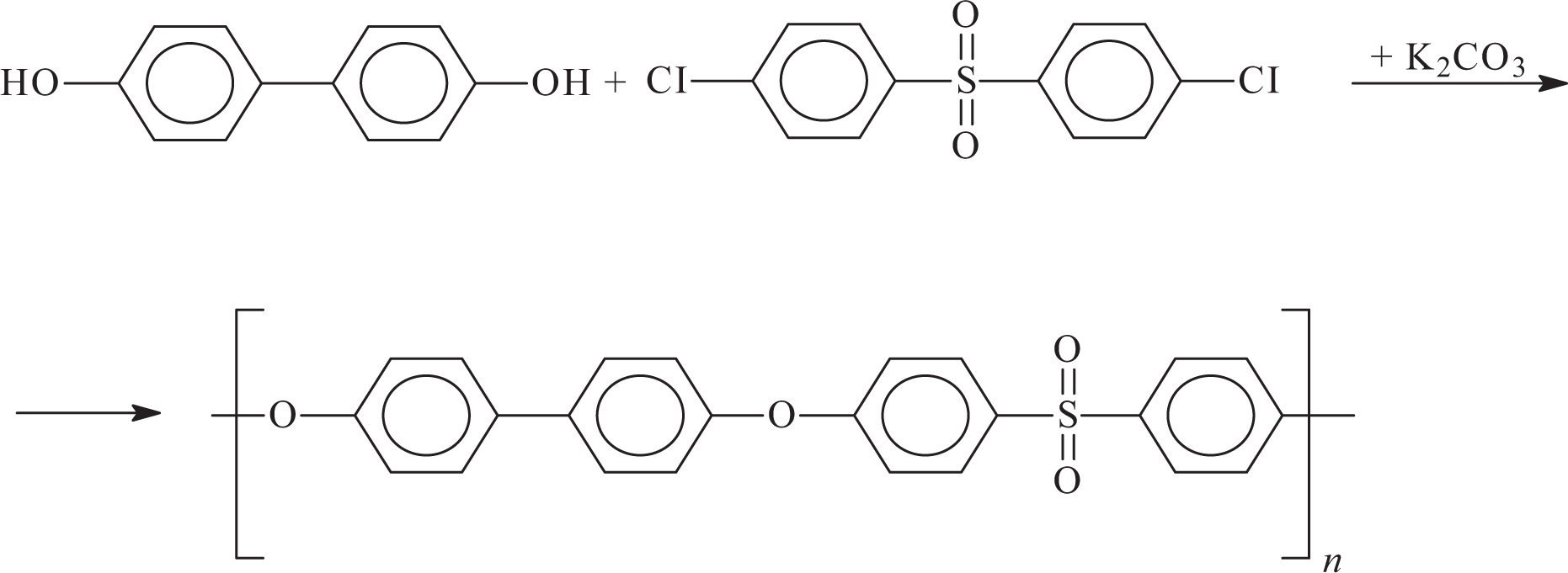
Synthesis of PPSU.
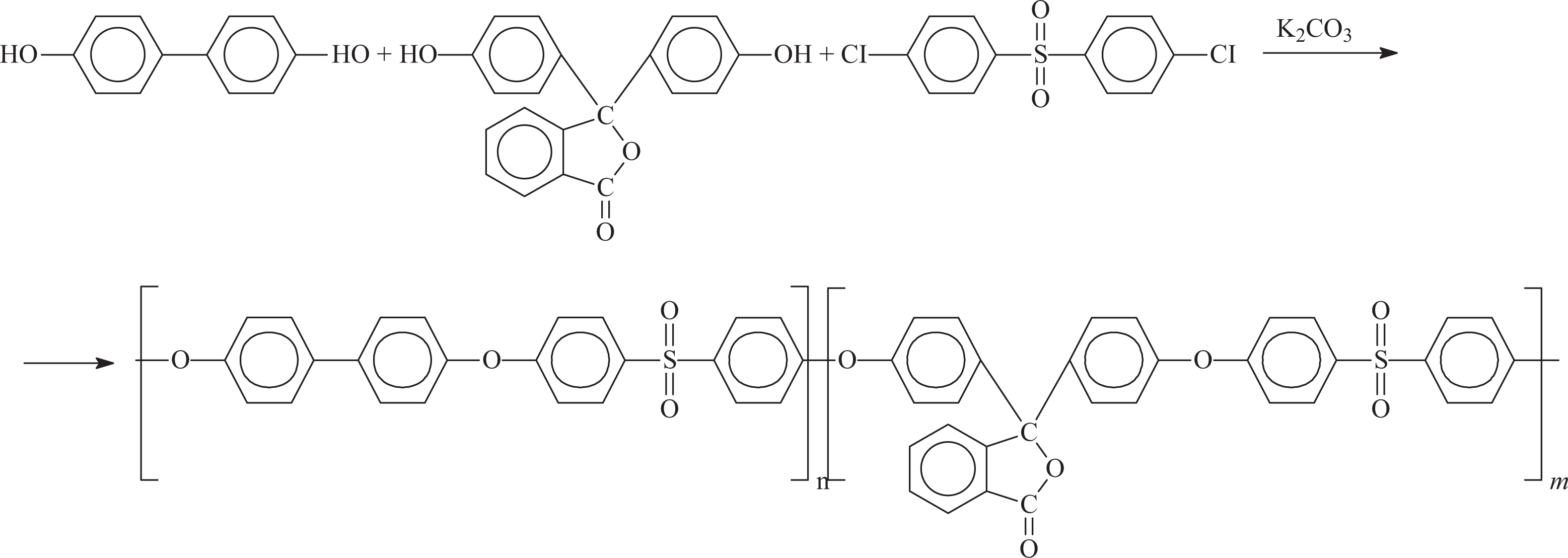
Synthesis of copolymer PPSU with phenolphthalein.
As a blocker of end groups, 4,4′-dichlorodiphenyl sulfone was used. This is due to the fact that polymers with halogen end groups are more thermally, hydrolytically, and fire resistant in comparison with polymers that have terminal hydroxyl groups. 12,13
At the initial stage, the studies of synthesis in various solvents, such as dimethyl sulfoxide (DMSO), dimethylacetamide (DMAA), and N-methylpyrrolidone (N-MP), were performed.
Study of the rheological and physico-mechanical properties of the synthesized polymers showed that the samples synthesized in DMSO were processed poorly and the synthesized products were porous and darkened. Samples synthesized in N-MP were processed better but they also appeared darkened. There were no such problems with the samples synthesized in DMAA.
Previously, some authors have found 14 –17 that at relatively low temperatures, phenoxy end groups of polysulfones join the phenylene fragments of the macro chain. It leads to the separation of hydrogen atoms from the phenyl ring favoring their cross-linking. At the higher temperatures, this reaction is practically always completed with destruction of the polymer backbone. In this regard, it was interesting to investigate processes of cross-linking of polysulfones obtained in different solvents by the method of gas chromatography. Incubation time for each point was 60 min and the sample weight was 100 mg.
In this regard, we have conducted research of the processes of polysulfones cross-linking synthesized in various solvents by hydrogen evolution. The amount of emitted hydrogen during heating was determined by gas chromatography. Thermal processing time for each point was 60 min, with sample weight of 100 mg.
As it is seen from the results presented in Figure 3, for PPSU, synthesized without blocking of terminal groups in DMSO and N-MP, the beginning of the hydrogen evolution corresponds to 150°C, the output of which is continuously increased with the increasing temperature up to 400°C. With regard to PPSU, synthesized in the DMAA, the beginning of hydrogen evolution is shifted to 200°C with significantly less amount of released hydrogen.
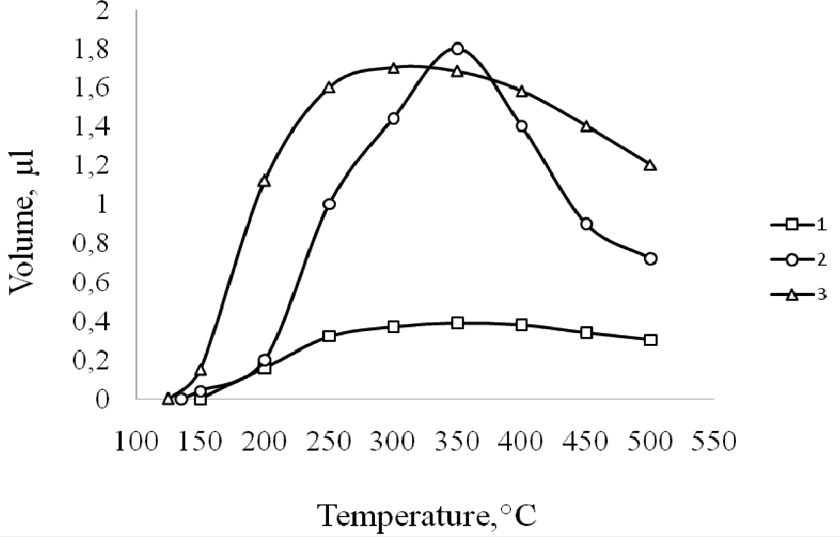
Dependence of hydrogen evolution on the temperature for PPSU synthesized without blocking end groups in 1, DMAA; 2, N-MP; 3, DMSO. PPSU: polyphenylene sulfone; DMSO: dimethyl sulfoxide.
It demonstrates that during the polysulfone synthesis in DMSO, N-MP cross-linking begins at lower temperatures and the cross-link density is higher.
When the impurity content of DMSO is above 0.05 wt%, it leads to an increase of MFI and yellowing of the polymer during processing. Destructive changes become catastrophic when the content of DMSO is above 0.5 wt%. During the processing of the remains of PPSU, DMSO plays the role of a radical initiator of destruction. 18
At the next stage, the research was carried out on the influence of blocking the hydroxyl end groups in the processes of polymer cross-linking. In this case, the evolution of hydrogen for all of the polymers was decreased and shifted to higher temperature (Figure 4).
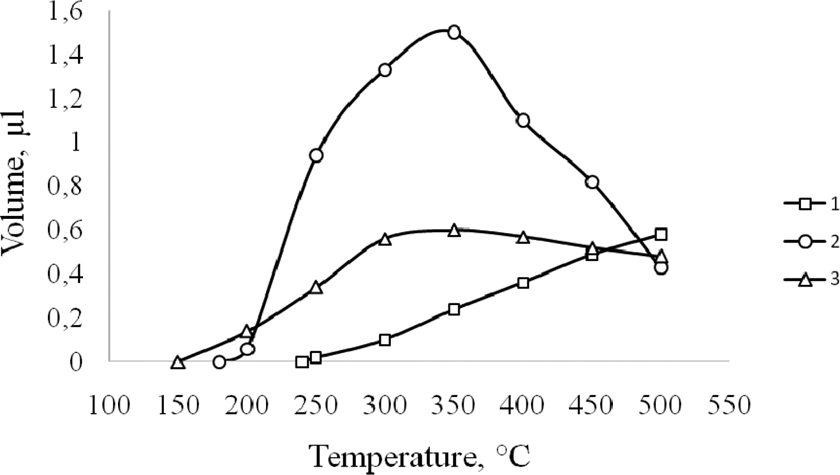
The dependence of the hydrogen evolution on the temperature for PPSU synthesized with the blocking end groups by 4,4′-dichloro diphenyl sulfone in 1, DMAA; 2, N-MP; 3, DMSO. PPSU: polyphenylene sulfone; DMSO: dimethyl sulfoxide.
DMSO and N-MP evolution of hydrogen is fixed after 200°C, and for DMAA, after 250°C. It indicates the efficiency of DMAA use and blocking of the hydroxyl end groups by 4,4′-dichlorodiphenyl sulfone.
In this connection, the synthesis of PPSUs with cardo fragments was performed in DMAA with the blocking of the end groups by 4,4′-dichloro diphenyl sulfone. Cardo polymers (from the Latin word “cardo”, meaning a loop) suggested to call 19 polymers containing cyclic side groups, one of the atoms of which also forms part of the main polymer chain, because such cyclic groupings can be regarded as loops in the main polymer chain. Groups of this type include phthalide, phthalimidine, fluorene, anthrone, and so on groups.
For the purpose of confirmation of structure, IR-spectroscopic researches were conducted. At a spectra of the synthesized polymers, there are all the absorption bands, characteristic of a PPSU.
Skeletal vibrations of aromatic carbon–carbon bonds are shown by bands with maxima at 1584 and 1486 cm−1. The asymmetric and symmetric vibrations of SO2 group are shown in the form of the split bands with maxima near 1322 and 1294 cm−1 and also the second split band with maxima near 1165 and 1148 cm−1, respectively. The intensive band at 1235 cm−1 corresponds to asymmetric stretching vibrations of C–O group.
The main distinctiveness confirming presence of a phenolphthalein component at copolymers is the existence of the carbonyl group, which is shown in the form of a band with a maximum in 1772 cm−1 (Figure 5). Analyzing the intensity of this band also determines the percentage of phenolphthalein in copolymers.
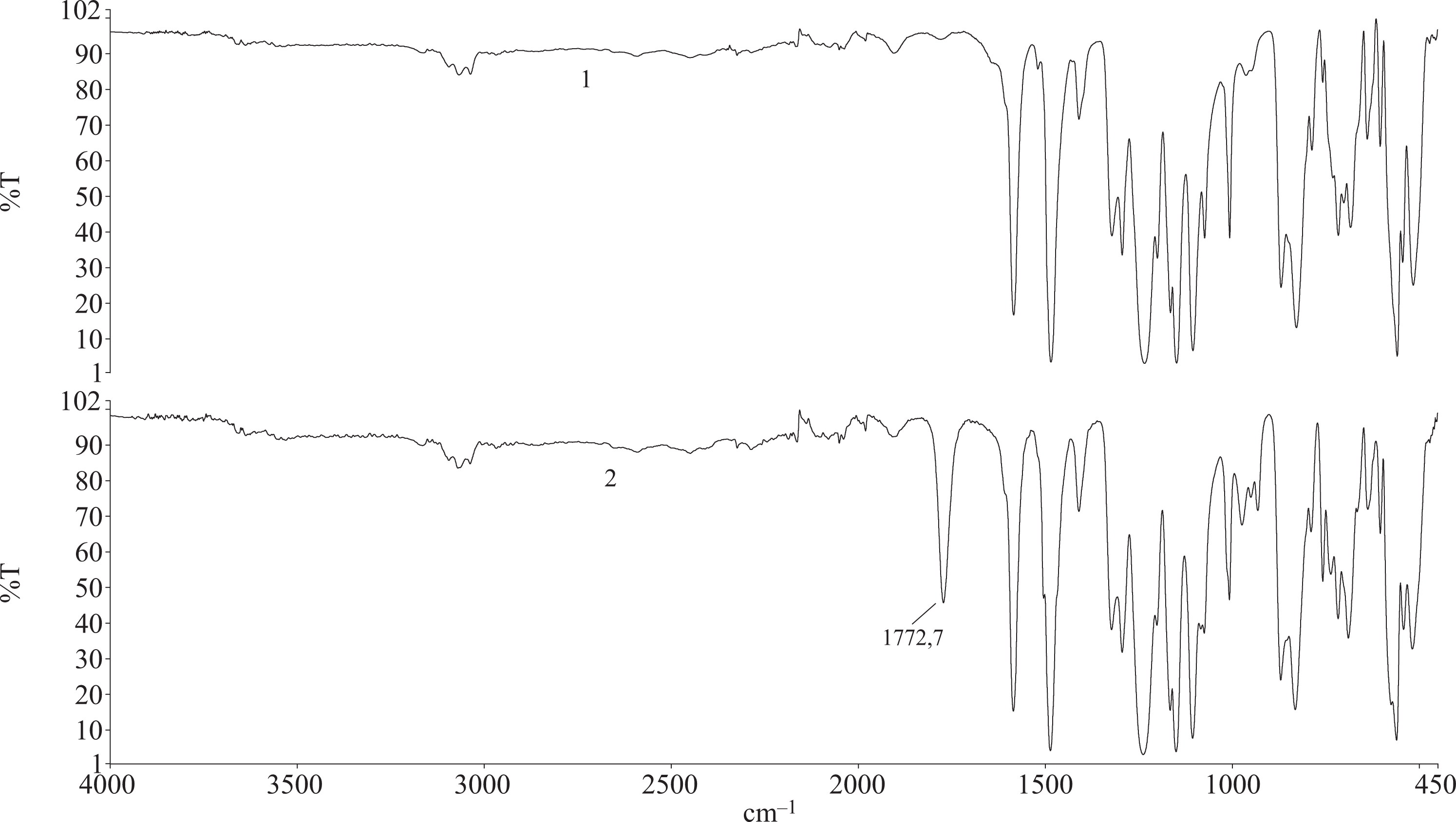
IR spectra: 1, PPSU; 2, PPSUPHP. PPSU: polyphenylene sulfone; PPSUPHP: polyphenylene sulfone with phenolphthalein; IR: infrared.
One of the most important indicators of the use of high-performance polymers is a glass transition temperature, which is directly related to the maximum possible temperature of their long-term operation. It is known 20 –27 that the introduction of the large side substituents into the polymeric chain increases the heat resistance of the material.
As expected, the introduction of phenolphthalein significantly increased the glass transition temperature and heat resistance, despite the decrease of the molecular weight of the copolymers (Table 1).
Thermal and rheological properties.
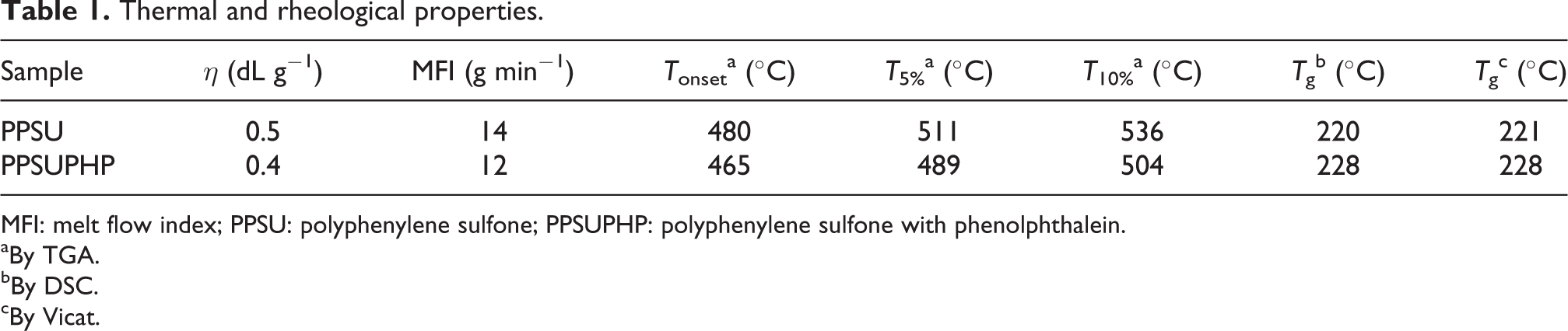
MFI: melt flow index; PPSU: polyphenylene sulfone; PPSUPHP: polyphenylene sulfone with phenolphthalein.
aBy TGA.
bBy DSC.
cBy Vicat.
In this case, the value of the MFI is also decreased. It is presumably caused by the hindrance of bulky side substituents on the movement of macro molecules relative to one another in the melt. Also, the heat resistance of copolymers is slightly reduced with addition of phenolphthalein.
By testing the synthesized polymers in 3-D printing technology by the extrusion method, filaments with diameter 1.75 mm were obtained.
In order to study the influence of 3-D printing parameters on the sample properties, print modes with various values of the air gap between filaments were tested.
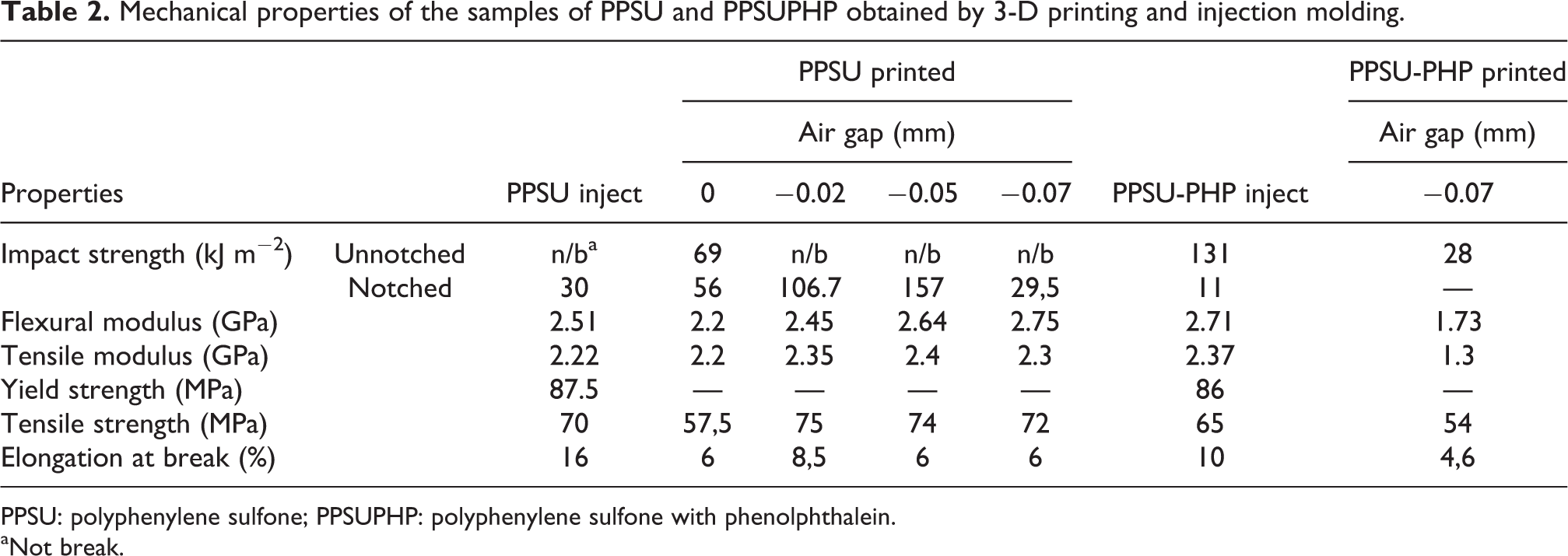
The mechanical properties of the samples obtained by the pressure molding method were also studied (Table 2).
Mechanical properties of the samples of PPSU and PPSUPHP obtained by 3-D printing and injection molding.
PPSU: polyphenylene sulfone; PPSUPHP: polyphenylene sulfone with phenolphthalein.
aNot break.
From Table 2, it is concluded that the samples from PPSU printed at zero air gap have the lowest values of mechanical properties. When testing on impact, unnotched samples are destroyed in the longitudinal direction, that is, along the surface of the filaments clutch. Addition of the cut is not important and the destruction is similar. This behavior is obviously related to a poor adhesion of filaments and the presence of air gaps between them (Figure 6).
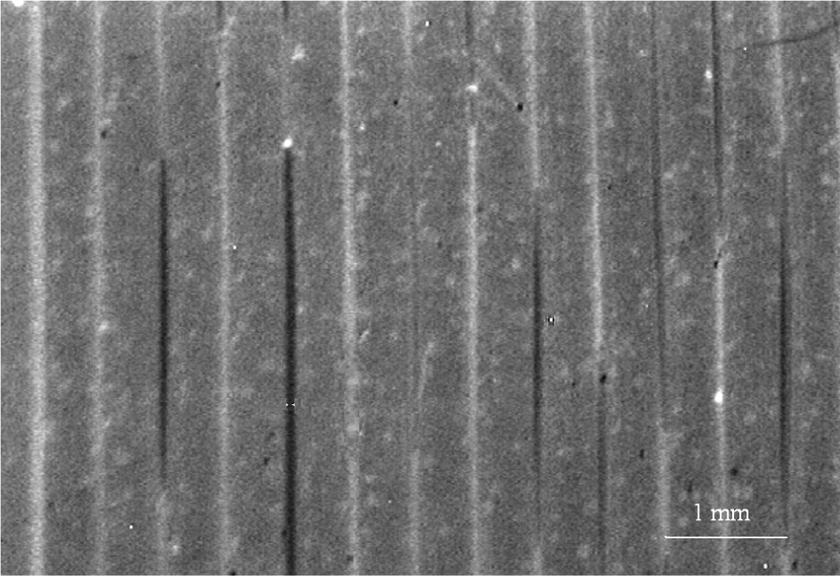
The printed sample from a PPSU with air gap 0 mm. PPSU: polyphenylene sulfone.
Reducing the air gap between the raster to −0.02 mm resulted in an increase of mechanical properties. When testing on impact, unnotched samples are no longer destroyed in the longitudinal direction, which is the result of better connection threads and the lack of visible gaps between them (Figure 7). Elasto-mechanical properties are also increased due to a more efficient voltage transmission with mechanical tests.
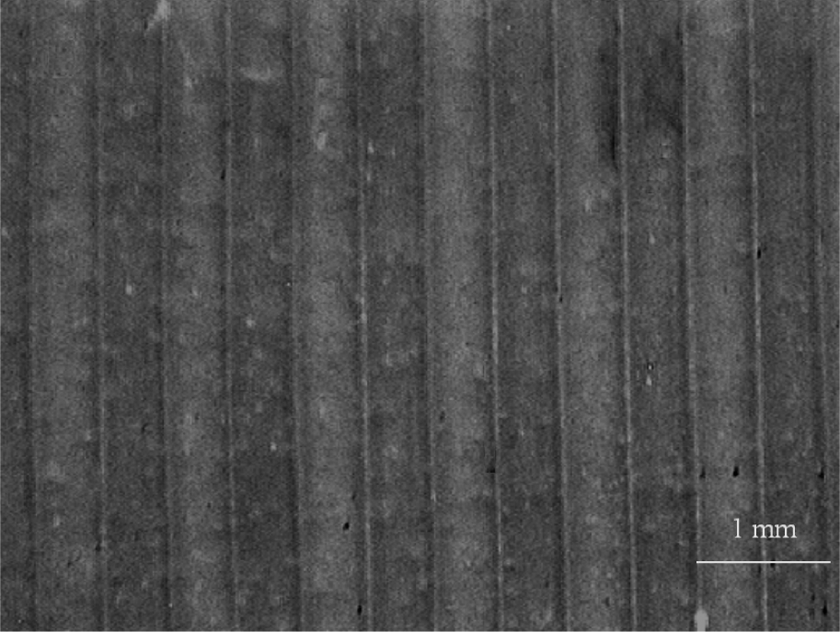
The printed sample from a PPSU with air gap −0.02 mm. PPSU: polyphenylene sulfone.
Further reduction of an air gap leads to the increase of stiffness in the samples, which even surpasses the value of the samples obtained by injection molding.
The effect of the air gap on the value of toughness without notch is noteworthy. Fracture energy equal to the value of the sample injection can only be achieved with a minimum air gap (−0.07 mm). This is observed in the case of monolithic samples close to printed patterns obtained by injection molding, which facilitates the passage of the main crack with the expenditure of the same amount of energy as the injection pattern. In other cases, an insufficient fusion of filaments allows greater energy absorption due to the possibility of greater deformation at impact load.
Testing of mechanical properties of molded samples of copolymer with phenolphthalein showed that the introduction of cardo fragments increases the elastic modulus and decreases toughness. These changes are obviously the result of the increase in the kinetic chain rigidity due to the presence of a bulky substituent, which is confirmed by an increase in the glass transition temperature. In connection with a lower melt flow of the copolymer, the samples printed with a minimum of air gap (−0.07 mm) have poor adhesion filaments and consequently have low mechanical properties, which are noticeably inferior to the properties of molded specimens. For better printing and implementation properties of the material in the printed form, it is necessary to use plasticization of the copolymer, thus achieving denser internal structure and higher mechanical properties.
Conclusions
As a result of the conducted research, it is revealed that the nature of aprotic dipolar solvent and blocking of hydroxyl end groups significantly influence the processes of synthesis and degradation of polyether sulfones.
It is established that the existence of cardo fragments leads to temperature increase of a glass transition and thermal stability of copolymers and also resilient and strength properties that are bound to increase in a rigidity of a chain, as a result of increase in an intermolecular interaction caused by introduction of the bulky substituent. At the same time, a decrease in thermal resistance and plastic properties of copolymers are observed. The possibility of use of the synthesized polymers as material for the 3-D printing is shown. The highest mechanical properties characterize the printed samples from PPSU homopolymer, resulting from a good package density of filaments. In case of the copolymer printing, high melt viscosity does not allow successful coupling of filaments, which leads to receiving samples with low mechanical properties.
Footnotes
Declaration of Conflicting Interests
The author(s) declared no potential conflicts of interest with respect to the research, authorship, and/or publication of this article.
Funding
The author(s) received no financial support for the research, authorship, and/or publication of this article.