







Abstract
A new class of poly(arylene ether nitrile) with a bisulfonated phenyl ring on the side chains (PAEN-bS) was prepared from a hydroxybenyl-containing polymer precursor and a bisulfonated monomer by applying graft reaction. The polymers were soluble in common organic solvents such as dimethylsulfoxide (DMSO, purity>99.5%; Sinopharm Chemical Reagent Co., Ltd, Shanghai, China), N,N-dimethylacetamide (DMAc, purity>99.0%; Sinopharm Chemical Reagent Co., Ltd, Shanghai, China), dimethylformamide (DMF, purity>99.0%; Sinopharm Chemical Reagent Co., Ltd), and 1-methyl-2-pyrrolidinone (NMP, purity>99.0%; Sinopharm Chemical Reagent Co., Ltd) and showed good thermal stability, with a 5% weight loss and temperature higher than 320°C. Remarkably, all the PAEN-bS membranes showed a high proton conductivity of more than 10− 2 S cm− 1 at room temperature and a low swelling ratio of less than 20% at 100°C; in particular, the conductivity of the PAEN-Bs-60 polymer membrane with the highest ion exchange capacity value was higher than that of Nafion 117 at all test temperature ranges. The combination of good thermal stability, excellent dimensional stability, and high proton conductivity indicates that these polymers are good candidate materials for proton exchange membranes in fuel cell applications.
Introduction
Proton exchange membrane fuel cells (PEMFCs), which convert chemical into electrical energy, are regarded as promising future power sources due to their advantages, such as high efficiency, high energy density, quiet operation, and environmental friendliness. 1 One of the key components of a PEMFC is the proton exchange membrane (PEM), which allows proton transport from the anode to the cathode. The current state-of-the-art PEM materials are perfluorinated polymers, such as nafion or flemion, which have good physical and chemical stability as well as high proton conductivity under a wide range of relative humidity at moderate operation temperatures. 2 However, these polymers have certain disadvantages that restrict their wide application, such as high cost, limited operation temperature (≤ 80°C), and high methanol crossover. Thus, aromatic hydrocarbon polymers are investigated as alternative PEM materials. 3 –8 Among the aromatic hydrocarbon polymers, sulfonated poly(arylene ether)s (SPAEs) are considered as promising candidates for PEM materials because of their high thermochemical stability, high mechanical strength, good film-forming ability, and low fuel gas (or liquid) crossover. 9 –11 Side-chain-style aromatic polymers have recently attracted attention. 12 –15 In particular, poly(arylene ether)s with acidic groups on short pendant chains have been suggested as a strategy to improve the micro-phase separation of hydrophilic and hydrophobic domains and to overcome the issues in main-chain-type sulfonated polymer membranes (which have sulfonic acid groups attached directly to their backbone), which show unfavorable excessive water swelling at an intensive water uptake over a critical temperature or sulfonation degree. 16
Generally, there are two methods to synthesize side-chain-style sulfonated poly(arylene ether)s. The first, which is sometimes called the postmodification or graft method, 17,18 is to chemically modify the polymer. The second is to prepare the polymer based on a sulfonated monomer through direct copolymerization. 19 –22 From the perspective of synthetic procedures, the first method is preferred because the modified polymer is easily achieved, whereas the second method may require a tedious approach to monomer synthesis. Pang et al. reported the synthesis of SPAEs 23 –26 with a single sulfonic acid on different pendant side chains; the polymers showed high proton conductivity and excellent dimensional stability. Herein we suggest, based on our experience, that the polymer has multiple sulfonic acid groups linked to a side chain structure, which improves the dimensional stability and proton conductivity of the materials in a PEMFC-applicable environment.
Poly(arylene ether nitrile)s (PAEN)s, as a class of engineering thermoplastics, have excellent heat and chemical resistance. The cyano groups on the aromatic rings may interact with other functional groups through polar interaction, which facilitates their composition with some inorganic particles and blending with other functional polymer materials. 27 Furthermore, the cyano groups can serve as potential sites for polymer cross-linking. However, sulfonated polymers based on PAENs have not been prepared until most recently, when Gao and Shin groups 20,28 reported the synthesis of sulfonated poly(arylene ether)–containing aromatic nitriles, which showed high proton conductivity with a relative lower water uptake. Lai group 29 reported a series of novel quaternized benzylmethyl–containing poly(arylene ether nitrile)s were synthesized via condensation polymerization, bromination, and quaternization, which exhibited a low water uptake, swelling ratio, and high ionic conductivity (under hydrated conditions) above the magnitude of 10−2 S cm−1. A poly(arylene ether nitrile) (PAEN) with high nitrile content, each containing pendant phenyl sulfonic acids were synthesized. The PAEN were prepared from difluorobenzonitrile (DFBN), by polycondensation with 2-phenylhydroquinone (PHQ) by conventional aromatic nucleophilic substitution reactions. The sulfonic acid groups were introduced by mild postsulfonation exclusively on the para-position of the pendant phenyl ring in PHQ. 30 The copolymers sPAEN, having a degree of sulfonation of 1.0 had high ion exchange capacities (IECv (wet) (volume-based, wet state)) of 2.55 mequiv. cm−3, high proton conductivities of 140.1 mS cm−1 at 80°C, and acceptable volume-based water uptake of 51.9 vol% at 80 °C, respectively, compared to Nafion.
In this study, we successfully prepared novel PAENs with two pendant sulfonic acid groups on the aromatic side chains using the graft method. The obtained polymer membranes showed high proton conductivity and good dimensional stability.
Experimental
Materials
3-Methoxyaniline was obtained from Tokyo Chemical Industry (Tokyo, Japan). 2,6-Difluorobenzonitrile and hexafluorobisphenol A were purchased from Fluka Chemical Industry (America). Tetramethylene sulfone (TMS) was obtained from Yanji Chemical Plant (China), and 4,4’-difluorobenzophenone and 1,4-benzoquinone were provided by Dalian Jizhou Chemical Reagent (China). All other chemicals were purchased from commercial sources and purified by applying the conventional method.
Synthesis of (3-methoxy)phenylhydroquinone
The bisphenol monomer (3-methoxy)phenylhydroquinone (MeOPHQ) was synthesized according to the literature. 31 The bisphenol was obtained as white crystals after recrystallization from water. Its structure was identified using the Fourier-transform infrared spectroscopy (FTIR) and proton nuclear magnetic resonance (1H NMR) spectra.
IR (cm−1): 3403 (–OH), 2832 (–OCH3).1H NMR (500 MHz, DMSO-d6 , δ): 8.75 (s, 1H), 8.73 (s, 1H), 7.28 (t, J = 8.5 Hz, 1H), 7.05 (m, 2H), 6.84 (m, 1H), 6.73 (d, J = Hz,1H), 6.66 (d, J = 3.0 Hz, 1H), 6.66 (dd, J = 9.0, 3.0, 1H), 3.77 (s, 3H).
Synthesis of the sulfonated monomer
The synthesis of sodium 5,5′-carbonylbis(2-fluorobenzenesulfonate) (SDFBP-Na) as monomer a was carried out according to the procedure described by Wang et al. 32 The yield was 70%.
IR (cm−1): 1662 (C = O), 1592 (C = C), 1085 (Ar-SO3Na); 1H NMR (500 MHz, DMSO-d6 , δ): 8.07 (dd, J = 6.8 Hz, 2.0 Hz, 2H), 7.74 (m, 2H), 7.36 (m, 2H).
Synthesis of PAENs with pendant methoxyphenyl groups (PAEN-OCH3)
As shown in Figure 1, the PAEN-OCH3 polymers were synthesized by nucleophilic aromatic substitution polycondensation. The detailed procedure for the synthesis of PAEN-OCH3-50 was as follows: MeOPHQ (0.01 mol, 2.1465 g), hexafluorobisphenol A (0.01 mol, 3.3622 g), 2,6-difluorobenzonitrile (0.02 mol, 2.782 g), anhydrous K2CO3 (0.024 mol, 3.316 g), TMS (30 mL), and toluene (15 mL) were placed in a 100-mL three-necked flask equipped with a mechanical stirrer, a nitrogen inlet, and a Dean-Stark trap with condenser. The system was allowed to reflux for 3 h, after which the toluene was removed. The reaction mixture was then heated to 190°C. After 10 h, another 10 mL of TMS was added into the viscous mixture. After another 2 h, the polymerization was complete. The viscous solution was then poured into the deionized water. The polymer was refluxed in deionized water and ethanol several times to remove the salts and solvents and then was dried at 120°C for 24 h. The yield was 98%.
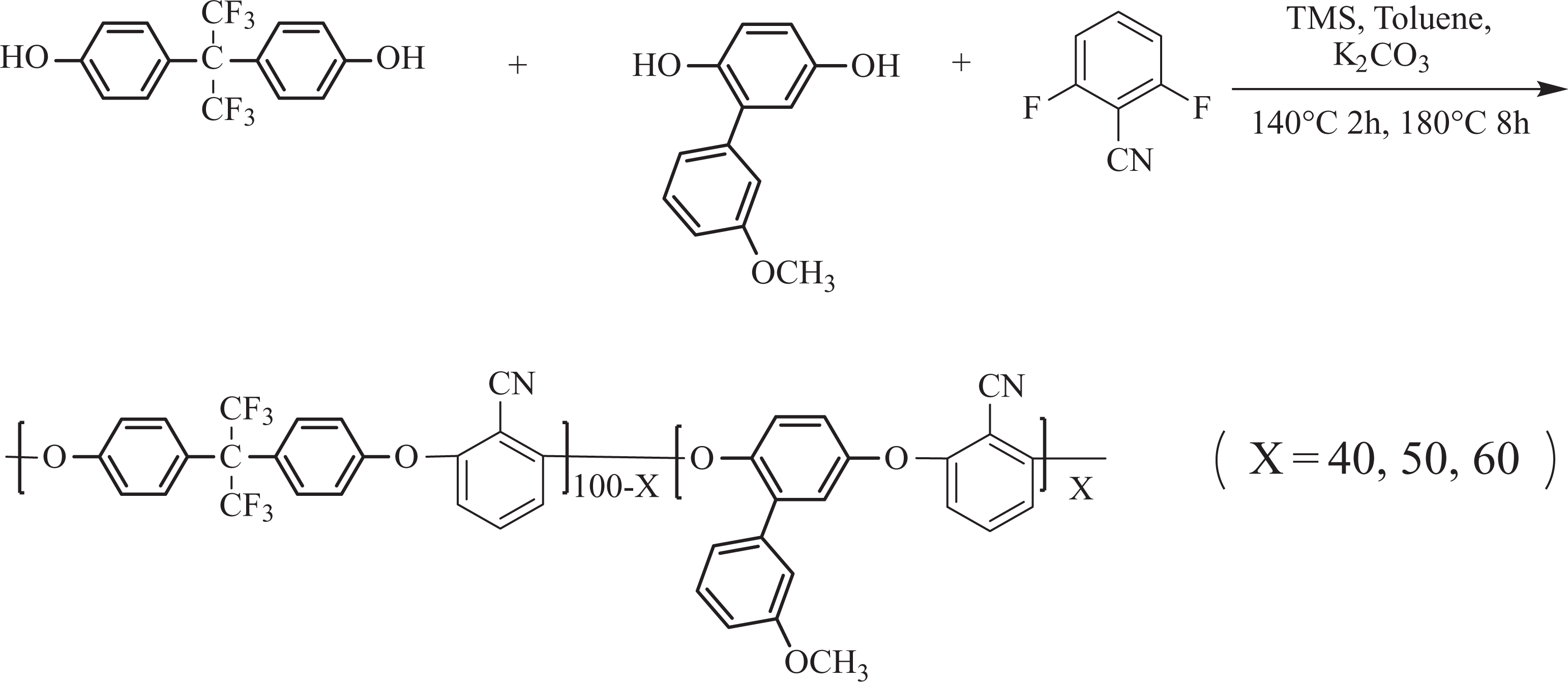
Synthesis of the PAEN-OCH3-X (X = 40, 50, and 60). PAEN PAEN-OCH3: poly(arylene ether nitrile) with pendant methoxyphenyl groups.
Synthesis of PAENs with pendant hydroxyphenyl groups (PAEN-OH)
A series of PAEN-OH were successfully prepared (Figure 2). PAEN-OCH3 (2.00 g) and freshly prepared pyridine hydrochloride (0.433 mol, 50 g) were placed in a 200-mL three-necked flask equipped with a mechanical stirrer, a condenser, and a nitrogen inlet. The mixture was heated at 175°C for 8 h. After cooling to 120°C, the mixture was poured into water. The obtained powder was filtered and washed thrice with water. Then, the polymer was dried at 80°C for 24 h in a vacuum oven. The yield was ∼ 96%.
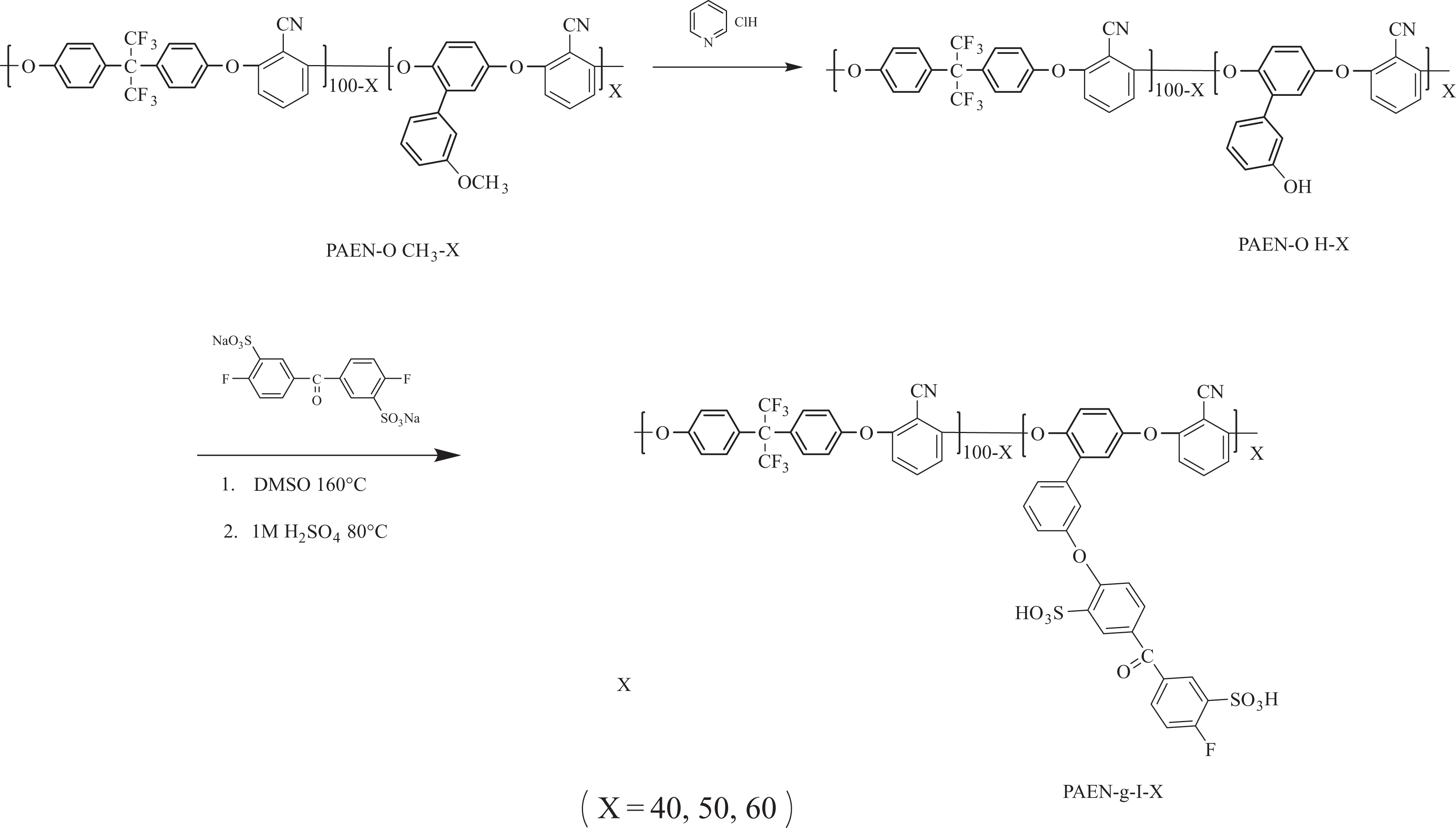
Synthesis of PAEN-OH-X and PAEN-bS polymer (X = 40, 50, and 60). PAEN-OH-X: poly(arylene ether nitrile) with pendant hydroxyphenyl groups; PAEN-bS: poly(arylene ether nitrile) with a bisulfonated phenyl ring on the side chains.
Preparation of disulfonated poly(arylene ether nitrile) polymers (PAEN-bS)
Figure 2 shows the typical procedure used to attach SDFBP-Na to the pendant groups of the polymers. PAEN-OH (1 g), excessive SDFBP-Na (4.222 g, 10 mmol), DMSO (50 mL), anhydrous K2CO3 (0.138 g, 1 mmol), and toluene (10 mL) were placed in a nitrogen-flushed reactor equipped with a Dean-Stark trap. The mixture was heated at 130°C for 2 h. Then the water and toluene were removed at 150°C, and the reaction was continued at 150°C for 6 h. The reacted solution was precipitated into cold water. Then the precipitate was washed with distilled water and ethanol before being dried under vacuum overnight at 120°C, resulting in the formation of PAEN-bS polymers, and the yield was ∼ 91%.
Preparation of membrane films
A sulfonated polymer in sodium form (1 g) was dissolved in 10 mL of N,N-dimethylacetamide (DMAc). After filtration, the solution was poured onto a leveled glass plate with a circular glass retaining rim dried at about 50°C for 1 day and then vacuum dried at 120°C for 12 h. The polymers were obtained in acid form by treating the membranes in 0.5 M H2SO4 for 2 h at 80°C followed by washing in deionized water for 24 h, during which time the water was changed several times.
Polymer analysis and measurements
The viscosities of the obtained polymers were determined using an Ubbelohde viscometer in a thermostatic container, with a polymer concentration of 0.5 g dL−1 in DMAc at 25°C. The FTIR spectra were measured on a Nicolet Impact 410 FTIR spectrometer (Madison, Wisconsin, USA). 1H NMR experiments were carried out on a Bruker 510 spectrometer (Bruker, Germany) (1H, 500 MHz) with DMSO-d6 as solvent.
Thermogravimetric analysis (TGA), with the use of a PerkinElmer Pyris 1 thermal analysis system (Waltham, Massachusetts, USA), was applied to assess the thermal stability of the membranes. Before the analysis, the films were dried and kept in the TGA furnace at 120°C under a nitrogen atmosphere for 15 min to remove water. The samples were evaluated in the range of 120–700°C at a heating rate of 10°C min−1 in nitrogen atmosphere.
The membranes (1 × 5 cm2) were dried at 120°C overnight before the measurements were taken. After measuring the length and weight of the dry membranes, the sample films were soaked in deionized water to attain equilibrium at the desired temperature. Before measuring the length and weight of the hydrated membranes, the membrane surfaces were thoroughly dried by blotting with a paper towel.
The water uptake was calculated as:

where W dry and W wet are the weight of the dry and the wet samples, respectively.
The dimensional change in the polymer membranes was investigated by immersing the sample films in deionized water to attain equilibrium at the desired temperature.
The change in length of the film was calculated as:

Where L dry and L wet are the length of the dry membrane and refer to the membrane immersed in deionized water, respectively.
To test the oxidative stability of the membranes, the films were immersed in Fenton’s reagent (3% H2O2 containing 2 ppm FeSO4) at 80°C. The oxidative stability was evaluated based on the retained weight (RW) of the membranes after treatment in Fenton’s reagent for 1 h and the dissolve time (t) of the polymer membranes in the reagent.
The ion exchange capacity (IEC) was determined by titration. The membranes, in H+form, were immersed in 1 M NaCl solution for 2 days to liberate the H+ ions (which were replaced by Na+ ions). The H+ ions in the solution were then titrated with 0.004 M NaOH using phenolphthalein as an indicator. The membranes were kept in the solution for titration.
The proton conductivity (σ, S cm– 1) of each membrane coupon (1 cm × 4 cm) was obtained as σ = d/L s W s R (where d is the distance between reference electrodes and L s and W s are the thickness and width of the membrane, respectively). The resistance value (R) was measured by a four-point probe alternating current (ac) impedance spectroscopy with the use of an electrode system connected to an impedance/gain-phase analyzer (Solartron 1260) and an electrochemical interface (Solatron 1287; Farnborough Hampshire, ONR, UK). The membranes were sandwiched between two pairs of gold-plated electrodes. Both the membranes and the electrodes were set in a Teflon cell, and the distance between the reference electrodes was 1 cm. The cell was placed in a thermo-controlled chamber in liquid water for measurement. Conductivity measurements under fully hydrated conditions were carried out with the cell immersed in liquid water. All samples were equilibrated in water for at least 24 h before the conductivity measurements. At a given temperature, the samples were equilibrated for at least 30 min before any measurements were done. Repeated measurements were then carried out at 10-min intervals at that given temperature until no more change in conductivity was observed.
Results and discussion
Synthesis of polymers
PAEN-OCH3 containing 0.4, 0.5, and 0.6 molar percentage of pendant methoxyphenyl groups (PAEN-OCH3–40, –50, and –60) was prepared by nucleophilic polycondensation reaction with hexafluorobisphenol A/MeOPHQ feed ratios of 0.6:0.4, 0.5:0.5, and 0.4:0.6 (Figure 1). The polymerization reaction proceeded smoothly, and no cross-linking was observed when the system was carefully purged with nitrogen and the temperature was well controlled by an oil bath. In addition, we did not observe any gel particles when PAEN-bS polymer was dissolved in a DMAc solvent; no cross-linking reaction was evident in grafting reaction using large excess difluoride monomer. The solubility of the obtained polymer was tested; Table 1 shows the results. The polymer was soluble in common organic solvents, such as Tetrahydrofuran (THF), CHCl3, dimethylformamide (DMF), and 1-methyl-2-pyrrolidinone (NMP). Figure 3 shows the 1H NMR spectrum of PAEN-OCH3-50. The signal of the H atom in the methoxyl group appeared at a low chemical shift, whereas the signal of the H atom in the para-position of the C ≡ N groups appeared at a high chemical shift.
Viscosity and solubility of the polymers.
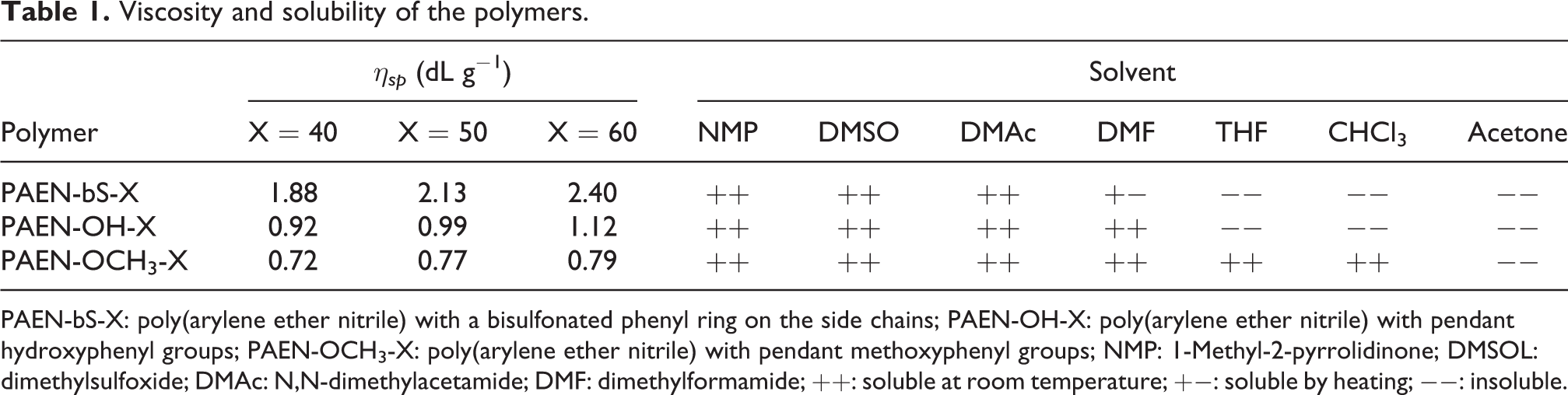
PAEN-bS-X: poly(arylene ether nitrile) with a bisulfonated phenyl ring on the side chains; PAEN-OH-X: poly(arylene ether nitrile) with pendant hydroxyphenyl groups; PAEN-OCH3-X: poly(arylene ether nitrile) with pendant methoxyphenyl groups; NMP: 1-Methyl-2-pyrrolidinone; DMSOL: dimethylsulfoxide; DMAc: N,N-dimethylacetamide; DMF: dimethylformamide; ++: soluble at room temperature; +−: soluble by heating; −−: insoluble.
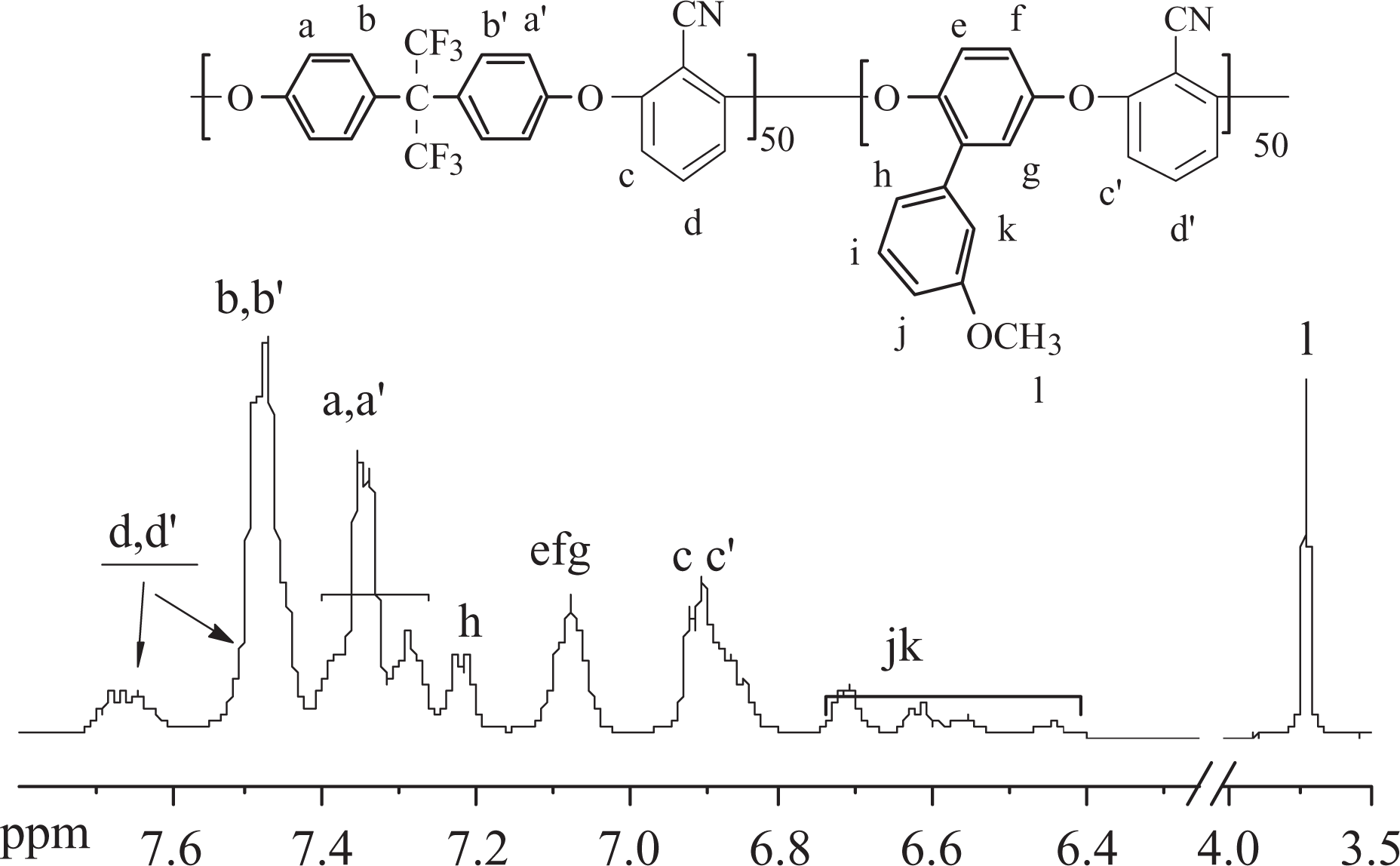
1H NMR spectrum of PAEN-OCH3-50. 1H NMR: proton nuclear magnetic resonance; PAEN-OCH3: poly(arylene ether nitrile) with pendant methoxyphenyl groups.
A series of PAEN-OH was obtained by selective dimethyl reaction of PAEN-OCH3 in pyridine hydrochloride (Figure 2). It was found that the methoxyl group could be converted completely into the hydroxyl group in excess molten pyridine hydrochloride after 8 h. In the 1H NMR spectra (Figure 4), the peak at 3.7 ppm corresponding to the H atom of –OCH3 disappeared completely, and a new peak appeared at around 9.5 ppm (the assigned H atom of phenol hydroxyl), which confirmed the successful complete dimethyl reaction.
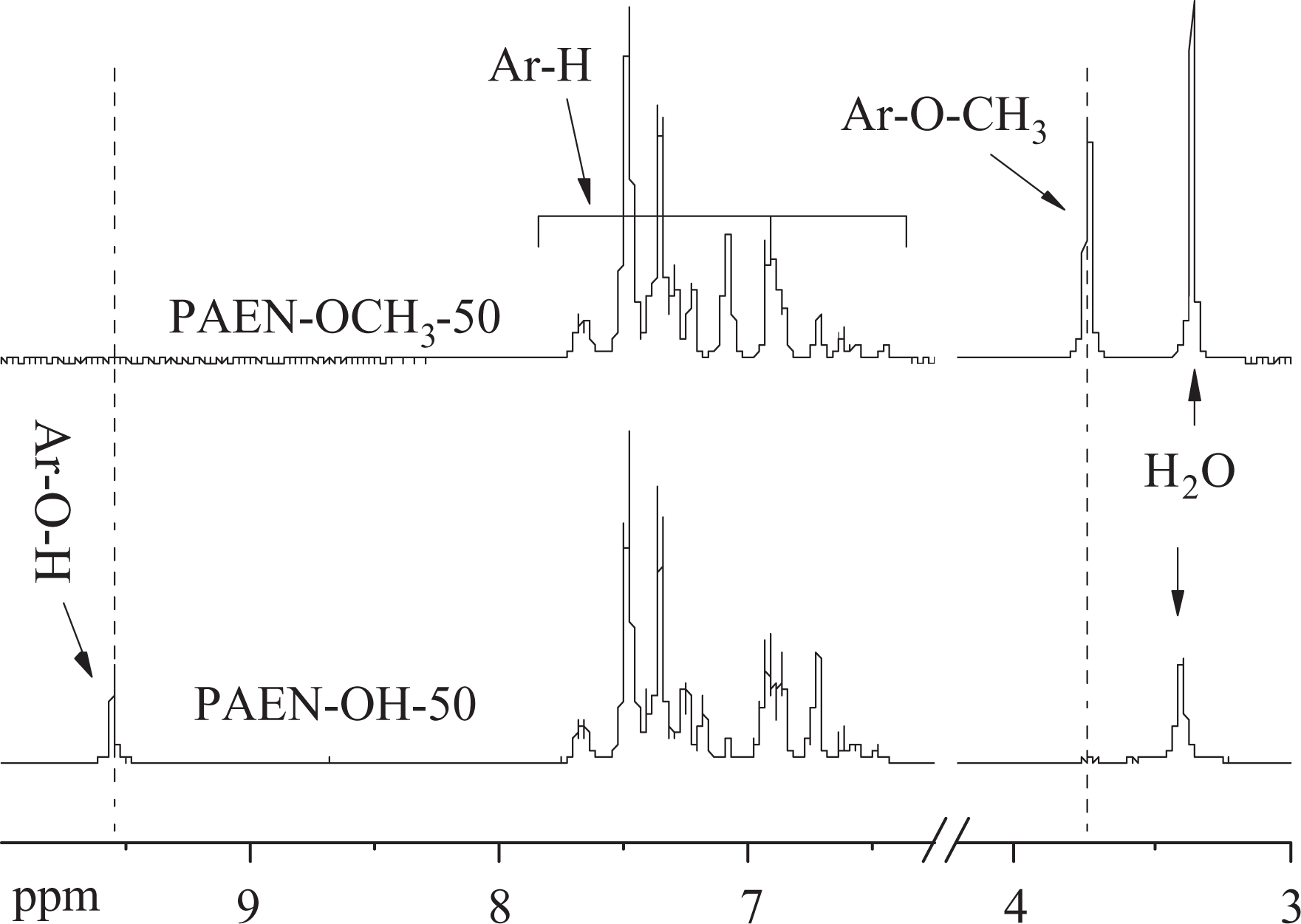
1H NMR spectra of PAEN-OCH3-50 and PAEN-OH-50. 1H NMR: proton nuclear magnetic resonance; PAEN-OCH3-50: poly(arylene ether nitrile) with pendant methoxyphenyl groups; PAEN-OH-50: poly(arylene ether nitrile) with pendant hydroxyphenyl groups.
The PAEN-bS were prepared from PAEN-OH and excess disulfonated monomers by nucleophilic substitution reaction (Figure 2). As shown in Figure 5, the 1H NMR analysis showed the complete disappearance of the proton of the –OH group at 9.5 ppm, whereas the protons H–a and H–c of the PAEN-bS-50 polymer located in the ortho position of the sulfonic acid groups appeared at 8.10–8.00 and 8.25–8.15 ppm, respectively, due to the influence of electron-withdrawing fluorine atoms. As shown in Figure 6, all sulfonated polymers showed obvious characteristic absorption bands in the FTIR spectra. The peaks at 2227 cm− 1 were assigned to the stretching vibration band of –C ≡ N in the main chain, and the peaks at 1668 cm− 1 to the stretching vibration band of –C = O in the side chain; the asymmetric and symmetric stretching bands of sulfonic acid groups were at 1087 cm− 1 and 1023 cm− 1, respectively. The above results further confirmed the structure of the disulfonated polymer. Compared with PAEN-OCH3, PAEN-OH and PAEN-bS were soluble only in high-polar aprotic solvents, such as DMSO, NMP, DMAc, and DMF but were insoluble or only became swollen in chloroform or THF. As shown in Table 1, the high molecular weights of the three kinds of polymer were confirmed based on their viscosities. The viscosity of PAEN-OCH3 was higher than 0.7 dL g− 1, whereas PAEN-OH and PAEN-bS polymers showed increased viscosities that were higher than 0.9 and 1.8 dL g− 1, respectively, due to their stronger molecular interactions. The IEC of PAEN-bS was measured by applying the titration method; Table 2 shows the results. The measured values were lower than the calculated ones, probably due to the effect of the graft ratio.
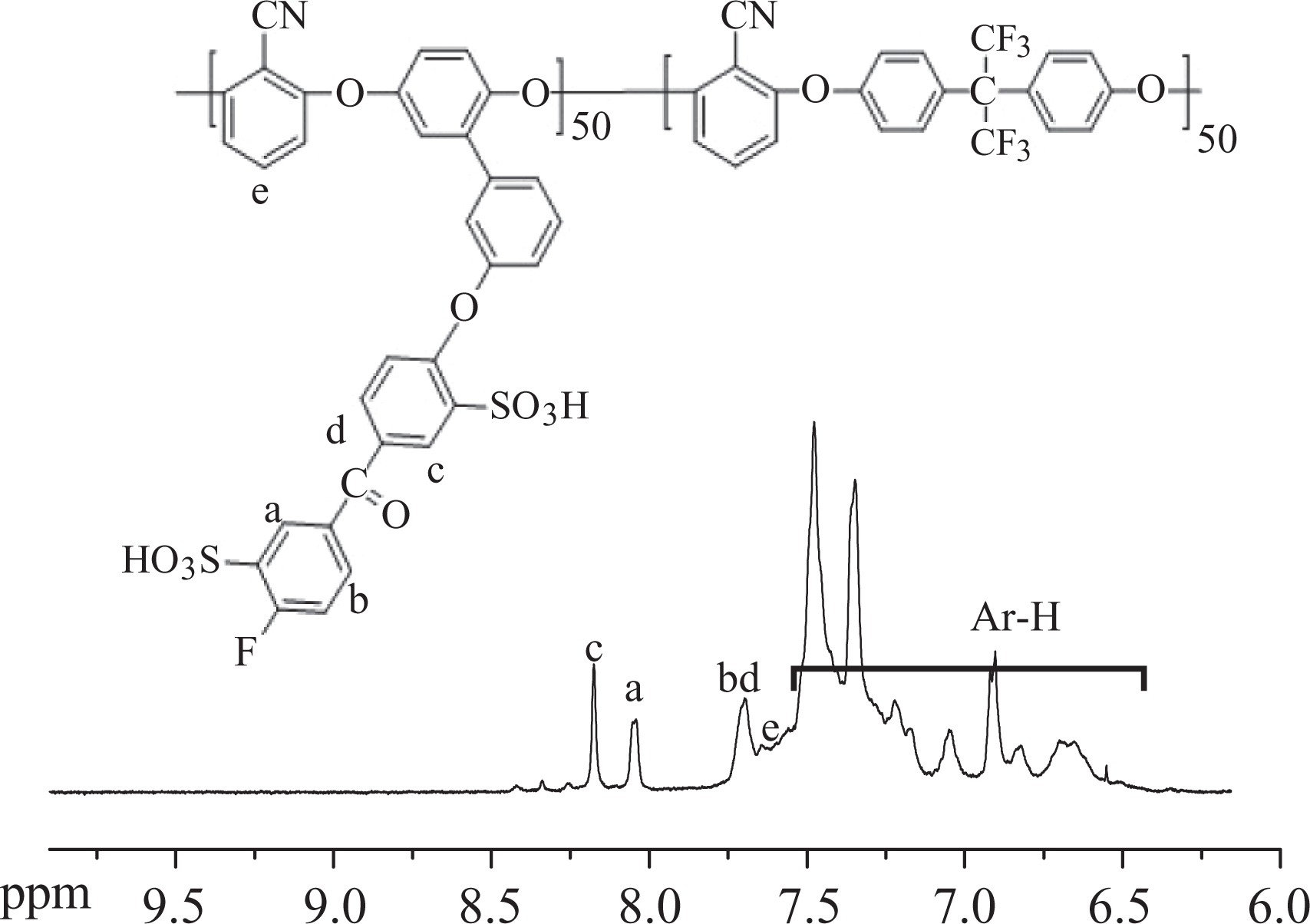
1H NMR spectra of PAEN-bS-50. 1H NMR: proton nuclear magnetic resonance; PAEN-bS: poly(arylene ether nitrile) with a bisulfonated phenyl ring on the side chains.
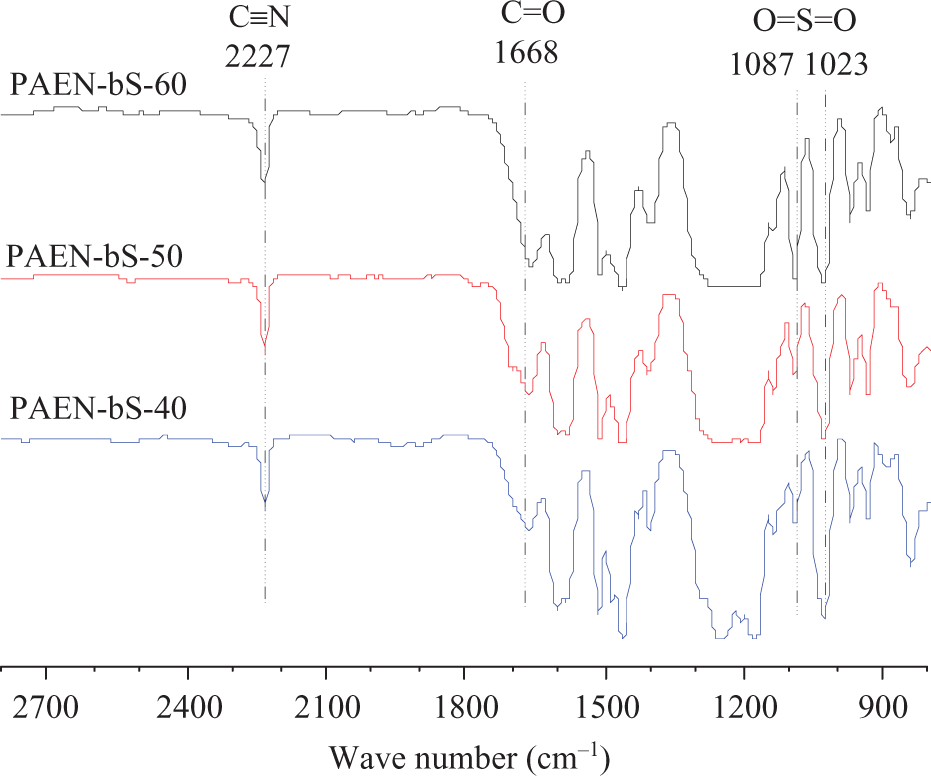
FTIR spectra of the polymers. FTIR: Fourier-transform infrared.
Ion exchange capacity, water uptake, water swelling ratio, and conductivity of the PAEN-bS polymers.
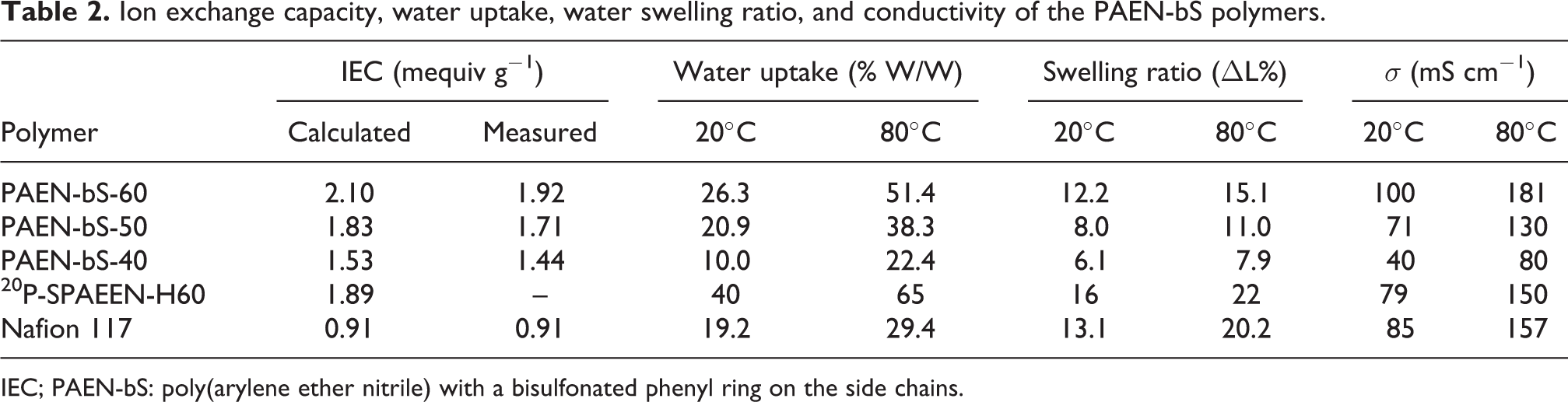
IEC; PAEN-bS: poly(arylene ether nitrile) with a bisulfonated phenyl ring on the side chains.
Thermal properties
Thermal analyses of the polymers were carried out as summarized in Table 3. The thermal stability was evaluated by TGA. As shown in Table 3, all the sulfonated polymers had high onset weight loss (> 285°C) and 5% weight loss (> 320°C) temperatures. The TGA curve in Figure 7 indicates that the PAEN-Bs-50 membranes had a typical two-step degradation pattern. The first weight loss in the range of 285–400 C was attributed to the degradation of the sulfonic acid group, whereas the second stage weight loss at around 500 C was due to the decomposition of the polymer main chain.
Thermal stability and oxidative stability of the sulfonated polymers.
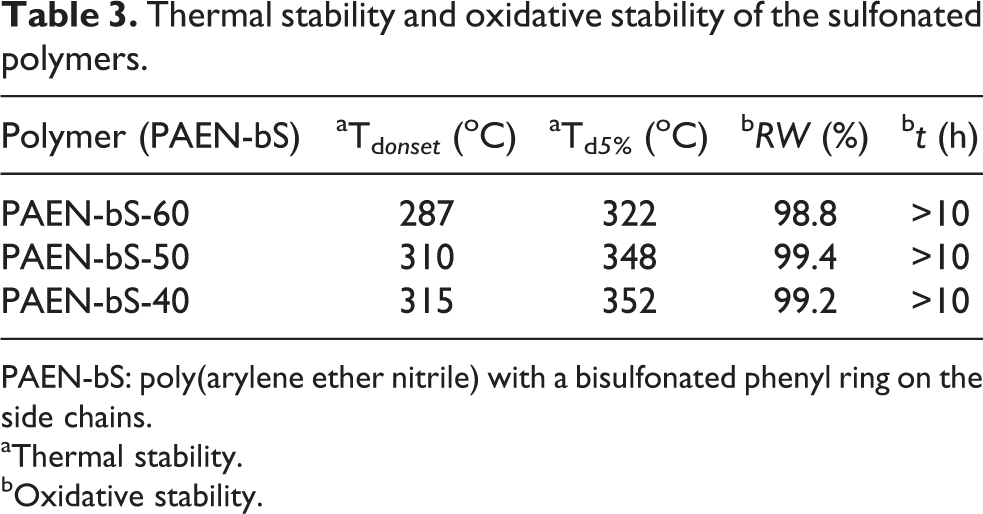
PAEN-bS: poly(arylene ether nitrile) with a bisulfonated phenyl ring on the side chains.
aThermal stability.
bOxidative stability.
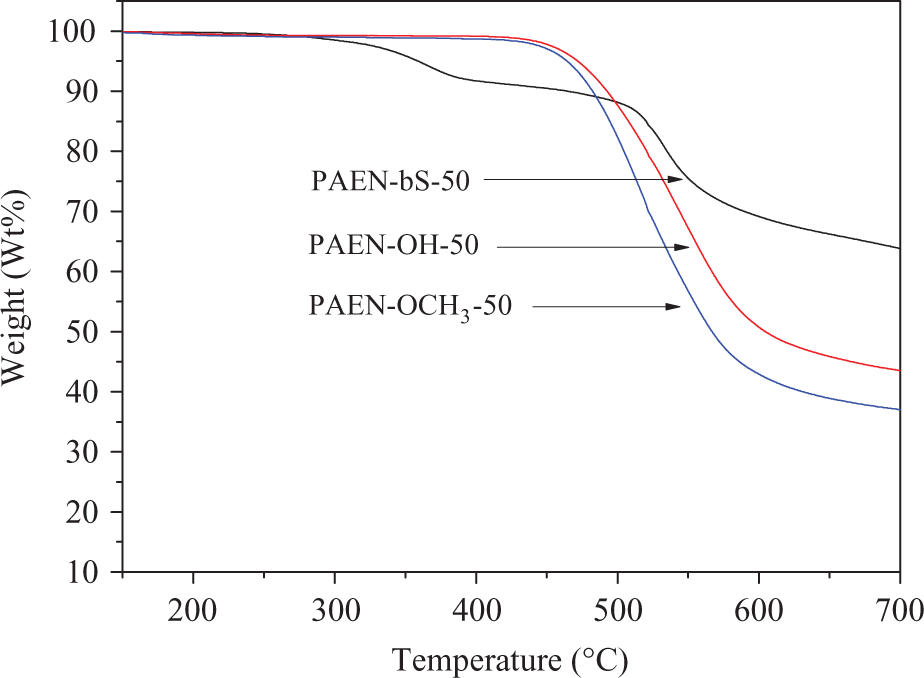
TGA curves of the sulfonated polymers. TGA: thermogravimetric analysis.
Oxidative stability
As shown in Table 3, all the sulfonated membranes showed good oxidative resistance due to their wholly aromatic structure. In addition, the tailored side-chain structure was also beneficial to oxidative stability because the sulfonic acid groups were located only at the pendant side chains; thus, the effect of the sulfonic acid groups on the hydrolysis of the main chain was minimized considerably. The retained weights of the membranes were above 98% after treatment in Fenton’s reagent at 80°C for 1 h. The time it took for the membranes to completely dissolve (> 10 h) was longer than that for polymers based on SPAE containing flexible aliphatic side chains. 25,26
Water uptake and dimensional stability
Water management within the membrane is a critical factor in the performance of PEM materials. Water is the main vehicle by which protons are transported through the membrane. Therefore, the desired water content is an essential requirement for promoting proton conductivity. However, excessively high levels of water in the membrane can result in excessive dimensional changes (swelling), leading to failure of mechanical properties and, in extreme cases, membrane solubility in water. Water uptake is typically a function of the IEC. The polymer PAEN-bS was designed to carry reasonable sulfonic acid groups with an IEC close to 2.0 mequiv g– 1, which was measured by applying the titration method (Table 2). Figures 8 and 9 clearly show that the water uptake and water swelling ratio continuously increased with the IEC and temperature. Below 80°C, the water uptake and swelling ratio of the PAEN-bS membranes showed a low dependence on temperature. At 80°C, the highest water uptake and swelling ratio of PAEN-bS-60 were only 51.4% and 15.1%, respectively. Above 80°C, the membranes showed an increase in water sorption, which was attributed to the formation of a large and continuous ion network in the sulfonated polymers. The dimensional data (Table 2) indicated that all the PAEN-bS had a lower swelling ratio. For example, at 100°C, the swelling ratio of PAEN-bS-60 was only 19.2%. The dimensional change of the PAEN-bS membranes was better than that of Nafion membranes, due to the special molecular structure of the former, that is, a PAENs main chain with a bisulfonic acid pendant. As shown in Table 2, the IEC value of PAEN-bS-50 was similar to Para-sulfonated poly(aryl ether ether nitrile) (P-SPAEEN)-H60 membrane, 20 however, PAEN-bS-50 had good dimensional stability. The swelling ratio of PAEN-bS-60 was 12.2% and 15.1 at room temperature and at 80°C, respectively, which also were lower than that of the P-SPAEEN-H60 membrane. The PAEN-bS had long disulfonated side chains, and the P-SPAEEN-H60 had short single sulfonated side chains, thus the PAEN-bS had suitable hydrophobic/hydrophilic phase separation, leading to good dimensional stability.
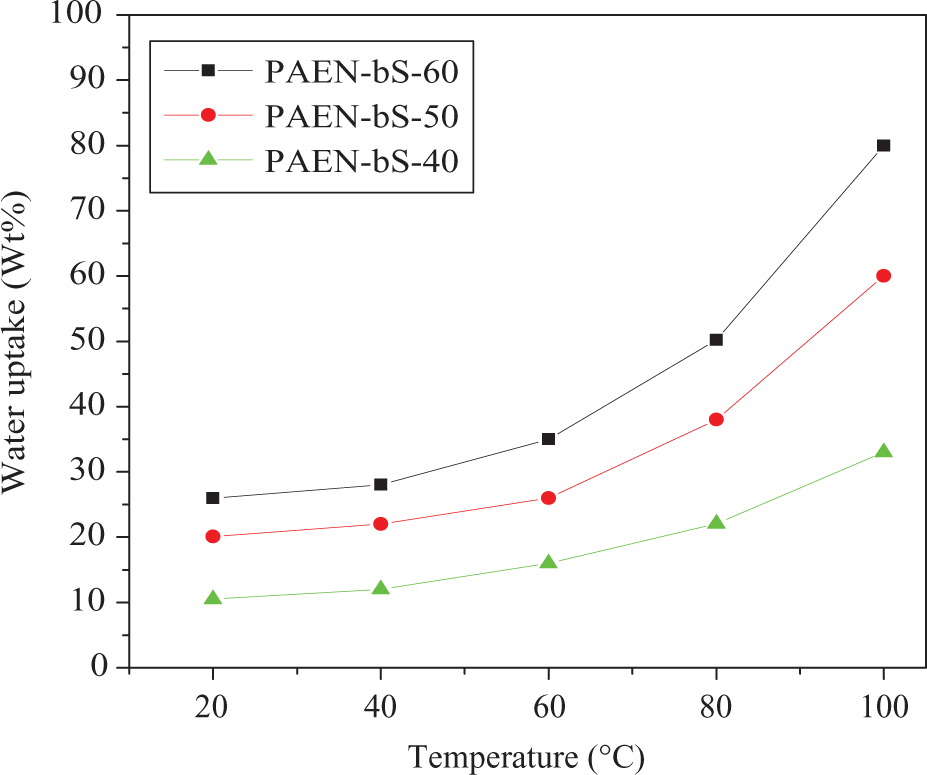
Water uptake of the PAEN-bS membranes as a function of temperature. PAEN-bS: poly(arylene ether nitrile) with a bisulfonated phenyl ring on the side chains.
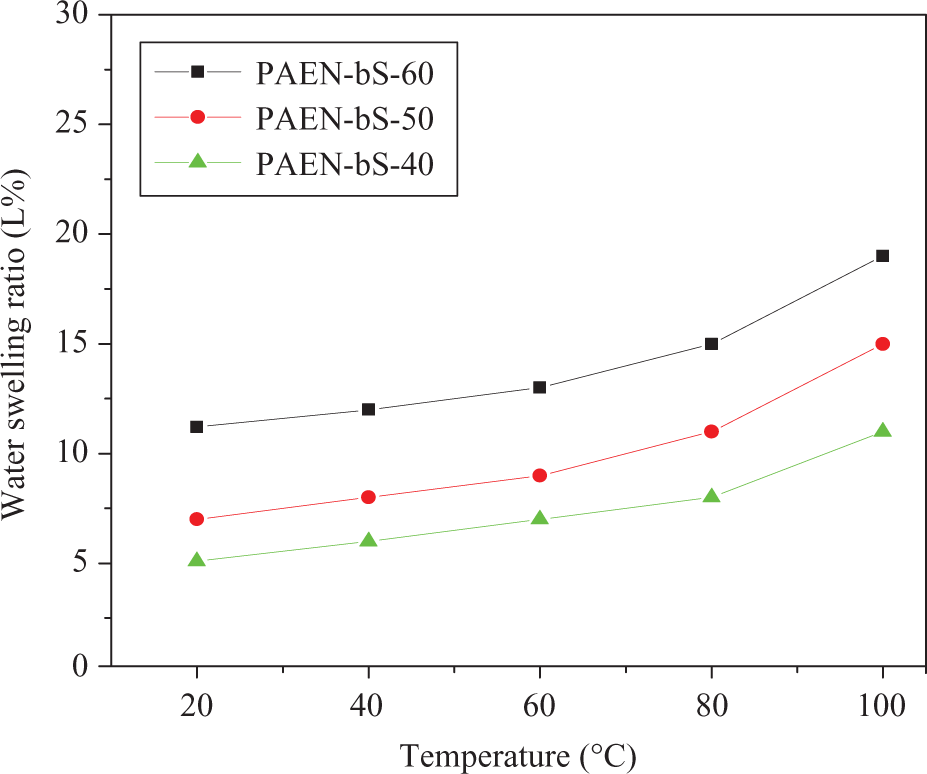
Water swelling ratio of the PAEN-bS membranes as a function of temperature. PAEN-bS: poly(arylene ether nitrile) with a bisulfonated phenyl ring on the side chains.
Proton conductivity
All the PAEN-bS membranes showed a high proton conductivity of more than 10− 2 S cm− 1 over the temperature range studied (Table 2 and Figure 10). At low temperature, the proton conductivity of PAEN-bS was markedly higher than that of typical aromatic poly(aryl ether nitrile)s, in which the sulfonic acid groups are attached to the backbone. 20 The conductivity of PAEN-bS-60 was 100 and 181 mS cm− 1 at room temperature and at 80°C, respectively, which is much higher than that of Nafion 117. The PAEN-bS polymers had higher conductivity than the single sulfonated poly(aryl ether ether nitrile) P-SPAEEN-H60, 20 at a similar swelling ratio. For example, at a similar swelling ratio of about 20%, the conductivity PAEN-bS-60 was 220 mS cm−1 at 100°C, much higher than that of P-SPAEENH-50, which was 130 mS cm−1. P-SPAEEN-H60 had a comparable conductivity of 200 mS cm−1 at 100°C; however, it had a larger swelling ratio of 49%. Based on the polymer structure, the electron-withdrawing groups (fluorine atom and carbonyl groups) are capable of increasing the acidity and serve high conductivity of the PAEN-bS membranes, whereas the cyano groups can also serve as potential sites for polymer cross-linking to stabilize the hydrophobic polymer matrix.
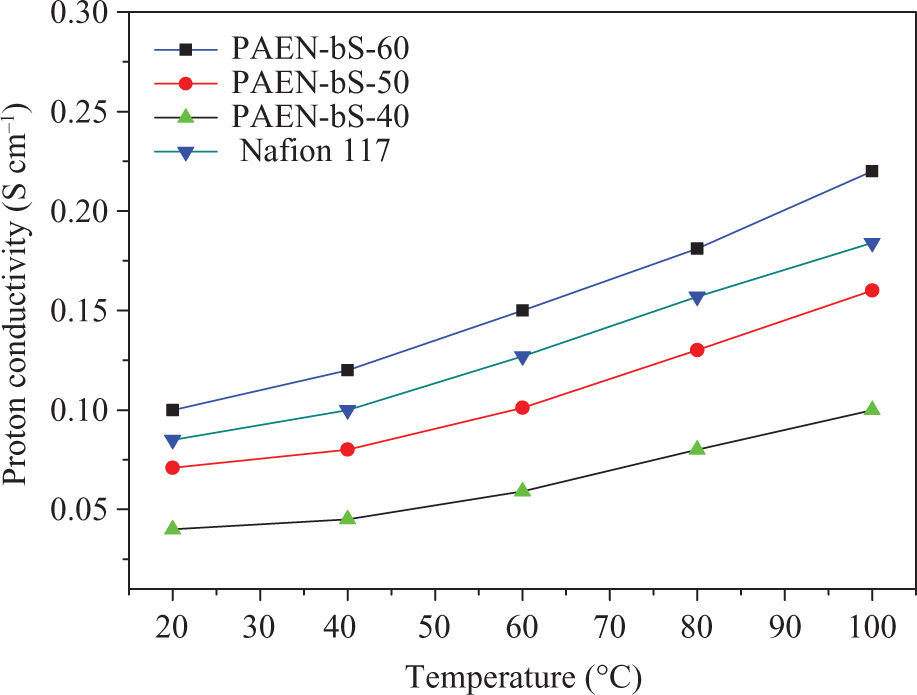
Proton conductivity of the PAEN-bS membranes as a function of temperature. PAEN-bS: poly(arylene ether nitrile) with a bisulfonated phenyl ring on the side chains.
Conclusions
Novel side-chain-style multi-sulfonated PAENs were prepared, which showed advantageous conductivity and membrane hydrodynamic properties compared with most sulfonated aromatic main chain polymers. The wholly aromatic structure of PAEN-bS polymers ensured their good thermochemical stability. The unique polymer chemical structure resulted in excellent dimensional stability and high proton conductivity. By intended design, the sulfonic acid groups were located around the electron-withdrawing groups in the side chain, which was favorable in increasing acidity and serving high conductivity.
Footnotes
Declaration of Conflicting Interests
The author(s) declared no potential conflicts of interest with respect to the research, authorship, and/or publication of this article.
Funding
The author(s) disclosed receipt of the following financial support for the research, authorship, and/or publication of this article: The authors thank the China Natural Science Foundation (grant 51573067) for supporting this work.