






Abstract
A series of acetylene-terminated isoimide and imide oligomers were prepared based on 2,3,3′,4′-biphenyltetracarboxylic dianhydride, 4,4′-(hexafluoroisopropylidene)diphthalic anhydride, 3,4′-oxydianiline, and 1,3-bis(3-aminophenoxy)benzene as monomers. 3-Ethynylaniline was used as an end-capping reagent and trifluoroacetic anhydride served as a dehydrating agent. The main oligomer structures were confirmed by Fourier transform infrared spectroscopy, and the thermal imidization was characterized by differential scanning calorimetry. All uncured isoimide and imide oligomers exhibit excellent solubility characteristics in organic solvents such as N,N-dimethylacetamide and N-methyl-2-pyrrolidone, and most of the oligomers can be dissolved in low boiling point solvents such as acetone and ethyl acetate (more than 45 wt%). In comparison with imide analogs, the isoimide oligomers exhibited an increased solubility in low boiling point solvents which can be attributed to their unique asymmetric structures. The properties of the cured films and adhesives were evaluated by dynamic mechanical thermal analysis, thermogravimetric analysis, as well as tensile shear strength tests of the polymer adhesives. The cured films exhibited extremely high glass transition temperatures (T g) of up to 341.6°C and 5% weight loss temperatures (T d5) of up to 518.2°C in a nitrogen atmosphere. Taken in concert, the results obtained indicate that all cured films featured an excellent thermal stability and a particularly high thermal-oxidative stability. One of these oligomers was selected and formulated to form a thermosetting adhesive for further investigation of the adhesion properties. This was done in an effort to improve the high-temperature performance characteristics of composite materials.
Keywords
Introduction
Due to the high glass transition temperatures (T g), high thermal stability, excellent mechanical and electrical properties, and good chemical resistance, aromatic polyimides have been widely used as a polymer class in a variety of high-tech industrial applications, including modern aerospace and aviation industry, advanced insulators, dielectric manufacturing, automotive industry, and packaging technology. 1 –3
Thermally cured imide resins feature excellent mechanical and chemical properties, crucial to certain specialized applications. 4,5 Thus far, most of the imide oligomers synthesized in industry carry a terminal acetylene group to lower the melting temperature since the curing temperature of acetylene groups falls in a temperature range between 180°C and 250°C. 6,7
Acetylene-terminated polyimides often exhibit a poor solubility and fusibility behavior partly due to the aromatic heterocyclic structure and strong interchain interactions, ultimately affecting processability. 3,8,9 To circumvent these limitations, significant effort has been devoted to improving the processability of polyimides while maintaining other beneficial properties. 10,11 Synthetic approaches to ensure an improved solubility of polyimides have been well established in the last decades, including the introduction of flexible linkers (e.g. oxygen, sulfur, carbon monoxide, sulfur dioxide, and methylene), bulky lateral substituents (e.g. fluorenylidene and hexafluoropropylidene), 3,12,13 heterocyclic groups, as well as copolymerization with other monomers and designation of asymmetric monomers (e.g. polyimides from isomeric dianhydride). 14 –16 Some of these modifications may also exhibit beneficial effects on improving the melt processability of imide oligomers.
One essential requirement for polymer processability is the reduction of the melting point and improving the solubility of acetylene-terminated imide oligomers as much as possible. Polyisoimides may be used as precursors for polyimides and generally exhibit greater solubility, lower melting viscosity, and a lower melting point than their polyimide analogues. More importantly, polyisoimides can be readily converted into the corresponding polyimides by thermal treatment and without the release of water or other volatile by-products. 7,17,18
A class of isoimide oligomers featuring a lower melting point and wider solubility range than the analogous imide oligomers has been reported and can be found in a variety of patents. 19 –21 Kurita et al. 17 have published detailed studies on the structural property influences of model polyisoimides and a facile synthesis of polyisoimides. Meanwhile, Mochizuki et al. 22 and Senio et al. 23 have developed a new photosensitive polyimide precursor based on polyisoimide. Furthermore, Thermid IP-600 as well as Thermid FA-700 24 are now produced by National Starch and Chemical Corp. (USA), displaying improved processability characteristics in comparison with their polyimide counterparts. However, the processability has been shown to be not sufficient enough for big or complex products and applications.
In this study, we report the synthesis and characterization of different types of acetylene-terminated isoimide and imide oligomers. These oligomers exhibit a high solubility in low boiling point organic solvents and were cured at elevated temperatures. The thermal and mechanical properties of the cured polymers and adhesives were investigated, and the relationship between the structures and properties of the thermosetting polymers was also studied. The isoimide oligomers exhibit a better processability and the cured polyisoimides feature similar thermal and mechanical properties as the corresponding polyimides.
Experimental section
Materials and methods
2,3,3′,4′-Biphenyltetracarboxylic dianhydride (3,4′-BPDA), 4,4′-(hexafluoroisopropylidene)diphthalic anhydride (6FDA), 3,4′-oxydianiline (3,4′-ODA), and 1,3-bis(3-aminophenoxy)benzene (1,3,3-APB) were purchased from Changzhou Sunchem Electronic Material (China). 3-Ethynylaniline (3-EA) was commercially obtained from Shandong Jiaozhou Fine Chemicals (China). N,N-dimethylacetamide (DMAc) was purified by distillation over phosphorus pentoxide under reduced pressure and was stored over 4Å molecular sieves. Trifluoroacetic anhydride (TFAA) and triethylamine were purchased from Shanghai Bangcheng Fine Chemicals (China). All other reagents were purchased from Beijing Beihua Fine Chemicals (China).
Synthesis of acetylene-terminated isoimide oligomers based on 3,4′-BPDA, 6FDA, 3,4′-ODA, and 1,3,3-APB
3,4′-BPDA (18.83 g, 64.00 mmol) and 50 mL DMAc were placed in a flame-dried, 250 mL three-neck round-bottom flask equipped with a nitrogen inlet/outlet and a mechanical stirrer. The mixture was stirred at room temperature until all 3,4′-BPDA completely dissolved. Then, 3,4′-ODA (6.41 g, 32.00 mmol) was slowly added over 1 h, and 30 mL of DMAc was added to the solution. The reaction mixture was stirred under a nitrogen atmosphere at room temperature for 4 h. Then, 3-EA (7.50 g, 64.00 mmol) and DMAc (20 mL) were added to the reaction mixture and the resulting solution was stirred at room temperature for another 4 h. After cooling in an ice-water bath overnight, TFAA (33.61 g, 160 mmol) and triethylamine (12.95 g, 128.00 mmol) were added dropwise and the resulting mixture was stirred for 6 h at 0°C using an ice-water bath. The resulting isoimide solution was poured into a large excess amount of deionized water. The precipitate was collected by filtration, washed thoroughly with deionized water until the pH of the filtrate reached a value of about 7, dried in vacuo at 60°C for 10 h and at 130°C for 2 h to obtain a bright yellow powder (PII-1) in 90% yield. Infrared spectroscopy (IR) (potassium bromide [KBr], cm−1): 3285 (C≡C str), 1850, 1720 (C=O str), 1375 (C–N str), 900 (C–O–C str).
The above procedure has also been applied to the synthesis of PII-2, exhibiting a polymerization degree of 4. However, the precursors used were 6FDA (11.11 g, 25.00 mmol), 1,3,3-APB (5.85 g, 20.00 mmol), 3-EA (1.17 g, 10.00 mmol), TFAA (13.13 g, 62.50 mmol), and triethylamine (5.06 g, 50.00 mmol). The oligomer of PII-2 was obtained as a yellow powder in 93% yield. IR (KBr, cm−1): 3285 (C≡C str), 1850, 1720 (C=O str), 1375 (C–N str), 900 (C–O–C str).
The above procedure has also been applied to the synthesis of PII-3, but the precursors used were 6FDA (17.77 g, 40.00 mmol), 1,3,3-APB (5.85 g, 20.00 mmol), 3-EA (4.69 g, 40.00 mmol), TFAA (21.00 g, 100 mmol), and triethylamine (8.10 g, 80.00 mmol). The oligomer of PII-3 was obtained as a yellow powder in 95% yield. IR (KBr, cm−1): 3285 (C≡C str), 1850, 1720 (C=O str), 1375 (C–N str), 900 (C–O–C str).
The above procedure has also been applied to the synthesis of PII-4 but the precursors used were 6FDA (17.77 g, 40.00 mmol), 1,3,3-APB (2.92 g, 10.00 mmol), 3,4′-ODA (2.00 g, 10.00 mmol), 3-EA (4.69 g, 40.00 mmol), TFAA (21.00 g, 100.00 mmol), and triethylamine (8.10 g, 80.00 mmol). The oligomer of PII-3 was obtained as an orange yellow powder in 93% yield. IR (KBr, cm−1): 3285 (C≡C str), 1850, 1720 (C=O str), 1375 (C–N str), 900 (C–O–C str).
Synthesis of acetylene-terminated imide oligomers based on 6FDA and 1,3,3-APB (PI-1)
In a 250 ml three-neck round-bottom flask equipped with a thermometer, magnetic stirrer, and nitrogen inlet and outlet, 6FDA (11.11 g, 25.00 mmol) was dissolved in DMAc (50 mL). The mixture was stirred at room temperature until all 6FDA dissolved completely. Then, 1,3,3-APB (5.85 g, 20.00 mmol) was slowly added over 1 h, and 30 mL of DMAc was added to the solution. The reaction mixture was stirred under a nitrogen atmosphere at room temperature for 4 h. Then, 3-EA (1.17 g, 10.00 mmol) and 20 mL of DMAc were added and the resulting reaction mixture was stirred at room temperature for another 4 h. After cooling in an ice-water bath overnight, xylene (30 mL) was added, and the mixture was heated to 140°C for 4 h. The formed water during the thermal imidization was simultaneously removed from the reaction mixture by azeotropic distillation. Then, the temperature was increased to 160°C and stirring was continued for another 3 h. The resulting imide solution was poured into a large excess amount of deionized water, and the precipitate was collected by filtration, washed thoroughly with deionized water until the pH of the filtrate reached a value of about 7, and dried in vacuo at 60°C for 10 h and at 130°C for 2 h to obtain a light yellow powder (PI-1) in 97% yield. IR (KBr, cm−1): 3285 (C≡C str), 1780, 1720 (C=O str), 1375 (C–N str).
Processing
Films
In general, thin films were cast from oligomer solutions in DMAc containing 40% solids. The solutions were centrifuged and then poured onto a clean, dry plate glass, and the films were stage-cured in a Muffle furnace by heating for 30 min each at 80 and 150°C and heating for 2 h at 270°C, respectively. The thin films were removed from the glass by immersion in water. Finally, the films were cut into specimens with dimensions of 50 × 10 mm2.
Adhesive bonding
Two pieces of aluminum alloy were prepared and the surfaces of the adherends were treated according to ASTM D3933. Concurrently, the test method of lap shear specimens was performed according to ASTM D1002 at room temperature and according to ASTM D2295 at high temperature. The solution of the oligomer PI-1 in ethyl acetate containing 40% of solid was coated onto coupons with an overlap of 1.27 cm and dried at 100°C for 1 h under reduced pressure. To fully cure the polyimides for cross-linking, the materials were heated to 250°C with a pressure of 0.3 MPa and the samples were stored under these conditions for a total of 2 h.
Characterization
Fourier transform infrared spectroscopy (FTIR) spectra were recorded on a Nicolet 6700 spectrometer (Madison, WI, USA) with KBr pellets. Spectra averages were obtained from at least 128 scans at a standard wave number ranging between 600 cm−1 and 4000 cm−1. Differential scanning calorimetry (DSC) was performed using a DSC 6220 (SEIKO, Japan) instrument with sample masses of approximately 5–10 mg under nitrogen atmosphere at a heating rate of 10°C min−1. Thermogravimetric analysis (TGA) was performed on a Perkin–Elmer TGA 6300 (Waltham, MA, USA) at a heating rate of 5°C min−1 under nitrogen atmosphere and in air atmosphere at temperatures ranging between 100°C and 800°C. Dynamic mechanical analysis (DMA) was performed on the thin film specimens (50 × 10 mm2) using a DMS 6100 (SEIKO, Japan) at a heating rate of 5°C min−1 from ambient temperature to 350°C at a frequency of 1 Hz. A universal testing machine (Instron 4467, Instron, USA) was used to investigate the adhesion properties at a rate of 5 mm/s until failure.
Results and discussion
Synthesis and characterization of the imide and isoimide oligomers
The synthetic routes of the isoimide oligomers (PII-3) and imide oligomers (PI-1) based on the same molecular structure of polyamide acid are illustrated as a representative example in Figure 1. The composition as well as the calculated molecular weights of the oligomers are listed in Table 1.
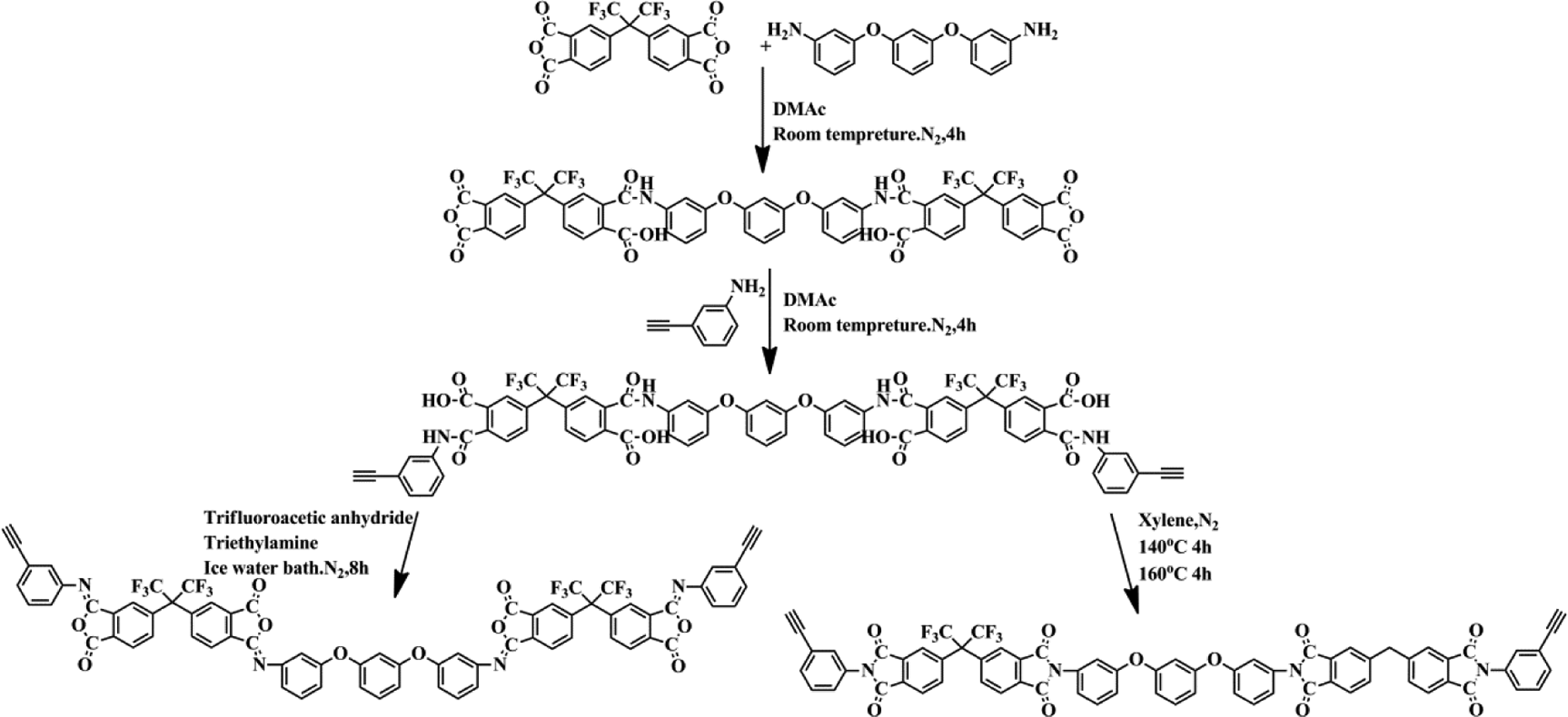
Synthetic routes of isoimide and imide oligomers.
Composition and calculated molecular weights of the oligomers.
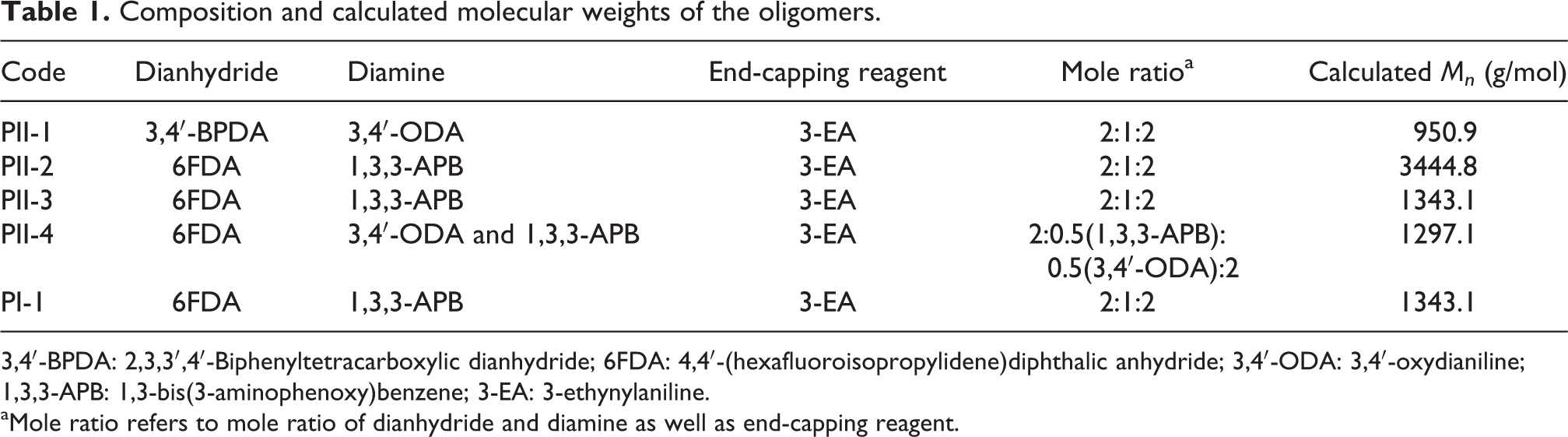
3,4′-BPDA: 2,3,3′,4′-Biphenyltetracarboxylic dianhydride; 6FDA: 4,4′-(hexafluoroisopropylidene)diphthalic anhydride; 3,4′-ODA: 3,4′-oxydianiline; 1,3,3-APB: 1,3-bis(3-aminophenoxy)benzene; 3-EA: 3-ethynylaniline.
aMole ratio refers to mole ratio of dianhydride and diamine as well as end-capping reagent.
The FTIR spectra of the oligomers are shown in Figure 2. The intense band at 3285 cm−1 can be ascribed to the presence of an acetylenic C–H stretch which can also be found in the spectra of all oligomers. The strong signal at 1850 cm−1 is characteristic for the C=O stretch in the isoimide ring, and the other intense signal in the PII 1-4 spectra at 900 cm−1 can be ascribed to C–O–C stretching in the isoimide ring.
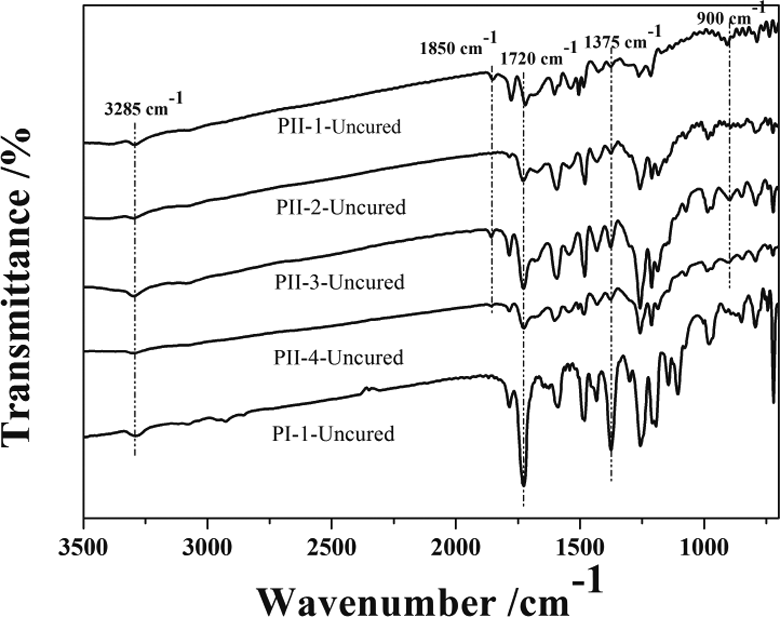
FTIR spectra of isoimide and imide oligomers. FTIR: Fourier transform infrared spectroscopy.
For PI-1, the bands at 1780 and 1720 cm−1 can be ascribed to the symmetric stretch and the asymmetric stretch of the imide carbonyl C=O, respectively. Furthermore, the characteristic absorption of the C–N–C bands in the imide ring appears as a strong signal at 1375 cm−1 for imide oligomers but was determined to be too weak to be clearly identified in the PII 1–4 spectra.
Solubility properties of oligomers
As shown in Table 2, all oligomers were found to be soluble in high boiling point solvents such as DMAc, N,N-dimethyl formamide (DMF), N-methyl-2-pyrrolidone (NMP), and dimethyl sulphoxide (DMSO) at room temperature, and all of the compound species except for PII-1 were determined to be soluble in low boiling point solvents such as acetone and ethyl acetate. This finding can be explained by the fact that PII-1 features an asymmetric architecture, inhibiting chain packing. The latter may improve solubility, but unlike the other oligomers, the main chain seems to be less flexible. Therefore, oligomer PII-1 was found to only dissolve in high boiling point solvents such as DMAc, DMF, NMP, and DMSO at room temperature and was not found to be soluble in acetone and ethyl acetate. Other oligomers derived from 6FDA which introduce trifluoromethyl (–CF3) into the molecular structure undermine the molecular arrangement, resulting in a lower molecular chain density and weaker interchain interactions ultimately increasing the solubility of the oligomer. Interestingly, all isoimide oligomers exhibited a higher solubility in contrast to the imide oligomers. The enhanced solubility for isoimide oligomers can also be explained by the asymmetric architectures inhibiting chain packing.
Solubility of oligomers in different solvents.
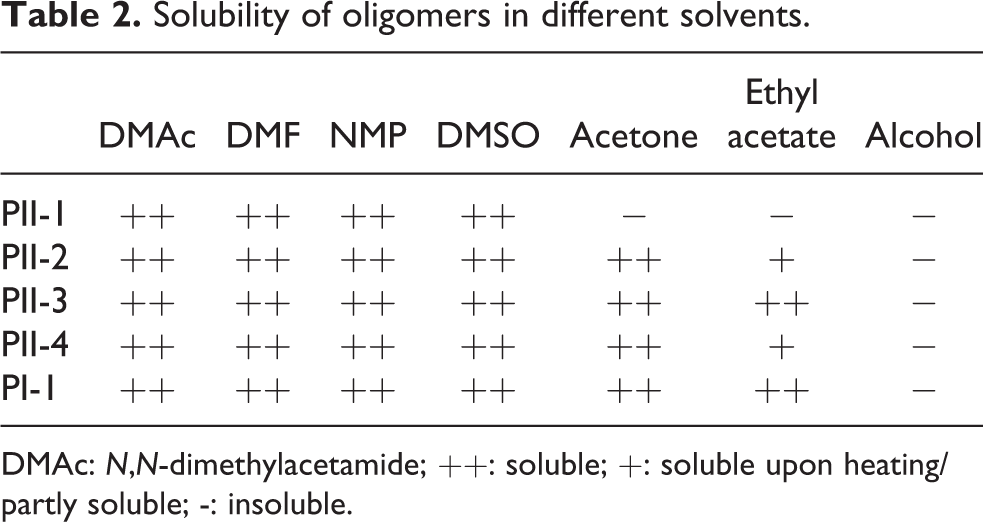
DMAc: N,N-dimethylacetamide; ++: soluble; +: soluble upon heating/partly soluble; -: insoluble.
Among all isoimide oligomers, PII-3 exhibited the highest solubility in ethyl acetate due to the lower molecular weight and the asymmetric architecture inhibiting chain packing. The oligomer was also found to dissolve in ethyl acetate up to 50 wt% at room temperature in comparison with 45 wt% solubility of the corresponding imide oligomers PI-1. Due to the high solubility in ethyl acetate, this oligomer may be adapted to a wet prepreg process to yield composites with a combination of low void contents, high T g, and excellent mechanical properties. Low boiling point solvents are definitely preferable over high boiling point solvents in the production of high-quality composites as they prove to be much easier to remove. 7
Properties of the oligomers and cured resins
Differential scanning calorimetry
The thermal curing behavior of the oligomers, PII-1, PII-2, PII-3, PII-4, and PI-1, was studied by DSC (cf. Figure 3 and Table 3). From inspection of the DSC curves, it can be determined that all oligomers exhibited a large exothermic peak with a maximum around 250–270°C due to the thermal curing of the ethynyl groups. It is obvious that the curing reaction of PII-1, PII-3, PII-4, and PI-1 proceeded at a temperature of 250°C because of the similar main chain structure and similar molecular weight, generating the same cross-linking densities. The curing reaction for PII-2 proceeding at a higher temperature (beyond 270°C) can be explained by the higher molecular weight, resulting in lower density cross-linking, reduced cross-link affinity, and higher cross-link temperature.
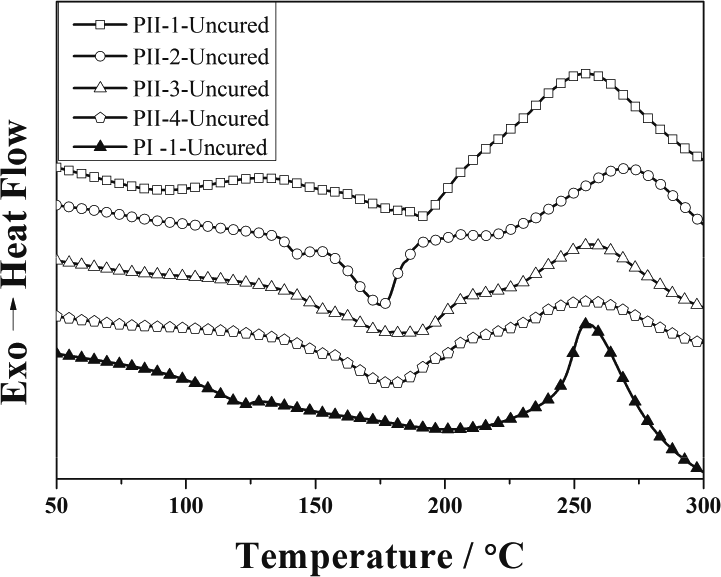
DSC curves of isoimide and imide oligomers. DSC: differential scanning calorimetry.
Thermal property data of the cured resins.
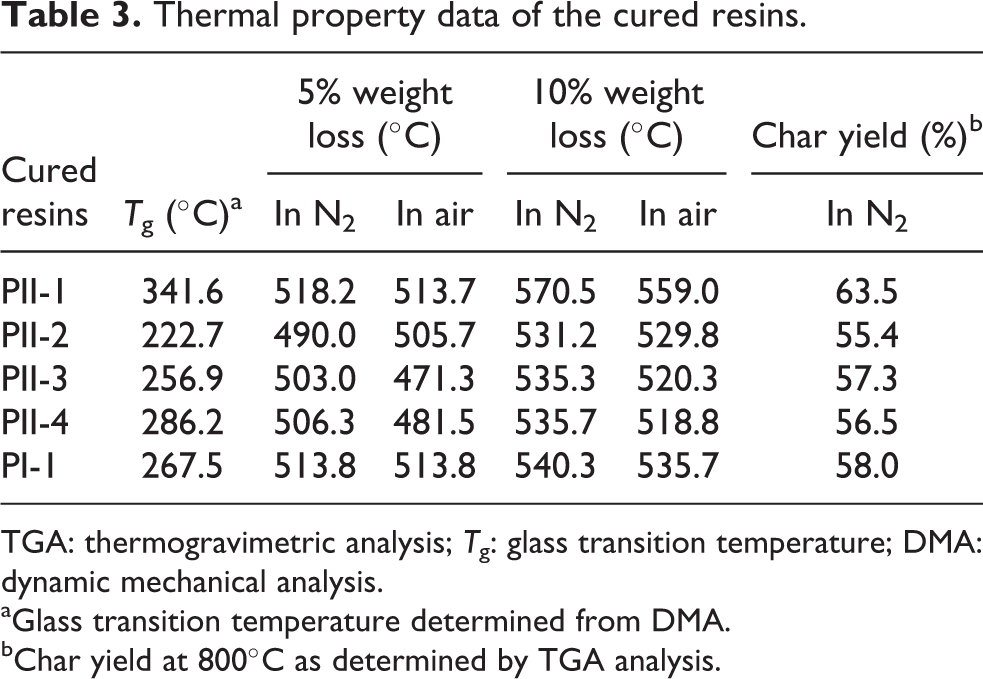
TGA: thermogravimetric analysis; T g: glass transition temperature; DMA: dynamic mechanical analysis.
aGlass transition temperature determined from DMA.
bChar yield at 800°C as determined by TGA analysis.
Dynamic mechanical analysis
The T g values of the cured films were determined by DMA. The peak temperatures of tan δ represent the T g values of the cured films and the results of the storage modulus (E′Pa) and tan δ can be found illustrated in Figure 4. The T g values of the thermosets are affected by two factors: cross-linking densities and chain rigidity. When the cross-link densities were the same, the T g values were dominated by chain rigidity since the spacers between two cross-linking sites exhibit sufficient mobility to rotate at high temperature. The T g value determined for the film prepared by PI-1 was 267.5°C, 10.6°C higher than that for PII-3 which is based on the same molecular structure as polyamide acid. This finding can be attributed to PI-1 featuring a stronger chain rigidity than PII-3. However, the storage modulus of PII-1, PII-4, and PI-1 was higher than PII-1, which can be explained by the main chain of these species being more flexible due to the introduction of flexible linkers (ether linkage) and fluorine-containing groups (i.e. –CF3). The T g value determined for PII-1 was 341.6°C, a value that proves to be much higher than for other oligomers. The latter can also be explained based on BPDA and 3,4′-ODA which exhibit a reduced main chain flexibility in comparison with other oligomers. Furthermore, PII-4 used half the amount of substance and 3,4′-ODA as a reagent featured a T g value over 30°C higher than that for PII-3 and other polyisoimide resins based only on 1,3,3-APB diamine for the same reason. The T g values for the cured oligomer films decreased gradually with increasing molecular weight due to a lower cross-link density which may explain the lower T g value for PII-2 (222.7°C) in comparison with PII-3 (256.9°C).
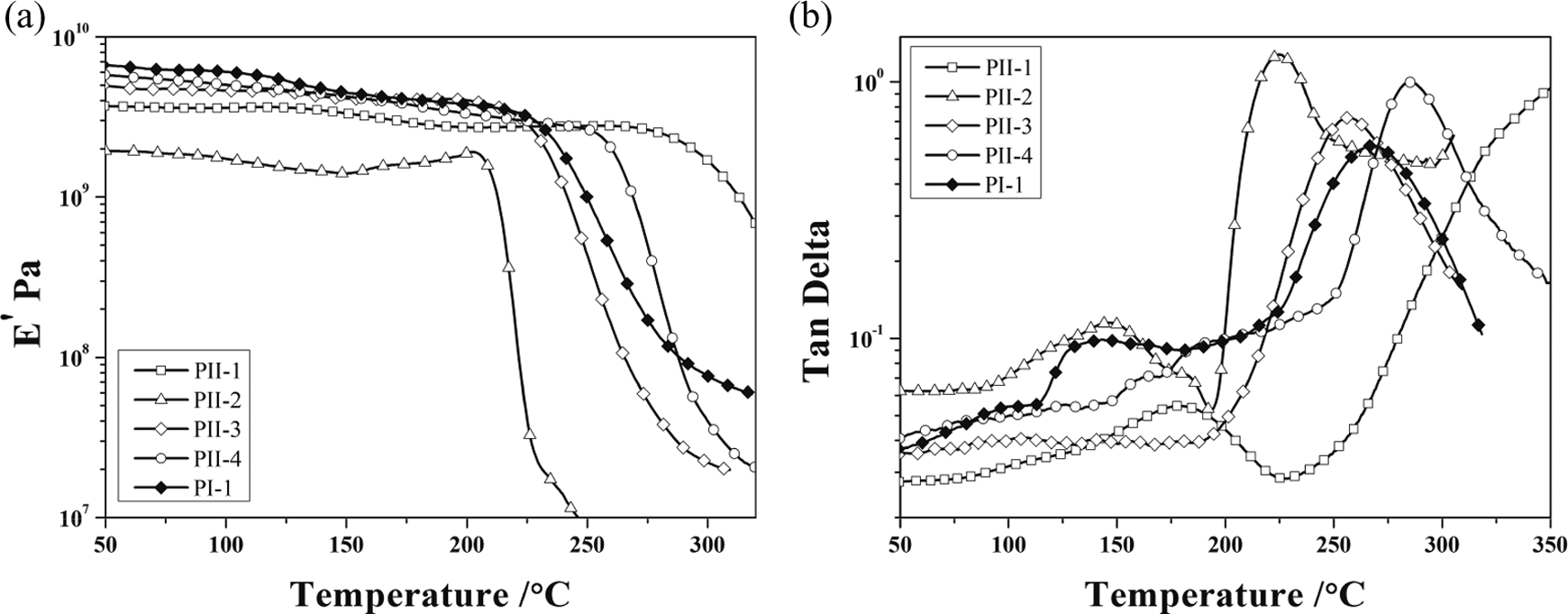
(a) Storage modulus (E) and (b) tan δ curves as a function of temperature for the cured resins.
Thermogravimetric analysis
TGA represents the most common technique for rapid evaluation of the thermal stabilities of polymeric materials. The relative thermal stabilities of the cured resins were systematically evaluated by comparison of temperatures at 5% and 10% weight loss (T d5 and T d10) as well as percent char yields (Y c) at 800°C. The thermogravimetric curves of all the cured resins are shown in Figure 5 and Table 3, both in air and nitrogen atmospheres. All five polymers exhibited a 10% weight loss at high temperature (>490.0°C), not only in nitrogen but also in air indicating a high thermal and thermo-oxidative stability. However, the cured polyisoimide oligomers (PII-3) proved to be slightly less stable in comparison with the corresponding cured polyimides (PI-1) which may be attributed to PI-1 featuring a stronger chain rigidity than PII-3. In addition, PII-1 and PII-4 using 3,4′-ODA as a reagent proved to be slightly more stable than other polyisoimide resins based only on 1,3,3-APB diamine. Surprisingly, the T d5 value for the cured film of PII-2 was determined to be 490°C in nitrogen atmosphere, 15.7°C lower than in air. The latter finding may be caused by the unreacted ethynyl moieties being oxidized resulting in the formation of cross-links. 25,26 The char yield of polyimides and polyisoimides at 800°C was all found to be over 55% and the cured film of PII-1 exhibited the highest char yield, with PI-1 featuring a slightly higher char yield than PII-3 which may also be attributed to the main chain being less flexible. The cured film of PII-2 exhibited the lowest char yield at 800°C due to lower cross-link densities resulting from the higher degree of polymerization. Taken in concert, these results demonstrate that all the cured films featured excellent thermal stabilities.
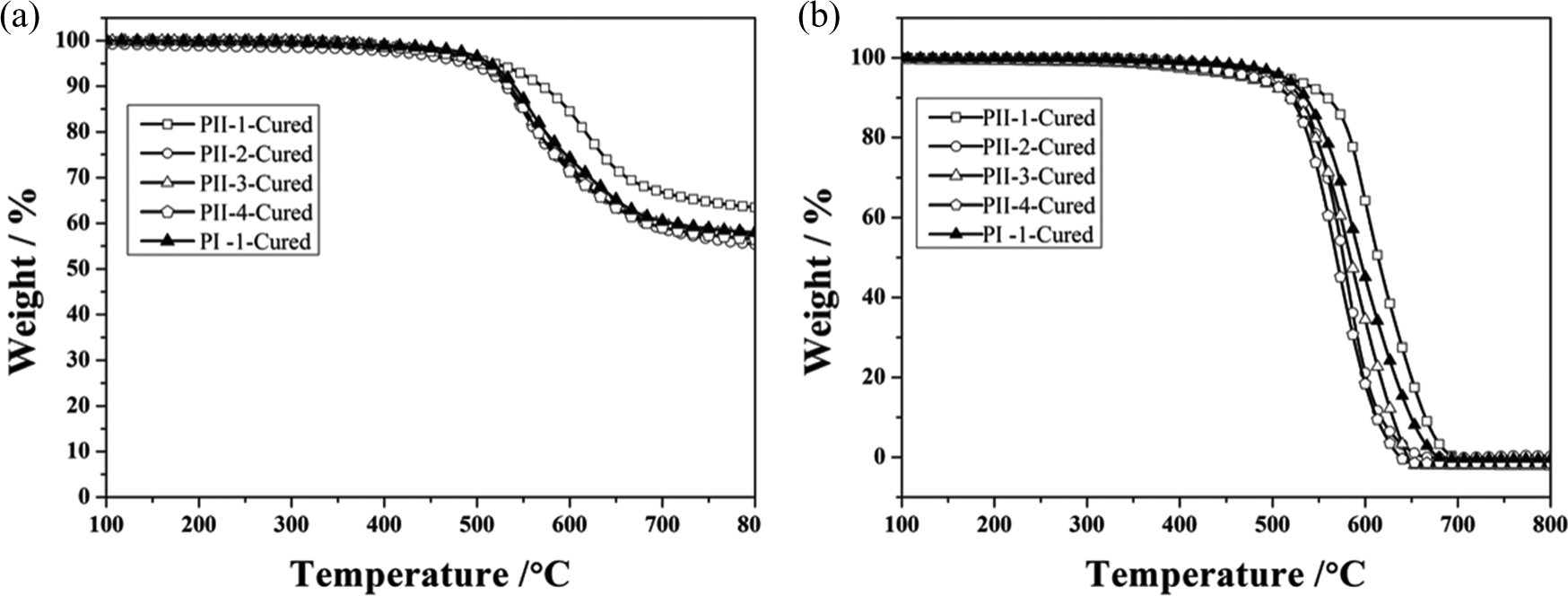
TGA curves of cured oligomers in nitrogen (a) and air (b). TGA: thermogravimetric analysis.
Adhesive test of polymers
The setup for the joint of aluminum tensile shear specimens of the PI-1 test is shown in the upper left corner of Figure 6. Typical load–displacement curves of bonded joints under tension with different temperatures are also shown in Figure 6. The displacement from the test setup was used to draw the curves. All of the curves were found to be linear, with a constant gradient up to the final material failure.
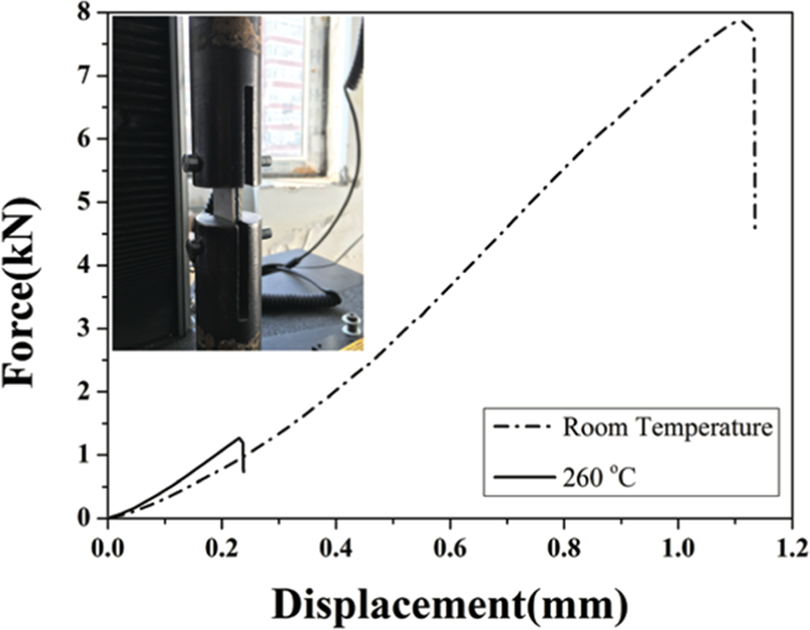
Test setup for single-lap joint and typical load–displacement curves of joints at different temperatures.
The tensile shear strengths obtained for PI-1 are shown in Table 4, aluminum tensile shear specimens of PI-1 featured strengths of 20.0, 5.0, and 3.0 MPa at room temperature, 260°C, and 316°C, respectively. After aging at 300°C for 50 h, the strength decreased by 25% (15.0 MPa) at room temperature. However, surprisingly, the strength at 260°C and 316°C after aging was found to be increased to 7.0 and 4.0 MPa, respectively. The latter finding may be due to the unreacted ethynyl moieties being oxidized and cross-linked under these high temperature conditions. Our results indicate that the adhesive material exhibits an excellent toughness and thermal-oxidative stability.
Lap shear strength of PI-1.
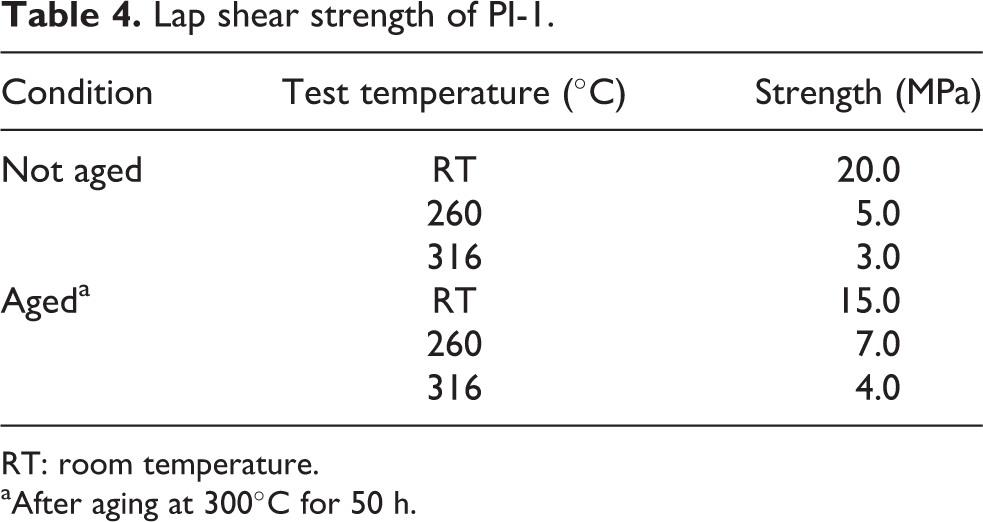
RT: room temperature.
aAfter aging at 300°C for 50 h.
Conclusions
In this work, a series of acetylene-terminated imide and isoimide oligomers were prepared using aromatic diacids (3,4′-BPDA and 6FDA) and aromatic diamines (3,4′-ODA and 1,3,3-APB) as monomers and 3-EA as an end-capping reagent. Due to the unique asymmetric architecture, some of these imide and isoimide oligomers exhibited much higher solubility characteristics in low boiling point solvents in comparison with normal imide oligomers. With a polymerization degree of 2, the solubility of PII-3 and PI-1 increased to 45 and 40 wt% at room temperature in ethyl acetate. This feature renders these oligomer species particularly suitable for wet prepreg processes. All the oligomer species reported could be processed into films and exhibited excellent thermal properties. The cured oligomers featured a higher T g and excellent thermal stability, with no obvious weight loss of the cured resins detected upon increasing the temperature to 500°C. We believe that these oligomer properties may offer potential applications in low-temperature curing with high-temperature applications using composites or adhesives.
Footnotes
Declaration of Conflicting Interests
The author(s) declared no potential conflicts of interest with respect to the research, authorship, and/or publication of this article.
Funding
The author(s) received no financial support for the research, authorship, and/or publication of this article.