






Abstract
A series of block copolymer membranes was designed using polyetheramine (PEA) and methyl-containing polyisophthalamides (MPA) for the separation of carbon dioxide (CO2)/methane (CH4) gas mixtures. PEA consists of abundant ethylene oxide units, which show good affinity with CO2, and MPA consists of methyl (Me) substituents, which can increase the fractional free volume of block copolymer membranes. The Me substituents were introduced into MPA via polymerization from isophthaloyl dichloride (IPC), 2,5-dimethyl-1,4-phenylenediamine (DPD), and 4,4′-bis(3-aminophenoxy)diphenyl sulfone (BADS). Therefore, the CO2 solubility and diffusivity in the membranes could be improved by tailoring the PEA/MPA mass ratio and BADS/DPD mole ratio, respectively. The membrane with a PEA/MPA mass ratio of 6/4 and a BADS/DPD mole ratio of 1/10 exhibited optimum CO2 separation performance with a CO2 permeability of 629 Barrer and CO2/CH4 selectivity of 23 at 2 × 10⁵ Pa and 25°C.
Introduction
Gas membrane separation technology is promising because of its low cost, easy fabrication, and easy scale-up. 1 Depending on the membrane materials used, the membranes can be classified into three categories: polymer membranes, inorganic membranes, and mixed matrix membranes. 2,3 Polymer membranes have been widely applied in carbon dioxide (CO2) separation because of their easy fabrication and low cost, 4 and the development of polymer membranes with high CO2 separation performance has become a hot topic in current research.
The CO2 separation performance of polymer membranes can be improved by membrane material development. 5 Gas permeation through a polymer membrane is governed by the solution–diffusion mechanism. 6,7 The affinity between the gas molecules and polymers can influence the solubility of gases in polymer membranes, and the diameter of gas molecules and fractional free volume (FFV) of polymers can influence the diffusivity of gases in polymer membranes. 8,9 Therefore, high CO2 separation performance can be achieved using polymer membranes by tuning the solubility and diffusivity of the polymer. The solubility can be improved by achieving a specific affinity between the gas molecules and polymers. Polymers containing polar moieties, such as poly(ethylene oxide) (PEO) with ethylene oxide (EO) units, are generally more selective to CO2 than to other gas molecules. 10,11 In addition, diffusivity can be improved by controlling the polymer structure and properties. 12 –14 The polymer chain packing, radii of the free volume cavity, and FFV can affect the diffusivity of gases.
Polyetheramine (PEA) predominantly consists of a PEO backbone and amino groups at the end of the chain, which exhibit high reactivity and can copolymerize with other polymers. 15 However, because of the poor membrane-forming ability of low-molecular-weight PEA, an effective strategy involves copolymerizing low-molecular-weight PEA with glassy polymers to fabricate block copolymers for CO2 separation membranes. 16 –18 Luo et al. 19 explored a series of PEO-polyimide (PI) block copolymer membranes by combining rubbery PEO blocks with glassy PI blocks. The CO2 separation performances were mainly affected by the PEO content. The PEO-PI block copolymer membranes containing 60 wt% PEO exhibited the highest CO2 permeability of 39 Barrer and a CO2/methane (CH4) selectivity of 20.
In this study, a series of block copolymer membranes was designed using PEA and polyisophthalamides with bulky methyl substituents (MPA) for efficient CO2 separation. The MPA rigid chain was polymerized by 4,4′-bis(3-aminophenoxy)diphenyl sulfone (BADS), 2,5-dimethyl-1,4-phenylenediamine (DPD), and isophthaloyl dichloride (IPC). To increase FFV in the membranes to enhance the gas diffusivity properties, Me substituents were introduced into the MPA block using the DPD monomer. 20,21 The effects of the PEA/MPA mass ratio and BADS/DPD mole ratio on the CO2 separation performance were systematically investigated. To elucidate the CO2 separation mechanism of the PEA-MPA block copolymer membranes, the diffusivity and solubility selectivities of pure gases (CO2 or CH4) were measured. In addition, the physicochemical properties including the microstructure, thermal stability, crystalline structure, and free volume characteristics of the PEA-MPA block copolymer membranes were evaluated.
Experimental
Materials
Polyetheramine (PEA D2000) and IPC (≥99 wt%) were purchased from Aladdin Reagent and used without further purification. BADS (≥97 wt%) and DPD (≥98 wt%) were purchased from Tokyo Chemical Industry Co. Ltd (Shanghai, China) and used without further purification. N,N-dimethylacetamide (DMAc, 99.5 wt%) was purchased from Tianjin Guangfu Technology Development Co. Ltd. (Tianjin, China) DMAc was purified by distillation under reduced pressure and dehydrated with 4 Å molecular sieves prior to use. Deionized water was used throughout the study.
Synthesis of PEA-MPA block copolymers
As shown in Figure 1, all PEA-MPA block copolymers were polymerized by the low-temperature condensation reaction of PEA, IPC, BADS, and DPD. The reaction was performed using a mechanical stirrer and blanketed with nitrogen during the entire process. BADS and DPD were dissolved in DMAc in a three-neck round-bottomed flask at 25°C; the mole ratios of BADS to DPD were 1/4, 1/6, 1/8, and 1/10. The mixture was cooled to 5°C after complete dissolution, and IPC was then added to the flask. After the reaction proceeded for 30 min at 5°C, PEA was added and the mass ratios of PEA to MPA were controlled at 3/7, 4/6, 5/5, and 6/4. The reaction mixture was allowed to react for 8 h at 25°C. The viscous solutions of the PEA-MPA block copolymers were precipitated in a deionized water bath. The precipitated polymers were washed three times with deionized water and then dried at 50°C under vacuum for 24 h.
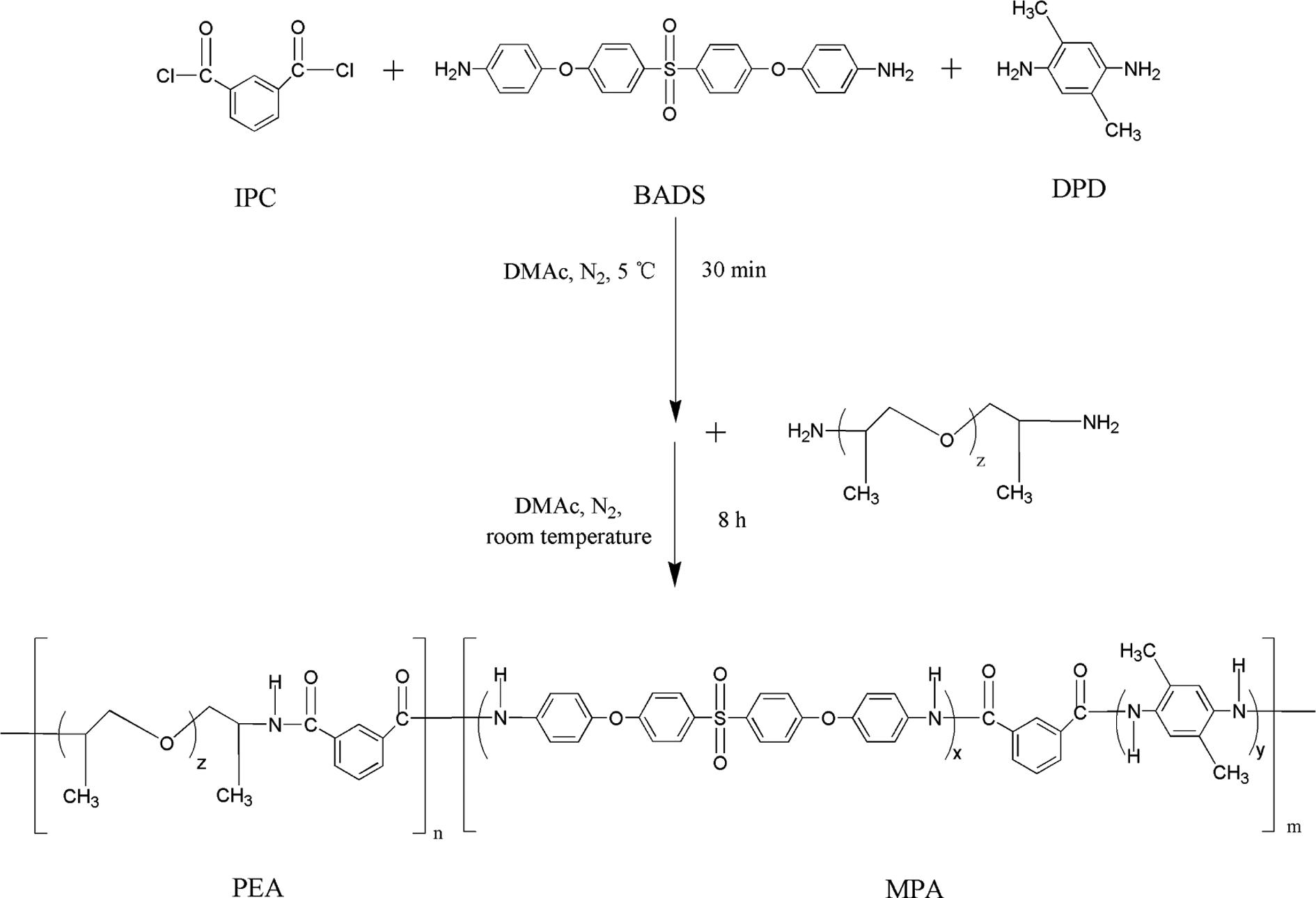
Synthesis of PEA-MPA block copolymers. PEA: polyetheramine; MPA: methyl-containing polyisophthalamides.
Preparation of PEA-MPA block copolymer membranes
The PEA-MPA block copolymer membranes were fabricated using the solution casting method. 22 The PEA-MPA block copolymers were dissolved in DMAc to obtain a 10-wt% homogeneous polymer solution. The obtained polymer solutions were cast on flat glass plates after complete dissolution, dried overnight at 80°C, and then heated at 50°C for 24 h in a vacuum oven to remove any residual solvent. The PEA-MPA block copolymer membranes were named PEA-MPA (x/y) a/b, where a/b was the mass ratio of PEA to MPA and x/y is the mole ratio of BADS to DPD monomer in the block copolymers. The membrane thicknesses varied from 70 to 90 μm.
Characterizations
The PEA content and BADS/DPD mole ratios were characterized by proton nuclear magnetic resonance (1H NMR). 1H NMR spectra was performed on a Bruker Avance 400 Spectrometer (Bruker technology Co. Ltd., Germany) operating at 400 MHz in dimethyl sulfoxide (DMSO)-d6.
The chemical structures of PEA-MPA block copolymer membranes were characterized by Fourier transform infrared (FTIR) spectroscopy. FTIR was measured using a Nicolet-560 FTIR spectrometer (Thermo Nicolet Co. Ltd, USA) in the range of 4000–400 cm−1.
The thermal stability of PEA-MPA block copolymer membranes was investigated using thermogravimetric analysis (TGA) by an STA449F3 TGA instrument (NETZSCH Corporation, Germany) from 25°C to 800°C under nitrogen flow at a heating rate of 10°C min−1.
The arrangement of polymer chains was investigated using an X-ray diffraction (XRD) with a Rigaku D/max 2500 v/pc (Rigaku Corporation, Japan) in the range of 10–90° at the scan rate of 10° min−1. The average d-spacing of the membranes was evaluated based on Bragg’s law as follows:

where n is an integer (1, 2, 3,…), λ (λ = 0.154 nm) expressed the X-ray wavelength, d (nm) represented the intersegment spacing between two polymer chains, and θ (°) stood for the XRD angle of the peak. 23
The mechanical properties of membrane samples were evaluated using an Instron Mechanical Tester (INSTRON 3366, INSTRON Corporation, USA). Each sample was cut into 0.5 × 3.0 cm2 and conducted at an elongation rate of 30 mm min−1 at 25°C.
The FFV properties of PEA-MPA block copolymer membranes were measured by positron annihilation lifetime spectroscopy (PALS). 24 The experiment was determined an ORTEC (ORTEC Corporation, USA) fast-fast coincidence system (the resolution was 201 ps) at 25°C to investigate the change of free volume characteristics membranes. The positron source of 22Na was sandwiched between two pieces of samples with thickness range of 1.0 mm. The spectra with more than one million counts were recorded and then resolved by LT-v9 program. On assumption that the location of o-Ps occurs in a sphere potential well surrounded by an electron layer of a constant thickness Δr (0.1656 nm), the radius of free volume cavity (r3) was calculated from the pickoff annihilation lifetime of o-Ps (τ3) by the following semiempirical equation:

The FFV could be calculated from the volume of equivalent sphere and the intensity of o-Ps (I3)

Gas permeation experiments
Pure gas permeation experiments
Pure gas (CO2 and CH4) permeation experiments were carried out at a steady state and measured by the “time lag” method. 25 Pure gas permeabilities of all PEA-MPA block copolymer membranes were tested at 1 × 10⁵ Pa and 25°C under dry state.
Mixed gas permeation experiments
Mixed gas (CO2/CH4 = 10/90 vol.%) permeation experiments were performed with an apparatus described in the previous literature. 26 Mixed gas separation performance was measured under humidified state at 2 × 10⁵ Pa and 25°C. In mixed gas experiment, mixed gas was humidified by a humidifier which was saturated with water vapor at 40°C, and then passing through a dehumidifier at 25°C to remove the condensate water. Meanwhile, sweep gas was also humidified by entering a humidifier with full of water at 25°C at the permeate side. H2 was selected as sweep gas, and the permeate side was kept at atmospheric pressure. The flow rate and composition of gas on permeate side were recorded every 12 min until they no longer changed with time.
Gas permeability (Pi, Barrer, and 1 Barrer = 10−10 cm3 (STP)·cm cm−2·s−1·cmHg−1) under steady state was defined by the following equation:

where Qi signified the gas ‘i’ volumetric flow rate (cm3 s−1) (STP), l referred to the thickness of the membrane (cm), ΔPi was the transmembrane partial pressure difference of gas ‘i’ (cmHg), A represented the effective membrane area (cm2), and A was a constant of 12.9 cm2.
The CO2/CH4 selectivity (α) was calculated by the following equation:

Results and discussion
Membrane characterization
Figure 2 presents the 1H NMR spectra of all PEA-MPA block copolymers. The PEA protons (1) resonated in the range of 0.99–1.06 ppm, and the BADS protons (2) and DPD protons (3) in the MPA block resonated in the ranges of 7.10–7.22 and 2.20–2.30 ppm, respectively. The –C(=O)–NH– protons (7) in PEA-MPA block copolymers resonated in the range of 10.0–10.16 ppm. The peak assignment confirms the expected chemical structures of the PEA-MPA block copolymers. The PEA/MPA mass ratios (a/b) were calculated from the relative intensities of the signals in the 1H NMR spectra originating from the PEA and BADS proton signals. The BADS/DPD mole ratios (x/y) were calculated from the relative intensities of the signals in the 1H NMR spectra originating from the BADS and DPD proton signals. These results were listed in Table 1. The PEA/MPA mass ratios and BADS/DPD mole ratios estimated from the 1H NMR spectra were very close to the target values, indicating successful control of the composition of the PEA-MPA block copolymers.

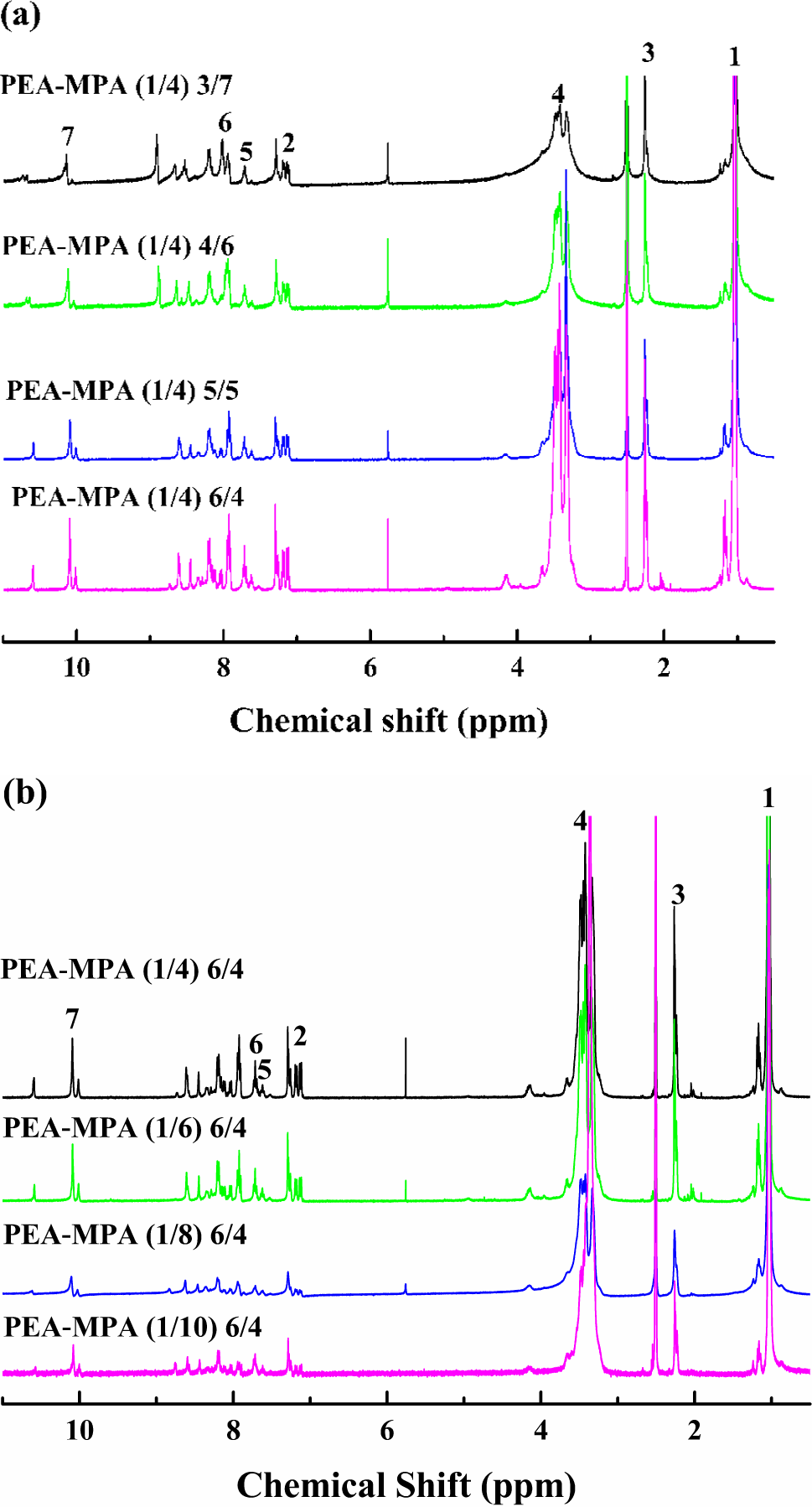
1H NMR spectra of (a) PEA-MPA block copolymer membranes with different mass ratios of PEA and MPA and (b) PEA-MPA block copolymer membranes with different mole ratios of BADS and DPD. PEA: polyetheramine; MPA: methyl-containing polyisophthalamides; 1H NMR: proton nuclear magnetic resonance; DPD: 2,5-dimethyl-1,4-phenylenediamine; BADS: 4,4′-bis(3-aminophenoxy)diphenyl sulfone.
Summary of BADS/DPD mole ratios (x/y) and PEA/MPA mass ratios (a/b) of PEA-MPA block copolymer membranes.
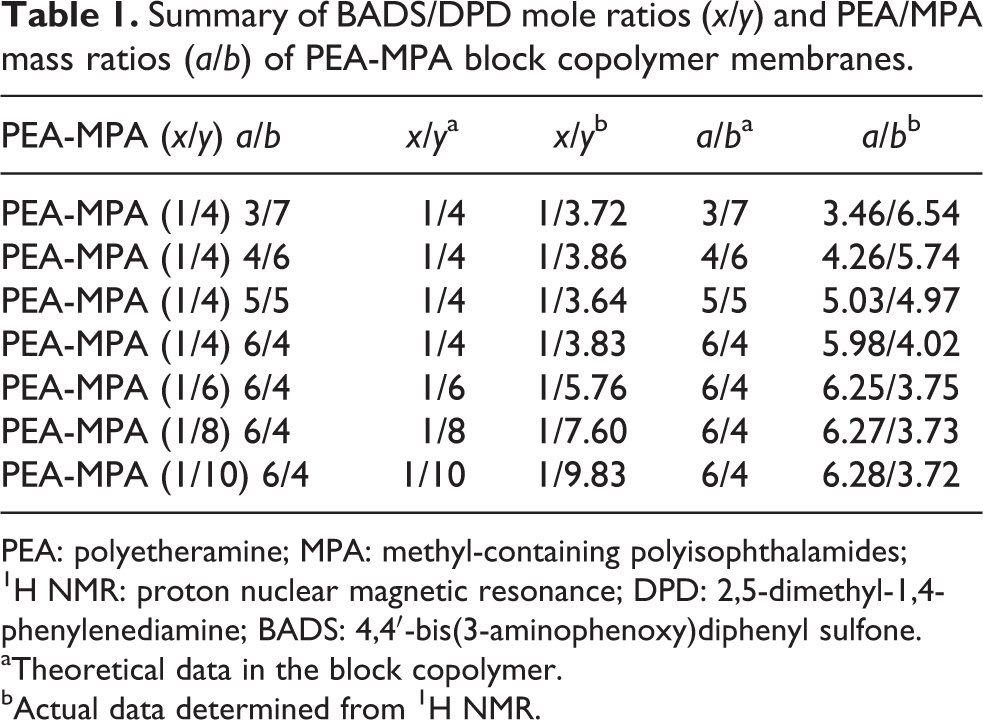
PEA: polyetheramine; MPA: methyl-containing polyisophthalamides; 1H NMR: proton nuclear magnetic resonance; DPD: 2,5-dimethyl-1,4-phenylenediamine; BADS: 4,4′-bis(3-aminophenoxy)diphenyl sulfone.
aTheoretical data in the block copolymer.
bActual data determined from 1H NMR.
FTIR spectra of the PEA-MPA block copolymer membranes were presented in Figure 3, revealing C–N stretching vibration at 1539 cm−1, C=O stretching vibration at 1638 cm−1, and N–H stretching vibration at 3262–3289 cm−1. 27 –29 These peaks indicated that the O=C–N–H structure of the PEA-MPA block copolymers is formed. In addition, the peaks at 1095, 1245, and 1455 cm−1 were assigned to the vibrations of the O–C–O stretching mode in PEA, the O=S=O deformation mode in BADS, and the –CH3 deformation mode in DPD. 30,31,27,8 The presence of these peaks indicated that the PEA-MPA block copolymers were successfully polymerized. As observed in Figure 3(b), when the ratio of PEA to MPA was fixed, the peak of the N–H stretching vibration was red shifted upon decreasing the BADS/DPD mole ratio in the MPA blocks. This result indicated that the DPD with Me substituents introduced in the MPA blocks weakened the interactions of hydrogen bonds and disrupted the block copolymer chain packing.
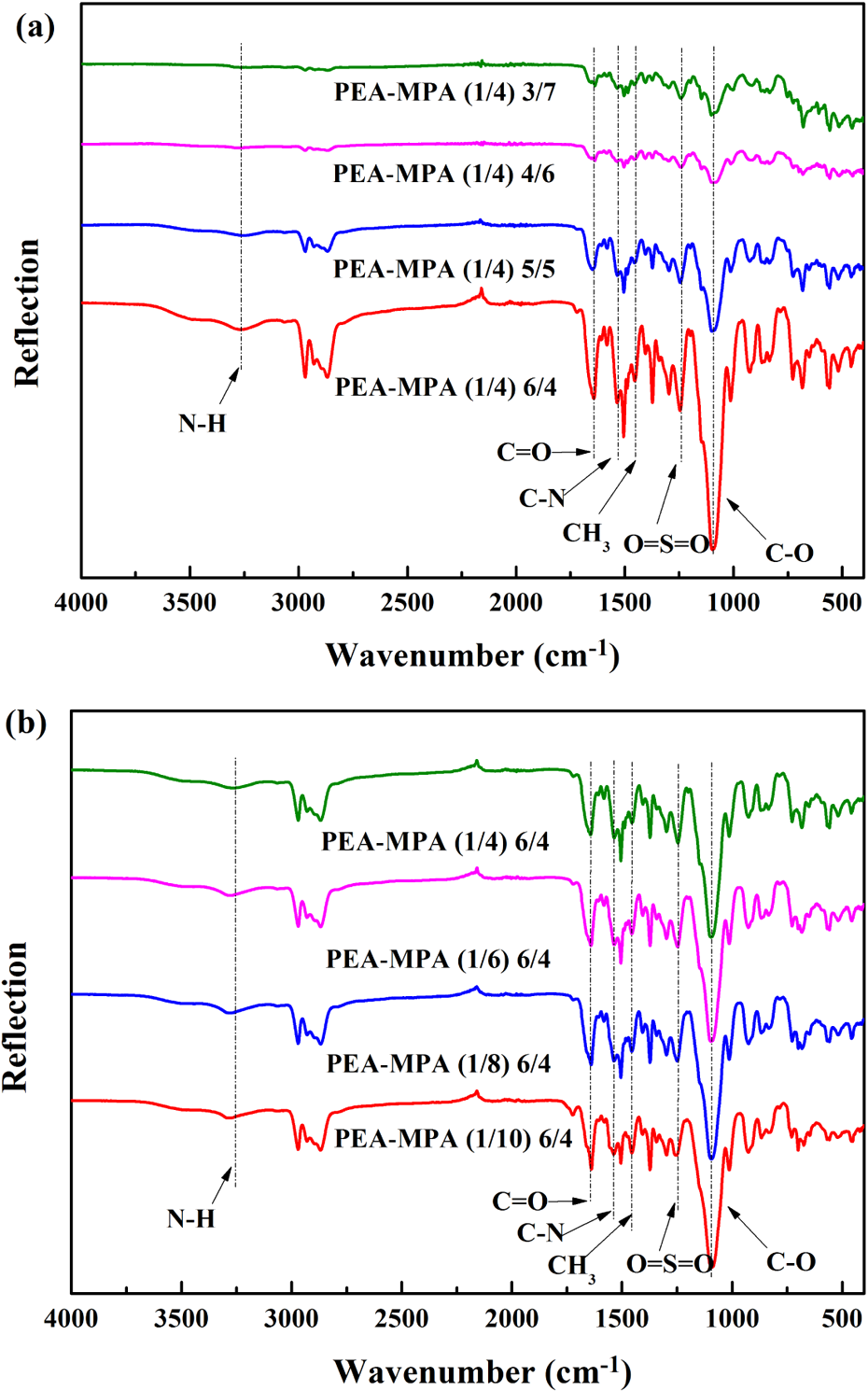
FTIR spectra of (a) PEA-MPA block copolymer membranes with different mass ratios of PEA and MPA (4000–400 cm−1) and (b) PEA-MPA block copolymer membranes with different mole ratios of BADS and DPD (4000–400 cm−1). PEA: polyetheramine; MPA: methyl-containing polyisophthalamides; DPD: 2,5-dimethyl-1,4-phenylenediamine; BADS: 4,4′-bis(3-aminophenoxy)diphenyl sulfone; FTIR: Fourier-transform infrared.
TGA was used to investigate the thermal stability of the PEA-MPA block copolymer membranes. The TGA curves of the PEA-MPA block copolymer membranes had similar decomposition profiles consisting of three major weight loss stages, as observed in Figure 4. The first stage from 100°C to 300°C corresponded to the evaporation of water and the residual solvents within the membranes. 31 The second stage from 300°C to 500°C corresponded to the thermal decomposition of the PEA blocks. 30,32 Finally, the third stage from 500°C to 800°C corresponded to the thermal decomposition of the remaining MPA blocks. The decomposition temperature (Td) was defined as the temperature at which the weight of the sample decreases by 5%. 33 Figure 4(a) showed that Td of the PEA blocks in the membranes decreases with increasing PEA block content, which indicated that the thermal stability of the PEA-MPA block membranes gradually decreased as the number of EO units increases. As observed in Figure 4(b), when the ratio of PEA to MPA was fixed, Td of the MPA blocks in the membranes decreased with decreasing BADS/DPD mole ratio. This finding indicated that the thermal stability of the MPA blocks gradually decreased with increasing addition of Me substituents of DPD in the MPA blocks.
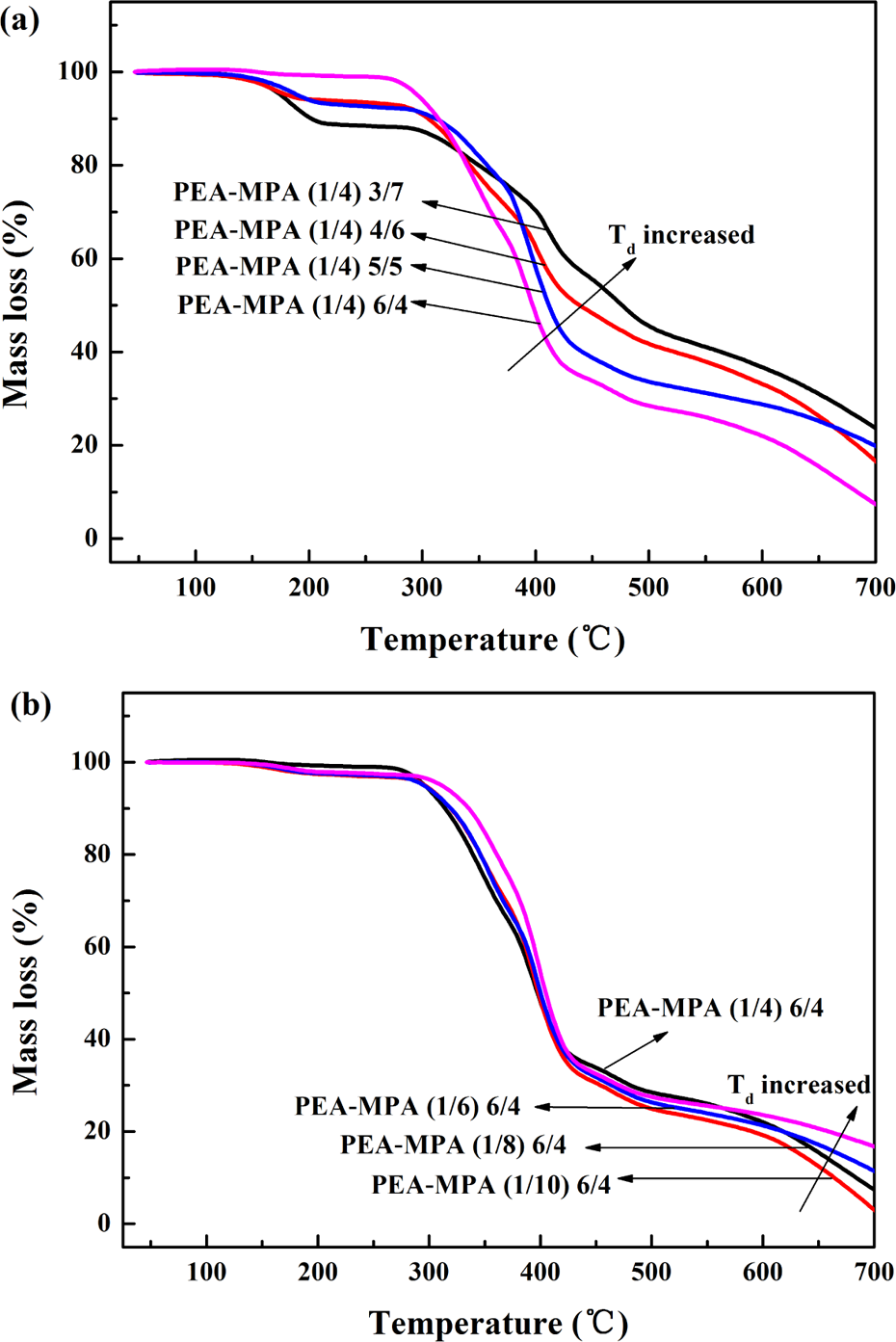
TGA curves of (a) PEA-MPA block copolymer membranes with different mass ratios of PEA and MPA and (b) PEA-MPA block copolymer membranes with different mole ratios of BADS and DPD. PEA: polyetheramine; MPA: methyl-containing polyisophthalamides; DPD: 2,5-dimethyl-1,4-phenylenediamine; BADS: 4,4′-bis(3-aminophenoxy)diphenyl sulfone; TGA: thermogravimetric analysis.
XRD analysis was used to investigate the arrangement of the polymer chains. As observed in Figure 5, broad peaks were observed in the 2θ range of 10–35° for all membranes. These peaks were attributed to the semicrystalline region of the PEA-MPA block copolymers. As observed in Figure 5(a), the d-spacings of the PEA-MPA copolymers increased from 0.397 to 0.420 nm with increasing PEA block content. This finding indicated that low-molecular-weight PEA in the form of plasticizers was present between the polymer chains, disrupting the block copolymer chain packing. 34 Figure 5(b) demonstrated that for a fixed ratio of PEA to MPA, the d-spacings of the PEA-MPA block copolymers increased from 0.420 to 0.451 nm upon decreasing the BADS/DPD mole ratio. This finding indicated that the introduction of DPD with Me substituents in the MPA blocks could effectively disrupt the block copolymer chain packing and increased the d-spacings of the PEA-MPA block copolymers. The increased d-spacings favored increasing gas diffusivity for the PEA-MPA block copolymer membranes.
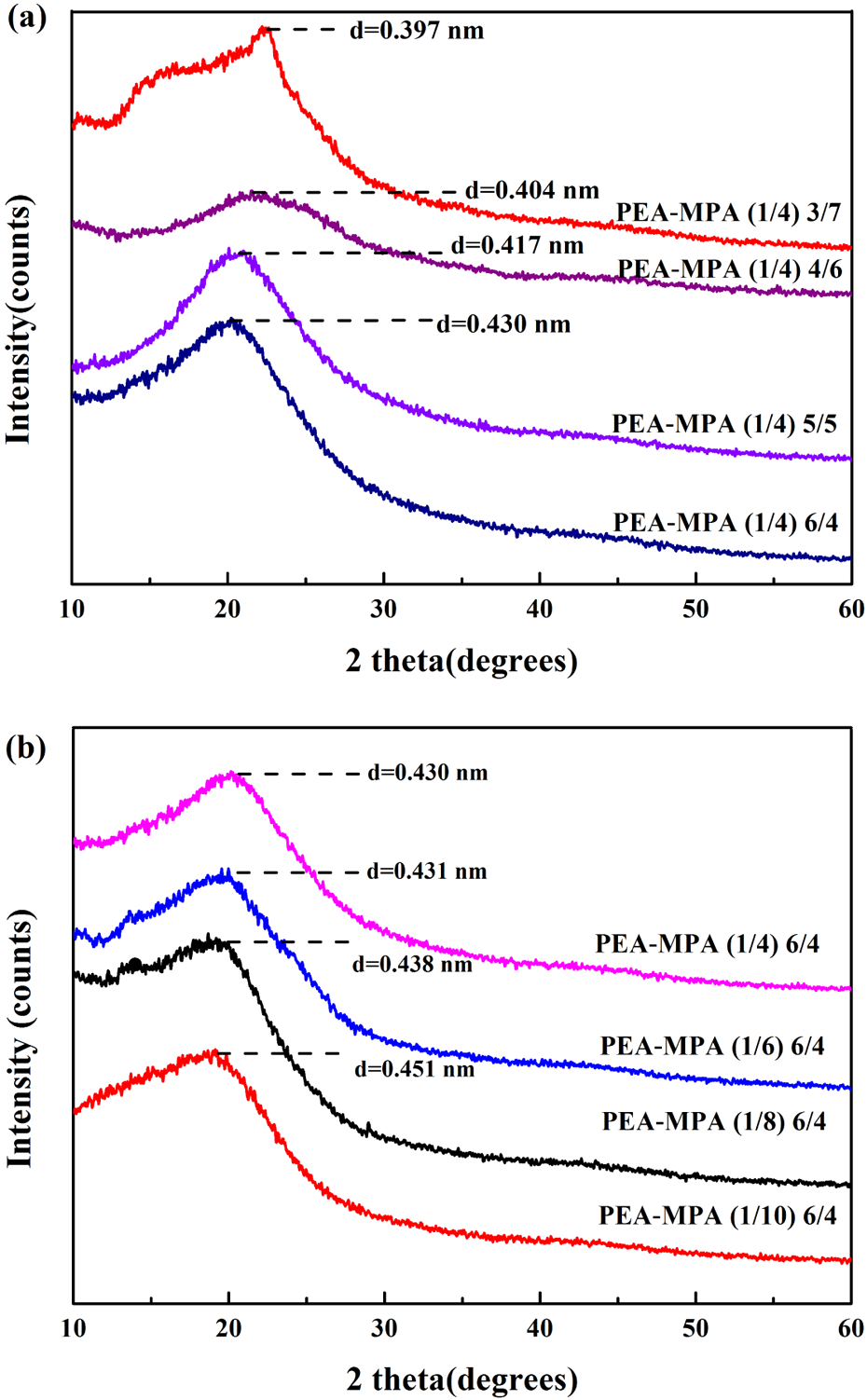
XRD patterns of (a) PEA-MPA block copolymer membranes with different mass ratios of PEA and MPA and (b) PEA-MPA block copolymer membranes with different mole ratios of BADS and DPD. PEA: polyetheramine; MPA: methyl-containing polyisophthalamides; DPD: 2,5-dimethyl-1,4-phenylenediamine; BADS: 4,4′-bis(3-aminophenoxy)diphenyl sulfone; XRD: X-ray diffraction.
Mechanical properties of the PEA-MPA copolymer membranes in terms of Young’s modulus, elongation at break, and tensile strength were listed in Table 2. Within the PEA-MPA copolymer series in this work, Young’s modulus and tensile strength decreased as the PEA block content increased. The copolymers became thermoplastic elastomers at high PEA contents with very large deformations to break 19 . Young’s modulus and tensile strength decreased as the BADS/DPD mole ratio decreased. These results indicated that the DPD with Me substituents introduced in the MPA blocks weakened the interactions of hydrogen bonds and disrupted the block copolymer chain packing, leading to a decrease in Young’s modulus and tensile strength.
Mechanical properties of PEA-MPA block copolymer membranes.
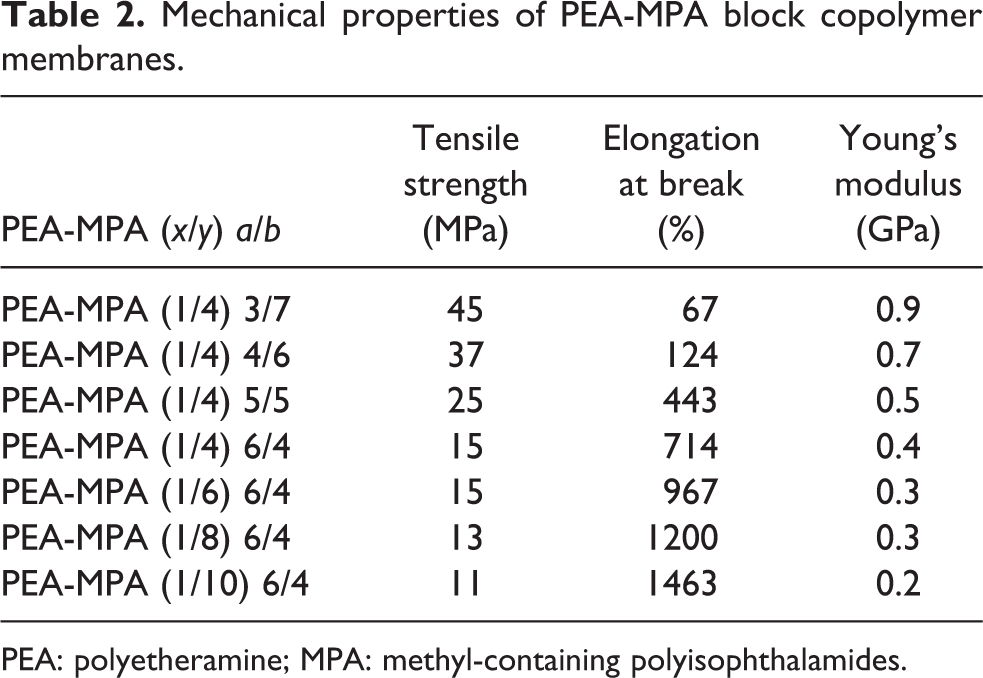
PEA: polyetheramine; MPA: methyl-containing polyisophthalamides.
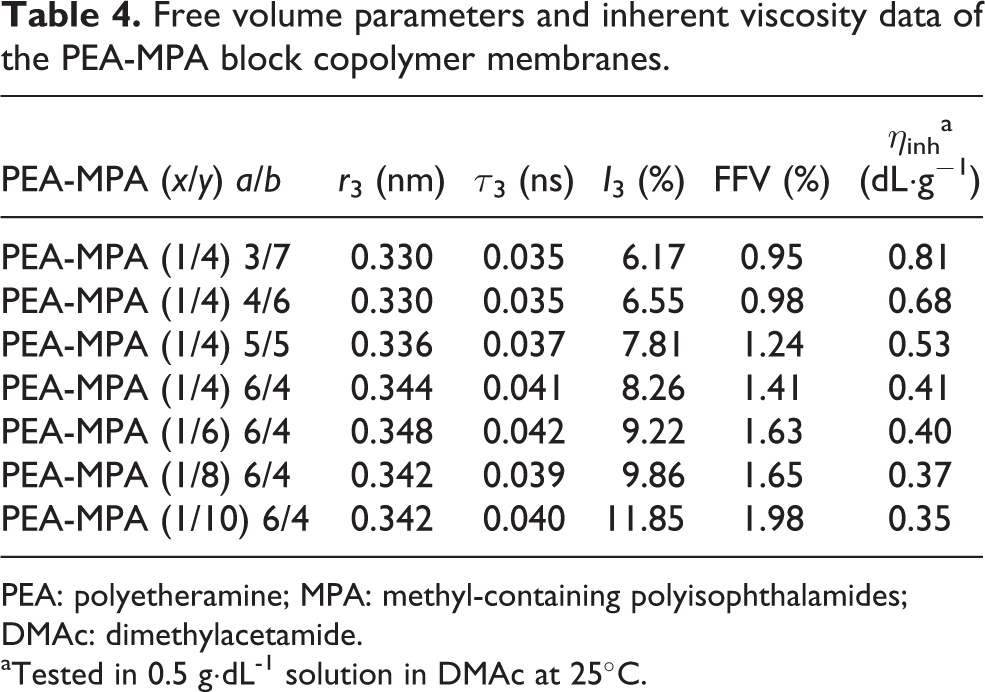
The free volume characteristics of the PEA-MPA block copolymer membranes were determined using PALS. The radii of the free volume cavity (r3) of the membranes were varied in the range of 0.330–0.348 nm, which were equal to or larger than the dynamic radius of CO2 (0.330 nm) and smaller than that of CH4 (0.380 nm). These appropriate cavity sizes of the membranes favored CO2 transport through the membranes and prevent CH4 permeation.
The FFV of the membranes depended not only on the radii of the free volume cavity (r3) but also on the intensity (I3). The PALS data showed that FFV of the membranes increases from 0.95% to 1.41% upon increasing the PEA block content and from 1.41% to 1.98% upon decreasing the BADS/DPD mole ratio. Therefore, increasing the amount of PEA and the Me substituent of DPD in the MPA block could increase the d-spacings of PEA-MPA block copolymers, thereby increasing the FFV.
Gas permeation performance
Pure gas permeation performance
The gas separation performance of pure gas for the PEA-MPA block copolymer membranes is shown in Figure 6. Figure 6(a) shows that CO2 permeability increased with PEA block content, whereas CO2/CH4 selectivity exhibited the opposite trend. The optimum PEA/MPA mass ratio was 6/4. The membrane with the optimum PEA/MPA mass ratio exhibited a high CO2 permeability of up to 107 Barrer. As observed in Figure 6(b), when the ratio of PEA to MPA was fixed, the CO2 permeability and CO2/CH4 selectivity increased upon decreasing the BADS/DPD mole ratio. The optimum BADS/DPD mole ratio within MPA was 1/10. The PEA-MPA (1/10) 6/4 membrane exhibited the highest CO2 permeability of 152 Barrer, and the CO2/CH4 selectivity simultaneously reached a maximum of 9.
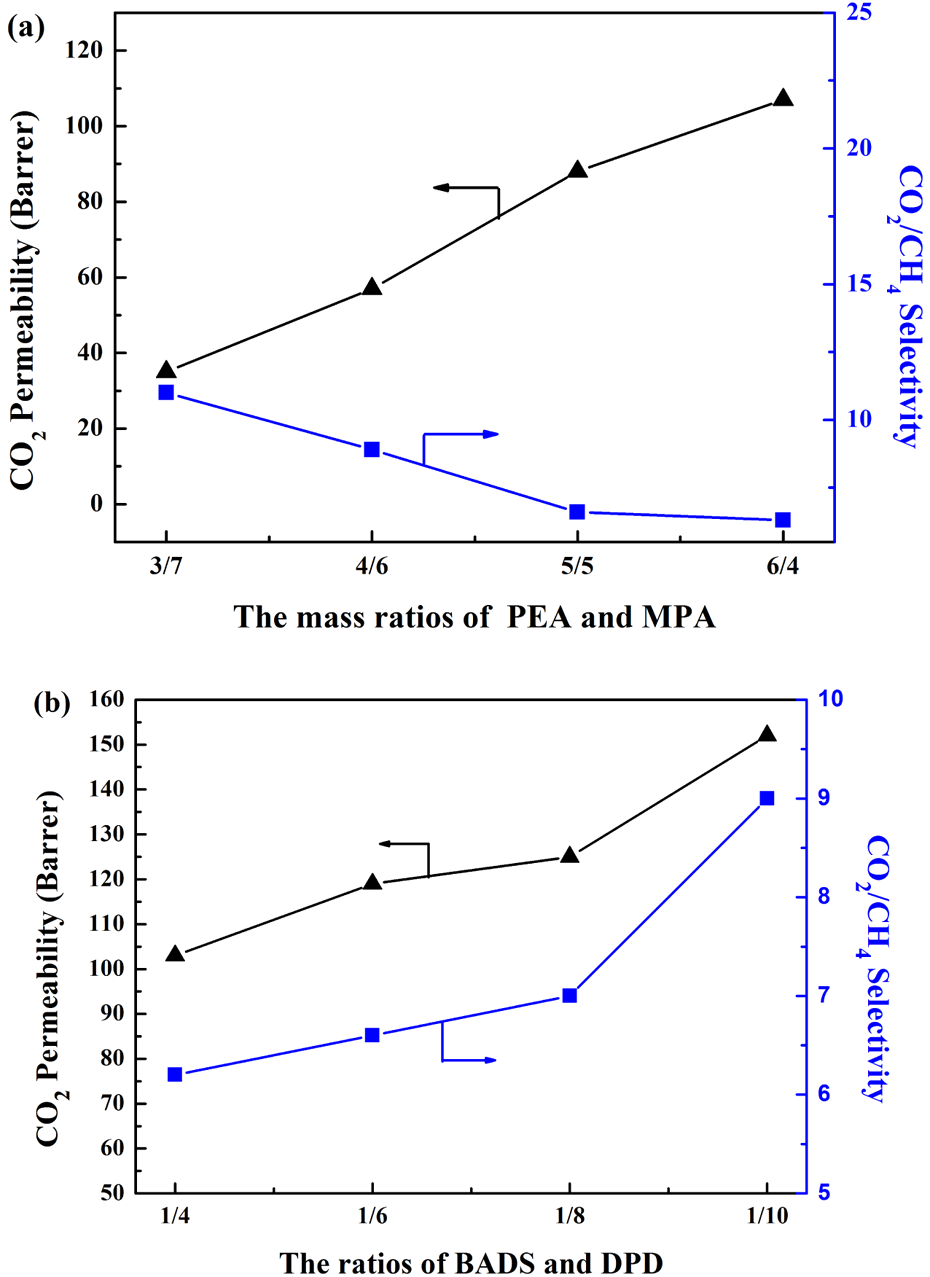
Pure gas permeability and selectivity of (a) PEA-MPA block copolymer membranes with different mass ratios of PEA and MPA and (b) PEA-MPA block copolymer membranes with different mole ratios of BADS and DPD. PEA: polyetheramine; MPA: methyl-containing polyisophthalamides; DPD: 2,5-dimethyl-1,4-phenylenediamine; BADS: 4,4′-bis(3-aminophenoxy)diphenyl sulfone.
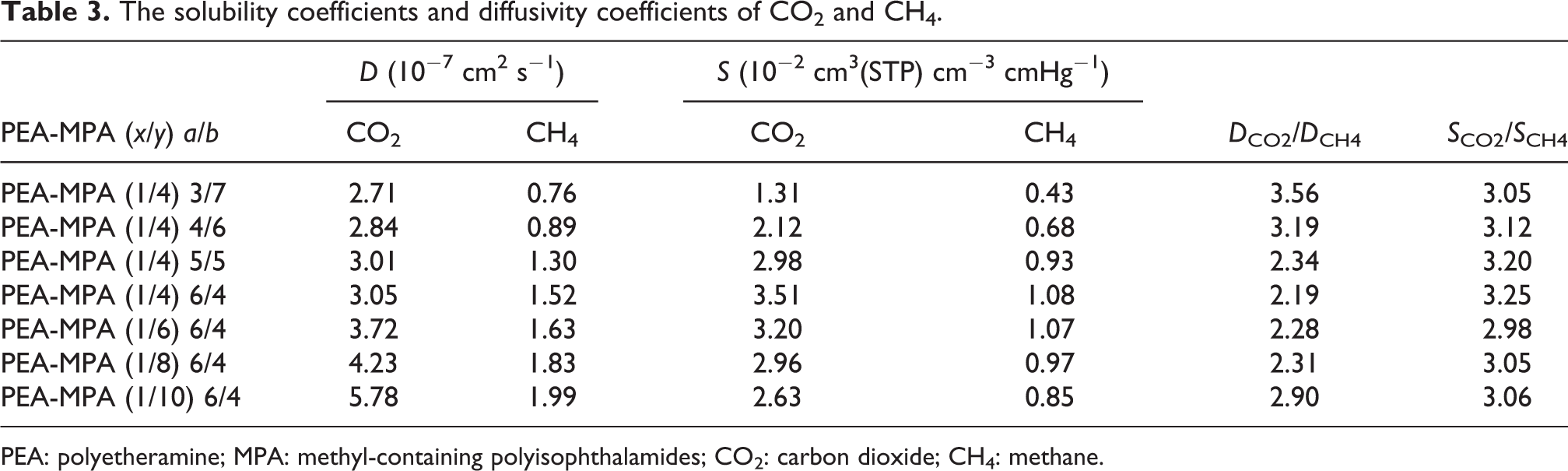
To elucidate the CO2 separation mechanism of PEA-MPA block copolymer membranes, the solubility coefficients (S) and diffusivity coefficients (D) of CO2 and CH4 for the PEA-MPA block copolymer membranes and CO2/CH4 solubility and diffusivity selectivities were determined, and these values were listed in Table 3. The CO2/CH4 solubility selectivity increased but the CO2/CH4 diffusivity selectivity decreased with increasing PEA block content. PEA was composed of EO units, which showed good affinity with CO2, thus increasing the CO2/CH4 solubility selectivity. However, upon increasing the PEA block content, the PEA-MPA block copolymer chain flexibility and r3 (Table 4) increased, 18 which weakened the size-sieving ability. 35,36
The solubility coefficients and diffusivity coefficients of CO2 and CH4.
PEA: polyetheramine; MPA: methyl-containing polyisophthalamides; CO2: carbon dioxide; CH4: methane.
Free volume parameters and inherent viscosity data of the PEA-MPA block copolymer membranes.
PEA: polyetheramine; MPA: methyl-containing polyisophthalamides; DMAc: dimethylacetamide.
aTested in 0.5 g·dL-1 solution in DMAc at 25°C.
Decreasing the BADS/DPD mole ratio did not result in any apparent changes in CO2/CH4 solubility selectivity; however, CO2/CH4 diffusivity selectivity increased. The increased amount of Me substituents of DPD in the MPA blocks did not affect the EO content (Table 1). Hence, no obvious change in the affinity between CO2 and the PEA-MPA block copolymer membranes was observed. In addition, the data in Table 3 indicate that the value of r3 did not change upon increasing the amount of Me substituents of DPD in the chain of MPA blocks. However, the FFV of the PEA-MPA membranes increased, which could enhance the size-sieving ability of PEA-MPA block copolymer membranes, 37 thus increasing the CO2/CH4 diffusivity selectivity.
It could be concluded that the CO2 solubility coefficient increased from 1.31 to 3.51 and the CO2 diffusivity coefficient increased from 2.71 to 3.05 upon increasing the PEA block content. Therefore, with increasing PEA content, the CO2 permeability increase was mainly due to the increase in the CO2 solubility coefficient. However, as the PEA block content increased, the reduction in the CO2/CH4 diffusivity selectivity was greater than the increase in CO2/CH4 solubility selectivity. Finally, the CO2/CH4 selectivity decreased. However, with the reduction in the BADS/DPD mole ratio in the chain of MPA blocks, the CO2 diffusivity coefficient increased from 3.05 to 5.78, whereas no clear change was observed for the CO2 solubility coefficient. Therefore, with the reduction in the BADS/DPD mole ratio, the CO2 permeability increase was mainly due to the increase in the CO2 diffusivity coefficient. Moreover, the CO2/CH4 solubility selectivity showed no obvious change, while CO2/CH4 diffusivity selectivity was increased with the reduction in the BADS/DPD mole ratio, thus increasing CO2/CH4 selectivity.
Mixed gas permeation performance
Figure 7 showed the mixed gas separation performance of all PEA-MPA block copolymer membranes. The PEA-MPA (1/10) 6/4 membrane exhibited the highest CO2 permeability of 629 Barrer and a CO2/CH4 selectivity of 23. The CO2 separation performance of the block membranes was improved under the humidified state for two main reasons. Firstly, the PEA-MPA block copolymer membranes absorbed water molecules, which caused the polymer to swell and reduced the interaction of polymer chains, increasing the CO2 permeability. 38 Secondly, the CO2 solubility in water was higher than CH4 solubility; therefore, the absorbed water molecules within the membranes increased the CO2/CH4 selectivity. 39 The PEA-MPA (1/10) 6/4 membrane was selected as the optimal membrane for further investigation of the effect of the feed gas pressure and operating temperature on the CO2 separation performance.
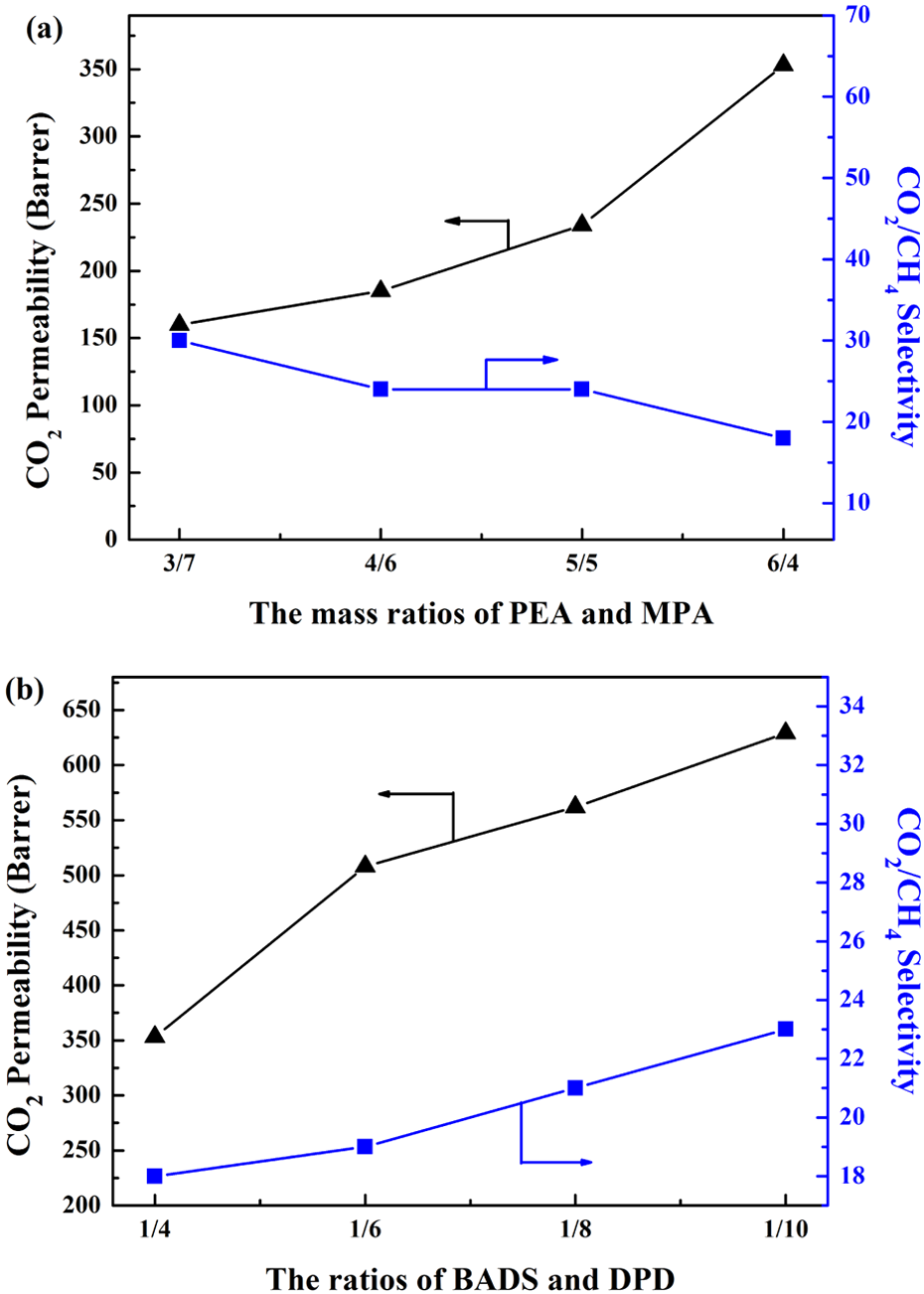
Mixed gas separation performance of (a) PEA-MPA block copolymer membranes with different mass ratios of PEA and MPA and (b) PEA-MPA block copolymer membranes with different mole ratios of BADS and DPD. PEA: polyetheramine; MPA: methyl-containing polyisophthalamides; DPD: 2,5-dimethyl-1,4-phenylenediamine; BADS: 4,4′-bis(3-aminophenoxy)diphenyl sulfone.
Effect of feed gas pressure on mixed gas separation performance
Figure 8 shows the CO2 permeability and the CO2/CH4 selectivity of the PEA-MPA (1/10) 6/4 membrane as a function of feed gas pressure. The feed gas pressure of the membrane varied from 0.2 to 0.6 MPa. As observed in Figure 8, the CO2 permeability first decreased upon increasing the feed gas pressure from 0.2 to 0.5 MPa and then begun to increase when it reaches 0.6 MPa. The CO2/CH4 selectivity decreased with increasing feed gas pressure. The minimum CO2 permeability was observed at a feed gas pressure of 0.5 MPa, which corresponded to the plasticization effect of the PEA-MPA membrane. Below the plasticization pressure, the CO2 permeability decreased with increasing feed gas pressure because of volume relaxation and gradual saturation of microvoids in the block copolymer membrane. Above the plasticization pressure, CO2 increased the block copolymer chain mobility, thereby increasing the diffusivity coefficients of all gases. 40,41
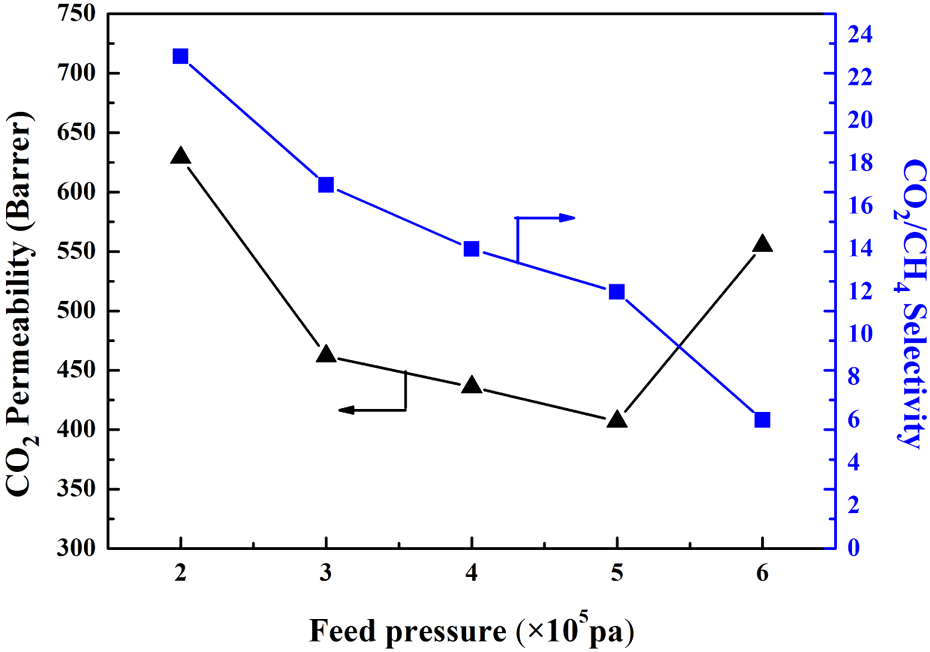
Effect of feed pressure on CO2 permeability and CO2/CH4 selectivity of the PEA-MPA (1/10) 6/4 membrane. PEA: polyetheramine; MPA: methyl-containing polyisophthalamides; CO2: carbon dioxide; CH4: methane.
Effect of operating temperature on mixed gas separation performance
Figure 9 shows the effect of operating temperature on the gas separation performance of the PEA-MPA (1/10) 6/4 membrane. The operating temperature of the membrane varied from 25°C to 65°C to evaluate the CO2 separation performance. Figure 9 shows that the CO2 permeability increased with the operating temperature. However, the CO2/CH4 selectivity of the membrane decreased with increasing operating temperature. The increase in CO2 permeability was attributed to the increase in the flexibility of the polymer chains. However, with increasing operating temperature, CO2 permeability increased by 263% and CH4 permeability increased by 1076.2%. Therefore, CH4 permeability increased slightly more than CO2 permeability, leading to a decrease in CO2/CH4 selectivity.
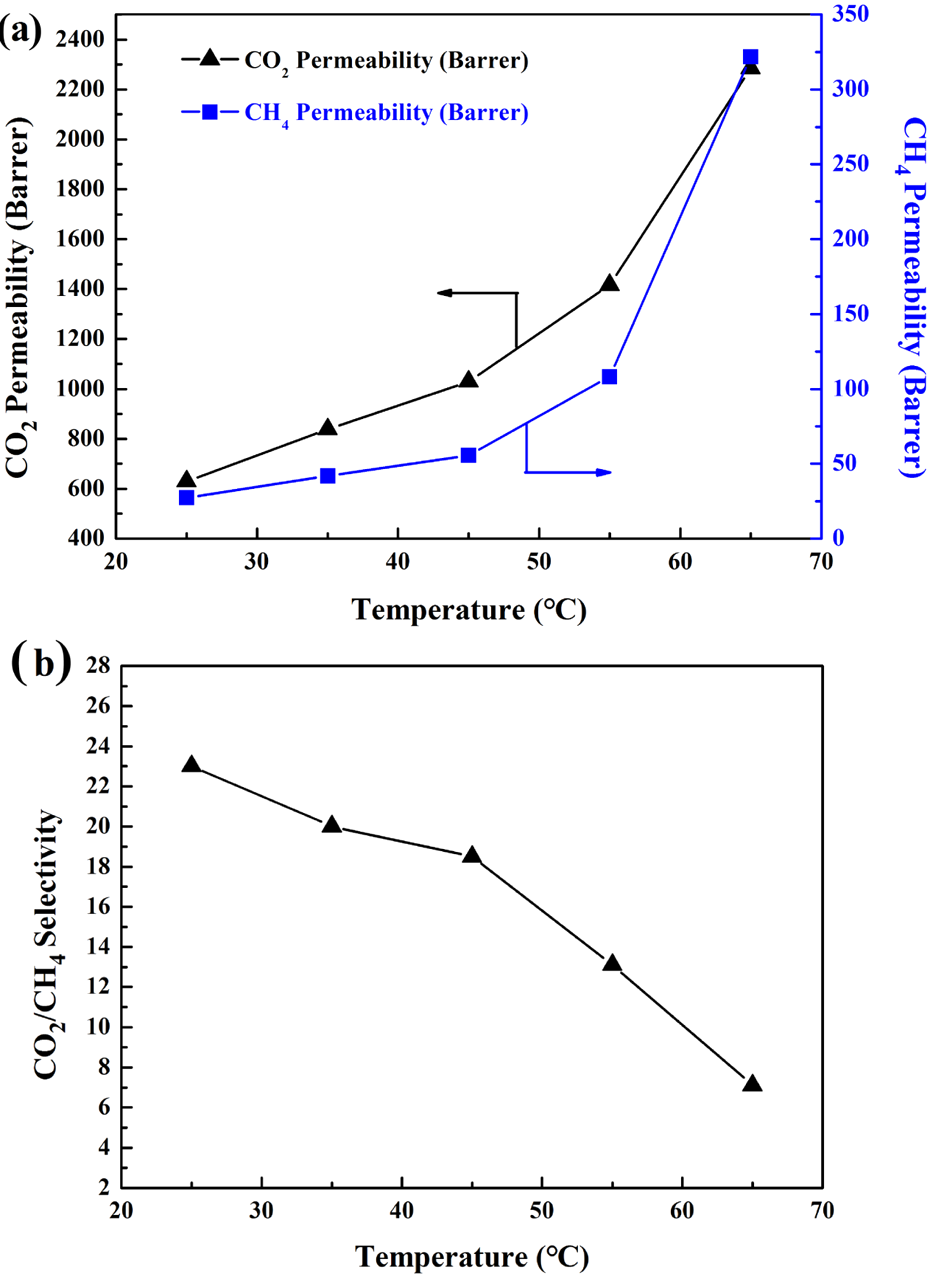
Effect of operating temperature on (a) CO2 and CH4 permeability of the PEA-MPA (1/10) 6/4 membrane and (b) CO2/CH4 selectivity of the PEA-MPA (1/10) 6/4 membrane. PEA: polyetheramine; MPA: methyl-containing polyisophthalamides; CO2: carbon dioxide; CH4: methane.
Conclusions
PEA-MPA block copolymer membranes were designed for application in CO2 separation using a low-temperature condensation reaction. The CO2 permeability of the as-prepared PEA-MPA block copolymer membranes increased with increasing PEA/MPA mass ratio and decreasing BADS/DPD mole ratio. The enhanced CO2 separation performance was mainly attributed to two factors. Firstly, the increase in the PEA block content increased the CO2 permeability. The increase in the number of EO units in PEA increased the affinity between CO2 and the PEA-MPA block copolymer membranes, thus mainly increasing the CO2 solubility coefficient. Secondly, the reduction in the BADS/DPD mole ratio increased the CO2 permeability and CO2/CH4 selectivity. Upon increasing the amount of Me substituents of DPD in the MPA block, the FFV of the block copolymer membranes increased; however, r3 did not change, thus resulting in the increase of the CO2 diffusivity coefficient and CO2/CH4 diffusivity selectivity. The PEA-MPA (1/10) 6/4 membrane exhibited the highest separation performance with a CO2 permeability of 629 Barrer and a CO2/CH4 selectivity of 23. The designed PEA and MPA blocks in the block copolymer membranes were beneficial for improving the CO2 permeaselectivity, and the designed PEA-MPA block copolymers showed great potential for application in efficient CO2 separation.
Footnotes
Acknowledgement

Declaration of conflicting interests
The author(s) declared no potential conflicts of interest with respect to the research, authorship, and/or publication of this article.
Funding
The author(s) disclosed receipt of the following financial support for the research, authorship, and/or publication of this article. This work has received support from National High Technology Research and Development Program of China (2012AA03A611) and the Start-Up Foundation for Young Scientists of Shihezi University (RCZX201508).