





Abstract
The heat-conducting, dielectric, and bonding properties of a composite adhesive have been enhanced using toluene diisocyanate (TDI) to chemically modify the interface between graphene oxide (GO) and epoxy resin (EP), which was characterized using Fourier-transform infrared spectroscopy, X-ray photoelectron spectroscopy, and transmission electron microscopy. The thermal conductivity of TDI10-GO0.5/EP was 0.624 W·m−1·K−1 (166% of EP and 117% of GO0.5/EP), with its TDI10-GO0.5/EP interfacial thermal resistance being reduced by a factor of 36 times GO0.5/EP. The insulating properties of the adhesive in small resistors and capacitors were improved by the inclusion of GO, with the dielectric strength of the adhesive shown to be 25.96 kV·mm−1 and its volume resistivity found to be 1.50 × 10¹⁴ Ω·m.
Keywords
Introduction
The rapid development of electronic integration technology has resulted in the need for high thermal insulation adhesives with improved performance properties. Currently, the applications of epoxy resin (EP) adhesives are limited because of their high brittleness, low impact resistances, low peeling strengths, and low thermal conductivities. 1 –3 Epoxy adhesive, liquid rubber, 4,5 polyether, 6 carbon nanotubes, 7 and other toughening agents 8,9 have been used to improve the mechanical properties of modified EP. Although, the toughness and mechanical properties of these materials can be improved using these additives, 10,11 their thermal conductivities are not normally improved. High thermal conductivity fillers, such as ceramics of hexagonal boron nitride, 12 silicon carbide, 13 and other fillers, 14 –17 have been used to promote conductivity, however, the insulation and mechanical properties of these adhesives were only improved marginally.
The thermal properties of epoxy adhesives and the thermal conductivities of epoxy composites can be improved via the inclusion of inorganic heat-conducting particles. 18 –20 Most research into their use has concentrated on improving the thermal properties of composites, with modifications sometimes resulting in improvements in their mechanical and electrical properties. 21 –23 The high thermal conductivities of graphene (GR) and graphene oxide (GO) have resulted in their incorporation as additives for the preparation of thermal conductive polymers. 24 –26 These studies have generally focused on the dispersity regulation properties of GR 27 –29 and modified GO. 30 –43 However, analysis of their interfacial thermal resistance, thermal conductivity, T-peel strength, and bonding properties that affect their insulating properties has been less well-explored. In this study, the nature of the interface structure between GO and EP has been explored with the aim of providing structural information that can be used to improve the properties and performance of these type of adhesive composites.
Based on the above problems, therefore, in this work we prepared EP composite adhesive with modified GO, which was introduced toluene diisocyanate (TDI) onto GO surface by chemical bonding. Moreover, the thermal, electrical, and mechanical properties of epoxy adhesive were analyzed to explore the feasibility of the epoxy composite adhesive system.
Experimental
Materials
EP of diglycidyl ether of bisphenol-A (EP, E-51, from Nantong Xingchen Resin Factory, Nantong, Jiangsu, China) with epoxy value of 0.48–0.54 mol/100 g was used in this work. GO with multilayer structure was purchased from Suzhou TANFENG Graphene Tech Co.,Ltd (Suzhou, Jiangsu, China). Other chemicals including TDI, N,N-dimethylformamide (DMF), methyl hexahydrophthalic anhydride (MHHPA), and methyl nadic anhydride (MNA) were all analysis pure reagents purchased from the Chemical Reagent Co. of Tianjin Fuyu (Tianjin, China).
Method
GO-modified method
GO (0.150 g) and DMF (30 mL) were added in a 150 mL three-necked flask. After ultrasonic dispersion for 4 h (240 W, 25°C), the solution with GO and DMF was dropped into the mixture of 3 g TDI and 10 mL DMF within 30 min. Finally, TDI-GO was achieved after an ice water bath for 24 h.
Composite produced method
The composite adhesives were prepared as follows: the mixture solution of TDI-GO was placed in an oil bath. E-51 (30 g) was dropped into the suspension. After that, the mixture of TDI-GO and E-51 was degassed in a vacuum oven to remove the solvent. The curing agents MHHPA and MNA were dispersed into the epoxy mixture uniformly and cured in an oven at 90°C for 1 h, 110°C for 2 h, and 170°C for 3 h. A reference sample with neat epoxy was prepared following the same procedure.
For convenience, the content of each component was written as GOX/EP and TDI10-GOX/EP throughout this work, in which the X (the value of X was 0.3, 0.5, 0.7, and 1.0) represented the percentage of GO for the EP. The TDI10-GO0.5/EP means that the percentage of TDI was 10 wt% and GO was 0.5 wt% for the EP of the composite material.
Characterization
The chemical structures of the GO, TDI-GO, and the composite adhesive were characterized by Fourier-transform infrared (FTIR) spectroscopy on an AVATER-360 analysis system (Nicolet, Madison, Wisconsin, USA) and X-ray photoelectron spectroscopy (XPS) employing a Thermo Fisher Scientific (Waltham, MA, USA) Multilab-2000 XPS spectrometer. The microstructures of GO and TDI-GO were characterized by a transmission electron microscope (TEM; FEI, Holland). Sealing and drying methods were used to store TDI-GO before testing.
The thermal conductivity (K c) and the interfacial thermal resistance (R B) of the composites with different contents of GO were calculated based on the GR/polymer 24 thermal model with a Netzsch LFA 467 (Netzsch, Bavaria, Germany) light flash apparatus by standard method at 30°C. The dielectric strengths of composites were tested using the machine HT-100 (Guilin, China) at the oil bath environment. The volume resistivities of epoxy composites were tested according to GB 1410-78 using the machine ZC-36 (Shanghai, China) at room temperature. The dielectric constants of cured epoxy composites were characterized by German Alpha-A within the frequency range of 101–107 Hz and the Nyquist diagrams within the frequency range of 100–104 Hz. The tensile strength was measured based on GB/T 7124-2008 at room temperature under the speed of 10 mm·min−1 on the sample. The T-peel strength was detected following the same procedure except that the specimens were prepared based on ASTM D1876: 2015. The impact testing was carried out according to GB/T 2571-1995 at room temperature without notch. The three-point bending flexural test was conducted according to GB/T 9341-2006 at room temperature under the speed of 5 mm·min−1 with a span of 60 mm.
Results and discussion
Characterization of GO and TDI-GO
The thermal, electrical, and mechanical properties of EP composite adhesives prepared by the treatment of modified GO with TDI have been analyzed. These GO and TDI-GO composites were characterized using FTIR (Figure 1(a)), XPS (Figure 1(b) to (d)), and TEM (Figure 1(e) and (f)) analyses.
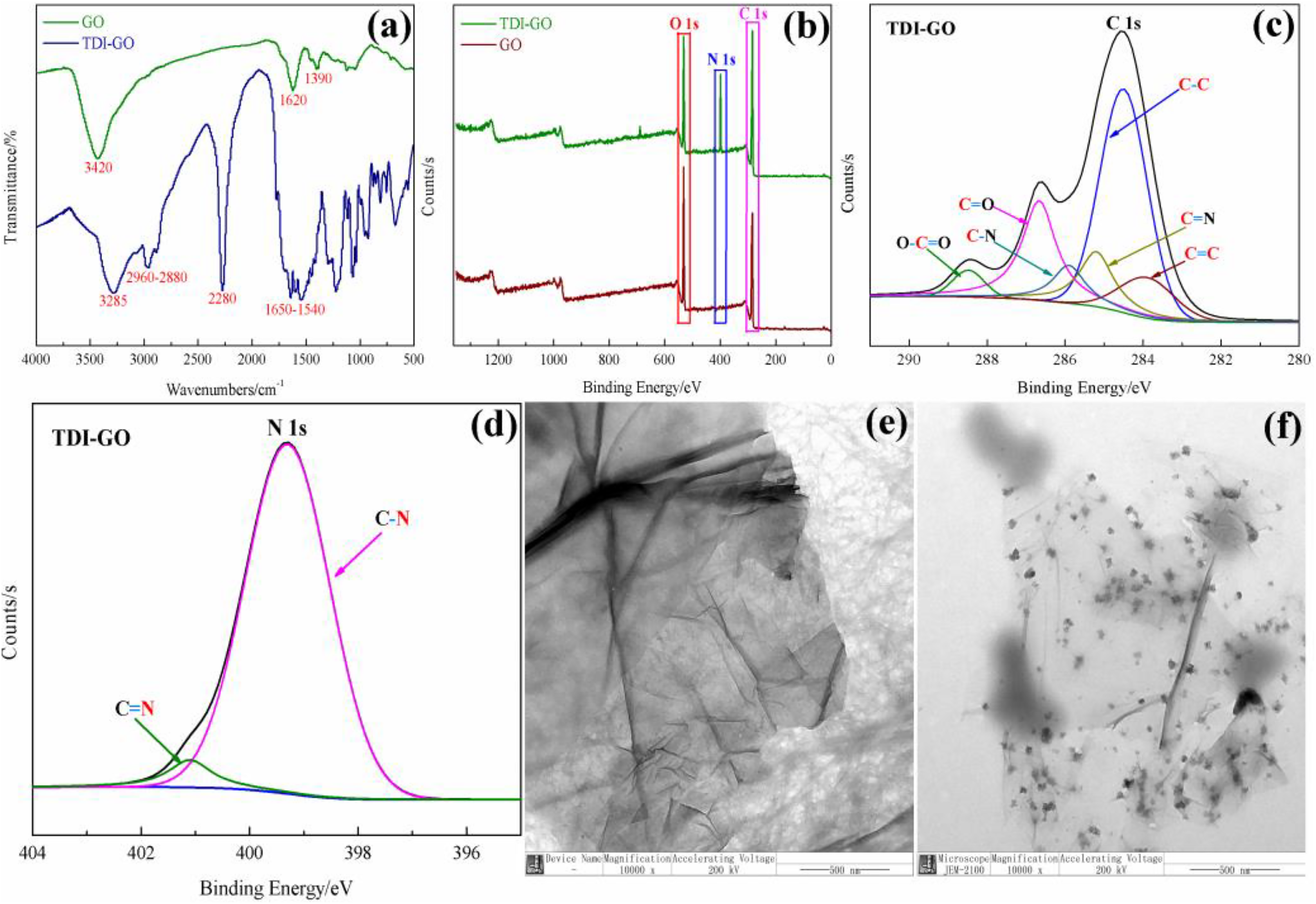
The characterization of GO and TDI-GO, (a) FTIR spectra of GO and TDI-GO, (b) XPS of full spectra of GO and TDI-GO, (c) XPS of C atom of TDI-GO, (d) XPS of N atom of TDI-GO, (e) TEM of GO, and (f) TEM of TDI-GO. GO: graphene oxide; TDI: toluene diisocyanate; FTIR: Fourier-transform infrared; XPS: X-ray photoelectron spectroscopy; TEM: transmission electron microscopy.
The FTIR results revealed the presence of absorption peaks for NCO and aryl groups, with no C=O absorption peaks for carboxyl and hydroxyl groups of GO, with absorptions for C–H bonds shifted from 3420 cm−1 to 3285 cm−1, that were lower than for pure GO due to the conjugation effect of the benzene ring. 44,45 As illustrated in Figure 1(b), the characteristic peaks for the O atoms at 530 eV were weaker due to the reaction of TDI with GO, while the characteristic peaks for N−3 were present at 400 eV, 46 with an enhanced peak for C atoms at 290 eV due to the presence of new carbon groups from grafted TDI. The characteristic peaks for O atoms were also reduced, with C atomic absorption peaks increased and new atomic absorption peaks for N being present. The C 1s and N 1s absorptions for TDI-GO were shown in Figure 1(c) and (d), which reveal that the C atoms of TDI-GO were present in six environments, 47,48 that were assigned to O–C=O absorptions of –COOH; C=N absorptions from unreacted –NCO groups of TDI; and C=O bonds formed from the reaction of the NCO groups of TDI with the –OH groups of GO. 49 These results confirm that TDI was grafted onto the surface of TDI with surplus NCO groups also being present, with layers of GO sheets exhibiting a transparent clean surface (Figure 1(e)) and the occurrence of black spots formed due to the presence of grafted TDI (Figure 1(f)).
Performance analysis
Thermal properties
The effect of increasing the amount of GO on the thermal conductivity of pure EP, GOX/EP, and TDI10-GOX/EP are shown in Figure 2, with only small differences in thermal conductivity observed between GOX/EP composites and EP.

The thermal conductivity of pure EP, GOX/EP, and TDI10-GOX/EP. EP: epoxy resin; GO: graphene oxide; TDI: toluene diisocyanate.
The thermal conductivity of TDI10-GOX/EP decreased initially, then increased, and again decreased with increasing GO content. The thermal conductivity of TDI10-GO0.5/EP was 0.624 W·m−1·K−1, that was 166% of EP and 117% of GO0.5/EP, respectively. The composite structures of GO and TDI-GO were comprised of a filled island structure covered with EP that was formed by the reaction of EP and NCO groups on the GO surface. 50,51 Increasing amounts of GO result in a reduction in the low speed conduction pathways and the heat capacities of composites, which results in its thermal conductivity being increased. 31 The effect of changing the interface on the thermal conductivity of the composites was investigated by calculating its interfacial thermal resistance (RB ) using a GR/polymer thermal model with the following calculation formula
where Kc and RB are the thermal conductivity and the interfacial thermal resistance of composites, Kf is the thermal conductivity of GO, Vf is the filling volume of GO, Kp and Km are the thermal conductivity of continuous phase (EP matrix, Kp and Km are the same value), and H is the GO thickness, which are detailed in Online Supplementary Table S1.
As shown in Figure 3, the interfacial thermal resistance of GO/EP composites decreased as the amount of GO increased, with 0.5 wt% GO resulting in interfacial thermal resistance decreasing to 38.71 × 10⁻⁴ K·m2·W−1. The interfacial thermal resistance of TDI10-GOX/EP composites was lower than that of GO/EP composites, exhibiting a minimum value of 1.19 × 10⁻⁴ K·m2·W−1 (3% of GOX/EP (38.71 × 10⁻⁴ K·m2·W−1)) when the amount of GO present was 0.5 wt%.
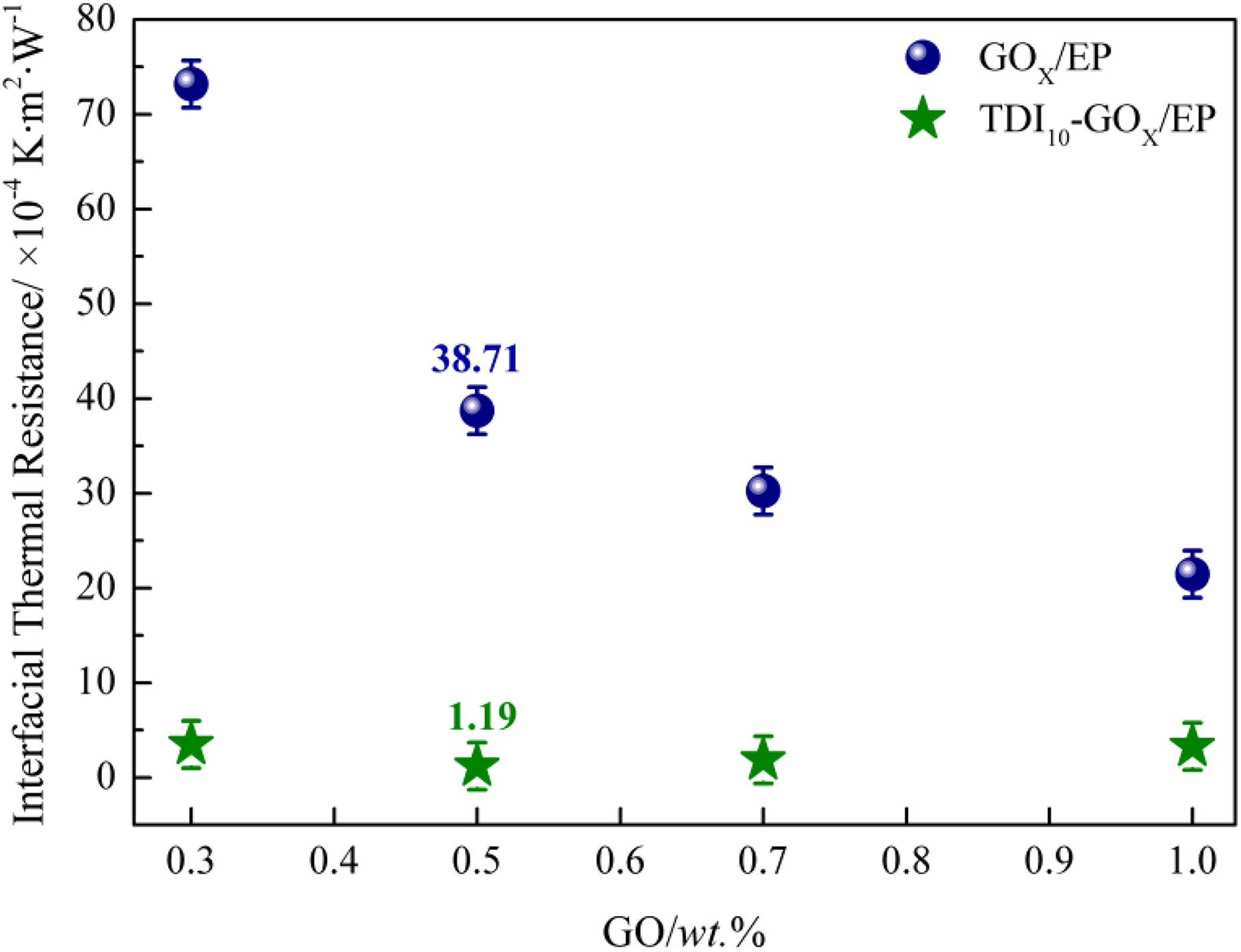
The interfacial thermal resistance of GOX/EP and TDI10-GOX/EP. EP: epoxy resin; GO: graphene oxide; TDI: toluene diisocyanate.
The FTIR spectra shown in Figure 4(a) revealed that no chemical reaction between EP and GO occurred without prior modification with TDI, however, treatment with TDI results in reaction between TDI-GO and EP to form an interface. As a result, increased phonon transmission in this interfacial region results in smaller thermal resistance, 52 with the insulating properties of derived polymers dependent on the percentage of composite present (see interfacial thermal resistance diagrams shown in Figure 4(b)).
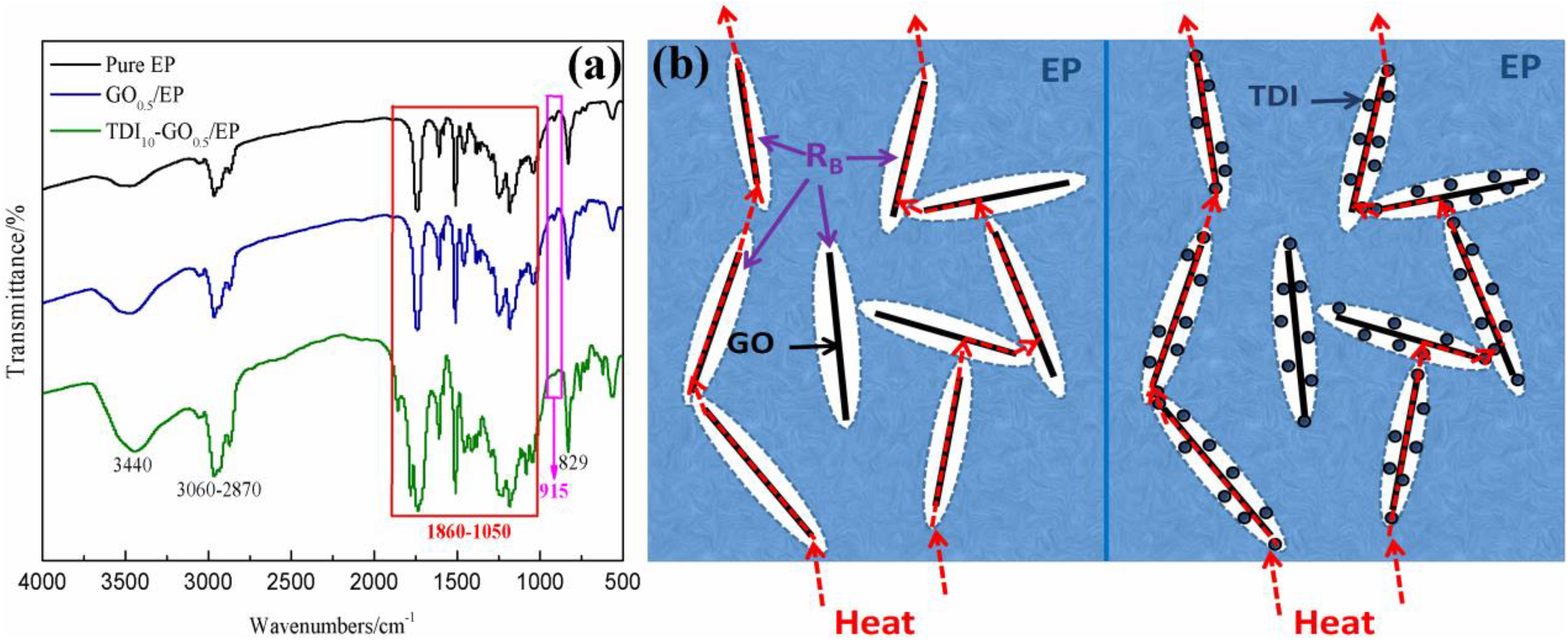
(a)The FTIR spectra of pure EP, GO0.5/EP, and TDI10-GO0.5/EP and (b) the concrete schematic diagram of interfacial thermal resistance. FTIR: Fourier-transform infrared; EP: epoxy resin; GO: graphene oxide; TDI: toluene diisocyanate.
As shown in Figures 2 and 3, the thermal conductivities of GOX/EP and TDI10-GOX/EP composites decreased when the content of GO was higher than 0.5 wt%. Different mass fractions of DMF were mixed with GO and TDI-GO to study their dispersion stability, with the stability of samples decreasing with increasing GO content (Figure 5), with greater settlement of mixed solution from TDI-modified composites being observed.
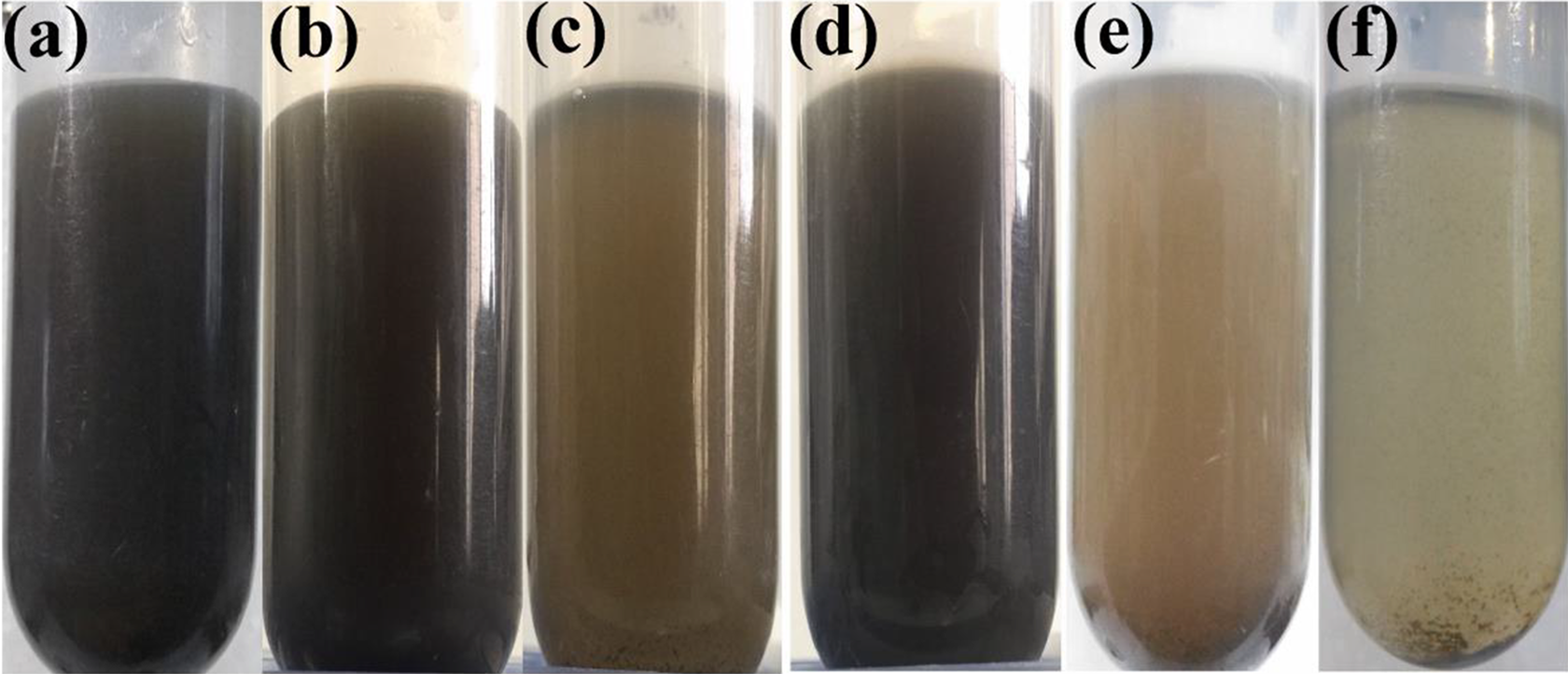
The stability of DMF mixed with GO (a to c) and TDI-GO (d to f): (a) 0.5 wt%, (b) 0.7 wt%, (c) 1 wt%, (d) 10-0.5 wt%, (e) 10-0.7 wt%, (f) 10-1 wt%. GO: graphene oxide; TDI: toluene diisocyanate; DMF: N,N-dimethylformamide.
This is because the proportion of TDI content decreases as the levels of GO increase, which results in greater cross-linking of GO to form agglomerates. Variation of the interfacial thermal resistance of TDI10-GOX/EP was similar to that of TDI10-GO0.5/EP, with the thermal conductivities of adhesives being reduced by the formation of agglomerates and the scanning electron microscopic photos of TDI10-GOX/EP revealing high levels of when GO content was high (see Figure 6). The thermal conductivity of composites was also reduced when the relative concentration of GO was high due to the formation of a large number of GO-TDI-GO structures. 20,49
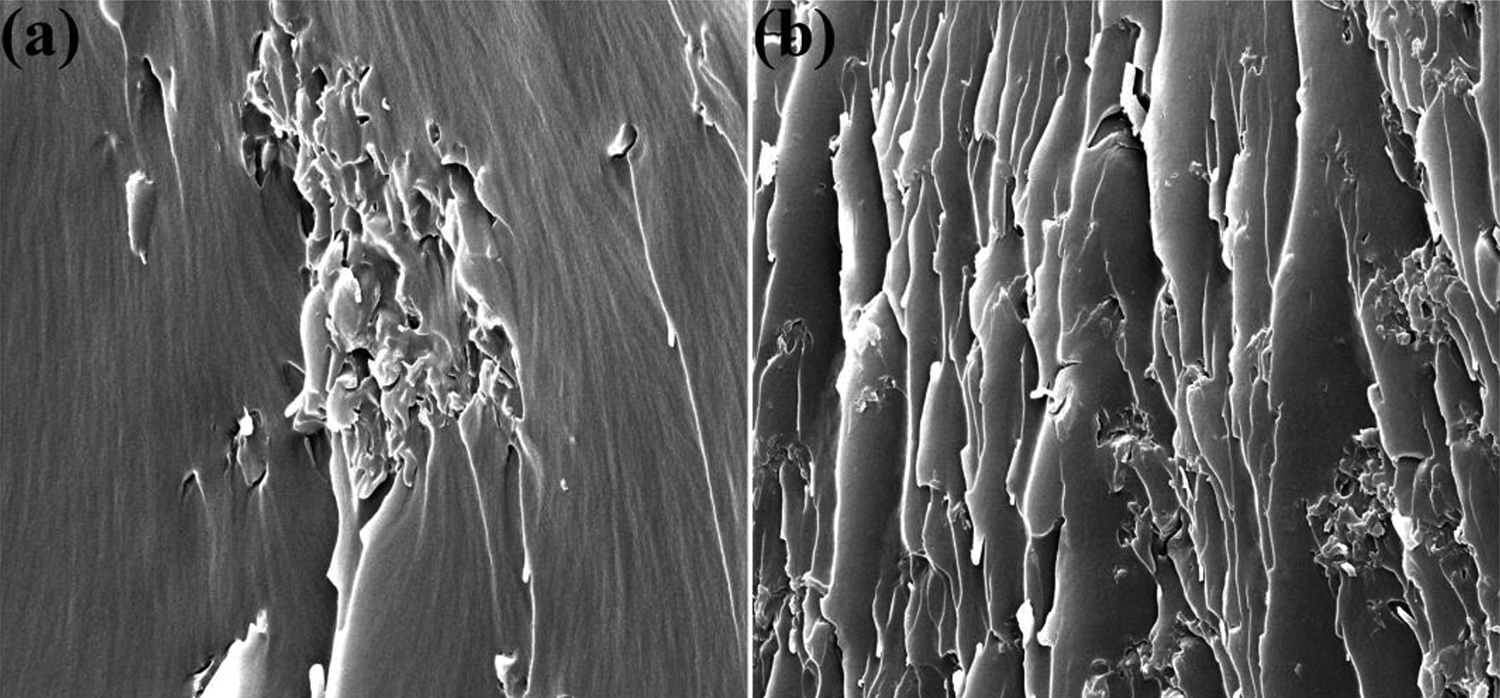
The SEM of TDI10-GOX/EP, (a) TDI10-GO0.5/EP and (b) TDI10-GO1/EP. SEM: scanning electron microscopy; TDI: toluene diisocyanate; GO: graphene oxide; EP: epoxy resin.
Dielectric properties
The dielectric strength and volume resistivity of the EP and TDI10-GOX/EP composites with different contents of GO were examined, as presented in Figure 7.
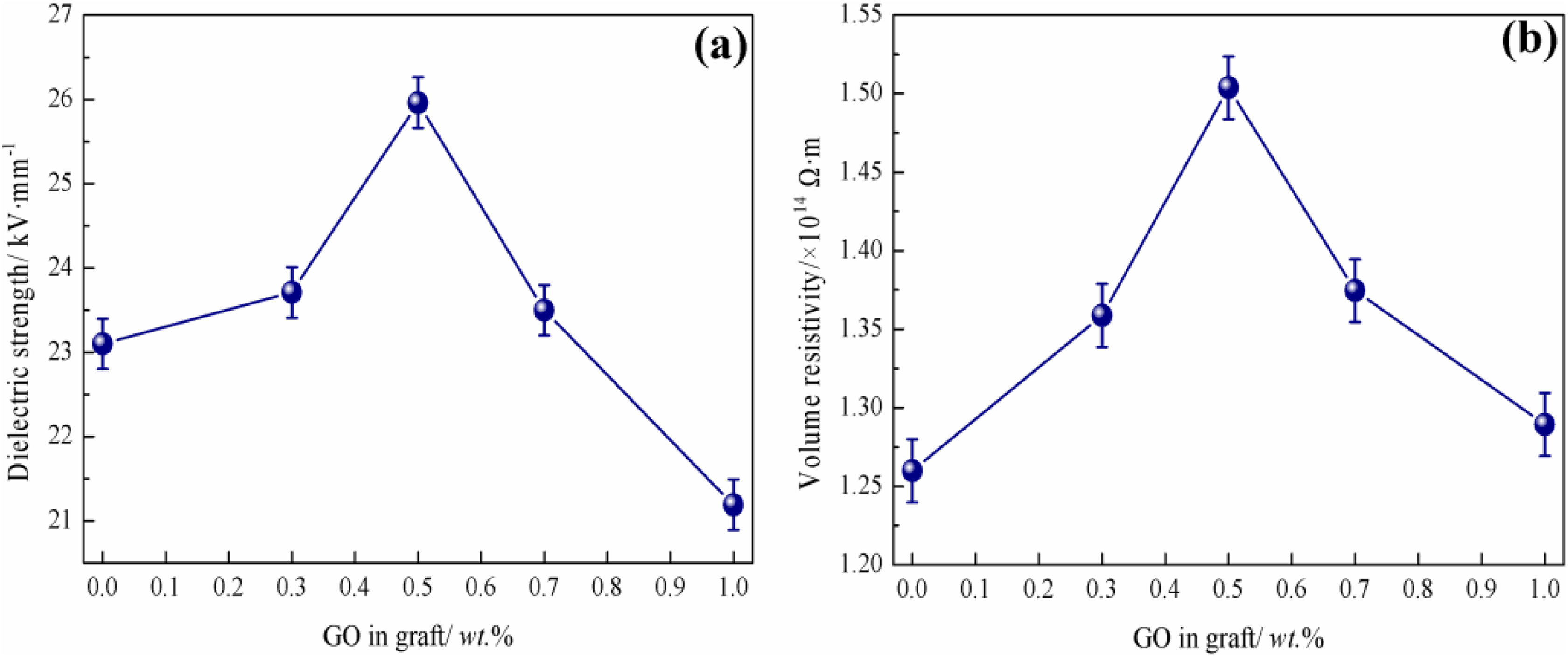
The dielectric strength and volume resistivity of pure EP and TDI10-GOX/EP, (a) dielectric strength and (b) volume resistivity. EP: epoxy resin; TDI: toluene diisocyanate; GO: graphene oxide.
The dielectric strength and volume resistivity of TDI10-GOX/EP composites increased and then decreased with increasing amounts of TDI-GO, with a dielectric strength of 25.96 kV·mm−1 and a volume resistivity of 1.50 × 10¹⁴ Ω·m for TDI10-GO0.5/EP (see Figure 7). The dielectric strength and volume resistivity of TDI10-GO0.5/EP were 1.07 and 1.13 times larger than those for GO0.5/EP, as shown in Online Supplementary Figure S1. The changes in dielectric properties of these TDI10-GOX/EP composites were explored using Nyquist diagrams (see Figure 8), which showed that the fitted curves largely coincided with the experimental data.
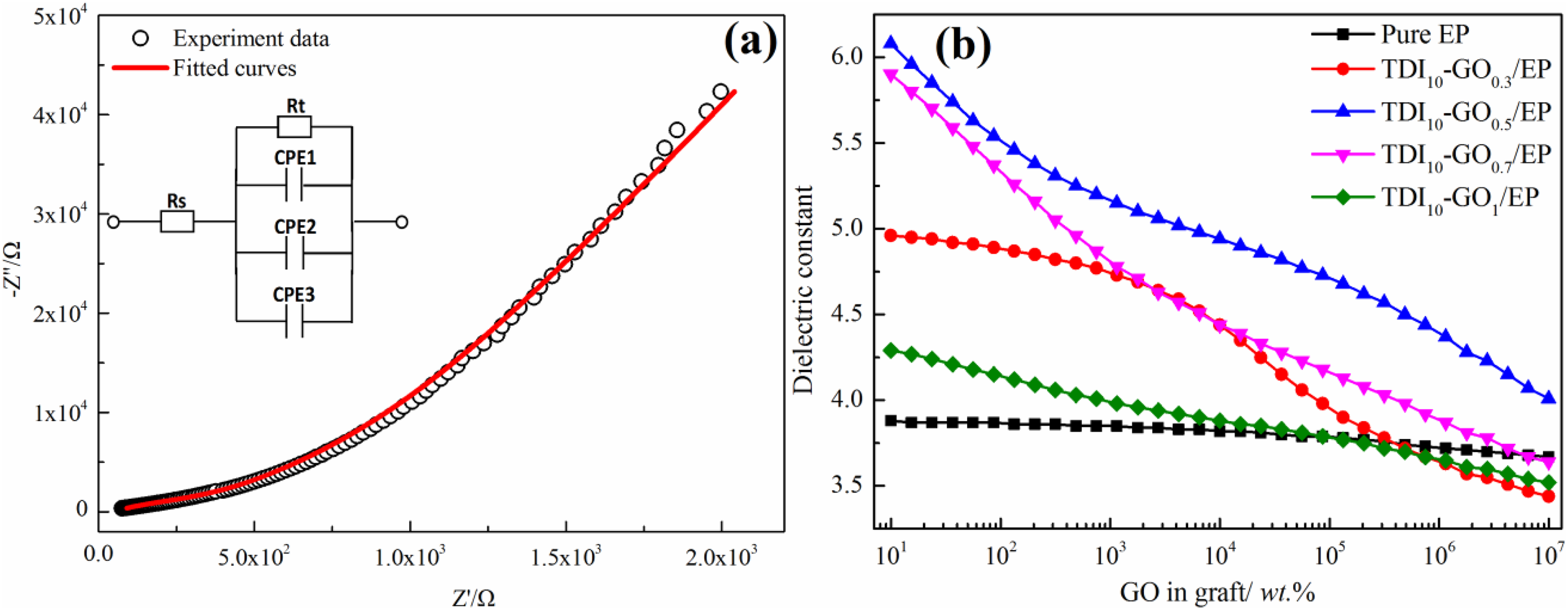
The electrical properties of pure EP composite and TDI10-GOX/EP composites, (a) Nyquist diagrams of TDI10-GO0.5/EP composite and (b) dielectric constant of pure EP and TDI10-GOX/EP composites. EP: epoxy resin; TDI: toluene diisocyanate; GO: graphene oxide.
It is known that grafted modified GO forms small resistors and capacitors in the solid state, 53 –55 with Figure 8(b) revealing that the dielectric constant of TDI10-GOX/EP composites initially increased at lower frequencies, and then decreased as the amount of GO present increased. The storage charge capacity of the capacitors and the resistance of electron migration were increased in small resistors, 56 resulting in better insulation performance, higher breakdown field strength, greater volume resistivity, and a higher dielectric constant for EP and GOX/EP composites (see Online Supplementary Figure S2). Alternatively, when the interface between GO and EP is modified by the formation of chemical bonds between GO and TDI, a reduction in the number of defects improved the insulation performance of composites containing lower GO content. Overlap of micro capacitors can be caused by excessive GO agglomeration when GO levels were more than 0.5 wt%, leading to current leakage and reduced storage charge ability of the composite materials, which resulted in lower breakdown field strengths, volume resistivities, and dielectric constants.
Mechanical properties
The results obtained for mechanical testing of EP and TDI10-GOX/EP and GOX/EP are shown in Figure 9 and Online Supplementary Figure S3, which reveal that their mechanical properties increased initially and then decreased. The best mechanical properties were obtained when the GO amount was 0.5 wt%, with T-peel strength and tensile strength of TDI10-GO0.5/EP determined as 9.62 N·mm−1 and 4.25 MPa, respectively, while the bending and impact strengths of TDI10-GO0.5/EP were 768.33 MPa and 20.51 kJ·m−2, respectively. The presence of TDI altered the dispersion of GO in the matrix resin by improving interfacial bonding between GO and EP, 7,57 –59 with surplus –NCO groups contributing to the formation of GO-TDI-EP structures. 60 –62 In addition, modified GO sheets structure could act as a good buffer to share stress loads within the composite. These three properties increased the ability of the adhesive composites to resist external force damage, which gave better mechanical properties than those measured for EP. Different degrees of aggregation were observed when lower amounts of TDI were present in the grafted TDI-GO composite, which resulted in structural failure when relatively low external forces were applied.
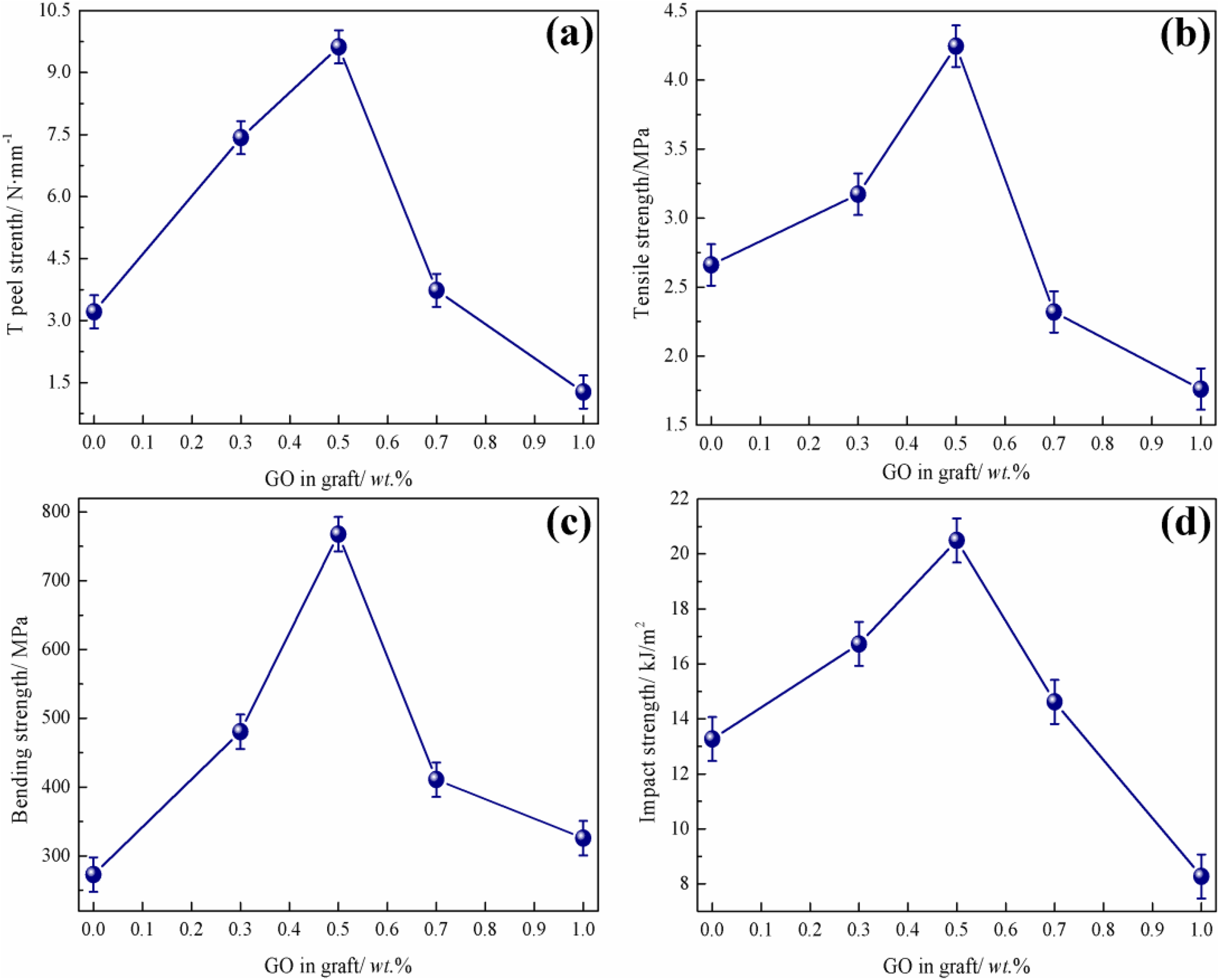
The mechanical properties of pure EP composite and TDI10-GOX/EP composites, (a) T-peel strength, (b) tensile strength, (c) bending strength, and (d) impact strength. EP: epoxy resin; TDI: toluene diisocyanate; GO: graphene oxide.
Conclusion
The thermal conductivity of TDI10-GO0.5/EP was 0.624 W·m−1·K−1, which was due to reduced interfacial thermal resistance caused by the interface structure of GO and EP being changed by the TDI grafting process. The dielectric strength and volume resistivity of TDI10-GO0.5/EP were 25.96 kV·mm−1 and 1.50 × 10¹⁴ Ω·m, respectively, which was caused by the small resistance and capacitance provided by the GO sheets. The T-peel strength, tensile strength, impact strength, and bending strength of the EP composites containing 0.5 wt% GO were improved by 200%, 35%, 181%, and 55% when compared to the performance levels of EP.
Supplemental material
Supplemental Material, Electronic_Supplementary_Information - Improvement of graphene oxide/epoxy resin adhesive properties through interface modification
Supplemental Material, Electronic_Supplementary_Information for Improvement of graphene oxide/epoxy resin adhesive properties through interface modification by Guangkai Hu, Xiaorui Zhang, Lizhu Liu, and Ling Weng in High Performance Polymers
Footnotes
Declaration of Conflicting Interests
The author(s) declared no potential conflicts of interest with respect to the research, authorship, and/or publication of this article.
Funding
The author(s) disclosed receipt of the following financial support for the research, authorship, and/or publication of this article: This work was supported by the National Natural Science Foundation of China (51677045).
Supplemental material
Supplementary material for this article is available online.
References
Supplementary Material
Please find the following supplemental material available below.
For Open Access articles published under a Creative Commons License, all supplemental material carries the same license as the article it is associated with.
For non-Open Access articles published, all supplemental material carries a non-exclusive license, and permission requests for re-use of supplemental material or any part of supplemental material shall be sent directly to the copyright owner as specified in the copyright notice associated with the article.
