






Abstract
A series of co-polyimide (co-PI) resins with distorted noncoplanar structure were carefully designed and successfully fabricated by copolycondensation of 2,3,3′,4′-biphenyltetracarboxylic dianhydride, 4,4′-oxydianiline (ODA), and 4,4′-(1,3-phenylenedioxy)dianiline (TPER). As-introduced asymmetric structure endowed these co-PI resins with excellent solubility and relatively low melt viscosity. Molecular simulation and dielectric analysis confirmed that the distorted noncoplanar structure induced a large amount of free volume. The minimum melt viscosity of co-PI resins decreased with increasing TPER content and reached 520 Pa·s at 400°C, indicative of good processability. Besides, the co-PI resins displayed outstanding thermal performance with glass transition temperature ranging from 256°C to 330°C and 5% weight loss temperature higher than 550°C in nitrogen atmosphere. Moreover, the co-PI sheets prepared by compression molding possessed tensile strength of 79.5–91.7 MPa and bending strength of 71.0–81.2 MPa when tuning the TPER/ODA ratio, with lower strengths observed at higher TPER content.
Introduction
Polyimide (PI) resins have enjoyed great popularity for electronic, machinery, and aeronautic applications due to their notable merits in thermal, mechanical, and electrical performance 1 –4 However, the rigid molecular structure combined with strong intermolecular interaction causes insolubility and low meltability to PI materials. 5 –9 A thermoplastic PI resin, ULTEM, developed by General Electric Company possesses low melt viscosity and can be processed by injection molding, but the deficiencies in oxidative stability and heat resistance have limited its extensive use. 10,11 Given that the preparation methods of spin coating and melt processing are more favorable from economic and environmental perspectives, PI with appropriate solubility and melt processability is of particular significance. 12 Actually, great efforts have been made to improve these two properties without affecting others of original excellence. 13 –15 Among them, introduction of flexible groups, 16 bulky side groups, 17 or fluorine-containing groups 18 into the PI backbone is a general approach for processability improvement. Participation of a third monomer in copolymerization can destroy the symmetry and regularity of molecular chains, 19 thereby enhancing both melt flow ability and solubility while maintaining excellent thermal stability. Further, various usage requirements can be fulfilled by adjusting the monomer ratio. 20,21 Nevertheless, as most structural modifications may give rise to an increase of chain flexibility, the high-temperature performance that relies largely on the rigid structures can be undesirably compromised. 22
A promising approach for enhancing solubility and thermoplasticity with insignificant reduction in glass transition temperature (T g) is the incorporation of geometrically asymmetric units into main molecular chains. 23 Earlier research reported that PIs based on 2,3,3′,4′-biphenyltetracarboxylic dianhydride (a-BPDA) exhibited higher T g and lower melt viscosity than the ones based on symmetric and ordered 3,3′,4,4′-biphenyltetracarboxylic dianhydride (BPDA). 24,25 The asymmetric anhydride structure of biphenyls could markedly compel the two phenyl rings into noncoplanar conformation, which prevented the chains from stacking and crystallization and further enhanced the solubility of PI. 26 Thus, copolymerization is a simple and effective method for structure modification, as it effectuates lower crystallinity and wider processing window while balancing the processability and desired properties.
In this context, a series of co-polyimide (co-PI) resins were elaborately designed and successfully synthesized via copolycondensation between a-BPDA as the dianhydride and 4,4′-oxydianiline (ODA) and 4,4′-(1,3-phenylenedioxy)dianiline (TPER) as the diamines. As-obtained co-PI resins were carefully characterized for their solubility, thermal property, and rheological behavior, while systematic investigations on mechanical and dielectric properties were conducted on co-PI sheets prepared via compression molding. Furthermore, the continuation of twisted noncoplanar structures toward material’s free volume was clearly disclosed by molecular simulation, as it accounted largely for the overall improvements in solubility, processability, and dielectric property.
Experimental
Materials
The following chemicals were obtained from as-specified sources and used without further purification: a-BPDA (Changzhou Sunlight Pharmaceutical Co., Ltd), TPER (Changzhou Sunlight Pharmaceutical Co., Ltd), BPDA (Shijiazhuang Haili Chemical Co., Ltd), ODA (Jinan Shijitongda Chemical Co., Ltd), N,N-dimethylacetamide (DMAc; Tianjin Fuchen Chemical Reagent Factory), isoquinoline (Kanto Chemical), xylene (Beijing Chemical Factory), ethanol (Beijing Chemical Factory), N,N-dimethylformamide (DMF; Beijing Chemical Factory), N-methylpyrrolidone (NMP; Tianjin Fuchen Chemical Reagent Factory), dimethyl sulfoxide (DMSO; Beijing Chemical Factory), tetrahydrofuran (Beijing Tongguang Fine Chemical Company), chloroform (Beijing Chemical Factory), and acetone (Beijing Chemical Factory).
Preparation of co-PI resins
Schematic illustration of preparing co-PI resins from a-BPDA, ODA, and TPER is presented in Figure 1. The synthesis process of PI-3 (Table 1 in the “FTIR analysis” section) is described in the following as a representative. To a three-neck round-bottom flask equipped with a mechanical stirrer, a condenser, and a thermometer were added ODA (0.045 mol), TPER (0.045 mol), and a-BPDA (0.0929 mol), followed by the addition of DMAc to make a 15% solid concentration. After the complete dissolution of powders under constant stirring at room temperature for 2 h, the mixture was added with 25 mL of xylene and a few drops of isoquinoline. At 170°C, reaction proceeded under continuous stirring and solution reflux for 6 h, accompanied with azeotropic removal of the water produced. The solution cooled down was then poured into excessive ethanol at faster stirring. Precipitates were collected by filtration, washed with ethanol for several times, and dried in a vacuum oven and nitrogen protection at 250°C for 6 h to afford PI-3. PI-1, PI-2, PI-4, and PI-5 were synthesized following a similar procedure (Figure 1). All the co-PI resins prepared had a molecular weight of approximately 1.5 × 10⁴ owing to the precise control on molar ratio between dianhydride and diamine.
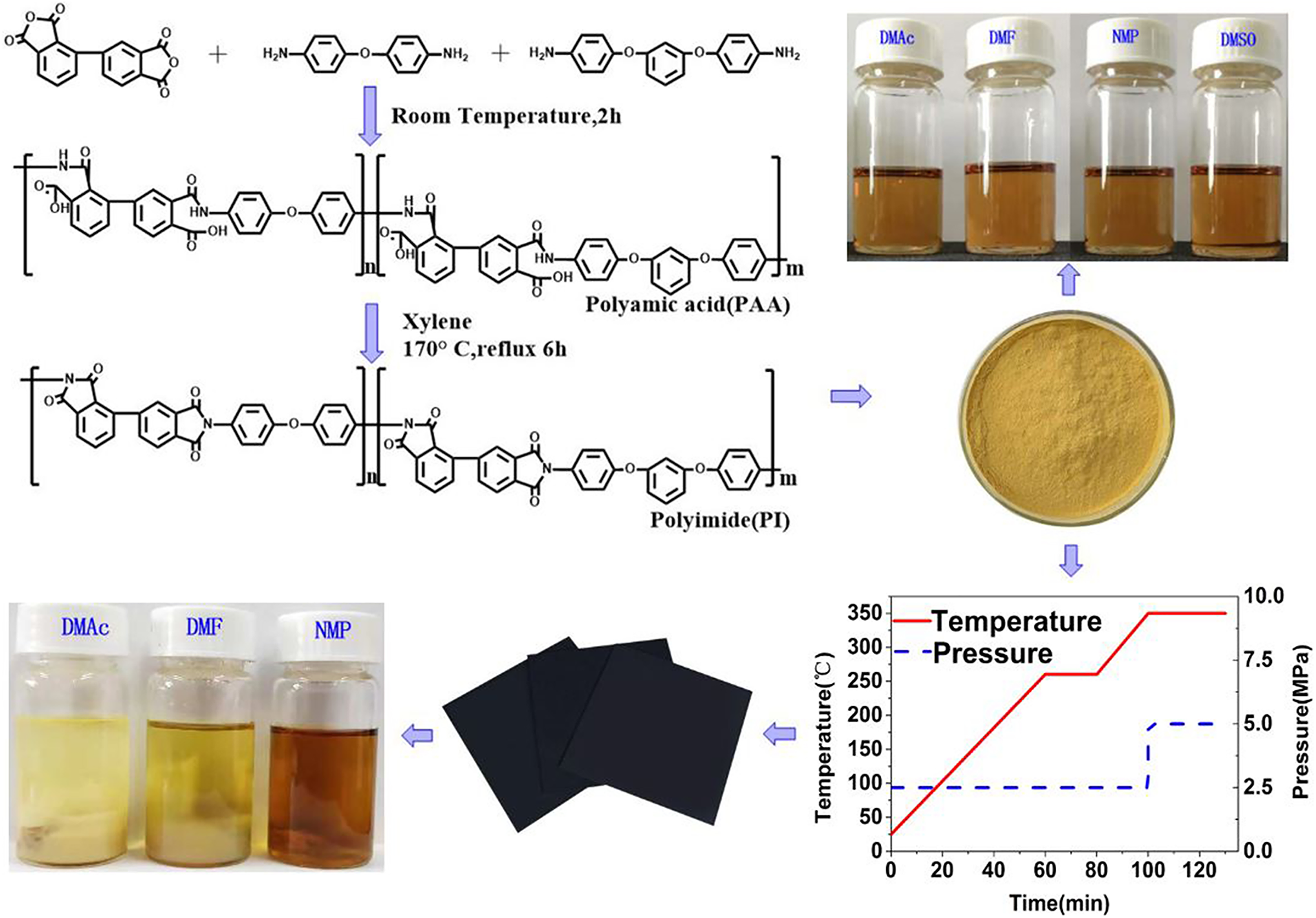
Synthesis route to co-PIs derived from a-BPDA. co-PI: co-polyimide; a-BPDA: 2,3,3′,4′-biphenyltetracarboxylic dianhydride.
The numerical values of C–O–C and C–N along with number ratio.
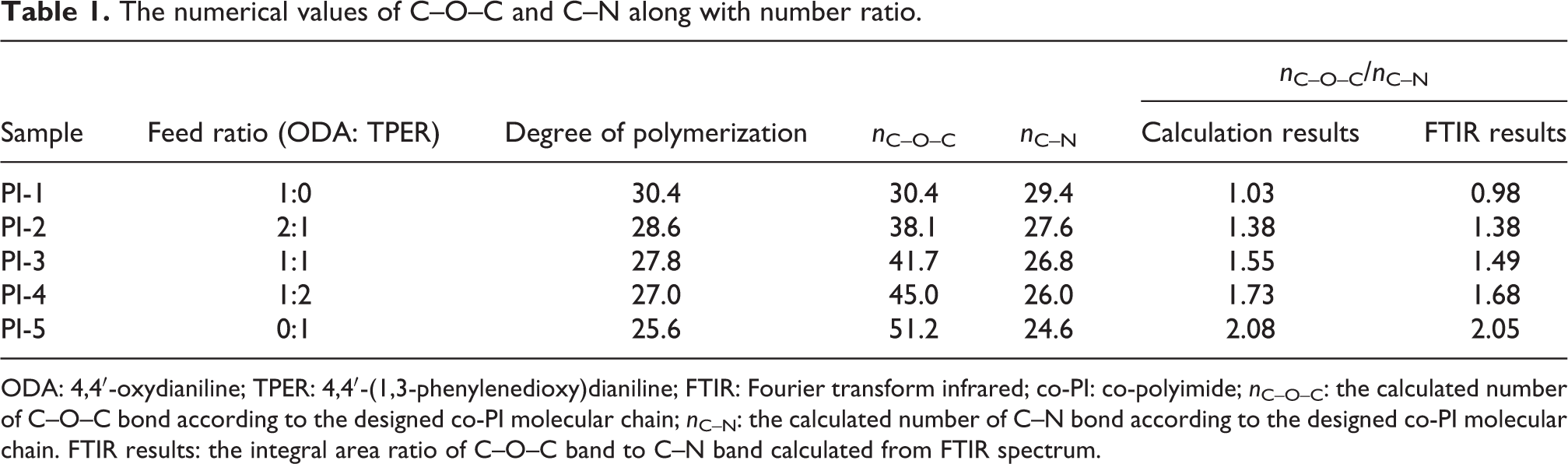
ODA: 4,4′-oxydianiline; TPER: 4,4′-(1,3-phenylenedioxy)dianiline; FTIR: Fourier transform infrared; co-PI: co-polyimide; n C–O–C: the calculated number of C–O–C bond according to the designed co-PI molecular chain; n C–N: the calculated number of C–N bond according to the designed co-PI molecular chain. FTIR results: the integral area ratio of C–O–C band to C–N band calculated from FTIR spectrum.
Preparation of co-PI sheets
On a compression molding machine, co-PI sheets were prepared via the following process (Figure 1). co-PI powder was molded at 260°C for 20 min and then at 350°C for 30 min. In this process, the internal pressure rose from 2.5 MPa to 5 MPa and exhaust was performed three to five times. Note in particular that the above procedure did not apply to sample PI-1.
Measurements
Fourier transform infrared (FTIR) spectra were recorded on a Nexus 670 spectrometer (Nicolet Company, USA) using a KBr sampling sheet. The scanning wave number ranged from 4000 cm−1 to 400 cm−1 with a scanning resolution of 16 cm−1.
Solubility of co-PI resins in various solvents was observed by keeping 0.1 g of the co-PI resin in 10 mL of a specified solvent at room temperature for 24 h.
Differential scanning calorimetry (DSC) was performed on a TA Q20 system (USA), where 4–6 mg of resin sample underwent heating or cooling at a rate of 10°C min−1 in nitrogen atmosphere. Samples were preheated to 450°C and cooled down to room temperature for precluding the influence of absorbed water and residual solvent. The second heating scans were recorded then, and T g values were determined by the curve inflection.
Molecular simulation techniques were adopted using the material studio 8.0.30 to analyze the fractional free volume (FFV), free volume size and shape, and diffusion mechanisms.
Thermogravimetric analysis (TGA) was carried out with a TA Q50 instrument (USA). Under nitrogen protection, samples were heated from 50°C to 800°C at 10°C min−1.
Melt viscosity was measured by a DHR-2 rheometer (TA Instruments, USA) using a parallel plate fixture (25 mm in diameter). co-PI samples molded at room temperature were placed between the plates and preheated at 340°C in nitrogen. After melting for about 5 min, samples were cooled to 280°C and reheated to 420°C at 5°C min−1 for formal testing. The test was conducted at a frequency of 1 Hz and strain amplitude of 1%.
X-ray diffraction measurements were taken from transmission mode at room temperature using nickel-filtered copper Kα (λ = 0.154 nm) radiation operated at 40 kV and 40 mA.
Tensile and bending properties of the co-PI sheets were examined on an SANS CMT 4104 instrument (Meters Industrial Systems (China) Co., Ltd), while their impact strength was determined on a ZBC Plastic pendulum impact testing machine (Meters Industrial Systems (China) Co., Ltd). At least five specimens were tested for each co-PI sheet, with the average values reported as the representative. Specifically, the tensile strength test was carried out at room temperature with a sample size of 50 × 10 × 4 mm3, at a crosshead speed of 10 mm min−1, and using GB/T 1040.2-2006 as the reference standard. The bending strength test was performed according to GB/T 9341-2008 standard. The sample size was 80 × 10 × 4 mm3, the deflection was 6 mm, and the test rate was 5 mm min−1. The impact strength was obtained according to GB/T 1843-2008 standard. The sample size was the same as that for the bending strength test, and the bottom radius of the notch was 1 mm.
Dielectric properties of the co-PI sheets were evaluated using a precision impedance analyzer (Agilent 4294A, USA). The permittivity values were recorded at room temperature and in the frequency of 103–107 Hz.
Results and discussion
FTIR analysis
Chemical bond composition of co-PI resins derived from ODA and TPER at different molar ratios was examined by FTIR spectroscopy as shown in Figure 2. Spectra of all the samples hold five characteristic absorption bands at 1780, 1730, 1375, 1220, and 735 cm−1, ascribed individually to C=O asymmetric stretching vibration, C=O symmetric stretching vibration, C–N stretching vibration, ether band, and C=O bending of imide ring. The presence of these characteristic vibrations proves the successful synthesis of co-PIs as expected, and the degree of polymerization could be calculated from the designed molecular weight of 1.5 × 10⁴. Moreover, Table 1 collects the numbers of C–O–C and C–N bonds along with their number ratio, through which a comparison was set up between the theoretical calculation based on molecular design and the experimental data procured from FTIR spectra. The basically identical results obtained by the two methods indicate that co-PI resins were prepared in accordance with the designed structure.
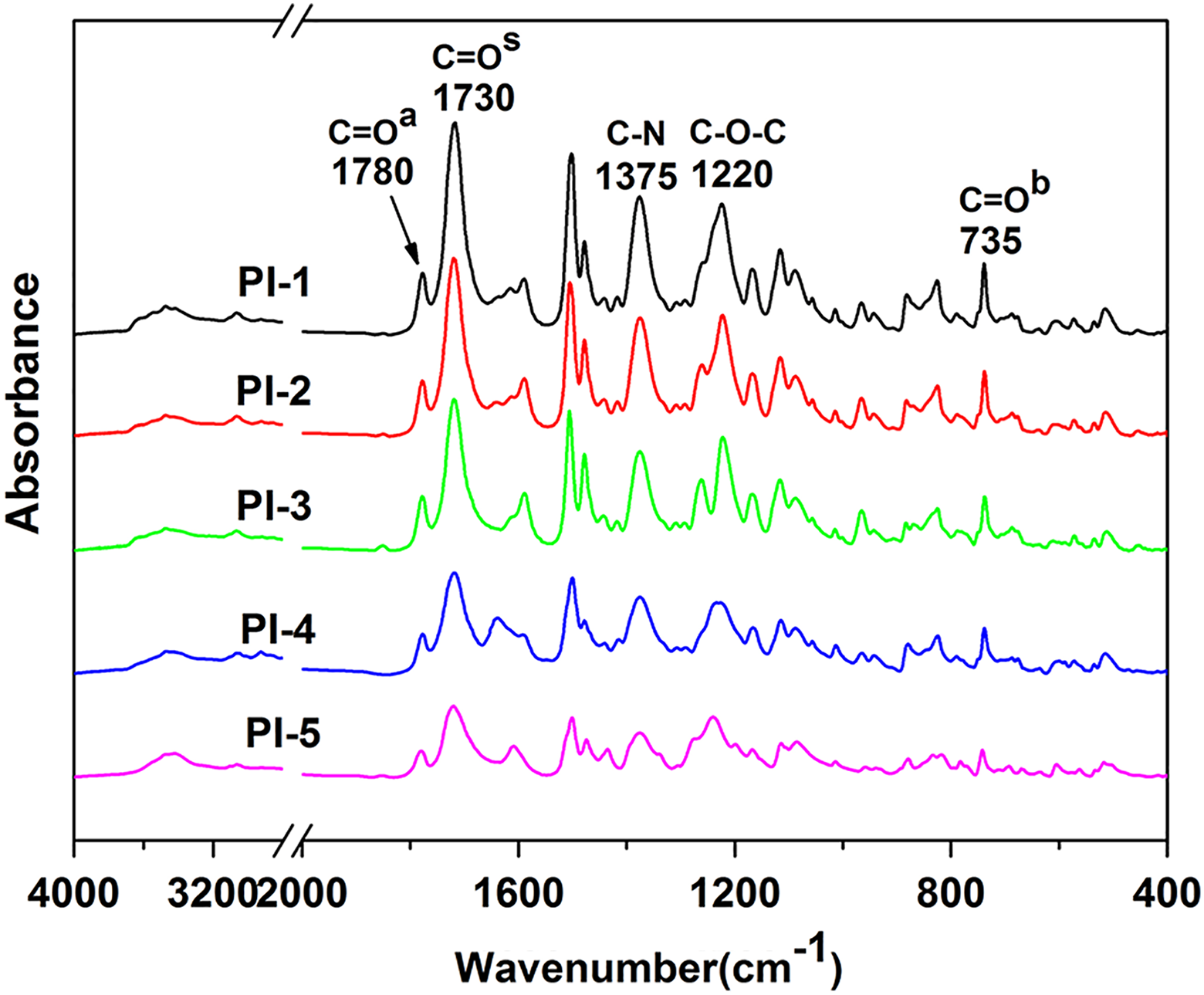
FTIR spectra of the co-PI resins with different molar ratios of ODA to TPER. FFV: fractional free volume; FTIR: Fourier transform infrared; co-PI: co-polyimide; ODA: 4,4′-oxydianiline; TPER: 4,4′-(1,3-phenylenedioxy)dianiline.
Solubility
The solubility of the co-PI resins in various solvents is summarized in Table 2. All the samples except PI-1 and BPDA/TPER system were well dissolved in strong aprotic polar solvents such as DMAc, DMF, NMP, and DMSO at room temperature. Meanwhile, co-PI sheets also exhibited good solubility in NMP after compression molding as illustrated in Figure 1. In contrast to the general insolubility shown by rigid PIs in organic solvent, the enhanced solubility of co-PI resins in this work is attributed not only to the massive ether bonds introduced into co-PI backbone but also to the unsymmetrical structure generated by dianhydride monomers, for it could inhibit PI chains from close packing and reduce the intermolecular interactions.
Solubility of the prepared co-PI resins in different solvents.
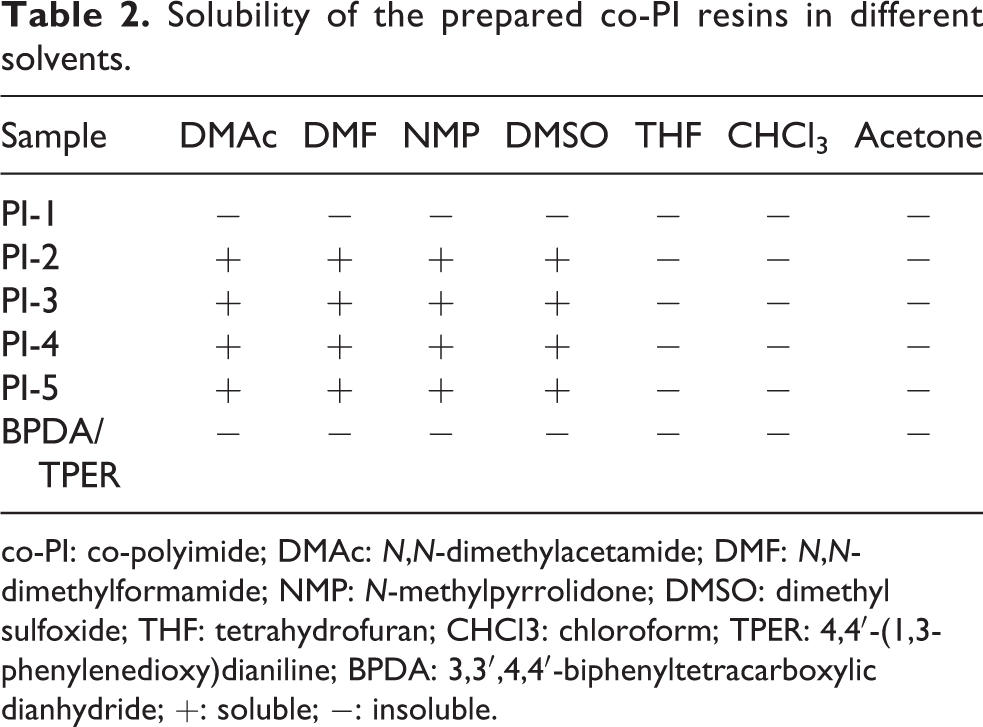
co-PI: co-polyimide; DMAc: N,N-dimethylacetamide; DMF: N,N-dimethylformamide; NMP: N-methylpyrrolidone; DMSO: dimethyl sulfoxide; THF: tetrahydrofuran; CHCl3: chloroform; TPER: 4,4′-(1,3-phenylenedioxy)dianiline; BPDA: 3,3′,4,4′-biphenyltetracarboxylic dianhydride; +: soluble; −: insoluble.
Molecular simulation enabled deeper insight into the free volume distribution within co-PI systems (Figure 3), which further implicated the effect of twisted noncoplanar structures on PI solubility. With gray part standing for the PI molecular chains and blue part for the free volume, it can be clearly observed that PI chains aligned more loosely in a-BPDA/TPER system than in BPDA/TPER system, the former system was also found possessing a higher FFV than the latter one. On the other hand, X-ray diffraction (XRD) patterns in Figure 4 suggested that BPDA/TPER system was semicrystalline while the a-BPDA/TPER one was amorphous. This proved once again that the distorted noncoplanar structure in a-BPDA could disturb the regularity of PI molecular chains, thereby reducing the interaction force, crystallinity, and dissolution free energy between molecular chains. Moreover, the distorted noncoplanar structure of a-BPDA could weaken the strong interaction between PI chains and alleviate their tight stacking. Consequently, lower dielectric constant was observed simultaneously owing to the increased free volume of PI (Figure 4(b)). 27 Altogether, the excellent solubility of co-PI resins synthesized could be well explained by means of molecular simulation, XRD, and dielectric performance, and it is apparently advantageous for further preparation of films or coatings at relatively low temperatures.
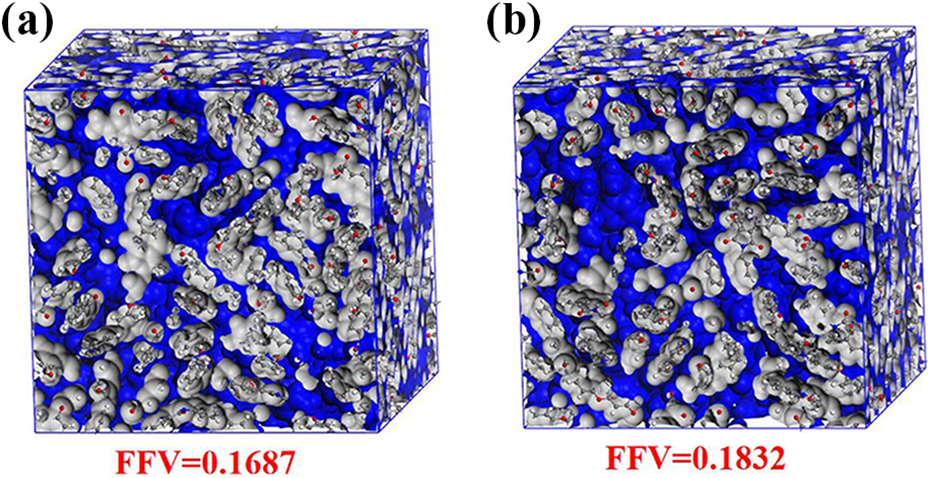
Free volume distribution of two different PI systems: (a) BPDA/TPER and (b) a-BPDA/TPER. PI: polyimide; BPDA: 3,3′,4,4′-biphenyltetracarboxylic dianhydride; TPER: 4,4′-(1,3-phenylenedioxy)dianiline; a-BPDA: 2,3,3′,4′-biphenyltetracarboxylic dianhydride.
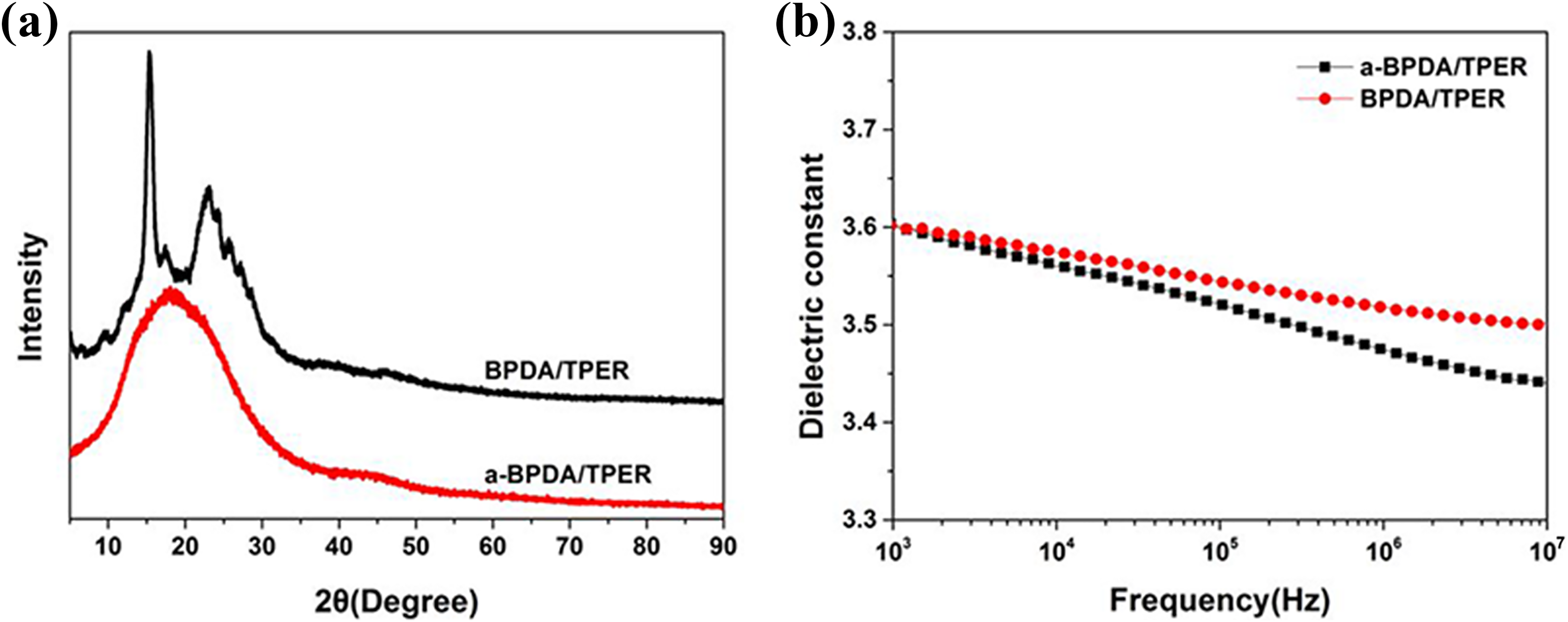
(a) XRD patterns and (b) dielectric spectra of two PI systems. PI: polyimide.
DSC and TGA measurements
Thermal properties of the co-PI resins prepared were evaluated via DSC and TGA. Corresponding data extracted from the DSC and TGA curves (Figure 5) are gathered in Table 3. To exclude the potential influences exerted by residual water or solvent and also eliminate thermal history, all PI samples were heated to 450°C and held for 5 min; T g was determined from the second scan of heating. The results suggest that co-PI resins possessed T g of 256–330°C, and expectedly, samples with more flexible PI chains gave lower T g values. PI-5 sample that derived from a-BPDA/TPER exhibited the lowest T g due to the massive amount of flexible ether bond in PI molecular chains. It is also worth noting that PI-3’ sample, which was prepared by compression molding, showed higher T g than PI-3 sample did. This is because the PI resin was further imidized during hot pressing, which might be accompanied by cross-linking reactions between molecular chains at high temperature. In addition, thermal stability of the co-PI resins was measured by temperature of 5% weight loss (T 5). While T 5 declined constantly with the increase of TPER content, it remained higher than 543.1°C for all samples in nitrogen atmosphere. Hence, as-synthesized co-PI resins were proved with excellent thermal stability.
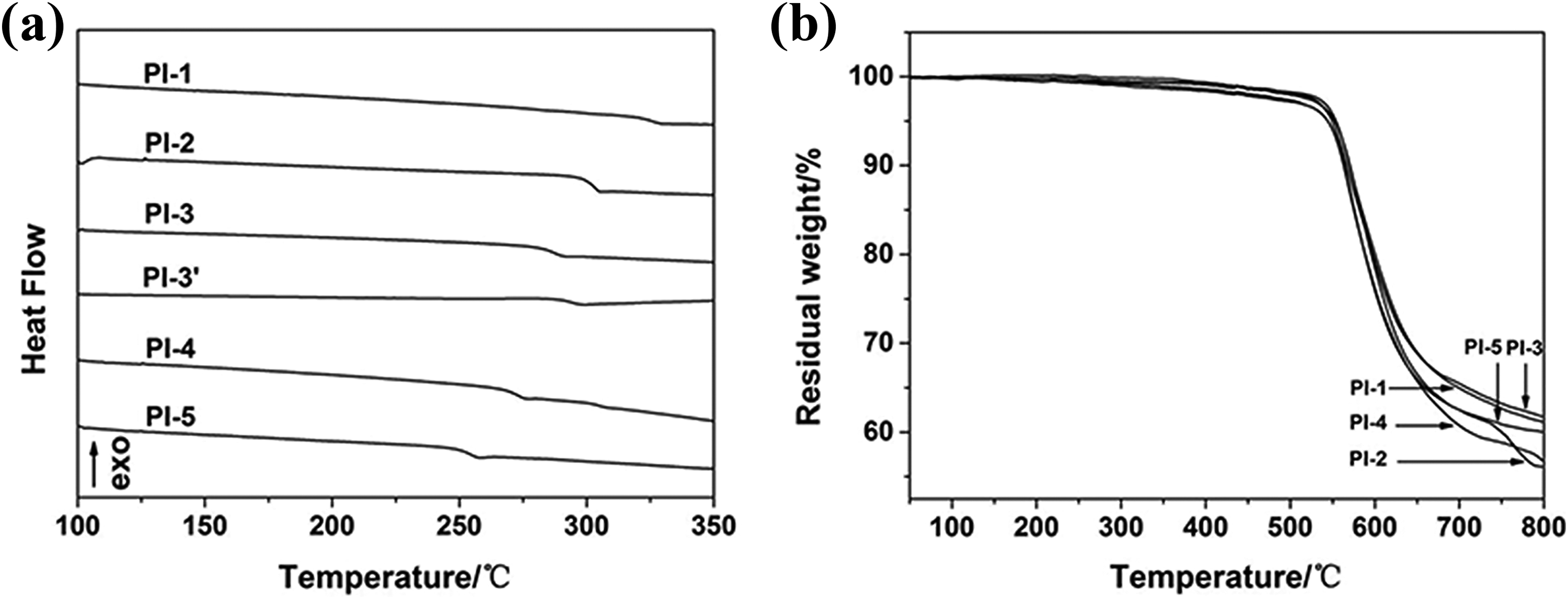
(a) DSC and (b) TGA curves of co-PI resins. co-PI: co-polyimide; DSC: differential scanning calorimetry; TGA: thermogravimetric analysis.
Thermal properties of co-PI resins.
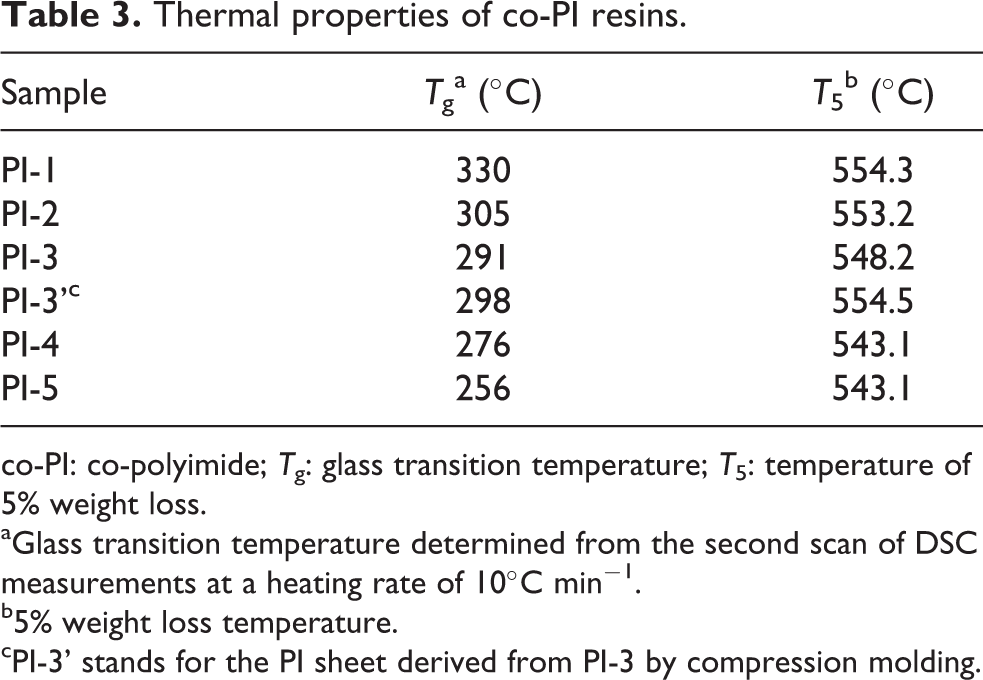
co-PI: co-polyimide; T g: glass transition temperature; T 5: temperature of 5% weight loss.
aGlass transition temperature determined from the second scan of DSC measurements at a heating rate of 10°C min−1.
b5% weight loss temperature.
cPI-3’ stands for the PI sheet derived from PI-3 by compression molding.
Melt rheology
Rheological behaviors of all co-PI resins but PI-1 are depicted in Figure 6, for no molten state was observed with the latter. As shown, η* values of the samples tested first decreased and then increased with rising temperature. It is considered that thermal cross-linking occurred when temperature increased and approximated to 390°C. The variation of modulus and loss tangent in a temperature scan for PI-4 resin is further illustrated in Figure 7. It can be seen that the loss modulus decreased with increasing temperature while the storage modulus decreased first and then increased after 380°C. This observation confirmed again that partial cross-linking took place between molecular chains at higher temperature. That the viscosity minima of all samples were no more than 1 × 10⁴ Pa·s might result from the distorted and bent chain structure provided by a-BPDA. Moreover, the lowest η* value decreased with the increasing flexibility of PI molecular chain as more TPER was introduced into the PI system, and it reached 520 Pa·s for PI-5 at 400°C. As for the increasing η* along with time at a specified temperature of 370°C, it could also be explained by further imidization or thermal cross-linking reactions during the heating process. Nonetheless, given that a typical procedure for melt processing requires the polymer viscosity to be maintained lower than 1 * 104 Pas for about 10 min, such η* ranges were still appropriate for injection and extrusion molding.
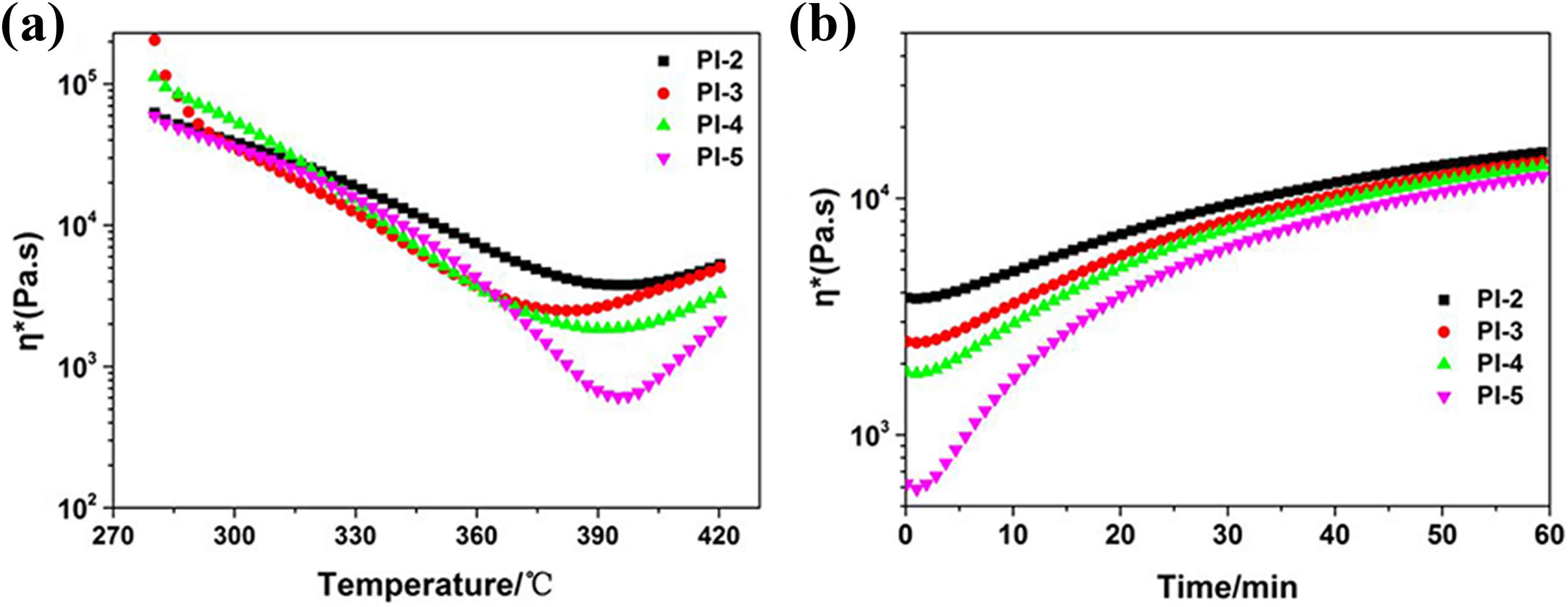
(a) Melt viscosity variation against temperature for co-PI resins and (b) melt viscosity variation against time for co-PI resins at 370°C. co-PI: co-polyimide.
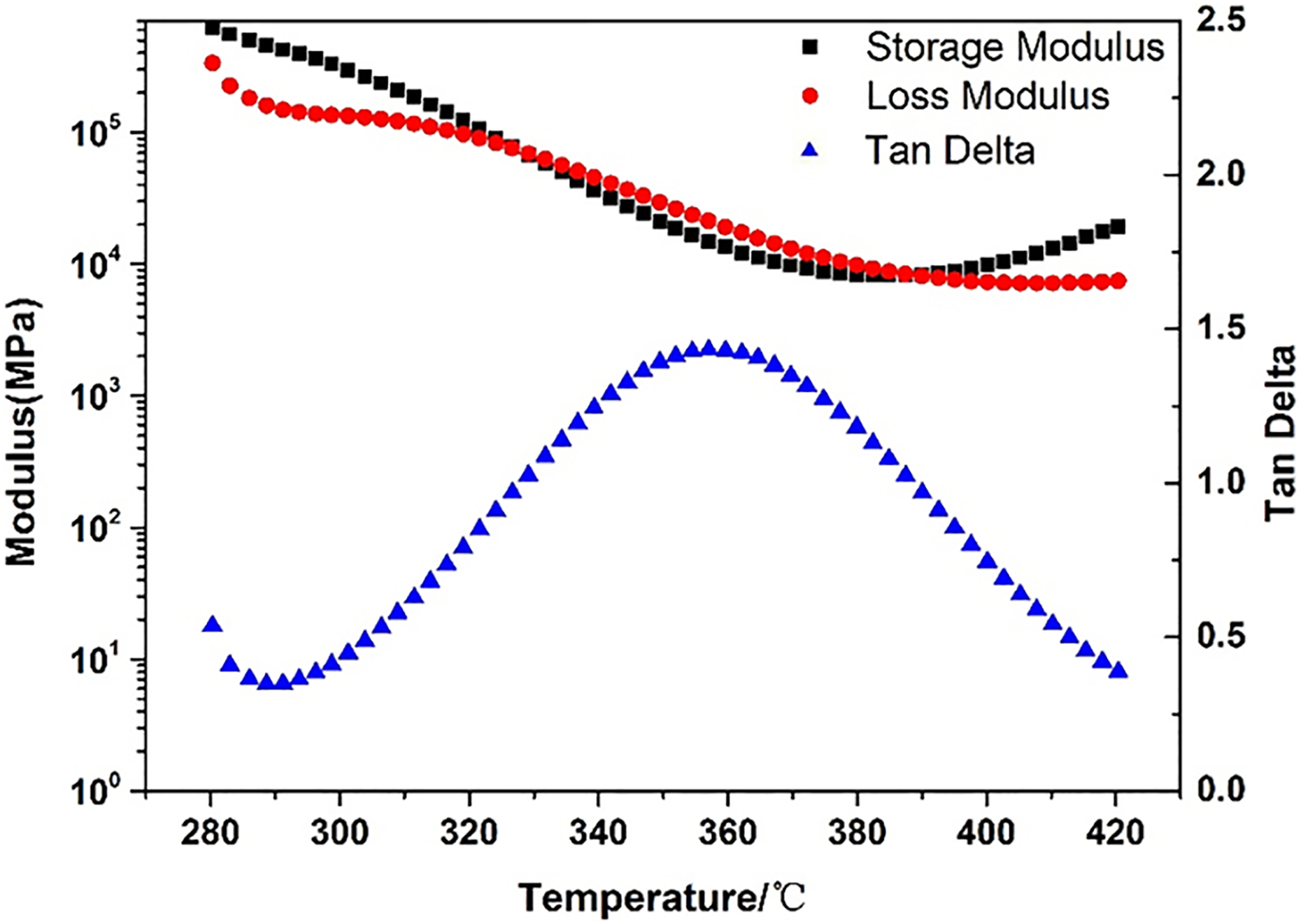
Storage modulus, loss modulus, and loss tangent of PI-4 resin. PI: polyimide.
Mechanical properties
Mechanical performance of polymer materials has been considered a crucial quality indicator for engineering applications. Table 4 lists the mechanical properties of the co-PI sheets fabricated via compression molding. PI-1 could not withstand the mechanical testing given its high brittleness caused by a large amount of rigid benzene and imide ring contained in the molecular backbone. The co-PI sheets tested gave tensile strength of 79.5–91.7 MPa, bending strength of 71.3–87.2 MPa, and notched Izod impact strength of 11.46–14.73 kJ m−2. Along with the mounting content of TPER from PI-2 to PI-5, both tensile strength and bending strength declined owing to an enhanced flexibility, while the notched Izod impact strength followed an opposite variation trend. Therefore, co-PI sheets prepared were relatively tough and flexible.
Mechanical properties of co-PI sheets.
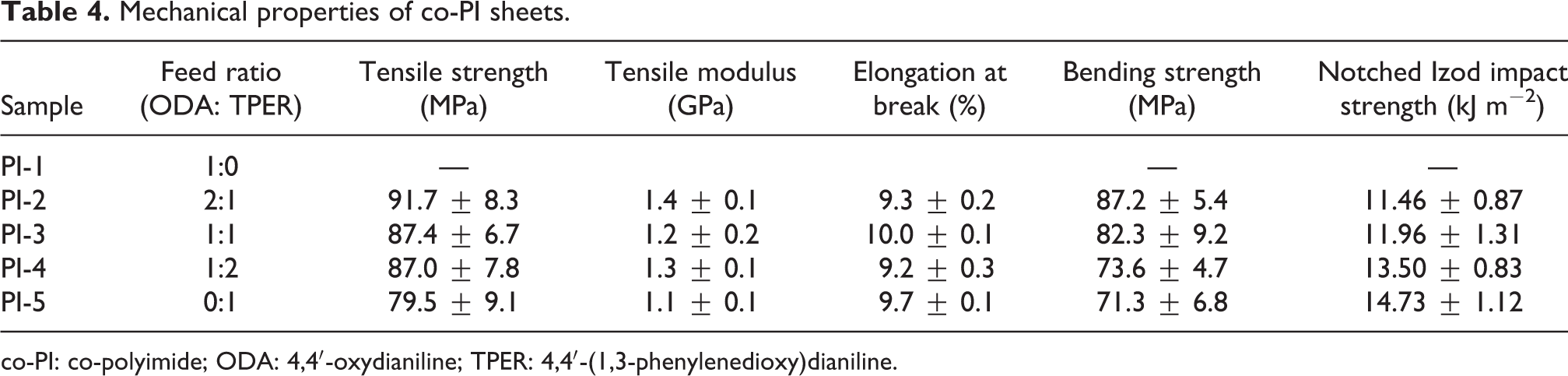
co-PI: co-polyimide; ODA: 4,4′-oxydianiline; TPER: 4,4′-(1,3-phenylenedioxy)dianiline.
Conclusions
A series of co-PI resins with enhanced solubility and thermoplastic processability were successfully fabricated via the incorporation of a-BPDA and TPER monomers that brought a distorted noncoplanar structure and ether bonds into the polymer. Also, as-prepared co-PI materials were characterized with low dielectric permittivity, desirable thermal stability, and outstanding mechanical properties. This work provides novel alternative engineering plastics with high performance.
Supplemental material
Supplemental_Material - Thermoplastic and soluble co-polyimide resins fabricated via the incorporation of 2,3,3′,4′-biphenyltetracarboxylic dianhydride
Supplemental_Material for Thermoplastic and soluble co-polyimide resins fabricated via the incorporation of 2,3,3′,4′-biphenyltetracarboxylic dianhydride by Jinfeng Hu, Jianhua Wang, Shengli Qi, Guofeng Tian and Dezhen Wu in High Performance Polymers
Footnotes
Declaration of conflicting interests
The author(s) declared no potential conflicts of interest with respect to the research, authorship, and/or publication of this article.
Funding
The author(s) disclosed receipt of the following financial support for the research, authorship, and/or publication of this article: This work was supported by the National Key Research and Development Program of China (project no. 2017YFB0308103), the Fundamental Research Funds for the Central Universities (project no. XK1802-2), and the National Natural Science Foundation of China (project no. 51773007).
Supplemental material
Supplemental material for this article is available online.

References
Supplementary Material
Please find the following supplemental material available below.
For Open Access articles published under a Creative Commons License, all supplemental material carries the same license as the article it is associated with.
For non-Open Access articles published, all supplemental material carries a non-exclusive license, and permission requests for re-use of supplemental material or any part of supplemental material shall be sent directly to the copyright owner as specified in the copyright notice associated with the article.
