






Abstract
The sole aim of the present article was to develop a highly efficient electrochemical double-layer capacitor (EDLC) using a solid polymer electrolyte. Solution cast technique was adopted to fabricate an efficient EDLC. Solid biopolymer electrolytes were synthesized based on corn starch as a host polymer and sodium chloride as well as ionic liquid (1-hexyl-3-methylimidazolium iodide) as dopants. The ionic conductivity of present system has been carried out using impedance spectroscopy. Detailed electrical, structural and thermal studies of polymer electrolytes have been carried out. An efficient EDLC has been fabricated using carbon-based electrodes and maximum conducting biopolymer electrolyte which shows promising result.
Keywords
Introduction
Everything we use in this world needs energy in one or more different forms, to help drive our new world where electricity has found its usage in different fields. Earlier when we did not have uses of electricity our need for energy was fulfilled by directly burning coal, wood or by using water wheels to power mills or pump water when needed. But nowadays this world of ours has become a tremendous energy-hungry place and its constantly growing demands have forced us to think not only of new ways to generate electricity but also to store energy. We need to store energy that we obtained from our environment or by some chemical reactions so that we could use it when its direct source is not available to us. For example, nowadays, solar energy is in high trend, its demand and need has increased tremendously as our fossil fuels are depleting on one side and complementary increase pollution in our environment. Thus, a great demand and high need for development and use of renewable energy sources is alarming today. Some kinds of renewable energy are solar energy, tidal energy, hydrothermal energy and so on. But what will happen if sun is not there to provide us with solar energy or tides are at their low or high modes, for such cases we need to look for the ways to store these energies. This thought has led us to look forward to develop different ways to even store energy and not only to generate it. Thus, production or generation of energy goes hand in hand in today’s research. Energy can be stored in many ways, namely electrochemically (battery, fuel cells), mechanically (flywheels, springs, hydraulic accumulators), thermally (molten salts, steam, bodies of water), electrically (supercapacitors) and many more. 1 –7 A supercapacitor was one of the revolutionary achievements for meeting alarming energy demands as bridges the gap between rechargeable batteries and capacitors. It has positive points from both capacitor and batteries, thus, is more beneficial and useful. About 10–100 times more energy per unit volume can be stored in a supercapacitor. It can deliver charge at a much faster rate and can withstand many more charge–discharge cycles than an ordinary capacitor. Contrary to the conventional capacitors, supercapacitors use electric double layer as dielectric debarding conventional dielectric, thus, offering a totally new and interesting concept. 2 Supercapacitors comprise two components, namely electrodes and electrolyte, and far high-efficient supercapacitors each one has a different role. On basis of electrode material supercapacitors could be classified into two categories, that is, pseudocapacitor where charge storage is generally using transition metal electrodes and electrochemical double-layer capacitor (EDLC) in which porous carbon-based materials are used for charge storage. EDLC uses carbon (porous) material or its derivatives as electrodes, which contribute to a higher electrostatic double-layer capacitance as compared to electrochemical pseudocapacitance. A 0.8 nm to 0.9 nm is a usual order of charge separation in Helmholtz double layer at the interface where the electrode material interacts with the electrolyte. This separation of charge is much smaller than charge separation in conventional capacitor. 2 EDLC/ultracapacitors are completely based on electrochemical double-layer capacitance, that is, energy is stored and released by the nanoscopic charge separation at the interface of electrode and electrolyte. The thickness of the double layer formed is inversely proportional to the energy stored, hence, these ultracapacitors have high energy densities since the thickness is of the order of few angstroms only (Figure 1).
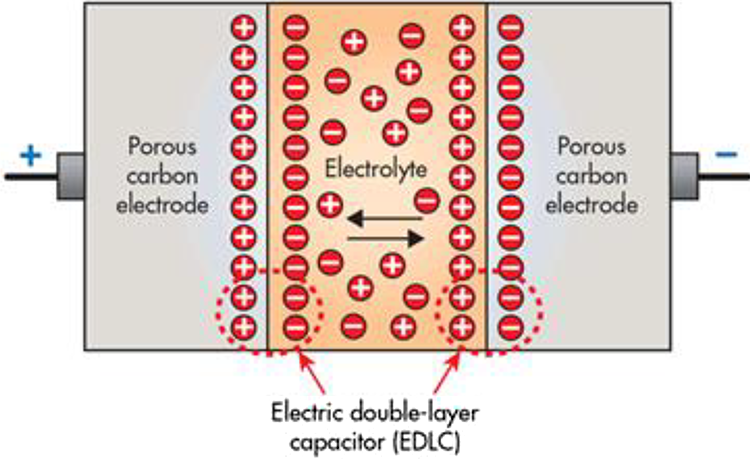
Double layer formation in EDLC. EDLC: electrochemical double-layer capacitor.
The aim of present article is to develop a new biopolymer electrolyte and its successful application in EDLC. Synthesis, characterization as well as EDLC fabrication are also presented in detail.
Experimental details
Synthesis of electrolyte/electrode
Chemicals required
For biopolymer electrolytes, we have procured corn starch and ionic liquid (IL) from Sigma Aldrich (St Louis, Missouri, USA), while common solvents were purchased from Fisher Scientific (India).
Synthesis of thick biopolymer electrolyte films
To develop biopolymer electrolyte films, we have used a common method named as solution cast in which 500 mg of corn starch and appropriate amount of salt (sodium chloride (NaCl)) were dissolved in double-distilled water till a homogeneous solution was obtained (5–6 h, temperature 80°C). The resultant solution was allowed to stir for 10 h. Known amounts of IL (wt%) was then added to it and system was stirred for few hours until a homogeneous solution has been obtained. This system was then casted in a Petri dish and kept at room temperature for the solvent evaporation which gives free-standing biopolymer electrolyte films (Figure 2).
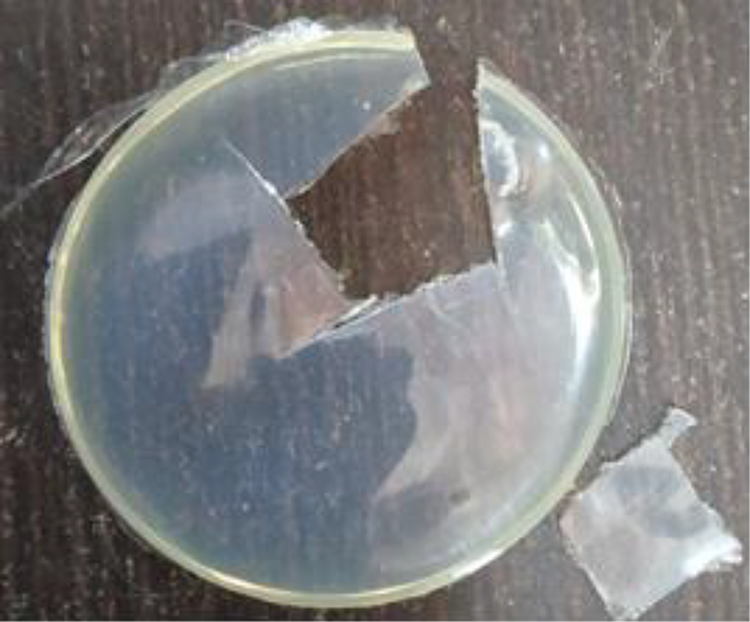
Free-standing IL-doped biopolymer electrolyte film. IL: ionic liquid.
Synthesis of electrode material
For electrode material (graphene oxide (GO)) was prepared by the electrochemical method reported by our group. 8 A solution of H2SO4 and double-distilled water was prepared in the composition of 1:9. Graphite electrodes and platinum wire mesh were then dipped in the solution, connected with wires which were further connected to the power supply. The system was covered with paraffin film and a voltage of 4 V was given to the system which produces complete exfoliation (5–6 h). Then dispersion was collected from the electrolytic cell, sonicated, filtered and washed several times with double-distilled water until a pH value of 7 is obtained. The obtained GO was further dried in an oven at 80°C (Figure 3). 5
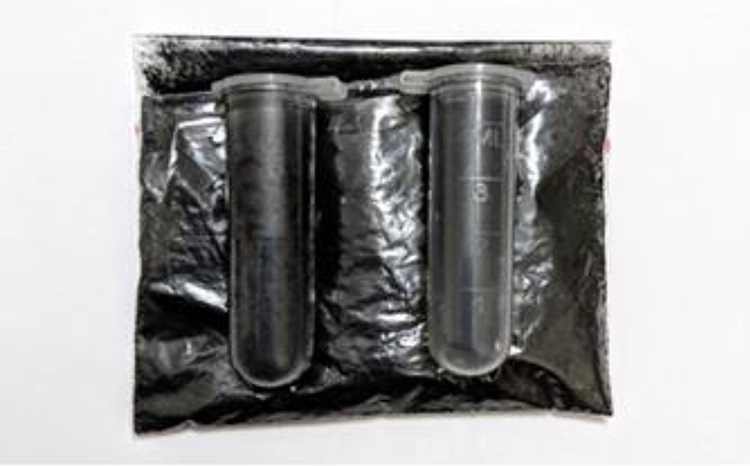
Prepared GO powder. GO: graphene oxide.
Device (EDLC) fabrication
Laboratory-scale EDLC was fabricated using GO as an active material and graphite sheet as a current collector. Initially, the graphite sheet was cut into 1 × 1 cm2, while binder PVDF-HFP solution was prepared using an appropriate amount of acetone. We mixed the active material (GO) with binder. Finally, we have coated GO paste on the graphite sheet using a paintbrush, followed by drying at 80°C overnight. At last, to fabricate an EDLC, we have sandwiched the maximum conducting synthesized biopolymer film in between two symmetric electrodes (Figure 4).
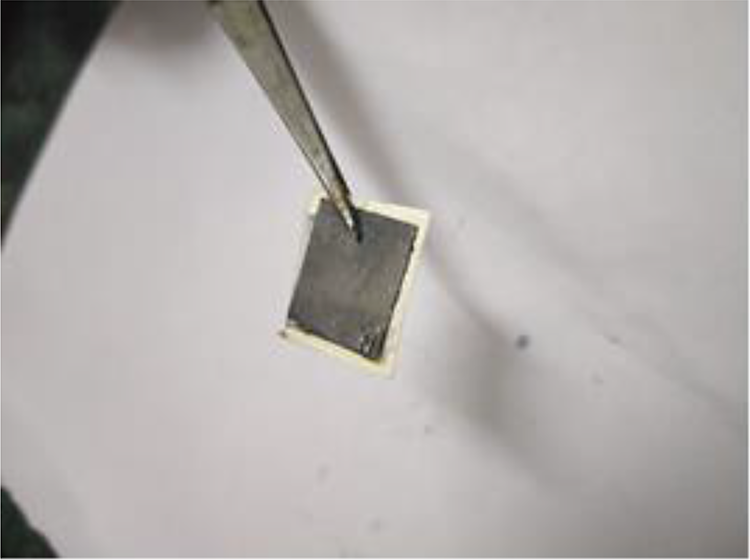
Laboratory-scale sandwiched EDLC developed in Material Research Lab, Sharda University, Greater Noida, Uttar Pradesh, India. EDLC: electrochemical double-layer capacitor.
Results and discussion
Electrolyte characterization
Conductivity measurement
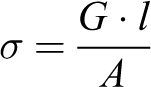
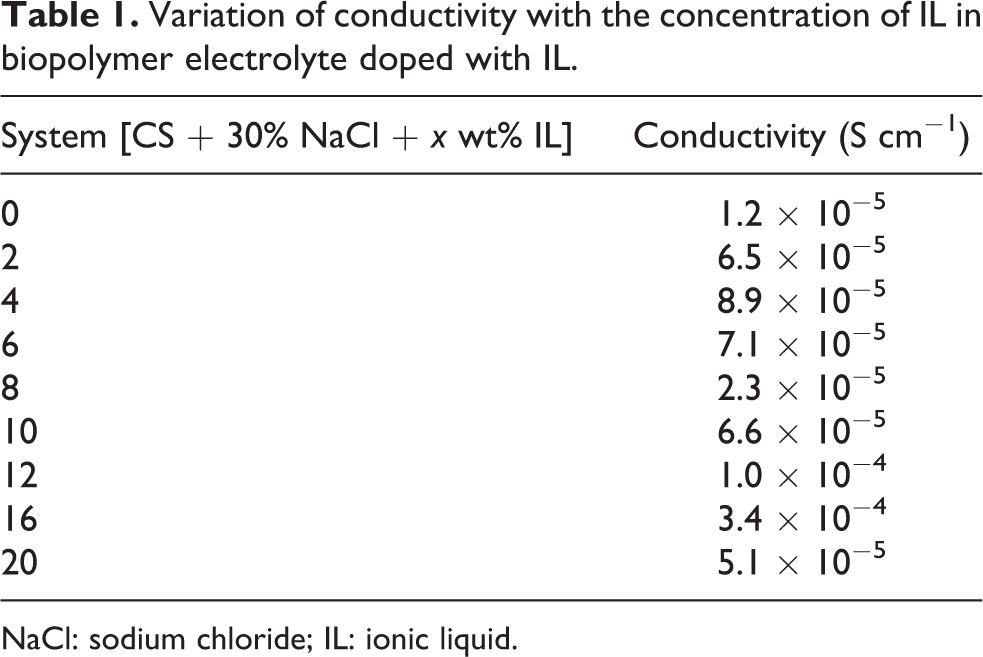
Biopolymer electrolyte films were prepared by using the solution casting method and then its ionic conductivity was evaluated using CH Instrument (USA) in the frequency range from 100 Hz to 106 Hz. Nyquist plots for different compositions were recorded. A typical Nyquist plot of maximum conducting film (CS + 30% NaCl + 16% IL) is shown in Figure 5. Following the same approach, the ionic conductivity (σ) was calculated as a function of IL and the values are listed in Table 1 and shown in Figure 6. Ionic conductivity (σ) was measured using stainless steel electrodes and was calculated using the following formula.
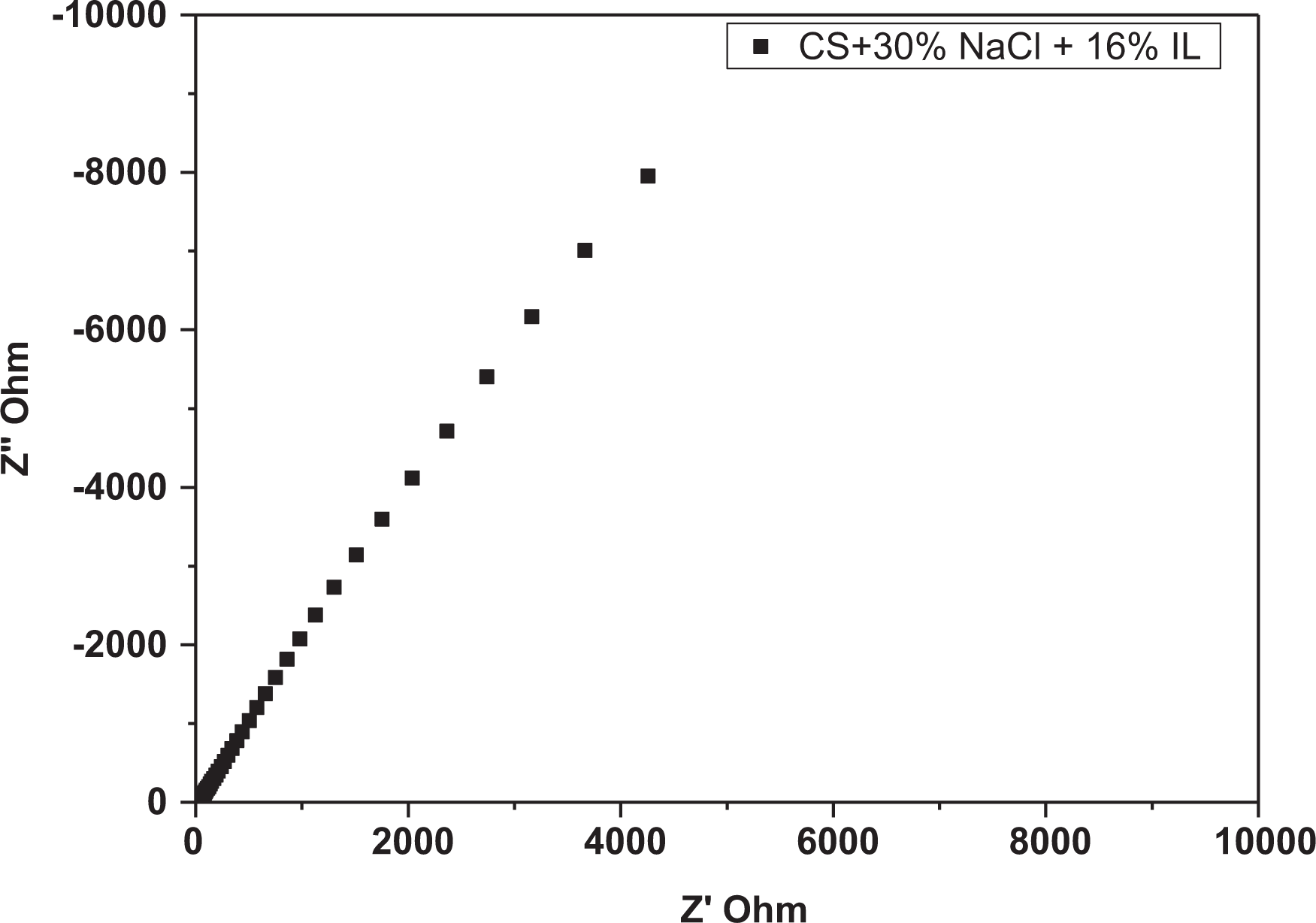
Nyquist plot of maximum conducting (CS + 30% NaCl + 16% IL) biopolymer electrolyte sample. NaCl: sodium chloride; IL: ionic liquid.
Variation of conductivity with the concentration of IL in biopolymer electrolyte doped with IL.
NaCl: sodium chloride; IL: ionic liquid.
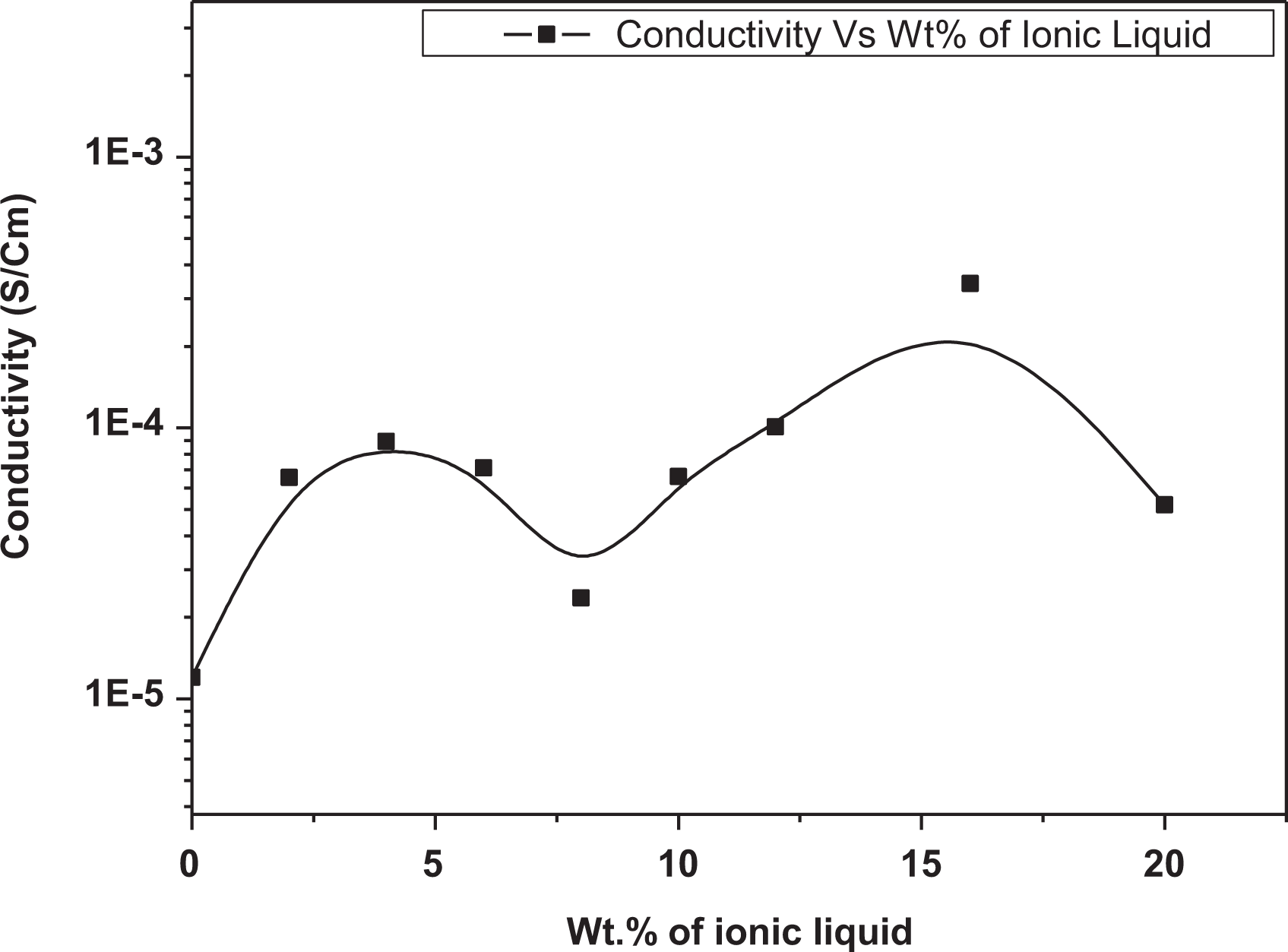
Variation of ionic conductivity of biopolymer electrolyte with respect to varying concentrations of IL. IL: ionic liquid.
where ‘σ’ is the ionic conductivity and G represents the conductance, l represents the thickness of the sample and A refers to the area of the sample. Also, G = 1/R b, where R b represents the bulk resistance which is calculated from the intercept of Nyquist plot with the real axis.
It is clear from Figure 6 and Table 1 that the addition of IL into polymer electrolyte matrix increases ionic conductivity attaining maxima at 4 wt% IL concentration and decreases till 8 wt% IL concentrations. Interestingly after 8 wt% IL concentration conductivity increases once again and we got second maxima at 16 wt% IL concentration and further approaches downwards. In the literature, most of the polymer electrolyte shows single maxima where conductivity increase may be defined by the enhancement in the number of mobile charge carriers (i.e. cations and anions) while a decrease in ionic conductivity is generally defined by multiple charge formation. 9 However polymer electrolyte systems with two maxima are rather scanty. Lakshmi and Chandra 3 reported two maxima in an ion-conducting system where first maxima are defined by cation while second maxima are associated with anions.
FTIR spectroscopy
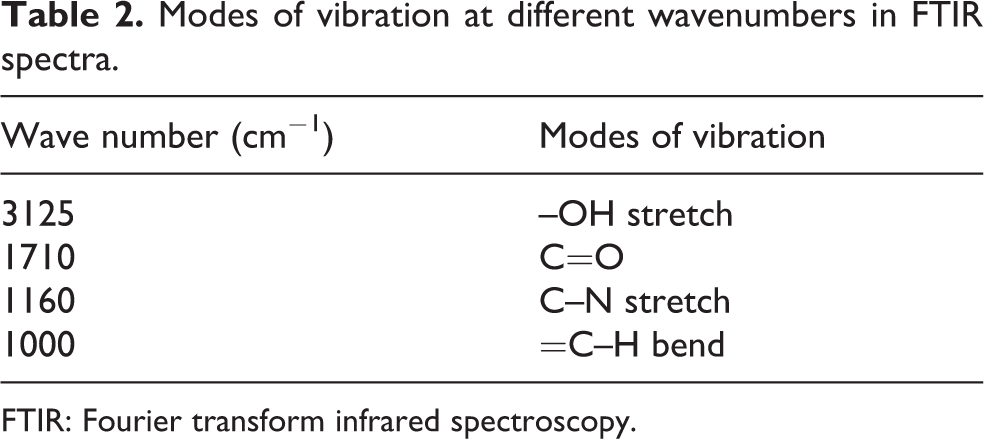
Perkin-Elmer (USA) Spectrophotometer (model 833) was used to record the Fourier transform infrared (FTIR) spectra of pure polymer (corn starch), salt NaCl, IL (1-hexyl-3-methylimidazolium iodide) and the biopolymer electrolyte film of maximum conductivity (Figure 7). The modes of vibrations and their assignments are listed in Table 2.
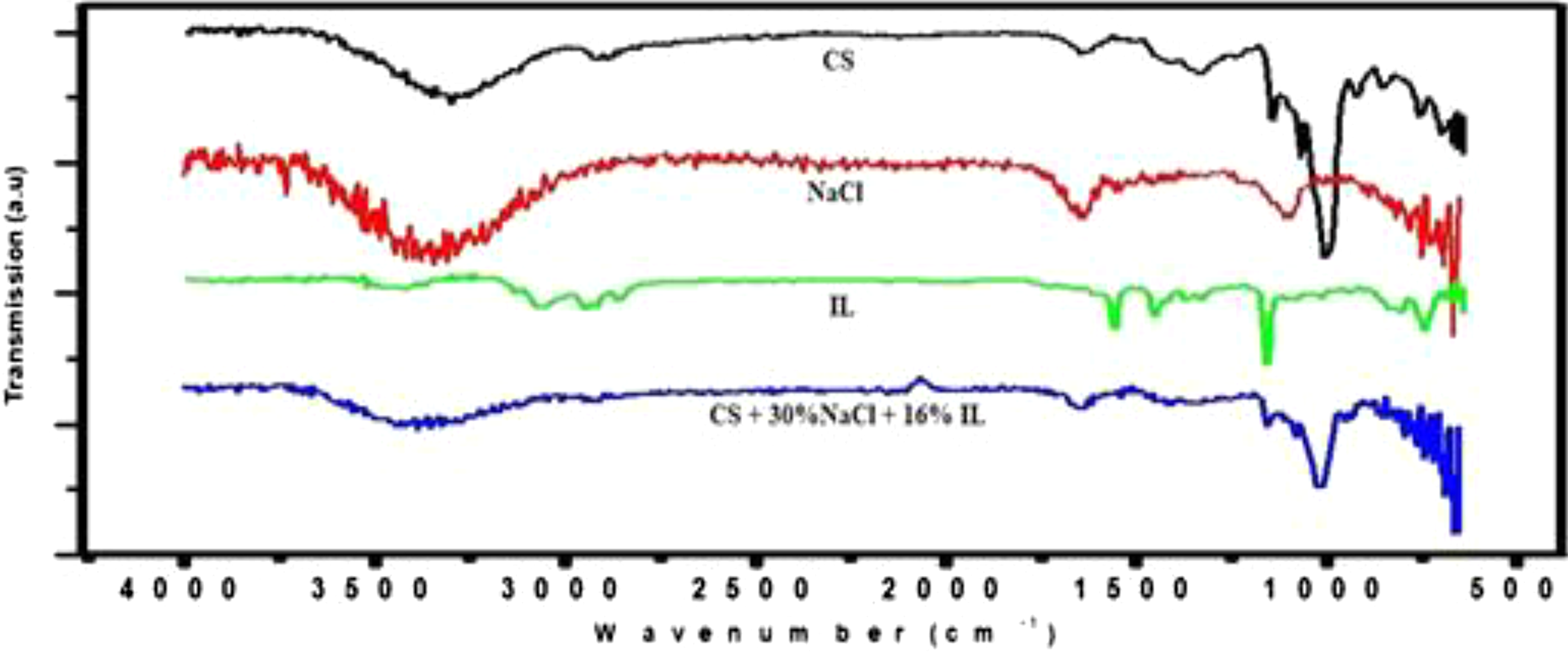
FTIR spectra of biopolymer electrolyte with and without IL. FTIR: Fourier transform infrared spectroscopy; IL: ionic liquid.
Modes of vibration at different wavenumbers in FTIR spectra.
FTIR: Fourier transform infrared spectroscopy.
FTIR spectra of pure polymer (corn starch), as well as salts, show their parent peaks at define wavenumber (Table 2). It is clearly observed that the IL-doped biopolymer electrolyte does not contain a prominent peak of salt NaCl which shows a complete dissolution of salt in the biopolymer matrix. Further IL-doped biopolymer electrolyte shows peaks either related with host (CS) or salts (i.e. NaCl or IL) with no additional peak which affirms its composite nature.
Optical microscopy
Optical microscopy (OM) is basically done to check the surface features in polymer electrolyte film. It is a novel experimental tool to check whether the polymer electrolyte surface is crystalline or amorphous. The optical micrographs of pure biopolymer, as well as salts-doped biopolymer electrolytes, are shown in Figure 8.
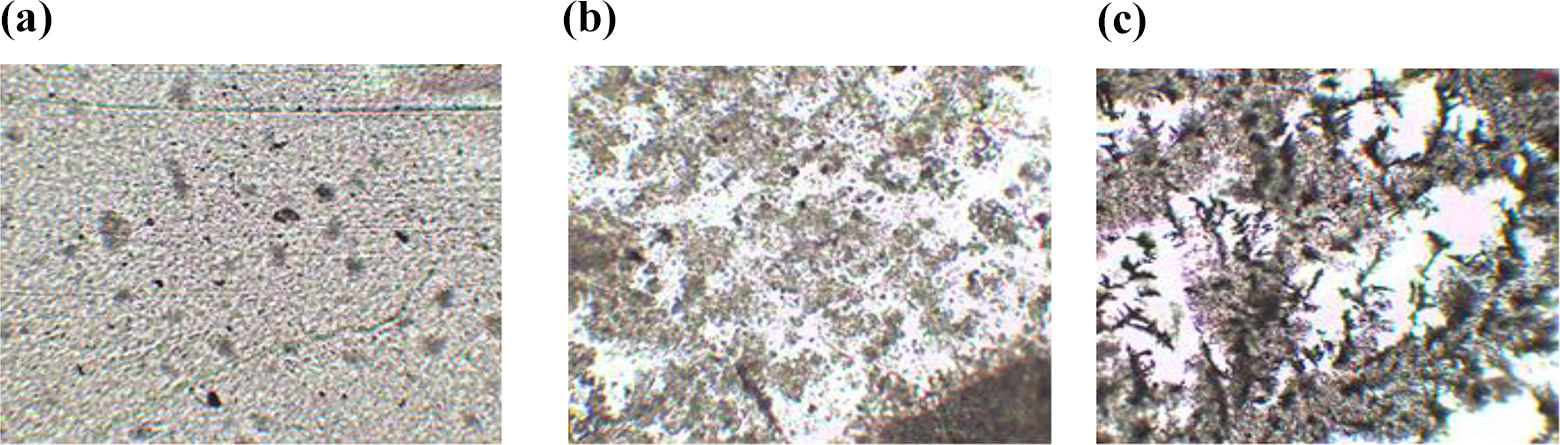
OM of (a) pure corn starch, (b) corn starch with 30% NaCl biopolymer electrolyte and (c) corn starch + 30% NaCl + 16% IL biopolymer electrolyte films. OM: optical microscopy; NaCl: sodium chloride; IL: ionic liquid.
Clearly visible, pure corn starch matrix shows rough nature with semicrystalline nature (Figure 8(a)) while doping of NaCl shows an enhancement in amorphous nature (Figure 8(b) marked as black portion). Interestingly IL-doped biopolymer electrolyte (Figure 8(c)) shows a more blackish region (enhancement in the amorphous region). It is well reported in the literature that the amorphous region is a preferable region of high conductivity and hence our OM data support our ionic conductivity data.
Electrode characterization
A laboratory-scale sandwiched EDLC has been fabricated using maximum conducting IL-doped biopolymer electrolyte and reduced graphene oxide (rGO) as electrodes material (prepared in own laboratory). FTIR spectra of the sample are used to determine the oxidation state of carbon atoms. The FTIR recorded for as-synthesized rGO is shown in Figure 9 using FTIR (CARY630 FTIR, Agilent Technologies, USA) spectrometer operating range from 4000 cm−1 to 600 cm−1. The determine oxidation state of carbon atoms peaks (modes of vibration) are tabulated in Table 3.
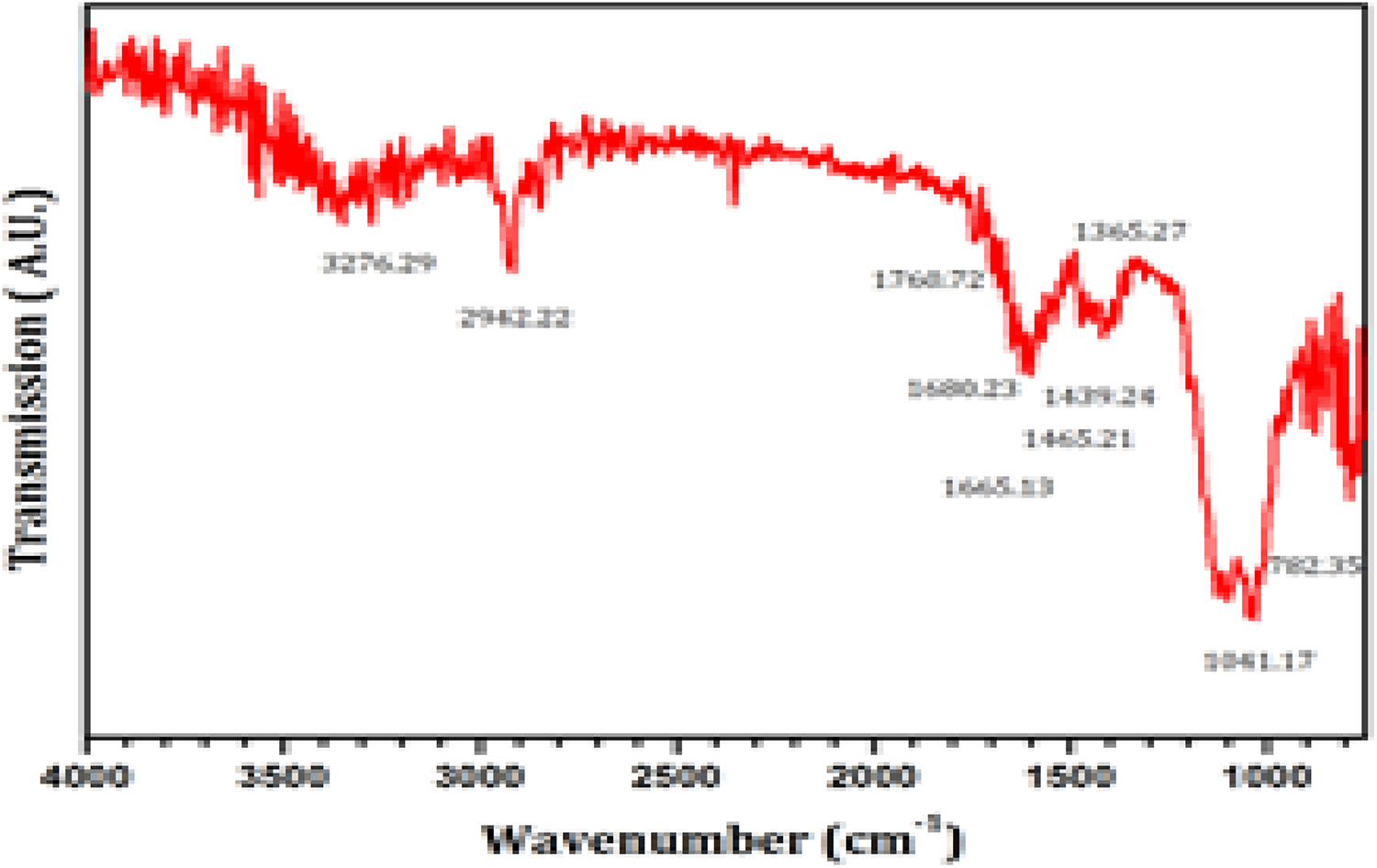
FTIR spectra of rGO prepared in the laboratory. FTIR: Fourier transform infrared spectroscopy; rGO: reduced graphene oxide.
Modes of vibration indication in biopolymer electrolytes.
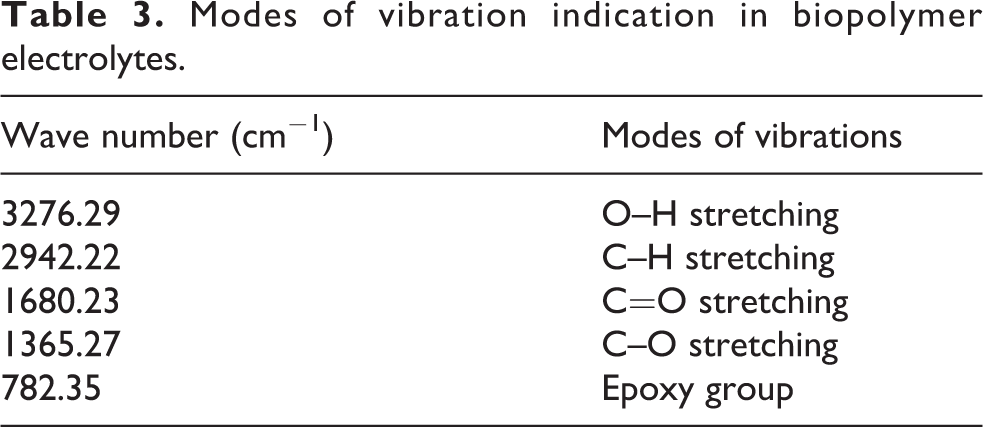
Most prominent peaks appear around 3276.29 cm−1 represents O–H stretching, peak at 2942.22 cm−1 represents C–H stretching, peak at 1680.23 cm−1 represents at C=O stretching while peak at 1365.27 cm−1 represents at C–O stretching, peak at 782.35 cm−1 represents epoxy group and confirms the formation of rGO (oxidation state of carbon atoms).
Fabrication of device (EDLC)
Cyclic voltammetry
We have developed an EDLC with structure rGO//IL-doped biopolymer electrolyte//rGO (Figure 10). To evaluate specific capacitance of a fabricated EDLC we have carried out cyclic voltammetry recorded at a scan rate of 10 mV s−1. The specific capacitance is calculated using the following formula:
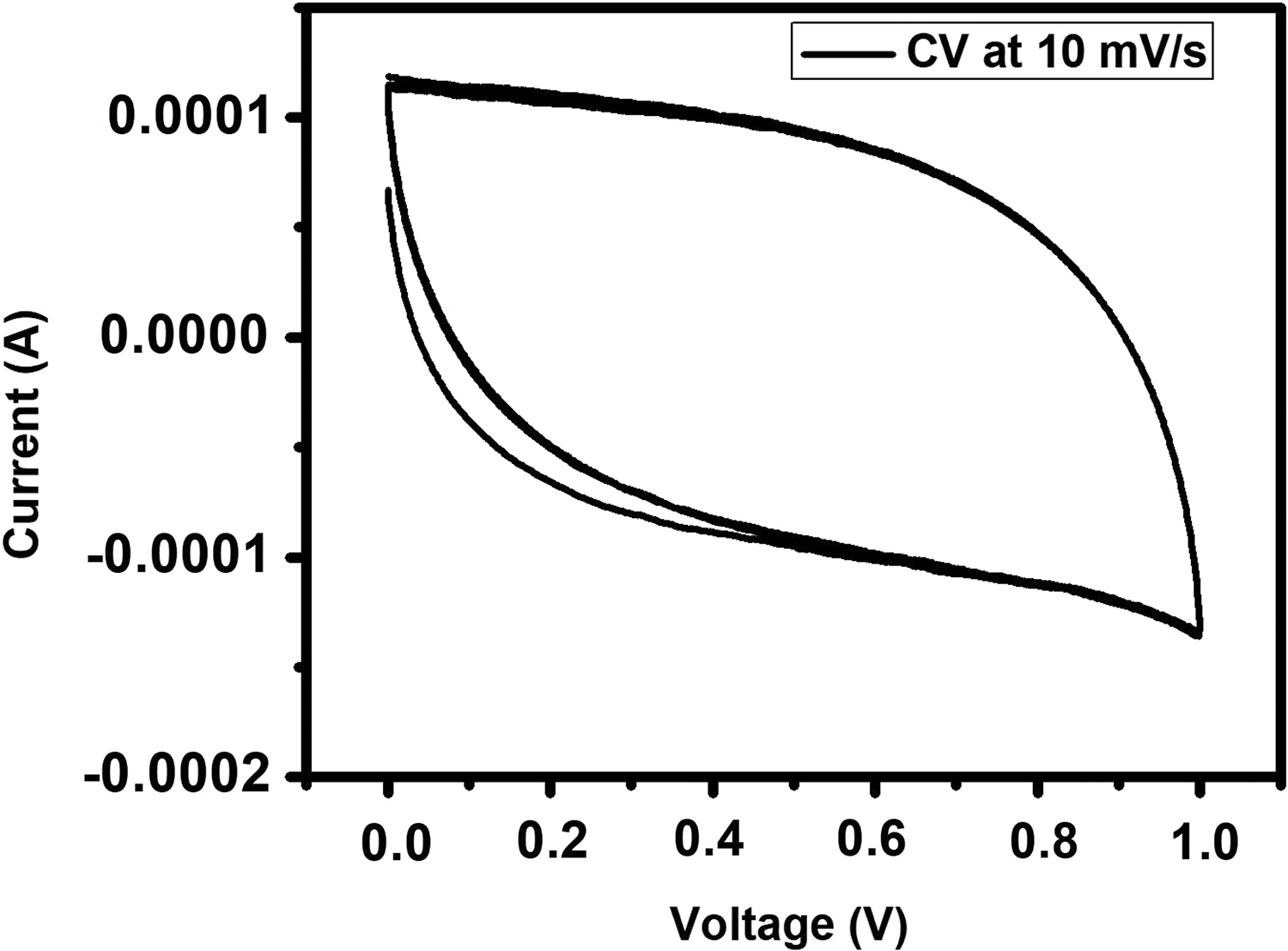
Cyclic voltammetry diagram of sandwiched ELDC developed in author’s laboratory.
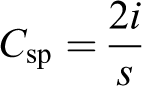
where ‘i’ is the average current of both cycles of charge and discharge and ‘s’ is the scan rate. The calculated specific capacitance using the above-said formula is 18.4 F g−1.
Low-frequency impedance spectroscopy
We have also performed low-frequency impedance spectroscopy using CH Instrument to calculate the specific capacitance of a developed EDLC in our laboratory as shown in Figure 11. The high-frequency region of an impedance data shows the bulk resistance of a cell and the small semicircular section shows the charge transfer region. Then, we got a capacitive behaviour of EDLC in the low-frequency region
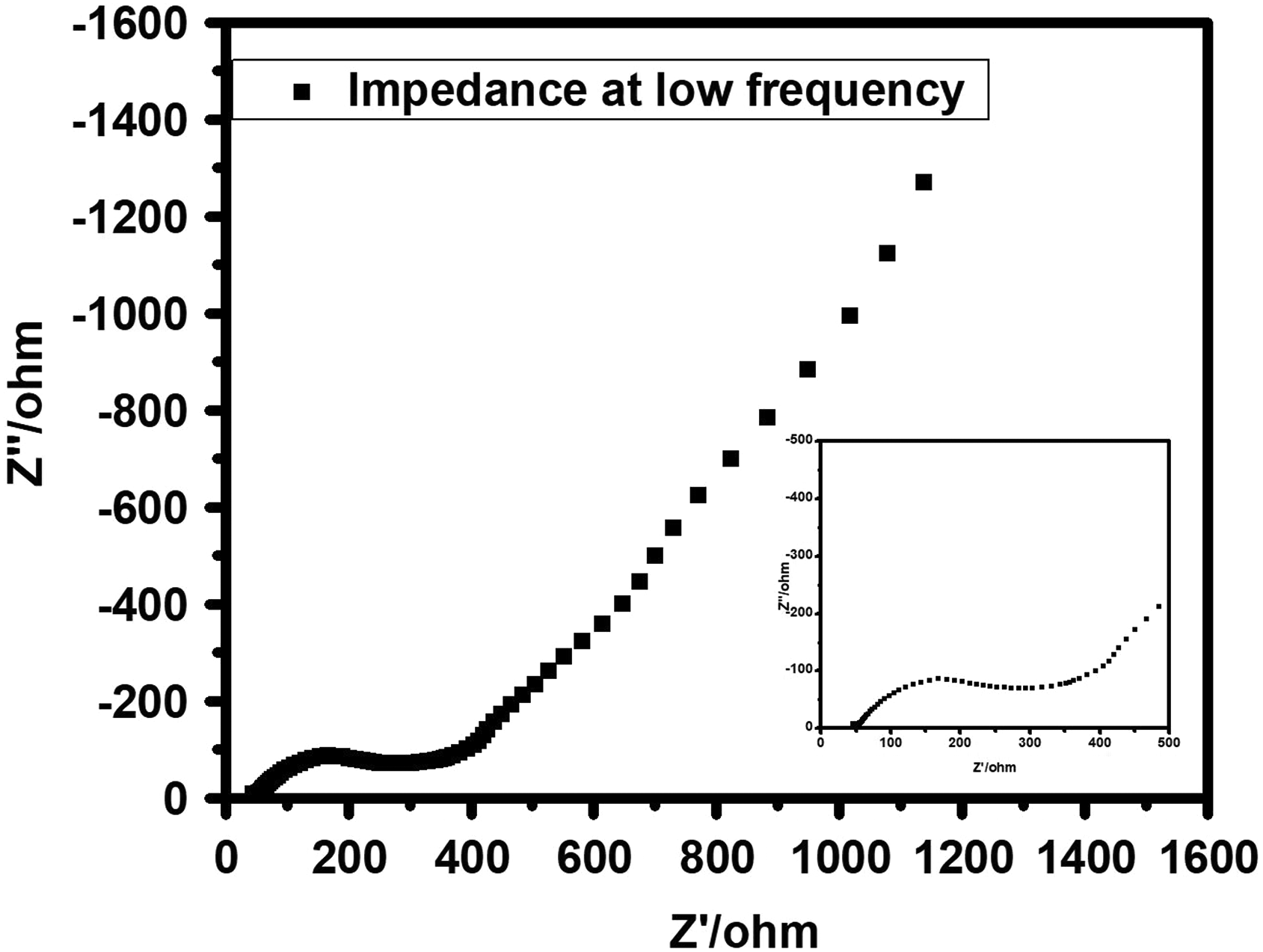
Low-frequency impedance spectroscopy of EDLC. EDLC: electrochemical double-layer capacitor.
The specific capacitance we have calculated by using the following formula:
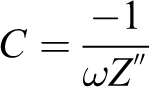
where Z″ is the imaginary part of impedance at the lowest frequency. 9 –15 The value of specific capacitance we have calculated using low-frequency impedance is 24.8 F g−1.
Conclusions
In a glance, the highly efficiently electrical double-layer capacitor was successfully fabricated using an IL-doped biopolymer electrolyte film of maximum conductivity and the porous carbon material (rGO) as electrodes. Biopolymer electrolyte film was synthesized from corn starch as host polymer, NaCl and IL (1-hexyl-3-methylimidazolium iodide) as dopants using solution cast technique. Impedance spectroscopy was done to get the maximum conducting IL-doped biopolymer electrolyte film. Laboratory-synthesized rGO was prepared as electrode material by the electrochemical meth od. Both the materials prepared were used to fabricate a highly efficient EDLC. The resulting EDLC showed significant electrochemical performance, such as high specific capacitance which indicated the materials were promising to be used commercially.
Footnotes
Declaration of conflicting interests
The author(s) declared no potential conflicts of interest with respect to the research, authorship, and/or publication of this article.
Funding
The author(s) received no financial support for the research, authorship, and/or publication of this article.
