







Abstract
Poly(p-phenylene benzobisoxazole) (PBO) fiber, well-known for its super high strength, is a novel fiber with excellent heat resistance and flame retardancy. However, chemical stability appears to be one of its few weaknesses. In this study, PBO fibers were treated with sodium hydroxide (NaOH) and potassium permanganate (KMnO4) solutions under various conditions. Scanning electron microscopy, optical microscopy, tensile testing, Fourier-transform infrared spectroscopy, differential scanning calorimetry (DSC), and thermogravimetric analysis were employed to characterize the variations of its structure and properties. The results show that many longitudinal corrosion grooves appeared on the surface of PBO fibers treated with KMnO4, while only subtle microcracks occurred after treatment with NaOH. The breaking tenacity of the fiber decreased from 38.13 cN dtex−1 to 2.76 cN dtex−1 after treatment with KMnO4 for 6 h, while it remained at a higher level (27.67cN dtex−1) when treated with NaOH. After treatment with KMnO4 solution, a more obvious absorption peak appeared in the vicinity of 1448.3 cm−1, inferring an occurrence of chemical changes for oxazole ring. Moreover, the remaining mass and initial degradation temperature are significantly improved, also indicating that the cyclic or cross-linked structure is rebuilt. Furthermore, the cyclization or cross-linking of macromolecules destroyed the highly ordered structure of PBO fibers, demonstrated by acromion melting peaks at low temperature in the DSC curves. However, the aggregation and chemical structures of PBO fibers have no obvious changes after treatment with NaOH.
Introduction
As an innovative high-performance fiber, poly(p-phenylene benzobisoxazole) (PBO) fibers have been arousing widespread attention and a rise in academic research, mainly concentrated on the topic of original preparation technology and surface modification of commercial PBO fibers. In preparation technology, there are few related and systematic literatures. Wang Yang et al. 1 prepared the carbon nanotube/2-(4-aminophenyl)-1H-benzimidazol-5-amine/poly(p-phenylene benzobisoxazole) (CNT-APBIA-PBO) copolymer by in situ polymerization process, and then it was fabricated into fibers with tensile modulus about 34.9% higher and tensile strength 30.4% enhancement than those of PBO fibers. Jiang Xiaoling et al. 2 chose polyphosphoric acid as solvent and fabricated as-spun fibers by dry-jet wet spinning method. Then, high modulus PBO fibers were obtained by high stretch ratio and heat treatment after alkali washing, water washing, and drying. The hydrothermal aging of PBO fibers was studied and the changes of physical and chemical structures were characterized by Joannie Chin et al. 3 Mingqiang Wang et al. 4 prepared PBO/graphene oxide nanoribbon composite fibers by in situ polymerization and dry-jet wet spinning method. Compared with PBO fibers, the mechanical properties and thermal stability of the obtained composite fibers were significantly improved. At present, great progress has been made in the preparation of PBO fibers. However, due to the low purity of monomers and the complex polymerization process, the molecular weight of PBO is low, causing their properties to be unparalleled to those prepared by Toyobo Co., Ltd (Osaka, Japan).
The PBO fiber, with excellent mechanical properties and heat resistance, provides great potential application in the field of fiber-reinforced composites. Nevertheless, such composites generally show a poor interfacial adhesion between the untreated fibers and matrix resin, mainly due to the inert nature of PBO fibers. It is necessary to improve interfacial bonding or adhesion, and so, surface modification of PBO fibers is considered an effective method. In the field of surface modification, many fruitful studies have been conducted by scholars all over the world. The application of plasma technology plays a key role in this area. Zhe Liu et al. 5 improved the bonding and wettability of PBO fibers treated with air plasma. Ruiyun Zhang et al. 6 also showed that the contact angle of PBO fibers decreased with air plasma etching, improving the adhesion between resins and PBO fibers. Using air plasma, PBO fabrics were treated by Fang Guo et al. 7 They found that the strength of the fabric reinforced the decrease of composites, but the tribological properties increased significantly. Similar results can also be obtained with oxygen plasma treatment. Chengshuang Zhang et al. 8 treated PBO fibers with oxygen plasma, which improved the wettability and surface free energy of the fibers. Oxygen plasma treatment could also improve the surface roughness and adhesion properties of PBO fibers. 9,10 In addition, the surface-loaded functional layer is also an effective method. Lei Chen et al. 11 grafted graphene oxide onto the surface of PBO fibers, which improved the interface and oxidation resistance of the fibers. YW Li et al. 12 proposed a new method of grafting graphene oxide onto surfaces of PBO fibers, which effectively improved the interfacial bond strength of PBO fibers reinforced with epoxy resin composites. Lei Chen et al. 13 employed biomimetic polydopamine on the surface of PBO fibers to form a middle layer. Then, graphene oxide was grafted onto the layer using branched polyethyleneimine as the bridging agent. Qi Ma et al. 14 deposited polysiloxane microtubules on the surface of PBO fibers by chemical vapor precipitation and constructed silicon-based superhydrophobic surfaces for oil–water separation. Longbo Luo et al. 15 enhanced the interfacial bond between the fibers and resin matrix by direct fluorination at room temperature and discussed the mechanism of chemical reaction. Lei Chen et al. 16 enhanced interfacial properties of PBO fiber via electroless nickel plating, and the hygrothermal aging properties were significantly improved. Peng Zhu et al. 17 coated PBO fibers with nano-titanium dioxide particles by evaporation-induced surface coating method, which improved the ultraviolet (UV) resistance of PBO fibers. Bo Song et al. 18 fixed UV absorbers on the surface of PBO fibers via coordination bond method. Jieliang Wang et al. 19 selected peroxidase and hydrogen peroxide as catalyst and oxidizing agent, respectively, to improve the hydrophilicity of PBO fibers. GM Wu and YT Shyng 20 treated PBO fibers with methanesulfonic acid by solvent etching technique. The results showed that the surface free energy of PBO fibers increased by 34%, and the interfacial shear strength increased by 22%. To summarize, the available literatures mainly focus on spinning process and surface modification. Characterization of alkali resistance and oxidation resistance of PBO fibers is rare.
In this work, PBO fibers were treated with sodium hydroxide (NaOH) and a strong oxidizer solution (potassium permanganate (KMnO4)) under various conditions. The changes in structure and properties before and after treatment were characterized with scanning electron microscopy (SEM), Fourier-transform infrared (FTIR) reflection spectroscopy, optical microscopy (OM), differential scanning calorimetry (DSC), and thermogravimetric (TG) analysis. The testing of chemical corrosion behavior of PBO fibers is beneficial for evaluating service performance in complex chemical environments.
Experimental
Materials
PBO fibers with monofilament diameter of 11.2 µm were purchased from Toyobo Co. Ltd. Glycerol, NaOH, and KMnO4, with analytical reagent standard, were all purchased from Tianjin Zhiyuan Fine Chemical Co. Ltd (Tianjin, China).
Chemical treatment of PBO fibers
At room temperature, PBO fibers were treated using NaOH and KMnO4 solutions with different mass concentrations for different durations, then rinsed with distilled water and dried naturally. Similarly, the treatment was carried out at 60°C in a computer-type thermostatic-humidistat cultivating box.
Characterization
Surface morphologies were observed by OM and SEM. A bunch of PBO fibers, about 1 cm in length, was put on a glass slide. With the aid of glycerin, the fiber bundle was separated into a large number of single fibers. Then, apparent morphology of PBO fibers was observed by OM (Laborlux 12, Leica, Wetzlar, Hesse-Darmstadt, Germany). Meanwhile, the diameter of the fibers was measured using a fiber fineness analyzer software (HD002C, China Textile Academy). Each specimen was analyzed 50 times to obtain an average value. For the SEM observations (JSM-6360, JEOL, Tokyo Japan), the samples were attached to sample supports and sputter coated with a gold layer. The observations of cross-section and surface morphology were performed at an acceleration voltage of 10–12 kV. Tensile testing was performed on a universal testing machine (Model 2343; Instron, Mountain View, California, USA). The individual filaments were tested using a gage length of 200 mm and at a constant crosshead speed of 200 mm min−1. According to GB/T 14344-2008, each specimen was analyzed 50 times to obtain an average value. Furthermore, FTIR spectroscopy of the fibers was recorded on a spectrometer (Nicolet 5700; Nicolet, Madison, Wisconsin, USA) over a frequency range from 400 cm−1 to 4000 cm−1. The operation was performed in the form of fiber bundles in reflective mode. Moreover, a differential scanning calorimeter thermal analyzer (Pyris 1; Perkin Elmer, Waltham, Massachusetts, USA) was used for DSC analysis. Each sample of 5–10 mg was weighed before being placed in a DSC span. Under nitrogen atmosphere, it was heated from room temperature to 400°C with a heating rate of 20°C min−1. Then the melt was cooled to room temperature at 20°C min−1. Subsequently, the samples underwent a second heating course at the same heating rate. A thermogravimetric analyzer (STA449C; NETZSCH, Germany) was used to determine the thermal stability of PBO fibers under nitrogen atmosphere at a scan rate of 20°C min−1, from 25°C to 1000°C. The samples were kept at 1000°C for 5 min.
Results and discussion
Effect of NaOH solution on morphological structure
The OM images of PBO fibers after treatment with NaOH are shown in Figure 1. After treatment with 10, 30, and 50 wt% NaOH solutions, the diameter of PBO fibers showed increasing trend, indicating that the fibers underwent swelling similar to the mercerizing process of cotton fibers. With the infiltration of NaOH solution into the microstructure, the distance between macromolecular chains in the amorphous region is gradually widened, while the crystalline region is almost unaffected. Thus, the orientation degree of macromolecular segments for high strength and high modulus PBO fibers continued to decrease. The originally stable cross-linkages between the macromolecules are significantly destroyed, leaving transverse cracks on the surface of fibers. In addition, the transverse cracks increase obviously with NaOH concentrations rising. This was especially true after treatment with 50% NaOH, as regular transverse cracks appeared on the surface of PBO fibers. Within the concentration range, PBO fibers can be corroded more or less after treatment with NaOH solution at 40°C for 6 h.
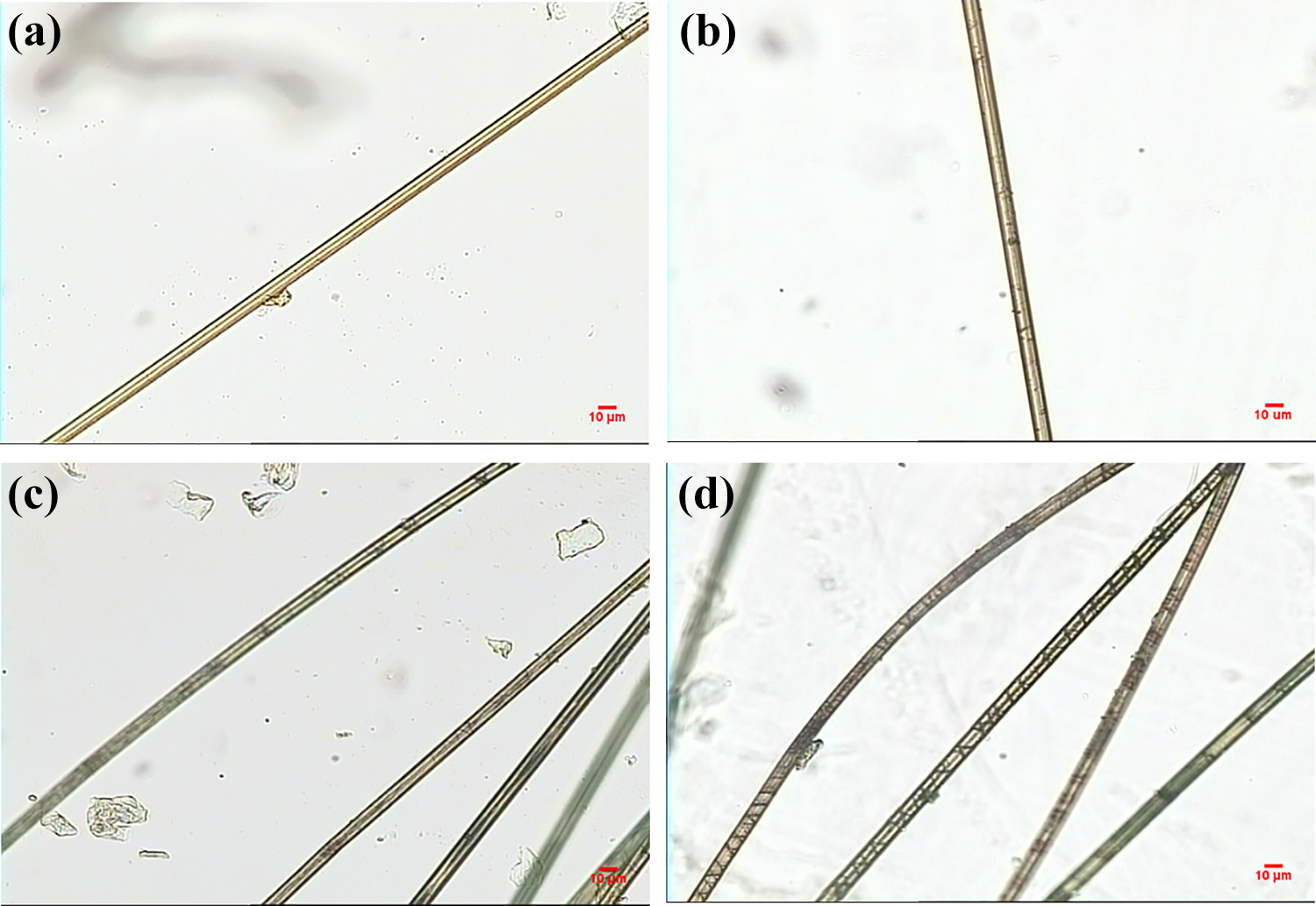
Effects of NaOH concentration on OM images at 40°C for 6 h: (a) untreated, (b) 10 wt%, (c) 30 wt%, and (d) 50 wt%. NaOH: sodium hydroxide; OM: optical microscopy.
To explore the evolution of transverse grooves, the morphological structure of PBO fibers after treatment for different durations was investigated (shown in Figure 2). Before treatment, the fiber showed a good uniformity along the longitudinal direction in diameter, and the uniformity between the cortex and core is also good. After treatment with 30 wt% NaOH for 2 h, a cavity (see Figure 2(b)) appeared in the core layer of the fibers because of swelling. When treated for 4 h, the core layer of PBO fibers exhibited buckling, which led to the obvious expansion along the cross-section direction. When the buckling stress accumulated to a certain extent, transverse cracks appeared on the surface, as shown in Figure 2(d).
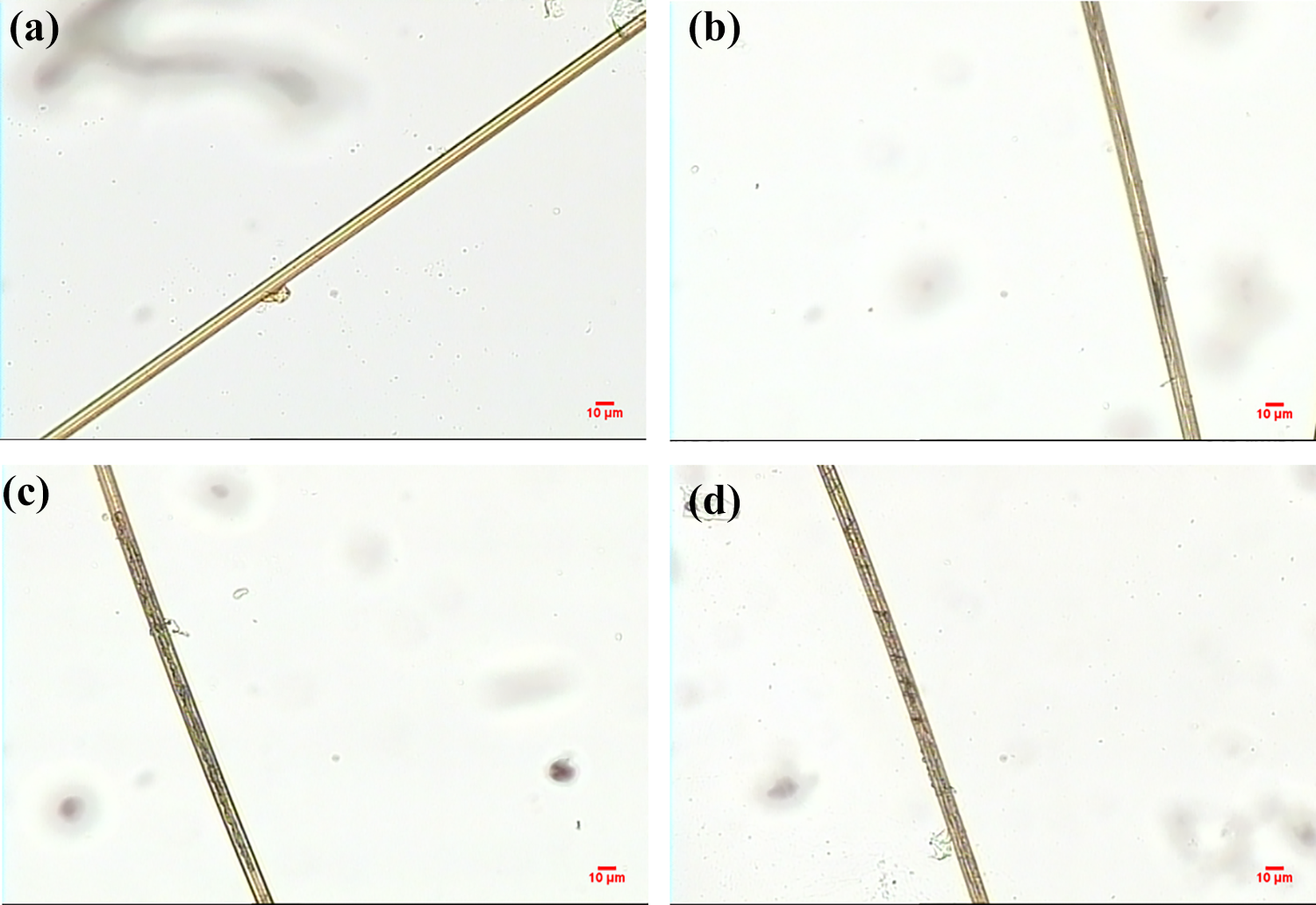
Effects of treatment time on OM images at 30% NaOH concentration: (a) 0 h, (b) 2 h, (c) 4 h, and (d) 6 h. NaOH: sodium hydroxide; OM: optical microscopy.
Effect of KMnO4 solution on morphological structure
Figure 3 illustrates the OM images of PBO fibers after treatment with 8 wt% KMnO4 for different durations. Similar to the situation in process of NaOH treatment, the core layer with higher orientation can be easily distinguished from the cortex layer after treatment with KMnO4 for 2 h, which is due to the diversity in the compactness of the cortex–core structure. After treatment for 4 h, stress relaxation due to swelling has been completed, leaving longitudinal bending and wider transverse corrosion grooves. As treatment was extended to 6 or 8 h, corrosion grooves became deeper and wider, even fractured, as shown in Figure 3(c) and (d).
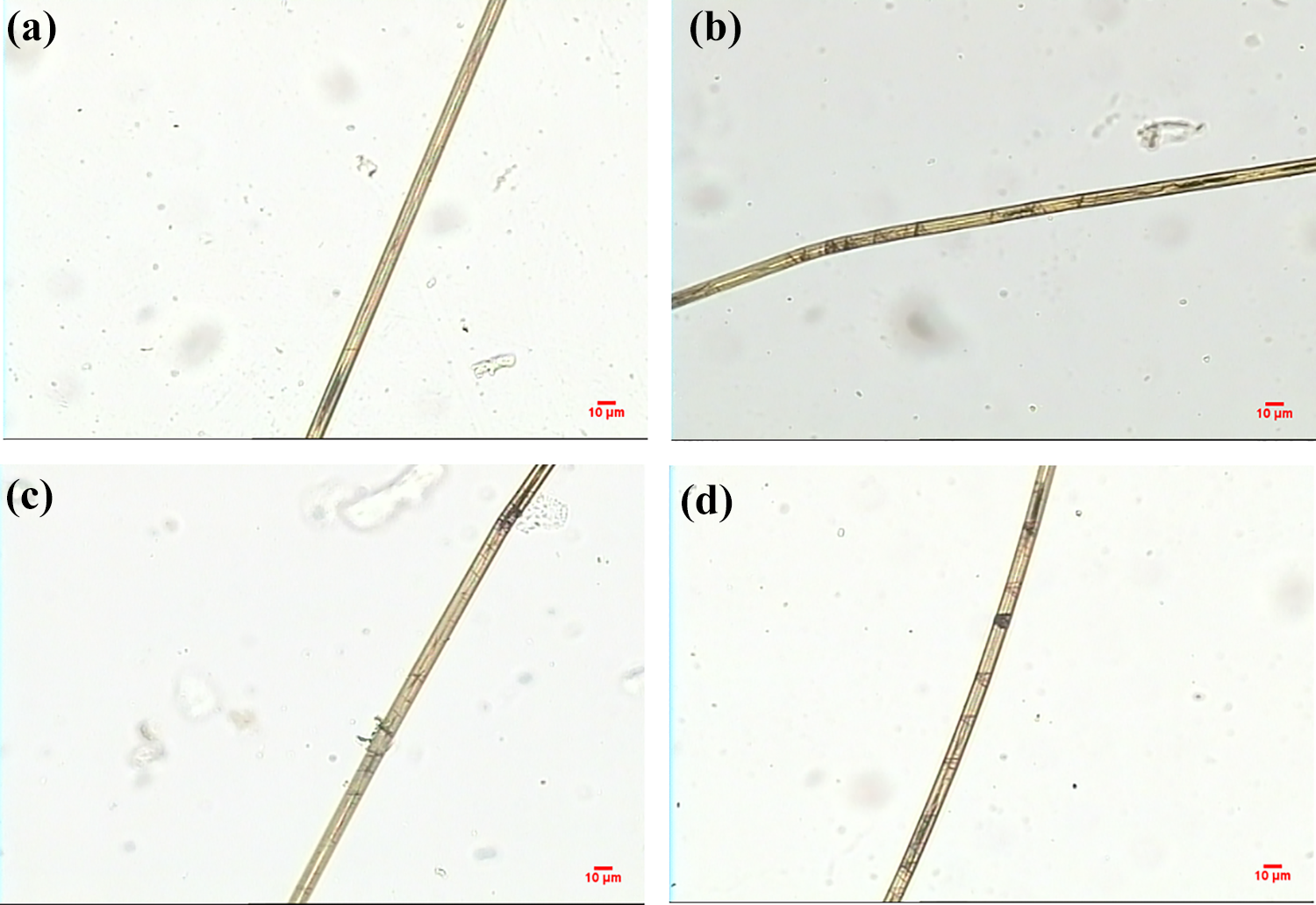
Effects of treatment time on OM results at 8 wt% KMnO4 concentration: (a) 2 h, (b) 4 h, (c) 6 h, and (d) 8 h. OM: optical microscopy; KMnO4: potassium permanganate.
The SEM images of PBO fibers after treatment with NaOH and KMnO4 are shown in Figure 4. In the high magnification view (10,000×), the diameter of PBO fibers is uniform and the surface is smooth before treatment. After treatment with KMnO4, obvious longitudinal cracks on the surface of fibers appeared. However, they are not observed on the surface of fibers treated with NaOH. Clearly, KMnO4 is much more destructive to PBO fibers than NaOH is.
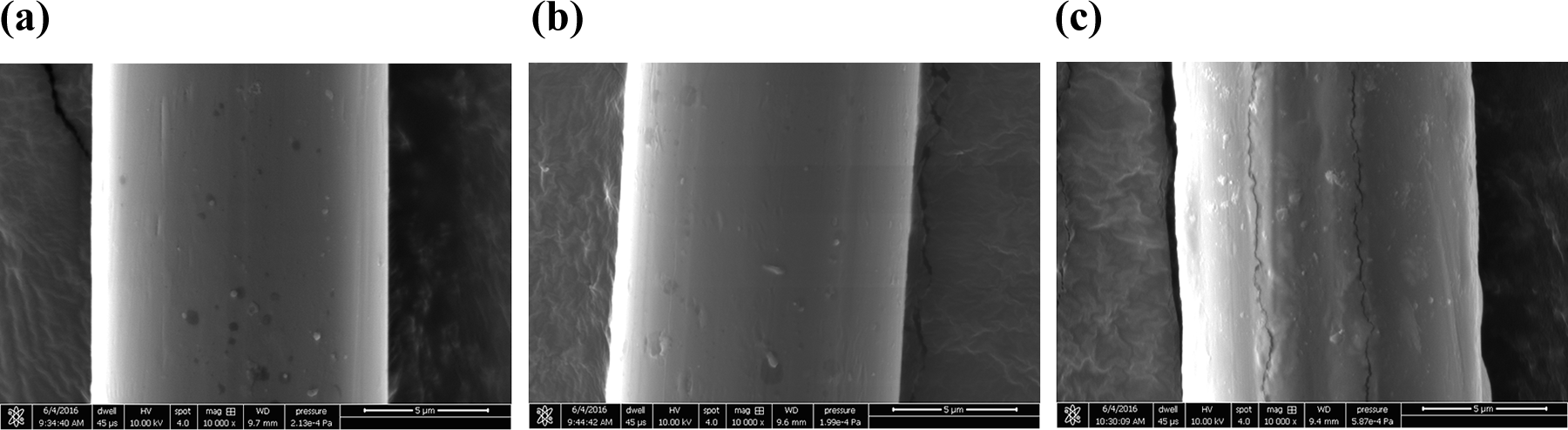
SEM images of PBO fibers treated with NaOH and KMnO4: (a) untreated, (b) NaOH, and (c) KMnO4. SEM: scanning electron microscopy; PBO: poly(p-phenylene benzobisoxazole); NaOH: sodium hydroxide; KMnO4: potassium permanganate.
Tensile properties
The mechanical properties of PBO fibers after treatment with NaOH and KMnO4 are presented in Table 1. The breaking tenacity of original PBO fibers is as high as 38.13 cN dtex−1, and the specific modulus is also up to 1300.48 cN dtex−1, making the PBO fiber as the super fiber of the 21st-century well-deserved. After treatment with NaOH solution, the breaking tenacity decreased with the extension of treatment time. After treatment for 6 h, the value can still remain above 27 cN dtex−1. However, for the PBO fibers treated with KMnO4 solution, their mechanical properties, especially breaking tenacity, decreased sharply. After treatment for 6 h, the tenacity fell below 3 cN dtex−1, comparable to conventional fibers. In comparison, the corrosion damage of KMnO4 is much greater than that of the NaOH solution, which is also confirmed by the SEM results.
The mechanical properties of PBO fibers after treatment with NaOH and KMnO4.
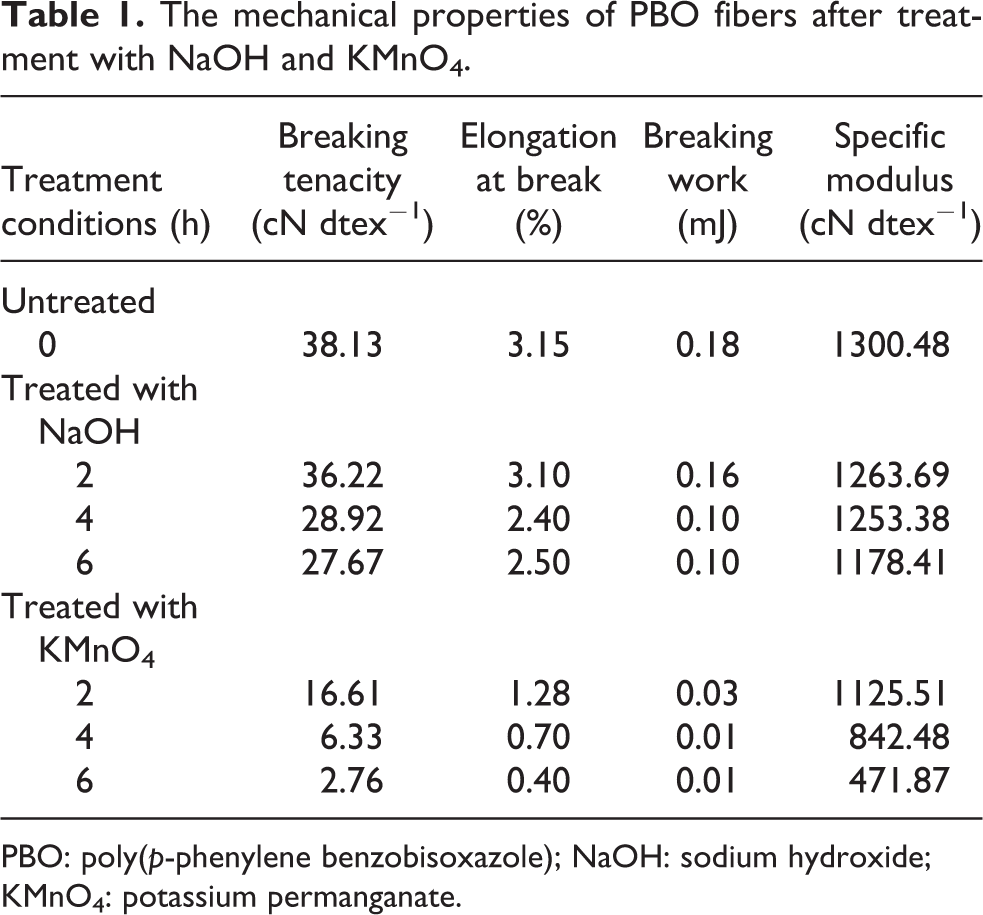
PBO: poly(p-phenylene benzobisoxazole); NaOH: sodium hydroxide; KMnO4: potassium permanganate.
Molecular structure
Figure 5 illustrates the FTIR spectra of PBO fibers after treatment with NaOH and KMnO4 solutions. As is shown, the characteristic absorption peaks of PBO fibers treated with NaOH have no significant changes. However, after treatment with KMnO4 solution, a more obvious absorption peak appeared in the vicinity of 1448.3 cm−1, which is ascribed to stretch vibration of C–N. This indicates that the oxazole ring may undergo opening reaction. 21 In the vicinity of 700 cm−1, the vibration absorption peak of benzene ring is intense and complete, which is still the same as that of original PBO fibers. Thus, the oxazole ring is destroyed to some extent, while the benzene ring is almost unaffected after treatment with KMnO4 solution.
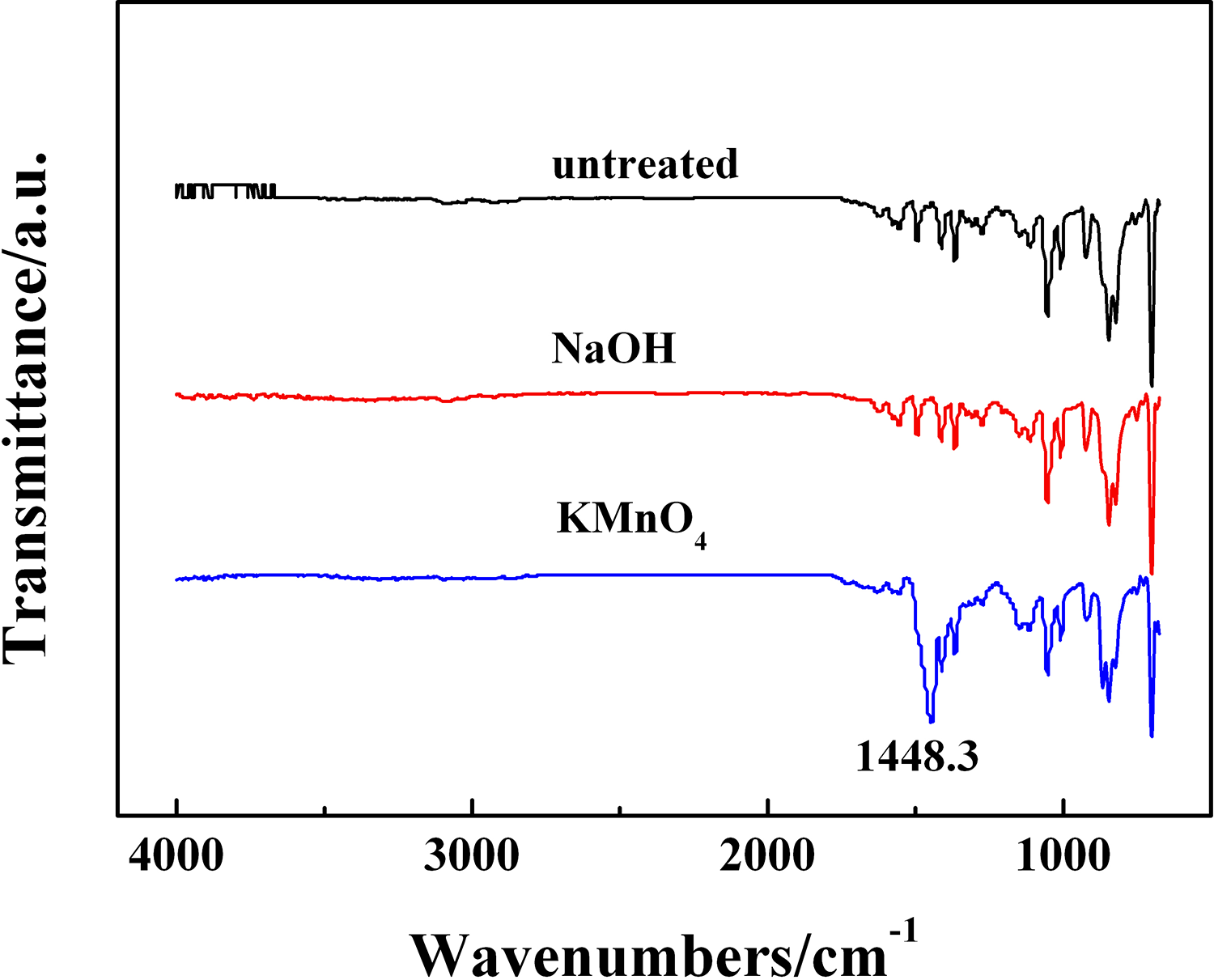
FTIR spectra of PBO fibers treated with NaOH and KMnO4. FTIR: Fourier-transform infrared; PBO: poly(p-phenylene benzobisoxazole); NaOH: sodium hydroxide; KMnO4: potassium permanganate.
Melting behavior
The DSC heating curves of PBO fibers are shown in Figure 6. As is known to us all, PBO fibers have excellent heat resistance and no change occurs in structure and performance at 400°C. However, limited by the test conditions, the temperature range used in this study is 20–400°C. In spite of this, it can be concluded that the effect of NaOH and KMnO4 treatment on the structure of PBO fiber is quite different. Compared with untreated PBO fibers, no significant change occurred in the melting curve of the fiber treated with NaOH, while melting peaks at low temperature (96.9°C, 137.3°C) appeared after treatment with KMnO4 solution. It shows that KMnO4 solution partially destroys the highly ordered structure of PBO fiber, which is consistent with the results from FTIR spectra.
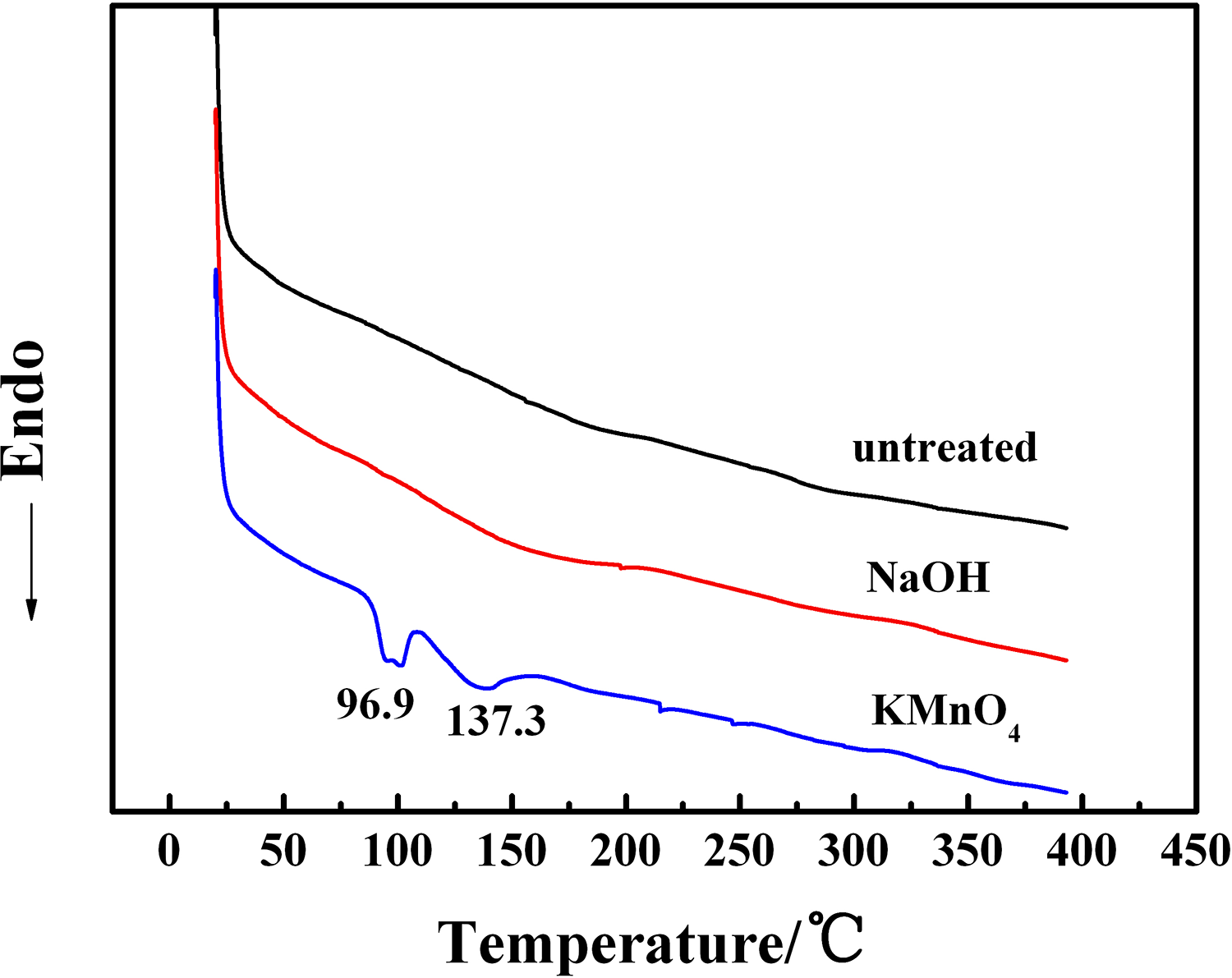
The DSC curves of PBO fibers in the heating process. DSC: differential scanning calorimetry; PBO: poly(p-phenylene benzobisoxazole).
Thermal degradation behavior
Figure 7 exhibits the TG curves of PBO fibers treated with NaOH and KMnO4. As is shown, a significant decrease is found in the initial degradation temperature (564.5°C) of PBO fibers treated with NaOH, compared with (608.5°C) for untreated fibers. However, after treatment with KMnO4, the initial degradation temperature rose to 651.9°C, and the remaining mass ascended from 3.52% to 22.83%. This may be due to the chemical cross-linking structure, confirmed by FTIR results, that is formed after treatment with KMnO4, which inhibits the thermal degradation of PBO fibers, leaving an increase in remaining mass.
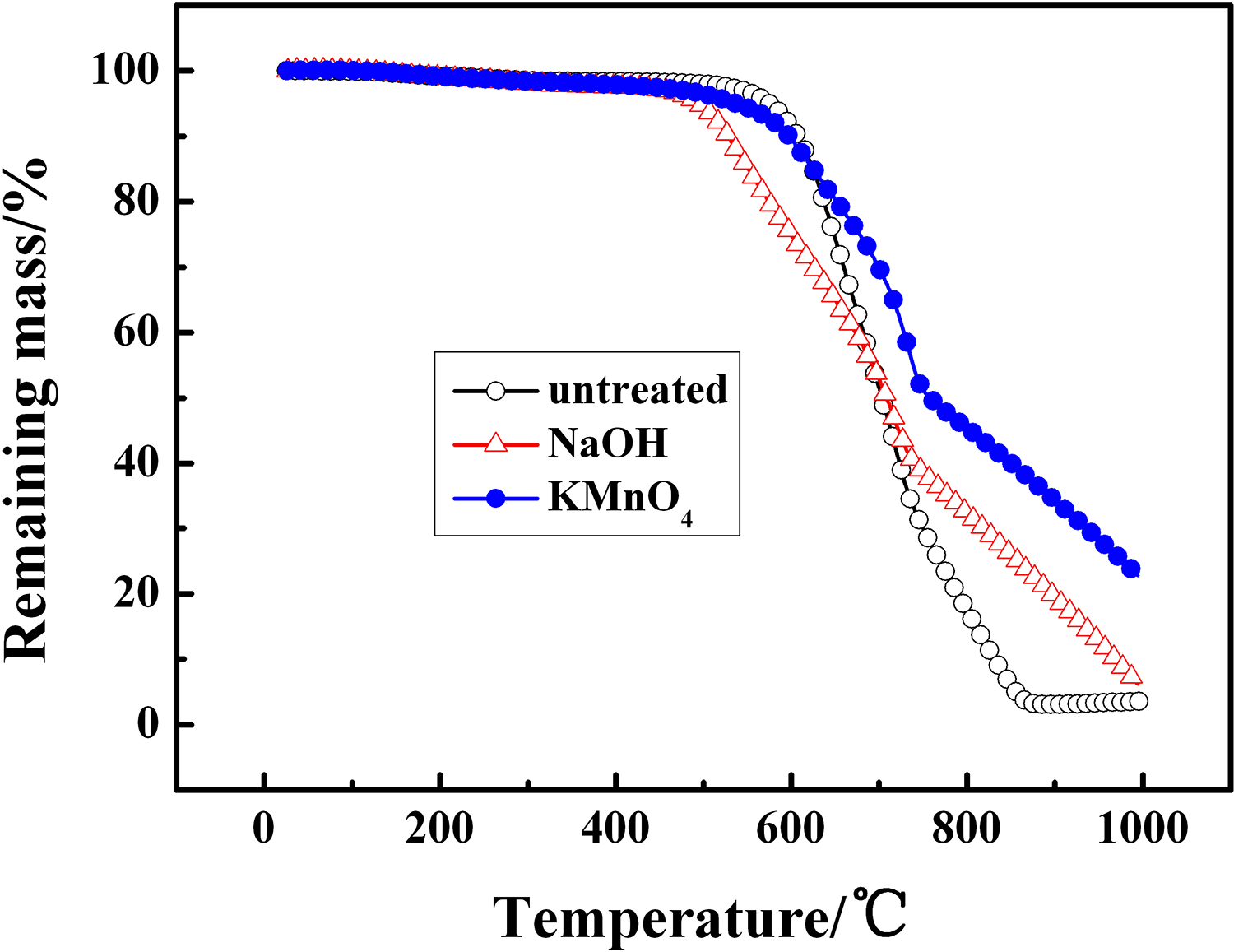
The TG curves of PBO fibers treated with NaOH and KMnO4. TG: thermogravimetric; PBO: poly(p-phenylene benzobisoxazole); NaOH: sodium hydroxide; KMnO4: potassium permanganate.
Conclusions
The PBO fiber, with many incomparable properties, is known as the super fiber of the 21st century. Chemical stability is an important key in the application of high-performance fiber. In this work, the chemical corrosion resistance of PBO fiber was evaluated after treatment with NaOH and KMnO4. After treated with NaOH, the surface of fibers showed slight cracks, while many deeper corrosion grooves appeared, even more serious corrosion fracture occurred after treatment with KMnO4, which is confirmed by OM and SEM results. The tensile test showed that the breaking tenacity of the fiber was almost lost after treatment with KMnO4 for 6 h, while it remained at a high level after treatment with NaOH for the same durations. After treatment with KMnO4, the oxazole ring in the PBO molecular structure may have undergone an opening reaction, as inferred from FTIR spectra. Furthermore, DSC results indicate that the KMnO4 solution destroyed the aggregation structure of the PBO fiber. Then, the increases of the remaining mass and initial degradation temperature, shown in TG curves, state clearly that a circular or cross-linking structure is rebuilt after treatment with KMnO4. Relatively, the resistance of the PBO fiber to NaOH is much stronger than its resistance to the KMnO4 solution.
Footnotes
Declaration of conflicting interests
The author(s) declared no potential conflicts of interest with respect to the research, authorship, and/or publication of this article.
Funding
The author(s) disclosed receipt of the following financial support for the research, authorship, and/or publication of this article: The authors gratefully acknowledge the financial support of the Key Research and Development Program of Shandong Province (Soft Science) (2019RKB01208), the Zibo City-Shandong University of Technology Cooperative Projects (2018ZBXC474), the innovation Guidance Fund of Yellow River Delta Research Institute (2018-7), the Open Project Program of Fujian Key Laboratory of Novel Functional Textile Fibers and Material, Minjiang University, China (no. FKLTFM1820), the Key Laboratory of Clean Dyeing and Finishing Technology of Zhejiang Province (1804), the Science and Technology Guidance Project of China National Textile and Apparel Council (2018005), the Open Fund of Provincial Key Laboratory of Eco-industrial Green Technolog, Wuyi University (WYKF2019-5), the Key Topics of Art Science in Shandong Province (ZH201906014), the Fujian Provincial Key Laboratory of Textiles Inspection Technology (Fujian Fiber Inspection Bureau) (2018-MXJ-02), the Zhejiang Provincial Top Key Academic Discipline of Chemical Engineering and Technology, the Zhejiang Sci-Tech University (YR2017006), and the Shandong Province Higher Educational Science and Technology Program (J17KB011).
