







Abstract
Liquid crystalline hyperbranched poly(aryl ester)s (A2B3) were prepared by polycondensation reaction of 2-(6-oxido-6H-dibenz<c,e><1,2>oxaphosphorin-6-yl)1,4-naphthalene diol with 1,3,5-benzenetricarbonyl trichloride, taken in two different molar ratios. The chemical structure of the newly synthesized hyperbranched polymers was confirmed by FTIR, 1H NMR, 13C NMR spectroscopy. The polymers exhibited high thermal stability with initial decomposition temperature above 410–435°C and char yield at 700°C higher than 40%. Combined differential scanning calorimetry, polarized optical microscopy and wide-angle X-ray diffraction measurements were carried out to closely examine their thermal behavior and phase transitions.
Keywords
Introduction
In the past decade, the field of arborescent macromolecular architectures (dendrimers, hyperbranched polymers) has been well established with a large variety of synthetic approaches, fundamental studies on structure and properties of these unique materials, and possible applications. 1 –4 The most prominent application fields of these classes of polymers emerged from the excellent encapsulating capability along with their excellent biocompatibility and biodegradability. Thus, in the recent years, hyperbranched polymers have been used as vehicle for drug delivery, 5 –7 protein delivery, 8 –10 gene transfection, 7,11 encapsulating agents of various inorganic nanoparticles to prepare antibacterial 12,13 and/or antifouling materials 14,15 or to design versatile nanoreactors for catalytic applications. 16
Dendrimers are perfectly branched spherical monodisperse macromolecules consisting of an inner core, assemble of molecular building blocks containing the repeating units, all enclosed in a shell ended with tunable terminal functionalities. Dendritic architectures have been prepared following complicated multistep synthetic procedures, either through divergent or convergent approaches, each of them having a sum of advantages and disadvantages, beside time consuming synthetic approach and high production cost.
17
–19
On the other hand, hyperbranched polymers can be prepared by facile and easier one-pot polymerization strategies, thus, they become promising candidates for industrial applications where ultimate perfection in structural uniformity is less needed, while retaining many of the important features of dendritic polymers, such as appreciable number of end groups, which facilitates further chemical modification, very good solubility, lower intrinsic viscosities in comparison with the linear analogues etc. Hyperbranched polymers are less regular in structure, with degree of branching (DB) typically not exceeding 50% of that of dendritic molecules. They can be generally prepared starting from
Aromatic polyesters are widely used for the production of new engineering materials for high technologies, due to their good thermal stability, chemical resistance, tough mechanical properties and relatively low dielectric constant.
33
With the increasing demand for polymers, the main concerns of polymeric materials still are their thermal resistance and fire behavior.
34
Several approaches have been attempted to modify these drawbacks, through the use of flame retardants. Most commercially available flame retardants consist in inorganic compounds or halogen based organic compounds. However, they have obvious disadvantages such as the potential to corrode metal components and, more importantly, the evolution of the toxic hydrogen halide gas during combustion. Among the halogen-free flame retardants, organophosphorus compounds exhibit high fire retardancy, and they were found to generate less toxic gases and smoke than the halogen ones. For instance, the incorporation of
As a rule, a high content of phosphorus in a polymer brings better fire performances, thus, current work aimed to prepare hyperbranched polyesters derived from A2 and B3 monomers, as a facile route to novel phosphorus-containing hyperbranched polyesters. The synthesis of hyperbranched polyesters that are derived from 2-(6-oxido-6H-dibenz<c,e><1,2>oxaphosphorin-6-yl)1,4-naphthalene diol (
Experimental part
Materials
Measurements
Melting points of the monomers and intermediates were measured on a Melt-Temp II (Laboratory Devices).
The molecular weight distributions were measured by Gel Permeation Chromatography (GPC) with a PL-EMD 950 evaporative mass detector equipped with 2 × PLgel 5 µm MIXED-C, D, 300 × 7.5 mm columns. Polystyrene standards of known molecular weight were used for calibration. The samples were eluted with DMF and the flow rate was 1 mL/min.
Fourier transform infrared (FTIR) spectroscopy was performed on a Bruker Vertex 70 at frequencies ranging from 400 to 4000 cm−1. Samples were mixed with KBr and pressed into pellets.
NMR spectra were obtained on a Bruker Advance DRX 400 spectrometer, equipped with a 5 mm, direct detection, multinuclear probe, operating at 400.1, 100.6 and 161.9 MHz for 1H, 13C nuclei, and 31P NMR, respectively. The polymer samples were dissolved in DMSO-d6 and then measured at room temperature. 1H and 13C chemical shifts (δ) are quoted in ppm relative to the residual peak of the solvent (ref. 1H: DMSO-d6 : 2.51 ppm, 13C: DMSO-d6 : 39.47 ppm).
Thermogravimetric analysis (TGA) was performed on 15 mg samples under air atmosphere at a heating rate of 10°C/min using a Mettler Toledo model TGA/SDTA 851 instrument. Pyrolysis residues were collected at various weight losses in the thermogravimetric experiments and were subsequently analyzed by FTIR spectroscopy. In these experiments, samples of about 15 mg were heated to a defined temperature, cooled to room temperature, transferred to Bruker Vertex 70 instrument and FTIR spectrum was recorded for each sample.
The differential scanning calorimetry (DSC) analysis was carried out using a Perkin-Elmer Pyris Diamond instrument using nitrogen as a carrier gas at a flow rate of 10 mL/min. The samples were first heated from room temperature to 350°C using a heating rate of 10°C/min, then cooled to 20°C at a cooling rate of 10°C/min. A second heating and a subsequent cooling were performed in the same conditions. The melting temperatures (Tm1 and Tm2) and the liquid crystalline phase transition temperatures of polymers were taken as maximum of endothermic peaks.
Polarized light microscopy (PLM) was carried out on an Olympus BH-2 polarized light microscope fitted with a THMS 600/HSF9I hot stage, at a magnification of 200× or 400×. The mesomorphic transition temperature and disappearance of birefringence, that is, the crystal-to-nematic (Tm) and nematic-to-isotropic (Ti) transition, were noted.
The wide-angle X-ray diffraction (WAXD) experiments at room temperature were performed on a D8 Advance Bruker AXS diffractometer using a CuKα source with an emission current of 36 mA and a voltage of 30 kV. Scans were collected over the 2θ = 2–40 range using a step size of 0.01° and a count time of 0.5 s/step.
Scanning electron microscopy (SEM) was performed on a TESLA BS 301 instrument, at 25 kV, with a magnification of 380–3600. Prior the measurements, samples were sputtercoated with a thin layer of golg using an EK 3135 EMITECH device.
Synthesis of 2-(6-oxido-6H-dibenz<c,e><1,2>oxaphosphorin-6-yl)1,4-naphthalene diol (DOPONQ)
2-(6-Oxido-6H-dibenz<c,e><1,2>oxaphosphorin-6-yl)1,4-naphthalene diol (
1H NMR (400.1 MHz, DMSO-d6 , ppm): δ = 10.74 (1H, s, OHb), 9.80 (1H, s, OHa), 8.41–7.38 (12 H, m, ArH), 6.59 (1H, d, J = 14.3 Hz) (Figure 3(a)).
13C NMR (100.6 MHz, DMSO-d6, ppm): δ = 152.6 (d, J = 4.1 Hz), 148.7 (d, J = 9.4 Hz), 145.7 (d, J = 17 Hz), 134.8 (d, J = 5.9 Hz), 133.7, 130.96, 130.71, 128.9, 128.7, 128.5, 126.1 (d, J = 93.7 Hz), 125.6, 125.3 (d, J = 13.6 Hz), 124.9, 124.0 (d, J = 9.4 Hz), 123.52, 122.8, 122.3, 120.8 (d, J = 10.2 Hz), 120.1 (d, J = 6.4 Hz), 105.9 (d, J = 11.2 Hz), 103.4 (d, J = 144.7 Hz) (Figure 3(b)).

Synthesis of the polymers P-1 and P-2
Two hyperbranched P-containing polyesters,
Results and discussion
Synthesis and structural characterization of P-1 and P-2
It is well known that reaction conditions, such as the monomer feed ratio, monomer addition manner, and concentration, strongly influence the polymerization process. The common products that result from polycondensation of A2 and B3 monomers are networks, while hyperbranched architectures are obtained only under highly restricted reaction condition. 30,54,55 Thus, it is essential to select suitable reaction conditions to avoid gelation. In our studies, THF was a suitable solvent for the oligomeric A2 and B3 copolymerization as both the starting materials, and the branched products were completely soluble in THF. The reactions were conducted at ambient temperature due to the high reactivity of acid chlorides. The order of monomer addition was necessary to maintain a homogeneous, gel-free solution, and this observation is consistent with earlier reports. 20
Novel polymers were synthesized with
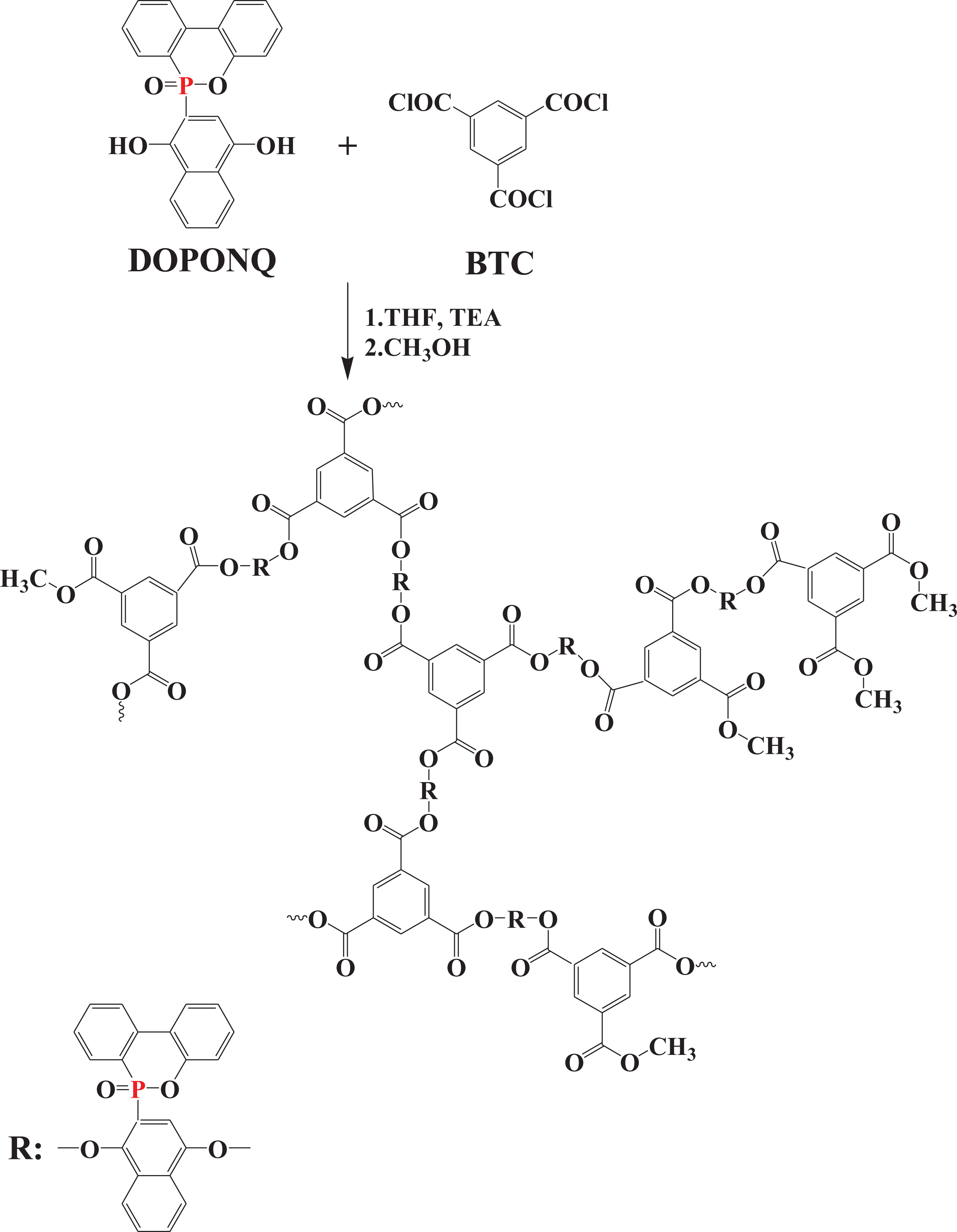
Synthesis of hyperbranched P-containing polyesters,
Composition of hyperbranched polymers

The solubility of these polyesters was tested in various solvents, by using 15 mg polymer/mL solvent, at room temperature. The resulting polymers were found to be soluble in common organic solvents such as THF, DMF, DMAc, NMP and DMSO. The good solubility can be explained by the presence of bulky, polar, and non-coplanar
GPC is one of the most widely used techniques for the determination of the molecular weight and polydispersity index (PDI) of the polymers (including hyperbranched polymers). The values of number average molecular weight (Mn
) were 5547 g/mol for
The structures of synthesized monomers and polymers were identified by FTIR and NMR spectroscopic techniques.
Figure 2 shows the FTIR spectrum of polymer
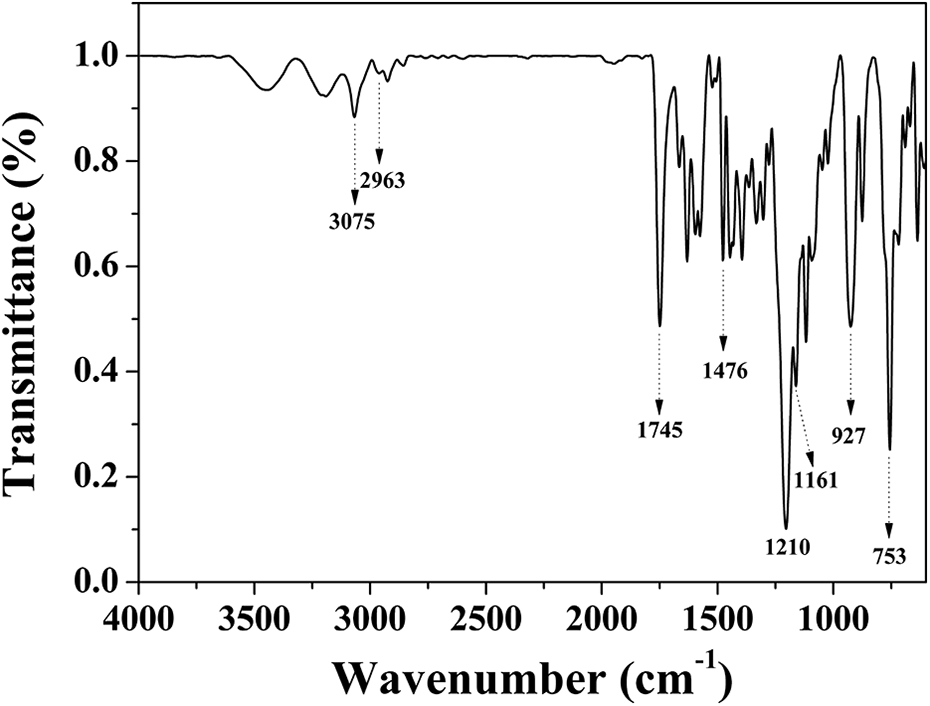
FTIR spectrum of polymer
The terminal acid chloride groups were reacted with methanol via in-situ functionalization to obtain methyl ester end groups, and the structural characterization of the final products was attempted using 1H-NMR spectroscopy. However, the analysis was not quantitative with respect to the concentration of end groups in the methyl ester terminated polyesters. The 1H-NMR and 13C-NMR spectra presented in the Figure 3(a) and (b) reveal the structural confirmation of the monomer
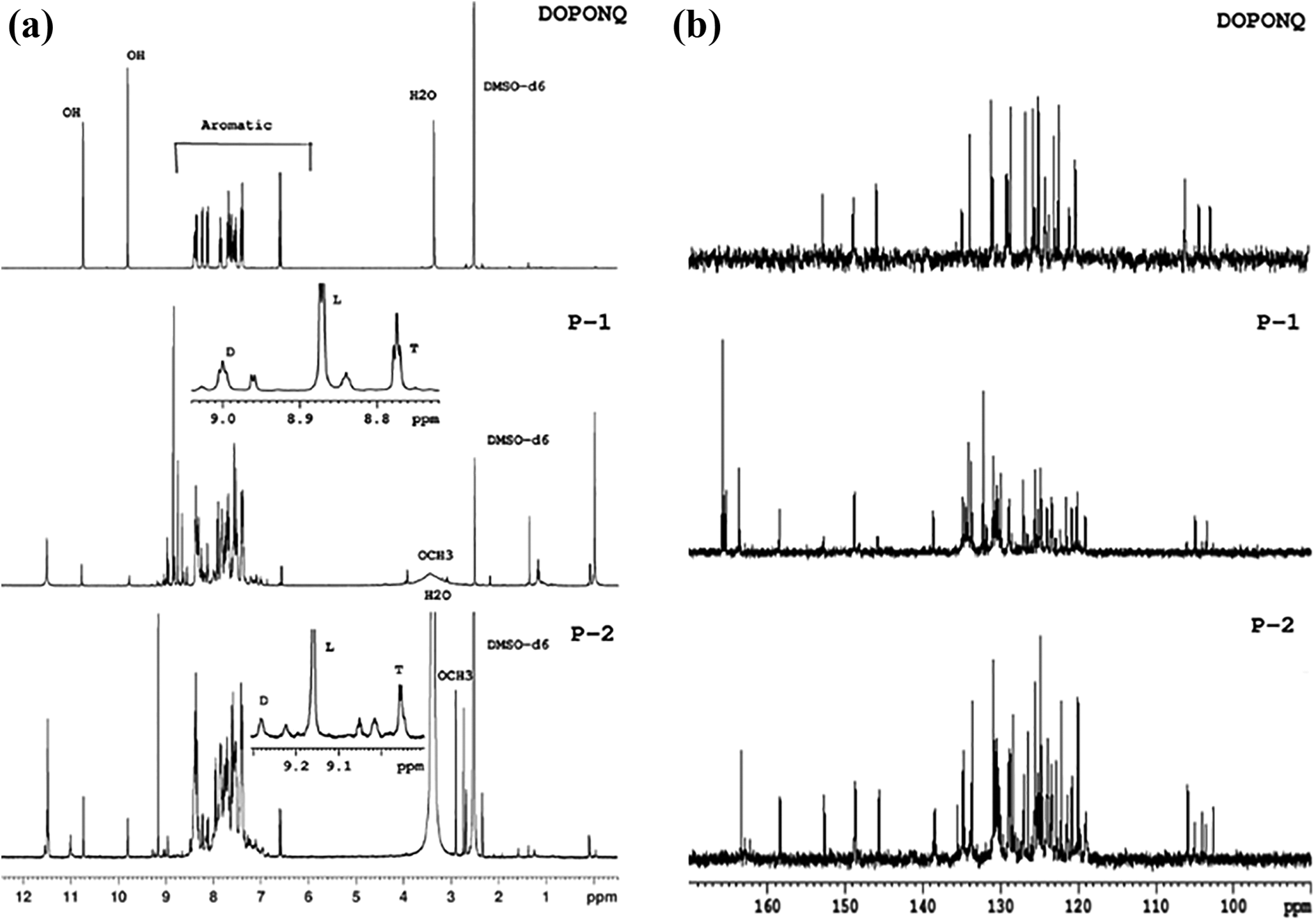
1H NMR (a) and 13C NMR (b) spectra of
In the 13C-NMR spectra of the polymers
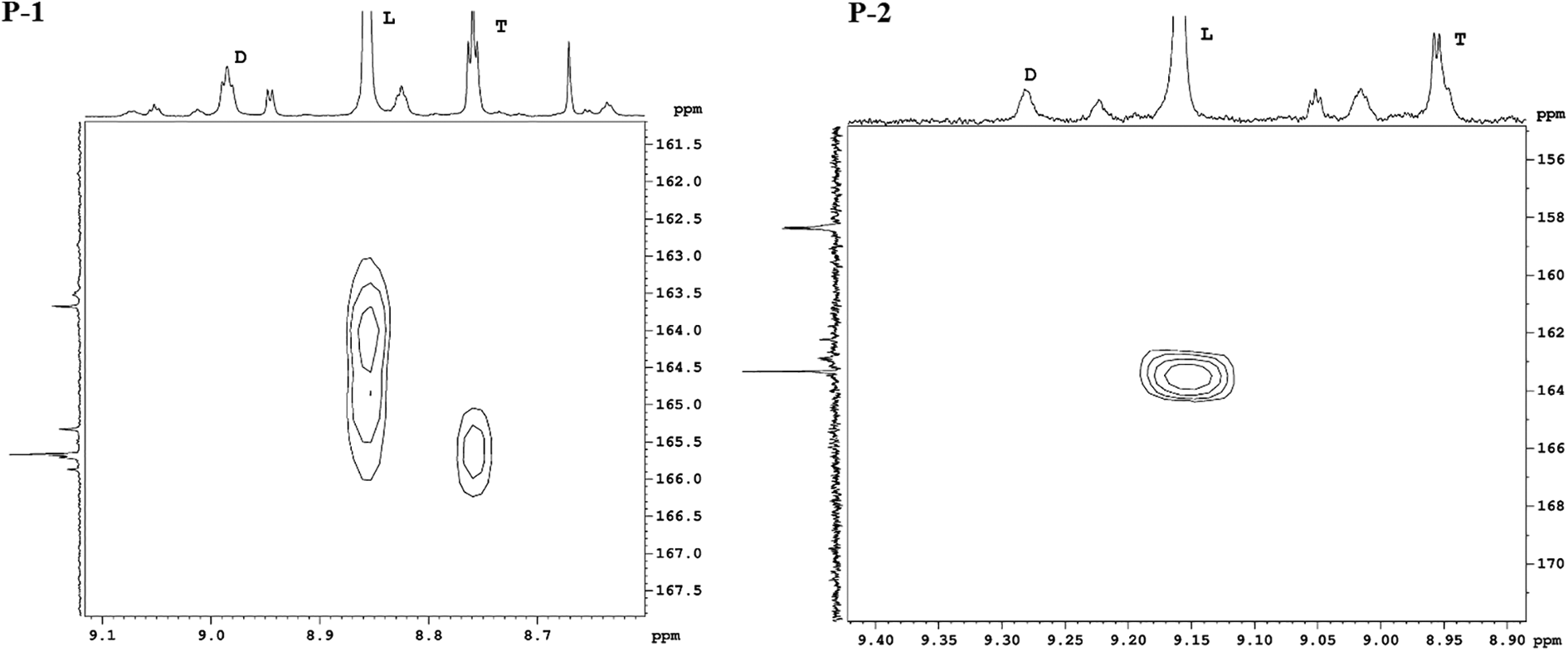
Coupled HMBC spectra of
The presence of phosphorus was also confirmed by 31P NMR. The 31P NMR spectra of
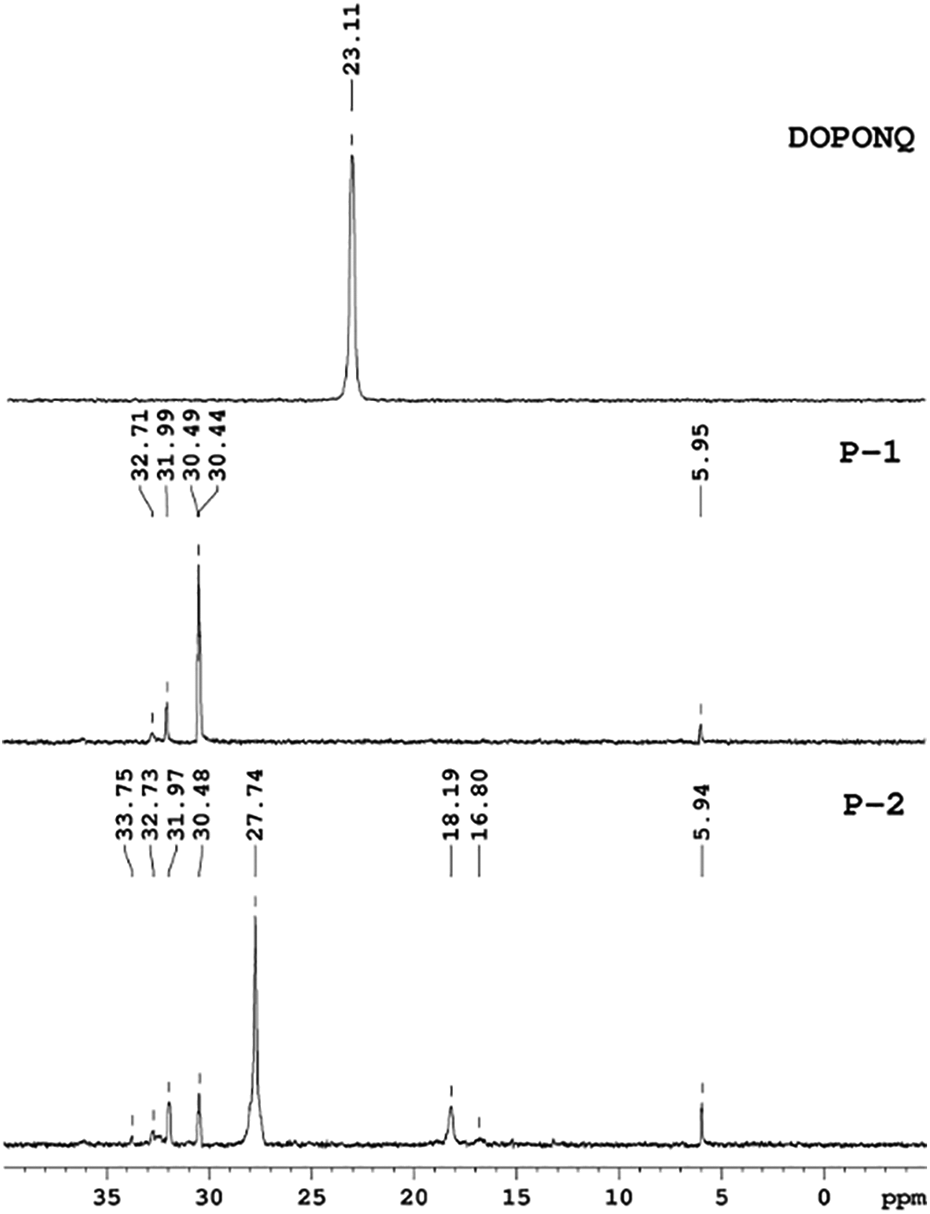
31P NMR spectra for the
The most important parameter for hyperbranched polymers is considered to be the degree of branching (DB). Several equations, were developed to define the structure of hyperbranched polymers based on the self-condensation of AB2 monomers. 1,57 In most cases, these equations are also applicable to the products of A2 and B3 polymerization. The degree of branching based on BTC units was calculated according to the Fréchet definition, 57 using the following equation.

where Dunits, Lunits and Tunits, are the intensities of dendritic, linear, and terminal unit proton resonances in the NMR spectrum. In the present study, the chemical structures of the products were intermediate between linear and highly branched topologies since the A2 oligomers have a relatively high molar mass. The Fréchet definition accurately describes the branching structures only when each oligomer between the branch points was considered as a single repeat unit. The degree of branching was calculated from the 1H-NMR spectra of
Thermal analyses
Thermogravimetric analysis: FTIR correlation studies
The thermal stability of the polymers was investigated by TGA in air at a heating rate of 10°C/min and the values for 5% weight loss (IDT) and 10% weight loss are summarized in Table 2. Figure 6 presents the TGA curves of the polymers
Thermal properties of polymers.

Tg: glass transition temperature; Tc,h: crystallization temperature during heating; Tm: melting temperature; IDT: initial decomposition temperature = the temperature of 5% weight loss; T10: temperature of 10% weight loss; Tmax1: first maximum polymer decomposition temperature; Tmax2: second maximum polymer decomposition temperature.
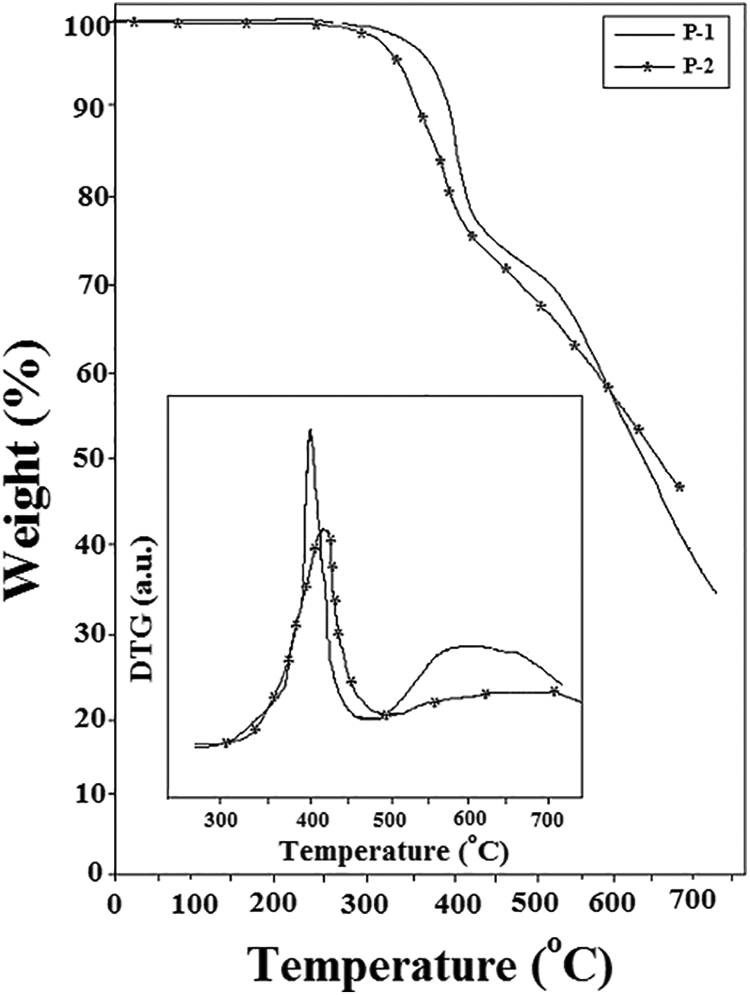
TG and DTG curves of polymers
The polymers exhibited two steps of degradation having the maximum polymer decomposition temperature in the range of 410–435°C (Tmax1 ) and 600–645°C (Tmax2 ), respectively. The char yields at 700°C were in the range of 40.8–53.6%. Char yield can be applied as a decisive factor for estimating limiting oxygen index (LOI) of the polymers based on van Krevelen and Hoftyzer equation. 62

where CR is the char yield. The calculated LOI values of
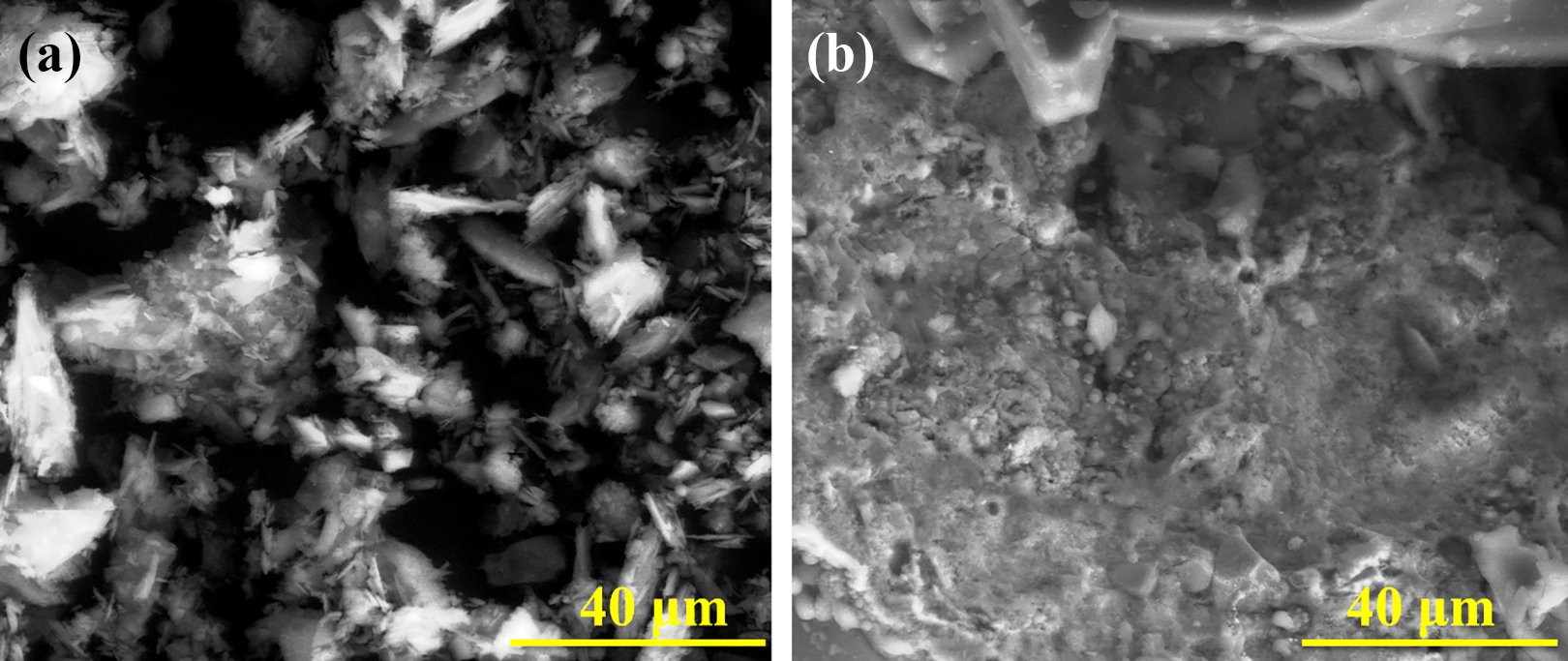
SEM investigation of the
In order to comprehensively elucidate the mechanism of thermal decomposition and fire retardancy, combined FTIR-TGA and SEM-TGA studies were carried out. FTIR investigation of the solid residue of polymer
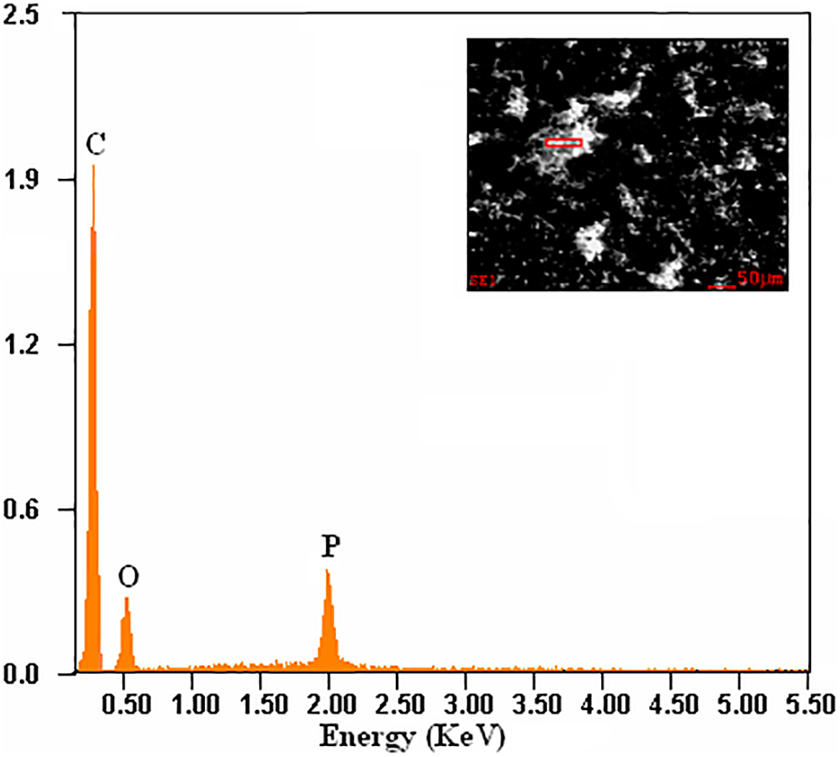
EDX spectra and SEM micrograph (inset) of the as synthesized polymer
Thermal analyses: Thermal transitions
The thermal and mesomorphic properties of polymers were studied with DSC and polarized optical microscopy (POM). DSC measurements were conducted at a heating and cooling rate of 10°C/min, and the thermograms are shown in Figure 9. The Tg
values of
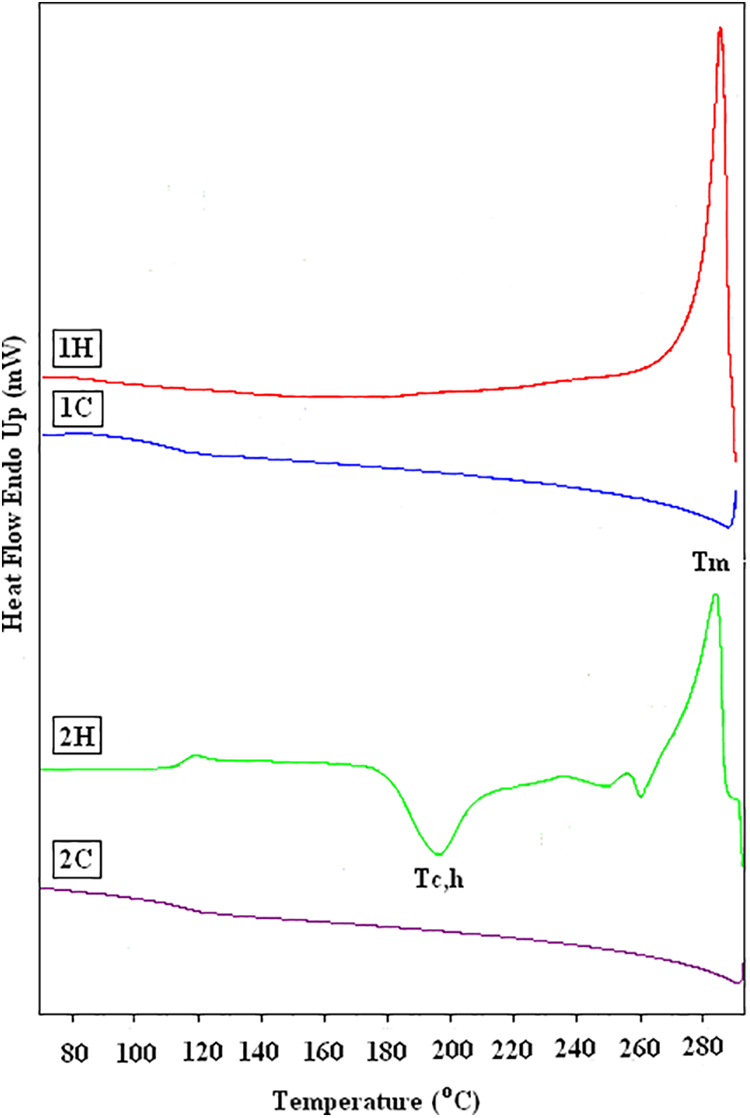
DSC thermogram of polymer
Thermal analyses: Texture analysis
Polarized light microscopy (PLM) was used to identify the liquid crystalline phases and to complement the phase transitions observed by DSC. Optical micrographs of different textures are shown in Figure 10. A suitable amount of sample of each polymer was placed between two clean glass plates. The sample was heated to clearing point, which is considered as the liquid crystalline-to-isotropic state transition. Typical nematic mesophase of hyperbranched polymer
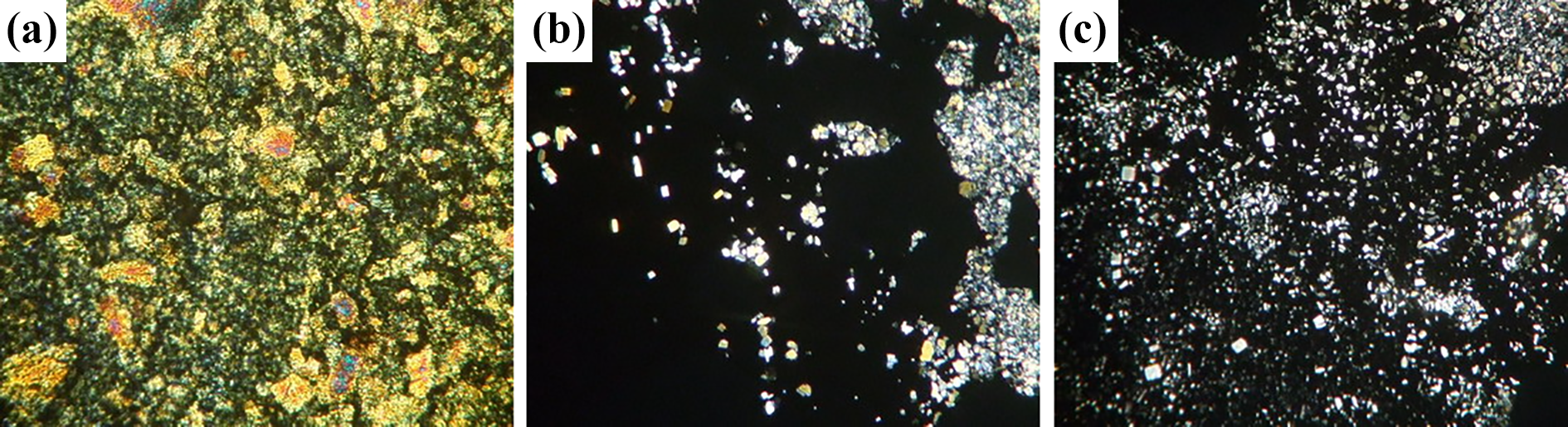
Photomicrographs of polymer
X-ray diffraction
To further elucidate the structure of the mesophases, X-ray diffraction measurements of the polymers were carried out. Figure 11 shows the WAXD pattern of the polymers
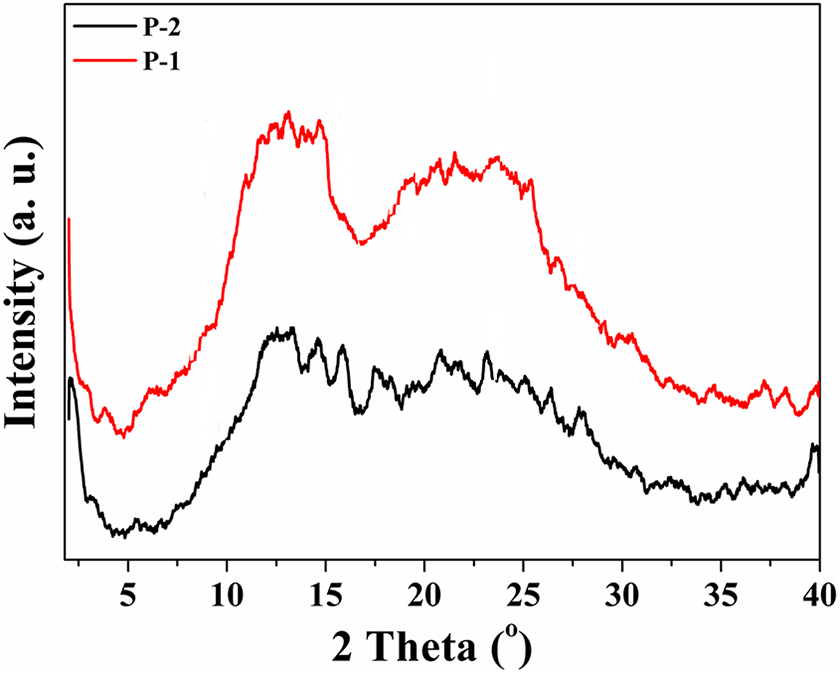
X-ray diffraction pattern of the polymers
Conclusions
Two hyperbranched P-containing polyesters with different degree of branching were prepared via the addition of a dilute solution of
Footnotes
Acknowledgements
The authors gratefully acknowledges to the financial support of CNCSIS–UEFISCSU, Project Number PN-II-RU-TE-0123 nr. 28/29.04.2013 and to the financial support of this research through the Project “Partnerships for knowledge transfer in the field of polymer materials used in biomedical engineering” IDP_40_443, Contract no. 86/8.09.2016, SMIS 105689, co-financed by the European Regional Development Fund by the Competitiveness Operational Programme 2014-2020, Axis 1Research, Technological Development and Innovation in support of economic competitiveness and business development, Action 1.2.3 Knowledge Transfer Partnerships.
Declaration of conflicting interests
The author(s) declared no potential conflicts of interest with respect to the research, authorship, and/or publication of this article.
Funding
The author(s) received no financial support for the research, authorship, and/or publication of this article.
