







Abstract
In this paper, π-conjugated copolymers, namely N-hexylphenothiazine/cyanopyridine/phenyl/benzothiadiazole, N-hexylphenothiazine/cyanopyridine/phenyl/9,9-dihexylfluorene, and N-hexylphenothiazine/cyanopyridine/phenyl/9,9-diethylhexylfluorene were readily synthesized via Pd-catalyzed Suzuki cross-coupling reaction. The polymer structures and their photophysical properties were characterized by elemental analysis, 1H NMR, GPC, TGA, XRD, UV-vis absorption and PL spectroscopy measurements. The coupling agent effect on photophysical properties of copolymers was investigated to rationally design polymers with particular physical properties to be employed in optoelectronic devices. The UV-vis absorption spectroscopy of copolymers showed λmax at a range of ∼334–474 nm and red-shifted in their films to a range of ∼342–381 nm. These copolymers displayed highly intense fluorescence in their solutions and films. The PL spectra of copolymers indicated red and near-infrared light, rendering them a prospect for being red and near-infrared light-emitting materials for PLEDs. XRD analysis demonstrated a d-spacing range of ∼3.79–4.32 Å, reflecting π-π stacking and some degree of crystallinity in some polymers, and only
Keywords
Introduction
The ever-increasing demand for clean energy makes it highly significant to develop new technologies to increase renewable energy sources.1–3 In this regard, organic semiconductors are impressive materials to be recognized for their prospective applications in optoelectronic devices.4–6 In particular, π-conjugated polymers have attracted considerable interest due to their simple processing, low operating voltages, quick response times, and color tuning over the entire UV-vis range, making this kind of polymers ideally suited for a wide range of optoelectronic devices.7–16 Thus, design and synthesis of new conjugated polymers with various optoelectronic properties hold great promise in display technology area.17–19
Selecting electron-donating (donor;
In the past years, fluorene-based conjugated polymers attracted great interest as very auspicious candidates for blue light-emitting diodes because of their very pure blue and efficient luminescence combined with rising thermal and chemical stability, high mobility, hole-transporting properties and upward film-forming capability.33–36 Benzothiadiazole has been featured as an outstanding electron-deficient acceptor core for synthesizing
Besides, pyridine acts as a powerful electron-withdrawing moiety with excellent electron-transporting properties, and localization of lone pair of sp 2 orbital electrons of nitrogen atom rendered it with outstanding optical properties.40–44 Moreover, decreasing the band gap facilitates higher open-circuit voltage due to presence of cyano substituent group as an efficient electron-withdrawing in polymer repeating units, reducing both HOMO and LUMO energy levels.41,45,46 However, a decline position of the lowest unoccupied molecular orbital reduces environmental oxidation of polymer, leading to stable polymers.47,48 As a result of their controlled spectroscopic, electrochemical and thermal stability and a good charge transporting ability, thiophene and/or benzene have been previously utilized effectively in the polymer backbone.49,50
Due to their small ionization potential, phenothiazine derivatives were used as stronger electron-donating species and can produce high stable radical cations. They are also characterized by high electrical and thermal stability, with high excellent electro-optical characteristics in devices.51–53 Phenothiazine was used as electron donor, with benzothiadiazole, possessing a robust electron affinity as electron acceptor, and thiophene with rich electrons linked to each end to increase π-conjugation efficiency. This provides a design of a basic molecular structure, affording a low band gap polymer. 54
Based on previous findings and our interest in synthesizing π-conjugated organic and polymeric materials for optoelectronic applications,55–60 we introduced a straightforward synthetic design to prepare a set of π-conjugated copolymers based on
Experimental
Reagents and materials
All manipulations and reactions involving air-sensitive reagents were conducted under a dry oxygen-free nitrogen atmosphere unless otherwise stated. All reagents and solvents were obtained from commercial sources and dried using standard procedures before use. 4-Bromoacetophenone, 4,7-diboronic ester-2,1,3-benzothiadiazole, 9,9-dihexylfluorene-2,7-bis(trimethyleneborate) and 9,9-diethylhexylfluorene-2,7-bis(trimethyleneborate) were purchased from Sigma-Aldrich Company and used without any further purification.
Instrumentation and methods
1H and 13C-NMR spectra were measured on a Brucker spectrometer (400 MHz for 1H and 100 MHz for 13C) in CDCl3 or DMSO-d6 at 25°C with TMS as internal standard. Chemical shifts were recorded in ppm units, and coupling constants (J) are given in Hz. All reactions were monitored by TLC until completion, and all products were purified by flash column chromatography with Merck silica gel 60 (particle size 60–120 mesh ASTM) and UV-254 fluorescent indicators. The thermal degradation temperature was measured using Shimadzu thermogravimetric analyzer TGA-50 under nitrogen atmosphere with a heating rate of 20°C/min. The XRD measurements were performed on a polymer thin film (20 mg/mL) using PHILIPS X’Pert diffractometer. The gel permeation chromatography (GPC) analysis was conducted with a Shimadzu (LC-20A Prominence Series) instrument using THF as a carrier solvent (flow rate: 1 mL/min, at 35°C), and calibration curves were made with standard polystyrene samples. Steady-state electronic absorption spectra were recorded on JASCO double-beam UV-vis-IR scanning spectrophotometer (UV-780). Fluorescence emission spectra of polymer solutions were recorded using fluorescence spectrofluorimeter JASCO FP-8300, while fluorescence spectra of films were recorded on Kimmon Koha IK Series He-Cd Laser (320 nm).
Synthesis of 10-hexyl-10H-phenothiazine (2 )
To a mixture of phenothiazine (
1H NMR (CDCl3, 400 MHz, δ/ppm): 7.04–7.08 (m, 4H), 6.83 (t, 2H, J = 6.1 Hz), 6.77 (d, 2H, J = 7.9 Hz), 3.73 (t, 2H, J = 7.2 Hz), 1.69–1.75 (m, 2H), 1.32–1.38 (m, 2H), 1.21–1.25 (m, 4H), 0.84 (t, 3H, J = 6.9 Hz). 13C NMR (CDCl3, 100 MHz, δ/ppm): 145.2, 127.2, 127.0, 124.8, 122.1, 115.2, 47.2, 31.3, 26.7, 26.5, 22.5, and 13.9. C18H21NS (283.43): calcd. C 76.28, H 7.47, N 4.94, S 11.31; found C 76.55, H 7.34, N 4.89, S 11.23.
Synthesis of 10-hexyl-10H-phenothiazine-3-carbaldehyde (3 )
A volume of POCl3 (7.15 mL) was added dropwise under stirring to an ice-cooled flask containing DMF (11.4 mL), followed by stirring at room temperature for 90 min. The reaction mixture was cooled in an ice-cold bath, and 10-hexyl-10H-phenothiazine
1H NMR (400 MHz, CDCl3): δ = 9.78 (s, 1H, –CHO), 7.63 (d, J = 2 Hz, 2H), 7.56 (s, 1H), 7.19 (t, 1H), 7.11 (d, 2 Hz, 1H), 6.98 (t, 1H), 6.94 (t, 1H), 6.87 (d, 2H), 3.85 (t, 2H, –CH2–N), 1.82–1.76 (m, 2H), 1.43–1.40 (m, 2H), 1.30–1.28 (m, 4H), 0.86 (t, 3H) ppm. 13C NMR (CDCl3, 100 MHz, δ/ppm): 13.97, 22.57, 26.51, 26.74, 31.38, 48.02, 114.79, 115.96, 123.56, 123.79, 125.01, 127.55, 128.34, 130.08, 131.04, 143.43, 150.72, and 189.98. C19H21NOS (311.44): calcd. C 73.27, H 6.80, N 4.50, O 5.14, S 10.29; found C 73.35, H 6.92, N 4.40, S 10.09.
Synthesis of 6-(4-bromophenyl)-4-(10-hexyl-10H-phenothiazin-3-yl)-2-hydroxy-nicotinonitrile (5 )
A mixture of 10-alkyl-10H-phenothiazine-3-carbaldehyde (
1H NMR (400 MHz, CDCl3): δ = 12,73 (s, 1H, –OH), 7.83 (d, 2H), 7.70 (d, J = 2,2 Hz, 2H), 7.59 (d, 1H), 7.52 (s, 1H), 7.15 (s, 1H), 7.23 (t, 1H), 7.15 (d, J = 2 Hz, 1H), 7.12 (d, J = 2.4 Hz, 1H), 7.04 (d, J = 2.1 Hz, 1H), 6.99 (t, 1H), 6.85 (s, 1H), 3.87 (t, 2H), 1.7–1.23 (m, 6H), 0.85 (t, 3H) ppm. 13C NMR (CDCl3, 100 MHz, δ/ppm), 14.26, 22.50, 26.23, 26.59, 31.26, 47.12, 106.70, 115.84, 116.61, 117.15, 123.21, 123.56, 124.16, 125.31, 127.32, 127.69, 128.34, 128.61, 129.90, 130.22, 132.27, 144.14, 147.31, 150.60, 158.52, and 162.71. C30H26BrN3OS (556.52): calcd. C 64.75, H 4.71, Br 14.36, N 7.55, O 2.87, S 5.76; found C 64.70, H 4.88, Br 14.25, N 7.52, S 5.70.
Synthesis of 6-(4-bromophenyl)-4-(10-hexyl-10H-phenothiazin-3-yl)-2-(hexyloxy)nicotinonitrile (6 )
To a solution of 6-(4-bromophenyl)-4-(10-hexyl-10H-phenothiazin-3-yl)-2-(hexyloxy) nicotinonitrile (
1H NMR (400 MHz, CDCl3): δ = 7.86 (d, J = 2.2 Hz, 2H), 7.55 (d, J = 2.2 Hz, 2H), 7.44 (d, J = 2.2 Hz, 2H), 7.27 (s, 1H), 7.17 (s, 1H), 7.08 (t, 2H), 6.86 (d, J = 5 Hz, 2H), 4.5 (t, 2H), 3.8 (t, 2H), 1.8–1.4 (m, 12H), 1.37–1.28 (t, 6H) ppm. 13C NMR (CDCl3, 100 MHz, δ/ppm): 13.99, 14.05, 22.59, 22.61, 25.68, 26.65, 26.84, 28.77, 29.71, 31.45, 31.57, 31.74, 47.76, 67.68, 92.79, 112.54, 115.25, 115.56, 115.69, 123.01, 123.96, 124.96, 125.25, 125.52, 126.93, 127.50, 127.72, 128.78, 128.88, 130.04, 132.04, 132.15, 136.42, 144.22, 146.98, 155.45, 156.60, and 165.09. C36H38BrN3OS (640.68): calcd. C 67.49, H 5.98, Br 12.47, N 6.56, O 2.50, S 5.00; found C 67.45, H 5.92, Br 12.55, N 6.48, S 5.05.
Synthesis of 4-(7-bromo-10-hexyl-10H-phenothiazin-3-yl)-6-(4-bromophenyl)-2-hydroxynicotinonitrile (7 )
To an ice-cold stirred solution of 6-(4-bromophenyl)-4-(10-hexyl-10H-phenothiazin-3-yl)-2-(hexyloxy) nicotinonitrile (
1H NMR (400 MHz, CDCl3): δ = 7.87 (d, 2H, J = 2), 7.55 (d, 2H, J = 2), 7,43 (s, 1H), 7.27 (d, 2H, J = 2.2), 7.18 (d, 2H, J = 2.8), 6.62 (s, 1H), 6.85 (s, 1H), 4.49 (t, 2H), 3.87 (t, 2H), 1.8–1.5 (m, 12H), 1.4–1.29 (t, 6H) ppm. 13C NMR (CDCl3, 100 MHz, δ/ppm): 13.99, 14.05, 22.60, 23.00, 25.68, 26.57, 28.77, 28.95, 29.71, 30.39, 31.42, 31.57, 38.76, 67.72, 68.17, 92.90, 112.61, 115.50, 116.82, 125.02, 126.91, 127.93, 128.79, 130.16, 130.88, 132.06, 136.34, 155.13, 156.66, and 165.06. C38H40Br2N2 (700.56): calcd. C 65.15, H 5.76, Br 22.81, N 4.00, O 2.28; found C 65.22, H 5.71, Br 22.77, N 3.92.
Suzuki cross-coupling polymerization (typical procedure for the synthesis of copolymers P1 )
Into a highly dried three-necked round-bottomed flask, equimolar amounts of 4-(7-bromo-10-hexyl-10H-phenothiazin-3-yl)-6-(4-bromophenyl)-2-hydroxynicotinonitrile (
Polymerization results of copolymers
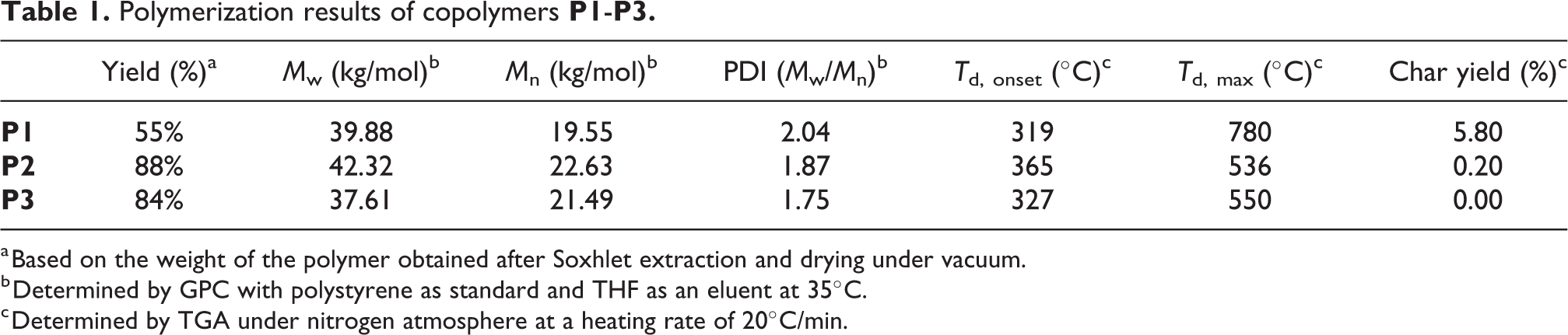
a Based on the weight of the polymer obtained after Soxhlet extraction and drying under vacuum.
b Determined by GPC with polystyrene as standard and THF as an eluent at 35°C.
c Determined by TGA under nitrogen atmosphere at a heating rate of 20°C/min.
Poly 6-(4-(benzo[c][1,2,5]thiadiazol-4-yl)phenyl)-4-(10-hexyl-10H-phenothiazin-3-yl)-2-hydroxynicotinonitrile (P1 )
1H NMR (400 MHz, CDCl3): δ = 8.39–8.18 (br, 2H), 8.10–8.08 (br, 2H), 8.04–7.98 (br, 2H), 7.86–7.84 (br, 1H), 7.58–7.52 (br, 2H), 7.46–7.25 (br, 2H), 7.18–6.62 (br, 2H), 4.52–4.47 (br, 2H, OCH2), 3.83–3.75 (br, 2H, NCH2), 1.80–1.73 (br, 4H), 1.44–1.17 (br, 12H), 0.83–0.82 (br, 6H, 2 × CH3) ppm. C42H39N5OS2 (693.93): calcd. C 72.70, H 5.67, N 10.09, O 2.31, S 9.24; found C 72.84, H 5.69, N 10.01, S 9.11.
Poly 6-(4-(9,9-dihexyl-9H-fluoren-2-yl)phenyl)-4-(10-hexyl-10H-phenothiazin-3-yl)-2-(hexyloxy)nicotinonitrile (P2 )
1H NMR (400 MHz, CDCl3): δ = 8.12 (br, 4H), 7.73 (br, 6H), 7.56 (br, 4H), 7.40–7.38 (br, 2H), 6.90–6.82 (br, 1H), 4.54 (br, 4H, OCH2 + NCH2), 1.98 (br, 4H), 1.84 (br, 4H), 1.47 (br, 4H), 1.31–1.18 (br, 8H), 1.06 (m, 10H), 0.85–0.84 (m, 6H), 0.68 (m, 12H, 4 × CH3) ppm. C61H69N3OS2 (892.30): calcd. C 82.11, H 7.79, N 4.71, O 1.79, S 3.59; found C 82.35, H 7.88, N 4.57, S 3.53.
Poly 6-(4-(9,9-diethyl hexyl-9H-fluoren-2-yl)phenyl)-4-(10-hexyl-10H-phenothiazin-3-yl)-2-(hexyloxy)nicotinonitrile (P3 )
1H NMR (400 MHz, CDCl3): δ = 8.24 (br, 1H), 8.11 (br, 2H), 7.84–7.82 (m, 1H), 7.75–7.64 (m, 4H), 7.58–7.47 (m, 2H), 7.39–7.24 (m, 4H), 7.07–7.05 (m, 1H), 6.88 (m, 2H), 4.54 (s, 2H, OCH2), 3.92–3.86 (br, 2H, N–CH2), 2.01–2.00 (br, 8H), 1.84–1.83 (br, 6H), 1.47–1.46 (br, 4H), 1.31 (br, 6H), 0.85–0.80 (m, 14H), 0.57–0.47 (m, 18H, 6 × CH3) ppm. C65H79N3OS (950.43): calcd. C 82.14, H 8.38, N 4.42, O 1.68, S 3.37; found C 82.27, H 8.44, N 4.38, S 3.30.
Results and discussion
Synthesis of monomers and copolymers
Figure 1 describes the synthetic pathways for the main comonomer
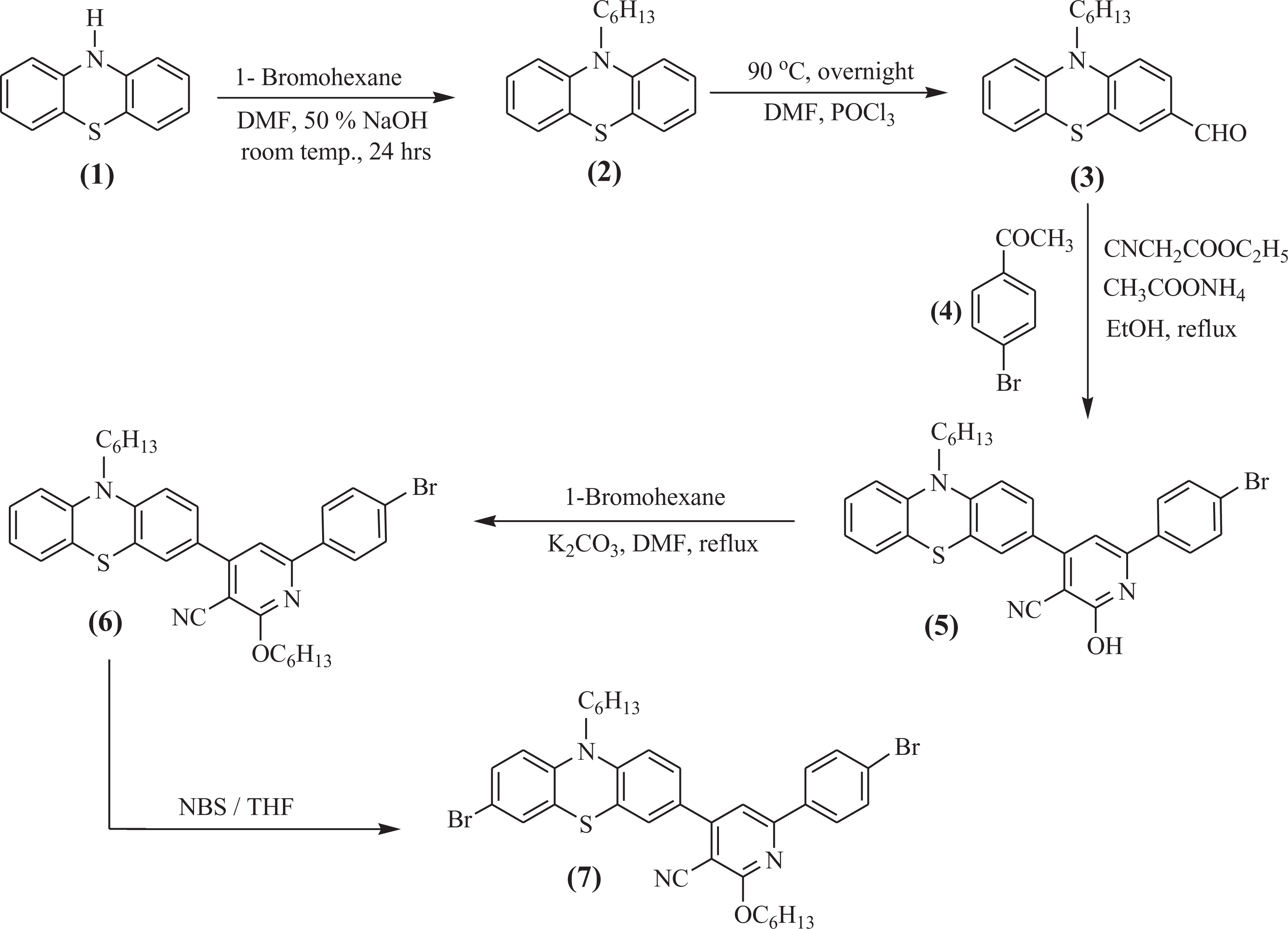
Synthetic pathway of comonomer (
The reaction of 6-(4-bromophenyl)-4-(10-hexyl-10H-phenothiazin-3-yl)-2-hydroxynicotinonitrile (
Comonomer
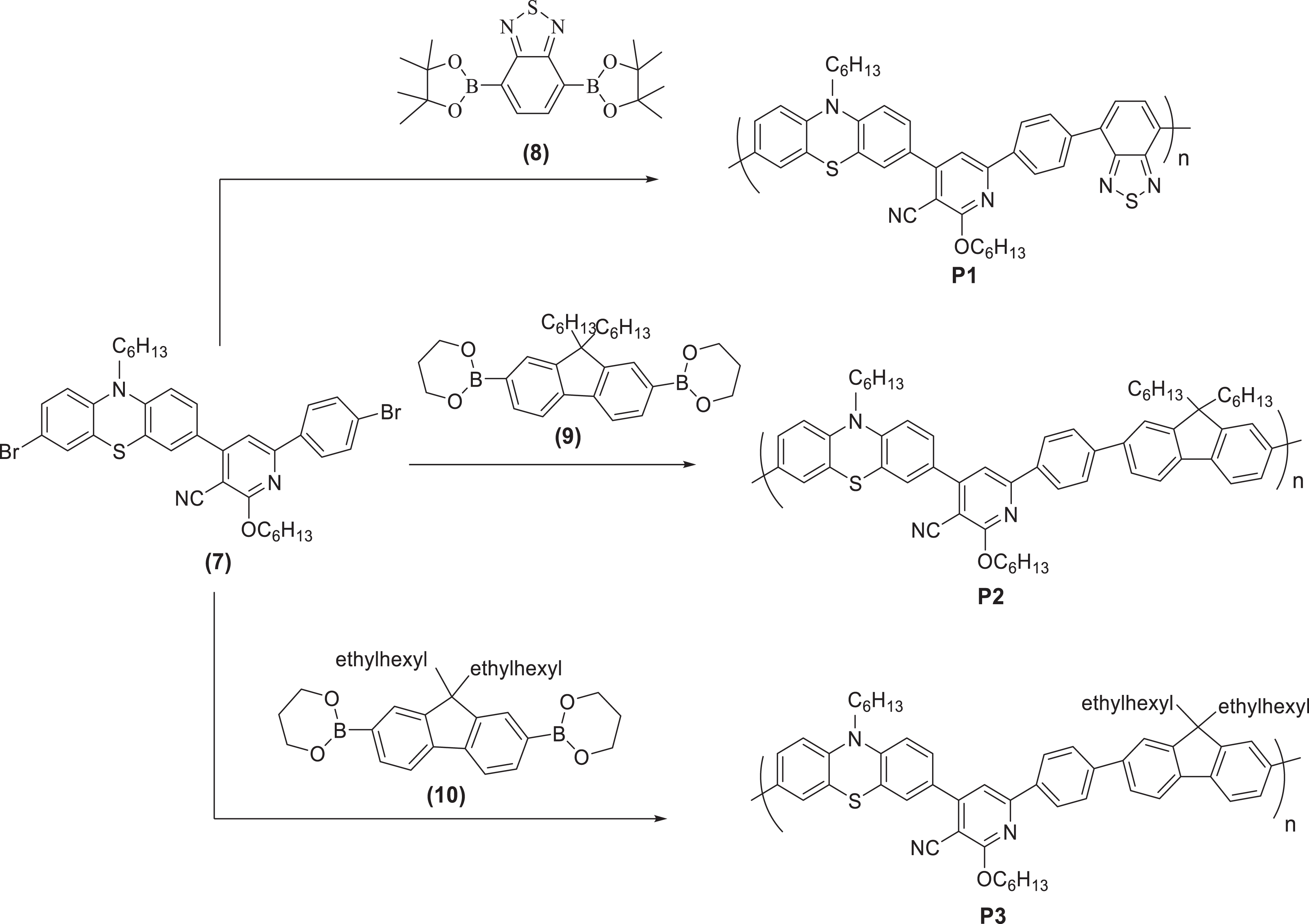
Synthetic pathways of copolymers
Copolymer
After precipitation in methyl alcohol, the crude copolymers were filtered off and washed extensively with methanol, followed by sequential Soxhlet extractions with methanol and acetone to remove any catalyst residues, byproducts and oligomers. Analyzing the refined copolymers showed that palladium catalyst was removed completely. The final polymers were dried under vacuum for at least 24 h and were then subjected to demanded analysis. All copolymers exhibited excellent solubilities (>5 mg mL−1) at room temperature in most common organic solvents such as THF, chloroform, toluene, xylene, and chlorobenzene. The chemical yields, number average molecular weights (Mn) as well as molecular weight distributions (PDI) of the resulting copolymers
Thermogravimetric analysis (TGA)
The thermal properties of copolymers
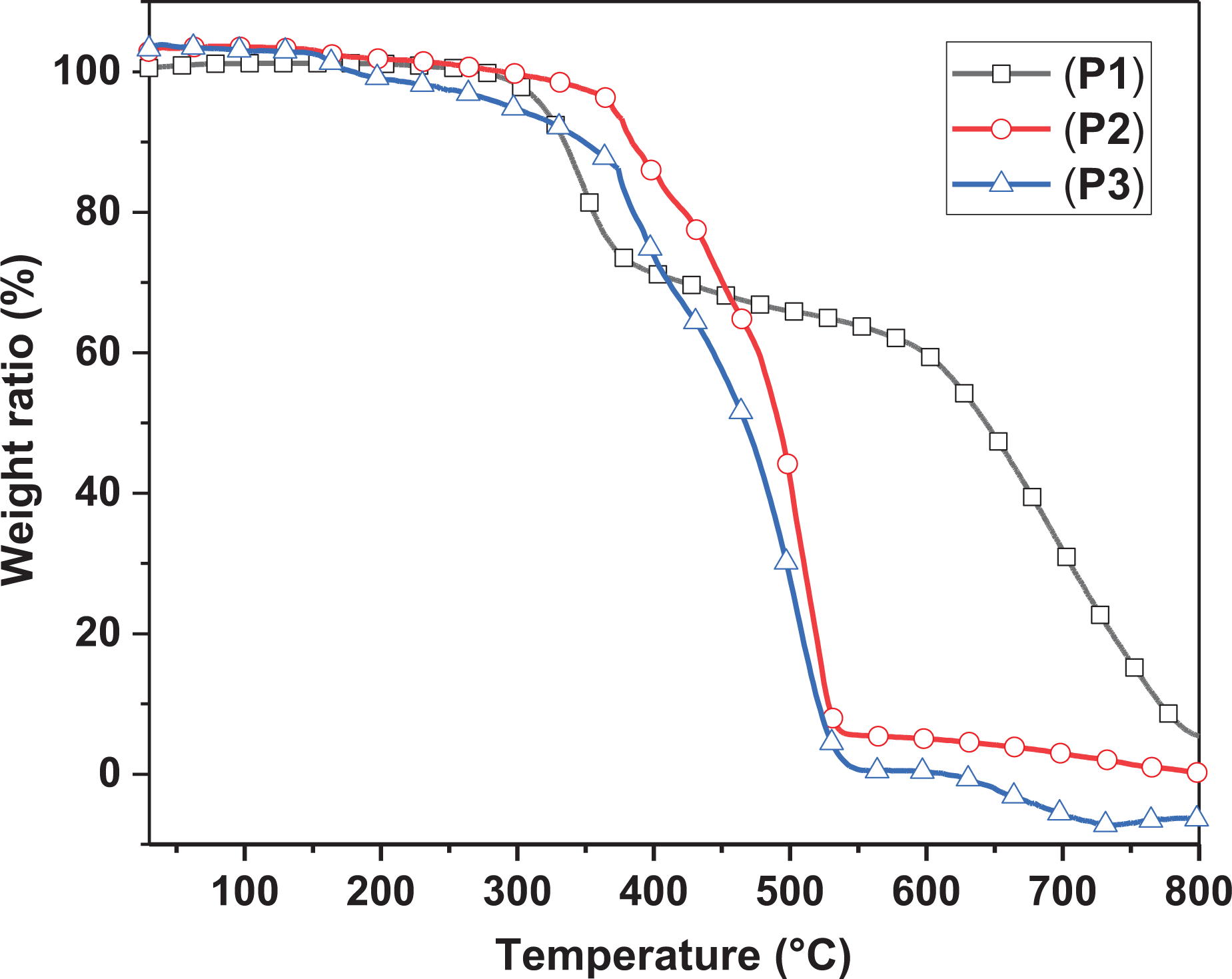
Thermogravimetric analysis thermograms of copolymers
The copolymers
Optical properties
The UV-visible absorption spectra of copolymers

UV-visible absorption of copolymers
Optoelectronic properties of the synthesized copolymers
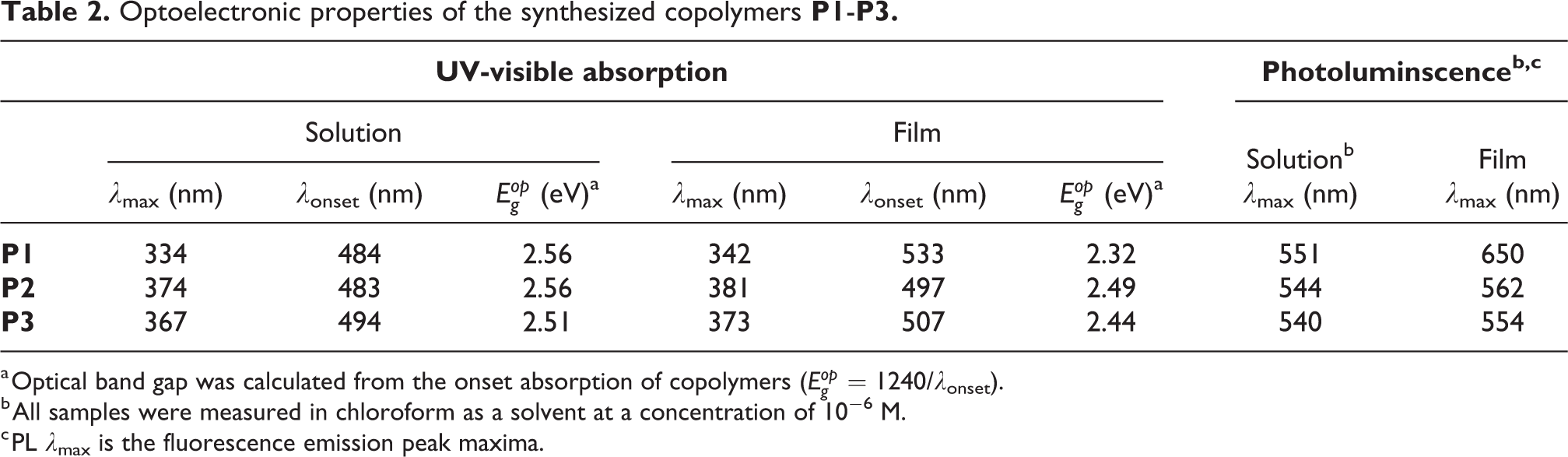
a Optical band gap was calculated from the onset absorption of copolymers (
b All samples were measured in chloroform as a solvent at a concentration of 10−6 M.
c PL λmax is the fluorescence emission peak maxima.
As shown, the absorption maximum wavelength of polymers in solution appeared at 334, 374, and 367 nm for copolymers
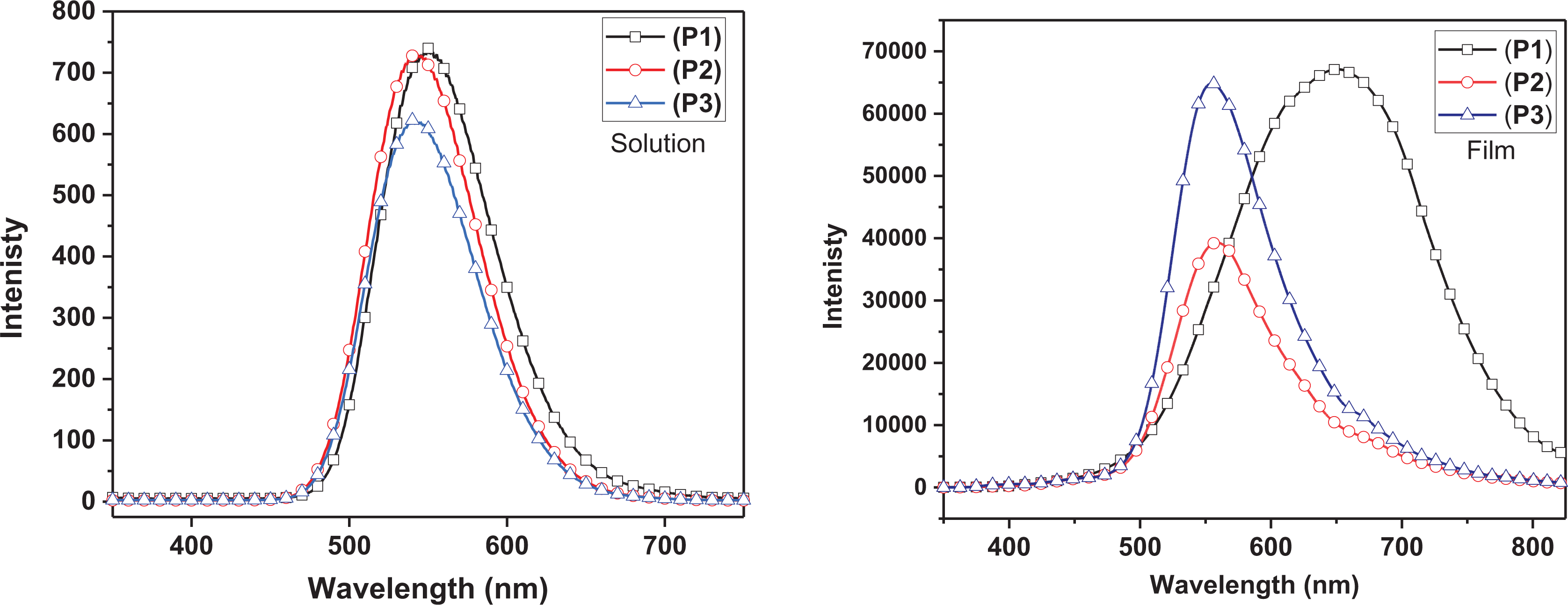
Photoluminescence of copolymers
X-ray diffraction (XRD) study
Solid-state morphology and molecular organization of copolymers were inspected by XRD analysis, which was performed on deposited films of copolymers from their chlorobenzene solutions. Figure 6 shows XRD patterns for thin films of copolymers
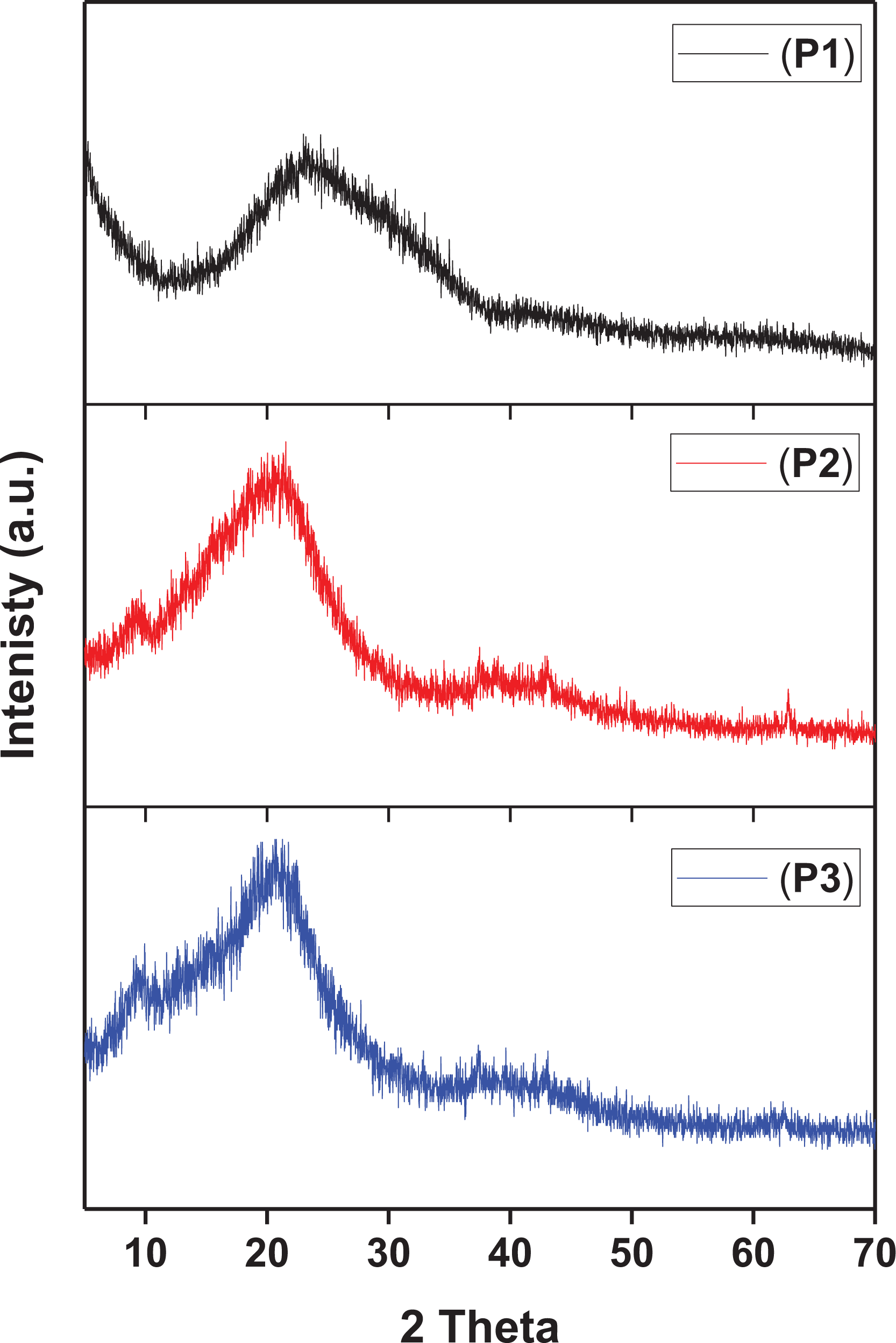
X-ray diffraction patterns of the copolymers
Overall, the presence of low intense diffraction π-stacking peak in combination with broad shape (between 12° to 40°) in copolymer
A computational study
DFT and TD-DFT calculations were performed to understand the effect of replacing benzothiadiazole in
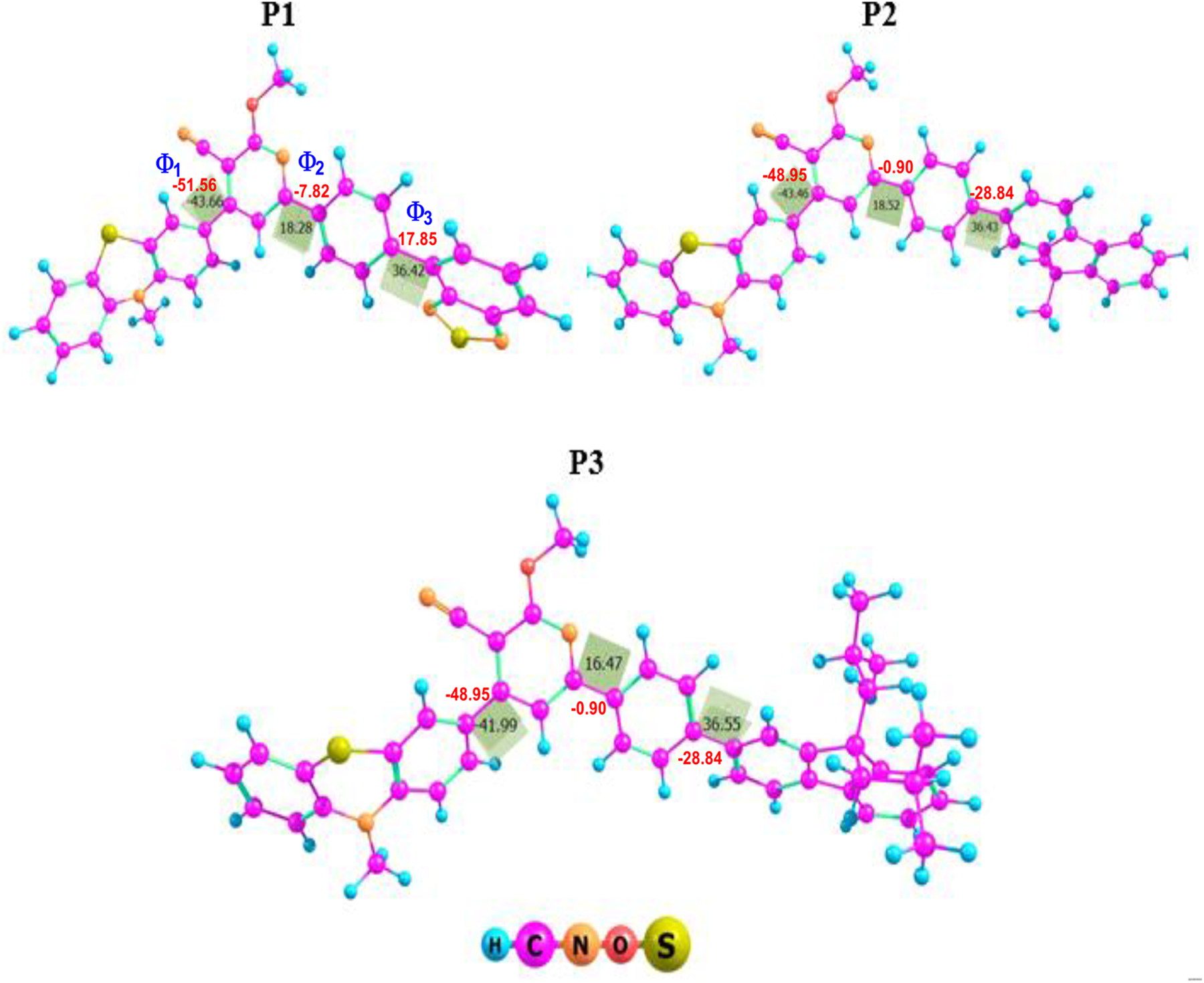
B3LYP-optimized geometries of the title comonomers. Black and red colors, respectively, labeled the dihedral angles among the moieties in the ground and excited states. The atom symbols are provided below the figure.
Upon excitation, all dihedral angles were reduced to make molecules approaching more to coplanarity, especially in the case of
The energies and electron density distribution of FMO of conjugated polymers are a playmaker for managing the ICT, intermolecular charge transfer, light absorption/emission, charge injection/extraction/trapping and electrochemical processes.
74
The HOMO wave function of all materials is mainly localized over the donor unit phenothiazine (Figure 8). In contrast, the LUMO wave function of
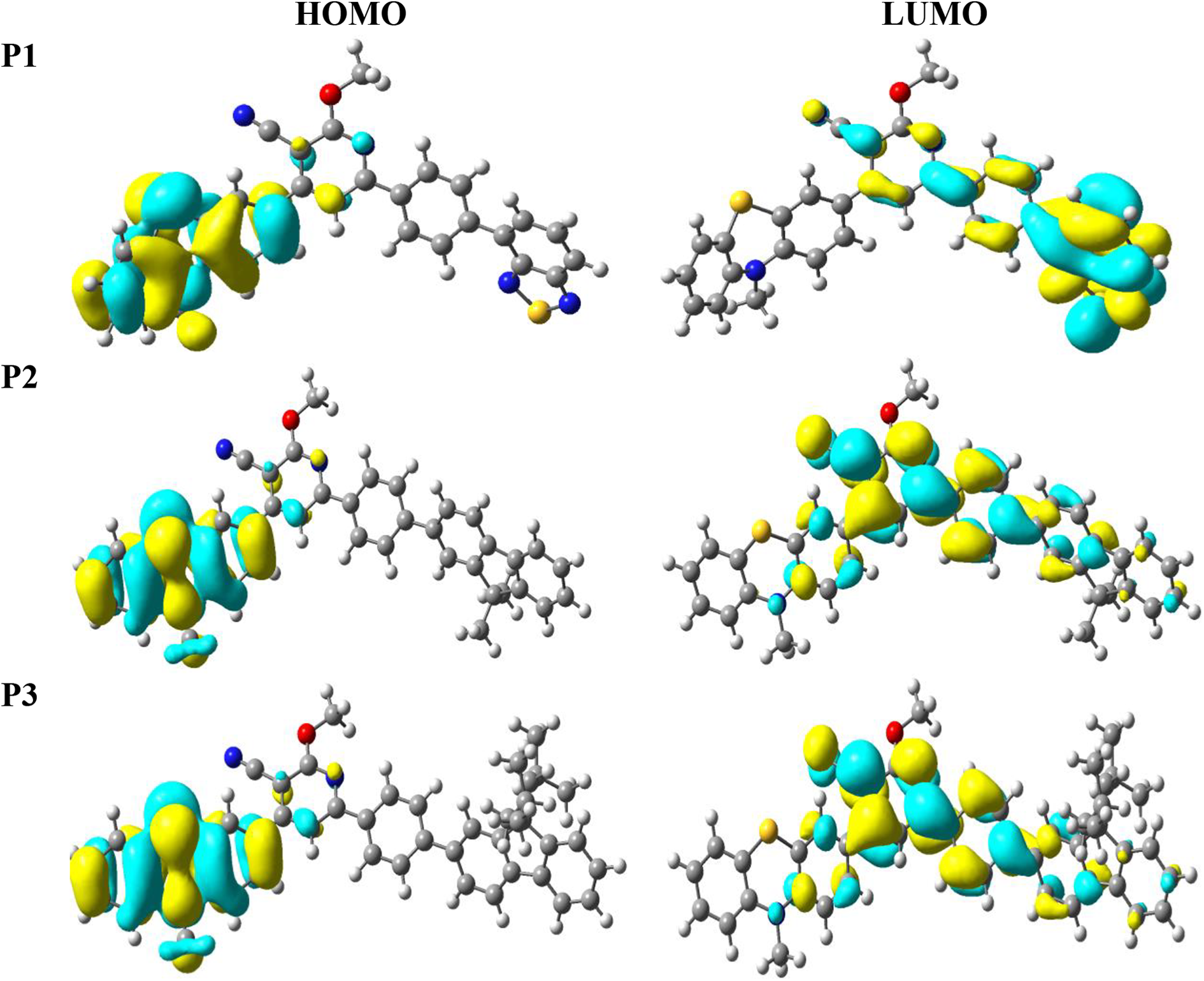
The electron density distribution of the frontier orbitals of the studied comonomers.
Data of EHOMO, ELUMO, the maximum open-circuit voltage (Voc) by eV and dipole moment (Debye).

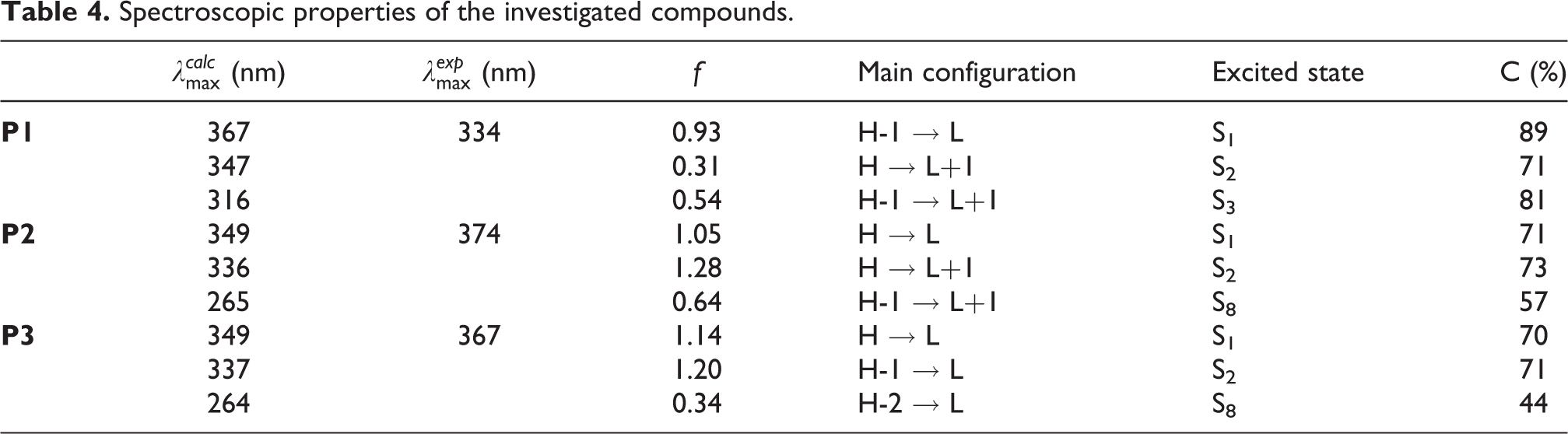
TD-DFT is the most suitable method for predicting optical properties of organic materials with a considerable size. Table 4 presents some spectroscopic properties that describe nature of electronic transitions. The UV-vis spectra of studied molecules are plotted in Figure 9. As expected, spectroscopic properties of
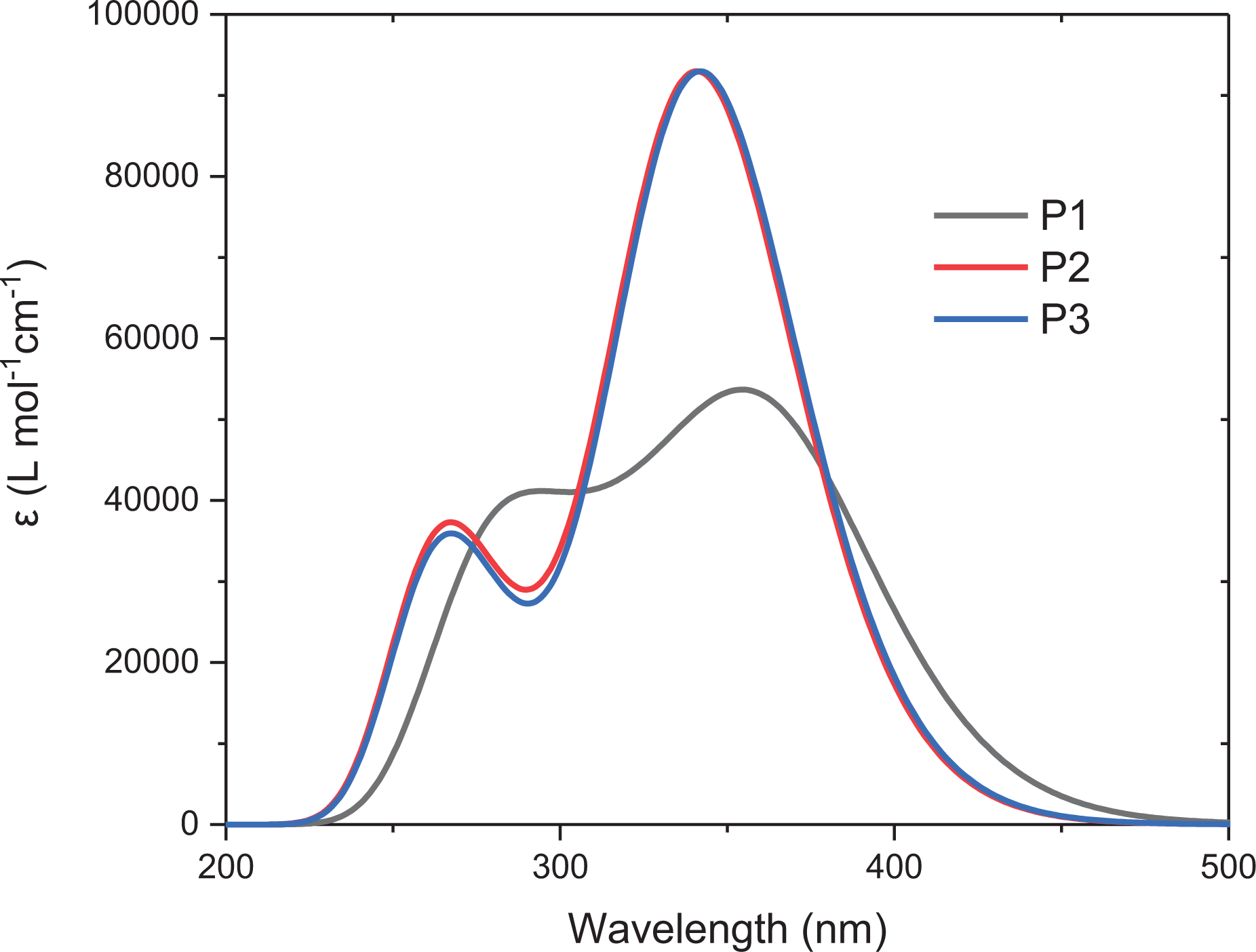
Simulated UV-vis spectra of title compounds using the Cam-B3LYP/6-311+G(d) method.
Spectroscopic properties of the investigated compounds.
The Bulk Heterojunction organic solar cells (BHJ) rely on intermolecular charge transfer in a blend produced from donor organic materials such as conjugated polymers and acceptor materials such as fullerene. [6,6]-Phenyl-C61-butyric acid methyl ester (PCBM(60)) is one of the most widely used acceptors in solar cell devices. 77 Here, the DFT method was applied to predict photovoltaic properties of compounds as donors blended with PCBM(60). The FMO energies of donor and acceptor components of BHJ are a critical factor to determine power of injection of photoelectron from LUMO of polymer to LUMO of PCBM(60). Figure 10 shows the energy of FMO of both donor and acceptor materials. Both HOMO and LUMO levels of the studied molecules were well-matched with the requirement for an efficient photosensitizer.
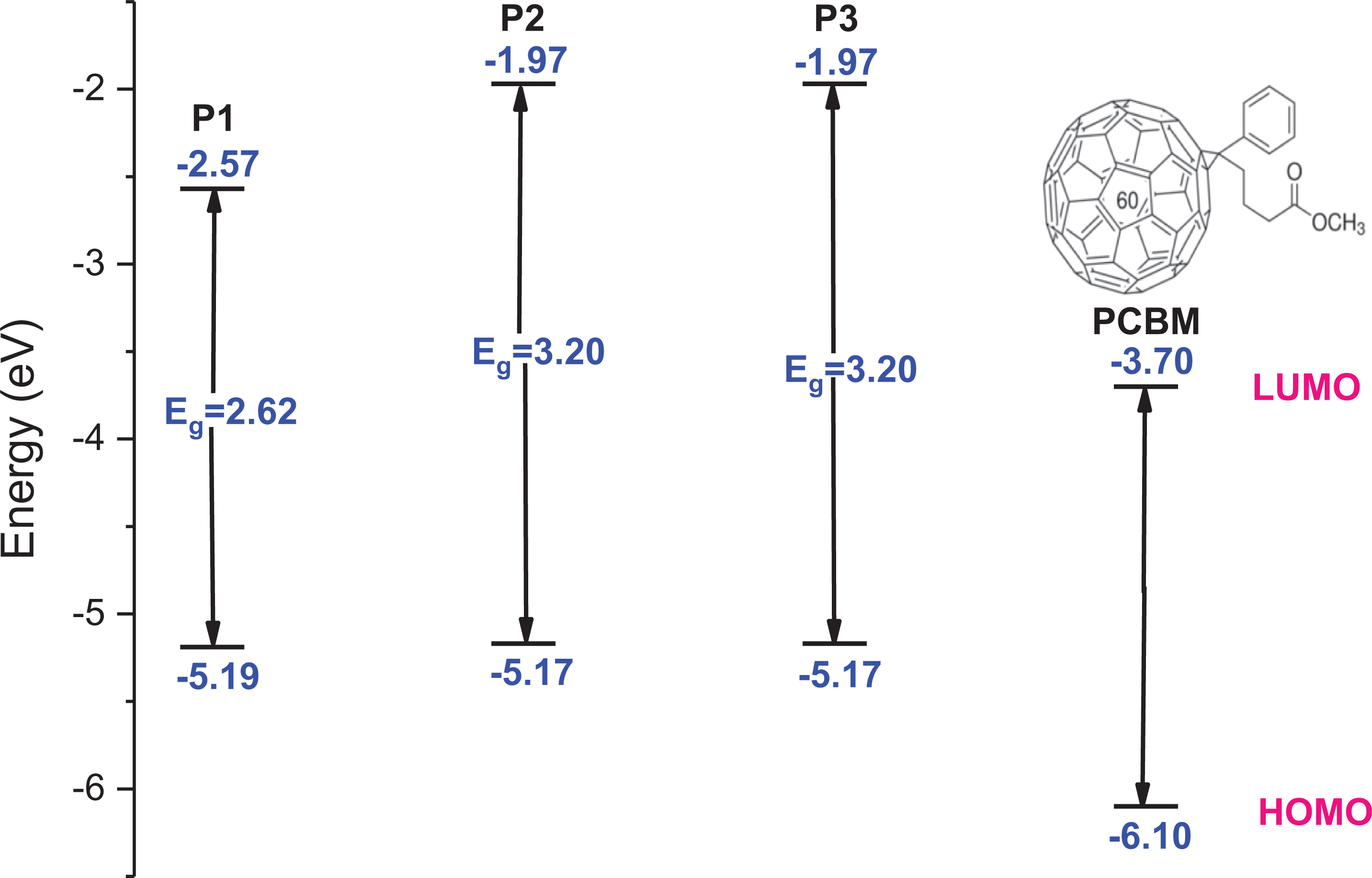
The absolute energy of the FMO of comonomers and PCBM(60).
The difference in LUMO energy levels of studied compounds (

where Pinc is the incident power density, Jsc is the short-circuit current, Voc is the open-circuit voltage, and FF denotes the fill factor.
The maximum open-circuit voltage (Voc) of the BHJ solar cell is related to the difference between HOMO of electron-donating polymer and LUMO of electron-accepting fullerene, taking into account energy loss during photo-charge generation.77,80 The theoretical values of open-circuit voltage Voc have been calculated from the following expression:

The calculated Voc of
Conclusions
Three phenothiazine/cyanopyridine/phenyl-based copolymers (
Supplemental material
Supplemental Material, sj-pdf-1-hip-10.1177_0954008320988757 - Synthesis, characterization, photophysical properties, and computational studies on N-hexylphenothiazine/cyanopyridine based π-conjugated copolymers
Supplemental Material, sj-pdf-1-hip-10.1177_0954008320988757 for Synthesis, characterization, photophysical properties, and computational studies on N-hexylphenothiazine/cyanopyridine based π-conjugated copolymers by Ashraf A El-Shehawy, Adel M Attia, Abdul-Rahman IA Abdallah and Morad M El-Hendawy in High Performance Polymers
Footnotes
Acknowledgments
Ashraf A El-Shehawy would like to thank Kafrelsheikh University research program for kind support.
Declaration of conflicting interests
The author(s) declared no potential conflicts of interest with respect to the research, authorship, and/or publication of this article.
Funding
The author(s) disclosed receipt of the following financial support for the research, authorship, and/or publication of this article: This work was financially supported by the Science & Technology Development Fund (STDF) (Egypt) through the STDF-NRG Project (ID Project Number: 7973) and by the Academy of Science and Research & Technology (ASRT), Egypt, Grant No. 6371 under the project Science UP.

Supplemental material
Supplemental material for this article is available online.
References
Supplementary Material
Please find the following supplemental material available below.
For Open Access articles published under a Creative Commons License, all supplemental material carries the same license as the article it is associated with.
For non-Open Access articles published, all supplemental material carries a non-exclusive license, and permission requests for re-use of supplemental material or any part of supplemental material shall be sent directly to the copyright owner as specified in the copyright notice associated with the article.
