







Abstract
A P/N containing flame retardant DOPO-QN was synthesized by a reaction between 9,10-dihydro-9-oxa-10-phosphaphenanthrene-10-oxide (DOPO) and 8-hydroxyquinoline (QN). Its chemical structure was characterized by Fourier transform infrared spectroscopy (FTIR), nuclear magnetic resonance (NMR) like 1H, 13C, 31P NMR, and high-resolution mass spectrometry (HRMS) techniques. The synthesized DOPO-QN was employed as an additive type flame retardant in combination with clay nanomer 1.34TCN (NC) in diglycidyl ether of bisphenol A/4,4ʹ-diaminodiphenlsulfone (DGEBA/DDS) to synthesize epoxy thermosets. The fire behavior of synthesized epoxy thermosets was studied by UL-94, limiting oxygen index (LOI), and cone calorimeter tests. The EP/DOPO-QN (1.5%P)/NC sample passed the UL-94 test with a V-0 rating and LOI value of 26.5%. A decrease in peak heat released, carbon monoxide, and carbon dioxide emissions was observed in the cone calorimeter test. Thermogravimetric analysis (TGA) of epoxy thermosets showed an increase in thermal stability at a higher temperature range on the formation of nanocomposites. Also, a remarkable improvement in storage modulus was observed for the EP/DOPO-QN (1.5%P)/NC sample containing 2.0% NC in dynamic mechanical analysis (DMA).
Keywords
Introduction
Epoxy resins are an important class of thermosetting polymers and have been used indisputably for a long time in electronic devices, laminates, encapsulations, transportation, coatings, and adhesives, etc. owing to their good mechanical properties, electrical insulation, and excellent dimension stability, and also resistance to chemical corrosion, moisture, and heat.1–4 However, epoxy resins are highly flammable and release a large amount of smoke when heated during their use in many aspects.3–8 Hence, it is extremely crucial to reduce the flammability of epoxy resins by incorporating flame-retardants to retard combustion and avoid the spread of fire after ignition for safety. 9
In beginning, halogen-containing compounds have been widely used as flame retardants due to their low-cost, ease of processing, and effective gas-phase quenching, but halogen-containing flame retardants have hazardous effects on living beings and the environment due to their toxicity. 10 So, the need for the development of environment-friendly flame retardants is increasing day by day. Recently, many halogen-free flame-retardants containing phosphorus,11–13 boron,14,15 nitrogen,16–18 and functionalized nanoclay19–21 have been developed for use in epoxy thermosets. Among these, the phosphorus-containing DOPO is considered a good flame-retardant by acting in the gaseous and condensed phases. Synergistic effects were observed when DOPO is combined with compounds containing nitrogen, sulfur, and silicon elements, which decreases the loading of flame-retardants and maintains high flame efficiency as well. In recent times, nanofillers like clay (montmorillonite-MMT), carbon nanotube, and graphene had been used to boost the flame retardancy of epoxy resin.22–24 Between these MMT is extensively used in combination with phosphorus-containing (DOPO) flame retardants to enhance flame retardancy and simultaneously reduce the smoke released on burning due to its low cost, ease of availability, and greater surface area and cation exchange ability.25–29 For example, Xiangdong et al. 30 synthesized a DOPO-MMT nano compound and utilized it as a flame retardant in epoxy resin, with 6 wt% DOPO-MMT in EP a V-0 rating on UL-94 test was obtained with an LOI value of 33.4%, due to the synergistic effect of DOPO and MMT. Yan et al. 31 synthesized a phenyl-bridged DOPO derivative, DiDOPO, and a combination of DiDOPO and OMMT was incorporated into EP. The sample containing 3.5 wt% DiDOPO/3.5 wt% OMMT resulted in an increase in LOI value from 21.8% to 32.2% and a V-0 rating in the UL-94 test.
Wang et al. 32 synthesized a phosphorus/nitrogen-containing flame retardant DDM-DOPO which achieved a V-0 rating in the UL-94 vertical burning test and an LOI value of 30% in the LOI test at 0.25 wt% phosphorus. Peng et al. 33 synthesized a tetra-DOPO derivative as a flame retardant for epoxy resin, which resulted in a V-0 rating in the UL-94 vertical burning test and LOI value of 30% with 5 wt% loading.
In the present work, a novel P/N containing flame retardant abbreviated as DOPO-QN was synthesized via Atherton Todd 34 reaction and characterized by various spectral techniques. The DOPO-QN was employed as an additive type flame retardant in combination with 2.0% clay nanomer 1.34TCN (NC) in diglycidyl ether of bisphenol A/4,4ʹ-diaminodiphenlsulfone (DGEBA/DDS) to synthesize epoxy thermosets having phosphorus in the range of 1.0 to 1.5% via thermal treatment. The effect of DOPO-QN and NC on fire behavior, thermal stability, and mechanical properties of epoxy thermosets was studied using UL-94/LOI/cone calorimeter, TGA, and DMA techniques, respectively.
Experimental
Materials
DGEBA, DDS, Nanomer 1.34TCN (NC) montmorillonite clay modified with 25to 30 wt.% methyl dihydroxyethyl hydrogenated tallow ammonium and triethyl amine were purchased from Sigma Aldrich Co Ltd 8-hydroxyquinoline (QN) was purchased from Alfa Aeser Co Ltd (India). 9,10-dihydro-9-oxa-10-phosphenathrene-10-oxide (DOPO) was purchased from TCI chemical (India). Carbon tetrachloride and dichloromethane were obtained from Himedia Co Ltd (India) and Mould releasing agent was purchased from TAG chemicals GmbH (Giant Sales Corporation, Gurugram, India). All these commercial materials were used as received without further purification.
Synthesis of 6-(quinolin-8-yloxy)-6H-dibenzo[c,e][1,2]oxaphosphinine 6-oxide (DOPO-QN)
DOPO (43.2 g, 0.20 mol), 8-hydroxyquinoline (29.0 g, 0.20 mol), and triethylamine (30.7 mL, 0.22 mol) dissolved in 200 mL of dichloromethane were charged in a 500 mL three-neck round-bottom glass flask fitted with a stirrer, condenser, and a dropping funnel. Then, the mixture was cooled to 0°C stirring. Later on, CCl4 (21.3 mL, 0.22 mol) was added dropwise to the mixture while keeping the reaction temperature below 15°C. After the complete addition, the solution was allowed to come at room temperature and continued stirring overnight. Finally, the desired product (Yield 85%; mp: 104 to 108°C) was extracted with dichloromethane (25 × 2 mL), evaporated under reduced pressure, and dried with sodium sulfate (Na2SO4). The synthesis route of DOPO-QN is depicted in Scheme 1. Synthesis route of DOPO-QN.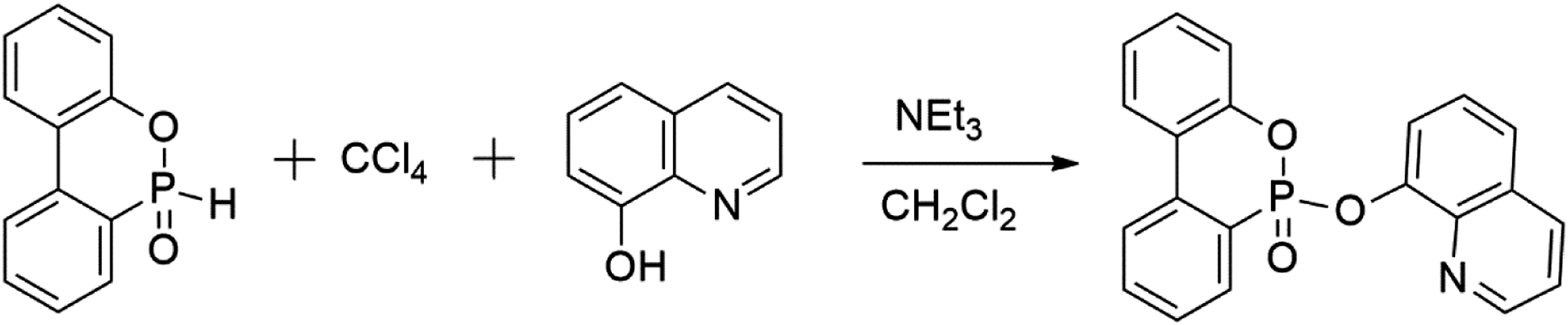
Preparation of EP thermosets
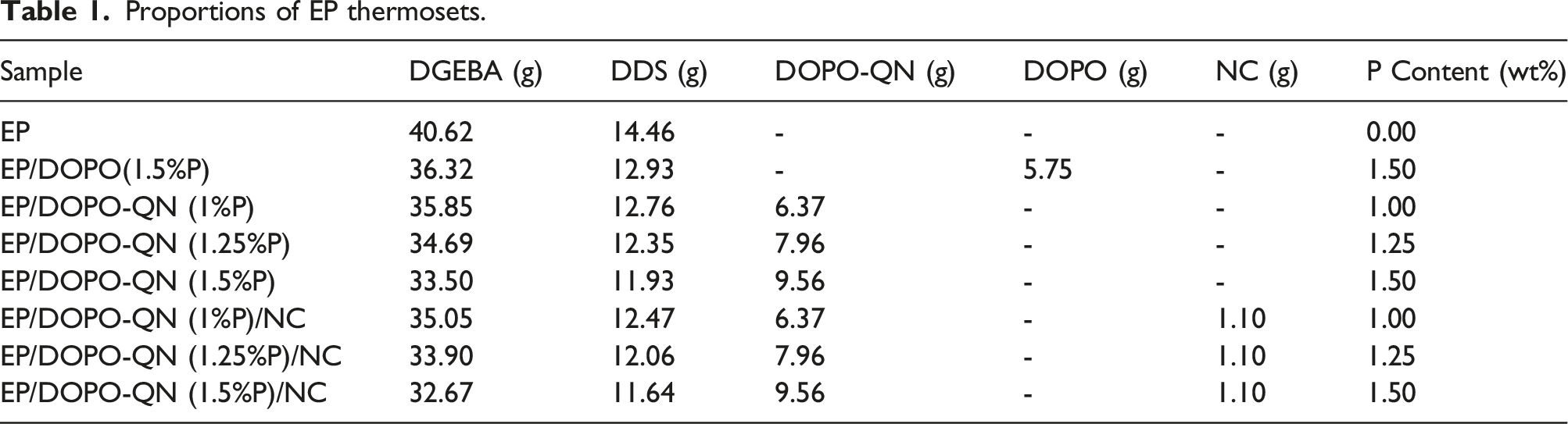
Proportions of EP thermosets.
Characterization methods
Fourier transform infrared spectrum (FTIR) were recorded in the range 4000-500 cm−1 by mixing the sample with KBr powder on a Perkin Elmer Spectrum, BX II, FTIR spectrophotometer.
The 1H, 13C and 31P NMR spectra were recorded on Bruker AVANCE III instrument at 400 MHz, 101 MHz and 161 MHz, respectively using deuterated chloroform as solvent (CDCl3). Coupling constants values were recorded in Hertz (Hz) and the multiplicity of signals was assigned as singlet (s), doublet of doublet (dd), doublet of doublets of doublets (ddd), triplet (t), and multiplet (m).
The high-resolution mass spectrum of the sample (DOPO-QN) was measured on SCIEX TripleTOF 5600 mass spectrometer.
The completion of the reaction and purity of the synthesized compound DOPO-QN were monitored by thin-layer chromatography using silica gel plates.
Thermogravimetric analysis (TGA) was recorded on a simultaneous thermal analyser (STA) 6000 (Perkin Elmer) at a heating rate of 10°C per minute from ambient temperature to 700°C under nitrogen and air atmosphere, respectively.
UL-94 vertical burning test and limiting oxygen index (LOI) tests were used to evaluate the flame retardancy of samples. LOI values of samples with size 130.0 × 6.5 × 3 mm3 were measured according to ASTM D-2863. UL-94 test was performed with samples of size 130.0 × 13.0 × 3.0 mm3 according to ASTM D3801.
A cone calorimeter device is used to determine the combustion behavior of samples with a three-dimensional size of 100.0 × 100.0 × 3.0 mm3 exposed to a radiant cone at a heat flux of 35 kW/m2 according to ISO 5660-1.
X-Ray diffraction (XRD) studies of the epoxy/clay nanocomposites were carried out using Anton Paar SAXS point 2.0 Small angle X-ray Scattering diffractometer with a sample size of 10 × 10 × 1 mm3, in the range of 1–30° on the 2θ scale.
A JEOL JEM 2100 plus High-resolution transmission electron microscope working at 200 kV is used to investigate the degree of dispersion (intercalation or exfoliation) of the EP thermosets.
Dynamic mechanical analysis (DMA) was carried out using DMA 800 Perkin Elmer instrument. The dimensions of the samples taken were 40 × 10 × 2 mm3. The samples were tested in a three-point bending mode with a frequency of one Hz at a heating rate of 10°C per minute from room temperature up to 250°C.
Results and discussion
Characterization of DOPO-QN
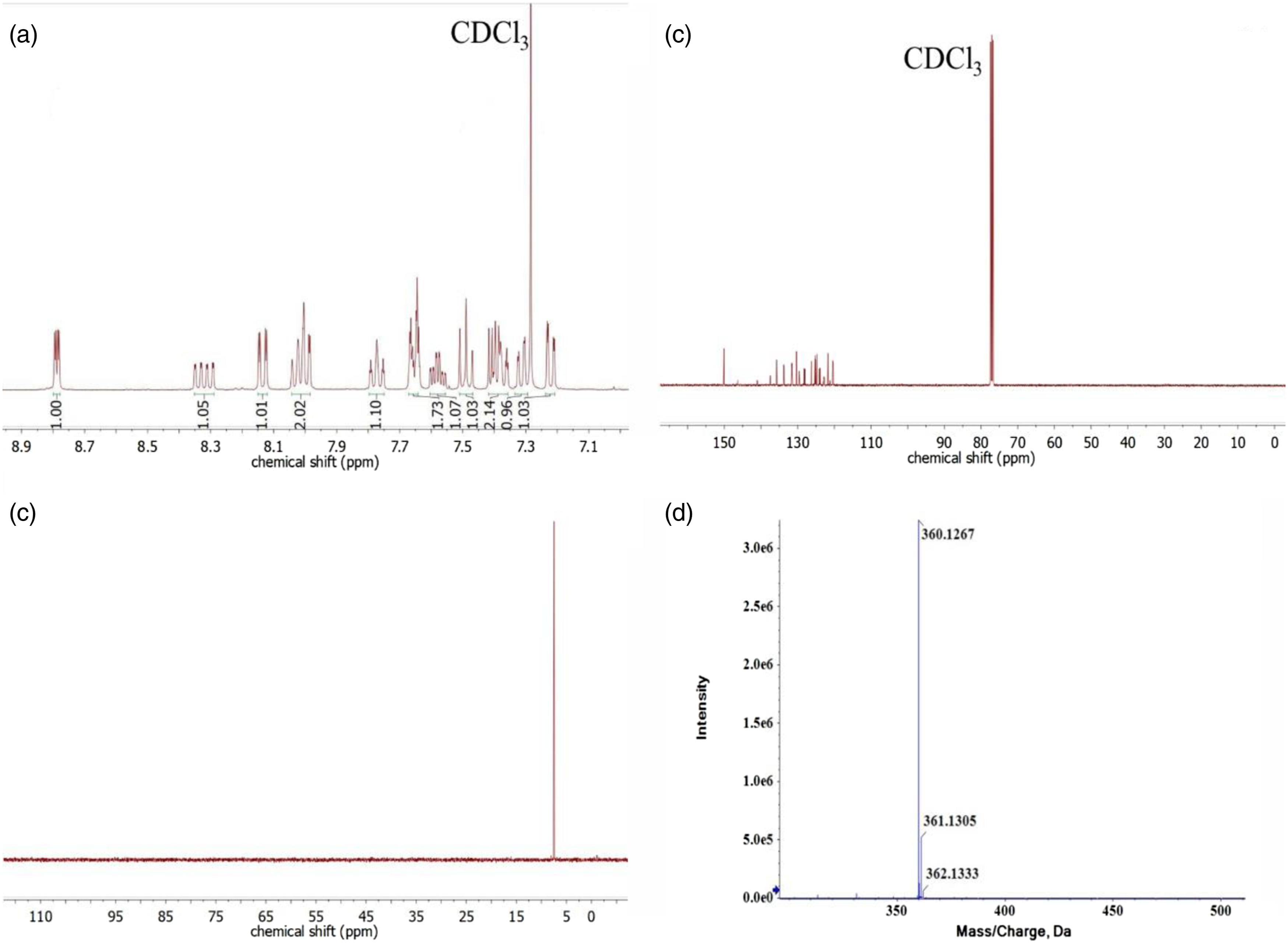
The chemical structure of DOPO-QN was characterized by FTIR, 1H NMR, 13C NMR, 31P NMR, and HRMS. The FTIR spectra of DOPO and DOPO-QN are depicted in Figure 2. The characteristic peak of P-H of DOPO was observed at 2386 cm−1 in the FTIR spectrum, which was not observed in the case of DOPO-QN. The 1H, 13C, 31P NMR and HRMS spectra of DOPO-QN are depicted in Figure 3. In the 1H NMR spectrum, the chemical shift of all the aromatic protons appeared in the region δ 8.79–7.22 ppm. In the 13C NMR spectrum, the peaks appeared in the region δ 150.19–120.41 ppm. In the 31P NMR spectrum, a singlet due to phosphorus was observed at δ 7.94 ppm. Further, in the HRMS spectrum [m/z + H+], the peak of the compound DOPO-QN was found at 360.1267, which is in good agreement with the theoretically predicted value of 360.0791. From the above results, it is evident that DOPO-QN was successfully synthesized. FTIR spectra of DOPO and DOPO-QN. 1H-NMR (a), 13C-NMR (b), 31P-NMR (c) and HRMS (d) spectra of DOPO-QN.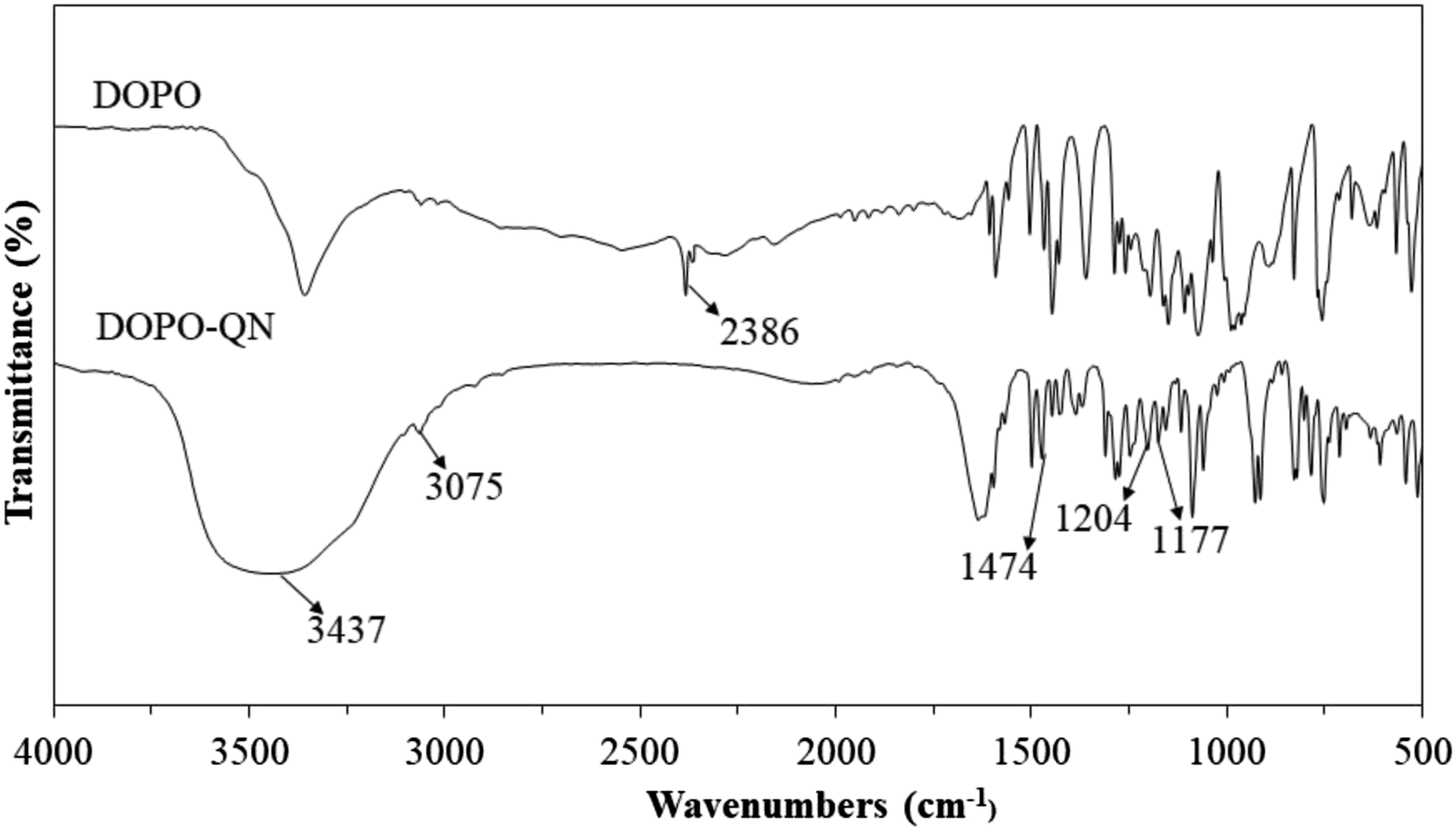
Flame retardancy of EP thermosets
LOI and UL-94 rating data of EP thermosets.
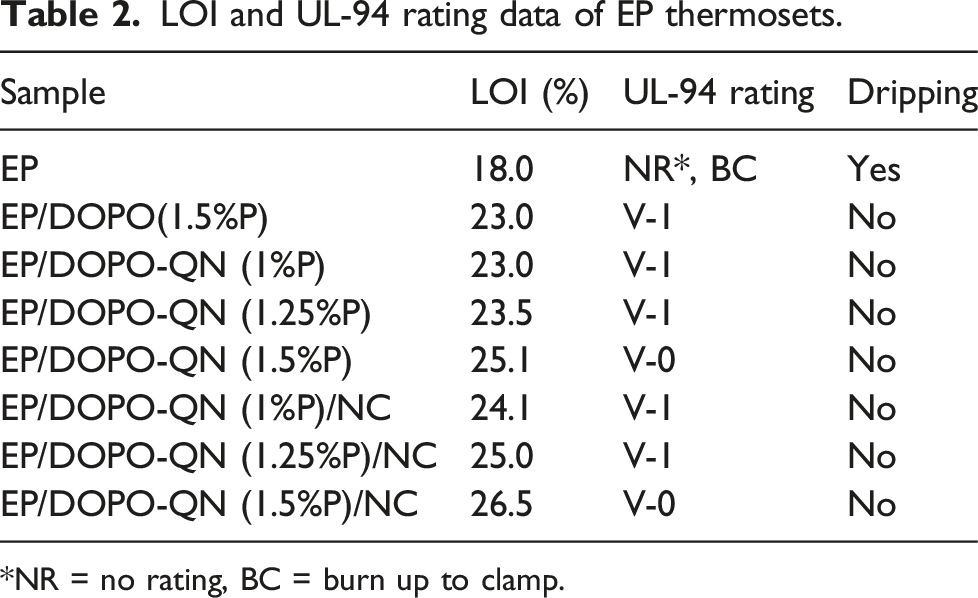
*NR = no rating, BC = burn up to clamp.
UL-94 vertical burning test, gave no rating for pure EP, while the EP/DOPO-QN (1.5%P) sample having 1.5% phosphorus passed the UL-94 test with the highest V-0 rating. Whereas, no effect of the addition of nanoclay in thermosets is observed in the UL-94 test.
Cone calorimeter results of synthesized EP thermosets.

Thermal analysis
Thermogravimetric analysis (TGA) was conducted in nitrogen and air atmospheres to investigate the thermal stability and decomposition behavior of EP thermosets. The TGA and DTG thermograms of DOPO-QN and three EP thermosets as representatives are shown in Figure 4. The temperature of 5% weight loss (T5%) defined as the initial degradation temperature, the temperature of maximum decomposition rate (DTG peak, Tmax), and char yield at 600°C was noted from these thermograms and summarised in Table 4. In the nitrogen atmosphere, a one-stage decomposition curve was obtained for the EP thermosets. The initial degradation temperature of T5% for pure EP was observed at 306°C, while T5% in the case of EP/DOPO-QN (1.5%P) and EP/DOPO-QN (1.5%P)/NC decreased by about 20°C due to less thermal stable DOPO-QN as observed in TGA thermogram in Figure 4. Whereas the presence of nano clay showed no effect on initial degradation temperature. Similarly, the Tmax for EP/DOPO-QN (1.5%P) and EP/DOPO-QN (1.5%P)/NC decreased by 45–50°C, respectively due to interaction between EP matrix and phosphaphenanthrene group of DOPO-QN. The char yield at 600°C of EP/DOPO-QN (1.5%P) raised to double in percent in comparison to pure EP due to the condensed phase action of the DOPO-QN and thermal stable quinoline group. TGA and DTG curves of DOPO-QN and various EP thermosets under nitrogen (a, b) and air (c, d) atmospheres. TGA data of DOPO-QN and synthesized EP thermosets.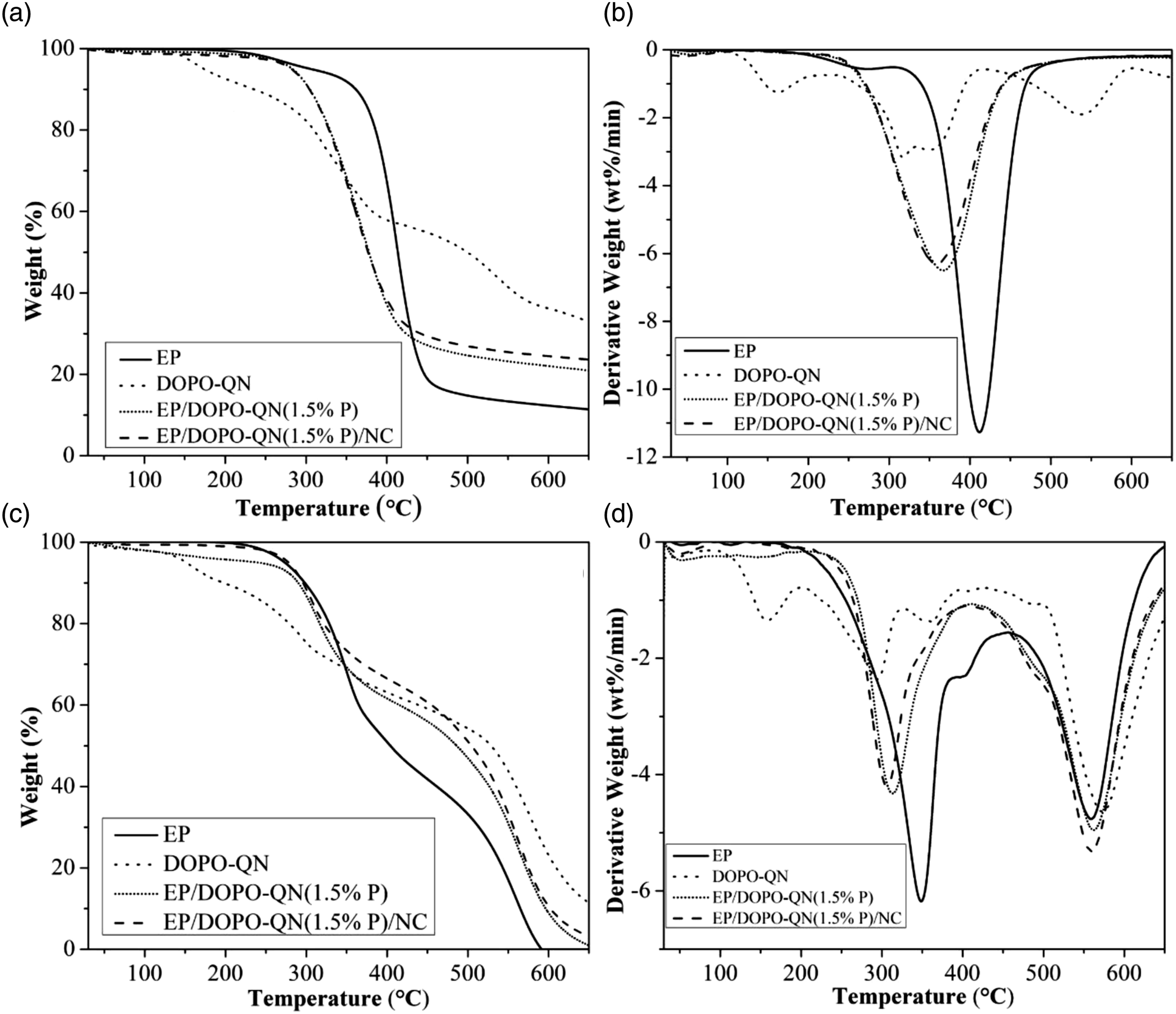

In the air atmosphere, a two-stage decomposition was found. The first stage from 220-385°C corresponds to the decomposition of the epoxy chain, while the second stage from 400-650°C corresponds to the degradation and complete oxidation of the left residue. 35 In pure EP, T5% was observed at 281°C with Tmax at 348°C and 557°C, respectively. In the air atmosphere, the residue left after the first stage degradation of EP matrix shows some stability up to about 500°C due to the formation of stable bonds of phosphorylated moiety before it is completely oxidized and evaporated leading to zero char residue except the sample containing thermal stable nano clay residue.
XRD analysis
X-Ray diffraction analysis was conducted to identify the dispersion of NC in the EP thermoset. The XRD spectra of the samples were shown in Figure 5. The interlayer spacing of nano clay was obtained from Bragg’s law ( XRD spectra of NC and EP/DOPO-QN (1.5%P)/NC in 2θ range 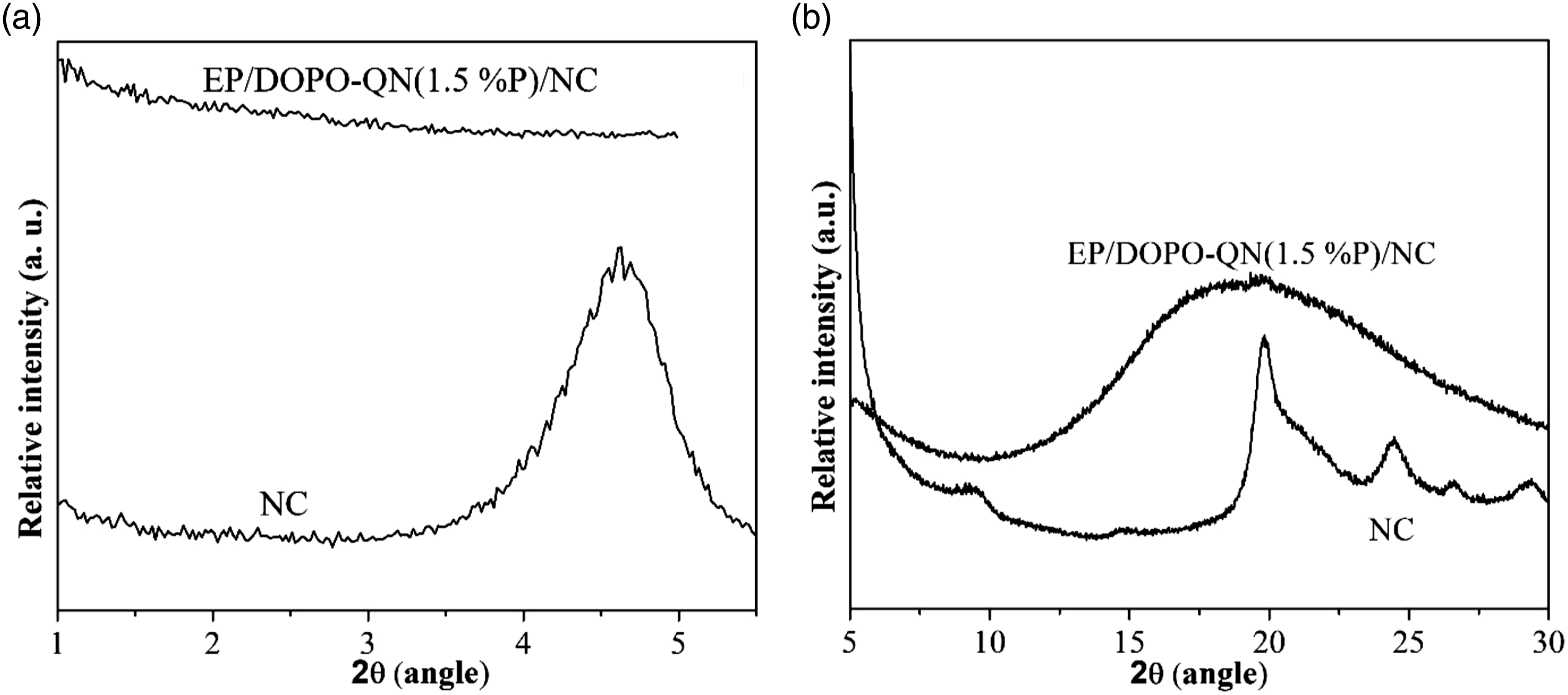
TEM analysis
TEM analysis of nanoclay (NC) and EP-DOPO-QN (1.5%P)/NC was conducted using an accelerated voltage of 200 kV to investigate the dispersion of nanoclay. The dark lines represented nano clay layers, which were seen in Figure 6. The TEM micrographs of NC as depicted in Figure 6 (a, b, c) showed the presence of stacks of silicate layers. While TEM micrograph of EP-DOPO-QN (1.5%P)/NC depicted in Figure 6 (d, e, f) showed dispersion of nanoclay in the epoxy matrix in the form of intercalation shown in Figure 6 (f) at I and single layer exfoliation at II to some extent. TEM micrographs of NC (a, b, c) and EP/DOPO-QN (1.5%P)/NC (d, e, f).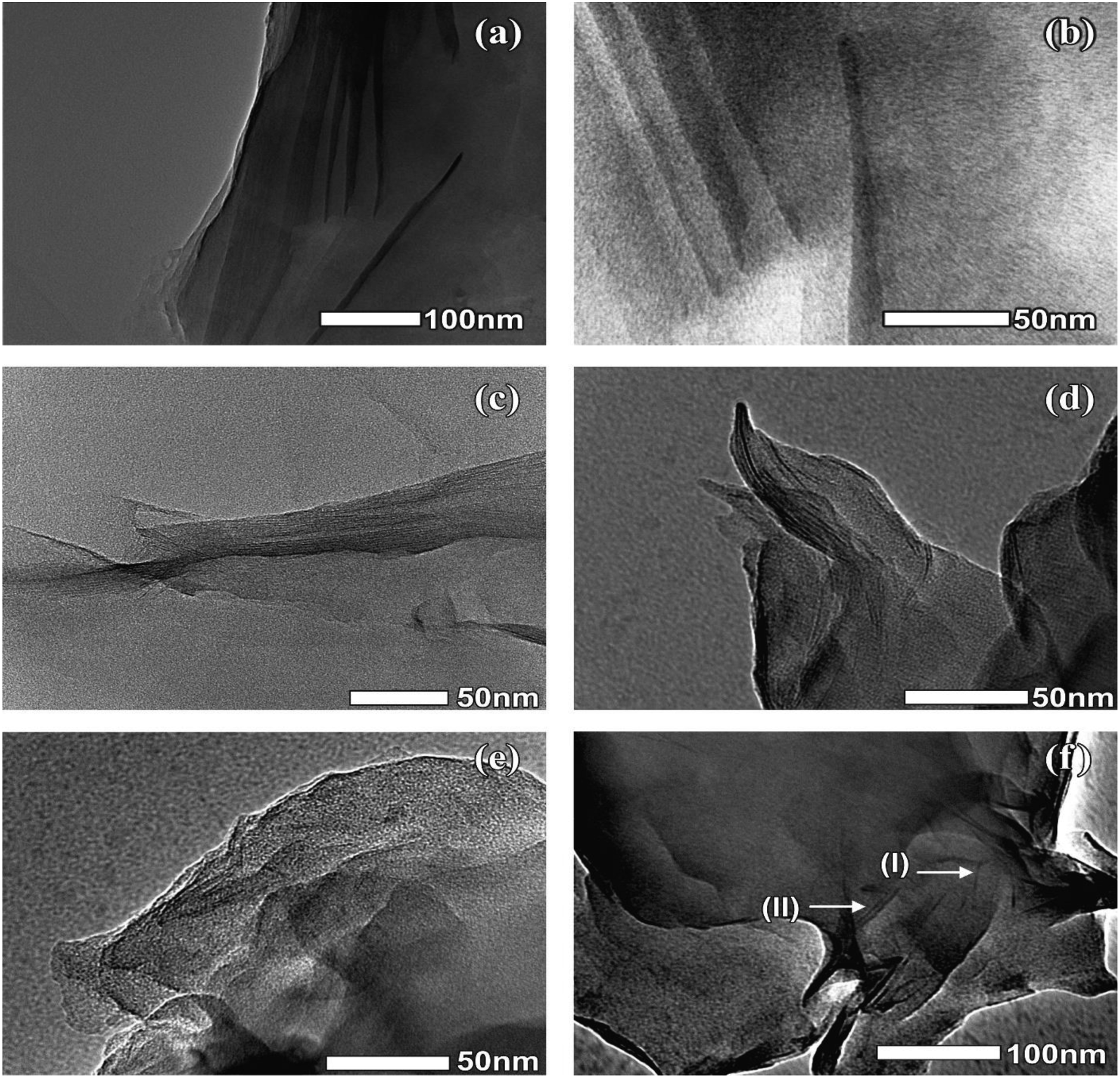
Thermomechanical properties
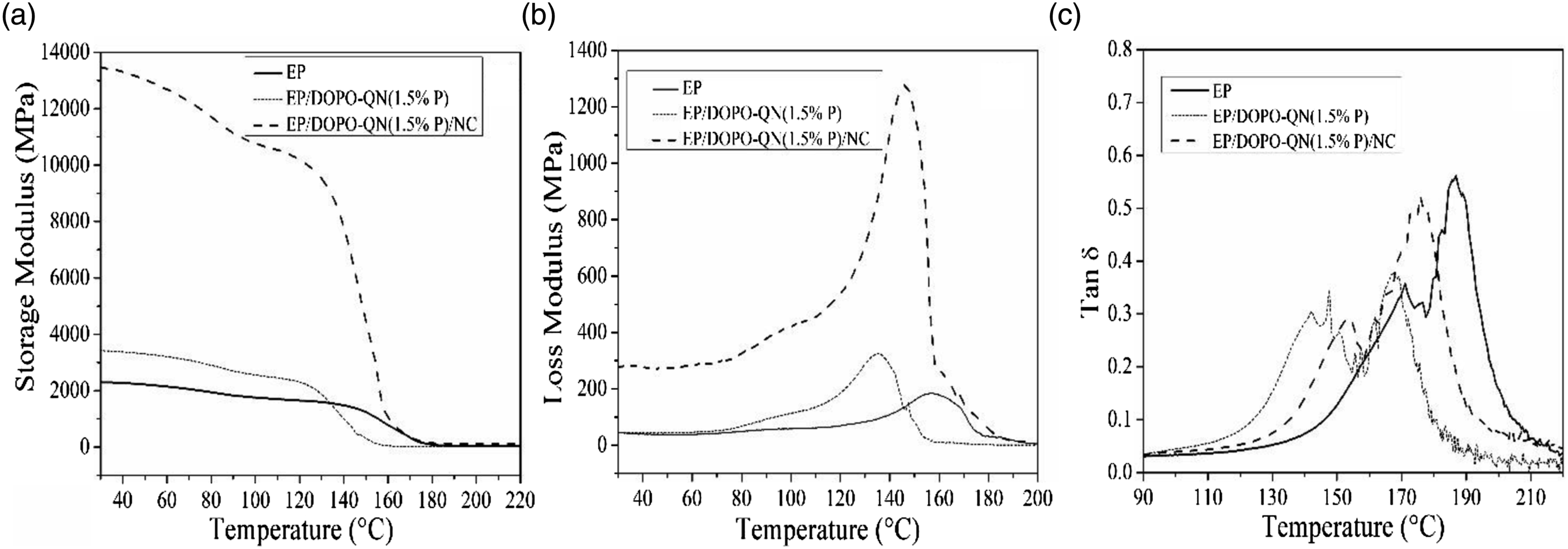
Thermomechanical properties of various EP thermosets were studied by DMA. The thermomechanical spectra of cured EP thermosets for the storage modulus (Eʹ), loss modulus (Eʹʹ), and tan δ as a function of temperature were displayed in Figure 7. The glass transition temperature, storage modulus, loss modulus, and crosslinking density were summarised in Table 5. The glass transition temperature of the EP and various samples was determined by the peak of tan δ value. Generally, the storage modulus value was used to measure the rigidity of materials.
36
The data suggests that EP/DOPO-QN (1.5%P) and EP/DOPO-QN (1.5%P)/NC had higher Eʹ values than EP in the temperature range up to 100°C (Figure 7(a)). At room temperature (30°C) EP/DOPO-QN (1.5%P) had an Eʹ value of 3417.7 MPa, a 49% higher than EP (2295.9 MPa). The EP/DOPO-QN (1.5%P)/NC had shown more higher Eʹ value of 13,469.2 MPa. The increased Eʹ value confirmed that EP/DOPO-QN (1.5%P) was more rigid than EP because of the rigid ring structure of DOPO-QN. The rigidity of the EP/DOPO-QN (1.5%P)/NC sample increased further due to the large surface area provided by rigid nano clay for interfacial interaction. In addition, the loss modulus spectra of the EP thermosets as shown in Figure 7 (b), there was no significant variation in the Eʹʹ value of EP and EP/DOPO-QN (1.5%P) (45 MPa) in the glassy state. However, EP/DOPO-QN (1.5%P)/NC showed a five times higher loss modulus than that of EP in the glassy state. A higher Eʹʹ value near room temperature means higher damping energy dissipation, which will result in the transformation of likely damageable vibration energy to heat. Therefore, EP/DOPO-QN (1.5%P)/NC was very promising for use as a hard thermoset with a high modulus and damping. As the temperature increased, the Eʹ value of samples started decreasing due to increased chain mobility. EP/DOPO-QN (1.5%P) sample gave a higher Eʹ value than EP till 133°C thereafter the value decreased due to lower crosslink density. The crosslink density of the samples was estimated by the following equation.
37
DMA spectra for (a) storage modulus, (b) loss modulus and (c) tan δ against temperature of EP thermosets. DMA data of EP thermosets.

Conclusions
In the present work, a P/N-containing flame retardant (DOPO-QN) was synthesized by a reaction between phosphaphenanthrene and 8-hydroxyquinoline which is used as an additive type flame retardant in EP. The flammability tests (LOI, UL-94 and cone calorimeter) results showed that the addition of DOPO-QN with 1.5% phosphorus had imparted flame retardancy to the EP matrix with a decrease in toxic gas emissions. Thermogravimetric analysis (TGA) of epoxy thermosets showed an increase in thermal stability at a higher temperature range on the formation of nanocomposites. The glass transition temperature of EP/DOPO-QN (1.5%P) (167.4°C) decreased with a decrease in crosslink density in comparison to EP (186.8°C). A remarkable improvement in storage modulus and crosslink density was observed with the addition of 2.0% nano clay for the EP/DOPO-QN (1.5%P)/NC sample.
Supplemental Material
Supplemental Material - Synthesis and characterization of a novel P/N containing flame retardant and its effect on flame-retardancy, thermal and mechanical properties of epoxy/clay nanocomposites
Supplemental Material for Synthesis and characterization of a novel P/N containing flame retardant and its effect on flame-retardancy, thermal and mechanical properties of epoxy/clay nanocomposites by Vishal Soni and Jai Bhagwan Dahiya in High Performance Polymers
Footnotes
Acknowledgements
This work was supported by CSIR, New Delhi, India as a junior/senior research fellowship to one of the authors (Mr Vishal Soni).
Declaration of conflicting interests
The author(s) declared no potential conflicts of interest with respect to the research, authorship, and/or publication of this article.
Funding
The author(s) received no financial support for the research, authorship, and/or publication of this article.

Supplemental Material
Supplemental material for this article is available online.
References
Supplementary Material
Please find the following supplemental material available below.
For Open Access articles published under a Creative Commons License, all supplemental material carries the same license as the article it is associated with.
For non-Open Access articles published, all supplemental material carries a non-exclusive license, and permission requests for re-use of supplemental material or any part of supplemental material shall be sent directly to the copyright owner as specified in the copyright notice associated with the article.
