







Abstract
A series of polybenzimidazoles (PBIs) incorporated main chain 4-pyridine bridge groups were synthesized from 4,4′-([4,4′-bipyridine]-2,6,-diyl)bis (benzene-1,2-diamine) which reacted with four different diacids like isophthalic acid,4,4′-Oxibis benzoic acid, 5-amino isophthalic acid and 2,5-pyridine dicarboxylic acid using polyphosphoric acid as solvent. A process termed dispersion polymerizationhas been developed to prepare PBIs.For the membranepreparation, 4-pyridine-bridge polybenzimidazole (Py-PBI) productswere re-dissolved in dimethyl sulfoxide and cast. The polymer structure characterization included FT-IR, UV, Powder XRD, Water Uptake, Swelling Ratio, Ion exchange capacity, Acid doping, Acid leaching, Oxidative stability, and Polymer inherent viscosity find out by using Ubbelohde viscometer whilethermal stability assessments via thermogravimetric analysis. The Py-PBI-based polymer electrolyte membranes’ mechanical properties measurement showed that the 4-pyridine-bridge PBIs membranes were flexible, thermally stable, and mechanically strong when compared with conventional PBI. The current-voltage (I-V) characteristics of the 4-Py-PBI membrane show that the conductivity of the 4441P membrane is 0.546 S cm−1.

Introduction
Fuel cells have received a great deal of attention in recent years. Polymer electrolyte membrane fuel cell (PEMFC) has many advantages compared to the other sources that produce electricity. Among the type of fuel cells, PEMFCs have attracted significant attention due to their high energy efficiency and as environmentally being a source of energy alternative to the current power source for portable, stationary, and automotive applications. The first aromatic polybenzimidazoles (PBIs) were synthesized by Vogel and Marvel in 1961. 1 This type of aromatic polymer showed exceptional, oxidative and thermal stability. 2
PBIs are widely investigatedinthe last decades. PBI has shown interactions with various solvents due to the presence of hydrogen donors (-NH groups) and acceptor (-N groups) sites in its backbone. 3 Without the need for humidification of reactant gases phosphoric acid (PA) doped PBI membrane operates in PEMFC. Due to PA doped level increases the proton conductivity of the PBI membrane increases, but decreases its mechanical stability. 4 This effectis related to high temperatures. 5 PBI also has some caveats mainly owing to its opaqueness and poor solubility due to the aromatic heterocyclic rigid structure and high glass transition temperature (Tg).6,7
In the literature, the solubility of PBI and the processability issue of PBI has been exploredwidely.8,9 PBIs solubility enhancesthe synthesis of PBIs with various structural changes in the backbone by using various symmetric planner monomeric structures. 10 PBIs from miscible blends with different polysulfides, polyimides,polyacrylates, poly (vinyl pyridine), high modulus aramids, and poly (ether imide). 11
Targeting various applications and improving upon processability, the structure of PBI has been modified by incorporating functional groups. The introduction of oxygen, siloxane,12,13 silane, 14 phosphorous, 15 cardo, 16 andsulfone bridge 17 between aromatic units generally enhance polymer solubility. Generally, incorporation of the aliphatic groups reduces the thermal stability while alicyclic groups, cyclohexane, cyclopropane, and spiro [3:3.1] heptane rings, adamantine units 18 in the PBI backbone maintain the thermal stability.
Over the past few years, numerous reports have been published which have made efforts to meet these preconditions. Among these are arylether-type acid-base PBIs, 19 hyper-branched-based PBIs, 20 etc. Litt et al. Demonstrated that poly (2,5-benzimidazole), usually referred to as ABPBI, is readily polymerizable from a single monomer viz. 3,4-diaminobenzoic acid, absorbs better phosphoric acid, and exhibits good proton conductivity. Unfortunately, most of these newly designed PBIs could not meet all the essential properties as indicated above, especially, proton conductivity and chemical-mechanical stability.
Homo and (o-PBIs containing different content of pendant phenoxyamine groups were synthesized by condensation of 3, 3′-diaminobenzidine with the diacid and mixture of the diacid and isophthalic acid in different ratios in polyphosphoric acid. Copolybenzimidazoles with structural variations were also synthesized based on this acid and pyridine dicarboxylic acid, terephthalic acid, adipic acid, or sebacic acid. The polymer has good solubility in polar aprotic solvents and strong acids and they form stiffly flexible films by solution casting. The inherent viscosities of the polymers are in the range of 0.62–1.52 dl/g. They have high thermal stability up to 475–500°C (IDA in nitrogen, highTG ranging from 313 to 435°C, and good tensile strength ranging from 58 to 128 MPa. The Proton conductivity of homo polymer is at 3.72 × 10⁻³ Scm–1 at 200°C. 21
A Series of PBIs incorporating main chain pyridine groups were synthesized from the pyridine dicarboxylic acids (2,4-,2,5-,2,6-, and 3,5-) and 3′,3′,4,4′-tetra amino biphenyl using polyphosphoric acid (PPA) as both solvents and polycondensation reagent. This novel process termed as PPA process has been developed to organize phosphoric acid (PA) dopedPBI membranes by the direct-casting of the PPA polymerization solution without isolation and redissolution of the polymer. The subsequent hydrolysis of PPA of PA by moisture absorbed from the atmosphere usually induced a transition from the answer state to a gel-like state and produced PA-doped PBI membranes with a recommendable suite of physiochemical properties. Pyridine-based polybenzimidazole membranes displayed high PA doping levels, starting from 15 to 25 mol of PA per PBI repeat unit, which contributed to their unprecedented high proton conductivities of 0.1–0.2 Scm–1 at 160°C. The mechanical properties of Py-PBI measurements showed that the pyridine-based PBI membranes were thermally stable and maintained mechanical integrity even at high PA doping levels. 22
Solution polymerization is an alternative method to synthesize PBI. Some highly polar organic solvents such as N-methyl-2-pyrrolidinone (NMP) and N, N-dimethylacetamide (DMAc) were reported for the PBI synthesis.23–25 Polyphosphoric acid is the most commonly used solvent.22,26 PPA have in one’s possession which has several advantagesover other solvents: (i) it is a better solvent for both monomers and polymers and also reacts with monomers to form mixed anhydride to activate the reaction; (ii) it can work as a condensation reagent to move the reaction equilibrium forward; (iii) much cheaper diacid monomers can be used directly instead of diesters; (iv) The reaction temperature (<220°C) is lower to prevent polymer cross-linking; (v) it can produce high molecular weight linear PBI polymers. Therefore, PPA is more suitable for laboratory-level synthesis and study of PBI polymers.
A series of new polybenzimidazole (polypyrrole, PPy) were synthesized by polycondensation of pyridine-bridged aromatic tetra amines including 2,6-bis (3′, 4′-diaminophenyl)-4-phenylpyridine and 2, 6-bis (3′,4′-diaminophenyl)-4-(3′-tri-chloromethyl)phenyl pyridine with various aromatic dianhydrides. These PBIs showed good thermal stabilities with thermal decomposition, temperature above 500°C, and residual weight retention at 750°C as high as 84%. 27
Synthesis of soluble PBIs: These newly designed Py-TAB monomers were polymerized with varieties of dicarboxylic acids to yield a series of pyridine bridge PBIs(Py-PBIs). Py-TAB monomer is synthesized in the lab. 27 Thermal stability, mechanical strength, and thermal stability of Py-PBIs were found to be influenced by the presence of additional functionalities in Py-TAB monomer and attributed to the hydrogen bonding capability and hydrophobicity of the functional groups. The polymer structure characterization included FT-IR, UV, Powder XRD, Water Uptake, Swelling Ratio, Ion exchange capacity, Oxidative Stability, Phosphoric acid doping, and Polymer inherent viscosity found out by using Ubbelohde viscometer while thermal stability assessments via thermogravimetric analysis. The Py-PBI-based polymer electrolyte membranes' mechanical properties measurement showed that the 4-pyridine-bridge PBI membranes were flexible, thermally stable, and mechanically strong when compared with conventional PBI. Current-voltage (I–V) characteristics of the 4-Py-PBI membrane show that the conductivity of the 4441P membrane is 0.546 S cm−1.
Experimental section
The source of all the materials used in this work hasbeen included in the supporting information.
Materials
PolyphosphoricAcid (85%), 4,4′-Oxybis (benzoicacid), Isophthalic acid, 2,5-Pyridinedicarboxylicacid, 5-Aminoisophthalic acid, and Paraffin oil, Dodecylbenzene sulfonic acid sodium salt were purchased from Sigma-Aldrich and used as received. Methanol and Ethanol were purchased from Loba Chemical Pvt Ltd 4,4′-([4,4′-bipyridine]-2,6-diyl) bis (benzene-1,2-diamine) is synthesized in lab and used without purification. (Scheme 1) Polymer synthesis: Derivatives of Py-PBIs polymers were synthesized from derivatives of 4-Py-TAB monomer with various dicarboxylic acids. The polymer is abbreviated as Py-PBI-Ar, where Ar indicates the DCA used in the polymerization. A total of fourpolymers were made by the combination of various 4-Py-TAB and DCAs.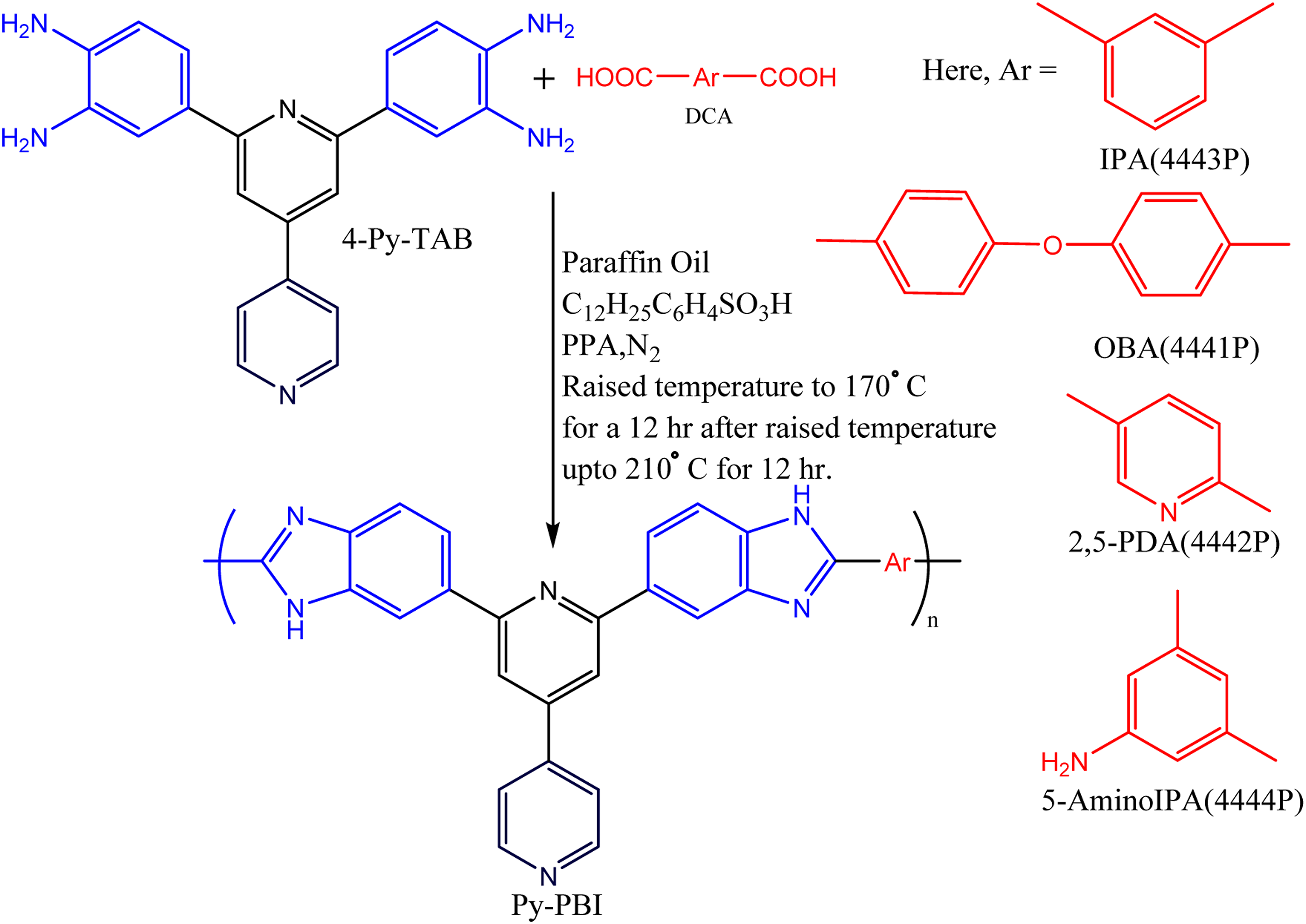
Polymer synthesis
Different dicarboxylic acids and Py-TAB monomers were taken in equal moles into a three-neck flask with polyphosphoric acid (PPA). Polymer synthesis of pyridine bridge (Py-PBI) was carried out by dispersion polymerization, 4,4′-oxybis (benzoic acid) (OBA), isophthalic acid, 5-amino isophthalic acid, 2,5- pyridine dicarboxylic acid was used in this study. 4,4′-[4,4′-bipyridine]-2′,6′-diyl)bis (benzene-1,2-diamine) monomer was taken along with 20 ml paraffin Oil, 0.5 g dodecylbenzene sulfonic acid sodium salt and stirred at room temperaturefor 10 min then added 12 g polyphosphoric acid, andcontinuously stirred for 2 h then raised thetemperatureto 170°C for 12 h and finally, the temperature increased to 210°C for 12 h. After completion of the reaction, cooledreaction mixture to room temperature and washedwith n-hexane(3 times with 100 ml) then air dried Py-PBI. Py-PBI was dissolved in 25 ml con. H2SO4was then precipitated into 200 ml of distilled water. The solution was neutralized with sodium bicarbonate three times. Filtered Py-PBI was again neutralized with distilled water and dried in a vacuum oven at 75°C overnight.
All the characterization details of the synthesized polymer are discussed and described in the supporting information. The method of membrane fabrication and their characterization are also discussed. (Figure 1) Preparation of Py-PBI membrane by solution casting method.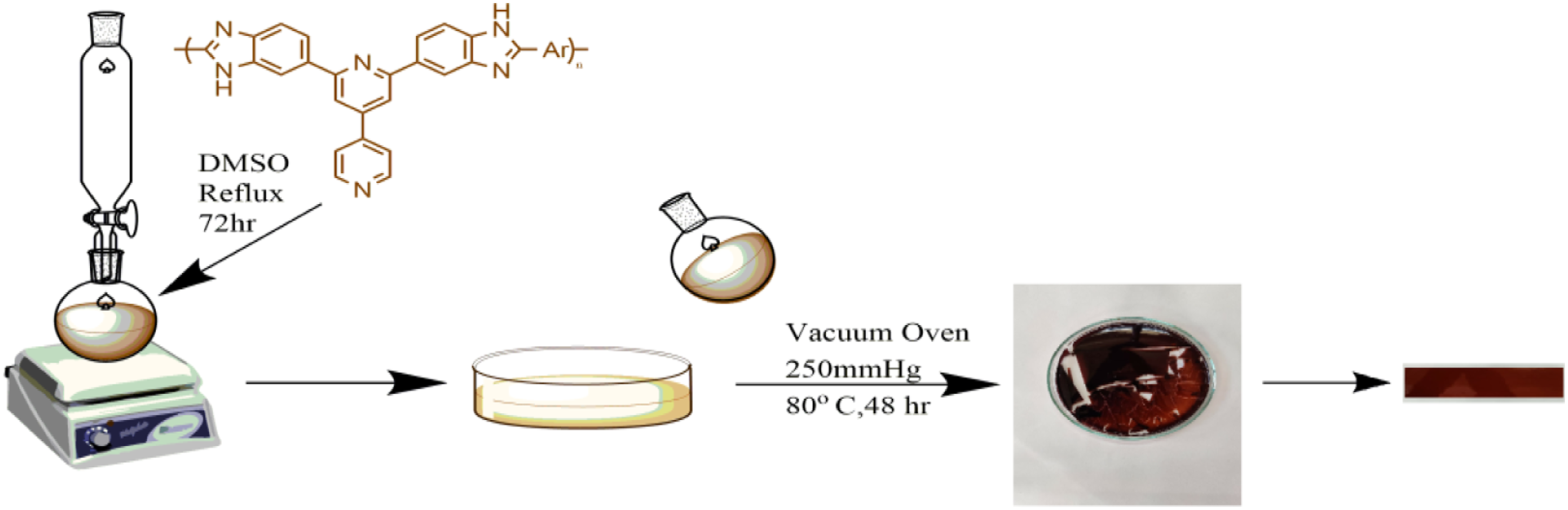
Membrane casting
Membranes were prepared by solution casting method. An 18% (w/v) polymer solution in DMSO was filtered through G-0 sintered funnel on a clean and smooth glass Petri dish. The samples were kept for 48 h in an oven at 80°C to remove the solvent. The films were peeledoff by immersing them in water for 24 h. Such films were finally dried in a vacuum oven at 100°C for 2/3 days to remove the last traces of solvent.
Water uptake study of 4-Py-PBI membranes
The change in mass of a proton exchange membrane during the transition from dry to wet is primarily a change in the water content of the membrane. Therefore, the ratio of the change in mass of the proton exchange membrane to the mass of the membrane in its dry state is defined as water uptake. The wet membranes were taken out, wiped with tissue paper, and weight immediately on a microbalance. The water uptake capacity was calculated using the following equation (1)

Swelling ration
Proton exchange membranes had a change in size after a certain amount of water had been absorbed. The swelling ratio is the ratio of the difference in the size after the membrane to the size of the membrane when in its dry state. The test method is as follows: The swelling ratio of the 4-Py-PBIs membrane was measured. First, all membranes 1 × 2 cm were immersed in deionized water at a specific temperature for 24 h. The water had to remove from the surface of the membrane the weight and size of the membrane are measured using vernier calipers and electronic weight balance. The calculated equation of the swelling ratio is as follows:

Oxidative stability
Oxidative stability had evaluated by the Fenton test. 28 The piece of membranes 1 × 2 cm was immersed in 3% H2O2 containing 4 ppm of Fe2+ [Mohr’s salt (NH4)2(SO4)2.6H2O] at 60°C. The sample was taken out from the answer after desired time, washed thoroughly with water, dried at 110°C for 6 h, and weighed. The Fenton solution was replaced with a fresh stock solution after every 20 h. Stability was evaluated from the load losses after each Fenton test.
Acid doping
Todetermine the H3PO4uptake, accurately weighed dry membranes (1 × 2 cm and 0.70–0.95 mm thick) were immersed in indifferent molar concentrations of H3PO4 for various time intervals at ambient temperature. The sample was taken out from 1 m of the dopant after the intended time, and the excess phosphoric acid adhered to the sample was removed by blotting with tissue paper and weight again. The weight gain due to both water and phosphoric acid was obtained by comparing the weight change before and after doping. For determining the aciduptake by a membrane, these membrane samples were further dried at 100°C under vacuum until an unchanged weight was obtained. The acid-uptake was calculated wt% by the equation:

Ion exchange capacity
The ion exchange capacity (IEC) of membranes had determined by acid-base titration. The dried acid from membranes was soaked in 50 ml 1 M sodium chloride (NaCl) solution for 48 h to allow complete replacement of the hydrogen ions. Then two to three drops of phenolphthalein solution had added to the mixed soaking solution as an indicator. Then 0.01 M NaOH solution was dropped into the mixture changed from colorless to red, and the color did not fade. The IEC was calculated using the following equation:

Current-voltage (I–V) characteristics for the 4-Py-PBI membrane
Current-voltage (I-V) characteristics of 4-Py-PBIs membranes had measured by Model: 4200-SCS; Make Keithley, USA. The piece of membrane 4441P (0.5 × 0.5 cm) was immersed in H3PO4for 5 h. Resistance obtained from the slope. Proton conductivity is calculated from the following equation:

Results and discussion
Synthesis of 4-Py-PBI derivatives
One series of 4-Py-PBI polymer derivatives were synthesized by polymerizing a 4-Py-TAB monomer with four different DCA monomers.4-Py-PBI-Arwhere -Ar attributes the DCA type. The 4-Py-TAB monomer is less expensive and improves polymer properties over the conventional TAB-based PBI. Py-PBIs have good solubility in dimethylacetamide and dimethyl sulphoxide compared to conventional TAB-based PBIs.We prepared a polymer with well-known, commonly used four different DCA structures by polymerizing these dicarboxylic acids with 4-PyTAB derivative.
Preparation of 4-Py-PBI free-standing membrane
Solubility characteristic of 4-Py-PBIs.
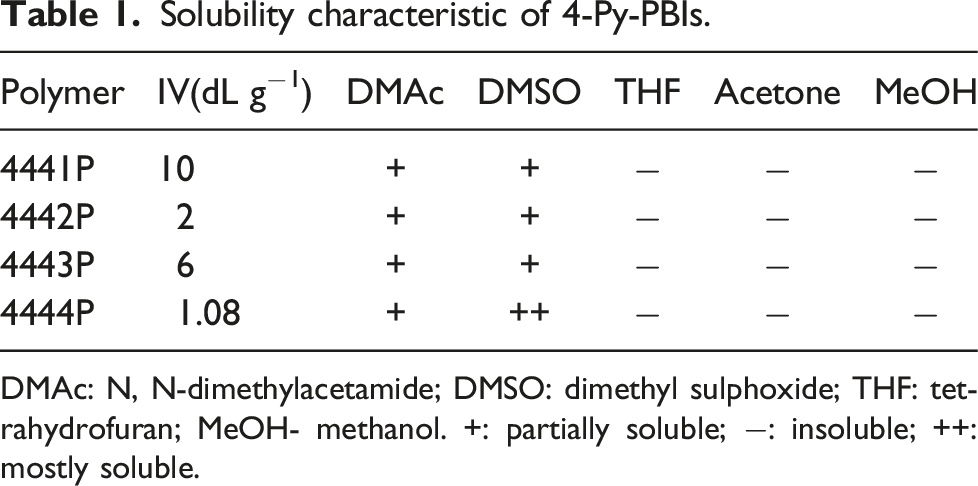
DMAc: N, N-dimethylacetamide; DMSO: dimethyl sulphoxide; THF: tetrahydrofuran; MeOH- methanol. +: partially soluble; −: insoluble; ++: mostly soluble.
The solubility of 4444P polymer was much better than 4441P, 4442P, 4443P polymers and at ambient temperature, the polymer was mostly partially dissolved in these polar aprotic solvents with concentrations up to 18% (w/v). All the 4-Py-PBIs polymer membrane was stable in dimethyl sulphoxide. The 4-Py-PBIs polymer membrane is not stable in N,N-dimethylacetamide solvent. However, 4-Py-PBIs were insoluble in common organic solvents such as acetone, THF, or methanol. The incorporation of additional nitrogen atoms in the polymer backbone is known to enhance the solubility of the polymer. The incorporation of bulky groups in polymer also enhances the solubility due to the disruption of rigid structure and a reduction in cohesive energy.
FTIR analysis
FTIR analysis of 4-Py-PBIs membranes had measured by Fourier Transform Infrared Spectrometer (FTIR)-Shimadzu (IR Prestige-21). Figure 2 shows FTIR spectra of 4-Py-PBIs. FTIR Spectra show strong absorptions in the benzimidazole ring region (1400-1650 cm−1), which is a characteristic absorption of in-plane C = C/C = N ring vibration. Between 2800-3500 cm−1 this broad peak absorption is attributed to ‐N-H stretching vibration for 4-Py-PBIs. Peaks of approximately 1200–1300 cm−1are due to benzimidazole and C-N stretching frequencies. The peaks at approximately 3600 cm−1 due to pyridine-based PBIs correspond to the O-H stretching frequency which may be attributed to the presence of water in the PBIs as these polymers are hygroscopic and high affinity towards water. FT-IR spectra show that the 4-Py-PBIs polymer was synthesized successfully. FTIR spectra of prepared 4-Py-PBI polymers.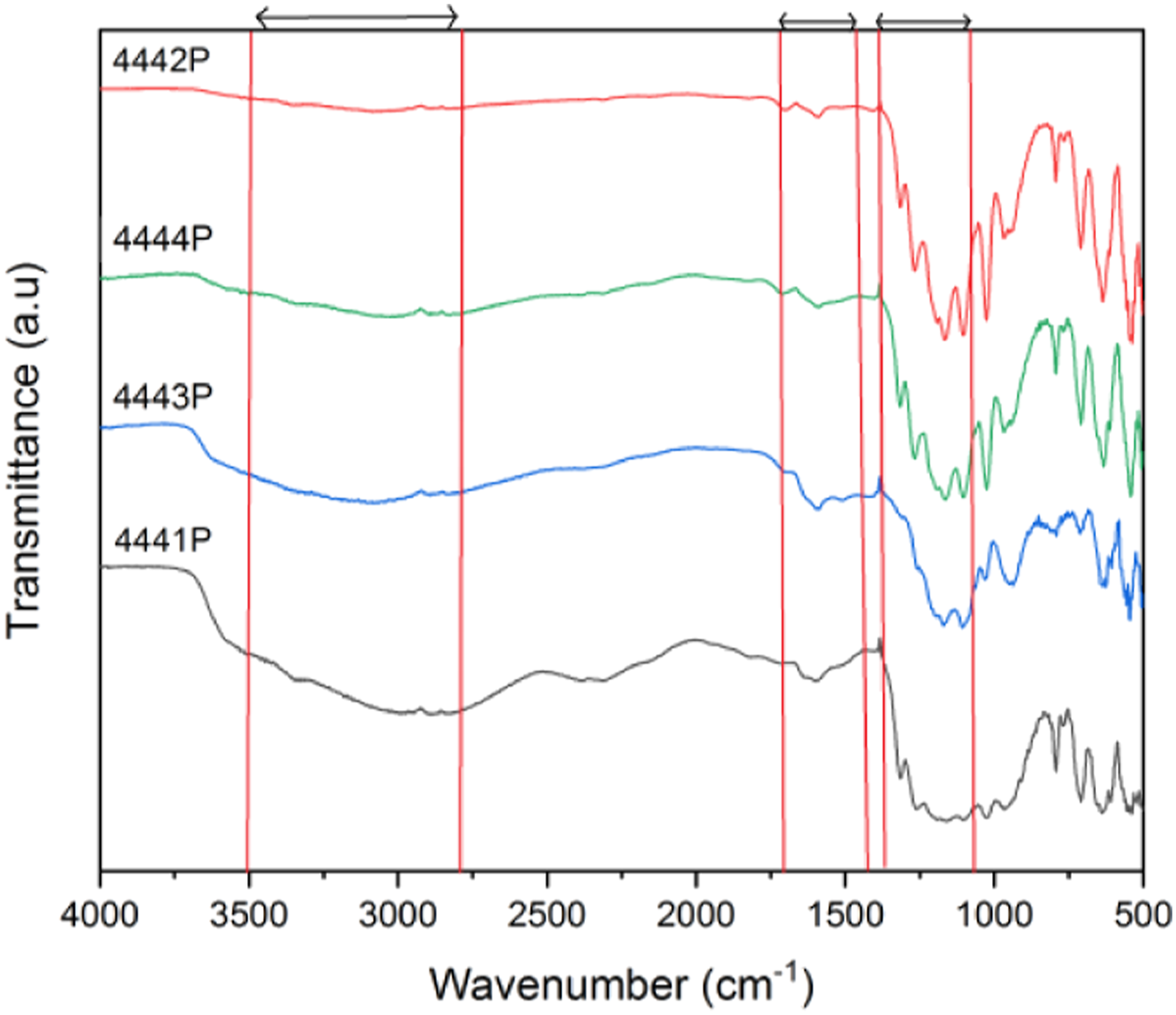
Powder X-ray diffraction analysis
Powder X-ray diffraction analysis of 4-Py-PBIs membranes had measured by X-Ray Diffractometer (XRD) Philips, Holland, and X-pert MPD. The powder XRD patterns of 4-Py-PBIs are shown in Figure 3. PBIshave a semi-crystalline structure. In XRD spectra of the 4-Py-PBIs membrane, there is a peak at about 25° due to the spacing between the two parallel stacking of the benzimidazole rings to the film surface.
29
It seems that the membranes have predominantly semi-crystalline. FTIR and XRD both data gave strong evidence 4-Py-PBIs polymer was synthesized successfully. Powder X-ray diffraction patterns of 4-Py-PBIs.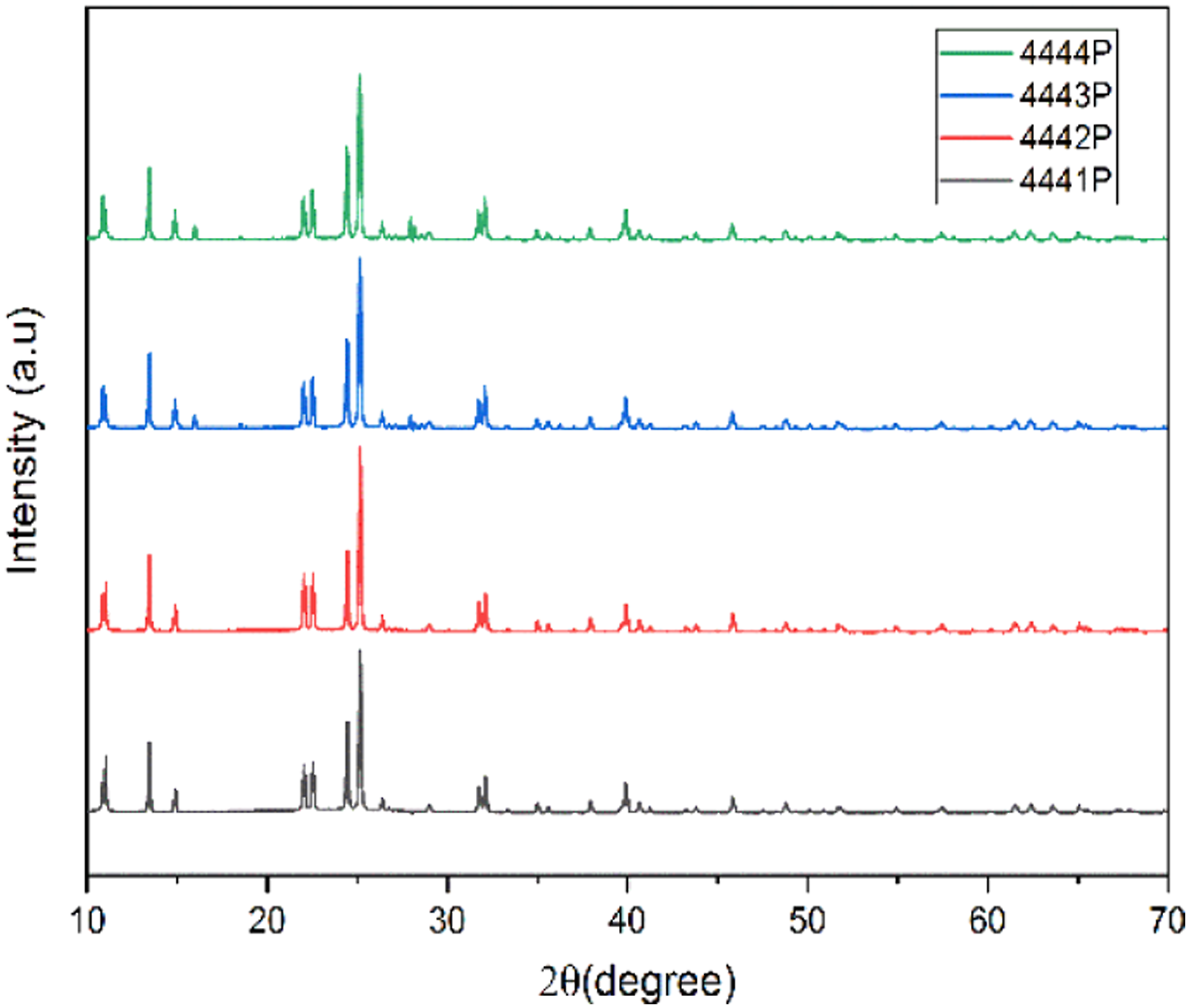
Thermogravimetric analysis
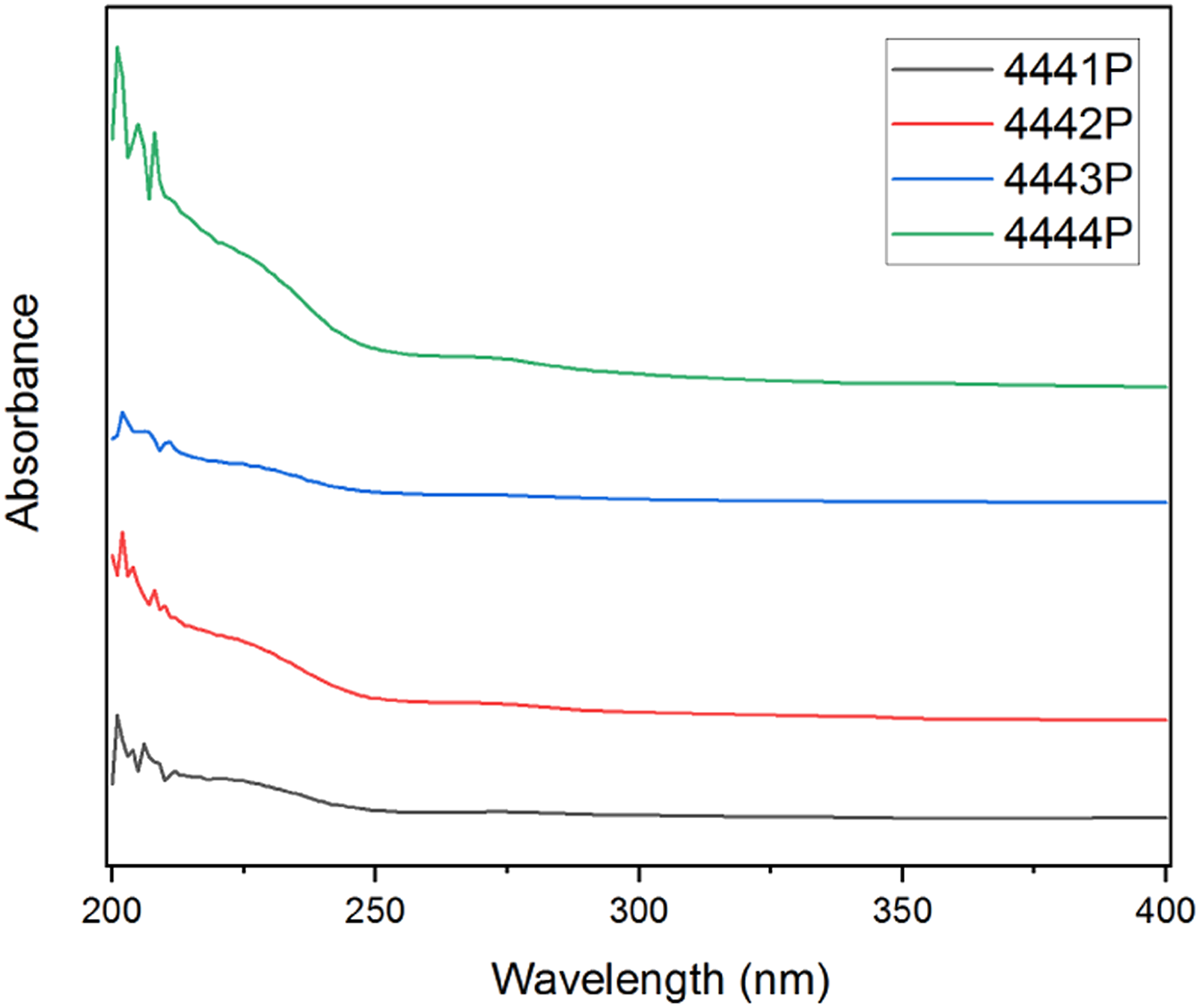
Thermogravimetric analysis of 4-Py-PBI membranes had measured by Differential Thermal Analysis-Thermo Gravimetric Analysis (DTA-TGA)-Mettler Toledo (Model No: TGA/DSC-1). Samples were annealed in a nitrogen environment from room temperature to 700°C. The TGA curve of the 4-Py-PBIs polymer shown in Figure 4 reveals that 4-Py-PBIs polymer is thermally stable up to 300°–500°C. Mass loss of absorbed water is observed between 100°–150°C. All polymers show a drastic increase of mass loss between 490°–600°C arising from the degradation of the PBIs. So FT-IR, XRD, and Thermogravimetric analysis also provide strong evidence of 4-Py-PBIs Polymers were synthesized successfully. (Figure 5) Thermogravimetric analysis for 4-Py-PBIs polymers (20°Cmin−1). Absorption spectra of solid powders of 4-Py-PBI polymers.
Photophysical study of 4-Py-PBI polymers
The photophysical study of all the solid samples of 4-Py-PBIs was carried out by using an Ultraviolet-Visible-Near IR spectrophotometer (UV-VIS-NIR)-Agilent Instrument. The shape of the peak and the peak position are varied depending on the structure of 4-Py-PBIs thatdepends on the DCA used.4-Py-PBIs showsλmax ∼ 201 nm\202 nm (depending on the DCA structure) for π-π* transition. However, in the case of 4-Py-PBIs, we obtained two λmax for π-π*transition due to the pyridine group. In addition to alternative DCA structures, in the current study, we have observed that this shorter energy transition maxima (π-π*transition) can be already changing the electron donating or withdrawing group (resonance effect: +R or –R) functionality in the TAB monomer which changes the net electrons conjugation in the polymer backbone by pulling or pushing the electrons from the PBI backbone. All membranes hadtransparency and thickness between 0.7 mm to 1 mm.
Polymer inherent viscositydetermination by ubbelohde viscometer

4-Py-PBIs intrinsic viscosity.

Table 2 shows that two polymers were high inherent viscosity and two polymers were lowinherent viscosity. Homopolymer based on 4,4′-oxydibenzoic acid hasIntrinsic Viscosity of 10 dl/g, homopolymer based on isophthalic acid hasan Intrinsic Viscosityof 6 dl/g., homopolymer based on 2,5-pyridinedicarboxylic acid has Intrinsic Viscosity 2 dl/g and homopolymer based on 5-aminoisophthalic acid has Intrinsic Viscosity 1.08 dl/g. The 4-Py = PBIs intrinsic viscosity indicates that 4-Py-PBIs have a high molecular weight polymer.
Water uptake study of 4-Py-PBI membranes
Water plays a very important role in the proton conduction process. Water acts as a hydrated proton H2O+ or H5O2+ions which act as a medium to conduct proton in the PEM. In the polymers, molecular water also plays the role of proton acceptor and donor, in the Grotthus mechanism, where the proton jumps from a proton donor to an acceptor and the conduction of protons is accomplished by successive jumps.
31
Proton transfer along acid – water shown in Figure 6(a). (a) Proton transfer along acid-water. (b) Water absorption of 4-Py-PBI membranes.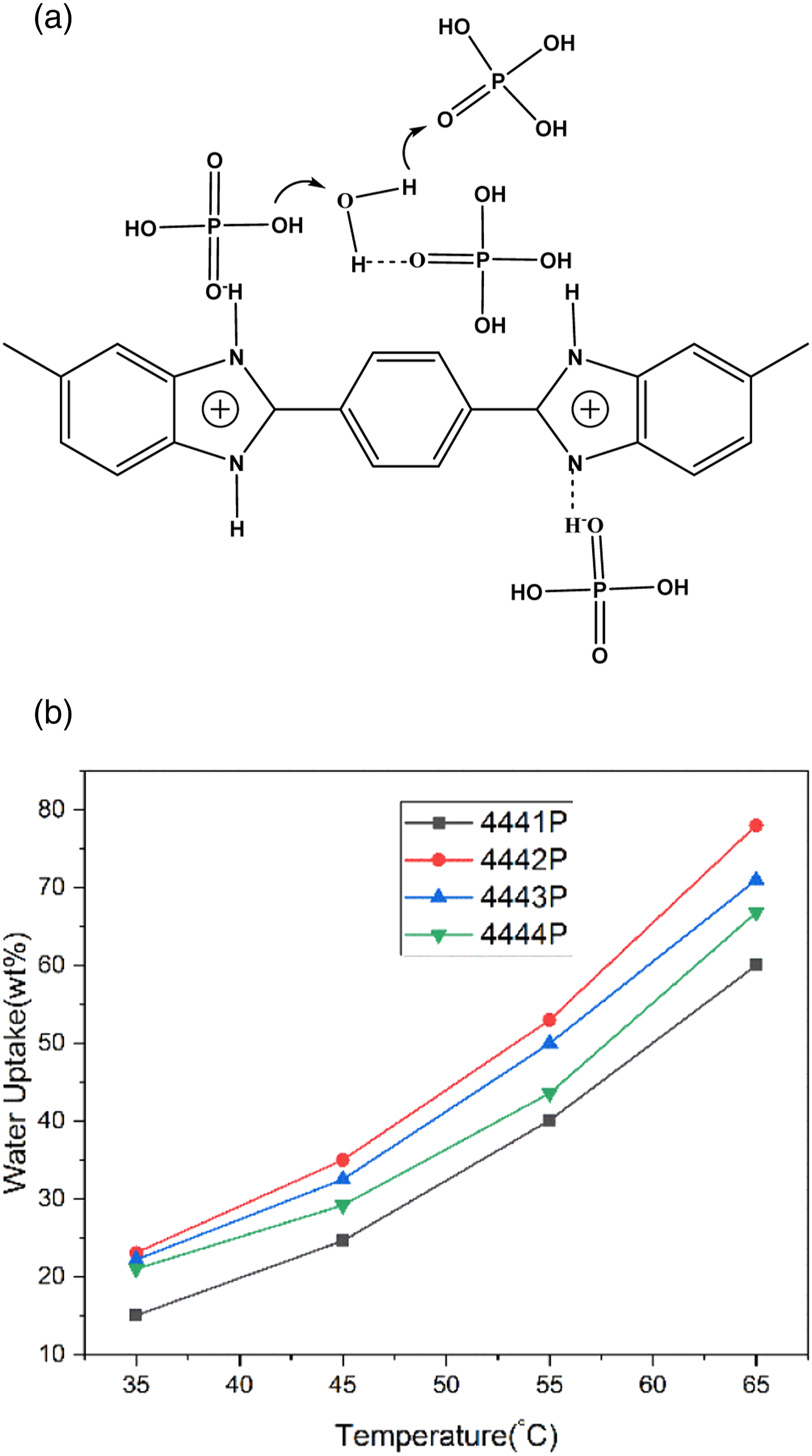
The water absorption water was calculated by measuring the weight of all membranes before and after water absorption, and the results are shown in Figure 6(b). The water absorption rate of the 4-Py-PBIs membrane shows two main trends. One is that all membranes' water uptake ratios increase with the rise of temperature. A homopolymer based on 4, 4′-oxydibenzoic acid (4441P) membrane is an example, at 35°C, the water absorption is 15%, and when the temperature goes up to 65°C, the water uptake of the membrane climbsto 57%.
Homopolymer based on isophthalicacid (4443P), at 35°C, the water absorption is 22.2% and when the temperature goes up to 65°C, the water uptake of the membrane climbs to 67%. Homopolymer based on 2, 5-pyridinedicarboxylic acid (4442P), at 35°C, the water absorption is 23.07%, and when thetemperature goes up to 65°C, the water uptake of the membrane climbs to 71%. Homopolymer based on 5-Amino isophthalicacid (4444P), at 35°C, the water absorption is 21.79% and when the temperature goes up to 65°C, the water uptake of the membrane climbs to 64%.
Swelling ratio of 4-Py-PBI membranes
The swelling ratio outcomes of the 4-Py-PBIs membrane are depicted in Figure 7. It can be revealed that the changingtrend of the swelling ratio is analogous to the changing trend of water uptake, both of which rise with the increase of temperature. Homopolymer based on 4,4′-oxydibenzoic acid (4441P) membrane is an example, at 35°C, the swelling ratio is 4.8%, and when the temperature goes up to 65°C, the swelling ratio of the membrane climbs to 13.1%.Homopolymer based on 2,5-pyridinedicarboxylic acid (4442P), at 35°C, the swelling ratio is 6.1% and when thetemperature goes up to 65°C, the swelling ratio of the membrane climbs to 18%. Homopolymer based on isophthalic acid (4443P), at 35°C, the swelling ratio is 5.3% and when the temperature goes up to 65°C, the swelling ratio of the membrane climbs to 13%. Homopolymer based on 5-Amino isophthalicacid (4444P), at 35°C, the swelling ratio is 5% and when the temperature goes up to 65°C, the swelling ratio of the membrane climbs to 12.5%. Which shows that different dicarboxylic acid plays the role of reducing the swelling ratio of the membrane. There are two main reasons: (1) the different dicarboxylic acid Functionalgroups play an important role in the reduced water absorption rate of the polymer membrane and the swelling ratio depends mainly on the water level in the PEM, so the swelling ratio naturally decreased; (2) a hydrogen-bonding network was formed between water molecules and polymer chain. The 4-Py-PBIs membrane water uptake increases with the swelling ratio. Swelling ratio of 4-Py-PBI membranes.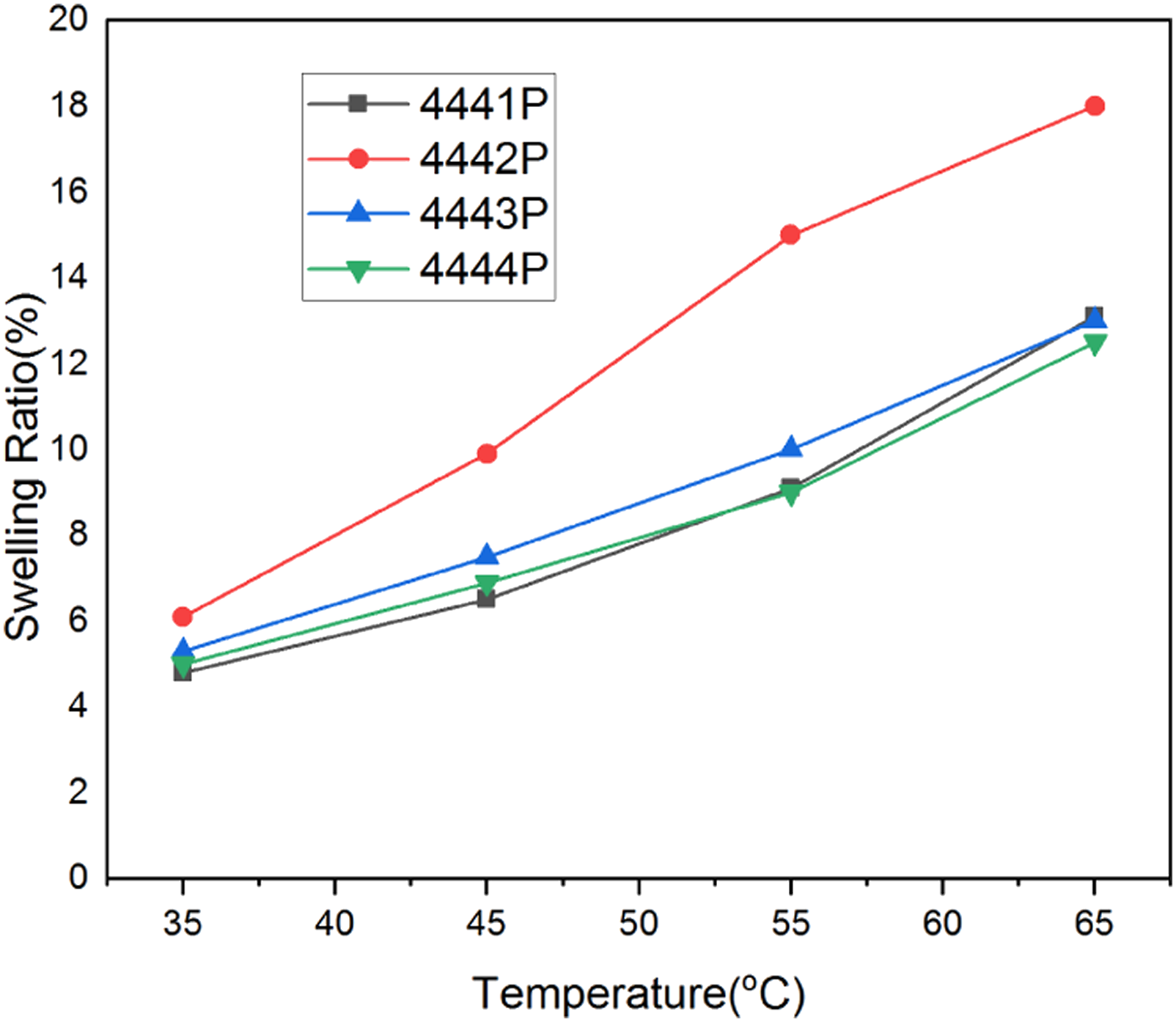
Ion exchange capacity of 4-Py-PBI membranes
Proton transport focuses on proton transport channels, and ion exchange capacity (IEC) is Instrumental in the formation of proton transport channels. 32 The water absorption capacity and proton conducting rate will be greatly increased due to the higher IEC electron amount of the protonexchange membrane, its hydrophilic ion clusters more easily aggregate.
The variation of the IEC 4-Py-PBIs membrane is displayed in Figure 8. It can be noticed that the IEC value of homopolymer based on 2,5-pyridinedicarboxylic acid (4442P) was higher than those homopolymer based on 5-Amino isophthalicacid (4444P). The IEC value of homopolymer based on isophthalicacid (4443P) is shown as 1.7 mmol/g. The IEC value of homopolymer based on 4, 4′-oxydibenzoic acid (4441P) membrane is shown as 0.95 mmol/g. Ion-exchange capacity of 4-Py-PBI membranes.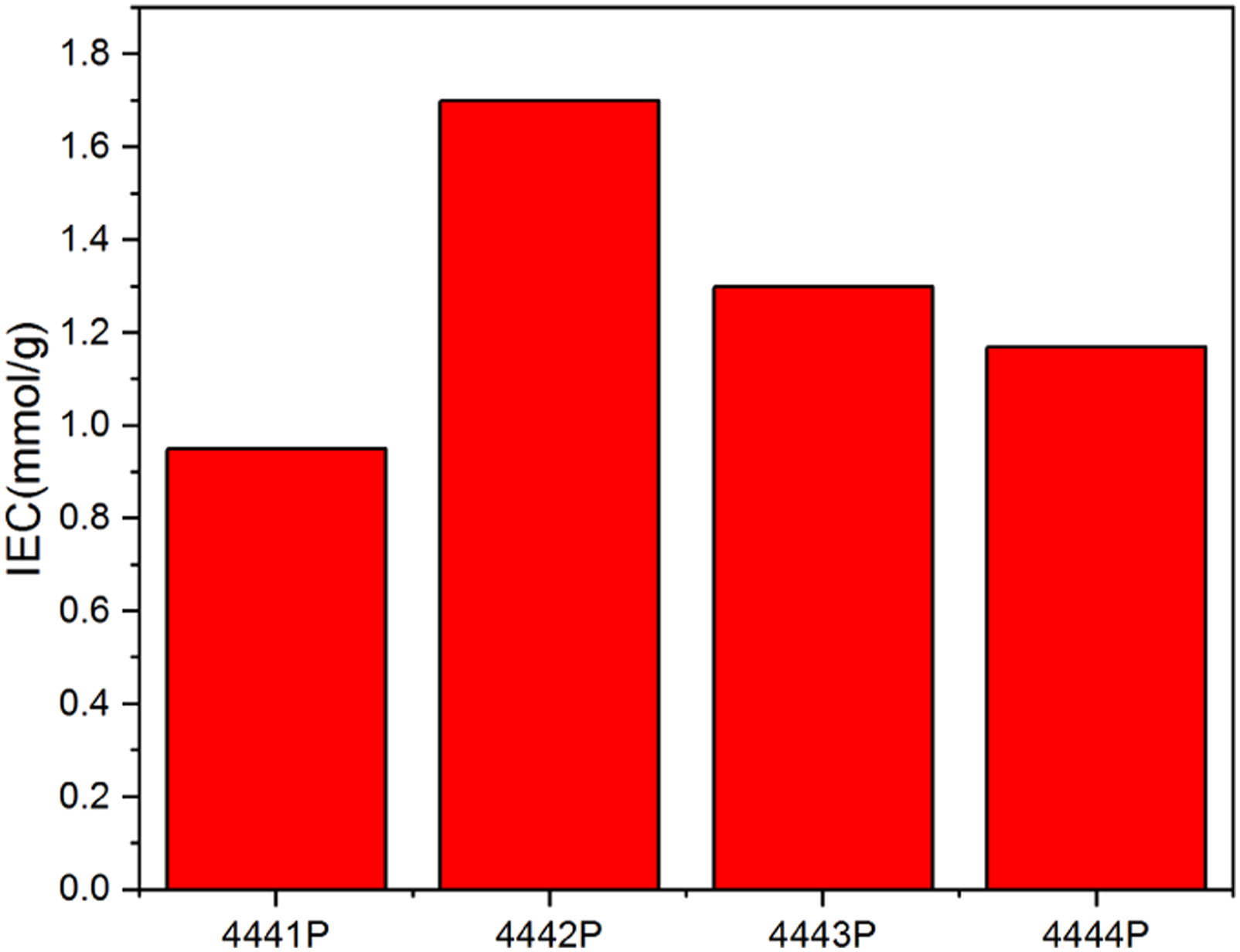
Oxidative stability of 4-Py-PBI membranes
The long-term stability of a polymer electrolyte membrane is very important for the durability of fuel cell performance. Polymer electrolytes had subjected to strong oxidizing and reducing environments in the presence of platinum catalyst, and they generally undergo degradation at operational conditions, which reduces the lifetime of the fuel cell. Membrane-based PBI is known to undergo degradation by OH or OOH radicals formed by the decomposition of H2O2 generated at the cathode during operational conditions.
33
However, high molecular weight PBI has the disadvantage of poor solvent solubility making membrane preparation difficult. So it is equally important to maintain high molecular weight, good solvent solubility, and better oxidative stability for the optimized performance of the membrane. (Figure 9) Oxidative stability of 4-Py-PBIs membranes. Membrane degradation in terms of %wt. Loss of a membrane measured at different time intervals. Membranes were dipped in 3% H2O2 containing 4 ppm Fe2+ (Fenton solution) at 60°C in an oven taken out after 20 h and measured their weight loss after drying. The procedure is repeated with fresh Fenton solutions.,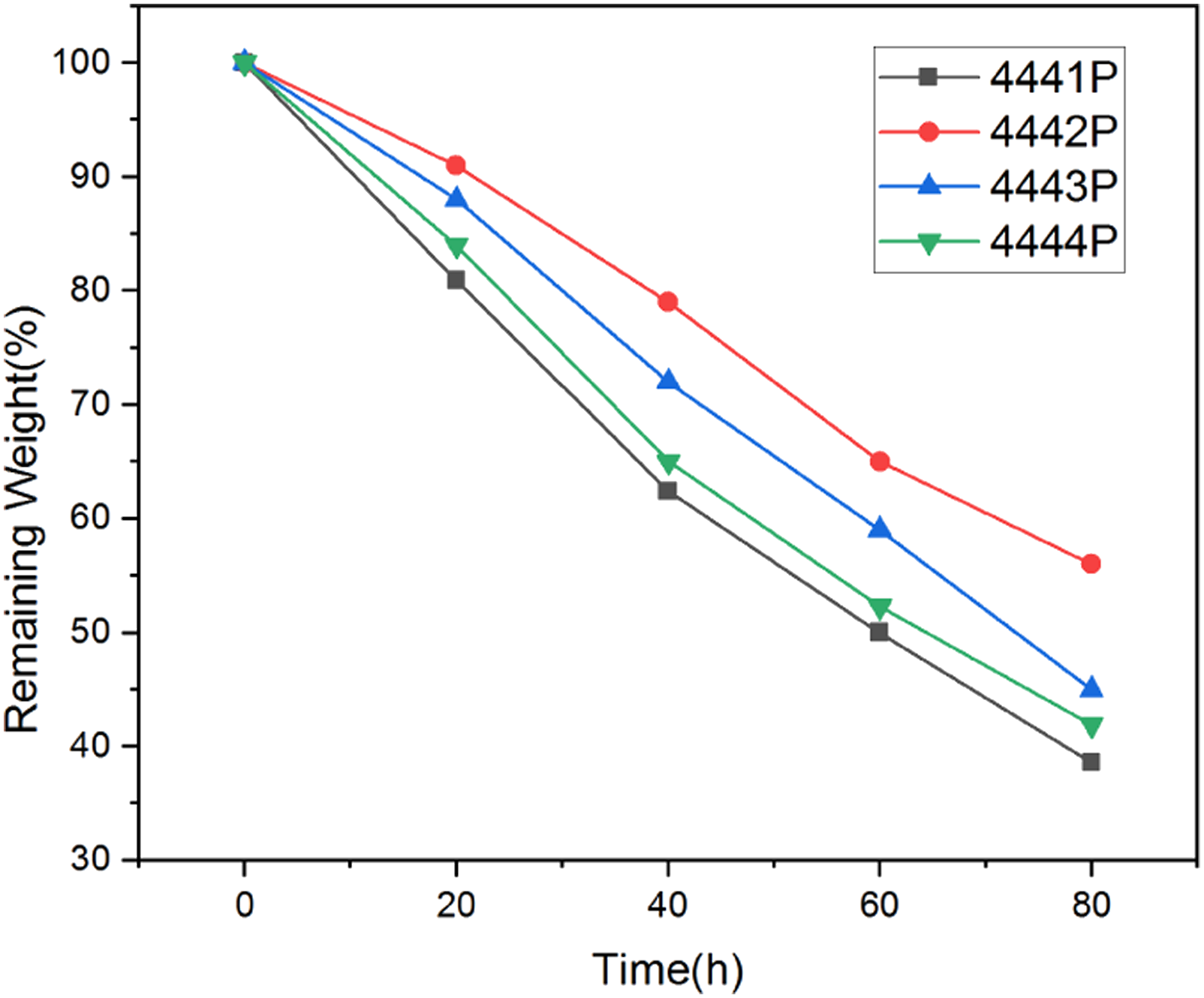
Experimentally, the oxidative stability of the PBI membrane is evaluated by the Fenton test. The membrane of 4-Py-PBIs was evaluated for oxidative stability by the Fenton test. Membranes of PBIs containing pyridine groups were evaluated for oxidative stability by the Fenton test. A weight loss of 4442P polymer membrane containing pyridine groups in the main chain and side chain shows lower weight loss after 80 h respectively. Homopolymer based on 4,4ˈ-oxibis benzoic acid shows higher weight loss than other polymers.
4-Py-PBIs acid uptake study
Having confirmed that the pyridine group containing PBIshas good film-forming properties, high thermal stability, and good mechanical strength. Proton conductivity of PBI depends on phosphoric acid doping level. The acid uptake behavior of newly synthesized polymers is anticipated to differ from conventional-based PBI, due to structural variations. Polymer electrolyte membranes based on PBI are generally doped with phosphoric acid because it is playingan important rolein Proton conductivity. The acid uptake capacity of newly synthesized polymers was determined by doping membranes in various molar concentrations of H3PO4 solutions at room temperature for different periods. The doping level is defined as the weight present of acid per gram of the polymer or copolymers. It is known that PBI is generally doped in 85% H3PO4 at room temperature.
Polymers based on 4-Py-PBIs are found to dissolve in 12 M H3PO4 at room temperature. Therefore, a detailed study on the effect of phosphoric acid concentration (2–12 M) on doping level was undertaken. The polymers (4441P, 4442P, 4443P, 4444P) on doping with 12 M H3PO4 are observed to take up large quantities of phosphoric acid (4-5 times its weight) within 10–15 h and got dissolved at 100°C in absorbed phosphoric acid during drying though they are not soluble at room temperature. The acid doping level of polymers increases with increasing concentration of phosphoric acid (Figure 10). Acid uptake behavior of homo-polymer based on 5-Amino isophthalic acid is slightly lower in 2 M solution. Acid-uptake of other copolymers is comparatively higher. Acid uptake of 4442P, 4443P, and 4444P in 12 M solutions is close to eachother. The saturation point for 4-Py-PBIs polymer samples is observed to be between 12–15 h, while for PBI ∼ 24 h. The doping level depends on the concentration of acid. Thus, PBI containing pyridine group could not be doped at a higher doping leveldue to solubility limitations. Water uptake and acid uptake both are important for proton conductivity. The 4-Py-PBIs membrane proton conductivity is becauseof higher water uptake and acid uptake level. Swelling data are consistent with PA loading data, as it is expected that a higher PA loading pushes the membrane to swell more. Doping of phosphoric acid (% by weight) in 4-Py-PBI polymers according to H3PO4 concentration.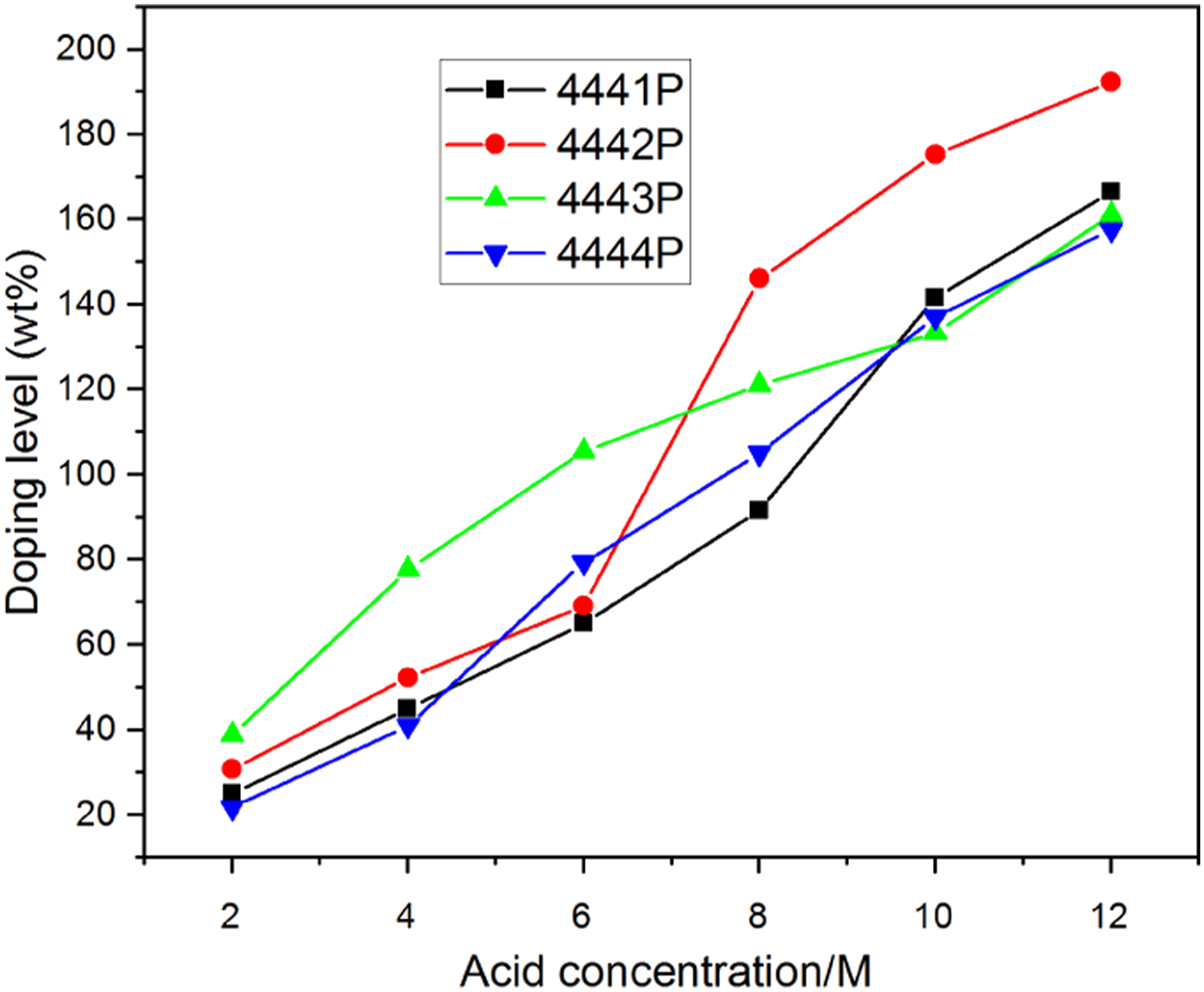
4-Py-PBIs phosphoric acid retention
During the operation of high-temperature PEMFCs, the phosphoric acid-doped PEMs suffer from acid leaching. To test the PA retention ability of the PEM, we performed an acid leaching test with the PA-doped membranes by exposing them to water vapour at 100°C for a period of 3 h and measuring the remaining weight every 30 min. It was found that all membranes exhibit a noticeable decrease in the initial 1 h, which is attributed to the discharge of free water and acid molecules from the membranes and then slowly saturates (Figure 11). PA stability of the 4-Py-PBIs membranes under the water vapour at ∼100°C.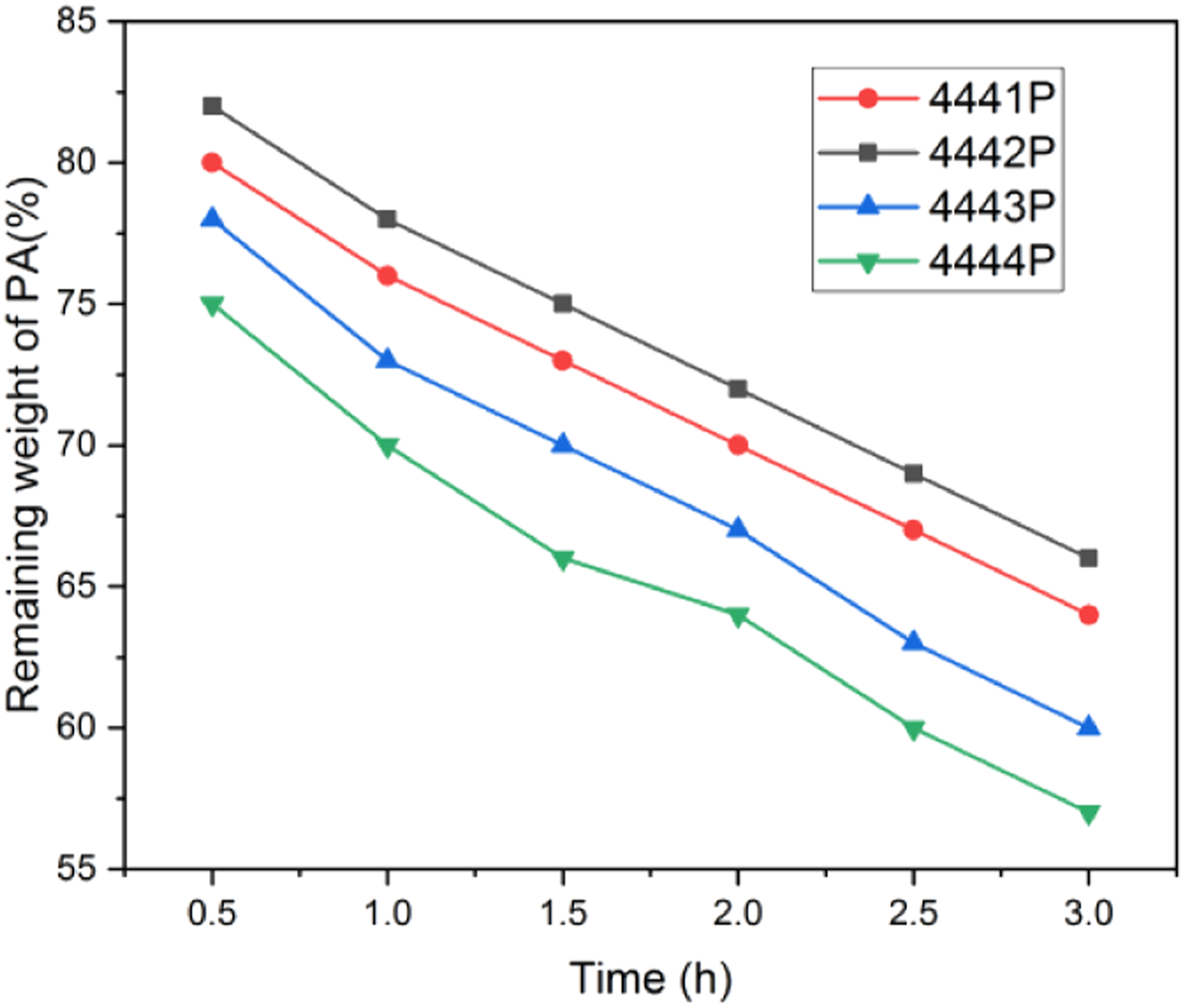
It is very much clear from the data that the decrease in weight has a strong influence on the polymer structure. The least weight loss is observed in the case of 4442P and the maximum is observed for 4444P. The data confirmed that the presence of Py-bridge groupin the backbone improves the acid retention capacity of the membranes. It is worth nothing that among all membranes, 4442P polymer absorbed more PA (Figure 10), and less PA leaching out from the membrane may be due to the interaction between pyridine and PA molecules.
Mechanical properties
The mechanical property of 4-Py-PBIs membranes had measured by ASTM D882 using a universal testing machine (UTM) (Instron 8841, Norwood, MA, USA). In general mechanical the strength of polymer membranes results from attractive forces between polymer molecules, which are dipole-dipole interactionsincluding hydrogen bonding, and London dispersion forces between non-polar molecules. In addition, ionic dipole interaction and ionic bonding also contribute to mechanical strength. For pure PBI membrane, the hydrogen bonding between –N = and –NH- groups in dominantforce determines its mechanical strength. It is known that rigid-rod-like structures PBIs have very good tensile strength. Figure 12 reveals that two 4-Py-PBIs membranes are mechanically strong whereas the other two membranes were less flexible homopolymers based on 2,5 Pyridine dicarboxylic (4442P) acid has a tensile strength around 6.5 MPaand homopolymer based on 5-Aminoisophthalic acid (4444P) has a tensile strength 13.9 MPa. Homopolymer based on 4,4′-Oxybis (benzoic acid) (4441P) has atensile strength of 92 MPa and homopolymer based on IPA(4443P) has 94 MPa respectively. Probably due to the regular structure balanced by the equimolar (50:50 mol %) monomer ratio in this sample. In general, the mechanical properties of PBIs are greatly influenced by molecular weight, water uptake, and structural modification.
33
Thus, PBIs containing pyridine groups have sufficiently high tensile properties useful for polymer electrolyte membrane applications. Mechanical property of 4-Py-PBI membranes.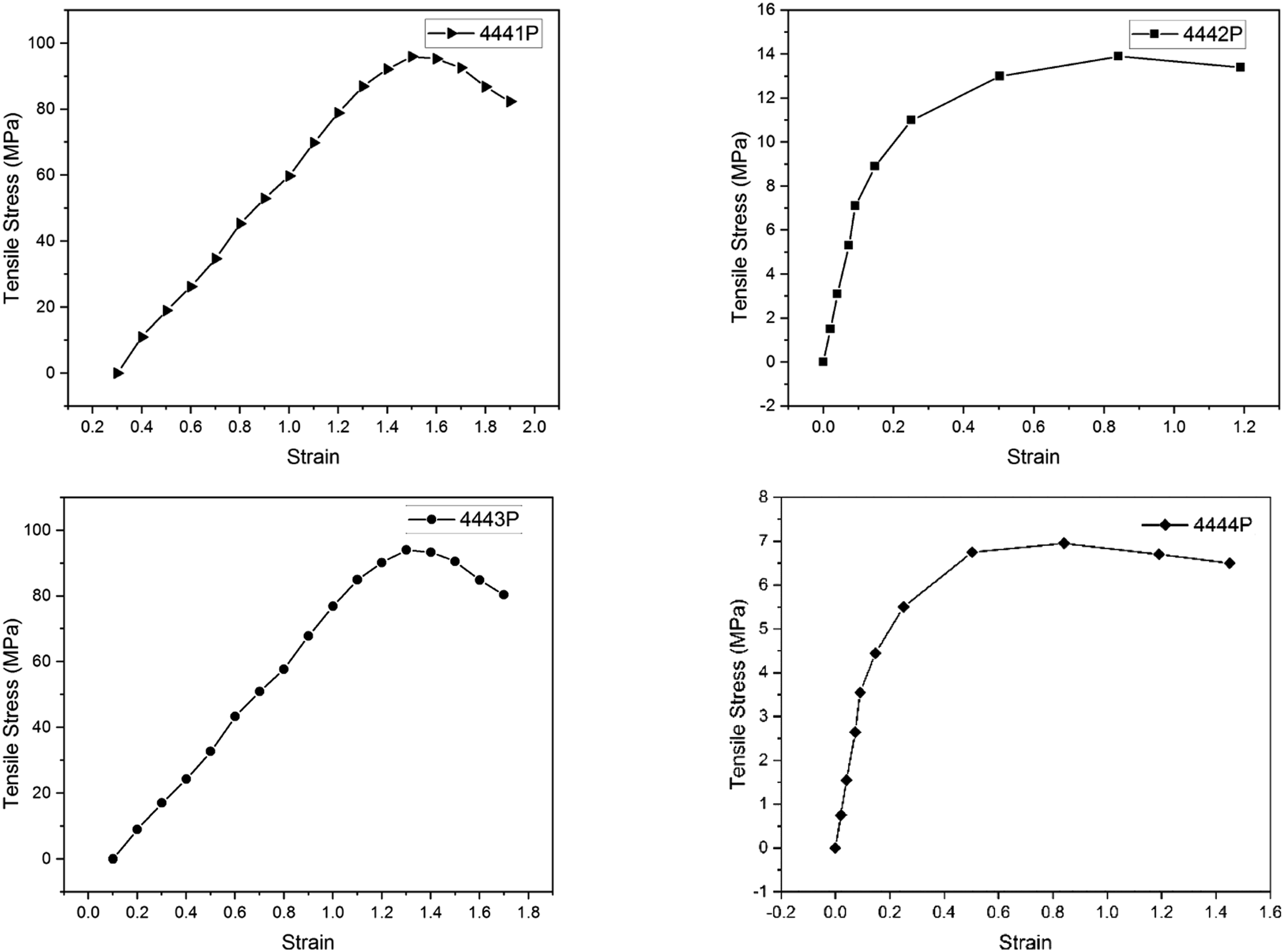
Current-voltage (I–V) characteristics for the 4-Py-PBI membrane
Current-voltage (I–V) characteristics of 4-Py-PBIs membranes had measured by Model: 4200-SCS; Make Keithley, USA. Figure 13 displays the current-voltage (I–V) characteristics for homopolymer based on 4,4′-Oxybis (benzoic acid) (4441P) membrane which shows that membrane resistance has 1.83 × 10⁸ Ω which can be found from the slope and 4441P has conductivity 0.546 S cm−1. Current-voltage (I–V) characteristics indicate that the polymer is electron conductive. Asymmetric current-voltage (I–V) characteristics for the 4-Py-PBI membrane.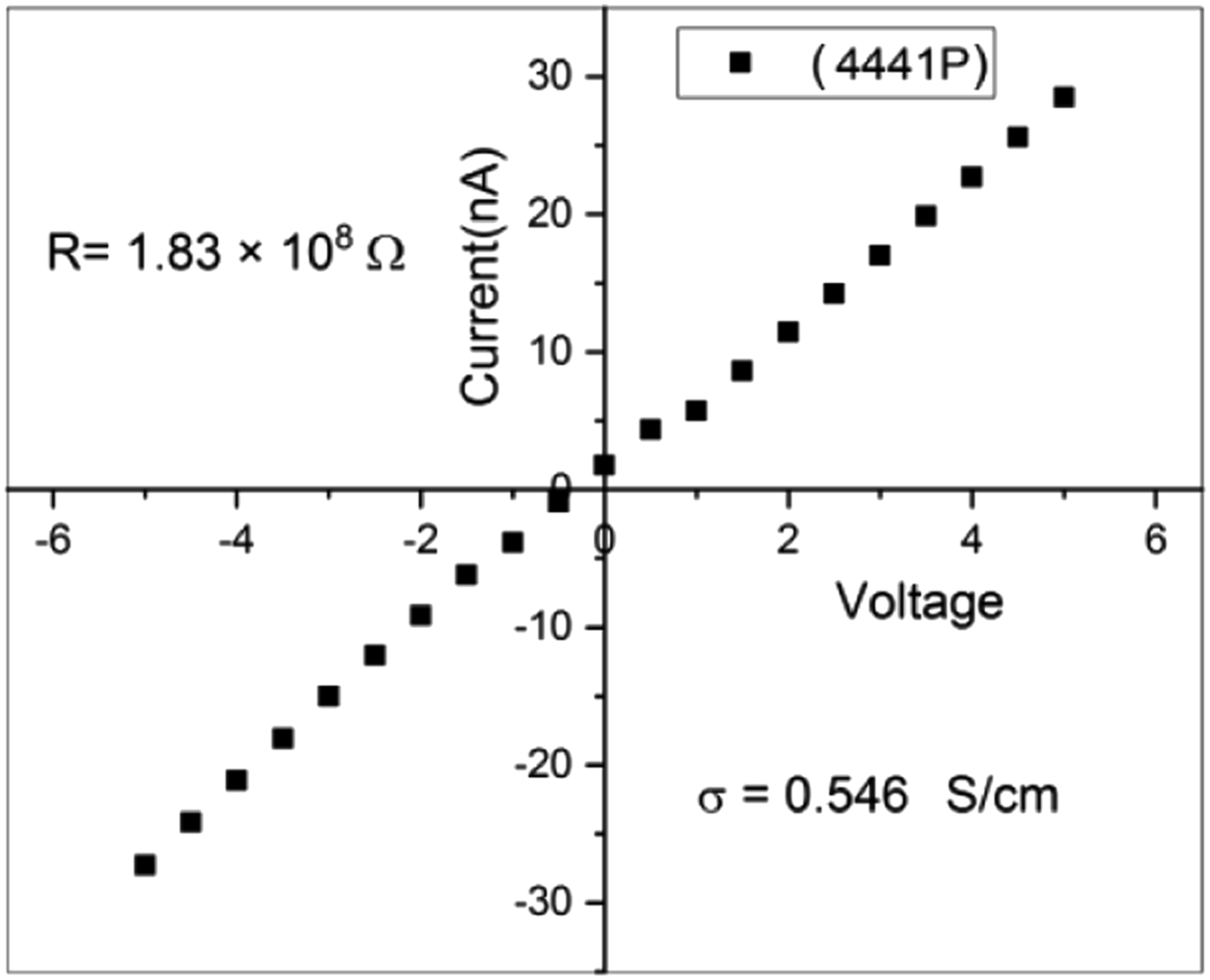
Conclusion
A series of novel 4-pyridine bridge polybenzimidazoles (4-Py-PBIs) are synthesized by polymerizing with four different dicarboxylic acids with an efficient and cost-effective 4-pyridine bridge tetramine(4-Py-TAB) monomer replace the conventionally used TAB monomer. All four 4-Py-PBIs polymer characterization confirms the molecular structure of the resulting polymers. These polymers display better stability compared to the conventional PBI; remarkably good solubility of all 4-Py-PBIs in a high boiling organic solvent like dimethyl sulfoxide, which eliminates the inherent processability problems of PBI-type polymers. Thermal, Chemical, and mechanical stability studies indicate the thermomechanical and chemical stabilities of 4-Py-PBIs are as good as conventional PBI. Photophysical, powder XRDand FT-IR studies confirm the structural aspects of the newly synthesized polymer. TGA data of 4-Py-PBIs shows that all polymers are thermally stable. The mechanical property of 4-Py-PBI membranes is also good. As a result of mechanical properties, it is seen that the mechanical strength of the 4-Py-PBIs membrane increases with the increasing inherent viscosityof the polymer. Homopolymer based on 4,4′-Oxybis (benzoic acid) (4441P) membrane which shows that membrane proton conductivity is 0.546 S cm−1.34–36
Footnotes
Acknowledgements
The authors are grateful to the Head, Department of Chemistry, Sardar Patel University for providing lab facilities and Instrumental facility.
Declaration of conflicting interests
The author(s) declared no potential conflicts of interest with respect to the research, authorship, and/or publication of this article.
Funding
The author(s) disclosed receipt of the following financial support for the research, authorship, and/or publication of this article: We would also like to thank the scholarship program SHODH - Scheme of Developing High Quality Research, Education Department, Gujarat State, India, for granting the scholarship.
Data availability statement
Data available on request
