






Abstract
A novel fluorinated phthalonitrile monomer is synthesized via nucleophilic substitution reactions using 4,4′-difluorobenzophenone, bisphenol AF, and 4-nitrophthalimide. Two resins with distinct curing temperatures are obtained using 4-(aminophenoxy) benzonitrile (APPH) as the curing agent. The successful synthesis of the monomer is confirmed by nuclear magnetic resonance (NMR) and Fourier transform infrared spectroscopy (FTIR). Differential scanning calorimetry (DSC) is employed to determine the melting point and curing behavior of the monomer, revealing a melting point of 102°C and a calculated processing window of 148°C. Furthermore, a relatively low average apparent activation energy was calculated. The morphology of the polymer cross-section was characterized using scanning electron microscopy (SEM), and the resin cross-section exhibited characteristics consistent with brittle fracture. Thermodynamic properties of the polymers are investigated via dynamic mechanical analysis (DMA), revealing storage modulus of 2313 MPa and 2433 MPa for the two resins at room temperature. Thermal stability is evaluated by thermogravimetric analysis (TGA), revealing that both resins exhibited temperatures for 5% weight loss above 500°C under both nitrogen and air atmospheres.
Introduction
In contemporary societal development, there is an ever-increasing demand for high-performance materials across various industries. Currently, common thermosetting resins include polybenzimidazole, phthalonitrile resin, phenolic resin, polyimide, etc.1–6 Compared with thermoplastic resins, they have better mechanical properties, high glass transition temperatures (Tg), excellent thermal stability, and corrosion resistance. 7 These characteristics allow for widespread applications in aerospace, 8 insulating materials, 9 high-frequency electronic packaging, 10 and other fields. Among these, phthalonitrile resin is a high-performance resin polymerized from aromatic monomers containing cyano groups. Phthalonitrile resin has exceptional mechanical properties and thermal stability because of its stiff ring structure and the production of stable nitrogen-containing heterocyclic structures during curing. 11
Some phthalonitrile resins are prepared via nucleophilic reactions using simple diphenols and 4-nitrophthalonitrile monomers. These monomers have narrow processing windows owing to their high rigidity and melting points.12,13 Researchers added flexible chain segments like ether bonds 14 and siloxane bonds 15 to lower the melting point and further improve the processability of phthalonitrile monomers. Han et al. introduced allyl and methoxy groups into phthalonitrile monomers, achieving a minimum melting point of 61°C. In a nitrogen atmosphere, T10% are all above 540°C. 16 Hu et al. successfully synthesized the self-curing monomer DPBPN with disulfide bonds, suggesting that radical curing may occur in phthalonitrile nitrile resins. DPBPN has a low melting point (124.5°C) and a processing window of 120°C, resulting in resins with exceptional thermal stability and high glass transition temperatures. 17 Liu et al. produced phthalonitrile monomers with maleimide structures. The addition of methyl groups effectively reduced the monomer melting point. Moreover, the resins had residual carbon content greater than 60% at 800°C. The results demonstrated excellent mechanical properties, thermal stability, flame retardancy, and adhesion. 18 Ma et al. produced self-catalyzed phthalocyanine-containing phthalocyanine monomers by reacting bio-based vanillin and isovanillin with furfurylamine. The resins’ Tg all exceed 380°C, and T5% are above 400°C in the nitrogen atmosphere. 19
In previous studies, the introduction of fluorine atoms has been shown to enhance the mechanical properties and thermal stability of resins, because of fluorine’s high bond energy (489 kJ mol−1) and strong electronegativity, which results in exceptionally high bond energy and stability for the C-F chemical bond.20–22 This makes it a candidate for high-performance materials. Chen et al. 23 synthesized a benzimidazole-fluoroaromatic ether nitrile (FAEN-Bz) resin. Results indicate that the introduction of cyanide and fluorine atoms gives the resin exceptional dielectric and thermal stability (T5% = 407°C).
This study began with monomer molecular design, with the successful synthesis of a fluorinated phthalonitrile monomer (COFN). This monomer includes both fluorine atoms and flexible segments (aromatic ether bonds and carbonyl groups), and the incorporation of a benzene ring contributes to improved resin performance. Using the autocatalytic 4-(amino-phenoxy) phthalonitrile (APPH) monomer as the curing agent, two resins with different curing programs were prepared. This study found that the monomer possesses a low melting point and a broad processing window. The prepared resins exhibit good thermal stability and mechanical properties.
Experimental
Materials
4,4′-Difluorobenzophenone (AR, 99%) was obtained from Shanghai Macklin Biochemical Technology Co., Ltd. 4-Nitrophthalonitrile (AR, 98.0%) was purchased from Zhengzhou Alpha Chemical Co., Ltd. Bisphenol AF (AR, 99.88%) was provided by Shanghai Bide Pharmaceutical Technology Co., Ltd. Potassium carbonate anhydrous (K2CO3, AR, 99.0%), N, N-dimethylformamide (DMF, AR, 99.5%), and xylene (AR, 99.0%) were acquired from Tianjin Fuchen Chemical Co., Ltd. All chemicals were used as received without further purification.
Synthesis of COFN monomer
Following the procedure outlined in Scheme 1, 4,4′-difluorobenzophenone (3.27 g, 15 mmol), bisphenol AF (10.8 g, 30 mmol), K2CO3 (9.66 g, 70 mmol), xylene (10 mL), and DMF (50 mL) were added to a 250 mL three-neck round-bottom flask. The Dean-Stark water distributor and reflux condenser were installed. The mixture was refluxed with magnetic stirring at 165°C for 10 h until no more water droplets formed in the water distributor. Heating was then stopped, the mixture cooled to 85°C, and xylene was removed from the reaction system by vacuum distillation. 4-nitrophthalonitrile (5.19 g, 30 mmol) was added to the system, and the reaction was continued at 85°C for 8 h. The whole reaction was carried out in an inert atmosphere. After reaction completion, the mixture was poured into deionized water (1000 mL), yielding a pale pink precipitate. The precipitate was washed repeatedly with large volumes of deionized water until the filtrate became clear and transparent. The pale pink layer was collected by vacuum filtration. The filter cake was dried in a vacuum oven at 60°C for 24 h. The yield was 86.2%. Synthesis of COFN phthalonitrile monomer and polymers.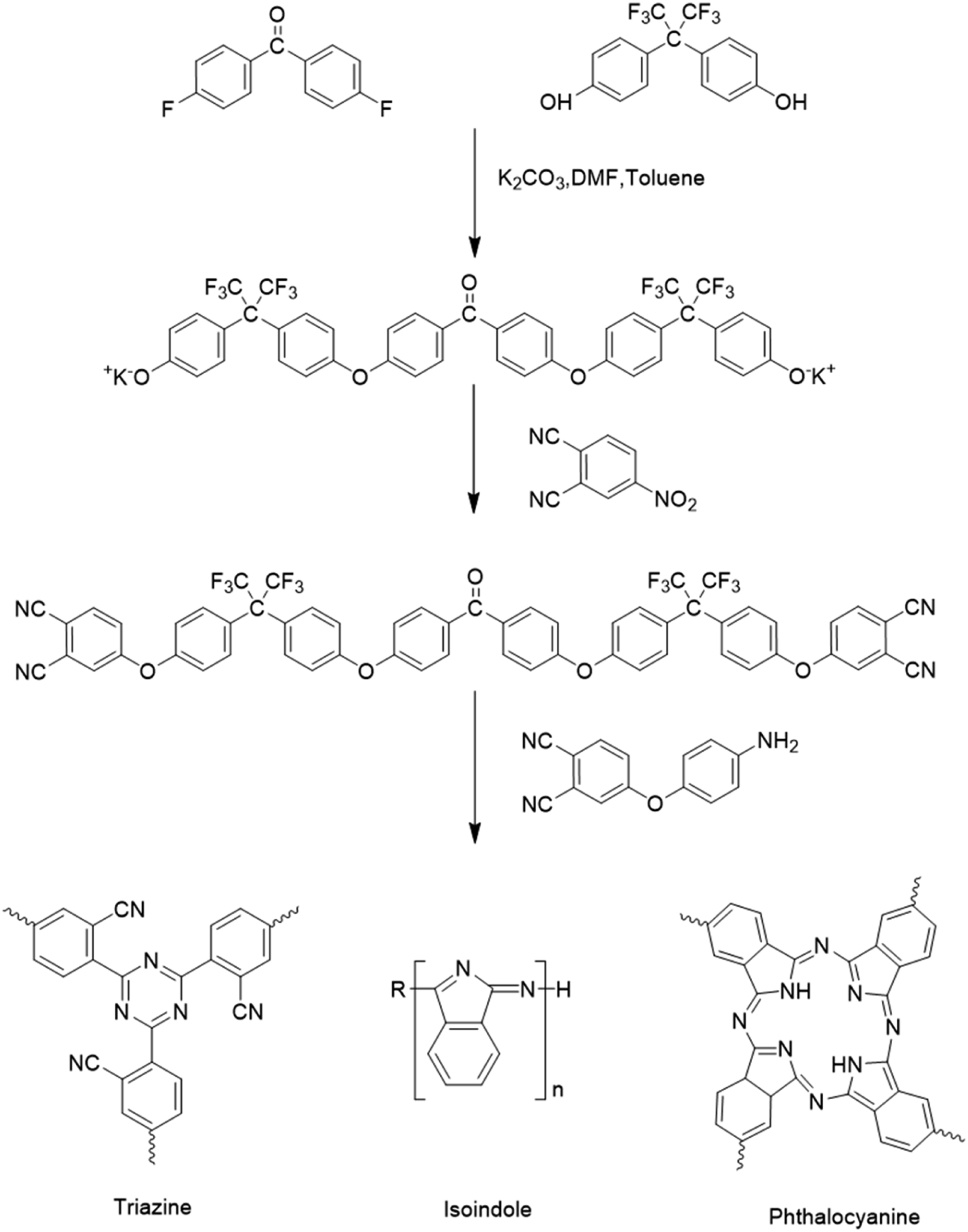
1H NMR and 13C NMR confirmed the structure of the COFN monomer, as shown in Figure S1 and Figure S2, respectively. The characteristic peaks corresponding to hydrogen and carbon atoms in the structural formula are labeled in the figures. Specific chemical shift data are as follows:
1H NMR (400 MHz, DMSO-d6, δ): 8.16 (d, J = 8.9 Hz, 2H, Ar H), 7.96 (d, J = 2.2 Hz, 2H, Ar H), 7.83 (d, J = 8.2 Hz, 4H, Ar H), 7.57–7.52 (m, 2H, Ar H), 7.45 (t, J = 10.8 Hz, 8H, Ar H), 7.31 (d, J = 8.2 Hz, 4H, Ar H), 7.22 (d, J = 9.4 Hz, 8H, Ar H).
13C NMR (100 MHz, DMSO-d6, δ): 193.66 (C 1), 160.36 (C 7), 159.94 (C 23), 156.89 (C 8), 155.42 (C 22), 136.90 (C 26), 133.14 (C 2), 132.71 (C 3, C 4)), 132.56 (C 18), 132.39 (C 19), 132.31 (C 11), 132.24 (C 12), 129.44 (C 13), 128.13 (C 17), 125.87 (C 15), 124.15 (C 25), 123.63 (C 24), 123,03 (C 16), 120.40 (C 6), 120.36 (C 5), 119.69 (C 20, C21), 118.88 (C 9, C 10), 117.38 (C 27), 116.27 (C 29), 115.80 (C 30), 109.69 (C 28), 63.86 (C 14).
Synthesis of APPH
APPH was synthesized according to the previously reported process. It is a self-catalyzing phthalonitrile monomer. 24
Preparation of COFN polymers
Curing procedure for COFN resin.

Characterization methods
The Shimadzu IRAffinity-1S spectrometer was used for infrared testing, with a resolution of 4 cm−1 and a wavenumber range of 4000–400 cm−1. The Bruker AVANCE-400 NMR spectrometer was used for 1H NMR and 13C NMR, with DMSO-d6 and tetramethylsilane (TMS) as solvents and internal standards. The operating frequencies for 1H NMR and 13C NMR were 400 MHz and 100 MHz, respectively. The TA Instruments Q20 differential scanning calorimeter (DSC) under a nitrogen flow rate of 100 ml min−1 and a temperature range of 30–350°C. The cross-sectional microstructure of the resin was analyzed using a Guoyi Quantum SEM 3200A. The surface was gold-sputtered prior to scanning, and an acceleration voltage of 10 kV was selected. Thermogravimetric analysis (TGA) was performed using the TA SDT Q600 simultaneous thermal analyzer with a nitrogen or air flow rate of 100 ml min−1 at a heating rate of 10°C min−1, and a temperature range of 30–800°C. Dynamic mechanical property test was conducted using a Hitachi dynamic mechanical analyzer (DMA-7100) in a dual cantilever beam mode at a frequency of 1 Hz and a temperature range of 30–400°C.
Results and discussion
Characterization of COFN monomer
The COFN monomer was prepared via a nucleophilic substitution reaction in DMF and xylene solvents. Firstly, 4,4′-Difluorobenzophenone and bisphenol AF formed a potassium salt in the presence of K2CO3, which is then capped with 4-nitroisophthalonitrile to yield the COFN monomer. Finally, the monomer forms the resins in the presence of a curing agent.
To further verify the structure of the monomer, the infrared spectra of the COFN monomer was analyzed, as shown in Figure 1. The absorption peaks at 1249 cm−1 and 1176 cm−1 are generated by the oxygen-ether bond (O-Ar-O) and the trifluoromethyl group (-CF3), respectively, in the monomer structure. The peak at 3086 cm−1 is produced by the C-H stretching vibration of the benzene ring, while the peak at 2235 cm−1 belongs to the -CN stretching vibration of the phthalonitrile group. The peak at 1662 cm−1 can be attributed to the stretching vibration of the carbonyl group. The absorption peaks precisely correspond to the monomer structure, and NMR and FTIR analysis indicated that the monomer was successfully prepared. FTIR spectrum of COFN monomer.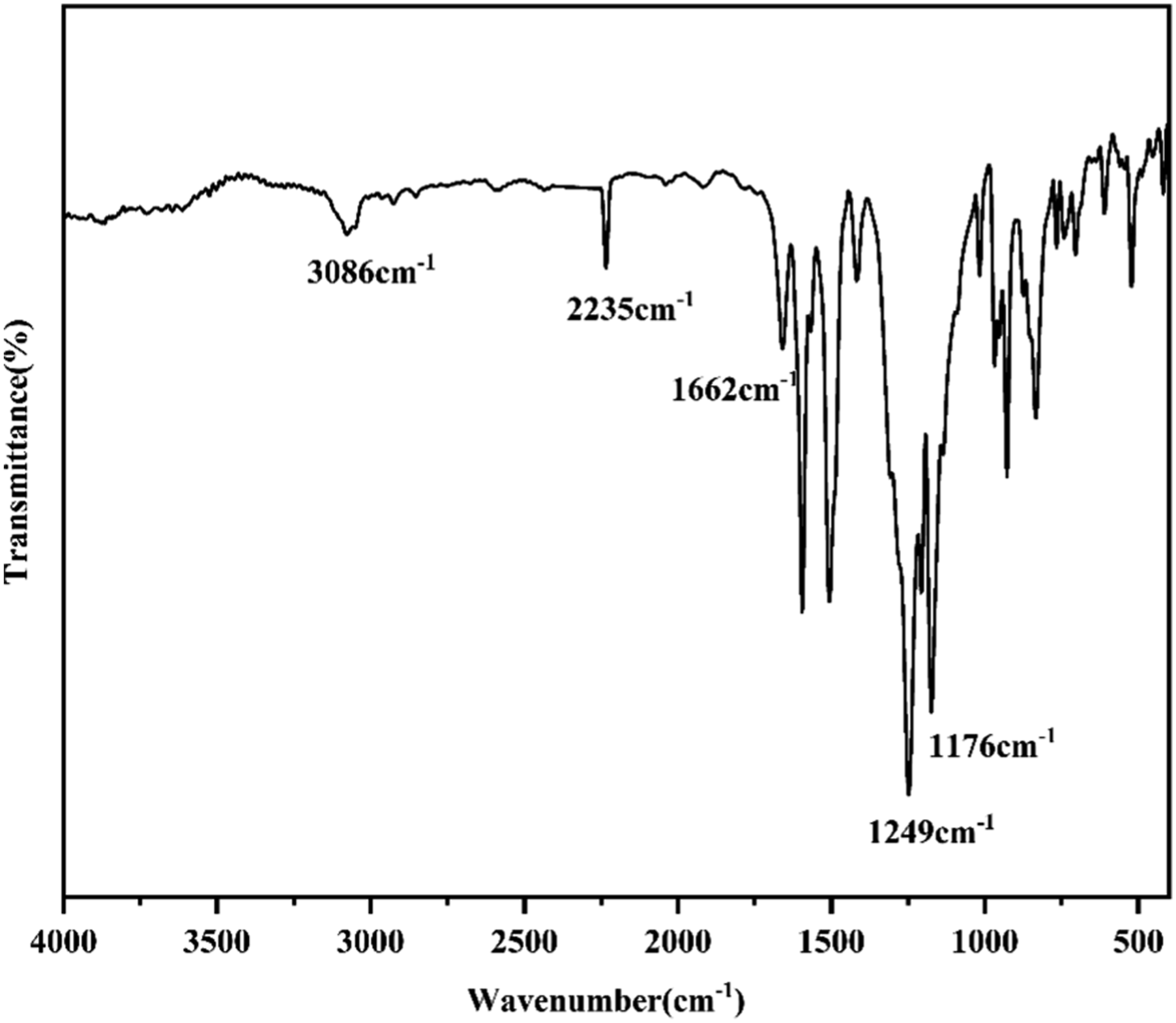
Non-isothermal curing reaction kinetics of COFN monomer
To better understand the processing properties of the monomer, differential scanning calorimetry (DSC) can be used to determine its melting point and processing window. Figure 2(a) shows the DSC curves of the COFN monomer and the COFN monomer with 10 wt% APPH added, both measured at a heating rate of 10°C min-1. The monomer’s DSC curve shows an endothermic peak at 102°C, which corresponds to its melting temperature. Furthermore, no exothermic peak is found, indicating that the monomer lacks autocatalytic capability and so requires an external curing agent for resin synthesis. The DSC curve of COFN/10 wt% APPH exhibits a broad endothermic peak at 121°C. This broadening likely results from the proximity of the melting points of the COFN monomer and APPH. A distinct exothermic curing peak appears at 250°C, corresponding to the curing reaction of the system. Furthermore, the processing window, defined as the difference between the monomer melting point and the curing temperature, holds significant importance for the polymerization process. Calculations reveal that the processing window range for the COFN monomer is 129°C to 172°C, lower than previously reported results.25,26 This leads to the conclusion that the introduction of ether bonds and carbonyl groups can lower the melting point of the monomer and result in a wider processing window. (a) DSC curve of COFN at a heating rate of 15°C min−1, (b) DSC curves of COFN/10 wt% APPH at different heating rates.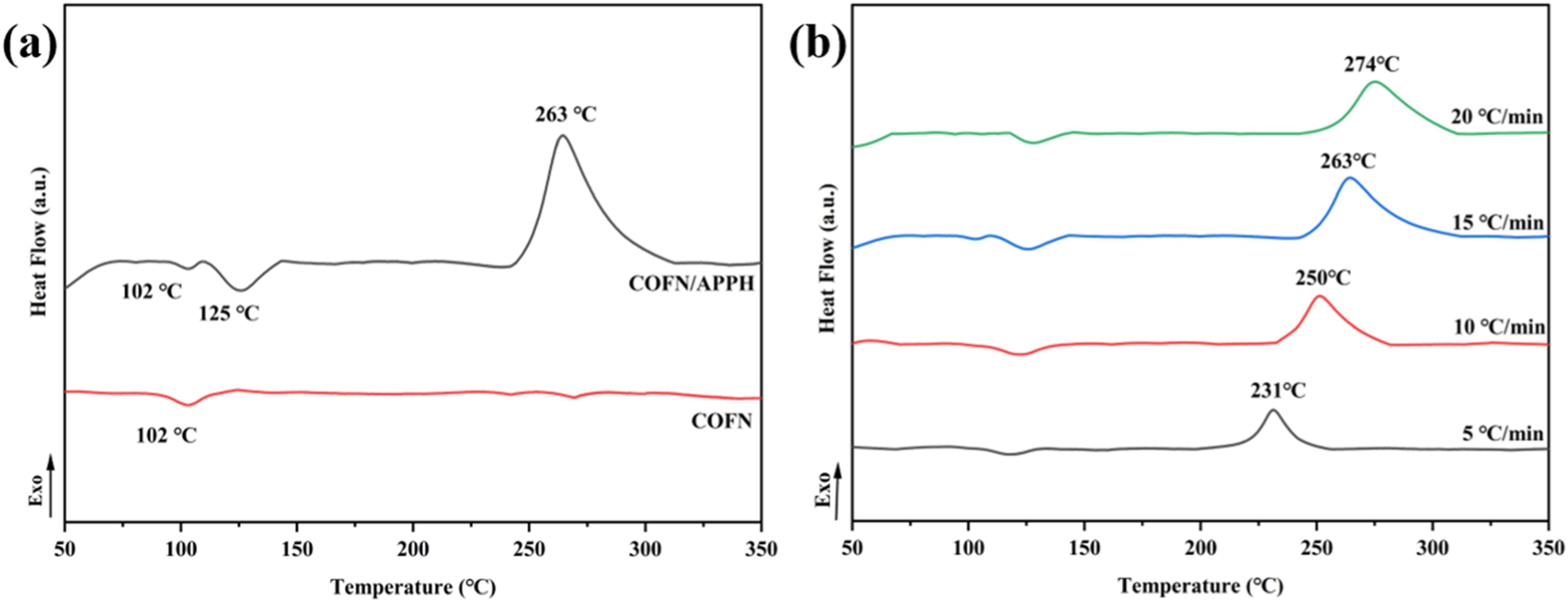
Figure 2(b) shows the DSC curves of COFN/10 wt% APPH at heating rates of 5, 10, 15, and 20°C min−1. The curing exothermic peaks appeared at 231, 250, 263, and 274°C, respectively. As the heating rate increases, both the melting endothermic and curing exothermic peaks move to higher temperatures. This shift is attributed to the faster heating rate, preventing the system from absorbing sufficient heat for the curing reaction to proceed. Consequently, higher temperatures are necessary for the reaction to proceed, resulting in a thermal hysteresis phenomenon.
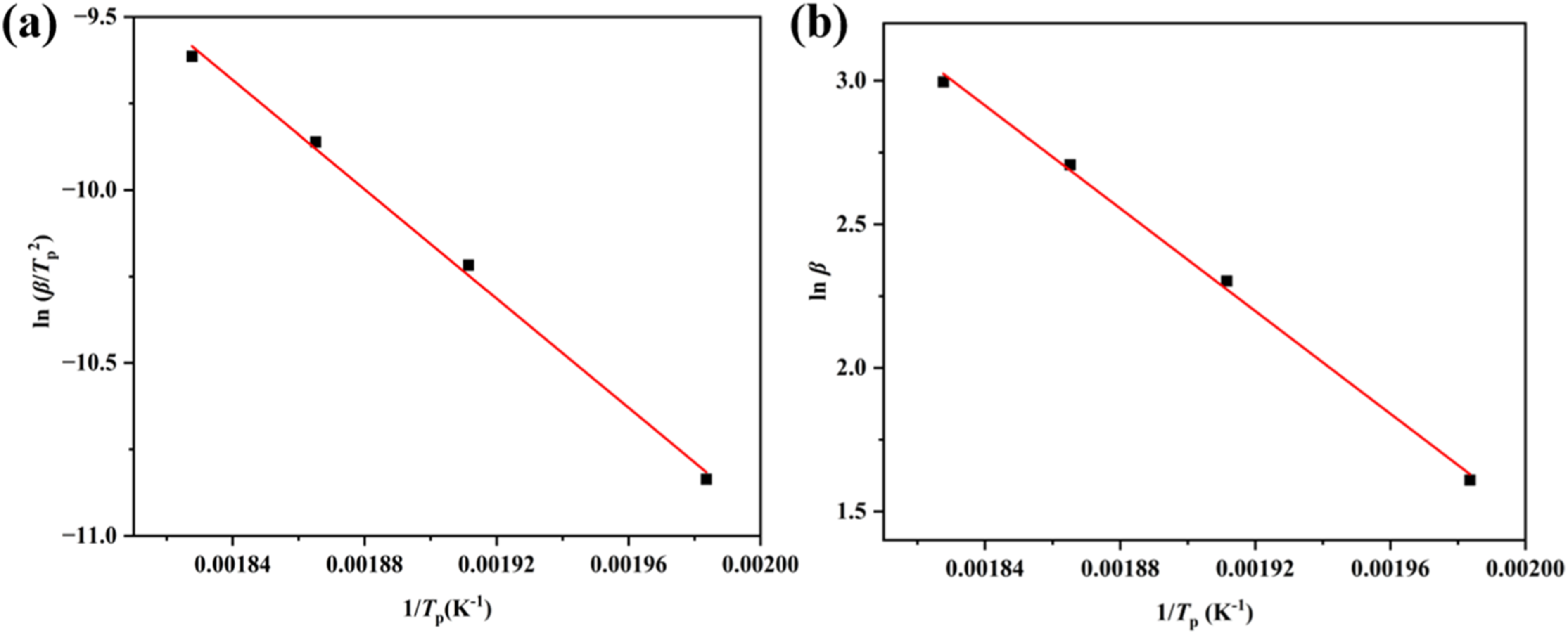
The apparent activation energy (Ea) can be used to evaluate the ease of curing reactions. Based on non-isothermal DSC data, Ea required for curing reactions is calculated using the Kissinger equation
27
and the Ozawa equation
28
(a) Linear relation between ln (β/Tp2) and 1/Tp, (b) linear relation between lnβ and 1/Tp.

In addition, using the Starink equation,29,30 a more accurate Ea was calculated based on the different temperatures corresponding to the same conversion rate in non-isothermal DSC data. The curing conversion rate of COFN/10 wt% APPH was calculated using non-isothermal DSC data, revealing the relationship between temperature and conversion rate at different heating rates. The Starink equation is expressed as follows, where β is the heating rate (°C min−1), Tα,i represents the temperature (K) corresponding to a specific curing conversion rate, and R is the ideal gas constant (8.314 J mol−1 K−1).
As shown in Figure 4(a), all four curves have an S-shaped profile, allowing the curing process of the monomer to be separated into three stages: slow-fast-slow. At first, at low temperatures, very little monomer participates in the reaction. As the temperature increases, the system gradually reaches the required curing temperature, which causes the conversion rate to rise quickly. In the later stage, most of the monomer has already cured, resulting in a slower increase in conversion rate.
19
In addition, the system’s Ea was also calculated at different conversion rates. The relationship curve between Tα and ln (β/Tα1.92) is shown in Figure 4(b). The average apparent activation energy for COFN/10 wt% APPH was calculated to be 60.71 kJ mol−1. Compared to previously reported phthalonitrile monomer systems,
31
this system has a lower activation energy, requiring a lower energy barrier to reach curing conditions. Relevant curing kinetic parameters are listed in Table S2. (a) Temperature versus conversion curve for COFN monomer, (b) Starink method fitting of COFN monomer.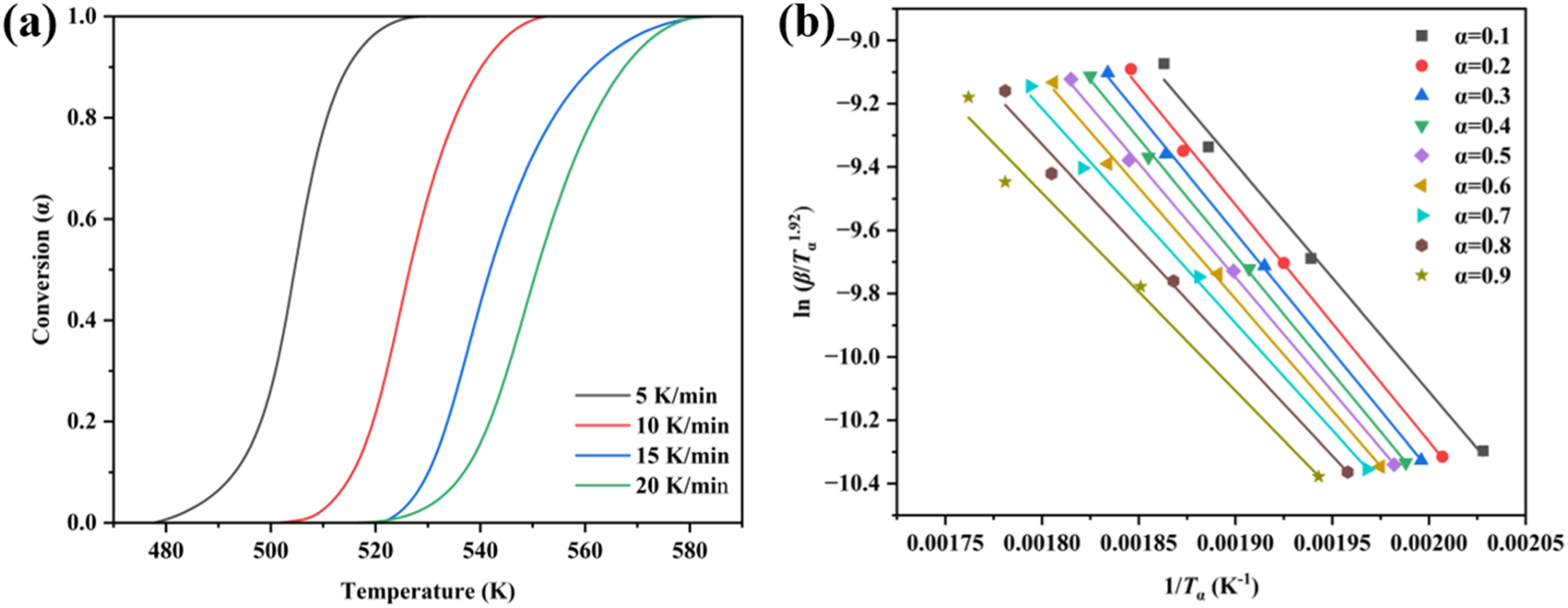
Structure of COFN resin
Figure 5 presents the FTIR spectra of COFN, COFN-350, and COFN-380. In comparison with COFN, the stretching vibration of the -CN group can be clearly observed to be weakened in the resins. This indicates that most -CN groups underwent curing under the catalysis of APPH. Previous studies suggest that the polymerization of phthalonitrile may generate nitrogen-containing heterocyclic structures, including isoindoline, triazine rings, and phthalocyanine.32–35 Due to the large steric barrier of the generated triazine ring structures, -CN groups are unlikely to react completely. Consequently, the infrared spectra of both resins still have -CN stretching vibrations. The peaks at 1735 cm−1 and 1506 cm−1 can be attributed to the absorption vibration peaks of the isoindoline, the peak at 1348 cm-1 can be attributed to the absorption vibration peak of the triazine ring, and the peak at 1014 cm−1 is the absorption vibration peak of the phthalocyanine ring. FTIR spectrum of COFN resins.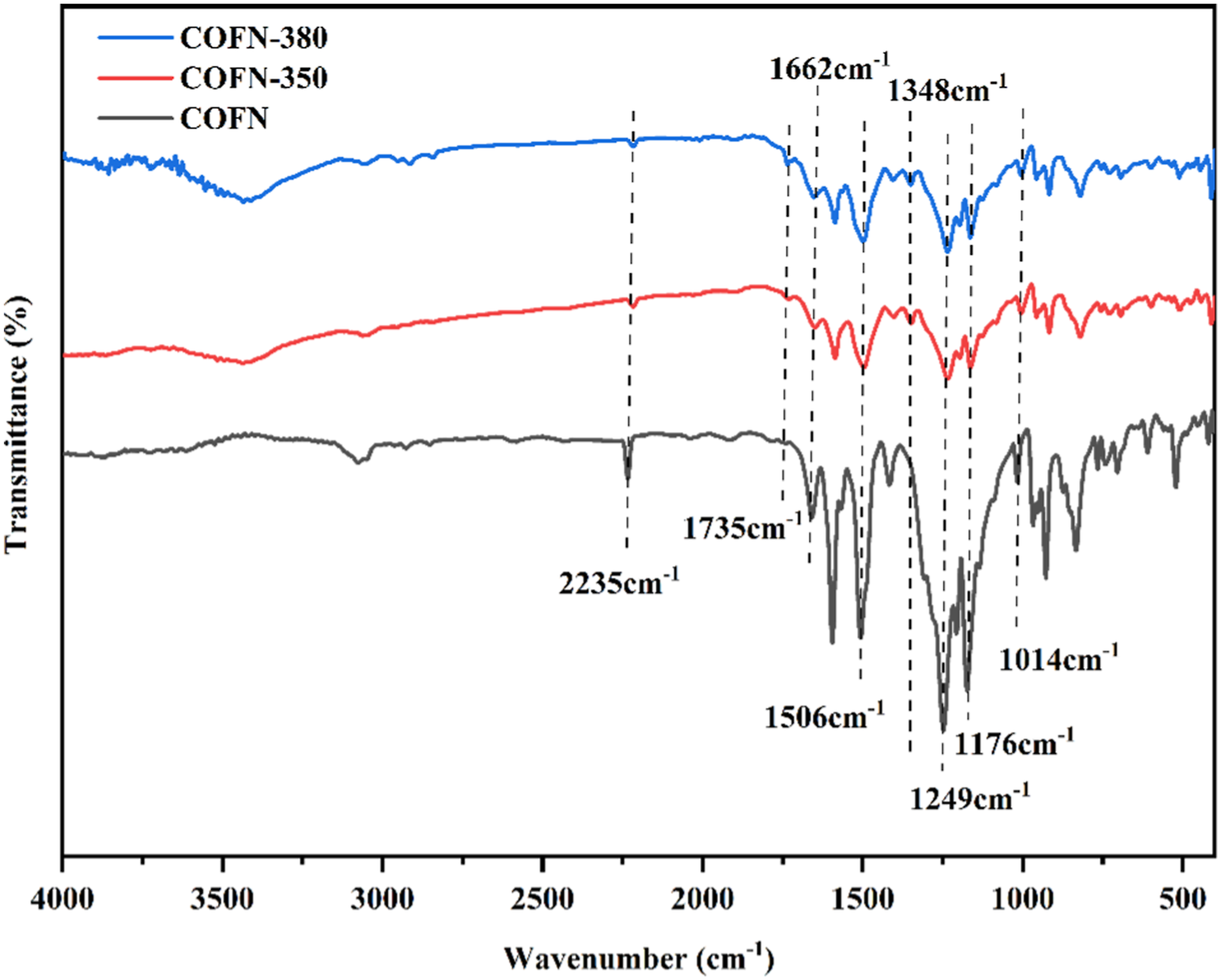
Analysis of the cross-sectional morphology of COFN resin
The cross-sections of the two resins were characterized using a scanning electron microscope (SEM). Figure 6 shows SEM images of the resin fracture surfaces. As can be seen in Figure 6, the fracture surfaces are generally flat, with cracks resembling river patterns; all cracks are nearly parallel, which is a typical characteristic of brittle fracture. Furthermore, Figure 6 does not exhibit any features of ductile fracture. These microstructural features indicate that the cured resin, due to its high cross-linking density and aromatic heterocyclic structure, exhibits high hardness and rigidity. (a) Cross-sectional morphology of COFN-350, (b) cross-sectional morphology of COFN-380.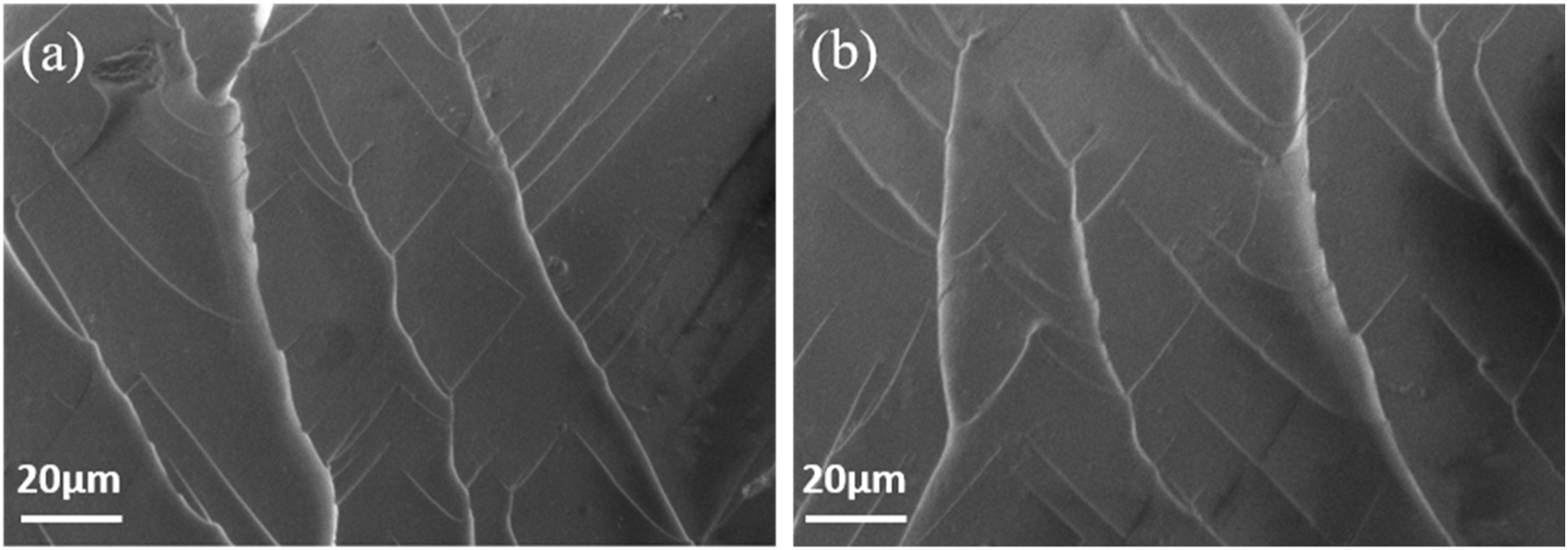
Thermal stability of COFN resin
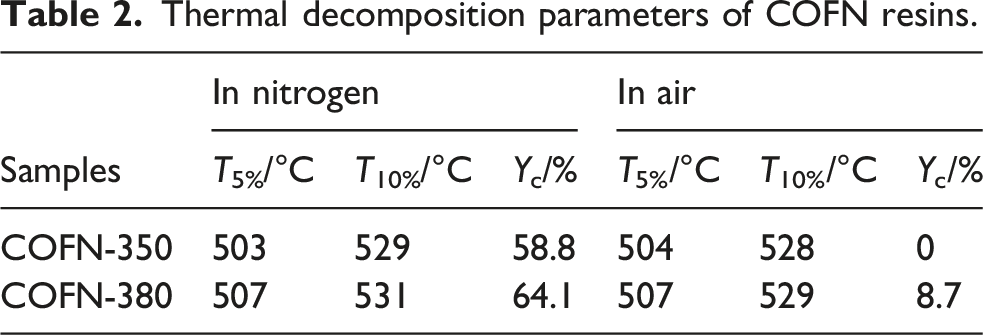
Thermal stability analysis was conducted on the resins. The thermogravimetric curves of both polymers under nitrogen and air atmospheres are shown in Figure 7. The relevant thermal properties parameters are listed in Table 2, including the temperature loss of 5% (T5%), temperature loss of 10% (T10%), and char yield mass percentage (CR). Under nitrogen atmosphere, the T5% values of polymers COFN-350 and COFN-380 were 503°C and 507°C, respectively, with CR of 58.8% and 64.1% at 800°C. Under an air atmosphere, the T5% values were 504°C and 507°C, respectively. This is attributed to the formation of isoindoline, triazine rings, and phthalocyanine structures from the monomers in the presence of the curing agent, making excellent thermal stability for the polymers. Notably, the thermal stability of the two polymers under nitrogen and air atmospheres showed some differences, with the former being less stable than the latter. It is inferred that increasing the curing temperature and prolonging the curing time can enhance the resin’s thermal stability. Furthermore, for the COFN monomer, the introduction of fluorine atoms improves the resin’s thermal stability, thereby producing a resin with outstanding properties. (a) TGA curve of COFN-350, (b) TGA curve of COFN-380. Thermal decomposition parameters of COFN resins.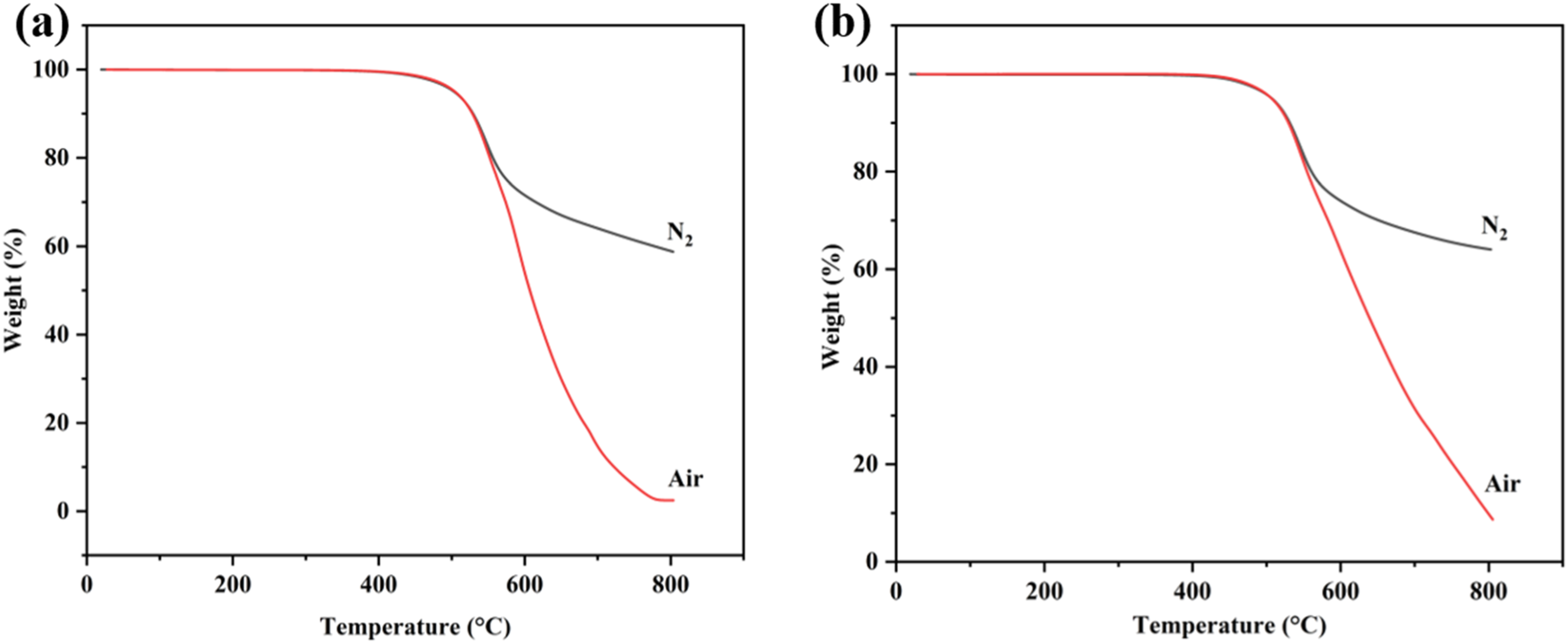
The limiting oxygen index (LOI) is the lowest oxygen concentration required to maintain equilibrium combustion of a sample in an oxygen-nitrogen gas mixture under specific test conditions. A high LOI indicates low flammability, while a low LOI indicates high flammability. Materials with an LOI > 26 are generally considered flame-retardant.13,36–38 According to equation (4):
At this temperature, the residual carbon content of COFN-350 and COFN-380 was 58.8% and 64.1%, respectively, and the calculated LOI values were 41.02 and 43.14. Therefore, both prepared resins are considered flame-retardant materials with excellent fire resistance. It is worth noting that these LOI values were estimated using empirical equations and serve as a useful assessment tool for determining flame retardancy.
Dynamic mechanical analysis of COFN
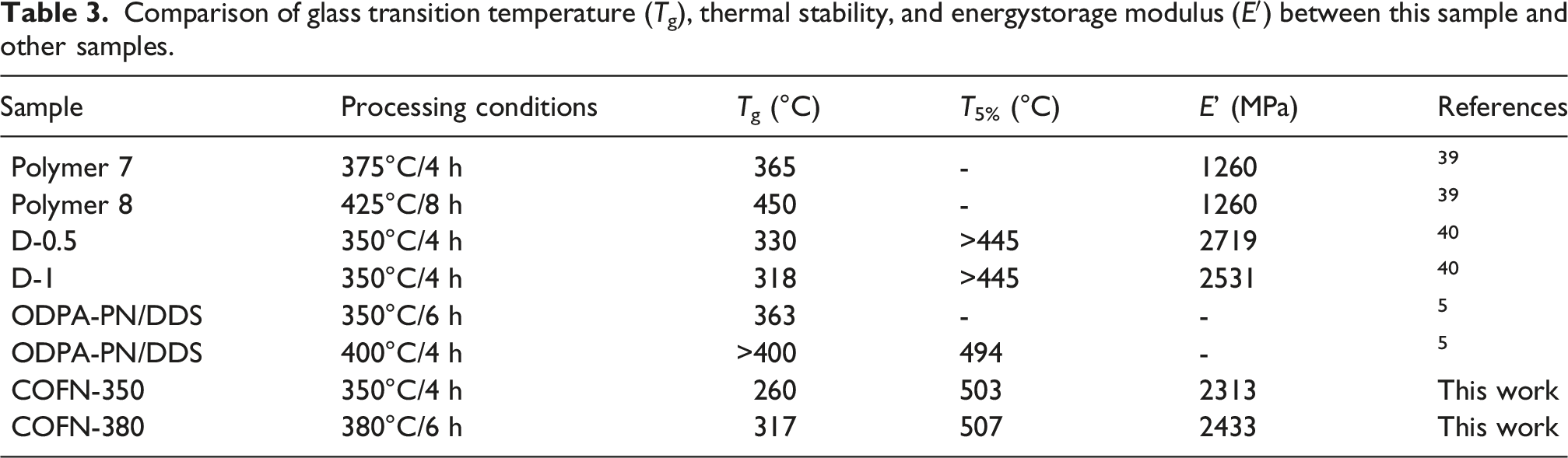
Dynamic mechanical analysis (DMA) was employed to investigate the mechanical properties of the two resins at temperatures ranging from 30 to 380°C. Figure 8 shows the temperature-dependent curves of storage modulus (E′) and loss factor (tan δ). At 30°C, the E′ values of COFN-350 and COFN-380 were 2313 MPa and 2433 MPa, respectively, with the latter being 120 MPa higher than the former. Both resins showed a gradual decrease in E′ with increasing temperature. From the loss factor versus temperature curve, the glass transition temperatures (Tg) of COFN-350 and COFN-380 were 260°C and 317°C, respectively, with a difference of 57°C. The primary reason for this phenomenon is that higher temperature promotes more complete curing and tighter crosslinking within the system. Therefore, increasing the curing temperature and prolonging the curing time are beneficial for obtaining phthalonitrile resins with excellent properties. Table 3 summarizes the thermodynamic properties of other phthalonitrile resins. DMA curves of COFN resins. Comparison of glass transition temperature (Tg), thermal stability, and energystorage modulus (E′) between this sample and other samples.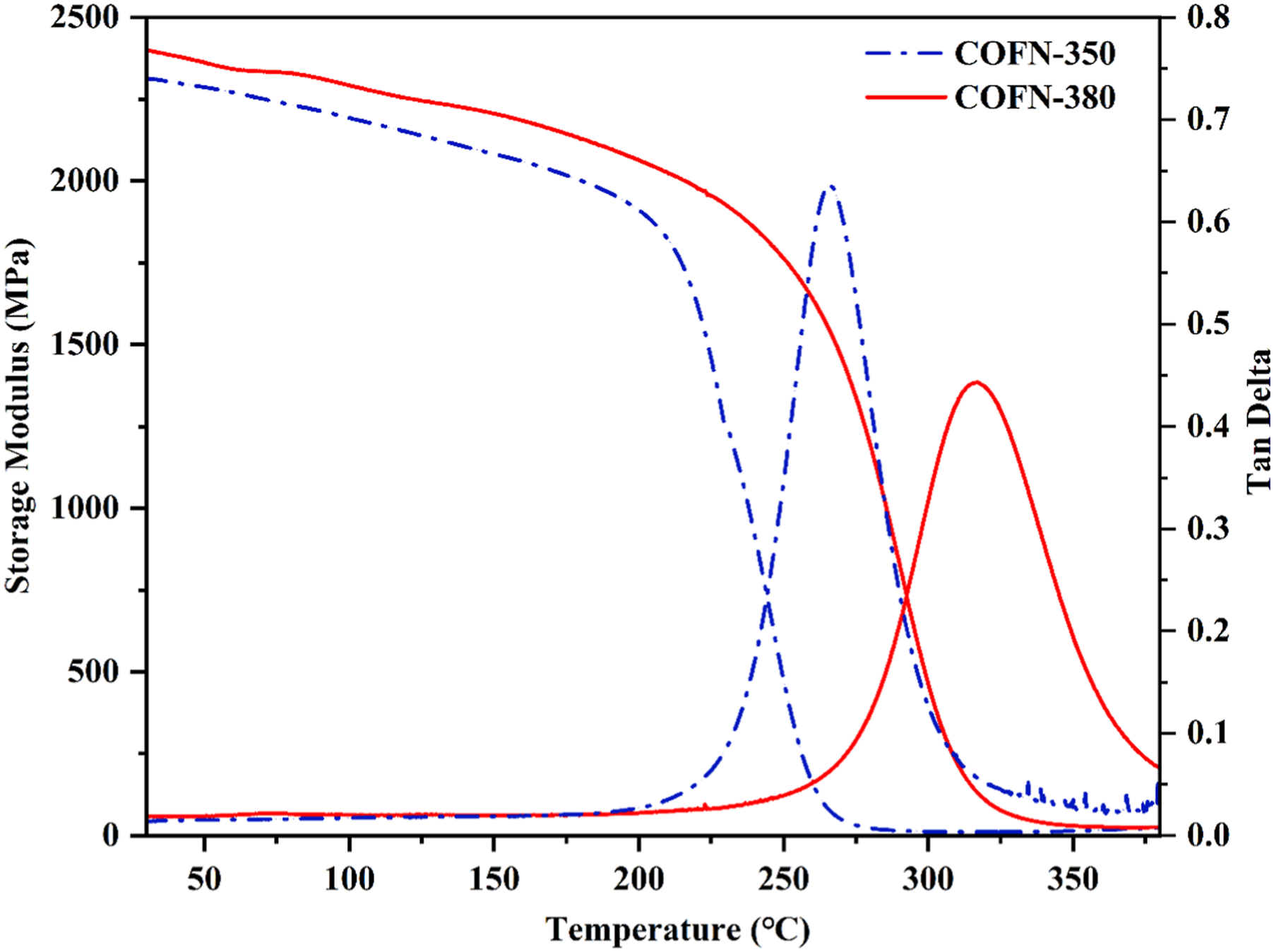
Conclusion
This study introduced ether bonds, carbonyl groups, and fluorine atoms into the monomer structure, producing the novel phthalonitrile monomer COFN. Subsequently, curing with APPH produced two resins, COFN-350 and COFN-380, under different curing conditions. The successful synthesis of this monomer was confirmed with NMR and FTIR analysis. DSC results revealed a melting point of 102°C for COFN, with a processing window of 148°C and a low apparent activation energy. SEM analysis revealed that the cross-sectional morphology of the resin exhibited characteristics of brittle fracture. TGA analysis indicated the T5% values of 503°C and 507°C for the two resins under a nitrogen atmosphere, respectively. DMA characterization revealed thermomechanical properties with a maximum storage modulus of 2433 MPa. Consequently, these phthalonitrile resins show outstanding heat resistance and have broad application prospects in high-temperature resistant materials.
Supplemental material
Supplemental material - Fluorine-containing phthalonitrile resin: Synthesis, curing behavior, and thermal properties
Supplemental material for Fluorine-containing phthalonitrile resin: Synthesis, curing behavior, and thermal properties by Shan Wei, Aobo Ma, Haolin Wang, Xuedong He, Xiaoyan Yu and Qingxin Zhang in High Performance Polymers
Footnotes
Acknowledgements
We gratefully acknowledge the financial support from the National Natural Science Foundation of China (51573037) and the Natural Science Foundation of Hebei Province, China (E2021202035, E2019202348).

Ethical considerations
This study does not involve any animal or human subjects and does not require approval from the reviewer board or ethics committee. There are no related ethical issues.
Author contributions
Shan Wei: Writing – original draft, Methodology, Investigation, Formal analysis, Data curation, Conceptualization. Aobo Ma: Methodology, Formal analysis, Data curation. Haolin Wang: Visualization, Investigation. Xuedong He: Visualization, Investigation. Xiaoyan Yu: Writing – review & editing, Resources, Funding acquisition. Qingxin Zhang: Writing – review & editing, Resources, Project administration, Funding acquisition.
Funding
The authors disclosed receipt of the following financial support for the research, authorship, and/or publication of this article: National Natural Science Foundation of China, Grant/Award Number: 51573037; Natural Science Foundation of Hebei Province, Grant/Award Numbers: E2021202035, E2019202348.
Declaration of conflicting interests
The authors declared no potential conflicts of interest with respect to the research, authorship, and/or publication of this article.
Data Availability Statement
The data that support the findings of this study are available from the corresponding author upon reasonable request.
Supplemental material
Supplemental material for this article is available online.
References
Supplementary Material
Please find the following supplemental material available below.
For Open Access articles published under a Creative Commons License, all supplemental material carries the same license as the article it is associated with.
For non-Open Access articles published, all supplemental material carries a non-exclusive license, and permission requests for re-use of supplemental material or any part of supplemental material shall be sent directly to the copyright owner as specified in the copyright notice associated with the article.
