







Abstract
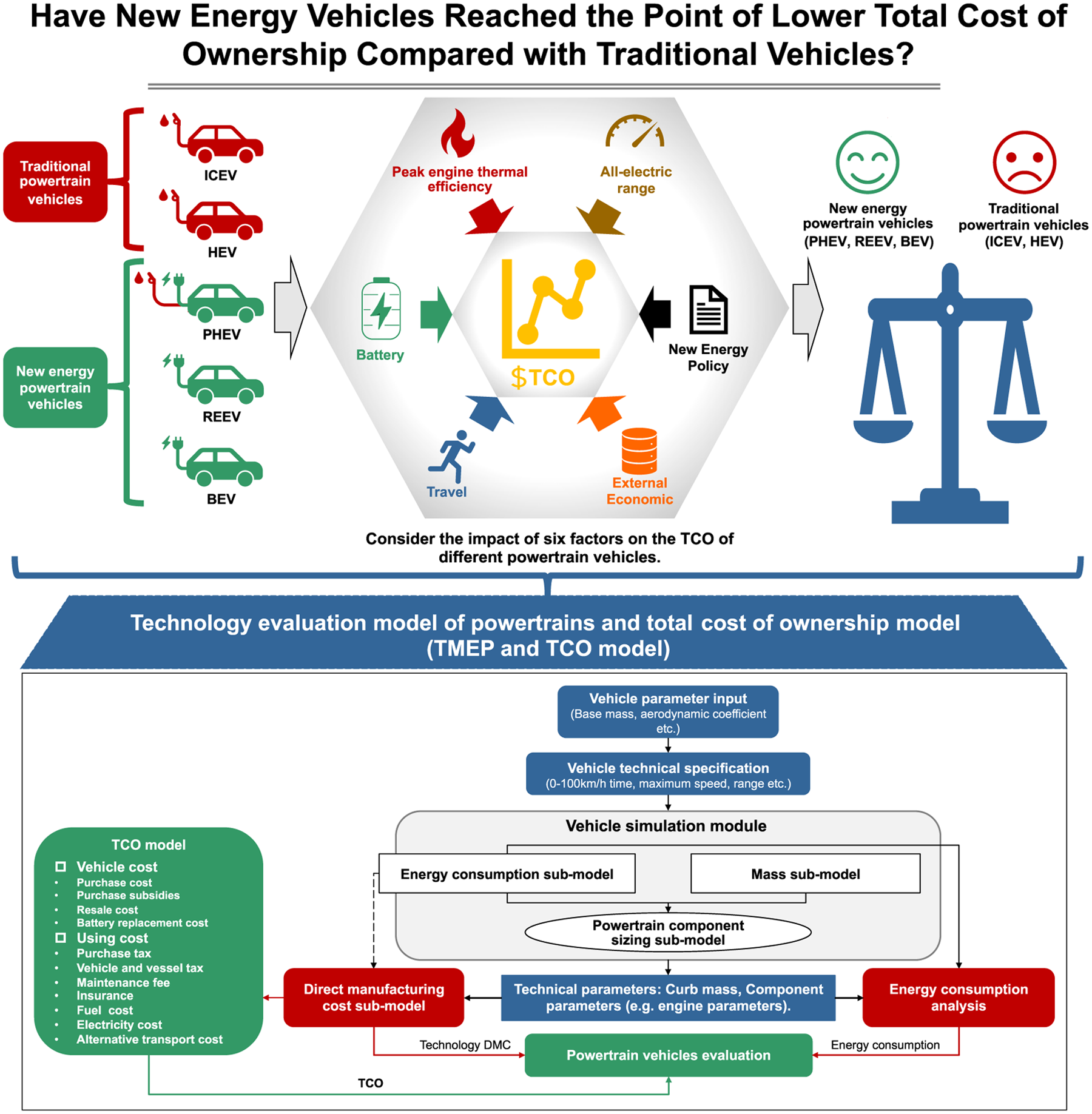
The global automotive industry is rapidly entering an era of diversified powertrains. During this electrification process, the life-cycle costs associated with different powertrain technologies have become a key criterion in consumers’ vehicle purchase decisions. To address the gap in existing research on comparative total cost of ownership (TCO) evaluations of multiple powertrain technologies using a unified technical-parameter framework, this study establishes a consumer-oriented TCO model grounded in real-world use scenarios. First, the key technical parameters of five mainstream vehicle powertrains—internal combustion engine vehicles (ICEVs), hybrid electric vehicles (HEVs), plug-in hybrid electric vehicles (PHEVs), range-extended electric vehicles (REEVs), and battery electric vehicles (BEVs)—are systematically analyzed to determine their effects on TCO throughout the vehicle life cycle. Subsequently, a comprehensive comparative evaluation is conducted between traditional vehicles (ICEVs and HEVs) and current mainstream new energy vehicles (PHEVs, REEVs, and BEVs) under a unified parameter framework. Finally, a detailed sensitivity analysis is performed to assess the impact of fluctuations in four key external variables—battery characteristics, travel behavior, economic conditions, and policy incentives—on the TCO of various powertrains. The results indicate that current new energy vehicles, particularly short-range PHEVs, have already outperformed ICEVs and HEVs in terms of life-cycle economic performance. These findings provide robust data support and decision-making references for consumer vehicle purchases, corporate powertrain-parameter design, and national policymaking.
Keywords
Get full access to this article
View all access options for this article.