






Abstract
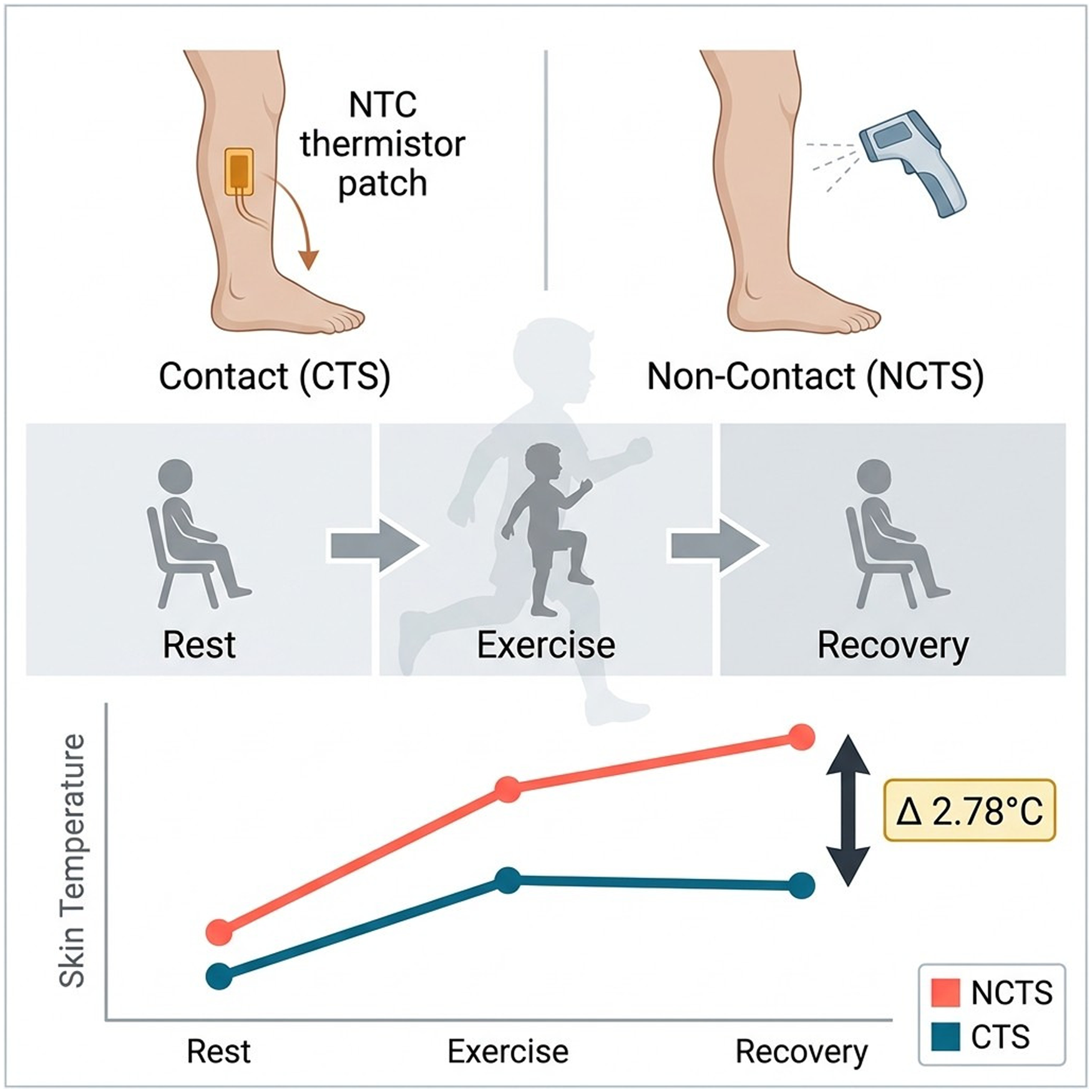
Selecting skin temperature screening methods is difficult due to the wide variety of measurement techniques and equipment currently available. The hypothesis behind the various skin temperature measurement techniques is that contact methods can change the local skin temperature, whereas non-contact methods are sensitive to environmental elements and require consistent placement. The study aimed to compare contact and non-contact temperature sensors for measuring skin temperature in children’s lower limbs. An experimental study was conducted by utilising NTC thermistors and an infrared thermometer. Seventy children were recruited to participate in this study. Measurements were conducted during three separate trials, which spanned three experimental phases: before, during, and after exercise. The study protocol included 5 min of sitting and resting before the exercise, 5 min of standing in runner’s pose/single-leg march during the exercise, and 5 min of sitting and resting afterwards. Skin temperature data were collected over 20-min intervals for each test. Descriptive statistics and statistical differences among the three tests are illustrated. In three test trials, across all phases, scatter plots consistently revealed a robust, strong correlation between NCTS and CTS readings. NCTS systematically demonstrated higher mean temperature readings when compared to CTS under all conditions. Across all tests and phases, paired samples t-tests revealed that the mean differences between NCTS and CTS were statistically significant (p < 0.001). The greatest discrepancies and biggest effect sizes were detected in the after-exercise phase, which peaks in Test 3 (Mdiff = 2.78°C, ES = 1.46). CTS methods are more reliable and precise for tracking paediatric exercise.
Get full access to this article
View all access options for this article.