







Abstract
Angiokeratoma of Fordyce, a localized form of angiokeratoma, is commonly found on the scrotum but rarely affects the vulva. We have documented a case of angiokeratoma of Fordyce in a female patient. She was treated with two sessions of CO2 laser ablation, following which her lesions resolved.
Introduction
Angiokeratomas are benign vascular lesions characterized by telangiectasias and associated with hyperkeratosis. There are several clinical types of angiokeratomas: Mibelli type, solitary and multiple (papular type), Fordyce type, angiokeratoma circumscriptum, and angiokeratoma corporis diffusum. 1
The prevalence of angiokeratomas in the general population is 0.16%. Angiokeratoma of Fordyce, comprising 14% of cases, becomes more prevalent with age and is notably more frequent among men. 2 Angiokeratoma of Fordyce in a female is an uncommon presentation.
Although angiokeratomas are typically asymptomatic, they can sometimes lead to discomfort, pain, itching, or bleeding, prompting patients to seek treatment for relief or cosmetic reasons. Several treatment options have been used for angiokeratomas, including electrocautery, cryotherapy, surgical excision, laser therapy, and sclerotherapy.
We present a case of angiokeratoma of Fordyce in a female patient and discuss the positive outcome of treatment using carbon dioxide (CO2) laser ablation.
Case report
A 47-year-old woman presented with multiple, raised, dark lesions on her genitalia for 6 months. The lesions were initially small and gradually increased in size. These lesions were accompanied by an occasional itching and burning sensation, along with serous discharge.
On examination, multiple skin-coloured to hyperpigmented, hyperkeratotic papules with central reddish hue, varying in size from 1 × 1 cm to the largest one being 3 × 2 cm were noted on the labia majora and mons pubis [Figure 1]. On palpation, tenderness and occasional oozing upon pressure was noted. There was no evidence of increased local temperature or regional lymphadenopathy. Multiple skin-coloured to hyperpigmented, hyperkeratotic papules with central reddish hue noted over labia majora and mons pubis.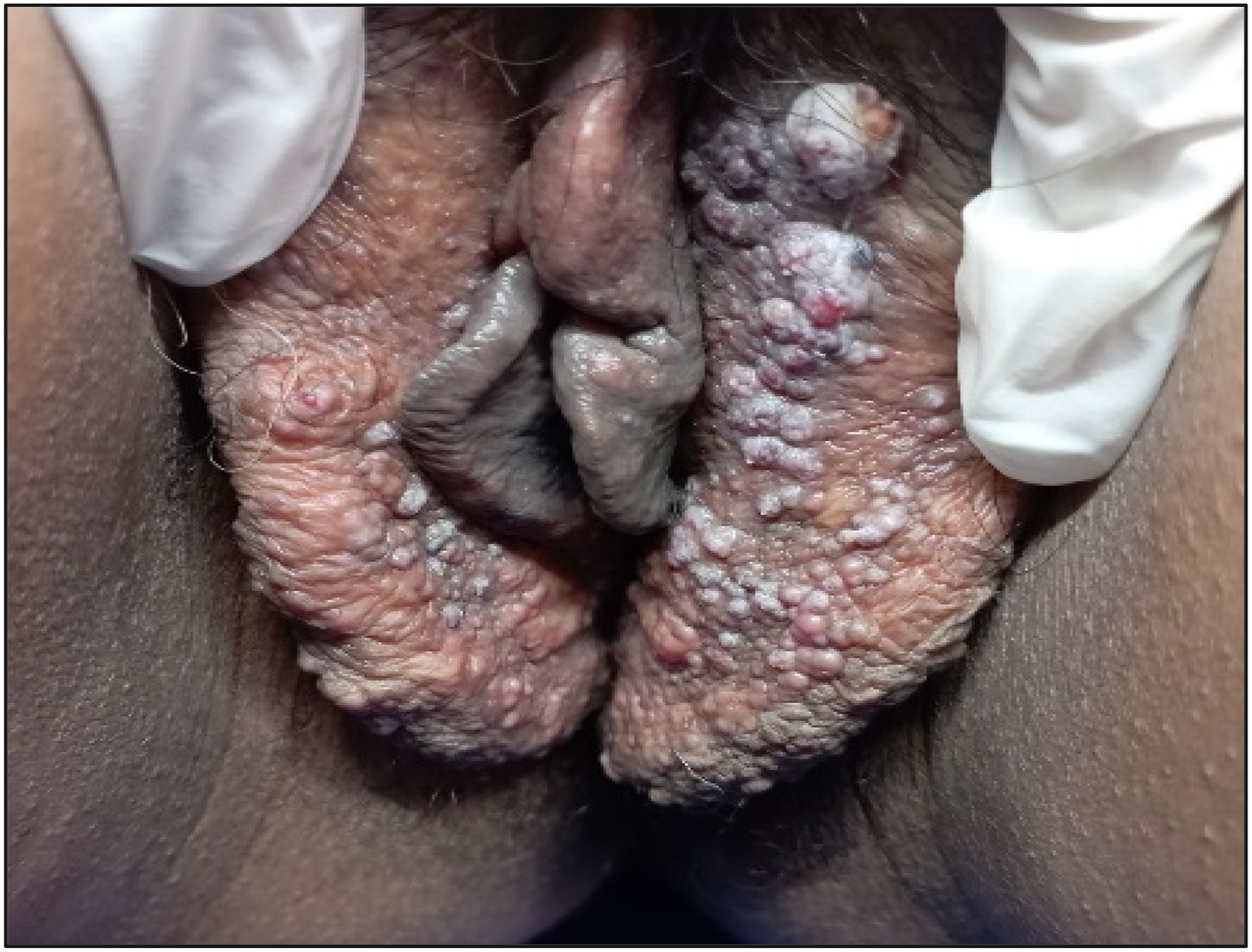
Microscopy revealed dermal sclerosis with dilated capillaries and a mild to moderate perivascular lymphocytic infiltrate mixed with dermal macrophages and a diagnosis of angiokeratoma of Fordyce was made [Figure 2]. Image showing dermal sclerosis with dilated capillaries and a mild to moderate perivascular lymphocytic infiltrate mixed with dermal macrophages (x40).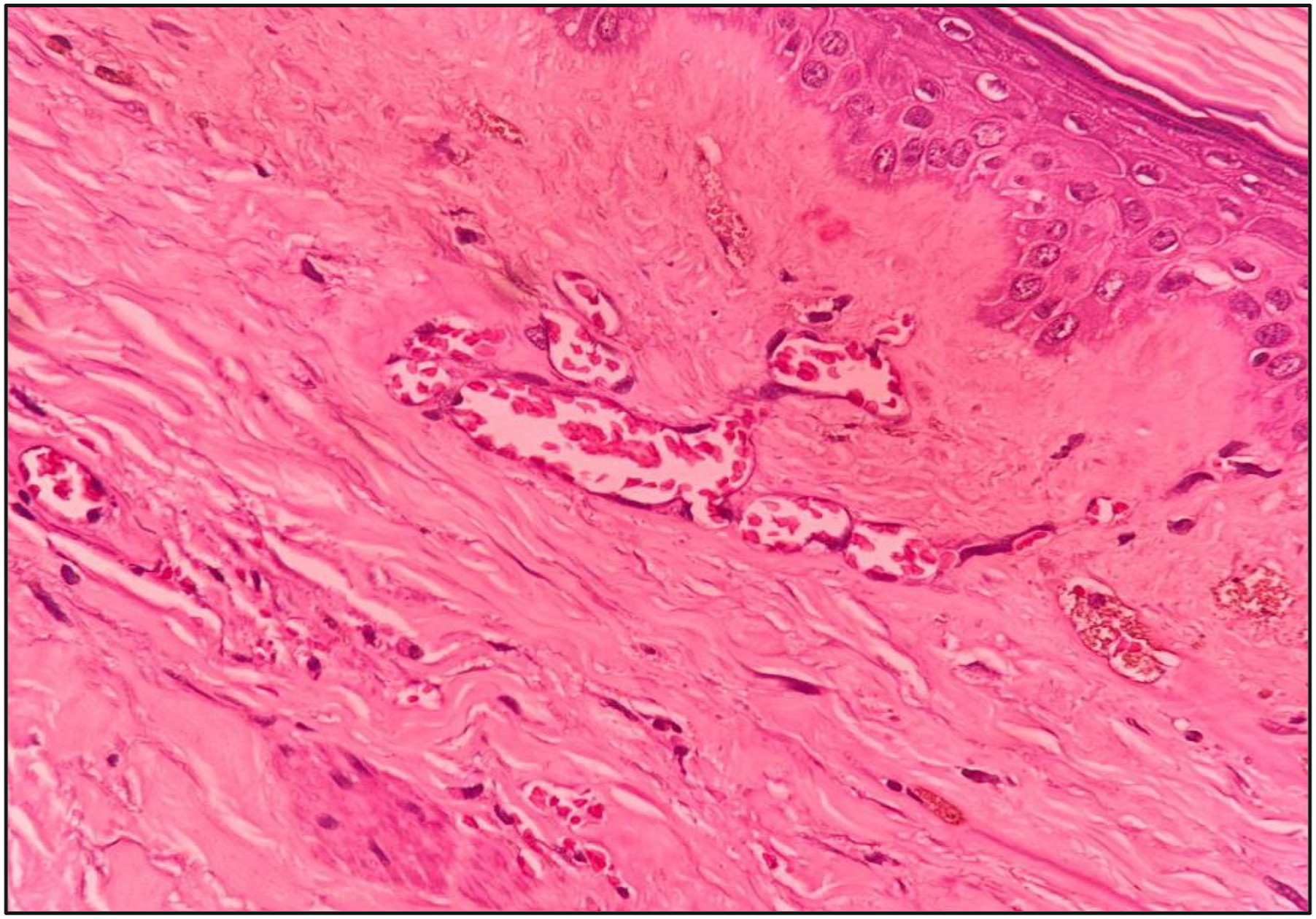
On the procedure day, topical anaesthesia was applied under occlusion for 30 min and CO2 laser ablation was performed. Following two sessions of CO2 laser ablation treatment [Figure 3], the lesions visibly reduced in size post-procedure, providing relief to the patient. Images showing lesions following two sessions of CO2 laser ablation treatment.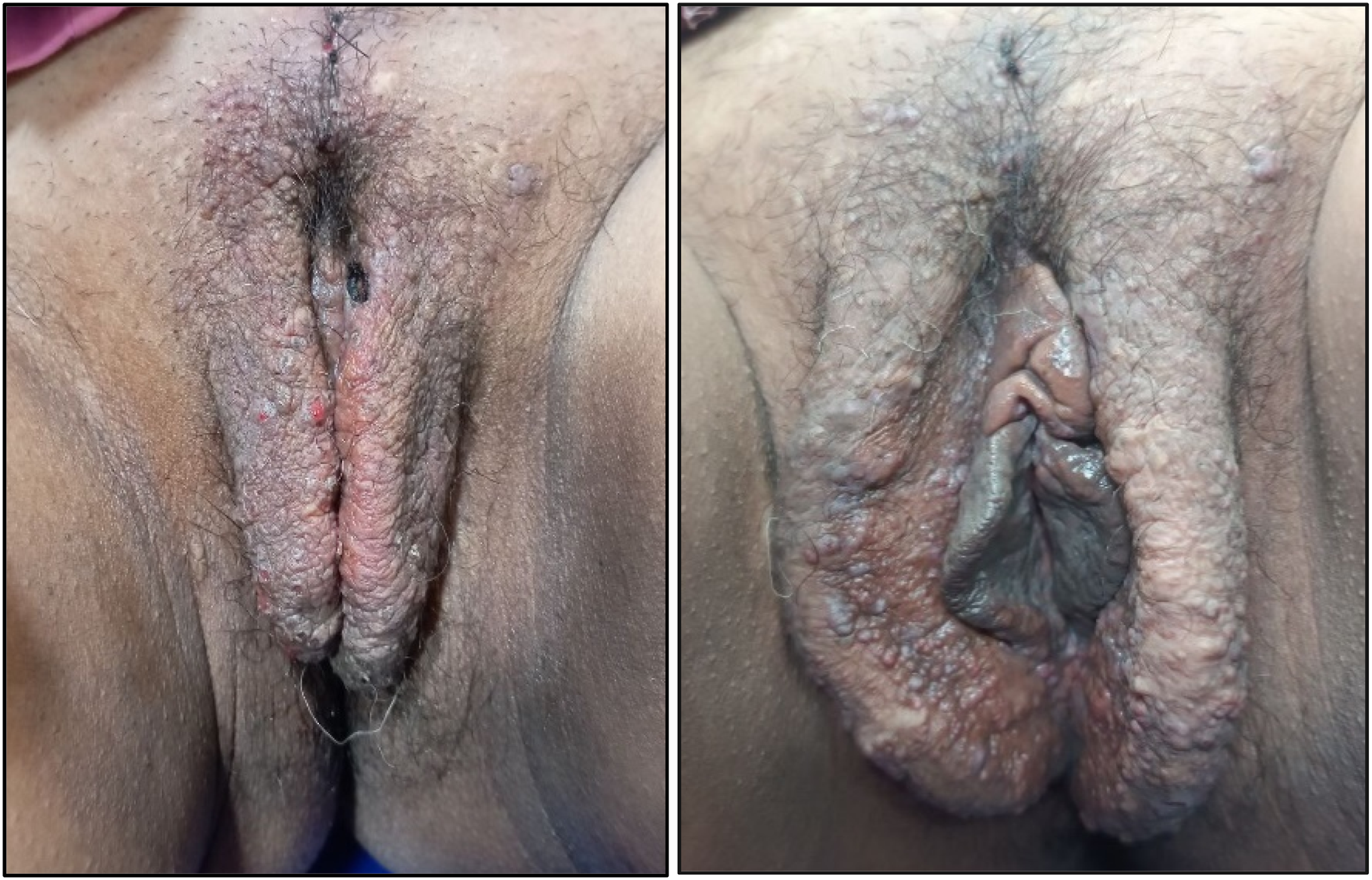
The patient had similar lesions 8 years ago, prompting her to undergo two sessions of CO2 laser ablation.
Discussion
Angiokeratoma was first described by Fordyce in 1896. 3 Angiokeratoma of Fordyce, also known as genital angiokeratoma is more prevalent in men and associated with increasing prevalence with age. 2 Angiokeratoma of Fordyce occurring on the vulva is uncommon and typically presents without symptoms.
Clinically it presents as well-circumscribed papules which are dome shaped and measuring 2–5 mm in size. They are usually located on the scrotum. Rarely, they might also involve the glans penis, inguinal folds, upper thighs in men, and vulva in women.
Most of the lesions are asymptomatic, but some are known to cause pain, bleeding, irritation, burning sensation, or itching. 4
The histologic findings in angiokeratoma of Fordyce reveal numerous dilated, thin-walled, congested capillaries predominantly located in the papillary dermis. This is observed beneath an epidermis exhibiting varying degrees of acanthosis, with elongated rete ridges and hyperkeratosis.
Fibrosis noted in the histopathological examination of the lesion likely results from the patient’s history of recurrent lesions and undergoing similar treatment in the past.
Genital angiokeratomas are typically benign and asymptomatic, so they are generally observed without intervention. However, for lesions that are aesthetically displeasing or causing symptoms, various treatment options are available including cryotherapy, electrocoagulation, CO2 laser ablation therapy, sclerotherapy, and surgical excision. 5
Laser ablation is more efficient than cryotherapy and surgical excision. The laser targets specific tissues, minimizing damage to surrounding areas and often requires just one or two sessions for complete removal. The procedure is painless with topical anaesthetics. CO2 laser can promote better healing, potentially resulting in less scarring and pigmentation compared to traditional surgical methods.
Patients often experience shorter recovery time with fewer complications.
Surgical treatments, such as laser ablation, are best options for managing symptoms and alleviating psychological distress in individuals affected by lesions due to their appearance, location, or associated complications. 6
Footnotes
Declaration of conflicting interests
The author(s) declared no potential conflicts of interest with respect to the research, authorship, and/or publication of this article.
Funding
The author(s) received no financial support for the research, authorship, and/or publication of this article.
