







Abstract
Children are surrounded by objects that they must learn to use. One of the most efficient ways children do this is by imitation. Recent work has shown that, in contrast to nonhuman primates, human children focus more on reproducing the specific actions used than on achieving actual outcomes when learning by imitating. From 18 months of age, children will routinely copy even arbitrary and unnecessary actions. This puzzling behavior is called overimitation. By documenting similarities exhibited by children from a large, industrialized city and children from remote Bushman communities in southern Africa, we provide here the first indication that overimitation may be a universal human trait. We also show that overimitation is unaffected by the age of the child, differences in the testing environment, or familiarity with the demonstrating adult. Furthermore, we argue that, although seemingly maladaptive, overimitation reflects an evolutionary adaptation that is fundamental to the development and transmission of human culture.
Young children show a remarkable propensity for learning how to use objects by copying the actions of other people—a propensity that sets them apart from other animals (Dautenhahn & Nehaniv, 2002; Hurley & Chater, 2005). That children have been shown to be strong imitators in this way makes intuitive sense; directly replicating others affords the rapid acquisition of novel behaviors, while at the same time avoiding the potential pitfalls and false end points that can come from trial-and-error learning. However, in what has come to be known as overimitation, young children copy the explicit actions of an adult demonstrator even when a more efficient method of achieving the demonstrated outcome is available and even when copying the adult’s actions results in failure to bring about the demonstrated outcome (Horner & Whiten, 2005; Nagell, Olguin, & Tomasello, 1993; Nielsen, 2006). For example, children from 3 to 5 years of age were trained to identify the causally irrelevant parts of novel action sequences performed by an adult on familiar household objects, such as retrieving a toy from a plastic jar after first stroking the side of the jar with a feather (Lyons, Young, & Keil, 2007). The children then watched as the adult demonstrated sequences of actions (on novel objects) in which the causal significance of the actions was directly observable. Despite the training, the children still reproduced causally irrelevant actions, and they continued to do so even when specifically instructed by the adult to copy only necessary actions.
Overimitation emerges in the 2nd year of life (Nielsen, 2006) and becomes increasingly pervasive through the preschool period (McGuigan & Whiten, 2009; McGuigan, Whiten, Flynn, & Horner, 2007). Why children engage in this high-fidelity copying is a topic of increasing debate (Call & Carpenter, 2009; Gergely & Csibra, 2005; Lyons et al., 2007; Nielsen, Simcock, & Jenkins, 2008; Whiten, McGuigan, Marshall-Pescini, & Hopper, 2009). Yet interpretations of overimitation, and assumptions regarding its significance, are constrained by the fact that documentation has been limited to children living in relatively affluent, urban, Westernized cultures. There are reasons to suspect that overimitation might not occur in other environments.
In most Western cultures, parent-child interaction is typically characterized by parents frequently demonstrating objects for their children and highlighting critical features of the objects’ use (Gaskins, 2006; Rogoff, Mistry, Goncu, & Mosier, 1993). Children are commonly shown things and taught how to use them via ordered, guided instruction. Children can thus assume that adults have tested the rationality of their actions and that these actions are attempts to transmit relevant knowledge (Gergely & Csibra, 2005; Gergely, Egyed, & Kiraly, 2007). This is fertile ground in which overimitation can flourish. But instruction of this kind does not happen in all cultures; in many indigenous communities, there is minimal adult tuition related to object manipulation. Children are expected to learn largely through observation, and caregivers rarely explore object use with their children (Bakeman, Adamson, Konner, & Barr, 1990; Konner, 2005). For example, a Bushman father will not give his son direct instruction in how to use a bow and arrow. The son will be expected to acquire the necessary skills by watching as his father hunts and by using trial-and-error learning. If overimitation emerges from the pedagogical approach adopted by parents in Westernized cultures, children living in more traditional environments should be less likely to engage in it. We thus hypothesized that child descendents of hunter-gatherers would overimitate at lower rates than Western children.
In Experiment 1, we studied young children from two Bushman 1 communities in remote regions of the Kalahari Desert (Witdraai, South Africa, and Ngwatle, Botswana—see Fig. 1), and children from Brisbane, a large city in Australia. The Bushman children were recent descendents of true hunter-gatherers living in communities where many aspects of traditional culture are maintained (Tomaselli, 2005). Although gathering may still occur, children in these communities are the first generation not to be fully enculturated into a hunting lifestyle. However, activities like tracking and mimicking of hunting can still take place among both children and adults, and trapping of small animals occurs. The Brisbane children are typical of those living in large, Westernized, industrialized cities.
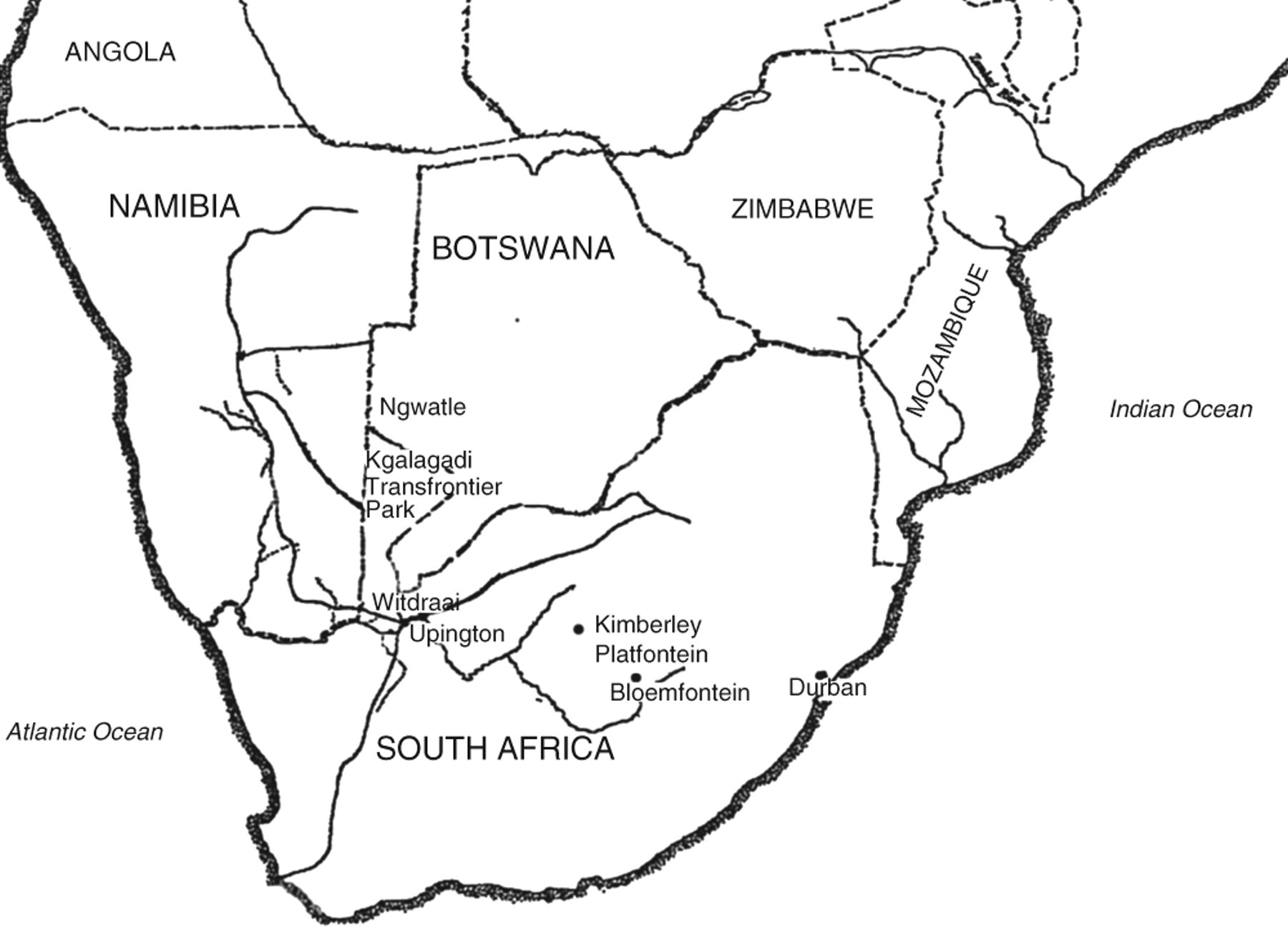
Southern Africa test locations for Experiment 1 (Witdraai and Ngwatle) and Experiment 2 (Kimberley).
Experiment 1
Method
Participants
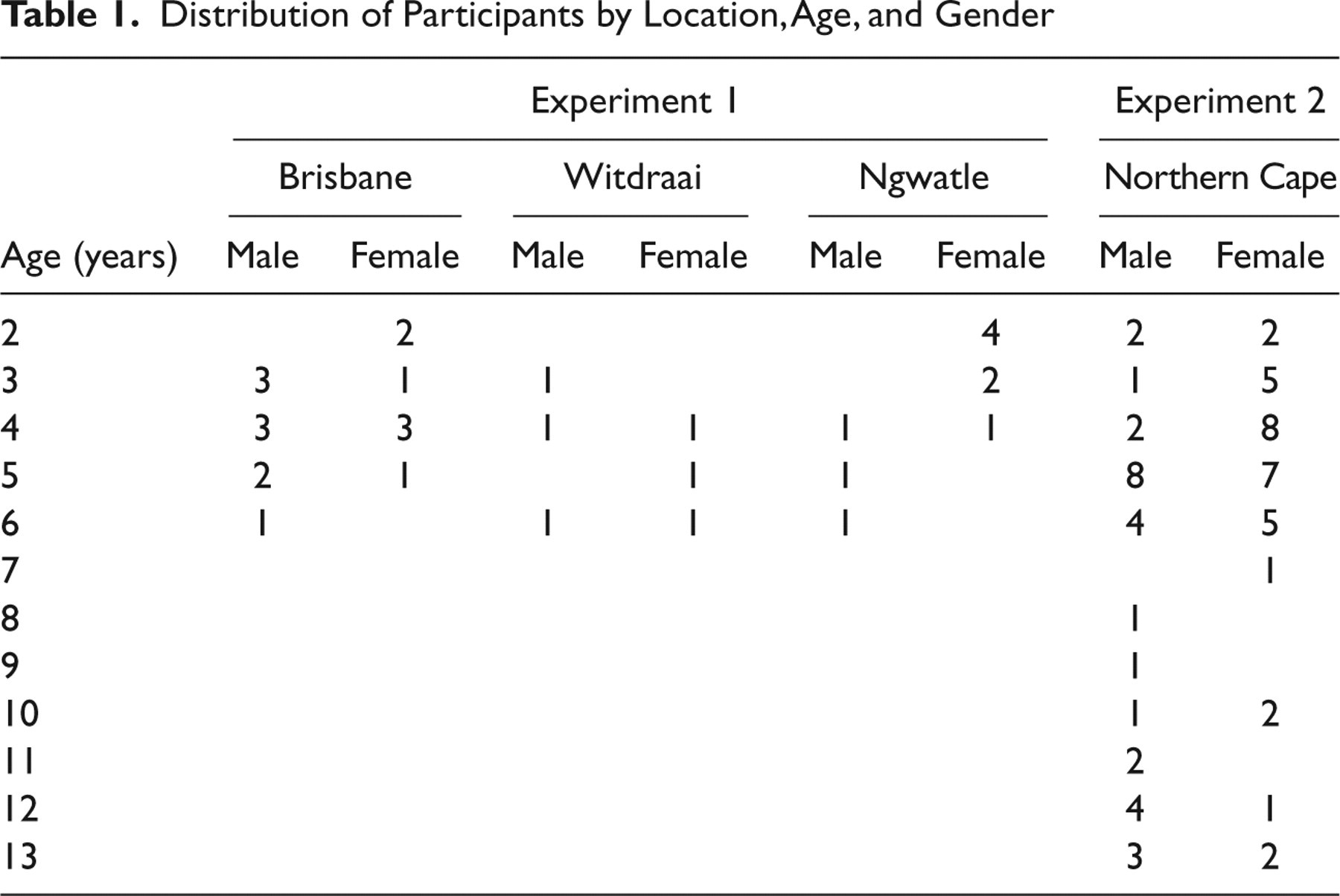
Thirty-two children between 2 and 6 years of age were included in this experiment (see Table 1 for a breakdown by age and gender). The 16 Brisbane children were recruited from a child-care center, and each child received stickers as a reward for participation. The 16 Bushman children were recruited through the South African San Institute (Witdraai) or via local community contacts (Ngwatle). Permission to test the Bushman children was obtained verbally from parents or local elders. For their efforts, these children were given an item of clothing.
Distribution of Participants by Location, Age, and Gender
Apparatus
We used three opaque boxes that could be opened in distinct ways to reveal a hidden toy. A different object accompanied each box, and we counterbalanced the presentation order of the boxes across children. The blue box (15 cm × 22 cm × 15 cm) had a trap door on the front that could be opened by pulling on a small knob. This box was always presented with a 35-cm red stick. The switch box consisted of a small box (19.05 cm × 12.05 cm × 6 cm) mounted on a wooden base (19.05 cm × 36 cm), with a lid on top of the box that was held shut by a hidden mechanism. Sliding a switch located on the front of the box from left to right disengaged the mechanism, permitting the box to be opened. This box was presented with a mallet comprising a yellow rubber ball attached to one end of a 16-cm stick. The artificial fruit was an opaque version of an apparatus first used with chimpanzees and young children (Whiten, Custance, Gomez, Texidor, & Bard, 1996); it is intended to functionally resemble food that requires various manipulations before an edible core can be removed. This apparatus consisted of a wooden box (17 cm × 21 cm × 13.5 cm) with a hinged lid that was kept in place by two 10-cm dowels fed through copper chambers. The box could be opened by removing both dowels from the tubes. The fruit was presented along with a 20-cm blue stick.
Procedure
In Brisbane, children were individually introduced to the experimenter and asked if they would like to play some games. The experimenter then accompanied them to an office, where they sat on a chair at a table opposite the experimenter. Children were randomly assigned to either the demonstration condition or the no-demonstration condition. In the Kalahari, all testing took place outside, out of sight of other children, either by the side of a dwelling or beneath a tree. Testing was conducted sitting on the ground, with the apparatus placed on a hard, plastic container that served as a small table. Children were introduced to the experimenter by a familiar member of the local community, who remained present throughout testing. Administration of the task, including random assignment to condition, was otherwise identical for the Brisbane and Bushman children.
Demonstration condition
All demonstrations comprised two distinct components: an irrelevant action and a causally related, but unnecessary, action. Following Lyons et al. (2007), we always ordered the irrelevant action first. This action had no function. The second action resulted in the box being opened and hence was causally related to the target outcome; it was, however, unnecessary in that the boxes could have been more easily opened by hand. For example, the simplest way to open the blue box was to pull the small knob protruding from the front of the trap door. Using the red stick, as demonstrated, made opening the door unnecessarily difficult.
The experimenter placed the first box on the table, demonstrated both actions, and then closed the box out of the child’s view. This sequence was repeated twice so that the child saw three complete demonstrations. Following the final demonstration, the box was closed and given to the child, along with the object. The experimenter simply said, “Your turn”; no instructions were given. The child was given 60 s to respond. If he or she successfully opened the box, the experimenter closed it and moved on to the next demonstration. This procedure was repeated until the child had been given the opportunity to open all three boxes. For the demonstration of the blue box, the red stick was placed on top of the box and then moved around in a circular motion three times (irrelevant action). After the third rotation, the stick was lifted up horizontally and placed on top of the knob protruding from the front of the box. Downward force was applied, forcing the trap door open (causally related action). For the demonstration of the switch box, the mallet was used to gently tap the top of the box three times. The mallet was then placed against the switch at the front of the box and moved horizontally, activating the hidden mechanism releasing the lid. Finally, for the demonstration of the artificial fruit, the blue stick was wiped three times across the top of the left-hand side of the box, from the back of the box forward. After the third wipe, the stick was used to poke both dowels out of their chambers, and the top of the box was opened (see Fig. 2).
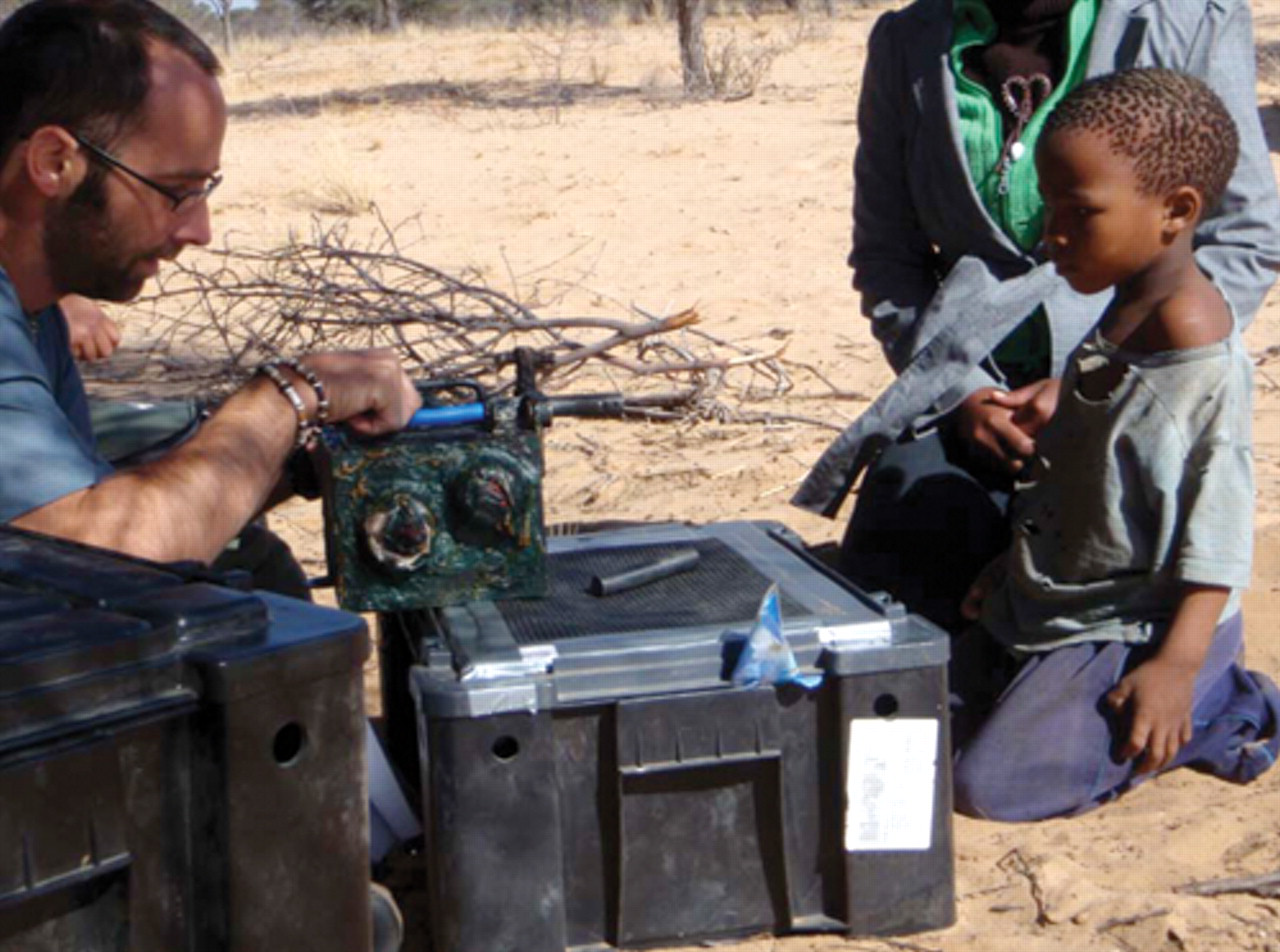
The artificial fruit being demonstrated at Ngwatle. The causally relevant action is shown, with one dowel having already been poked out by the experimenter.
No-demonstration condition
The experimenter took the first box and its associated object, placed both items on the table, and pushed them simultaneously toward the child, who was given 60 s to explore the objects. If the box was opened, the experimenter closed it and placed the next box on the table; if the box was not opened after 60 s, the experimenter removed it from the table and replaced it with the next box. This procedure was repeated until the child had explored all three boxes.
Coding
There were two dependent variables for each box: (a) whether or not the child reproduced the irrelevant action and (b) whether or not the child used the object to open the box. For each box, children were awarded 1 point for performing a target action and 0 for failing to do so. Thus, children could score between 0 and 3 points for each variable. The first author conducted all coding. A second coder who was blind to the specific hypotheses of the experiment independently observed and coded the videotapes of all children. There was 100% agreement between the main and reliability raters on both scores.
Results and discussion
Children in the demonstration condition produced the irrelevant actions on more boxes than did children in the no-demonstration condition (M demonstration = 2.69 boxes, M no demonstration = 0.13 boxes), t(30) = 14.81, p < .001, Cohen’s d = 5.25 (see Fig. 3). Indeed, most of the children (12 of 16) in the demonstration condition produced the irrelevant action on each box, whereas none of the no-demonstration children did. Children in the demonstration condition were also more likely to open the boxes using the object (M demonstration = 2.19, M no demonstration = 0.25), t(30) = 6.20, p < .001, d = 2.19. Critically, and contrary to our hypothesis, children in the demonstration condition produced the irrelevant actions at similar rates regardless of their cultural environment (M Brisbane = 2.50, M Kalahari = 2.88), t(14) = 1.27, p = .224, d = 0.64. They also used the objects to open the boxes at similar rates regardless of their cultural environment (M Brisbane = 2.13, M Kalahari = 2.25), t(14) = 0.22, p = .830, d = 0.10.
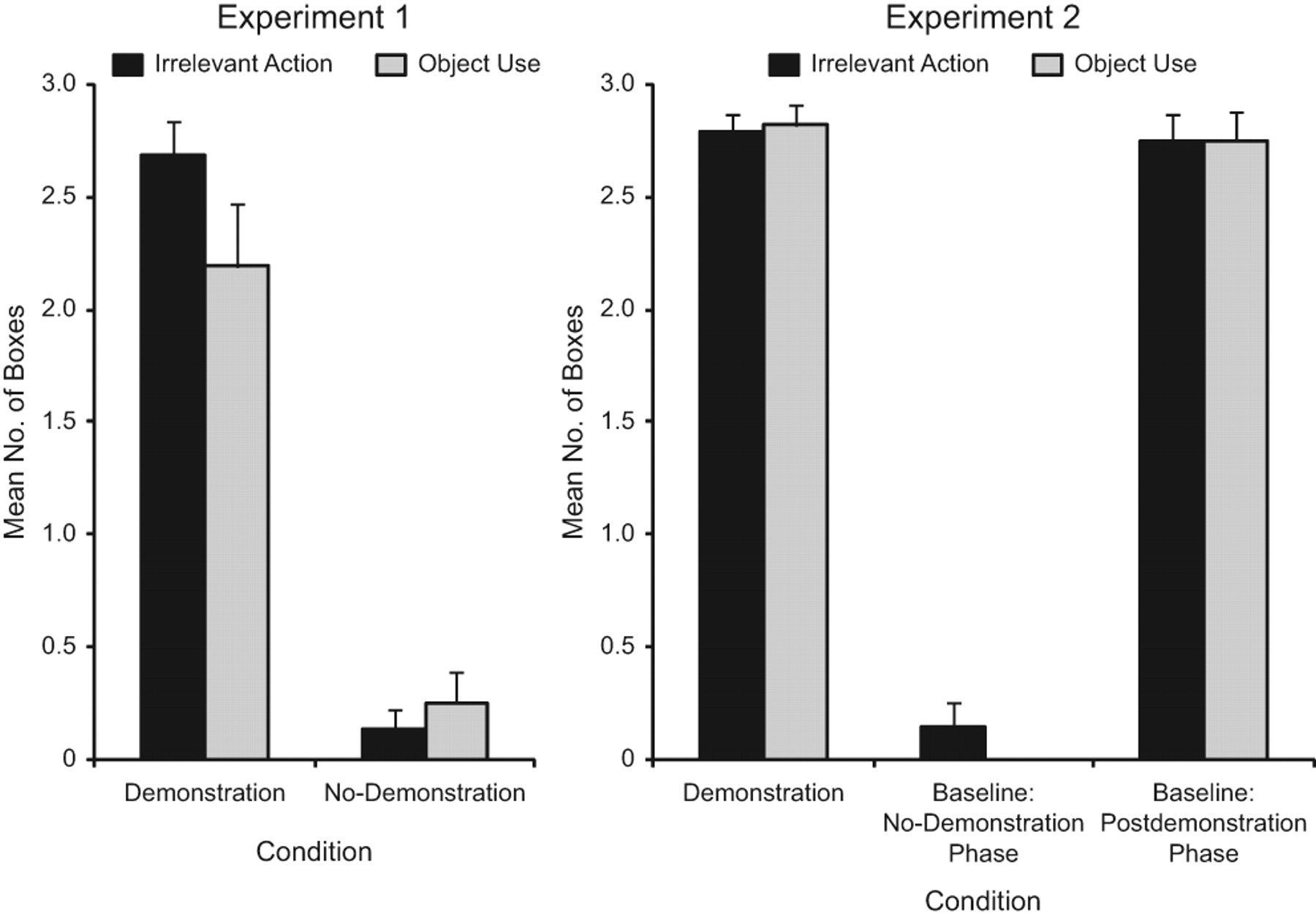
Mean number of boxes on which children produced the irrelevant actions and mean number of boxes children opened using the accompanying objects in Experiments 1 (left) and 2 (right). Results are shown separately for the demonstration and no-demonstration conditions in Experiment 1 and for the demonstration condition and the two phases of the baseline condition in Experiment 2. Error bars indicate standard errors.
Children in the demonstration condition consistently copied the irrelevant actions and object-use techniques to which they were exposed. By contrast, children who did not see the actions demonstrated rarely produced them. Thus, children in the demonstration condition did not exhibit the target actions because those actions represented prepotent responses or because they were the most obvious means of bringing about the desired outcomes. Rather, the children’s behavior is consistent with studies documenting children’s strong motivation to replicate with high fidelity the object-directed behaviors of others. The similarity of the children’s responses, irrespective of cultural background, socioeconomic background, or the nature of the experimental setting, attests to the pervasiveness of this behavior.
One suggestion as to why children imitate seemingly irrelevant actions is that they lack the cognitive sophistication to appreciate how actions are causally related to specific outcomes (McGuigan et al., 2007; Schulz, Hooppell, & Jenkins, 2008; Want & Harris, 2002). Lyons et al. (2007) claimed that overimitation arises from young children’s tendency to treat the actions of adults as “highly reliable indicators” of objects’ “inner workings” (p. 19751). To investigate this possibility, in Experiment 2 we tested overimitation in a new group of Bushman children ages 2 to 13 years. If overimitation is due to young children’s immaturity in discerning the causal efficacy of a model’s actions, older children should be less likely to reproduce irrelevant actions. As in Experiment 1, children were split into two groups. Children in the demonstration condition were tested in exactly the same way as those in Experiment 1. Children in the new no-demonstration + demonstration (i.e., baseline) condition were first given the opportunity to explore the test apparatus, as in the no-demonstration condition of Experiment 1. However, after exploring the apparatus, these children watched the model demonstrate the target actions and then had the apparatus returned to them. If overimitation emerges from children’s failure to comprehend the causal relations between actions and their consequent outcomes, children who discover how to operate an apparatus on their own should be disinclined to copy irrelevant actions subsequently shown to them by a model.
Experiment 2
Method
Participants
Sixty-two children between 2 and 13 years of age participated in this experiment (see Table 1 for a breakdown by age and gender). All were living in Platfontein, an immigrant settlement on the outskirts of Kimberley (see Fig. 1), a regional town in South Africa’s Northern Cape. All the children were members of the !Xun and Khwe clans who were relocated to South Africa from Angola and Namibia after the end of the South African Border War (1966–1989). These clans had sided with the South African Defence Force, which had employed them as trackers (Kleinbooi, 2007). The children had grown up in a tented camp, Schmidsdrift, in the Northern Cape countryside, before being housed in the subeconomic settlement in Platfontein. Children were recruited, and permission to test obtained, through the South African San Institute. The children were given an item of clothing for their participation.
Apparatus and procedure
Testing was conducted in a small room in a community center, with the child seated at a desk across from the demonstrator. The apparatus and general procedure were identical to those of Experiment 1, except that in Experiment 1 a single demonstrator conducted all testing. In Experiment 2, to ensure that the responses of the children were not influenced by demonstrator characteristics, we trained three members of the local community and three visiting experimenters to act as demonstrators. Half of the children were tested by a community member and half by a visitor (assigned randomly).
Children were tested individually and were randomly assigned to one of two conditions—the demonstration condition or the baseline condition. The demonstration condition was identical to that of Experiment 1. The baseline condition was split into two phases. As in the no-demonstration condition of Experiment 1, children in this condition were first given each apparatus with its associated object, one by one, without seeing any actions demonstrated (no-demonstration phase). After they had had the opportunity to explore all three apparatuses, the children watched the model demonstrate the target actions and were once more given the apparatuses, as in the demonstration condition (postdemonstration phase).
Results and discussion
Regardless of who did the modeling (visitor or community member), children in the demonstration group produced the irrelevant actions (M visitor = 2.81, M community member = 2.78), t(32) = 0.83, p = .836, d = 0.06, and opened the boxes using the objects (M visitor = 2.44, M community member = 2.72), t(32) = 0.30, p = .297, d = 0.35, at similar rates. Model type also had no effect on performance in the no-demonstration phase of the baseline condition; no child from either condition spontaneously used an object, and there was little difference between conditions in production of the irrelevant actions (M visitor = 0.00, M community member = 0.25), t(26) = 1.11, p = .276, d = 0.46. Performance also did not differ between the two demonstrator conditions in the postdemonstration phase of the baseline condition, either for production of the irrelevant actions (M visitor = 2.67, M community member = 2.81), t(26) = 0.58, p = .564, d = 0.20, or for object use (M visitor = 2.50, M community member = 2.94), t(26) = 1.83, p = .075, d = 0.65. Children thus responded similarly whether the modeling adult was a familiar member of their community or a stranger from a contrasting ethnic group.
Results of Experiment 1 were replicated (Fig. 3). Children in the demonstration group produced the irrelevant actions significantly more than children in the no-demonstration phase of the baseline condition (M demonstration = 2.79, M no demonstration = 0.14), t(60) = 19.53, p < .001, d = 4.93, and they also opened more boxes using the objects (M demonstration = 2.59, M no demonstration = 0.00), t(60) = 17.46, p < .001, d = 4.70. In additional analyses, the sample was split into younger (2–5 years old) and older (6–13 years old) children. In the demonstration condition, younger children produced fewer irrelevant actions than older children (M younger = 2.65, M older = 3.00), t(32) = 2.22, p = .034, d = 0.84, and also opened fewer boxes using the objects (M younger = 2.35, M older = 2.93), t(32) = 2.25, p = .032, d = 0.85. Children in the no-demonstration phase of the baseline condition produced irrelevant actions at similarly low rates regardless of age (M younger = 0.27, M older = 0.00), t(26) = 2.24, p = .241, d = 0.48, and none opened the boxes using the objects.
Children in the baseline condition produced the irrelevant actions only after watching the model demonstrate them (M no demonstration = 0.14, M postdemonstration = 2.75), t(27) = 15.76, p < .001, d = 4.20. Also, these children did not spontaneously open the boxes using the objects until they had seen the model do so (M no demonstration = 0.00, M postdemonstration = 2.75), t(27) = 22.54, p < .001, d = 5.98. Further, children copied the model’s irrelevant actions at equivalent rates irrespective of whether or not they had had a prior opportunity to explore the boxes (M demonstration = 2.79, M postdemonstration = 2.75), t(60) = 0.31, p = .759, d = 0.07. Similarly, the opportunity to explore the boxes did not affect children’s tendency to copy the demonstrator’s use of the objects to get the boxes open (M demonstration = 2.59, M postdemonstration = 2.75), t(60) = 0.88, p = .385, d = 0.22. Critically, 10 children in the no-demonstration phase discovered by trial and error how to open all three boxes by hand. Despite this, in the postmodeling phase, each of these children reproduced both the model’s irrelevant actions and the model’s object use on all three boxes.
In summary, the older children were more inclined than the younger children to copy the model. Also, children who were first given the opportunity to discover the affordances of the test apparatus still reproduced the model’s actions and did so at rates similar to those of children who were not given such an opportunity. Even when children discovered on their own how to open all three apparatuses by hand, when a more complicated method incorporating irrelevant actions was subsequently demonstrated, they persisted in copying the adult. It is thus unlikely that young children’s propensity for overimitation can be solely attributed to their immaturity in discerning the causal relations between a model’s actions and the outcome of those actions.
General Discussion
No previous study has documented imitation across such starkly contrasting cultures and test environments. The similarity of performance is profound: The imitative behavior of children living in remote Bushman communities in the Kalahari Desert was indistinguishable from that of children living in a Western, industrialized city. Performance was similarly unaffected by age, the cultural background of the model, or the children’s opportunity to learn on their own how to operate the apparatuses. Although many populations remain to be tested, this study provides the first indication that overimitation may be a universal human trait.
The potential widespread nature of overimitation is in keeping with recent claims about the way humans transmit knowledge between individuals. According to Csibra and Gergely (Csibra & Gergely, 2009; Gergely et al., 2007), adults naturally emphasize relevant information for children, using ostensive communicative cues, to identify what is being demonstrated for them. Thus, when an adult models, children automatically assume that the adult intends for them to learn something new, and hence they interpret the specific actions of the adult as being purposeful. A mind evolved to construe actions in this way cannot be easily overridden, even when the actions demonstrated are clearly superfluous. According to Csibra and Gergely, this mechanism of information transfer is so pervasive that it should be evident even in cultures where Western-style teaching approaches, involving verbal explanation and justification for what is being taught, are not commonplace. Our data are consistent with this proposal.
Critically, there is no evidence yet of overimitation in any nonhuman animal (Nagell et al., 1993). For example, in their now-seminal work, Horner and Whiten (2005) documented that 3- to 4-year-old children will imitate an adult’s entire sequence of actions, including those that are obviously irrelevant, whereas chimpanzees will replicate only actions that are causally related to the desired outcome. Chimpanzees’ copying behavior, unlike that of children, appears to be driven by a prioritization of outcomes over actions (Tomasello, 1996, 1999).
This distinction between action and outcome is important. We have demonstrated here that young children are drawn toward copying the actions they see adults perform, so much so that they will persistently replicate the actions of an adult even if such actions interfere with production of the desired outcome (Horner & Whiten, 2005; Nagell et al., 1993; Nielsen, 2006). Although at first glance such behavior seems maladaptive, we view it as quintessential to the development and transmission of human culture. Humans engage in a multitude of complex social activities, but precisely how they engage in these activities differs, often strikingly, from one community to another. Human behavior varies profoundly across cultures, and this profound cultural variation is uniquely human (van Schaik et al., 2003; Whiten et al., 1999). Critically, in understanding aspects of human behavior that are culturally instantiated, it is knowing the way things are done, not what gets done, that is important. Knowing that a group of people cook meat (an end) provides only limited information about their cultural heritage. Knowing how they prepared and cooked that meat (the means) tells far more. In analyzing cultural differences, means are more important than ends—and this focus on means over ends is precisely what is entailed in overimitation.
It is important to note that children do not blindly copy everything they see adults do. Characterized by some researchers as selective imitators (Carpenter, Akhtar, & Tomasello, 1998; Gergely, Bekkering, & Kiraly, 2002; Meltzoff, 1995), children will make judgments about what actions to copy on the basis of a host of variables, including the apparent intentions of the model and the situational constraints confronting both model and child. Such characterization adds spice to the growing debate as to why children overimitate. Targeted research is now needed to provide a clearer picture of the circumstances that determine when children will do precisely as others have done and when they instead choose their own actions.
Other animals use tools and may have the rudiments of culture, but no animal uses tools or has developed culture with the breadth and complexity of the human species. Overimitation is a mechanism for the rapid, high-fidelity intergenerational transmission of tool-use skills and for the perpetuation and generation of cultural forms. The study of this behavior promises to provide critical insight into the development of these two core human traits.
Footnotes
Acknowledgements
This work was conducted during a regular field trip undertaken by K.T. with the support of the Culture, Communication and Media Studies Unit of the University of KwaZulu-Natal. We would like to acknowledge the cooperation of the South African San Institute; the participation of the communities at Platfontein, Witdraai, and Ngwatle; and the participation of the staff and children of Margaret Cribb Child Care Centre in Brisbane. We thank S. Human for translations, K. Finlay for help with the map, and T. Hart, S. Barnabas, and A. Govender for their assistance. We also thank Y. Miller, E. Vanman, E. Coulson, C. Moore, V. Slaughter, and J. Mattingly for their insights.
The authors declared that they had no conflicts of interest with respect to their authorship or the publication of this article.
1.
We refrain from using the politically correct term San to refer to our Kalahari participants. San is a controversial, externally imposed term derived from a Nama word meaning “bandit.” The people in the communities we visit call themselves Bushmen and, with respect, so do we. Where possible, we utilize the names of the communities.
References
Supplementary Material
Please find the following supplemental material available below.
For Open Access articles published under a Creative Commons License, all supplemental material carries the same license as the article it is associated with.
For non-Open Access articles published, all supplemental material carries a non-exclusive license, and permission requests for re-use of supplemental material or any part of supplemental material shall be sent directly to the copyright owner as specified in the copyright notice associated with the article.
