







Abstract
Some people are adept at using discrete emotion categories (anxious, angry, sad) to capture their felt experience; other people merely communicate how good or bad they feel. We theorized that people who are better at describing their emotions might be less likely to self-medicate with alcohol. During a 3-week period, 106 underage social drinkers used handheld computers to self-monitor alcohol intake. From participants’ reported experiences during random prompts, we created an individual difference measure of emotion differentiation. Results from a 30-day timeline follow-back revealed that people with intense negative emotions consumed less alcohol if they were better at describing emotions and less reliant on global descriptions. Results from ecological momentary assessment procedures revealed that people with intense negative emotions prior to drinking episodes consumed less alcohol if they were better at describing emotions. These findings provide support for a novel methodology and dimension for understanding the influence of emotions on substance-use patterns.
When people experience intense negative emotions, a natural response is to regulate these reactions in an attempt to feel better. A commonly used strategy, when possible, is to consume alcohol. Reliance on alcohol to diminish negative emotions, also referred to as self-medication or drinking to cope, has received widespread attention in work aimed at understanding substance-use problems (e.g., Swendsen et al., 2000). Although the role of negative emotions in predicting alcohol use has been widely accepted, questions arise as to why only a subset of people turn to alcohol when they experience unpleasant feelings. In the present study, we examined whether people who readily differentiate among emotional descriptors to describe their felt experiences are at less risk for drinking in response to negative emotions compared with people who are less discerning of their discrete emotions.
Although how people feel at a global level—good or bad—provides them with information about how things are going, discrete emotions contain additional information that increases the ability to predict reactions to negative situations. Discrete emotions, such as joy, interest, sadness, anxiety, and anger, can be distinguished from each other on the basis of appraisal patterns and subsequent motivation patterns (Barrett, 2006). Awareness of discrete emotions leads to clearer inferences about antecedents, behavioral response tendencies, and steps that can be taken to maintain or alter a situation as desired (Ekman, 1992).
The ability to differentiate broad emotional experiences into discrete emotion categories, termed emotion differentiation (Barrett, Gross, Christensen, & Benvenuto, 2001), may further help in predicting how people perceive and respond to negative situations. Some people differentiate emotional experiences with great precision, identifying and experiencing distinct emotions (Barrett, 2004). Others struggle to go beyond the general valence property of “good” or “bad” in separating their emotional experiences. Poor emotion differentiators are limited in their ability to use emotions as a source of information and are more likely than good emotion differentiators to dwell on, misinterpret, and amplify the physiological sensations that accompany emotional arousal (Taylor, Bagby, & Parker, 1997). People who are better at differentiating emotions tend to find intense negative emotions more manageable. They also use a wider range of regulation strategies and are more successful in their efforts to manage negative emotions (Barrett et al., 2001; Kang & Shaver, 2004). These initial findings support the notion that superior emotion identification aids psychological flexibility and adaptive self-regulation.
Emotion differentiation may be particularly relevant in the context of stress and intense negative emotions, when the need for emotion regulation may be greatest (Barrett et al., 2001; Gohm, 2003). Difficulty in identifying and expressing emotional states has been linked to destructive strategies for down-regulating negative emotions, such as drug abuse and binge eating (Taylor et al., 1997). If a person is unable to access emotion-relevant information and identify approaches to manage felt emotion, he or she may be likely to rely on maladaptive self-regulation, such as consuming excessive amounts of alcohol.
Preliminary evidence for the relation between poor understanding of emotion states and alcohol use can be found in the alexithymia literature. Alexithymia refers to difficulty in identifying and describing emotions, as well as in differentiating them from bodily sensations. This multifaceted construct captures emotion differentiation along with other aspects of emotion processing. There is evidence of self-reported alexithymia in alcohol-dependent individuals (Thorberg, Young, Sullivan, & Lyvers, 2009). We know of a single published study examining the relation between alcohol consumption and alexithymia. In a cross-sectional survey, a positive relation was found between global self-report of alexithymia (e.g., “I have feelings that I can’t quite identify”) and retrospective report of alcohol consumption over the past year (Kauhanen, Julkunen, & Salonen, 1992). One of the difficulties in interpreting this research is due to its reliance on asking people to report their ability to differentiate emotions. Extensive research suggests that people make flawed, biased responses when asked to globally evaluate their abilities and that abilities are best captured via skills-based measurements (Dunning, Heath, & Suls, 2004). Asking people to indicate their intelligence on a Likert rating scale is unlikely to be as valid as testing their analytical and problem-solving skills; asking people about their ability to discriminate emotions is unlikely to be as valid as observing how they identify their emotional experiences on multiple occasions over time. Moreover, negative affect has been shown to be more strongly related to difficulties identifying feelings than to difficulties describing feelings (De Gucht, Fischler, & Heiser, 2004). Thus, emotion differentiation may be more relevant than the broader construct of alexithymia to the relation between negative emotions and alcohol use.
The present study identifies a novel factor for predicting alcohol consumption following the onset of negative emotions. We propose that people who are skilled at identifying their discrete emotions may be better equipped to manage negative emotions and less likely to drink to cope compared with people who are relatively unskilled at emotion differentiation, who are at increased risk for excessive alcohol consumption. This study also extends prior research on alexithymia by using a prospective design to directly assess the influence of emotion-labeling skills on subsequent alcohol consumption. Only a few studies have examined daily variations in emotions as they relate to subsequent alcohol use (e.g., Swendsen et al., 2000; Tennen, Affleck, Armeli, & Carney, 2000). To best understand the dynamic relation between emotional experiences and alcohol consumption, it is necessary to use a methodology that captures the temporal sequence in people’s natural environment. Thus, we used ecological momentary assessment (EMA) procedures involving portable computer-assisted methodologies to assess emotional experiences and drinking episodes while people went about their normal daily activities. The major benefits of this strategy include enhanced accuracy due to real-time assessments (e.g., time and date stamping); the ability to capture dynamic constructs (such as emotion differentiation) through repeated assessments; the context sensitivity of the information that people record; and the superior generalizability of real-life data relative to retrospective reports and data collected in laboratory tasks.
Method
Participants
Participants were 106 (49 men and 57 women) underage social drinkers from the community who met the following criteria: age between 18 and 20 years, consumption of at least three drinks per week, and no prior medical diagnosis or treatment for alcohol abuse. Screening for this final exclusionary criterion was accomplished by clinical interviews with research personnel and by self-report (i.e., score of 2 or less on the Short Michigan Alcohol Screening Test; Selzer, Vinokur, & van Rooijen, 1975). The mean age of participants was 19.3 (SD = 0.79). The majority were European American (86.8%), in school (95%), and employed at least part time (67%). Participants consumed an average of 18.6 drinks per week (SD = 10.6), and 51% had a family history of alcohol problems.
Procedure
Participants were recruited via newspaper advertisements and fliers. Interested people called a telephone number to be screened by trained research personnel. People passing the first phase of screening completed questionnaires on site and provided information about their availability and interest in self-monitoring their drinking behavior for 21 days with a handheld electronic diary. Willing participants were given 2 hr of individualized training in the use of the electronic diary. After mastering the procedures, they began 21 days of self-monitoring with weekly follow-up sessions for data uploading, battery charging, and feedback.
Participants were trained to self-initiate assessments at the start and end of any alcohol use (drinking episode). The predrinking assessment asked about what emotions they were feeling prior to alcohol consumption. The end-of-drinking assessment asked for the number of standard drinks consumed and asked participants how they felt after the episode. We focused on negative emotions. Using 11-point Likert scales, participants rated six adjectives according to felt intensity: sad, anxious, angry, tired, distracted, and fatigued. In addition, the electronic diary randomly prompted participants approximately six times per day. The random prompts asked participants to indicate their current felt intensity for the same six emotions.
Calculating negative-emotion differentiation and intensity
To measure negative-emotion differentiation and intensity, we created between-person variables from the within-person random-prompt ratings (average of six per day for 21 days). For negative-emotion differentiation, we calculated for each participant the average intraclass correlation with absolute agreement across the six negative-affect adjectives (Shrout & Fleiss, 1979; e.g., Tugade, Fredrickson, & Barrett, 2004). A small correlation suggests that a person discriminates among different emotional terms to describe his or her feelings in distinct, nuanced ways (i.e., greater emotion differentiation). A large correlation suggests that a person responds to distinct emotion terms in the same, uniform manner to describe how he or she feels (i.e., low emotion differentiation). We transformed scores so that larger correlations would be indicative of greater differentiation.
To measure negative emotional intensity in daily life, we summed the ratings for the six negative-affect adjectives at each random prompt and then created an average score for each participant.
Questionnaires
At the initial session, participants completed several measures related to alcohol consumption. We used a general information questionnaire (e.g., Collins et al., 1998) to assess demographic characteristics (e.g., gender, age) and collect drinking-related information (e.g., typical weekly consumption). We administered the Self-Administered Timeline Followback (STLFB; Collins, Kashdan, Koutsky, Morsheimer, & Vetter, 2008) at intake to evaluate alcohol intake over the past 30 days. Participants were given a calendar and were asked to write down special events to facilitate recall of daily alcohol intake. For each day, participants recorded how many standard drinks they had consumed.
Results
Preliminary analyses
The average intraclass correlation for differentiation of negative emotions was .59 (SD = .14); the range, from .21 to .85, was indicative of an acceptable level of variability. The average negative emotional intensity in daily life was 37.07 (SD = 9.46), out of a maximum of 66. The small average within-person correlation between differentiation and intensity, r = .22, p = .03, is evidence that these scores reflected different constructs.
Global self-reports of alcohol consumption as outcome
We constructed a hierarchical regression model to examine whether negative-emotion intensity moderated the effects of emotion differentiation on alcohol consumption reported in the 30-day STLFB. At Step 1, we included covariates, main effects were added at Step 2, and the Negative-Emotion Differentiation × Negative-Emotion Intensity interaction was added at Step 3. Predictor variables were centered, and significant interaction effects were explored with simple-effects analyses (see Aiken & West, 1991).
We found support for negative-emotion intensity as a moderator of the effects of negative-emotion differentiation on alcohol use (see Table 1). As illustrated in Figure 1, people with high emotion-differentiation scores were relatively immune to the effects of intense negative affect on alcohol use (averaging 49 drinks in 30 days), whereas people with low emotion-differentiation scores were vulnerable to excessive alcohol use when they felt intense negative affect (averaging 81.83 drinks in 30 days—1.67 times greater alcohol consumption), t(102) = 2.93, p = .004. Figure 1 also reports on the relative effects of emotion differentiation for people reporting low levels of negative emotional intensity in daily life.
Hierarchical Regression Model of Negative-Emotion Differentiation and Intensity as Predictors of Self-Reported Alcohol Consumption in the Past 30 Days
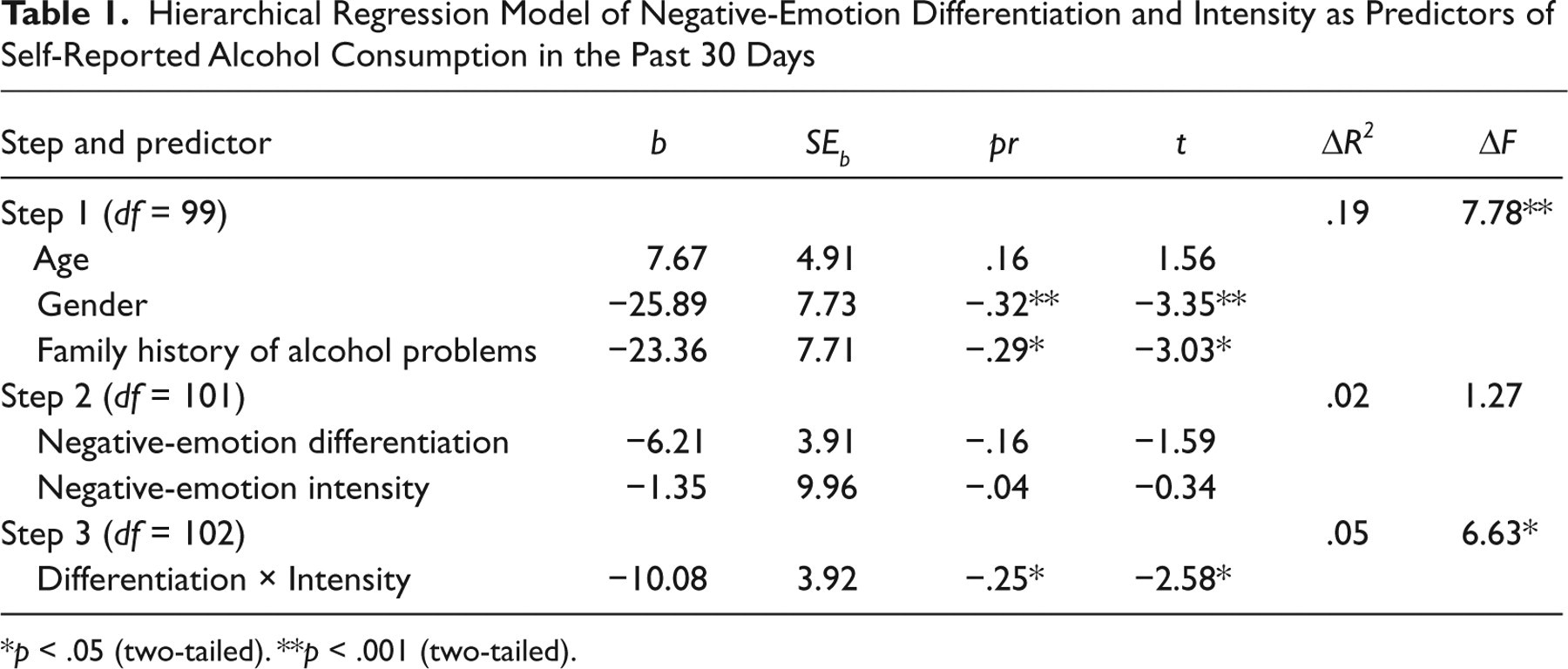
p < .05 (two-tailed). **p < .001 (two-tailed).
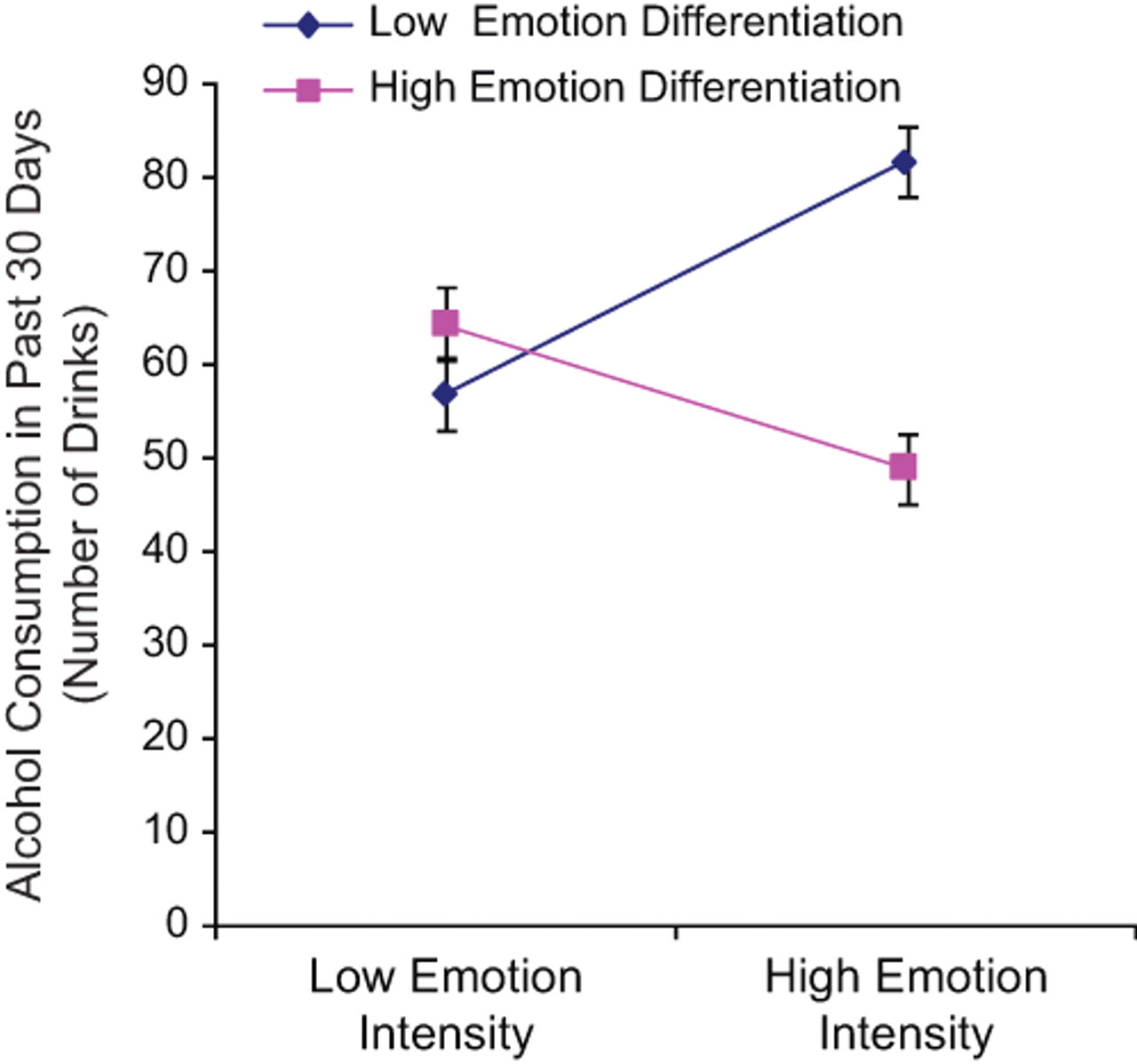
Number of drinks reported consumed in the 30 days before the experiment as a function of emotion differentiation and emotion intensity (“low” indicates values at least 1 SD below the mean, and “high” indicates values at least 1 SD above the mean). Error bars represent standard errors for simple effects.
Ecological momentary assessment of alcohol consumption as outcome
Using data collected with the electronic diaries for 21 days, we examined whether the within-person relation between predrinking negative emotion (i.e., negative emotion immediately prior to a drinking episode) and drinking behavior was moderated by negative-emotion differentiation. Given the nesting of days within people, we used hierarchical linear modeling (HLM 6.0; Raudenbush, Bryk, Cheong, & Congdon, 2000).
During the 3-week assessment period, participants received 14,002 random prompts. One hundred three participants reported 943 drinking episodes, and the average number of drinks per episode was 4.56 (SD = 3.42). There were 380 binge episodes (≥ 5 drinks).
As shown in Table 2, and as predicted, negative-emotion differentiation moderated the link between predrinking negative emotion and alcohol intake, b = −0.05, SE = 0.02, t(100) = −2.34, p = .02. A greater tendency to differentiate emotions led to less alcohol intake when people were confronted with intense predrinking negative emotions (see Fig. 2). There were no significant differences across levels of emotion differentiation among people with low predrinking negative emotions (see Fig. 2). We ran an additional model to account for the possibility that heavier drinkers might consume more alcohol in response to intense negative emotion. As shown in Table 2, the Predrinking Negative Emotion × Differentiation interaction, b = −0.06, SE = 0.03, t(96) = −2.41, p = .02, was relatively unaffected by the inclusion of this covariate.
Parameter Estimates for Predicting Alcohol Consumption During Drinking Episodes
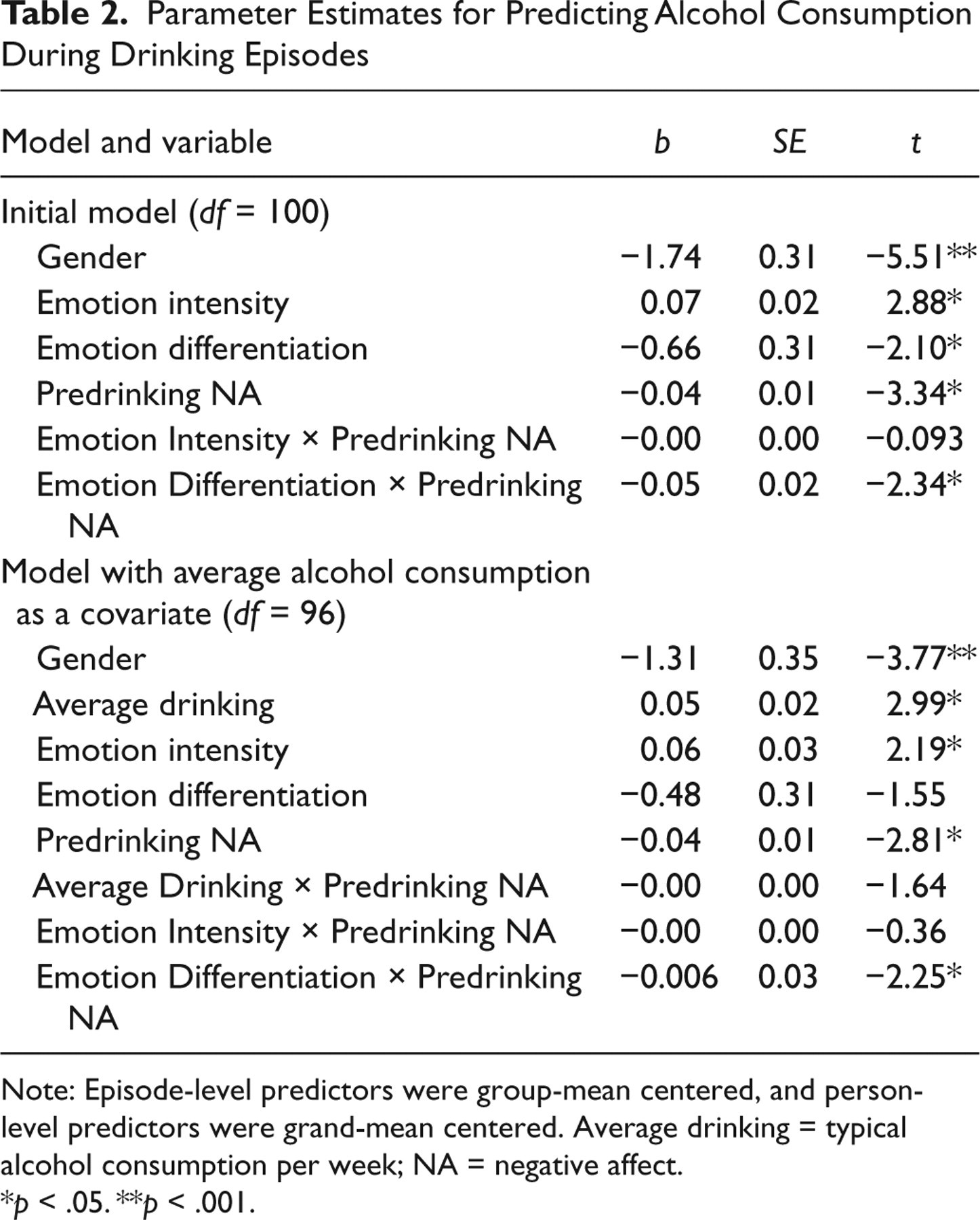
Note: Episode-level predictors were group-mean centered, and person-level predictors were grand-mean centered. Average drinking = typical alcohol consumption per week; NA = negative affect.
p < .05. **p < .001.
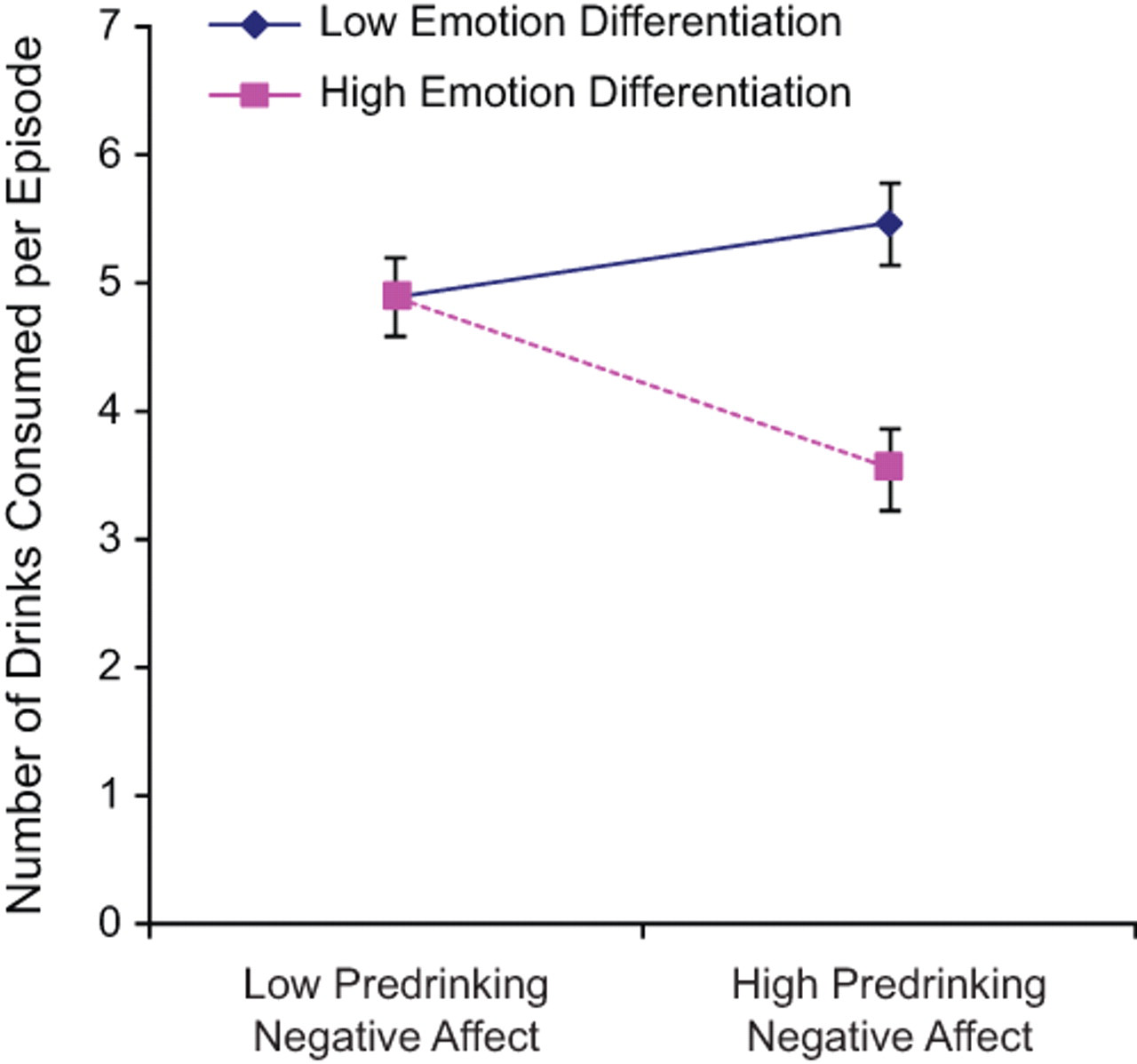
Average number of drinks per drinking episode as a function of emotion differentiation and predrinking negative affect (“low” indicates the 25th percentile, and “high” indicates the 75th percentile). Error bars represent standard errors for simple effects.
Using a Bernoulli model with the same independent variables as in the top half of Table 2, we also predicted binge drinking. We found a significant Predrinking Negative Emotion × Differentiation interaction, b = −0.04, SE = 0.02, t(100) = −2.14, p = .04. When people experienced intense predrinking negative emotion, those with low emotion-differentiation tendencies had a 54% probability of a binge-drinking episode, whereas those with high emotion-differentiation tendencies had a 22% probability (a 59% reduction in risk).
Discussion
We found that people are less likely to drink excessively in response to intense negative emotions if they differentiate their emotions in more distinct, nuanced ways. These data provide the first evidence that emotion differentiation is a useful continuum of risk and resilience in understanding alcohol use.
The present study is consistent with previous research that found people who are more proficient in distinguishing discrete emotions are more successful at emotion regulation (Barrett et al., 2001; Kang & Shaver, 2004). Our work extends prior research on alexithymia (Thorberg et al., 2009) by, among other things, using a prospective design and assessing how people actually create subtle distinctions within the category of emotions. That is, instead of asking people whether they are good at differentiating emotional experiences (Kauhanen et al., 1992), we assessed participants’ actual propensity to label and clarify their reported negative experiences in a discrete and granular manner—a meaningful difference in light of the difference between asking people about their intelligence and testing their abilities.
People who can clearly identify how they are feeling in times of intense distress might gain access to unique information that can be used to manage problems, make judgments, and work toward meaningful goals. However, additional research is needed to directly assess whether people who differentiate their emotions are more successful than others in regulating their behavior to meet varying situational demands. Connections between emotion differentiation and successful self-regulation are best evaluated using responses to actual challenges in the laboratory and real world (instead of relying on tendencies and intentions reported via questionnaires).
Given the novelty of this construct in the substance-use literature, we tested alternative models to ensure that the effects of emotion differentiation on drinking behavior could not be better accounted for by other well-studied risk factors. For instance, emotion differentiation continued to moderate the relation between negative emotions and alcohol consumption even after we accounted for age, gender, average weekly drinking patterns, and family history of alcohol problems. Interestingly, there was only a small, positive relation between emotion differentiation and the intensity of negative emotions experienced in participants’ natural environment—evidence for the distinctiveness of these dimensions of emotional experience. This is a particularly significant result, given the well-established link between negative emotional intensity and drinking (e.g., Kuntsche, Knibbe, Gmel, & Engels, 2006; Swendsen et al., 2000). Examining the synergy between these dimensions offers an opportunity to understand conditions in which negative emotions are of particular relevance to alcohol consumption and elaborate on emotion-based theories of risk and resilience (e.g., the tension-reduction model; Greeley & Oei, 1999).
To measure emotion differentiation, we created a profile of similarity for how each person judged his or her felt experiences with emotion adjectives over multiple occasions. This allowed for a rich individual differences index of emotion differentiation in everyday life, which cannot be captured with traditional questionnaire- and interview-based approaches. The relevance of emotion differentiation to alcohol intake was captured with two distinct methodologies. First, we used a retrospective self-report measure of 30 days of alcohol consumption (STLFB). Second, we used electronic diaries to evaluate emotion differentiation as a moderator of how negative emotions reported immediately prior to drinking episodes influenced alcohol consumption. Participants reported on emotions and alcohol consumption at the time of occurrence for 3 consecutive weeks. As might be expected, we found that the retrospective and in vivo reports revealed slightly different patterns of association between emotion differentiation and intensity (e.g., Kahneman, 2000). In the case of retrospective reports, people with low emotion differentiation showed increased risk of consumption when they experienced intense negative emotions, whereas when reactions were recorded in real time, there was no increased risk for these people, and instead people with high emotion differentiation showed resilience to intense negative emotion (this included the likelihood of binges). Despite the change in emphasis depending on the time frame in which we recorded drinking behavior, low and high emotion differentiation are best conceptualized as points along a continuum from risk to resilience. Essentially, extending prior work, this study demonstrates that there are costs for failing to differentiate and benefits for being adept at differentiation (Barrett et al., 2001; Kang & Shaver, 2004).
One limitation of our study is the restricted age range of our sample. However, 18- to 20-year-olds from the community are a theoretically meaningful population for studying alcohol use because of the frequency of risky behavior in young adults and the links between excessive alcohol use and social, academic, and physical-health problems. If our findings are replicated, there are practical implications. For instance, education about emotion identification, emotional reactivity, and tolerance and management of emotions (i.e., emotion literacy programs) might be a useful adjunct to current prevention and treatment practices.
Our study builds on previous research that has measured individuals’ ability to distinguish among emotional states by examining their actual experience of emotion in response to events (Barrett et al., 2001; Tugade et al., 2004). There is no way to know why our participants differed in the amount of emotions they reported experiencing. Following the approach of previous research, we argue that an intraclass correlation between emotions is an index of differentiation. However, it is possible that some deeper psychological process can explain both the intraclass correlation between emotional experiences and alcohol consumption without turning to emotional differentiation. For instance, some people might show an aversion to contact with negative thoughts and feelings as well as their mental representations, which would lead to avoidance and superficial information processing (Hayes, Luoma, Bond, Masuda, & Lillis, 2006). One strategy to avoid or escape negative emotions is excessive alcohol consumption (especially when entering a situation defined by accessible alcohol use). It does appear that there is meaningful variability in how people mentally represent their emotional experiences, and this characteristic is relevant to emotion regulation (in this case, alcohol consumption during stressful states). We are not aware of a better approach to assessing abilities to identify and describe emotions than asking people to accurately monitor what they are feeling and doing moment to moment in daily life.
Our study also has other limitations. For example, research suggests that emotional knowledge increases with age (Mayer, Caruso, & Salovey, 1999). Therefore, our findings may not generalize to other age groups. Also, findings from this sample cannot necessarily generalize to people with substance-use problems. The EMA data were based on self-report, and there is no way of knowing whether relevant information, such as drinking episodes and alcohol consumption, was omitted or exaggerated. However, it can be argued that using EMA with time- and date-stamped responses maximizes ecological validity while reducing the susceptibility to memory and response biases associated with traditional methodologies (Shiffman, 2007). Finally, we have argued for linkage among the experience of negative emotions, the perception and representation of negative emotions in the self, and the ability to effectively regulate emotions. Future research should explicitly address the degree to which people actually feel the need to regulate emotions, as the reaction to intense negative emotions can be as diverse as hopelessness, avoidance, and mindful awareness and receptiveness.
Our findings provide support for the utility of emotion differentiation in understanding alcohol consumption patterns. We analyzed a large number of between-person and within-person observations (14,002 random prompts) to obtain a reliable assessment of emotions and how they are cognitively represented (Barrett, 2004, 2006), and we examined the relation between these measures and meaningful assessments of alcohol consumption patterns in everyday life. This work contributes to literature attempting to explain when, how, and why people vary in their use of alcohol in response to intense negative emotional experiences.
Footnotes
The authors declared that they had no conflicts of interest with respect to their authorship or the publication of this article.
This research was supported by Grant AA07595 from the National Institute on Alcohol Abuse and Alcoholism to R. Lorraine Collins and by National Institutes of Health Grants AA12770 and MH-73937 to Todd B. Kashdan.