






Abstract

Sound and vibration technology wins boating award
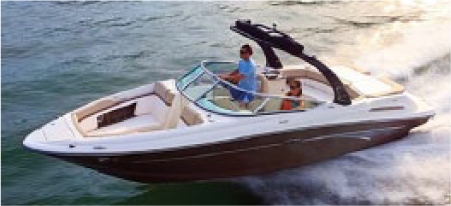
Sea Ray’s “Quiet Ride Technology”, which employs American Acoustical Product sacoustic absorption, acoustic barrier, and vibration damping products, won a Miami Boat Show Innovation Award for its ability to lessen the total noise and vibration level by 20%–50%, depending on a person’s location on the boat.
When Sea Ray called to say it had implemented a program that reduced noise levels aboard its boats by as much as 12 dB, I politely reminded the company that I was not the type prone to wearing a cap lined with tin foil. I’ve been collecting “dB(A)” readings for boating boat tests for 16 years and never saw noise levels reduced by anywhere near that amount. A decibel is a ratio representing a 10-base logarithm and used to measure the loudness of sound. A change of just 1 dB represents an exponential change in volume. Scientists consider a 5 dB difference significantly noticeable to the human ear. Twelve decibels? Couldn’t be. But Sea Ray persisted. So I boarded an airplane to the boatbuilder’s Knoxville, Tennessee, headquarters to judge the new technology and it is installing in select model boats, called Quiet Ride, with my own ears—and a decibel meter.
The main sound culprit aboard is vibration from the engine, props, and action of the hull moving through the water. Thwarting vibration at these various sources and preventing vibrations that cannot be damped from traveling to the ears of the crew are the prongs of the spear with which Sea Ray killed the noise. Sound is cumulative, coming from a variety of sources and adding up to the racket that makes conversation difficult, wears us down sooner than we’d normally tire and can even cause hearing damage with prolonged exposure, according to experts. So Sea Ray threw that spear often, and at some targets that might surprise you.
You can easily see that Sea Ray installed gaskets or bumpers on all hatches and doors aboard. You might also notice the rare earth magnet used to secure the swim ladder hatch, and the robust dog latches that now replace the rattle-prone slam latches used widely in the industry. One surely cannot miss the heavy insulation lining the engine compartment. The sturdy spring brackets used to stow accessories like table pedestals also add to the hush. But there is plenty you cannot see unless you tour the production line like I did.
One of the coolest implementations I saw was a material that looks like Kraft paper, which Sea Ray uses in its hull laminate. This fabric converts vibration into heat, preventing sound from traveling past it. It is laid on the hull at the chines. Sea Ray says the fabric creates no loss of strength or integrity, a fact I confirmed in talks with other boatbuilders.
Bulkheads and panels surrounding the engine compartment are constructed with acoustical insulation. Foam placed between the deck and hull reduces squeaks and creaks. A rubber gasket beds the joint between engine box and deck. Foam sprayed in the bow damps the vibration as the boat encounters waves. The structural liners are built without voids to negate reverberation. Robotic drilling assures precise installation of hardware, so cleats, chocks, hinges, and other deck jewelry do not add to the din. As the boat got quieter, the engineering team discovered more and more sources of noise, and attacked them. Examples include a gasket beneath the windshield to prevent air leaks from whistling and acoustically insulated drink holders to keep noise from entering the cockpit. What is next? Sea Ray is considering developing its own blower motor to replace the noisy ones currently on the market.
A 12 dB reduction? Running identically powered 250 SLX bowriders, one with Quiet Ride and one without, I recorded a 9 dB(A) reduction in noise at 4000 rpm while seated at the aft bench. The actual readings were 92 and 83 dB(A). Note that we had less wind during our trials than Sea Ray had during its tests. We also used a different brand of sound meter, which might have affected the results. Still, a 9 dB reduction is outstanding: the average sound level for similar boats at that speed, according to our test database on our website, is 94 dB. Additionally, the boat without Quiet Ride produced a three-cycles-per-second thrum in the soles of my bare feet. Aboard the 250 SLX with Quiet Ride, I could not feel enough vibration to quantify it.
Noise is tiring, inconvenient, and grudgingly accepted by boaters. Sea Ray’s Quiet Ride technology proves that it does not have to be part of the boating experience.
Key features are as follows:
Noise reduction is achieved via a boat-wide system of techniques and technologies.
A special hull material converts vibration to heat, effectively “dead-ending” sound.
Gaskets, bumpers, and acoustic-filled bulkheads quell noise while maintaining strength and allowing the engine to breathe.
For more information, follow the link: http://www.aapusa.com/pr.html
L-ACOUSTICS K2 receives first PIPA award for best concert sound product
For the 15th time, more than 100 magazines from all over the world voted to determine the best musical instruments and audio equipment of 2013/2014 in more than 40 categories of the Musikmesse International Press Award (MIPA). The winners were presented with the awards at a special ceremony and party held during the Musikmesse/Prolight + Sound on Thursday, 13 March 2014.
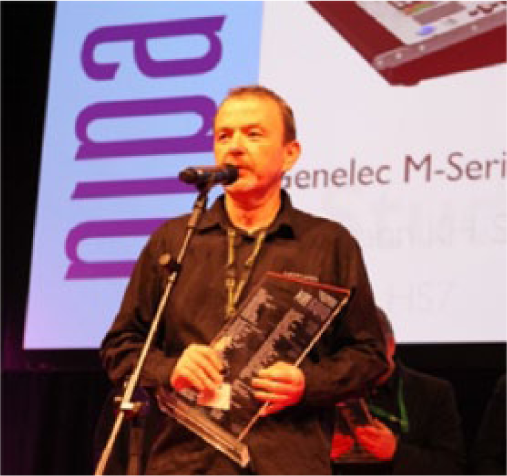
More than 300 international representatives of musical instrument and audio equipment manufacturers and distributors got together for the 15th MIPA award show, including guests from more than 20 countries. This proves that the MIPA is established as the “Grammy” of the Musical Instrument/Pro-Audio industry. To celebrate the 15th MIPA Awards, the PIPA Pro Light and Sound Press Award was presented for the first time and K2 received the award in the category of Best Concert Sound product.
Stéphane Ecalle, L-ACOUSTICS marketing Director who was representing the French manufacturer at the ceremony says, The 250 employees of L-ACOUSTICS are delighted and honoured to receive such a distinction for K2. We realize that the international press has echoed the market reaction to this brand new system, which has already distinguished itself during the Winter Olympics ceremonies and counts 60 early adopters worldwide. What better start could we have hoped for for K2?
For more information, follow the link: http://www.l-acoustics.com/520-l-acoustics-k2-receives-1st-pipa-award-for-best-concert-sound-product.html
Wenger Transcend™ Active Acoustics and Transform™ acoustical banners win best product awards
Wenger Corporation, a leader in stage, acoustic, and storage solutions for worship and performance spaces took home three awards at the annual Worship Facilities Expo in Nashville, TN. Wenger’s groundbreaking Transcend™ Active Acoustic System won the award for Best Other Audio Product, while the Transform™ Motorized Acoustical Banner brought home two honors: Best Acoustical Treatment Product and the prestigious Best Overall Building Treatment award.
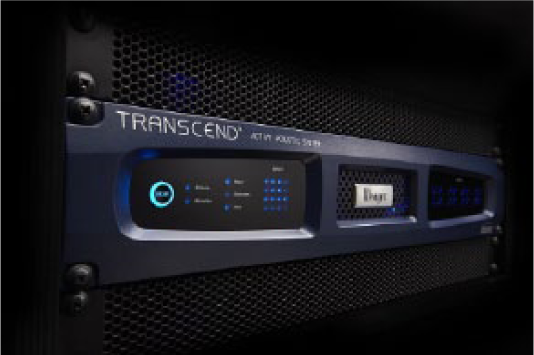
“The judging panel responded to the versatility of Transcend for spoken word and music. The system has very appealing qualities for churches”, said Jim Wagner, Managing Director of Worship Facilities Expo, adding, “The Transform Motorized Acoustical Banner could provide flexibility to a wide variety of church spaces. The judging panel was impressed with the versatility of applications and placement for churches”.
Both products are significant breakthroughs in acoustics technology, and show Wenger leading the charge in creating acoustical solutions that are more effective, more versatile, and more affordable. Developed in partnership with the legendary audio company HARMAN, Transcend uses digital processing technology to optimize the acoustics of any worship or performance space, while Transform replaces traditional acoustic panels with motorized banners that can be adjusted to suit a variety of performances.
Chris Simpson, President and CEO of Wenger Corporation said, We are extremely honored that the Worship Facilities Conference and Expo 2015 has chosen the Transcend Active Acoustic System as Best Other Audio Product. We believe that Transcend is a revolutionary product that will make cutting-edge active acoustics technology accessible to worship facilities and venues around the world, and we’re glad the WFX judges agree. We are also honored by their recognizing our versatile Transform Motorized Acoustical Banner with two awards: Best Acoustical Treatment Product and Best Overall Building Product.
For more information, follow the link: http://www.prnewswire.com/news-releases/wenger-transcend-active-acoustics-and-transform-acoustical-banners-win-best-product-awards-300181218.html
Acoustics simulation software
State-of-the-art auralization;
ODEON algorithms for reliable results;
Ease and flexibility in room modeling;
Optimized for high calculation speed;
Equipped with an impulse response measuring system.
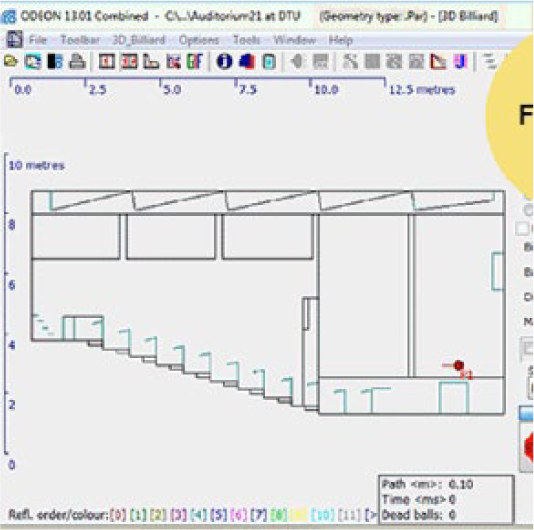
ODEON software is developed for simulating and measuring the interior acoustics of buildings. With the appropriate treatment, outdoor situations can be studied as well. Given the geometry and surface properties, the acoustics can be predicted, illustrated, and listened to. Sound reinforcement is easily integrated in the acoustic predictions. ODEON uses the image-source method combined with ray tracing.
Applications include the following:
Concert and opera halls, theatres, churches, and mosques;
Open plan offices, foyers, restaurants, music studios;
Underground and railway stations, airport terminals;
Industrial environments, outdoor areas with complicated geometry.
ODEON is available in four editions:
The Basics edition gives a collection of the ODEON powerful tools in affordable cost. ODEON basics comes with a measuring system and basic simulation tools. The computation engine and accuracy is exactly the same as for the rest versions.
The Industrial edition for environmental acoustics where SPL, SPL(A), T30, and STI are the important results. It allows modeling of point, line and surface sources, with possibility to model large and complex sound sources.
The Auditorium edition forms a large set of room acoustical parameters based on the reverberation curve. It has a variety of graphical and auralization tools.
The Combined edition includes all the features found in the Basics, Industrial, and Auditorium editions.
For more information, follow the link: http://www.odeon.dk/content/acoustics-simulation-software
Absorption
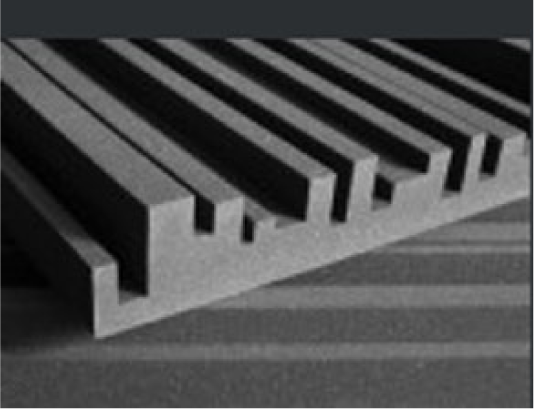
The two most commonly used sound absorption materials are high-quality acoustic foam and specialized acoustic fiberglass (no, not the stuff you buy at the hardware store). For brevity, at times we will generically call acoustic foam just plain “foam” although there are very dramatic differences in cell structure and density between acoustic foam and the thousands of other types we could manufacture. (This is why you cannot just run down to the local SuperMart and buy mattress pads with which to acoustically treat your studio.)
While absorption is an important piece of acoustical treatment, make sure to complete your room plan by also including our bass trapping, diffusion, and ISO-series products in order to maximize the effectiveness of your total treatment system. Additionally, our construction/isolation products can be used for sound isolation of a space.
For more information, follow the link: http://www.auralex.com/products/absorption/
VibrationBloc outperforms the competition
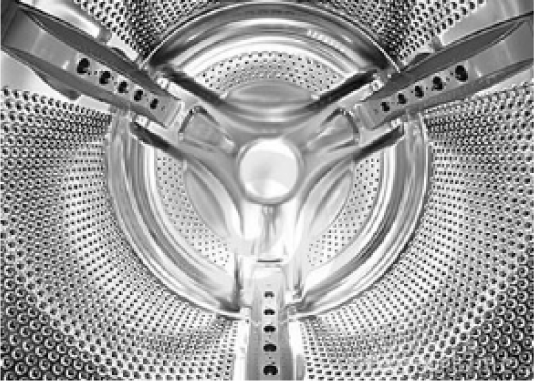
VibrationBloc’s solution to minimizing the effects caused by excessive vibration distribution is statistically superior when compared with other anti-vibration products. The VibrationBloc Washing Machine Anti-Vibration Stand is capable of reducing vibration levels by up to 92%. Various other anti-vibration alternatives such as anti-vibration feet, anti-vibration mats, and anti-vibration pads do not even come close to reaching this number. Utilizing a thoroughly tested and patented technology, the VibrationBloc Washing Machine Anti-Vibration Stand is the only product that uses a true isolator to reduce vibration levels.
The creators of the VibrationBloc Washing Machine Anti-Vibration Stand created the definitive anti-vibration solution by incorporating the themes of efficiency and longevity into their design. Outperforming alternative anti-vibration products by a lengthy margin, the VibrationBloc Washing Machine Anti-Vibration Stand continued to function flawlessly after 5000 h of machine wash time. This directly translates to a prolonged defense against the many physical hindrances attributed to an overaggressive spin cycle in a front-loading washing machine. Not only will the VibrationBloc Washing Machine Anti-Vibration Stand safely and securely fasten your front-loading washing machine unit to the floor, it will also last as long as your front-loading washing machine functions.
When it comes to selecting the appropriate defense in reducing vibration levels, the choice is obvious. VibrationBloc has assured the maximum in peace of mind by integrating their one of a kind technology into the VibrationBloc Washer Stand. Thoroughly tested to reduce vibration levels in prolonged stretches of time, this is the definitive answer in anti-vibration technology. Formerly marketed as the 0VIB Washer Stand and Steadywash™ (a trademark of Ohio Steel Industries, Inc), the VibrationBloc Washing Machine Anti-Vibration Stand is compatible with most major branded 27 in front-loading washing machines.
For more information, follow the link: http://www.vibrationbloc.com/news.asp
Accelerometer with exceptional linearity over wide dynamic range
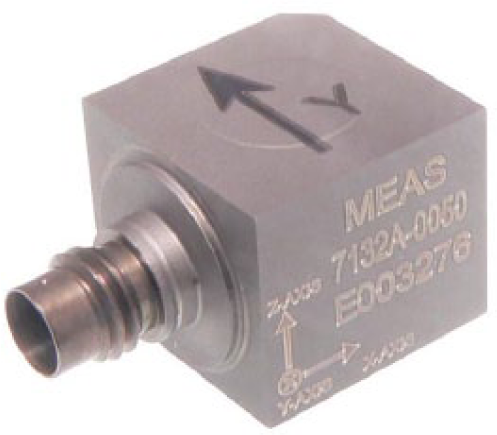
Measurement Specialties, now part of TE Connectivity (NYSE: TEL), has released the Model 7132AHT, a high temperature, miniature accelerometer with exceptional linearity across dynamic ranges from ±50 to ±2000 g.
The unit’s stable temperature response ensures reliable operation over an extended temperature range of −55°C to +163°C, making this triaxial integrated electronic piezoelectric (IEPE) accelerometer useful in high temperature, high frequency, shock, and vibration testing.
In addition to its specific uses in automotive testing and laboratory environments, the Model 7132AHT is ideal for many general purpose data acquisition applications, due to its exceptional performance characteristics.
The sensor uses stable piezo-ceramic crystals in annular shear mode for long term, stable operation as well as offers flat frequency response across a wide bandwidth up to 10 kHz. In addition, the Model 7132AHT features residual noise as low as 0.001 g RMS (at ±50 g), with a maximum of only 0.005 g RMS (at ±2000 g).
Output impedance is more than 100 Ohms and full-scale voltage output is ±5 V across all dynamic ranges. Other notable parameters include an excitation current of 2–10 mA, a compliance voltage of 22–33 VDC, transverse sensitivity of less than 5%, and non-linearity of ±1% full-scale output (FSO).
A hermetically sealed, titanium housing enables the unit to withstand harsh elements in rugged environments. The four-pin miniature connector interface securely fastens the accelerometer to the system cable for uninterrupted data transmission.
The 15-g sensor can be adhesive or stud-mounted, depending on application requirements.
Technical specifications are as follows:
Miniature, high temperature, triaxial IEPE accelerometer;
Wide temperature range from −55°C to +163°C;
Flat frequency response across a wide bandwidth up to 10 kHz;
Stable piezo-ceramic crystals in annular shear mode for long-term operation;
Rugged, titanium housing is hermetically sealed.
For more information, follow the link: http://www.meas-spec.com/news/t_threecolumn.aspx?id=11709&menu_id=628&tax_id=136