






Abstract

College establishes new Center for Autonomous and Robotics Systems
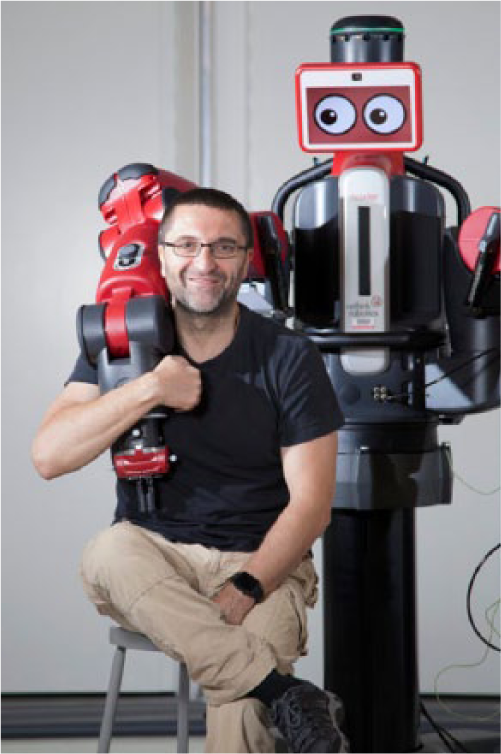
The College of Engineering has established a new, interdisciplinary Center for Autonomous and Robotics Systems (CARS) that will build upon the expertise and experience of the current faculty and advanced facilities.
Professor Calin Belta (ME, SE, ECE), who heads up the Boston University (BU) Robotics Laboratory, has been appointed the inaugural director of the Center. Belta says that CARS is a natural expansion of the Robotics Lab; the Center will allow the scope of research to broaden with increased funding, the addition of outside collaborators, and increased internal collaboration. The Robotics Lab will transform from a facility for experimental research to a multi-functional Center with space to design robots that can perform complex physical tasks like moving objects around and also open up more room for students.
For more information, follow the link: http://www.bu.edu/eng/2018/03/12/center-for-autonomous-and-robotics-systems/
The vibratory stress relief process

The vibratory stress relief (VSR) process is a method of reducing residual stress levels in metal components, resulting in improved dimensional stability and overall mechanical integrity. This allows subsequent manufacturing operations, such as machining, assembly, testing, transport, commissioning, and usage to take place with minimal quality issues.
The process works by flexing the workpiece with sufficient amplitude to cause plastic flow on a mildly microscopic level within the material. Such plastic flow is a fundamental aspect of all forms of stress relief, whether purposeful (using heat or vibration) or incidentally, during transport or over a long time period (sometimes called “curing”). Changes in the workpiece’s resonance pattern accompany stress relief, in the form of resonance peak growth, which can be accompanied by some resonance peak shifting.
For more information, follow the link: http://www.vsr2.net/
Acoustics and vibrometry

The acoustics and vibrometry group studies a wide range of sound and vibration phenomena of importance in a variety of industrial applications. Major studies include the development of new simulation methods for predicting the noise and vibration of vehicles at mid-to-high frequencies and the design of novel remote diagnosis tools for monitoring the health of bee colonies. Other areas of interest within the group include techniques for noise reduction in magnetic resonance imaging (MRI), near-field acoustic holography simulation methods, and the control and resonant oscillation of micro-fluids under the influence of an applied electric field. Our interdisciplinary research takes place at the interface between applied mathematics, physics, and engineering.
For more information, follow the link: https://www.ntu.ac.uk/research/groups-and-centres/groups/acoustics-and-vibrometry
Thin engineered material perfectly redirects and reflects sound
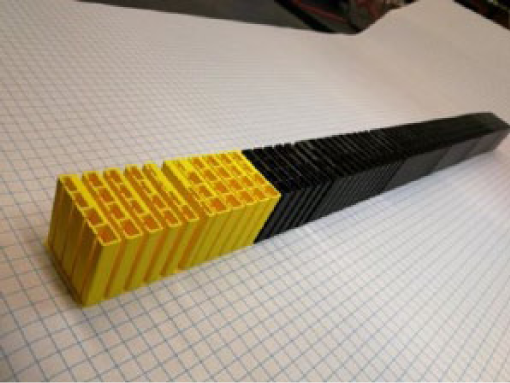
Metamaterials researchers at Duke University have demonstrated the design and construction of a thin material that can control the redirection and reflection of sound waves with almost perfect efficiency.
While many theoretical approaches to engineer such a device have been proposed, they have struggled to simultaneously control both the transmission and reflection of sound in exactly the desired manner, and none have been experimentally demonstrated.
The new design is the first to demonstrate complete, near-perfect control of sound waves and is quickly and easily fabricated using three-dimensional (3D) printers. The results appear online 9 April in Nature Communications.
For more information, follow the link: https://www.sciencedaily.com/releases/2018/04/180410132851.htm
Silent marine robots record sounds underwater
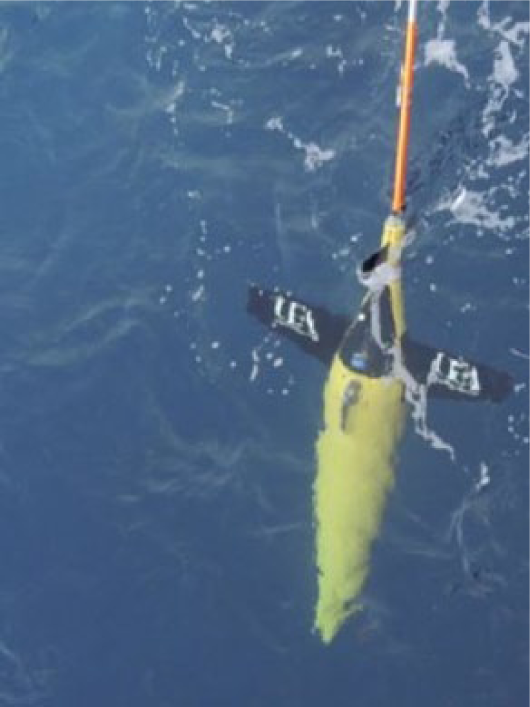
Silent marine robots that record sounds underwater are allowing researchers at the University of East Anglia (UEA) to listen to the oceans as never before.
The robots are about the same size as a small human diver, but can reach depths of 1000 m and travel the ocean for months, covering thousands of kilometers. They communicate by satellite with their pilot to build an underwater soundscape of the world’s oceans.
Pierre Cauchy, a PhD researcher from UEA’s School of Environmental Sciences, has been using one of these autonomous submarines for 5 years, recording underwater noises in the Mediterranean Sea and the North Atlantic and Southern oceans.
For more information, follow the link: https://www.sciencedaily.com/releases/2018/04/180410084230.htm
New metasurface model shows potential to control acoustic wave reflection

An international team of researchers showed how a nonlinear, elastic metasurface could convert a wave’s fundamental frequency to its second harmonic. Structural factors in metasurfaces, like the spatial arrangement of its molecules and its composition, underpin its optical, elastic, and acoustic properties. Developing this metasurface could help architects reduce noise from performance halls to cityscapes. These findings could also enhance cloaking technology for submarines to evade sonar detection.
Typically, when a sound wave strikes a surface, it reflects back at the same fundamental frequency with a different amplitude. Their model, reported in the Journal of Applied Physics, from AIP Publishing, shows that when a sound wave hits this metasurface, the incident fundamental frequency does not bounce back. Instead, the metasurface converts that energy into the wave’s second harmonic resonance.
Vincent Tournat, a senior research scientist in acoustics at France’s CNRS and an author on the paper, explained that “you send a A440 pitch and after reflection, this is transformed into A880 pitch”. He expounded that this wave conversion is possible “with a thin reflecting surface … much less than the acoustic wavelength”.
For more information, follow the link: https://www.sciencedaily.com/releases/2018/04/180403120011.htm
Turbomachinery vibration solution: ORBIGate
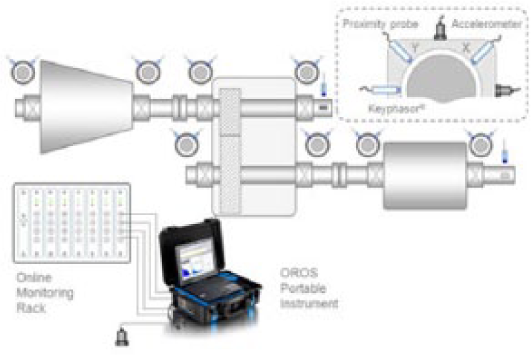
ORBIGate is the dedicated software module for industrial rotating machinery vibration during diagnostics as well as acceptance works. Easy to use, it provides all the tools to bring the highest level of setup simplicity and efficiency to the user.
Featuring simultaneous portable acquisition on up to 32 dynamic channels, an entire machine train can be tested during transients or steady states. The system acquires and analyzes orbit, Bode, shaft, and casing vibration. Typical graphics are orbits, shaft centerline, spectra, Bode and polar diagrams, trends, waterfall, overall peak to peak, 1X (amplitude and phase). In a typical situation, the OROS instrument is connected to the outputs of the monitoring system as shown in above figure.
For more information, follow the link: http://www.oros.com/3902-orbigate.htm
Torsion and twist for torsional vibration measurement and analysis
The instantaneous angular velocity converter (IVC) provides instantaneous angular velocity signal to be analyzed:
Integrated frequency-to-voltage converter;
Cross-phase tracking: the order cross-phase relatively to a reference channel for torsional resonances at specific orders identification;
Virtual inputs compute the static and dynamic twist from two tachometers’ signals.
Main features
No additional hardware to the standard 3-Series analyzers;
Up to 6 torsional inputs per analyzer;
Up to 1024 pls/rev and 30,000 r/min (with a 5° resolution);
High accuracy with 6.4 MHz over-sampling;
Record and analyze synchronously with standard AC/DC/ICP inputs;
Real-time and post-processing;
Torsional vibrations export (UFF, MAT, txt, SDF, wav, etc.);
Spectral, order, time domain, overall, and waterfall analyses of the torsional channels;
Missing pulses management;
Angle, angular velocity, and angular acceleration with integration and differentiation filters.
For more information, follow the link: http://www.oros.com/3971-torsion.htm