







Abstract
This paper investigates metamaterial functionally graded plates with quasi-zero stiffness resonators. This way, the governing equations of free vibrations and the mode shapes are obtained using the assumed mode method. The free vibrations analysis of the metamaterial functionally graded plates is then performed using finite element analysis. The objective of the current paper is to present an FG metamaterial plate structure to attenuate its mode shapes. Various resonators’ arrangements on the FG plate evaluate the best arrangements. This paper shows that the proposed metamaterial attenuates the corresponding shape modes for the first nine natural frequencies.
Introduction
Metamaterials are a new generation of composites whose inherent properties of the microstructures of these materials are beyond the properties found in natural materials. The central concept of metamaterials is the production of synthetic materials using structural units designed to achieve the desired properties. These structural units can be shaped and sized by artificial atoms and molecules. Therefore, such materials can have unique properties compared to natural materials. Metamaterial structures with unique and different designs are used to absorb or neutralize vibrations at low frequencies.
Phonetic crystals or acoustic materials are specially designed materials; these materials are composed of single cells on a tiny scale. By selecting and manipulating the parameters of the volume modulus, they control or absorb the density and geometry of acoustic vibrations and elastic waves in a particular way. The frequency range in which these materials prevent acoustic or elastic wave propagation is called a bandgap.
Investigations on bandgaps in acoustic metamaterials focus mainly on calculating the bands of elastic waves. There are currently several methods for calculating bandgaps, including the transfer matrix method, the Bragg diffraction method, and the finite element method (FEM). So far, in the field of metamaterials with a property of approximately zero stiffness, few studies have been conducted focusing on plate geometry. In contrast, different types of beams with different geometries and conditions have been studied, and single cells used in these beams have a variety of scales and geometries. So far, many studies have been conducted on metamaterial structures, for instance, by collecting data and results from previous researchers on acoustic metamaterials.
Lu et al. 1 explained such materials’ definitions, characteristics, and applications. They provided a good literature review. Xiao et al. 2 investigated the propagation of bending waves in a thin plate attached to the plate as a mass-spring resonator. The plate was made of two-dimensional alternating homogeneous elements. Yu et al. 3 conducted a numerical study of the propagation of elastic waves in photonic crystals consisting of steel resonant elements on a thin rubber plate. For the first time, rubber material was used as a base plate. The result of their study showed large bandwidths in the very low-frequency range. Nouh et al. 4 presented a theoretical and experimental study of wave propagation and vibration attenuation properties in a metamaterial plate composed of single cells with local amplification. The single cells consisted of a hollow plate with a small mass, and the frequency responses and bandgap properties were obtained using an extended FEM. Compared to simple periodic plates of similar size and weight, this group of metamaterial structures shows different bandgap behavior that propagates in low-frequency domains. This feature was achieved without reducing the load-bearing capacity. Peng et al. 5 introduced modeling methods, working mechanisms, and instructions for designing acoustic metamaterial panels. This method used creating several bands to absorb elastic waves and control vibration. The metamaterial plate was designed to act as a vibration absorber with a two-degree-of-freedom mass-spring subsystem. This paper examined the working mechanism and provided guidelines for designing multilayer metamorphic plates with vibration absorbers consisting of two masses. The frequency response analysis and the shape of the modes were performed using the FEM and specified boundary conditions to investigate the bandgap. The results showed the formation of two bands on both sides of the resonant frequency, the creation of inertial forces in the plate, and the smoothing of the curves caused by vibration and absorption of elastic waves. Low attenuation in the first adsorbent caused the excitation energy to be transferred to the adsorbents at high speed. High attenuation of the second adsorbent combined two bands in one band and eliminated the excitation energy. Nadkarni et al. 6 designed a lattice network consisting of durable elements connected by a magnet and completely nonlinear that could prevent the one-dimensional propagation of pressure waves. This discrete one-dimensional model with a unique design was capable of absorbing the direction of propagation and the speed of wave transmission. One of the applications mentioned by researchers was the possibility of experimentally investigating the transmission and propagation of sound waves in solid objects. Raney et al. 7 designed large structures with extensive, nonlinear deformation capabilities, providing unprecedented and adjustable capabilities for devices and machines. However, soft materials’ high energy dissipation prevented or attenuated mechanical signals’ propagation.
In this research, a beam consisting of flexible elements connected by elastomeric linear springs was presented, and the dissipative properties of polymers quickly destroy or attenuate linear waves. Claeys et al. 8 numerically and experimentally investigated lightweight vibroacoustic metamaterial insulation. The studied structure was an alternating hollow-core sandwich structure with local intensifiers; to evaluate the sensitivity to specific parameters and design strength, a set of changes in the nominal design were investigated. Bands were numerically predicted by unit cell modeling, followed by a complete vibroacoustic FEM to predict the degree of insulation. The results of this analysis are compared with real measurements, showing that this metamaterial concept can be used to combine lightweight, low-volume, and appropriate acoustic behavior. Zouari et al. 9 investigated the bending wavebands in the finite and infinite metamaterial plate in numerical and experimental methods. The proposed numerical design approach examined finite and infinite models and included experimental results of elastic wave absorption and vibration inhibition for flexural wavebands in the metamaterial plate. Wang et al. 10 investigated a metamaterial plate consisting of single cells with stiffeners with high static properties and low dynamics. The objective was to create a very low-frequency bandgap for bending waves. The amplifier used consisted of a negative stiffness (NS) mechanism of four inclined springs and a vertical spring with positive stiffness (PS). Cai et al. 11 designed a metamaterial with a property of approximately zero stiffness to investigate the mechanism of bandgap formation at very low frequencies. The unit cell, a representative of metamaterial with a property of approximately zero stiffness, comprises two pairs of folded beams and two arched beams connected in parallel to the concentrated mass and the base plate. One-dimensional metamaterials have been modeled as a centralized mass chain, their scattering properties have been studied, and bandgaps have been demonstrated using finite element analysis. The results show that the structure of NS (arched beams) can significantly neutralize the PS of the folded beams. Various research has been done in the field of controlling vibrations of metamaterials. Raney et al. 7 presented a new model of active bonding for metamaterial plates. The bandgaps were piezoelectric sensors and actuators that used strategy to control the displacement feedback and acceleration of the metamaterial plate. Beli et al. 12 investigated an I-shaped single beam made of metamaterial and technical crystals to reduce structural oscillation or vibration damping. The vibration was controlled by stimulating the designed bandgaps on the structure. Jagodzinski et al. 13 presented an optimal model of a structure made of metamaterial material to reduce the acoustic frequency. Their goal was to reduce the noise coming into the structure. Their research modeled their honeycomb sandwich structure using the FEM and then reduced the order of the system matrices using the Craig-Bampton constraint. Finally, it controlled the structure by using a vibration absorber. Melnikov et al. 14 presented a vibration control model for noise in a capsule made of metamaterial materials. They were able to present the results of this research theoretically and experimentally. Hajhosseini 15 proposed a new lattice structure to control the vibrations of the bandgaps by modeling the differential quadratic method. Miranda et al. 16 presented an article entitled passive control of a thin sheet structure made of meta-concrete. First, the sheets were modeled using the classical Kirchhoff-Love method. Then, they controlled their desired structure using square and triangular elements made of rubber. Tang et al. 17 presented an example of a sheet structure that, by applying a bandgap (hole) in the direction of the structure’s thickness, they could control the structure acoustically. Wang et al. 18 controlled semi-active metamaterial beams using quasi-zero-stiffness resonators to adjust low-frequency bands. These resonators had unique properties, including high static stiffness and low vibration. Xiao et al. 19 investigated reducing sound transmission using local resonators on metamaterial sheets. These resonators had a constant mass and dumping to be placed on the structure. Nobrega et al. 20 proposed a vibrational model of a bandgap to control a metamaterial rod. The structure was modeled using the finite element wave method. This method combined the spectral element method and Floquet-Bloch’s theorem. Zhu et al. 21 proposed a new design based on the Kirigami elastic model of a metamaterial with anisotropic mass density to control the transverse oscillations of the sheet metal structure. Liu et al. 22 presented the composite double-panel structure with local resonators made of technical crystals. In this model, two sheets were used for installation at the top and bottom of a column, and the modeling was presented theoretically. Experimental study, Mu et al. 23 presented an acoustic barrier combined with metamaterial cells. This barrier acted as a resonator. The special geometry of this resonator was made as a cylinder with a 6-sided cavity, which was used as an acoustic absorber in the system. In a paper, 24 , Jin et al. discussed the multifunctional stability of the mechanical behavior of metamaterial materials to control the transverse vibration waves of the structure. The resonator cell presented in this research was embedded in a triangle with several special cavities. Li et al. 25 presented a metamaterial model to isolate acoustic energy and ultimately utilize this energy. The metamaterial membrane model for low frequencies was suitable for isolating sound. In a review paper, Liu et al. 22 presented a practical study of metamaterials and technical crystals in acoustic engineering. Huang et al. 26 implied that the discrete mass and spring resonators could be used as adjustable bands on a sheet made of phenytoin. Their goal was to control the vibration of this structure against acoustic waves. Barnhart et al. 27 used an experimental experiment to absorb energy using resonator cells and shakers (an innovation of this study) to be able to absorb acoustic and elastic waves of a structure. Qureshi et al. 28 developed a resonant mass resonator cell that could act as a bandgap to vibration damping ability of metamaterials. The resonator model was based on the Euler-Bernoulli beam. Wang et al. 29 investigated the dynamic behavior of a metamaterial beam by applying bandages to the structure. This study aimed to reduce the vibrations of the beam structure, which was affected by external force and fluid flow. Chen et al. 30 proposed active vibrational control of a beam using bandgaps made of mass, spring, and piezoelectric material. Carrara et al. 31 presented the energy harvesting of elastic-acoustic energy from a metamaterial structure by bandgap and piezoelectric material. The purpose was to convert the strain energy of the structure into electrical energy (voltage) for other applications. Xiao et al. 32 conducted experimental and theoretical research to place local Bragg resonator bandgaps on the beam structure. Yeh et al. 33 aimed at optimally reducing the vibrations of a cylindrical structure made of metamaterials using a genetic algorithm on a cylinder. Yuan et al. 34 proposed hardware less than deep-subwavelength for vibration damping of structures stimulated by sound and acoustic energy. They reduced the existing noise using piezoelectric bandgaps. Zhong et al. 35 proposed a metamaterial I-shaped truss to reduce the vibration of the cables connected to the suspension bridge.
This research paper investigates a metamaterial functionally graded plate with quasi-zero stiffness resonators for the first time. The main goal has considered modeling a kind of bandgaps in natural frequencies to suppress the first modes of vibrational mode shapes because the first modes are the most important modes in vibration structure. The Resonator unit cell (RUC) is an additive foundation on the bottom of the main structure, and RUC has a significant role as bandgaps shift first natural frequencies to higher than. Thus, this study presents a mix of partial differential equations (continuous structure) with ordinary differential equations (RUC, discrete structure, mass-spring model).
Methodology
Constitutive equations
In Kirchhoff plate theory or classical plate theory, the effects of rotational inertia and shear deformation are neglected due to the small thickness of the plate. According to Figure 1, if the plate’s transverse displacement of the centerline is, the displacement components of any point on the cross-sectional area while the axes perpendicular to the centerline of the plate remain perpendicular to it after deformation. The displacement fields of the FG plate based on Kirchhoff plate theory are expressed as follows36,37 Schematic of the Kirchhoff plate theory.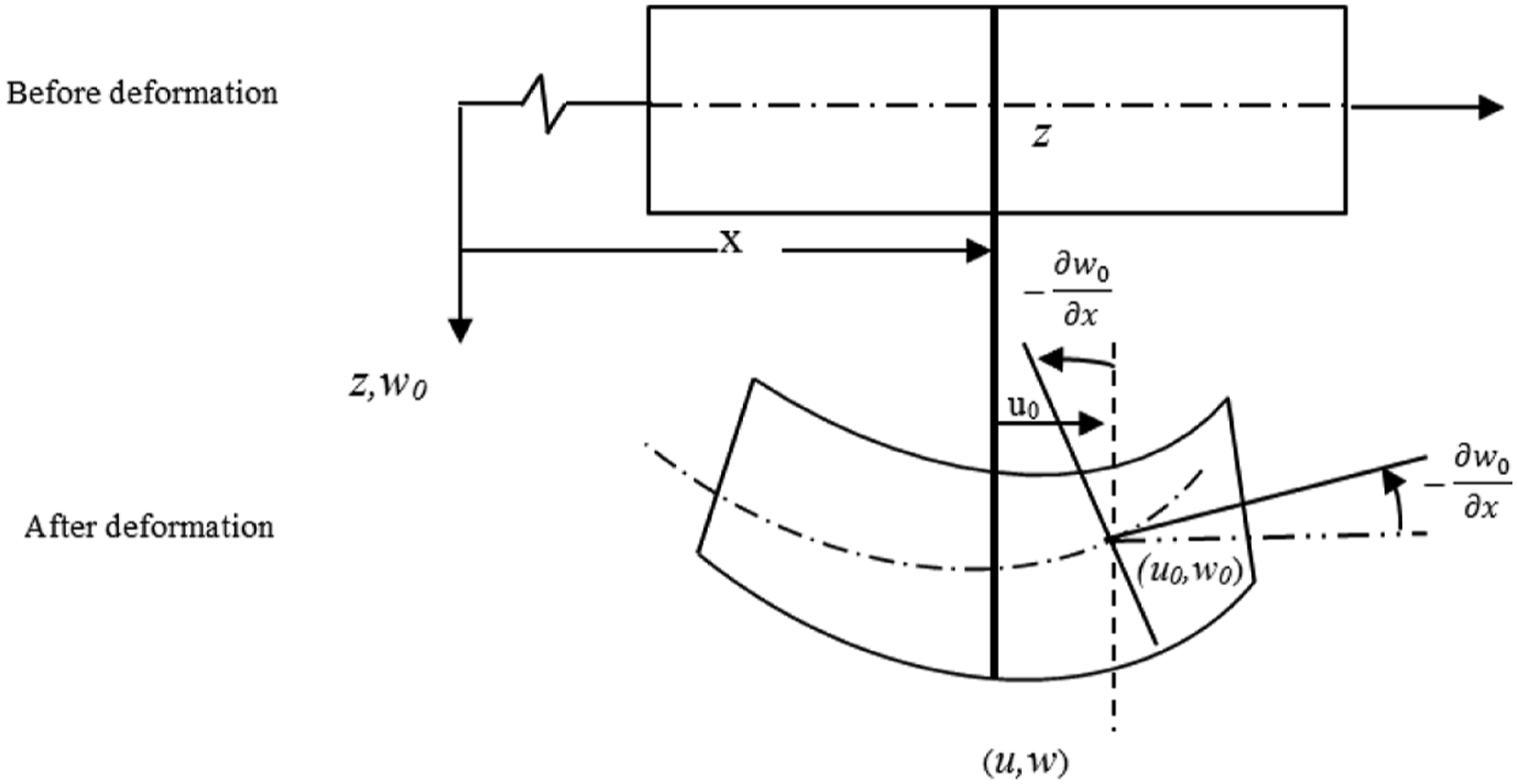



Where u x (x, y, z, t), u y (x, y, z,t), and u z (x, y, z, t) are general displacements in the x, y, and z directions, respectively. Also u(x, y) and v(x, y) are mid-plane displacement of plate, and zero. Based on the Kirchhoff plate, a thin plate with homogenous isotropic material has ignored deformation in the mid-plane.
Strains are calculated as follows:
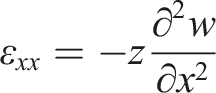
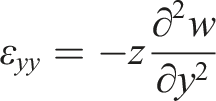
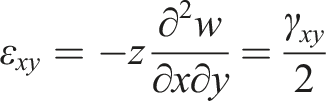
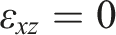
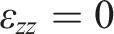

Stress-strain relations based on the Kirchhoff plate theory are expressed as follows:
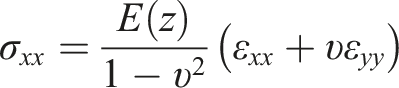
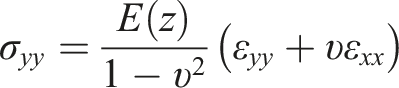

E(z) and represent Young’s modulus, density, and of FGM, respectively.
The material properties of P-FGM plates
The volume fraction of the P-FGM is assumed to obey a power-law function



The material properties of S-FGM plates
When adding an FGM of a single power-law function to the multi-layered composite, stress concentrations appear on one of the interfaces where the material is continuous but changes rapidly. Thus, the volume fraction is defined using two power-law functions to ensure the smooth distribution of stresses among all the interfaces. The two power-law functions are determined by:
37


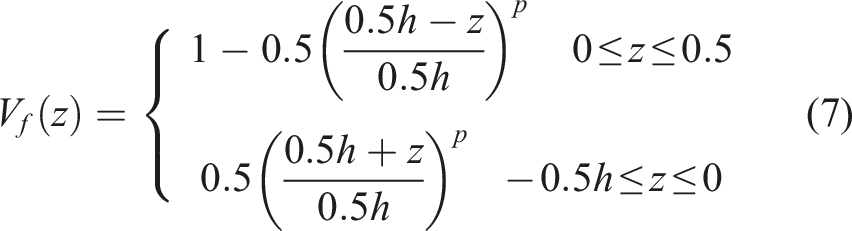
The material properties of E-FGM plate
Many investigators employed the expo
38
nential function to express the material properties of FGMs as follows.
37, 38


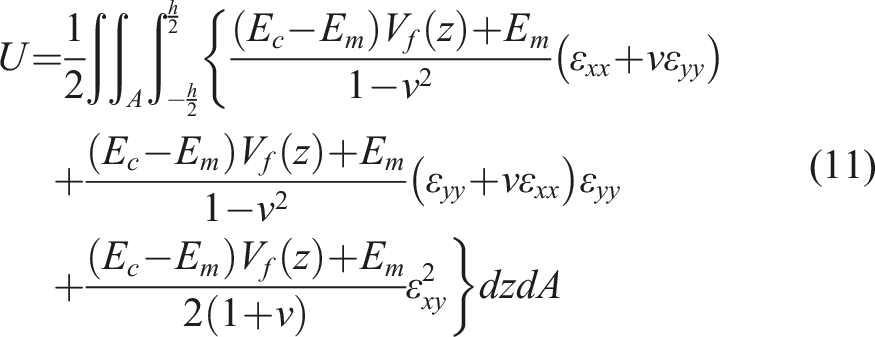
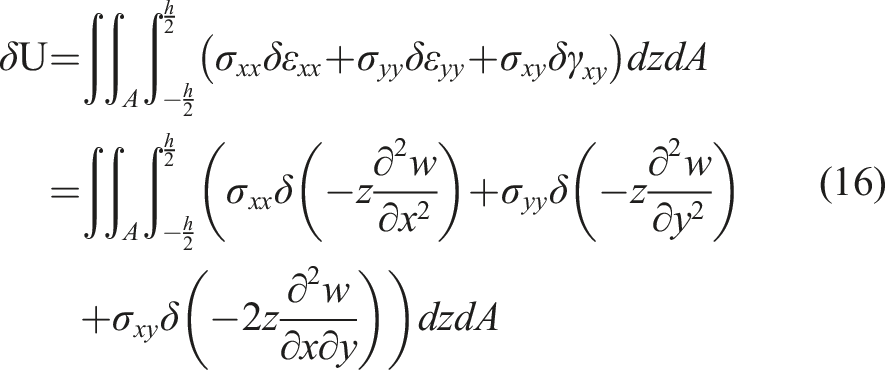
The mathematical relation of the elastic energy of a structure is defined as follows.

Equation (11) can be given by placing relations (2) and (3) and considering the properties of the material FGM in equation (10).
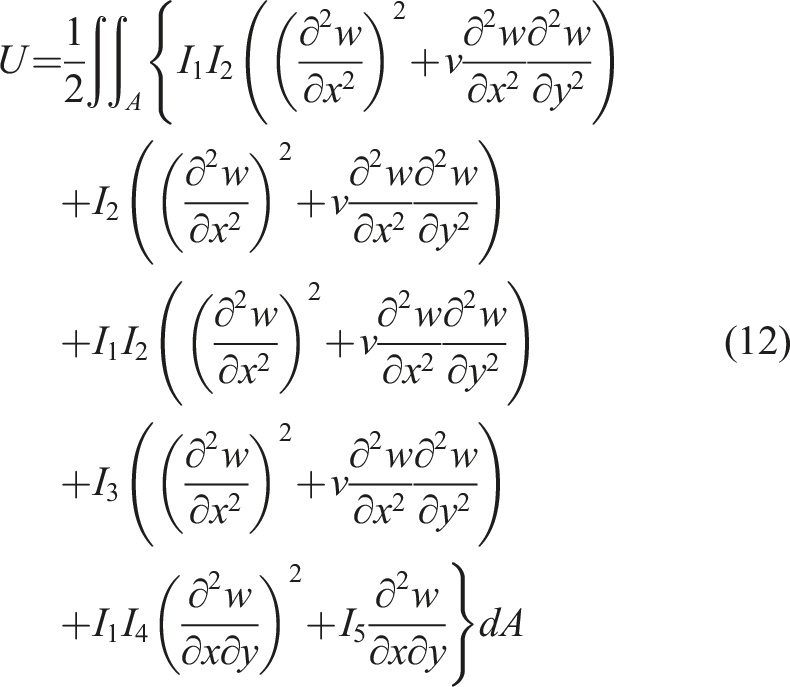
Where
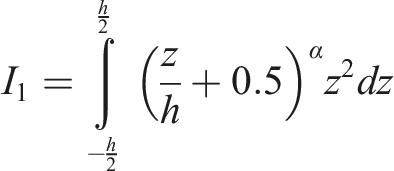
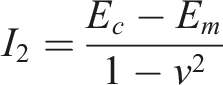
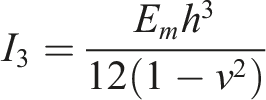
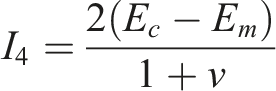
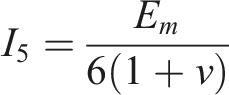
The kinetic energy is obtained as follows:
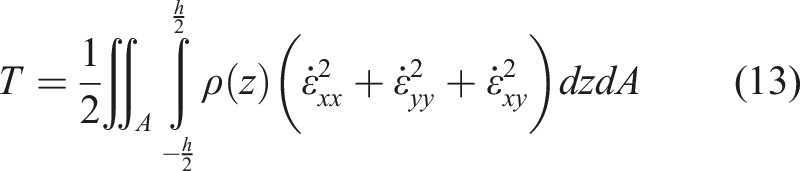
Also, by placing equation (2) in equation (13) and integrating, equation (14) can be achieved.

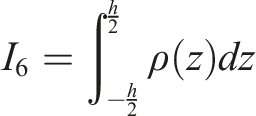
The Hamilton principle is defined as follows.

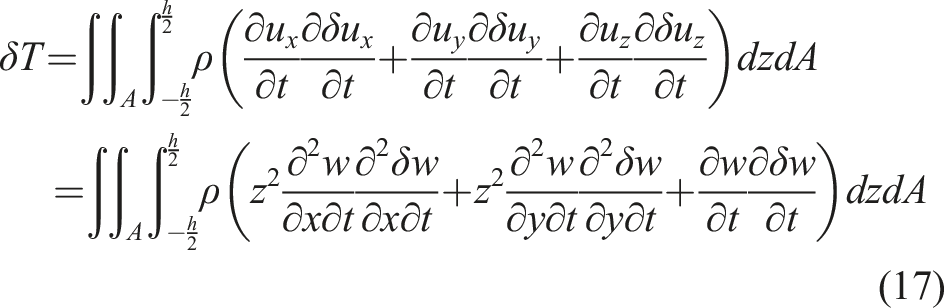
U, T, and W represent elastic energy, kinetic energy, and virtual work. Now, by substituting the expressions for potential energy and kinetic energy in Hamilton’s principle and applying some calculations related to the calculation of fractional changes and integrals, the equation of motion in a primitive form is obtained as follows:
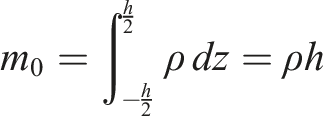
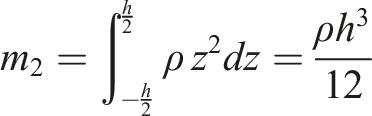
The relationship between plate kinetic energy changes and rotational inertia is as follows:
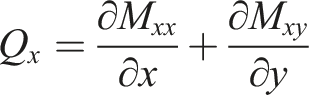
According to classical plate theory, the governing equation of motion is expressed as follows:

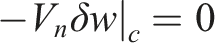
The boundary conditions are as follows.




The proposed structure
The structure’s configuration
The mass resonator can be considered a mass and a spring installed on the FG plate. Figure 2 schematically shows the mass resonator. Arrangement of mass resonators placed on FG plate.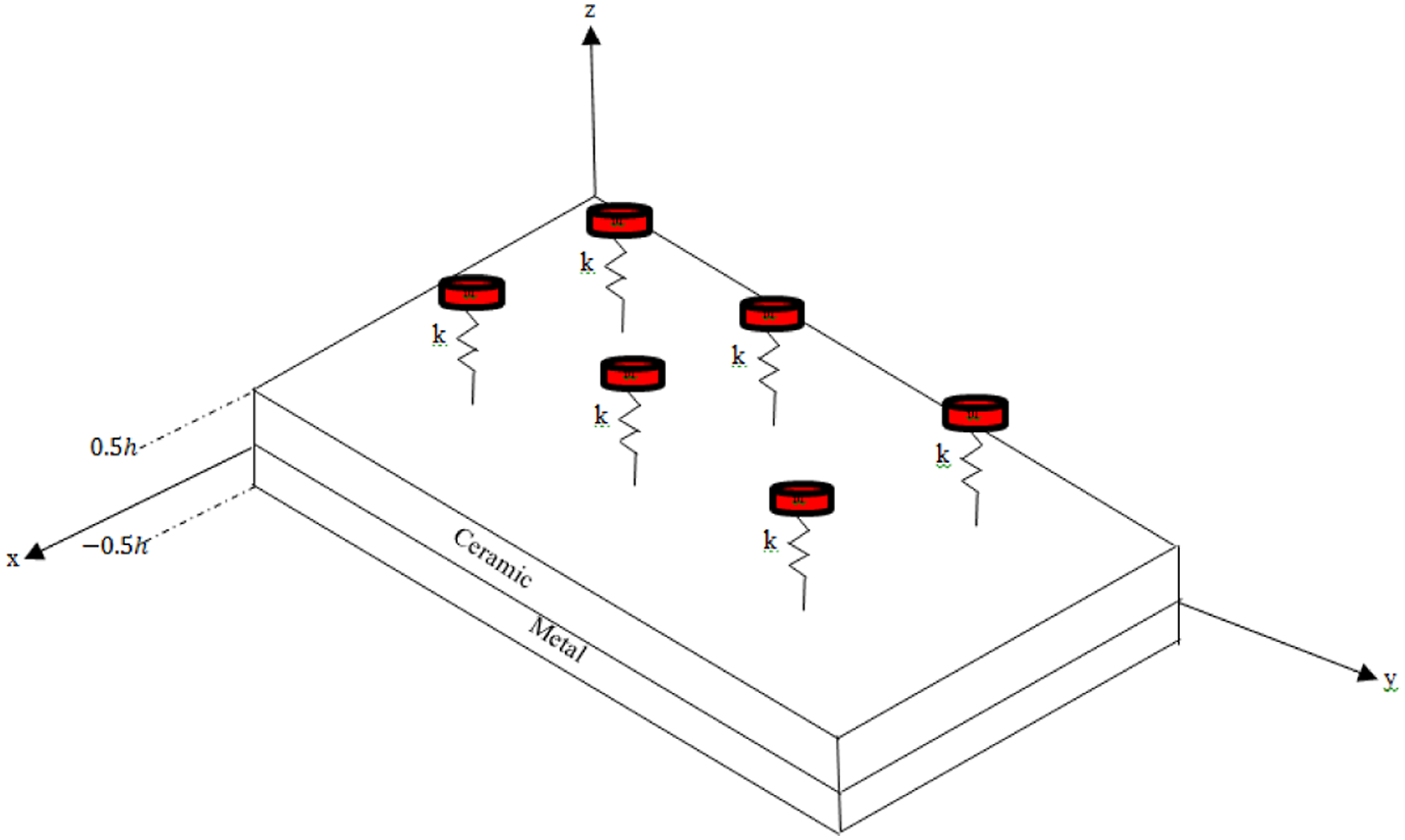
Resonator unit cell
The unit cell of the mass resonator is shown in Figure 3.
11
The unit cell of the mass resonator.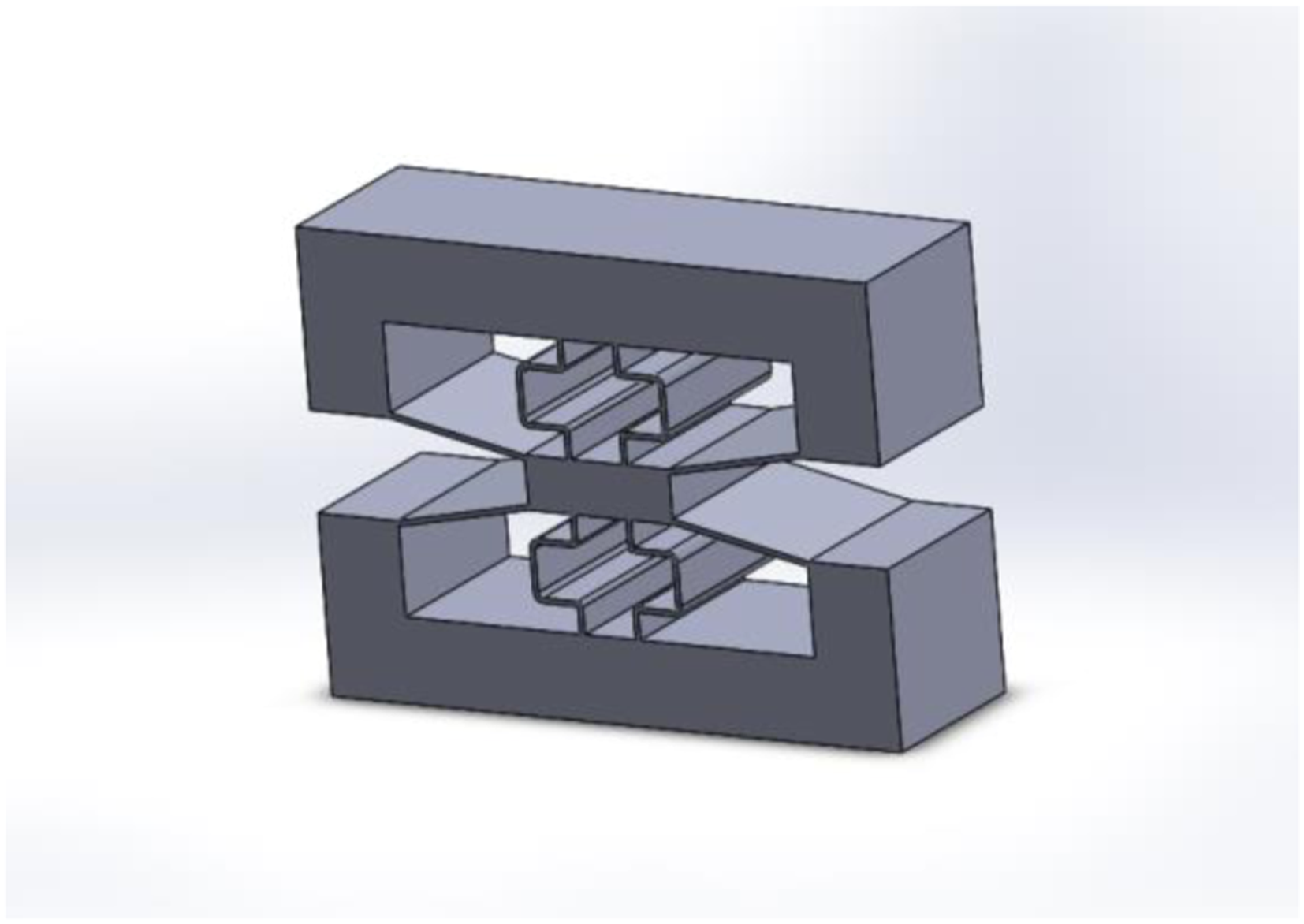
The schematic below shows that the single-cell structure consists of PS and NS.
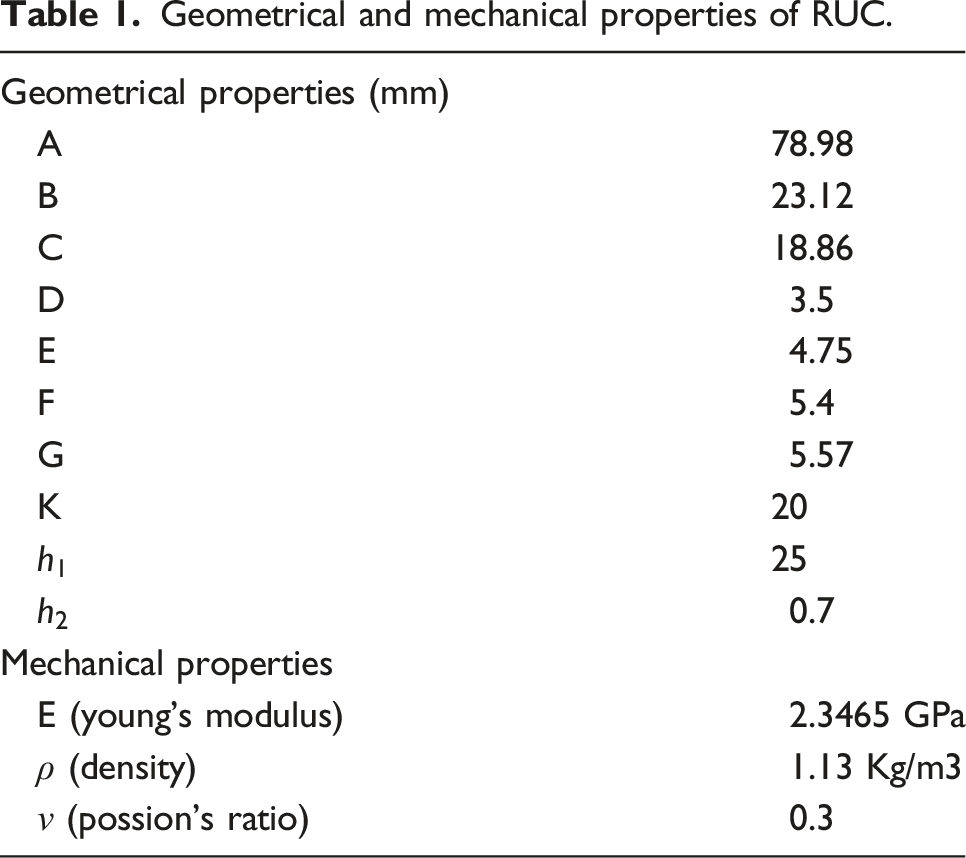
Based on Figure 4, schematically, the structure of RUC is the geometric and mechanical characteristics of the unit cell structure can be expressed in the following Table 1. The h1 and h2 represent the depth of the unit cell structure and the thickness of the positive and NS sections, respectively. Structures of resonator unit cell, (A) full model, (B) positive stiffness section, (C) negative stiffness section, (D) central mass. Geometrical and mechanical properties of RUC.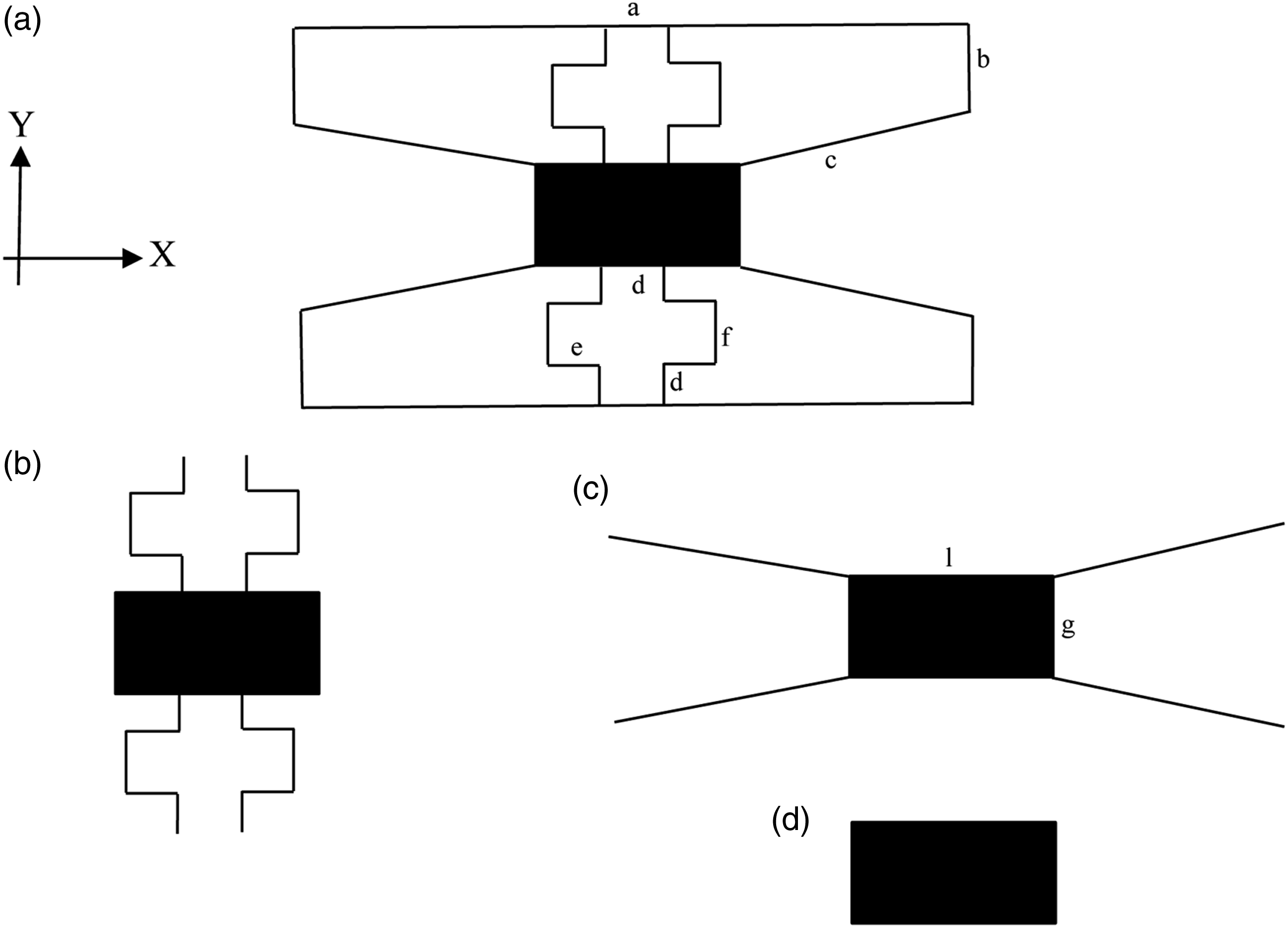
Moreover, QZS has defined RUC as two sectional stiffness simultaneously, and negative section and positive section of RUC can neutralize elastic properties.
In other words, the PS part (Figure 4(b)) occurs due to bending, and the NS part (Figure 4(c)) occurs due to buckling. Therefore, based on the static analysis of Castigliano’s theorem and Hooke’s law, the equations of force created in the Y direction for PS and NS can be calculated as follows. The force applied in the PS section is as follows.
11

y is the displacement of the PS section in the Y direction, as the constant Ω is calculated as follows.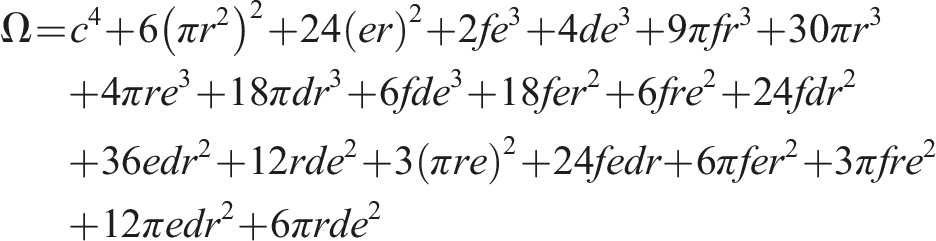
Also, the force that the negative part of the single-cell structure supports can be expressed as the following relation.
11

The variables R, ψ, γ represent the reaction force, the angle between the reaction force with the longitudinal direction of the oblique beams, and finally, the initial angle of the oblique beams in the NS section with the horizontal axis. Stiffness equivalent to a single cell is expressed as follows.
The unit cell shown in Figure 3 can be used in any desired number of resonators on the FG plate, as seen in Figure 5. An example of arrangement resonators on an FG plate to form a metamaterial.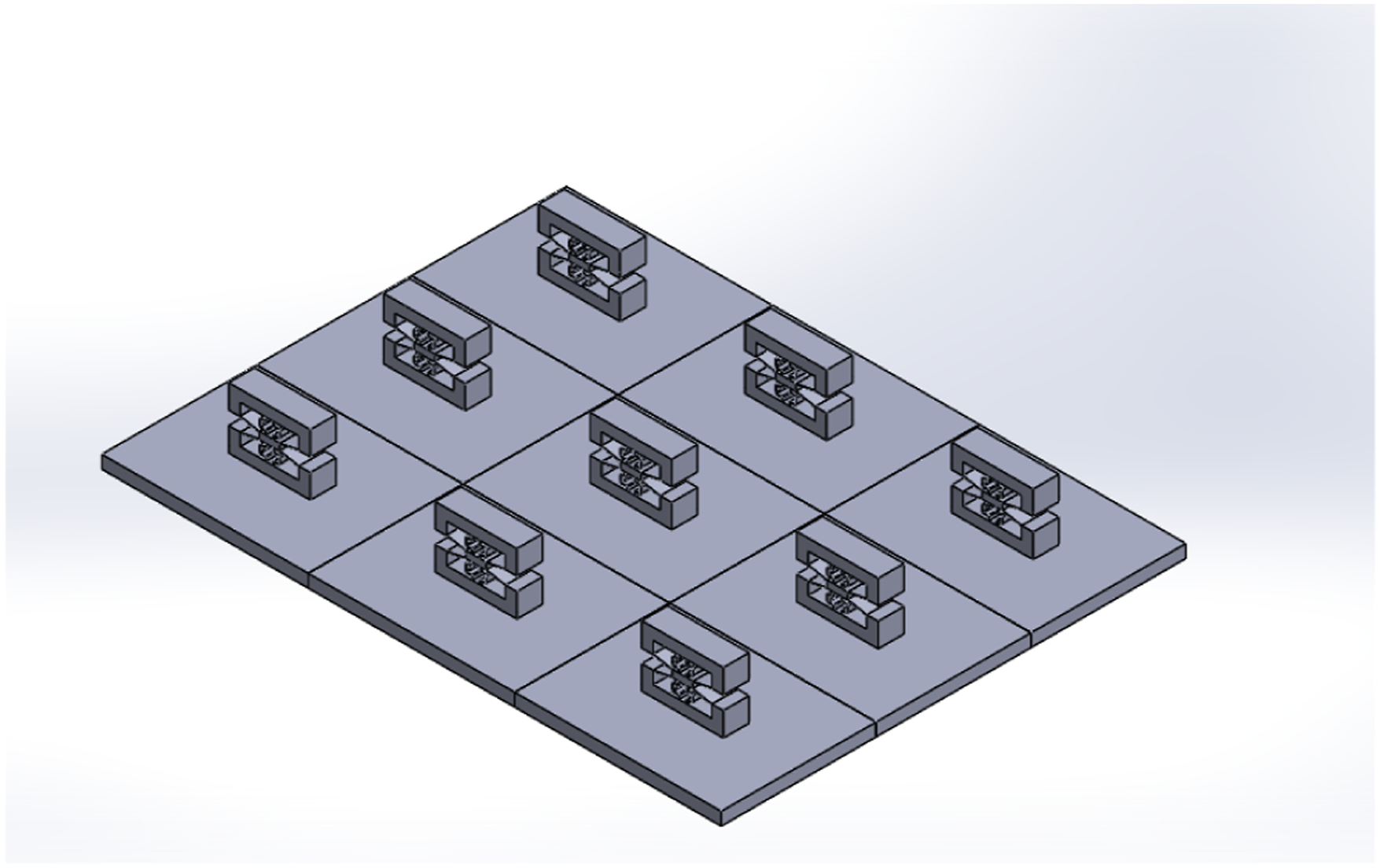
Figure 5 shows a real example of resonators applied to the structure. In this section, the desired system has been reached in the following forms by assembling the command and plate type resonator. Figures 2 and 4 show that the resonators can be simplified, as shown in Figure 6. Schematic of the plate with mass resonator.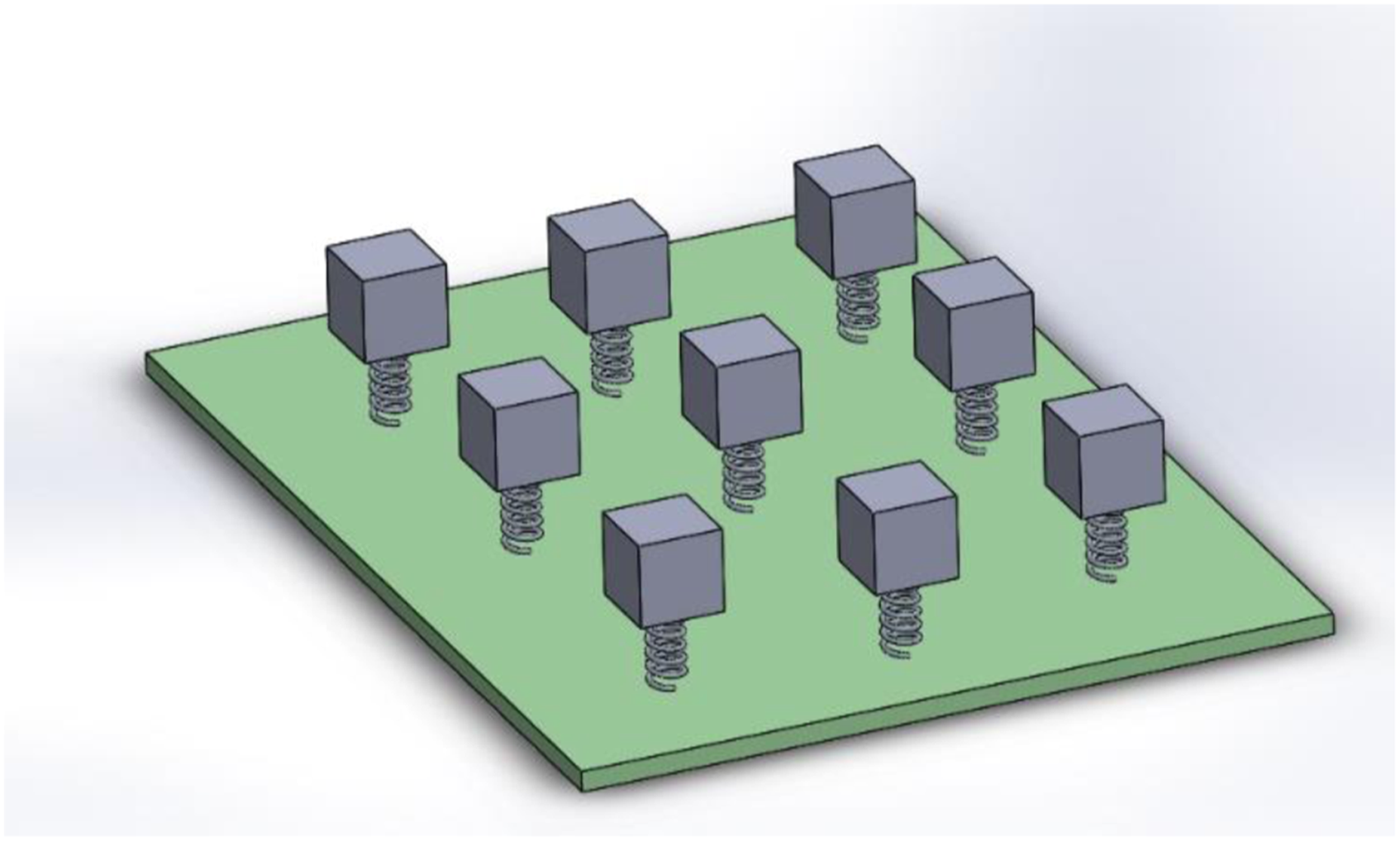
Any resonator with any geometry, design and mechanical properties can represent a discrete mass-spring system, which is supposed to be a factor in forming a bandgap cell and vibration excitation by placing any discrete mass and spring system on the structure. Each type of resonator will have a specific coefficient of spring and mass, which leads to differences in the mechanical properties of the new structure, which will naturally have its natural frequency and shape unique modes. Then, considering the simplified assumptions, the equations of motion are obtained.
Analysis of the forces acting on the structure
The structure is assumed to be a plate, and resonators made of metamaterial are placed on it. The force is applied from the resonators whose base is located on the plate and changes the frequency of the plate. For modeling, the whole set of resonators made of metallic material is assumed to be a mass and spring vibration system with two degrees of freedom connected to the FG plate. Figure 7 shows a free-body diagram of the resonator force. The free-body diagram of the resonator force.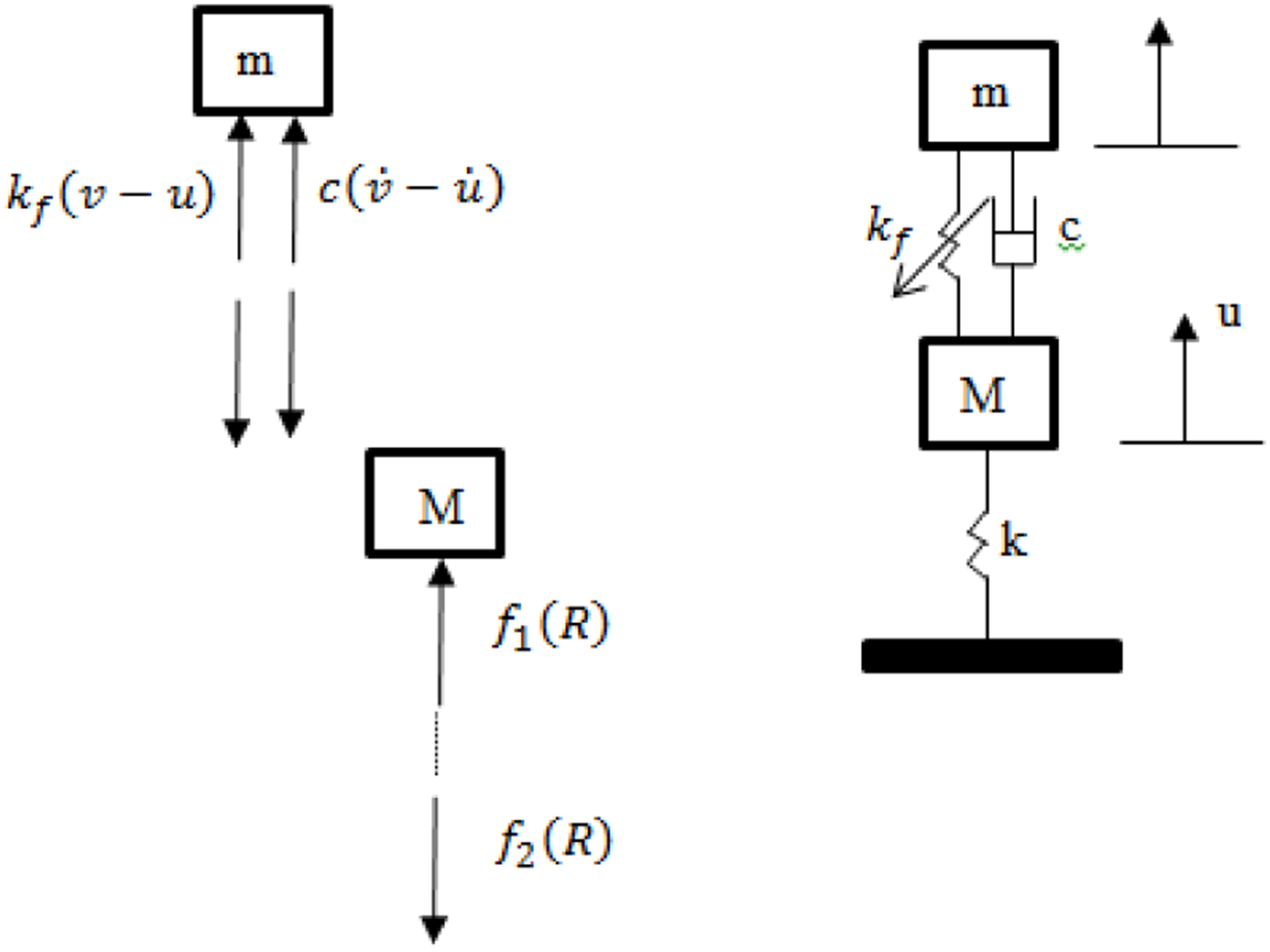
Coordinates of each of the resonators located on the plate are expressed as follows



Forces applied from the resonator on the plate are




Finally, from equations (18), (22), and (23), the equation governing the structure is introduced as follows:


Where
Assumed mode method
According to the assumed mode method, the displacements are expressed as a product of the general coordinates of time-dependent motion and the coordinate-dependent functions that satisfy the geometric boundary conditions. The assumed mode method is closely related to the Rayleigh-Ritz (RRM). So, the discrete model obtained from the mode method is the same as the model obtained from the RRM. However, the main difference between the two methods is that the RRM is generally used to solve eigenvalue problems. In contrast, the assumed mode method is commonly used to solve forced vibration problems. In the assumed mode method, the solution of the vibration problem of a continuous system is written in the form of a series consisting of a linear combination of admissible assumed functions, which are the product of the functions of spatial coordinates in time-dependent generalized coordinates. The strain energy of the plate based on classical theory is as follows:
Where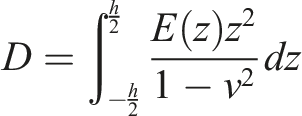
Considering the assumed modes as follows:
And by placing the assumed modes of equation (26) in equation (25)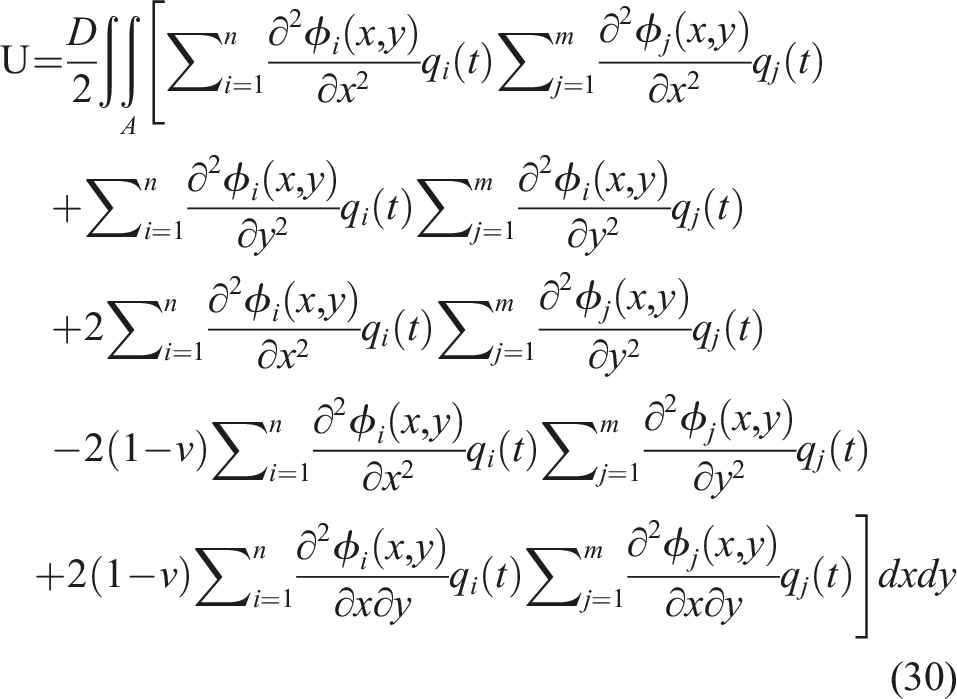
By factoring from 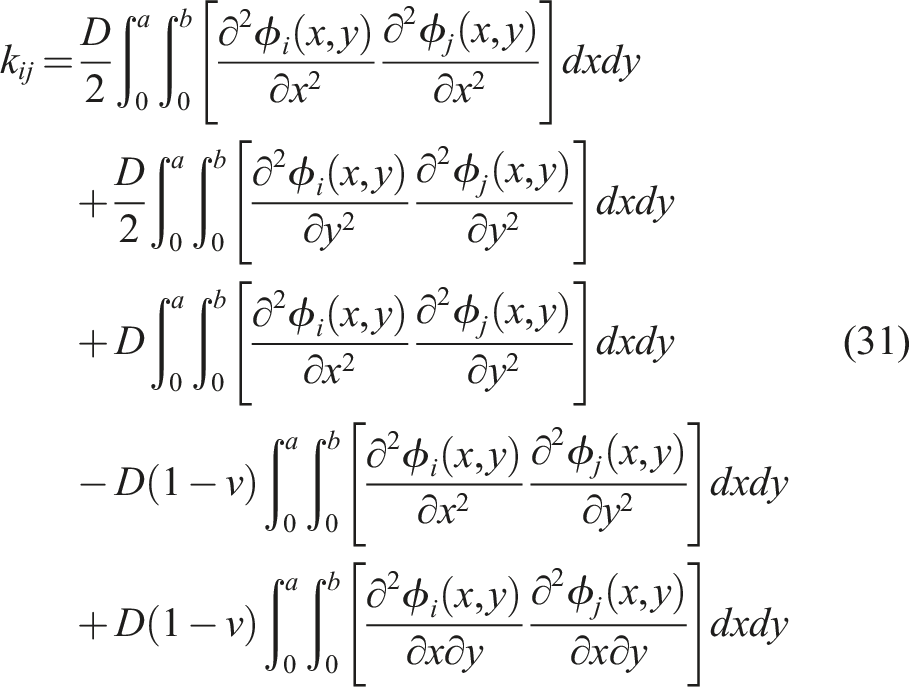
The kinetic energy equation based on classical theory is as follows
By placing the assumed modes in the kinetic energy equation, the following relation is obtained:
The mass matrix is obtained as follows.
Results
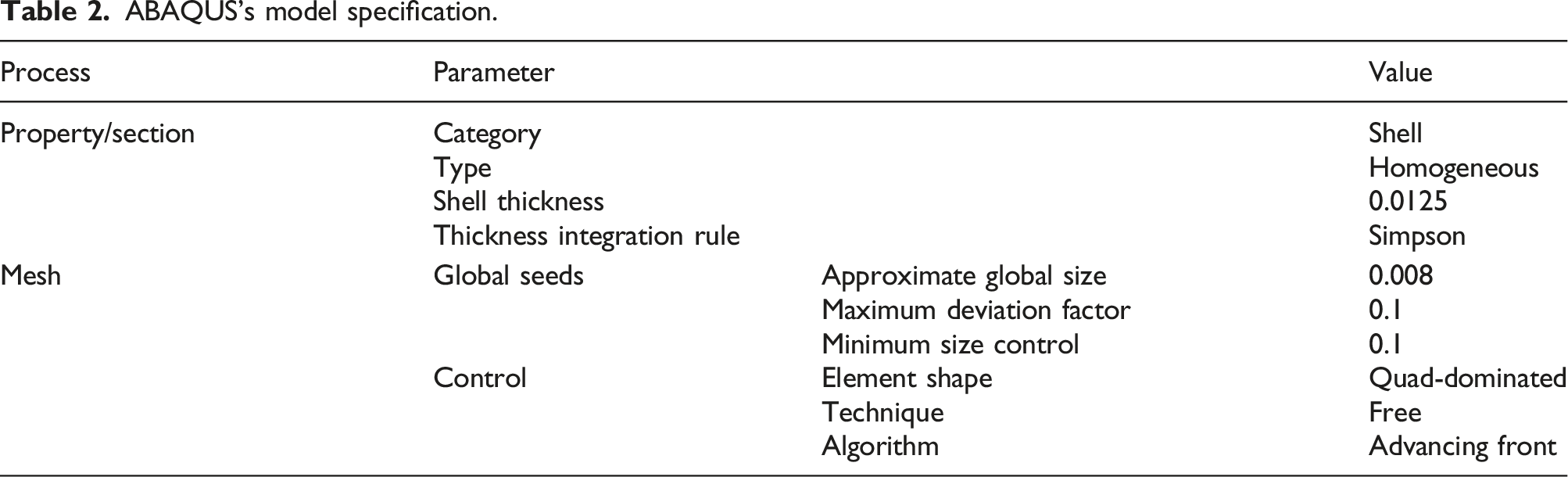
This section presents the simulation results of the method presented in the paper. The FEMd is implemented using ABAQUS software. There are two simulations in FEM, including unit cell and metastructure too. Firstly, the unit cell was modeled in ABAQUS to analyze its free vibration, and finally, by using mass and stiffness properties modeled as lumped parameters in case the mass-spring system implemented on the plate has been metastructure. The validation is done by arranging nine resonators on an FG plate structure with four sides of simple support boundary condition (SSSS), and modal analysis is performed. In the first part of the simulation, the free vibrations of an FG plate are analyzed, and in the second part of the FGM structure, the corresponding modal results are presented. The free vibrations of the plate with the resonator in 24 vibration modes are shown in Figure 8. Also it was mentioned ABAQUS’s parameters in (Figures 9 and 10) (Table 2) The first 24 vibration mode shapes of the RUS. The first 24 vibration mode shapes of the metastructure. The first 24 vibration mode shapes of the meta FGM structure. ABAQUS’s model specification.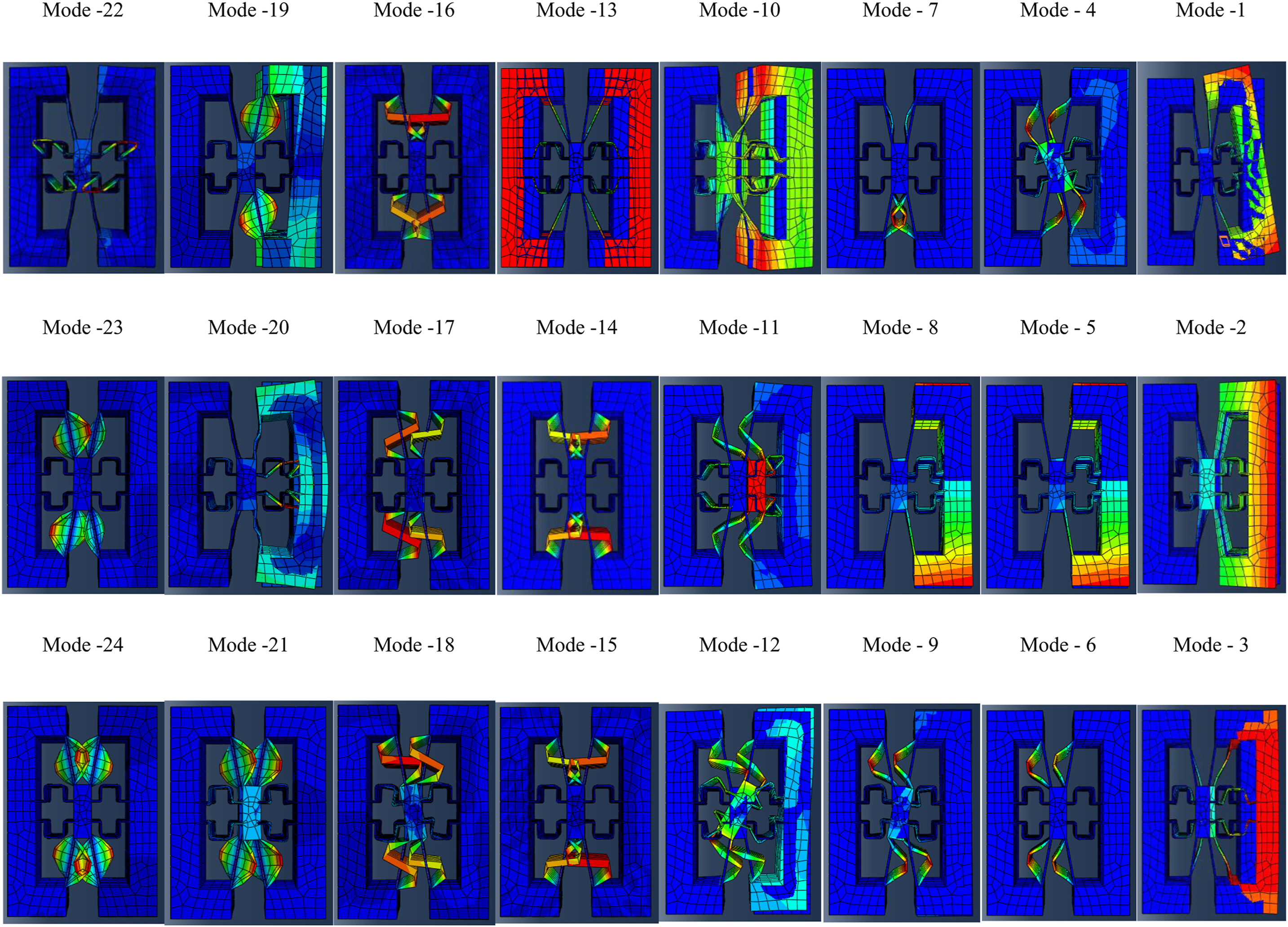
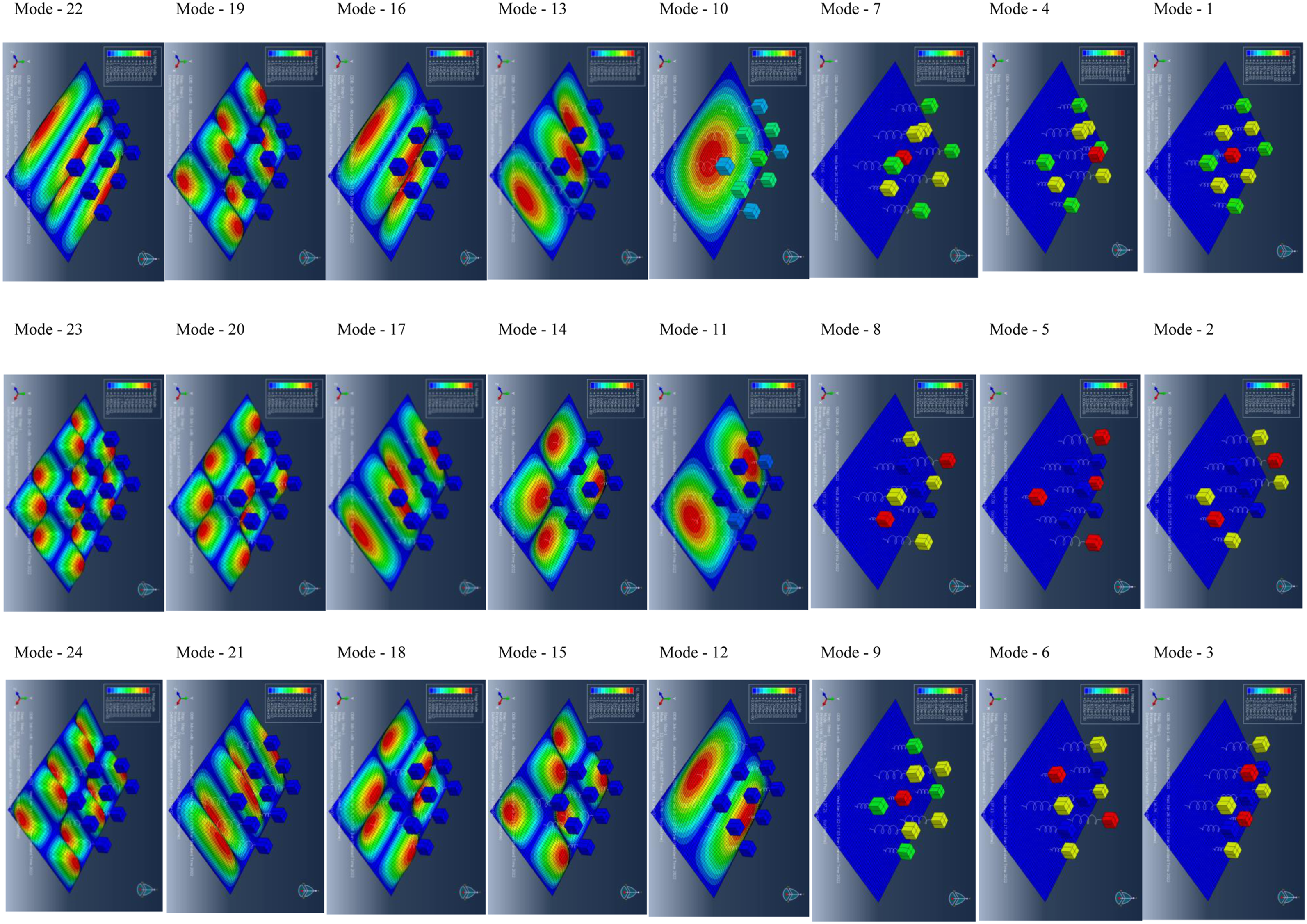
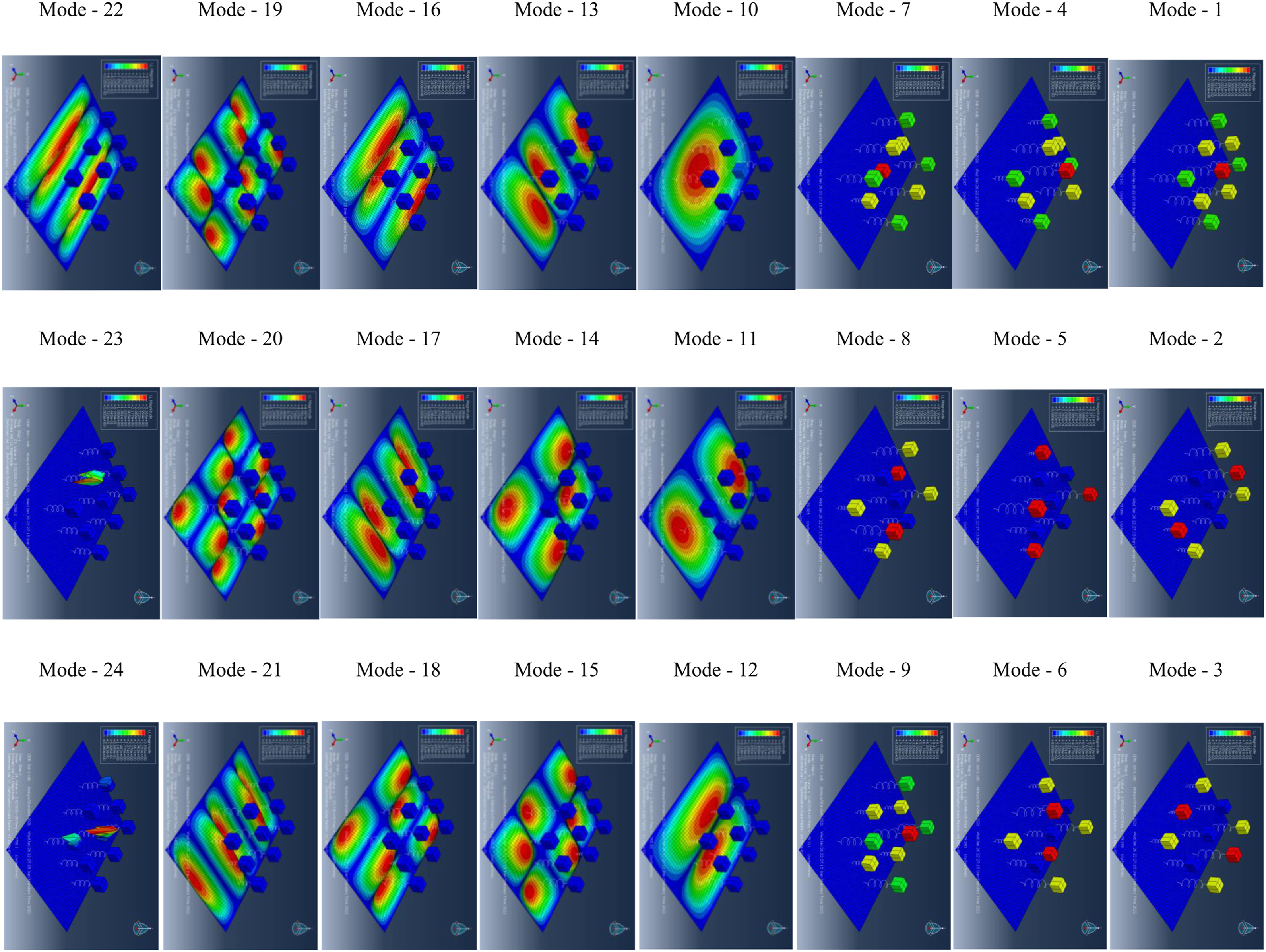
As seen in Figure 8, the corresponding shape modes are attenuated successfully for the first nine natural frequencies using the proposed metamaterial. The following sections present the results of comparing the assumed mode method and FEM analysis for FG plates with and without a resonator. The results show that the structure’s natural frequencies in the assumed mode method and ABAQUS analysis are in good agreement. Therefore, the present method can be acceptable for modeling the desired structure. (Figures 11 and 12) Natural frequencies of plate with and without resonators in the AMM and ABAQUS. Natural frequencies of FG plate with and without resonators in the AMM and ABAQUS.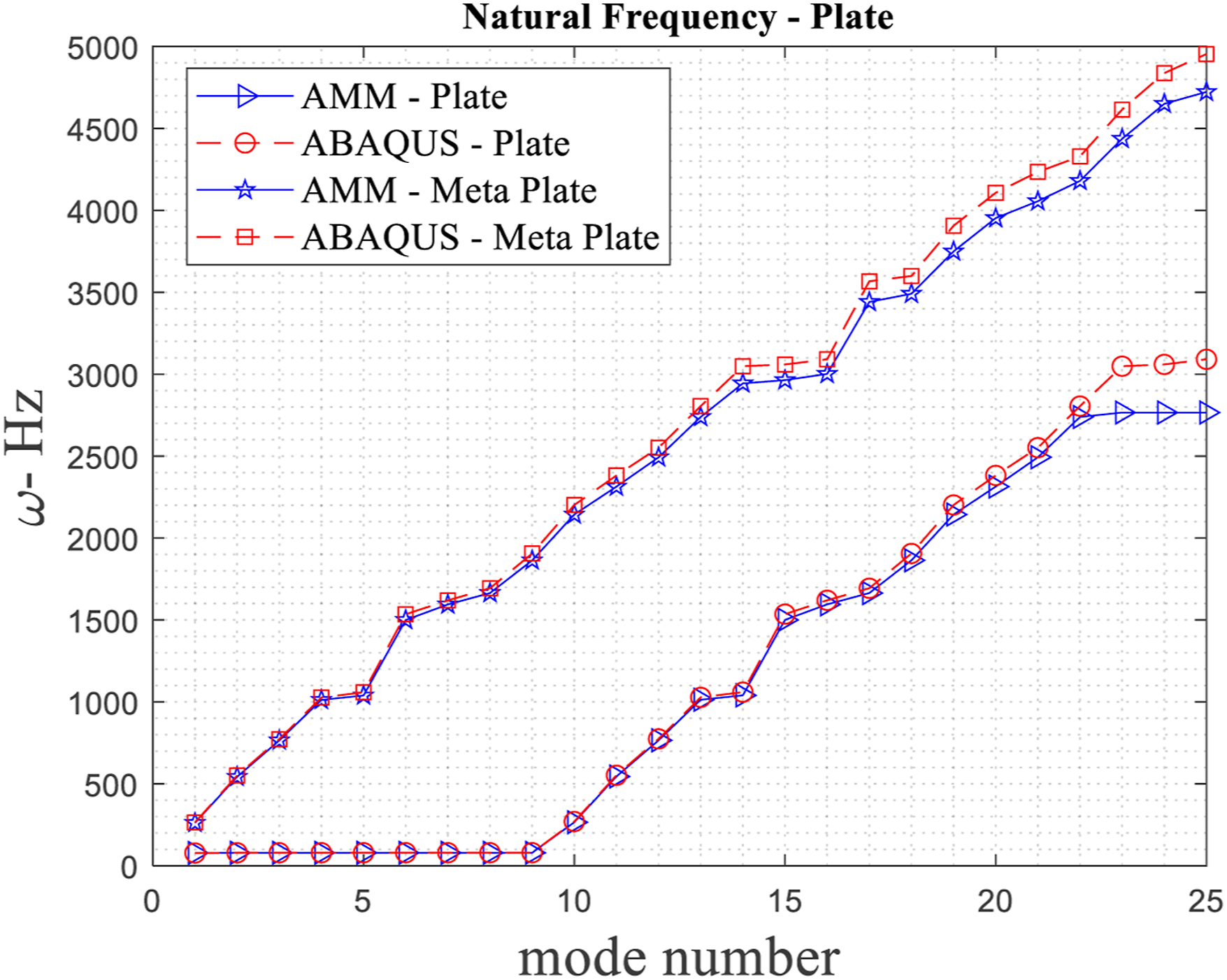
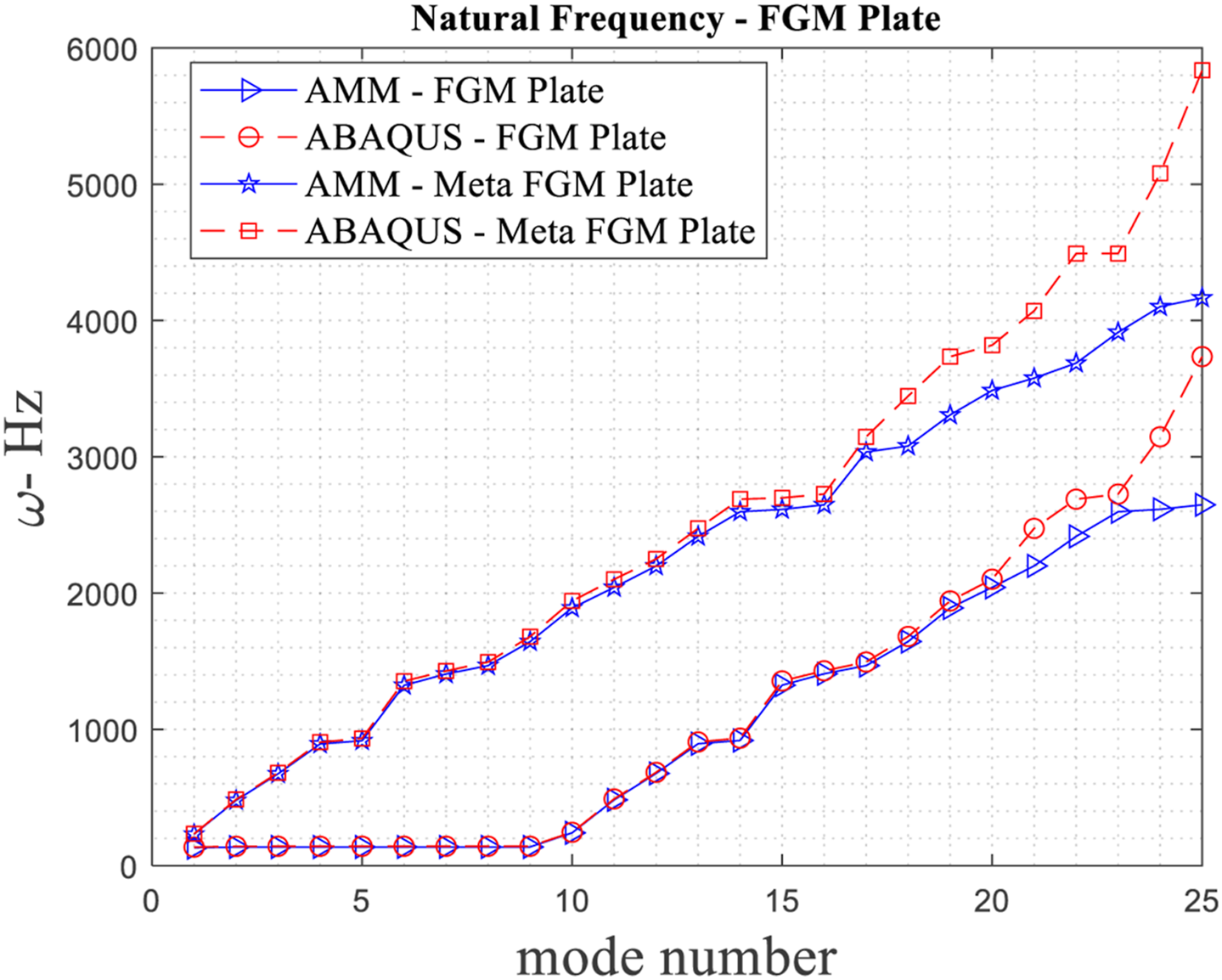
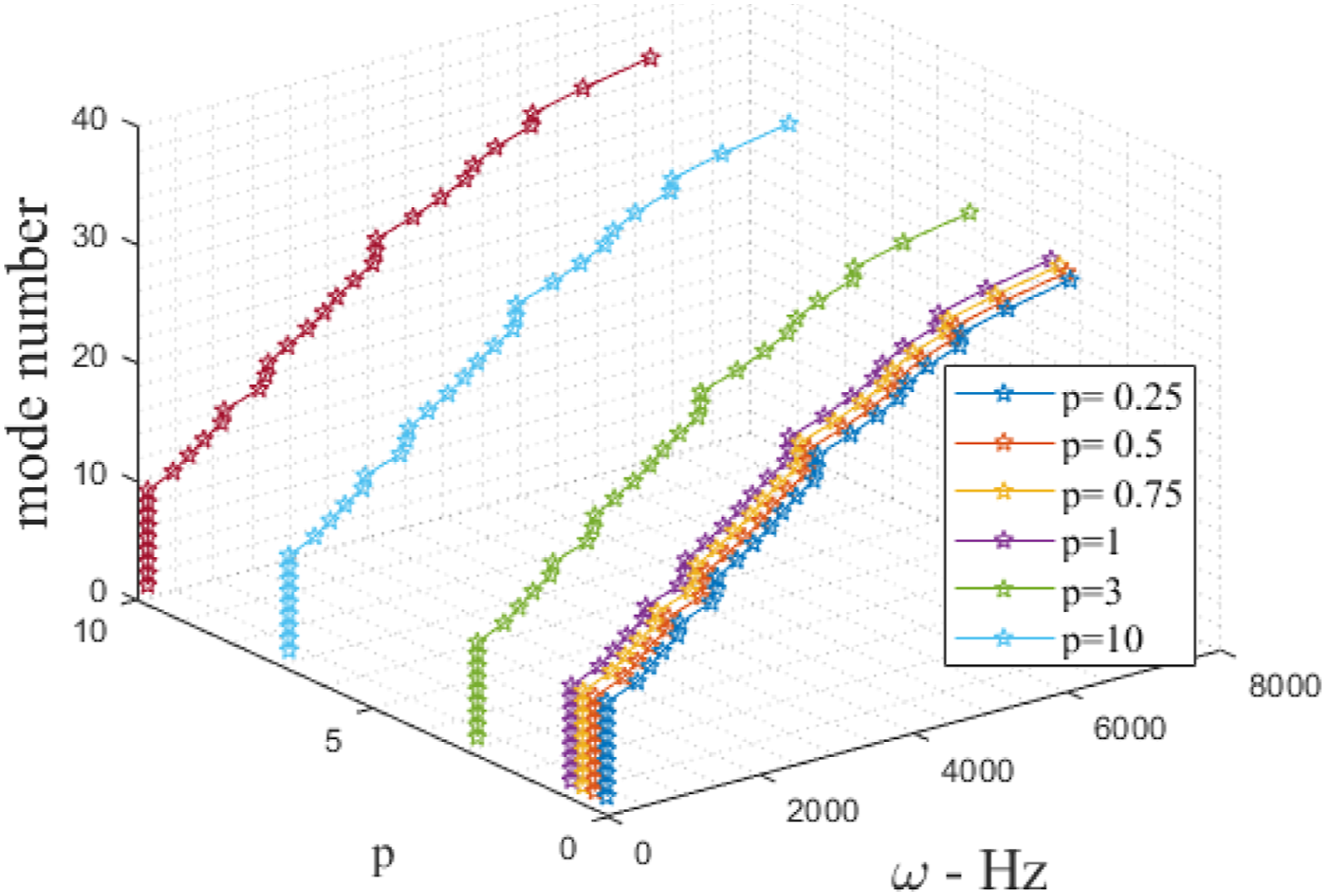
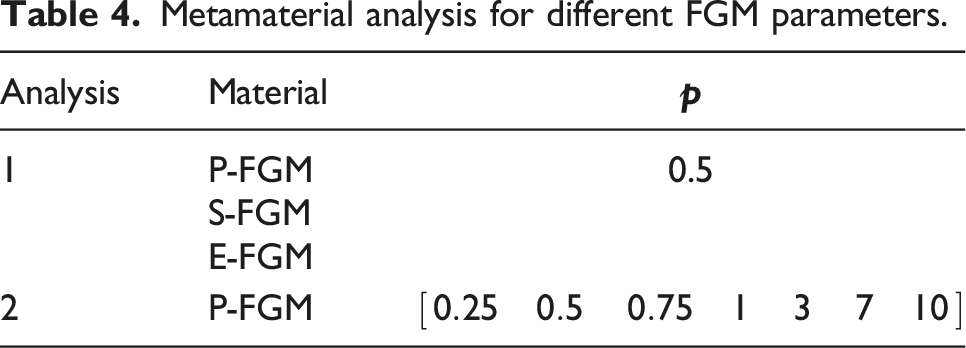
This section discusses two types of analysis for the effective parameters in FGM material on the sheet structure with nine resonators. The analysis is performed in two parts with different p values for three types of FGM material. (Figures 13 and 14) The results of the natural frequency of the assumed mode in the first analysis. The natural frequency results of the assumed mode for the second analysis.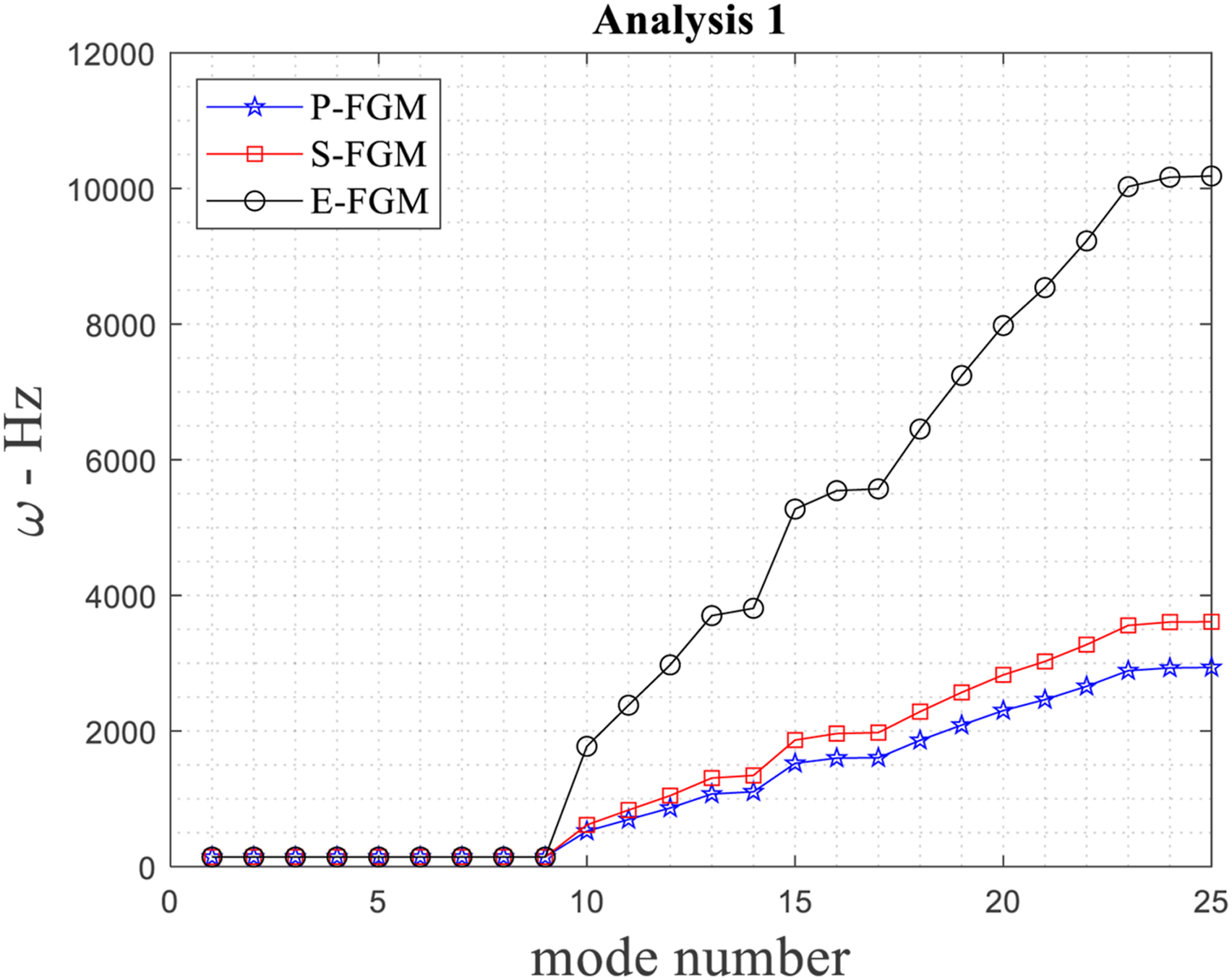
Conclusion
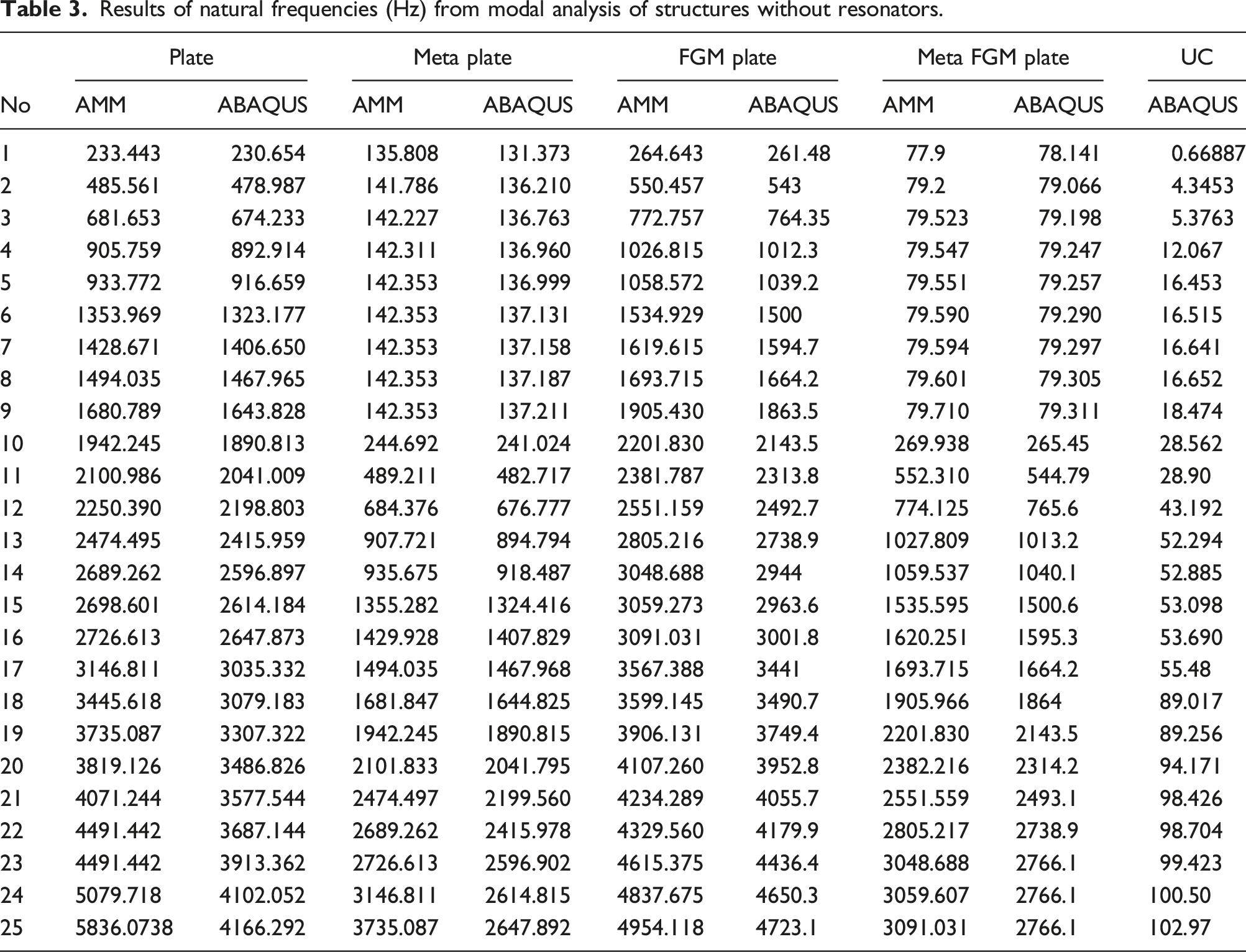
Results of natural frequencies (Hz) from modal analysis of structures without resonators.
Metamaterial analysis for different FGM parameters.
Footnotes
Declaration of conflicting interests
The author(s) declared no potential conflicts of interest with respect to the research, authorship, and/or publication of this article.
Funding
The author(s) received no financial support for the research, authorship, and/or publication of this article.
