







Abstract
There is an extensive body of work on taboo language, including metaphor and metonymy, but particular attention needs to be paid to (i) serious genres (and especially op-eds) and (ii) non-English speaking (or non-western) cultures. The present study uses the Sketch Engine search tool on a corpus of 1844 op-ed articles (967,715 words) by columnist Dandrawi El-Hawari of Egypt’s private pro-government newspaper Youm el-Saba. Questions about how taboo words are used in Arabic op-eds (or the selected corpus as a sample of the Egyptian population) thus arise. Other questions include: How frequently do vulgar, profane, discriminatory, threatening or potentially libellous words, cases where impoliteness (or rather hate speech) is genuine or presumably intended, occur in this serious discourse genre? Which taboo words feature more prominently in Egyptian opinion articles (and especially in the op-eds under investigation)? And what implications do our findings have for cross-cultural understanding and impoliteness research? The analysis of taboo words in this discourse genre can make a useful contribution not only to socio-cognitive and cross-cultural pragmatics, but also to forensic linguistics. We found frequent breaches of the expected conduct by the op-ed columnist in question, because private newspapers define different contexts. A general taxonomy of seven practices has been proposed.
Introduction
In 2010, David Marsh, a former Guardian production editor, asked the question of whether there was too much swearing in the Guardian. In 2009, the F-word (and its variants) had 705 occurrences in the Guardian and 269 instances in the Observer, compared with Independent 279, Independent on Sunday 74, Times 3, Sunday Times 2, all other papers 0. The C-word appeared 49 times in the Guardian, with a further 20 mentions in the Observer, 8 occurrences in the Independent, 5 instances in the Independent on Sunday and 0 occurrence in everyone else. A distinction needs to be made here between quoting taboo words and using them. The following advice is offered by the Guardian’s style guide: We are more liberal than any other newspapers, using language that our competitors would not. But even some readers who agree with Lenny Bruce that ‘take away the right to say fuck and you take away the right to say fuck the government’ might feel that we sometimes use such words unnecessarily. The editor’s guidelines are as follows: First, remember the reader, and respect demands that we should not casually use words that are likely to offend. Second, use such words only when absolutely necessary to the facts of a piece, or to portray a character in an article; there is almost never a case in which we need to use a swearword outside direct quotes. Third, the stronger the swearword, the harder we ought to think about using it. Finally, never use asterisks, which are just a cop-out.
Different genres of political communication are defined both by textual features (such as special style) and contextual properties (such as goals; van Dijk, 2014). For Edwards (1997), an op-ed columnist, but not a political satirist, might be sued for depicting a government official as a pimp, prostitute, or the like. Although tasteless, a political cartoon portraying an official in this way would indeed have a comic effect, ‘for there is a simultaneous recognition of what the [government official] is (figuratively) and is not (literally)’ (p. 26). Under the guise of satire, Edwards claims, the metaphorical depiction in question is permissible. This means two things: (i) a cartoon is an instance where the reader arrives at an impolite message by implicature (on visual implicature, see Abell, 2005; Forceville, 2020; for impoliteness implicatures, see Terkourafi, 2001) and (ii) ‘[h]umor aids in the task of ridicule, but it also ‘neutralizes” hostility’ (Edwards, 2014: 113; inverted commas added; for multimodal impoliteness, see Abdel-Raheem (2021). Yet not only is making editorial judgements about whether an op-ed or a political cartoon crosses the line or what counts as unacceptable satire ideologically biased, newspapers may also make concessions to digital outrage mobs. In October 2023, for instance, the Guardian sacked its long-serving cartoonist Steve Bell for what it deemed to be an anti-Semitic image (for analysis of this cartoon, see Abdel-Raheem, forthcoming). After all, taboos, defined as ‘proscription[s] of behaviour that affect [. . .] everyday life’ (Allan and Burridge, 2006: 1), vary enormously across culture and time (for a short review, see Abdel-Raheem, 2024a, 2024b). For instance, there is no longer a taboo against sex in western art and entertainment (Blake, 2019).
Taboo language has aroused the interest of both linguists and non-linguists (see, e.g. Allan, 2019; Allan and Burridge, 2006; O’Driscoll, 2020; Pedraza, 2018; Stollznow, 2020) – the ‘deliberate’ use of which is regarded by Culpeper (2019) as part of impoliteness, or of a strategy to offend a person or a group (a question to which we shall return). Researchers such as Ralph and Ralph (2019) analyse the use of taboo words in advertising and the mouths of politicians. Azzaro (2018) tells us about taboo language in books, films and the media. Allan (2019) focuses on religious and ideologically motivated taboos. Hutton (2019) discusses the rights and freedoms of speakers as against addressees. Linguistic taboos are further examined in a second or foreign language, as banter, as a source of comedy, as a driver of language change and so on. Their grammar in English and Dutch, among other languages and their translation problems have also been discussed (see the papers in Allan, 2019). Brandes (2018) further analyses instances of taboo words from sub-Saharan Africa, Spain, Latin America and (within the USA) Native America and African America.
Despite this wide interest, the use of taboo language in potentially libellous op-eds, and especially Arabic ones, has been paid too little attention. This leads us to questions such as how frequently taboo words occur in this serious genre, which taboo expressions feature more prominently in Egyptian op-eds, and what implications our analyses have for cross-cultural understanding and impoliteness research. This paper focuses on 1844 op-eds spanning the period 2008 until 2022 and published in Egypt’s pro-government newspaper Youm el-Saba. As we shall see, a close analysis of the corpus reveals (i) an unusually high frequency of offensive slurs against the Muslim Brotherhood and its supporters (e.g. Turkey and Qatar) and (ii) seven major types of taboo metaphors: references to sex, religion, illness, excretion and bodily fluids, body parts, physical uncleanliness and dirty animals. These can be associated with extreme behaviours, the self-conscious emotion of hurt and with antagonism towards others on the basis of their (presumed) group membership, thus crossing the border from impolite behaviour to bullying and hate speech (see Culpeper et al., 2017). This fills another gap. Specifically, the body of literature on metaphor and its functions is extensive, but the direct involvement of metaphor in impoliteness and offence has rarely been explicitly discussed (Demjén and Hardaker, 2017). Broadly speaking, taboo language gets short shrift, as noted by Culpeper (2019). Taboo metaphor is only touched upon briefly in Abdel-Raheem (2024a), and discussed in passing in a small section, ‘Creativity and patterns of impoliteness’, in Culpeper’s (2011) book. It falls into Carter’s (2004) category of ‘pattern-reforming’. The present study will pay special attention to what Kövecses (2015) has termed ‘context-induced creativity’, that is, to the role of context in the creation or production of a taboo metaphor.
Section 2 explains our corpus and methodology. Section 3 provides an analysis of the op-eds and identifies taboo metaphor types. Then, we discuss certain implications for hate crime in the legal context of Egypt, draw general conclusions and suggest interesting avenues for future research.
Data and methodology
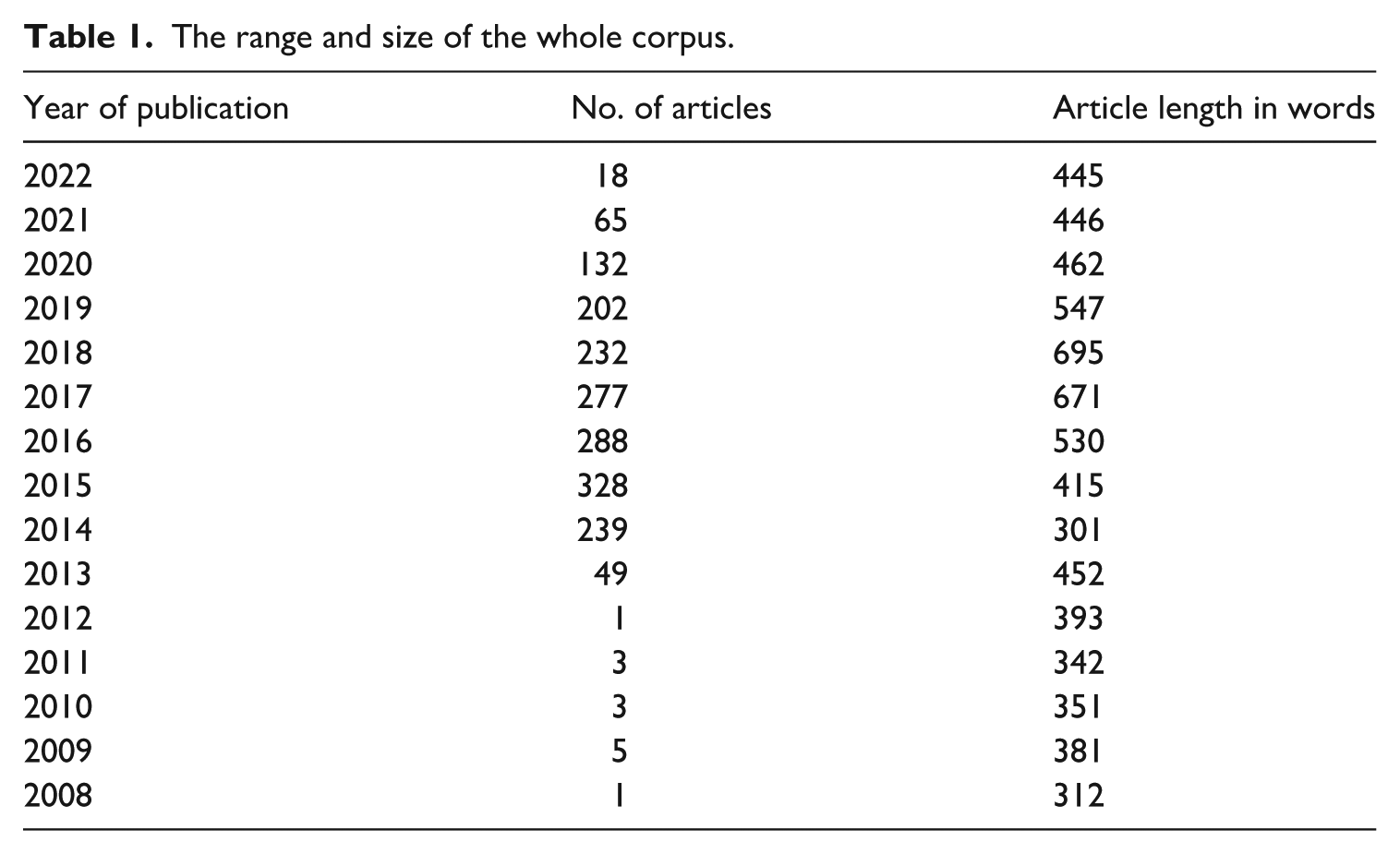
This quantitative and qualitative study of taboo language used a corpus of 967,715 words of 1844 op-eds authored by Egyptian columnist Dandrawi El-Hawari and published in Youm el-Saba between 1 January 2008 and 30 December 2022. The op-ed columns have been collected from the online archives of the newspaper in question (https://www.youm7.com/editor/Editor/104). These have been downloaded and cleaned of ‘duplicate’ and ‘boilerplate’ texts, using tools of version 7 of WordSmith Tools (Scott, 2020), one of the five most widely used corpus tools. The tool employed to automatically compile and analyse the corpus has been the Sketch Engine, an online text analysis tool (Kilgariff et al., 2004; https://www.sketchengine.eu/). The range and size of the whole corpus are shown in Table 1. The methodology we are to employ is that of corpus-based critical metaphor analysis (Charteris-Black, 2004; Musolff, 2016). The question arises: What is the appropriate level at which conceptual metaphors (and metonymies) can, or should, be identified? ‘Domain’ (as in topic and vehicle domain) is the most commonly used concept, but cognitivists also employ several other terms, such as frames (e.g. Fillmore, 1985), scenes (e.g. Grady, 1997a, 1997b), image schemas (e.g. Johnson, 1987), mental spaces (e.g. Fauconnier, 1985), scenarios (e.g. Musolff, 2016) and idealized cognitive models (or ICMs; e.g. Lakoff, 1987). This poses ‘a serious, deep-seated theoretical-conceptual dilemma’ (Kövecses, 2020: 50). Drawing on Langacker’s (2008) notion of schematicity (the converse of specificity), Kovecses (2020): Chapter 4) suggests that these conceptual structures run the gamut from the most schematic (image schema) to the least schematic (mental space). Frames, according to Kövecses, come from or are more specific than domains, and mental spaces are more specific than frames (see also Coulson, 2001) – alas space precludes further detail. This finds a clear echo in Wehling’s (2016) distinction between low-level mappings, which have a high degree of semantic specificity and higher-level mappings, which are semantically underspecified. Compare IMMORALITY IS CANCER with IMMORALITY IS A DISEASE, where ‘cancer’ is more specific than ‘disease’. A similar hierarchy has been proposed by In this paper, we apply the ‘scenario’ (or subdomain) level as an analytical construction, since this account can explain a range of lexical variation or frequency and collocation clusters in a corpus sample. For Musolff (2015), scenarios are a variant of Fauconnier’s (1985) ‘mental spaces’ and a subtype of Lakoff’s (1987) ‘idealized cognitive models’ (ICMs). They ‘capture clusters of conceptually related metaphor formulations in a corpus, which add up to mini-narratives, with default participants, action schemas, outcomes and attached “standard” evaluations/stances’ (44; single quotes his). As an example, he (2016) revisits Lakoff’s (1996) two versions of the NATION AS FAMILY metaphor, the STRICT FATHER and the NURTURANT PARENT models, raising the question of how one and the same source domain can be the basis for contradictory target inferences. Each of these competing or diametrically opposed models is a scenario with narrative and argumentative bias for Musolff. After all, the use of metaphorical scenarios or ‘mininarratives’ is only one of several mechanisms through which metaphor can evaluate (see Deignan, 2010).
The range and size of the whole corpus.
Our metaphor identification procedure thus operated at the phrase or utterance rather than word level. It began by deciding whether a phraseological or grammatical construction is clearly ‘incongruous against the surrounding discourse’ and then considered whether the incongruity is fully resolvable by transferring meaning from the ‘vehicle’ or incongruous construction to the target or topic in question (Cameron, 2003: 60–61). The role of context, understood as a subjective ‘mental model’ (Johnson-Laird, 1983; van Dijk, 2014), is crucial here (for details of this procedure, see Abdel-Raheem, 2024a, 2024b). As noted by Semino et al. (2018), ‘there does not yet exist any fully automated corpus-based method for identifying or analysing metaphor, analyses of large datasets often begin with a qualitative analysis of the data’ (p. 61).
The authors have read and re-read until they have been familiar with the corpus data. A list of candidate terms has been drawn up, and these have been searched for using the Sketch Engine. The different corpus linguistic methods employed in this paper included:
Frequency analysis: identification of how often a particular taboo word or phrase occurs in the op-ed corpus.
Range analysis: This refers to ‘the number or proportion of texts that a word occurs in’ (Keller, 2024: 39), or, to put it differently, to each lemma’s frequency across texts and contexts. Although this analysis or not referring to the full number of texts may seem rather misleading, or has the consequence of making a frequency look bigger than it really is, it is useful if text-types are to be treated as units of analysis or if we wish to know the word or type with the greatest range.
Collocation analysis: two lexical items are described as collocates if they occur together frequently.
Concordance analysis. This process involves presenting every instance of a potentially taboo word together with its surrounding context.
Taboo words were identified following Abdel-Raheem (2024a, 2024b). Specifically, we distinguished between three different categories: taboo words, non-taboo words and impolite or insulting but non-taboo words. Taboo words fit into one of seven categories: sex, religion, disease, body parts, bodily fluids, physical uncleanliness and (dirty) animals. Note, however, that linguistic taboos on disease and those on the body parts and effluvia of urination and defecation are also uncleanliness taboos (Allan, 2019), and that we reported, rather than over-reported, noticed exceptions alongside the most frequent words or the overall patterns (the latter a step that could place restrictions on cognitive biases (Baker, 2006; Ledgerwood, 2014; Léon, 2005)). Non-taboo but impolite words included words such as faashil ‘loser’ (for details, see Abdel-Raheem, 2022a, 2022b). We tested the variables with independent intercoder reliability tests. Five percent of the corpus sample (92 op-eds) was coded by two independent coders. Cohen’s kappa coefficient (Landis and Koch, 1977) demonstrated substantial agreement (K = 0.79).
Analysis
Sexual taboos
Sex is a taboo subject in many Arab countries, including Egypt. In fact, according to Article 178 of the Egyptian penal code (World Intellectual Property Organization, n.d.): Whoever makes or holds, for the purpose of trade, distribution, leasing, pasting or displaying printed matter, manuscripts, drawings, advertisements, carved or engraved pictures, manual or photographic drawings, symbolic signs, or other objects or pictures in general, if they are against public morals, shall be punished with detention for a period not exceeding two years and a fine of no less than five thousand pounds and not exceeding ten thousand pounds or either penalty.
It is common, however, for tabloids and private pro-government newspapers to break a taboo by publishing overtly sexual depictions of politicians (Abdel-Raheem, 2024a; cf. Consonni and Sala, 2021). In the corpus sample, sexual terms and/or coy euphemisms such as ‘cuddling’ (which is automatically as an invitation to sex), ‘condom’, ‘bastard’, ‘rape’, ‘forbidden love’, ‘political prostitution’, ‘pornographic politics’, ‘adulterous economy’, ‘pornographer-politician’, ‘politically gender-fluid’, ‘deviant sexuality’, ‘semi-men’ and ‘jihadi brides’ are used with unusually high frequency, most of which are strikingly creative metaphors (see Table 2). For instance, the word HuDn ‘cuddle’, relying on a SUB-EVENT FOR WHOLE EVENT metonymy between physical touch and having sex, and other morphologically related terms occur 252 times across 16 op-eds (range) – the number of occurrences across the overall corpus (1844 op-ed texts) is too small, however. These typically collocate with ‘America’, ‘Turkey’, ‘Russia’, ‘Satan’, ‘Tehran’ and ‘worst enemies of Egypt’. Turkey has also been described by Dandrawi El-Hawari as a ‘bastard’, born ‘out of wedlock’, or as a country of unknown origin. Iran and Turkey have further been conceptualized as rapists, and Arab countries such as Syria and Iraq as victims. Sami Anan, a retired general who stood for presidential elections in March 2018 against President Abdel Fatah al-Sisi (himself a former military chief), has further been depicted as having a ‘love affair’ with members of the banned Islamist group the Muslim Brotherhood. As the last challenger to Sisi, he has been arrested by Egyptian authorities, who had denied him permission to run in elections. These examples show that taboo metaphors serve not only to create and maintain cohesion, but also to criticize or demonize opponents and to polarize public opinion.
Sexual taboos in the corpus.

From a ‘metaphor scenario’ perspective, we can distinguish many deliberately chosen scenario elements within the umbrella metaphor POLITICAL OPPOSITION IS FORBIDDEN (HARAM) SEX: ‘bastard’, ‘pornography’, ‘rape’, ‘treason/love cheat’, ‘sexual orientation’, ‘jihadi bride’, etc. Take, as an example, the highly specified scenario of ‘jihadi marriage’ or the low-level mapping EXTREMIST GROUPS OR ENENMY STATES ARE ILLEGALY MARRIED PARTNERS. The Arabic term ‘jihadi marriage’ appears 18 times across 4 op-eds in our corpus. Concordance lines reveal that this term is often meant literally by El-Hawari. Specifically, El-Hawari describes female Muslim Brotherhood members as ‘jihadi brides in tents’ in a headline (where ‘tents’ is a metonym for the two besieged sit-ins that were set up in protest at the first freely elected president Morsi’s removal by the army). By contrast, tokens for non-literal ‘jihadi marriage’ occur two times in one op-ed, as in the headline qatar bayyna zawaaj il-mutʾa il-shiiʾii il-iraani wa jihaad l-nikaaH il-ixwani l-turkii ‘Qatar between the “Iranian-Shiite” Muta [literally “leisure”] marriage and the Turkish-Brotherhood jihadi marriage’ (10 June 2017). Here, the pragmatic module and its current communication model have schematic parameters such as a spatialtemporal Setting (e.g. Youm el-Saba newspaper, 10 June 2017), Participants (El-Hawari and Egyptian citizens), current Goals (e.g. demonizing opponents and supporting the government), Intentions (e.g. renewing the government’s crackdown on opposition figures, independent journalists, etc.) and Knowledge (e.g. about the Muslim Brotherhood). The selection of the metaphor is, of course, influenced by negative news stories about female militants. In particular, the term ‘jihadi bride’ is typically used by English journalists and commentators to refer to British women who left their homeland to migrate to the Islamic State and eventually marry its militants; it is ‘appalling, a heaping of further trauma on [minors]’ (Moaveni, 2019: para. 1). The term ‘jihadi brides’ makes female militant members ‘the focus of both justified rage at what transpired and a target for sectarian or ethnic hate’ (para. 6), as it zooms in on the frame element of BRIDE, whereas ‘jihadi marriage’ focuses on the MARRIAGE scenario itself – hence the ‘need for new, measured and more forensic language to characterise female militancy and the agency that underpins it’ (para. 7). The Muslim Brotherhood is seen as allowing traditional transgressions, and in particular ‘rape’ and ‘fornication’, in the name of ‘jihadi marriage in tents’. Qatar is portrayed as a bigamist: It and Iran are viewed as a couple of a short-term ‘mutaa’ [pleasure] marriage, a practice illegal under Islamic law; and both it and Turkey are depicted as a couple of a ‘jihadi marriage’. This metaphor scenario, including specific narrative and evaluative viewpoints, cannot credibly be derived from the prototypical core category of marriage. If Qatar has relations with many countries, then the respective MARRIAGE metaphor formulation allows for bigamy and polygamy. This ‘focusing effect’ happens at the level of scenarios as emerging in discourse, rather than at the general level of conceptual fields or domains (see Musolff, 2016). Turkey is further seen an ‘illegitimate child’. The Hamas-Brotherhood relationship is ‘mysterious’: Hamas can neither ‘confirm the marriage’ nor ‘leave’ the Brotherhood. These choices cannot be accounted for by Conceptual Metaphor Theory’s view of metaphor.
There is a good case to argue that the op-ed articles published by el-Youm el-Saba are defamatory and have caused significant damage to the reputation of political dissent. That is, face attack has been deliberately conveyed by the columnist in question and has been perceived as such by both the target and the reader, although intentions and intentionality are a hotly debated topic (a point to which we shall return). This also means that (im)politeness strategies are context-dependent, as sexual taboos often play a role in comedy.
Words for excretion and bodily fluids
The source domain BODILY EXCRETION (SHIT, URINE, VOMIT, MENSTRUAL BLOOD), or alternatively FOULNESS-EXUDING CREATURES, occurs with notable frequency and range (Table 3). Taboo words that are in the top 5 most frequent words in the corpus are toilet, urinate, vomit, defecate and menstrual cycle, accounting for 28, 16, 12, 7 and 4 occurrences respectively. Toilet as ‘a bowl-shaped device with a seat that you sit on or stand near when emptying the body of urine or solid waste’ entertains a metonymic relation to the general category of excretion and bodily fluids (PLACE FOR EVENT/BODILY PRODUCT). Bodily excretion involves either verb forms such as yatabaraz ‘to defecate’, yatabawal ‘to urinate’, yataqayyaʔ ‘to vomit’, yabSuq ‘to spit’, or tafriz ‘to secrete’, or nominal forms such as buraaz ‘faeces’, bawl ‘urine’, ‘qayyʔ’ ‘vomit’, baSq-ah ‘spit’, ifraaz ‘secretion’, mirHaaD ‘toilet’, mawasiir il-majaari ‘sewer pipes’, or dawr-ah shahriyy-ah ‘menstrual cycle’ (all are scenarios within the umbrella metaphor POLITICAL OPPOSITION IS BODILY FLUIDS). Concordance lines show that these are linked to negatively evaluated targets (e.g. social media platforms, political analysts, Egyptian President Sisi’s opponents and the Washington Post journalist Jamal Khashoggi). For instance, social media sites such as Facebook and Twitter are conceptualized as public toilets, and political analysts as laboratory analysts of urine and stool samples. Bodily excretion is mapped onto the social media posts of a political opponent. We can phrase the offensive (dysphemistic) connotations mapped from the former to the latter as ‘so disgusting’, ‘very unpleasant’, ‘embarrassing’, ‘worthless’ and so on. Bodily effluvia are also associated with dirt. For Allan and Burridge (2006), it is because we human beings are required by social conventions (based partly on good medical evidence) to wash our hands after using the toilet and before preparing food that dirt-related words usually have dysphemistic connotations (p. 41). This implies that the government must also eradicate public defecation and urination and promote cleanliness.
Taboo words for excretion and bodily fluids.

Taboo body parts
The Egyptian government has mounted a serious crackdown on anti-Sisi protesters. El-Hawari, a fierce defender of al-Sisi’s rule, has therefore used the TABOO BODY ORGAN source domain to describe political opponents, as revealed by concordance lines. As shown in Table 4, he has employed phrases such as ‘those with dirty arse(s)’ (8 occurrences across 2 articles). The phrase mūʾaxirah mutasihxah ‘dirty arse’ has appeared twice in one article, while its plural mutasix-ah mūʾahxirāt-him ‘their dirty arses’ has occurred six times across two articles – that is, it has a very low frequency and range. We have a conventional conceptual metaphor at work, MORAL IS CLEAN/IMMORAL IS DIRTY (see Yu, 2022 and references therein), but also a conventional metonymy, TABOO BODY ORGAN FOR VOICES OF DISSENT. The reader is invited to map features of a prototypical taboo body organ (‘disgusting’, ‘unclean’, etc.) onto political dissent. In English and Chinese, the word arse(s) also metonymically refers to a person or people. It is usually used as an insult or an expression of frustration. The connotations associated with the Arabic word are also negative, and imply a lack of intelligence or competence (for ‘arse’ as a term of insult in English, cf. Hughes, 2015). In fact, the word is also metonymically associated with excretion. Does mentioning or reducing, via metonymy, a political opponent to a body part or bodily product elicit giggles (for sexual activity and excretion as a source of comedy, see Ross, 1998: 65)? The answer is: maybe (for empirical evidence, see Abdel-Raheem, 2024a). But that a lot of people may laugh at material others find offensive does not validate it.
Taboo body organs.

An important point to note, then, is that taboo items are ‘more emotionally arousing and more negatively valenced than non-taboo words’ (Jay, 2019: 54).Metonymies involving the brain (as in ‘One of the brains behind the attack has been arrested just this morning’) or the mouth (as in ‘mouths and rabbits’) seem to have a depersonalizing effect, thus conveying subtle (often negative) evaluations of the individuals being described (Littlemore, 2015), but are not considered taboo. This means once again that the knowledge of the participants (as explained in the K-device of their context models) is crucial for producing and understanding discourse. In this respect, ‘different cultural traditions vary in highlighting specific body aspects, for example, BELLY v. HEAD as source concepts and in interpreting their political significance’ (Musolff, 2016: 115).
Taboos on disease
El-Hawari has further used the socially restricted source domain of illness to describe political opponents or their actions. As shown in Table 5, his use of illness metaphors includes plural nouns (such as malignant tumours, IVF babies, boils, festering sores, viruses, or parasites), uncountable and singular nouns (such as urinary incontinence, tumour or virus), verb forms (such as (the urge) to urinate, or became incontinent) and adjectival forms (such as rotten, decayed, parasitic or blind). This exhibits the typical polarization known of van Dijk’s (1998) Ideological Square: a positive self-image of El-Hawari’s own group (of a military government and its allies) and a negative other-image (of the Muslim Brotherhood, an opposition movement, or of an enemy state, the out-group and its allies). Not only has the columnist’s tendency to employ low-level metaphors rather than the general higher-level mappings IMMORALITY IS IMPURITY and IMMORALITY IS DISEASE offered more detailed frame-inferential structures, but it has also led to ‘a high degree of structural parallelism between the metaphoric source and target, making them a highly productive means of inferring moral threats – and specific kinds of moral threats – from physical threats’ (Wehling, 2016: 190; italics in the original). The use of disease by El-Hawari is not only politically incorrect language, but also raises the issue of moral and material responsibility on the part of those against whom it is directed, which counts as a failed kind of metaphor. In actual fact, politicians often blame responsibility of political or economic problems on disease precisely because they can get away with it.
Taboos on disease in the corpus data.

Indeed, the categorization of political opponents as ‘cancerous cells and tumours’, for instance, is derogatory and emotionally loaded and serves to dehumanize and stigmatize the Opposition as part of a BODY-based ILLNESS/DEATH scenario: If we are to save the country, the BODY in question, then surgeons (the government) must completely remove the cancer – hence the 2015 death sentences for Muslim Brotherhood leader Mohammed Badie and 13 other senior members of the outlawed group. The same can be said of the use of parasite metaphors to stigmatize others (for a discussion of parasite metaphors in a Western context, cf. Musolff, 2016). The use of illness metaphors for human beings could thus incite violence and justify extreme measures (Sontag, 1978). That is, the negative connotations mapped from the source frame of serious or chronic illness to the target frame of humans are ‘dangerous’, ‘incurable’ and ‘need to be eliminated’ (see Sontag, 1978). Consider, for example, ‘the cancer that threatens Egypt’s life’, ‘we must remove Egypt’s cancer and malignant tumours’ and ‘benign or non-malignant tumours that may become cancerous’. You cannot exploit a chronic illness scenario in this way, but you can use it to scapegoat political opponents and blame them for Egypt’s economic woes. On the other hand, a ‘urinary incontinence’ scenario can be exploited to suggest that openness is not exactly what is needed, that voices of dissent must suffer in silence, or that protesting is not something to be proud of. Urinary leakage or not controlling your bladder as well as you want to, common among women and the elderly, is not only embarrassing but also diminishing and disabling. Incontinent people dare not to go out when they do not find a public toilet. They seek medical help only when they have reached a point of desperation. The phrase al-taθwur il-laaʾiraadi ‘revolutionary incontinence’, which is a pun on al-tabawl il-laaʾiraadi ‘urinary incontinence’, and morphologically related words occurred 133 times across 38 articles. In 22 articles, the singular form al-mutaθwir il-laaʾiraadi and its synonyms such as l-salis il-θawri have appeared 71 times. The term al-mutaθwreen il-laaʾiraadiyyin ‘incontinent revolutionaries’ (m.pl.n.) has been used 62 times across 16 articles (all directed at the Muslim Brotherhood). Examples of this include the sentence ‘The revolution of 30 June 2013 exposed [literally, demolished] the plots hatched by the terrorist group and its allied patients with revolutionary incontinence’’ (in Arabic; italics ours).
Furthermore, El-Hawari has frequently employed pregnancy-related metaphors such as ‘test-tube baby’ (29 occurrences across six articles; see Figure 1) – although Egyptians usually use euphemisms when speaking of infertility, or the inability to conceive without medical help, and the emotional burden associated with it. The phrase ‘test-tube babies’, which is pejorative in certain contexts, has been used to describe 25 January protesters. The metaphor must be construed as POLITICAL DISSENT IS TEST-TUBE BABY, with THE REVOLUTION AS A MOTHER and THE WEST OR FOREIGN ENEMIES AS FERTILIZERS. In vitro fertilization (IVF) is a type of fertility treatment, hence the discussion under the rubric of taboos on disease. It is a procedure in which the fusion of eggs and sperm takes place outside a woman’s body using assisted technology in a laboratory. The connotations mapped from IVF onto political dissent are ‘conceived outside the body’, ‘unnatural’ and ‘mediated’. This metaphor seems to stigmatize infertile people but also IVF babies by suggesting that the latter are not conceived naturally, and that external forces have played a role in their conception.
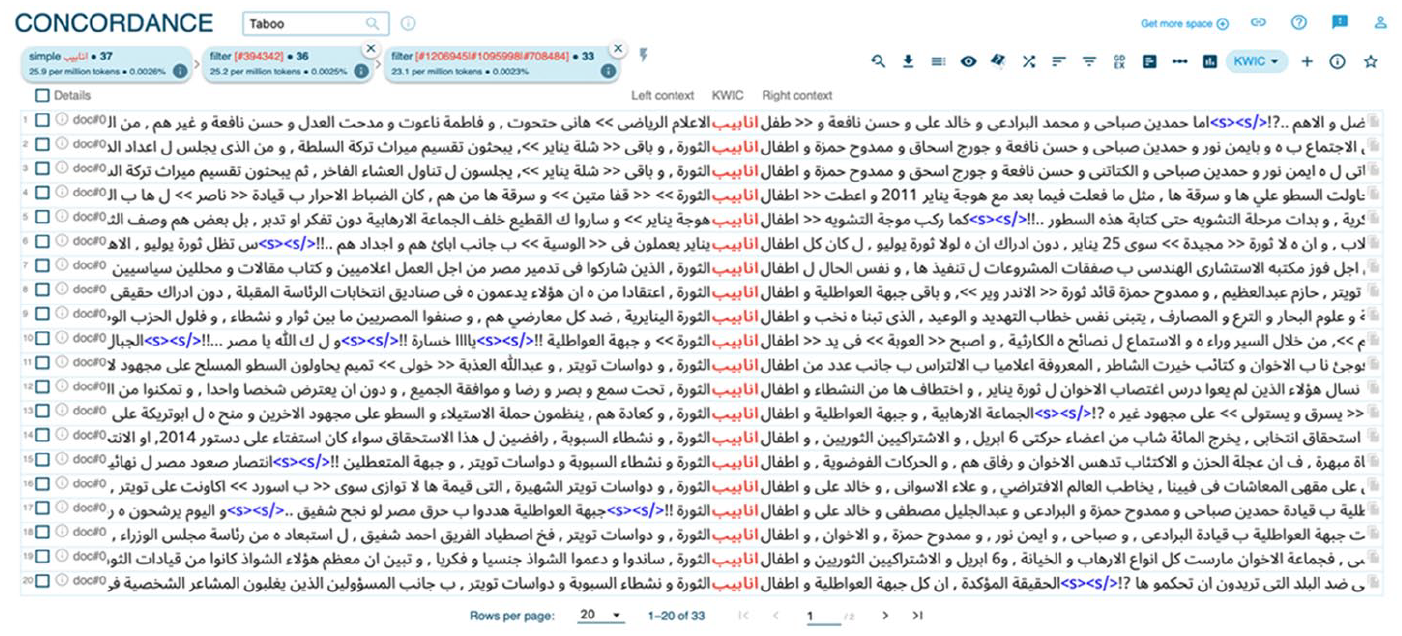
Twenty randomly selected concordance lines for IVF babies in the sample corpus.
Moreover, El-Hawari has used illness metaphors to describe failing governmental bodies and the actions of political opponents. In particular, he has used paralysis, Parkinson’s disease and shaking predominantly to describe failing policies, officials, the media, the economy, justice and the Opposition in Egypt. For instance, shalal ‘paralysis’ has appeared 33 times in eight articles. In Figure 2, concordance lines show that shalal ‘paralysis’ collocates with kaamil ‘complete’, rubaaʿi ‘quadriplegia’, ʾTfaal ‘infantile [paralysis]’, dimaaghi ‘cerebral palsy’ and al-ruʿaash ‘Parkinson’s disease’. The noun phrase ruʿaash ‘Parkinson’s disease’ and the adjectival form murtaʿish ‘shaking’ occur six times across four op-eds. Obviously, the source domain PARALYSIS suggests a negative evaluation of the targets. The mapped connotation can be formulated as ‘not functioning or acting normally’.
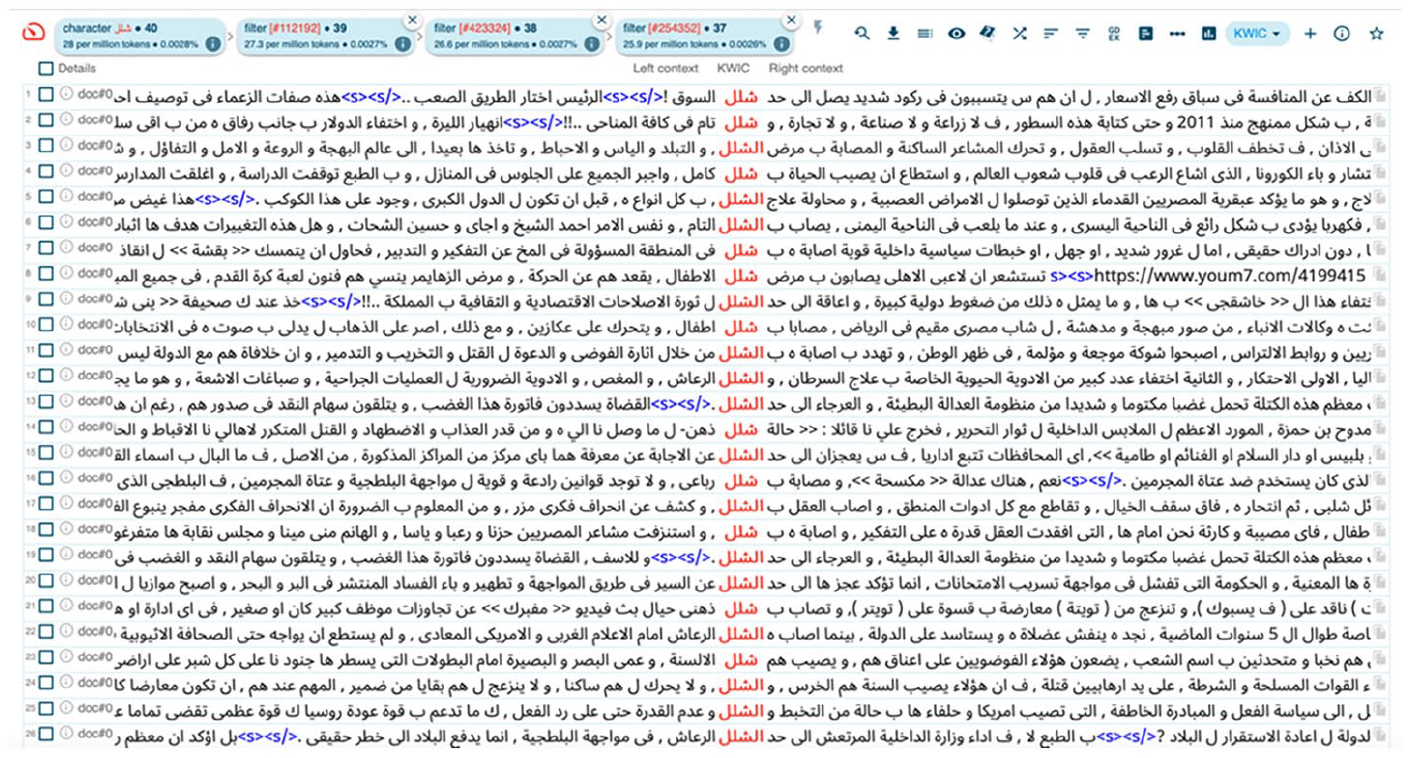
Twenty randomly selected concordance lines for ‘paralysis’ in the sample corpus.
Additionally, Parkinson’s is associated with ‘communication and cognitive deficits’ (Holtgraves and Giordano, 2017). El-Hawari has described the actions of the Muslim Brotherhood in Egypt (their anti-government protests) as ‘paralysing’ the country. In English-speaking cultures, the Cambridge English Dictionary (CED) corpus contains the word ‘paralysis’ as a noun modified by ‘political’ or as a modifier ‘paralysed’ to denote ‘inability to take action’, ‘complete or partial loss of function’. Such phrases seem to stereotype and stigmatize disability and more than 1 billion disabled people across the world by perpetuating ableist culture and conceptualizing disability as a problem (Alfrey and Jeanes, 2021). Linguists should therefore work with major journalistic institutions to create anti-ableist culture. It may be hard for those wishing to register indignation to resist illness metaphors, but constantly dropping the name of someone’s illness as ‘the epitome of evil’ (Sontag, 1978: 85) hardly helps them.
Religious taboos
Words from the source domain of religion have been used frequently to describe political dissent, of which the most frequent is ‘high priests’ (77 occurrences across 16 articles). The plural ‘high priests’ collocates with ‘social media users’, ‘the Egyptian Holocaust’ and ‘25 January 2011 Egyptian protesters’, among others (see Table 6). The latter, 25 January protesters, ‘worship the US Statue of Liberty’. The Muslim Brothers are also conceptualized as ‘the dogs of the dwellers of Hell’. There is a need to ‘cleanse Sinai of those dogs of the dwellers of Hell’. The Muslim Brothers ‘worship’ the Turkish President, Recep Tayyip Erdoğan, whose shoes are also ‘idolised’ and ‘held sacred’. Not only that, but the Muslim Brothers ‘kneel down, pray and offer human sacrifices to Erdoğan’. They ‘perform innocent- and Christian-blood ablutions’. They are the ‘Satanic Brothers’. They have ‘committed all deadly political and moral sins’. They, along with Isis, are dismissed as ‘khawarij’, or deviants and infidels or roughly ‘those who have transgressed’. They are American by religion. Their US ‘religion’ is democracy and freedom. The term ‘dogs of Hell’ occurs 28 times across 4 op-eds, the noun ‘god(s)’ 30 times across 7 articles, the verb ‘worship’ 17 times across 6 pieces and the word ‘sin’ 74 times across 6 op-eds.
Religious taboo words in the corpus data.

Obviously, the cultural context, history or ‘differential memory’ (or Muslims’ unique collection of ideas, beliefs and practices) must have influenced El-Hawari’s choice of words such as ‘khawarij’ and ‘perform their ablutions’ (for context-induced creativity, see, e.g. Abdel-Raheem, 2023; Kövecses, 2015). The metaphors used by the journalist accuse the Muslim Brothers not only of terrorist activities in Egypt, but of committing crimes on a heinous scale (they are referred to as non-Muslims, or ‘kuffar’ [an alternative spelling of ‘kaffir’], who worship Satan, Erdoğan and Lady Liberty), and thus justify unlawful killings in the government’s alleged ‘war on terror’. Not only the Muslim Brothers but all political opponents are, therefore, ‘legitimate’ targets for military action. In passing, the metaphors, although threatening and highly offensive, play a key role in establishing ‘lexical cohesion’ (Halliday and Hasan, 1976), or in ‘planning, execution and monitoring of text production’ (Ponterotto, 2003: 296). Put simply, by building on the same metaphor, different parts of an editorial (the lede or opening, the body and the conclusion) motivate certain patterns of ‘cohesive’ ties but not others (for the cohesive role of cognitive metaphor in discourse and conversation, see, e.g. Ponterotto, 2000).
Of course, non-Muslim readers must have and invoke vast amounts of political, historical and Islamic knowledge in order to understand El-Hawari’s columns. For instance, those who are not familiar with the history of Islam, in particular of the seventh-century sect that revolted against caliph Ali ibn abi Talib, the Khawaarij or Kharijites, or who have no idea that Muslims need to carry out pre-prayer ablutions, will not derive the intended inferences (for the process of deriving relevance, cf. Forceville, 2020; van Dijk, 2014). His Holocaust comments also presuppose old knowledge. In other words, not only metaphor production but also understanding is defined by ‘the way the participants define these context parameters in their context [experience] models [featuring a spatiotemporal Setting, a Participant structure, a Knowledge device, etc. (see also Hymes, 1974 )]’ (van Dijk, 2014: 295). This also means that the op-ed writer, El-Hawari, assumes that his readers have the same sociocultural knowledge as he (or the newspaper) has (see also van Dijk, 2008). If such a context model cannot be found, then any information that was not communicated before must be given again.
Uncleanliness taboos
El-Hawari has used taboo words for physical uncleanliness to describe the Opposition and its negative participation in the Egyptian political scene. His physical uncleanliness metaphors include verb forms such as wash, stain with blood, and stained, and adjectival forms such as stinky-tongued, filthy, bloodstained and stained, as displayed in Table 7. The verb ghasala ‘wash’ collocates with the mouth and the hand(s) and occurs twice across two articles. This metaphor has had one metaphor target, the Opposition, as in ‘Asmaa Mahfouz and all early vandals are trying to wash the blood of the innocent from their hands’ (in Arabic; italics added).
Taboo words of uncleanliness.

In English, to catch somebody red-handed means to catch them in the act of doing something wrong or committing a crime, where red is a metonym for blood, which in turn stands for a whole person (a part-for-whole metonymy) or for murder. Conventional knowledge is crucial here. If you stab someone, the blood will flow out of the body, and your hands will probably be bloody. Blood is red, so if someone is guilty, they are red-handed (Kövecses, 2010). Hand-washing here is a metaphor for responsibility dodging and blame avoidance. In the Asmaa Mahfouz example, El-Hawari accuses the Opposition of trying to absolve itself of all blame. The metaphor can be verbalized as BLAME AVOIDANCE/DISMISSING CHARGES/PURIFYING ONESELF AS HAND-WASHING or, alternatively, WICKED IS DIRTY and GUILT IS A STAIN. These common conceptual metaphors give rise to expressions such as ‘blood on their hands’ and, obviously, the hand-washing scene from Shakespeare’s Macbeth (Ritchie, 2017). We can formulate the connotations mapped from source to target as ‘scrubbing off the dirt’ and ‘removing evidence from the scene of a crime’.
The word talawuθ ‘contamination’ and its morphemically related forms, the verb talawaθat ‘contaminated’/‘stained with blood’ and the adjectives mulawaθ ‘contaminated’/‘stained with blood’ (m.sg.adj.), mulawaθ-ah ‘contaminated’/‘bloodstained’ (f.sg.adj.), the noun talawuθ ‘contamination’/‘soaked in blood’, mulawaө-aḫ ‘stained’ (m.sg.adj.) and mulawaθ-ah ‘stained’ (f.sg.adj.) have occurred 57 times across 17 articles. Both ‘contaminated’ and ‘stained’ have collocated with ‘blood’. The use of uncleanliness metaphors to describe the actions of the Muslim Brotherhood refers to moral uncleanliness. The conceptual metaphors must be constructed as MORAL IS CLEAN and IMMORAL IS DIRTY (see also Yu, 2022). The mapped connotations include ‘with or without unwanted matter [DIRT]’. The first conceptual metaphor can be decomposed into the following primary metaphors: MORAL IS GOOD FOR PUBLIC WELLBEING, CLEAN IS GOOD and GOOD IS CLEAN. By contrast, a decomposition analysis of the second conceptual metaphor is as follows: IMMORAL IS BAD FOR PUBLIC WELLBEING, DIRTY IS BAD and BAD IS DIRTY. The primary metaphors, according to Yu, are pervasive in ordinary everyday language and thought. The use of blood contributes to the tabooness of this metaphor, as blood has long been associated with various taboo topics, such as death, violence and sin (Simó, 2011). In addition, blood is a contaminant that must be thoroughly washed to remove the stains (Ghassemzadeh, 2018).
Animal names
Dehumanization, animalistic and mechanistic, is seen by Haslam (2006) as ‘an everyday social phenomenon, rooted in ordinary social-cognitive processes’ (p. 252). It features prominently in feminist work on how women are presented in pornography and in writings on modern medicine, among other domains. The focus of this subsection is on animalistic dehumanization. Following Haslam (2006), dehumanizing others in an animalistic fashion involves the divesting of uniquely human (UH) characteristics, usually ‘to essentialized outgroups in the context of a communal representation of the ingroup’, and is often accompanied by (a) degradation and humiliation reflecting an implicit vertical comparison and (b) a tendency to explain the behaviour of ‘animalistically dehumanized others’ in terms of desires and wants and not cognitive states (p. 262). The results of the present study show that El-Hawari has frequently used animal metaphors to criticize the die-hard opponents of Egyptian President Sisi, including Turkish President Recep Tayyip Erdoğan and Muslim Brotherhood members. His animal metaphors involved nominal forms such as fly, dog, pig, sow, rat, sheep, or monkey and verb forms such as niʿlif ‘we feed’, tihawhaw ‘bark’ and tasmiin ‘fattening up’, as illustrated in Table 8. The most frequent term kalb/kilaab ‘dog/s’ (as in ‘the dogs of the dwellers of Hell’) has occurred 157 times (frequency) in eight articles (range) with some reference to the Muslim Brotherhood. It was typically applied to men rather than women. The female form kalb-ah ‘bitch’ has occurred 20 times in two of these eight articles. Its lower frequency may be partly explained by the fact that the expression ‘son of a dog’ (the equivalent of the English ‘son of a bitch’) is also more frequent in colloquial Arabic. But note that in other contexts, bitch, as well as female donkey, is a term of solidarity between female Egyptian teenagers and adolescents (see also Culpeper, 2011). The word alxanziir-ah ‘sow’ is also somewhat less frequent. It is a play on words, because it sounds like Al-Jazeera, the Arab satellite TV channel, whose coverage of Egypt has angered the government. Indeed, it has mainly targeted Al-Jazeera. Concordance lines indicate that the use of kilaab ‘dogs’ + ahl n-naar ‘the dwellers of Hell’ is predominant (28 instances across 8 files; Figure 3).
Taboos on animals in the corpus.

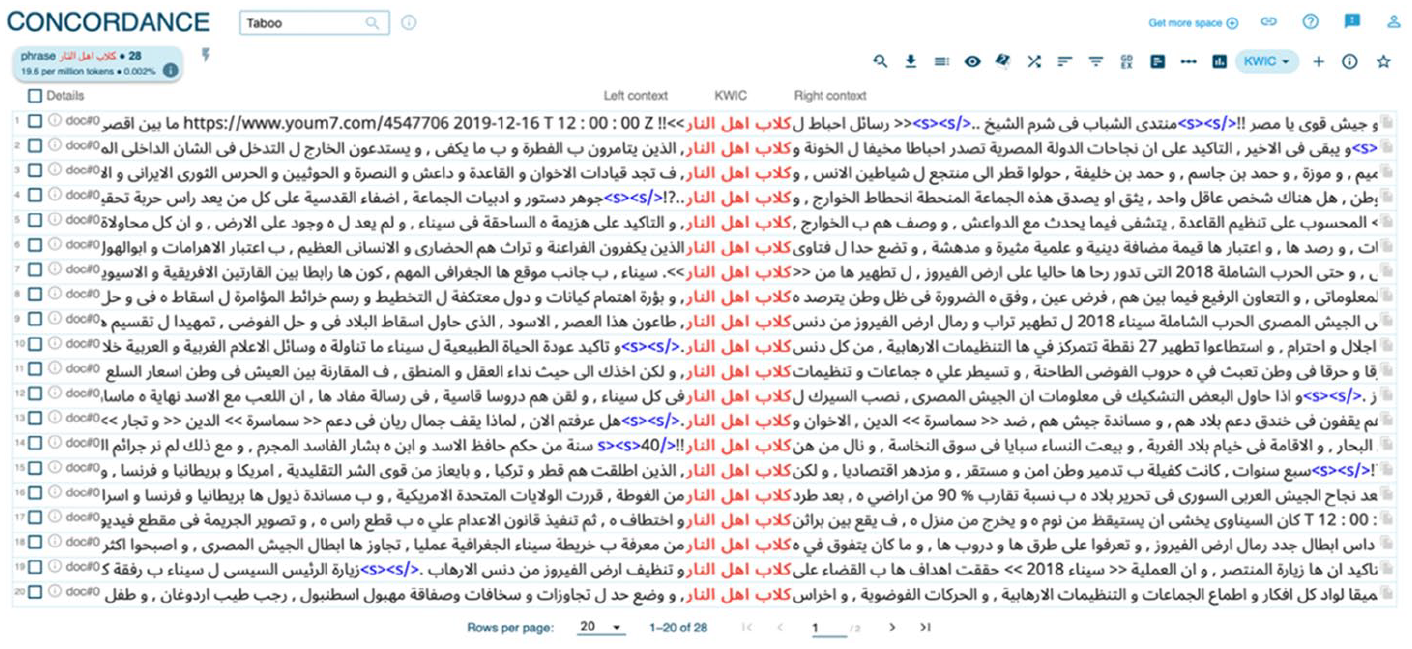
Twenty randomly selected concordance lines for ‘the dogs of the dwellers of Hell’ in the sample corpus.
Demonology employed by politicians and the media to describe enemies and opponents exists in the annals of history. Opposition to Western interference has earned Arab leaders such as Gamal Abdel Nasser, Saddam Hussein and Colonel Gaddafi the epithet of ‘Mad Dog’ in the press. They are ‘barking mad’, but also ‘foaming at the mouth’, as stated in the Guardian and by the BBC. The metaphor ‘Mad Dog’ was first used in 1986 by Ronald Reagan to conceptualize Gaddafi. In 2015, former British Prime Minister David Cameron was condemned for his dehumanizing description of migrants in Calais as a ‘swarm of people’ trying to reach Britain. Such a language externalizes evil and has a ‘well-known insulting overtone’ (Leech, 2014: 230). This is meant to make these ridiculously convoluted arguments more plausible. The animal metaphor ‘has connotations which overflow its formal significations and does important ideological work in the context of war’ (Seymour, 2011, para. 3; see also Musolff, 2016). To repeat, it is an aggravated insult (Leech, 2014).
‘Flies’ has been the second most common animal name for metaphor in the corpus (79 occurrences) with one linguistic form, the plural. Over 90% have had one metaphor target, the Muslim Brotherhood. It again conveys a strong negative evaluation of the target, as shown in the following example: ‘The Brotherhood’s social media flies want to wreak havoc in Egypt’. The term ‘mice’ appeared 50 times in the corpus. In this metaphor, government is conceptualized as a person who is trapping and chasing mice. The metaphor has a long history in the annals of US/British war propaganda. George Bush has spoken of ‘smoking [terrorists] out of their holes’. In this respect, the metaphor has a connection with those for morality in that morality is understood as up and immorality as down (Abdel-Raheem, 2019; Lakoff, 2004).
Yet the question asked by Leach (1989) is: Why is ‘you son of a bitch’ or ‘you swine’, but not ‘you son of a kangaroo’ or ‘you polar bear’, abusive? One answer is that animal metaphors (e.g. pigs) may be universally associated with the worst physical taboos, uncleanness and stench (Jay, 2009; Newmark, 1985). Similarly, the word ‘sheep’ has negative connotations: Saying that the Muslim Brothers are sheep suggests disapproval of them because if a Muslim Brother does something, all the others copy him. It must be acknowledged, however, that categories, including TABOO, have fuzzy rather than well-defined boundaries, but are also culture-specific (see Lakoff, 1987). For Bednarek (2019), for instance, the tabooness of such words as dog, moron, swine and pig, among others, is debatable. Hence, understanding matters of content and context is in fact crucial for understanding the factors that contribute to the offensiveness of animal metaphors (Haslam et al., 2011). Specifically, there is some evidence that ‘metaphors are offensive to the degree that they impl[y] a view of the target as less than human’ (p. 322), and that ‘[a]nimal metaphors may be seen as invariably hostile and insulting when expressed toward out-group members’ (p. 320).
General discussion and conclusion
Dandrawi El-Hawari’s stream of aggravated insults to political dissent is a determined effort by him to rally the Egyptian public to Sisi’s side. His frequent use of foul language is part of a strategy to offend not only individuals (e.g. the Emir of Qatar, Sheikh Tamim bin Hamad al-Thani, the (now) Turkish president, Recep Tayyip Erdoğan, the Saudi Arabian journalist Jamal Khashoggi and Egypt’s ex-military chief Sami Anan) or political groups and organizations (e.g. the Muslim Brotherhood), but also society (e.g. cancer patients, people with Parkinson’s disease, those living with infertility, etc.). Once again, the Opposition have been represented in such metaphorical terms that they must be ‘removed’ (killed) and the country be ‘cleansed’. Metaphorically speaking, they are ‘cancerous cells and tumours’, ‘miserable sinners’, ‘worshippers of Satan’, ‘test-tube babies’, ‘insects and pigs’, ‘the Khawarij (infidels)’, ‘the dogs of the dwellers of Hell’ and ‘bastards and prostitutes’. This clearly shows that taboo language is also associated with bullying, a repugnant kind of cruelty. Put another way, not only does his steady use of taboo words create an intimidating environment, but it also breaks discrimination laws and incites the general public to violence. In short, his op-ed articles may cause a furore among different groups of people (patients, feminists, society as a whole, the Opposition, etc.).
One of the main results that can be gleaned from these data is that taboo language has become so woven not only into everyday talk and literature (Twenge et al., 2017), but also into the private press. The ‘dramatic’ increase in taboo words may be attributed to three factors (cf. McGrath, 1994):
i. the increase in social informality and freedom since the internet revolution;
ii. vast changes in the Egyptian religious landscape; and
iii. the relaxing of censorship laws.
Not only that, but there is a demonization campaign focused on the Opposition. In other words, subjective social beliefs, personal or shared by ideological groups, could be another factor. Indeed, ‘ideologies are typically polarised by a positive self-image of their own group, the ingroup (and its allies) and a negative one, the outgroup(s) (and its allies)’ (van Dijk, 2014: 99). Put simply, taboo words can again create a hostile environment and justify killings. Pro-government lawyers have accused free speech groups and authors of espionage and ‘spreading false news’, according to lawsuits filed in November 2022. This demonstrates how stark political and ideological polarization (the negativity that citizens feel towards their political opponents) has become. It is, however, an open question whether a legal action can be brought against the newspaper in question for defamation of, say, the late Jamal Khashoggi. In fact, El-Hawari should be sued not just for libel, but also for bullying people with disabilities and those struggling with infertility and major illnesses such as cancer and incontinence through the use of sexual, racial and religious taboos in several articles between 2008 and 2022.
Following Culpeper (2019), a distinction may then be made between taboo expressions that are directly connected with identity (gender, sexuality, etc.), and those that are not (such as physical sex- and bodily excretion-related words). Consider, for instance, the following translated extract from a Dandrawi El-Hawari essay: ‘From 30 June 2013 till now, the terrorist Brotherhood has got into the “habit” of having a “monthly revolution”, changing “sanitary towels” accordingly’ (2020: para. 1; double quotes in the original). The expressions surrounded with inverted commas (habit, monthly and sanitary towels) have a metonymic connection with menstruation, and hence with women. Similarly, such items as ‘deviant’, ‘pornographer-politician’, and ‘politically gender-fluid’ question a political opponent’s gender, sexual identity or orientation. Not only do such items violate ‘sociality rights’ (Spencer-Oatey, 2008), but they also attack face, at least in Arabic-speaking cultures. Hence, at the beginning of this paper, we argued, following Culpeper (2019), that the use of taboo language is, as is more often the case, part of offensiveness. Avoiding offensive language is, of course, a requirement for being politically correct or part of ‘polite society’ (for the parallels between politeness and political correctness, see Klotz, 1999; Sorlin, 2013). However, advocates of free speech may, of course, see the term ‘impoliteness’ or ‘tabooness’ more positively than it commonly is. Indeed, a flouting of cooperative rules may aim at shocking, social transformation, expressing indignation at those who harmed the country’s economy, etc. But advocacy of free speech must defend it all and not silence dissent (Malik, 2023). Moreover, the use of offensive metaphor has, empirically, led to violence in the course of human history (see Musolff, 2011 and references therein).
El-Hawari intentionally and ‘deliberately’ (at the very least in Musolff’s (2011) sociolinguistic and discourse analytical sense) uses creative metaphors to ‘frame’ certain events and situations with particular persuasive goals in mind. As put by Musolff (2016), speakers and writers ‘have a choice of which scenarios to use, how to fill them figuratively and which evaluations and “solutions” to insinuate’ (p. 88; single quotes in the original). It would therefore be disingenuous and deceitful to describe El-Hawari’s use of taboo language and metaphors as ‘non-deliberate’. Not only has he deliberately chosen to structure scenarios by a specific metaphoric filling, but also readers are acutely aware of their implications, semantic and pragmatic, as well as of the genres and ideologies they espouse. You do not need to know that an expression is figurative in order to employ it, but your mind may be conscious of its taboo status in your culture or society, which Musolff calls ‘discourse-historical awareness’ (p. 4). After all, El-Hawari did also set out to create striking new images. The ‘deliberateness’ of figurative or taboo language use, something we have known since time immemorial, remains the subject of heated debate among cognitivists and pragmaticists, including Raymond Gibbs and Gerard Steen (see Musolff, 2016 and references therein). It is even likely that El-Hawari would deny implicatures. But empirical and experimental investigations of deniability show that all explicated or ‘what is said’ inferences are rated as undeniable (Sternau et al., 2017). Moreover, foreseeability plays a key role in judgements of impoliteness and hate crime, especially in contexts that involve salient relationships (Culpeper, 2011; Ferguson and Rule, 1983). The newspaper in question thus also bears the ultimate responsibility for contributing to an increasingly toxic and polarized climate that jeopardizes opponents’ lives. As noted by van Dijk (2014), op-eds and editorials seldom represent personal points of view, but ones ‘that tend to be based on attitudes that are probably widely shared among the readers’, and are typically indirectly targeted at those in power (institutions, organizations, politicians, etc.), whose policies they seek to support or condemn. This is potentially useful, because it moves the discussion of participant commitment to or accountability for what has been implicated beyond a narrow focus on an individual speaker towards an account of institutional responsibility.
To sum up, this is the first study to systematically examine how taboo words and expressions (including metaphors and metonymies) are used in Modern Standard Arabic, with a special focus on a genre that is under-explored in impoliteness research, namely the journalistic op-ed. Future research may focus on English editorials and op-eds or the types of taboo metaphor used by male and female journalists. This paper should be of interest to experts in journalism studies, political communication and cognitive linguistics.
Footnotes
Author contributions
Abdel-Raheem: ideas and conceptualization; writing and analysis (title, abstract, introduction, corpus and methodology, subsections 3.1, 3.2, 3.3, 3.5, 3.7, and discussion and conclusion, as well as tables); translation and transliteration of terms; as well as editing, revising and elaborating analyses in subsections 3.4 and 3.6.
Goubaa: analysis, editing, and translation of terms.
Declaration of conflicting interests
The author(s) declared no potential conflicts of interest with respect to the research, authorship, and/or publication of this article.
Funding
The author(s) received no financial support for the research, authorship, and/or publication of this article.
