







Abstract
Improving access to modern energy sources is critical to enhancing the quality of life of many people in developing countries. In southern Africa, the majority of rural and poor urban households are dependent on solid fuels to meet their cooking needs. To date, there is scarce information in the literature on household cooking fuel patterns across southern Africa. Using household fuel data from the Demographic and Health Survey, this study investigated cooking fuel types and the determinants of their choice by households in selected countries in sub-Saharan Africa. The data on household cooking energy were subjected to descriptive and inferential statistics. Results show that 25% of sampled households in all seven countries have access to electricity, while 66% rely on biomass for cooking. Chi-Square analyses revealed a statistically significant relationship between place of residence and type of cooking fuel, and between access to electricity and type of cooking fuel. Results from multiple regression analysis showed that socio-demographic factors such as access to electricity, household size, the level of education and wealth index have a positive influence on the type of cooking fuel used in this region. However, access to electricity does not imply that households will negate the use of traditional fuels. These results have implications for household air pollution, health, policy and environmental sustainability. It is recommended that energy interventions in this region need to consider demand factors and have to be less supply driven, advocating for continued use of multiple fuels from a suite of options.
Introduction
Energy provision is essential for human survival and an integral aspect of environmental management. Access to clean, affordable and efficient energy has become a challenge for the majority of low to medium-income households in developing countries. 1 Energy poverty has become a cause of global concern for international agencies and researchers in the fields of human health and environmental management. Globally, approximately three billion people rely on solid fuels such as biomass, coal and animal waste to meet their basic energy needs. 2 These fuels are combusted in poorly designed and inefficient cookstoves resulting in emissions of noxious gases and products of incomplete combustion (PIC). The continued use of solid fuels has been linked to increased morbidity and mortality. 3 The WHO Global Health Observatory has reported that in 2012 household air pollution (HAP) caused 4.3 million premature deaths worldwide. On the other hand, ambient air pollution caused a further 3.7 million deaths. 4 HAP is associated with many health effects such as acute and chronic respiratory disorders, pulmonary and systemic diseases. 5 Acute respiratory infections are considered the number one killer of children under the age of five.6,7 In South Africa, acute lower respiratory infections accounts for approximately 14% of deaths amongst children under five years and are ranked, together with diarrheal disease, as one of the top killers of young children.8,9
According to recent data, about 1.4 billion people, globally, are without access to electricity.10–12 In Africa, a large concentration of people (600 million people) have no access to electricity and rely on traditional forms of energy sources to meet their basic energy needs. IRENA 13 was of the opinion that 700 million people on the African continent were living without clean cooking energy. Firewood remains a survival commodity for the majority of households in Sub-Saharan Africa (SSA). The SSA region has the lowest total Gross Domestic Product (GDP) and GDP per capita in the world.14,15 According to a GIZ report, 12 90% of rural households across SSA relied on biomass as their primary energy source for cooking and heating. 16 Howels et al., 17 Bailis et al. 18 and Mekonnen et al. 19 indicated that the use of firewood for cooking and heating was common in countries such as Malawi, Zimbabwe, Ghana, Nigeria, Gabon, Angola and South Africa. For urban households in SSA, Zulu and Richardson 20 highlighted charcoal as a primary source of household energy as it provided an important source of family income. Charcoal is a renewable energy source that has the potential to power economic growth while reducing the dependency on costly energy imports in poor developing countries. An added advantage of using charcoal over firewood is that charcoal has higher energy content per kg of fuel burned, is less bulky and easier to store and transport, and burns with fewer smoke emissions. 21 However, the greater time needed for harvesting, preparing and transporting the fuels reduces opportunities for productive work and education in women and children. 22 Pachauri 23 was of the opinion that the issue of relying on firewood has a gender and equity dimension. Most of the adverse effects of cooking using traditional fuels (i.e. exposure to smoke particles, sexual violence and back injuries) are evident in women and children. 16
Electrification (rural and urban) has received much attention in different countries in southern Africa, with South Africa having the highest electrification rates of up to 87%. 24 However, in many of the countries, electricity is rarely used for cooking. For example, research carried out in the Bushbuckridge region of South Africa showed that ten years after receiving electrical power with a free basic electricity policy of 6 kWh per month, over 90% of households still used firewood for cooking and heating. 25 The free basic electricity policy was put in place when the government realised that the increase in the electrification process would not automatically result in significant levels of electricity consumption by poor households due to various socio-economic dynamics. 26 However, Makonese et al. 27 argued that the quantity of free basic electricity provided to poor households was inadequate to meet basic needs and improvement of the quality of life, proposing a minimum of 200 kWh per month per poor household. Thus, electrification cannot be taken as a single effective solution to reduce the consumption of traditional fuels and reduce impacts associated with their continued use. 22 According to Kanagawa and Nakata, 28 in poor households electricity is needed for lighting and refrigeration, and this has been associated with improved education and employment possibilities.
There is extensive information in the literature about household cooking energy requirements for developing countries. 22 The studies have asserted the ‘energy ladder’ as a basic model, which influences the choice of household cooking fuels.29–31 According to the ‘energy ladder’ model, households tend to switch to more convenient and less polluting energy carriers as their disposable income increases. 22 However, this school of thought has received some criticism in recent years – Masera 32 observed that in rural Mexico, households do not ascend the ‘energy ladder’ with an increase in disposable income. Rather, they ‘stack’ fuels, where traditional fuels are not discarded completely but used together with modern fuels due to cultural preferences. 22 Contrary to initial assertions of the ‘energy ladder’ model, it has become apparent that fuel ‘stacking’ is the norm in most households.33–36 Heltberg 37 posited that there is a lot of fuel ‘stacking’ in urban communities compared to rural communities that the prospect for modern fuels to combat indoor air pollution is better in urban than in rural areas.
Although income plays a significant role in determining the choice of household cooking fuels used, evidence in SSA has shown that there are no clear-cut linkages between income level and fuel type. In fact, Arnold 33 was of the opinion that the effect of income on fuelwood consumption was small and that the few observed revenue elasticities were significantly different from zero. On the other hand, Hiemstra-Van der Horst and Hovorka 34 argued that case studies across SSA revealed that fuelwood could be a primary energy source for households at all levels of wealth. These studies were carried out in Mozambique, 38 Zimbabwe, 39 Kenya, 40 Tanzania, 41 Nigeria 42 and Chad. 43 This shows that although income levels play a role in shaping fuel choices in the surveyed countries, many other factors such as level of education and place of residence also matter. 37 Thus, the factors likely to affect fuel choices vary by geographical location, wealth and household preferences. 22
Some studies on household cooking fuel use and fuel determinants have been carried out in different parts of the world including in Ethiopia, 19 India, 22 Guatemala, 44 Burkina Faso 45 and Zimbabwe. 39 However, a review of the literature has shown that limited studies have been conducted to provide inter-country level profiles regarding types of household cooking fuel and fuel choice determinants in southern Africa.37,45 Currently, there is a dearth of information on multi-country cooking fuel use scenarios in SSA, except for a report by Merven et al., 45 which modelled future energy demands in the Southern African Development Community (SADC) region. In light of the above, the most recent Demographic and Health Survey (NDHS) data of seven countries in southern Africa were employed to investigate cooking fuel types and the determinants of their choice by households in selected countries in SSA, as well as their implication for environmental sustainability. In this study, four research questions were formulated as follows: (1) what is the distribution of household cooking fuel types and access to electricity in selected countries in the Southern African region? (2) Is there any significant statistical relationship between place of residence and type of household cooking fuel? (3) Is there any significant statistical relationship between access to electricity and type of household cooking fuel? (4) Can socio-economic characteristics predict household types of fuel used for cooking? DHS data were subjected to both descriptive and inferential statistics using SPSS 20 software.
Data source and analysis
The data utilised for this analysis were drawn from Demographic and Health Surveys (DHS) of seven countries from southern Africa in the SADC. DHS are country-specific household surveys carried out by ICF Macro/MEASURE DHS on behalf of national ministries of health, through funding from the United States Agency for International Development. The SADC region is comprised of 15 member States that include Angola, Botswana, Democratic Republic of Congo, Lesotho, Madagascar, Malawi, Mauritius, Mozambique, Namibia, Seychelles, South Africa, Swaziland, Tanzania, Zambia and Zimbabwe. The SADC is a regional economic community committed to regional integration, poverty eradication and enhancing peace in southern Africa. The community compliments the role of the African Unity (AU). For purposes of this study, the following SADC countries were selected: Angola (2011), Lesotho (2009), Malawi (2012), Namibia (2007), Swaziland (2006), Zambia (2007) and Zimbabwe (2011) (see Figure 1). Only current DHS data sets were used for each country; previous measurements were omitted, as some country information did not have data on some indicators. Given the focus of our work, we obtained nationally and sub-nationally representative household energy use data as well as other household characteristics that include gender, age, educational background, place of residence, access to electricity and wealth index. The DHS are a vital source of comparative quantitative data across developing countries on demographic and health indicators covering both rural and urban populations. The data were analysed using the IBM SPSS 15 version for frequency, percentage, chi-square and logistic regression. A probability level of 0.05 was used for all tests of significance. As this study is based on secondary analysis of existing DHS data that are in the public domain, ethical clearance from the University of Johannesburg was not required.
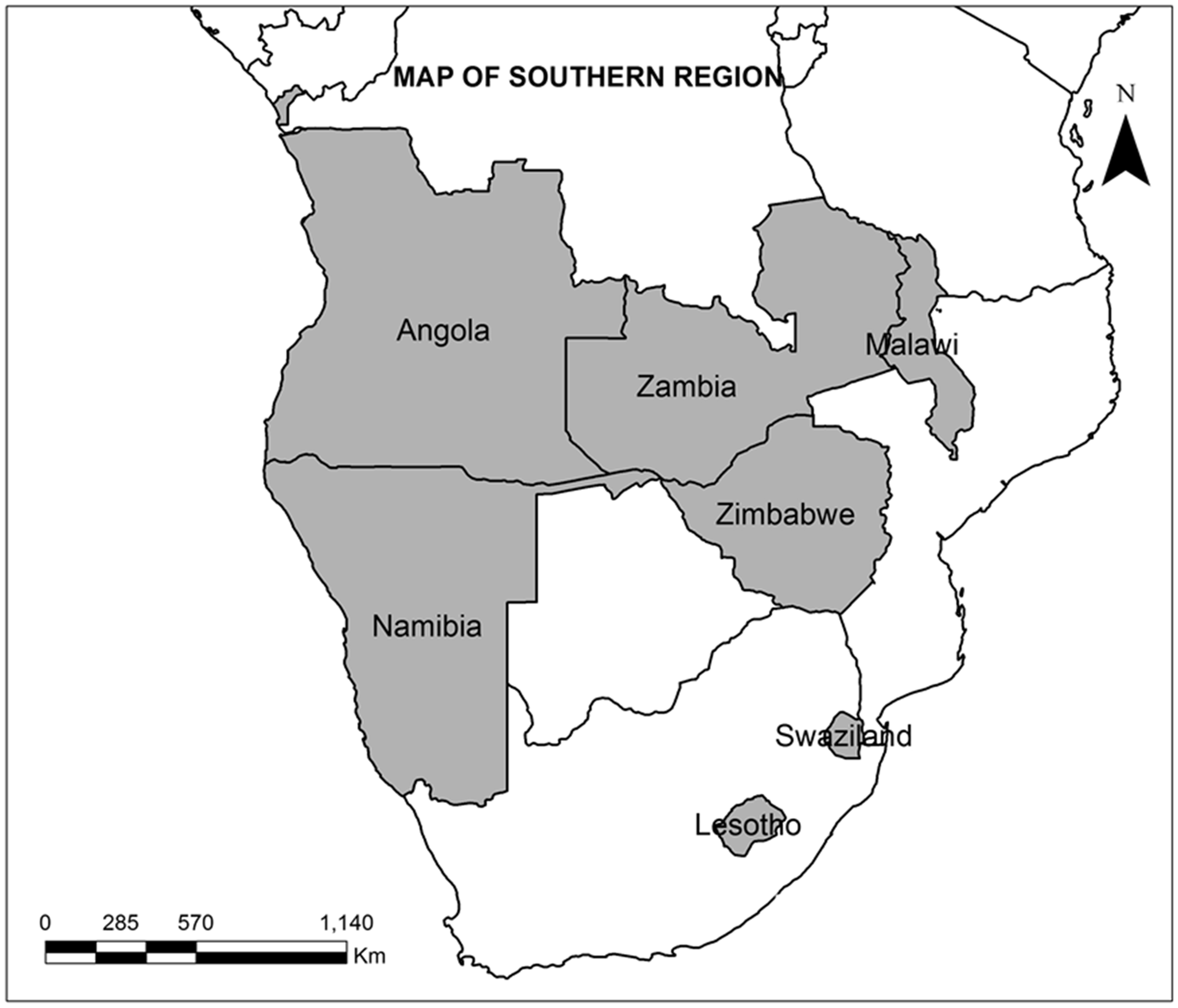
Map showing the seven countries selected for the study.
Results and discussion
Distribution of households and cooking fuels used
Cross tabulations were carried out to show the relationship between access to electricity, place of residence and type of cooking fuel. The results are presented in Tables 1 to 6. Table 1 shows that 69.5% of surveyed households lived in rural areas, and 30.5% lived in urban communities. From the selected seven countries, only 25.5% households had access to electricity, while 74.5% responded in the negative. In this region, it can be seen that firewood was the most dominant type of cooking fuel (66.5%), followed by liquefied petroleum gas (LPG) (8.8%), electricity (8.6%) and charcoal (7.4%). About 78.5% of households surveyed relied on biomass fuels (e.g. firewood, charcoal, animal and agricultural waste, shrubs, grass and straw) to meet their basic cooking energy needs. Only 1.9% and 1.4% of households used natural gas and kerosene for cooking, respectively, while less than 1% of the respondents used each of the other energy sources such as jelly/paraffin and coal. This pattern of biomass use is expected as the fuel is cheaper, affordable and readily available. In some instances, the fuel is collected free of charge for households that have access to nearby forestry resources and for those that live in farmlands. 14
Distribution of households cooking fuels and access to electricity.
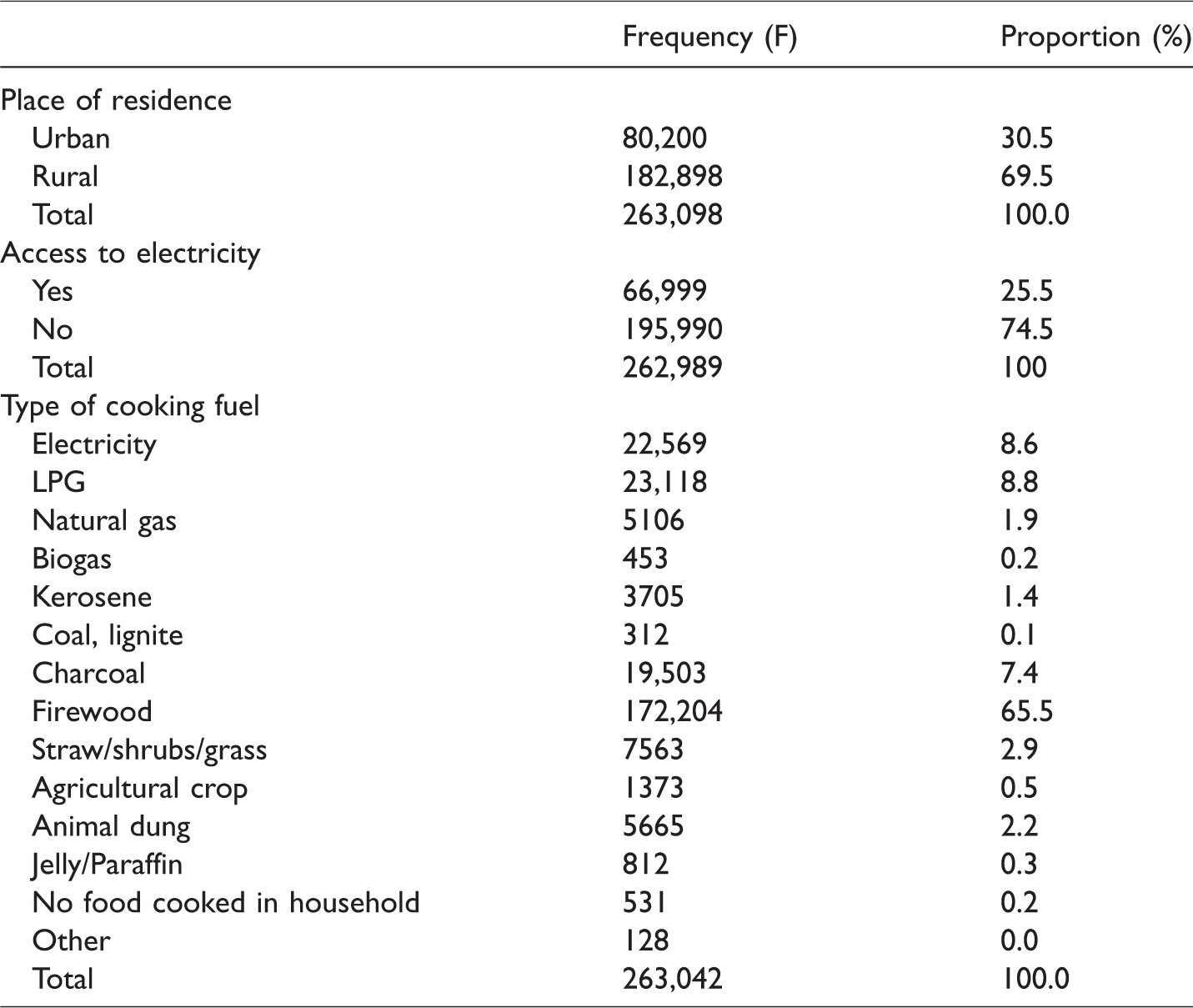
The findings are consistent with findings from various international organisations such as IEA, 46 IRENA 13 and WEC. 47 These reports documented that biomass fuels (firewood and charcoal) are widely used by the majority of households in SSA for purposes of cooking.
Table 2 shows the proportion of households with access to electricity across the seven countries. The results indicate that in all the countries surveyed, access to electricity in the sub-region was very low, and area dependent (i.e. rural and urban). More than 80% of households had no access to electricity, most of who lived in the countryside. The average rate of access to electricity in urban areas in these countries was 78.5% of the total number of households, and less than 20% in rural areas. In Zimbabwe, for example, only 10% had access to electricity in the countryside, while 89% had electricity in urban areas. Hitherto, the government had initiated a rural electrification programme in 2002 following the enactment of the Rural Electrification Fund Act (2002). The fund was put in place to ensure that there was an equitable distribution of resources in the electrification of rural households by contributing towards the initial capital costs. 48 However, since the inception of the fund in 1999, the implementation of the programme has been slow with only 14 projects out of a possible 54 having been completed by April 2000. 49 Kayo 50 argued that the failure to achieve targets was mainly due to the narrow contractor base rather than the lack of funds.
Distribution of households' access to electricity in each country.
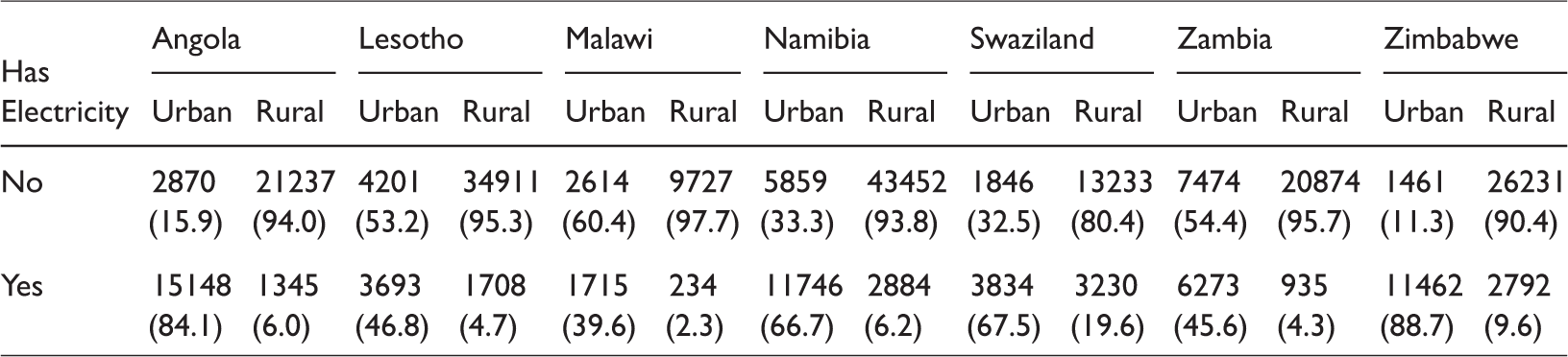
In Lesotho and Swaziland, urban electricity access was relatively low at 68% and 54%, while rural electrification was at 5% and 20%, respectively. The low access to electricity in rural Lesotho could be associated with the high cost of providing the infrastructure to the dispersed homesteads in these communities. 51 In Angola, access to electricity remains low, especially in rural areas. Much of the electricity infrastructure was built before the country attained independence in 1975. However, this infrastructure was damaged during the civil war and has not received routine maintenance, in part due to war-related access problems. 52 Access to electricity for cooking was relatively high (84%) in urban areas. This is probably because many municipal authorities in large towns run isolated electricity generation and supply services. 52
The distribution of different types of cooking fuel used country-by-country is shown in Table 3. In Angola, the dominant type of fuels used for cooking were LPG and fuelwood. Electricity, kerosene and straw/shrub/grass were seldom used. High levels of LPG use in Angola suggested that the fuel was affordable and easily accessible. Therefore, the access issue to clean cooking energies is essentially a poverty and policy-related problem. In Lesotho, the majority of households (52%) used firewood for cooking, while 12% used LPG, followed by cow dung at 11%. Electricity was infrequently used for cooking (around 4% share). The penetration of LPG in this market could be enhanced by putting in place rigorous policies, strategies and institutions to support the uptake of the fuel in areas where biomass fuels dominate. In Malawi, approximately 4% households used electricity for cooking, while a large majority were dependent on biomass (i.e. firewood and charcoal) for purposes of cooking and heating. This result is consistent with findings in Malakai et al. 53 where it was reported that firewood and charcoal contributed over 90% of Malawi's total cooking energy demand. In Namibia, almost all the households surveyed used biomass fuels for cooking and space heating; only a few used natural gas and electricity, respectively. One-third of the households in Namibia used electricity, natural gas and kerosene for cooking, while firewood was used for cooking by two-thirds of the surveyed households. In Zambia, more than two-thirds of households used firewood and charcoal for cooking, respectively. The percentage of households that used electricity for cooking was less than one-fifth. Seventy-two percent of households in Zimbabwe depended on firewood, with 26.4% using grid electricity for cooking and water heating needs (Table 3).
Type of fuel for cooking across seven Southern Africa countries.
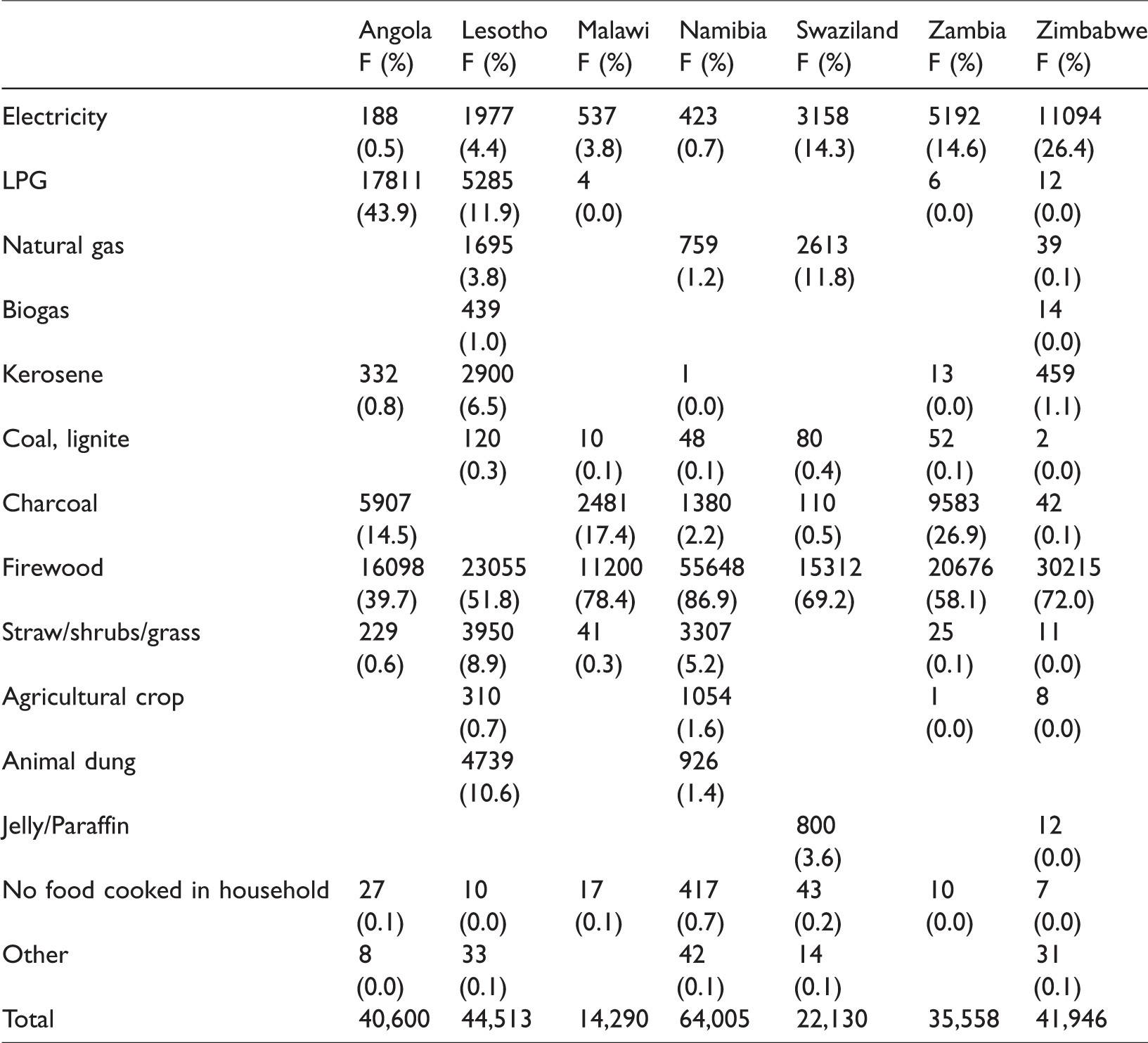
These findings are consistent with a study conducted by Merven et al. 45 across several countries of SSA. The majority of households in SSA depended on traditional biomass fuels such as firewood and charcoal. Bhattacharya 54 contended that the over-reliance on traditional fuels for cooking and heating has significant social costs including costs due to health effects on women and children. The majority of rural households in SSA rely on traditional fuels. As such, the issue of access to modern and clean energy technologies for cooking becomes imperative as affordability alone cannot explain such widespread reliance on polluting and inefficient energy carriers. 54
Table 4 presents cooking fuel patterns of urban and rural households across the seven countries investigated. The majority of urban households used modern energy sources for cooking including electricity, LPG, natural gas, biogas and kerosene, while the majority of rural households relied on traditional fuels such as firewood, straw/grass, agricultural crop and animal dung. Table 4 shows that firewood was a primary source of energy for cooking among rural households in all the countries investigated. The country-by-country analysis shows that the majority of urban households in Angola (88.8%) used LPG for cooking, followed by charcoal (7.9%). In rural communities, firewood and charcoal were used by 70.6% and 19.9% households, respectively. According to an IEA (2006) 33 report, firewood was mostly used in rural areas, while charcoal was preferred in peri-urban areas due to its lower transport weight. Most of the unsustainable use of biomass in Angola appeared to emanate from the felling of trees for purposes of making charcoal to supply to peri-urban areas. An interesting find is that of all the sampled rural households ∼8% used LPG for cooking. This indicates that there is a need for robust national policy initiatives to bring a change in the cooking fuel use patterns in Angola. Bhattacharya et al. 54 argued that the transition to modern, clean cooking fuels can have significant implications for the supply side of the LPG industry. Ifegbesan et al. 14 was of the opinion that the price of LPG was still unaffordable to the majority of the urban populace where there is relatively more cash flow, and high disposable income compared to the rural areas.
Relationship between place of residence and type of cooking fuel used across the countries.
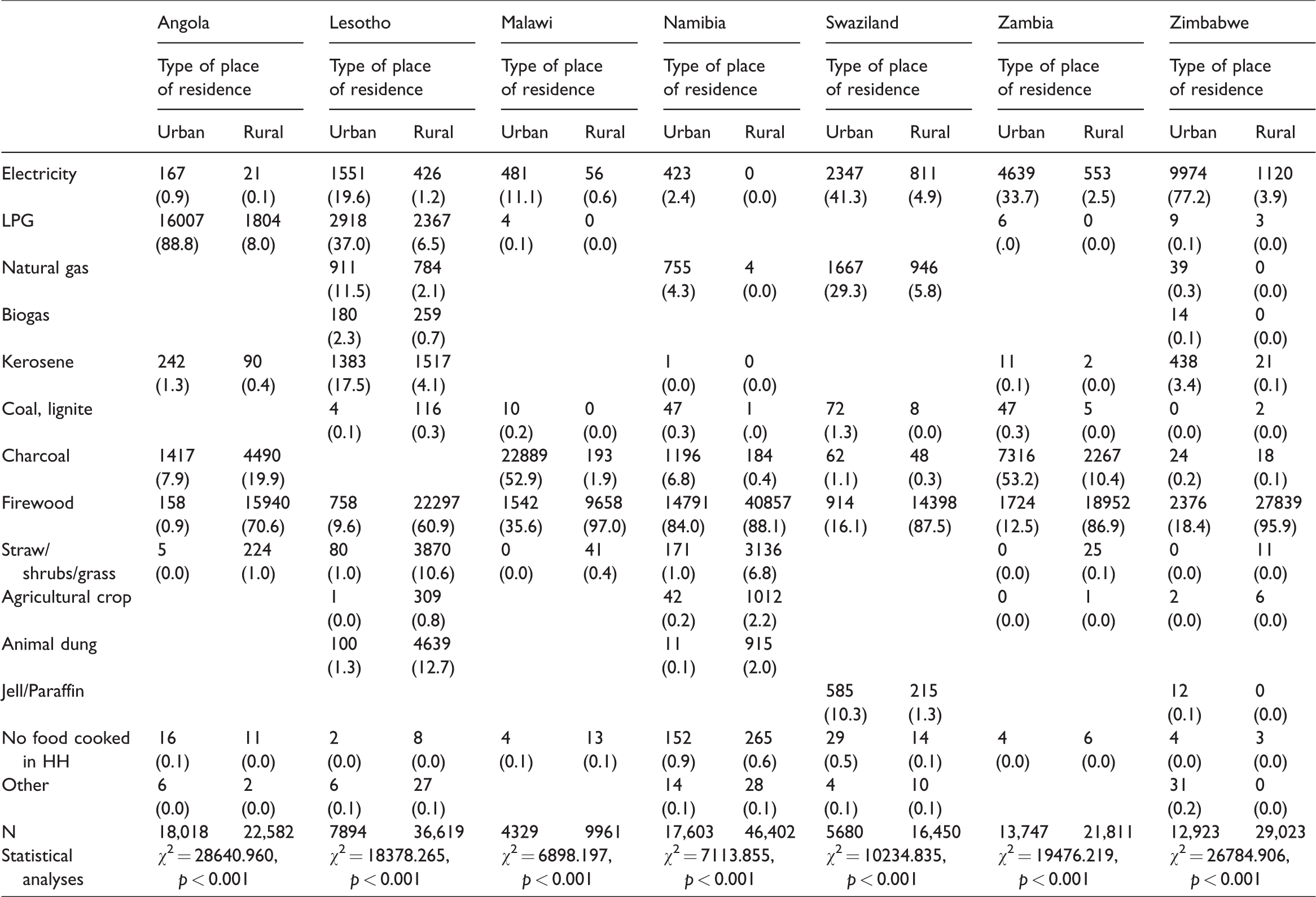
Sixty-one percent of rural households relied on firewood for cooking and heating purposes in Lesotho; it accounted for 9.6% of the cooking energy demand in urban areas. In urban areas, LPG and electricity were used by 56% households in urban areas of Lesotho. About 7% of the surveyed households used LPG and electricity for cooking in rural areas. This result can be explained by considering the financing of the energy sector in the country. For example, the energy sector in Lesotho suffers from inadequate financing from the government resulting in lower electrification rates. As such, there are challenges in the funding of energy projects including increasing power generation and investing in renewables. Because the country has no coal reserves, the coal used in electricity generation is purchased from South Africa. This has a knock-on effect on the price of electricity – the electricity tariffs are inflated resulting in the majority of people relying on biomass fuels. 55
In the rural areas of Malawi, the majority of households used fuelwood for cooking, with large amounts of firewood processed into charcoal for the convenience of use. This finding is consistent with Jumbe and Angelsen 56 where it was submitted that biomass energy accounted for more than 90% of the total primary energy consumption, and forests contributed nearly 75% of the total biomass supply. According to Malakai et al., 53 this high dependence on firewood and charcoal was due to easier access and affordability of the fuels compared to other forms of energy. Malinski 57 was of the opinion that high population density coupled with low per person agricultural productivity could have far-reaching consequences on the environment and the health of the rural inhabitants. Malinski 57 further contended that deforestation in Malawi was increasing at a rate of ∼3.2% and firewood was becoming a scarce commodity, with forest reserves having declined from 47% to 28% in the past 25 years.
Only 2.4% of the surveyed urban households used electricity for cooking in Namibia. Natural gas plays a significant role in the urban energy mix. Evidence suggests that natural gas was readily used for cooking in the urban areas compared to electricity. According to Wamukoya and Davis 58 the transition to electricity for cooking was rather weak, with only 10% of grid electrified households using electricity as their principal cooking fuel, and a further 17% using the resource as a secondary cooking fuel. It was established that the main benefit of access to electricity in rural areas was for improved lighting. While the ability to purchase electric stoves remains a financial barrier to the transition to electricity for cooking in rural Namibia, Wamukoya and Davis 58 argued that this shift was also dependent on factors other than income. Charcoal and wood remained the dominant cooking fuels of choice in both rural and urban communities. This pattern is common to all the countries surveyed. A UNECA report 59 highlighted that biomass was used by approximately 90% of rural households to meet both cooking and thermal energy needs. The over-exploitation of biomass resources has far-reaching consequences on biodiversity and forest resources resulting in land degradation and deforestation.
In Swaziland, Zambia and Zimbabwe, the urban communities relied on electricity for cooking. Zimbabwe recorded the highest electricity usage for cooking in urban areas at 77%, followed by Swaziland at 41% and Zambia at 34% (Table 4). Although there was a higher reliance on electricity for cooking in the urban areas of Zimbabwe, the service is frequently erratic resulting in some households going for longer periods without electricity. 27 A significant percentage (29%) of the urban populace in Swaziland used natural gas to meet their cooking energy needs. In Lesotho and Zimbabwe, urban households relied on kerosene for cooking and heating needs. This is because of the electricity supply woes in both countries forcing households to use other alternative energy sources. Kerosene is readily available, cheap, easy to use and does not require expensive and complicated household combustion devices to burn it. In Zambia, there is an over-reliance on charcoal, especially in the peri-urban areas. For the three countries, the majority of rural households relied heavily on firewood for domestic cooking. A significant proportion of the woody biomass harvested in these areas was sold to urban dwellers. Urban households in Angola, Malawi and Zambia used charcoal compared to urban households in other countries investigated in this study. It was also found that the chi-square value observed for each country showed a statistically significant relationship between the household type of place of residence and the type of fuel used.
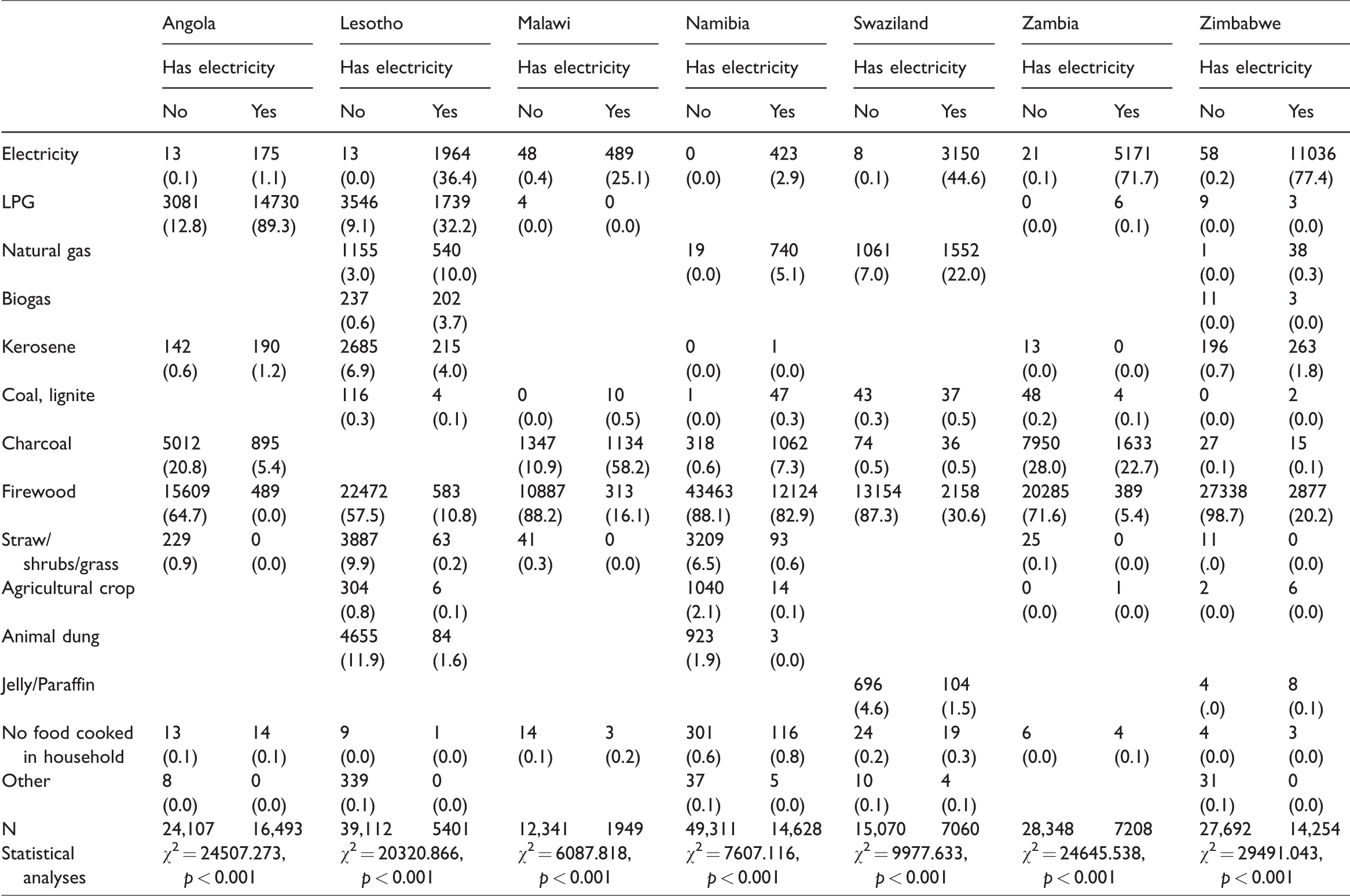
Table 5 shows the cross-tabulation results of households' access to electricity and type of cooking fuel across seven countries. The chi-square value observed for each country with a p-value of 0.001 showed a statistically significant relationship between household access to electricity and the type of cooking fuel used at the 99% confidence interval. This implied that the cooking fuel type used by households was a function of access to electricity. 14 In all the countries investigated, the majority of households without access to grid electricity used firewood and charcoal as fuel for cooking. Among those with access to electricity, only Zimbabwe and Zambia had the majority of households using it for cooking. Between 25% and 45% of those with access to grid electricity used the energy source for cooking in Lesotho, Malawi and Swaziland. LPG was the dominant fuel used by households with access to electricity in Angola, while in Lesotho LPG was used by one-third of households with access to electricity. The implication is that not all households with electricity used it for cooking. This could be due to the cost of electricity, which is relatively high compared to other fuel types, or due to the erratic nature of power supply in these countries. 14 Furthermore, the non-usage of electricity for cooking by many households, especially in the rural areas, can be explained by the lack of access to electricity. Results showed that natural gas was not used for cooking in Angola, Malawi and Zambia. However, 10% of households in Lesotho, 5.1% in Namibia, and 22% in Swaziland used natural gas for cooking even though they had access to grid electricity. Meanwhile, only 6.9% of households without and 4% of households with electricity in Lesotho used kerosene for cooking.
Relationship between access to electricity and type of cooking fuel across countries.
Findings from this study have indicated that a statistically significant relationship exists between socio-economic variables and the type of fuel used for cooking in households in SSA. These findings are in line with other studies emanating from other parts of Africa including Nigeria, 14 Cameroon, 60 Tanzania 61 and Uganda, 62 which indicated a significant statistical association between households cooking fuel type and socio-economic status.
Results from this study show that the issue of access to electricity as a cooking fuel and other clean cooking energies in rural areas is more complex as it is not only limited to poor households. 55 Other scholars have attempted to investigate access to electricity and its influence on cooking fuel choices, in relation to the energy ladder model.63,64 Davis 63 noted that access to electricity affects the nature of the energy transition, but that there is weak evidence to suggest that it accelerates the process. Thom 64 was of the opinion that, in rural areas only higher income households are likely to use electricity as the sole fuel for cooking. However, rural electrification is costly because of the dispersed nature of homesteads in these areas; again the households have very low electricity demands. Dlamini 51 argued that in purely commercial terms, rural electrification was not viable in these communities. As such, there is a great need to invest in other sustainable sources of energy/electricity such as solar for rural communities.
Determinants of household fuel choice
Table 6 shows the results of the multiple regression analyses indicating the relative contribution of each predictor variable to the variance in household cooking fuel. Multiple regression analysis shows the joint effects and the relative contributions of each variable on the type of cooking fuel. Results for Angola demonstrated that the predictor variables had a significant influence on the type of cooking fuel (Table 6). The analysis showed that R = 0.749, the adjusted R2 = 0.559 and F-value = 547.758 was significant at 0.001. This implied that 56% of the variance in the households' type of cooking fuel was accounted for by the predictor variables. Wealth index, household size, access to electricity and type of place of residence, were predictor variables that significantly determined the type of cooking fuel used in a household.
In Lesotho, the predictor variables related to type of household cooking fuel were statistically significant with R = 0.748, R2 = 0.560; Adjusted R2 = 0.558 and F value = 360.210. The multiple regression results indicated that household income, household size, place of residence, access to electricity; wealth, educational level and age of head of household were important factors that influenced cooking fuel type use. Multiple regression results for Malawi showed that with the exception of access to electricity and type of place of residence, the predictor variables had a significant effect on household cooking fuel uses and accounted for 3.9% of the variance in the type of cooking fuel used by households. In Namibia, three variables (i.e. highest education, access to electricity and type of place of residence) were found to be predictors of household cooking fuel use.
For Swaziland, the results of the regression revealed that six variables: wealth index, access to electricity, type of place of residence, household size, educational level and sex of household head are the best predictors of type of household cooking fuel use. These six predictor variables explained 38.8% of the variance in household cooking fuel use. In Zambia, the results indicated that five variables including wealth index, access to electricity, type of place of residence, household size and educational level were the best predictors of type of household cooking fuel use. These five predictor variables explained 72.6% of the variance in household cooking fuel use. For Zimbabwe, four variables including access to electricity, type of place of residence, household size and educational level were the best predictors of type of household cooking fuel use. These four predictor variables explained 32.7% of the variance in household cooking fuel use. These findings are consistent with other studies, which found that socio-demographic factors such as wealth index, education, place of residence, access to electricity were important in determining households' choice of cooking fuel.19,44,65,66
Summary of simple regression analyses for variables predicting household type of cooking fuel country-by-country.
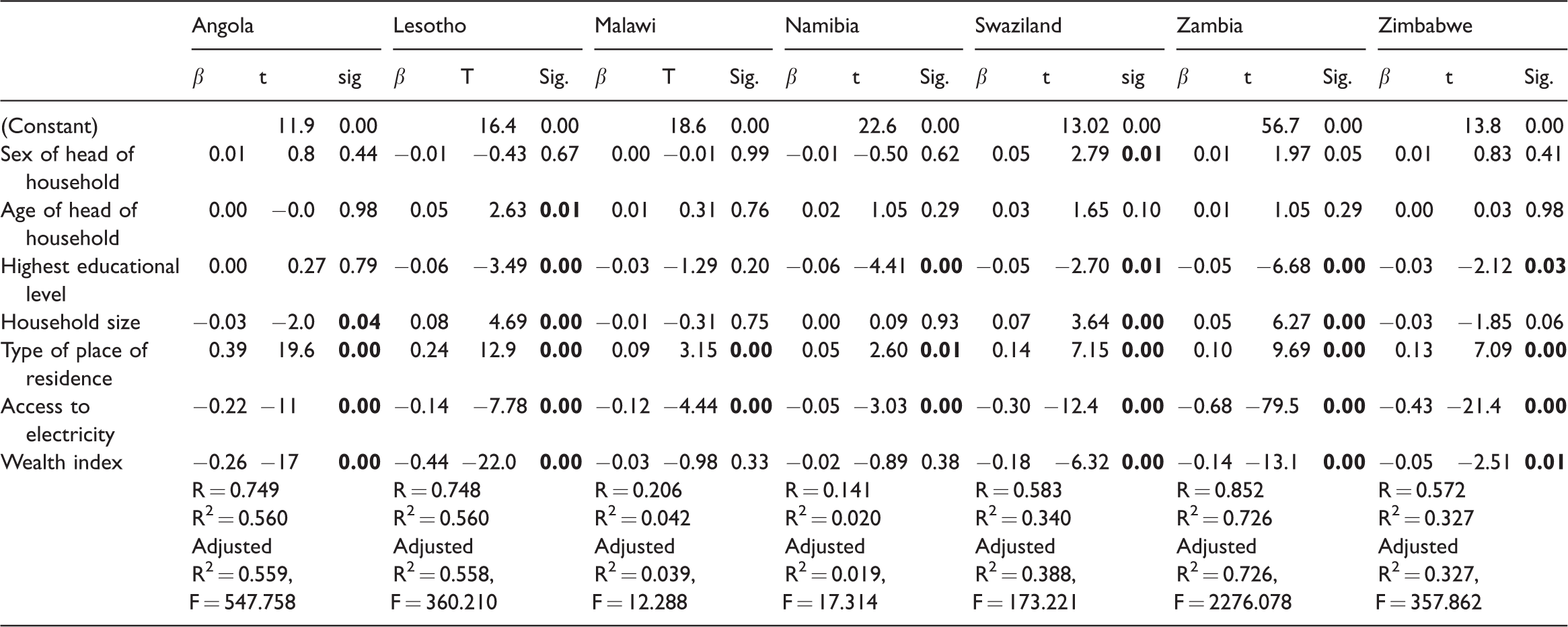
Dependent variable: type of cooking fuel. Note: Bold figures are significant at the 95% confidence interval
Implications of the findings
Similar to Rahut et al. 67 the current study would provide an important source of literature for further research in the SADC region, where little work has been carried out to interrogate household cooking fuels and choice determinants. The findings have significant implications for household energy use policies in the SADC region. Access to education is essential for promoting awareness of clean energy, clean fuels, improved cookstoves and the health implications of using traditional fuels for cooking. Promoting large scale education and eradicating poverty by improving household income levels have been suggested as important in increasing access to clean energy. 67 Africa experiences low levels of education. As such, awareness on the benefits of improved cookstoves and clean fuels remains low, especially in the rural areas. The results of this study showed that better education for household heads would bring a shift and reduce the chances of choosing traditional fuel sources over modern fuels such as electricity and LPG. Education is a central strategy for addressing the increasing problems of the human environment. The Sustainable Development Goals identified education as goal 4, “Ensure inclusive and equitable quality education and promote life-long learning opportunities for all”. Again, a UNESCO document on education for sustainable development recognised the crucial role of education in achieving sustainable development. 68 Mekonnen and Köhlin 19 observed that education increases the chance of using cleaner electricity or kerosene as the main source of cooking fuel, indicating that through education households possibly become more aware of the advantages of using cleaner fuels or at least learn of the disadvantages of continued reliance on biomass fuels. Lack of awareness and education, therefore, can lead to prolonged biomass use as a primary fuel. 69 Households are often not aware of the negative externalities that arise from biomass use and the benefits that accompany modern fuels. Awareness campaigns and public education can play a major role in promoting the switch to modern alternative cooking methods. Due to the high cost of modern, clean energy technologies and persistent poverty in many African households, governments could subsidise rural households so that they can adopt clean energy and related technologies. Thus, investing in clean energy infrastructure has the potential to increase supply and lower the cost of the technology. 67
Implications for environmental health and sustainability also exist. The continued use of firewood will put pressure on forest resources in these countries, which will lead to deforestation, loss of biodiversity, soil erosion and destruction of the habitat of animals. Furthermore, several studies on climate change have predicted negative impacts for SSA including higher temperatures, increased evaporation, decrease in rainfall, drying up of soils, increased pest and disease pressure, increased desertification, floods, deforestation and soil erosion.70–71
Results showed that households do not automatically ‘switch’ from traditional fuels to more modern and sophisticated energy sources with an improvement in disposable income. It can be argued that multiple energy sources are used such that modern fuel uptake mainly complements traditional fuels such as biomass and kerosene, instead of permanently replacing them and preventing further use. Most households in SSA are sensitive to the economic dynamics of increased modern fuel prices and start-up costs, such that they prioritise energy spending economy over convenience. 34 As such, modern fuel uptake should not be taken to translate to a complete substitution of biomass fuels. For example, it has been argued by Mangizvo 72 that most villages in rural Zimbabwe prefer food dishes such as cow heels/trotters, offals and sadza (thick maize meal porridge) cooked on a wood fire. Thus, even households with access to modern forms of energy would continue to use traditional fuels. Although income plays a major role in obtaining modern energy and related technologies, it is not the sole driver of fuel choice patterns in this region. Other factors including socio-cultural aspects, household characteristics, and socio-economic aspects (level of education, age and wealth) play a significant and intricate role. However, these factors are interconnected complexly that it becomes impossible to isolate one factor as the sole cause.
Evidence from this study indicated that policies formulated based on the energy ladder model might not be useful in SSA in resolving issues concerning the continued use of traditional fuels (environmental degradation and health consequences). Instead, any energy interventions in the region should focus on providing households with a suite of efficient energy (multi-fuel) options (i.e. from biomass fuels to electricity) and related novel technologies (e.g. improved cookstoves) from which to choose. Such a model would ensure that households continue to use fuels of choice, however, more efficiently than before, thereby ensuring environmental sustainability and health improvements. 73 Despite widespread ability to afford commercial fuels, households should not be constrained to a single energy source, which may not address all energy needs of the household. Householders have the ‘right’ to choose what energy sources to use, when, and how, without having the government or funding agencies imposing on them. Thus, energy interventions in this region need to consider demand factors and should be less supply driven, as supply does not always lead to uptake.73–74
Conclusion
The paper used the most recent national representative DHS data from seven countries in the SADC region (Angola, Lesotho, Malawi, Namibia, Swaziland, Zambia and Zimbabwe) to study the pattern of household cooking fuel types and choice determinants. Descriptive analyses of the data showed that despite rapid economic growth in some SADC countries, a vast majority of households continue to rely on firewood to meet their basic energy needs. Almost all rural households in the region relied on woody biomass as a primary energy source. In the countryside across the countries surveyed, firewood use was high. This can be attributed to lack of alternatives, the high cost of electricity installation versus low cost of or free firewood. Findings from the study indicated that significant relationships existed between the place of residence, access to electricity, and the type of cooking fuel used in all the countries. Descriptive statistics showed that access to electricity, educational level, wealth, sex and age of household, place of residence and household size play a significant role in determining the type of cooking fuel a household uses. More affluent households and households with educated heads are likely to use more modern and cleaner cooking fuels such as electricity, LPG and biogas. Household heads with low education levels are likely to rely on traditional fuels for cooking. The household heads may have little knowledge regarding the adverse effects of using conventional fuels. Again, they may have less income to afford and use clean energy sources. Although the study ‘somewhat’ confirms the energy ladder model, it is imperative to note that household fuel switching is a social construct, with many other parameters at interplay thereby creating a much more complex model. This could influence differently the way households use fuels for cooking, an area that requires further research.
This study is area specific, covering seven countries in the SADC region, and the conclusions that can be drawn have implication for policy making for each of the countries surveyed and the SADC region as a whole. Governments in this region need to invest in the education sector, and job creation. This will have a knock-on effect, which will bring positive changes in household cooking fuel uses. The demand and supply of household cooking fuels and combustion technologies need to be addressed at the country level. For each country, supply can be enhanced by governments investing in clean energy infrastructure including renewable energy technologies. Demand can be solved by creating jobs, eradicating poverty and increasing access to education for all.
Footnotes
Acknowledgement
We are grateful to the Measure DHS, ICF International, Rockville, MD, USA for providing the DHS data of the countries for this analysis.
Declaration of conflicting interests
The author(s) declared no potential conflicts of interest with respect to the research, authorship and/or publication of this article.
Funding
The author(s) disclosed receipt of the following financial support for the research, authorship, and/or publication of this article: The authors would also like to thank the University of Johannesburg for financial support through the URG post-doctoral research fellowship grant to AI and TM.