







Abstract
Using energy effectively is one of the most important issues and problems that countries should take up. As a parallel of increasing energy demands worldwide and still mostly using fossil fuels, energy saving issues have gained much importance in recent years for all areas of life. It is a fact that construction also plays an important role in the emergence of the energy and environmental problem that we see as the problem of our centenary. As buildings consume about 40% of the world's annual energy consumption globally, this study will focus on the evaluation of residential heating system alternatives using the generalized Choquet integral method with trapezoidal fuzzy numbers. The main contribution of this paper is to determine the interdependency among main criteria and subcriteria, the nonlinear relationship among them and the environmental uncertainties while prioritizing residential heating system alternatives using the generalized Choquet integral method with the experts’ view. To the authors’ knowledge, this will be the first interdisciplinary study that uses the generalized Choquet integral method for residential heating systems.
Introduction
Globalization, which struck the 21st century, created extraordinary developments in knowledge and technology on the one hand, while making matters such as energy and the environment increasingly strategic on the other. As the need for energy increases, international competition on energy has increased and issues such as energy security, increasing renewable energy sources and sustainable energy usage have come to the forefront. In addition to its production, energy is also used for various purposes during use. This is why energy saving is of great benefit in every process.
It is a fact that construction is also an important role in the emergence of the energy and environmental problem that we see as the problem of our centenary. The constructs contribute to the formation of energy and environmental problems during the life cycle starting from the acquisition of building material raw materials to the end of the building life. Increasing the energy efficiency of the buildings in the European Union to reduce their high share of the final energy consumption could have various societal benefits. A special focus in this regard lies on residential buildings. 1
Buildings consume about 40% of the world's annual energy consumption globally, which is the largest energy-consuming systems in the form of.” 2 Buildings are responsible for almost half of all the energy consumption and greenhouse gas (GHG) emissions in the world. This situation highlights the importance of the green retrofit for existing buildings in reducing the energy consumption and GHG emissions, as emphasized by the academia and improved by the government. 3
The search for solutions that enable structures to have less environmental impact drives architectural design towards ecological approaches. To this end, the environmental decisions taken during the architectural design phase bring with it many environmental and economic benefits. These methods, which are called ecological, environmentally friendly, green, and sustainable building criteria, can be used to reduce the use of limited natural resources, to use renewable or unlimited resources as much as possible, to use energy in a small but productive manner, to reduce emissions and other pollutant production, protection of human health.
Since energy consumption tends to increase as industrialization increases; reduction of losses, efficient use of energy is more effective than increasing energy production. 4
Building performance usually involves different criteria such as the energy consumption, thermal comfort, thermal loads, and internal temperatures, which can make its assessment more complex. Silva et al. 5 aim to describe a decision-making process to improve some criteria related to the energy efficiency of residential buildings considering a multi-criteria approach.
Selecting or prioritizing alternatives from a set of available alternatives with respect to multiple criteria is often referred to multi-criteria decision-making (MCDM). MCDM is a well-known branch of a general class of operation research models which deal with decision problems in the presence of a number of decision criteria. This class is further divided into multi-objective decision-making (MODM) and multi-attribute decision-making (MADM). There are several methods in each of the above categories. Priority-based, outranking, distance-based, and mixed methods are also applied to various problems. Each method has its own characteristics and such methods can also be classified as deterministic, stochastic, and fuzzy methods. 6
In this paper, we apply the generalized Choquet integral method to select the best residential heating system alternative. This is the first paper in the literature to apply this technique for heating systems. The motivation for the research is the need of MCDM method, which can handle the inner and/or outer dependencies and the interactions between the elements of a design network.
The Choquet integral is a fuzzy integral with a numerical structure which is used to evaluate selection criteria by dividing them into parts. Successful establishment of a Choquet integral depends on results that the fuzzy criteria impose, which in turn establish the importance of each criterion or their combination. 7
The Choquet integral has been used for the solution of multiple criteria decision-making problems in the literature.7–14
The rest of this paper is organized as follows: energy consumption in buildings and housing warming are presented in the next sections “Energy consumption in buildings” and “Materials and methods,” respectively. The problem definition is described in section “Application: evaluation of heating system alternatives.” After the generalized Choquet integral methodology is given, an application of Choquet integral methodology in evaluation of heating system alternatives is shown. Computational results are given in this section. Finally, suggestions and future research directions are discussed in the final section, which concludes the paper.
Energy consumption in buildings
Energy is the basic input of economic and social development. The ability of a country to raise its living standards depends on the energy it needs to use its resources. Sustainable industrialization and development are also possible with cheap, clean, continuous, and safe energy sources. 15
The building requires energy for activities related to heating, cooling, lighting, ventilation, building functions during the usage period other than the energy consumed in the construction process.
Eighty-five percent of the energy consumed in the buildings is for heating and cooling purposes. The remainder is spent on hot water supply, lighting, and the use of electrical appliances. In order to meet comfort conditions, it is necessary to regain the energy lost in winter and to remove the burden from the environment in summer. Twenty-five percent of the heat losses are from the roof, 25% from the windows and ventilation elements, 20% from the building elements, and the remaining 15% from the walls of the building according to the research done in the existing buildings in Turkey. Given that 85% of the energy consumption in buildings is spent for heating and cooling, the need to reduce this consumption to the lowest level with efficient heating and cooling system design and thermal insulation solutions is of paramount importance. 16
Buildings account for 40% of total energy consumption in the UK and more than 55% of this energy is used by heating, ventilation, air-conditioning, and refrigeration (HVAC&R) systems. This significant energy demand and the ascending trend in utilizing HVAC&R systems together with the global need to impose energy-efficiency measures underline the importance of selecting the most appropriate HVAC&R system during the design process. 17
Housing warming
When the life cycle of the constructions is considered, it is seen that the longest continuous use and operation process. For this reason, the period in which the energy use is highest and the energy saving to be achieved by the measures to be taken most effectively can be regarded as the period of use and operation. Of the total energy, 94.4% is used throughout the building cycle is consumed for heating/ventilation/air conditioning (HVAC) systems that provide in-building comfort conditions during use. 18
The type, location, and size of environmental impacts from energy consumption depend on the type of energy used. Effective use of energy is a strategy to reduce inputs and the goal is to reduce the use of fossil fuels. Removing the raw material from the source, processing it and delivering it to the construction site are energy-requiring processes.
When thinking about energy efficiency, one of the most important decisions to be made regarding a new home is the type of heating and cooling system to install. Equally critical to consider is the selection of the heating and cooling contractor. The operating efficiency of a system depends as much on proper installation as it does on the performance rating of the equipment. 19
Keys to obtaining design efficiency of a system in the field include
19
:
Sizing the system for the specific heating and cooling load of the home being built, Proper selection and proper installation of controls, Correctly charging the unit with the proper amount of refrigerant, Sizing and designing the layout of the ductwork or piping for maximizing energy efficiency, Insulating and sealing all ductwork.
Two types of heating systems are most common in a new home: forced-air or radiant, with forced-air being used in the majority of the homes. The heat source is either a furnace, which burns a gas, or an electric heat pump. Furnaces are generally installed with central air conditioners. Heat pumps provide both heating and cooling. Some heating systems have an integrated water heating system. 19 And also there are other types of heating systems for homes. Also, heating systems and equipments consist of burners, boilers, radiators, water heaters, dehumidifiers, electric and non-electric heaters, stoves, and their equipments.
The purpose when building houses and to supply them with heating and domestic hot water is to create better conditions for the residents. Comfort here is a question of creating conditions so that an apartment will be comfortable to live in. 20
Heating systems are usually designed for a room temperature of 18–20°C, and that is for most cases sufficient. Elderly or sick persons may need a higher temperature to experience the same comfort as younger and healthy ones.
20
Heat pumps are designed to move heat from one fluid to another. The fluid inside the home is air and the fluid outside is either air (air-source) or water (geothermal). In the summer, heat from the inside air is moved to the outside fluid. In the winter, heat is taken from the outside fluid and moved to the inside air. 19
The utilization of the system is very useful as fan coil heating systems. Also, system is fairly flexible due to the equipment could be camouflaged. The reaction of the system is very expeditious in terms of warm-up time. Besides, it can be simply controlled in terms of inspection. But, climate heating systems cannot be operating much more efficient in cold climate regions.
d.
The radiators are sized for a nominal heat requirement, and the flow will vary when the thermostatic valves adjust the heat supply to the current requirement. The best effect is reached if the connection with the flow is made to the upper tap-in, and the return to the lower tap-in on the same side of the radiator.
20
e.
Simulation model of floor heating system is mainly introduced as heat transfers in pipe to indoor and also this usage of it is approved as the basic shape for characterization and dimension. Different types of floor heating system have been investigated and at this point, it is considered to being of finite element models with respect to thermal properties and dynamical behavior. The classification of the thermal output to indoor has been established with the purpose of being able to designed and dimensioned such as system in EN1264 standards. Various kinds of control strategies are investigated not to loss indoor heat and consume the energy. Various floor covering materials have been found to impact temperatures, reaction time, and energy consumption. 21 The heating floor elements such as, water, coils, electric cables are placed into concrete layer in the floor. 22
Materials and methods
As we explained above, using energy effectively is crucial in today’s world. Prioritizing the residential heating system alternatives was chosen for this study and the Choquet integral approach was used. We asked three sector experts (namely architect, civil engineer and mechanical engineer) with the same importance value about the problem of determining the best heating system alternative. Four main criteria, 19 sub-criteria, and five alternatives were determined and weighted accordingly.
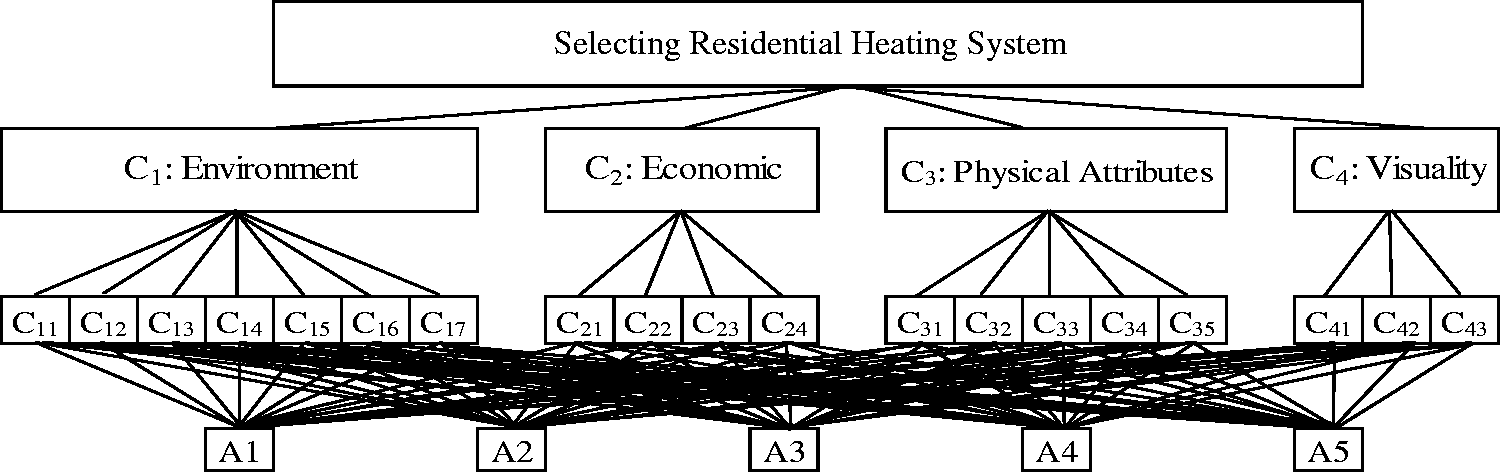
In the numerical example, the architect, the civil engineer, and the mechanical engineer need to determine the best heating system alternative for a residential. For this problem, decision criteria and alternatives were defined by experts, as seen in Figure 1. In this paper, the main criteria are environment, economic, physical attributes, and visuality. The arrows in Figure 1 represent the hierarchy of the problem.
Hierarchy of the problem.
Environment criteria (C1) include sub-criteria about environmental issues: “Energy Saving (C11),” “Ecologic (C12),” “Environmentally Friendly (C13),” “Green and Sustainable (C14),” “Continuousness (C15),” “Negative Impacts (C16),” and “Low CO2 Emmission (C17).”
Economic criteria (C2) include sub-criteria about costs: “Installation Cost (C21),” “The Period of Use and Operation (C22),” “Maintenance Cost (C23),” and “Price Stabilization (C24).”
Physical Attributes criteria (C3) include the following sub-criteria: “Effective Usage (C31),” “Heating and Cooling Load (C32),” “Sizing (C33),” “Ability to Work in Low Temperatures (C34),” and “System Reliability (C35).”
Visuality criteria (C4) include the following sub-criteria: “The Purpose of Use of The Building (C41),” “Planning Module (C42),” and “Hidden Devices and Pipes (C43).”
As seen in Figure 1, the alternatives for heating systems are “Unvented Fuel-Fired Heaters (A1),” “HVAC Systems (A2),” “Fan Coil Heating Systems (A3),” “Radiator Heating Systems (A4),” and “Floor Heating Systems (A5).”
Choquet integral methodology
Choquet integral is a sort of general averaging operator that can represent the notions of importance of a criterion and interactions among criteria. A set of values of importance is composed of the values of a fuzzy measure. The success of a Choquet integral depends on an appropriate representation of fuzzy measures, which captures the importance of individual criterion or their combination. 12
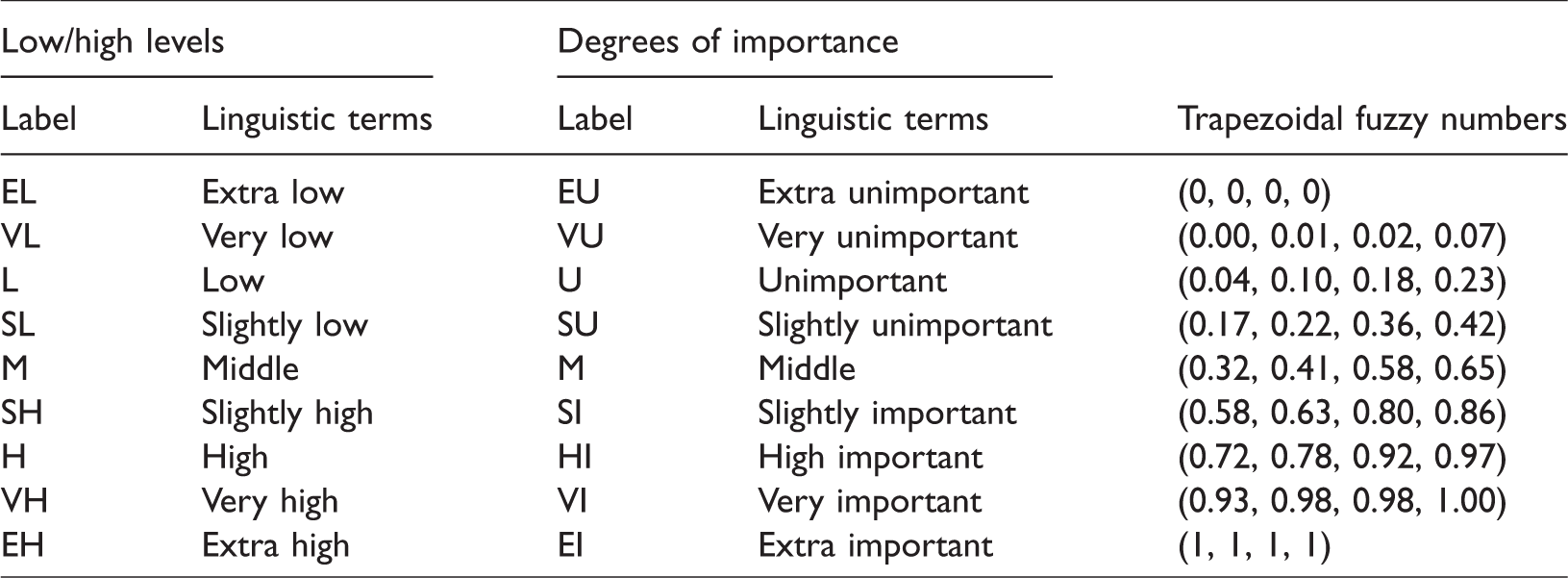
Relationship between trapezoidal fuzzy numbers and degrees of linguistic importance on a nine-linguistic-term scale can be seen from Table 1.
Relationship between trapezoidal fuzzy numbers and degrees of linguistic importance on a nine-linguistic-term scale.23
The methodology is composed of eight steps:8–10,12,24
Step 1: Given criterion i, respondents’ linguistic preferences for the degree of importance, perceived performance levels of alternative heating systems, and tolerance zone are surveyed.
Step 2: In view of the compatibility between perceived performance levels and the tolerance zone, trapezoidal fuzzy numbers are used to quantify all linguistic terms. Given respondent t and criteria i, linguistic terms for the degree of importance is parameterized by
Step 3: Average 
Step 4: Normalize the heating system value of each criterion using equation (2)

Step 5: Find the heating system value of dimension j using equation (3).

To be able to calculate this location value, a λ value and the fuzzy measures g(A(i)), i = 1,2,3,…,n are needed. These are obtained from the following equations (4) to (6).


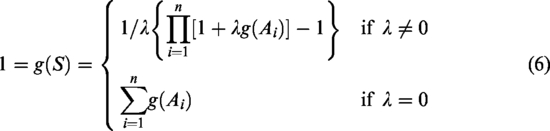
Let μ be a fuzzy measure on (I,P(I)) and an application 
Under rather general assumptions over the set of alternatives X, and over the weak orders ≽
i
there exists a unique fuzzy measure μ over I such that
12
:


Step 6: Aggregate all dimensional performance levels of the heating system alternatives into overall performance levels, using a hierarchical process applying the two-stage aggregation process of the generalized Choquet integral (equation (10)). The overall performance levels yield a fuzzy number, 
Step 7: Assume that the membership of 
Step 8: Compare weak and advantageous criteria among the heating system alternatives using equation (1).12
Application: evaluation of heating system alternatives
In this paper, we apply a MCDM method to select the best heating system alternative, namely generalized Choquet integral.
The flow diagram of the application of Choquet integral method can be seen from Figure 2.
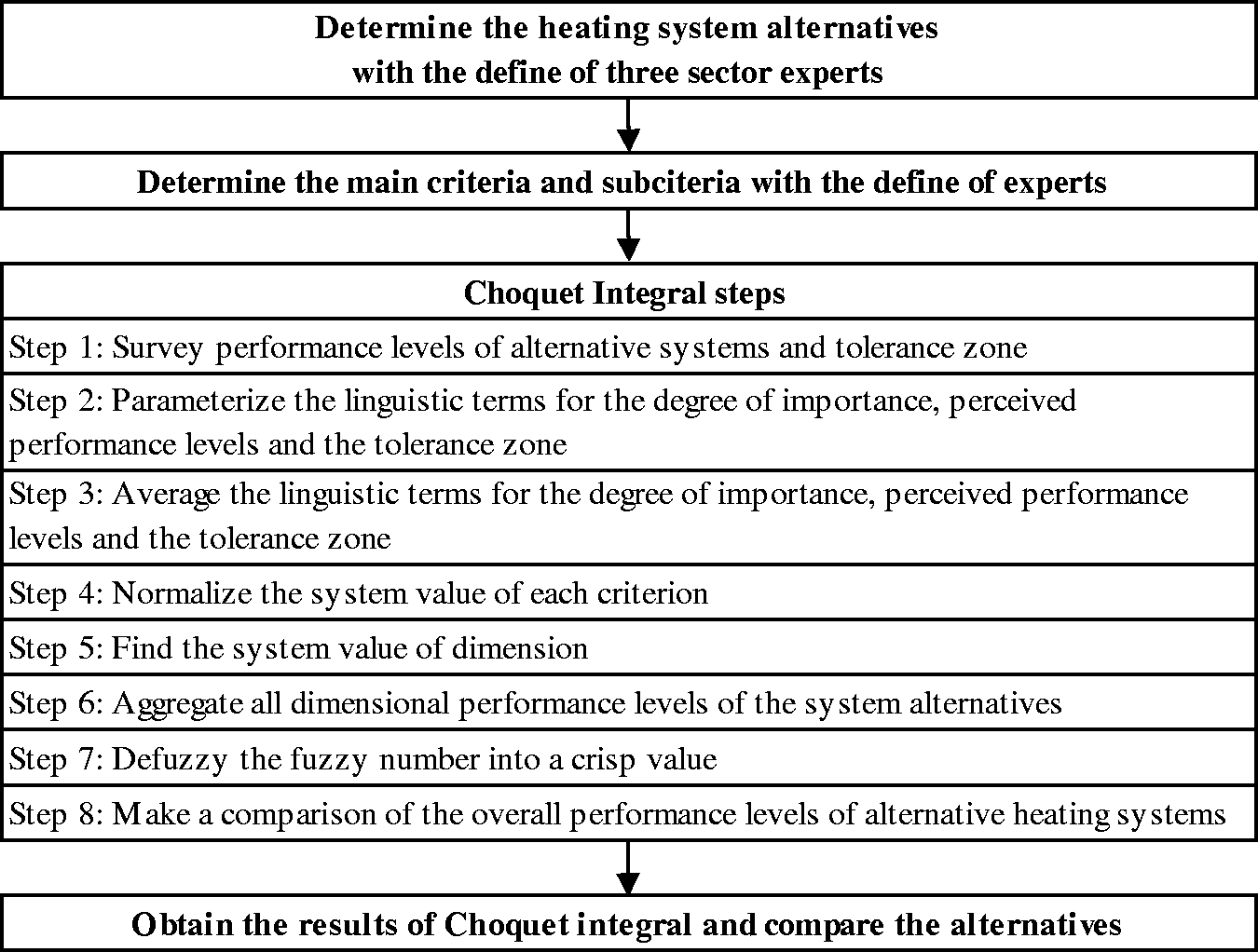
The flow diagram of the application of Choquet integral method.
To solve the problem using Choquet integral, we make the comparisons with experts using trapezoidal fuzzy numbers as shown in Table 1 and the average values can be seen on Table 2.
Average values used in Choquet integral.
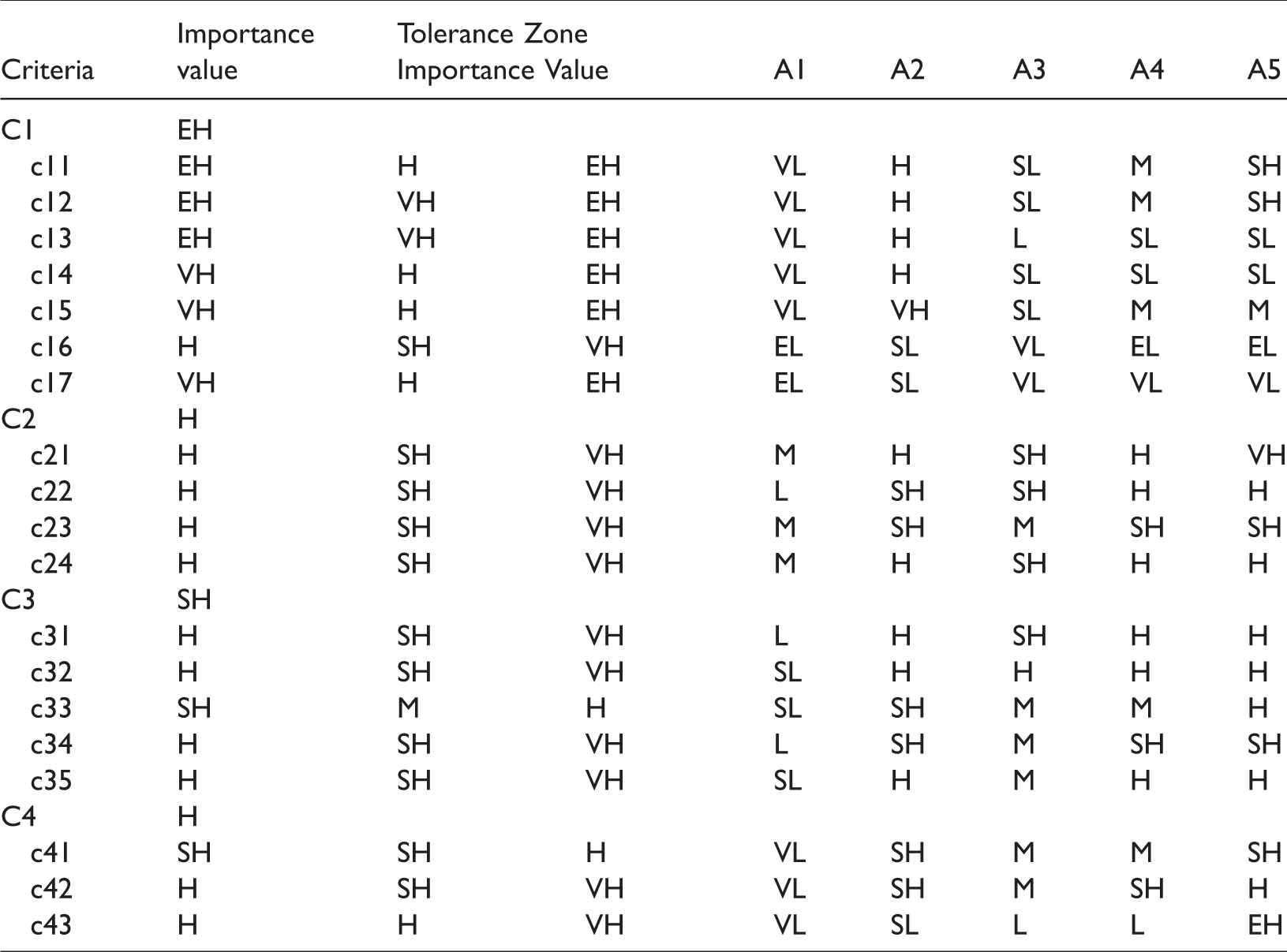
Average trapezoidal fuzzy numbers are used to quantify the linguistic terms in Table 2 (equation (1)). The tolerance zones in this table are obtained in that way: the first two numerical values of the lower linguistic value of a tolerance zone in Table 2 are combined with the last two numerical values of the upper linguistic value of the same tolerance zone. Consider the tolerance zone [M, H]. The corresponding numerical values of M and H are (0.32, 0.41, 0.58, 0.65) and (0.72, 0.78, 0.92, 0.97), respectively. Then, the combined tolerance zone is (0.32, 0.41, 0.92, 0.97).
Table 3 gives the evaluation results by the generalized Choquet integral for α = 0. “Individual importance” column are the lowest and the highest value of the “importance value.” For example, the trapezoidal fuzzy numbers for “Very High” is (0.93, 0.98, 0.98, 1.00), and the “individual importance” for that criterion is obtained as (0.93, 1.00). For the subcriteria, equation (2) is used while equation (3) is for the main criteria. For example, the value [0.000, 0.175] of “A1 and subcriterion c11” is obtained in that way (in bold values)

Evaluation results using the generalized Choquet integral for α = 0.
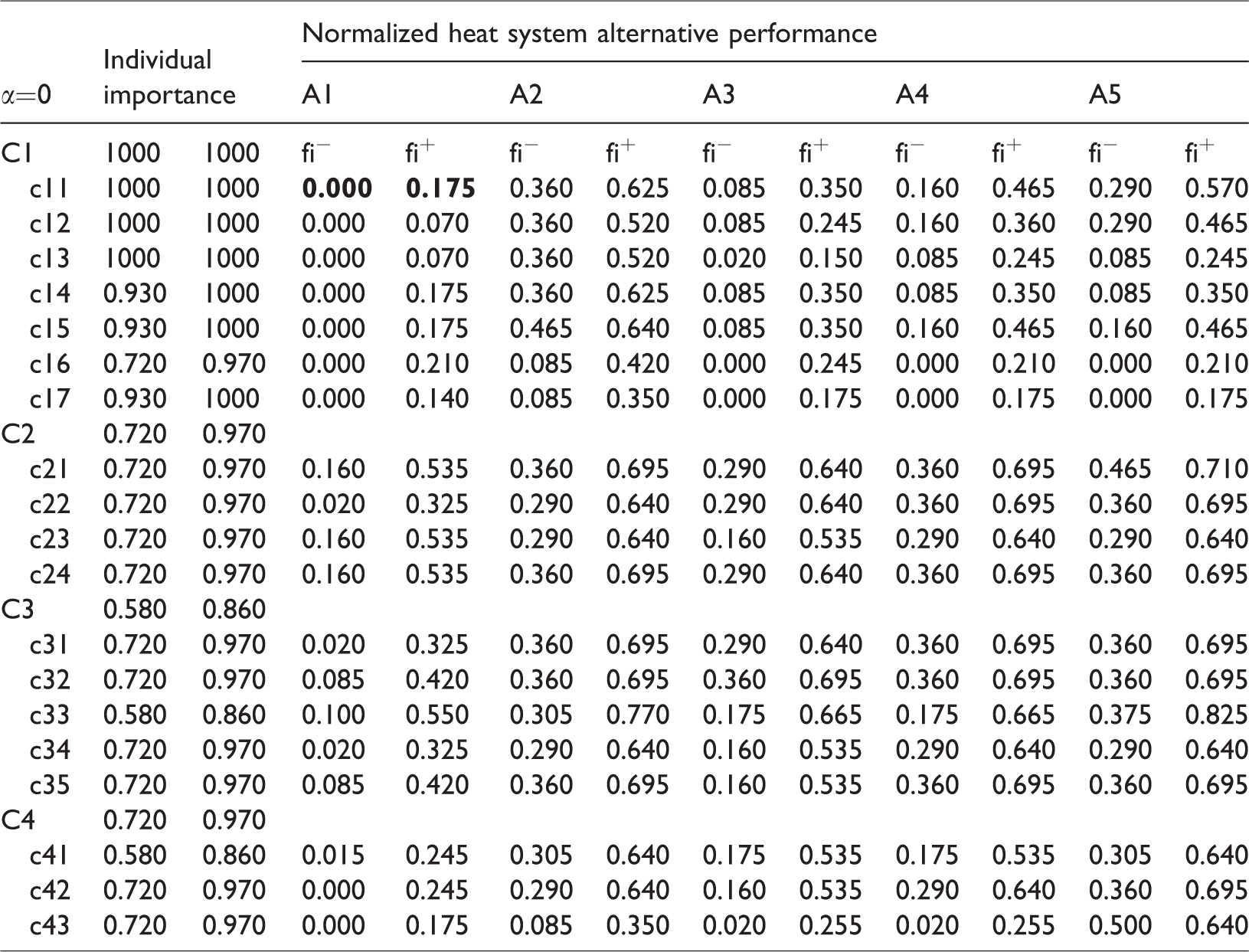
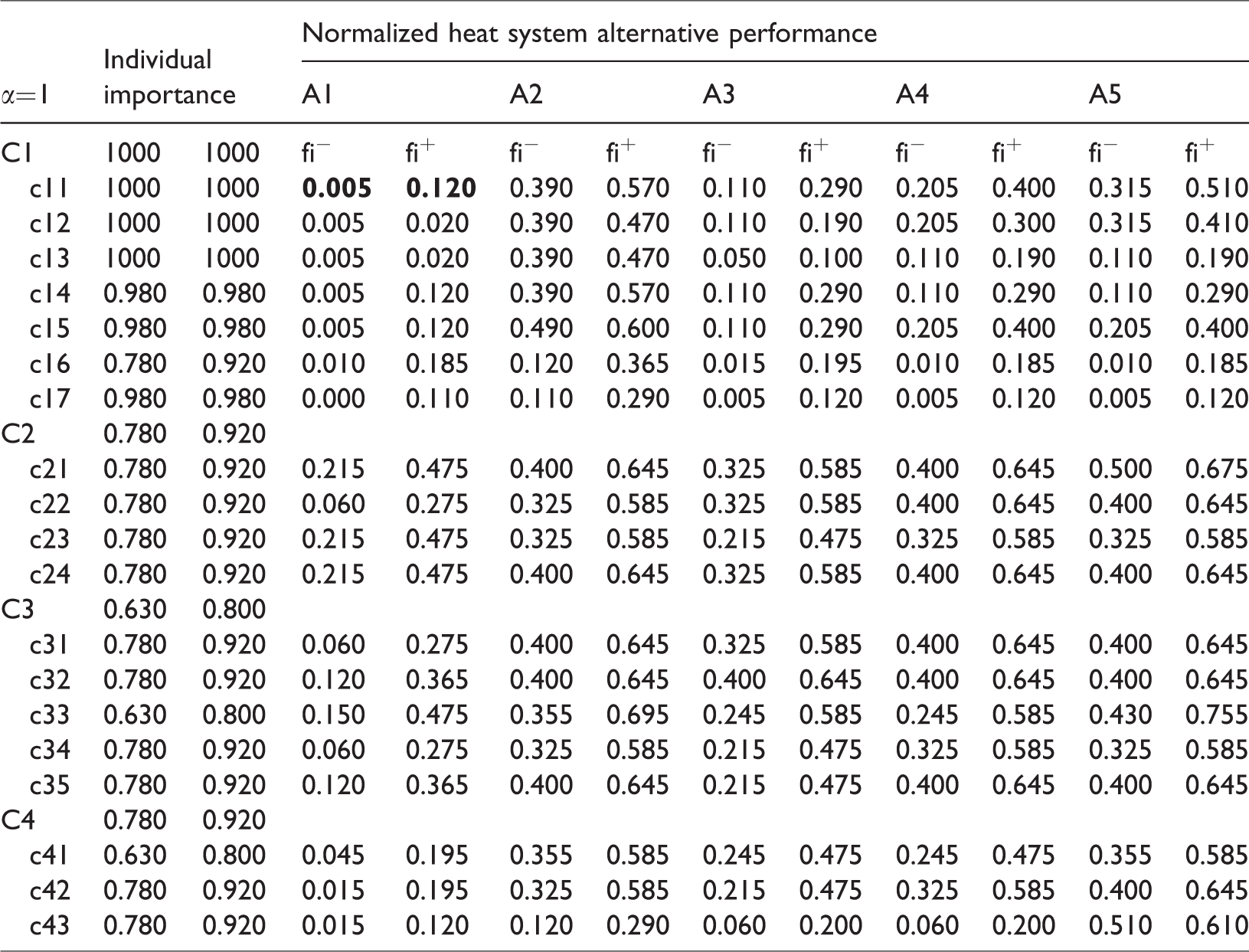
Table 4 gives the evaluation results by the generalized Choquet integral for α = 1. For the sub-criteria, equation (2) is used again. For example, the value [0.005, 0.120] of “A1 and subcriterion c11” is obtained in that way (in bold values)

Evaluation results using the generalized Choquet integral for α = 1.
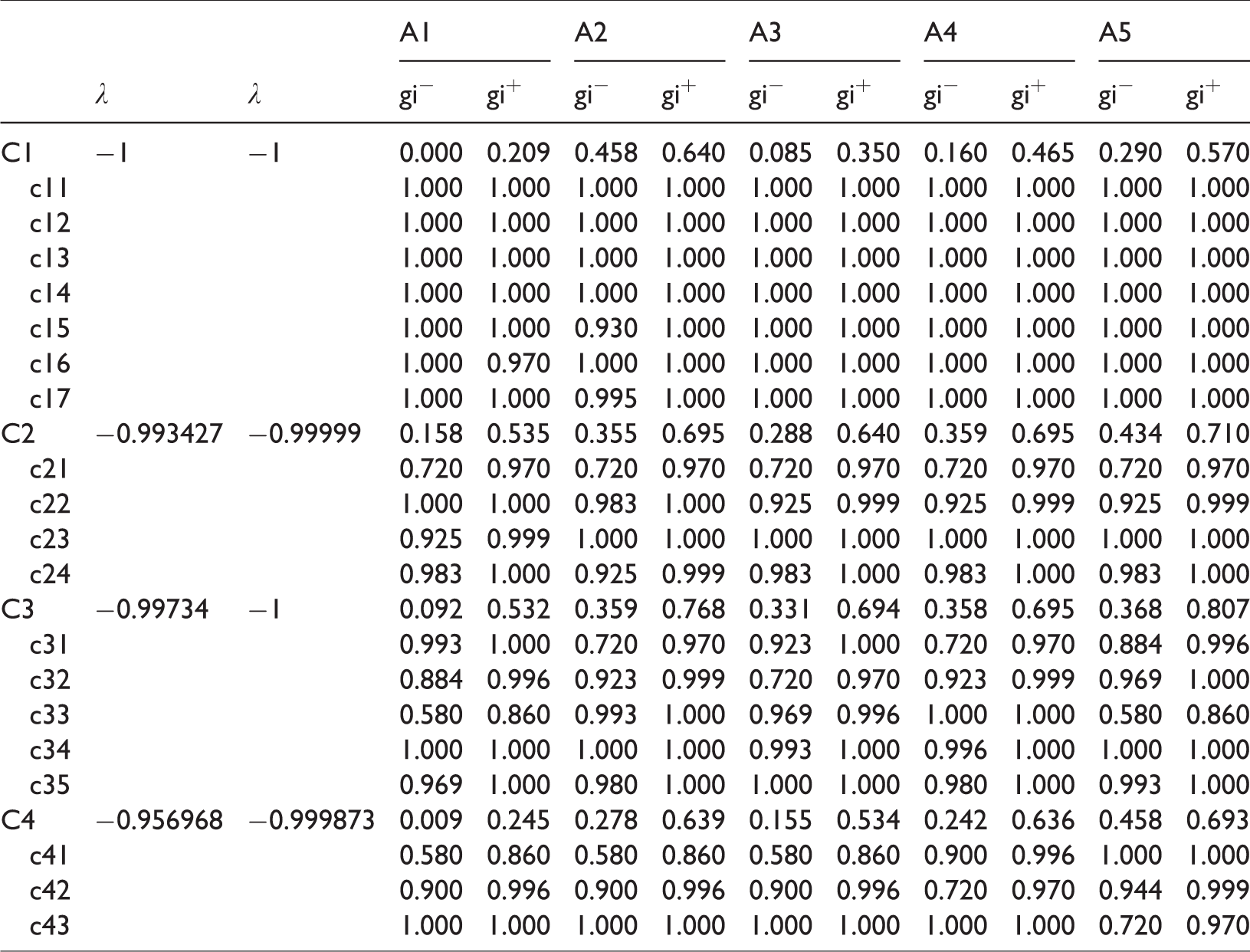
By solving the following equation for λ (Table 5), the fuzzy measures 
Fuzzy measures and λ values for α = 0.
That is



Tables 5 and 6 summarize the whole fuzzy measures and λ values (for α = 0 and α = 1), which are computed in the example above.
Fuzzy measures and λ values for α = 1.
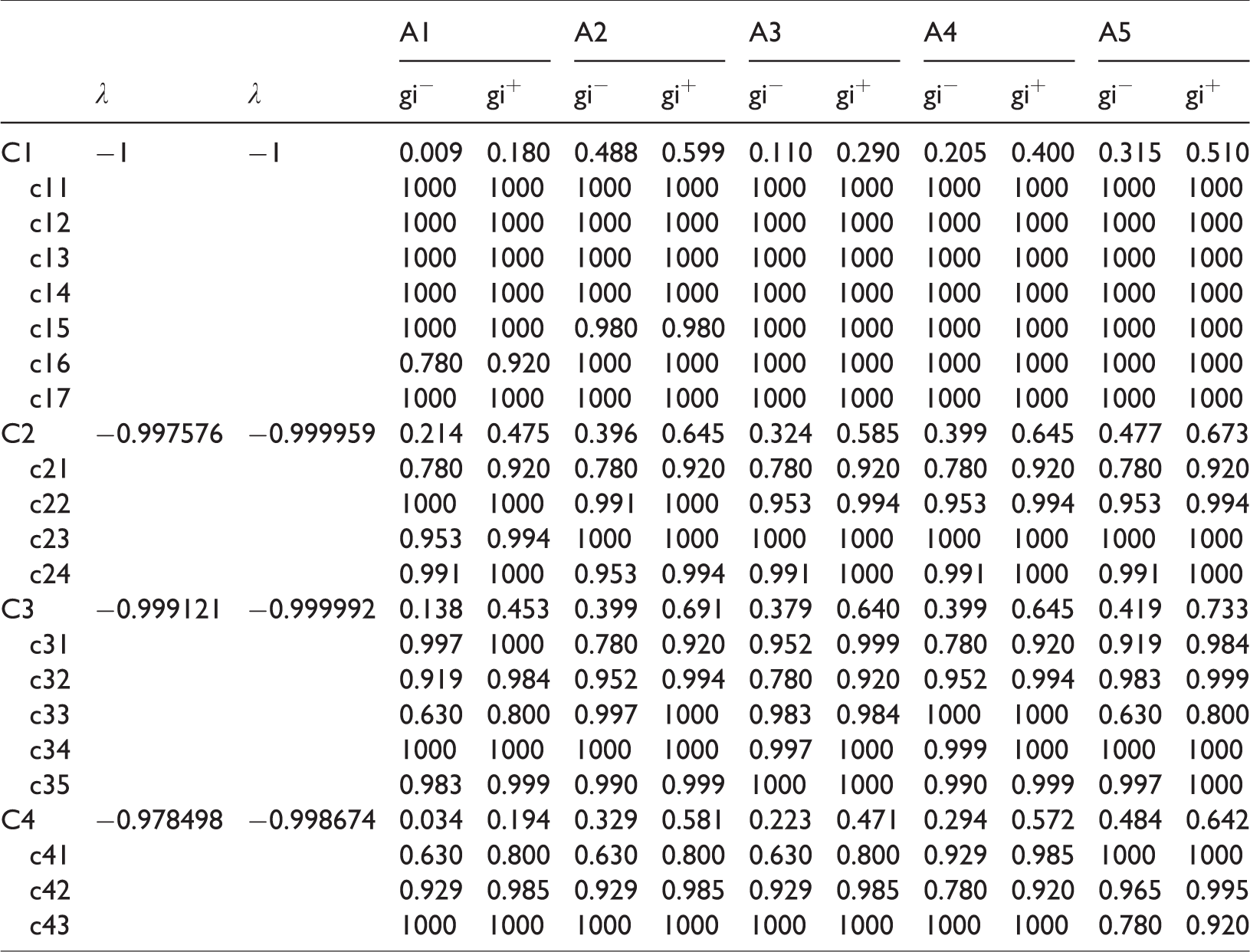
The aggregated Choquet integral values for the main criterion “C1” are calculated as in the following (equations (7) to (10)): In Table 6, the fuzzy measures for “A1” according to the main criteria are (0.009, 0.214, 0.138, 0.034). The first fuzzy measure 0.009 is calculated using the Tables 4 and 6 as

The first overall heat system alternative value for “A1” (0.129) in Table 7 is obtained in that way (the best values are in bold):

Defuzzified overall values of alternative heat systems using generalized Choquet integral.
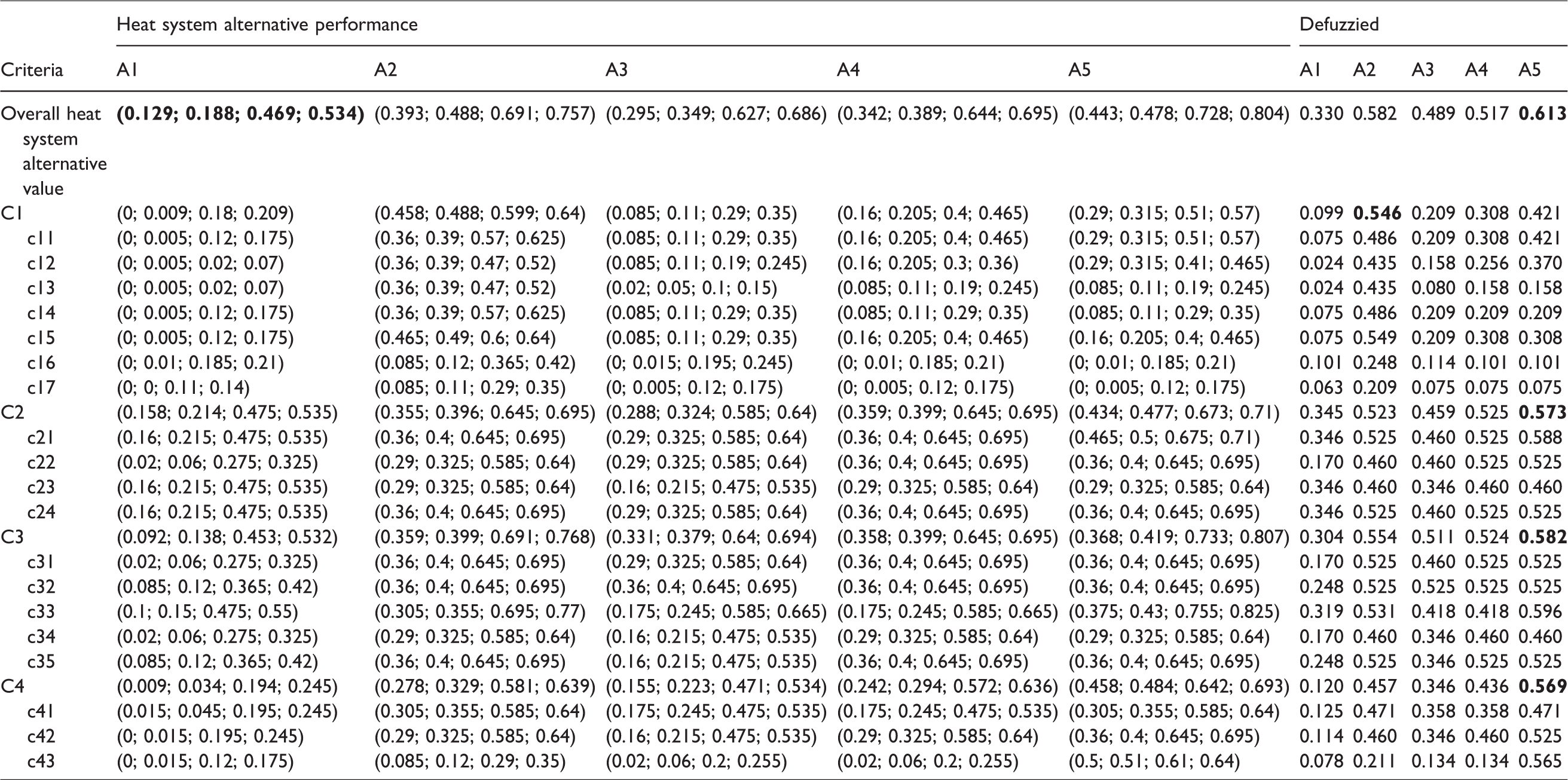
In Table 7, using the calculation for Choquet integral just above, the performance of alternative heat systems is obtained. The defuzzified overall values of alternative systems using generalized Chouqet integral are also given in the same table. For example, the value (0.330) of “A1 and overall heat system alternative value” is obtained in that way (equation (11))

In addition, when simplified values of the main criteria are taken into consideration, “HVAC systems” take first place according to the “Environment (C1)” criteria and “Floor Heating Systems” take first place according to the “Economic (C2),” “Physical Attributes (C3),” and “Visuality (C4)” criteria.
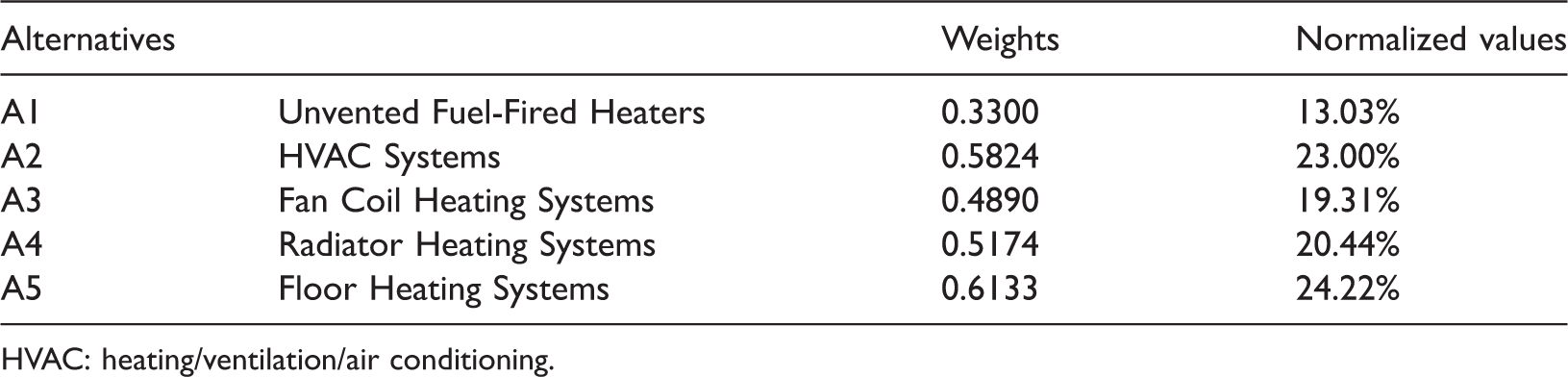
According to the results in Tables 7 and 8, the defuzzified overall values of alternative heat systems using generalized Choquet integral are obtained as 0.330, 0.582, 0.489, 0.517, and 0.613. This means that the ranking order from the best to the worst is “floor heating systems,” “HVAC systems,” “radiator heating systems,” “fan coil heating systems,” and “unvented fuel-fired heaters.” Given these results, it is fair to say that selecting “floor heating systems” is the most reasonable outcome, followed by the others.
Results of the application using generalized Choquet integral.
HVAC: heating/ventilation/air conditioning.
Sensitivity analysis
Each expert is asked to evaluate the competency of others. After a short discussion, the group comes up with the idea of having equal weights. After that, they evaluated the considered criteria to determine the best residential heating system alternative.
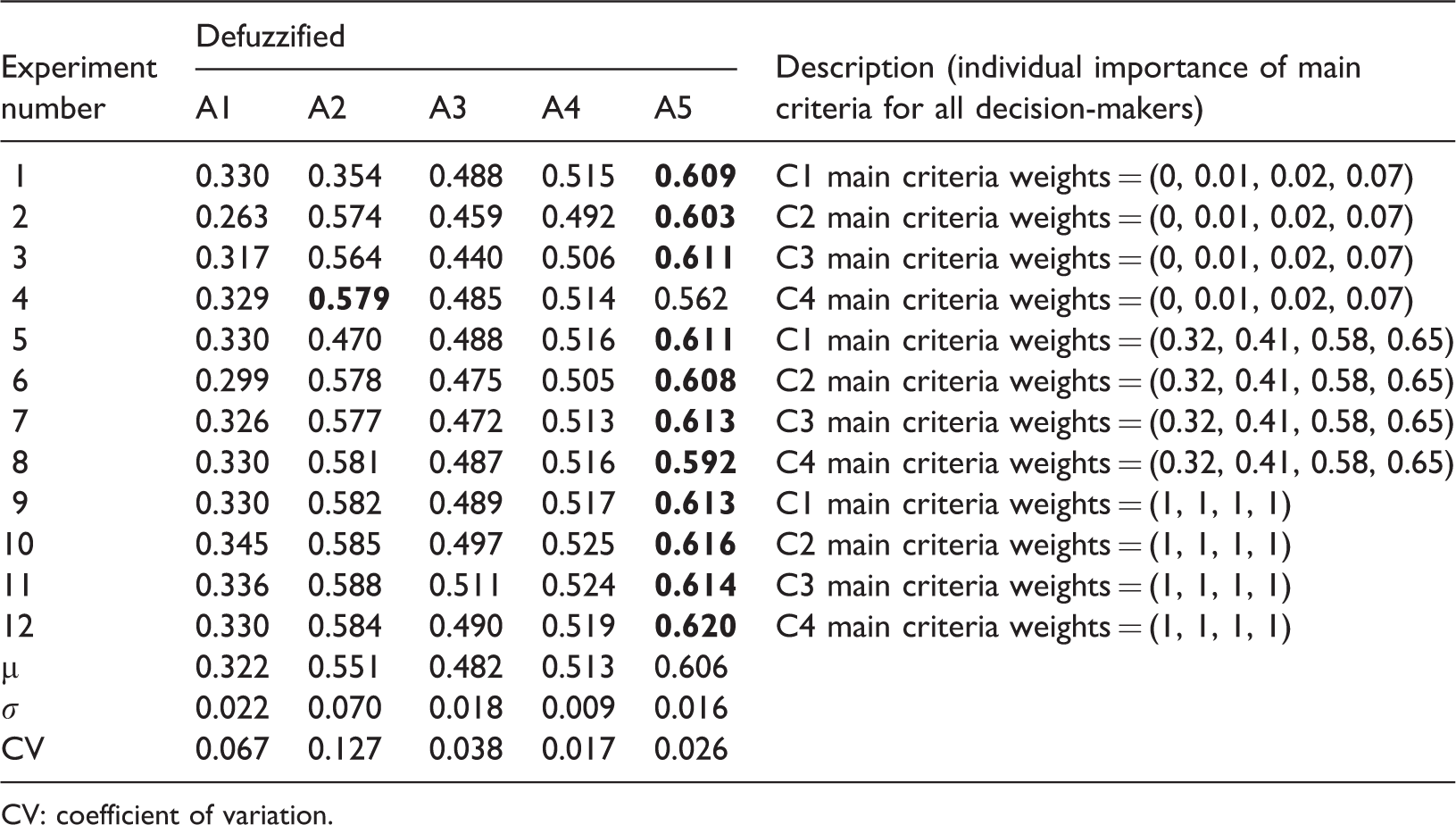
We investigate the impact of main criteria weights on the heating system selection using the Choquet integral through sensitivity analysis. The sensitivity analysis has been conducted by evaluating the main criteria by only very low individual importance values, middle values, and extra high linguistic terms. The importance values of the main criteria for the first four experiments are set to (0, 0.01, 0.02, 0.07), from 5 to 8 of criteria are set to the middle value (0.32, 0.41, 0.58, 0.65), and the main criteria of the last four experiments are set to (1,1,1,1).
The results from the sensitivity analysis are provided in Table 9 along with the settings used during each experiment and illustrated in Figure 3. Alternative A5 (floor heating systems) is the best alternative in 11 experiments out of 12. Thus, as understood from the findings of the observations, the weight of the criteria does not affect the results.
Experiments for sensitivity analysis.
CV: coefficient of variation.
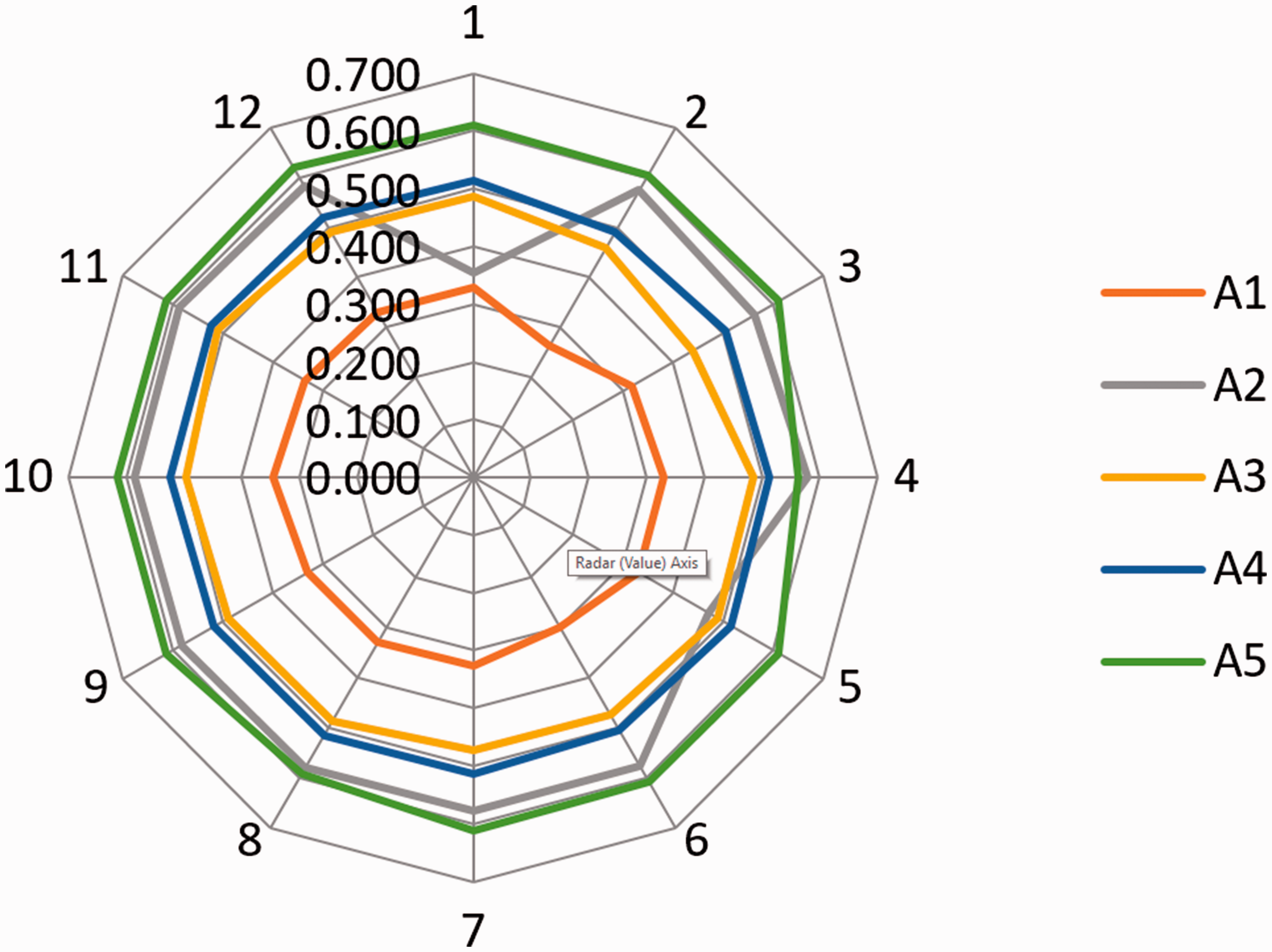
Results of sensitivity analysis.
Additionally, we calculate the coefficient of variation (CV) for each alternative by using average values obtained from the sensitivity analysis. The coefficients of variation of the five alternatives are presented in Table 9 (the best values are in bold). The CV is a normalized statistical deployment measure for a probability distribution. The experiments in which the criteria have been changed show that Alternative A5 has the second-best value in terms of its CV, and the performance value of this alternative has the best score in all other experiments except one. Alternative A4, in contrast, has the best value in terms of its CV; however, the performance value has reached the best score in none of the experiments. The CV can be described as

σ: standard deviation; μ: mean
Conclusion
Energy is an essential factor for societal development and prosperity nowadays. The diversification of energy sources is vital, particularly for oil-dependent and developing countries, in order to achieve more secure supply options, create more jobs, and contribute to sustainable energy and development. 25
Approximately, one-third of the country's energy consumption occurs in residential heating. These expenses should be reduced by ways such as preferring natural heat from residential heating, supporting with passive heating methods, effective heat insulation. However, new solutions to be produced in the optimization of the auxiliary units used will be more effective. For this purpose, the efficiency of planar solar collectors working to prepare hot water must be increased. The usage area varies according to the temperature of hot water produced by solar energy. Such collectors used for low-temperature heating will be used for hot water treatment if high-temperature liquid or steam can be obtained by the work done, as well as for primary heating or support unit in housing heating or even for housing cooling.
Both the total number of buildings and the variety of buildings are increasing day by day. Measures to be applied to new buildings will be effective in future periods. Proper insulation requirements in building supervision applications will provide very effective results on energy saving. In this respect, studies and publications with advanced perspective are being made and it is suggested that the methods applied will contribute 20% to the energy saving of the buildings. The reduction in CO2 emissions, however, can be predicted to be similar. 26
In this paper, MCDM technique, the generalized Choquet integral method using trapezoidal fuzzy numbers, is used for evaluation of residential heating system alternatives. As a result of evaluation process, this MCDM method, generalized Choquet integral, has determined the most suitable result as “floor heating systems.” The ranking of the other alternatives are “HVAC systems,” “radiator heating systems,” “fan coil heating systems,” and “unvented fuel-fired heaters,” respectively.
Choquet integral methodology considers interactivity among main criteria and subcriteria. When interactions among criteria exist, Choquet integral is proved to be an adequate aggregation operator by taking into account the interactions. 27 Also using trapezoidal fuzzy numbers and the range computations using integral can enable better results for daily usage. In addition, the proposed methodology has an ability of evaluating design process information from internal and external environments. The main advantage of the proposed model is to indicate the impact of this interactivity using trapezoidal fuzzy numbers. The main contribution of this paper is to determine the interdependency, the nonlinear relationship and the environmental uncertainties while prioritizing residential heating system alternatives.
The general limitation of the proposed model is the costly and exhausting information requested from experts (approx. 120 comparisons per one expert). Other limitations of the model are the preferences of the expert including uncertainty and conflicts and there is often needed more than one expert to make decisions. It is more likely to get subjective results especially with evaluations made with a single expert. However, in this study, we asked three sector experts (namely architect, civil engineer, and mechanical engineer) with the same importance value about the problem of determining the best heating system alternative. Also sensitivity analysis had done to the problem and according to this analysis the weight of the criteria does not affect the results. For this reason, it can be said that the results of the study are objective and valid.
Since the use of renewable energy in homes is still very expensive globally and 90% of the world's energy consumption is derived from fossil fuels, energy savings should be made in the use of existing fossil fuels. Fossil fuels cause climate changes due to the GHGs they create while polluting the environment due to toxic gases they leave atmospheres and threaten the whole globe globally. Human health, animals, and other living things are badly affected by pollution and GHGs resulting from the burning of fossil fuels. For this reason, clean renewable energy should be supported by all countries. For further researches, the same study will be investigated by using renewable energy sources.
Footnotes
Declaration of conflicting interests
The author(s) declared no potential conflicts of interest with respect to the research, authorship, and/or publication of this article.
Funding
The author(s) received no financial support for the research, authorship, and/or publication of this article.