







Abstract
Promoting biodiesel industrialization is not only an important measure in addressing the energy crisis and global warming but is also a driver for industrial restructuring and rural development. To promote the development of the biofuel industry, the Chinese central government has set a target that biofuel will account for 15% of transport energy consumption by 2020. The macroeconomic impacts of this policy, however, are unknown. This paper estimates the economic and environmental impacts on Yunnan of meeting this target using a demand-driven input–output model for Jatropha curcas L. biodiesel. The study combines life-cycle analysis and input–output analysis to establish the industrial relationship of the biodiesel sector with other sectors. The results show that meeting the biofuel policy target in 2020 will generate 296,780 thousand job opportunities annually (man-year) and increase household income. Meeting this target will also lower carbon emission by 11.39 million tonnes of CO2 equivalent, valued at 2.41 billion Yuan. However, meeting the target will decrease tax revenue by 1.8 billion Yuan and reduce the provincial gross domestic product by 754.95 million Yuan. Thus, the industrialization of J. curcas L. biodiesel can contribute to the development of a green economy and is a positive response to the policies of energy conservation and emission reduction. The promotion of biodiesel production, however, requires a trade-off between economic and environmental targets.
Keywords
Introduction
As economic activities and energy demand increase in the next several decades, energy security, economic development, and environmental protection will continue to become common policy concerns worldwide.1,2 The production and use of bioenergy, eyed as a sustainable alternative to fossil fuel, has the potential to reduce dependence on petroleum, improve environmental quality by reducing greenhouse gas (GHG) emission and pollutant release, promote rural development, and generate job opportunities.3,4 Many countries, such as the USA, Germany, Japan, India, and Brazil, are strategizing to develop their bioenergy industry and have set targets towards this goal.5,6 Among the bioenergy sources that have been targeted for development, liquid biofuels, which include bioethanol and biodiesel, are a priority because they can be used in existing engines.
As in many other countries, the increasing oil scarcity and the desire to develop a low-carbon economy are the direct drivers of biofuel production in China. It is projected that China will reach its peak energy consumption in 2020, with 4.18 billion tonnes of standard coal equivalent. 7 If this increasing demand is to be met by energy importation, China’s petroleum imports will account for approximately 77% of its total demand by 2020 and 84% by 2030. 8 The emission of CO2 equivalent is projected to be 5.6 billion tonnes in 2020. 8 Given these projections, in 2009, China committed to reducing its GHG emissions by 40–45% per unit of gross domestic product (GDP) over the 2005 level by 2020.
In 2006, to promote biofuel industry development, China’s National Development and Reform Commission set a target that biofuel, including bioethanol and biodiesel, would account for approximately 15% of transport energy consumption by 2020. It is expected that this target will be met in three development stages, namely: (a) by removing major technological barriers to biofuel industrialization by 2010, (b) by attaining a certain level of production scale by 2015, and (c) by producing biofuel on a large scale thereafter. In 2007, the following policy incentives were enacted to encourage biofuel industry development: (a) mandatory mixing of 10% bioethanol in gasoline in nine provinces to secure the biofuel market, (b) waiving the 5% consumption tax on bioethanol and refunding the 17% value-added tax, and (c) direct subsidies to biofuel plants of approximately US$200 per tonne. 9 Since their implementation, China’s biofuel output has rapidly increased from 925 thousand tonnes of oil equivalent (TOE) in 2006 to 2653 thousand TOE in 2015. These amounts, however, are still small compared to China’s crude oil consumption of 578.7 million tonnes in 2016. 10
Unlike crop-derived biofuels, using woody plants from non-agricultural land as biofuel feedstock will not adversely affect environmental and food security goals. Therefore, biofuel production will be more sustainable with a shift from food-derived to non-food biofuel.3,11 In line with this, the Chinese government issued a regulation requiring that biofuel production should not harm the environment and must not compete with grain for land, with consumers for food, and with livestock for feed. 12 In 2007, the Ministry of Finance also released a policy to encourage the use of non-food feedstock in producing biofuels by providing subsidies and other forms of financial support to biofuel producers. 13
Given this context, this paper assessed the impacts of meeting China’s target, i.e. to substitute 15% of the transport sector’s energy consumption with biofuel by 2020, on Yunnan province. Specifically, impacts on GDP, tax revenue, household income, employment, and carbon emission reduction (CER) were considered. An input–output (I–O) model of the Yunnan economy was developed to estimate the regional macroeconomic impact of Jatropha curcas L. (JCL) biodiesel production. An I–O analysis examines the interdependence between sectors by defining a set of linear equations to express the balances between the total input and total output of each product and service in a given economic system.14,15 This study assessed the impacts of biofuel production by introducing ‘biofuel’ as a new sector into the economic system. 16
New industries are usually introduced into an I–O framework using two approaches: the ‘final demand’ approach and the ‘complete inclusion in the technical coefficients matrix’ approach. 17 Most studies on the multisectoral impact of biofuel production follow the simpler final demand approach because integrating a new industry into the I–O table requires a detailed understanding of the input and output structure of this sector. 18 However, the latter approach is preferred over the former because including a biofuel industry not only changes the pattern of inputs used by other sectors in the region but also is an offsetting constraint on the output of these other sectors. 18 Hence, unlike most existing impact studies on biofuel production, this paper integrated the biodiesel sector into the regional economic system using the life-cycle cost data of JCL biodiesel production.
This paper contributes to the body of knowledge on biofuel in three aspects. First, although JCL is being promoted as a potential renewable energy source, there is insufficient knowledge about some of the agronomic, socio-economic, and technical aspects of its value chain and their implications on the sustainable livelihood of local communities. 19 This paper provides evidence on the effects of promoting JCL biodiesel on the regional economy and carbon emissions in Yunnan. Second, because biofuel is usually produced at a small scale and its industry is not included in the statistical yearbook, there are few research studies on the regional impact of the prescribed biofuel targets using an I–O model, with no such research found on JCL biodiesel. 20 This paper fills the gap by integrating life-cycle cost data of JCL biodiesel into an existing I–O table, which makes the assessment of the macroeconomic impacts of JCL biodiesel production possible. Third, the results can serve as reference for developing a non-crop biofuel industry in other provinces of China and in other countries.
The results show that the development of the JCL biodiesel industry can contribute to rural employment and household income. It has a negative impact, however, on GDP because subsidies are required to promote the biodiesel industry at current levels of production technology and diesel price. Including the economic value of CER can make the impact on GDP positive. This information has implications for both policymakers and researchers.
Literature review
Producing first-generation biofuels in large quantities using agricultural crops will have a negative effect on food security.21,22 Therefore, achieving sustainable biofuel production requires a shift from the production of food-derived biofuel to non-food biofuel, including lignocellulosic ethanol from biomass crops and biodiesel from oil-bearing tree species.3,11
Among the non-food biofuel feedstock, JCL has the most potential because it does not compete with food uses, has excellent oil characteristics, and is widely distributed in tropical and subtropical climates across the developing world.23,24 According to the UN Biodiversity Convention, JCL is a potential feedstock for biodiesel because of its strong adaptability to arid, degraded, and infertile environments and its high seed yield and seed oil content.24,25 Its oil content accounts for 38–41% of seed weight or 49–62% of seed kernel weight.25,26 Furthermore, JCL seed oil can be converted easily to liquid biodiesel of USA and EU standards.27,28 As a result, JCL biodiesel has attracted worldwide attention, especially in countries with abundant JCL resources, such as India and China.
Because China has the largest population in the world and the lowest farmland per capita (less than 0.1 ha), it is impossible to use farmland to produce biofuel on a large scale. 29 However, China has many mountains and marginal lands that are suitable for the growth of oil-bearing trees and shrubs. Therefore, JCL cultivation will not only provide raw material for the biofuel industry but also promote the restructuring of the rural economy and increase farmers’ income. Moreover, sustainable JCL cultivation on marginal land or wasteland can contribute to ecological rehabilitation. For these reasons, JCL is a priority biodiesel feedstock species in China.23,25
To achieve the government’s biofuel policy target, the macroeconomic impacts of biofuel development need to be assessed to reduce risk. Such an assessment can be done by conducting an economic impact analysis, which quantifies the economic effects of a proposed policy or the introduction of a new industry or commodity into an economic system. 20 In the conduct of such an analysis, I–O models are widely used because they consider the complete value chain and the interdependence of different economic sectors. 30 Few biofuel research studies have introduced biofuel, such as ethanol, as a new industry in the economic system using an I–O model. 20
Existing studies have assessed the economic impacts of biofuels (including ethanol and biodiesel) that use wheat, corn, a mix of cereals and sugar beet, cassava, sugar cane molasses, rapeseed, soybean, palm oil, and castor oil as feedstocks.20,30–32 The contributions of biofuel to GDP and employment generation are well recognized. In the USA, it was found that the production of maize ethanol and soybean biodiesel could generate US$3.4–6.9 billion of output and create 12,600–31,400 job opportunities with constrained land use; greater benefits are likely to be created with unconstrained land use. 31 In the EU, substituting 10–15% of fossil fuel in use with biofuel was found to have a positive impact on employment and could promote the technical development of biofuel and alleviate petroleum price hikes by reducing the demand for petroleum. 32 In Thailand, a study that compared the production of ethanol and biodiesel with that of gasoline and diesel found that the former could generate more jobs as it requires more workers per energy content, i.e. approximately 17–20 and 10 times more, respectively. 30 It is also possible, however, for the economic impact of biofuel development to be negative. For example, a study in Brazil found that the replacement of mineral diesel with soybean biodiesel could reduce GDP. 33 Clearly, the economic impact of biofuel depends on its initial inputs and its linkage with other sectors in the economic system.
While deriving biofuels from woody feedstock is in its infancy stage, there are a few studies on their macroeconomic impacts as well as existing literature on the economic and environmental impacts at the microeconomic level or at small project scales. 19 The macroeconomic impacts of biofuel industrialization should be assessed by understanding the linkages between the biofuel industry and other industries. These linkages can be traced in an I–O table.20,30,31 Because the sectors of wheat, corn, soybean, and other cereals are available in existing I–O tables, the biofuel sectors that use these feedstocks can be constructed easily by adjusting the related sectors. For example, in Mukhopadhyay and Paul, 20 wheat and corn used as feedstock in the biofuel industry were adjusted with that used in the food manufacturing industry, while other intermediate inputs of the biofuel industry, e.g. chemical, electricity, natural gas, and others, were adjusted with the petroleum refinery industry. Unlike crop-based biofuel, however, the sectors of biofuel using woody feedstocks cannot be built into existing I–O tables by adjusting existing sectors. Instead, the life-cycle input and output data of biofuel produced from woody feedstocks need to be collected to establish the linkages between the biofuel industry and others.
There is no consensus on the impacts of biofuel production on CER. The results depend on specific factors, such as feedstock, production technology, sites, and markets. While Farrell et al. 34 found that the production and use of bioethanol contribute to energy independence and environmental improvement, other studies35,36 reveal that some types of biofuels emit more GHGs than fossil fuels, such as corn bioethanol in the USA, sugarcane bioethanol and soybean biodiesel in Brazil, and palm biodiesel in Malaysia. After reviewing the literature, Van Eijck et al. 19 concluded, however, that Jatropha biofuels may contribute to significant GHG reductions compared to fossil diesel, especially when limited inputs and low-carbon stock land are used. Because most existing studies are at the project scale, no literature on JCL biodiesel was found to link the regional impact on GHG emission reduction with a given biofuel target.
Methods
Study area
The study area is Yunnan, China (Figure 1), a mountainous province with 94% of its land area being plateau and high mountains. There are two reasons for choosing this study site. First, with the shift in emphasis in China’s biofuel policy from crop-derived biofuels to those produced using non-crop feedstock, the province was designated as the country’s pilot production base for non-crop-derived biofuel. In 2007, the State Forestry Administration signed an agreement with PetroChina Co. Ltd to establish 26,670 thousand hectares of biodiesel plantation in Yunnan. The province was chosen because of its rich available resources, including non-crop biofuel feedstock, land, and water. Second, the province is poverty stricken, and its provincial government aims to take advantage of biofuel production to drive forward its economic development, especially in rural areas. Thus, the study of Yunnan is expected to provide the central and provincial governments with information on the regional economic and environmental impacts of China’s biofuel policy reorientation and the trade-offs associated with developing the biofuel industry.
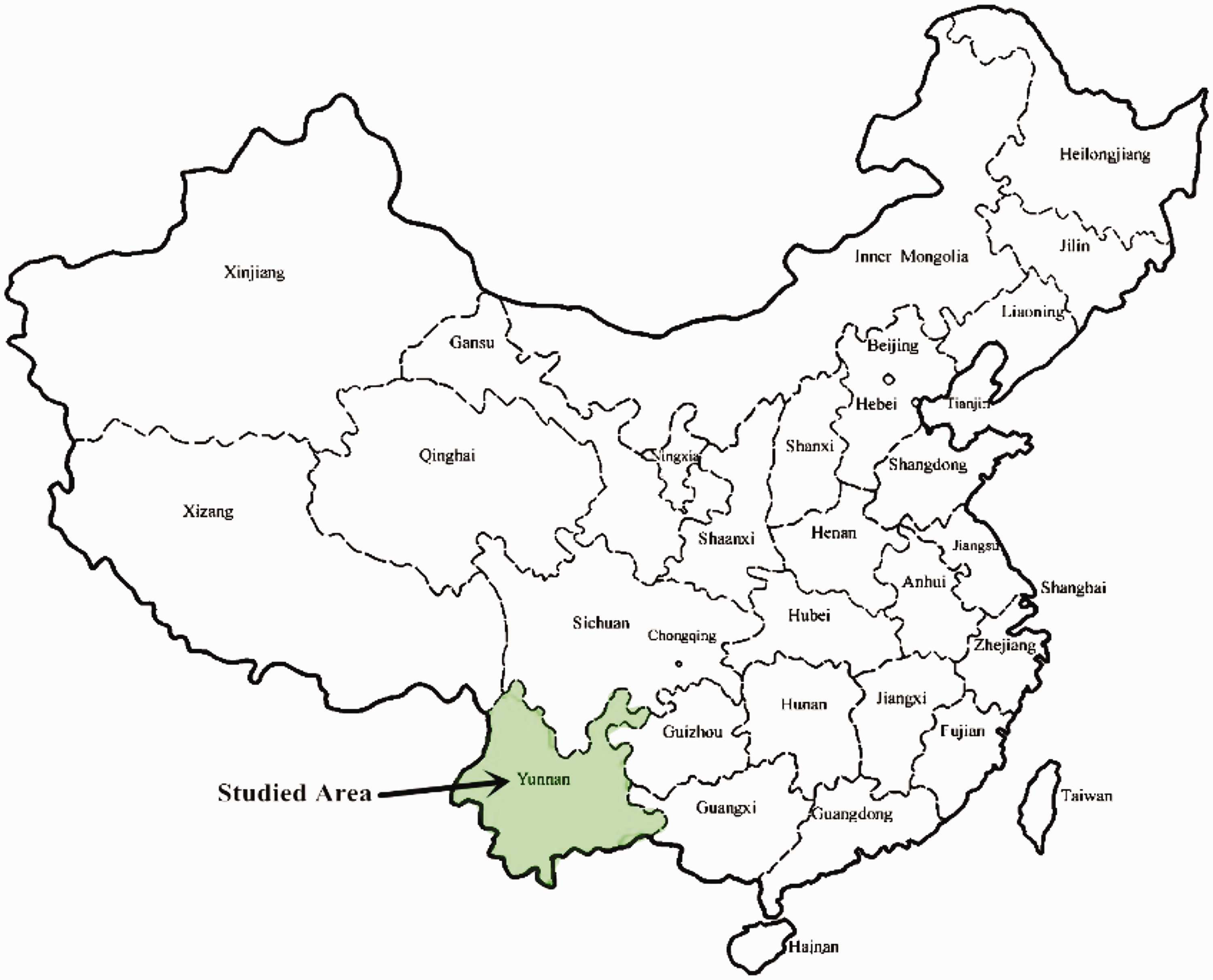
Location of the study area in mainland China.Source: revision according to the China provinces maps (https://cn.bing.com/maps).
At present levels of technology and management in China, the seed yield of a JCL plantation with 2 m × 3 m spacing is 0.6–4.5 t ha−1. 37 The JCL seed yield is determined by its variety and growth environment, including soil, water, climate, and vegetation. A low yield is usually found in unfavourable environments. According to surveys in Yunnan, the average seed yield is 1.485 t ha−1.
Because Yunnan has no ethanol production at present, promoting JCL biodiesel can help meet the central government’s biofuel output target. Yunnan’s transport sector currently consumes approximately 5.56 million TOE of fossil fuels. If 15% of the transport demand for energy is from biodiesel, this translates to 0.83 million tonnes of biodiesel. At a 2 m × 3 m plantation spacing (1650 plants ha−1) and with a fruit yield of 100–500 pieces per plant, the annual output of JCL biodiesel is projected to be 0.108–1.623 million tonnes, indicating the potential to meet China’s biofuel output target.
Regressed using time series data from the past 23 years (1993–2014), the growth function of Yunnan’s GDP was found to be
Data collection
Both primary and secondary data were used in the study. Primary data were collected through field surveys and interviews with producers in areas designated for priority development. The collected data include both the physical/material and monetary input and output information at different stages of the production chain, from plant cultivation to seed collection and treatment. Data on oil extraction were collected from a vegetable oil plant, which was also used for the experiment on oil extraction from JCL seeds. Assuming a production line with an annual capacity of 50,000 tonnes of JCL methyl ester (JME), this study used the input and output data on further processing JCL oil from Li et al. 38 The further processing of JCL oil consists of the following stages: pretreatment, oil transesterification, and refining the JME and glycerol. Information on transportation of raw materials, intermediate products, and biodiesel can be found in Wang et al., 37 where it was assumed that the production system is highly decentralized and the biodiesel is locally consumed.
Secondary data sources include the 2012 Yunnan I–O table, the most recent one available, and the Yunnan statistical yearbook. 39 The former is the framework showing the linkages among sectors/industries on which the biodiesel sector was built. The latter provided data on fuel consumption quantities, employment, labour salaries, etc. The rate of CER by JCL biodiesel was based on Wang et al. 37 Other secondary data came from published journal articles and books.
This paper provides an ex ante analysis because the biodiesel market is not yet fully developed in China. Thus, the price of diesel was used as a proxy price for biodiesel for two reasons. First, biodiesel is usually sold by mixing it with diesel at a certain percentage, e.g. 10% in B10. Second, 1 l of diesel has a calorific value equivalent to 1.053 l of JME based on its average calorific values and specific gravities. 37 The energy content and the gravity of JME are 40 MJ kg−1 and 0.8784 g cm−3, respectively, while those of biodiesel are 42.6–45.0 MJ kg−1 and 0.84–0.85 g cm3–1, respectively. 40 The calorific values per litre of JME and diesel were calculated to be 35.136 and 35.784–38.25 MJ l−1 (or 37.011 MJ l−1 on average), respectively.
Model construction
This study used an I–O model to estimate the macroeconomic impacts of JCL biodiesel industrialization. Assuming a moderate seed yield of 1.485 t ha−1, the linkages between the JCL biodiesel sector and other sectors were first established. This was followed by the assessment of the impacts of JCL biodiesel industrialization on GDP, tax income, employment, and household income for different growth rates of biodiesel demand. The economy-wide CER and its economic value were also estimated. Finally, a sensitivity analysis was conducted to identify critical affecting factors.
Life-cycle analysis of JCL biodiesel
Before constructing the I–O model, a life-cycle analysis of JCL biodiesel was conducted to categorize the data, allocate joint benefits and costs in the life-cycle, and trace the linkages between the JCL biodiesel sector and other sectors. The assumed project duration is 30 years because JCL trees can live for 30–50 years. Other assumptions include a 2 m × 3 m plantation spacing (1650 plants ha−1) and a base yield of 1485 kg JCL seeds ha−1, resulting in an annual biodiesel output of 4333 l ha−1. The production line has an annual capacity of 50,000 tonnes of JCL biodiesel; the inputs are referred to in Li et al. 38
The production chain was divided into four stages: (a) production of JCL seeds through cultivation, (b) extraction and conversion of biodiesel, (c) distribution and retailing of finished fuels, and (d) consumption of biodiesel.
Integrating the biodiesel sector into I–O table
The biodiesel sector was not part of the existing I–O table, nor was it included in the existing petroleum sector. It had to be integrated into the basic I–O table, i.e. the 2012 Yunnan Provincial I–O table with dimensions of 42 × 42.
Having collected the input data of the entire JCL biodiesel production life-cycle through field surveys, the study introduced this new production activity into the Yunnan economic system through complete inclusion in the technical coefficient table of the economy. Hence, a new column and a new row were added to the I–O table, and a new equilibrium was made.
The biodiesel sector column in the matrix of technical coefficients consists of all intermediate inputs in the production of 1 unit of biodiesel. The input data for the biodiesel sector are the economic data of the life-cycle inputs of biodiesel. All inputs are organized and categorized according to the groups they affect, i.e. inter-sector and value-added groups. The coefficient of a given cell was calculated as the economic value of input from a given sector divided by the total input value of biodiesel. The tax coefficient is negative because government subsidies are required to promote the production of JCL biodiesel.
It was assumed that JCL biodiesel would be blended with fossil diesel. Because biodiesel is consumed in the same pattern as fossil diesel, the forward linkage of biodiesel will be the same as that of fossil diesel. The row coefficients of the biodiesel sector were obtained from the output data of diesel and the policy target of biodiesel (share of biodiesel in energy consumption). Assuming that biodiesel accounts for a certain share μ (%) of the total energy output of the fossil fuel sector, the constant share μ was subtracted from the technical coefficients matrix of the fossil fuel sector and was used as the row of the biodiesel industry. The same holds true for the vector of the final demands. With the Yunnan transport sector consuming 10% of the fossil fuel output of the petroleum sector and with a policy target to substitute 15% of the transport sector’s diesel consumption with biodiesel, the share μ was thus estimated to be 1.5%.
Measurement of economic impacts
The I–O equation is as follows

Economic impacts are classified as direct, indirect, or induced. A direct impact (DI) is an additional economic activity generated directly by JCL biodiesel production activities. An indirect impact (InI) results from production activities that require goods, materials, and services from other sectors. An induced impact (IdI) is generated by additional economic activities associated with spending by people employed in sectors impacted either directly or indirectly by those activities. DIs and InIs generate wages and salaries for these people and therefore sustain their household spending throughout the economy. The overall impact of JCL biodiesel industrialization can be evaluated by the backward linkages, with the JCL biodiesel industry being the user of intermediate inputs from other sectors in the economy. Thus, a demand-driven I–O model can be applied to assess the economic impacts, which are computed by comparing the economic differences between the study’s scenarios (for different output levels of JCL biodiesel) and the reference base or status quo.
The contribution of a sector to an economy is not limited to the value it creates directly. An increase in the final demand for a sector has economy-wide repercussions, causing increases in output beyond the initial change in demand. Based on the I–O model, the DIs and InIs were calculated according to matrices (2) and (3), respectively


The IdI was calculated using an expanded I–O model, which was constructed by adding the wage and salary row and the private consumption column to matrix A. Household income was treated as an endogenous variable in the I–O model because (a) household income is similar to other intermediate materials and has a positive linear relation with outputs, and (b) household income and consumption have linkages with other sectors. An increase in output will result in an increase in household income, in household consumption, and, eventually, in industrial output. The column coefficients of the ‘household sector’ are the purchases by the household final demand category divided by the sum of all payments. Because the ‘household sector’ sells labour services to all sectors in the economy, its row is calculated as each sector’s purchase of labour services divided by that sector’s output. The expanded matrix (AE) of technical coefficients is



The employment coefficient was not readily available in the I–O table and was calculated as a ratio between the number of employees and the quantity of sector output. Sectoral employment is the total labour inputs for the entire biodiesel production chain. Short-term working hours were converted by assuming 8 working hours per day and 260 working days per year. The sector output is the gross income of biodiesel, i.e. the product of biodiesel output and price. The labour input and sector output of other sectors are available from the Yunnan statistical yearbook and Yunnan I–O table.
The environmental impact of biodiesel was assessed with a focus on the contribution of biodiesel to CER. Because biodiesel is considered a diesel substitute, CER was estimated as follows

According to Wang et al.,
41
the net of
Results and discussion
This section is divided into four parts. The first part presents the results of the life-cycle costing analysis. Using these results in constructing an expanded I–O table, the second part presents the estimated impacts of the biodiesel sector on the provincial macroeconomy, specifically in terms of the impacts on employment, household income, tax revenue, and GDP. The third part provides the identified impacts of the biodiesel industry on CER. Finally, the last part presents the results of the sensitivity analysis, which was conducted to examine the effects of changes in the biodiesel price and seed yield on the macroeconomic impacts.
Life-cycle analysis of JCL biodiesel
Table 1 shows the detailed costs incurred at different stages of production. To allow comparison of monetary values incurred at different times, all costs were discounted with the initial year as reference, i.e. the unit cost was quantified at present value. The results indicate that most (82.77%) of the cost of biodiesel production is incurred at the seed production stage. Glycerol, a co-product of JME, contributes approximately 8.1% of the total revenue. Hence, using local market values, the total cost was allocated by assigning 91.9% to JME and 8.1% to glycerol. According to the outputs and shared costs, the unit cost of JME was calculated to be 8.91 Yuan l−1.
Life-cycle costing of JCL biodiesel.
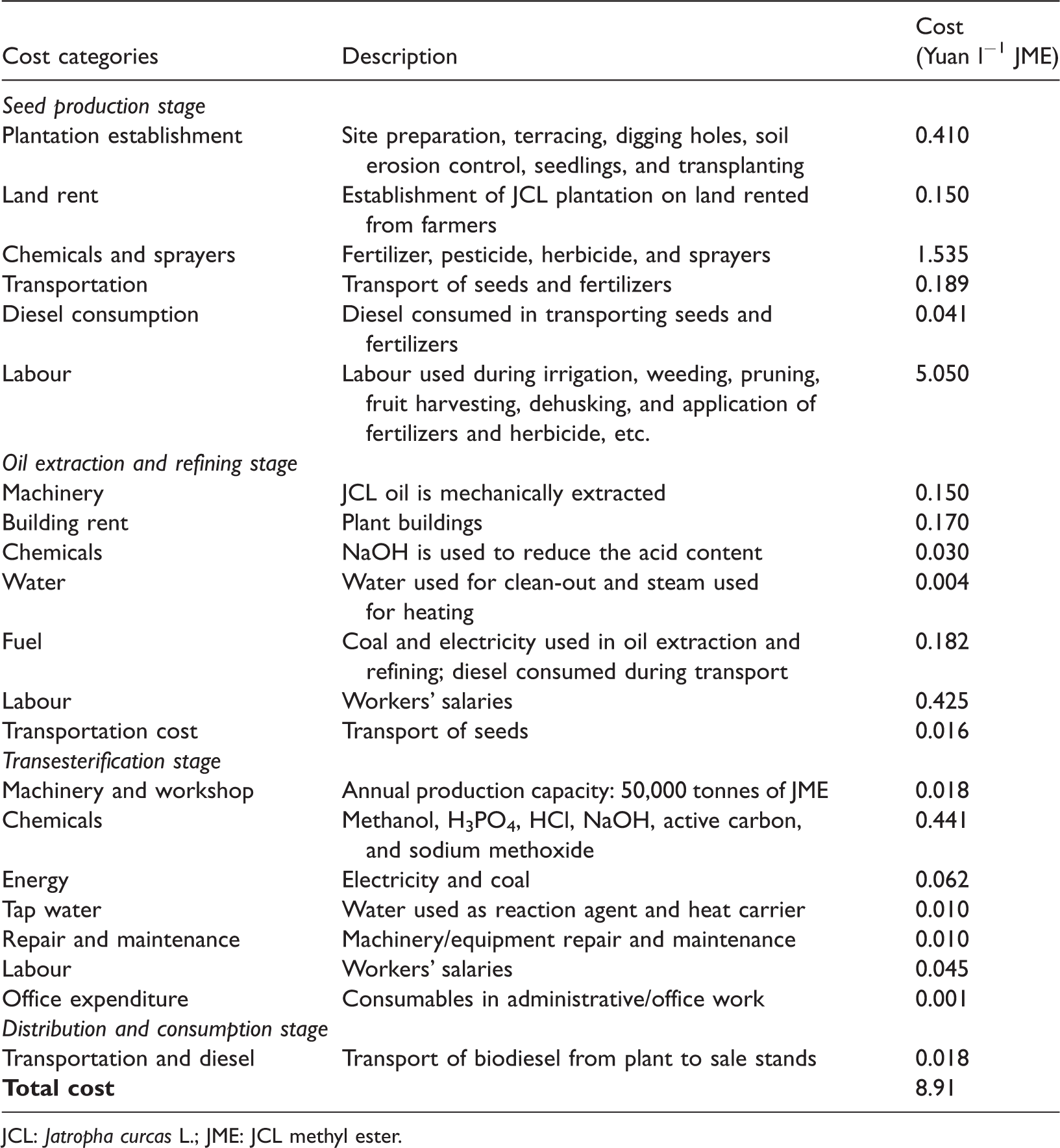
JCL: Jatropha curcas L.; JME: JCL methyl ester.
The life-cycle costing analysis revealed that the inputs for JCL biodiesel production are mainly from the agriculture and forestry sector and the chemicals sector. Approximately 72.65% of the production and distribution costs can be attributed to these two sectors. The biodiesel industry also receives inputs from other sectors (i.e. coal mining and supply, petroleum processing, electric machinery and equipment, power and heat production, water supply, construction, and logistics), although its linkages with these industries are much weaker compared with the two sectors above. Together, these other sectors account for 27.35% of the production and distribution costs. All of the costs were attributed to different sectors in the I–O model according to their categories.
The economic impacts of biodiesel production
This paper only presents the economic and environmental impacts in a scenario in which biodiesel accounts for 15% of the Yunnan transport sector’s energy consumption, as targeted by China’s biofuel policy. The results of other possible substitution ratios are not presented because the values of the assessed indicators change at the same rate as that of the substitution ratio. However, the impacts were assessed as different growth rates of the demand for biodiesel, assuming it to be 10, 20, and 50% higher than the baseline. The baseline scenario presents the impacts based on the present economic situation. To meet the biofuel target in 2020, it was found that a 50% growth rate of the demand for biodiesel is needed.
The corresponding multipliers for assessing the DIs, InIs, and IdIs on different economic indicators are shown in Table 2. The multipliers are the results of XZ, as shown in equation (6), in which X is W, H, T, and G, and Z is matrices (2), (3), and (5). The results indicate that the economic impacts of JCL biodiesel are mainly direct; the InIs and IdIs are minor. This is consistent with the study’s findings that the JCL biodiesel industry is labour intensive and that its workers are poor. The InIs and IdIs are small because, other than labour, the inputs are low and workers’ salaries are mainly used to purchase subsistence goods.
Decomposed impact multipliers for different economic indicators.
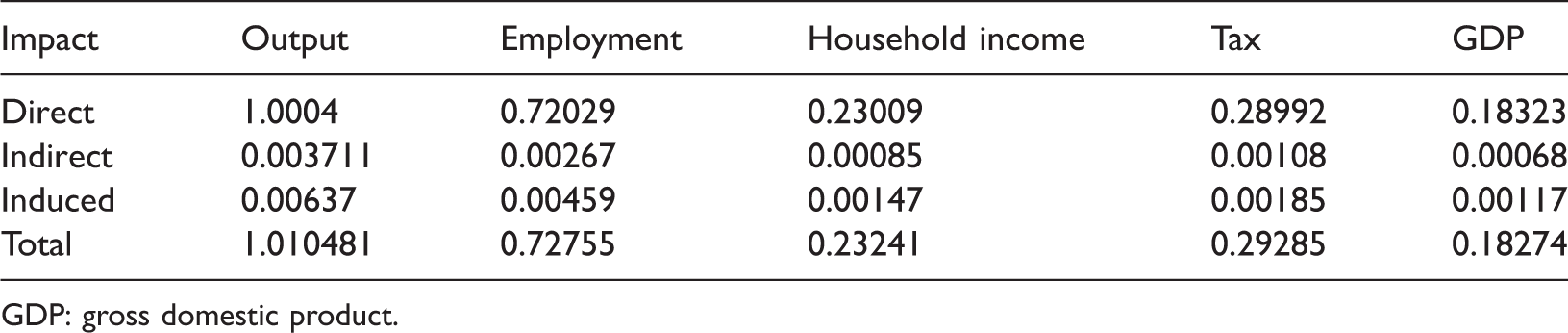
GDP: gross domestic product.
Impacts on employment and household income
The impacts on employment are shown in Table 3. The results reveal that at the current energy consumption level, biodiesel industrialization can generate 197,853 man-years of employment opportunities, which will tend to increase as more biodiesel is produced. When the biofuel policy is met, approximately 296,780 man-years of jobs will have been created. The impact on employment is mainly a result of DIs; both the InIs and IdIs are relatively small. At the current production technology level, biodiesel production has a relatively low demand for goods and services from other sectors and thus has a low InI. The IdI is small as well because the compensation rate for labour is relatively low.
Impact of biodiesel industrialization on employment and household income.
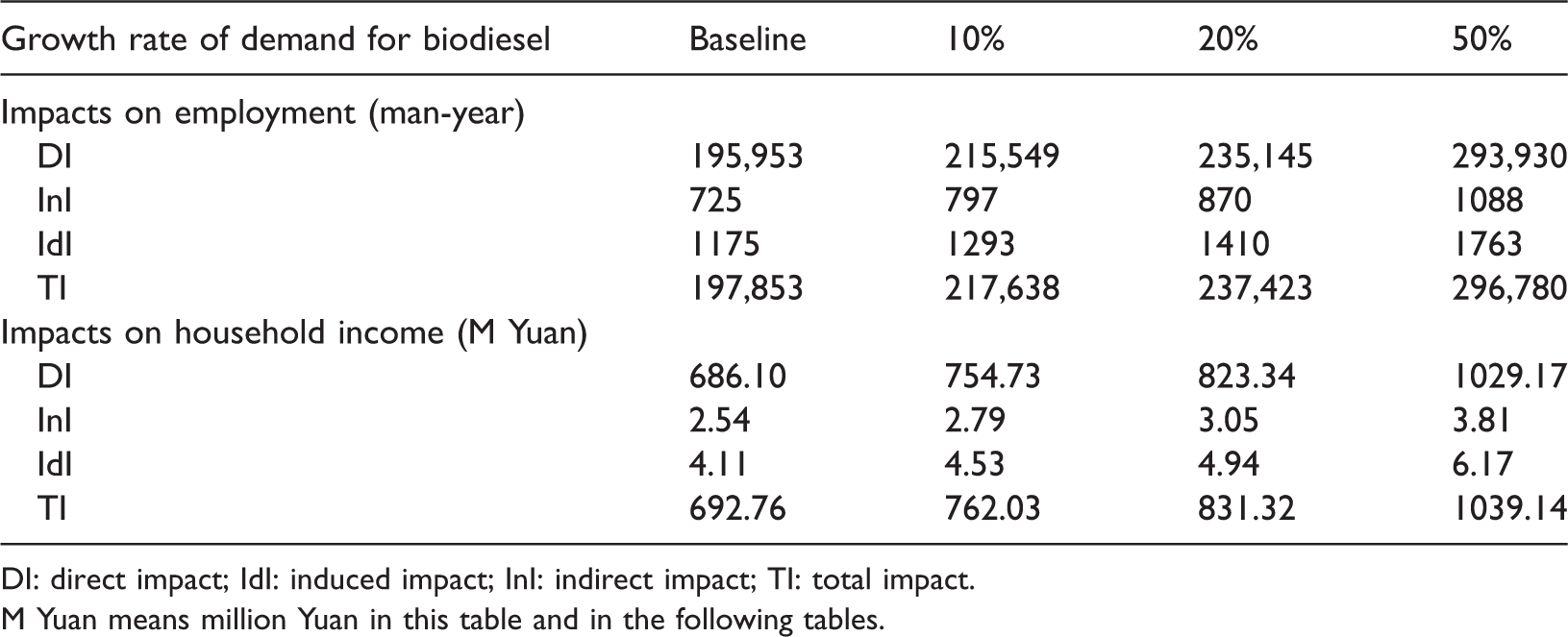
DI: direct impact; IdI: induced impact; InI: indirect impact; TI: total impact.
M Yuan means million Yuan in this table and in the following tables.
The total impact (TI) on household income is 692.76 million Yuan, which is mainly composed of DIs; the InIs and IdIs are small. When the biofuel policy is met, approximately 1039.14 million Yuan of income will have been generated. The impact pathways of total household income and total employment are similar because the latter is directly proportional to the former.
According to the production chain data, labour costs account for approximately 62% of the total cost, which is mainly incurred at the seed production stage. A high quantity of labour is required for seedling cultivation, plantation establishment, tending and maintenance (i.e. irrigation, fertilization, weeding, disease control, and pruning), seed collection, drying, transportation, and pretreatment. Much less labour is required for oil extraction and refining. Clearly, the biodiesel industry is labour intensive, and its development is expected to create many employment opportunities, which will consequently increase household income.
JCL biodiesel promotion in Yunnan is strategic. Being labour intensive, it can help alleviate poverty in the province as it supports local government efforts to generate job opportunities and increase household income, especially in rural areas. The local government can promote JCL biodiesel production as part of its rural vitalization strategy, as highlighted in the report of the 19th National Congress of the Communist Party of China.
Impacts on tax revenue and GDP
Based on the life-cycle input data, the production cost of biodiesel was calculated to be 8.91 Yuan l−1, which is higher than the market price of diesel at 7.12 Yuan l−1. Subsidies are thus required to promote biodiesel industrialization. Assuming that the markup is 10% of the production cost, the required subsidy rate is 2.68 Yuan l−1, which is the result of the production cost (8.91 Yuanl−1) plus a 10% markup (0.891 Yuan l−1) minus the market price (7.12 Yuan l−1). Although the central government’s current subsidy rate is only 200 Yuan t−1, which is obviously not enough to make the production of JCL biodiesel financially break-even, the local government’s revenue from taxes tends to decrease as more biodiesel is produced.
The impact of biodiesel industrialization on taxes is presented in Table 4. The impact is mainly direct; the InIs and IdIs are very small. At the current energy consumption level, biodiesel promotion is expected to reduce government revenue by approximately 1202.51 million Yuan per year or 0.46% of the provincial tax revenue in 2012. As more biodiesel is produced, the required financial support is expected to increase. The tax revenue will have been reduced by approximately 1.8 billion Yuan when the biofuel target is met in 2020.
Annual impact of biodiesel industrialization on tax revenue and GDP.
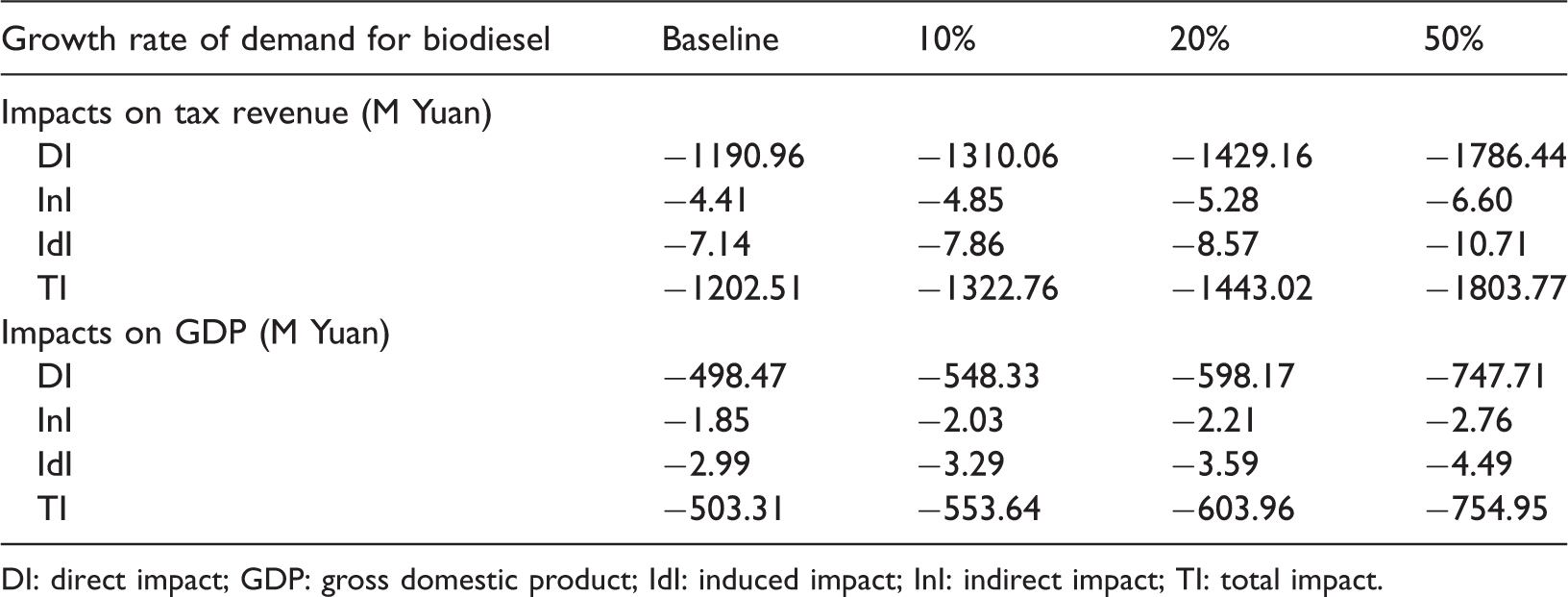
DI: direct impact; GDP: gross domestic product; IdI: induced impact; InI: indirect impact; TI: total impact.
The need for subsidies at the current technology level means that biodiesel promotion will have a negative impact on GDP. Specifically, it would mean a loss of 503 million Yuan per year, or 0.049% of the provincial GDP, if the target to replace 15% of the Yunnan transport sector’s energy consumption with biodiesel is to be met (Table 4). Biodiesel industrialization will reduce the provincial GDP by 754.95 million Yuan when the biofuel policy target is met in 2020.
As far as a specific region is concerned, the negative impact on tax revenue and GDP is an obstacle to biodiesel promotion. However, this can be overcome if JCL biodiesel production is fully subsidized by the central government. The green development strategy, highlighted by President Jinping Xi at the 19th National Congress of the Communist Party of China, is expected to make this possible. The strategy underscores the promotion of clean energy industries and the creation of a clean, low carbon, safe, and efficient energy sector. Because the existing GDP accounting system does not account for the positive external value of green energy, the green development strategy is expected to stimulate the development of the JCL biodiesel industry, especially when GDP is no longer the sole evaluation criterion used by Chinese government officials.
Impact on CER
The production and consumption of 1 l of JCL biodiesel can result in a reduction of 8.04 kg CO2 equivalent. 37 CER can be valued at the marginal abatement cost of carbon emissions between 2009 and 2020, which is 123.5–299 Yuan t−1 of CO2 (about US$19–46) in China. 42 Considering different growth rates of biodiesel demand, the corresponding emission reductions in CO2 equivalent and their economic values are shown in Table 5. The result reveals that substituting 15% of the Yunnan transport sector’s energy consumption with JCL biodiesel can reduce emission by 4.56 million tonnes of CO2 equivalent, with a value of approximately 1.60 billion Yuan. The quantity and value of CER increase as more biodiesel is produced. This value will have increased to 2.41 billion Yuan when the policy target is met in 2020. Tables 4 and 5 show that including the economic value of CER can make the impact on GDP positive in each scenario, indicating that biodiesel promotion can contribute to green economic development.
Impact of biodiesel industrialization on CER.
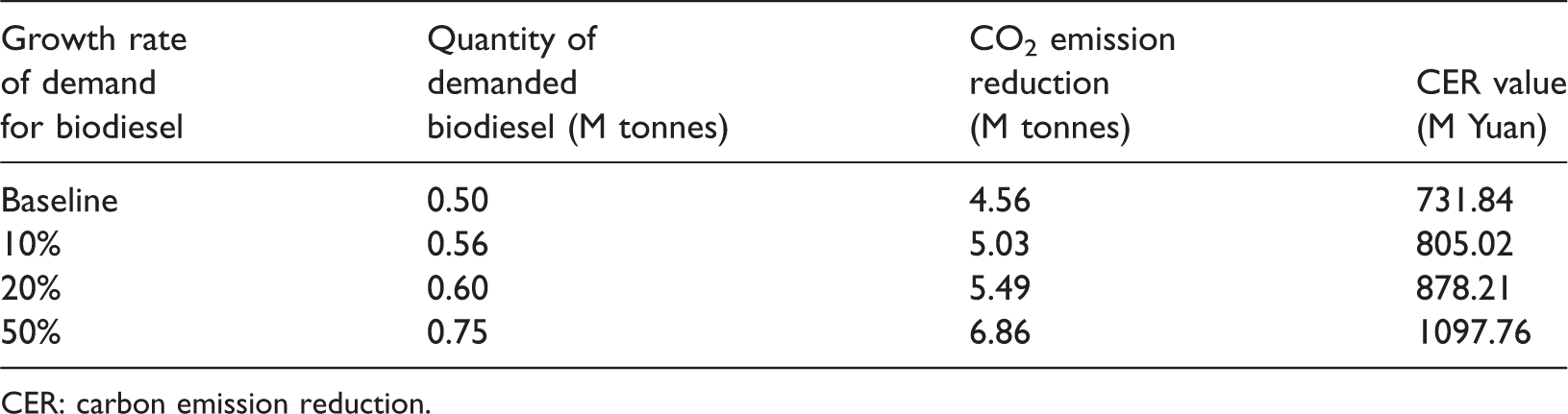
CER: carbon emission reduction.
Promoting biofuel production is justified by its positive externality and its contribution to energy independence. However, the economic value of CER will not make a positive impact on GDP unless the positive externality is fully internalized. The existing subsidy rate is too low to fully internalize the externality; thus, JCL biodiesel production is currently constrained by its financial infeasibility. However, with the opening of China’s national carbon market on 19 December 2017, the full internalization of CER values has become possible.
Sensitivity analysis
A sensitivity analysis was conducted to identify the critical parameters affecting the economic impacts of JCL biodiesel industrialization. Because JCL seeds are produced in mountainous areas, mechanization is difficult and production is labour intensive. Although oil extraction and refining are based on machinery, the capital cost accounts for only 2% of the JCL biodiesel production costs. Thus, the effect of technical progress in mechanization on the economic performance of JCL biodiesel is small. The major factors that constrain JCL industry development were identified to be the biodiesel price and seed yield. 37 Therefore, this section analyses the effect of changes in these two factors on the economic impacts of JCL biodiesel industrialization, ceteris paribus. Factors affecting CER are those that affect the coefficients of CER emission, which were analysed in Wang et al. 37 No sensitivity analysis was conducted on CER in this paper.
Effect of biodiesel price changes
Historical data show that fuel prices tend to fluctuate; biodiesel is no exception. The economic effects of changes in biodiesel prices were explored by assuming growth rates of 10, 30, and 50% over the current market price of 7.12 Yuan l−1.
The results show that as the price of biodiesel increases, fewer subsidies are required, or the impact on taxes decreases (Table 6). As the coefficient of value added increases, the impact on GDP also increases, although at a lower rate. An increase in the biodiesel price will result in slightly smaller impacts on employment and household income because the coefficients for employment and compensation for labour decrease as the sectoral output becomes larger, while the compensation rate and required labour do not change. At a given biodiesel price growth rate, the impacts tend to increase at the same rate as that of the biodiesel demand.
Total economic impacts due to increasing biodiesel price.
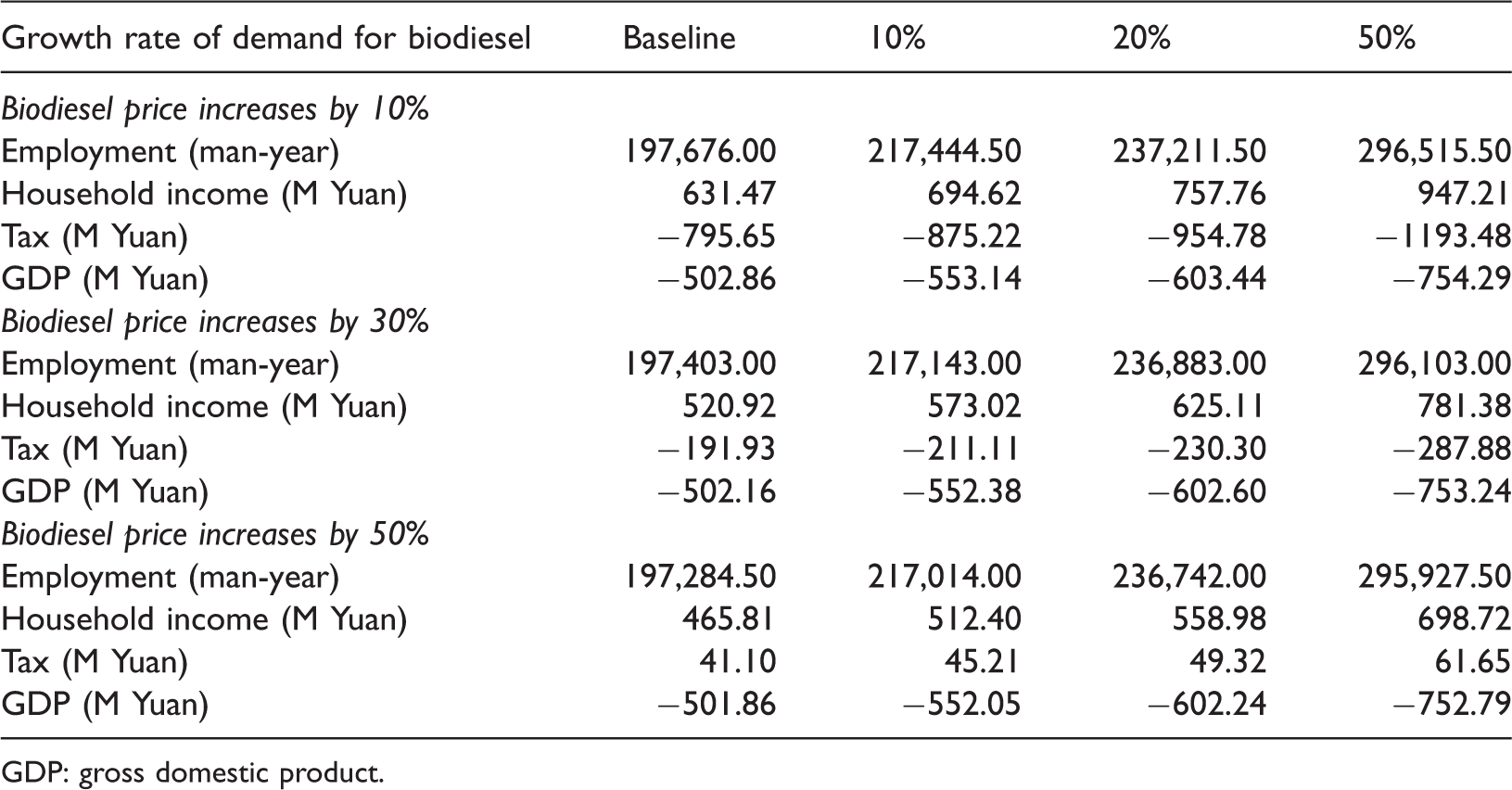
GDP: gross domestic product.
With a 10% increase in the biodiesel price, the economic value of CER is not sufficient to offset the government’s loss in tax revenue. However, it becomes greater than the impact on taxes if the biodiesel price increases by 30%. Furthermore, if the biodiesel price increases by 50%, no subsidy is required for JCL biodiesel production because the TI on taxes becomes positive. If CER from JCL biodiesel development can be sold in the national carbon market, the revenue of CER can reduce greatly or remove the government’s fiscal burden to subsidize the biodiesel industry. Moreover, the internalized economic value of CER can alleviate or offset the negative impact on GDP.
Effect of seed yield changes
Previous results were obtained by assuming a seed yield of 1485 kg ha−1 as a baseline. However, the seed yield of JCL varies greatly as climate and soil condition change, and it can be improved with technical progress. This section analyses the effects of seed yield changes by assuming a seed yield of 40, 80, and 120% higher (Table 7). These assumptions are reasonable because the local seed yield of JCL is 0.6–4.5 t ha−1. 37
Total economic impacts due to seed yield changes.
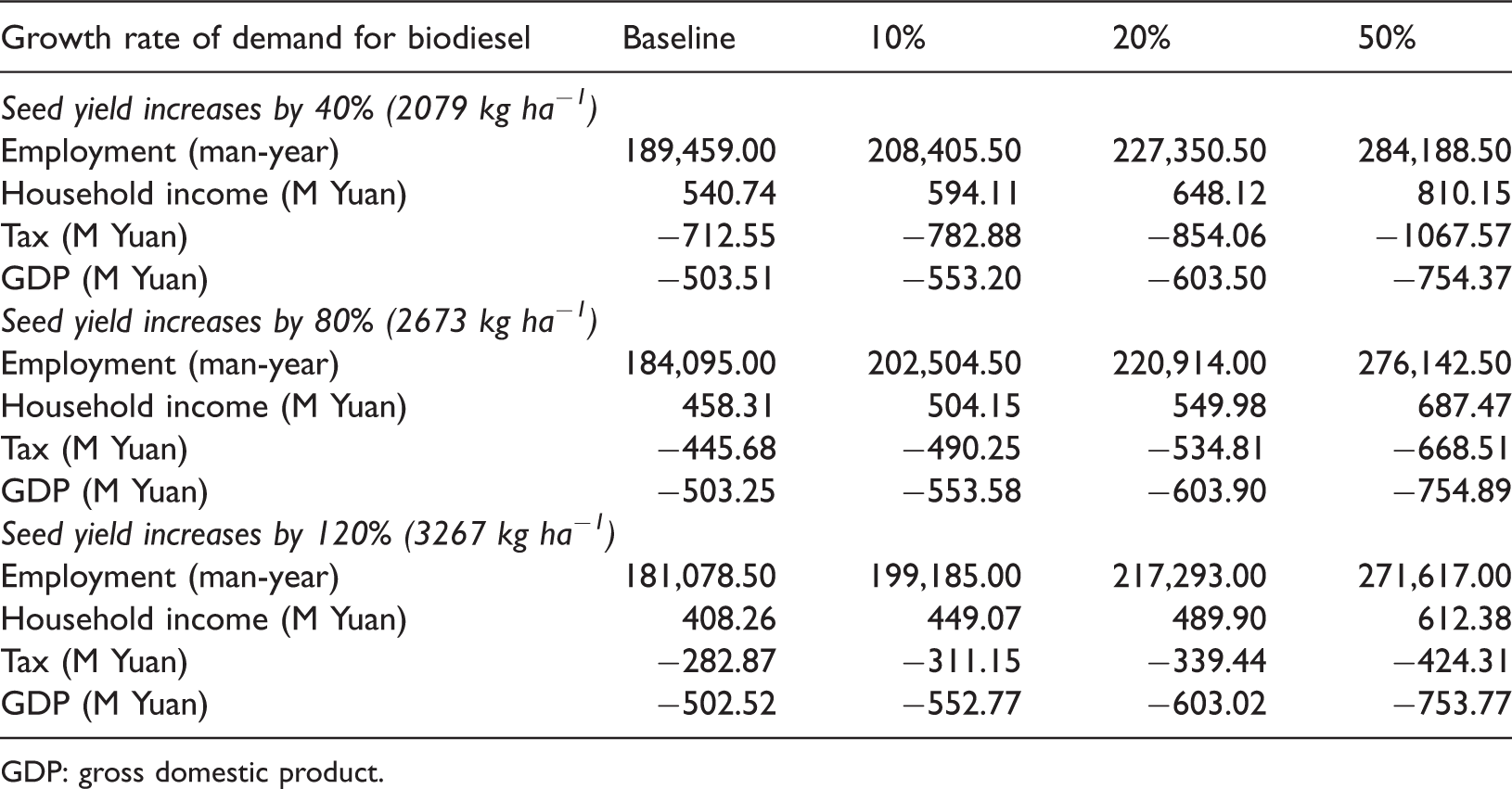
GDP: gross domestic product.
The results show that an increase in the seed yield slightly increases the impacts on household income and GDP, whereas the impact on employment decreases because less labour would be needed per unit output of biodiesel. The impact on taxes is remarkable because the required subsidies are greatly reduced for an increased seed yield. Thus, the economic performance of JCL biodiesel can be improved by enhancing the seed yield through seed selection of high-yield varieties and genetic modification.
Conclusions and policy implications
Using the case of Yunnan province, this study investigated the impact of woody biodiesel production on the regional economy and CER as China meets its biofuel policy target. The study focused on JCL biodiesel by aggregating life-cycle monetary data of production into the existing I–O table.
The results show that the JCL biodiesel industry is labour intensive and can contribute to increased rural employment and household income. Thus, the development of woody biofuel industry is a potential option for rural development, especially in a poverty-stricken, mountainous region, such as Yunnan. However, at current levels of production technology and diesel price, government subsidies are required to promote the biodiesel industry, and this will negatively impact the local government’s tax revenue and GDP. Only if the price of biodiesel increases by 50% will no subsidies be required. However, because the production of woody biofuel can reduce carbon emissions, the economic value of CER can contribute to GDP if it is internalized or if green GDP is targeted. Hence, in achieving its biofuel policy target, the Chinese government has to make a trade-off between these economic and environmental indicators.
In poor regions such as Yunnan province, GDP growth is a priority; sacrificing GDP to promote the biofuel industry can be a great challenge. However, the implementation of China’s development strategy and the establishment of the national carbon market are expected to improve the biofuel industry’s prospects.
The results of this study have important policy implications. First, because the biofuel industry is a green energy industry that is among the national priorities for development, green loans and financing should be made available for woody biofuel producers to reduce production costs. Second, while the central government aims to provide greater support to green energy production as stated in the report of the 19th National Congress of the Communist Party of China, more specific incentive policies are required, such as subsidies or technology support in the context of the green development strategy. Third, although the national carbon market provides the possibility of trading CER, presently, it focuses on the electricity sector only. Thus, there is a current need to consider CER obtained from woody biofuel production as a traded good. Fourth, considering its positive impacts on rural employment and household income, the woody biofuel industry should be promoted in support of China’s rural revitalization strategy.
Footnotes
Declaration of conflicting interests
The authors declared no potential conflicts of interest with respect to the research, authorship, and/or publication of this article.
Funding
The author(s) disclosed receipt of the following financial support for the research, authorship, and/or publication of this article: The study was funded by the National Natural Science Foundation of China (71463065) and the project of Yunnan University on the study of energy transition and green economic development (C176240202015).