







Abstract
The mushroom growth of universities in the developing economies, in particular, is believed to be a key contributor to the relentless aggravation in the overall demand for electricity. Moreover, the large university campuses are often compared to cities whereby the associated electricity-consumption within these campuses are also referred to account for a bulk of the total urban electricity consumption. Thus, conservation of electricity within the campus has become a core agenda of universities in quest of ensuring respective campus sustainability. Against this backdrop, this paper aims to highlight and recommend the cost-effective and best-practiced techniques applied to conserve electricity within the private universities in Bangladesh. As part of the methodology, a cost–benefit analysis of electricity conservation is put forward in the context of a case study of the North South University, the largest private university in Bangladesh. The results from the analyses imply that proper implementation of the electricity conservation and efficiency enhancement techniques within the campus can effectively cut down the total electricity bills by almost one-third and simultaneously account for a 5% reduction in the total electricity demand within the campus.
Keywords
Introduction
Energy is believed to be one of the utmost important economic endowments that can attribute to multidimensional development across any economy. 1 Although the abundant supply of fossil fuels, over the past, has managed to ensure a somewhat reliable supply of energy across the globe, the predominant reliance of such nonrenewable energy resources (NER) has raised concerns regarding its sustainability from the supply side.2,3 Moreover, combustion of the fossil fuels has also been alleged to foster climate changes and human health-related issues following the associated greenhouse gaseous emissions.4–7 Thus, taking both the energy and environmental sustainability into cognizance, energy economists have often recommended in favor of a nonrenewable to renewable transition in energy use.8–10
However, attaining energy sustainability through the renewable energy transition is particularly challenging in the context of the developing nations, in comparison to the first world countries, courtesy the dismal states of their indigenous sources of renewable energy. 11 The average renewable energy consumption (REC) share in total energy consumption across the low and lower-middle-income countries, between 1991 and 2015, is merely 27.25% and, in comparison to the early 1990s, this share has depicted a staggering 18.53% decline by the end of 2015. 12 However, relative to the upward trends within the low-income countries, the lower middle-income countries have performed poorly in embracing renewable energy adoption which is evident from the fact that the REC share in these nations has dropped by almost 13% over the last two and a half decades. 12 Hence, it is apparent from these statistical estimates that countries making a graduation from low to the lower middle-income group are particularly vulnerable to the barriers impeding the incorporation of renewable energy policies in the national energy frameworks of these countries. Thus, bearing in mind these limitations, energy economists often prescribe the concerned economies to directly conserve energy and simultaneously boost the energy-use efficiency levels as well.13–15
Against this backdrop, this paper aims at investigating the prospects of energy conservation in Bangladesh, a South Asian emerging economy that has traditionally exhibited a mismatch between its energy demand and supply.16,17 As a consequence, power outages have often resulted in the key industries performing below their capacities and thus undermining the nation’s growth potentials to an extent. 18 The country’s recent eligibility for graduation onto the middle-income group by 2024 makes it an ideal case study for energy conservation as the national energy demand is expected to surge in the next couple of years. Conservation of energy in Bangladesh is also pertinent in the sense that the nation had predominantly been reliant on its indigenous natural gas reserves for power generation purposes, whereby the government’s decision to over-subsidize the natural gas prices has led to overexploitation of this critically important resource. Thus, the nation is compelled to look for alternative energy sources since failure to do so would result in depletion of the existing natural gas reserve by end of 2030. 19 However, diversification of the energy sources in Bangladesh is subject to time lags courtesy the nation’s sluggish growth in the energy infrastructure whereby the possibilities of rapid renewable energy transition are likely to be doubted. Therefore, conservation of energy can presumably be a key strategy for energy management in the country. Furthermore, this study is relatively pertinent from the context of demand side management of energy resources, whereby conservation of energy would not only sustain its supply but at the same time the escalation in energy demand can also be tackled through the enhancement in the efficiency of energy use, particularly within the built infrastructures.
Although energy conservation is a vast issue with overarching aspects engulfing the overall use of energy within an economy, this paper narrows down the focus and probes into the opportunities of conserving energy within the buildings in particular. The rationale behind such a narrowed-down approach to probing into the energy-saving issues is justified in the sense that unplanned urbanization and real estate booms in Bangladesh have accounted for a major portion of its total energy demand being originated from the residential and commercial buildings within the capital. 1 Energy conservation within the building is also one of the key agendas of the government’s Energy Efficiency and Conservation Master Plan (EECMP) up to 2030. 19 The ultimate target of the EECMP is to attain improvement in energy-use efficiencies up to 15% and 20% by 2021 and 2030, respectively. Among a wide array of energy conservation tools, the master plan aims for at reducing the electricity use within academic buildings via preliminarily building awareness and nudging the stakeholders to participate in energy conservation drives. According to the report by SREDA, 19 replacing the existing electrical appliances within buildings by the contemporary energy efficient alternatives can possibly lead to a 36% reduction in the total electricity demand. Thus, the results from this paper can generate crucial policy implications complementing the EECMP of the government.
The overall phenomenon of high demands for energy within build-infrastructures in Bangladesh can justifiably be associated with the mushroom growth of educational institutes. More precisely, the private university campuses operating within the capital comprise of specific groups of diverse buildings cumulatively accounting for a significant amount of total urban electricity consumption in Bangladesh. Therefore, these campuses provide an excellent test bed to understand the existing inefficiencies adhering to such inefficient electricity usage and to also realize the grave importance of undertaking electricity-conservation policies, not only within the campus but, in a much broader scale, within the entire economy as well. Thus, this paper uses the electricity input–output data acquired from the largest private university of Bangladesh, the North South University, and attempts to conduct a cost–benefit analysis engulfing the electricity conservation strategies that can be implemented to ensure campus sustainability. 2
The opportunities of the overall electricity conservation within the Bangladesh economy have been well documented in the contemporary energy economics discourse. However, the issue of energy conservation for the attainment of campus sustainability, particularly within the local private university campuses in Bangladesh has received meager emphasis. To the best of the author’s knowledge, this paper is the first of its kind to shed light on the electricity conservation potentials within the private university campus in Bangladesh to bridge the gap in the literature.
3
The findings from the analysis could be inflicted on a larger scale onto the majority of the university campuses located all over the Bangladesh as well as within the university campuses of the developing countries that are traditionally burdened by energy shortfalls resulting in their economic growth rates being below par. Drawing conclusions from the analyses conducted on this, the following questions, in general, are addressed in this paper:
Is electricity use within the private university campuses in Dhaka efficiently managed? What are the possible scopes of promoting electricity conservation techniques within the campuses? Can electricity conservation ensure campus sustainability within private universities?
The remainder of the paper is structured as follows. The upcoming section presents an overview of the energy sector of Bangladesh. An outline of the necessary initiatives attributing to energy conservation is highlighted in a subsequent section. These are followed by the literature study in a later section. Further, the methodology and the sources of data used in this paper are briefly described and the prospects of electricity conservation within the campus of NSU are highlighted. Finally, the concluding remarks are presented.
The profile of the energy sector of Bangladesh
The economy of Bangladesh, in spite of the agriculture sector accounting for a substantial portion of its GDP, has undergone several waves of industrialization along which the demand for energy has escalated simultaneously. The per capita energy consumption of Bangladesh in 1980 stood around 104 kg of oil equivalent which surged to more than 220 kg of oil equivalent by 2015. 12 However, the average energy consumption of Bangladesh has always been unsatisfactory compared to the regional and international average scores. Over the one and half decades between 2000 and 2014, the average energy consumption per capita of Bangladesh was merely 178.16 kg of oil equivalent as opposed to 468.57 and 584.68 kg of oil equivalent on average for the South Asian and the lower middle-income countries. 12 A closer look into this issue reveals that the nation, despite doing relatively better with respect to attainment of economic growth, has not matched its regional neighbors in terms of the energy aggregates. It is evident from Figure 1 that Bangladesh is below India, Sri Lanka, Pakistan, and Nepal in terms of the average energy use. The nation’s performance in terms of the intensity of energy is also lower than the regional average. As far as the average annual access to electricity is concerned, Bangladesh accounts for the lowest among the entire eight South Asian economies.
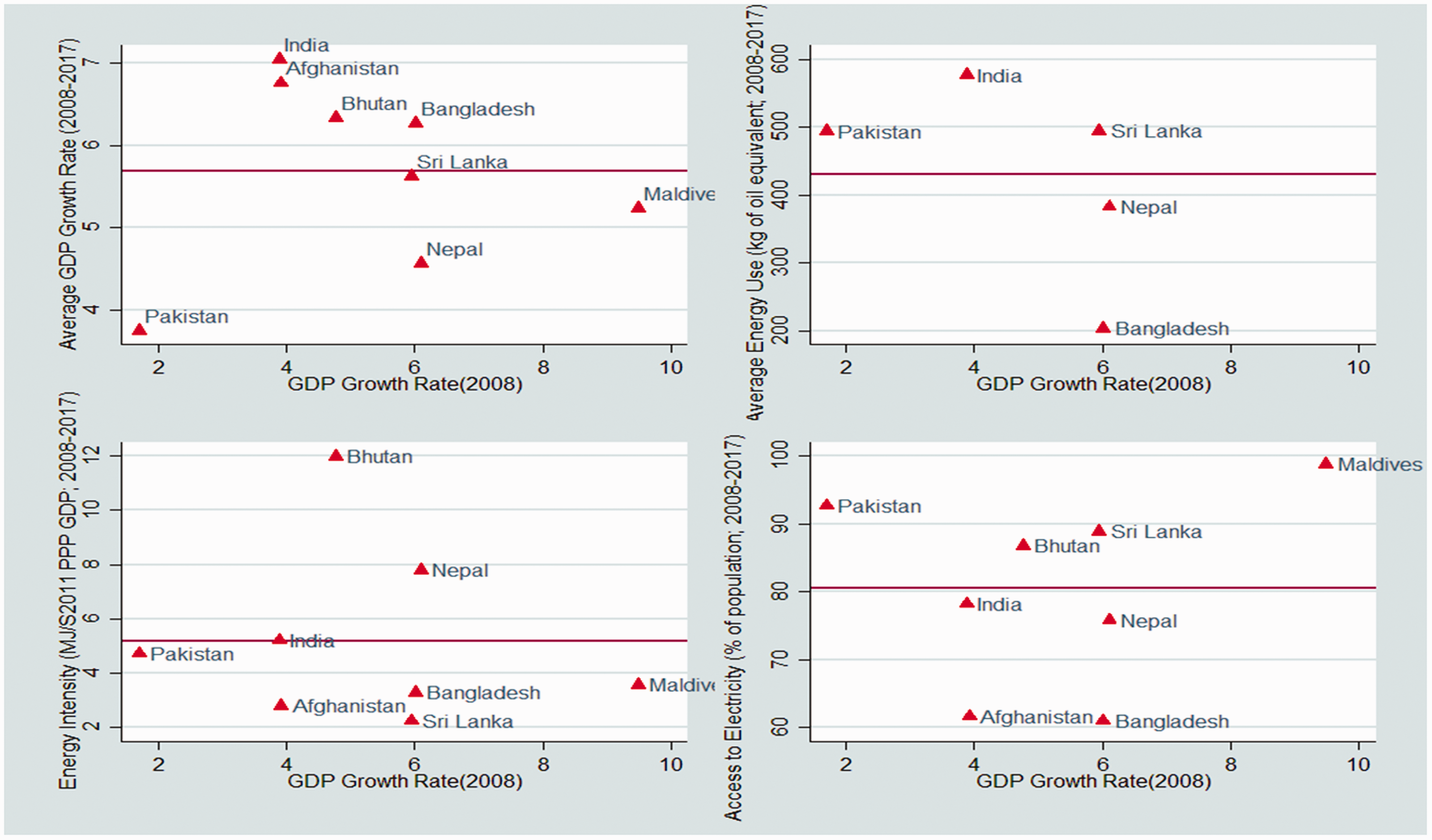
Energy consumption trends in South Asia (2008–2017).
In Bangladesh, electricity is the widely employed form of secondary energy source for enabling most of its economic activities. Although the country achieved significant feats in terms of expansion in its in-grid electrification from 8.54% in 1992 to almost 76% in 2018, reducing the persistent rural–urban electrification gap remains to be an intriguing challenge for the government. Figure 2 provides a comparison between rural, urban, and nation in-grid electrification rates in the country over the last 28 years. Moreover, the per capita electricity consumption levels have also failed to conform to the corresponding per capita generation figures as shown in Table 1 (see Appendix). Apparently, such statistical evidence seems to point out towards the inefficiencies attached to the national electricity transmission and distribution mechanisms in Bangladesh.
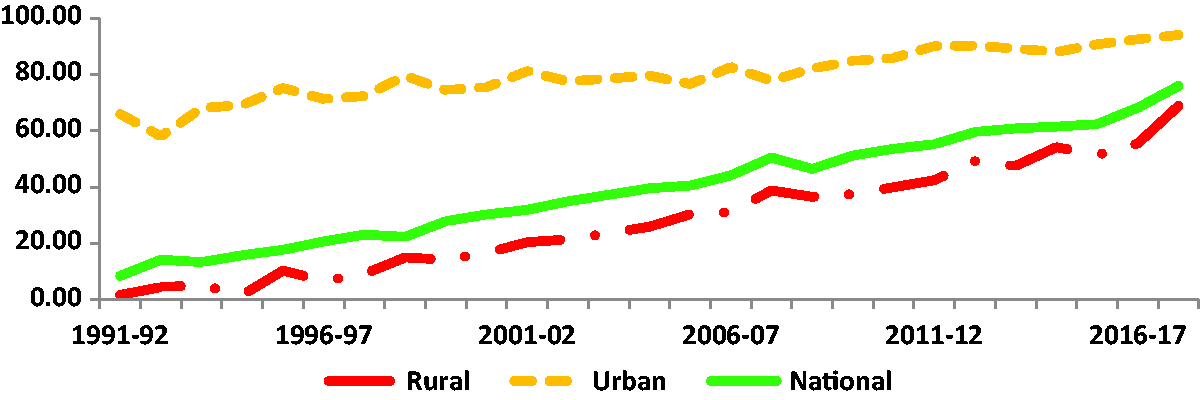
Grid connectivity trends in Bangladesh.
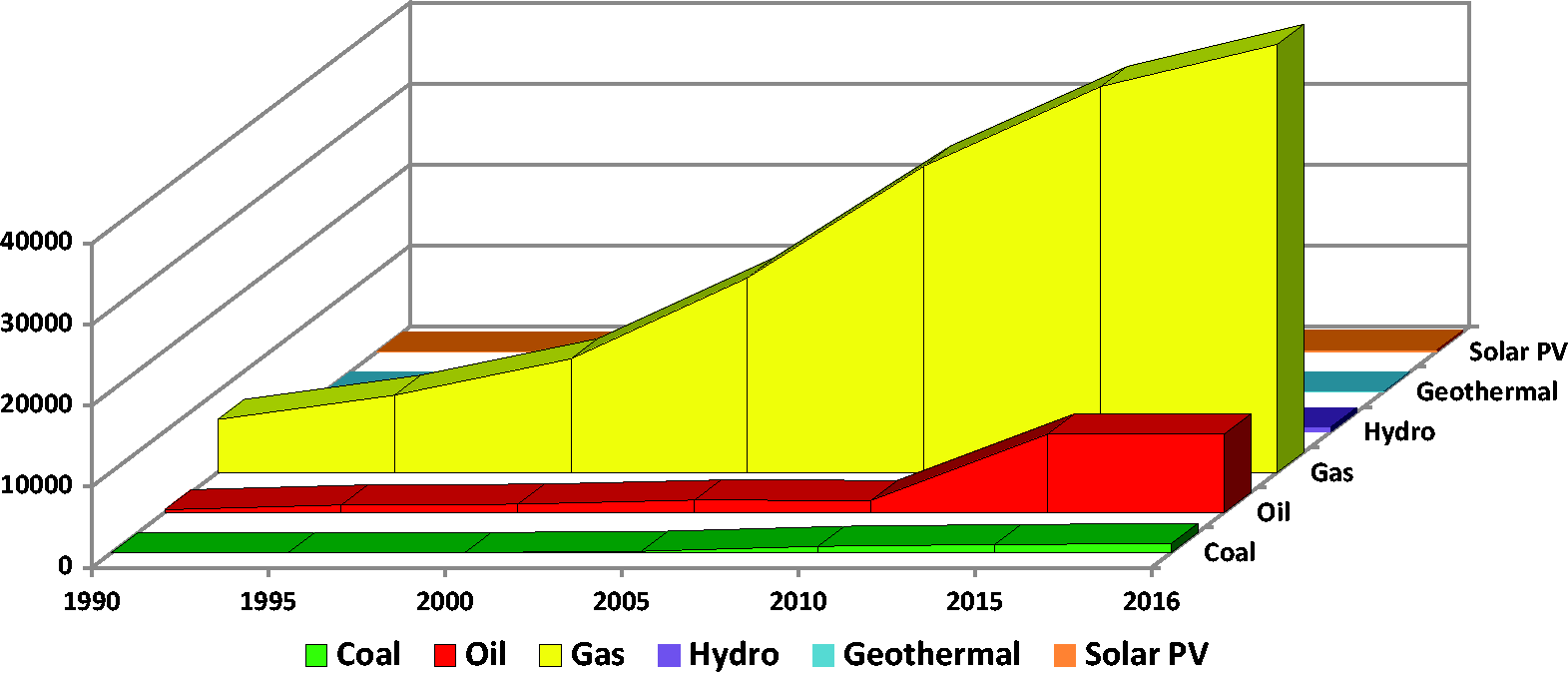
Sources of electricity generation in Bangladesh.
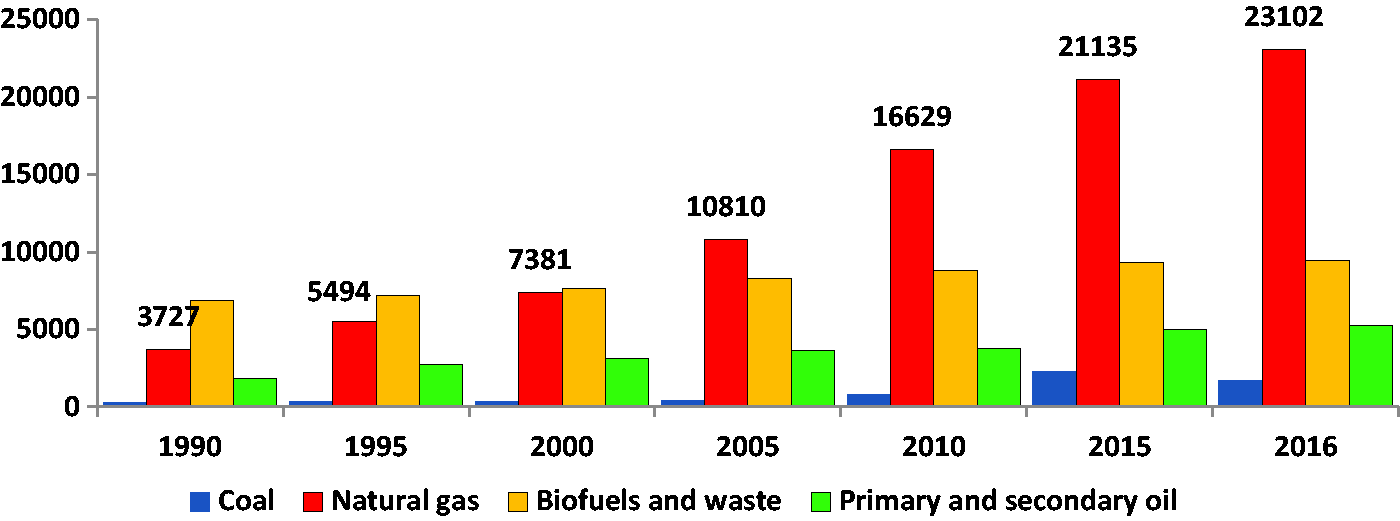
Trends in total primary energy supply by sources in Bangladesh.
The core reason behind the nation’s dismal performance in the power sector can largely be attributed to the failure of the electricity generation companies to operate at full capacities, whereby the derated capacities have always been lower than the corresponding installed capacities. Table 2 (see Appendix) shows that not only did the derated capacities fail to conform to the installed capacities, but the difference between them has also swollen over time. Simultaneously, the gap between the maximum demand for electricity and its generation at the peak hours in recent times has also depicted escalating trends rising by more than five folds between from fiscal year 2000–2001 and 2017–2018. This can be understood from the fact that electricity generation in Bangladesh has been overwhelmingly reliant on the indigenous supply of natural gas which, at present, is close to being depleted following overexploitation, subsided pricing and inability of exploring new gas fields. 19 Figures 3 and 4 (see Appendix) explicitly portrays the nation’s reliance on natural gas and, keeping the acute gas supply crunch at present into consideration, provide justification behind the implementation of electricity conservation policies in Bangladesh.
The multidimensional approach to energy conservation
Conservation of energy within the built-infrastructures is basically a demand-side measure of safeguarding energy supply, which is expected to complement the government’s supply-side initiatives leading to the development of the national energy infrastructure. However, energy conservation can be classified into direct and indirect approaches, both working for the common target of reducing the amount of energy consumption, increasing the intensity of energy use and managing the energy resources efficiently.
The direct measures of energy conservation basically ensure a straightforward reduction in the total units of energy consumed. Switching off electrical appliances for a certain period of time can be an ideal example of such direct measures of conservation. Thus, conservation of energy in this manner can be fundamental in governing the intertemporal energy consumption decisions of the end users. However, within this direct conservatory strategy, structural and nonstructural variants can work differently although the ultimate target is achieved in a collective manner. 20 While the structural approach advocates in favor of energy conservation through automation, using technology to automatically shut down power within the unoccupied rooms, the nonstructural approach rather aims at raising awareness amongst the stakeholders and nudging them in sparking a behavioral transition through which a person leaving a room can manually turn off the electrical appliances, whereby the rate of energy wasted can effectively be brought down. The basis of this approach is sourced from the consensus that usually energy is wasted due to the users being unaware of the significance of energy in their daily lives. Thus, awareness building does play a key role.21,22
On the other hand, indirect measures of energy conservation include policies aimed at enhancing the intensity at which energy is consumed and at proper management of energy use within the buildings in particular. At times, curbing the energy consumption using the direct measures may not be possible due to the limitations in the form of the requirement of a constant supply of power during hectic schedules. In such circumstances, enhancing the energy use efficiency levels ensure lower units of energy consumption without compromising the existing demand for energy. 23 Such measures usually advocate in favor of replacing traditional energy-wasting electrical appliances with modern energy-efficient alternatives. 24 The need for efficiency enhancement with regard to conserving energy has also been acknowledged by the International Energy Agency. 25 Although energy efficiency improvement is a necessary condition for conservation of energy, it is definitely not a sufficient one. Energy planners of emphasize on the importance of better energy management to complement the efficiency-boosting initiatives.26–28 Proper management of energy consumption within buildings can ideally bring down energy usages by about 10% to 20%.29,30
Literature study
This section has been divided into two subsections with the first one highlighting the theoretical foundation behind energy conservation while the latter addressing the empirical findings documented in the existing literature.
Theoretical frameworks
Apart from the need to ensure sustainability in supply of energy, the fundamentals adhering to the principles of energy conservation could be understood from the consumer choice theory which asserts that a rational consumer, bounded by an Intertemporal Budget Constraint (IBC), maximizes lifetime utility via optimally allocating the consumption bundles over time. Thus, this theory also rationalizes the importance of saving energy use in order to smoothen the energy consumption stream in future. In the context of interpreting energy as a consumable good, the IBC imposed implicitly implies that for a consumer to increase (or decrease) energy consumption in the future, present consumption of energy has to be reduced (or raised), ceteris paribus, and vice versa. Figure 5 graphically illustrates the mechanism of intertemporal allocation of energy consumption for a household. For simplicity, it is assumed that there is a single household in the economy and energy is the only consumable commodity. The IBC faced by the household is denoted by the downward-sloping line BB. The decision of the household to operate at any point on the IBC depends on its preferences as indicated by the indifference curves (IC). If the household chooses to operate at point Y, it can be interpreted as the household’s preference towards future consumption of energy whereby energy is to be conserved at present. Thus, the concept of energy conservation in order to ensure the availability of energy resources in the future can be understood from such a preference of the household. Conversely, operating at point X could be referred to as a preference set that is against energy conservation due to the household preferring current consumption over future consumption of energy. Thus, a leftward movement along the IBC can be interpreted as conservation of energy at present, which automatically implies a higher consumption of energy in future. Thus, the consumer choice theory typically addresses the trade-off between current and future consumption of energy keeping both the aspects of life-time utility maximization and consumption smoothing into consideration.
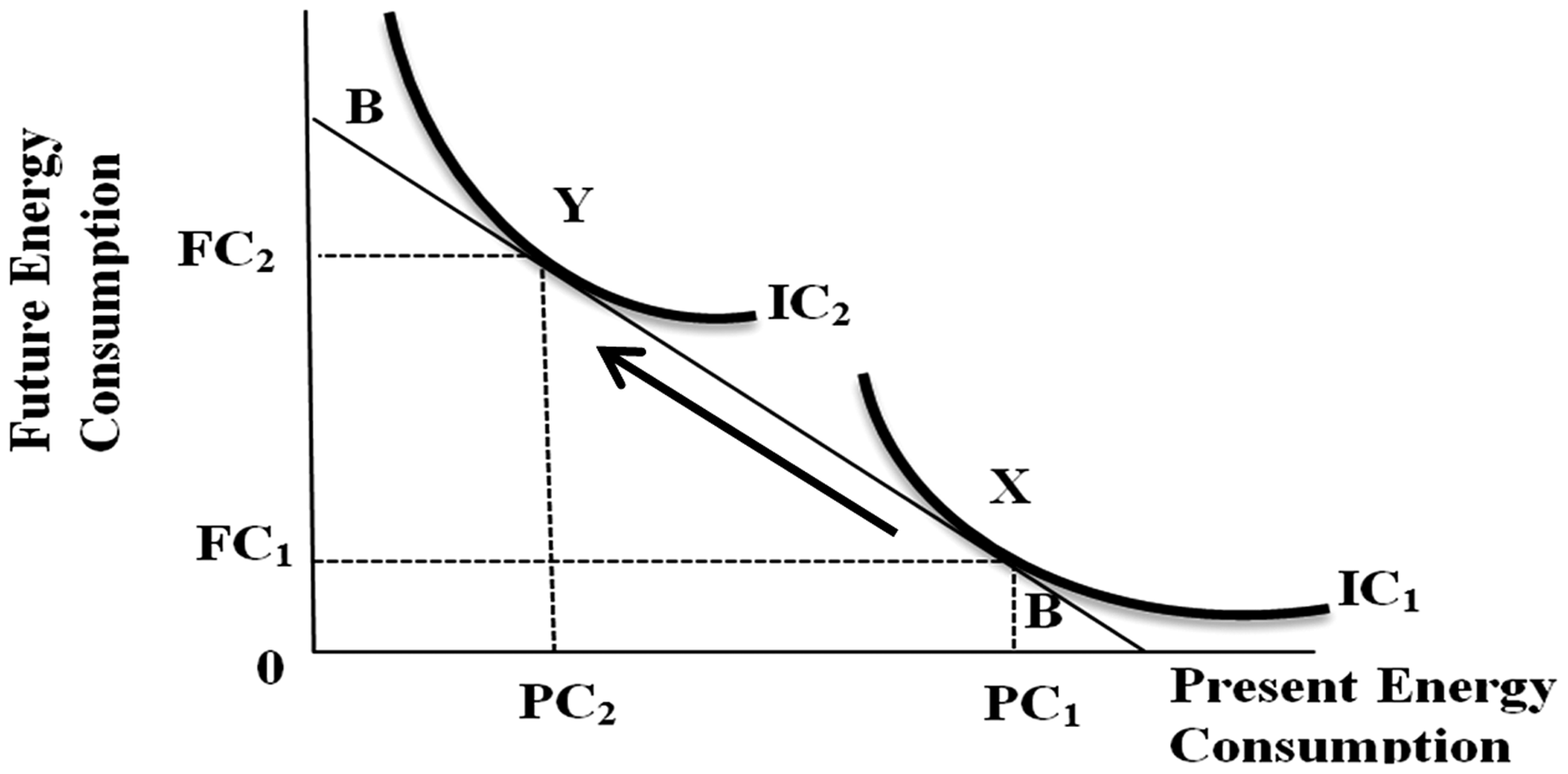
The intertemporal allocation of energy consumption.
Empirical findings
The utmost importance of energy conservation within buildings, particularly focusing on the academic institutions, has been extensively highlighted in a wide array of significant declarations, including The Talloires Declaration, 31 The Halifax Declaration, 32 The Kyoto Declaration, 33 The Swansea Declaration, 34 and Students for a Sustainable Future. 35 Taking these declarations into cognizance, many institutions across the globe have attempted to undertake extensive energy conservation schemes.
Conservation of electricity within the campus has received stern emphasis in recent times. Clayton and Nesnidol 22 referred to awareness building being key to instigate electricity conservation amidst the end-users. The authors analyzed the opportunities for electricity savings within a college campus in the Northeast of the United States with the notion of reducing electricity use in order to ensure sustainability of the academic programs and minimization of the college’s operating costs. The authors primarily focused on the importance of awareness building to nudge a behavioral change approach to curb energy use inside the classrooms. As part of the strategies to induce the better management of electrical use, placards depicting instructions to turn off electrical devices used for illumination purposes prior to evacuating the classrooms. The impact of such a treatment was found to be favorable in reducing the mean electricity use within the unoccupied classrooms by almost 17 percentage points. Thus, based on the findings, the authors inferred that the nudge to curtail the overall use of electricity did not only succeed in reducing the electricity use, but it also managed to disseminate interest in the stakeholders to engage more in the campus sustainability drives.
Employing energy audits to identify the sectors responsible for the electrical energy wastage within the Mangosothu University of Technology campus of South Africa, Numbi et al. 36 concluded that the majority of electrical power is was wasted during the during times when the campus buildings are unoccupied. In addition, the use of air-conditioners during the nights and holidays were found to be the leading attributes of the inefficient use of electricity. The authors, based on a cost–benefit analysis, concluded that as almost three million South African rands could be saved annually if proper electricity conservation measures are implemented at times when no power is required within the campus other than the minimum units of electrical energy required primarily for outdoor illumination purposes. Thus, the authors specifically stressed on the efficient management and utilization of power in order to conserve electricity within the campus.
Dhivvya et al. 37 recommended the installation of wireless occupancy sensors within the classrooms to evaluate the need and regulate the use of electricity accordingly inside the respective classrooms and laboratories to ensure the efficient use of power. The authors proposed the use of a collective set of wireless sensors in this regard, whereby electricity would automatically be turned off in case a classroom is evacuated after the scheduled lectures. The core purpose of the authors was to develop a green campus system based on wireless networks to bridge the campus sustainability objectives of the relevant stakeholders. Similar recommendations are made by Sharma and Kaur 38 with relevance to integrating smart grids into the I. K. Gujral Punjab Technical University in India where the authors postulated the university’s energy costs to be going down significantly by as much as 1.75 Indian rupees per kilowatt-hours of electricity consumed.
Apart from directly conserving electricity, many studies have also recommended in favor of elevating the energy-use efficiency levels for better management of energy demands within the campus. In a study by Oyedepo et al. 39 on the Covenant University in Nigeria, the authors recommended energy-use efficiency enhancements in order to manage energy demand within built infrastructures inside the campus. In line with the results from the audit report conducted in the study, the author recommended replacement of traditional energy-inefficient illuminating devices by the modern energy-efficient ones along with the incorporation of natural ventilation and the use of the energy-conserving electronic regulator fans to complement the air-conditioning equipment can cumulatively account for a drop in the energy demand by 16% per annum. Moreover, the authors also concluded that replacing the traditional lighting bulbs, after the cost recovery period of a year, can effectively reduce energy demands within the student’s hostels and staff quarters by 394 and 644 MW respectively, whereby the monetary savings can surge up to as much as 30,000 and 49,375 US dollars per year. On the other hand, the new cooling appliances can also contribute to lessening annual energy demand by an additional 367 MW which, in turn, could reduce energy costs by more than 61,000 US dollars as well.
Although the incorporation of renewable energy technologies at a large scale is subject to hefty investments, many studies have referred to the use of renewable resources to generate electricity within the university campuses. Fonseca et al. 40 voiced in favor of the installation of photovoltaic systems for feasible off-grid electrification inside the Electrical and Computers Engineering Department building at the University of Coimbra in Portugal. As part of the university’s goal of achieving the tag of a zero-energy building, the university installed a photovoltaic system to generate electricity from solar power which accounted for almost 27.5% of the total energy supply. Overall, almost 60% of the total demand for energy in this building is sourced from various renewable sources of energy. The combined impact of such renewable energy transitionary mechanisms led to significant drops in the total energy consumption figures, generating monetary savings for the associated stakeholders while also minimizing the carbon emissions as well. Similar suggestion regarding the installation of photovoltaic systems was also put forward by Huang et al. 41 (2018) in the context of the Lund University campus in Sweden.
Methodology and attributes of data
This paper analyses a case study of NSU, the largest private university of Bangladesh. The rationale behind choosing NSU, as a representative case of the private universities operating in the capital city of Dhaka, is justified in terms of the university being the first private university to set foot in the country in 1992 while also currently having the largest permanent campus as well. Moreover, the university also accounts for the most number of students amongst all the other private universities. In this paper, the prospective benefits from implementing electricity conservation policies within the campus are explored using relevant electricity-use data sourced from the accounts and maintenance department as well as from the university’s monthly utility bill acquired from the Bangladesh Electric Supply Company Limited (DESCO). The analysis specifically aims at calculating the potential monetary benefits NSU can be entitled to through conservation of electricity via several indirect and direct mechanisms.
An overview of the NSU campus and its electricity consumption profile
NSU is the pioneer private university in Bangladesh comprising the largest academic campus amongst all the private universities operating within the capital city of Dhaka. The campus encompasses a land area of about 5.5 acres and comprises three main built-infrastructures the North Academic (NAC) building, the South Academic (SAC) building and the Administration building. The total floor space of 1.26 million square feet, of which the basement car parking area occupies around 0.32 million square feet and the rest are allotted to the 112 classrooms, 291 faculty rooms, 35 administrative office rooms and 34 scientific and computer laboratories, 2 auditoriums, and a large open space for recreational purposes of around 25,000 undergraduate and graduate students.
The monthly electricity consumption profile of NSU is provided in Table 3. It can be seen that the university sources a bulk of its total electricity usage from the DESCO. However, it is not solely dependent on the electricity supplied from the national grid which is evident from the university’s decision to install its own gas-generators to augment the total electricity supply. Almost the entire campus comprises energy-efficient lighting appliances that are in line with the university’s vision of enhancing the in-campus electricity-use efficiency levels. As far as the specific nature of energy use is concerned, the main form of energy employed in NSU is electricity that is primarily generated from two sources. The university partially generates its own electricity via its personal 4 MW capacity oriented captive power generator that is run on natural gas. A fixed amount of Tk 0.26 crores (0.32 million US$ equivalent) is handed out every month to the gas suppliers for the functioning of the gas generator. However, due to recent gas shortages and low gas pressures in the national pipelines, it is not always possible for the university to run the generator. Thus, NSU also purchases electricity from DESCO to meet its total electricity demand. The electricity bills paid to DESCO amount up to an average of around Tk 0.3 crores (0.37 million US$ equivalent) per month. 4 Moreover, it is to be noted that almost 60% of the total electricity demand in NSU is utilized for the purpose of air-conditioning within the campus. The three main constructions within the campus are centrally air-conditioned which require almost 2750 units of electricity per month. A brief summary of the electricity usage is reported in Figures 6 and 7.
Electricity profile of NSU.
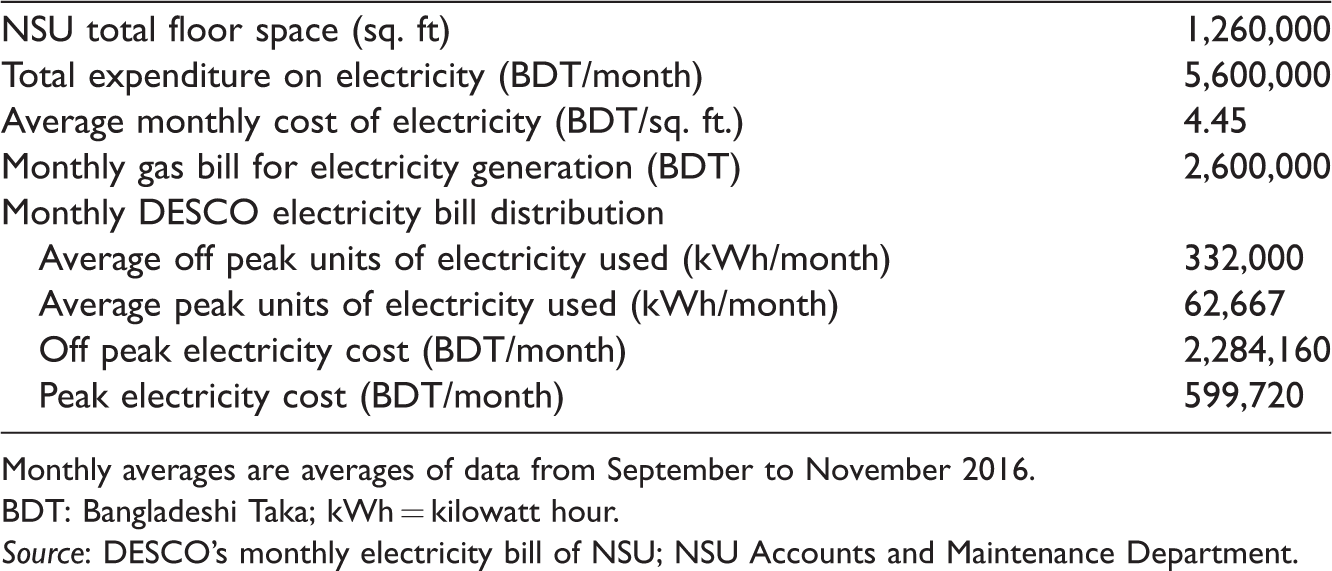
Monthly averages are averages of data from September to November 2016.
BDT: Bangladeshi Taka; kWh = kilowatt hour.
Source: DESCO’s monthly electricity bill of NSU; NSU Accounts and Maintenance Department.
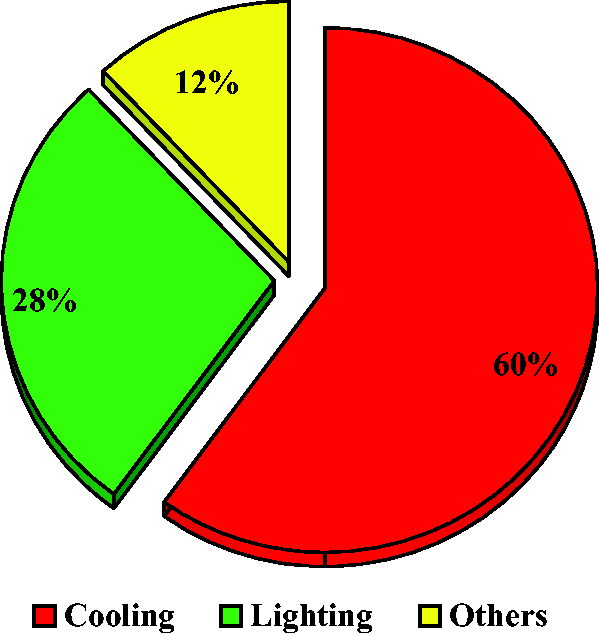
Distribution of electricity use in North South University Campus.
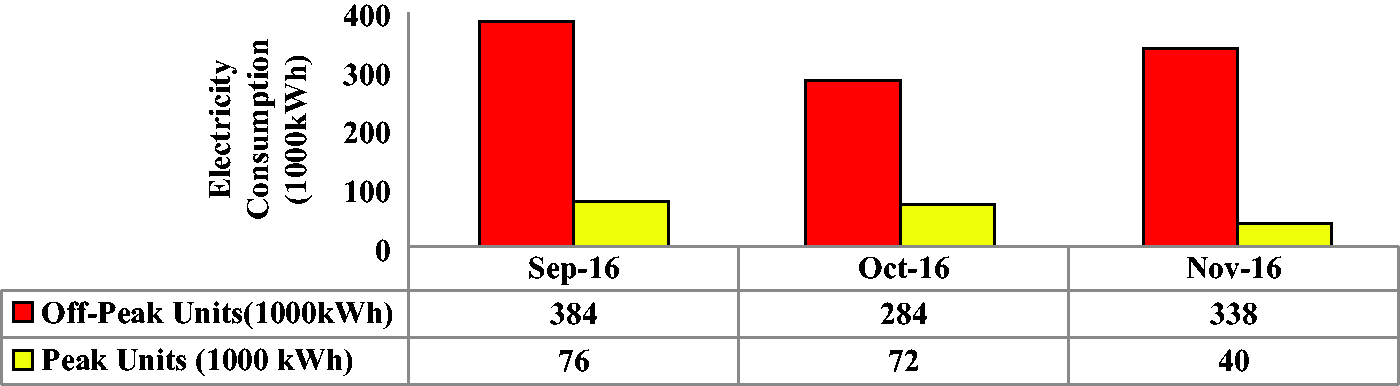
North South University’s electricity sourced from DESCO (September – November 2016).
The prospects of electricity saving within the campus of NSU
Despite NSU being pretty much in line with the national policies aimed at electricity waste reductions, there are further scopes for the university to conserve more amount of electricity. As far as the benefits of undertaking electricity conservation policies within the campus are concerned, NSU has immense potentials to save up its operational costs in the form of reducing its electricity bills in particular. For instance, drawing from the relevant statistics reported by Woodruff, 42 it can be said that the university via promoting the practice of switching off the electrical appliances installed within the classrooms and offices, prior to evacuation, within the end users can directly save around 18% of total electricity use within the campus, which is synonymous to curbing the overall utility expense by almost one-fifth of the existing bills. Apart from financial savings from such direct conservation of electricity use within the campus, there are some other intangible benefits that are expected to contribute to an additional 10–12% reduction in the university’s electricity bills. These indirect benefits include the extended functional lifetime of the appliances, lower replacement, and maintenance costs and the university to some extent would also become less vulnerable to the exogenous electricity price shocks. Thus, these direct and indirect cost-savings can cumulatively reduce the electricity expenses by as much as one-third of the existing expenditure. This implies that NSU can potentially save around Tk 0.17 crores (0.2 million US$ equivalent) per month through the effective implementation of the electricity conservation techniques within the campus. On the other hand, as argued by Emeakaroha et al. 43 in the context of the campus of the University of Kent, improvement in the efficiency of electricity use within the campus of NSU can also reduce the monthly energy demand by at least 5%, which is synonymous to a monthly saving of another Tk 0.03 crores (37,000 US$ equivalent). Hence, it is pretty evident that the university authority is more than likely to be handsomely benefited through the adoption of electricity conservation, efficiency and management tools within the campus.
As far as the recommendation for future energy conservation is concerned, decentralization of electricity control is believed to be a key strategy for conserving electricity within university campuses, to which NSU is no exception. Although, it is somewhat difficult for the university to directly reduce the total electricity use since it is under a contract with the natural gas suppliers to pay a fixed amount of Tk 0.26 crores (0.32 million US$ equivalent) per month irrespective of the amount of electricity generated. However, NSU can effectively reduce its electricity bills paid to DESCO through the implementation of some of these innovative electricity-conserving techniques that are in line with the international best practices.
Segmentation of daily conservation time
First of all, it is to be clearly understood that electricity conservation ways are ought to differ at different points in time throughout the entire day and night. For instance, reducing electricity usage via daylight harvesting can only take place as long as the sun keeps blazing in the sky, whereby such mechanism becomes ineligible for application after sunset. Thus, segmentation of the overall conservation plan is critically important in ensuring efficient conservation of electricity within the campus. It is recommended that NSU segments the stipulated 24 h in a given day into four time-phases namely pre-operation, operation, overtime, and post-operation phases.
The pre-operation phase can be referred to the time prior to the commencement of the regular classes in the campus which is usually from 6 a.m. to 8 a.m. Despite the fact that classes at NSU begin at 8 in the morning, the air conditions start operating from 7.20 a.m. onwards, which clearly points out to as many as 40 min of unnecessary wastage of electric power. Hence, instead of wasting electricity in such a manner, the university is better-off to ensure ventilation into the classrooms, which can be interpreted as an alternative to the unnecessary waste of power to cool down the classrooms and offices. In contrast, during the winter, the natural ventilation within the campus can also work the other way round warming up the classrooms and offices prior to the commencement of lectures and the office hours of the employees, respectively.
The completion of the pre-operation period makes way for the operation phase of electricity conservation to take place. It is during this operation phase when the intensity of the academic and administrative activities within the campus speeds, particularly following the commencement of the lectures. Thus, this operation time referred to the period between 8 in the morning and 6 in the evening, is the utmost important time zone in which the prospects of electricity conservation is relatively more challenging. This is simply because of the fact that during this period, electricity demand within the campus is at its peak and therefore the direct measures aimed at reducing the amount of electricity usage are technically inappropriate. Hence, it is recommended that the supply of electricity to run electrical appliances during the operational phase should ideally be controlled more efficiently. Thus, decentralization of power controls is crucial whereby the electrical devices can easily be switched off, or at least stepped down, as per the need of the moment. Installation of occupancy sensors and smart circuit-breakers could also be solutions in this regard provided the university authority it is willing and motivated to bear the initial costs associated with such automation. Alternatively, the efficiency level of electricity use within the campus can also be manually enhanced by incentivizing and raising awareness amongst the corresponding end users. Apart from this, harvesting daylight into the classrooms, in particular, can also play a key role when it conserving power during the operation phase which not only would save costs but would also benefit the health of the students. For example, empirical results show that the performances of students in classrooms that have access to natural sunlight are comparatively better than that of the students in classrooms that are dependent on electricity for illumination. 44
The third phase is referred to as the period of overtime, ranging from 6 in the evening to 10 at night, which basically covers the time when the undergraduate classes in the campus are over while the graduate classes follow. Given the relatively less number of graduate students at NSU, the electricity demand is significantly lower in comparison to demand during the day time. Moreover, most of the evening classes at NSU are usually scheduled to take place inside the NAC building of the campus which provides ample opportunity of conserving electricity via switching off power supply inside the other two buildings that are usually vacant. In addition, the total number of elevators in use can also be reduced to ensure electricity conservation further. This mechanism of partial switching-off of power supply in certain areas within the campus, termed as “zone scheduling”, is expected to curb more than 50% of the total electricity usage at NSU during the overtime phase.
Finally, the post-operation phase refers to the time period from 10 p.m. onwards following the completion of all academic activities within the campus. The electricity demand during this period is at the lowest compared to the aforementioned phases. It is suggested that power supply within the entire campus should preferably be turned down almost completely during this time period with only a minimal amount of electricity should be allotted particularly for the purpose of exterior illumination of the campus.
Enhancing internal gas-generated electricity efficiency
It has been mentioned earlier that NSU has got a 4 MW captive power gas generator for generating its own power, for which it is under a contract to pay a fixed monthly charge of Tk 26 crores (0.32 million US$ equivalent) to the natural gas suppliers. However, as per the statistical data provided by the accounts and maintenance department of the university, the monthly limit of 4 MW electricity generation cannot be reached mainly due to the acute shortages in the supply of natural gas, inadequate gas pressures and low academic activities during the post-evening sessions. As a result, the funds of the authorities end up being wasted due to the actual power-generation capacity of the gas generator remaining untapped. Hence, it is desirable for NSU to introduce new academic programs to boost its student enrolment rates in order to ensure more efficient use of the gas generator. In addition, energy-efficient electrical appliances should be employed all throughout the campus, which would further reduce the overall electricity demand.
Developing an Electricity Conservation and Demand Management plan
It is to be understood that the conservation of electricity does not take place overnight. This is because in order for the conservation strategies to function effectively, it takes crucial investments and effective strategic planning that are subject to time lags. Hence, it is suggested that NSU adopts 5-year Electricity Conservation and Demand Management (ECDM) plans and slowly, but effectively, approach towards its electricity-conservation goals. The strategic planning is crucial in the sense that just because a particular energy conservation technology is available for application, it does not necessarily mean that it should immediately be introduced. Rather, the use of the technology should be considered only after positive results from continuous short-term trial-and-error performances. For instance, the first two years of the 5-year plan can be devoted for evaluating the metering transitions, operational refining, energy-use profiling, and performance assessments, while the remaining three years can be allotted for implementation of these conservation policies. This way, the energy conservation practices within the campus can go on to be more effective which, in turn, would be reflected in better energy performances at the end of the ECDM plan.
Ensuring unique control considerations
Centralized control of power is definitely a constraint faced by NSU when it comes to effective conservation of electricity within the campus. For instance, the central air-conditioning invariably hampers the overall electricity conservation initiatives of the university, whereby electricity is unnecessarily wasted in unoccupied classrooms and offices. Thus, the unique control considerations (UCC) is a potential alternative for NSU to ponder on immediately. Under this mechanism, the electricity users would have the capacity to switch electrical appliances on and off as per their requirements. Therefore, a faculty leaving his office room would ideally be able to turn off the electrical devices inside the room prior to vacating the room while the lights and air-conditions inside classrooms can also be switched off following the completion of the lectures. Specific individuals can also be hired to manually reduce electricity use by exercising their capacities to access the power controls.
Integration of the building automation standards
Apart from the basic conservation techniques, automation works as a significant method for electricity conservation within buildings. In this busy world, people are either too lazy or reluctant to conserve electricity on their own. Thus, the use of digitalized electricity-saving mechanisms seems to be the solution to this problem, whereby the key role of the building automation standards (BAS) is highlighted and recommended for use at NSU. It is suggested that NSU integrates its system with the BAS so that computer-programmed technologies can complement the basic techniques and ensure greater conservation, efficiency enhancement, and management of electricity consumption inside the campus. The integration of the BAS could include installation of smart sensors, occupancy sensors, automatic power regulators, intelligent mini-circuit breakers, mini-transmitters, sub-meters, and smart access cards. However, an important point to be noted is that the process of such automation is not free of cost. The installation of the latest technology-embodied devices as part of applying the BAS is relatively expensive and requires hefty capital investments. Nevertheless, compared to the immense benefits it would ensure in terms of cost savings and reduction in energy use in the future, such investments are definitely considered to be worthwhile.
Conclusions
The mushroom growth of private universities within Bangladesh has led to progressive escalation in the demand for energy, electricity in particular. Moreover, the energy-use efficiency levels are also unsatisfactory following improper management of power. Thus, in line with the government’s commitment to conserve energy and raise efficiency levels within the built-infrastructures of academic institutions, this paper has analyzed the electricity saving opportunities inside the campus of NSU, the largest operating private university in Bangladesh. The findings reveal that implementation of effective conservation, efficiency enhancement and management policies within the campus can reduce the electricity bills by almost 35% saving as much as Tk 0.17 crores (0.2 million US$ equivalent) per month. As per recommendation, five high potential methods of conserving electricity within the campus are suggested. It is believed that successful execution of the proposed conservation strategies would definitely ensure campus sustainability for NSU in years to come, making it a pioneer in terms of achieving efficiency in energy use amongst all private universities in Bangladesh.
For future studies, we would like to examine and propose energy conservation techniques for other private and public universities in Bangladesh. In addition, we would also like to identify new methods of conserving other forms of energy, apart from electricity, used in university buildings. A limitation of this study was the lack of availability of data in detail. For instance, accurate electricity-use data for a particular classroom or auditorium was not available. As a result, making an in-depth cost–benefit analysis could not be performed.
Footnotes
Acknowledgements
The author would like to thank Dr. Sakib Bin Amin for guiding him through the preparation of the article and also for providing expert opinions regarding the overall analysis. He also expresses his gratitude towards North South University for proving the relevant data used in the paper.
Declaration of conflicting interests
The author declared no potential conflicts of interest with respect to the research, authorship, and/or publication of this article.
Funding
The author received no financial support for the research, authorship, and/or publication of this article.