







Abstract
The most important environmental challenge that the world is facing today is the control of the quantity of CO2 in the atmosphere, because it causes global warming. Increase in the global temperature results in greenhouse gas emission, interruption of the volcanic activity, and climatic changes. The alarming rise of the CO2 level impels to take some serious action to control these climatic changes. Various techniques are being utilized to capture CO2. However, chemical absorption and adsorption are supposed to be the most suitable techniques for post-combustion CO2 capture, but the main focus is on adsorption. The aim of this study is to provide a brief overview on the CO2 adsorption by a novel class of adsorbents called the metal–organic framework. The metal–organic framework is a porous material having high surface area with high CO2 adsorption capacity. The metal–organic frameworks possess dynamic structure and have large capacity to adsorb CO2 at either low pressure or high pressure due to its cavity size and surface area. Adsorption of CO2 in the metal–organic framework at various pressures depends upon pore volume and heat of adsorption correspondingly. In this review, different synthesis methods of the metal–organic framework such as slow evaporation, solvo thermal, mechanochemical, electrochemical, sonochemical, and microwave-assisted synthesis are briefly described as the structure of the metal–organic frameworks are mostly dependent upon synthesis techniques. In addition to this, different strategies are discussed to increase the CO2 adsorption capacity in the metal organic-framework.
Introduction
Carbon dioxide is the most noteworthy amongst all anthropogenic greenhouse gases. About 60% of the global warming is only because of the emission of CO2. 1 According to the Intergovernmental Panel on Climate Change, 2 the environment may possibly be enhanced by up to 570 ppm of CO2 in the 21st century causing an increase of about 1.9°C in the universal temperature, and about 3.8 m rise in the sea level. 3 It is very important to control the CO2 concentration by reducing human activities. Generally, there are some strategies applied to decrease the emission of CO2 into the environment by the efficient use of energy, by using hydrogen and renewable energy as an alternative to fossil fuels and developing new carbon capture technologies. 4
Owing to the depletion of natural resources, there needs to be an alternative way that can meet the fuel requirements. So the world is moving towards more sustainable fuels to meet her demands. For example, CO2 can be used to produce fuel for the future. In this regard, tremendous amount of research focus is on converting CO2 to useful fuels such as the production of methanol, syngas, etc. 5
Various techniques are utilized to capture CO2, which are cryogenic distillation, amine absorption, and membrane gas adsorption processes. The capture and adsorption of CO2 is a new concept, which is still under investigation. Different adsorbents silica, alumina, and activated carbon are being utilized for CO2 capturing. Activated carbon has been extensively used because of its low cost, thermal stability, and less sensitivity. Zeolite, alumina, and silica have produced remarkable results in the CO2 adsorption but all such systems require substantial amount of energy for the release of captured CO2, which leads to low energy efficiency and high cost. CO2 sensors are also used in many applications, such as clean energy technologies, engine exhausts, and chemical industries to detect CO2 gas. Several types of CO2 sensors that have been developed are infrared,6,7 surface acoustic wave, 8 solid electrolyte, 9 capacitive,10,11 and resistive sensors.12,13 The major drawback of such traditional adsorbents is their low adsorption capacity and difficult regeneration process. 14
As mentioned earlier, activated carbon is inexpensive and is not greatly affected by the humidity present in the gas in comparison to that of zeolite. Activated carbon is thermally stable and requires less energy for the regeneration process. However, they have some limitations as activated carbon shows low adsorption capacities than that of zeolite at low pressure and ambient temperature. With increasing temperature, the adsorption capacity of the activated carbon decreases. 15
On the other hand, zeolite adsorbents show high potential for the CO2 adsorption. But still, they have some restrictions as they are robustly affected by temperature, pressure, and the presence of moisture in feed gas. With the increase in the temperature, the CO2 adsorption capacity of zeolite adsorbents decreases and this adsorption capacity increases as the partial pressure of CO2 increases. Zeolite adsorbents are very sensitive to the moisture present in the feed gas. For the reason that it is greatly hydrophilic in nature, extensive drying of the feed gas is required earlier to the CO2 capture 15 and elevated regeneration temperatures are required, 16 which is more than 573.15 K. The additional drying and high regeneration temperature are responsible for the extra cost, which extensively affects the adsorption applications of zeolite adsorbent 15 as shown in Figure 1. That the CO2 capturing material should be easily regenerable is the main challenge for CO2 capturing technologies.
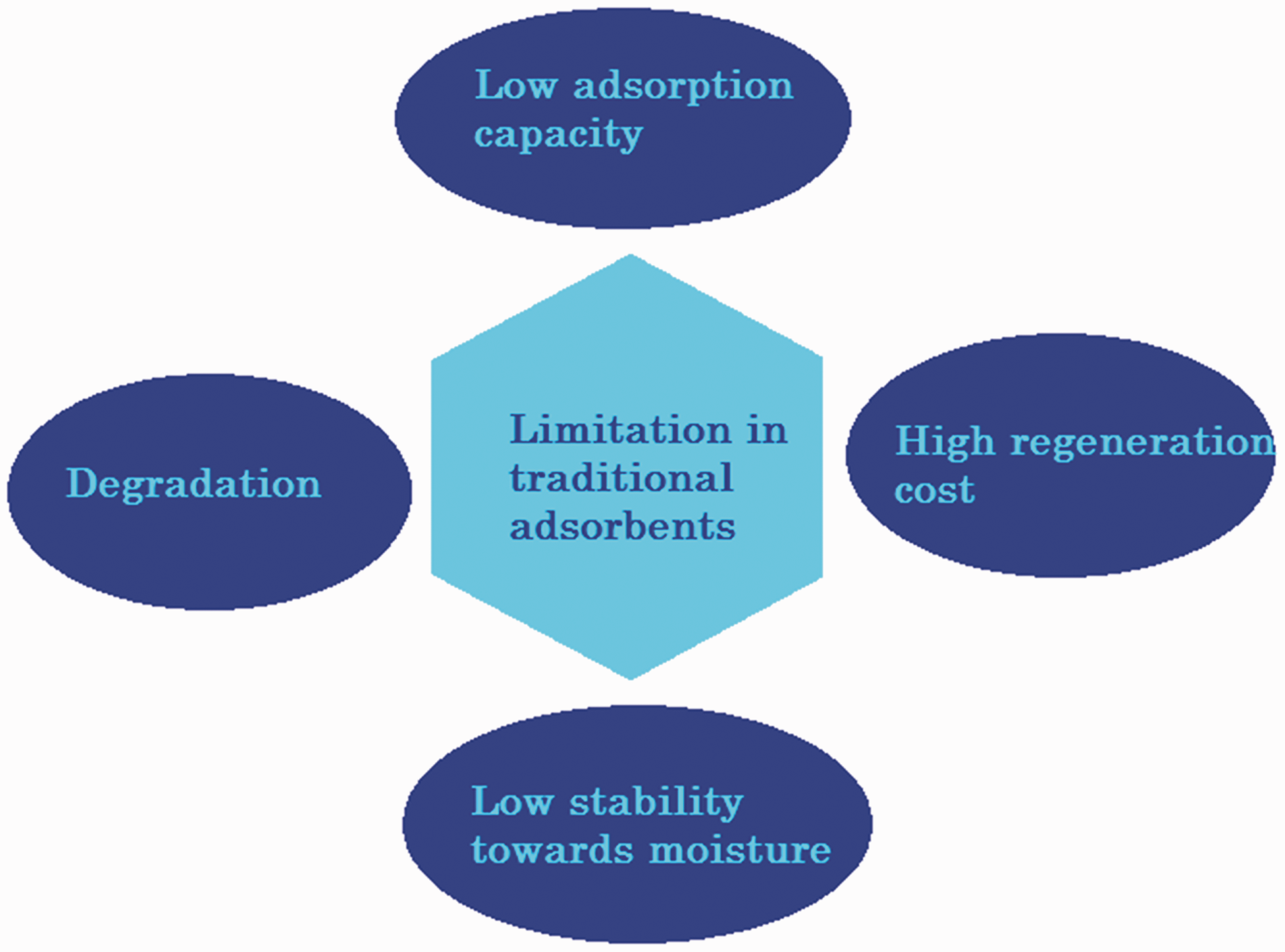
Limitation of traditional adsorbents.
In this review paper, limitation of traditional adsorbents and progress in CO2 adsorption by using the metal–organic framework (MOF) will be the focus. First, different methods used for the synthesis of the MOF are describe in detail and then CO2 adsorption studies through the MOF at high pressure and low pressure are discussed. After this, strategies to enhance the CO2 adsorption capacity are summarized as well. Stability of the MOF towards moisture, which is a biggest issue, will also be discussed. Although several review papers are already present on the synthesis of MOFs and the CO2 adsorption through MOFs, this study is the updated review of past reviews that include recent papers up until now. This is an attractive option for readers working in the field of the CO2 capture because this paper contains comprehensive information related to the adsorption of CO2 through the MOF and also highlights an important challenge regarding the stability of the MOF.
Novel class of adsorbents
Metal–organic framework
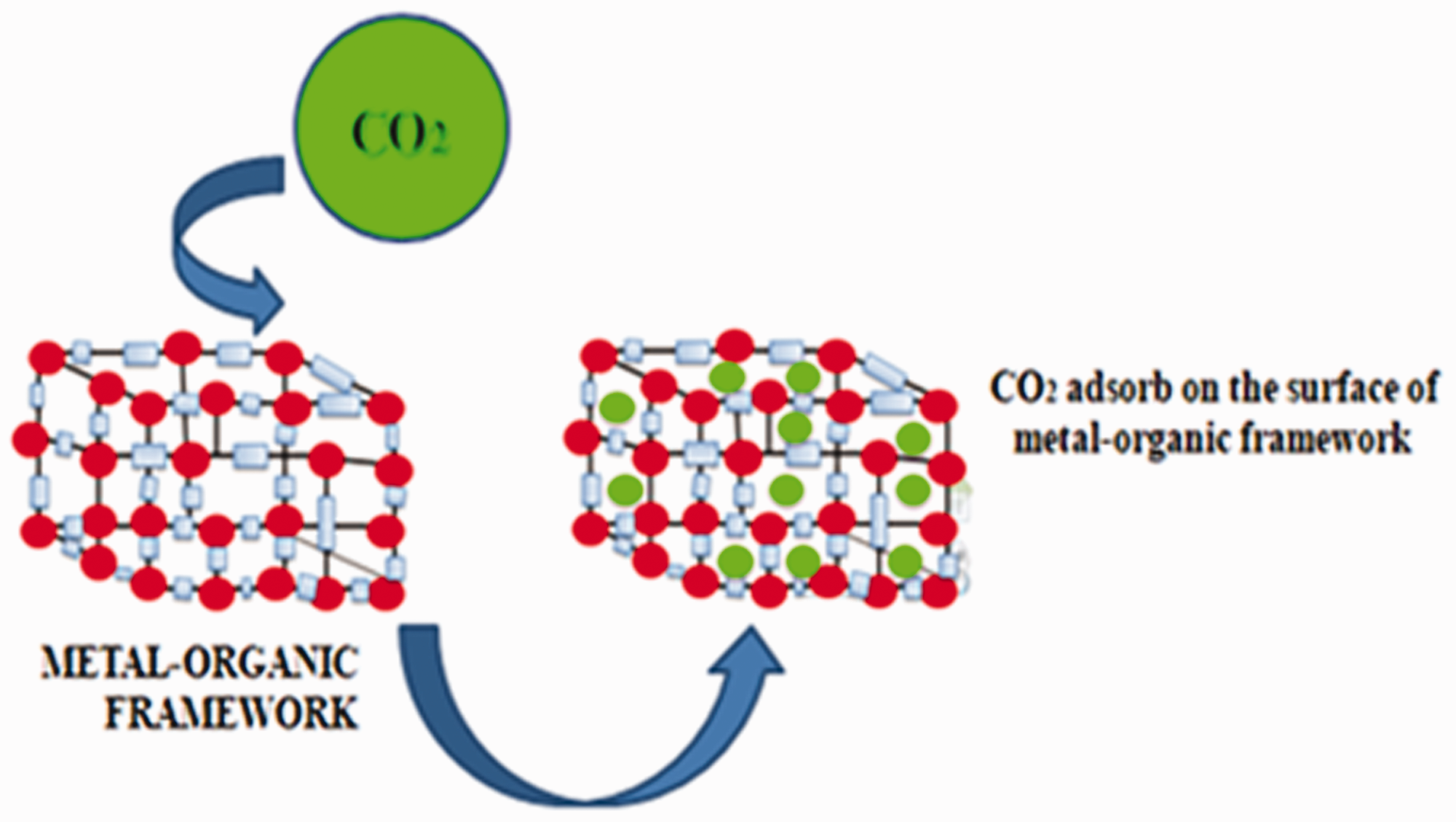
MOFs have been identified as the most promising next-generation technology for the carbon capture. CO2 is adsorbed on the surface of the MOF through both physisorption and chemisorption. This class of adsorbent is very important for gas separation applications and has gained much attention during the recent years. MOFs are formed by linking organic and inorganic building blocks formed by metal-based nodes in Figure 2.
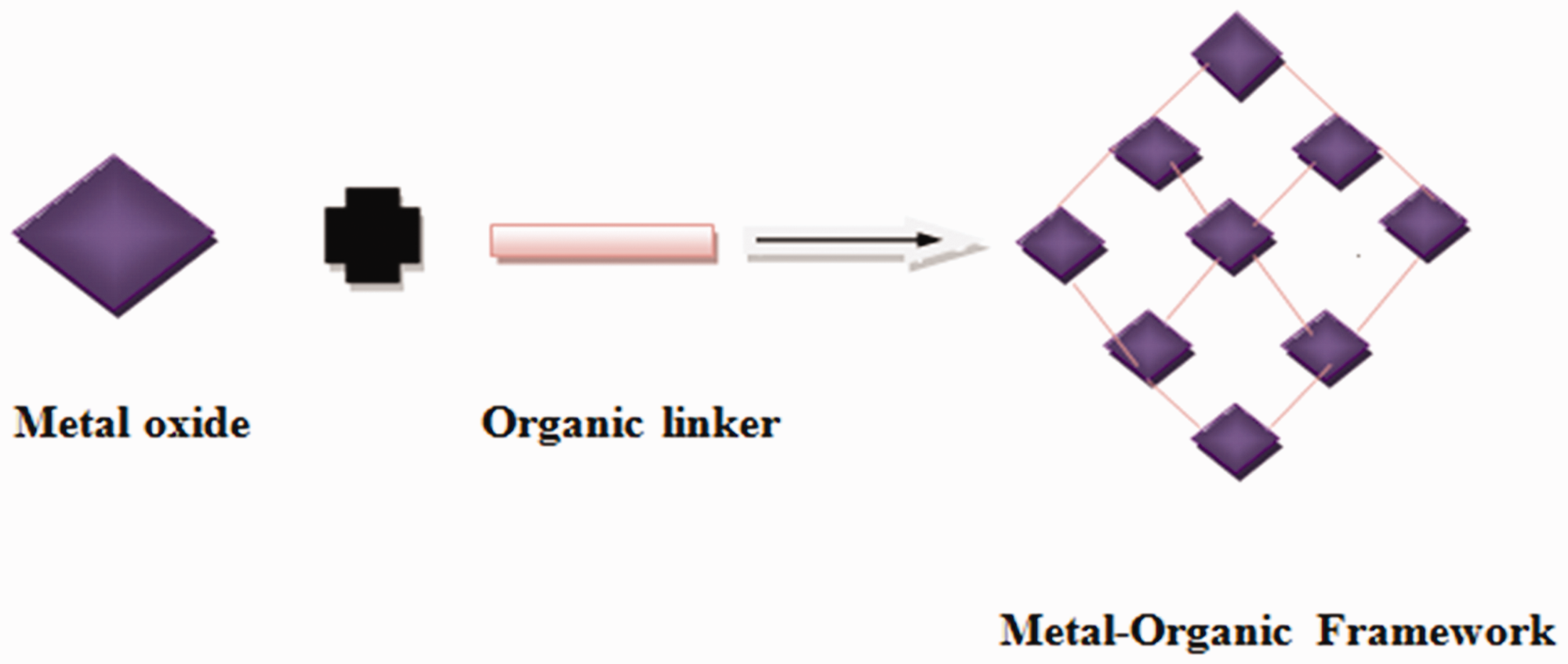
Synthesis scheme of the metal–organic framework.
MOFs are highly porous, thermally and mechanically stable, and have very high surface area for selective adsorption. The selection of metals and synthesis of organic ligands is the most significant feature of MOFs. 14 Different metals and organic ligands will form MOF with a variety of structures and properties. 14
MOFs are very dynamic in structure and utilized in a number of applications such as gas adsorption, gas separation, hydrogen storage, methane storage, CO2 capture, and purification of flue gas (Figure 3). 17
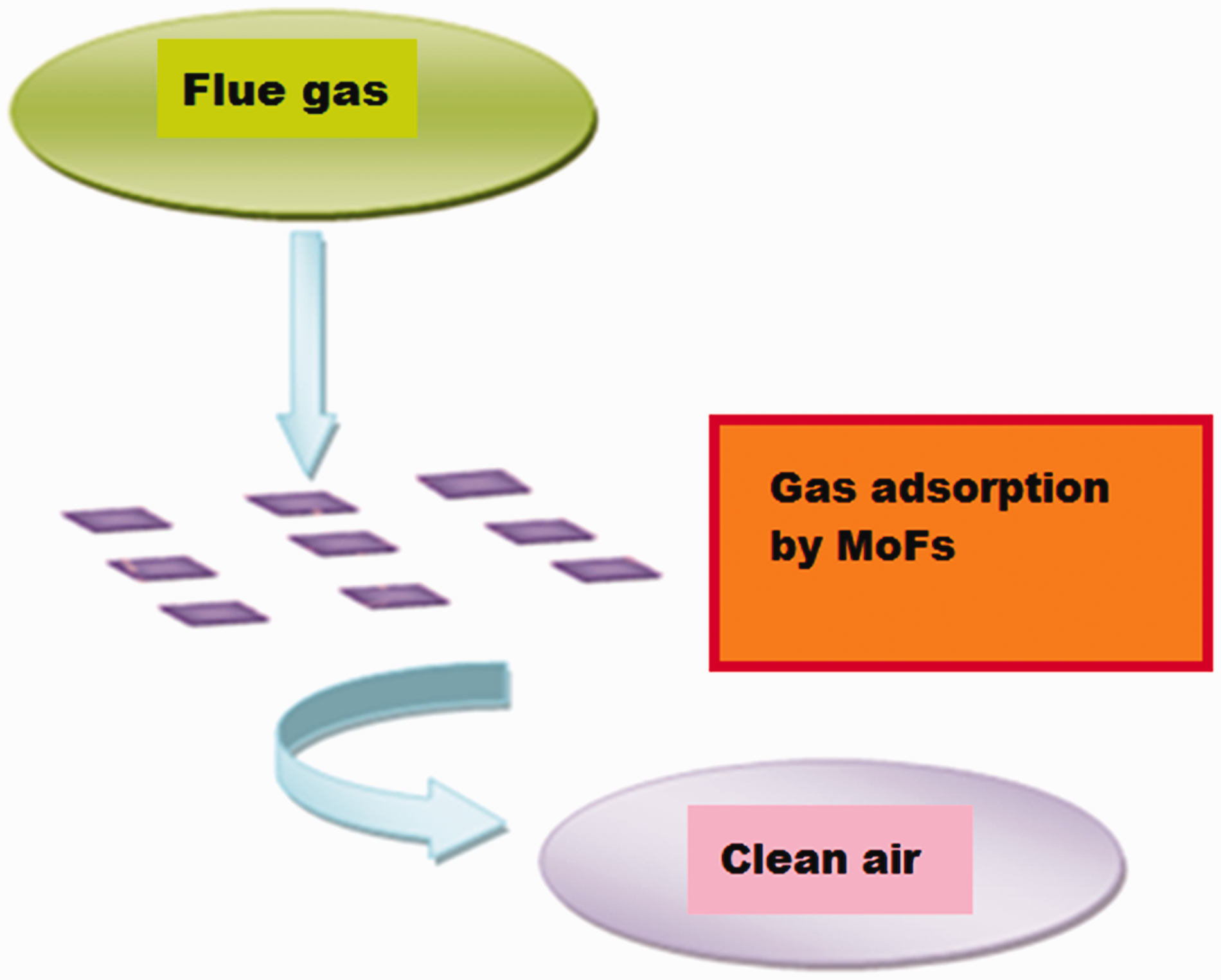
Adsorptive removal through the metal–organic framework.
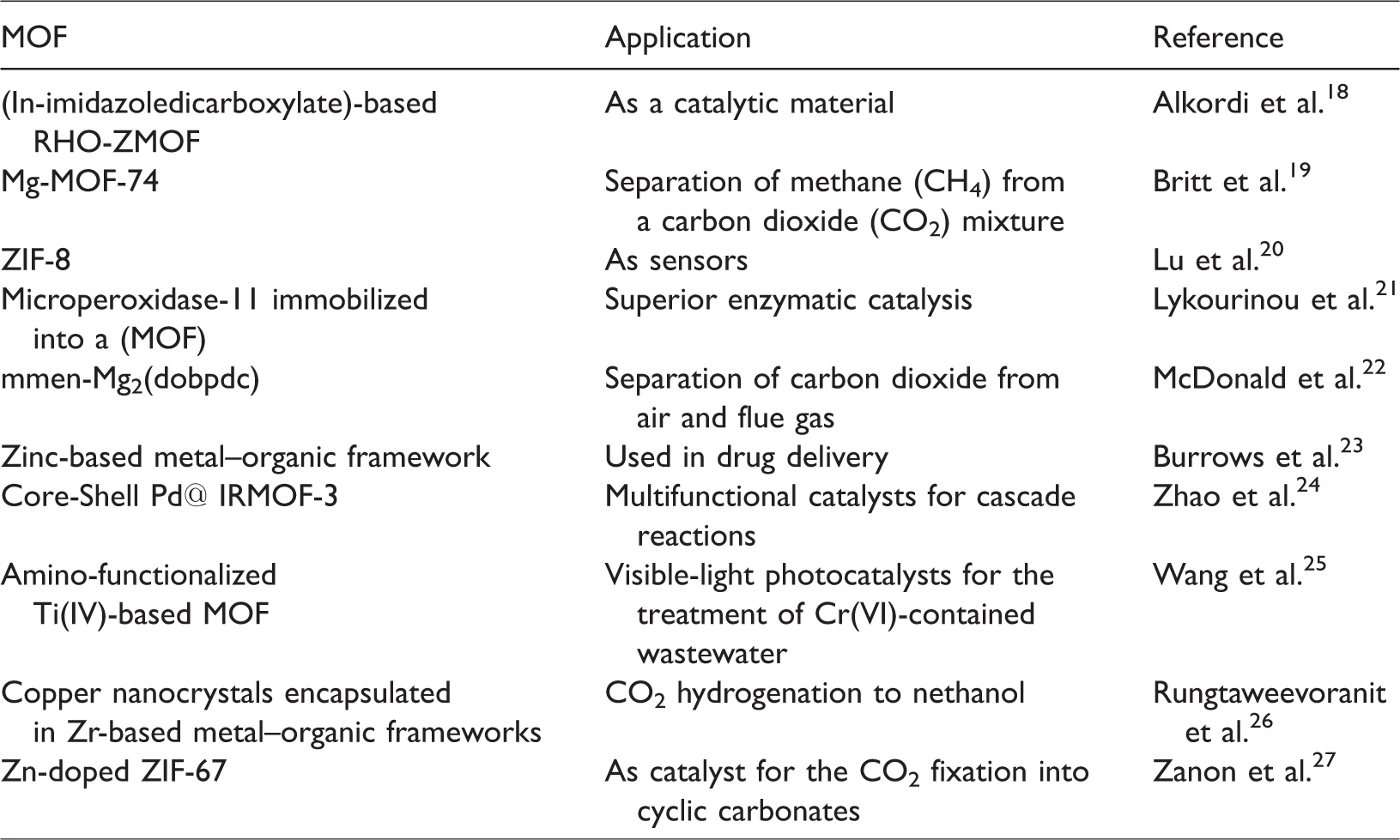
Some fabricated MOF’s and their applications are listed in Table 1.
Different applications of the metal–organic framework in industries.
Other than these applications, the purification of natural gas is extremely imperative to enhance the fuel efficiency. Natural gas is an important fuel utilized in different industries, vehicles, and automobile. A number of techniques are in line, which can purify the gas. In industries, flue gases exit at elevated pressure and temperature. In this regard, the development of material with high gas adsorption capacities is very critical. MOFs are preferred in industries because they are highly porous and are resistant to high pressure.
MOFs are preferred for the CO2 adsorption because of its highly porous structure and its resistance to high pressure. 14 The cavity size of the MOF due to metal and ligands are larger than other adsorbents and owing to this it is known to be important for gas capturing or storage. 14 The properties and functions of MOFs can be simply tuned for particular applications. 14 This ability of MOFs is a major feature that distinguishes them from the activated carbon and zeolite. 15
For efficient adsorbency, there is a need to design an adsorbent that integrates efficient capturing and regeneration ability. MOFs are preferred over other traditional adsorbents used for the CO2 capturing because it usually requires less energy for regeneration without degradation in its performance.14,28
MOF works on the basis of different mechanisms by which CO2 binds within the framework. 29 Generally, two different mechanisms (physisorption and chemisorption) take place in the MOF based on the difference in the affinity of CO2 to be adsorbed on the surface of MOFs. 29 Physisorption is the weak chemical bonding between CO2 and adsorbent, which can be easily reversible by utilizing less amount of energy. 29
This physisorption occurs due to dipole forces present between the CO2 molecule and weak nucleophilic/polar functional groups present in the MOF. 29 Usually at low pressure the process of chemisorption take place, as it is observed that there is a strong affinity between the CO2 molecule and the MOF. 29 Chemisorption involves chemical interaction that is the formation of covalent bond at low pressure while physisorption occurs at high pressures. 29
MOFs are dependent on many parameters, which are temperature, compositions of solvent, reaction times, reagent ratios, concentrations, and pH of the co-solvent solution. 30 These parameters can play a vital role in the optimization and synthesis of different MOFs. Little change in any of the parameters can cause an adverse effect on the gas separation and gas storage applications. 15 The properties and functions of MOFs can be simply tuned for particular applications. 14 This easily tuned ability of MOFs is a major feature that can distinguish them from activated carbon and zeolite. 15
To be a good adsorbent, MOFs must fulfill the following criteria.
Important criteria for the selection of MOFs
MOFs used for high CO2 adsorption must satisfy the following important criteria:
High adsorption capacity of MOFs. The CO2 equilibrium adsorption capacity is represented by its adsorption isotherm. The quantity of MOFs required can be calculated from the adsorption equilibrium capacity.
31
High selectivity of MOF for CO2. The adsorption selectivity of MOFs is defined as the ratio of the CO2 capacity to the bulk of other gas components such as oxygen, nitrogen, etc.
31
MOFs must exhibit fast adsorption and desorption that is higher than the adsorption rate.
31
High strength during continual adsorption and desorption. As stability determines the life time of MOFs and the regularity of their replacement,
31
the number of cycles must be increased. Good mechanical stability
31
of MOF, that is it must be able to bear humidity.
15
Low cost.
MOFs has become an interesting group of material for researchers because their flexibility increases the scope of its application. 32 MOFs can be prepared on large scale through low-priced or simple synthesis methods. 33 Different methods are being used for the synthesis of MOFs, such as solvo-thermal synthesis, microwave synthesis, and sonication synthesis. 34 However, solvothermal method is utilized mostly for the synthesis of MOFs. 35 Including this, thermal treatment is also done for the synthesis of MOFs. Other methods used ion-exchange treatment but this utilizes additional chemicals or more experimental steps. 36 All of these methods can produce MOFs of different sizes and morphologies that are used in different applications.30,37 Considering all the facts in mind, it can be stated that synthesis methods are mainly responsible for attaining the uniform porous geometry of crystals. 38 Other than this, it also effects the adsorption capacity. 37
Various procedures for the synthesis of MOFs are described below.
Slow evaporation method
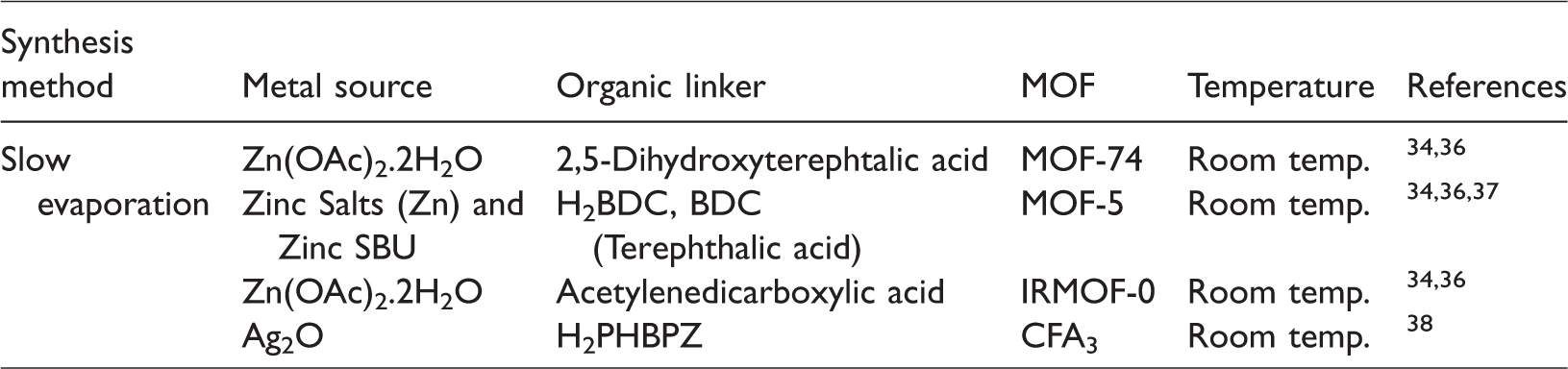
Slow evaporation method is the simplest and easy method from all the available synthesis method because there is no need for any external energy source. 39 Sometimes this method is preferred because it is a room-temperature process. But long synthesis time i.e. several hours to days is the main problem in this method. 40 In this procedure, a solution is prepared from metal and organic linker without using any external energy. The main drawback of this method is time consumption, which can be overcome by using solvents having low boiling point.37,41 In Table 2, different metal source and organic linker, which form MOFs by slow evaporation method are mentioned.
Metal–organic framework (MOF) synthesis by slow evaporation.
Solvothermal synthesis or hydrothermal synthesis
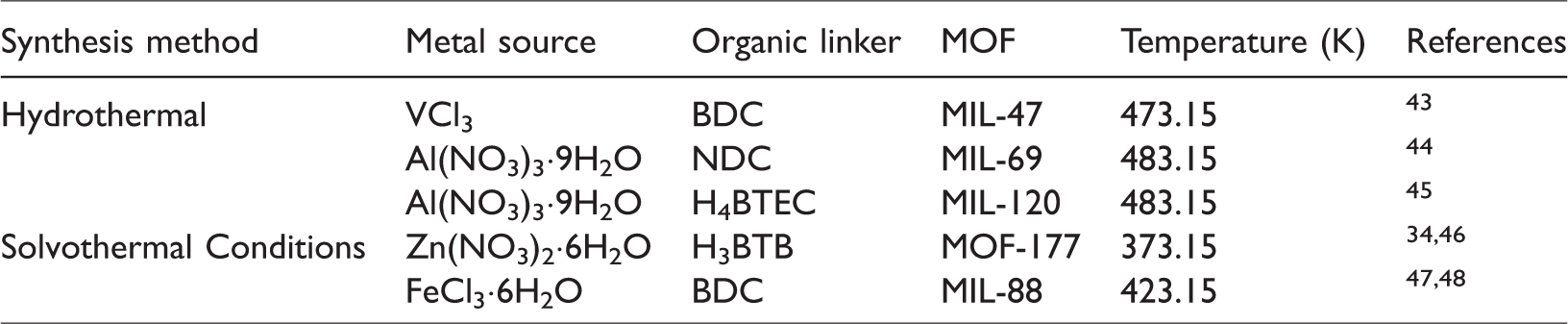
Solvothermal method is the most widely used synthesis method for MOF’s preparation. 39 MOF’s prepared by solvothermal method are represented in Table 3. In this synthesis process, reaction is carried out in a closed vessel at an elevated temperature and pressure for few hours or days. 30 For low temperature, glass vials are used and when the temperature is higher than 400 K Teflon-lined autoclaves are used. 45 Mostly organic solvents having high boiling point (acetone, ethanol, methanol, dimethyl formamide) are used in this method. 39 The following are the advantages of this procedure:
Metal–organic framework (MOF) synthesis by hydrothermal and solvothermal methods.
Microwave-assisted synthesis
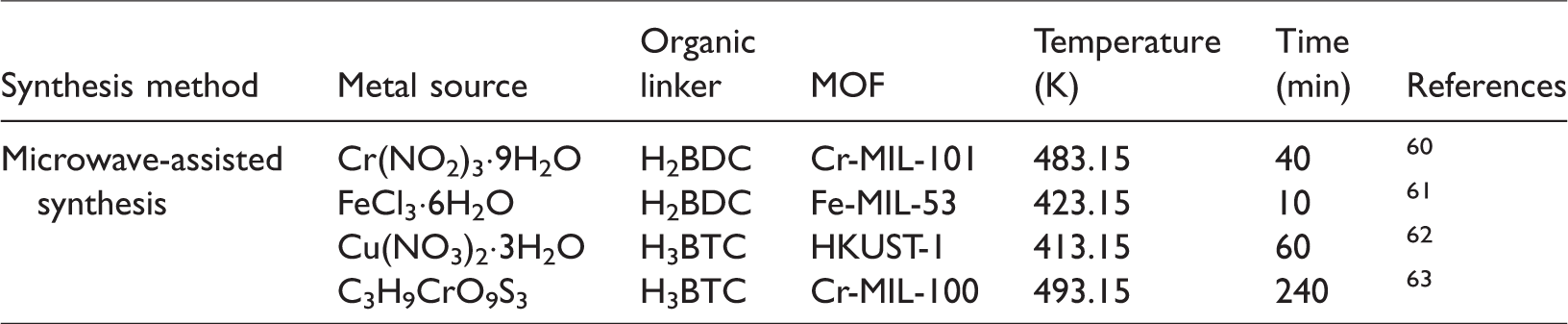
For MOF’s synthesis, this method is very fast because microwave-assisted method provides an efficient way of heating. 54 This method is mostly used in organic chemistry 55 and have been widely used for the preparation of nanosized metal oxides. 56 Different MOF forms by microwave-assisted method are given in Table 4.
Metal–organic framework (MOF) synthesis by microwave-assisted method.
Microwave-assisted method involves microwave energy to produce nanosized crystals when microwave energy is applied for about an hour. 57 A solution mixture within a suitable solvent is placed in a Teflon vessel, where the vessel is covered and placed in the microwave unit for appropriate time and temperature. 58 In the microwave unit, conversion of electromagnetic energy to thermal energy occurs, that is microwave energy is coupled with dipole moment of the precursors causing molecular motion because of the rapid heating of the solution mixture. 58 This resulted in nanosized crystals of uniform size. 59 This method is also termed as “microwave-assisted solvothermal synthesis”. 59 The following are the advantages of this synthesis method
Sonochemical synthesis
Recently, sonochemical synthesis has been effectively being used for the quick preparation of MOFs because it reduces the crystallization time by using ultrasonic radiation. 68 Ultrasound is the mechanical vibration having frequency of 20 kHz to10 MHz. 69 By interaction of high energy ultrasound radiation with liquids, molecules causes chemical change. 70 These high energy radiation enhancing the physical and chemical changes in a solution is due to a cavitation process. 71 The term cavitation is the formation and instantaneous collapse of bubbles occurring in the solution after sonication. 72 This causes extremely fast release of energy having high temperature of about 4000 K or 5000 K and high pressure of 1000 bar73,74 producing fine crystallites. 75 MOFs synthesis by sonochemical method is listed in Table 5. The advantages of this procedure are
Metal–organic framework (MOF) synthesis by sonochemical method.

Energy efficient/environment-friendly method to generate homogeneous nucleation centers as there is no direct interaction between ultrasound and molecules.76,77
Reduces crystallization time. 78
Significantly smaller particles size than those by the conventional solvothermal synthesis. 73
Producing very fine crystallites. 75
Mechanochemical synthesis
Mechanochemical synthesis is the simplest method than the other method for MOF’s synthesis. 82 In this method no solvent is used for MOF’s synthesis, and mechanical force is applied by means of mechanical ball mill. 83 When mechanical force is applied on the mixture of metal salts and organic linkers, chemical transformation take place at room temperature, 84 that is the mechanical breakage of intramolecular bonds and formation of new bonds. In the past, mechanochemistry is mostly used in synthetic chemistry. MOFs synthesis by mechanochemical method is shown in Table 6.
Metal–organic framework (MOF) synthesis by mechanochemical method.

In 2006, first MOF synthesis by this method was reported. 85 Now, this method is used for MOF’s synthesis on large scale. 82 Some advantages of this method are listed below.
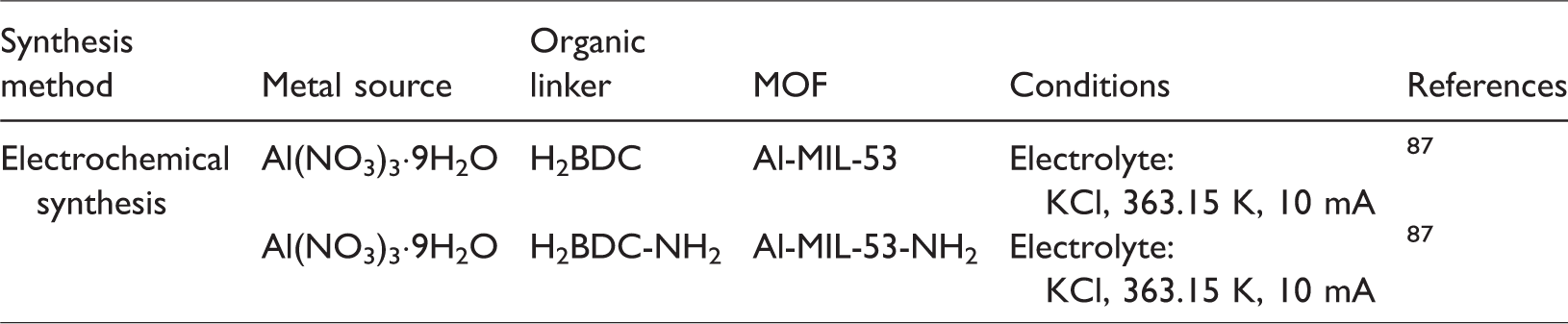
Electrochemical synthesis
Recently, electrochemical method that is a rapid synthesis method was used for reproducible production of large amount of MOF crystals. 91 In 2005, the electrochemical synthesis of HKUST-1 MOF was first reported. 92 In electrochemical method, metal salts are replaced by metal ions. 93
The electrochemical synthesis of MOFs uses metal ions continuously supplied through anodic dissolution as a metal source. Metal ions continuously provided through anodic dissolution reacts with organic linker molecules and electrolyte in the reaction medium where large amount of MOF crystals can be obtained. 93 MOF synthesis by electrochemical synthesis method is represented in Table 7. Advantages of this synthesis procedure are
Metal–organic framework (MOF) synthesis by electrochemical method.
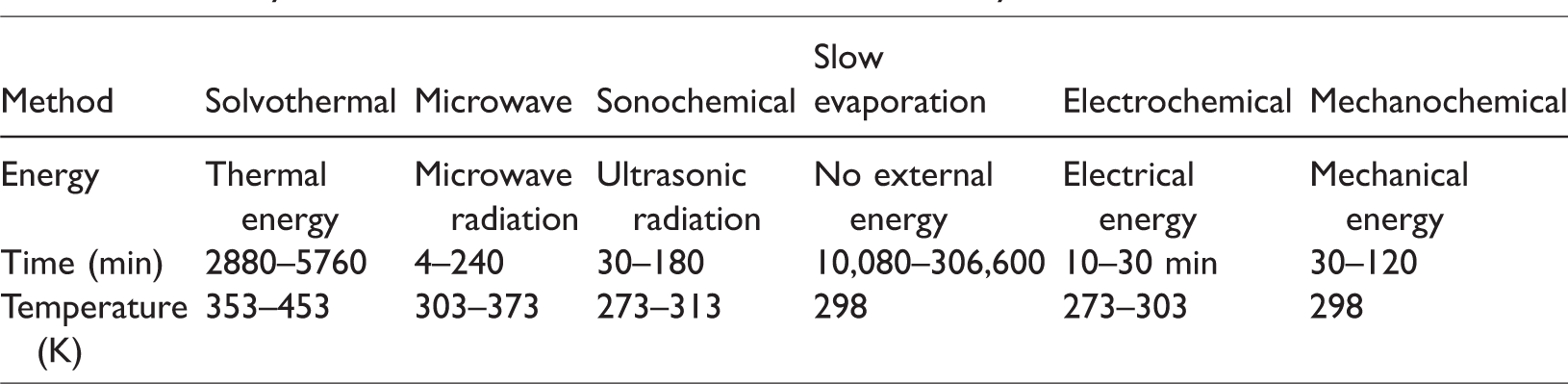
MOF synthesis includes selection of the method by which MOFs can be prepared, required time, type of energy supplied, and required temperature. These are optimized conditions for the preparation of MOFs by different methods. Keeping all the above mentioned synthesis process, collection of various parameters is represented in Table 8. 39
Summary of different methods and conditions for MOF synthesis.
CO2 adsorption at various pressures by MOFs
Adsorption of CO2 through MOF is very economical as well as recycling of MOFs is easily possible. 14 There are many important aspects related to the CO2 adsorption through the MOF. However, adsorption capacity is one of the important parameters for the adsorption of CO2 in MOFs. The adsorption capacity refers to the gravimetric capacity or volumetric capacity of CO2. The maximum adsorption of CO2 is mostly done at room temperature and high pressure. 94
The adsorption capacity for MOFs at room temperature and low pressure are mostly controlled by chemical characteristic of the pore surface and heat of adsorption of gas. 15 While adsorption isotherms at elevated pressure are influenced by the surface area, structure of cavity adsorption selectivity, the heat or enthalpy of adsorption, and mechanical strength of MOFs. 15 The CO2 adsorption capacity at low pressure depends on heat of adsorption for CO2 to be adsorbed in the MOF. 95
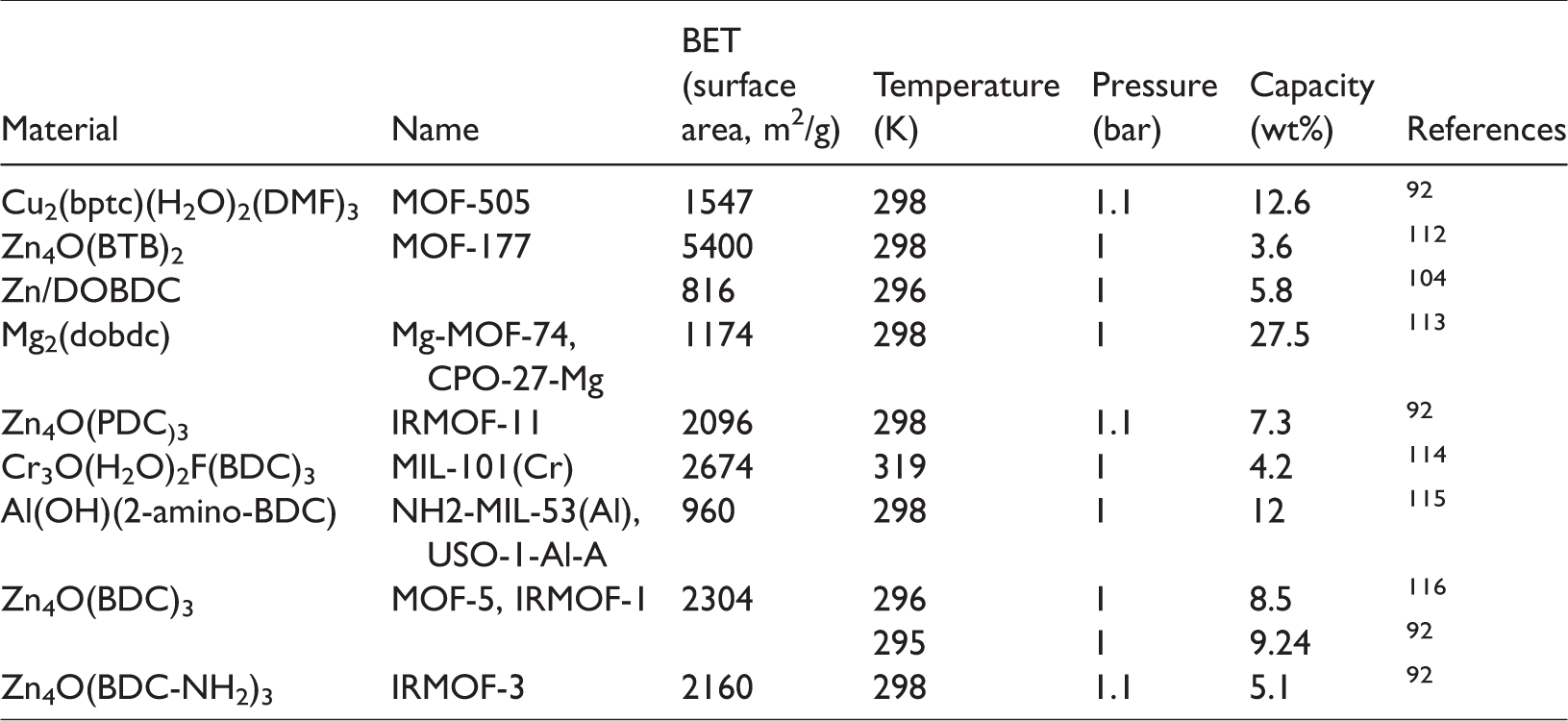
Adsorption of CO2 by MOFs can be done at various pressures, which are distinguished as low pressure and high pressure. It is essential to study the effect of CO2 adsorption by MOFs at low- and high-pressure conditions because at both pressures the contact time of CO2 with MOFs varies. In Table 9, MOF’s listed are used for low-pressure condition and MOF’s used for high-pressure conditions are shown in Table 10.
Low-pressure MOFs.
High-pressure MOFs.
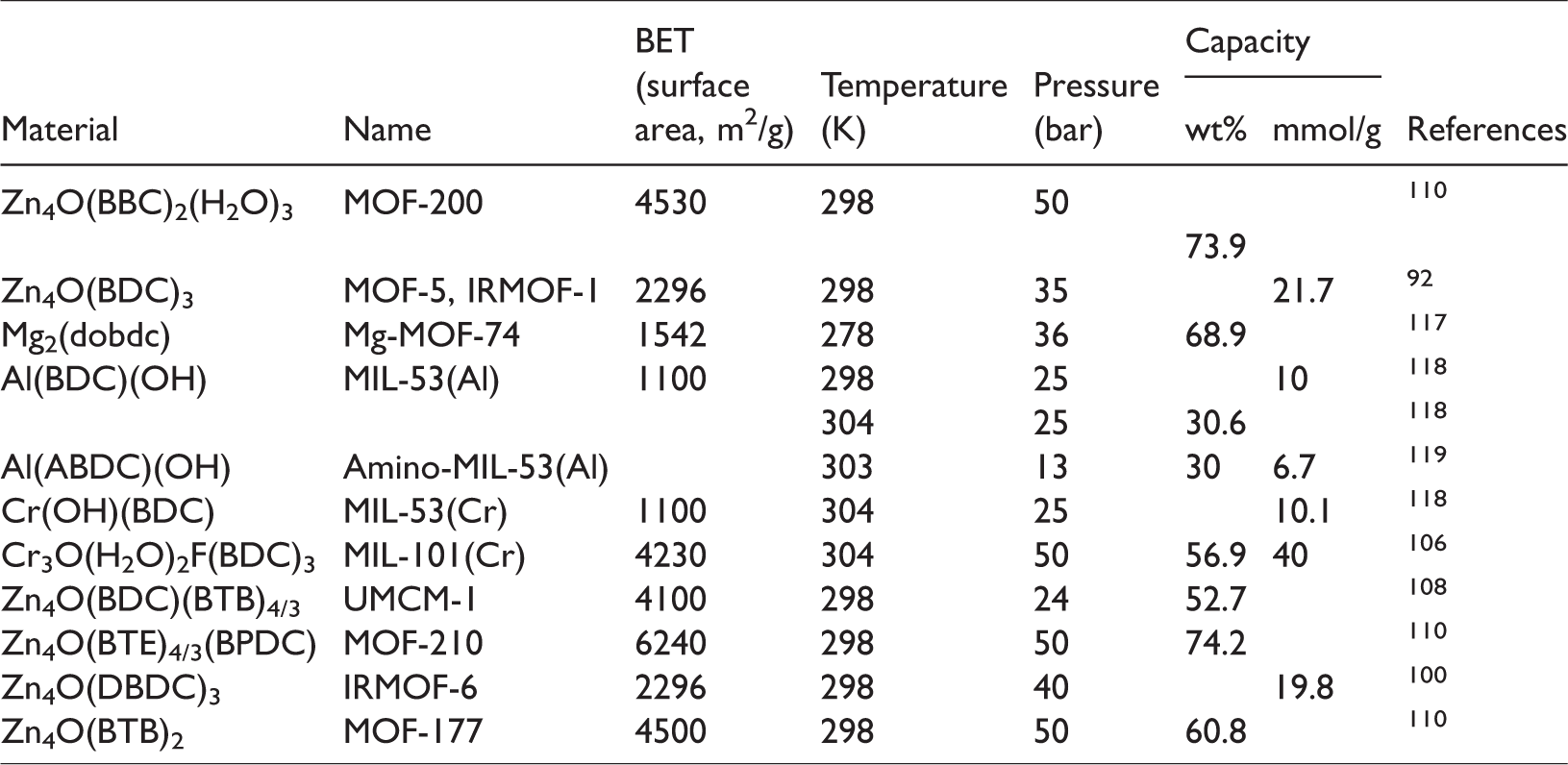
According to Tables 9 and 10, Millward and Yaghi 96 found that the structure, surface area, and pore dimension of MOFs affect the CO2 adsorption capacities, such as MOF-2, 97 MOF-505 and Cu3(BTC)2),98,99 MOF-74, 100 IRMOF-11, 101 amino and alkyl-functionalized pore IRMOF-3 and -6 101 and additional high porosity frameworks IRMOF-1 and MOF-177.102,103 They investigated that MOF-74, 15 MOF-505, and Cu3(BTC)2 had the maximum capacities at low pressure (1 bar).15,96 Yazaydin and Snurr 104 found that MOFs have the highest CO2 adsorption capacity at 0.101325 bar.
MOF-177 is made of zinc and a bulky linker 4, 14 40, 400-benzene-1,3,5-triyl-tribenzoic acid (H3BTB) shows maximum CO2 adsorption capacity of 33.5 mmol/g at elevated pressure of 35 bar and 298.15 K, which is higher than any of the known adsorbent material at that time. 15 This great CO2 adsorption capacity is due to the large pore space present in MOF-177. At low-pressure MOF-177, the adsorption capacity is increased gradually with the rising pressure; 15 however, at 40 bar, there is a pointed increase in the adsorption isotherm. 15 This adsorption isotherm action was noted in several MOFs as in MIL-53, [Cu(bpy)-(BF4)2(H2O)2].(bpy), 105 Ni(bpy)3(NO3)4, 106 and IRMOF-1. 107
But in recent times, 15 the MOF (Mg-MOF-74, Mg/DOBDC) was prepared by Caskey et al., 108 which shows highest CO2 adsorption than MOF-177. The Mg-MOF-74 shows the highest adsorption capacity for CO2 (23.6 wt%, 5.36 mmol/g) at 0.1 bar and ambient temperature. The adsorption capacity is larger than zeolite, and is assumed to be a good adsorbent for CO2 separation and provided the CO2 adsorption capacity of 4.7 mmol/g (20.7 wt%) at 1.01325 bar and 298 K. 109
According to the literature, most efficient type of MOF for CO2 adsorption is MIL-101 (Cr), 14 which has a capacity of 40 mmol CO2/g or 390 cm3 (STP)/cm3 than that of MOF-177 and have an adsorption capacity of 33.5 mmol CO2/g or 320 cm3 (STP)/cm3. Furthermore, MIL-101 (Cr) was activated by using ethanol and NH4F to increase the surface area and pore volume, which leads to a 40 mol kg-1 CO2 adsorption capacity at 50 bar and 304 K. 110 From the literature, 17 it was found that the activation method plays an important role in the CO2 adsorption capacity and attraction towards CO2 and different methods to activate results in unusual CO2 loadings and heat of adsorption. 17
Koh et al. 111 synthesized the UMCM-1 MOF by zinc nitrate, terephthalic acid, and 1,3,5-tris(4-carboxyphenyl)-benzene. UMCM-1 MOF has a large surface area (4100 m2 g1) and large pore volume (2.141 cc g1). Mu et al. 112 found the CO2 adsorption isotherms at different temperatures for UMCM-1 MOF and found the CO2 adsorption capacity of 23.5 mol kg−1 at 24 bar and 298 K.
Farha et al. 113 designed NU-100 MOF by using the computational modeling, where NU-100 is made up of copper metal centers and hexatopic carboxylate ligand (LH6). They have a high surface area (6143 m2 g−1) and CO2 uptake of 46.4 mol kg−1 at 40 bar and 298 K. 14
Recently, Furukawa et al. 114 synthesized some different types MOFs that have extra-high porosity. MOF-210 shows the largest BET surface area of 10,400 m2 g−1 and pore size that are reported so far. The extra-high porosity is achieved by increasing the amount of organic linkers by means of terephthalic acid 14 to 4, 40, 400-(benzene-1,3,5-triyl-tris (benzene-4,1-diyl)) tribenzoate in MOF-200. MOF-200 and MOF-210 achieved the CO2 adsorption capacity of 54.5 mol kg−1 at 50 bar and 298 K. 115
At elevated pressures, the CO2 adsorption capacity depends on the surface area and the pore size of MOFs. 14 Increasing the surface area and pore volume of MOFs is an efficient means to increase their CO2 storage capabilities. 14 Many of the bulky organic linkers with several benzene rings were used to produce MOFs with an ultra-huge surface area and pore volume. 14
Strategies to enhance the MOF adsorption capacity
Pore size is significant for the CO2 adsorption, as little change in pore volume causes a remarkable change in the adsorption. The CO2 adsorption uptake for MOFs can be enhanced and modified by decreasing the pore volume, such as interpenetration or catenation. 14 Keskin and Sholl 124 found that the CO2 uptake is enhanced owing to the effect of additional little pores and adsorption sites created by the interpenetration of framework. The presence of hydrogen-bond interface between a CO2 and MOF can enhance the CO2 adsorption. 14 Mu et al. 125 showed that the addition of the electron-donating groups into an organic linker would greatly enhance the adsorption capacity of MOFs for CO2 and CH4 mixture separation. This improvement becomes more prominent with the enhancement of the electron-donating group causing no effect by the addition of electron withdrawing groups.
This shows that the CO2 molecule acts as an electron-acceptor only in the electron donating–accepting process. 126 The functionalization of MOFs will enhance the CO2 uptake capacity. 15 This will also increase the selectivity by grafting a functional group that have high affinity for CO2 such as arylamine, 104 alkylamine, and hydroxyl group. By amine functionalization, the chemical bonding can also be introduced with CO2 molecule into MOFs. MOFs can be functionalized by amine and its derivatives. 14 This functionalization can be made during or after the synthesis processes. 14 This functionalized framework preferentially uptakes CO2 at low pressures. The amine-functionalized MOF shows a large adsorption of CO2 at very little pressures than that with the nongrafted material.
By flexible hexacarboxylate ligand with amide linking groups, 16 Zheng and Bai 127 formed a highly porous rht-type new MOF. This MOF shows high surface area, a high enthalpy of adsorption, and large CO2 gas adsorption capacity. This indicates that the functionalization of MOF with acrylamide can appreciably increase the CO2 adsorption capacity and selectivity of MOFs. Type of metal is very important for modification and optimizing the adsorption properties of MOFs. 15 A number of new MOFs can be formed by varying the metal ions (k, Cu, Zn, Cr). 15
Through electrostatic forces, CO2 adsorption capacity can be enhanced. These electrostatic forces are incorporated into MOF during doping of metal ions and by means of polar species variation. The existence of additional framework ions can improve the interactions between the guest molecules, which acts as extra adsorption sites. 128
Xiang et al. 129 found that the as a result of doping 14 carbon nanotube tailored HKUST-1 with Li, the CO2 and CH4 adsorption capacities are improved. To get fine improvement, Li has to be maintained at small concentration as high Li doping causes the distortion of the framework. Also, post-synthetic process becomes successful means to give novel properties or modify existing properties of MOFs to meet the particular requirement. 14
Studies have been conducted about the synthesis of MOFs for CO2 adsorption and capture, while ignoring an important aspect of the actual composition of flue gas affecting the performance of MOFs as the actual flue gas is saturated with moisture of about 5–7 vol.% 29
Effect of water on MOFs
Stability of MOFs towards moisture is the biggest challenge as MOFs lose their structure completely when exposed to the humid environment such as removing CO2 from the flue gas. Removal of moisture from the flue gas increases the cost and is mostly impractical on a large scale, so it is extremely important that MOFs show stability towards moisture. 17
The chemical and thermal stability of the MOF are usually less than that of other inorganic adsorbents because of the presence of weak interaction between metal and organic ligands. This is the major reason that MOFs are mostly moisture sensitive. 29
The MOF contains bond between metal and ligand, which is hydrolyzed when MOFs come in contact with water. It was found that MOF-5 has hydrophilic nature and on exposure to moisture it reduces its crystallinity. 130 The framework formed due to the strength of bond between metal and ligand is very important for the prediction of stability of the MOF in the presence of water. 32 The strength of the bond is dependent on the pKa values of the organic ligand. 17 Different approaches were used to increase the stability of the MOF such as functionalization of hydrophilic MOF with nitrogen containing organic linker after synthesis and using high valence metal ions as shown in Figure 4.14,131
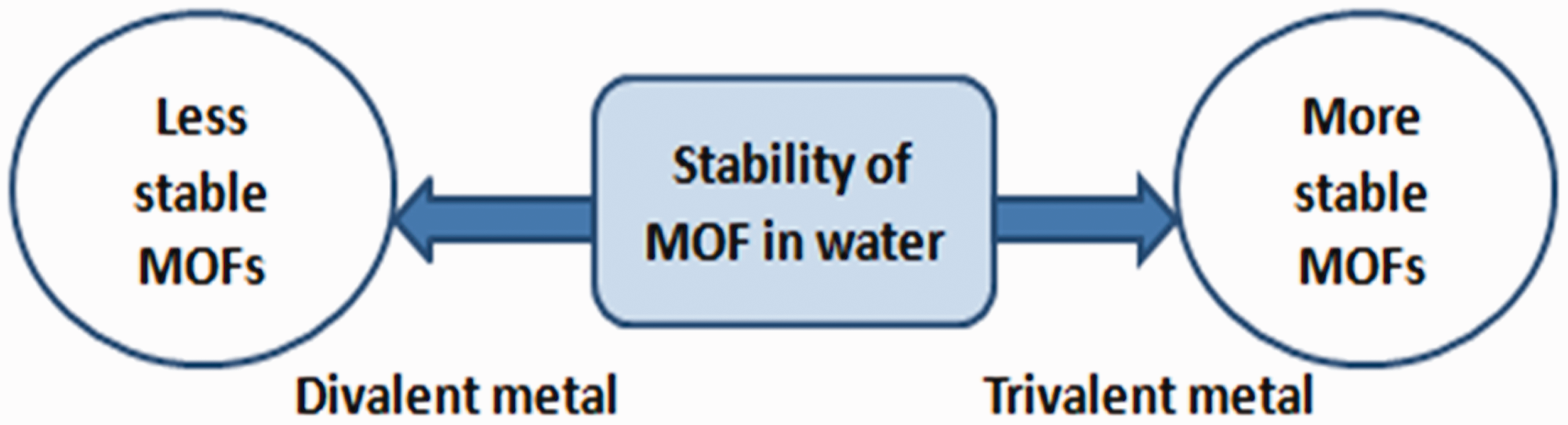
A schematic representation of the stability of MOFs.
A simple approach to reduce humid effects on the MOF stability or CO2 adsorption is to synthesize the MOF that can abhor H2O effect, which means to make hydrophobic surfaces in MOFs. 14 This can be done by the fabrication of MOFs utilizing hydrophobic surfaces and modification of synthesized hydrophilic MOFs. 14
Although same synthesis methods are used for the preparation of hydrophobic MOF, post modification has been done to make the MOF as hydrophobic. 14 This post modification/physical incorporation of functional groups into MOFs is basically developed for the functionalization of MOF, which can be made after synthesis processes. 132
The physical functionalization/incorporation of N–H groups such as amine into MOFs is suitable and easy method to synthesize hydrophobic-based MOF. 132 Lin et al. 132 used PEI for the impregnation of MIL-101. Activated MOF MIL-101 was slowly added to the solvent containing PEI with continuous mixing and then drying of this mixture was done at room temperature.
Bae et al. 133 functionalized Ni-based DOBDC with pyridine. This modification showed that pyridine changed the water loving affinity of the inner surface to the hydrophobic nature. This reduced the effect of water absorption without affecting the CO2 adsorption capacity. Fracaroli et al. 134 introduced the modification in IRMOF-74-III with primary amine and further utilized this functionalized MOF for CO2 capturing in the environment having 65% relative humidity.
Hydrophobic MOF 28 and its recyclability are the best alternative for capturing of CO2.28,134 Industrially, recycliability of the MOF is very important for the number of applications. 134 However, the recyclability and hydrophobicity in the MOF need to be explored further in future. 131
Conclusion
In this review, adsorption of CO2 by MOF’s is summarized. Currently, MOFs are in limelight because of its extraordinary textual properties, and its structural properties can be tuned by making simple modification in the synthesis method according to the application. One of the main advantages of MOFs than other traditional adsorbents is their diverse crystal structures and composition. In this review, we discussed different methods, which are used for the synthesis of MOFs at faster rate with bulk amount. Choice of metal ion source and organic linker makes it possible to design new compounds. Adsorption of CO2 depends upon the pressure of feed gas. At elevated pressure, the adsorption capacity of CO2 increases with the increase of the surface area and pore volume. Although in case of low pressure, the adsorption capacity of CO2 is based on the heat of adsorption for CO2 absorbed in MOFs.
It is possible to increase the CO2 adsorption capacity or making MOF stable especially under moist condition by adding functionality inside the cavities of MOFs. By amine functionalization or metal ion exchange, CO2 adsorption capacities are improved. Almost a number of various types of MOFs are present but MOF having high hydrothermal stability should be preferred in industries.
Footnotes
Acknowledgements
We like to acknowledge the support of MEMAR Lab at SCME, NUST, Pakistan.
Declaration of conflicting interests
The authors declared no potential conflicts of interest with respect to the research, authorship, and/or publication of this article.
Funding
The authors received no financial support for the research, authorship, and/or publication of this article.