







Abstract
Metal sulfides received key interest as an electrode material for storage and conversion of energy. Here, the novel nanostructured N17S18 and (CoNi)3S4 materials were synthesized via one-step hydrothermal method, and the synergistic effect of metal ions and electrochemical properties was investigated. A new and simple solution growth technique was employed in this work. The prepared nanopowders were characterized by X-ray diffraction, Fourier transform infrared spectroscopy, field emission scanning electron microscopy, energy-dispersive X-ray spectroscopy techniques. The X-ray diffraction analysis of the prepared nanopowder revealed the formation of cubic phase cobalt nickel sulfides (CoNi)3S4 and hexagonal phase nickel sulfides (Ni17S18). Scanning electron microscopy analysis display fibrous, flakes and sheet-like morphology for CoxSx, N17S18 and (CoNi)3S4, respectively. Fibrous and sheet-like morphology exhibits higher electrochemical performance in supercapacitors. The electrochemical behavior of the amorphous CoxSx, crystallite Ni17S18 and (CoNi)3S4 modified electrodes was investigated using electrochemical impedance spectroscopy, cyclic voltammetry and galvanostatic charge–discharge techniques. The specific capacitance of 57 F/g and 31 F/g were obtained for the amorphous CoxSx and crystalline (CoNi)3S4 powder, respectively. Amorphous CoxSx modified electrode retains 76% of initial capacitance after 1000 repeated cycling process. These results of this study suggest that the CoxSx and crystalline (CoNi)3S4 are appropriate materials for supercapacitor applications.
Introduction
The scarcity of conventional energy resources and the rising concerns on environmental issues are major motivating factors for the development of sustainable and clean energy devices. Supercapacitors received pivotal interest in industrial and research communities owing to their tremendous performance.1–8 Supercapacitors can be grouped into two types like electrochemical double layer capacitors (EDLC) and electrochemical pseudocapacitors (EPC). The performance of EPC and EDLC depends on the capacitance of working electrode owing to reversible faradic redox reactions and charge separation at electrode/electrolyte interface, respectively. 9 Much attention has been paid on the EPC as a result of their superior energy density than that of EDLC. Currently, researchers are interested to develop the nanosized transition metal oxides-based materials for several applications like energy and environmental applications.10–29 Oxide semiconductors and conducting polymers are usually used in pseudo-capacitors.30–38 For energy storage applications, the utilization of nanosized oxides of semiconductor has certain limitations. Metal oxides particularly, ruthenium (IV) oxide (RuO2) and manganese (IV) oxide (MnO2) are extensively studied for supercapacitors due to outstanding electrical conductivity, wide potential window, remarkable reversible features (charge–discharge). However, these materials are limited for real-time applications owing to the short performance rates and high fabrication cost. Particularly, the electrical conductivity of the majority of metal oxides is inadequate. 39 Hence, it is essential to develop novel active materials with attractive electrochemical performance for energy storage application, predominantly in supercapacitors.
Recently, metal sulfides received more interest than metal oxides for energy storage applications particularly in supercapacitors due to their superior electronic conductivity, high specific capacitance, excellent redox reversibility, viable to environment and cost effective nature. Thus, metal sulfides are suitable alternates than metal oxides for supercapacitor applications. 40 Among the materials, molybdenum sulfide (MoS), vanadium sulfide (V2S), nickel sulfide (NiS) and cobalt sulfide (CoS) have shown better performance in electrochemical applications.41–44 Although the performance of those metal sulfides is excellent and produces less power density, the binary and ternary sulfides show higher capacitive performance than CoS or NiS owing to their redox reactions and superior electronic behavior ensuing from the synergistic effect of the binary or ternary metal (Co or Ni) ions. 45 Particularly, nickel cobalt sulfides with phase structures similar to spinal nickel cobalt oxide can exhibit excellent pseudocapacitive behavior owing to the contributions from both the Co and Ni ions with different valence states. Furthermore, the layered spinal structure is accurate for the intercalation/deintercalation of the electrolyte ions equilibrium to the valence of Co or Ni ions during the charge–discharge process. Here, the one-step hydrothermal technique is employed for synthesizing metal sulfides, since it is an adaptable and appropriate technique for the morphology, structure and phase control, particularly for the inorganic materials. To the best of author’s knowledge, nickel cobalt sulfide for supercapacitors application is less reported with similar synthetic procedure and morphological features. Pei et al. developed FeS2/graphene aerogel composite through hydrothermal method and reported specific capacitance of 313 F g−1 at 0.5 Ag−1. Further, the enhanced capacitance of the materials is mainly due to the flower-like FeS2 clusters and stable interlinked graphene aerogel. 46 Li et al. synthesized hollow structured Ni3S2 with B-NiS nanorod arrays and displayed specific capacitance of 1158 F g−1 at 2 Ag −1. 47 Wang et al. synthesized nickel cobalt sulfide (CoNi2S4) via electrodeposition method. Further, the authors reported that the enhanced conductivity and fast charge transfer rate of the fabricated CoNi2S4 electrode materials is mainly due to the inclusion of Ni layer. It showed 90.1% retention after 10,000 cycles. 48 Liu et al. fabricated NiCo2S4@CNT nanowire via two-step hydrothermal method and achieved specific capacitance of 2332 F cm−3 at 0.04 A cm−3. The enhanced capacitance of NiCo2S4@CNT is essentially due to the multiple faradic redox reactions, superior ionic transfer channels, bigger surface area and attractive conductivity of electrode. 49 Akin et al. synthesized NixSy nanoparticles and Ni17S18/CNT nanocomposites by modified hydrothermal method for hydrogen evolution. Further, the authors utilized NiCl2.6H2O, thioacetamide, diethylene glycol as a precursor, and the mixtures were thermally treated at 150°C for 5 h in an autoclave. The ball-like cluster morphology was obtained for NixSy. 50 Beka et al. fabricated three-dimensional core/shell structured nickel cobalt sulfide (NiCo2S4) through a series of hydrothermal method for supercapacitor applications. Further, the authors used CoCl2, NiCl2 and Na2S as a precursor and carried out thermal treatment at 180°C for 8 h. The nanoneedle-like morphology was obtained for NiCo2S4. 51
In this study, the novel nanostructured cobalt, nickel and nickel cobalt sulfides were synthesized by one-step hydrothermal method and their physical and chemical properties were carried out. The electrochemical properties were investigated from the electrochemical workstation. The formation of fibrous and sheet-like morphology of CoxSx and (CoNi)3S4 exhibits several remarkable electrochemical features for supercapacitors such as rapid electrolyte diffusion and superior electrical conductivity. The present approach is promising for the preparation of metal sulfides in large-scale level and also easy to adopt this method for commercial applications. This report deals with the preparation of cobalt nickel sulfides powder using effortless and inexpensive technique. The present study clearly indicates that the synthesized nickel sulfides and cobalt nickel sulfide nanomaterials are promising candidates for supercapacitor applications.
Experimental
Preparation of materials
The (CoNi)3S4 powder was synthesized via a facile hydrothermal route. In a typical experimental route, 0.2 M of cobalt (II) acetate tetrahydrate (C4H6CoO4.4H2O) and nickel acetate tetrahydrate ((CH3.COO)2Ni.4H2O) were dissolved in 50 ml of double distilled water. Then, 10 ml of equimolar solution of sodium sulfide (Na2S) was added into the above precursor solution with vigorous stirring and subsequently suspension was obtained. Then, the obtained suspension was transferred into a 50-ml Teflon-lined stainless steel autoclave and heated at 120°C for 10 h. The resultant precipitate was thoroughly washed and dried. Scheme 1 shows the detailed experimental procedure for the synthesis of (CoNi)3S4 and binary sulfides (cobalt and nickel sulfides). The single-component sulfides and binary sulfides were synthesized in order to investigate their electrochemical performance. The single-component sulfides such as cobalt sulfide and nickel sulfide were also prepared using the hydrothermal route. For the preparation of cobalt sulfide and nickel sulfide materials, 0.2 M (C4H6CoO4.4H2O) solution was prepared using 50 ml of double distilled water and kept in a separate beaker. A 0.2 M of ((CH3.COO)2Ni.4H2O) solution was prepared using 50 ml of double distilled water and kept in a separate beaker. Then, 10 ml of equimolar solution of sodium sulfide (Na2S) was added into the precursor (cobalt and nickel) solutions with vigorous stirring and consequently respective suspension were obtained. Both obtained suspensions were transferred into a separate 50-ml Teflon-lined stainless steel autoclave and heated at 120°C for 10 h. The cobalt sulfide and nickel sulfide samples were obtained after washing and drying the autoclave-treated samples.
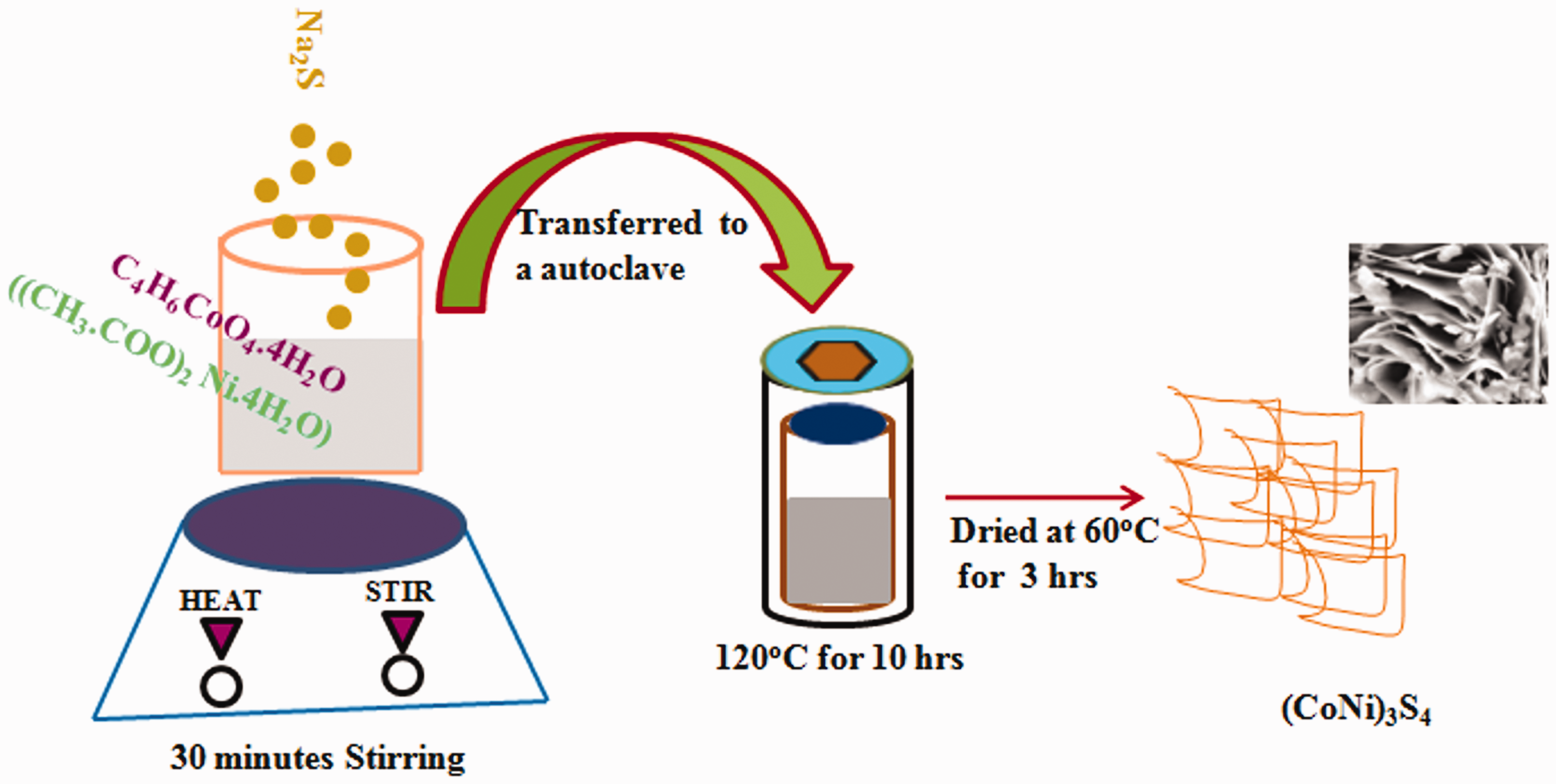
Schematic representation of synthetic method.
Characterization of materials
The X-ray diffraction (XRD) patterns of all the samples were measured on a (XPERT-PRO) diffractometer with monochromatic CuKα – radiation (λ = 1.5406 Å). Fourier transform infrared spectroscopy (FTIR) of the samples were recorded on a (Thermo Nicolet 380, USA) spectrometer using a KBr pellet technique in the range of 4000–400 cm−1. The field emission scanning electron microscopy (FE-SEM) and energy-dispersive X-ray spectroscopy (EDX) were recorded on a Quanta FEG using an accelerating voltage of 20.00 kV. The electrochemical test was done using a three-electrode cell equipped with an Hg/HgO as reference electrode, platinum foil as a counter electrode and nickel mesh as a working electrode. The electrochemical properties of (CoNi)3S4, (Ni17S18) and amorphous CoxSx modified electrodes (electrochemical impedance spectroscopy (EIS), cyclic voltammetry (CV), galvanostatic charge–discharge (GCD)) were examined using an electrochemical work station (biologic – SP 200) at room temperature.
Preparation of electrodes
The electrode modification is a significant process in electrochemical investigations. The working electrodes were prepared by mixing an electro-active material, acetylene black and polytetrafluoroethylene with a ratio of 75:15:10. This mixture was continuously grinded for 10 min in a mortar and then the desired film was achieved. The obtained film was coated on acid-treated Ni mesh with 1 cm2 surface area and it is used as a current collector. The electrochemical measurements were carried out with an electrochemical work station and 2 M KOH was used as an electrolyte.
Results and discussion
XRD analysis
Figure 1 shows the XRD pattern of the synthesized nanopowders. Figure 1(a) clearly shows the X-ray amorphous nature of cobalt sulfide (CoxSx). The nickel sulfide sample shows (Figure 1(b)) XRD peaks at 45.7° and 34.6° and those peaks could be assigned to (306) and (303) crystalline planes of hexagonal phase of Ni17S18 which is in accordance with the JCPDS card no: 76-2306. XRD pattern (Figure 1(c)) of the cobalt nickel sulfide powder shows the peaks at 38.8° and 33.4° and those peaks may be assigned to (311) and (220) crystalline planes of cubic phase (CoNi)3S4 which is also in accordance with the JCPDS card no: 11-0068. The crystallite size of Ni17S18 and (CoNi)3S4 samples were calculated using Scherer’s equation. The average crystallite sizes of about 20 and 21 nm are achieved for Ni17S18 and (CoNi)3S4 samples, respectively.
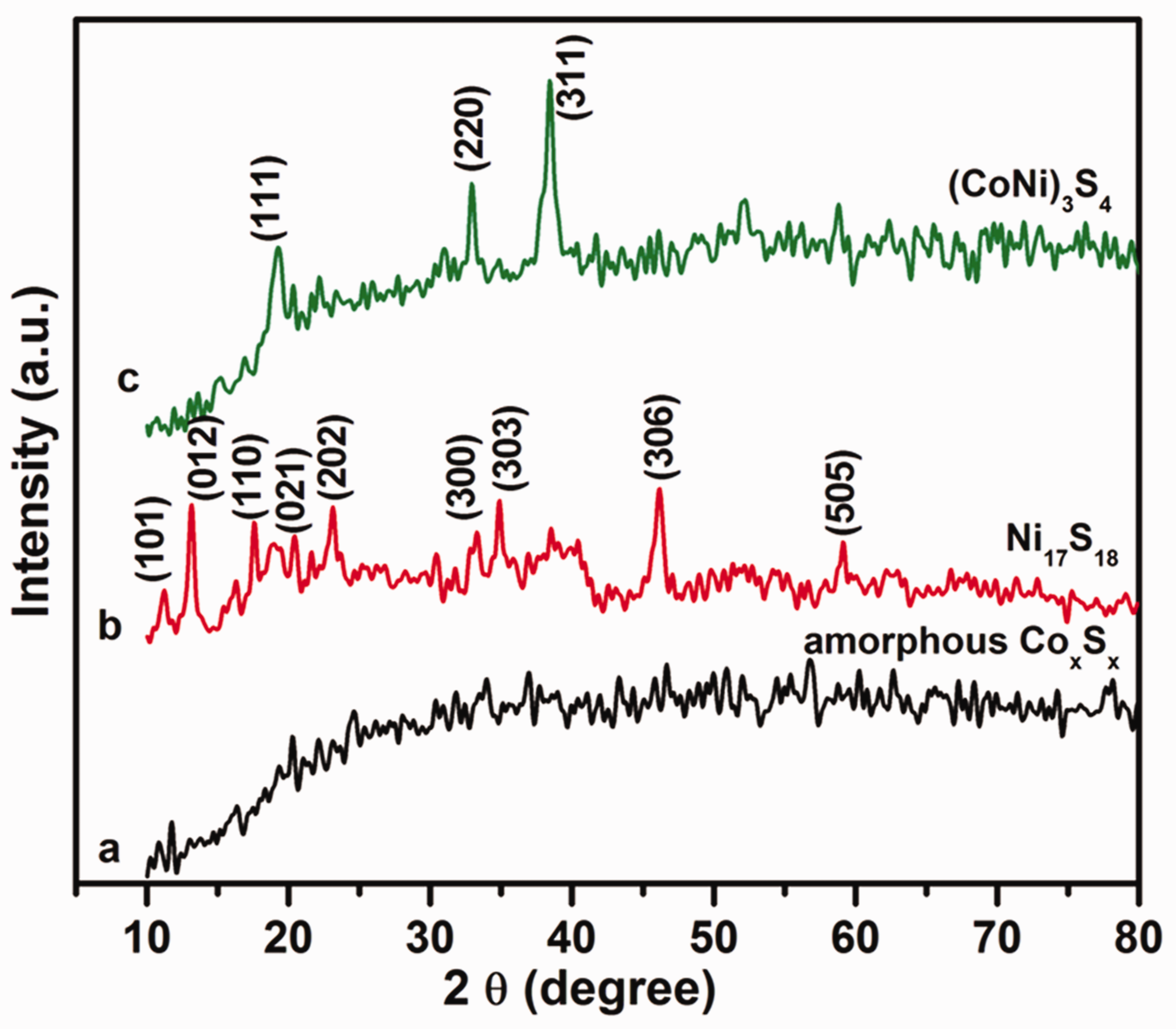
XRD patterns of (a) amorphous CoxSx, (b) Ni17S18 powder and (c) (CoNi)3S4 powder.
FTIR analysis
Figure 2 shows the FTIR spectra of amorphous CoxSx, crystalline Ni17S18 and crystalline (CoNi)3S4 samples. Figure 2(a) shows the FTIR spectrum of amorphous CoxSx and a peak was observed at 1646 cm−1 due to the bending vibration of absorbed H2O. Tang et al. reported that the peaks at 1107 and 1630 cm−1 correspond to the bending vibrations of the sulfide groups and bending vibrations of absorbed H2O, respectively. 45 Recent report says, the band at 555 cm−1 can be attributed to the Ni-S stretching vibration mode. 52 Figure 2(b) and (c) shows the peak at around 513 and 508 cm−1 which are assigned to the Ni-S and Co-S stretching vibration mode, respectively. The peaks (Figure 2(a) and (b)) appeared at 613 and 723 cm−1 may be assigned to the Co-S-Co and Ni-S-Ni bending vibration mode, respectively. The appearance of a peak at 1101 cm−1 corresponds to the bending vibrations of the sulfide groups in all the synthesized samples. Figure 2(b) shows the FTIR spectrum of Ni17S18 nanopowder, and a peak observed at 1572 cm−1 is due to the bending vibration of O–H from absorbed H2O. 36
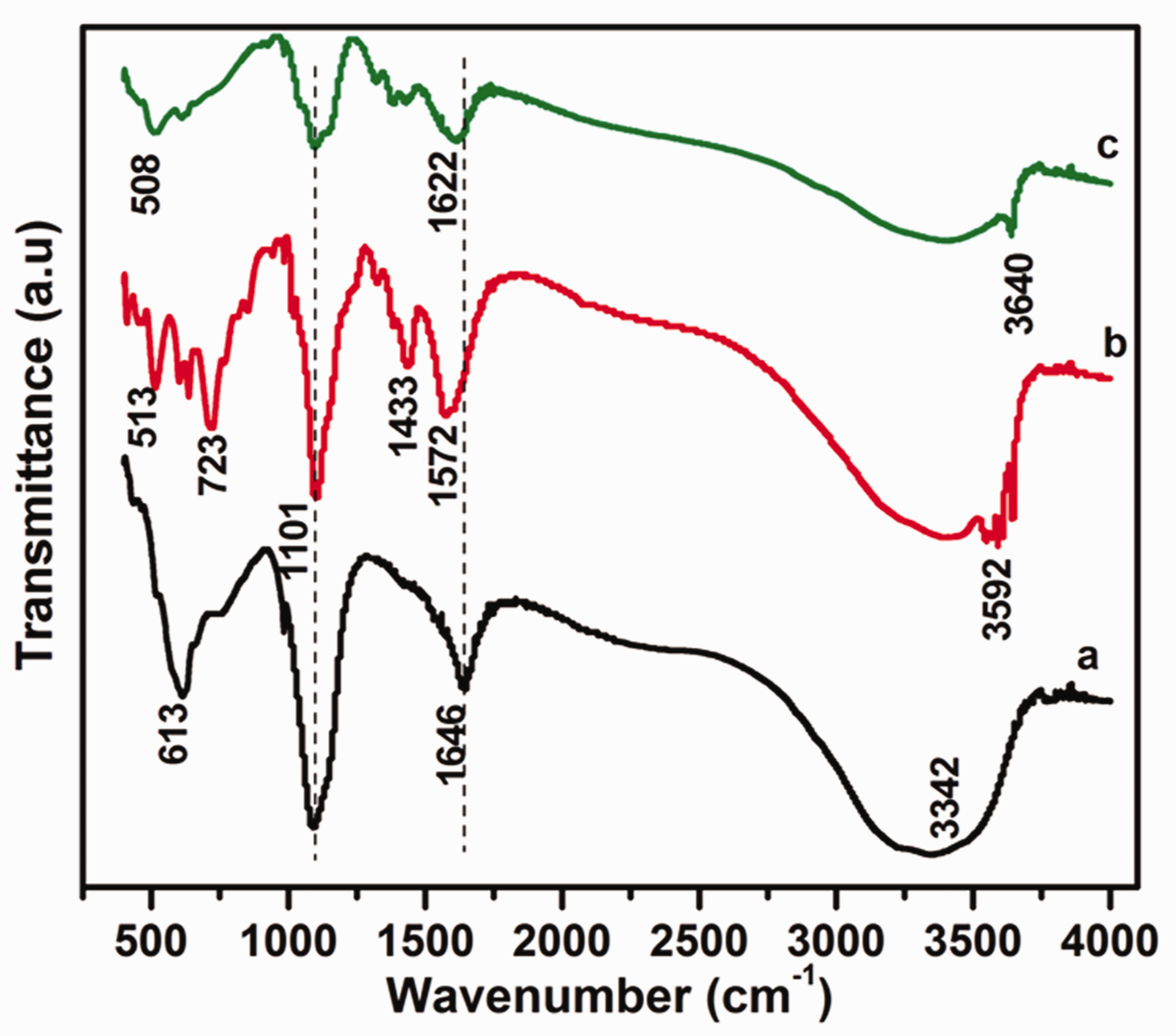
FTIR spectra of (a) amorphous CoxSx, (b) Ni17S18 nanopowder and (c) (CoNi)3S4 nanopowder.
FE-SEM with EDX
Figure 3 shows the FE-SEM images of synthesized metal sulfide powders. Figure 3(a) shows the FE-SEM image of amorphous CoxSx powder and it clearly reveals the fibrous morphology. Figure 3(b) and (c) shows the morphological features of Ni17S18 and (CoNi)3S4 powders. The FE-SEM observation clearly evinces the formation of flakes and sheet-like structures in the Ni17S18 and (CoNi)3S4 samples, respectively. EDX spectra of amorphous CoxSx, Ni17S18 and (CoNi)3S4 nanomaterials are shown in Figure 4. The percentages of cobalt (Co) and sulfur (S) in the amorphous CoxSx are estimated to be 38% and 12%, respectively (Figure 4(a)). The Ni17S18 powder shows (Figure 4(b)) the presence of major elements such as Ni (Nickel) and sulfur. The percentages of Ni and S in Ni17S18 nanopowder materials are estimated to be 45% and 5%, respectively. The percentages of Co, Ni and S in (CoNi)3S4 nanopowder are estimated to be 14%, 27% and 6%, respectively (Figure 4(c)). It should be indicated that the presence of both Co and Ni in (CoNi)3S4 was observed. The EDX observation clearly reveals the presence of considerable amount of Co and Ni in the synthesized samples.
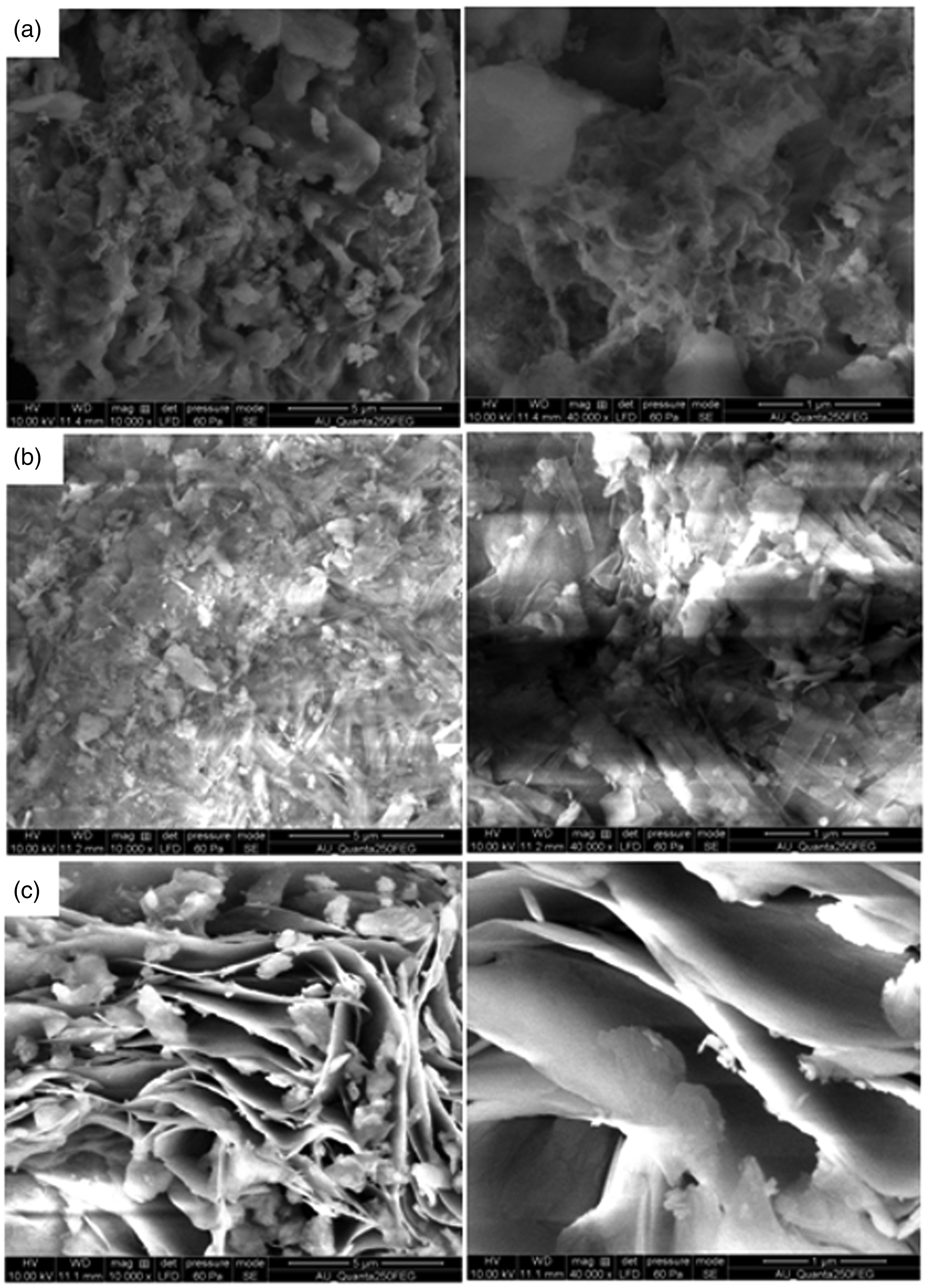
FE-SEM images of (a) amorphous CoxSx, (b) Ni17S18 nanopowder and (c) (CoNi)3S4 nanopowder with different magnifications.
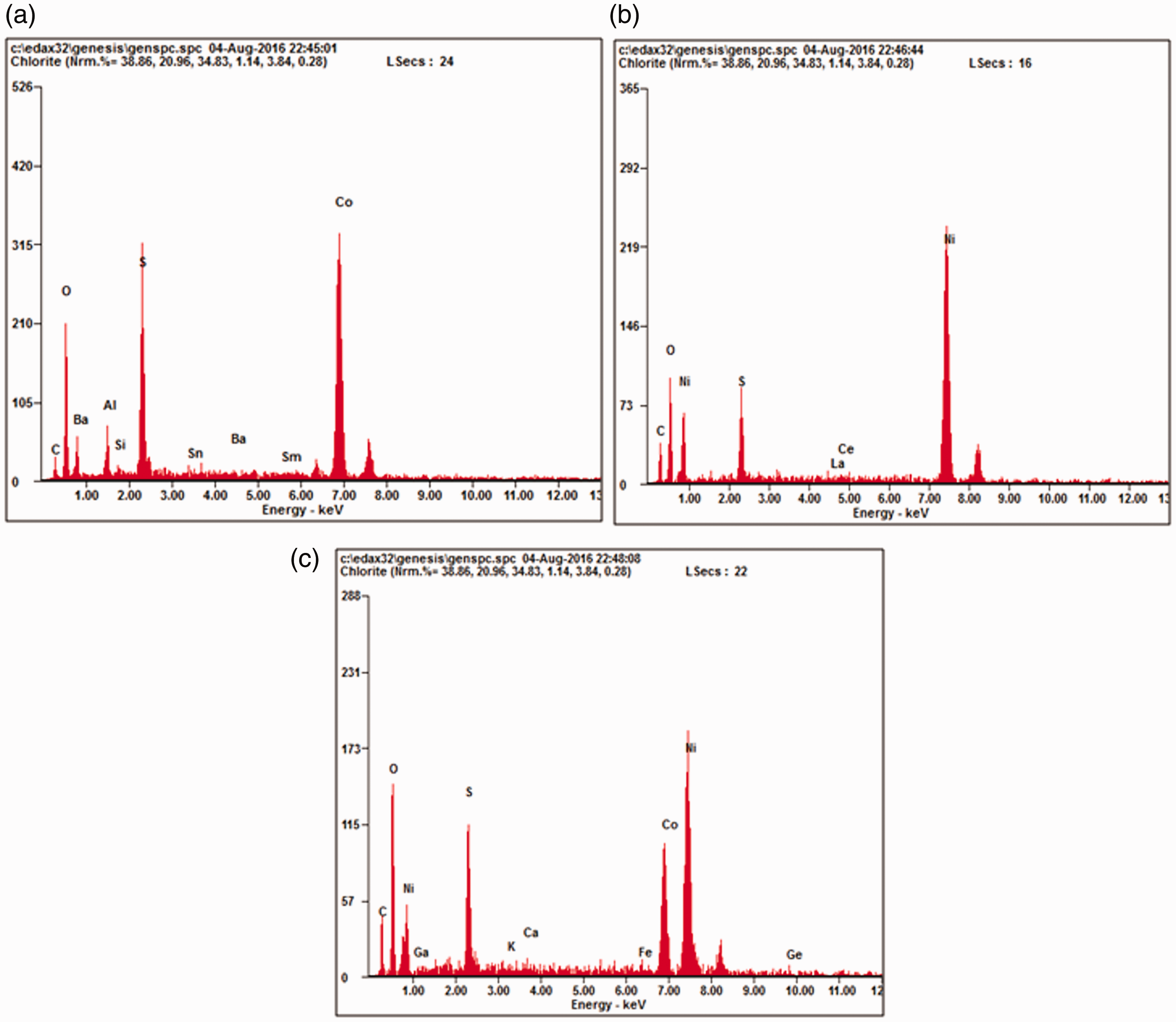
EDX spectra of (a) amorphous CoxSx, (b) Ni17S18 nanopowder and (c) (CoNi)3S4 nanopowder.
Electrochemical impedance analysis
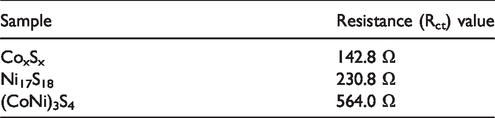
Figure 5 shows the impedance plots of the amorphous CoxSx, crystalline Ni17S18 and crystalline (CoNi)3S4 coated Ni mesh electrodes in the frequency range of KHz–1 Hz at a bias potential of 100 mV. The intersection of the impedance plots and the real axis (Z′) represents the ohmic resistance of the electrode and the radius of the high frequency loop corresponds to the charge transfer resistance. 53 The impedance plots on the negative side of the imaginary axis (Z″), which is corresponding to the inductance may be due to the inductive behaviors of the current collector and external circuit. The Rct for amorphous CoxSx, crystalline Ni17S18 and crystalline (CoNi)3S4 modified electrodes was obtained from the Nyquist plot of the x-axis. The impedance curves are showing semi-circle in the high frequency region. The ohmic resistance and the charge transfer resistance of the Ni17S18 is larger than the amorphous CoxSx, and crystalline (CoNi)3S4 modified electrodes, demonstrating that the CoxSx and Ni17S18 modified electrodes possess better electronic conductivity and a faster charge transfer rate than the (CoNi)3S4 modified electrode. The obtained Rct values of amorphous CoxSx, Ni17S18 and (CoNi)3S4 electrodes are 142.8, 230.8 and 564.0 Ω, respectively (Table 1).
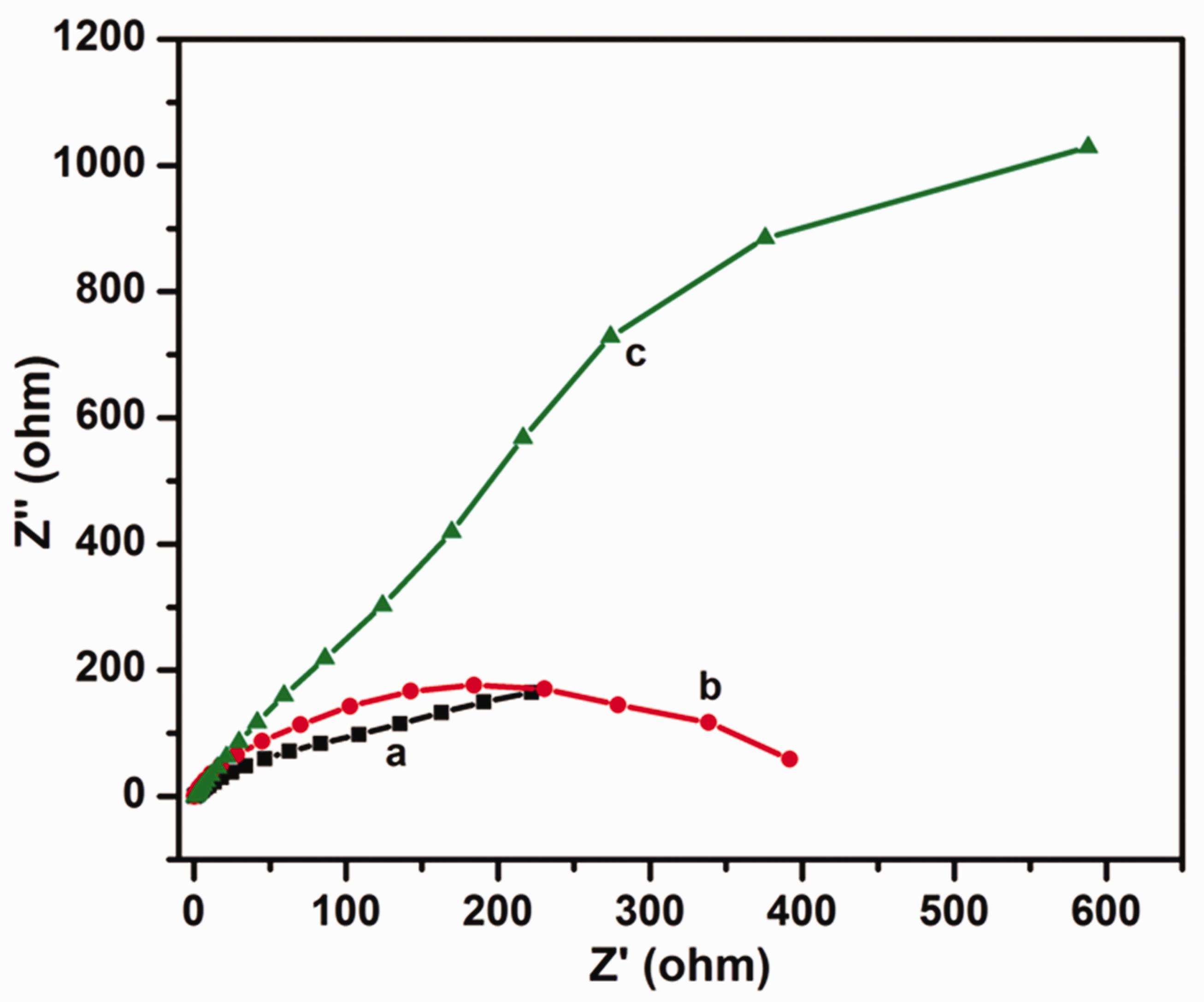
Electrochemical impedance spectra of (a) amorphous CoxSx, (b) Ni17S18 nanopowder and (c) (CoNi)3S4 nanopowder-modified nickel mesh electrodes in 2 M KOH.
Resistance values of CoxSx, (CoNi)3S4 and Ni17S18 materials.
Characteristics of capacitance
CVs of the amorphous CoxSx, crystalline Ni17S18 and crystalline (CoNi)3S4 modified electrodes in 2 M KOH electrolyte at a scan rate of 25 mV/s is presented in Figure 6(a). The redox has peaks that appeared as a result of the redox reactions of all samples. The CV curve of the amorphous CoxSx and crystalline (CoNi)3S4 shows a much larger integrated area than that of the Ni17S18 electrode, which reveals the superior electrochemical activity of amorphous CoxSx and (CoNi)3S4 modified electrodes in KOH electrolyte. It may be possible to achieve better capacitance for the cobalt nickel sulfide-modified electrode due to the beneficial synergistic effect between the Co and NiS. However, the peak current value for (CoNi)3S4 modified electrode is slightly lower compared to amorphous CoxSx modified electrode because of less surface area of the (CoNi)3S4 which affect the capacitance nature. Figure 6(b) to (d) shows the CV curve of amorphous CoxSx, crystalline Ni17S18 and crystalline (CoNi)3S4 modified electrodes at a scan rate of 25–150 mV/s. It is observed from the CV analysis that the increase of current while increasing the scan rate from 25 to 150 mV/s may be attributed to high ionic transport of materials at a higher scan rate. The indicated current-potential response is based on the capacitance and that is mainly owing to the oxidation and reduction reaction of modified electrodes. Scheme 2 shows the electrochemical process for the pseudocapacitive behavior of the active materials. It clearly indicates that the prepared materials have pseudocapacitive nature because electrons created by the electrochemical redox process must be moved to the current collector through the electro-active material layer to produce current. Accordingly, the electronic conductivity of the active materials is important to illustrate the electro-active material left from the current collector.
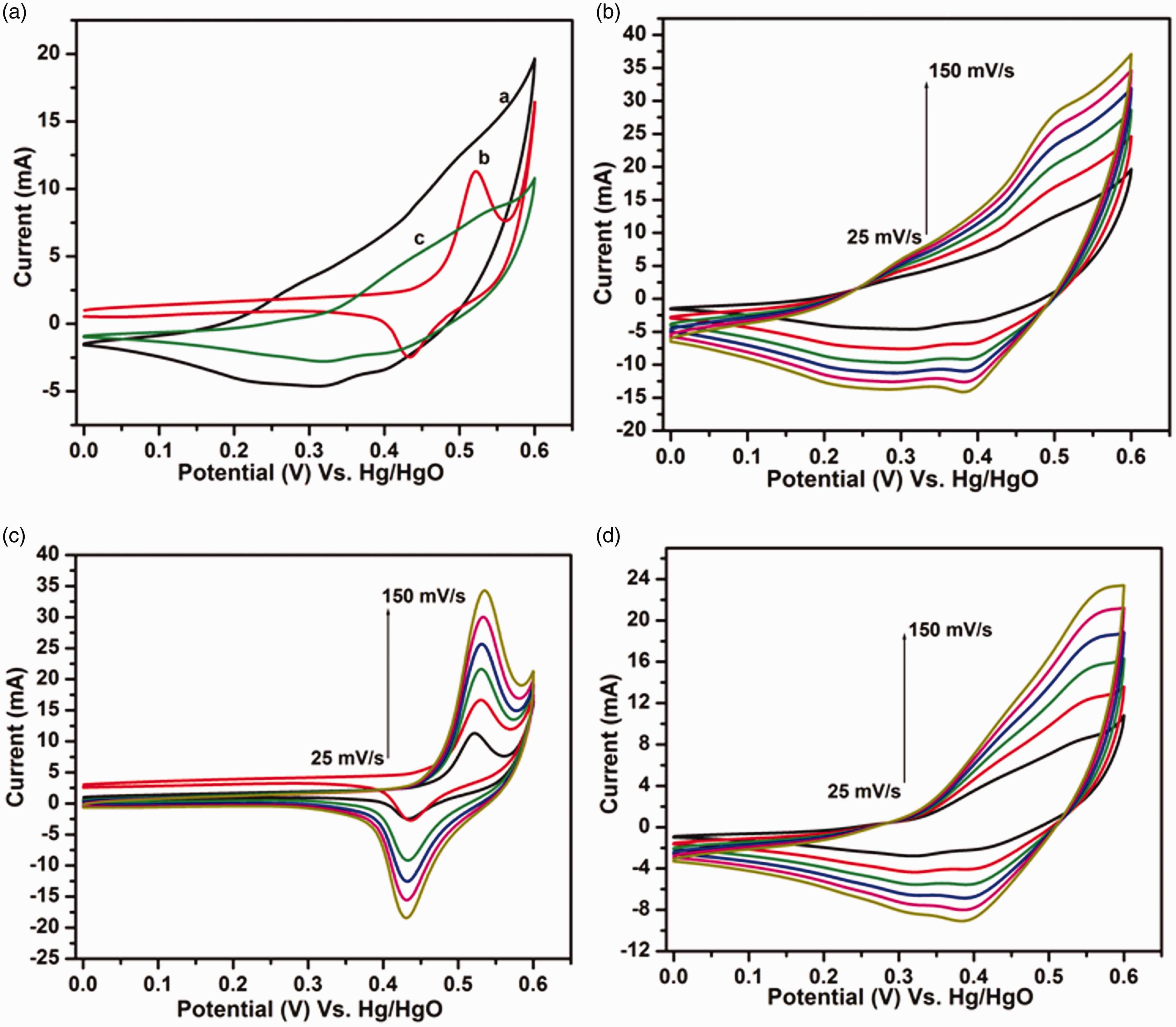
(a) CV of (a) amorphous CoxSx, (b) Ni17S18 and (c) (CoNi)3S4 modified nickel mesh electrodes in 2 M KOH at a scan rate of 25 mV/s; (b) CV of amorphous CoxSx, (c) Ni17S18 and (d) (CoNi)3S4 modified nickel mesh electrodes at a various scan rates.
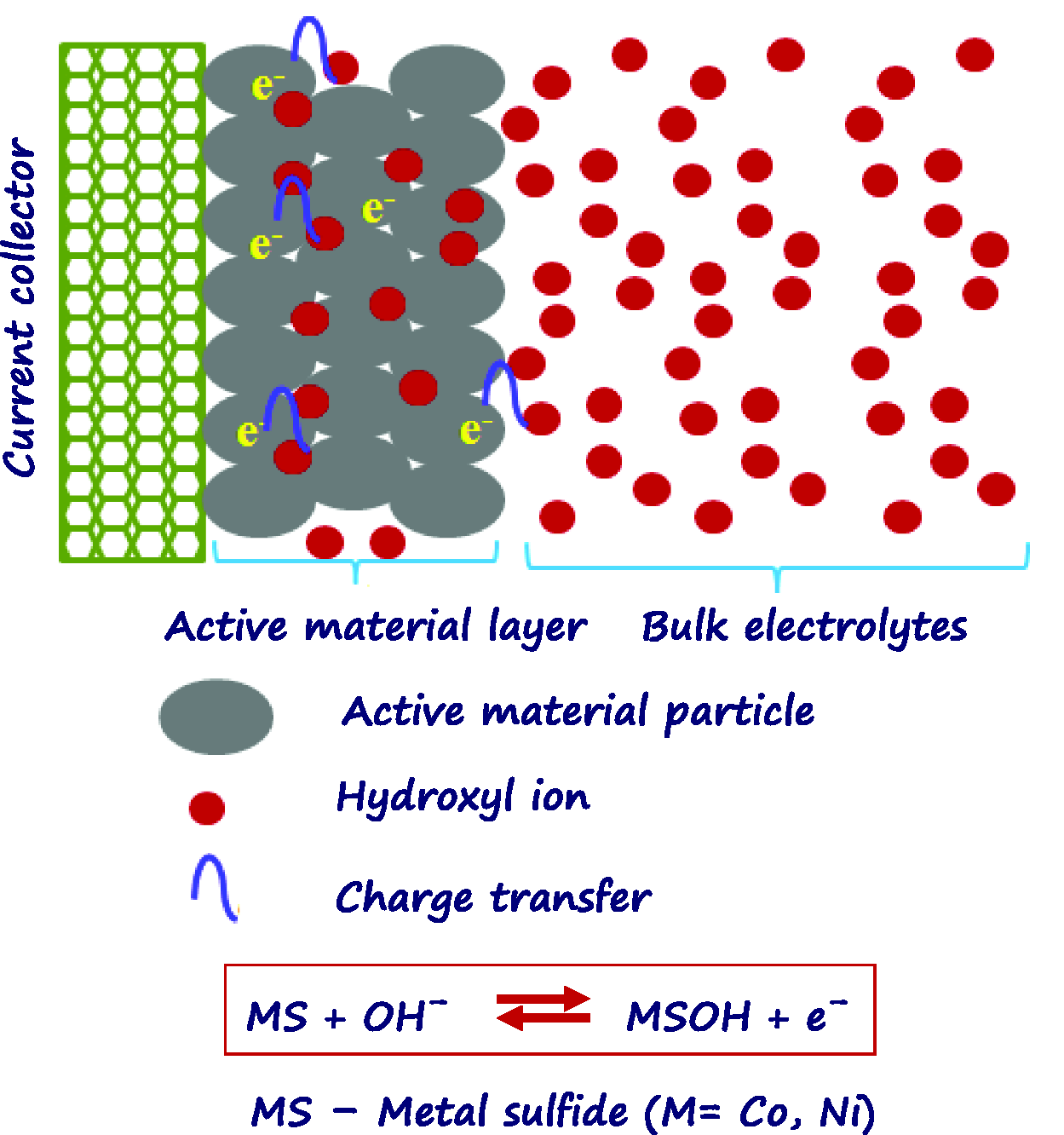
Electrochemical process for the pseudocapacitive behavior of the active material.
To further assess the electrochemical behavior of the active materials (amorphous CoxSx, crystalline Ni17S18 and crystalline (CoNi)3S4 modified electrodes), GCD was carried out in a 2 M KOH solution. The GCD curves of amorphous CoxSx, crystalline Ni17S18 and crystalline (CoNi)3S4 modified electrodes (Figure 7) were measured at a current density of 0.5 A/g. The GCD curves reveal the non-linear behavior with increased charge duration. The discharge duration is very short owing to the pseudocapacitive behavior of the modified electrodes, which is in good agreement with CV results. The specific capacitance of the metal sulfide-modified electrodes can be deliberated from the following formula (1)

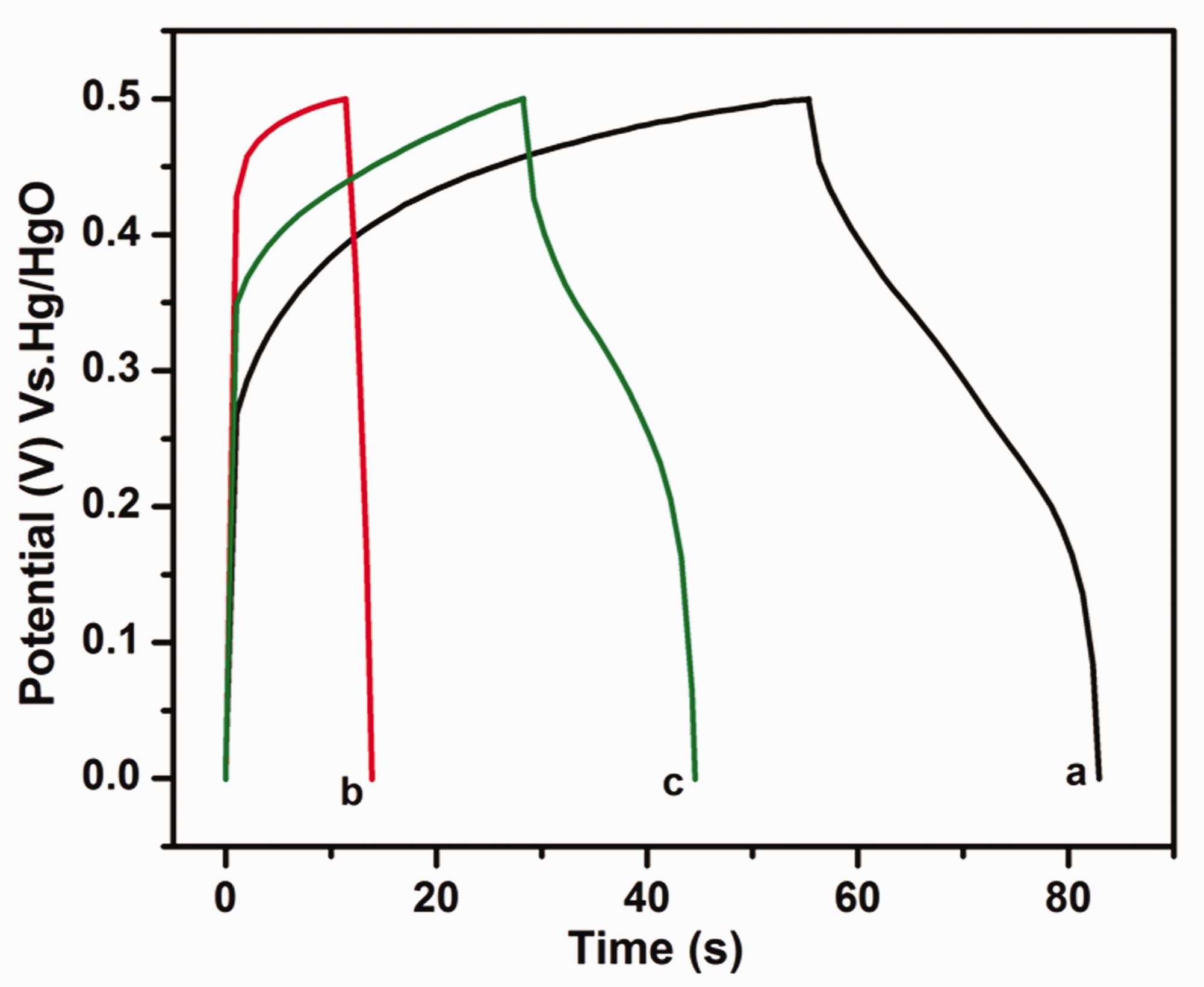
GCD of (a) amorphous CoxSx, (b) Ni17S18 and (c) (CoNi)3S4 modified nickel mesh electrodes in 2 M KOH at 0.5 A/g.
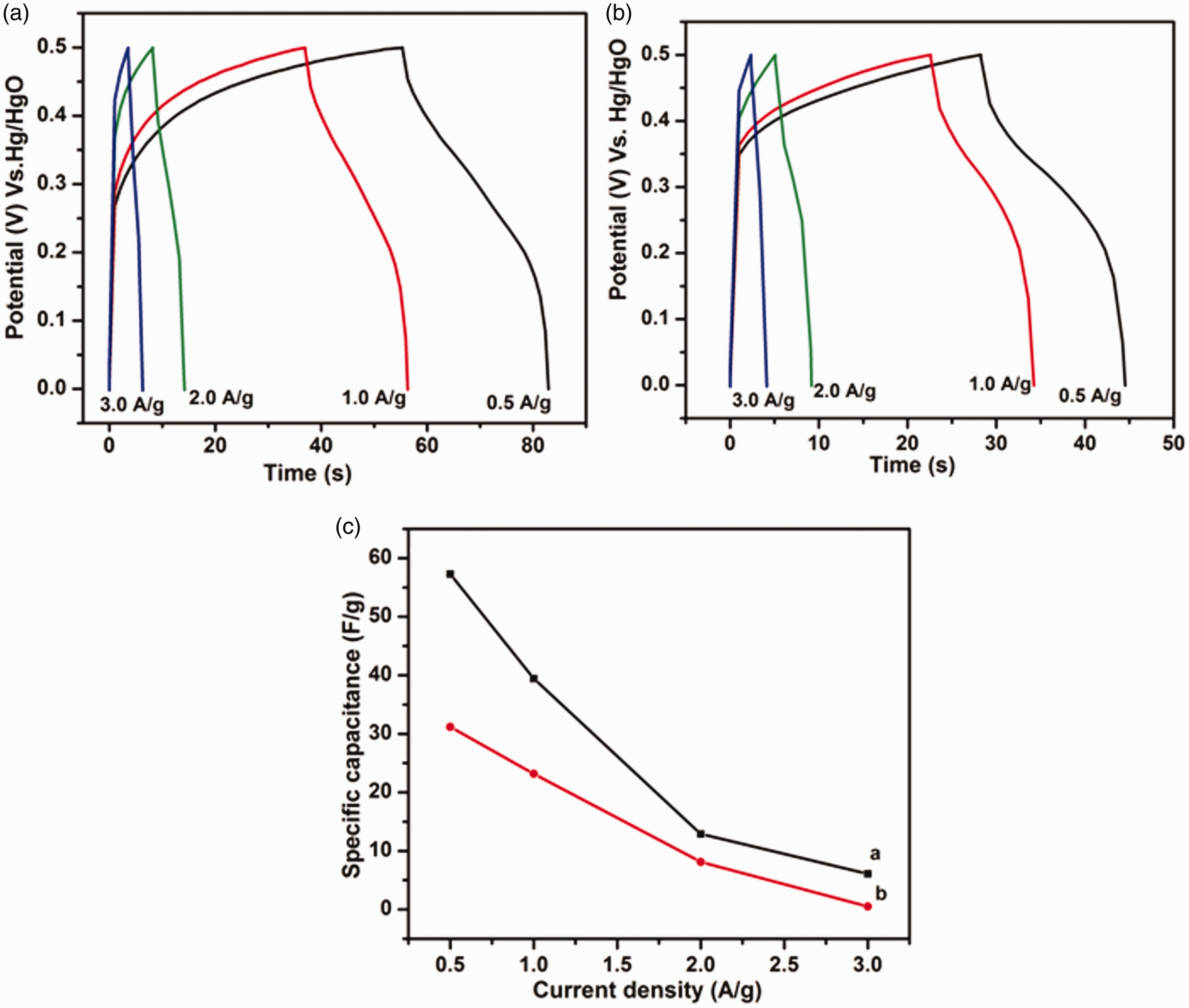
GCD of (a) amorphous CoxSx and (b) (CoNi)3S4 modified nickel mesh electrode in 2 M KOH at 0.5 – 3 A/g; (c) specific capacitance of (a) amorphous CoxSx, (b) (CoNi)3S4 modified nickel mesh electrodes at different current densities.
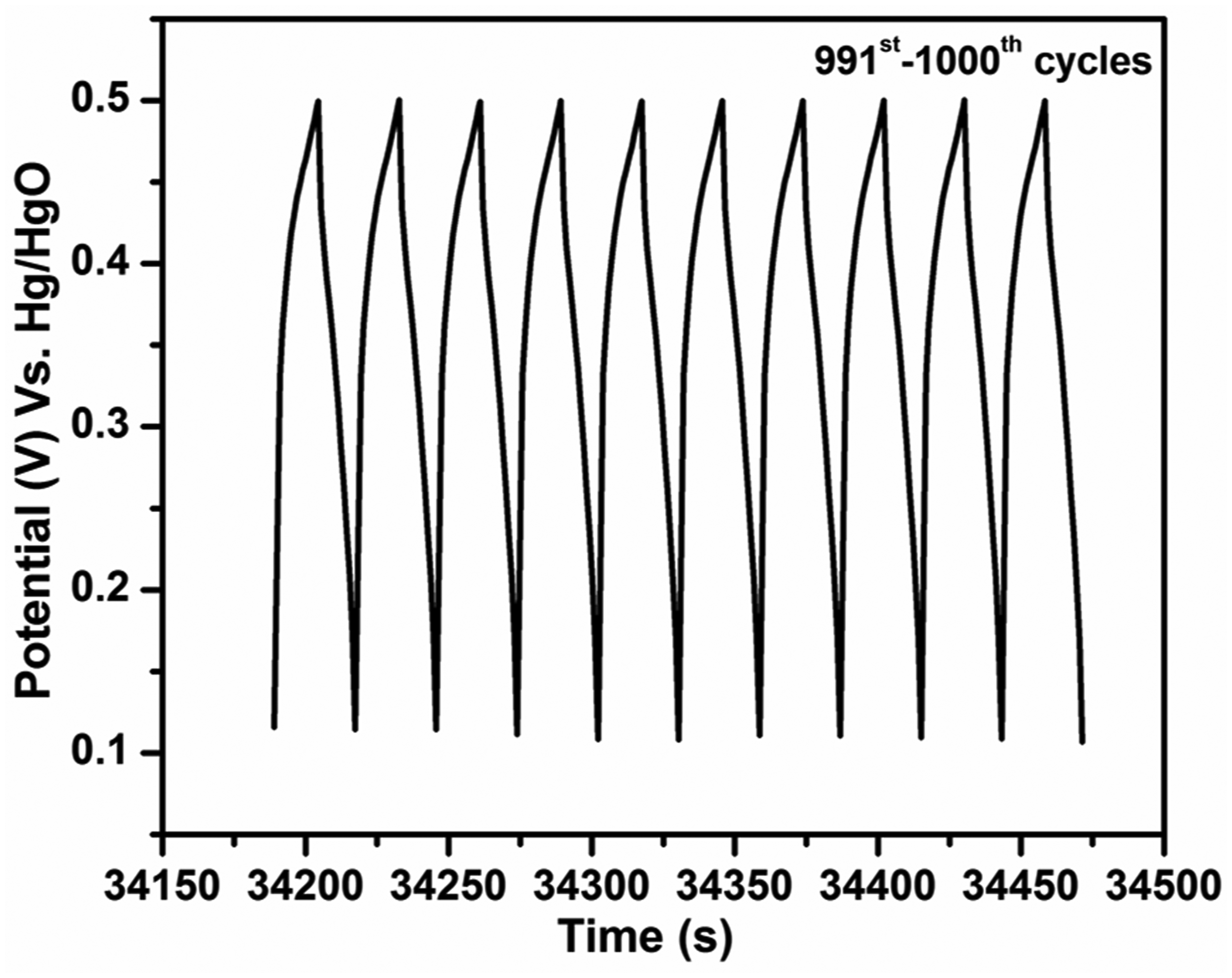
GCD of amorphous CoxSx modified nickel mesh electrode for last 10 (991st–1000th) cycles recorded in 2 M KOH at 1 A/g.
Conclusions
In summary, we have successfully synthesized nanostructured (CoNi)3S4 and Ni17S18 electrode materials via one-step hydrothermal route. The physicochemical properties of the synthesized transition metal sulfide nanopowders were investigated. The cubic and hexagonal crystallite phases were found for (CoNi)3S4 and Ni17S18, respectively. Scanning electron microscopy analysis demonstrate fibrous, flakes and sheet-like morphology for CoxSx, N17S18 and (CoNi)3S4, respectively. Among this morphologies, fibrous and sheet-like morphology displayed higher electrochemical performance in supercapacitors. EIS analysis reveals that the amorphous CoxSx modified electrode has low resistance compared to the crystalline Ni17S18 modified electrode. The CoxSx electrode material exhibits specific capacitance of 57 F/g in 2 M KOH electrolyte at a current density of 0.5 A/g. The enhanced capacitance of CoxSx is mainly due to improved electronic conductivity, rapid electrolyte diffusion and effective structure. Further, CoxSx electrode material displayed 76% of capacitance retention after 1000 cycles at 1 A/g and lower resistance.
Footnotes
Declaration of conflicting interests
The authors declared no potential conflicts of interest with respect to the research, authorship, and/or publication of this article.
Funding
The authors disclosed receipt of the following financial support for the research, authorship, and/or publication of this article: This article has been written with the financial support of RUSA-Phase 2.0 grant sanctioned vide Letter No. F.24-51/2014-U, Policy (TNmulti-Gen), Department of Education, Government of India, dated: 9 October 2018. The authors gratefully acknowledge the Department of Science and Technology, New Delhi, for the financial support in general and infrastructure facilities sponsored under PURSE 2nd Phase program (Order No. SR/PURSE Phase 2/38 (G) dated: 21 February 2017).
