







Abstract
The use of dirty (fossil fuel-based) energy in the process of economic growth challenges humanity through different health issues. This research examines the health risks in the form of mortality rates and the occurrence of respiratory illnesses due to energy usage, greenhouse gas discharges, and economic venture in twenty developing countries of Asian. For this objective, the study investigated a panel dataset of twenty-three years (1995–2018) to measure the short and long-term consequences of environmental contamination on health issues. Results of this study generated through the Autoregressive-Distributed lag (ARDL) technique of econometric. Experimental outcomes of the study confirm that dirty energy, carbon emission, and the process of natural resource exhaustion have a significant and positive impact on health risks on the people of the developing region of Asia. On the other hand, the per capita income growth and clean energy usage contributing positively to human health improvement. The high mortality is positively associated with carbon emission in the case of short-run analysis. These results suggest a comprehensive governance policy set to protect people from the negative impact of dirty energy usage and carbon emission discharge.
Introduction
The developing nations confronted the issues of high mortality, increased the frequency of respiratory disease due to environmental degradation, tremendous energy demand for the process of economic growth, and a massive gap in energy demand and supply in the recent past. The dirty energy (fossil fuels like natural gas, oil, and coal) claimed for the industrialization process, and non-renewable energy demand has to increase many folds due to high energy consumption growth for commercial and household levels. This consumption has a dual effect as it positively contributes to economic progress and negatively contributes to human health through the increasing amount of greenhouse gas emissions.1,2 Developing Asia is also following the footprints of the rest of emerging economies for consuming a high amount of import-based dirty energy and maintaining the valium of greenhouse gases and increasing threat to their people and the rest of the biological factors. According to WHO, 3 nearly 42% of the world population depends on non-renewable energy to fulfill their daily demand for electricity. Thus, it is leading this world towards the scenario where depletion of natural resources will cause unrepairable loss of the environment, and the number of patients of lung cancer, cardiovascular diseases grew rapidly in this world especially in developing economies (Bailis et al., 2005; Barnes et al., 2014).1,4 Currently, more than 3.41 million people lost their lives annually due to environmental issues of air pollution, and most of these casualties reported from the developing region of Asia. 5 The issue of the environment is not only threatening human health but causing billion-dollar expenditures for health-related issues. The greenhouse’s gas emission, especially in the form of air pollution, cause main health issues globally. The health statistics of WHO show that air pollution alone converted 335million healthy people into asthma patients. Approximately 65 million people are facing chronic obstructive pulmonary disease and 1.7 million individuals who have lung cancer, while these figures escalated at a very high pace. 5 Only tuberculosis claimed more than 1.5 million death in 2015, nearly 3 million people reported to die due to obstructive lung disease annually, and the cast and effect of these diseases are much higher than the expected level. Therefore, this study intended to estimate how greenhouse gas emissions and dirty energy of fossil fuel consumption exacerbate health risks in Asia.
The dirty energy in the form of non-renewable and fossil fuels is still a primary source of energy; it is considering for extensive use just because of low nominal cost. On the other hand, it is generating health risks issues in the form of pulmonary and other respiratory diseases.6,7 Therefore, the prices of these dirty energy sources in the developing economies are the main reason of attraction for their domestic and commercial usage. This fact is not deniable that the economic growth process in the developing economies is also essential, tacking the fundamental socio-economic issues like poverty and hunger. That is why these dirty sources of energy contribute heavily to the generation of greenhouse gases and, ultimately, harmful contributions to humans and other living ornaments.8,9 This scenario explains that these developing economies are moving away from the United Nations definition of sustainable development under sustainable goals and will not be able to meet the COP21 agreement for a sustainable environment. In this regard, the current study may help their developing economies, especially from Asia, to develop an appropriate set of policymaking for sustainable economic growth, sustainable environment, and improvement in health issues. The developed economies are a roadmap for emerging economies that have shown better environmental and fewer health issues while maintaining a healthy economic growth rate. The matter of rising greenhouse gas can affect both developed and developing economies through health issues if it is not considered a collective agenda in the process of development.
The main aim of this study is to find the negative and positive determinants of mortality respiratory diseases in Asian developing countries for the period 1995–2018 through using ARDL approach.
This study will contribute positively to the research area of energy usage, economic growth, and environmental degradation on human health, considering developing economies as a case study. However, this study organized as follows: Literature review section presents the literature review. Energy, pollution and health implication in emerging Asian countries section explains the implications of energy, pollution and health in the emerging Asian countries. Data and methodology section shows the methods; Estimation of results section estimates the results and Conclusion section concludes the study.
Literature review
Over the last decade, the world’s population is raising rapidly, which increased the usage of energy. This cause higher Carbon Dioxide emissions, health diseases and number of deaths. Therefore, it is important to study the effects of energy usage on mortality and health. According to the recent studies on energy-pollution in Asian countries, Bekun et al. 10 examined the effects of globalization, energy consumption and economic growth on environmental sustainability in China through the period 1971–2015. The findings of this study approved that globalization and energy consumption significantly and positively impacted environmental sustainability in China. The relationship between economic growth and environmental sustainability found insignificant in this study. Another study on China by Azam et al., 11 this study examined the factors that drives foreign direct investment (FDI), human health, pollution (CO2) and economy (GDP per capita) during the period 1995–2016. The main results conclude that energy usage affected FDI, human health, CO2 and GDP per capita significantly and positively. In addition, the correlation between GDP per capita and CO2 is significant and negative. Apergis et al. 12 also tested the determinants of health care expenditure and environmental pollution over the period 1995–2017 for 178 countries. The findings of generalized method of moments (GMM) pointed that health care expenditures influenced significantly and positively from GDP per capita, population, pollution (CO2 emissions), energy intensity. On the other side, CO2 emissions increased significantly due to GDP per capita, health care expenditures and energy intensity.
Dogan et al. 13 tested the determinants of GDP OECD countries during the period 1990–2010. The main results suggest that renewable energy consumption led to economic growth. Therefore, it is recommendable for Asian developing countries to use renewable energy to enhance economic expansion. Moreover, Dogan et al. 13 concluded that capital stock, employment and research and development supported the economies of OECD countries positively.
The sources of energy which is mostly used in developing economies are linked closely to health queries and environmental contamination. The survey respondents, in this regard, emphasized the grim picture of ecological imbalance. According to Beatty and Shimshack 7 and Epstein et al., 14 although energy is vital for living organisms, and leading input of economic production, yet the financial cost and benefits analysis of the available energy sources is critical to highlight their accurate outcomes on human health. Thus, the role of energy consumption in developing economies is improving the financial conditions of the individuals. The net gain in the form of life quality improvement depends on energy sources that consume in developing economies.15,16 Here, the preference matters a lot for the selection of energy consumption in economic growth to improve life quality (nominal or real). It means that the benefit of using dirty energy sources due to their low-cost today (theoretical interest), in many cases, high health expenditure (real outcome) soon. In this regard, limited research has conducted to present the picture of dirty and clean energy role for real improvement in human lives as the issue’s life expectancy at birth, environmental degradation, climate mitigation, and rising temperatures are becoming more critical. Therefore, this research area required particular intension for more accurate measurement and investigation of energy and natural resource depletion for health risk context. Pandey et al. 17 analyzed the energy-growth-environment nexus in cooperation with globalization, urbanization, life expectancy and biocapacity in Asian countries covering the period 1971–2014. The outcomes of this study conclude that globalization improved the quality of environment. In contrast, urbanization, life expectancy, biocapacity and energy consumption influenced the environment negatively. Alola and Joshua 18 focused on the high-income, low-income, lower middle-income, and the upper middle-income countries for the period 1970–2014 using ARDL approach. This study found that fossil fuel consumption, renewable energy consumption and globalization increased the pollution (CO2) during the period of the study in the long run. This conclude that renewable energy could not support to reduce the pollution. In contrast, renewable energy usage and globalization decreased the Carbon Dioxide emissions in the short run. Ibrahima and Alola 19 examined the determinants of pollution in the Middle East and North African (MENA) region over the period 2006–2016. For the results of ARDL-Long run, the CO2 emissions have been affected significantly and positively through energy efficiency, economic growth and total natural resource rent. Another study by Majeed and Ozturk 20 that tested the association between environmental degradation and population health using a global panel data of 180 countries through the period 1990–2016. In this study, the environmental degradation had a negative impact on population health outcomes, which increased the rate of infant mortality and reduced life expectancy. This study suggested imposing more reforms through health policies and to lower environmental degradation. Moreover, the results show that environmental degradation and health have been influenced positively through GDP per capita, education, urbanization while CO2 emissions impacted environmental degradation and health negatively.
The current health and environmental issues are driven by the consumption of coal and natural gas as energy resources because of their flexible and cheapest characteristics against other available sources, especially renewable.21,22 These sources are continuously threatening humans and unborn human survival, increasing greenhouse gas emissions with their increasing thermal networks in the developing economies of Asia.23,24 This notion is essential for developing Asia for human health aspects as WHO has already worn developing economics to improve their necessary facilities of clean drinking water and sanitation to enhance human life expectancy with the right health conditions.25,26 Therefore, these severe challenges regarding health risks in the developing economies required urgent attention at policymaking to revisit energy sources and efficient utilization of natural resources. Many researchers from the recent past also convinced that high mortality rates in different regions of the world strongly correlated to non-renewable and dirty sources of energy, like fossil fuels at the micro and macro levels.27,28 Even though energy sources in many developing economies went through the transformations process during the last decade or so, but due to lack of policy interest in this regard, the conversion of energy sources in these developing economies remains inefficient and costly while their demand for energy is increasing rapidly. Thus, these developing governments' primary task remains to reduce this shortage of energy demand through any source, and due to this, environmental and health challenges have increased many folds. Thus, this study attempts to highlight the area as mentioned above for research into consideration of health and environmental issues of developing economies due to the high consumption of dirty and non-renewable energy like natural gas and coal.
Considering the work of Dumart et al. 29 and Hanif, 27 the current study investigates the linear association between health issues and the economic progress of developing Asia. Keeping in mind the theory of the environmental Kuznets curve (EKC), this work considers quadratic terms per capita to testify its linearity. Even though the per capita income of these developing economies is a source of environmental degradation, it expected that technological innovations and transitions towards clean and green renewable energy production could be helpful. Therefore, this study assumed that economic growth leads to environmental issues in the first stage while improving in the second stage of growth. Due to this interpretation of the EKC theory, the pattern of economic growth is critical. Based on the assumptions of the theory mentioned above, this study is exclusively one of the very few in this research area. Thus, it expected that the outcomes of this empirical research would be beneficial for the developing economies policymakers to develop effective strategies for economic growth, keeping the environment intact, and health risk minimum. This study attempts to answer the following questions regarding the abovementioned objectives. First, environmental degradation has any association with health diseases and mortality incidence for the case of developing Asia? Secondly, the significance of non-renewable energy consumption in developing Asia is associated with mortality and respiratory disease? For these objectives, this study applies the ARDL technique on the panel dataset and applies heterogeneity and indigenousness tests to the robustness of the results. This study suggests a set of policy implications for developing economies generally and developing Asia particularly.
This work designed as follows: the next part presents the association level of energy and pollution in developing Asia. The methodological discussion and data issues explain in section three. The fourth section of this study shows the empirical results and their interpretation and, finally, there is a conclusion and implication.
Energy, pollution and health implication in emerging Asian countries
The health issues related to environmental pollution in the developing economies are affecting economic situations also. The extra effort required to bring air quality of the underlined economies parallel to world health organization (WHO) standard even they have done much better in this regard.
According to World Bank (2020)30, the circumstance of environmental quality in Myanmar, Mongolia, and Bangladesh is frightening as their pollution index score is nearly 91% averagely. The situation of Jordan, China, Iran, Vietnam, Nepal, and Pakistan is also not much different as their pollution index score has 80–89% frequency. The air quality score frequency of turkey, Kazakhstan, Thailand, India, the Philippines, Cambodia, and Indonesia is between 70 and 79%. Thus, it indicates that emerging economies of Asia already experienced inferior and polluted air quality. Based on the scenario mentioned above, the logic behind carry out this study look strong to measure the impact of environmental degradation on health risks in these developing economies.
Regarding to World Bank (2020), four out of twenty countries in developing Asia can generate 60% of their total energy through clean and renewable sources. In comparison, 11 countries hold this energy production source of less than 10% as a whole. Thus, it concluded that these developing economies heavily depend on non-renewable, dirty sources of energy like fossil fuels. For example, according to World Bank (2020)30, countries like Indonesia, Myanmar, China, and Sri Lanka have more than 1000 units of oil equipment consumption of dirty energy per capita. This dangerous condition for these emerging economies is that this pattern of dirty energy consumption will further deterioration of their air quality over time.
After reconciling the given conditions of underlined emerging economies of Asia, it deemed necessary to reprove the relationship between energy consumption, economic growth, environment with health risks in the light of the latest available dataset. The graphical presentation of these emerging economies shows that they heavily depend on dirty energy to fulfill their domestic and commercial demand. On behalf of this graphical presentation, it expected that condition of air quality of these economies is going to be verse soon and will cause serious health issues as this pollution penetrating the human body through their lungs. Reports claimed that nearly 2.2 milliion inhabitants died in 2016 due to air pollution. These people found different categories of diseases like 29% of cardiovascular, 27% heart failure, 22% pulmonary, 14% lung cancer, and 8% pneumonia. Thus, the current study reinvestigates the relationship of the environment with health risks to generate a more precise picture of these emerging economies.
Data and methodology
This study applies a simple model for the dataset of twenty emerging economies of Asia (see Appendix 1) during the period 1995–2018, that collected from World Development Indicators (WDI) by World Bank.
30
The study examines the impact of energy usage, economic growth, carbon emission on health indicators of life expectancy, and other respiratory diseases. This study’s methodology based on Hanif,
27
Hanif and Gago-de-Santos
31
for investigating the panel dataset for 23 years of time-space collected from the World Bank millennium development goal. The suggested model is as follows.

Here, the short-run dynamics based on the ARDL model written as
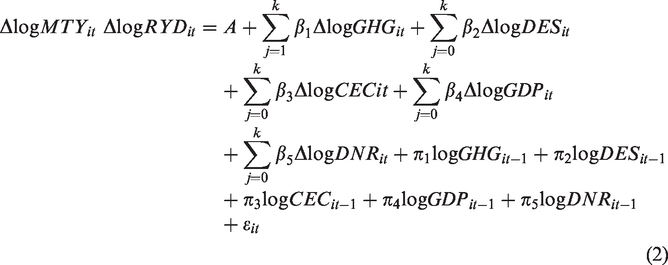
Besides, on the right side of the equation, the no-cointegration null hypothesis shows the association's existence between independent variables and the mortality rate, which depicted as follow

Subsequent, verifying cointegration with the independent variable, the ECM explained as
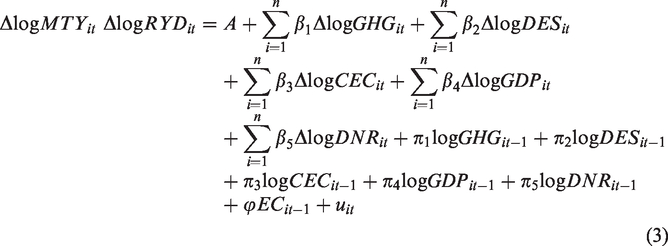
The error correction term presented as “
Estimation of results
The summary statistics depicted in Table 1.
Summary statistics of variables.
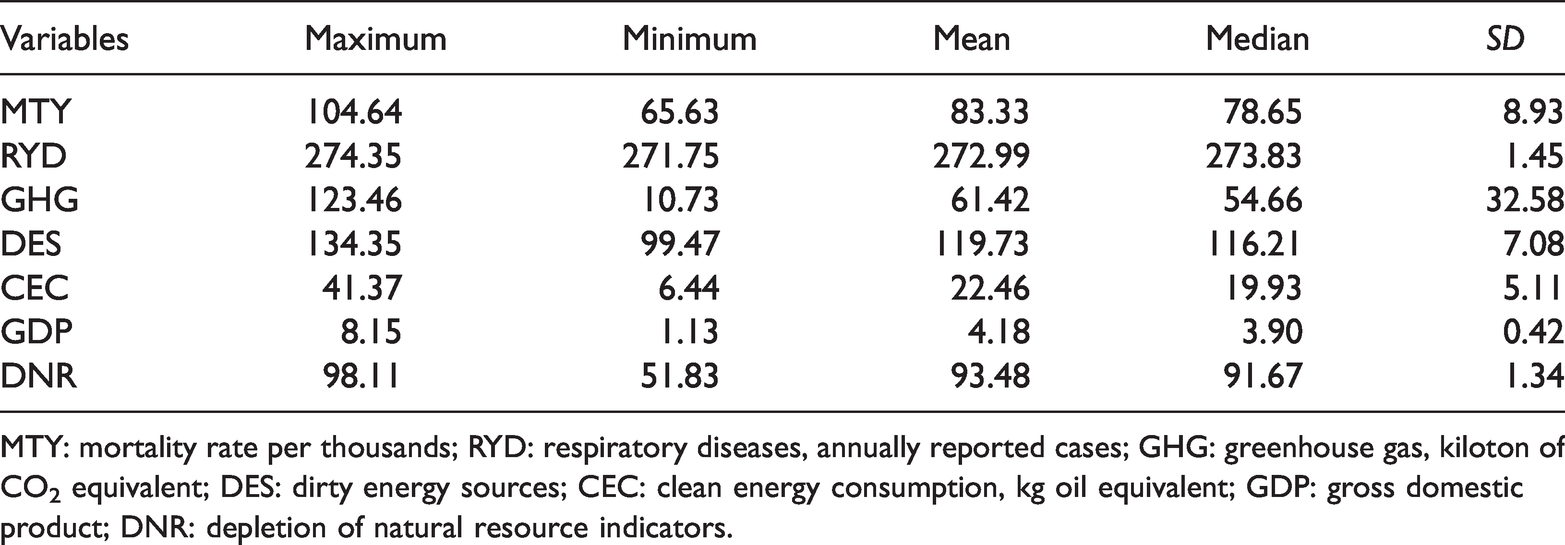
MTY: mortality rate per thousands; RYD: respiratory diseases, annually reported cases; GHG: greenhouse gas, kiloton of CO2 equivalent; DES: dirty energy sources; CEC: clean energy consumption, kg oil equivalent; GDP: gross domestic product; DNR: depletion of natural resource indicators.
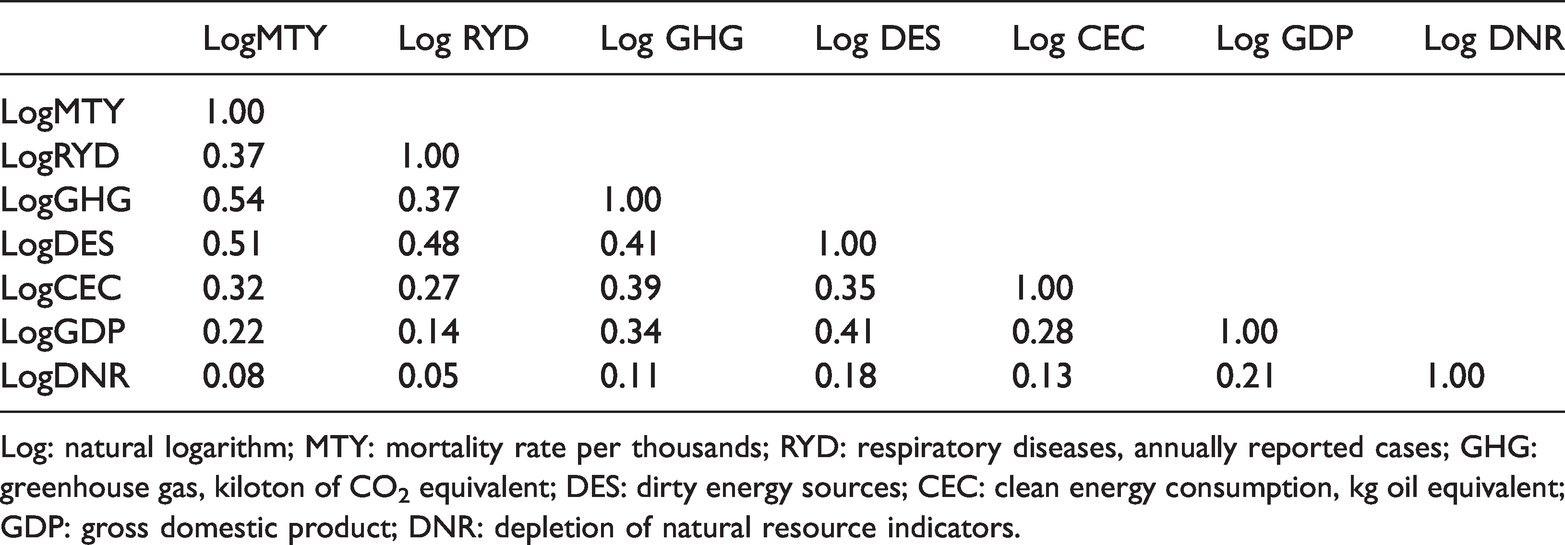
To identify the problem of Multicollinearity in the models, Table 2 shows the results of correlation matrix.
Results of correlation matrix.
Log: natural logarithm; MTY: mortality rate per thousands; RYD: respiratory diseases, annually reported cases; GHG: greenhouse gas, kiloton of CO2 equivalent; DES: dirty energy sources; CEC: clean energy consumption, kg oil equivalent; GDP: gross domestic product; DNR: depletion of natural resource indicators.
According to the results of the pair-wise correlation matrix presented in Table 2, the dependent variables MOR & RYD weakly correlated with independent variables of DES, CEC, GDP, and DNR. The value of the correlation coefficient indicates that there is no multicollinearity among the variable as all values are below 0.80%. 32
To check the cross-sectional interdependence when the cross-sectional dimension is smaller than the time dimension (N < T), Breusch-Pagan (1980)33 proposed the Lagrange multiplier (LM) CDLM1. If, in a case (N < T), where N and T both are higher than the critical dimension, thus, CDLM2 applied to examine interdependence (Pesaran, 2004)34 in the test of CDM1, the average of a group is zero, which is biased due to zero assurance in the individual average, but this issue resolve by Pesaran et al. (2008)35 through introducing average and variance in the statistical procedure. This version of CDLM1, also called (LM-adjusted). The diagnostic test based interdependence results presented in Table 3.
Results of cross-sectional dependence tests.

Here, the indicator “I” represents intercept while the “I&T” intercept and trend, respectively. According to the null hypothesis, there is no cross-sectional dependence. The null hypothesis rejected if the “p” value is less than 5%. Table 3 shows there is no impression of cross-sectional dependence in this model to accept the null hypothesis. Now the unit root in the data series resolved using the unit root tests of 1st generation. The ADF and Levin Lin and Chu (LL&C) tests applied in Table 4 to resolve this issue of a unit root.
Test for stationarity.
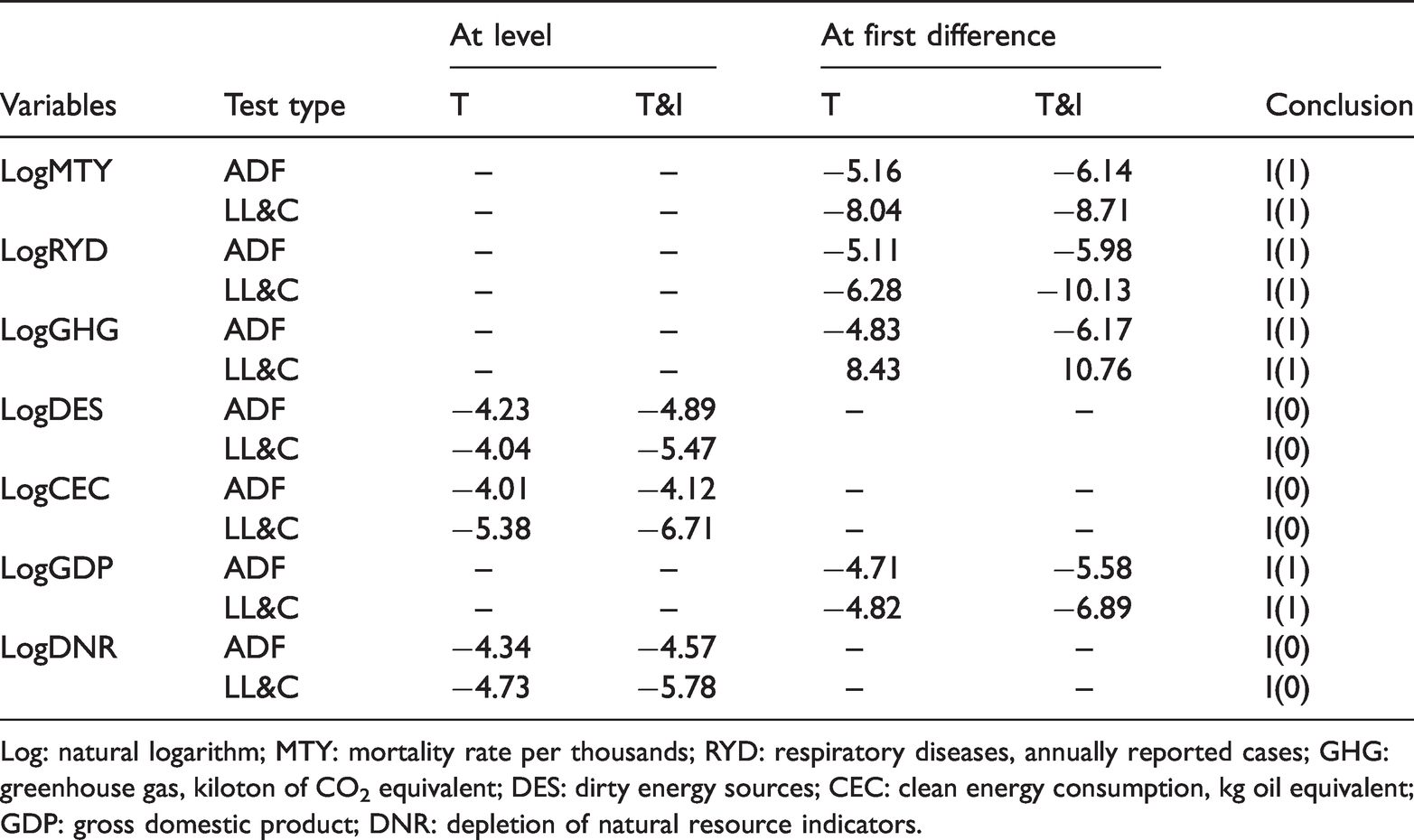
Log: natural logarithm; MTY: mortality rate per thousands; RYD: respiratory diseases, annually reported cases; GHG: greenhouse gas, kiloton of CO2 equivalent; DES: dirty energy sources; CEC: clean energy consumption, kg oil equivalent; GDP: gross domestic product; DNR: depletion of natural resource indicators.
Table 4 shows that natural resource depletion indicator, dirty energy consumption, clean energy indictors are steady-state of level I(0). The variables included per capita income, greenhouse gasses emissions, mortality rate, and respiratory diseases found stationary at the first difference I(1). Thus, the mixed nature of underlined variables allows the application of the ARDL method to measure the suggested parameters. Furthermore, this study applied bound tests to identify cointegration among variables.
The results of the Padroni and Kao cointegration tests shown in Table 5. The results of both tests confirm that there is cointegration between dependent and independent variables.
Padroni and Kao cointegration test.
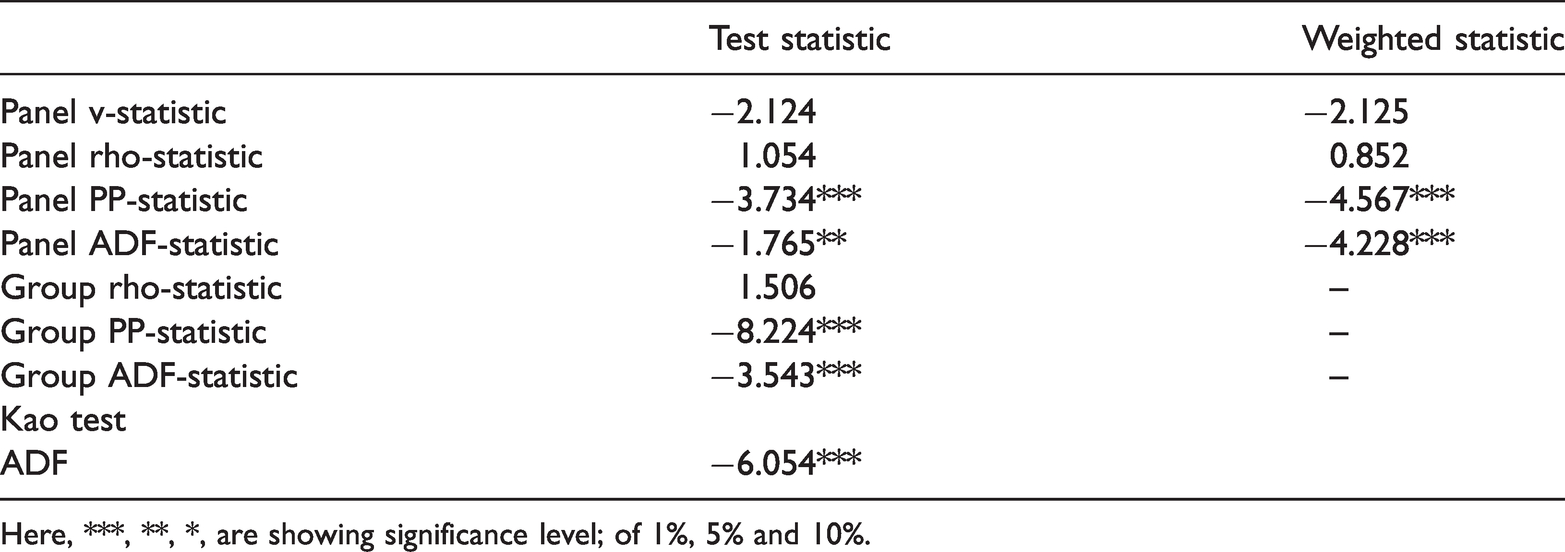
Here, ***, **, *, are showing significance level; of 1%, 5% and 10%.
Results and discussion
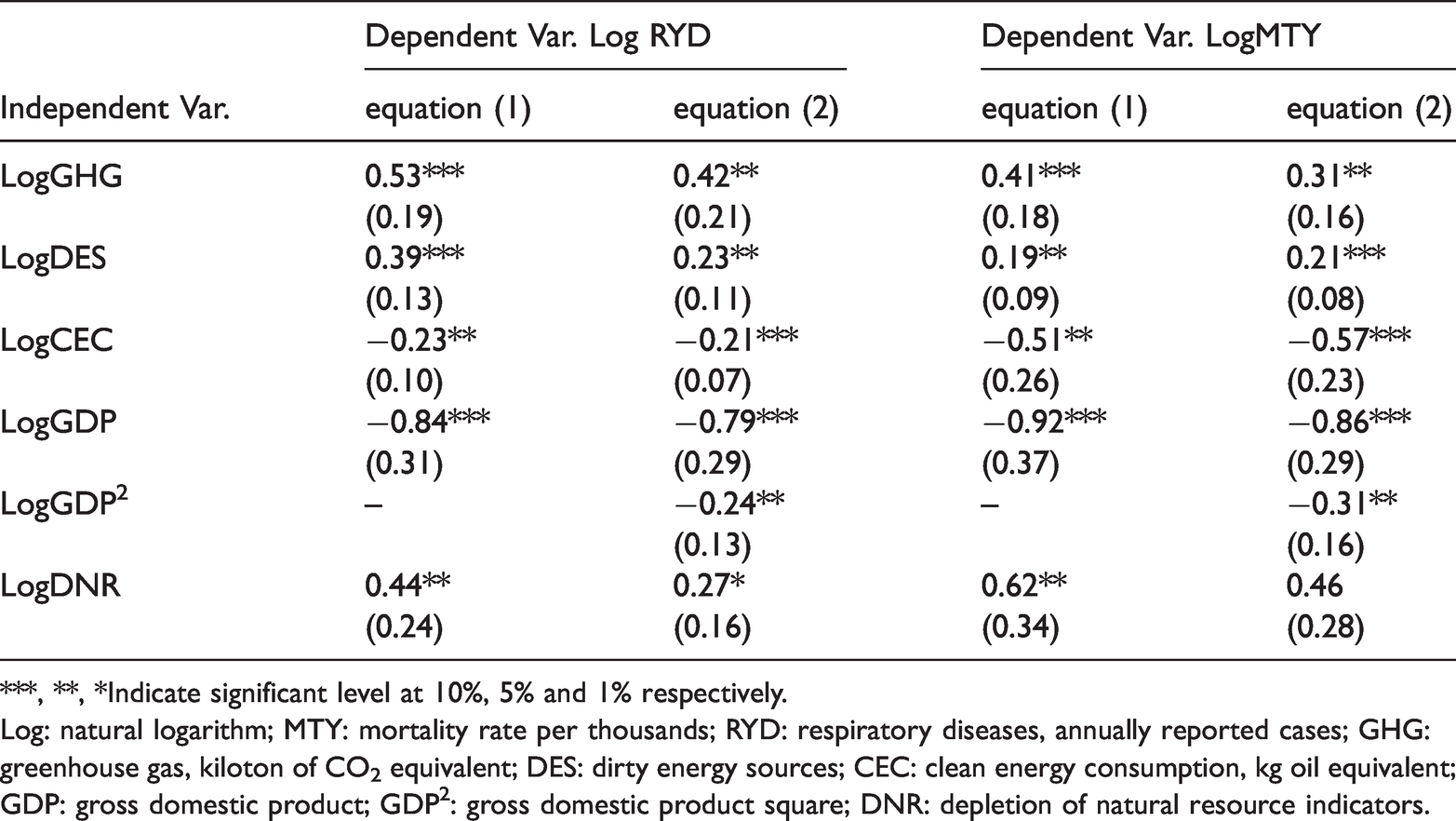
Table 6 the results of equation (1) shows that the coefficient of greenhouse gas is significant at 1% level with a positive sign. According to this, a 1% growth in greenhouse gas emissions will increase the risk of respiratory diseases by up to 0.53%. The results of mortality risk concerning greenhouse gas emissions are also in the same line and trajectory. Here, a 1% growth in greenhouse gas emissions can increase the mortality rate of about 0.41%. Thus, these results indicate that, given ceteris paribus, health risk and mortality risk increase in selected Asian economies due to growth in carbon emissions.
Long-run estimates.
***, **, *Indicate significant level at 10%, 5% and 1% respectively.
Log: natural logarithm; MTY: mortality rate per thousands; RYD: respiratory diseases, annually reported cases; GHG: greenhouse gas, kiloton of CO2 equivalent; DES: dirty energy sources; CEC: clean energy consumption, kg oil equivalent; GDP: gross domestic product; GDP2: gross domestic product square; DNR: depletion of natural resource indicators.
Furthermore, the probability of health risk and mortality also increased in the long-run due to a given pattern of greenhouse gas emissions for underlined countries. These results are simultaneous with Sumpter and Chandramohan (2013)36, Hanif, 27 and Sapkota et al. (2013)37. Based on the empirical investigations, the notion confirmed that greenhouse gas emissions in the form of air pollution, are critical to health issues like chronic obstructive pulmonary and lung cancer. Unfortunately, the statistics of toxic gases in these emerging economies of Asia are increasing at very high rates. Based on the outcomes mentioned above regarding greenhouse gas emissions and health risks relation, the causal effect may much higher than accounted.
The coefficient of dirty energy (fossil fuel combustion) also shows the positive and significant at a 1% level. According to the results, a 1% growth in the production and consumption of dirty energy can lead to a 0.39% increase in health-related issues like respiratory diseases. Similarly, a 1% growth rate in this dirty energy can increase a 0.19% chance of occurrence of mortality. Thus, according to these outcomes, the growth of energy consumption, especially dirty energy contributing positively to the issue of health concerns and mortality in the underlined set of emerging economies of Asia. The same outcome interpreted by Bailis et al. 1 and Barnes. 4
Contrary to this, the results of clean energy usage are very encouraging and supporting. The coefficient of clean energy is statistically significant at a 1% level with a negative sign. Here, a 1% growth in the production or consumption of clean energy can decrease a 0.23% level of respiratory disease incidence. The same relationship observed with the mortality rate also. The mortality rate will reduce up to 0.51% due to a 1% increase in the production of clean energy. These results support the notion of clean energy production enhancement in these developing economies of Asia as it can improve health conditions and help to reduce mortality risk.4,7 Azam et al. 11 confirmed that the correlation between energy usage and human health is significant and positive in China for the period 1995–2016.
The per capita GDP coefficient is negative and statistically significant, which means growth in per capita income reduced health risks. The relationship between per capita income growth and mortality is also the same. Here statistics show that a 1% growth in per capita income help to reduce 0.92% risk of mortality in these developing countries. These outcomes support the logic that countries with low per capita incomes face more health and mortality issues. Thus, both the economic condition and usage of clean energy are sources to improve health conditions and reduce mortality risks in these economies of developing Asia.6,9 This is inconsistent with the results of Majeed and Ozturk 20 who reported that the association between economic growth (GDP per capita) and population health is significant and positive. However, the square of GDP per capita income, which introduced to measure the non-linear relationship between it and dependent variables in mortality risk and respiratory diseases, found encouraging results. This square term's coefficient is statistically significant, with a negative sign for both the mortality and respiratory diseases. Thus, it concluded that a linear relationship exists between dependent variables and income growth—these results encourage the decisive role of economic growth for health and mortality issues improvement.
According to the results, the coefficient of natural resource depletion is statistically significant with a positive sign. The outcome statistics indicate that a 1% increase in the depletion of natural resources enhanced the risks of health diseases by up to 0.44% in these rapidly growing economies. It is valid for mortality risk; a 1% depletion of resources increased the risk of mortality up to 0.62%. The outcome of this investigation strongly backs the efficient usage of natural resources, especially non-renewable in these given developing economies. It is also crucial that all the factors (directly or indirectly) related to resource depletion can cause significant health issues and risk of mortality.27,38
Finally, by following the idea of Environmental Kuznets Curve, the linear relationship between economic growth and health risks also determined. For this purpose, the square of per capita income introduced in equation (2). The results show that increase in the square of per capita income is a significant source to reduces the incidence of respiratory diseases and mortality rates in Asian countries. Thus, results show a linear relationship between per capita income and dependent variables, i.e., respiratory diseases and mortality rates. It can conclude that the improvement in per capita income and transition from dirty to clean energy will help to improve the health status of the individuals in developing Asian countries.
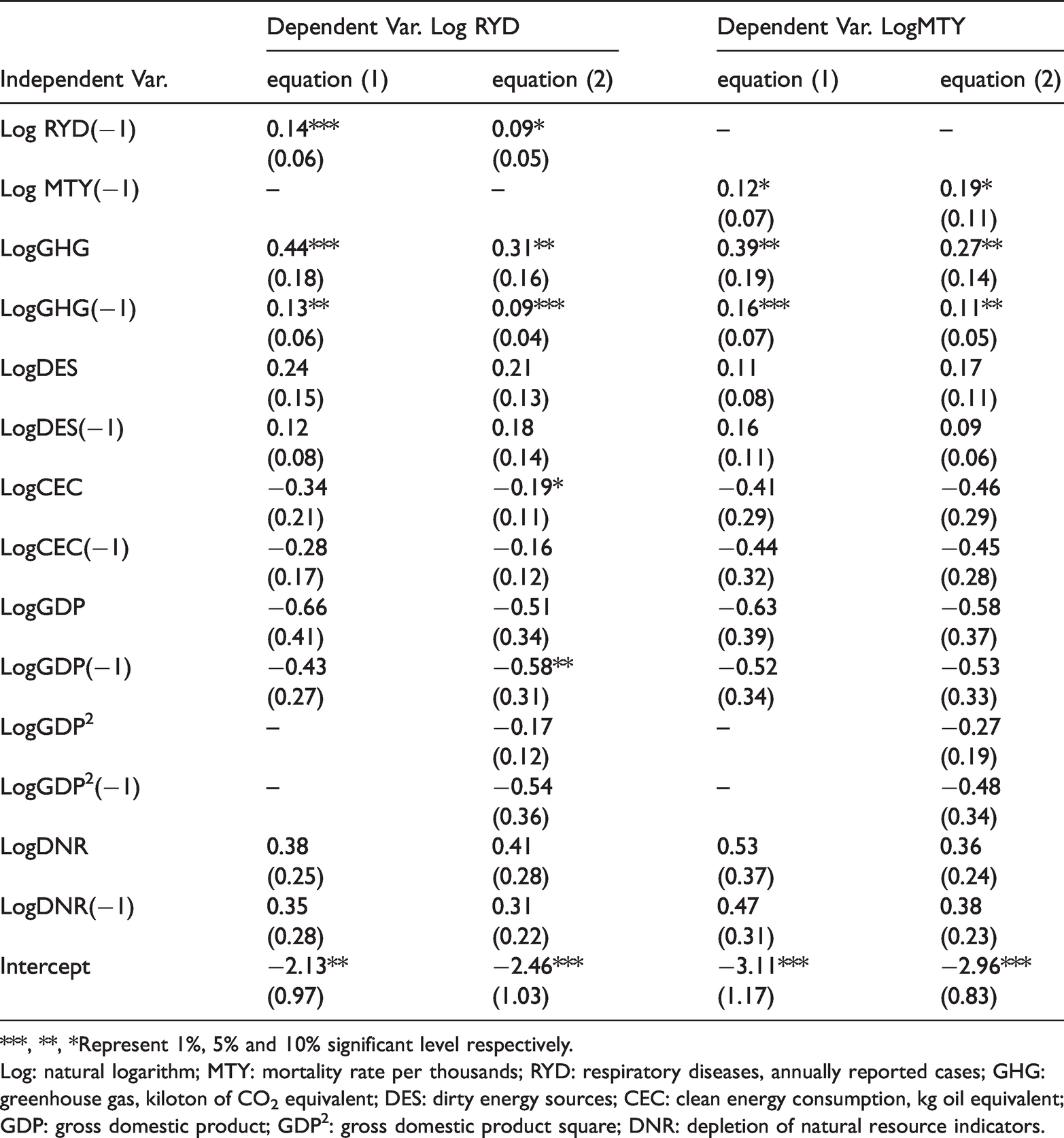
According to Table 7, greenhouse gas emission is the only factor which is statistically significant with positive sing in the short-run. It indicates that the chance of respiratory diseases increases with an increase in greenhouse gas emissions, e.g., with ceteris-paribus 1% growth in GHG emission lead a 0.16% increase in health risks.1,39 Here, the factor of per capita income is very vital for respiratory disease control as a 1% growth in income helps to reduce the risk of respiratory diseases up to 0.43%. The dirty energy consumption in the form of fossil fuels, clean energy consumption, and resource depletion are insignificant in the short run for these developing economies of Asia.
Short run estimates.
***, **, *Represent 1%, 5% and 10% significant level respectively.
Log: natural logarithm; MTY: mortality rate per thousands; RYD: respiratory diseases, annually reported cases; GHG: greenhouse gas, kiloton of CO2 equivalent; DES: dirty energy sources; CEC: clean energy consumption, kg oil equivalent; GDP: gross domestic product; GDP2: gross domestic product square; DNR: depletion of natural resource indicators.
The general trends of the results for underlined data analysis show that both the dirty energy and greenhouse gas emissions are sources of high mortality risks and health-related issues, and these outcomes and simultaneous with Bailis et al. 1 and Hanif. 27 In the more precise interpretation, a 1% growth in dirty energy and greenhouse gas emission leads to a mortality risk rate of 0.13% and 0.12%, respectively. In contrast, clean energy and income growth per capita contribute positively to reduce these health risks in the short-run. Simultaneously, the depletion rate of resources has little impact on the occurrence of respiratory disease issues. The relationship of the indicators, as mentioned above, follows the footprints.6,7,27 Thus, access to clean energy consumption at the domestic and per capita enhancement can contribute to controlling respiratory diseases and lowering the mortality risk, respectively.
The factors such as fossil fuel usage, overconsumption of natural resources, and greenhouse gas emissions are crucial in determining health-related risks in Asia's emerging economies. Access to clean energy and per capita income is essential in controlling greenhouse gas emissions, health issues, and lowering mortality risks in the case of these countries. This study estimated the error correction model in Table 8 to find the underlined model's equilibrium condition.
Results of error correction model.
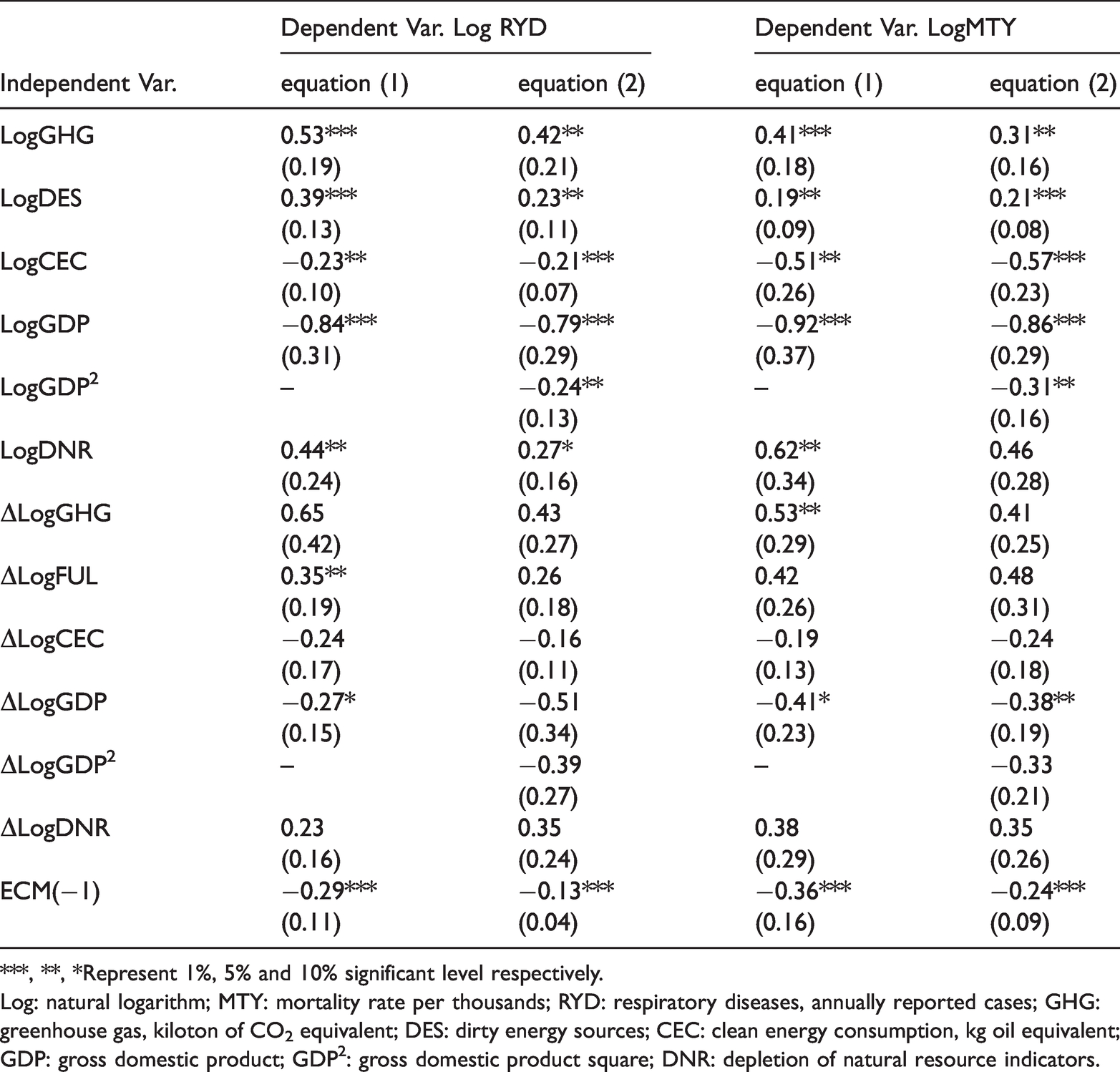
***, **, *Represent 1%, 5% and 10% significant level respectively.
Log: natural logarithm; MTY: mortality rate per thousands; RYD: respiratory diseases, annually reported cases; GHG: greenhouse gas, kiloton of CO2 equivalent; DES: dirty energy sources; CEC: clean energy consumption, kg oil equivalent; GDP: gross domestic product; GDP2: gross domestic product square; DNR: depletion of natural resource indicators.
The error correction model results in Table 8 show statistically significant the negative sign of the coefficient for both the cases in this study. This negative sign (−1) explains that the model attained its convergence towards equilibrium, according to these results, a 29% rate of correction for the health-related respiratory diseases in this model per year. The rate of convergence towards the equilibrium point for mortality risk in this model is 36% annually. The second model shows 13% of the error correction per annum reported in the case of health-related respiratory diseases controlling through the square of per capita income, which introduced as an independent variable. The second model for mortality rate shows a 24% convergence rate from short to long-run equilibrium due to square per capita income.
Conclusion
This study carried out to determine the case and controlling factors for health-related issues in the developing countries of Asia. The objective of the research obtains through panel data investigation in the ARDL estimator of econometric with short and long-run impact of energy, economic and environmental indicators on dependent variables of health and mortality. According to the investigated results, greenhouse gas emissions positively add to the issues of health and the mortality rate. These issues (health and mortality rate) are also positively and significantly related to the burning of dirty energy of fossil fuels. Here, the consumption of clean energy sources domestic as well as the cross border in these developing economies can reduce these risks of health and mortality effectively. The role of per capita income growth in health-related issues is crucial and encouraging as per capita income and better health conditions in these economies. Thus, both indicators (clean energy and per capita income) consider positively in the formation of health-related policymaking, especially in emerging Asia.
Additionally, the role of natural resource depletion in health-related factors is significant and positive. This empirical investigation shows the importance of policy effectiveness regarding economic growth, clean energy production, and environmental protection for lowering the health risks in developing economies. The square term of per capita income shows the linear association with health indicators, which states that growth in per capita income level helps reduce the issues of respiratory diseases and lower mortality risks. This point is crucial for those economies with low per capita income, high dependency on dirty energy, and exploiting natural resources, which can rapidly face the severity of health issues and increase the risk of mortality. The finding of this study indicates that usage of dirty energy and increasing environmental issues due to rapid growth in greenhouse gas emissions are causing problems in the health sectors of developing economies. The clean energy growth with per capita improvement can help to deteriorate such issues of health. The policies regarding effective environmental management, innovations in renewable energy sources in the production and consumption process, and efficient use of natural resources are critical to maintaining environmentally friendly economic growth and reduce the risk of human health. For such purpose, carbon taxation, energy pricing for dirty energy usage, subsidies for work, and producing clean energy could be necessary steps towards a healthy economy.
Footnotes
Declaration of conflicting interests
The author(s) declared no potential conflicts of interest with respect to the research, authorship, and/or publication of this article.
Funding
The author(s) received no financial support for the research, authorship, and/or publication of this article.
