







Abstract
Anthropogenic CO2 generations from use of fossil resources has led to catastrophic climate problems. Biochar is a promising material for CO2 capture and storage in soil, because it does not require additional storage space. To produce biochar, pyrolysis is required in an oxygen-limited condition. In an attempt to offer more environmentally benign route for biochar formation, this study introduced CO2 as a reaction agent. Using rice husk as a model compound, biochars were produced under CO2 and N2 condition. Porosity of rice husk biochars (RHBs) were enhanced under CO2 condition, because CO2 affected to formation of nano-sized pores. pH and moisture retention capacity of garden soil was controlled with an addition of RHBs. Mixtures of garden soil and RHB were also used as cultivation media for growth of barley grass, and plant growth in the mixtures was improved by 20% comparing to garden soil. Moreover, CO2 contributed to enhanced syngas generation during biochar production through gas phase reactions between CO2 and volatile compounds. Thus, this study proved that CO2 is a useful reactant for pyrolysis of biomass waste.
Introduction
A massive increase in carbon metabolism of our society has amplified the emissions of anthropogenic carbon (i.e. CO2) into the environment since the industrial revolution. 1 A carbon input as a form of greenhouse gas into the atmosphere is about 1 billion ton, while the spontaneous natural carbon assimilation in the environment is about a half billion ton per year. 2 An increase in atmospheric CO2 concentration results in hazardous global climate issues such as global warming, heavy flood, droughts, rising sea levels, etc. 3
As an effort to mitigate atmospheric CO2 generation, a variety of porous materials has been developed to capture CO2.4,5 Among different adsorptive materials, biochar has received a particular research interest, because the feedstock of biochar is obtained from carbon neutral, inexpensive and natural resources.5,6 Biochar is one of three phase pyrolytic products (i.e. biochar, pyrolytic oil and pyrolytic gas) that are generated from a thermo-chemical process in an anoxic condition, known as pyrolysis.7,8 During pyrolysis of biomass waste, carbon-based structure of biochar is stabilized at ≥ 400 °C. The physico-chemical invulnerability and long-term carbon storage capacity of the biochar offer the strategic way for carbon capture. Considering the biocompatibility of biochar with soil, it is also beneficial to store biochar in the soil, because it does not require additional storage space of CO2-containing biochar. 9 In addition, the agricultural application of biochar to soil can improve soil fertility and water retention capacity, thereby contributing to the enhancement of plant growth. 9 As such, the development of biochar can be environmentally and economically beneficial in comparison with other carbon mitigation technologies.
Given that the biochar is a promising material for carbon capture and storage, there have been practical applications of biochar to a soil as a strategic way to mitigate climate issues by sequestration of carbon and enhancement of crop yield. 10 In particular, it has received considerable attention to develop a feasible means for utilizing organic waste materials to generate biochar. As aforementioned, biomass is pyrolyzed to produce biochar under oxygen limited condition and high temperature.11,12 The physico-chemical properties and distribution of three phase products highly depend on pyrolysis conditions such as reaction temperature, time, heating rate, reaction medium (purge gas), etc..5,13,14 Because CO2 is one of greenhouse gas, the use of CO2 for biochar production and the biochar application to the soil amendment is a considerable way to mitigate atmospheric CO2 concentration.15,16 However, the soil application of biochar produced from CO2-assisted pyrolysis was rarely highlighted. 17
In these rationales, this study introduced CO2 as a reaction agent for biochar formation. As a model biomass feedstock, rice husk was used due to its massive production from an agricultural industry. 18 Prior to pyrolysis of rice husk, thermogravimetric analysis (TGA) of rice husk was studied to fundamentally understand the thermolytic behaviour of rice husk under CO2 condition in reference to N2 condition. Surface properties of rice husk biochar (RHB) obtained from both atmospheric conditions were compared. Soil properties (pH and water retention capacity) of RHB and garden soil mixtures were analyzed, and the mixtures were used as cultivation media for growth of barley grass. In addition, other two pyrolytic products (liquid and gas products) were monitored to maximize utilization of valuable products derived from CO2-assisted pyrolysis of rice husk. Moreover, mechanistic effects of CO2 on pyrolysis of rice husk were confirmed analyzing liquid and gas products.
Materials and methods
Chemical reagents
Rice husk was obtained from the National Institute of Animal Science (Wanju, Jeollabuk-do, Korea). Rice husk was pulverized to make a powdered sample (< 0.4 mm) using a ball milling machine. The powdered rice husk sample was washed with deionized water and then dried in a drying oven at 100 °C for 24 h to evaporate water prior to further use. Garden soil and barley grass seed were purchased from a local market in Seoul, Korea. Multi-element standard solutions IV and XVI were acquired from Merck (Germany). Nitric acid (70.0%) and dichloromethane (98%) were obtained from Daejung Chemicals (Korea). Ultra-high purity (99.999%) nitrogen, carbon dioxide, and air gases were provided from Green Gas (Korea). A micro-GC calibration gas was acquired from INFICON (Switzerland).
Characterization of thermal decomposition of rice husk
TGA of rice husk was performed to scrutinize its thermal degradation pattern. For the analysis, a TGA instrument (Netzsch, STA 449 Jupiter, Germany) was used for the analysis. Rice husk (10 mg) was loaded on a sample holder of TGA, and then temperature changed from 35 to 800 °C under N2 or CO2 condition. Heating temperature steadily increased with 10 °C interval per min. To avoid unexpected mass change arising from a buoyancy effect due to dynamic temperature difference during TGA tests, a blank TGA test was done to draw a background mass decay curve.
Pyrolysis setups
Preparation and characterization of RHBs
Rice husk was pyrolyzed to produce RHB. Pyrolysis was carried out using a tubular reactor composed of quartz tube (dimension: outer diameter 6 cm, inner diameter 5.6 cm, and length 80 cm) and an external cylindrical heating furnace. In the quartz tube, 10 g of rice husk was loaded, and N2 gas was flowed (600 mL min−1) through the reactor for 20 min prior to pyrolysis reaction. After the gas purging was done, inner temperature of tubular reactor increased to 700 °C from ambient temperature using external furnace as a heating source. Heating rate during pyrolysis study was identical with that of TGA studies (10 °C increment per min). The flow gas used for pyrolysis of rice husk was either N2 or CO2. Biochars generated from pyrolysis of rice husk under N2 and CO2 were named RHB-N2 and RHB-CO2, respectively. Surface morphology of rice husk, RHB-N2 and RHB-CO2 were visualized utilizing field-emission scanning electron microscopy (FE-SEM: Hitachi, S-4800). Liquid nitrogen physisorption of rice husk and its biochars was performed at −196 °C using BET (Brunauer-Emmett-Teller) surface area equipment (BELSORP-mini II instrument) to analyze their surface properties. Prior to liquid nitrogen physisorption test, sample degassing was performed overnight at 180 °C. Inorganic compounds of RHBs were determined using an inductively coupled plasma-optical spectrometer (ICP-OES: Perkin-Elmer, Optima 5300 DV). Multi-element standard solutions were used to draw calibration curves of inorganic species for their quantification.
Liquid and gaseous products analysis
To monitor liquid pyrolysis products arising from pyrolysis of rice husk, an exit port of pyrolysis reactor was linked to a solvent trap. The solvent trap was filled with dichloromethane, which was immersed in anti-freezing agent at – 20 °C. Volatile compounds evolved from pyrolysis reactor were flowed into the dichloromethane in solvent trap. The condensed liquid products in dichloromethane were then transferred to a gas chromatography-mass spectrometer (GC-MS, Clarus 500, PerkinElmer, USA) and chromatography/flame ionization detector (GC/FID, 450-GC coupled CP-8410 Autosampler, Varian, USA) for identification of chemical compounds. Gaseous products, not condensable, through the solvent trap were further flowed into a directly connected online micro-GC (INFICON, 3000A, Switzerland). For quantification of gaseous products (H2, CO and CH4), standard calibration mixture was used as a reference. All the experiments were performed in triplicate, and the experimental error was less than 3%.
Measurements of soil and biochar properties (pH change and moisture conservation)
0, 10, 30, 50, or 70 wt.% of RHB-CO2 were mixed with garden soil, and the five different samples (10 g) were contained in 60 mL-sized plastic cup. pH of garden soil and garden soil/RHB-CO2 mixtures were measured for 14 d using a portable pH metre (HANNA, HI-99121) to measure the variance of soil and soil/biochar pH. For test of moisture conservation capacity, 40 g of DI water was added to the garden soil and soil/biochar mixtures. The amount of moisture evaporated was measured twice a day at the same time (7 am and 7 pm) for 14 d.
Plant growth experiment
Five different garden soil and RHB-CO2 mixtures (0, 10, 30, 50, 70 wt.% RHB-CO2) were also used as growth media for barley grass seed. In 350 mL-sized plastic cup, 30 g of five growth media was separately contained. Small holes were made on the bottom of plastic cups for drainage of water, and the plastic cups were placed on secondary containers. For the plant growth experiment, 20 seeds of barley grass were soaked in tap water overnight, and the prepared 20 seeds were implanted in top-soil of each growth medium with addition of 100 mL water. The barley grass seeds were covered by growth media to position them 5 mm below the surface of growth media. Additional water was supplied every 4 days (50 mL), and the grown length of barley grass was measured up to 14 d.
Results and discussion
Biochar formation from pyrolysis of rice husk
Biomass compounds consist of complex polymeric structures including cellulose, hemicellulose and lignin with other organic and inorganic components. Thus, pyrolysis of rice husk results in formation of different carbon-based structure according to reaction conditions of the thermochemical process. Prior to pyrolysis of rice husk, thermolytic behaviour of rice husk under CO2 condition was examined using TGA study (Figure 1). As a reference, pyrolysis of rice husk under N2 condition was performed. Mass decay and differential thermogram (DTG: thermal degradation rate) curves of rice husk observed from TGA tests under two atmospheric conditions were compared as a function of temperature by 800 °C (heating rate: 10 °C min−1). Mass decay curve indicates a loss of residual solid mass from TGA sample holder. Thus, the change of residual mass is equivalent to the amount of volatile compounds evolved from thermolysis of rice husk as a function of reaction temperature. Thermolytic characteristics of rice husk under both N2/CO2 conditions were nearly identical at ≤ 800 °C. Mass decay below 200 °C came from evaporation of moisture,
7
while rapid thermal degradation between 250 and 400 °C was ascribed to evolution of volatile organic compounds derived from pyrolysis of rice husk. At higher temperature, thermal degradation rate was significantly retarded due to depletion of volatile matters.
19
The slow thermal degradation of rice husk at ≥ 400 °C was attributed to carbonization of biomass compounds, originating from dehydrogenation and deoxygenation reactions.5,7 Note that deoxygenation and dehydrogenation reactions result in chemical bond scissions of oxygen and hydrogen from reactants, thereby decreasing oxygen and hydrogen contents in biochar. Considering that bonding energy for C-O (358 kJ mol−1) is lower than that of C-H (416 kJ mol−1),20,21 it is readily inferred that C-O bond scission is shown prior to C-H bond scission. At ≥ 700 °C, only slight mass decay was shown from both atmospheric conditions, meaning that the carbonization of RHB is stabilized at the temperature range.
5
It is known that the Boudouard reaction (BR: C(s) + CO2(g)
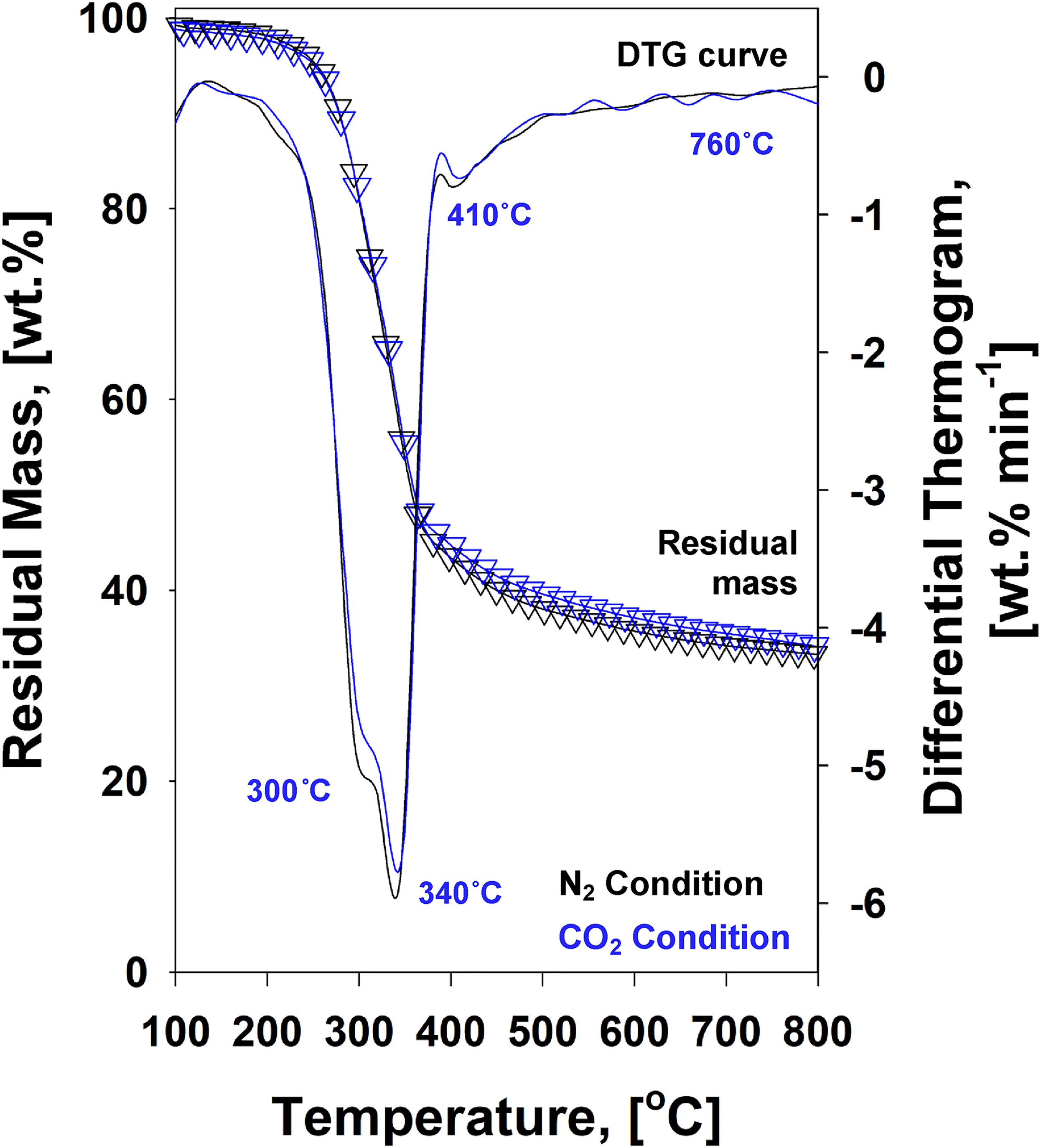
Residual mass and differential thermogram (DTG) curves of rice husk under two different environments (N2 or CO2) as a function of temperature (heating rate: 10 °C increment per min).
Biochars produced from pyrolysis of rice husk were visualized to observe their porous structure using SEM instrument. Figure 2 shows images of rice husk and RHBs produced under N2 (RHB-N2) and CO2 (RHB-CO2) conditions at 700 °C. Before rice husk pyrolysis, the shape of rice husk was relatively flat. After pyrolysis was done, RHBs were cracked into smaller pieces. However, it was not available to identify morphology difference between RHB-N2 and RHB-CO2 RHBs. Because the maximum resolution of SEM image is up to a few ten to hundred nanometres, smaller-sized pores were expected. To look into surface porosity further, Brunauer-Emmett-Teller (BET)/Barrett-Joyner-Halenda (BJH) analyses were done since SEM images could not discern any morphological differences in nano-sized pores in RHBs (Table 1). Despite RHBs obtained from two atmospheric conditions had nearly identical thermolytic patterns, the surface area and pore volume of RHB-N2 and RHB-CO2 were indeed different, as confirmed in Table 1. In detail, the surface area and pore volume of RHB-CO2 were enlarged in the presence of CO2, although the pore diameter of RHB-CO2 and RHB-N2 was not remarkably different. The result evidenced that more nano-sized pores were produced in CO2 environment, suggesting that the modification of biochar surface morphology was significantly affected by CO2 at 700 °C.
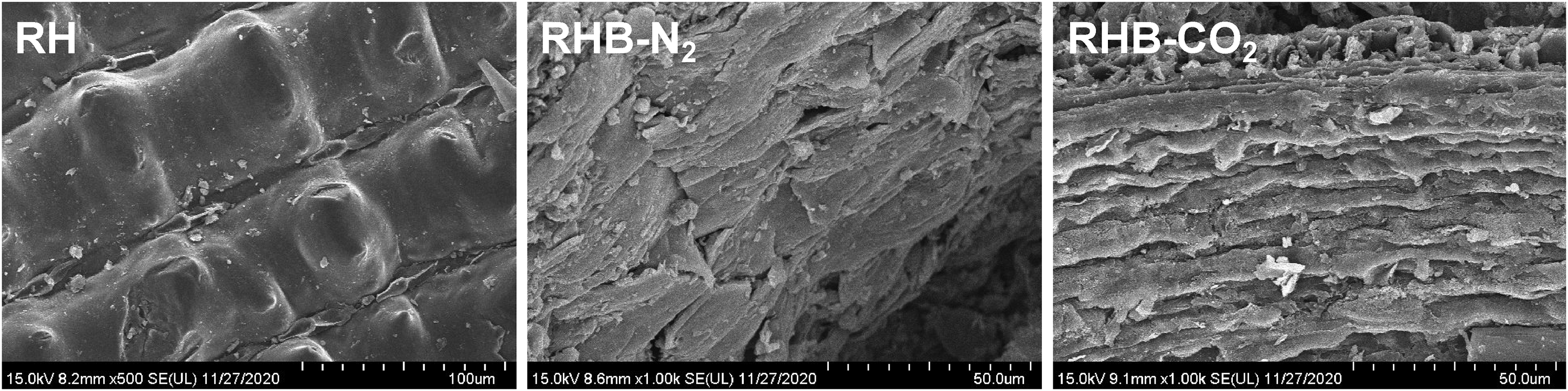
SEM images of rice husk (RH), RHBs produced from pyrolysis under CO2 (RHB-CO2) and N2 (RHB-N2) at 700 °C.
Surface area, total pore volume, and average pore diameter of rice husk and its biochars.

From other studies, it was reported that surface area improvement and pore creation were originated from formation and evaporation of volatile matters at high temperature. In the presence of oxidants such as O2, steam and CO2, additional formation of volatile matters and pores can be shown due to oxidation of biochars.23,24 However, TGA result did not show the additional oxidation of biochar under CO2 condition in this study. Thus, a following study will be required to understand the pore creation mechanism of rice husk under CO2 conditions.
Surface area and total pore volume of rice husk were significantly enhanced during pyrolysis at 700 °C. CO2 more contributed to formation of nano-sized pores and enlargement of pore volume than N2. Given that larger pore volume has more chance to retain moisture within the porous structure of biochars, RHB-CO2 and its mixture with garden soil were used to evaluate its water retention capacity. Figure 3(a) shows water evaporation from garden soil and garden soil/RHB-CO2 mixtures for 14 d. As expected, 100% garden soil showed the lowest water retention capacity. When RHB-CO2 was added to the garden soil, water retention capacity increased (decrease in water evaporation).
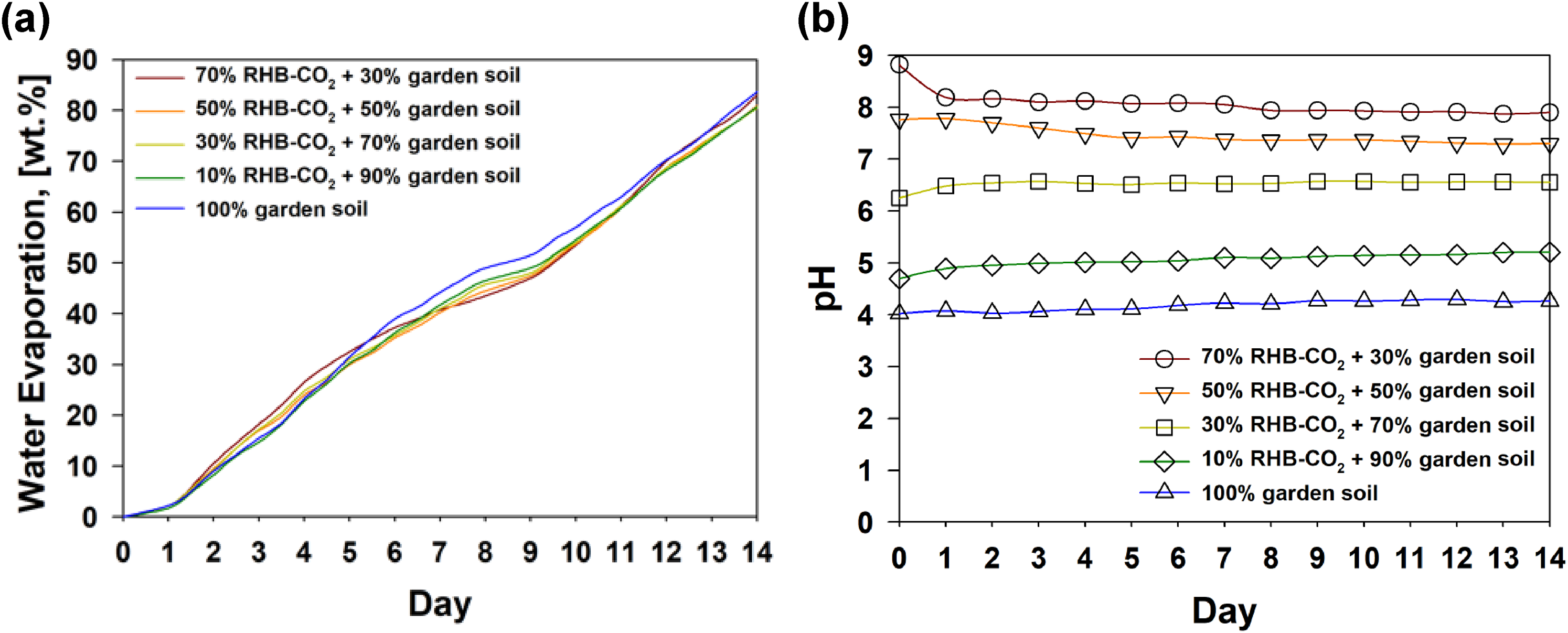
(a) water evaporation and (b) pH changes of garden soil and garden soil/RHB-CO2 mixtures for 14 d.
In addition to water retention capacity, pH changes of garden soil and garden soil/RHB-CO2 mixtures were monitored for 14 d (Figure 3(b)). pH of commercial garden soil was around 4 for 14 d, and the pH increased with an addition of RHB-CO2. When mass fraction of RHB-CO2 reached to 10, 30, 50, and 70%, pH of the mixtures increased to 5, 6.5, 7.5, and 8, respectively. It was inferred that RHB-CO2 contains an alkaline material, because pH of garden soil/RHB-CO2 mixtures increased as mass fraction of RHB-CO2 increased in garden soil/RHB-CO2 mixture. To confirm the alkaline contents in RHB-CO2, ICP-OES analysis was done. RHB-CO2 included inorganic species such as K (3.0 g kg−1), Mg (0.9), Ca (0.8), Bi (0.4), Mn (0.4), Al (0.1), Na (0.1) and other trace number of compounds (B, Ba, Ca, Co, Ti and Zn: < 0.1 g kg−1). In reference to other lignocellulosic biomasses, RHB-CO2 had higher concentrations of alkali metals (K, Ca and Na), making RHB-CO2 more alkaline.25,26
To evaluate the feasibility of RHB-CO2 as a cultivation medium for plant growth, barley grass was planted in garden soil/RHB-CO2 mixtures. As a reference, barley grass growth in 100% garden soil was monitored (Figure 4). The best plant growth rate was shown when 50% RHB-CO2 or 30% RHB-CO2 was added to the garden soil. This is likely ascribed to the improved water retention capacity and proper pH ranges for barley grass growth in 50% RHB-CO2 and 30% RHB-CO2 garden soil mixtures. As shown in Figure 3(a), the 50% RHB-CO2 and 30% RHB-CO2 showed the best water retention capacity. pH ranges of the mixtures were between 6.5 and 7.5 (Figure 3(b). It was known that barley grows at soil pH around 5 and 7. 27 As such, results from Figures 3 and 4 confirmed that RHB-CO2 improves the soil quality for plant growth.
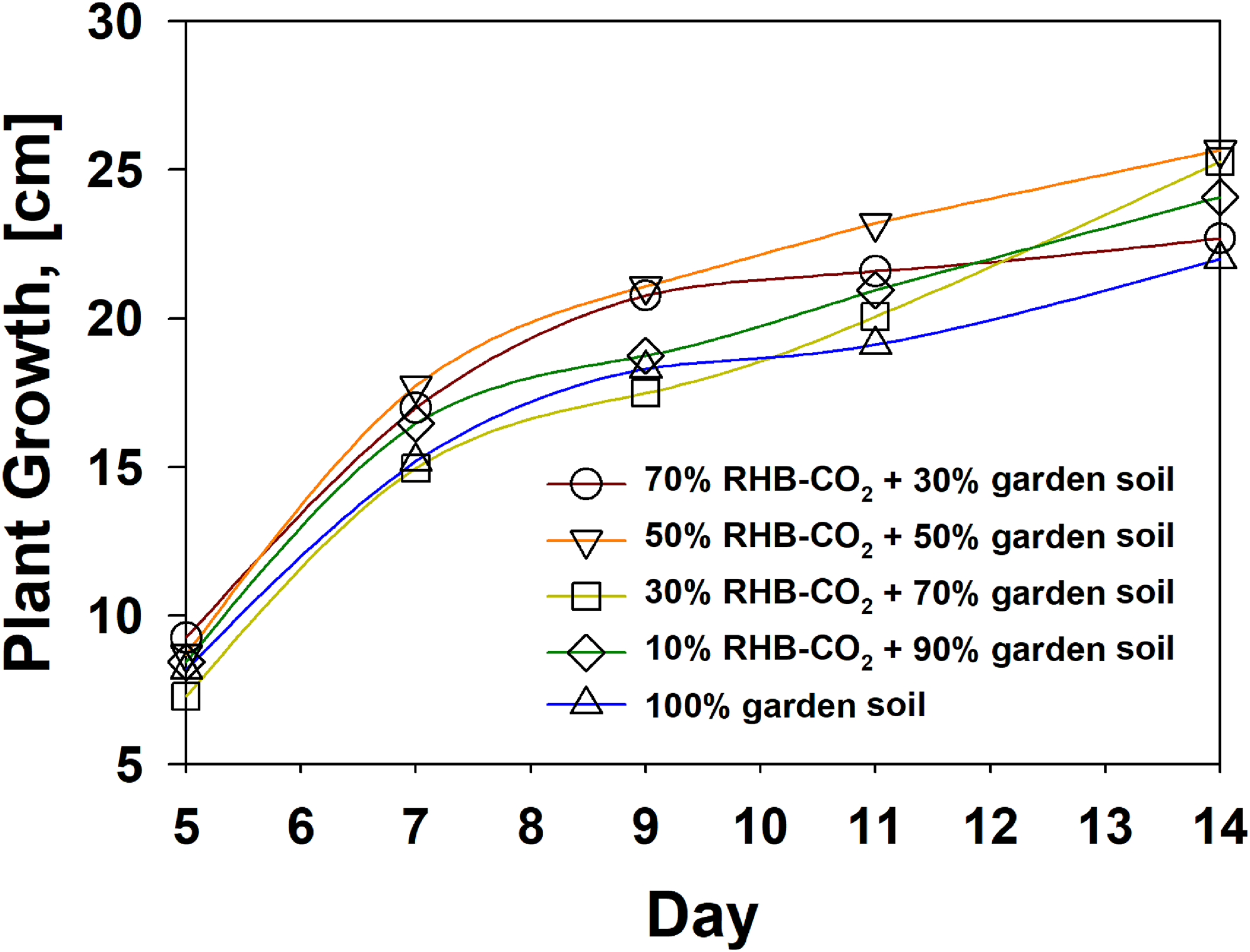
Growth of barley grass from garden soil and garden soil/RHB-CO2 mixtures for 14 d.
Biochar is one of three phase pyrolytic products. During the rice husk pyrolysis, about one third of solid material was formed as a biochar (31 wt.% yield), while others were evolved as volatile organic compounds and permanent gases. To maximize the utilization of carbon-based resources derived from biomass pyrolysis, it is necessarily required to monitor other pyrolytic products (liquid and gas). Note that TGA instrument is useful tool to understand thermolytic behaviour of organic compounds at sub-microgram level, but it cannot identify evolved products. To understand the effects of CO2 on rice husk pyrolysis and resulting pyrolysates, liquid and gaseous products evolved from rice husk pyrolysis were monitored. In Figure 5, concentration profiles of gaseous products were plotted as a function of pyrolysis temperature used for production of biochar. Major gaseous products evolved from rice husk pyrolysis were H2, CO, and CH4 (Figure 5(a)). C2 hydrocarbons (C2H2, C2H4, and C2H6) were also observed, but their concentrations were not comparable to syngas (H2/CO) and CH4 (Figure 5(b)). CO production was initiated from around 250 °C, while H2 and CH4 formations were shown from around 450 and 400 °C, respectively. The result confirmed that lower temperature was required for C-O bond scission than C-H bond scission. This agrees with discussion from TGA studies that bonding energy of C-O bond scission is higher that of C-H bond scission (Figure 1).
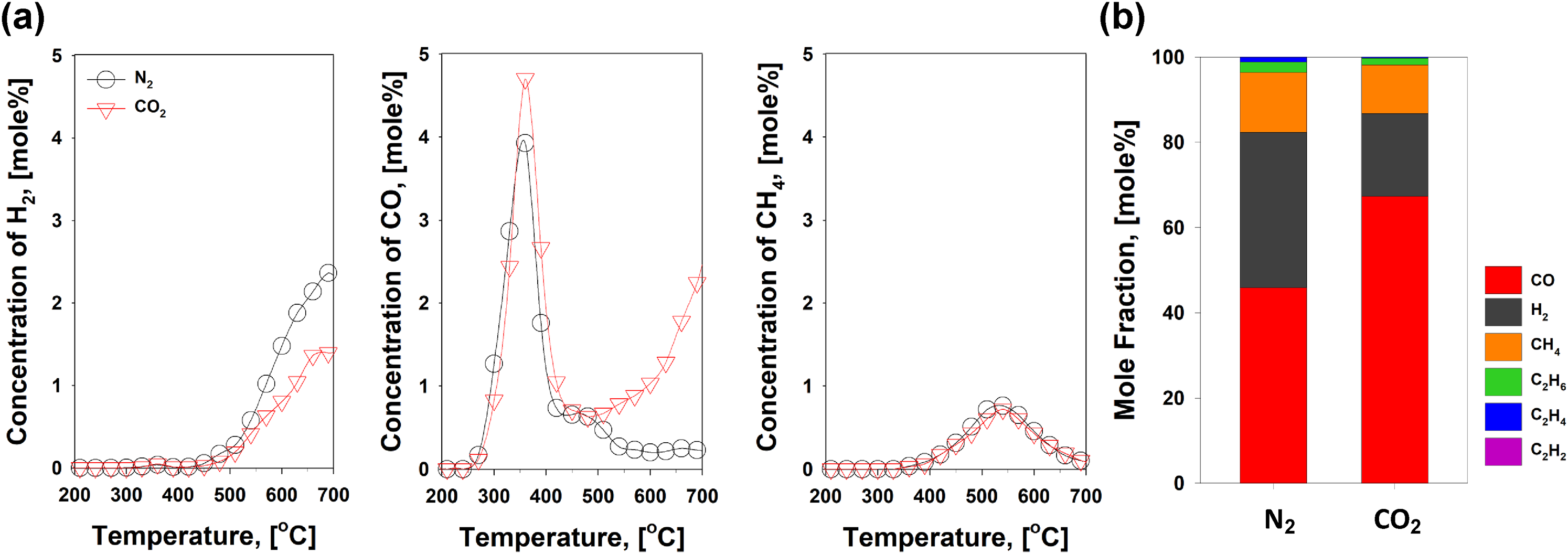
Evolution profiles of gaseous products obtained from pyrolysis of rice husk. Heating rate: 10 °C min−1, flow gas: N2 or CO2 (600 mL min−1).
Syngas (H2 and CO) is important platform chemical that can be converted into more value-added products such as various alcohol 28 and hydrocarbons. 29 CH4 and C2 hydrocarbons are major components in natural gas. 30 Considering that syngas and short chain hydrocarbons are obtained from fossil resources, biochar formation process through CO2-assisted pyrolysis is considered environmentally and economically benign energy production process. Using biomass as a feedstock, value-added chemicals and fuels are obtained.31,32
Overall evolution trends of gaseous products from two atmospheric conditions (N2/CO2) were similar. However, CO production at ≥ 450 °C was signified under CO2 production. In the presence of CO2, syngas production was enhanced. As confirmed in TGA tests (Figure 1), there was no additional reaction between rice husk and CO2 because mass decay and DTG curves under both conditions were identical. The identical mass decay and DTG curves indicate that CO2 did not react with solid biochar as also evidenced from SEM images of biochars (Figure 2).
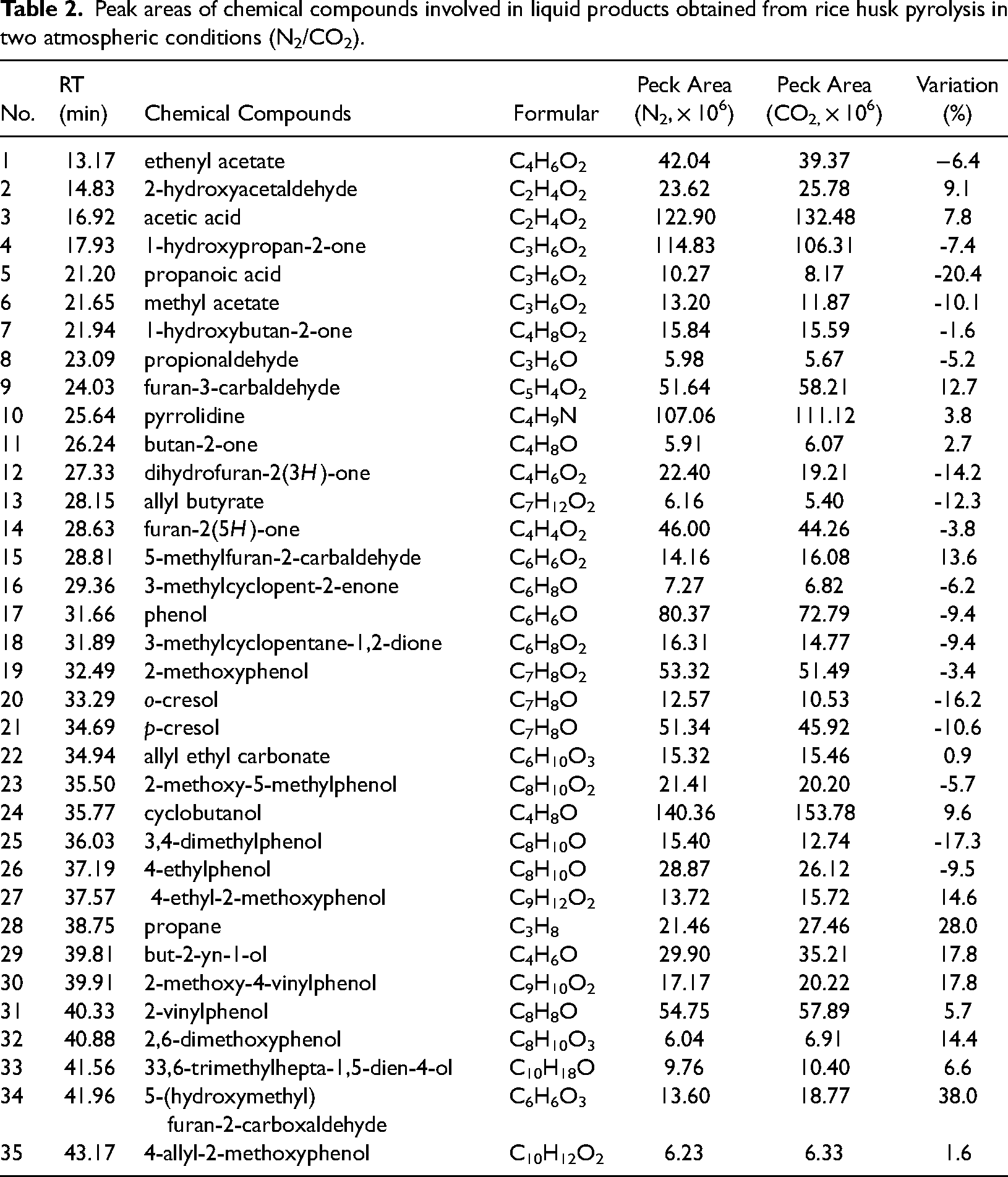
As such, the additional CO production above 450 °C is likely ascribed to the homogeneous gas phase reactions between CO2 and volatile organic compounds. Given that the gas phase reactions covert CO2 and volatile organic compounds into CO, it can be readily inferred that mass fraction of volatile organic compounds has to be reduced when the reaction is done. To confirm the amount of volatile organic compounds left after gas phase reactions, cold solvent trap was installed right next to pyrolysis reactor to condense volatile organic compounds. The compositional matrix of condensed organic carbons obtained from two atmospheric conditions was visualized in Figure 6. Peak areas of various components in the liquid products were summarized in Table 2. As expected, peak areas of chemical compounds obtained from CO2-assisted pyrolysis were lower in reference to pyrolysis under N2 condition. This is a key clue of gas phase reactions between CO2 and volatile organic compounds, showing that both CO2 and volatile organic compounds were converted into CO.
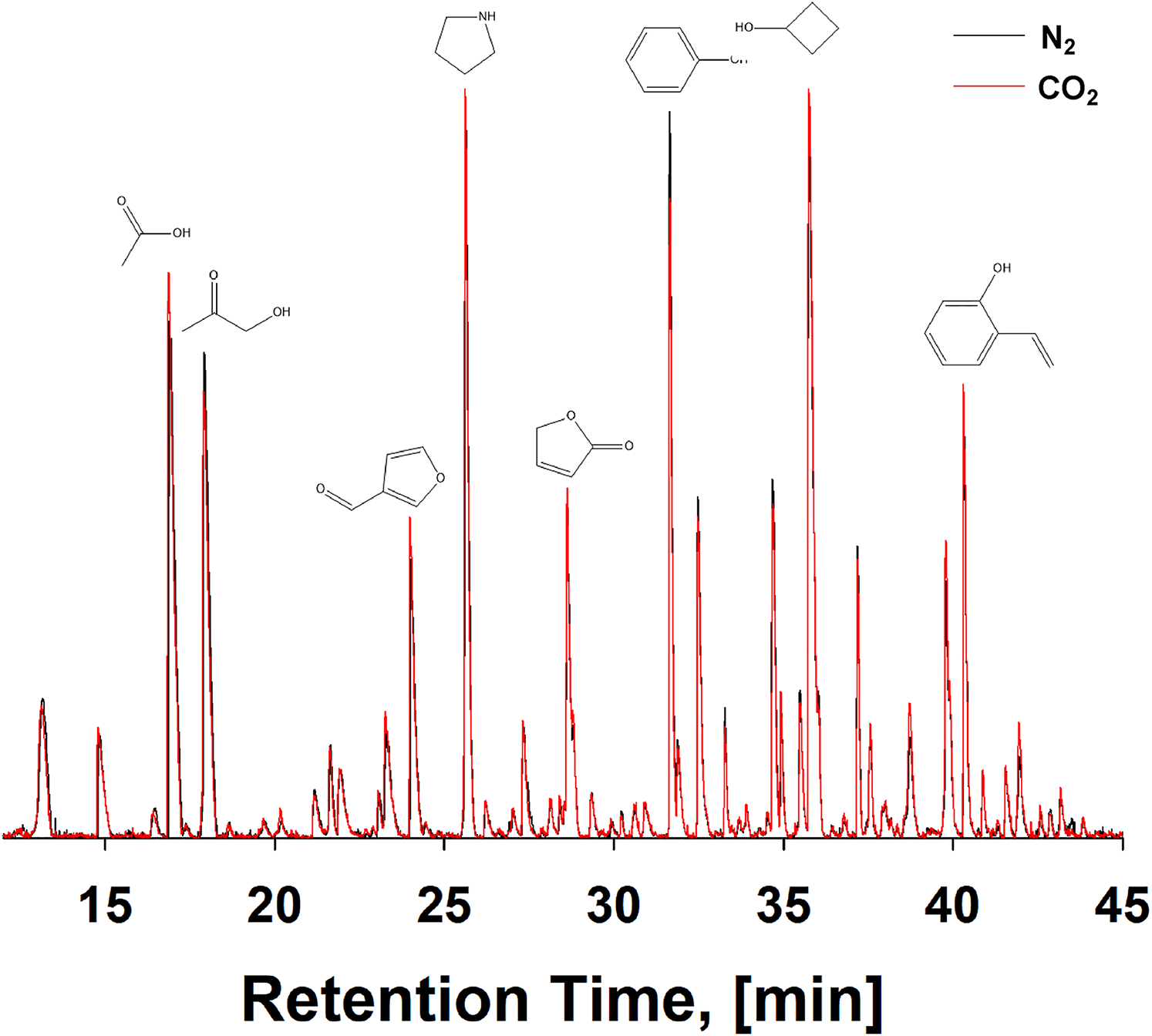
Compositional matrix of liquid products obtained from pyrolysis of rice husk in two atmospheric conditions (N2/CO2).
Peak areas of chemical compounds involved in liquid products obtained from rice husk pyrolysis in two atmospheric conditions (N2/CO2).
As aforementioned, syngas and C1−2 hydrocarbons are useful gas phase fuels and chemicals in different industries. CO2 signified syngas production through gas phase reactions consuming CO2 as an oxidant. In addition to the gas products, liquid products obtained from rice husk pyrolysis such as volatile fatty acids, 33 phenolic 34 and furanic compounds 35 are considered promising intermediates for synthesis of biofuels and fine chemicals.
In this study, the effects of CO2 on biochar surface properties and syngas production were discussed in reference to effects of N2. To improve biochar properties and syngas production rate, more in-depth and comprehensive studies about the relationship between reaction parameters and resulting products under CO2 condition are suggested as promising future works.
In this study, CO2 was used as a reactive gas medium for biochar, bio-oil and syngas formation. Under CO2 condition, pyrolysis of rice husk resulted in more porous biochar (14% and 11% larger surface area and total pore volume) in reference to biochar produced under N2. With an addition of RHB produced from CO2 (RHB-CO2) to garden soil, pH of garden soil was enhanced from 4 to 5 (10% addition of RHB), 6.5 (30%), 7.5 (50%), and 8 (70%), respectively. Water retention capacity of garden soil was also controlled with an addition of RHB-CO2. When RHB-CO2 and garden soil mixture was utilized as a cultivation medium for the barley grass cultivation, plant growth was enhanced up to 20%. In addition, CO2 contributed to enhancement of syngas production during biochar formation process due to gas phase reactions between CO2 and volatile organic compounds. Moreover, value-added liquid products including volatile fatty acids, alcohols, phenolic and furanic compounds were generated in line with syngas and biochar production. Therefore, this study confirmed that CO2, greenhouse gas, could be used as a promising gaseous medium to produce porous biochar, to enhance syngas and value-added liquid products generation.
Footnotes
Declaration of conflicting interests
The author(s) declared no potential conflicts of interest with respect to the research, authorship, and/or publication of this article.
Funding
The author(s) disclosed receipt of the following financial support for the research, authorship, and/or publication of this article: This work was supported by the National Research Foundation of Korea (grant number NRF-2019H1D3A1A01070644).
