







Abstract
To avoid severe environmental pollution, the government actively implements environmental regulation (ER) to ensure that enterprises carry out green innovation (GI), and the public participation in supervision has become an important part of the process of environmental governance. In this study, we incorporated the three parties of enterprise, government, and public into one framework and constructed a tripartite evolutionary game model. On this basis, combined with the system dynamics simulation, the behavioral strategy selection and influencing factors of the tripartite agents were analyzed. The results indicate that no matter what the initial strategy of the enterprise, government, or the public is, after a continuous evolutionary game, the three parties will reach a stable and balanced state, that is enterprises carry out GI, governments implement ER, and the public participates in supervision. Whether the government implements ER has a great impact on the enterprises’ decision-making. The public's strategic choices have no obvious influence on the governments’ strategies. Notably, GI costs and government subsidies and fines are the main factors that affect the enterprises’ GI initiatives. Government subsidies are suitable for short-term and appropriate subsidies. Finally, we proposed strategies that could optimize the management processes of ER, while ensuring the effective contributions of enterprises, governments, and the public in a seamless manner. Our study can be used as a reference for the implementation of effective ER and serve policymakers in decision-making, to promote sustainable development at a regional and global scale.
Keywords
Introduction
In the past four decades, China's economy has developed rapidly. However, economic growth inevitably results in environmental pollution. According to statistics, in the process of realizing economic growth since the 1980s, China's environmental loss costs have accounted for ∼3–8% of the gross domestic product (GDP). Since the beginning of the twenty-first century, the environmental situation has not improved, and has, in fact, become more serious. As per a previous study, the cost of environmental pollution is close to 10% of GDP, 1 which not only exposes the severe environmental situation in China but also reflects the current relatively weak environmental regulation (ER) system in the country. As the creators of social material wealth, enterprises are also the main source of environmental pollution. Hence, to avoid severe environmental pollution, the government should establish a sound ER system, to guide enterprises to actively fulfil their environmental responsibilities and carry out green innovation (GI) transformation; notably, GI should become an important part of the environmental governance process. The 19th National Congress of the Communist Party of China proposed building a market-oriented GI system, and, since then, GI has become an important task in the construction of ecological civilization. 2 In general, GI is characterized by sustainability, coordination, and systemicity.3,4 It aims to achieve the coordinated development of economic and environmental protection benefits and maximize the values of all stakeholders, thus promoting the interaction between the environment and economy of a region. 5 Green innovation requires the full consideration of environmental responsibility in all aspects of innovation, 6 which is a powerful way to solve environmental pollution and enhance enterprise competitiveness. 7 Moreover, as direct stakeholders of environmental interests, the public, in-charge of supervising the ER process, can effectively reduce the social management costs and improve the effects of the ER. 8
However, environmental governance is complicated and involves the interests of many parties, such enterprises, governments, and the public. 9 At present, the government's role in ER is relatively weak, while enterprises are prone to have a negative attitude due to the high cost of GI, 10 and the public's awareness of GI products is low, 11 thus limiting the process and effectiveness of ER. The differences in the expected benefits for the enterprises, government, and the public may lead to different ER strategies. Therefore, it is imperative to determine the behavioral game relationships that enterprises and the government and public share in the process of environmental governance, along with the factors that influence their strategic choices. Additionally, promoting enterprises to actively carry out GI and solve the problem of environmental pollution, as a part of the role of the government's ER, is an urgent problem that needs to be solved.
The contributions of this study are mainly reflected in the following aspects: First, we constructed an evolutionary game model by incorporating the three parties of enterprise, government, and the public into one framework. This addresses the limitations of most current studies, which consider the two-party game of the three parties, thus ensuring that the framework is more systematic and comprehensive. Second, considering the bounded rationality of the participating subjects, this study aimed to determine the evolutionary equilibrium state of different stakeholders from a dynamic perspective and clarify the strategic interaction between multiple subjects of ER. Finally, in this study, we combined the evolutionary game theory with system dynamics simulation. This method can clearly describe the behavioral evolution process of participants in complex systems and determine the factors that influence the strategic choices of the participants, thus providing a reference for each participant's decision-making.
Literature review
The conflict between economic development and environmental protection has become a major concern in many developing countries. To solve environmental problems, political and technical measures must be considered. 12 Free-market environmentalists argue that the environment is not a market failure but a government failure. 13 However, there are also some economists who believe that the free market cannot solve environmental problems, and therefore, it is important to find the solutions to these problems. 14 Bouvatier et al. 15 suggested that environmental pollution is a typical manifestation of negative externalities. Cohen et al. 16 believed that such externalities cannot be solved by relying solely on market mechanisms. The externality theory holds that the government is responsible for environmental protection 17 ; ER requires the government to improve the environmental behavior of enterprises through GI. 18
Environmental regulation, as an important part of government regulation, has spillover effects on regulatory benefits and costs. 19 The prevention and control of environmental pollution reduces the negative externalities resulting from economic activities to the environment to a minimum by changing the production and consumption patterns.20,21 Currently, there are two viewpoints regarding the impact of ER on GI: promotion and inhibition. Traditional neoclassical theory posits that ER will increase the production costs of enterprises’ pollution emission reduction, which will inevitably squeeze the investment of the enterprises’ technological innovation funds, thereby inhibiting their GI. 22 The Porter hypothesis states that appropriate ER can promote GI of enterprises. It improves the competitiveness of enterprises through innovative compensation effects, thus achieving a balance between environmental protection and economic growth. 23 Although numerous studies have shown that appropriate ER has a positive impact on enterprise GI,24–26 most enterprises have a negative attitude toward GI, due to high research and development (R&D) and pollution control costs. Therefore, they play a bargaining game with the government, in terms of environmental tax collection and government subsidies. 27 Hence, the implementation process of environmental regulation is a strategic competition process; there is a game between the government, enterprises, and other stakeholders, and this game has complex and dynamic characteristics. This kind of game through continuous interaction makes evolutionary game theory widely used in environmental policy research. 28 Moledina et al. 29 established a dynamic game model for the condition of information asymmetry and concluded that companies adopted different behavioral strategies for different types of government ER. Fairchild 30 analyzed the interaction between enterprises and the government during the implementation of ER, by constructing a game model, and explored the strategic interactions between the participants. Wang et al. 31 established a dynamic timed game model, based on the game state and formation mechanism of governments and enterprises at different periods and stages, and analyzed the impact of government decisions on low-carbon innovations in enterprises. Hsu et al. 32 analyzed the optimal environmental policy in a mixed oligopoly and infer that pollution tax should be levied when the market is imperfect and consumers’ awareness of pollution is low. Similar studies include those by Pal and Saha, 33 Xu et al. 34 and Haruna et al. 35
Most of the aforementioned studies focused on exploring the behavioral games between government ER and enterprise innovations. However, the government is prone to collusion behavior or lax law enforcement and other issues in the implementation of ER 36 ; ER is prone to “failure”. 37 Notably, it is difficult to achieve an ideal governance effect by relying only on the government to supervise enterprises. Hence, it is necessary to introduce a third-party force that can participate in the supervision of the ER. 38 Social public participation in supervision can make up for the lack of “government intervention” effectively; this can not only reduce the cost of supervision but also enhance the rationality of the implementation of ER. Public participation has gradually become the main driving force for enterprises to actively implement GI and ER. 39 For example, Du et al. 40 established a two-party evolution model for public and sewage enterprises and observed that the enterprise environmental behavior path system under public participation can evolve to a reliable stage in certain conditions. Pan et al. 41 introduced public third-party participants and constructed a three-party evolutionary game model for ER by the central government, local governments, and the public. They deduced that public participation not only promoted the local government's responsibility for environmental protection, but also supported the central government to implement environmental governance policies effectively.
In summary, previous studies have provided important references and inspiration for the development of this study. However, current studies on ER mostly focus on the game between governments and enterprises. Notably, even though a few studies consider the tripartite of enterprises and the government and public, they still utilized the method of pairwise game and failed to integrate enterprises, governments, and the public into one framework. The problem of environmental pollution control is complicated, and the actual implementation effect is generally the result of a multiparty game in the process of implementing ER. 42 Owing to the different expected benefits faced by enterprises and the government and public, these three entities have conflicting goals, and their game relationships are complicated as well. When each participant puts forth a clear decision, it is easy to restrict and influence the others. In view of this, in this study, we constructed an evolutionary game model based on tripartite participants and analyzed the interaction mechanism and influencing factors of the three parties’ strategies by developing a system dynamics simulation. We further explored the impact of ER on the GI of enterprises in terms of different evolutionary paths, thus providing a reference for the decision-making of enterprises and the governments and public.
Evolutionary game model of tripartite participants
The implementation process of ER is dynamic, and each participant in the system selects different behavior strategies, owing to the changes in costs and benefits. As each participant is boundedly rational, it is ideal to employ evolutionary game theory, to analyze the behavioral strategies of the main participants in the implementation of ER. As the main body of innovation, enterprises tend to comprehensively consider their own interests, government policies, and public interests, and then make relevant decisions that are conducive to their own development. 43 In this process, the evolution path of the government, enterprises, and public is formed. Notably, the three entities have different game behaviors, and adjust and change their strategies dynamically through their respective game focuses. 44 Based on the theory of the evolutionary game model, in this study, we constructed a tripartite game model of governments, enterprises, and the public, to clarify the game relationship among multiple stakeholders and explore the factors that influence the behavioral strategy of each stakeholder.
Model assumptions and parameter settings
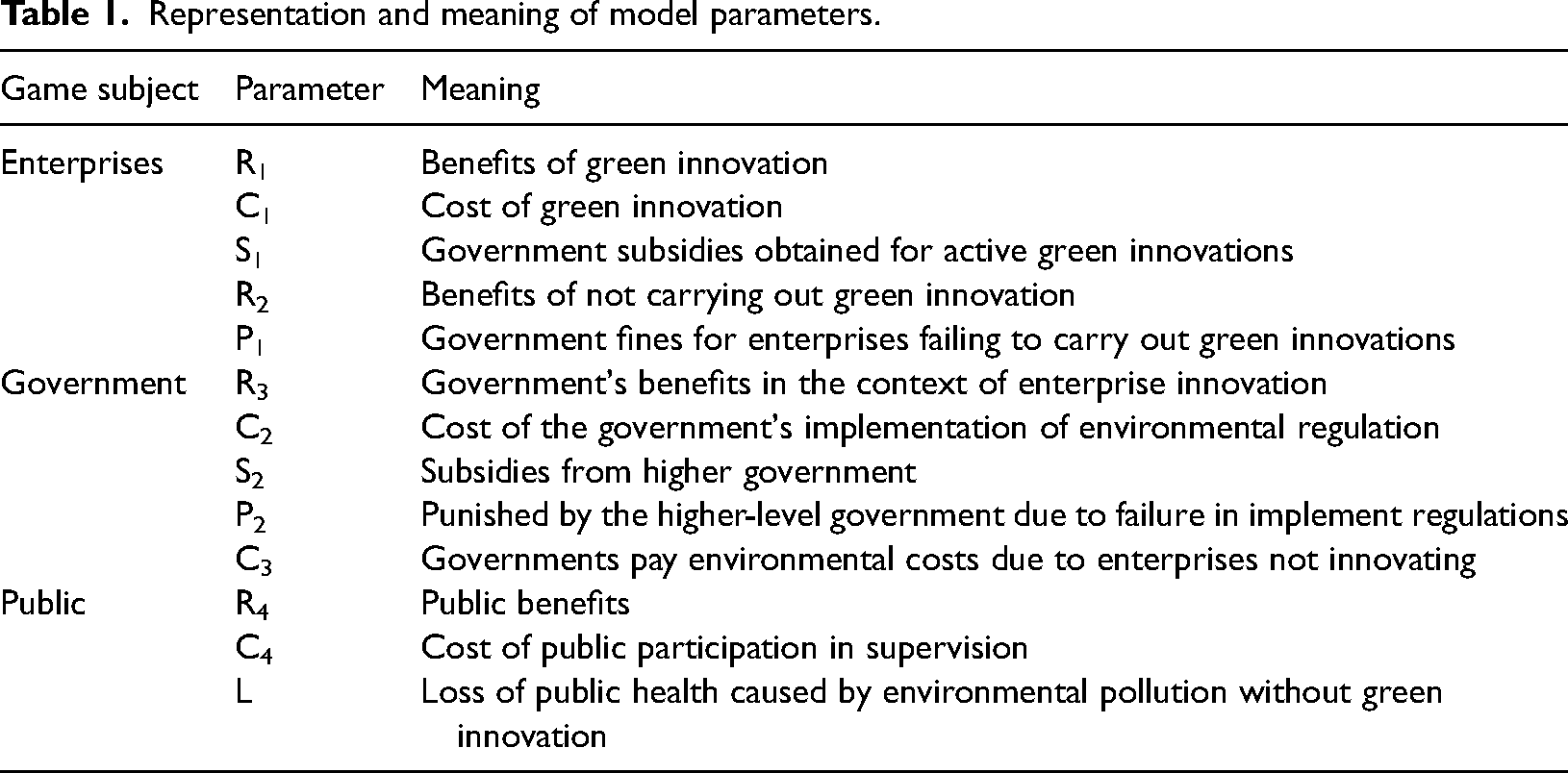
Assuming that enterprises and the government and public form a complete system, the three parties are all limited and rational individuals with learning abilities, and they will all select behavioral plans that are conducive to maximizing their own interests and achieve equilibrium, through the continuous adjustments of strategies in learning and imitation. The government, enterprises, and public have two strategies. Enterprises can choose whether to conduct GI, the government can choose whether to implement ER, and the public can choose whether to participate in supervision. Let
Representation and meaning of model parameters.
Construct a tripartite game profit matrix
Based on the principle of profit maximization, according to the constructed game model and parameters, the profit matrix of the tripartite game when the government implements and does not implement the ER strategy were listed. The results are presented in Tables 2 and 3, respectively.
Payoff matrix of the tripartite game when the government implements ER (
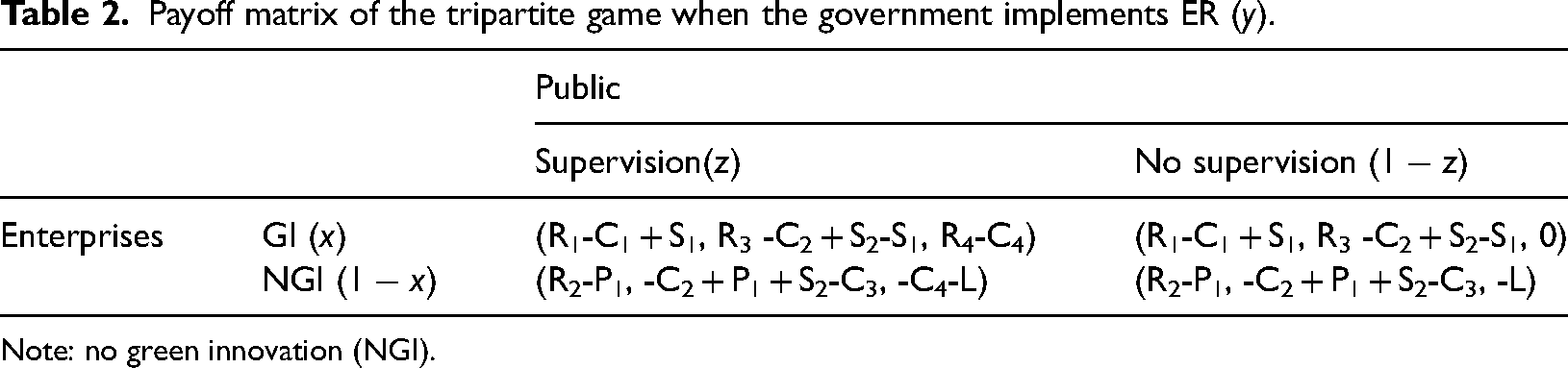
Note: no green innovation (NGI).
Payoff matrix of the tripartite game when the government does not implement ER (
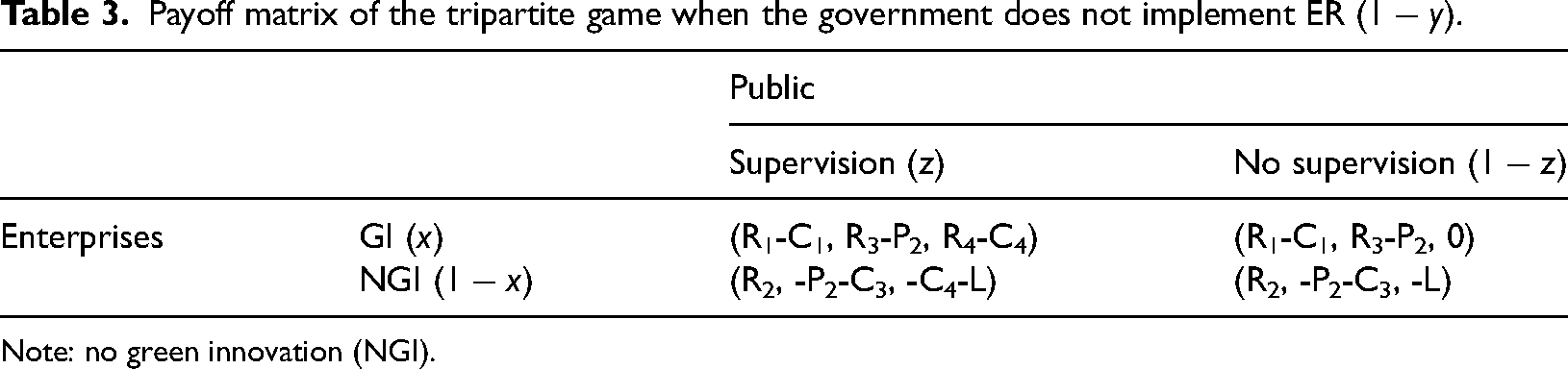
Note: no green innovation (NGI).
Replicated dynamic equation of the three-party game
Governments, enterprises, and the public exhibit asymmetries in information acquisition in the ER. Hence, the three parties of the game will estimate the strategies of other players, through continuous learning and historical experience, to formulate their own decisions. When
According to the payoff matrix, the expected revenue functions 











Similarly,
By considering the partial derivatives of
In view of this, to intuitively analyze the equilibrium point and evolution path of the three-party evolutionary game from a systematic perspective, we used the system dynamics theory, to establish a three-party evolutionary game model, and employed software simulations, to study the stability behavior of each participant and analyze the influencing factors of the game behaviors.
System dynamics simulation analysis
Model building
As shown in Evolutionary game model of tripartite participants, there were eight equilibrium points in the tripartite game between the enterprise, government, and public. However, in certain conditions, the game model did not have a stable equilibrium state; in that, the system did not necessarily have some state to make the behavior of the three-party game gradually stable with the change of time. Therefore, in this study, we further applied the system dynamics model, to analyze the evolution of the enterprises, government, and the public. The time and result of the model evolving to the equilibrium state were related to the setting of the parameter values. Notably, we established a mixed strategy system dynamics model and conducted numerical simulations to further analyze the stability behaviors of the enterprises, government, and public, and identify the influencing factors of various game behaviors. The model was mainly comprised three flow position variables, three velocity variables, nine intermediate variables, and 13 external variables. The flow variable was used to represent the ratio of the GI and NGI of the enterprises, the ratio of ER and non-ER (NER) strategies of the government, and the ratio of public supervision to non-supervision. The rate variables represent the change rates of the enterprises’ GI, government's implementation of ER, and public participation in supervision. The system dynamics simulation model is shown in Figure 1.
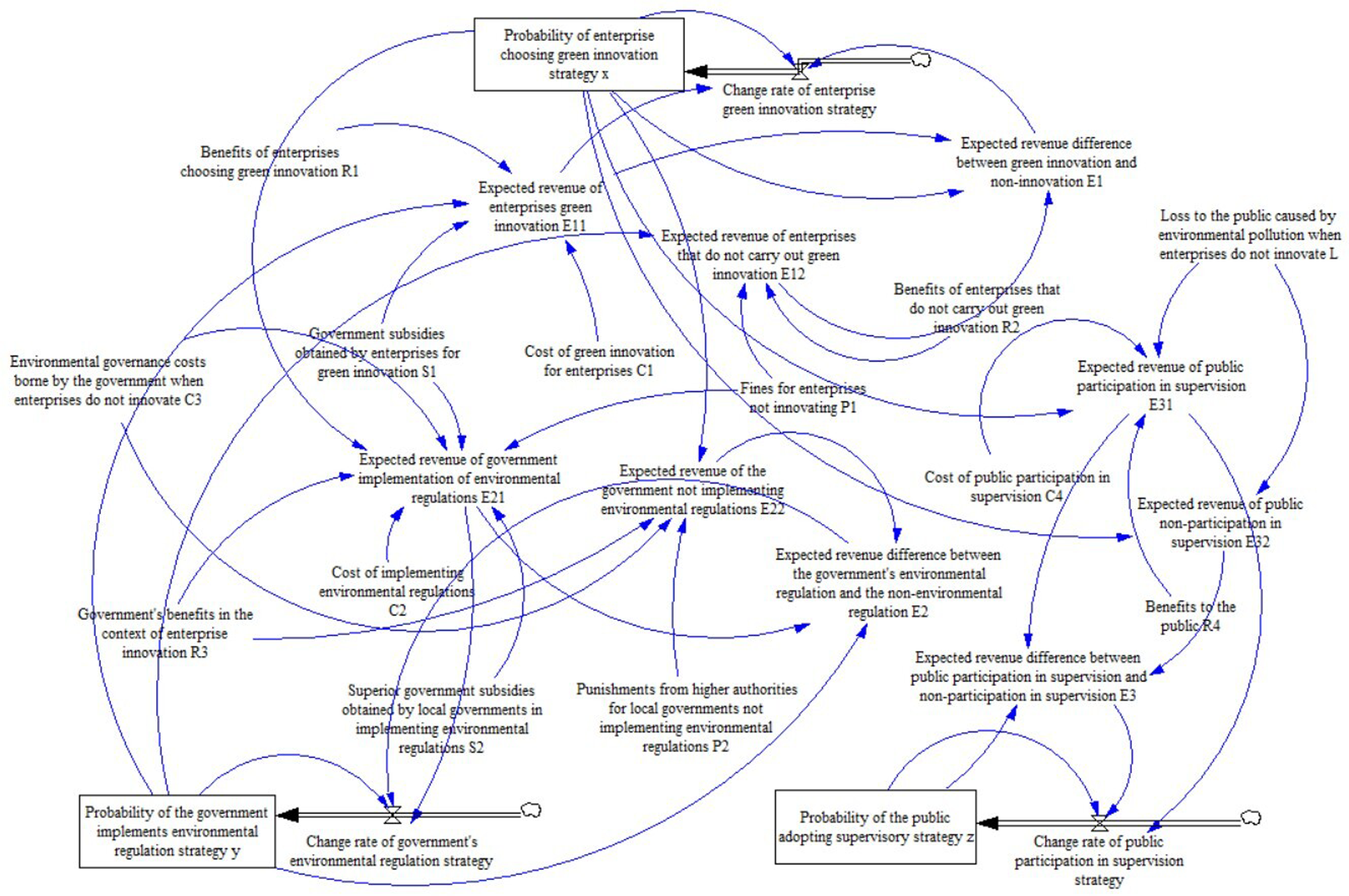
System dynamics model of the evolutionary game of enterprises, governments, and the public.
Model setting
According to the calculation of the three-party game model, there are eight stable equilibrium points in the process of the three-party game; however, the system may not exist in a stable equilibrium state, owing to some specific conditions. Moreover, even if an equilibrium state is achieved in a certain situation, the system may be affected by various uncertain factors, and thus cannot maintain the original equilibrium state. In view of this, we utilized the Vensim software, to simulate the dynamic game of the three parties. The advantage of this simulation model is not how realistic it is, but its changing role in describing internal regularities. Regarding the parameter settings in the simulation, because of the lack of primary data, the system dynamics model focuses on analyzing the behavioral trends of the entire system and the influencing factors of strategy selection; therefore, it does not require very accurate results. 46 Wu et al. 47 confirmed that the accuracy of the structural design of the system dynamics model is far more important than the accuracy of the parameter settings.
In this study, the simulation start time was set to 0 (Initial Time = 0), simulation end time was set to 100 (Final Time = 100), and the simulation step length was set to 0.25 (Time Step = 0.25). We assumed that all the external variables were positive and assigned the initial values to 13 external variables: R1 = 1.2, C1 = 0.4, S1 = 0.2, R2 = 0.8, P1 = 0.3, R3 = 1, C2 = 0.3, S2 = 0.3, P2 = 0.4, C3 = 0.2, R4 = 1, C4 = 0.1, and L = 0.1. Notably, all the simulation values in this study were acquired from virtual data. The selection of simulation values was mainly based on the sensitivity analysis of the tripartite entities’ strategy selection, considering the changes in various factors; notably, these values did not represent the revenues of the three-party game subject in the actual environmental governance system. In practical applications, the values could be assigned according to a specific situation.
Pure strategy simulation analysis
When the initial state choices of the enterprise, government, and public were all a certain kind of pure strategy, each game subject had two strategy choices (0 and 1); hence, the three-party game subject had a total of eight strategy combinations: (0,0,0), (0,1,0), (0,0,1), (0,0,0), (1,0,0), (1,1,0), (1,0,1), and (1,1,1). Through software simulation, we could determine that when the initial strategies selected by the three parties were pure, no participating agent actively changes the initial strategy to break the balance of system. However, this equilibrium state was unstable. Once one or more of the systems actively experienced minor changes, the equilibrium and stable states ended immediately. To clarify the evolutionary state of the subject of the three-party game, we assumed that each subject had a small mutation of 0.01. First, we considered the strategy (0, 0, 0) as an example and set its initial simulation value (0.01, 0.01, 0.01). Similarly, for the strategy combination (1, 1, 1), we assumed that the initial simulation value was (0.99, 0.99, 0.99). The government's initial strategy selection was divided into two situations: the government implements ER and NER for analysis.
Government's initial strategy is NER
In the first situation, we assumed that the government's initial strategy was NER; that is, the government was not willing to implement ER in the initial state. In this case, the enterprise, government, and public all had four initial strategy combinations; the three parties’ evolution strategies are shown in Figures 2–5. In the initial stage, if the enterprise adopted a passive strategy, the government's willingness to implement ER increased rapidly. With the implementation of the government's ER strategy, the enterprises’ willingness to innovate also increased sharply; both stabilized at equilibrium point 1.
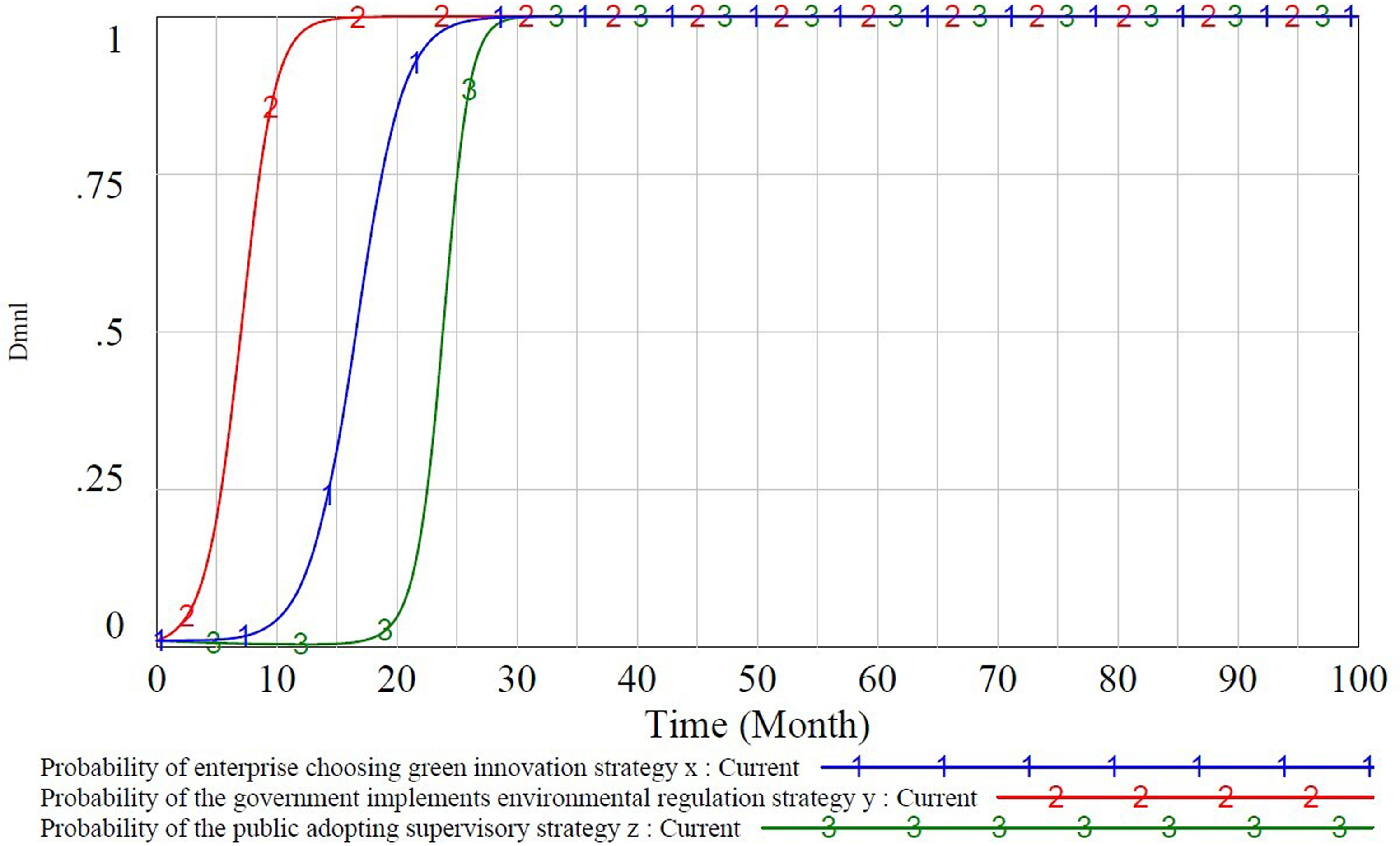
Evolution path of the initial strategy (0,0,0).
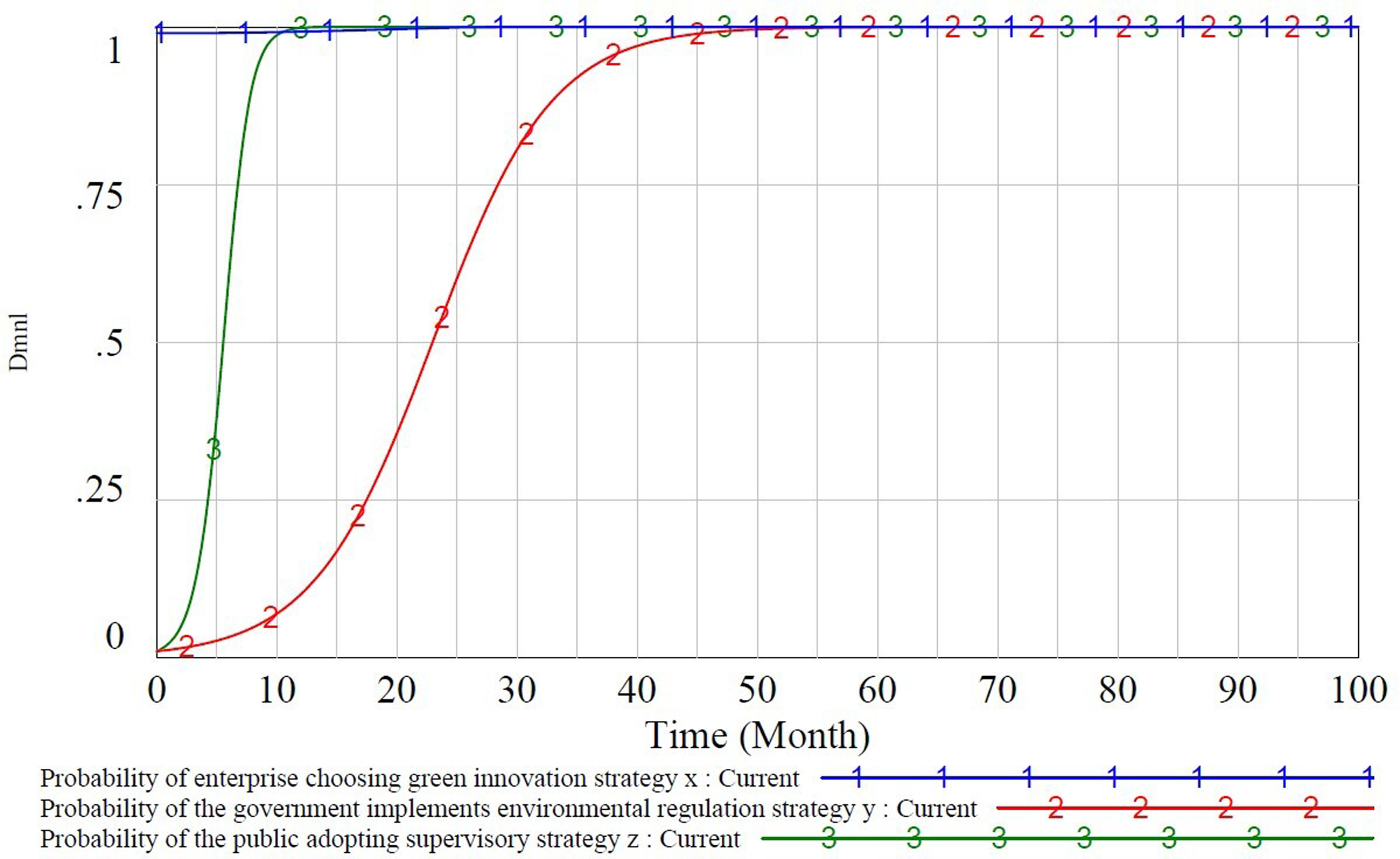
Evolution path of the initial strategy (1,0,0).
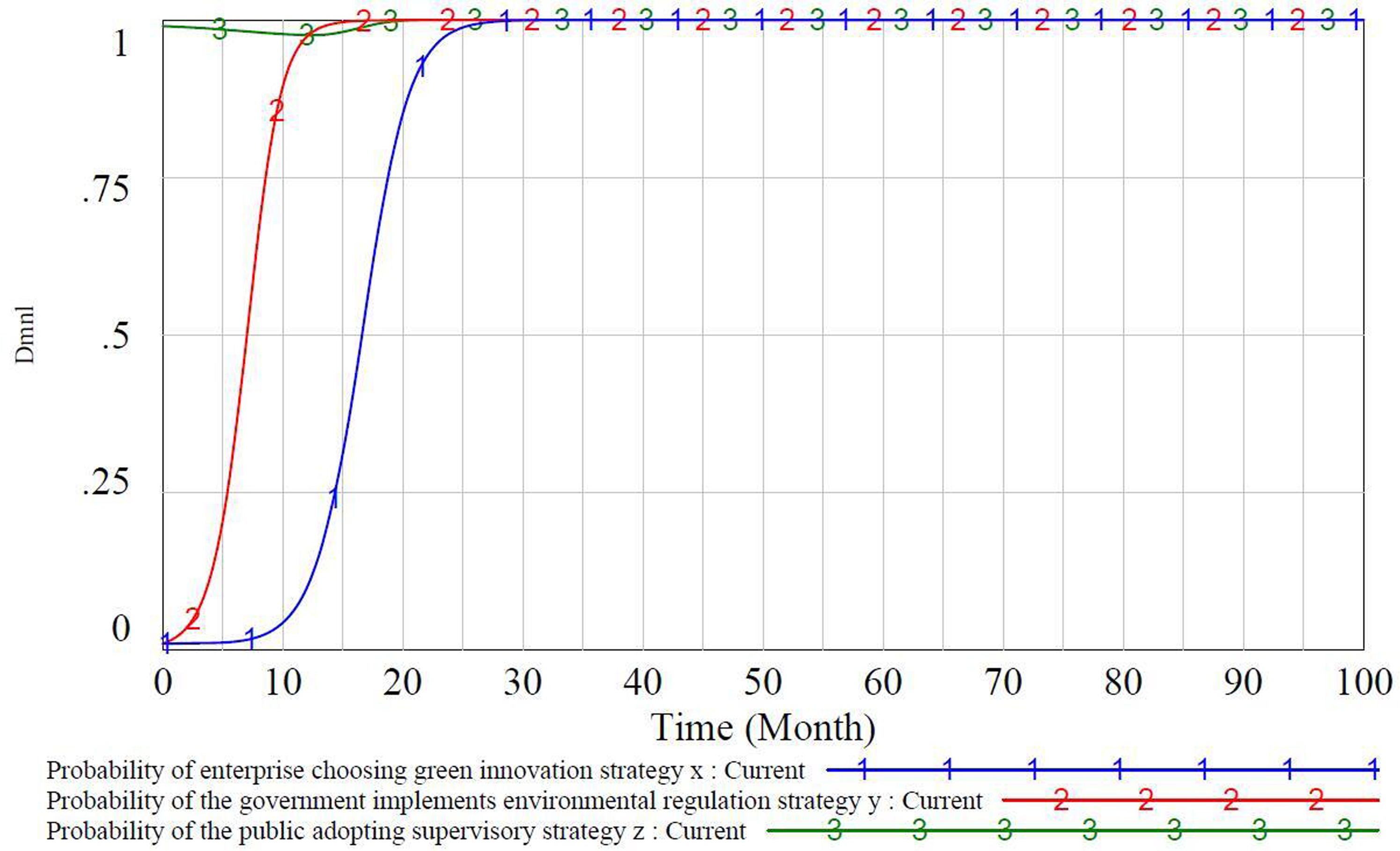
Evolution path of the initial strategy (0,0,1).
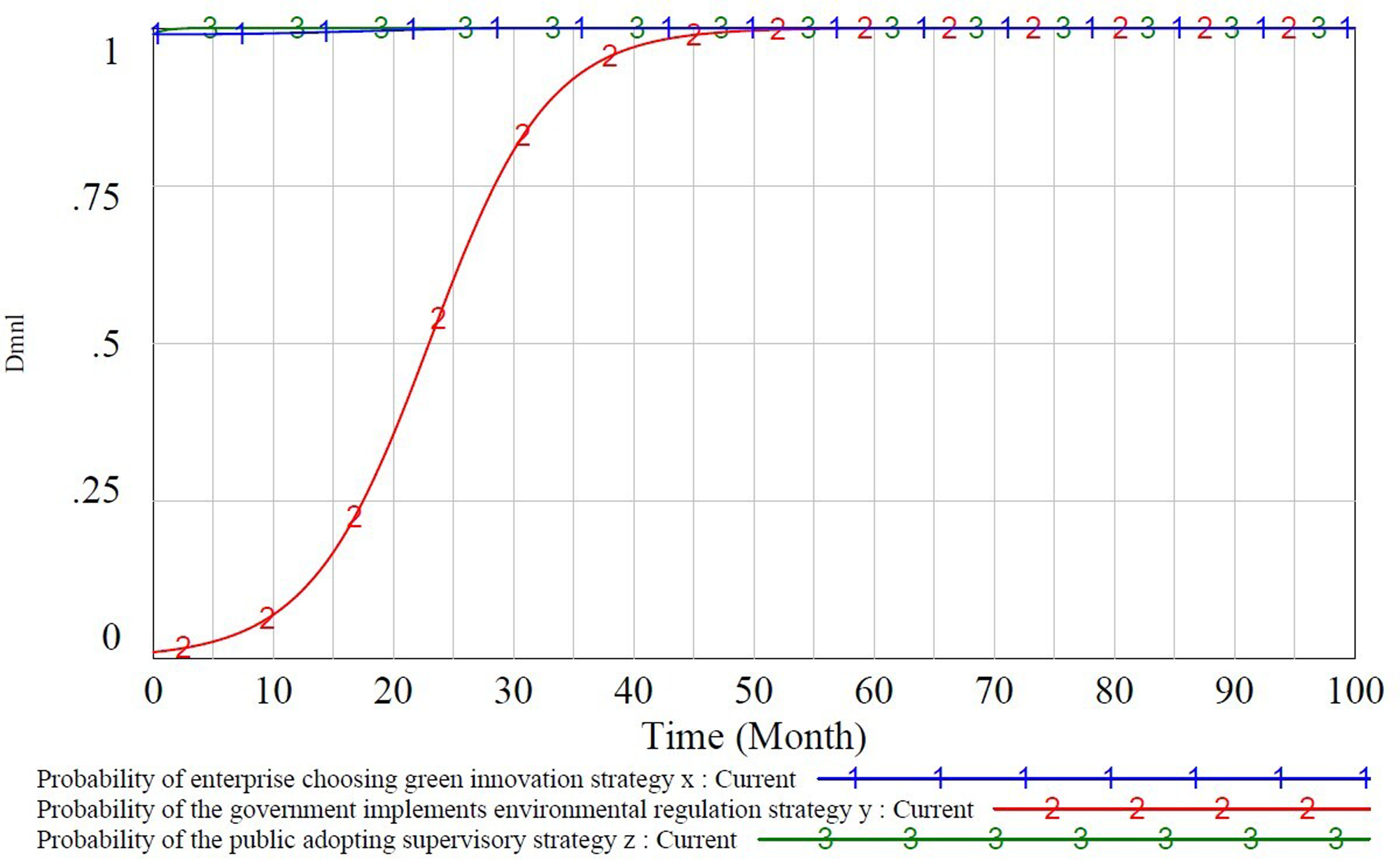
Evolution path of the initial strategy (1,0,1).
By comparing Figures 2 and 4, we could conclude that regardless of whether the public's willingness to supervise was strong, the government's willingness to implement ER strategies increased rapidly and reached a stable equilibrium point at the earliest. During this time, the evolutionary path of the enterprise remained essentially unchanged. Notably, when the public's willingness to supervise was low, it would take longer for the model to evolve to the equilibrium point, compared to the time required by the government and enterprises. In the case when only the public participated in supervision in the initial state, the enthusiasm weakened over time. With the increase in the government's willingness to implement ER, the public's supervision enthusiasm could increase again, and eventually evolve to a stable equilibrium point earlier than the enterprise. When the enterprise initially adopted a proactive strategy, although the government finally chose to implement ER, it took a long time for the simulation to evolve to an equilibrium point.
By comparing Figures 3 and 5, we observed that regardless of the initial public strategy, when the enterprise initially adopted the proactive strategy, the public's enthusiasm for participating in supervision was relatively high, evolutionary equilibrium point was achieved at the earliest, and the government's evolutionary path remained the same; however, the results reflected that the public's choice had no significant influence on the government's choice of strategy. When the enterprises initially selected the innovation strategies passively, the government's evolutionary path was “NER-initiative increase-implementation of ER,” and the enterprise's evolution path was “passive GI-initiative increase-active GI.”
Government's initial strategy is to implement environmental regulation
The government's initial strategy chooses to implement ER, that is to say, the government had a strong willingness to implement ER in the initial state. In this case, the enterprises, governments, and public also had four initial strategy combinations; the strategic paths for the evolution of the three parties are shown in Figures 6–9.
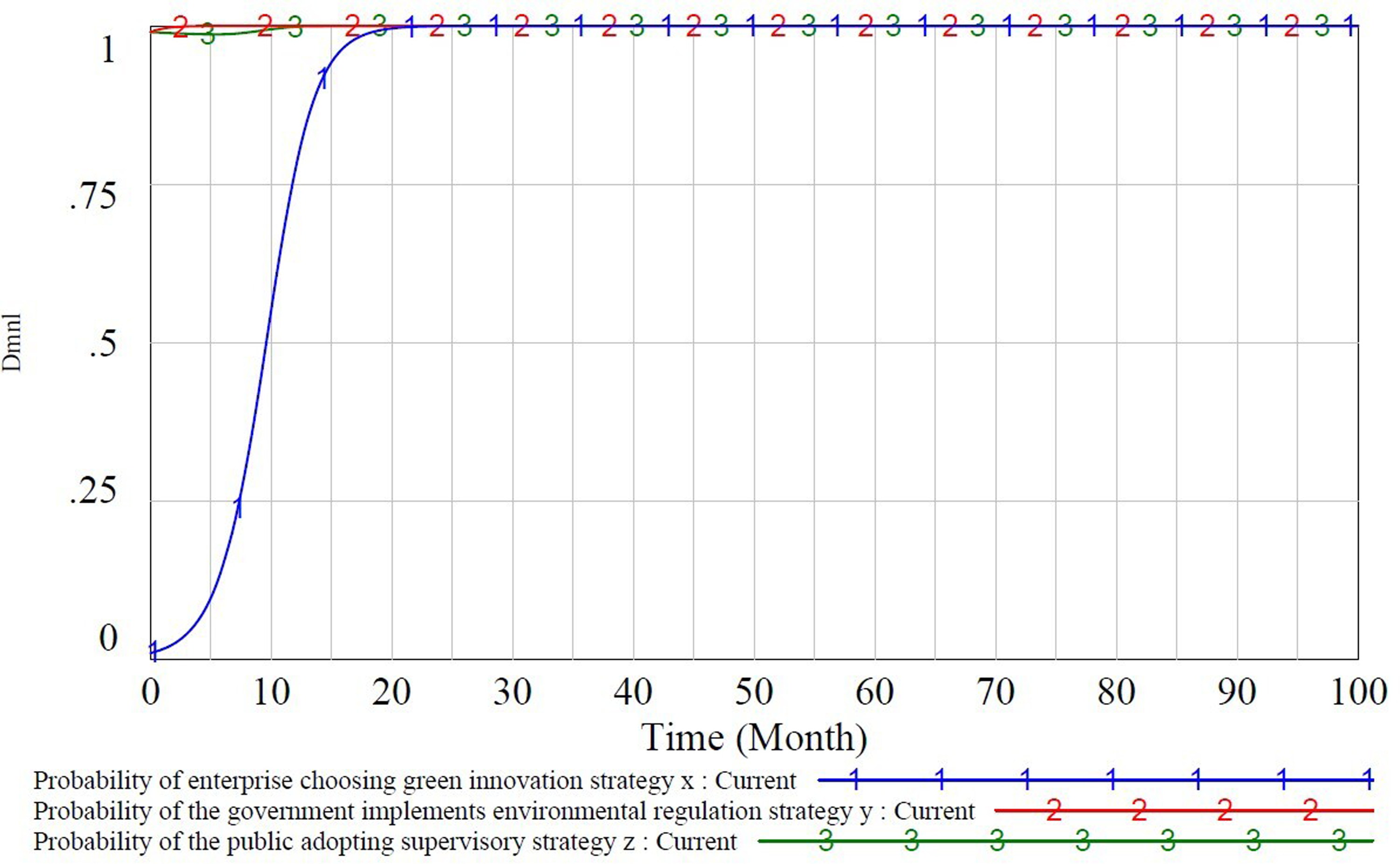
Evolution path of the initial strategy (0,1,1).
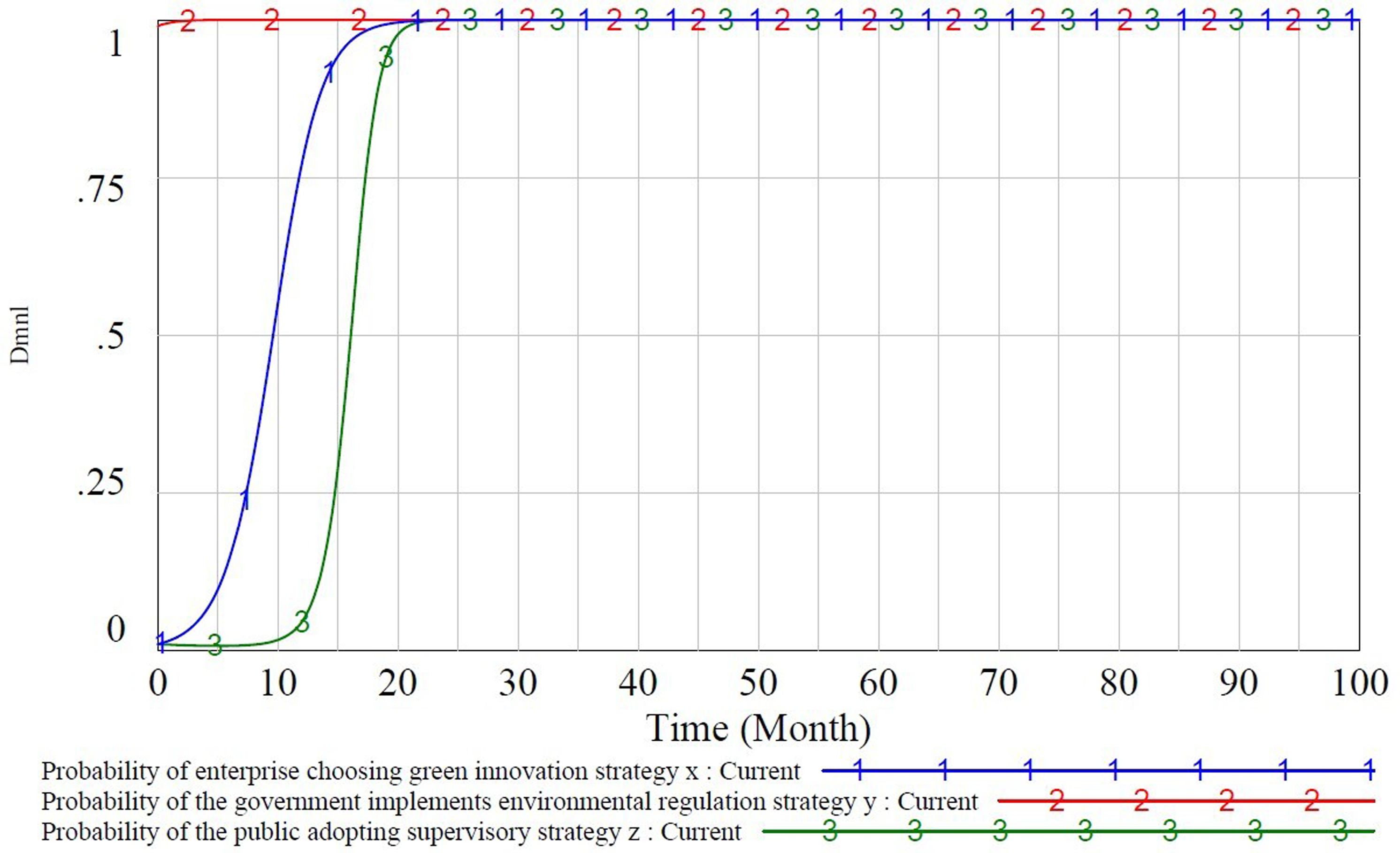
Evolution path of the initial strategy (0,1,0).
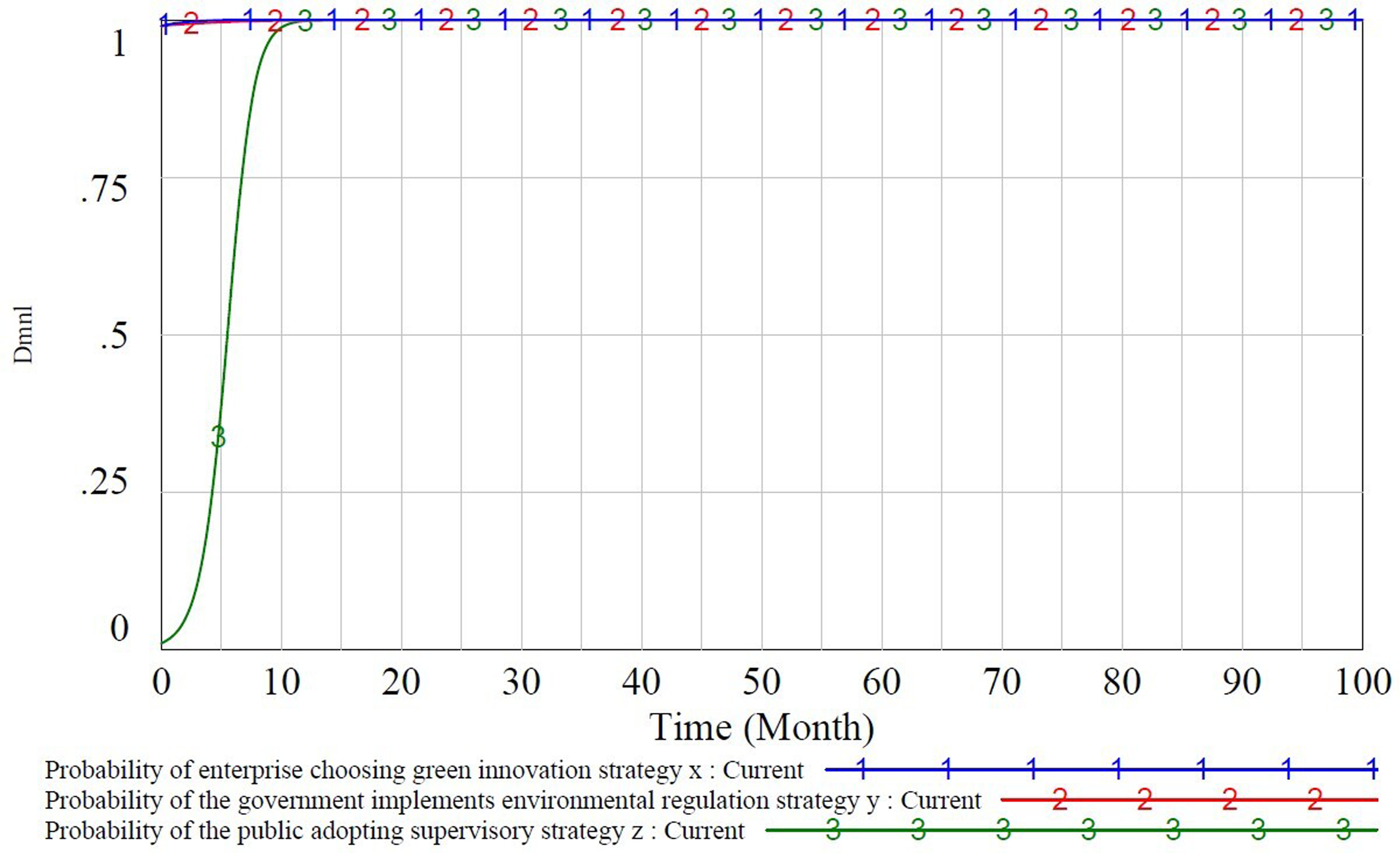
Evolution path of the initial strategy (1,1,0).
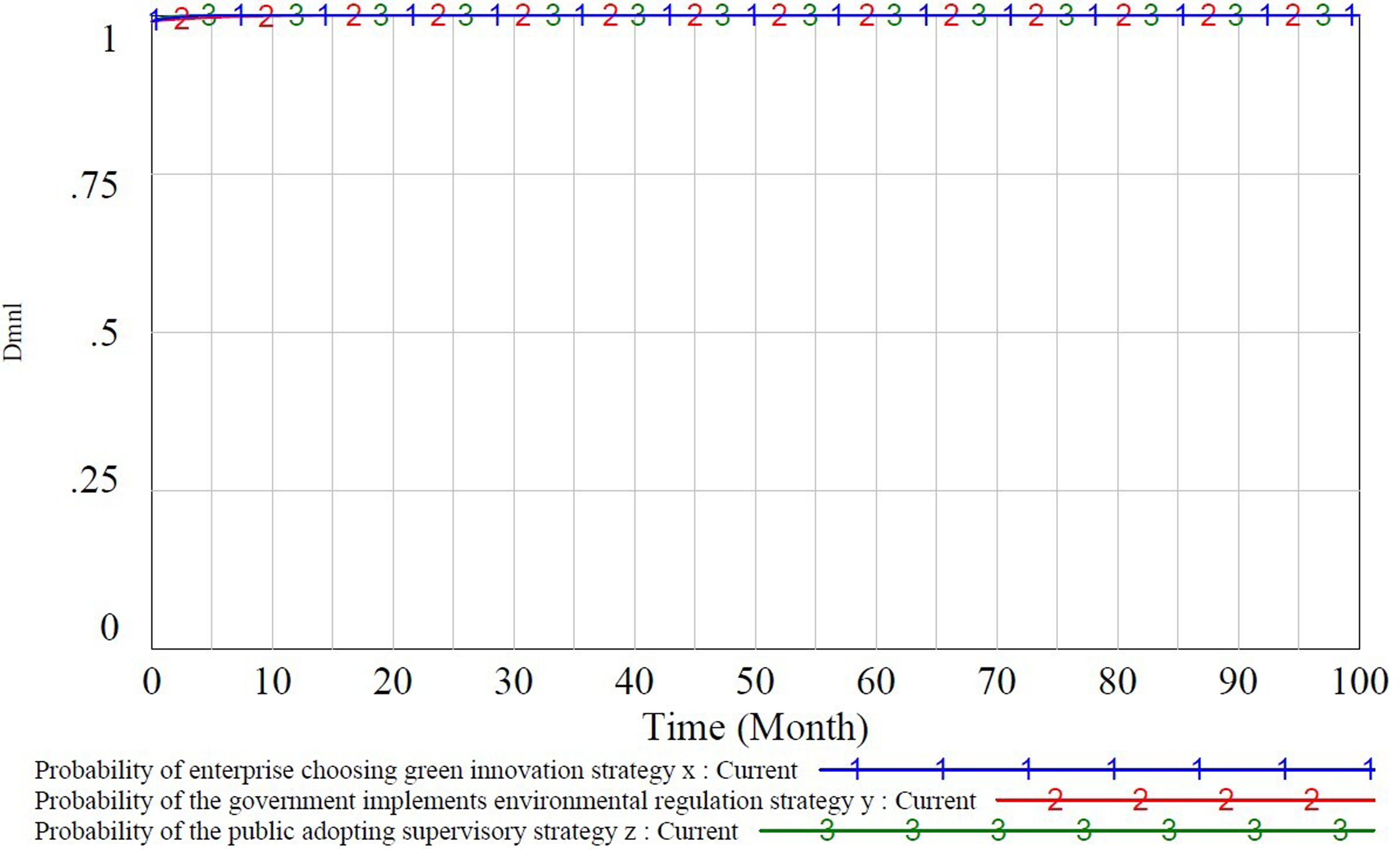
Evolution path of the initial strategy (1,1,1).
When the enterprise adopted a passive strategy in its initial state, as shown through the comparison of Figures 6 and 7, the perspective of the enterprises gradually changed from adopting passive strategies to adopting active innovation strategies, until the equilibrium stage was achieve (at 1). Simultaneously, regardless of whether the public initially adopted the supervision strategy, the simulation would eventually evolve to a stable equilibrium point of participation in supervision, but the time is different. Moreover, there was no significant change in the evolutionary path of the enterprises, which indicated that public supervision had no obvious influence on the evolutionary path of the enterprises’ strategy compared with the government to some extent. Comparing Figures 8 and 9, when the enterprises initially adopted a proactive strategy, both the government and enterprises portrayed a high enthusiasm for participation; notably, the public chose to participate in supervision, based on their own interests, regardless of their initial willingness to supervise.
The above simulation analysis indicated that regardless of whether the enterprises’ GI strategy changed from 0 to 0.01 or from 1 to 0.99, the final strategy reached the equilibrium state at 1, proving that GI was the best choice for enterprises. Regardless of the pure strategy, the subject of the tripartite game will eventually reach a stable equilibrium state (1, 1, 1) after continuous evolution, i.e., the enterprises chose GI, the government implemented ER, and the public participated in supervision.
Simulation analysis of the initial state of the system
Assuming that the system was in its initial state, the initial strategies of the enterprises, government, and public were all 0.5; the overall changing trend of their strategies are shown in Figure 10. The results indicated that the public would take the lead in choosing to participate in supervision and evolve to a stable equilibrium point the earliest when the initial state of the enterprises’ willingness to adopt GI was not high. This result is consistent with the actual situation. In general, the public is the direct victim of the environmental pollution caused by enterprises, and the governance of environmental pollution is closely related to public interest. Therefore, it is safe to assume that the public would actively participate in the supervision of the enterprises’ GI. Under the supervision of the public, the enterprises would actively evolve and adopt GI, and the government would be actively evolved in implementing ER strategies. Finally, the system reaches the evolutionary stability point (1, 1, 1).
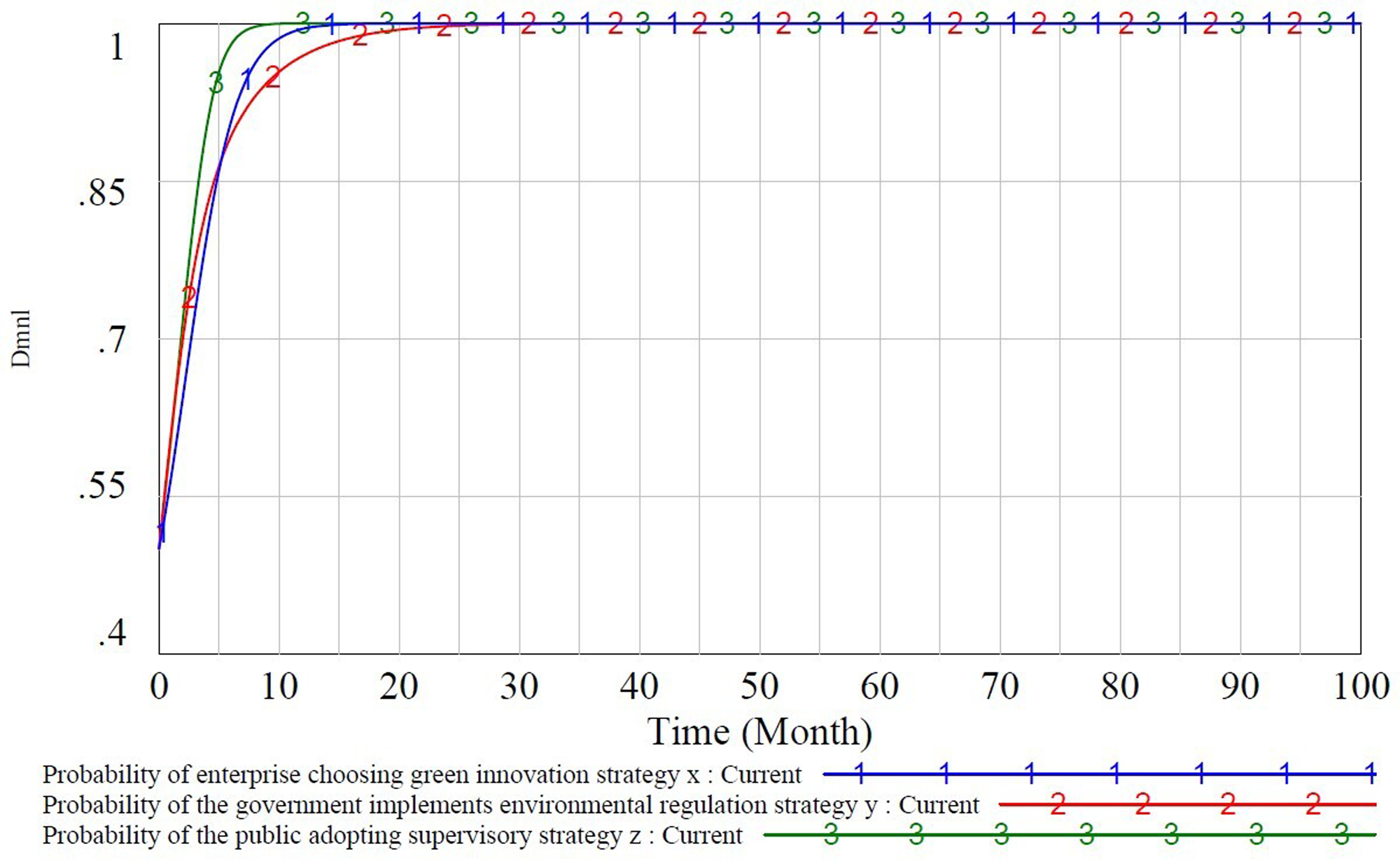
Three-party strategy selection in the initial state.
Influence of main parameters on the strategy of the game player
Analysis of factors that influence enterprises’ strategy
Impact of cost (C1)
Green innovation is conducive to reducing environmental pollution and improving the social benefits of enterprises; however, this requires paying higher GI costs simultaneously. The initial state of the system is shown by curve 5 in Figure 11. When the cost of innovation increases from an initial value of 0.4 to 0.6, although the enterprises’ willingness to carry out GI would eventually evolve to a stable equilibrium point 1, the evolution time would be significantly longer and the initiative would decrease. When the cost of innovation increased sharply to 1, the strategy of the enterprise portrayed a decreasing trend (as shown in curve 1) and the probability of innovation decreased, tilting to zero until it gradually reached the stable state of non-innovation. When the innovation cost was reduced, compared with the initial state, the line was steeper, the innovation initiative of the enterprise improved, and the time required for evolving to the stable equilibrium point also decreased greatly. Thus, we could conclude that the enterprises were very sensitive to the cost of innovation, especially when the cost increased to a certain value. Even if the government implemented a strong regulatory strategy at this time, the enterprises would not choose to actively carry out GI. Therefore, cost C1 was the key factor that affected whether enterprises implement GI.
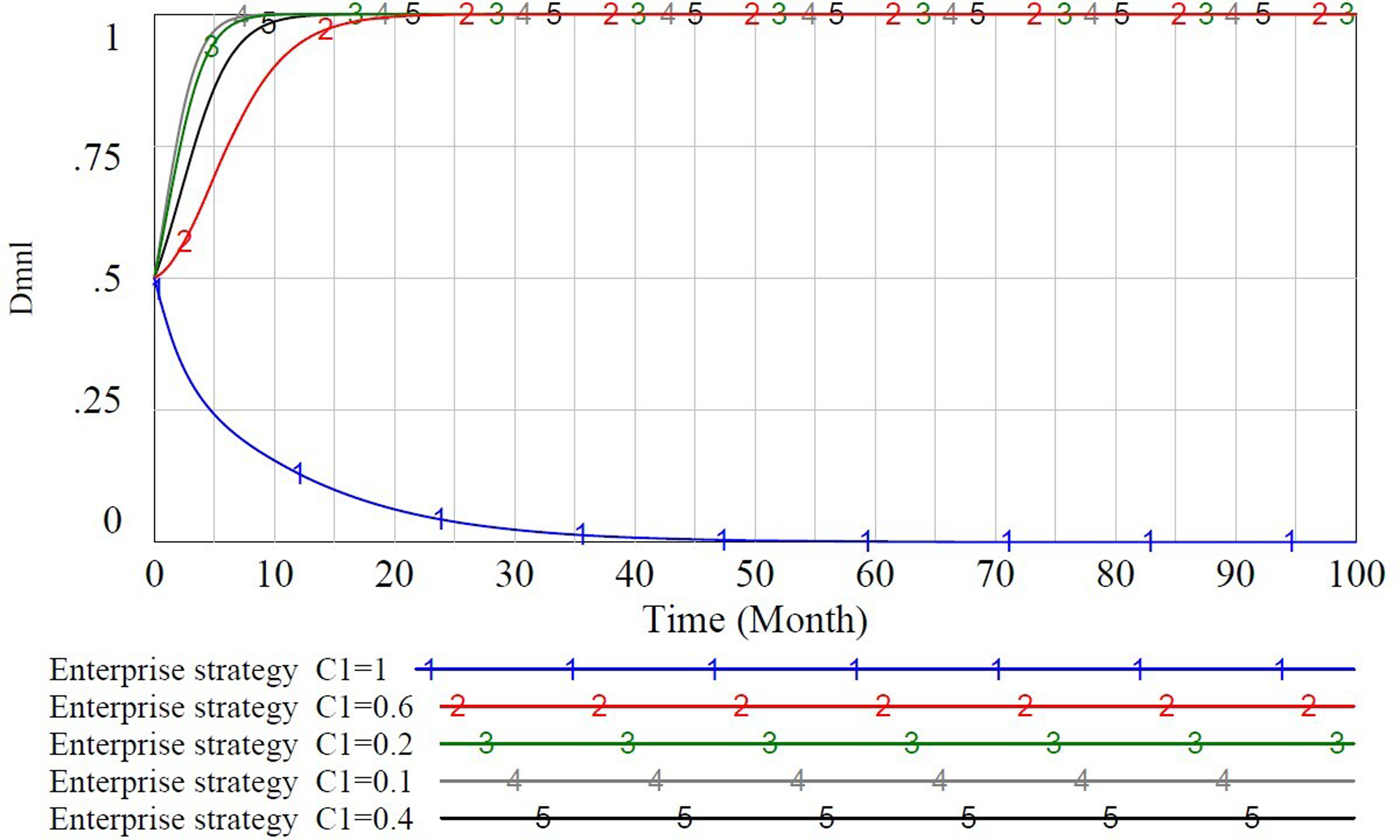
Impact of cost (C1)on the enterprises’ green innovation strategy.
Impact of benefit (R1)
As shown in Figure 12, when R1 decreased to a certain value, the evolution trend also portrayed a reverse change. The initial state of R1 is shown in Figure 4. When R1 increased, the enterprises’ innovation initiatives increased and evolved to an equilibrium state earlier than the initial state, which indicated that the increase in innovation revenue was a huge motivation for the enterprises, and the innovation initiative of the enterprise improved significantly. When R1 decreased from the initial value of 1 to 0.9, the speed of enterprise evolution to equilibrium point 1 slowed down significantly, and the initiatives decreased. However, when R1 continued to decrease to 0.6, the strategies of enterprises reversed, and their willingness to carry out GI reduced significantly, until they evolved to the equilibrium state of 0. As the expected revenue was too low, enterprises would ultimately choose not adopting green innovation. In this case, the public would not benefit from the innovation. If the public still choose to participate in supervision, they would need to bear some costs. Therefore, the public would ultimately choose not to supervise, based on their own interests. During this time, the government's initiative to implement the ER strategy portrayed a sharp upward trend. This is consistent with the real scenario. When the expected profit from enterprise innovation was very low, the enterprises often chose not to innovate, to ensure their own interests. To improve the motivation for the enterprises to adopt GI, the government will strengthen the ER, to encourage the enterprises to adopt GI. Moreover, it is necessary for the government to incentivize enterprises to promote innovation.
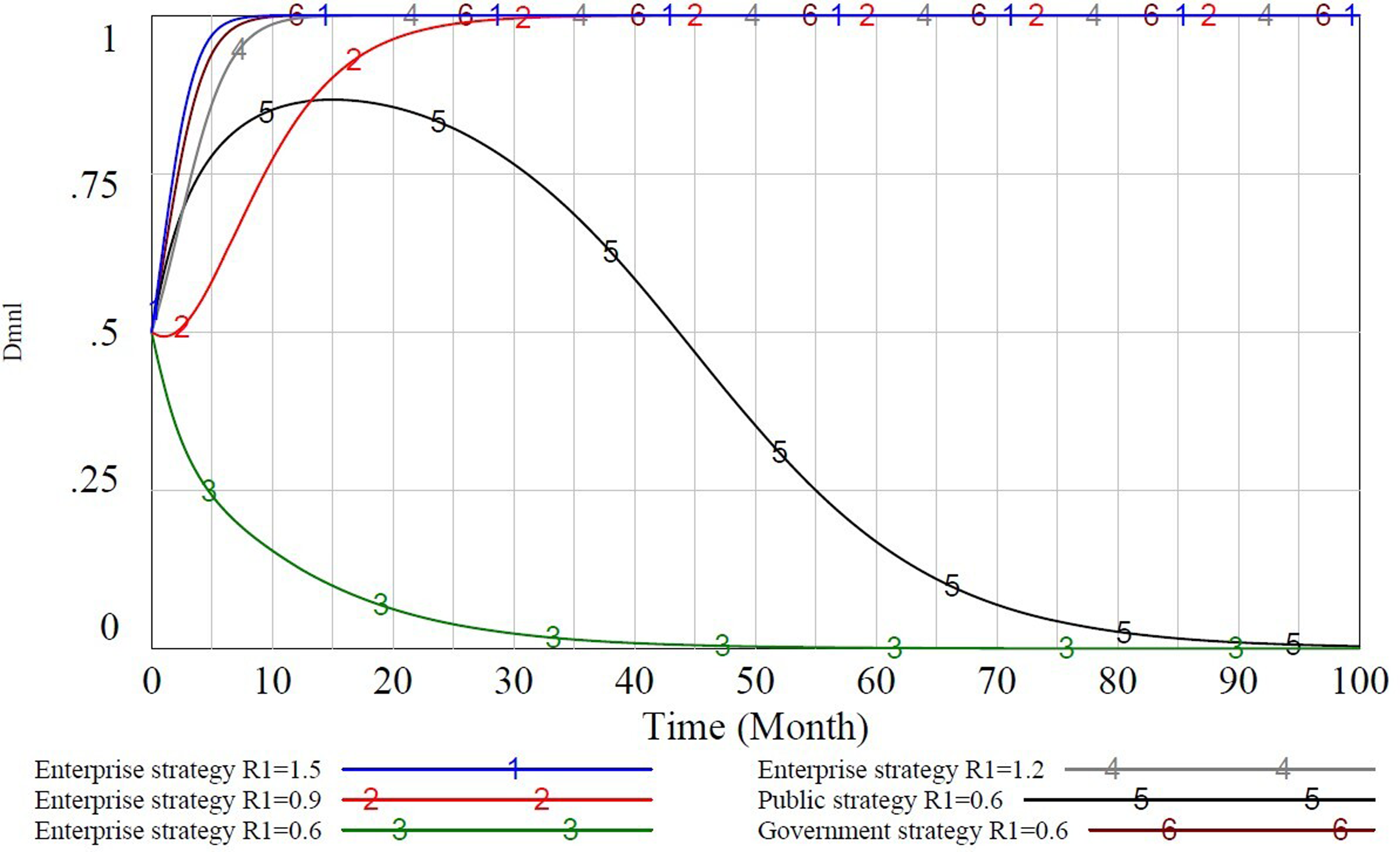
Impact of benefit (R1) on the strategies of enterprises, governments and the public.
Impact of government fines (P1)
A series of regulations and policies promulgated by the state put enterprises under tremendous operating pressure, which caused some enterprises to choose NGI. Enterprises that did not innovate and caused environmental pollution inevitably faced punishments from government departments. Figure 13 portrays the scenario when the government fine (P1) would continue to increase, the trend of the enterprise's strategy would change continuously, increasing until it reached an equilibrium state at point 1. Compared to the initial state, the time for its evolution to the equilibrium point shortened significantly, which illustrated that the government's intensification of punishment effectively encouraged the enterprises to adopt GI. When P1 decreased continually, although the probability of GI increased, its evolution required a significantly longer time, and the rate of increase was slower than that in the initial state; this indicated that the impact of fines on the enterprises could not be ignored. Therefore, the government must formulate appropriate punitive measures, so that enterprises can pay sufficient attention to GI.
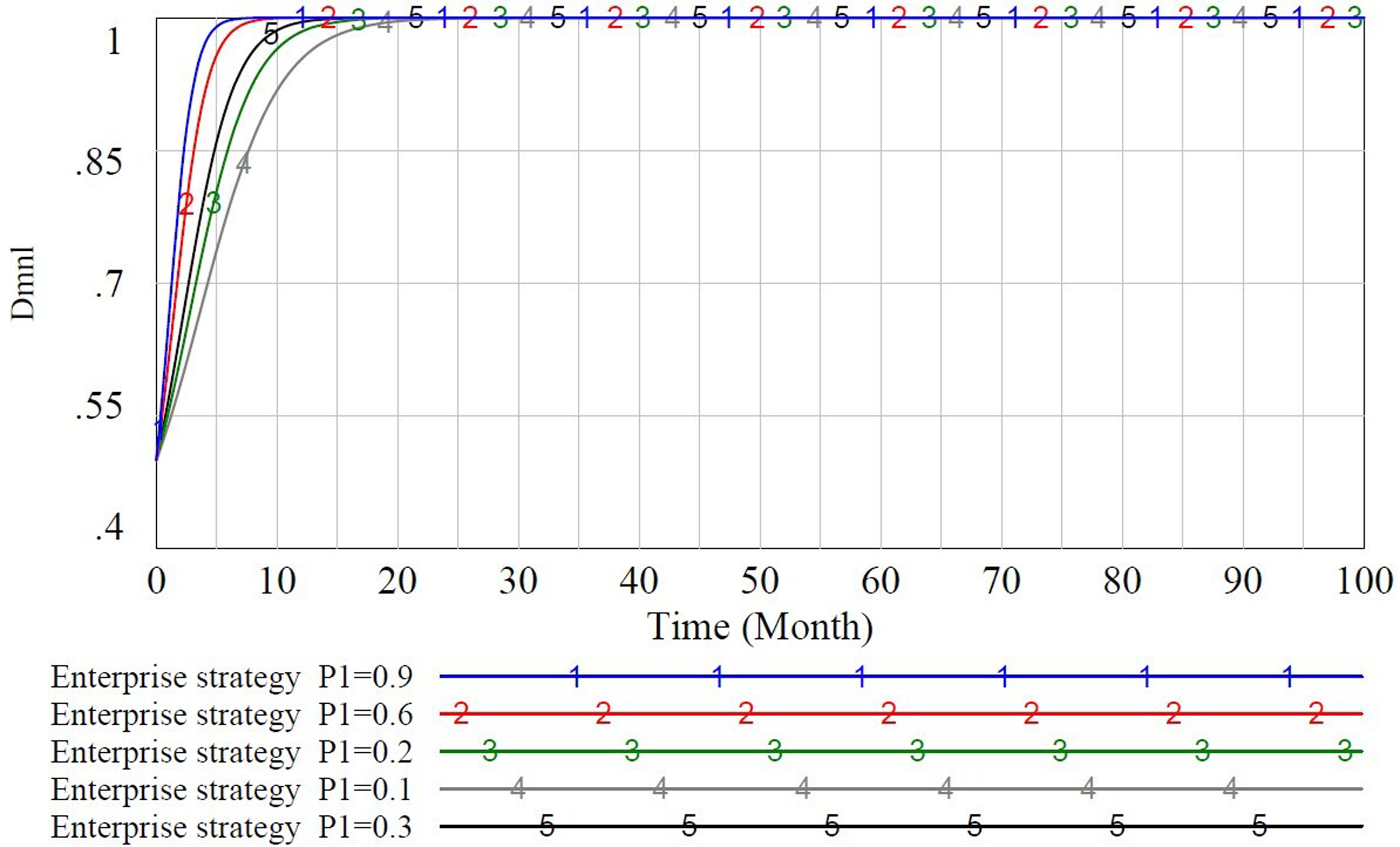
Impact of fine (P1) on the choice of enterprises’ green innovation strategies.
Impact of government subsidies (S1)
In Figure 14, in the initial state, the change trend of the enterprises’ strategies is denoted by curve 5. When the government subsidies decreased, the trend of enterprises to adopt GI decreased significantly, and the initiative also decreased significantly. The less the subsidy, the longer it takes enterprises to evolve to the stable equilibrium point. When subsidy S1 increased appropriately, the enterprises’ innovation strategy increased sharply, and innovation motivation was greater. However, when the added value of the government subsidies was large, the changing trend of the enterprises’ strategy was contrary to the expectations, and the final probability of choosing GI was stable at approximately 0.9. In fact, government subsidies are not the more the better. Additionally, government subsidies to enterprises are suitable for short-term and moderate subsidies, but not for long-term and large-scale subsidies. Large government subsidies have an incentive effect in the early stages of enterprise innovation, whereas subsidies in the later stages do not have a stimulating effect on enterprises. Excessive subsidies adversely affect enterprises’ willingness to adopt GI. This is because excessive subsidies cause dependence and inertia in enterprises. If enterprises rely on subsidies for a long time, and the subsidies are very large, the initiative and enthusiasm of enterprises regarding GI will reduce.
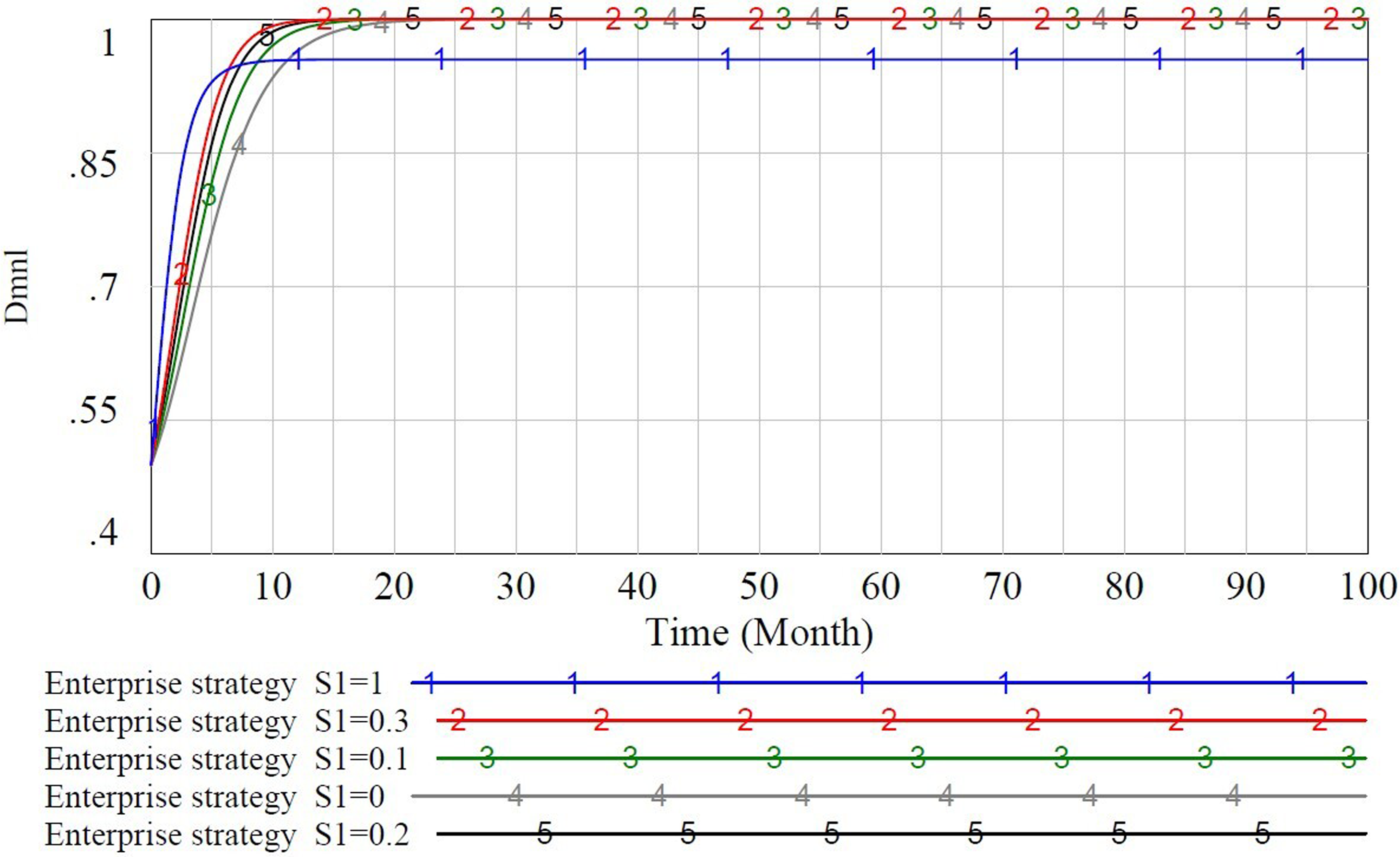
Impact of government subsidies (S1) on enterprise green innovation strategies.
Analysis of influencing factors of government strategies
Impact of environmental regulation cost (C2)
The cost of implementing an ER is an important factor to consider in any government's strategy. If the cost paid far exceeds the benefits obtained, the government will inevitably consider whether to implement ER. In Figure 15, curve 5 is the initial state, and the results indicated that a lower cost increased the government's initiative to implement ER strategies significantly; in addition, the time required to evolve to the equilibrium state also reduced significantly. The higher cost directly lead to a continuous reduction in the government's willingness and eventually evolved into the equilibrium state of the NER. Notably, in general, excessive costs are higher than the expected benefits, which can easily lead to government inaction and further, reduce the resource input. Hence, the local government should grasp the principle of appropriateness, guide the local government to actively transform from managers to service providers, and promote the enthusiasm of government departments to take the initiative.
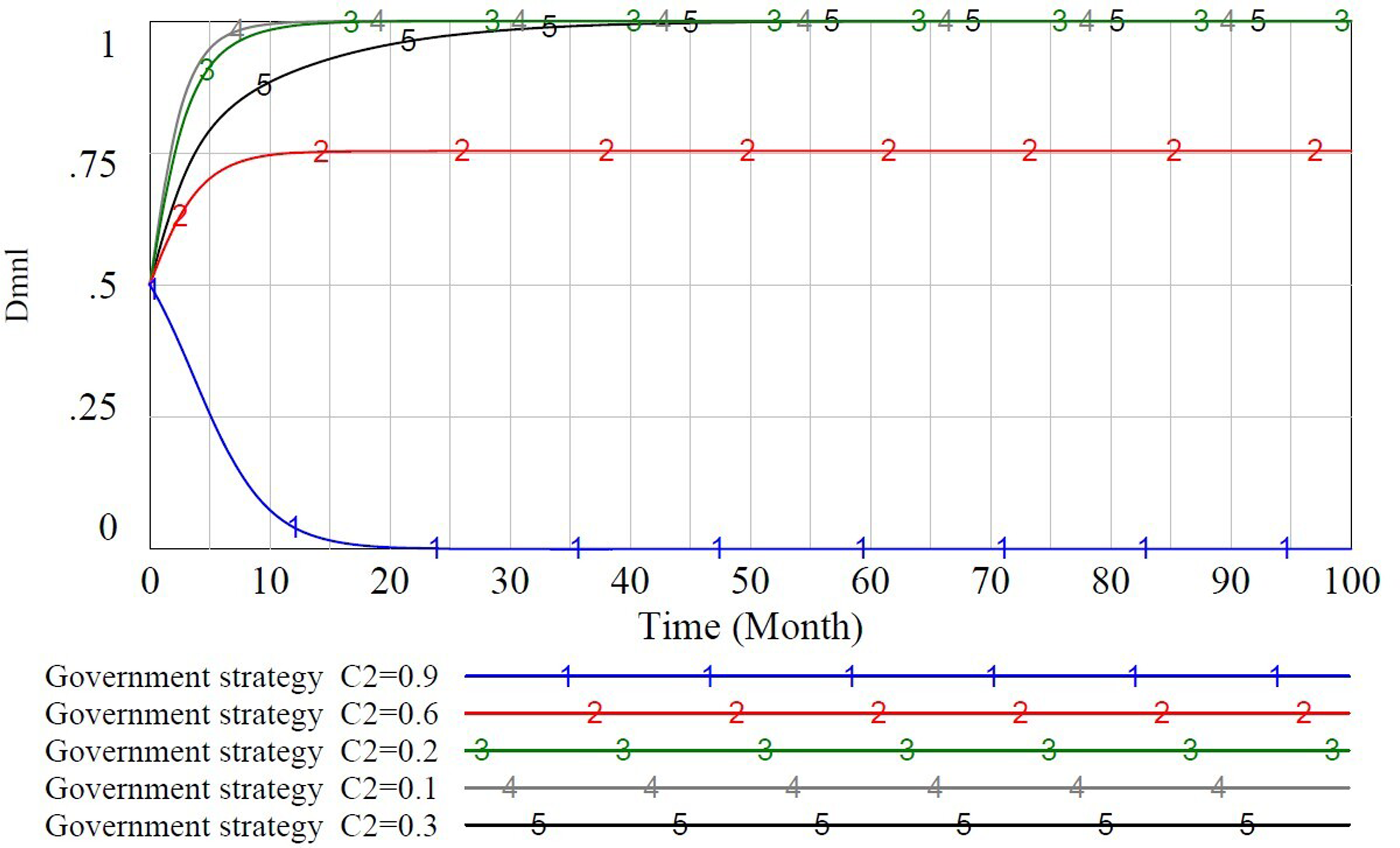
Impact of cost (C2) on government strategy.
Impact of fines (P2)
When local governments choose not to act, they will inevitably be punished by higher-level governments, if reported. Curve 5 represents the initial state, as shown in Figure 16. When the fine continued to increase, the government's initiative increased sharply, and the time required for the evolution of the initial state to the equilibrium state decreased significantly. The more fines there were, the more active the government was in implement ER. When the fine reduced to 0.3, the government's initiative reduced significantly as well, failing to evolve to an equilibrium state with a probability of 1. When the fine dropped to a certain value, the government's strategy appeared, or even reversed, and eventually evolved into the NER strategy. Notably, the local government and enterprises had the same psychological motives. The lower the punishment imposed by the higher-level government for the inaction of the relevant departments, the lower the importance of the local government. When the local government chooses not to act, the higher-level government can increase punishment appropriately, to encourage the relevant local government to implement ER.
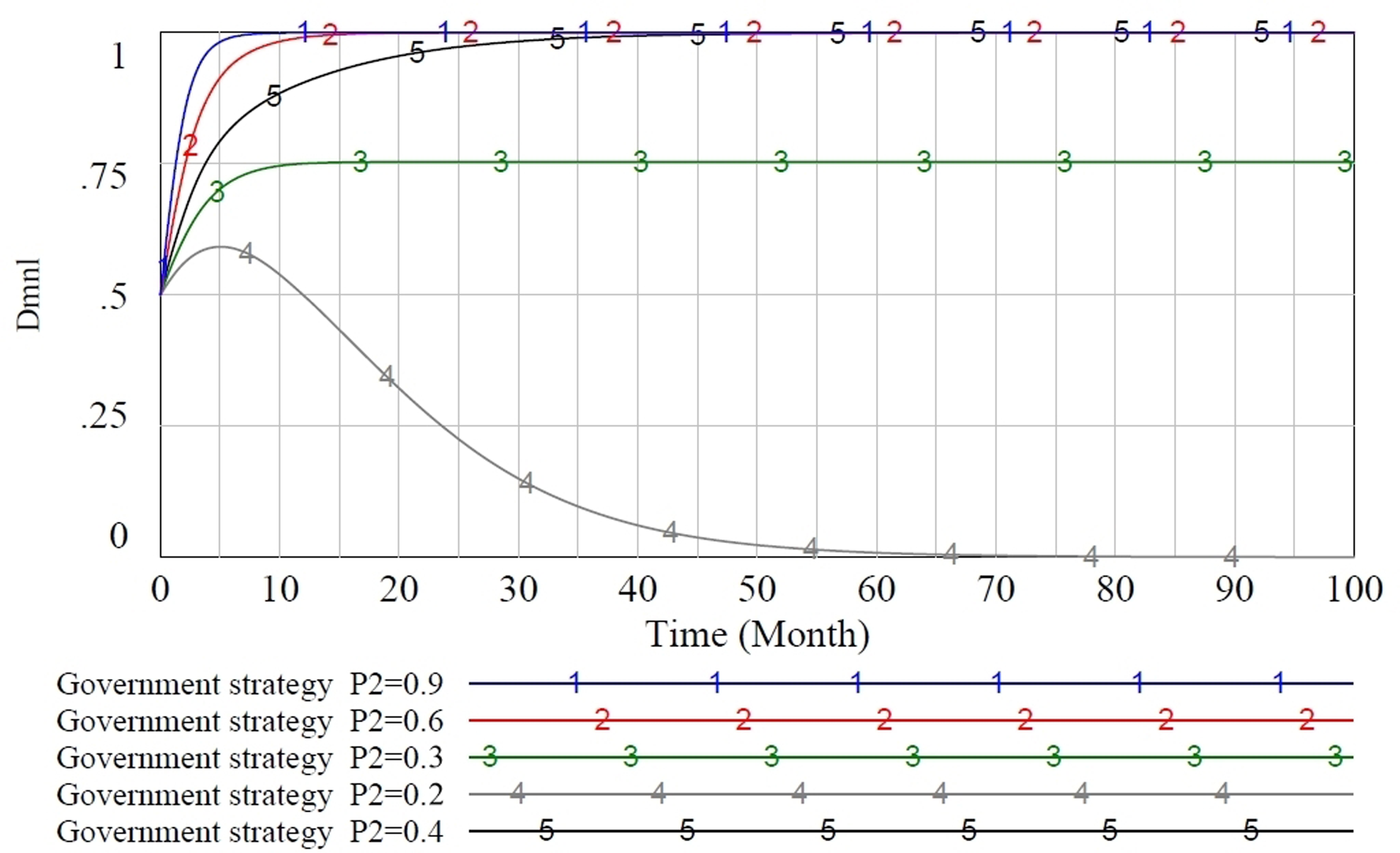
Impact of fines (P2) on government strategy.
Impact of government subsidies (S2)
The implementation of high-input ER consumes a lot of resources from local governments; however, ER and other services have the characteristics of long periods of effectiveness. Therefore, local governments are not motivated to actively conduct high-input ER. As shown in Figure 17, when the higher-level government's economic subsidies to related departments continued to increase, the trend of the corresponding curve was steeper, and the initiative of the government departments to implement ER increased sharply. The higher the subsidy, the shorter the time for the government to evolve to equilibrium state 1. When the higher-level government subsidies reduced from the initial value of 0.3, 0.2, and 0.1, the government's initiative reduced significantly, and it even tends not to implement ER. In general, when the government does not take the initiative to implement ER to restrain enterprises, the public's strategic choice is to actively participate in supervision. As shown in curve 6, the public's initiative to participate in supervision increased sharply. Therefore, the higher-level government should grant appropriate subsidies to the relevant departments, to stimulate the enthusiasm of the local government and guide them to take the initiative to invest more resources in environmental governance.
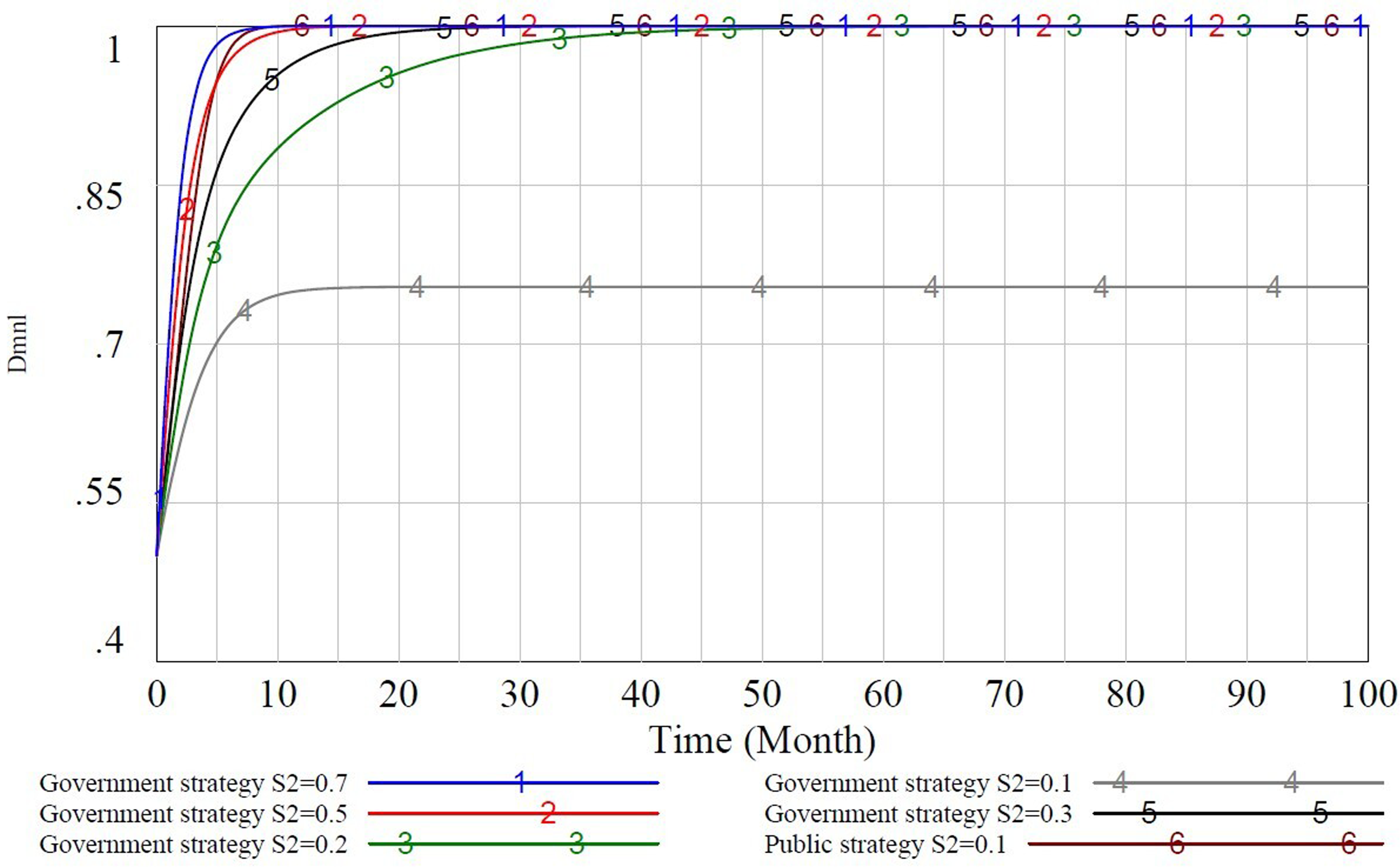
Impact of government subsidies (S2) on the government's strategies.
Analysis of factors that influence the public's strategy
Impact of supervision cost (C4)
The dynamic simulation in Figure 18 portrayed that the two variables closely related to public strategy had an expected revenue (R4) and cost (C4). In general, the public spends a certain amount of money while participating in supervision. Therefore, the public will inevitably make a comparison of benefits, i.e., compare the benefits gained in the process of participating in supervision with the cost. If the benefits are less than the costs, the public is highly likely to choose not to supervise. If the benefit exceeds the cost, the public is likely to choose to participate in the supervision. When the cost of public supervision reduced from the initial value of 0.1 to 0.05 and 0.01, the initiative of public participation in supervision improved significantly, and it evolved to an equilibrium point sooner. When the cost of public supervision increased from 0.1 to 0.4, the public's enthusiasm for supervision reduced significantly, and the time required for evolving to the equilibrium state and stability point 1 was extended. When the cost increased to 1.2, the changing trend of public supervision portrayed a reverse evolution and finally, evolved into a non-supervised strategy. During this time, the government's strategy was to implement ER, to constrain the behavior of the enterprises. Overall, the public was more sensitive to the cost of supervision and made choices that were beneficial to themselves, after comprehensively weighing the benefits and costs.
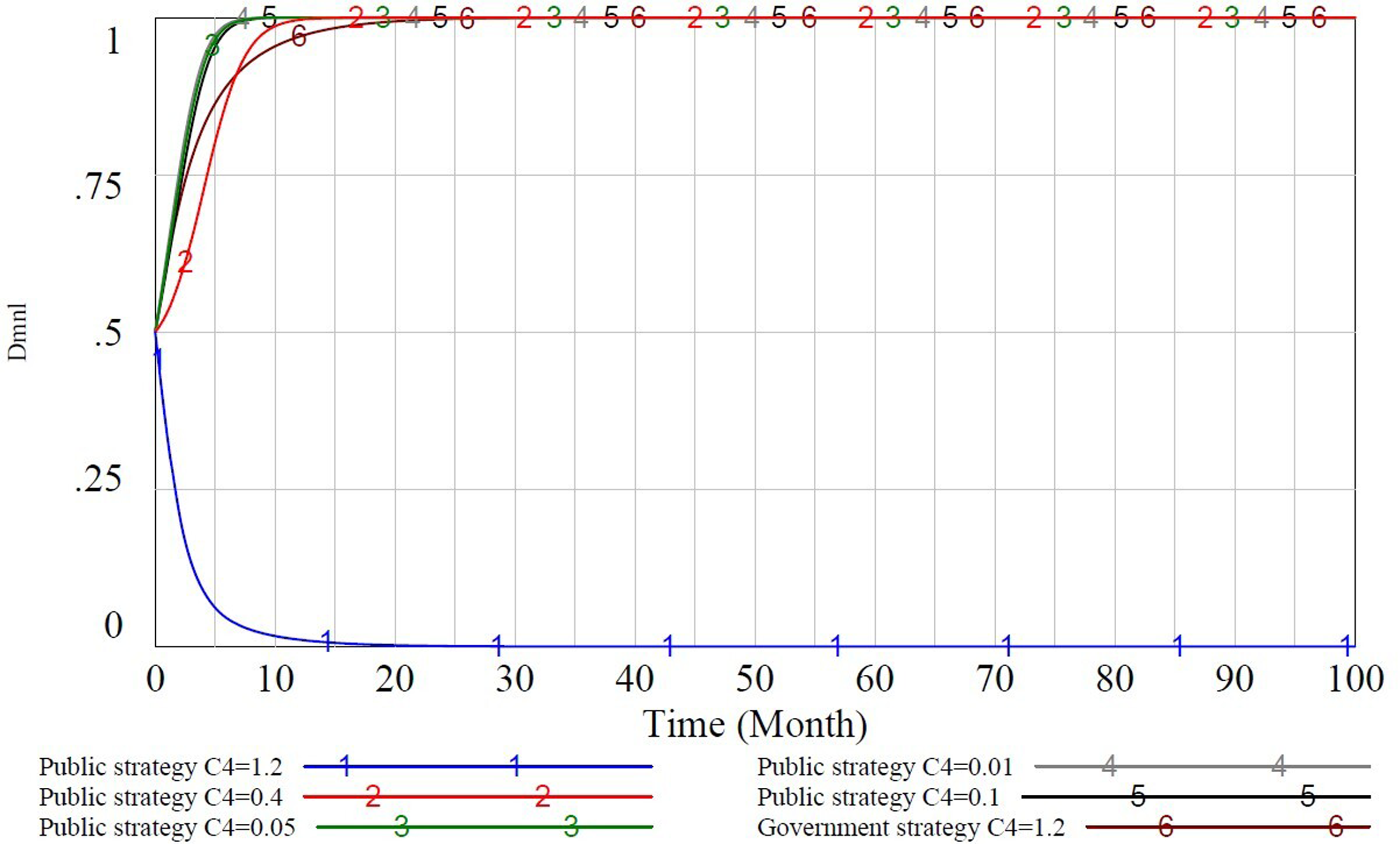
Impact of supervision cost (C4) on the public's strategy.
Impact of benefit (R4)
In the case of enterprises carrying out GI, public participation in supervision can obtain certain benefits. As shown in Figure 19, when the exogenous variable had the initial value, and whether the public changed from 0 or 1, it eventually reached an equilibrium state at 1. When the initial value (R4) continued to increase, the greater the return, the steeper the curve, and the sooner the equilibrium state achieved at 1. When R4 decreased continuously, the less the benefits, the less the public's initiative in supervision, and the longer the time required to evolve to an equilibrium state (point 1). Hence, the benefits obtained by the public were also key factors that affected their willingness to supervise.
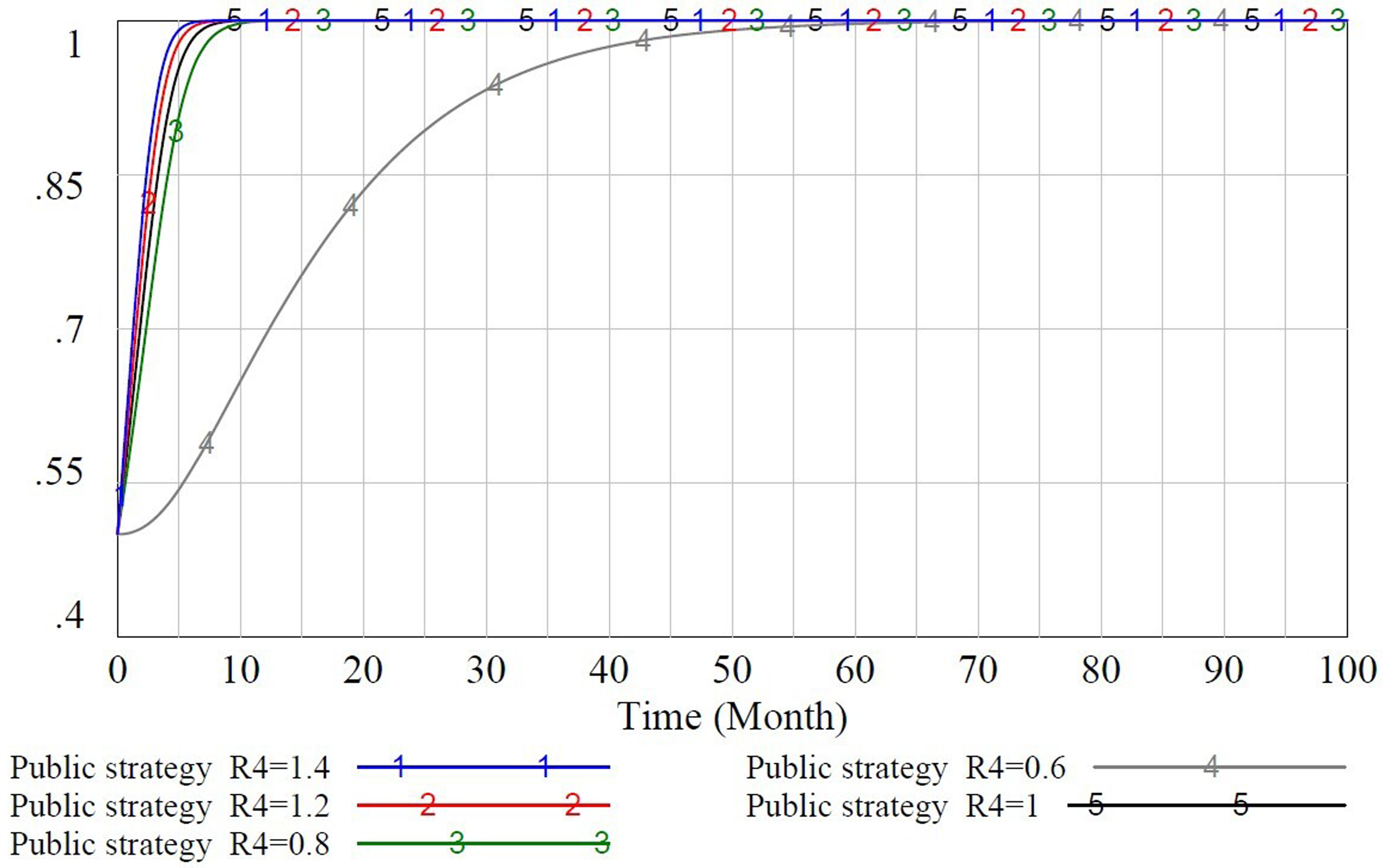
Impact of benefit (R4) on the public's strategy.
Conclusions and policy implications
Conclusions
The implementation of ER is an important part of environmental governance. In this process, the interest relationships of multiple parties overlap, and various stakeholders continue to play games and coordinate, to achieve a reasonable share of responsibilities and benefit transfer, along with a stable state that is beneficial for all parties. To further clarify the strategic evolution path and influencing factors of each participant, in this study, we constructed a tripartite evolutionary game model consisting of enterprises, governments, and the public and utilized a system dynamics model to carry out simulation analysis. The main conclusions are as follows:
Regardless of the initial strategies of the tripartite participants, they will eventually reach a stable equilibrium at (1,1,1), after the continuous evolutionary game, i.e., the enterprises chose to carry out GI, the government implemented the ER, and the public participated in supervision. When the enterprises’ initial willingness to innovate was relatively low, the government gradually began to adjust its strategy and chose to implement ER to restrict enterprises. When the intensity of government regulation continued to increase, the enterprises gradually evolved toward active GI, while the public finally developed strategies that were conducive to their own interests, i.e., participating in supervision. After the government implemented ER, the enterprises’ willingness to take the initiative in GI increased, which could effectively reduce environmental pollution. Enterprises could also obtain GI benefits and subsidies from the government. Relevant departments implemented ER, to obtain benefits from GI and subsidies from higher-level organizations. Similarly, while the public participates in supervision, they also obtain corresponding benefits, thus, achieving a win-win situation for all parties. In the simulation process, the government's adoption of ER strategies had a greater impact on the enterprises’ decision-making. When the government initially chose not to implement ER, the enterprises’ willingness to choose the GI strategy was low. When the government's willingness to implement ER increased, the enterprise's initiative increased immediately, continuing to evolve into an active innovation strategy. When the government initially choses to implement ER strategies, regardless of the initial strategy of the enterprise, its innovation initiative in the evolution stage was very high and eventually, evolved into a stable state of active GI. Thus, the government's strategic choices directly affected the enterprises’ initiatives. The GI costs, benefits, government subsidies, and government fines were important factors that affected the enterprises’ GI initiatives. The simulation analysis portrayed that lower costs and appropriate government subsidies increased the enterprises’ willingness and initiative to innovate. However, if the GI cost for the enterprises reached a certain value, i.e., the cost was greater than the benefit, then, even if the government implemented ER strategies to restrict it, the enterprises’ were not willing to adopt GI. In general, government subsidies are suitable for short-term and moderate subsidies, but not for long-term and large-scale subsidies. Excessive subsidies can easily lead to the dependence and inertia of enterprises, which is not conducive to the enthusiasm of the enterprises to innovate.
Policy implications
Strengthen environmental supervision and establish a multi-party interest coordination mechanism: In the initial stage of environmental pollution control, the enterprises were less active in GI; hence, in such a case, the government should simultaneously establish a clear reward and punishment mechanism and establish a long-term mechanism for enterprise green production. In the later stages of environmental governance, the government's regulatory system can be relaxed appropriately. Additionally, the enterprises’ willingness and initiative to carry out GI were at a relatively high level at this time. Therefore, in such scenarios, the government can guide the public to participate in the supervision of enterprises, so that the high cost caused by the government's implementation of strong regulations can be saved and the same governance effect can be realized. Moreover, higher-level governments should also design effective ER incentive policies and punitive measures, to encourage relevant departments to actively conduct supervision and prevent collusion between local governments and enterprises.
The environmental responsibility awareness of enterprises should be strengthened and the strategy mode of enterprise development should be continuously adjusted. Enterprises should actively conduct GI and environmental governance through energy conservation, the reduction of pollutant emissions, and the improvement of production technology. In this manner, they can not only achieve a good corporate image, but also stay competitive through continuous innovation. Additionally, enterprises should place GI in an important strategic position and achieve green production, by increasing investment in environmental protection funds and strictly supervising all aspects of the production process. Moreover, enterprises should strive to improve their environmental protection information disclosure systems, to establish a comprehensive environmental responsibility system. Efficient innovation can be achieved by investing more in R&D personnel and promoting environment-friendly technologies.
Improving the public supervision feedback communication platform and strengthening the awareness of environmental supervision: As an important stakeholder, the public can supervise both the enterprise and the government, thus, preventing them from colluding. However, the current public supervision of environmental pollution behavior of enterprises is not ideal, and the public's enthusiasm for supervision can be promoted, by creating a social and policy environment conducive to environmental governance; notably, incentive policies can be formulated, to ensure the healthy development of environmental governance organizations. Additionally, it is necessary to establish smooth channels for public opinion feedback, such as public participation platforms and environmental protection hotlines, to ensure that public opinion can be addressed in a timely manner. Finally, the public should also establish the concept of green consumption and purchase environment-friendly products, to promote the development of the enterprises’ production modes in the direction of green environmental protection.
In this study, we considered enterprises, governments, and the public in one system, and clarified the evolution path of each game subject and the key factors that affected their strategic choices. Notably, this study can serve as a reference for enterprises, governments, and the public, to make better behavioral decisions. It should be noted that there are still some relevant work worth doing in the future. First, a behavioral game of more stakeholders may be involved in the implementation of ER. For example, complex game relationships may also exist between the central and local governments and enterprises. Therefore, more stakeholders can be included in future studies. Second, the strategic choices of tripartite entities may be affected by many factors in the context of ER. In particular, in this study, we did not fully consider the influencing factors of strategy selection by the three parties in the game process; more influencing factors should be included for analysis in the future.
Footnotes
Acknowledgements
We are thankful to the editor and the anonymous reviewers. Their comments and suggestions have improved the quality of the article. This work was financially supported by Meteorological Soft Science Project of China (2022ZZXM24), Key Topics of Philosophy and Social Sciences in Wuxi (WXSK22-A-09).
Declaration of conflicting interests
The author(s) declared no potential conflicts of interest with respect to the research, authorship, and/or publication of this article.
Funding
The author(s) disclosed receipt of the following financial support for the research, authorship, and/or publication of this article: This work was supported by the Meteorological Soft Science Project of China, Key Topics of Philosophy and Social Sciences in Wuxi (grant number 2022ZZXM24, WXSK22-A-09).
