







Abstract
In China, urbanization is mainly stimulated by resource flows, and industrialization is normally accompanied by an increase in the proportion of the urban population and urban land area. During the process, urbanization at a rapid pace often induces a huge consumption of energy and environmental emissions. Nevertheless, it is also worth considering whether urbanization positively affects urban environment promotion. With a more solid economic foundation, urban subjects will carry out energy conservation and emission reduction (ECER) from various aspects, primarily focusing on technological innovation, advancement of production mechanisms and structural optimization. Along these lines, this study aims to examine urbanization's direct and indirect impact on energy conservation and emission reduction using panel data consisting of 196 Chinese cities for the period of 2011–2018 with a Slacks-based model and transmission mechanism. Study results indicate that urbanization's development can give a direct impetus to ECER, which is quite robust after employing a series of robust tests, including instrumental variable estimation. Besides, urbanization indirectly influences ECER by promoting economic growth, better allocation of resources, internet advancement, and adjusting the employment structure. Further investigation suggests that the relationship between urbanization and ECER is nonlinear, depending on the levels of the above-mentioned mediating variables. Finally, essential policy suggestions are proposed, i.e. promoting high-quality development of urban clusters, accelerating the policies for ECER, and paying more attention to economic growth, resource allocation, internet technology, and employment structure.
Keywords
Introduction
As the strategic goal of China's development, sustainable development requires China to take the scale and quality of the economy into account in the advancement.1,2 One of the vital manifestations of China's economic scale is the level of urbanization, while another important manifestation of the development quality is the ecological environment.3,4 Therefore, accelerating the development of urbanization and promoting energy conservation and emission reduction (ECER) is the only way to realize economic transformation and adjustment in the coming years. In China, urbanization is normally the process of increasing the proportion of the urban population and urban land area, mainly stimulated by resource exports or industrialization.5,6 As China's economy has improved in the last few years, more and more people are moving to cities to pursue higher wages and better infrastructure.7,8 In 2021, the National Bureau of Statistics released the Statistical Bulletin of the People's Republic of China on National Economic and Social Development 2020 95 , which shows that by the end of 2020, more than 60% of China's permanent residents had lived in urban areas, and urbanization had already been at a moderate level. The improvement of the urbanization level promotes economic development and brings about problems regarding resources and the environment.9,10 As the largest energy consumer in the world, China's ECER pressure cannot be ignored, which needs a win-win road between urbanization development and ECER. Since 2000, while the urbanization level has increased, the total energy consumption has been rising, which indicates that it is indispensable to coordinate the common development of urbanization and ECER.
In the context of urbanization, the world's energy and resource use are under enormous pressure. 11 The transport sector alone consumed more than 50% of oil globally in 2005, responsible for approximately 25% of global emissions from energy consumption.12,13 By 2030, the world's energy consumption and emission in the transportation industry are expected to rise by more than 50%, 14 posing a major challenge to ECER for sustainable development. 15 Therefore, ECER is not only China's ambitious goal but also the direction of global efforts.
From an economic perspective, urbanization has an internal relationship with ECER, as it is an important thrust and target direction in the proceedings of China's economic adjustment and progress. Specifically, urbanization has dual effects. For one thing, the rapid urbanization process can improve employment opportunities, health conditions, and income.16,17 Besides, by strengthening the communication between different enterprises, knowledge dissemination can be promoted, which is beneficial for innovation in a certain way.18,19 It can also propel energy efficiency, drive the recycling of resources, and promote industrial construction, 20 which boosts the speed of ECER. Meanwhile, urbanization can propel the aggregation of capital and other elements, enhance the scale effect,21,22 boost the rational allocation of factors, decrease energy consumption, 23 and economize production costs. During the urbanization proceedings, people utilize natural resources to produce indispensable products and discharge a large number of pollutants. 24 It raises energy use in each household 25 ; thus, harming ECER. The improvement of urbanization in the proceedings of China's development is a real question of whether it would go hand in hand with or hinder the improvement of efficiency in the ECER issues, which is worth exploring.26,27
ECER is essential for China's development, as it not only improves the living environment and people's welfare and promotes people's health but also helps to achieve long-range sustainable development and contributes to the well-being of all humanity, 28 showing the due responsibility of the nation. Judging from the development status of China's urbanization level and the development strategy of urban clusters, China will attach importance to these urban clusters in the coming period to drive the development of other districts and even the whole nation and the advancement of industrialization and expansion of urban clusters will bring greater pressure to ECER. 29 Therefore, achieving the pursuit of urbanization to bring positive effects and lessen energy consumption, minimize pollution emissions, and coordinate urbanization development and ECER is a prime agenda. 30
From China's reality, urbanization benefits China's rapid economic gain, which means a lot for China's economic strength and comprehensive national strength. 7 In the proceedings of economic development, China takes advantage of the urban clusters and exerts the benefits of agglomeration. The Yangtze River Delta, Pearl River Delta, Beijing-Tianjin-Hebei, and three districts of the high urbanization advancement level, concentrate China's advanced technology, talent, and resources. With the rapid urbanization of the three districts, energy use and environmental pollution have proved to be severe challenges for the development of these areas. It also raises the following questions. What is the effect of urbanization on ECER in the development proceedings, and whether the impact is positive or negative? It requires rigorous and standardized analysis and robust empirical testing to conclude. Therefore, considering the above analysis, this article systematically discusses the ECER effect of urbanization from both theoretical and empirical systems.
More specifically, the marginal contributions of this article are mostly embodied in three ways. Firstly, drawing on Grossman and Krueger's research method, 31 innovative factors such as internet development and resource allocation are also considered and included in our discussion to obtain the basic econometric model of this article. Secondly, the article utilizes a normalized intermediary effect model 32 to further investigate whether economic growth, resource allocation, internet development, and employment structure act as intermediary variables. Finally, following the Hansen panel threshold regression model, 33 the basic econometric model and the different situations of threshold variables under different threshold values are also combined for the nonlinear relationship test. This article aims to provide an important decision-making reference for China to effectively achieve the aim of ECER and green development from the perspective of urbanization through systematic and rigorous theoretical and empirical research.
The rest of the article proceeds in light of the following parts. The next part provides a literature review of urbanization, ECER, urbanization, and ECER. The mechanism analysis section builds a theoretical model, analyzing urbanization's direct and indirect effect mechanism. The methods and data section reports the empirical strategy and data sample description. The results and discussions section discusses and analyzes the empirical test results. Finally, the conclusions and policy recommendations section is the conclusion and policy recommendations.
Literature review
Recently, studies on urbanization and ECER have gradually increased. Many scholars studied the connection between economic development, agglomeration effect, technological advancement, industrial structure promotion, and energy consumption, ECER from the perspective of related factors arising from urbanization development. Yao et al. 34 divided urbanization into multiple dimensions and analyzed them one by one. The research found that when large, medium, and small cities experience urban expansion, their economic development is guided by resource-intensive and high-energy consumption industries, emitting further CO2. While as a central regional city, megacities tend to develop knowledge-intensive and capital-intensive industries with low CO2 emissions, which shows that the economic dimension of urbanization will affect the ECER effects of large, medium and small cities and megacities to varying degrees, that is, economic development has both advantages and disadvantages for ECER. In addition, Rodríguez et al. 35 believe that the urban structure formed in the promotion of urbanization affects the degree of local air pollution. The excessive fragmentation of urban development is not conducive to economic entities’ centralized waste treatment. Unreasonable resource allocation leads to increased travel demand and automobile dependence, resulting in high emission concentrations of NO2 and PM10 with urbanization. Appiah et al. 36 investigated the interaction between energy use, industrialization and CO2 emissions in sub-Saharan African (SSA) countries with estimation methods of AMG, CCEMG, and DCCEMG. The results demonstrated a bidirectional causal pathway between CO2 emissions, energy use, industrialization, and fossil fuel consumption with a unidirectional causal route to urbanization. Otsuka et al. 37 conducted an empirical analysis based on the county-level panel data of energy consumption in Japan, which concluded that urbanization boosts productivity and the growth of local productivity improves energy efficiency. The agglomeration economy is a significant driving force for productivity growth. It shows that the agglomeration growth of the economy with urbanization will help to bring about the elevate of regional energy efficiency.
Nevertheless, some scholars consider that economic growth is closely related to energy consumption.38,41 The urban agglomeration and development process results in higher population density, leading to higher fine particle concentration and bringing about more pollution emissions. 42 In conclusion, the agglomeration effect during the improvement of urbanization may contribute to the optimal allocation of resources, drive ECER, increase pollution emissions and affect environmental improvement. Lv et al. 43 conducted an empirical analysis based on the panel data of 30 provinces in China from 1997 to 2016. Using energy-saving technologies and upgrading the industrial structure, ECER with urbanization has achieved significant and excellent results. Based on mechanism analysis, Lin and Zhu 44 proposed that the effect of economic agglomeration, industrial structure, and technological progress will act on the improvement of new urbanization and play a vital part in urban ECER. Wen et al. 45 concluded through empirical analysis that urbanization drives the promotion of financial structure, and the promotion of financial structure has an important impact on ECER. Under the effective operation of the market mechanism, the financial structure can reduce energy intensity and carbon emission intensity, and this impact effect is especially significant in central and western China. It is worth mentioning that the government always issues various policies to promote technological progress, structural upgrading or enlarge agglomeration effects during urbanization in China. Bahizire et al. 46 and Appiah et al. 47 figured out that a high-quality institutional environment or policy environment could also promote the improvement of the urban environment. In summary, urbanization significantly impacts ECER through many factors, such as economic development, agglomeration effect, technological advancement, and industrial structure upgrading.
Moreover, many scholars consider that the impact mechanism of urbanization on ECER is complex and will show a nonlinear impact relationship. 48 Liu and Xie 49 proved a nonlinear causal connection between China's energy intensity and urbanization. The regulatory effect of energy intensity on urbanization in the whole nation and central section is asymmetric. Martínez-Zarzoso and Maruotti 50 conducted an empirical analysis using the STIRPAT model, EKC hypothesis, and modernization theory, believing that the connection between urbanization and CO2 emission is inverted U-shaped. Sharma 51 analyzed the global panel data composed of 69 countries/regions, finding that urbanization at different development stages influences CO2 emissions. Sadorsky 23 concluded through empirical analysis that for every 1% increase in income, energy intensity decreases by 0.45% to 0.35%. Besides, the influence of urbanization on regional energy intensity is complex and varied, and the influence of urbanization levels on energy consumption varies with stage. Poumanyvong and Kaneko 52 used 30 years of balanced panel data from 99 countries to make an empirical analysis by building Stochastic Impacts by Regression on Population, Affluence, and Technology (STIRPAT), showing that the effect of urbanization on energy use and pollution emissions is various from the stage of development and that urbanization is conducive to energy usage decrease in groups whose income is low, but is not the same in middle and high-income groups. To sum up, urbanization will act on ECER through economic development, agglomeration effect, technological advancement, industrial organization upgrading, and other channels, and will have nonlinear and complex effects.
At present, the research in this field mainly focuses on two aspects, one is to study the relationship between urbanization development and ECER, and the other is to analyze the influencing factors of urbanization on ECER from different aspects, exploring the internal logic of its relevance. On this basis, this study makes a comprehensive analysis by considering the impact of economic activities in terms of scale, technology and structure on the efficiency of ECER, and innovative research methods, using the intermediary effect model to conduct a further empirical investigation and test the nonlinear relationship using a threshold regression model. It not only tests the relationship between urbanization and ECER but also comprehensively considers the logical context behind the relationship from multiple perspectives.
Mechanism analysis
Direct impact mechanism of urbanization on ECER
The direct impact of urbanization on ECER is embodied in two ways. Firstly, it is reflected in the influence mechanism of urbanization on material resources and energy resource use. As urbanization advances, the size of the city will expand, and the urban population will increase, bringing huge consumption of resources, 53 such as the use of local houses, machines, and equipment. Also, it brings problems such as water pollution. 54 Meanwhile, as urbanization and the local economic level improve, more material resources will be created while consuming material resources. With the growth of urbanization and the acceleration of economic development, more energy resources will inevitably be used, such as the exploitation of oil and coal mines to develop industry, which increases energy intensity. 55 The urbanization process increases actual and optimal energy use and decreases energy utilization efficiency. 56 However, after urbanization develops to a certain stage, urban residents facilitate the transition from conventional to commercial fuels and improve energy efficiency. 57 The advantages of a large-scale economy and technological advancement brought by urbanization can relieve residents’ pressure of per capita energy consumption. 58
Secondly, it is reflected in the impact mechanism of urbanization on the emission of waste and harmful substances. With the development of urbanization, there will also be environmental pollution. For example, in the process of industrial development, there is the emission of waste gas and sewage, which greatly impacts the ecological environment and mainly relies on industrial development to propel the advancement of urbanization. In the early phase, the rise of population and urban development led to the intensification of air pollution.
59
This impact was more serious as population and rural-urban migration increased.
50
Large machinery factories emerge one after another, which causes smog that has greatly affected the health of urban residents and brings about wastewater pollution.
60
In the early phase of urbanization, it greatly promoted the emission of pollutants. However, with urbanization gradually entering the middle and late stage, economies of scale drive technology exchange among enterprises, effectively improving production efficiency and reducing pollutant emissions.
61
At this time, urbanization has hindered the discharge of waste and harmful substances. Taking the above arguments into account, the article puts forward the following hypothesis:
Indirect impact mechanism of urbanization on ECER
Economic growth, internet development, resource allocation, and employment structure transformation, along with the urbanization process, will impact local pollution emissions. Firstly, the convergence in a large population's space leads to industry development under the agglomeration effect to form a rapid breakthrough and innovation. 62 The development of urbanization means the transformation of the economic model and the progress of the production mode. On the one hand, the significant increase in the level of economic advancement can provide stable technical support and financial guarantee for environmental governance, during which the market mechanism gradually develops and perfects, achieving the improvement of the efficiency of energy utilization and having a strong promoting impact on ECER. 63 Specifically, urbanization development drives the financial development and improvement of relevant systems and positively influences renewable energy consumption. 64 With the rapid development of urbanization, people's income level increases, which gradually expands the technical effect to improve economic efficiency, reduce emissions, and improve environmental quality. 65 On the other hand, economic advancement will increase energy consumption and pollutant emissions to some extent, and polluting energy consumption occupies a dominant position. 16 At the same time, due to the expansion of scale effect, the degree of pollution will deepen by inches. 53 Therefore, the negative effect of urbanization on ECER cannot be ignored. Secondly, the influence of urbanization on economic advancement is reflected in network advancement. The popularization of internet use can develop the allocation efficiency of production factors and energy utilization efficiency of traditional industries in application fields, promote optimization and upgrading and reduce unnecessary pollution emissions.66,67 At the same time, in the network development process, market players’ ability to obtain information through the network is significantly enhanced, and their communication is more convenient and easier, which can reduce the cost of energy use and play a significant role in ECER. 68
On the other hand, internet development will contribute to the mounting power demand for ICT-related equipment involving industrial machines, big data centers, and bitcoin blockchain operation platforms, resulting in strong energy use intensity.
69
Thirdly, the development of urbanization leads to the overall improvement of the regional economic level, during which the capacity and efficiency of market resources allocation can be significantly enhanced; thus, efficient resource allocation reduces unnecessary energy consumption but also promotes the intensification of the agglomeration effect, to cut down the number of pollution emissions.
70
Fourthly, the development of urbanization boosts the optimization and promotion of employment structures. When urbanizing, the economic structure changes greatly with the urban population.
29
Society presents changes in employment structure, mainly as follows: it has altered from the traditional rural society featuring agricultural production to the modern urban society featuring non-agricultural development.
71
Due to the optimization and promotion of employment structure, energy elements flow from inefficient to efficient departments, effectively reducing energy use. The employment of the regional population has also developed and changed.
72
More and more people gradually enter the second and third industries to seek development so that the primary industry energy consumption and pollution emissions are reduced. The second and third industries’ consumption and emissions are gradually increasing. The influence of industrial development on ECER is more complex. Industrial transformation may bring more industrial pollution and emissions, but at the same time may also reduce the overall pollution emission level due to the improvement of related technologies. The ultimate mechanism of action for environmental development needs to be combined with data and reality in-depth study. In light of the above arguments, we propose the following hypothesis:
Along with urbanization, the regional economic development level has gradually improved, leading to the optimal allocation of resources, the rapid promotion of network technology, and the corresponding transformation of employment structure, which influences the social development process of energy use and pollution emissions from many aspects comprehensively. Firstly, the development of urbanization has formed a strong aggregation effect. Many economic individuals in the same geographical space share regional resources, and the transportation cost is reduced accordingly. With the urbanization process, the standard of regional economic growth has been significantly improved. In this context, the benefits and effects of economic progress will further enhance the efficiency of individual economic communication and trade between them. Thus, the marginal cost reduction of ECER generated by the agglomeration effect and economic technology development is becoming increasingly obvious, suggesting that there is a nonlinear contact between industrial agglomeration and technology development and ECER. 73 Secondly, the advancement of urbanization leads to further integration of resources, and the efficiency of resource allocation has been significantly improved in the process. Because of this, polluting departments and enterprises can make wider and more effective usage of resources, reduce unnecessary waste, and simultaneously utilize resources and regions centrally to deal with pollution emissions. Based on this resource optimization allocation, the marginal effect of ECER will show an upward trend, thus realizing the spillover effect of resource allocation on ECER. Third, the expansion and development of urbanization are driven by the progress of internet technology. The development of urbanization catalyzes the transformation of internet technology, which leads to the advancement of the Internet, with urbanization leaping forward at different levels and thus showing nonlinear characteristics. 74 Lastly, the employment structure of residents in urbanized developing areas is gradually perfected, and traditional agricultural development realizes energy conservation and innovation and reduces the emission of crop pollution.
Meanwhile, the progress in the second and third industries is accompanied by less resource consumption and more modern energy use mode. There are obvious spillover effects of ECER in the optimization, upgrading, and integration of the three industries. Thus, the development of urbanization has a nonlinear effect on ECER. With the aforesaid nonlinear correlation mechanism, we propose the following hypothesis:
Methods and data
Model setting
In studying the connection between carbon emissions and economic activities, this article uses for reference the research methods of Grossman and Krueger
31
and thoroughly considers the influence of economic activities on ECER efficiency
1
in the following three respects: scale, technology, and structure, the basic model of which is shown below.

1. Scale effects. Urbanization and economic advancement result in the mounting use of resources and the larger use of energy. On the other hand, as output gradually increases, there will be more pollution emissions.
75
Therefore, this article uses economic growth and urbanization to represent the scale effect as follows:





Slacks-based model
In this article, the output-oriented Super-SBM method with unexpected output is utilized to calculate the efficiency of ECER. The super-SBM method is not affected by the indicators’ units. Meanwhile, the slack variable is considered so that input and output indicators can be changed in different proportions, making efficiency measurement results more accurate.
78
Referring to Tone
79
and Tone,
80
suppose there are n DMUs, and each DMU has m input indicators, q expected output indicators y and h unexpected output indicators. Bo is the o-th DMU, where: o = 1, 2, …, n, [xio] is m × 1 input indicators of Bo, where: i = 1, 2, …, m, [yro] is q × 1 expected output indicators of Bo, where: r = 1, 2, …, q, [bko] is h × 1 unexpected output indicators of Bo, where: k = 1, 2, …, h. The optimal efficiency value of the oth DMU is expressed as







Verification of transmission mechanism
In the discussion part of the conduction mechanism, urbanization may affect the efficiency of ECER through four paths, economic growth, resource allocation, internet development, and employment structure. To test whether economic growth, resource allocation, internet development, and employment structure act as intermediary variables, this article uses the standardized intermediary effect model to conduct a further empirical investigation of the indirect effect of explanatory variables on the explained variables through intermediate variables goes by the name of the intermediary effect.
32
The step-by-step method is based on the validity of two conditions: if (i) the explanatory variable significantly affects the variable being interpreted and (ii) for any variable in the causal chain, when the previous variables (including the variable being interpreted) are controlled, they significantly affect their subsequent variables. If the above two conditions are established, the intermediary effect is remarkable. Besides, the mediation effect can also correspond to the partial mediation effect and the complete intermediary effect according to the coefficients of the explanatory variable after joining the mediation variable are significant and not significant, respectively. Specifically, the following equation can be used to describe the indirect effect of the explanatory variable (X) on the explanatory variable (Y) through the intermediate variable (M):



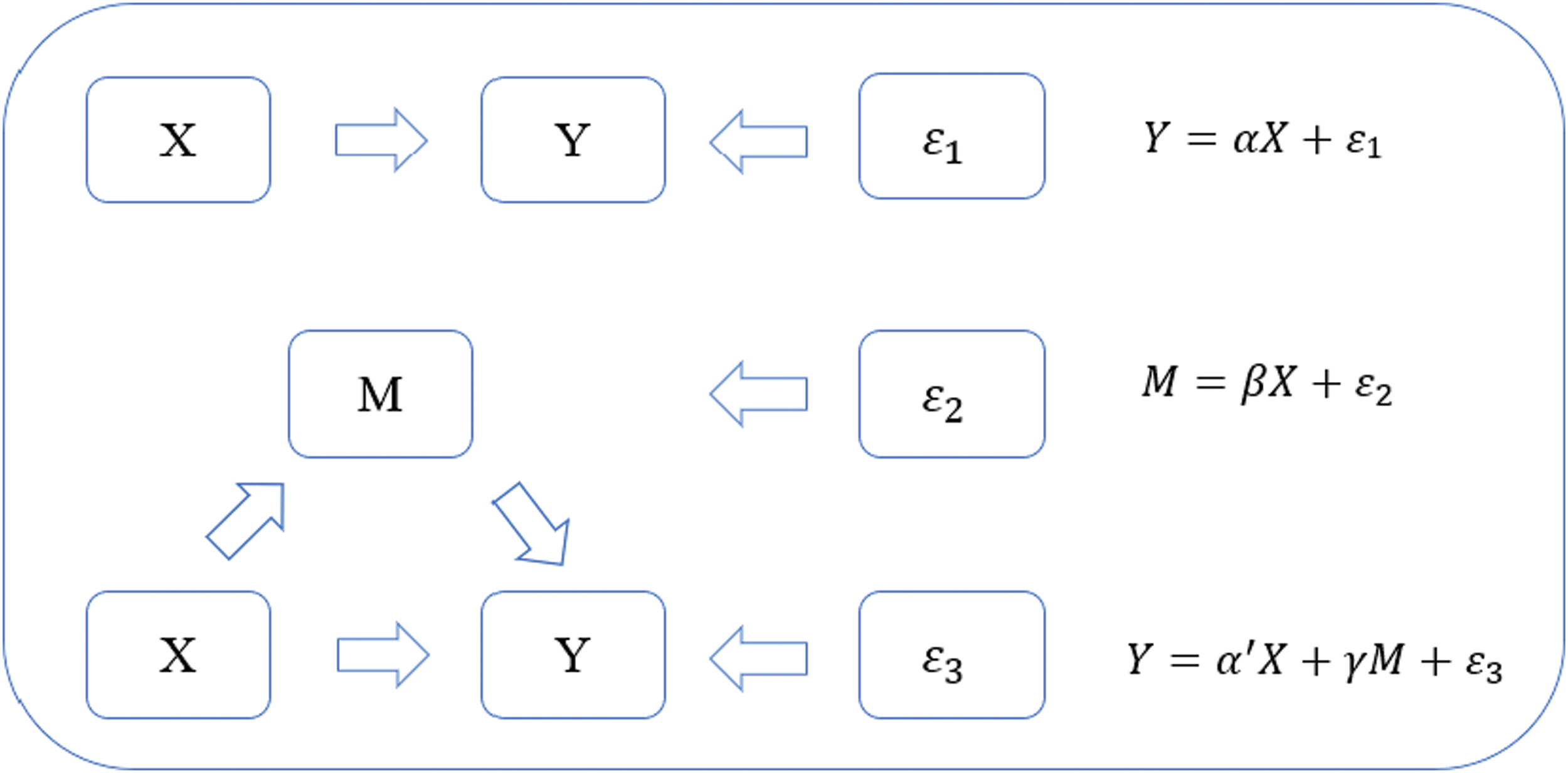
The intermediary effect test diagram
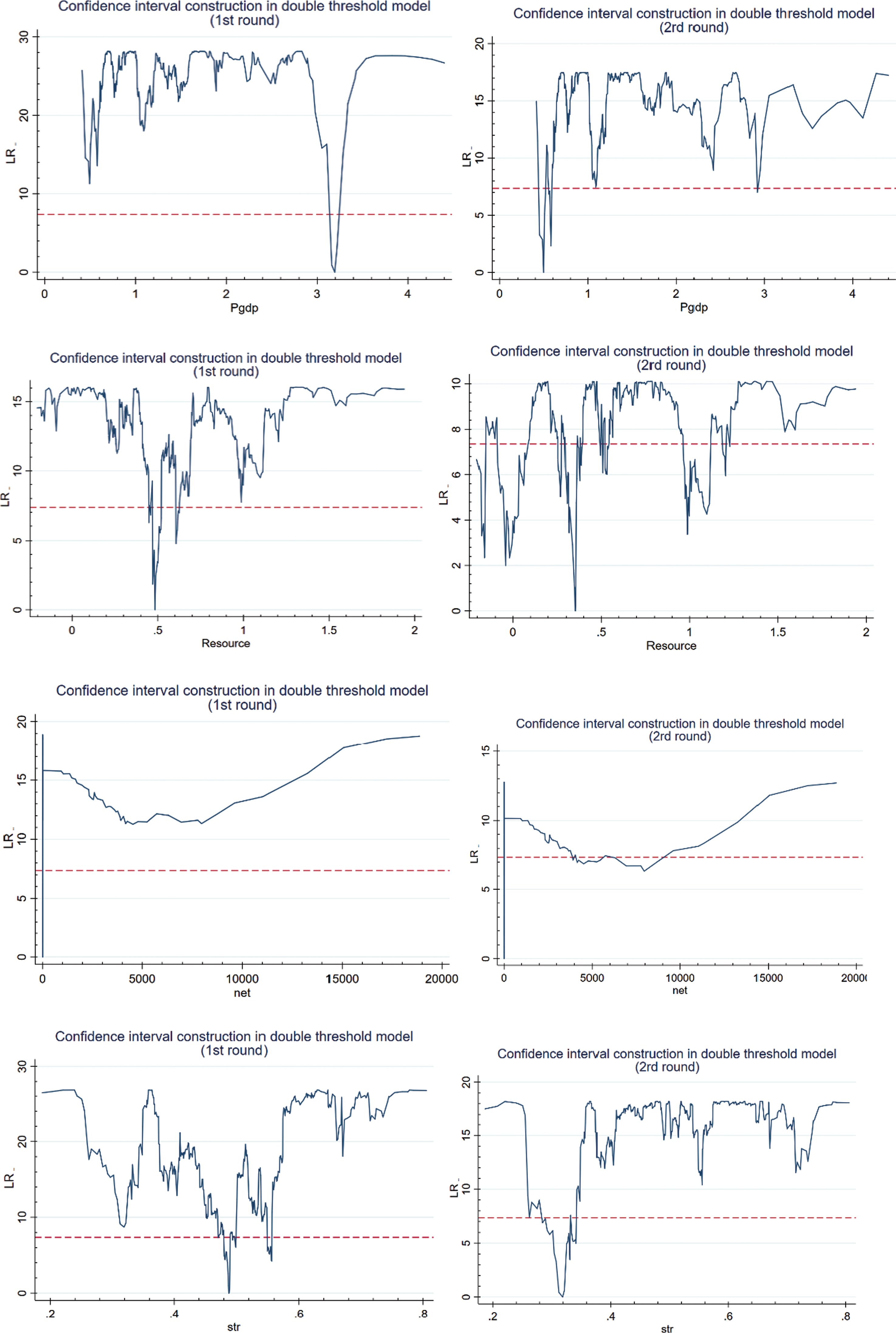
Threshold regression diagram.
Nonlinear relation test
Considering the unbalanced development of the economy in China and the complexity of urbanization's indirect impact on ECER through economic growth, resource allocation, internet development, and employment structure, the relationship between urbanization and ECER may be demonstrated nonlinearly.
According to Hansen,
33
threshold regression is applicable and reasonable to figure out the nonlinear relationship. Hence, to verify the probable nonlinear connection between urbanization and ECER, the threshold panel model is constructed as follows:

Data
Variables
ECER efficiency: following anterior studies, this article uses the SBM method to calculate ECER efficiency.74,81 Labor, capital, and energy are selected as input variables for input indicators. The number of employees measures labor input; capital input is calculated using the perpetual inventory method. The capital depreciation rate is 10.96%. Energy input is expressed in electricity consumption. For the expected output index, the real GDP of each city is used as the expected output index. Take 2011 as the base year as the price deflator of the fixed price level. As for the unexpected output indicators, industrial wastewater discharge, industrial SO2 discharge, and industrial dust discharge are selected in this study.
Urbanization: It is represented by the ratio of the urban population to the total population in each region. Due to the serious lack of this indicator at the urban level, the urban land use scale is selected to represent the urbanization level of cities at and above the local level.
Other variables: (1) economic growth (Pgdp), expressed by per capita real gdp of each region. Economic development is an important guarantee for the stable growth of the tax base. The increase in the scale of regional economic output will drive the expansion of the tax base in the region. (2) The employment structure (stru) is expressed by the proportion of the added value of the tertiary industry in gdp in each region. The higher the proportion of the tertiary industry in the region, the more optimized the employment structure, and the more it will propel the rise of tax revenue in the region. (3) The level of technological innovation (inno) is represented by the proportion of science and technology expenditure in local general budget financial expenditure. (4) Resource allocation efficiency: according to the research of Hao et al. 76 the article calculates the result of resource mismatch. internet development (net) adopts the number of internet users in each city.
Instrumental variable: This article uses urban vegetation coverage as the instrumental variable, and the data are recorded on NASA's official website (www.usgs.gov/core-science-systems/nli/landsat) and National Geospatial Data Cloud official website (www.gscloud.cn/sources/index? pid = 263&ptitle = LANDSAT) Landsat series window.
Data source
The data at the city level are from 196 cities from 2011 to 2018, mostly from the urban statistical yearbook and the website of the Ministry of industry and information technology of China. In order to alleviate the impact of price fluctuations, price-related data were converted to constant prices in 2011. In conclusion, the descriptive statistics of the variables involved in this study are shown in Table 1.
Descriptive statistics.
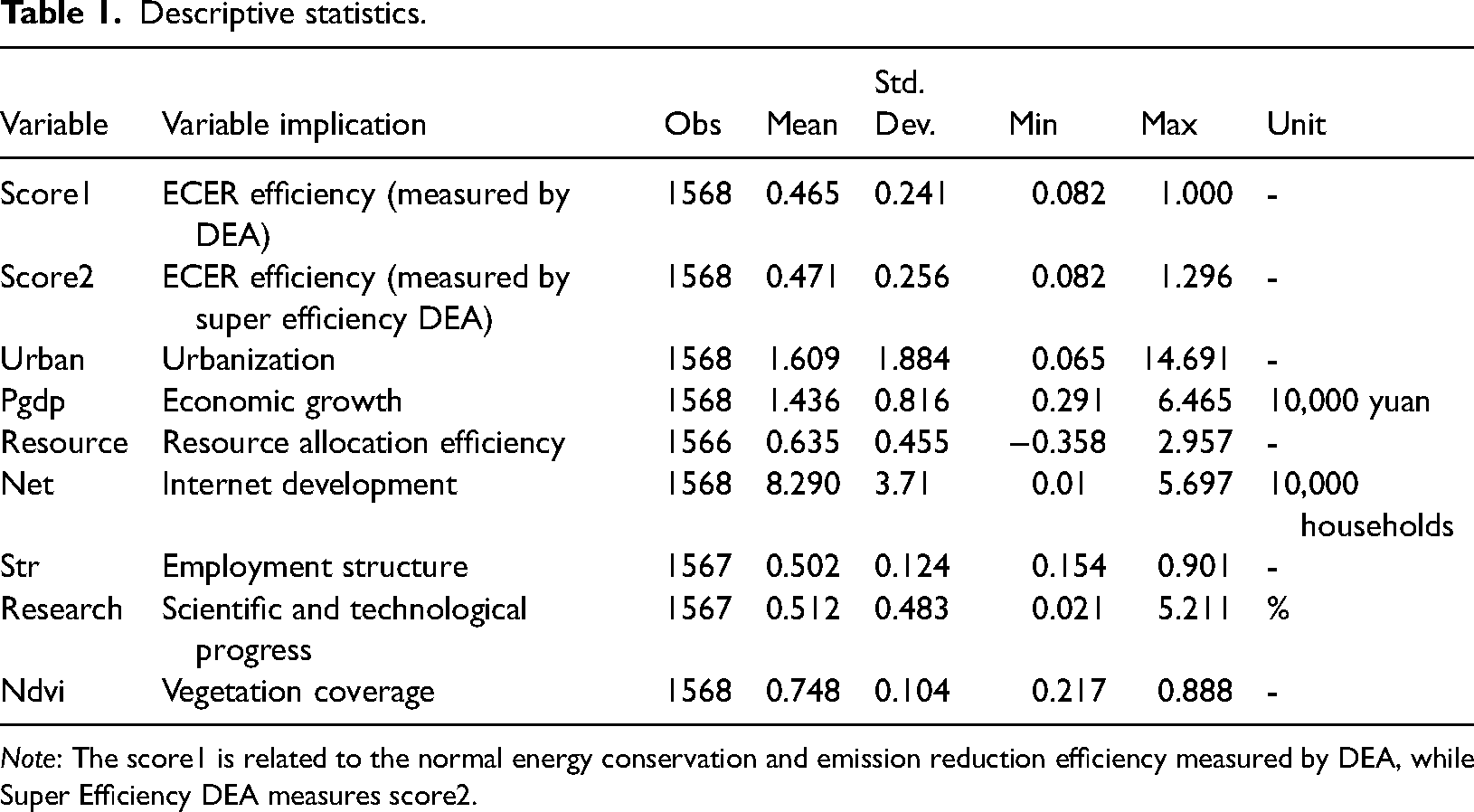
Note: The score1 is related to the normal energy conservation and emission reduction efficiency measured by DEA, while Super Efficiency DEA measures score2.
Results and discussions
Benchmark regression analysis
In this part, we adopt the way of increasing control variables one by one for regression analysis to verify the robustness of the regression results. In Table 2, _cons means the constant that stays the same no matter how the independent variable changes, the control variable means that when studying the influence of a variable on the dependent variable, whether other variables are controlled unchanged, year FE and Region Fe indicate that time and region fixed effects are taken into account in the study, N represents the number of samples, r2_a represents the corrected explanatory power of the variable after considering the degrees of freedom.
Benchmark regression results.
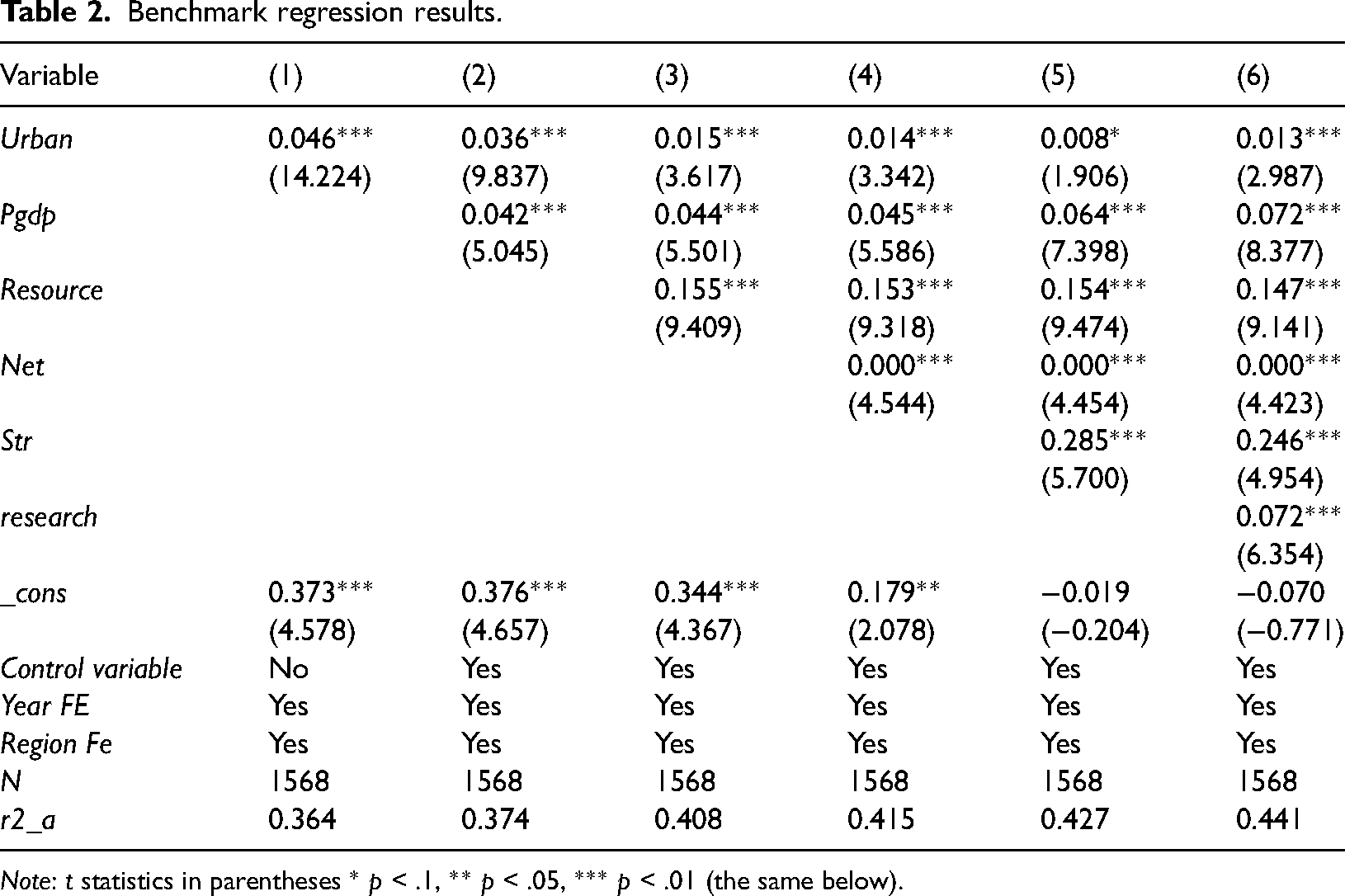
Note: t statistics in parentheses * p < .1, ** p < .05, *** p < .01 (the same below).
As shown in Table 2, the estimated coefficient of urbanization variables is 0.013 and significant in model (6), indicating that the improvement in scale, technology, and structure is generally significant, which improves China's ECER efficiency and verifies the hypothesis of hypothesis two. However, from the perspective of scale effect, the estimated coefficient of the per capita income variable is 0.072 and significant, indicating that urbanization and economic development levels positively influence ECER. When considering the influence of resource factors, the estimated coefficient of resource factors is 0.147 and significant. It can be seen that the rational utilization of resources helps to promote environmental protection, increase the utilization rate of resources and further promote ECER. However, the internet factor has no impact on the advancement of ECER efficiency. The estimated coefficient of the employment structure variable is 0.246 and significant, which means the improvement of employment structure can greatly improve the utilization of resources for economic development, adjust the employment structure, transfer employment to knowledge and technology-intensive industries, and reduce the carbon emission level per unit output, and the efficiency of ECER has also been greatly improved. When considering the technical effect, the estimated coefficient of technical research is 0.072 and significant. It can be seen that accompanied by the advancement of science and technology, the scientific and technological means of resource utilization will be more advanced, the emission of waste will be less, and the efficiency of ECER will be improved.
In models (1)–(6), despite adding many control variables, the estimated coefficients of urbanization level maintain a significant positive correlation, indicating that urbanization level positively influences ECER efficiency. Although urbanization level has a dual impact on ECER efficiency, on the whole, accompanied by the advancement of urbanization level and economic structure, the efficiency of ECER will increase to a degree, which indicates that sustainable urbanization should be developed, 82 also shows that reasonably improving the level of urbanization and developing under policies 83 will bring more dividends to ECER.
Through the analysis, it is concluded that reasonably improving the urbanization level can increase the efficiency of ECER. So why does urbanization promote the efficiency of ECER? This article holds that the main reasons may be the following reasons. Firstly, along with urbanization development, the expansion of economic development scale, and industrial agglomeration, cities vigorously propel the construction of ECER projects by combining central and local financial funds. After the improvement of the urbanization level, cities use these funds and projects to provide common energy resources for adjacent industries, reduce unnecessary waste and save energy conservation effectively. 84 Secondly, energy consumption and the employment structure go hand in hand. Increased urbanization will fascinate investment in technology 85 and industrial restructuring in knowledge-intensive and capital-intensive industries. It will also positively affect less ecological damage, more efficient use of existing energy resources, less waste, and reduced energy consumption. Thirdly, improving urbanization and regional economic development levels enables people and enterprises to compare, compete, and collaborate, thus establishing a self-reinforcing virtuous cycle, stimulating creativity and attracting floating capital and talents. 86 Rapid urbanization promotes innovation 87 and improves urban residents’ knowledge levels. For the ecological environment and other problems encountered in the proceedings of economic development, more ECER technologies are applied to production and life, greatly increasing the efficiency of ECER.
Robustness check
In the benchmark regression analysis, it can be drawn that the urbanization level advancement can propel ECER efficiency improvement. To validate the reliability of this conclusion, two ways are used to test its robustness. Firstly, the substitution of dependent variables is adopted. We adopt the DEA model to calculate the ECER efficiency and integrate it into the original equation as a dependent variable for regression analysis. Secondly, after eliminating the extreme values of the data, the regression analysis is carried out again.
In Table A1 (shown in the Appendix), when using DEA to calculate ECER, the way to calculate ECER has changed. At the same time, in models (1)–(6), the estimation coefficient of urbanization variables is still positive and significant. It can be seen that urbanization exerts a positive impact on ECER efficiency, and the improvement of its level is generally beneficial to the advancement of ECER efficiency.
From the perspective of scale effect, the estimated coefficient of per capita income variable is 0.08 and significant, showing that the economic advancement positively impacts ECER. The estimated coefficient of the resource factor is 0.143 and significant. It can be seen that rational utilization of resources is conducive to propelling ECER. ECER efficiency has no difference when internet factors are added. The estimated coefficient of the employment structure variable is 0.251, which indicates that the improvement of the employment structure has a vital impact on improving economic development. Considering the technical effect, the estimation coefficient of technical research is 0.082 and significant. It can be seen that the improvement of scientific and technological levels will also improve the efficiency of ECER.
In the first robustness test, although the efficiency of ECER is measured by super efficiency, the results are generally similar to benchmark regression analysis. It is shown that the results are roughly the same, and the model is robust.
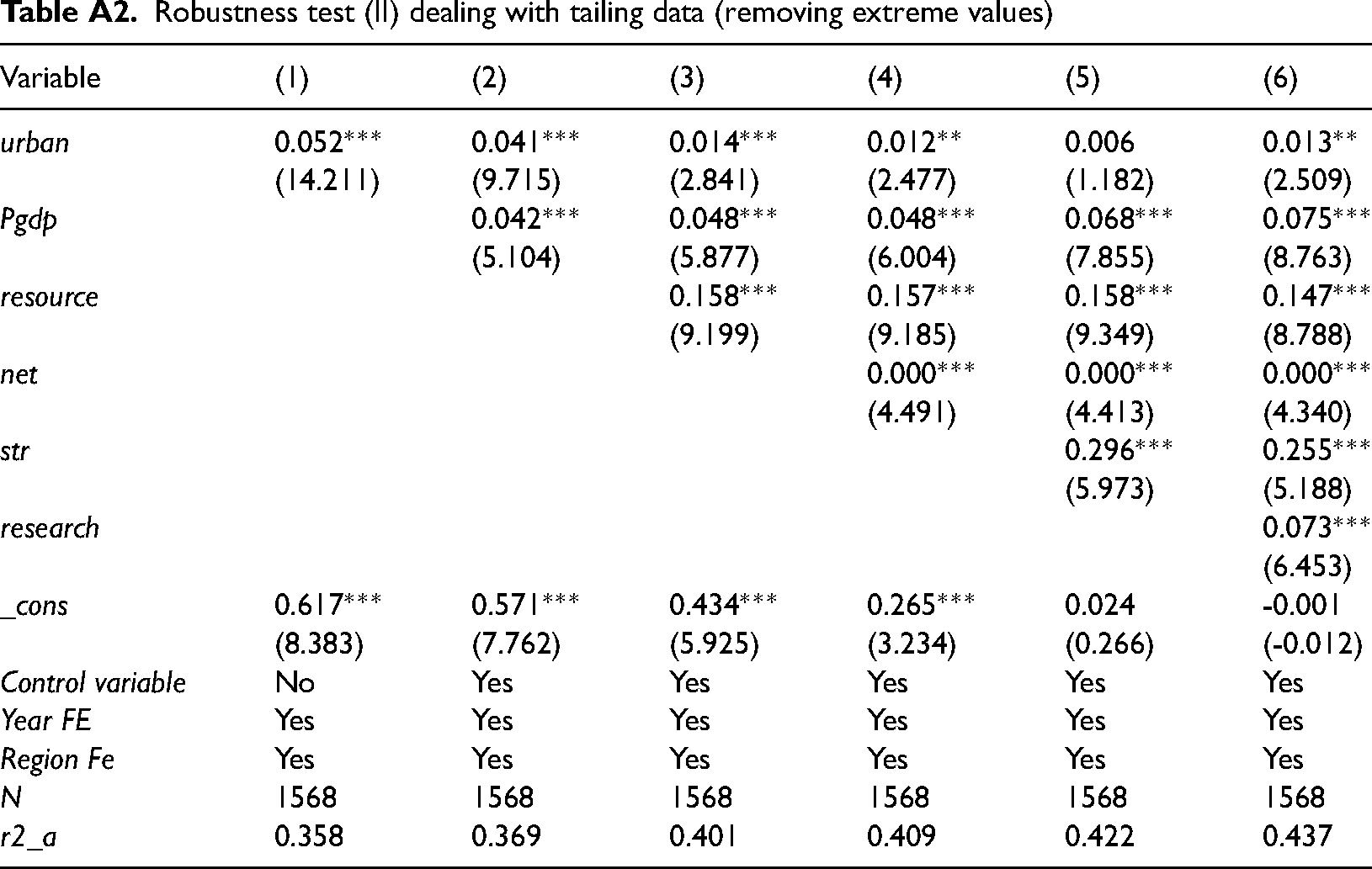
When winsorizing the data, removing the extreme value of the data can be obtained from the data in Table A2, which is demonstrated in the Appendix. In models (1)–(6), the coefficient of the urbanization variable is still positive and significant. It can be seen that the urbanization level exerts a positive impact on the efficiency of ECER, and the overall development of urbanization is instrumental in improving ECER efficiency.
From the perspective of scale effect, the estimated coefficient of the per capita income variable is 0.075 and significant, indicating that the level of per capita income positively influences ECER. The estimated coefficient of the resource factor is 0.147 and significant. It can be seen that rational utilization of resources is conducive to propelling ECER. Internet factors make no difference to the advancement of ECER efficiency. The estimated coefficient of the employment structure variable is 0.255, which indicates that the employment structure has a remarkable influence on economic development. The estimated coefficient of technical research is 0.073 and is significant. It can be seen that technical research will also improve the efficiency of ECER.
In the second robustness test, although the extreme values in the data are removed, the results are in line with the results of benchmark regression analysis, which shows that the model is robust.
Resolution of potential endogenous problems (Iv estimation)
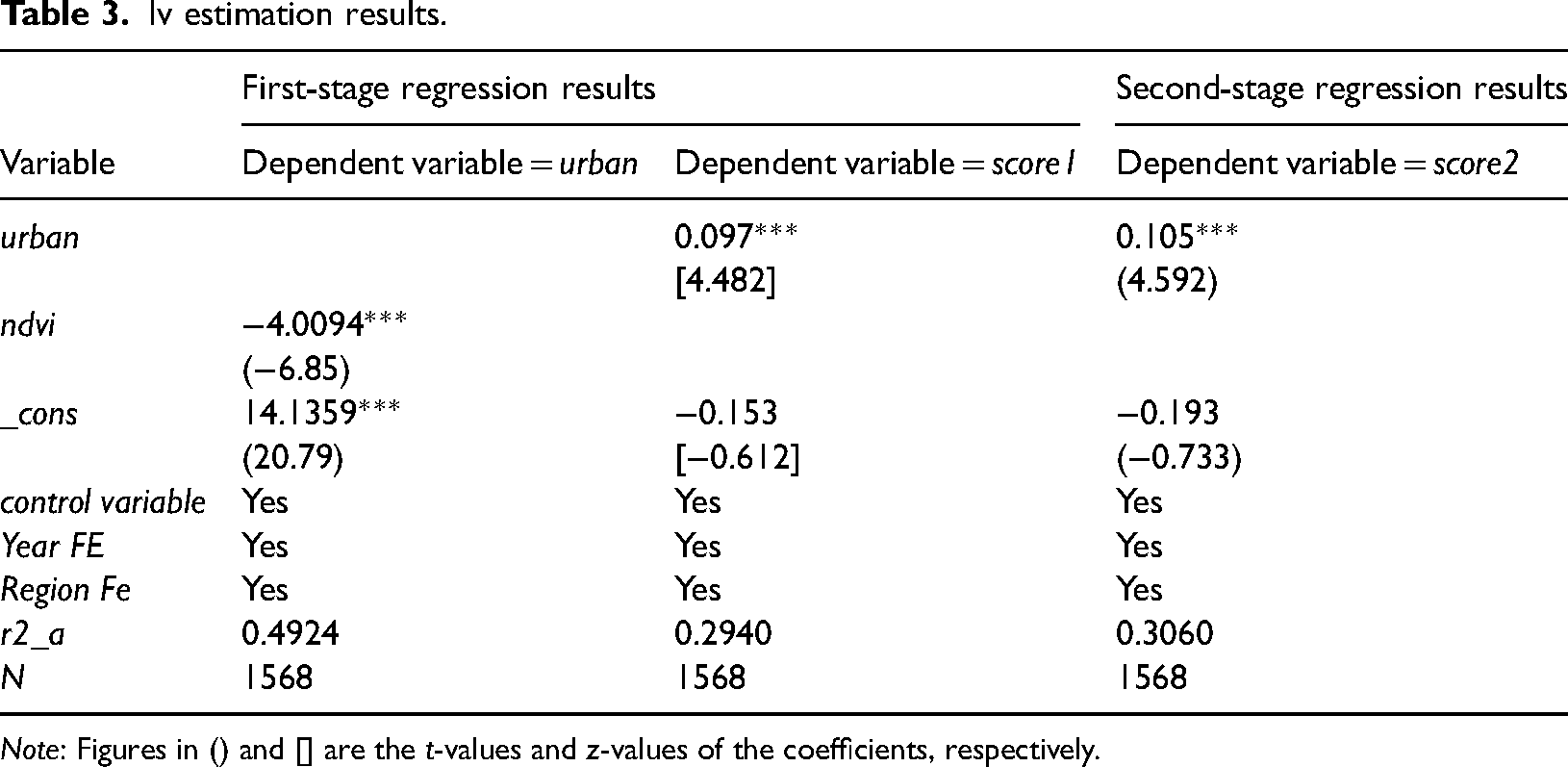
When analyzing the impact of urbanization variables on ECER efficiency in Table 3, the former benchmark regression results may be affected by endogeneity, causing deviation and inconsistency in the regression results. The article adopts the instrumental variable method to recalibrate the benchmark regression results. Specifically, this article employs the vegetation coverage of each city as an instrumental variable, and the two reasons are listed as follows. First, there is a strong correlation between urbanization and urban vegetation coverage. The process of urbanization has a direct negative or indirect positive impact on urban vegetation, and the magnitude of the impact depends on various factors, including urban development intensity, population density, background climate and the city's location.88,90 Therefore, the principle of relevance between IV and urbanization can be satisfied. Second, urban vegetation coverage is not correlated with the core dependent variable—ECER. ECER is focused on developing innovative technology, adjusting energy or industrial structure and conducting the clean development mechanism to obtain better implementation effect,91,92 which does not directly influence urban surface vegetation. Hence, urban vegetation coverage can be seen as a proper instrumental variable. Table 3 shows that in the benchmark regression and super efficiency measurements in the second stage, the estimated coefficients of urbanization variables are 0.097 and 0.105, respectively, have passed the significance level test of 1%, and the results of control variables are relatively in line with the above. In conclusion, after considering the endogenous problem, hypothesis two of this article has been further verified.
Iv estimation results.
Note: Figures in () and [] are the t-values and z-values of the coefficients, respectively.
Transmission mechanism verification
Benchmark regression shows that urbanization can increase the efficiency of ECER. But how can urbanization improve the efficiency of ECER? In this part, we will test the conduction mechanism.
Table 4 shows the verification results of the transmission mechanism. Model (12) reveals the comprehensive influence of urbanization advancement on ECER efficiency. When taking resources as the intermediary variable, the results in the transmission mechanism (1) show that the estimation coefficient of the urbanization variable is 0.138 and significant, which is more than that in the benchmark regression analysis, indicating that there is a direct effect. The direct effect is significant, and there are some intermediary effects. The coefficient of urbanization variable when resources are used as intermediary variables is greater than that in benchmark regression. It can be told that urbanization has a greater impact on the efficiency of ECER through resource factors.
Validation of conduction mechanism.
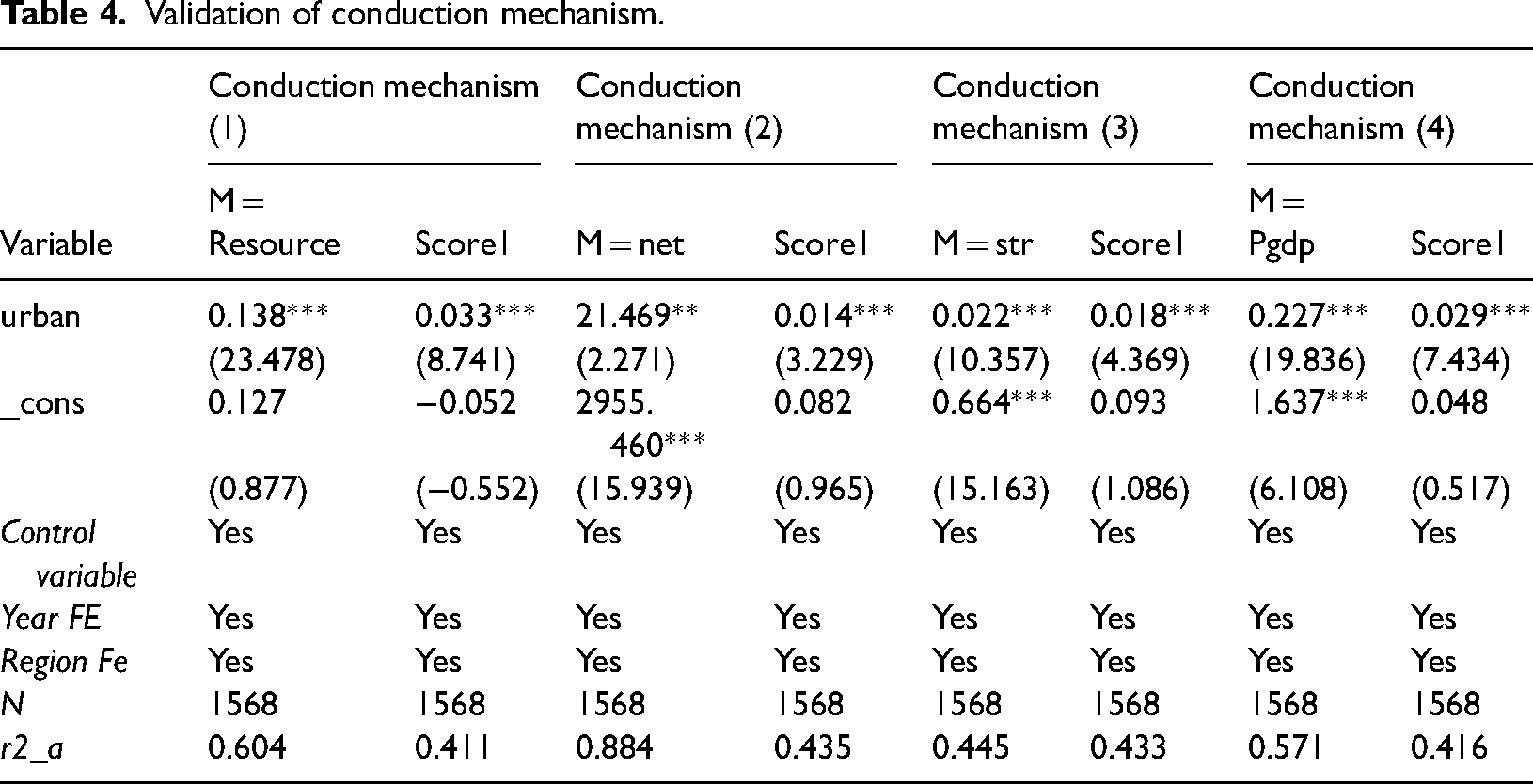
Similarly, in the transmission mechanism (2)–(4), when the Internet, employment structure and per capita income are taken as intermediary variables, the estimated coefficient of urbanization variables is greater than that in the benchmark regression and is significant, indicating that through the above three intermediary variables, urbanization exerts a more vital impact on the efficiency of ECER. Therefore, we can come to the following conclusions. Economic growth, resource allocation, internet development and employment structure are the main ways to promote urbanization and affect the efficiency of ECER, playing an important intermediary role.
Nonlinear relationship analysis
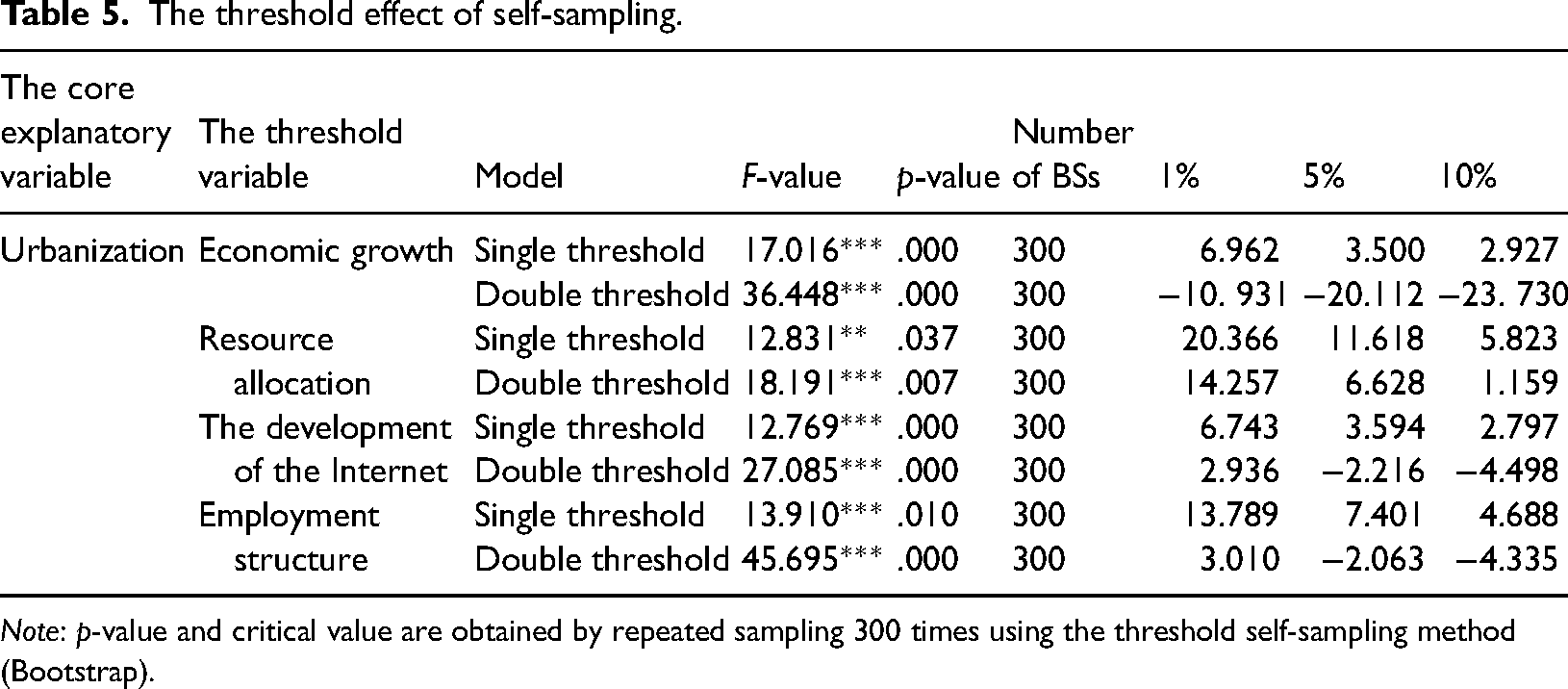
This article uses the STATA 15.0 threshold regression self-sampling method (Bootstrap). Under the assumption of a single and double threshold, the threshold effect significance test with urbanization as the core explanatory variable and economic growth, resource allocation, internet development, and employment structure as the threshold variable is carried out (Table 5). With urbanization as the core explanatory variable, the threshold variables of economic growth, resource allocation, internet development, and employment structure have passed the significance test of the double threshold effect. Table 5 reports its threshold estimate and its confidence interval.
The threshold effect of self-sampling.
Note: p-value and critical value are obtained by repeated sampling 300 times using the threshold self-sampling method (Bootstrap).
The results show that the single threshold effect test of economic growth, internet development, and employment structure is remarkable at 1%. However, the single threshold for resource allocation did not pass the significance test of the 1% level; the results of the double threshold test show that economic growth, resource allocation, internet development, and employment structure have all passed the significance test at the 1% level. Compared with the single threshold, the significance level of the double threshold test is higher than that of a single threshold, conforms to the strict requirements of scientific research, and can analyze the influence and relationship between variables more concisely and clearly.
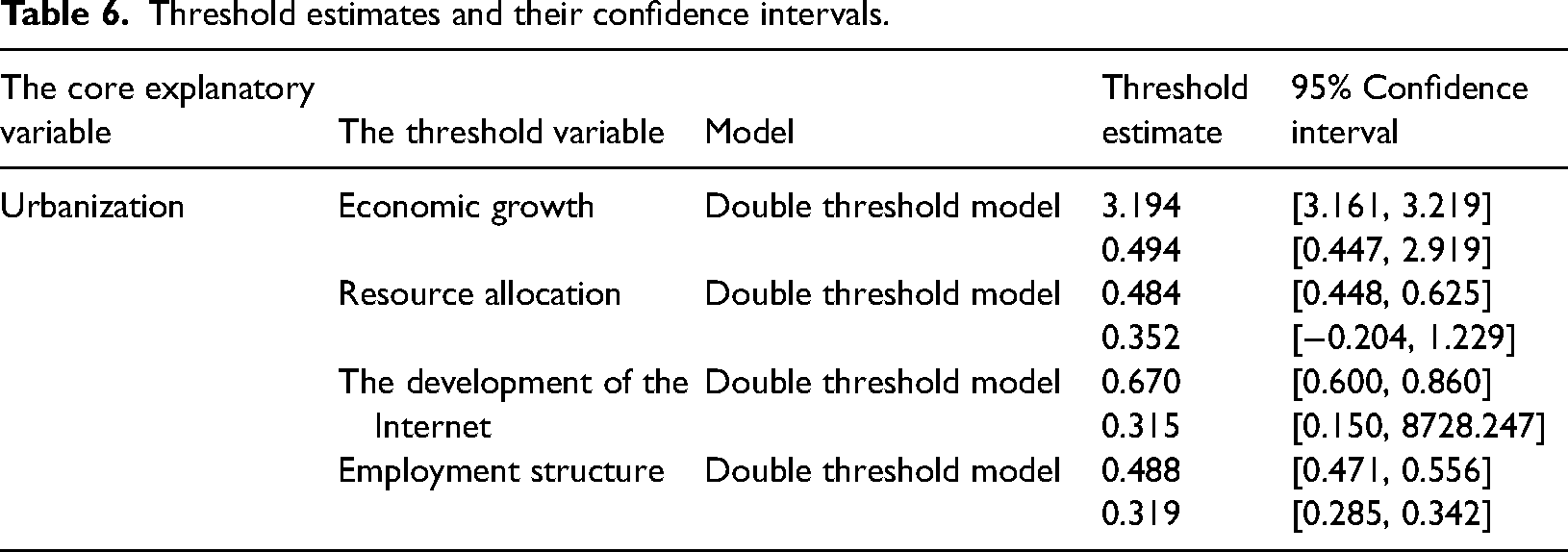
The above Figure 2 shows that economic growth with urbanization is the threshold variable. The two threshold points of 95% of the confidence zones are (3.161, 3.219) and (0.447, 2.919). In the resource configuration threshold variable, the confidence intervals of 95% of the two threshold points are (0.448, 0. 625) and (−0.204, 1.229). Based on the threshold variable of internet development, the confidence interval corresponds to (0.600, 0.860) and (0.150, 8728.247), and the confidence interval is (0.471, 0.556) and (0.285, 0.342) with employment structure as the threshold variable. The confidence interval of the two variable threshold points is within a relatively narrow range, so it is possible to judge that the actual value of the threshold point is close to the real value, and the specific threshold estimate and the confidence interval are shown in Table 6.
Threshold estimates and their confidence intervals.
As shown in Table 7, there is a positive and negative gap between the coefficients of urbanization development level in the different ranges of the two thresholds of economic growth and employment structure. In contrast, for the resource allocation efficiency and the standard of internet advancement, the coefficient of urbanization development level is positive in any range of its threshold. Specifically, when economic development is lower than the first threshold of 0.494, the corresponding elasticity coefficient is −0.199. When economic growth crosses this threshold but does not cross the second threshold, the elasticity coefficient increases to 0.0193. When economic growth crosses the second threshold value of 3.194, the elasticity coefficient increases further to 0.532, a process that shows that with the continuous promotion of the economy, the elasticity of ECER increases more and more significantly, showing a nonlinear pattern of increasing marginal benefits. When the resource allocation efficiency is below the first threshold value of 0.352, the urbanization elasticity coefficient of ECER is 0.0288. When the resource allocation crosses the first threshold value, the elasticity coefficient increases accordingly. When it crosses the second threshold, the elasticity coefficient is reduced to 0.0255, lower than the original coefficient, showing that the resource allocation for ECER elasticity has gradually increased and then decreased. The elasticity of internet development to ECER also shows the situation of first increase and decrease when the Elasticity coefficient of internet advancement is lower than the first threshold value which is 0.0108, with the internet advancement breaking through the first threshold value below the second threshold value, the corresponding elasticity coefficient is also raised to 0.0733. The elasticity coefficient is negative when the employment structure is lower than the first threshold value of 0.319. As the employment structure improves to cross the first threshold, the elasticity coefficient of its impact on ECER is raised to 0.0436. Still, when it crosses the second threshold, the elasticity coefficient is reduced to 0.0212. Thus, with the optimization and adjustment of employment structure, the elasticity of ECER has experienced the nonlinear development process of the first rise and then decrease.
Threshold regression results.
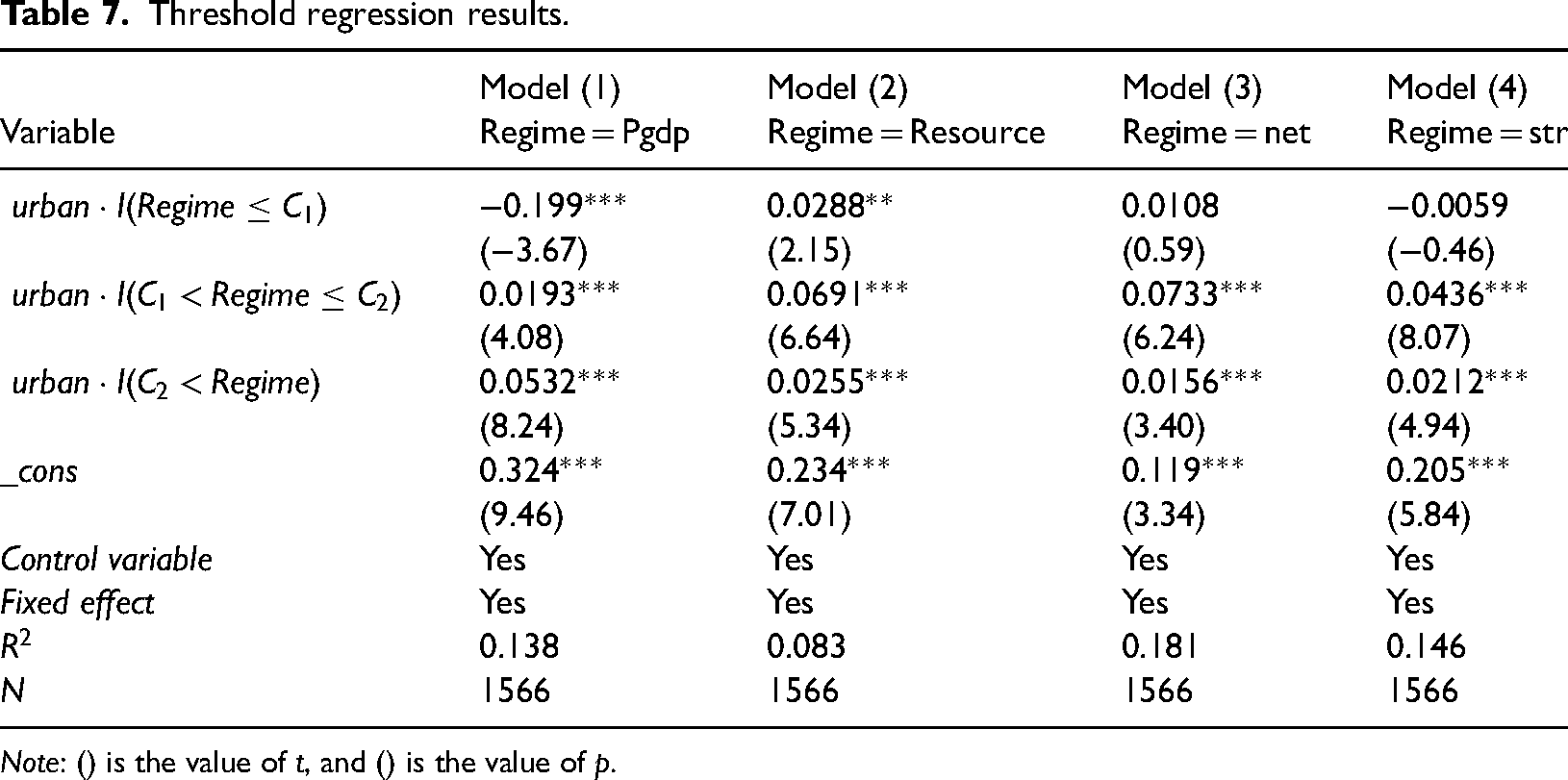
Note: () is the value of t, and () is the value of p.
As a result of the promotion of urbanization, the level of economic progress in the region has gradually increased. In the process, the awareness of the urban population of ECER has gradually increased, coupled with the development of related technologies increasingly perfect, new energy continuous promotion and use, the marginal contribution to environmental protection is more prominent, and the overall effect of ECER gradually enhanced. Meanwhile, with the development of urbanization, the allocation efficiency of resources is increasing with each passing day, the internet has been rapidly developed, the employment structure has also been optimized and upgraded, and these aspects of improvement for the construction of green development city has made outstanding contributions to promote ECER to achieve greater results. However, with the continuous development of urbanization, resource allocation, network development and employment structure changes leading to increased demand for energy and emissions, the ECER effect has been reduced.
Conclusions and policy recommendations
Conclusions
Faced with great changes and the epidemic in the world, China has established the 14th Five-year Plan to propel the establishment of China's modern country. Improving urbanization quality will be the core policy goal in the 14th Five-Year Plan period. Meanwhile, we should enhance the establishment of new green and intelligent cities. It can be seen that urbanization and ECER will be a vital direction for China in the future. Coordinating the urbanization level and ECER targets has become a major theoretical and practical problem facing China's economic transformation and development at present and in the future. In this context, the article thoroughly analyzes the influence of economic activities on ECER efficiency from economic growth, resource allocation, internet development, and employment structure. At the same time, considering that ECER efficiency will also be affected by time, region, and other factors, this article discusses it and obtains the basic measurement model. This article theoretically expounds on the ECER impacts brought by urbanization, utilizes the panel data of 196 cities from 2011 to 2018 as samples, and makes a systematic and robust empirical test on the proposed theoretical hypothesis based on econometric analysis techniques such as intermediary effect model and Hansen panel threshold regression model, and gains major conclusions as follows. First of all, urbanization development influences ECER positively in the mass. Next, the impact mechanism of urbanization on ECER has two ways, direct impact and indirect impact. Urbanization can affect ECER directly, and concurrently, it can indirectly affect regional development by promoting economic growth, optimizing resource allocation, driving internet development, adjusting employment structure, and other channels to affect ECER. Finally, the impact of urbanization on ECER has obvious nonlinear characteristics. Affected by the intermediary effect, the efficiency of ECER is also changing with the promotion of urbanization.
Policy recommendations
The above-mentioned research conclusions have significant policy influences on accelerating the harmonious development of urbanization and ECER in China. First of all, China should continue to expand the development of the urban cluster economy, accelerate the integration of regional economic development, and boost the efficient and sustainable regional economic and trade exchanges. Judging from the actual situation of China's current urbanization development, China is in a vital period to advance the promotion of new urbanization, and promoting the construction of urban clusters and implementing high-quality regional economic cooperation is the key influence mechanism of the internal cycle of domestic economic advancement. Meanwhile, the implementation of ECER policies has also proven to be a crucial way for China's promotion of sustainable development. This article's research shows that urbanization advancement positively affects ECER as a whole. Therefore, under the current economic situation, China's implementation of ECER policies and conforming to the urbanization trend help promote the regional economic level in line with the high-quality direction of green ecology. It can be expected that with the steady progress of regional economic development integration in China, its inherent ECER effect can be realized in a larger scope. Based on this judgment, China should further implement the economic construction of urban clusters, implement the regional promotion strategy like the “Two Belt and One Road,” boost the integration of regional economic promotion, and release the momentum of urbanization advancement on ECER while promoting regional economic and trade exchanges, to accelerate the promotion of national urbanization to play an amazing role in ECER.
Secondly, based on stable economic development, China should simultaneously accelerate the implementation of ECER policies to realize the simultaneous promotion of beautiful China and modern powers. The research shows that urbanization development has a direct and indirect dual influence mechanism for ECER, and urbanization will affect ECER through economic, resource, technological, structural, and other factors. The study found that economic growth has a marginal effect on the continuous increase in ECER, which indicates that China should continue to release economic growth momentum and boost the “win-win” of economic advancement and ECER under the premise of adhering to green development and implementing ECER policies simultaneously.
Finally, during promoting urbanization, China should focus on economic growth, resource allocation, internet technology, industrial structure, and other aspects. The research shows that the optimal allocation of resources, the advancement of internet technology, and the adjustment and improvement of employment structure will affect the marginal effect of ECER positively in a certain range of economic development. When the standard of urbanization exceeds some stage, the role of relevant factors in promoting ECER will be relatively weakened, but overall still show a positive promotion relationship. Therefore, while maintaining economic development, the government should use policy means to deal with the coordination of resource allocation, technological advancement and employment structure, under the premise of development as the priority, at the same time of meeting the demand for energy use and emissions, steadily adjust and improve policies and regulations, to achieve economic development and ECER “double harvest.”
Footnotes
Acknowledgments
The authors are also very grateful to three anonymous reviewers and Editor-in-Chief Prof. Dr Yiu Fai Tsang for their insightful comments that helped us sufficiently improve the quality of this article. The usual disclaimer applies.
Declaration of conflicting interests
The authors declared no potential conflicts of interest with respect to the research, authorship, and/or publication of this article.
Funding
The authors disclosed receipt of the following financial support for the research, authorship, and/or publication of this article. This work was supported by the National Natural Science Foundation of China (72073010, 71761137001, 71521002), the Science and Technology Program of Zhejiang Province of China (2022C35060), the Technology Innovation Program of Beijing Institute of Technology (2022CX01013), and the Joint Development Program of the Beijing Municipal Commission of Education.

Notes
Appendix
Robustness test (II) dealing with tailing data (removing extreme values)
| Variable | (1) | (2) | (3) | (4) | (5) | (6) |
|---|---|---|---|---|---|---|
| urban | 0.052*** | 0.041*** | 0.014*** | 0.012** | 0.006 | 0.013** |
| (14.211) | (9.715) | (2.841) | (2.477) | (1.182) | (2.509) | |
| Pgdp | 0.042*** | 0.048*** | 0.048*** | 0.068*** | 0.075*** | |
| (5.104) | (5.877) | (6.004) | (7.855) | (8.763) | ||
| resource | 0.158*** | 0.157*** | 0.158*** | 0.147*** | ||
| (9.199) | (9.185) | (9.349) | (8.788) | |||
| net | 0.000*** | 0.000*** | 0.000*** | |||
| (4.491) | (4.413) | (4.340) | ||||
| str | 0.296*** | 0.255*** | ||||
| (5.973) | (5.188) | |||||
| research | 0.073*** | |||||
| (6.453) | ||||||
| _cons | 0.617*** | 0.571*** | 0.434*** | 0.265*** | 0.024 | -0.001 |
| (8.383) | (7.762) | (5.925) | (3.234) | (0.266) | (-0.012) | |
| Control variable | No | Yes | Yes | Yes | Yes | Yes |
| Year FE | Yes | Yes | Yes | Yes | Yes | Yes |
| Region Fe | Yes | Yes | Yes | Yes | Yes | Yes |
| N | 1568 | 1568 | 1568 | 1568 | 1568 | 1568 |
| r2_a | 0.358 | 0.369 | 0.401 | 0.409 | 0.422 | 0.437 |