







Abstract
Due to the adoption of more financial inclusion (FI), energy utilization with sustainability became a challenge for world economies. Our research examines whether FI symmetrically and asymmetrically affects environmental sustainability in Pakistan. Six proxies are indexed for the FI data through principal component analysis (PCA). In the present research explanatory variables are, energy usage, industrialization, urbanization, and human capital during from 1975 to 2018. Our study engaged the Stochastic Impact by Regression on Population, Affluence, and Technology Approach (STIRPAT). Additionally, the econometric strategy is adopted for the empirical analysis to acquire the symmetric and asymmetric outcomes. The empirical result validates the asymmetric association of FI and carbon dioxide (CO2) emanations in short and long lags. Besides, fossil energy utilization, industrialization, and urbanization smoothen the path of environmental pollution. However, human capital significantly aids in reducing carbon pollution in the short and long terms. The policy makers can practically implement the research to utilize FI effectively to improve environmental sustainability and develop policies that discourage fossil energy utilization. Moreover, we pointed out the alarming situation of dealing with harmful emissions from urbanization and industrialization.
Introduction
The idea of financial inclusion (FI) was raised in the early 1990s when the term financial exclusion focused on the inadequate number of bank branches, with less accessibility to bank loans becoming a considerable hindrance in the financial sector development. 1 In the past, financial exclusion highlighted the obstacles to achieving the primary financial facilities from the perspective of both producers (suppliers) and consumers (demand). 2 The concept of FI works in parallel with society's demand and supply of credits and loans. 3 That's why poverty is a significant factor in the growth of FI because if the majority of the citizens of an economy are beneath the poverty line, they do not hold a sufficient amount of financial savings to deposit in the banks. 4 In the same way, if a country's economic position is gradually enhanced, then the contribution of investments and the pace of financial activities result in low-slung demand and supply for FI. In such a situation, the saving habit shifts from poor people to only wealthy individuals causing the push upwards in the financial demand and supply.2,5,6
State Bank of Pakistan defines FI as “the ease of entrance to financial services for firms and individuals to provide quality payments, promote saving habits, provide accessible credits and insurance facilities with the great level of dignity and fairness”. 7 FI, in simple words, provides the comfort of financial services in terms of more banks, insurance, and leasing facilities to firms and individuals to promote saving habits. 8 Furthermore, FI stabilizes individuals and businesses in the economy by providing stress-free availability to financial services, insurance, and credit facilities. FI supports the challenges in terms of economic growth by reducing the distances between the debtors and investors with a high level of transparency. 9 The government of Pakistan stressed the “National Financial Inclusion Strategy” SBP 7 plan in the year 2018, which provides easy access to loans in various sectors such as energy, agriculture, and small and medium enterprises.
Over the previous few decades, FI and environmental management through energy consumption have become a highly debatable concern for policy makers and researchers.8,10–16 However, the role of FI in environmental sustainability is theoretically discussed from both perspectives, that is, positive and negative dimensions.12,17–19 The enhancement of FI in some economies brings cleaner technologies and easy access to renewable energy technologies that are environmentally friendly.12,20 The government provides interest-free loans and subsidies through FI to spread the networks of cleaner technologies. On the other hand, increased FI degrades the environmental sustainability in several economies. 9 The ease of loans, credit, and leasing habits gives more individuals access to air conditions, automobiles, electronic appliances, and industrial pollution that requires more energy needs and produces carbon dioxide (CO2) emanations.17,18,21,22
In many developing nations, the primary source of energy usage is based on fossil energy resources such as natural gas, and oil that produce hazardous environmental emanations.23,24 Furthermore, the International Energy Agency (IEA) 25 declared that the world climate is already suffering from CO2, methane, nitrous, and other related emissions. Conforming to the Economic Survey of Pakistan (ESP), 26 climate vulnerability in Pakistan is already at stake due to the fossil energy convention from manufacturing, transport, energy production, and household activities. The percentage fractions stated by Environment Protection Agency (EPA) 27 for the greenhouse gases (GHGs) in Pakistan are CO2discharge by fossil petroleum use and industrial fossil emissions (65%), carbon emissions through agricultural activities 11%, methane gas 16%, nitrous oxide productions 6%, and other F-gases encompassed of 2%. That's why the government of Pakistan is seriously concerned about a cleaner environment and has launched several programs. 23
In parallel with other factors, industrialization plays a tremendous role in economic development and environmental management. The industrial division is the fundamental component for improving the economic activities of any economy. Moreover, industrialization divulges a multiplier surge in the economy of the nation. Pakistan's manufacturing sector adds 13.59% to the national income. 26 Industrialization carries the highest percentage ratio of carbon production that suffers environmental sustainability. 28 Among the previous year's evaluation, Pakistan's economy was based on agricultural growth that is now shifting toward an industrial-led economy. Eventually, industrial development requires more energy production and utilization and yields more carbon discharges, seriously affecting environmental performance. 29 Industrial development requires heavy consumption of the country's natural resources (energy, financial, human, etc.). That is why industrialization and urbanization can raise economic improvement and a badly polluted environment. Urbanization and industrialization state a cause-and-effect relationship. Urbanization is a global sensation that moves more than 50% of the population into urban areas. 30 Either developed economies, the developing nations are highly inclined toward urbanization. The law permits every person to move independently in the whole country, which causes urbanization. Most unemployed individuals migrate from rural areas to urban locations, do jobs, and set up new business activities that consume more energy sources and badly pollute the environment.
Furthermore, despite the tremendous role human capital plays as a backbone in achieving environmental sustainability. Human capital enables more educated individuals to exact knowledge about a cleaner and more sustainable environment. 31 Over the past decade, human capital has become a debatable topic for policy makers, academics, and researchers.32–38 However, there is an utmost need to grab more human capital in terms of skilled workers in the manufacturing sector and household individuals that are more concerned about the reduction in conventional energy sources and motivated toward environment-friendly solutions. 39 Human capital can be made more beneficial by skilled workers, energy-related training, competency, knowledge, education, and skills that give environment-friendly productions. 31
The present research aims to investigate the symmetric and asymmetric role of FI on the environmental sustainability of Pakistan. Further, the explanatory variables are energy consumption, industrialization, urbanization, and human capital. Despite the prior literary studies on FI in Pakistan are highly concerned about the banking and economic sector.3,5,6,10,40,41 While a few studies just focused on provincial-level analysis for FI and environmental sustainability.17,18,42 Thus estimation of FI, economic growth, and environmental sustainability for a single province does not clear the actual picture of the related effects; that's why there is an utmost need to analyze the national level data to get the problem's big picture. So, the issues mentioned above are highly motivated to grab in depth about the FI and environmental sustainability with energy consumption for the entire nation data.
Furthermore, the present study underwrites the literature review in several ways in the above research scenario. First, our research focused on the symmetric dynamic estimates and asymmetric estimations of FI with CO2 discharges. Second, the present study inspected the aggregate data for Pakistan apart from previous research that only focused on provincial data estimates. Further, a principal component analysis (PCA) index is developed to evaluate six proxies of FI. Third, a modern methodology belonging to Shin et al. 43 is investigated to grab the asymmetric dynamics of FI. Fourth, apart from the traditional unit test, we applied the structural break analysis to get the structural break years. Fifth, our research formulated practical implications for government personnel and policy makers.
Literature review
The present research highlights FI’s symmetric and asymmetric effect on CO2 emanation under explanatory variables such as energy utilization, human capital, industrialization, and urbanization. The literature review critically evaluates the variables under discussion from global perspectives and develops deep insights into the current study.
Theoretical background
The dynamic link between FI and CO2 discharges has become word of mouth and a highly debatable topic for researchers and policy makers in global economies.2,19,44 That is why FI's impacts became a challenge and opened a new discussion on Sustainable Development Goals (SDGs). For instance, FI insists the residents of a country get more loans for luxury life items such as modern cars, washing machines, and electrical appliances that ultimately produce higher carbon emanations in the environment.8,45 Furthermore, in developing countries, enhancing financial ease boosts energy demand in the industrial, transportation, manufacturing, and various other sectors that create a trade-off between economy and environment.23,24 The financial ease creates easy access to fossil energy consumptions such as financial leasing from banks for automobile loans, small business loans, air conditions, industrial machinery loans and producing more environmental carbon emissions. 9
Conforming to the research by Jensen, 46 FI badly affects the economies that are inherently based on fossil energy consumption for electricity production and energy needs. Such economies face twofold outcomes, on one hand, they import petroleum oil from other countries and pay heavy duties for energy imports that badly affect the economic conditions of that economy. 46 On the other hand, in economies with primary consumption of petroleum oil and fossil, energy consumption badly degrades the environment at the rate of increasing carbon emissions. 47 Conversely, the financial ease tremendously contributes to reducing CO2 emanations by adopting green technologies that produce cleaner technologies in the country. 48 The government interventions for improvements and renewable energy motivate the nationals toward renewable energy sources that are ultimately achieved through FI.20,49
FI and CO2 emanations
The dynamic impact of FI and CO2pollution has become an extremely debatable topic these days. That's the reason that several authors inspected the linkage between FI and their trade-off with environment concerns like performance and sustainability.2,4,11,19,44,50
Le et al. 9 research focuses on the link between carbon emissions and FI for a panel of 31 Asian kingdoms from 2004 to 2014 under a cross-sectional dependence approach. The outcomes revealed FI, energy consumption, and industrialization became frontrunners in environmental degradation. Besides, the panel findings are less reliable than the individual country findings. Qin et al. 44 evaluated the association between FI and CO2 emanations for the E7 countries from 2004 to 2016 under the quantized regression technique with Kao and Johansen panel technique. The results determined that FI escalates carbon emanations while renewable energy strides toward cleaner production. Zaidi et al. 8 inspected the dynamics of FI and CO2discharge for the Organization of Economic Co-operation and Development (OECD) economies under the cross-sectional dependence autoregressive distributive lag (CS-ARDL) technique with the dynamic common correlated effects estimators (DCCE). The findings validated a significant linkage between FI and carbon products for the OECD countries.
Furthermore, the research inspected by Amin et al. 19 estimated the connection between FI, foreign direct investment (FDI), gross domestic product (GDP), and carbon production from 1998 to 2019 among the South Asian economies. The conclusion for carbon emissions exhibited positive results with FI. Moreover, FDI and GDP also surge environmental degradation while trade openness aids long-run consequences for environmental improvement. Thus, most of the prior studies applied panel data analysis techniques to investigate the effects of FI on environmental sustainability, which seems unsuitable for studying a group of countries. That's why our research grabs attention toward the single country empirical analysis with the most updated econometric approach for FI and environmental sustainability.
Human capital and carbon emanations
The dynamic action of human capital advocates an economy toward environmental sustainability through cleaner productions and cleaner societies. Globally, the connection between human capital and environmental sustainability became an arguable topic for the researchers and policy makers such as Ullah et al., Bano et al., and Mahmood et al.17,18,31,51 in Pakistan, Ahmed et al. and Hao et al.34,35,37 in G7 economies, Ahmed and Wang 32 in India, Zafar et al. 52 belongs to the United States, Ahmed et al. and Sarkodie et al.34,35,53 for China, Saleem 36 for Brazil Russia India China South Africa (BRICS) economies, Wang et al.13–16 for a panel of 208 countries, and Haini 54 for Association of Southeast Asian Nations (ASEAN) countries. However, mixed findings are obtained by the prior research for the group and individual economies analysis.
The research conducted by Jena et al. 55 focused on the top Asian pollution emitters (China, Japan, and India). The research specifically estimated the human capital, energy consumption, and CO2emissions using the panel data estimates from 1980 to 2016. The findings suggested a negative link between human capital and environmental pollution for top Asian emitters. Further, Bano et al. 31 asserted the connection between Pakistan's human capital, energy consumption, and CO2production from 1971 to 2014 under the autoregressive distributive lag (ARDL) and granger causality approach. The findings proved that human capital negatively affected CO2 emanations in the long term. Hao et al. 37 explored the dynamic impact of human capital on the green environment for G7 countries from 1991 to 2017 using the cross-sectional dependence technique. The outcome supports that human capital aids in achieving a green environment. Ahmed and Wang 32 examined the role of human capital and economic growth with CO2 emissions for India for the period 1971 to 2014 under ARDL estimation. The results determined the inverse linkage between human capital and environmental sustainability.
In the same way, Saleem 36 investigated the involvement of human capital, energy usage, and economic growth in carbon emissions for BRICS countries from 1991 to 2014 using panel data estimations. The conclusion indicated a negative connection between human capital and the environment. Additionally, Wang et al. 13–16 investigated the panel of 208 countries for the link among renewable energy, human capital, and environmental pollution using the generalized method of movement. The findings showed a negative association between human capital, renewable energy, and environmental degradation. Furthermore, several studies proved the negative link between human capital and CO2emanations, including Sarkodie et al. 53 in China, Haini 54 in ASEAN countries, and Mahmood et al. 51 in Pakistan.
Industrialization and carbon emanations
Industrialization supports an essential part of economic growth and highly pollutes the environment. An ample of researchers and policy makers are critically engrossed in the effects of industrialization on environmental sustainability Ahmad and Zhao, Wang and Su, Gu et al., and Meng et al.28,56–58 for China, Mahmood et al. 29 for Saudi Arabia, Pata 59 for Turkey, and Hanif et al.5,6 for Pakistan.
Ahmad and Zhao 28 scrutinized the connection between urbanization and industrialization with carbon emanations for the period from 2000 to 2016 for the 30 provinces of China through an augmented mean group (AMG) estimator. The outcomes exposed that both urbanization and industrialization positively affect environmental sustainability. Further, the explanation determined that fossil energy consumption points toward environmental degradation. In addition, Mahmood et al. 29 explored the dynamic of industrialization with carbon dioxide discharges in Saudi Arabia from 1968 to 2014 using the asymmetric cointegration technique. The results proved the asymmetric relationship between industrialization and carbon emissions. More industrialization badly affects the environment. Further, Ali et al. 60 investigated the link between industrialization and carbon discharges in Pakistan from 1981 to 2017 under the ARDL model with vector error correction term (ECT). The results advocate that industrialization determined a significantly positive correlation with Pakistan's CO2discharges in the short and long terms. Moreover, Le et al. 9 analyzed the significant concept of industrialization and carbon emissions and originated a positive association between environmental degradation and industrial pollution in Asian countries from 2004 to 2014. Thus, historical analysis of previous research recommends that industrialization is crucial to discuss environmental sustainability through the dynamic econometric methods.
Urbanization and carbon emanations
The rapid increase in the country's population causes urbanization that requires more resources such as industries, employment opportunities, energy sources, automobiles, and educational institutes, and ultimately pollutes the environment. Hence, a relationship between urbanization and carbon emissions attained greater attention through literary studies for the group and individual economies. The research conducted by Dong 61 for 120 economies, Ahmad et al. 62 intended for 24 OECD republics, Arshad et al. 63 for Asian regions, Ahmed et al. 34,35 used for G7 kingdoms, Saida and Kais 64 for sub-Saharan African economies, You and Lv 65 for the panel of 83 countries, Ahmad et al.66,67 for China, Aung et al. 68 for Myanmar, Ali et al. and Dong 30,69 for Pakistan, Mahmood et al. 29 for Saudi Arabia, and Pata 59 for Turkey.
Furthermore, Ali et al. 30 determined the influence of urbanization, and economic development, on the CO2 releases from 1972 to 2014 for Pakistan by the ARDL cointegration method. The results designated a positive link between urbanization and carbon emission. Ahmad and Zhao 28 considered the dynamics of urbanization with environmental sustainability in China from 2000 to 2016 through AMG estimation. The findings support a positive linkage between the environment and urbanization. Mahmood et al. 29 investigated the association between urbanization and carbon emanations in Saudi Arabia from 1968 to 2014. The results stated a positive connection between urbanization and the environment. Furthermore, Pata 59 inspected the positive bond between urbanization and carbon discharges from 1974 to 2013 in Turkey. Ahmad et al. 62 administered a link between urbanization and CO2 pollution in OECD nations from 1993 to 2014. The outcome validated a positive association between urbanization and carbon production in the OECD countries. In addition 15 governed the connection between environmental pollution and urbanization for the 53-panel countries using the nonlinear panel data technique. The results suggested a positive linkage between urbanization and environmental degradation.
Energy utilization and carbon emanations
Fossil energy consumption plays a tremendous role in the deterioration of environmental sustainability. An ample of researchers and policy makers critically analyzed the drawbacks of fossil energy consumption. Research conducted by Tanveer et al. and Lin et al.23,24,70–72 in Pakistan, Wang and Su, Gu et al., and Mujtaba and Jena56,57,73 for China, Ahmad and Du 74 for Iran, Salman et al. 75 for a panel of South Korean, Indonesia, as well as Thailand, Zakaria and Bibi and Sattar et al.76–78 in South Asian economies, Hussain et al. 79 for Belt and Road Initiative (BRI) economies, Ahmad et al. and Akalpler and Hove80,81 for the Indian economy, Raza et al. and Udom et al.40,82 for Malaysia, Shahbaz et al. 83 for Japan, Marques, Marques 84 in OECD world countries, Khurram et al. 85 in Kuwait, Mujtaba et al. 86 for a panel of five regions, and Munir et al. 87 estimated for ASEAN nations.
Tanveer et al. 23,24 focused on the central issue of symmetric and asymmetric shocks for fossil energy utilization in Pakistan from 1985 to 2018 under the ARDL and nonlinear autoregressive distributive lag (NARDL) approach. The research found that fossil energy usage badly pollutes the manufacturing sector of Pakistan. In parallel, Lin and Ahmad 70 assessed Pakistan's total fossil energy utilization (gas, coal, and oil) using the logarithm means divisions index under the usual business scenario from 1971 to 2011. The findings advocated that the entire range of fossil energy consumption damages the environment. Moreover, in developing countries like Pakistan, primary energy consumption is based on fossil fuels like petroleum. Further, Mujtaba and Jena 73 investigated the impact of oil prices and energy consumption on China's CO2emanations from 1986 to 2014 by the NARDL approach. The consequences support positive energy usage and carbon production.
The research conducted by Acheampong et al. 88 evaluated the connection of fossil energy sources with CO2 gas discharge for the sub-Saharan African economies. They found a positive link among them from 1980 to 2015 under the fixed and random effects estimations approach. Ahmad and Du 74 governed a positive connection between energy use and CO2discharges in Iran from 1971 to 2011. Additionally, Sattar et al. 77,78 determined the role of energy consumption in environmental sustainability for BRI economies. They found that energy consumption is the main culprit in environmental pollution. Hence, much of the research has proved the positive association between fossil energy usage and CO2 by Zhang and Wang 89 intended for Pakistan, Shahbaz et al. 90 on behalf of the MENA economies, and finally, Muhammad et al. 40 estimated for the Malaysian economy.
The literature review summarized that energy consumption, urbanization, industrialization, and FI play a prominent role in degrading the environment. Furthermore, slight attention is grabbed to the effects of FI on environmental sustainability in Pakistan. However, much devotion is grasped to Pakistan's banking sector and FI. Our research advocated filling the space by estimating the symmetric and asymmetric association between FI and environmental sustainability in Pakistan.
Models specifications, data sources, and research methodology
The research applies the motivating force behind FI and CO2production through the Stochastic Impacts by Regression on Population, Affluence, and Technology (STIRPAT) model. For empirical inspection, the dynamics of the linear (symmetric) approach are evaluated through the ARDL. Despite asymmetric association is determined through the NARDL approach. The STIRPAT model is an extension of the IPAT model initiated by Ehrlich and Holdren.
91
Besides, the IPAT model indicates the influence, population, affluence, and technology. The IPAT approach gives influences socioeconomic linkage with environmental sustainability. However, the broad range STIRPAT approach formulated by Dietz and Rosa
92
provides a stochastic association of environmental sustainability with the affluence of population and technology.

To gain in-depth understanding of the dynamic associations between factors. The appropriate variables for Pakistan are CO2 emanations, FI, industrialization, urbanization, and human capital. The core independent variables of the study are FI, urbanization, and fossil energy utilization, while CO2 radiation is the dependent variable. For FI, fives proxies are combined with the PCA factor analysis technique. 96 It is quite beneficial to use the PCA that covers a large number of variables under a single index. 97 Furthermore, the dynamic estimations indicate the degree of the movement of the variables not only for the current period but also for covering the data from the previous years. On the other hand, static regression only estimates the current year's data. That is the fact our study provides more information by the dynamic regression estimates. The research articulated the time series data from 1975 to 2018 for Pakistan. Concerning the data sources, CO2 radiations, industrialization, and urbanization are obtained from the World Bank database, 98 primary energy utilization grabbed from British Petroleum Statistics, 99 human capital data from Penn World Table PWT 10.0, and the FI data is collected from the International Monetary Fund database. The trends of the selected variables are graphically expressed in Figures A1–A5 presented in the Appendix. Moreover, Table 1 expresses the variable's descriptions, signs, data sources, and measuring units.
Variable, notations, descriptions, and data origins.
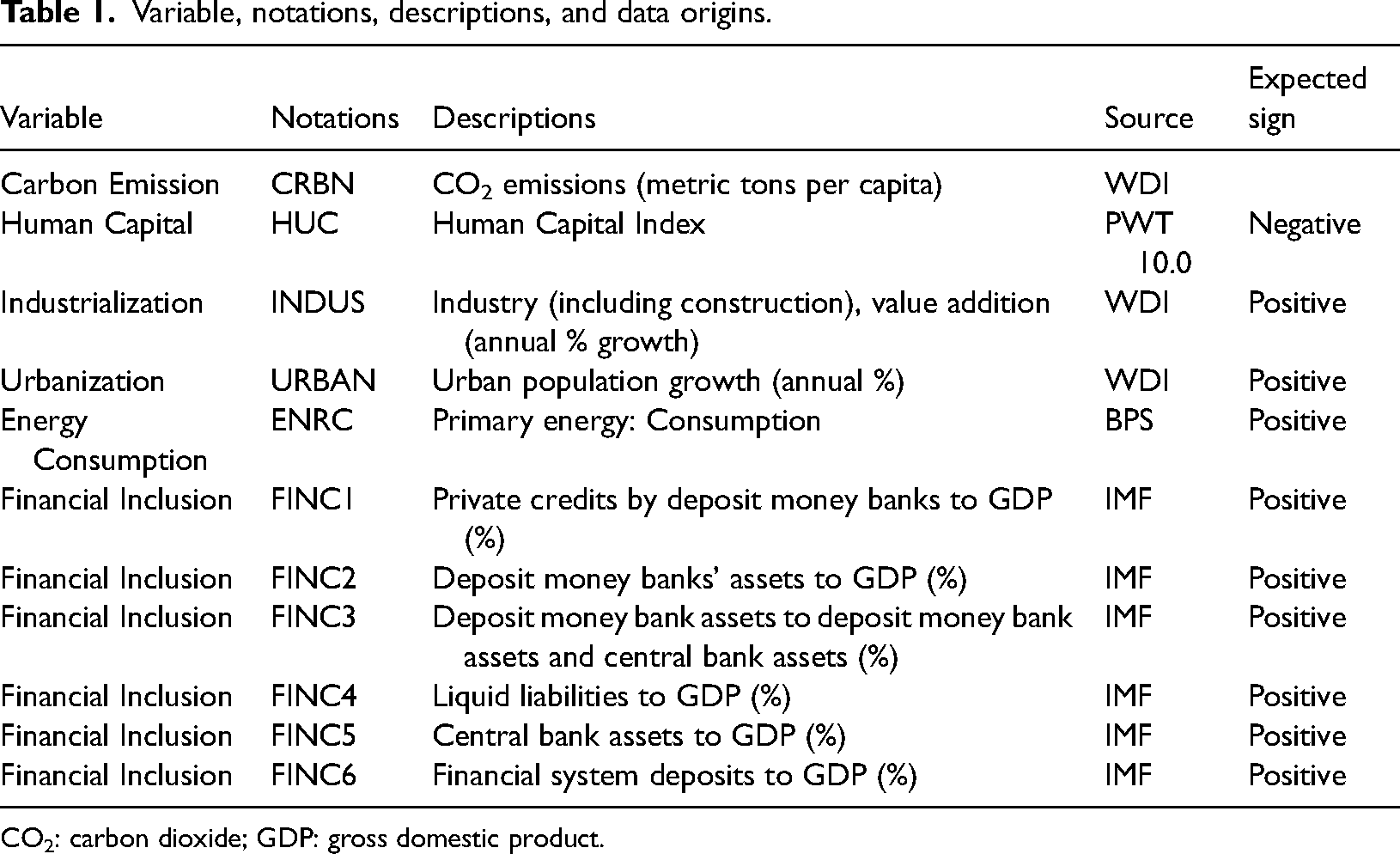
CO2: carbon dioxide; GDP: gross domestic product.
Econometric strategy with mathematical modeling
The basic mathematical model is represented in equation (2) for the econometric estimations.

Unit root statistical analysis
The ARDL begins with the validation of cointegration among the variables. The unit root statistical test can validate the ordering of cointegration that the variables showed stationary either at level I (0) or at a statistical value of first difference I (1). However, conforming to the criterion by Pesaran et al. , 100 the model pertains to stationary values at the level or at the first variance and may be of mixed command of cointegration. While the stationary value at the second difference is termed an invalid model.
ARDL cointegration bound testing approach
The ARDL bounds approach inspects the dynamic linkage of variables by estimating the cointegration under the long-term and short-term dynamics. However, the static regressions only focus on the current period regression values. In fact, the ARDL method is quite beneficial for the reasons below. First, it provides the cointegration values that work on the different lag year data apart from the conventional methods that only concern the current year values. Second, it is convenient for small sets of data ranges. Third, it is quite flexible and works for both at level or first difference stationary values and mixed sequence values. Fourth, the interpretation and estimation of the ARDL equation belong to a single equation that is easy to understand. Fifth, it analyzes the unbiased assessments for long and short-run parameters. Sixth, it appropriately addresses the endogeneity and autocorrelations issues. Focusing on the studies by ,Akalpler and Hove and Abbasi and Riaz81,101 the ARDL equation (4) is given as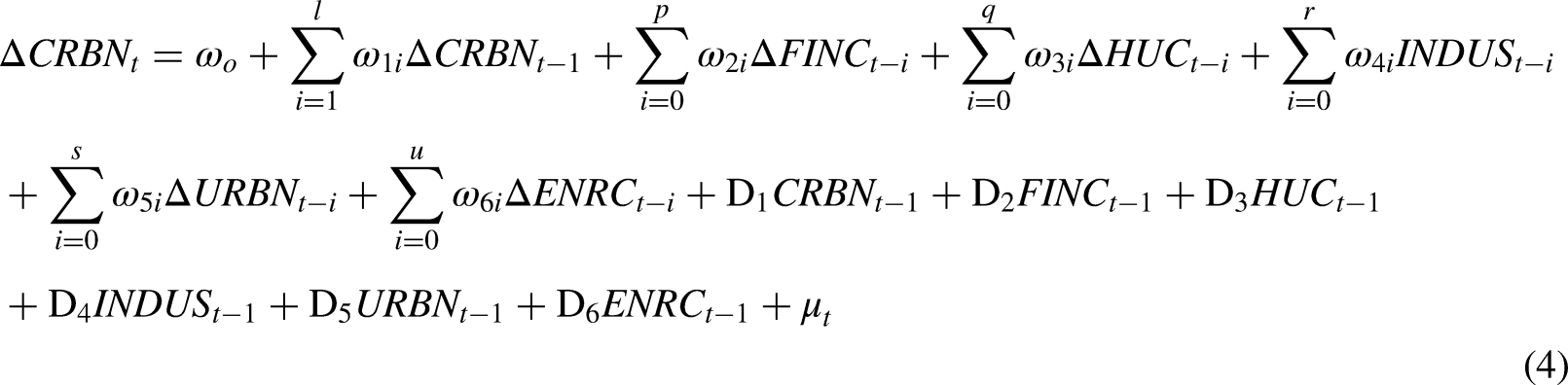


The basic level nonlinear mathematical model is specified in equation (5). 

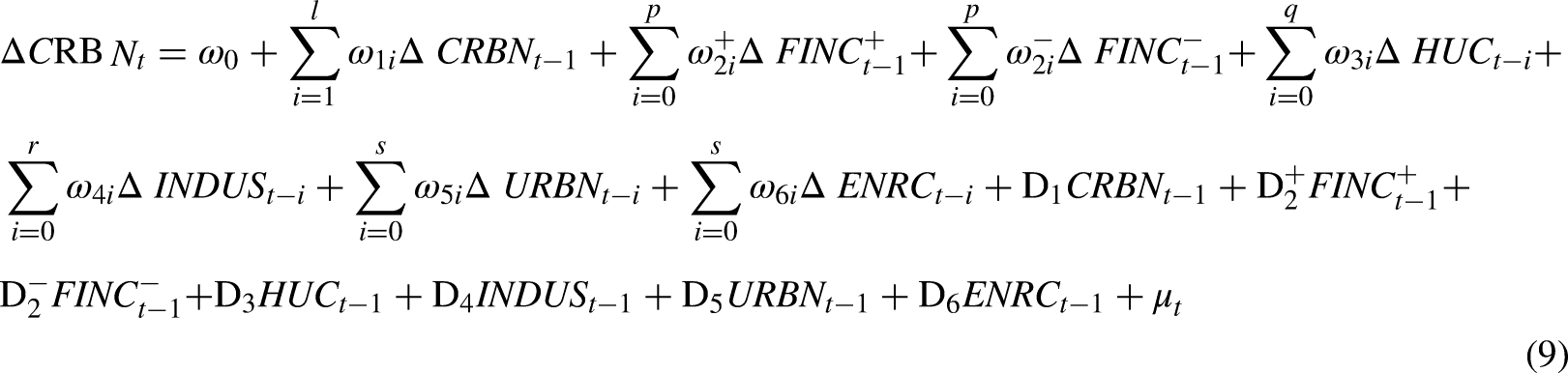
H0: 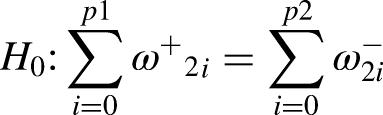
Research analysis and discussions
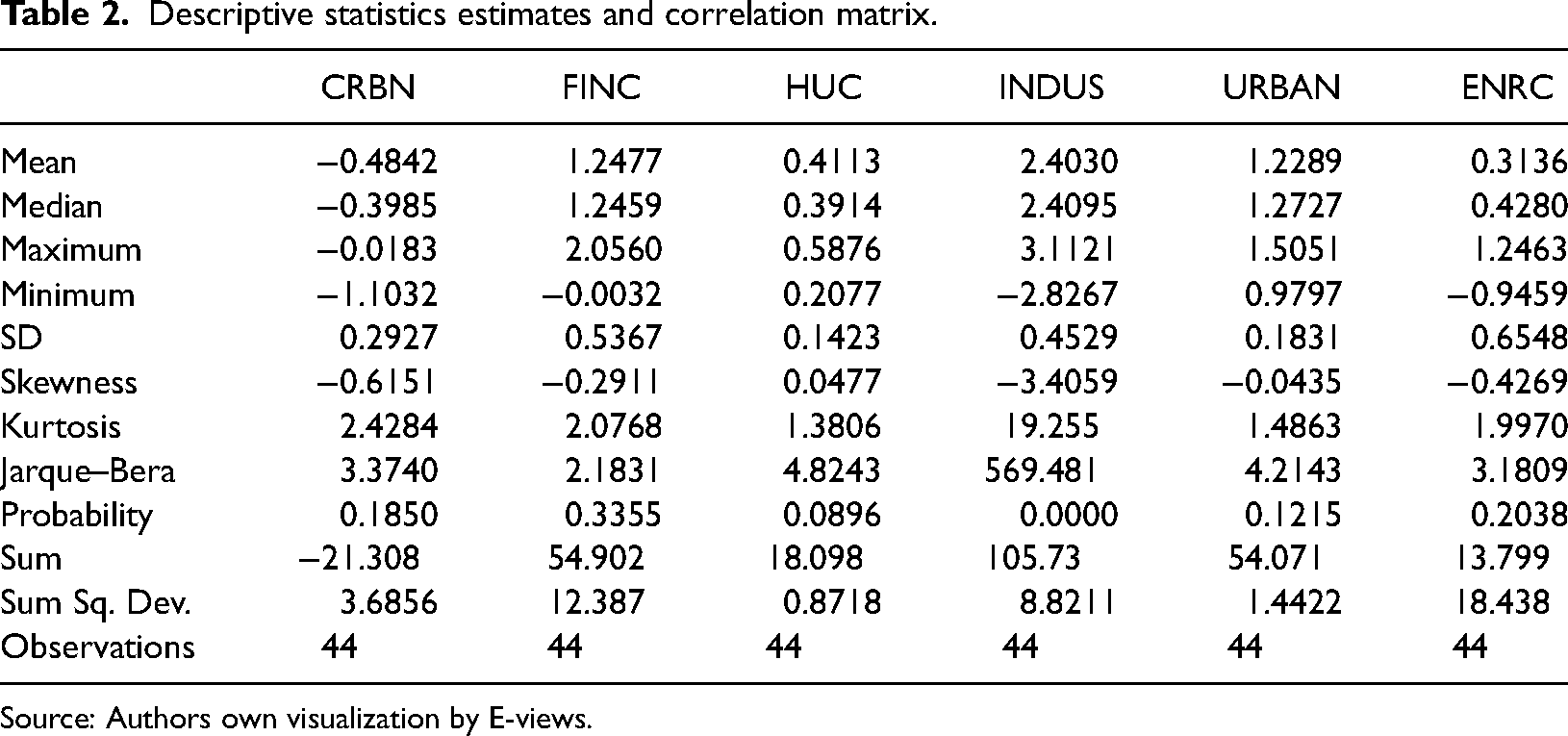
Research analysis and discussions section of the article briefly explains the research analysis and discussions. Table 2 gives information about the probability statistics, SDs, mean, maximum, minimum, mode, and median statistics, along with kurtosis and skewness values. The outcomes for the description of the variable indicate the top mean, maximum, and median values for industrialization while the lowest and negative values for CO2. Concerning the correlation statistical matrix, CO2expressed a positive linkage with FI, human capital, and carbon showed a positive association, while energy consumption stated a positive relationship with carbon discharges.
Descriptive statistics estimates and correlation matrix.
Source: Authors own visualization by E-views.
Correlation matrix and PCA
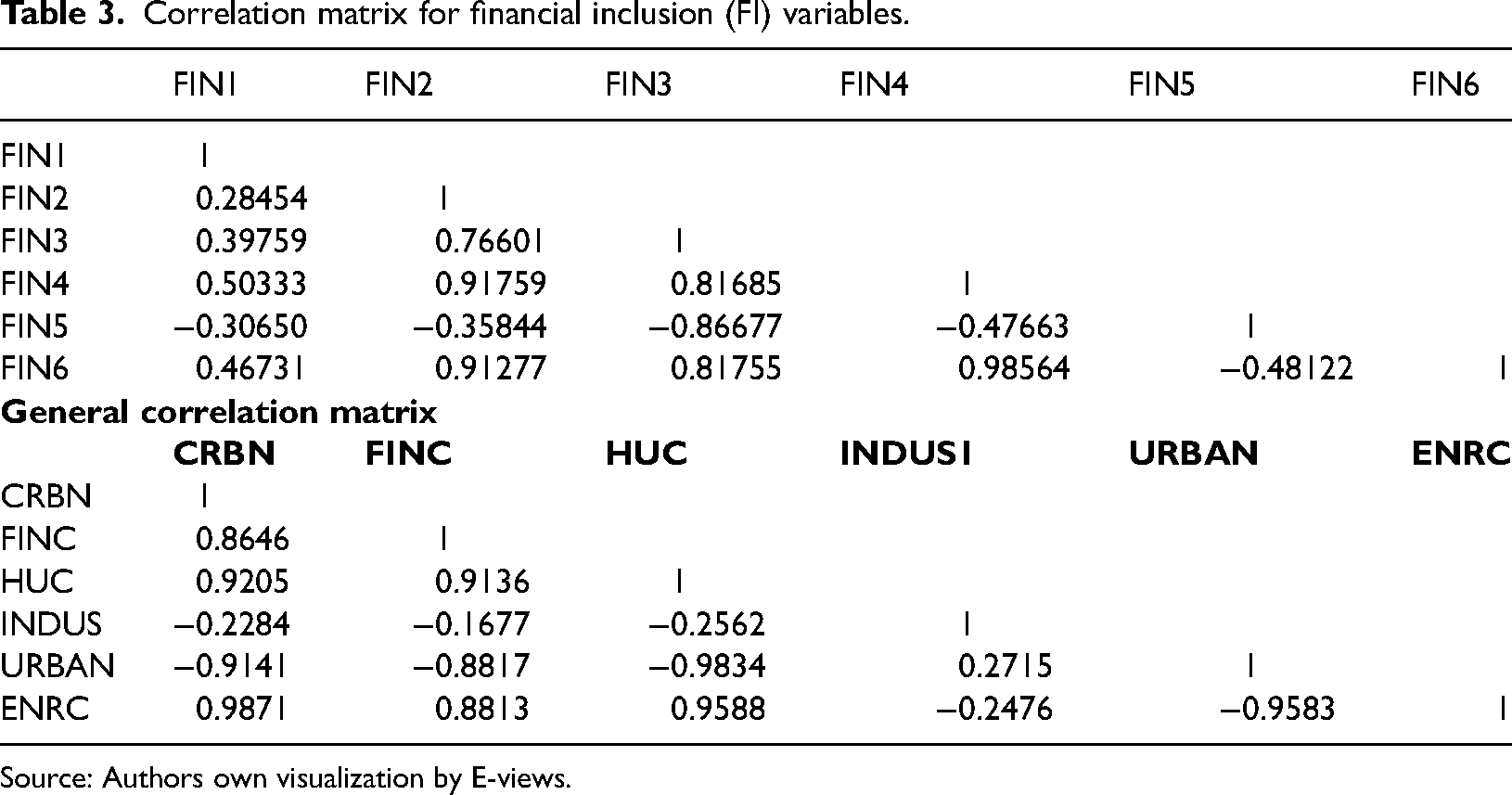
The correlation matrix gives the association of the variables with the variable itself. For the present research, six proxies are indexed for the FI data through PCA. Therefore, referred by Hussain, 97 correlation matrix for the FI (PCA variables) is separately presented while the general correlation matrix is given in Table 3.
Correlation matrix for financial inclusion (FI) variables.
Source: Authors own visualization by E-views.
Unit root analysis
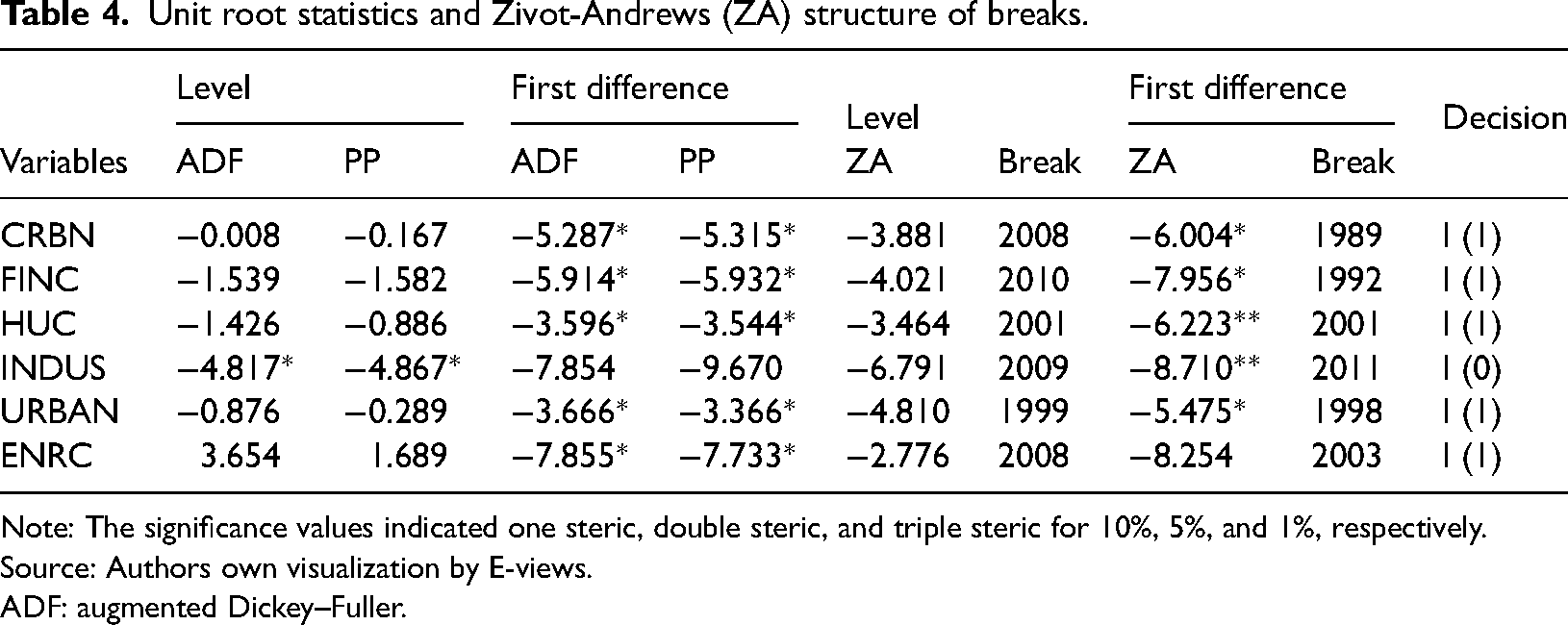
The systematic procedure for the ARDL technical analysis, that takes starts from the stationary values statistics. The stationary statistical estimates are governed through the Phillips–Perron (PP), along with the augmented Dickey–Fuller (ADF) estimations. The validity criterion for the stationary values is that the entire range of variables focused must be stationary at no different level I (0), or maybe on the first difference I (1) math values. The stationary values can hold the mixed order of the integration, that is, with level and first difference statistical math figures; however, no second-order I (2) cointegration figure is accepted. For the unit root statistical analysis dynamics are shown in Table 4 with the first difference stationary math values; however, industrialization verifies stationary at level. The unit root estimates seem white sound. In addition the conventional unit-roots techniques that offer spurious outcomes, the present research implemented the Zivot and Andrews 102 structural breaks models to get the peak values for break years.13–16 The structural breaks for the studied variables and the years are explained below.
Unit root statistics and Zivot-Andrews (ZA) structure of breaks.
Note: The significance values indicated one steric, double steric, and triple steric for 10%, 5%, and 1%, respectively.
Source: Authors own visualization by E-views.
ADF: augmented Dickey–Fuller.
Bounds estimation
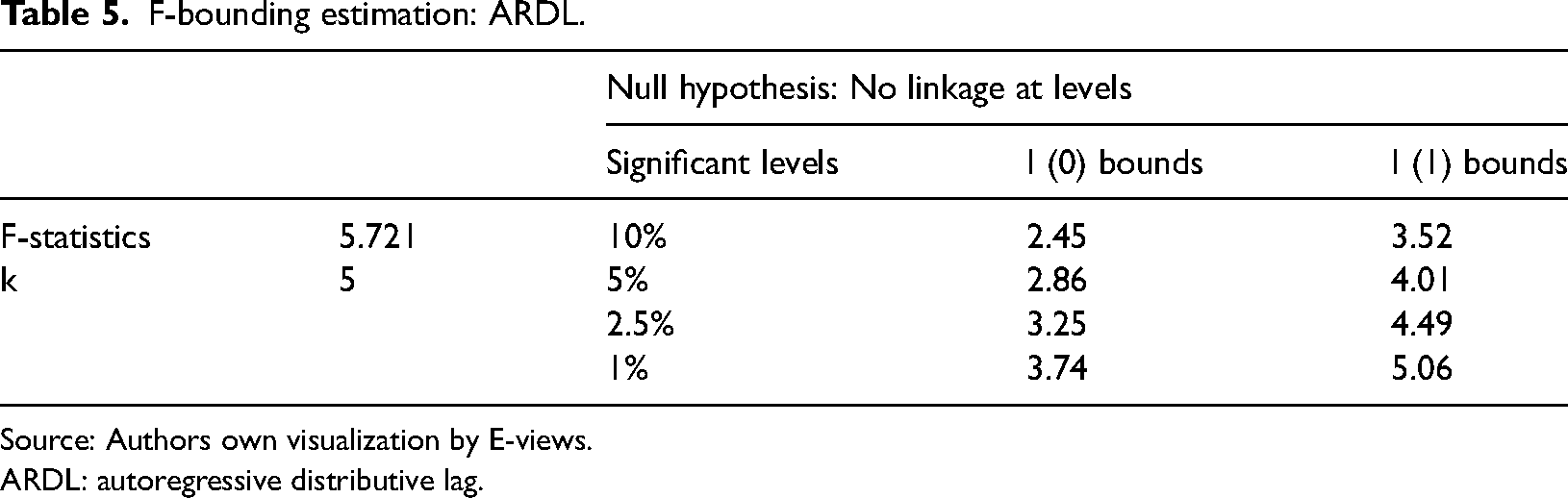
In the stepwise approach, the second point in the ARDL estimation is bounded test analysis that validates the presence of long-term cointegration amongst the specific variables. The F-bounds statistical values analyzed the mathematical models in Table 5. The econometric rule requires that the F-statistical numerical value must be higher in comparison with the lower and upper critical bounds estimate math figures suggested by Narayan. 103 The outcome of bounds analysis validates the occurrence of long-term cointegration for the present research models. The findings from the bounds test showed white noise math estimates.
F-bounding estimation: ARDL.
Source: Authors own visualization by E-views.
ARDL: autoregressive distributive lag.
Long-term, short-run, stability, and diagnostic evaluations
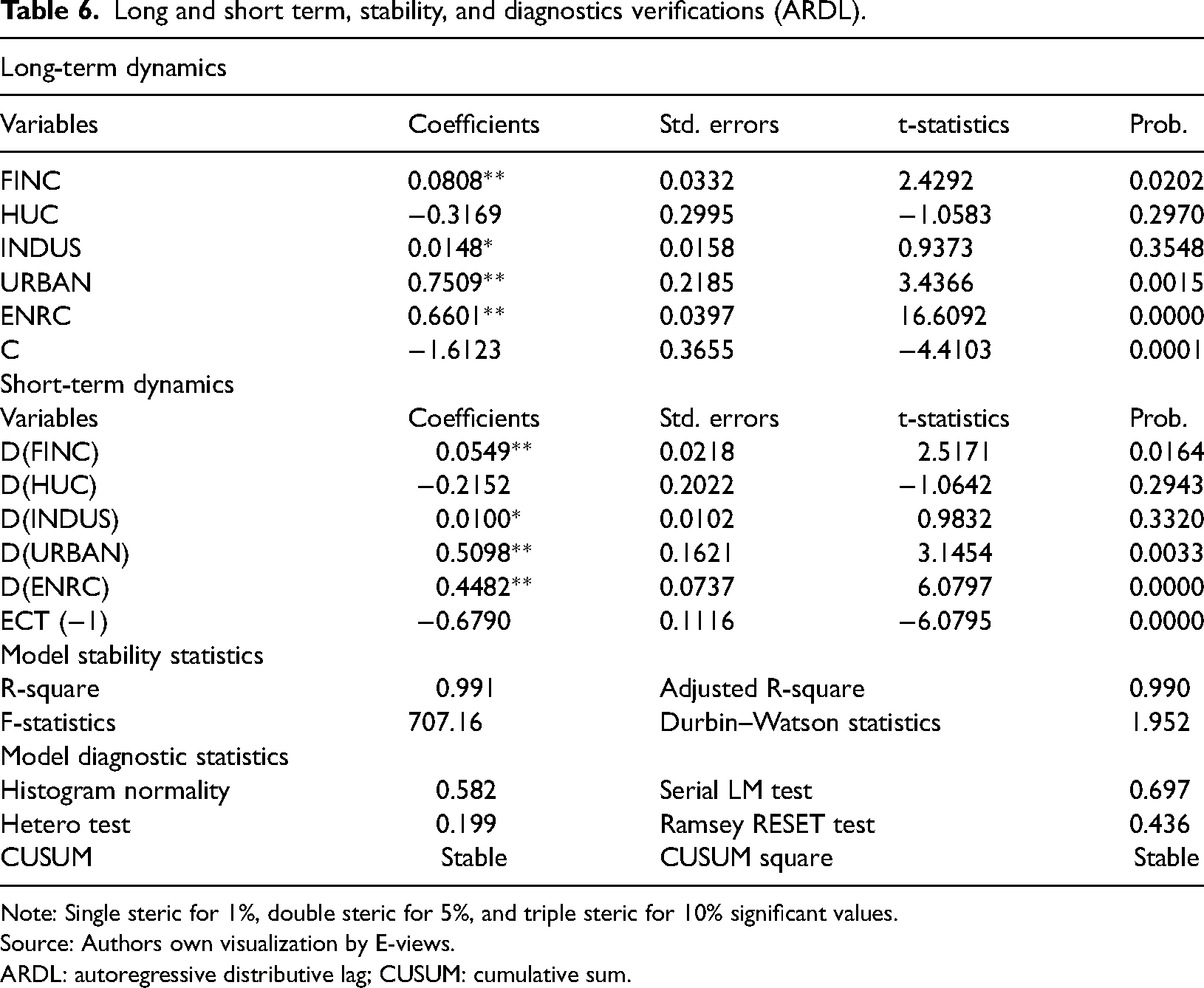
After the verification of the cointegration amongst the models of the study, we are further conducting the short, long, stable, and diagnostic test analysis in Table 6. Conforming to the long-term and short-term outcomes, surprisingly, our research grabbed a significant and positive link between FI and carbon production for individual long and short-term results. Our study consequences are similar to the prior research by Le et al. 9 for the Asian regions and Qin et al. 44 among E7 countries. The reason for the positive association between FI and carbon production in E7 countries is the fact that most financial inclusion motivates to use of the technologies and equipment that produce high CO2. Moreover, the alignment of Le et al. 9 states that FI surges environmental pollution in the Asian region because in that financial ease creates more utilization of energy sources. FI in Pakistan promotes more fossil combustion in the form of automobiles and electrical appliances that badly pollutes the environment.
Long and short term, stability, and diagnostics verifications (ARDL).
Note: Single steric for 1%, double steric for 5%, and triple steric for 10% significant values.
Source: Authors own visualization by E-views.
ARDL: autoregressive distributive lag; CUSUM: cumulative sum.
Fantastically, human capital expressed a negative link in the short and long term with carbon radiations in the environment for Pakistan. Currently, the economic policy of Pakistan should not focus on the bad impact of FI on environmental sustainability through FI. However, the government of Pakistan should formulate certain policies to care about environmental degradation in respect of FI. Moreover, the findings are on the same track as those 104 for Indonesia and 31 for Pakistan. Our outcome suggests that human capital improves environmental sustainability activities through more educated individuals in society. Indonesia also showed negative human capital and environmental results due to the same historical location as Pakistan. Furthermore, Indonesia is highly concerned about educating individuals that are motivated to achieve a cleaner environment. Despite this, the research by Haini 54 claimed that human capital increases environmental Pollution for the ASEAN. The contradiction in finding with our research is due to many reasons. First, the study focused on a panel of economies like ASEAN instead our research determined an individual country for the sample of the study. Second, the research time span is different from panel estimators. Third, geographical directions in the ASEAN countries focused on the southeast countries while Pakistan belongs to the South Asian region. So, in place of such factors, our research contradicts with Haini. 54
In terms of industrialization, that surges CO2production in the long and short terms. The consequences are like to those Ahmad and Zhao 28 in China, Mahmood et al. 29 in Saudi Arabia, and further Ali et al. 60 trends for Pakistan. In the present time like other developing nations, Pakistan's economic policy is still based on the conventional industrial production process that consumes fossil energy and produces hazardous emissions. A lack of certain alternatives leads to environment-friendly productions. Additionally, the findings explain that the studied countries lie in the same geographical region and utilize fossil energy consumption for manufacturing purposes. Most Asian countries run industrial activities using conventional technologies that input oil, natural gas, and coal. Urbanization and carbon discharges governed a significant positive association both in short and long estimations. The outcome matched with Ahmed et al. 34,35 in China, Saida and Kais 64 in African countries, and Ali et al. 30 in Pakistan. The outcome asserts that rapid urbanization and industrialization badly pollute the environment. For China that is heavily based on fossil energy usage for manufacturing plants, it causes hazardous emissions to the environment. African countries yet use conventional technologies for production. The same is the position of Pakistan which uses worn-out technologies in industries that badly deteriorate environmental sustainability. Moreover, there is a lack of proper planning for rapid urbanization in Pakistan. In Pakistan, many housing societies are developed by cutting the forest and agriculture land by divesting many natural resources and habitat loss. In the same way, urbanization happens in Pakistan in a horizontal direction that destroys a lot of land and agricultural habitats further it causes climate change, less rain, and droughts.
The research conducted by Zhang and Wang 89 examined the negative linkage between urbanization and environmental pollution. The result explains that urbanization causes a cleaner environment that increases in urban population is highly concerned about environmental and ecological sustainability. The converse finding is due to the different periods and data analysis strategies for Pakistan. However, the fact is that Pakistan is still highly based on fossil energy consumption such as petroleum oil, coal, and natural gas. Further, most of the population burns wood for household purposes.
Interestingly, the estimation of fossil energy utilization determined a significant increasing trend with the environment both in short and long-term dynamics. The outcome coordinated similar outcomes with Ahmad and Du 74 in Iran, Meng et al. and Hamid et al.58,105 amidst China, and Salman et al. 75 in a panel of Thailand, South Korea, and Indonesia. The conclusion of energy utilization recommends burning fossil energy sources producing harmful radiation in the environment. Pakistan has natural reserves of coal and natural gas for households and commercial needs. Furthermore, Pakistan imports fossil oil for energy requirements such as transportation, energy production, and industrial requirements. Pakistan has not seriously focused on alternative energy sources. However, the massive use of fossil energy degrades the environment badly. Thus, Pakistan should re-evaluate the energy mix and work for cleaner productions. At the end of model validation, the ECT for the studied ARDL model gives a negative and significant mathematical figure that is another validation of long-term cointegration.
Moreover, the stability analyses along with diagnostic estimates are mentioned at the end of Table 6. The goodness of the fit model is verified through the R2 math value (0.991), and the adjusted R2 figure (0.990). For the diagnostic statistical investigation, various criterion tests are applied for the normality of the model histogram normality test is performed, hetero test, for autocorrelation we analyzed the serial correlation test, and cumulative sum (CUSUM) statistics with a cumulative sum of square (CUSUMSQ) statistics dynamical charts are shown in Figures 1 and 2. The entire range of diagnostic tests showed that the model outcomes white sound math figures.
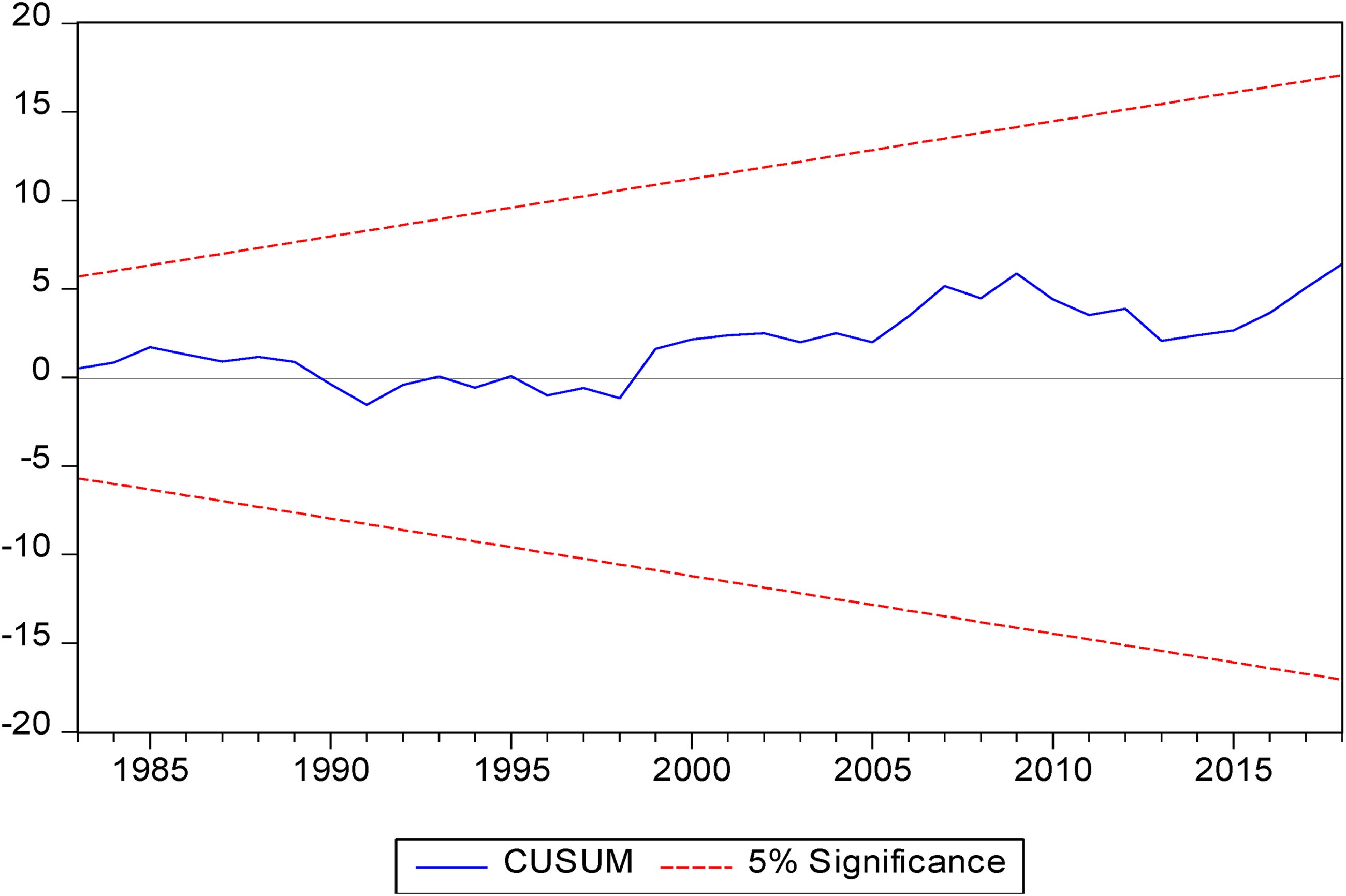
CO2CUSUM (ARDL).
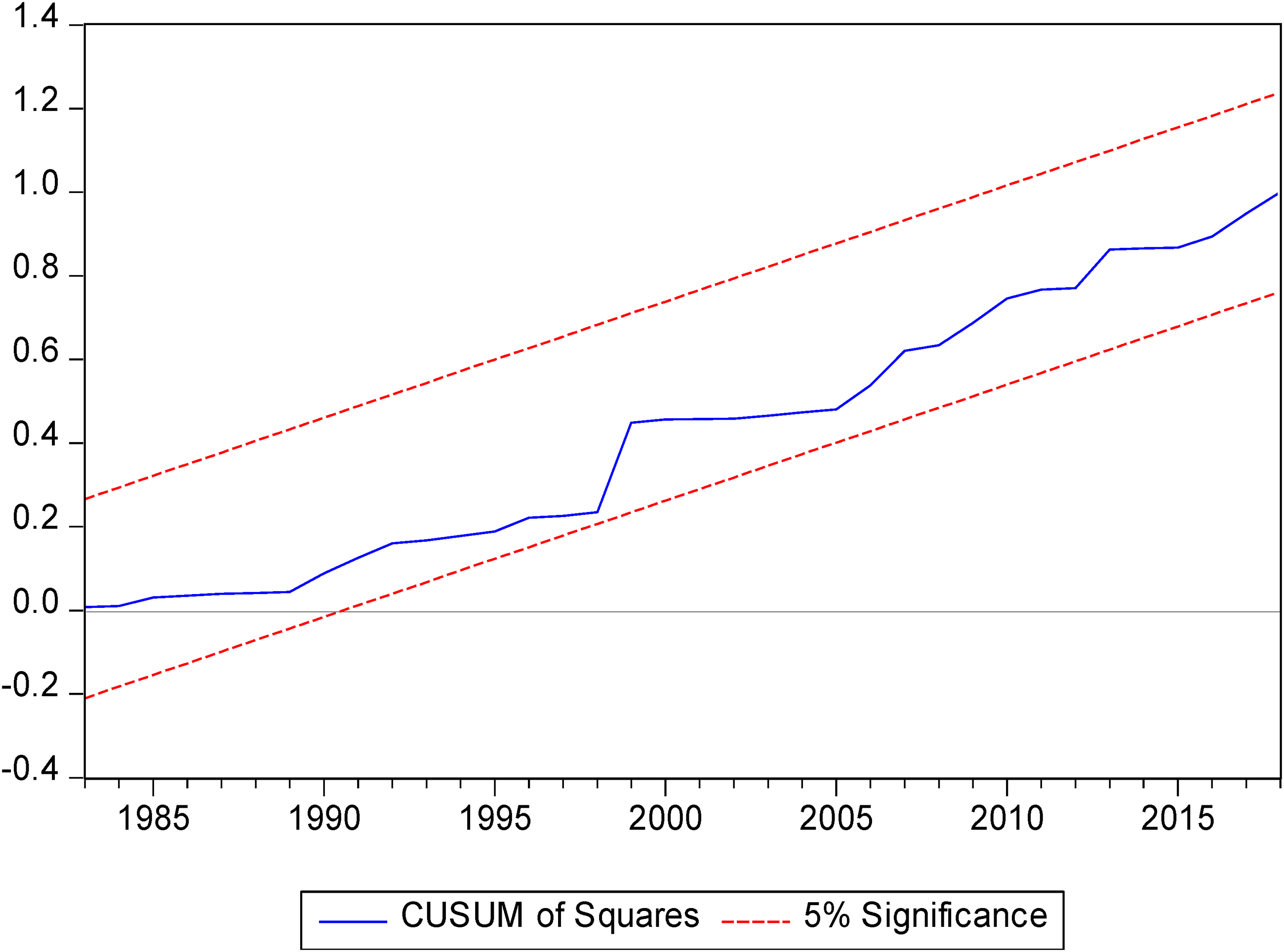
CUSUMSQ (ARDL).
NARDL dynamic estimates
The manipulation of asymmetric investigation is performed through the advanced technique of the NARDL recommended by Shin et al. 43 The bounding test cointegration statistical figures are offered in Table 7. The bigger f bounding value from the upper and lower critical bound values proposed by Narayan 103 proves a long-run connection among the variables of the study.
F-bounds estimation: NARDL.
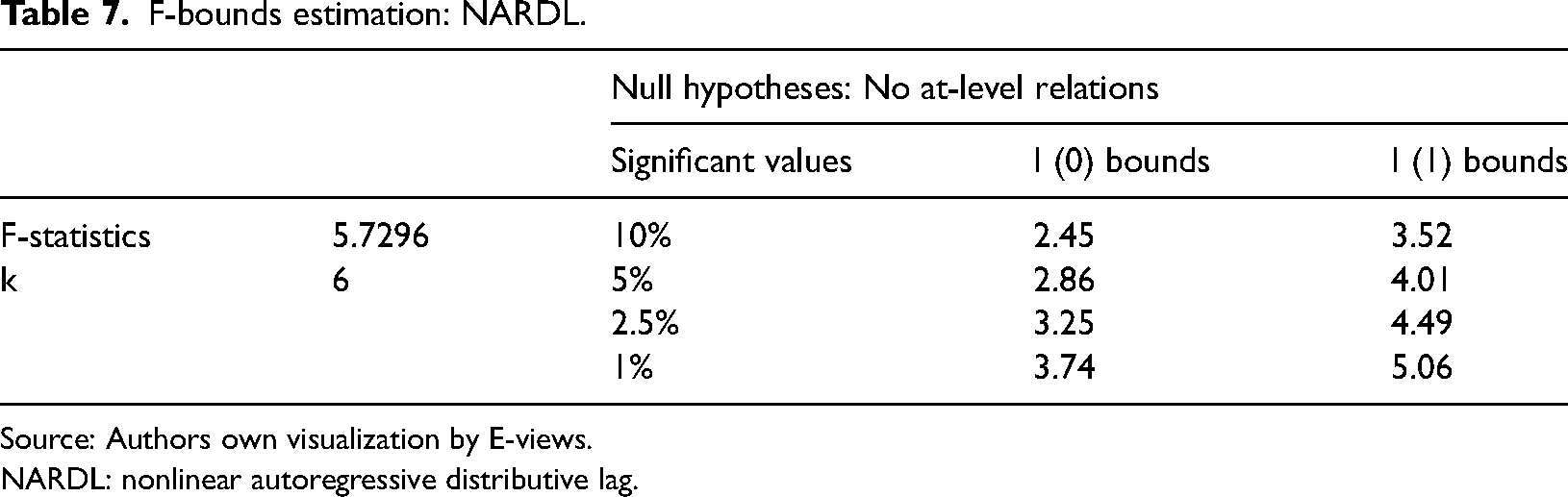
Source: Authors own visualization by E-views.
NARDL: nonlinear autoregressive distributive lag.
Long and short-term outcomes of NARDL
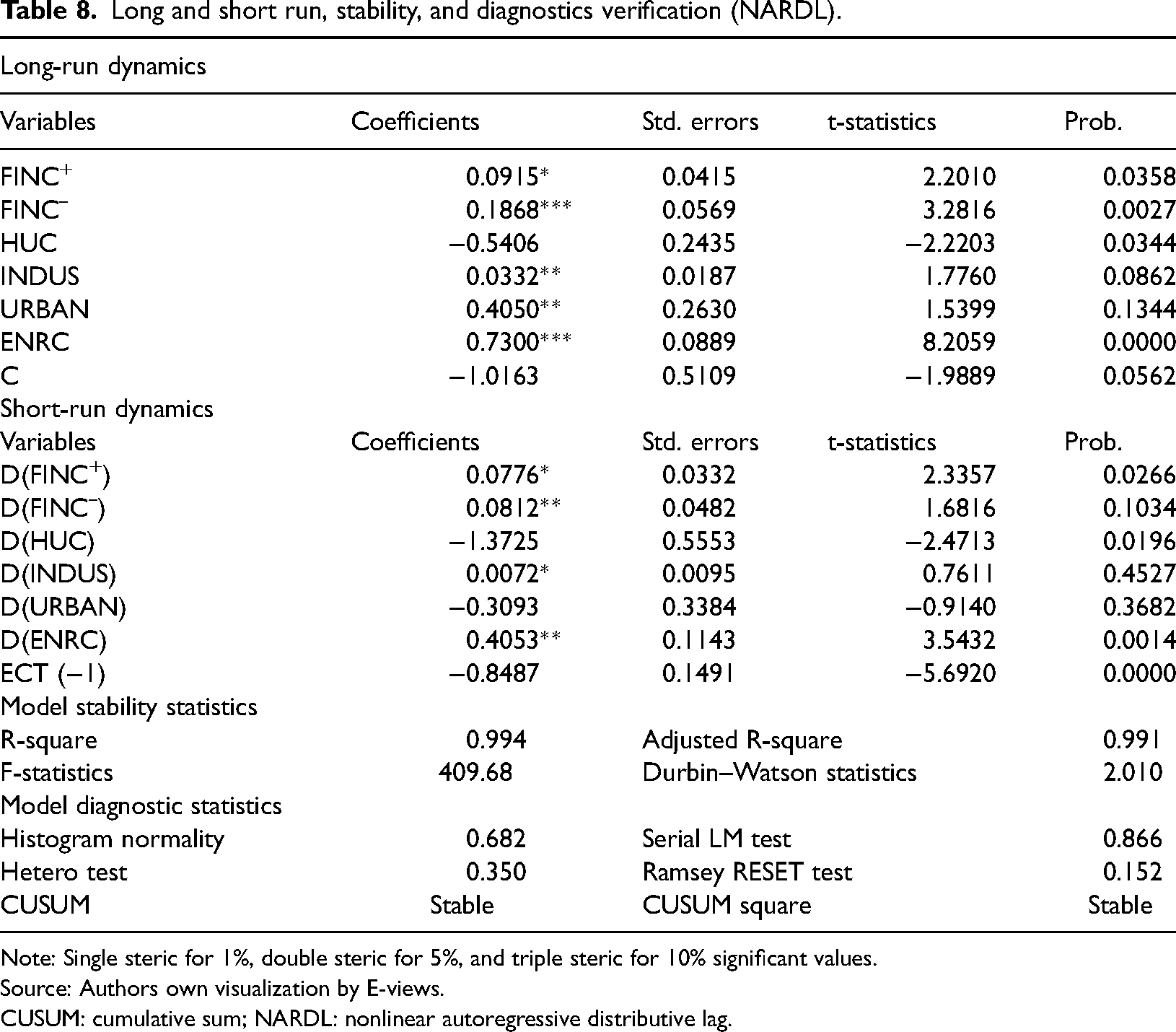
Our research analyzed the asymmetric association of FI (FINC+, FINCˉ) with carbon radiations for Pakistan presented in Table 8. The positive shocks of FI FINC+ determined positive and most significant outcomes in the direction of long and short-term estimates. The negative effects of FI FINCˉ asserted positive and significant outcomes for the short and long-term estimations. The finding validates the asymmetric linkage of FI to environmental sustainability by explaining the fact that increasing or decreasing FI badly affects the environment. The FI results are quite similar to symmetric outcomes and further, the findings are harmonized with Zaidi et al. 8 aimed at OECD economies, and Mehmood 4 panel intended for Asian economies. The results express that FI causes environmental detraction at a higher rate in Pakistan and many Asian nations. The reason is the utilization of fossil energy and time-worn technologies. Amazingly, the asymmetric outcomes are highly similar to our symmetric results in terms of industrialization, fossil energy usage, and urbanization, indicating a positive association with CO2 emanations in either the short or long term. Furthermore, the estimation of asymmetric analysis of the human capital and environment indicated significant negative connections in the long- and short-term dimensions that are similar to our symmetric findings.
Long and short run, stability, and diagnostics verification (NARDL).
Note: Single steric for 1%, double steric for 5%, and triple steric for 10% significant values.
Source: Authors own visualization by E-views.
CUSUM: cumulative sum; NARDL: nonlinear autoregressive distributive lag.
Moving forward, the ECT is given in Table 8, which validates the presence of long dynamical cointegration amongst the asymmetric model. The ECT statistical figure shows a negative and significant value that is the endorsement of the long-term relationship of the studied model. Additionally, the stability statistics are given at the end of Table 6, which shows the various criteria and goodness of fit for the math model with an R2 value (0.994) and adjusted R figure (0.991), and Durbin–Watson statistic figure (2.101). Furthermore, various diagnostic estimates are inspected in our study, like serial correlation test is checked through the LM test, the Breusch–Pagan test is analyzed to verify the heteroskedasticity, the Ramsey RESET test is articulated to find the entire model specifications, and the histogram test is applied to get the normality values of the model. The diagnostic analysis states that the models give accurate statistics and lead in the right direction. Moreover, the stability graphs like CUSUM and CUSUM square indicate the stability of the asymmetric model as shown in Figures 3 and 4. Besides many other tests, the Wald statistical estimate is applied for the verification of the long-term and short-run cointegration for the asymmetrical association of the variables under discussion. Table 8 provides the Wald test statistical value that gives the accepted range of figures. However, the multiplier graphical representation as shown in Figure 5 presents the validity of the asymmetric relationship among the variables.
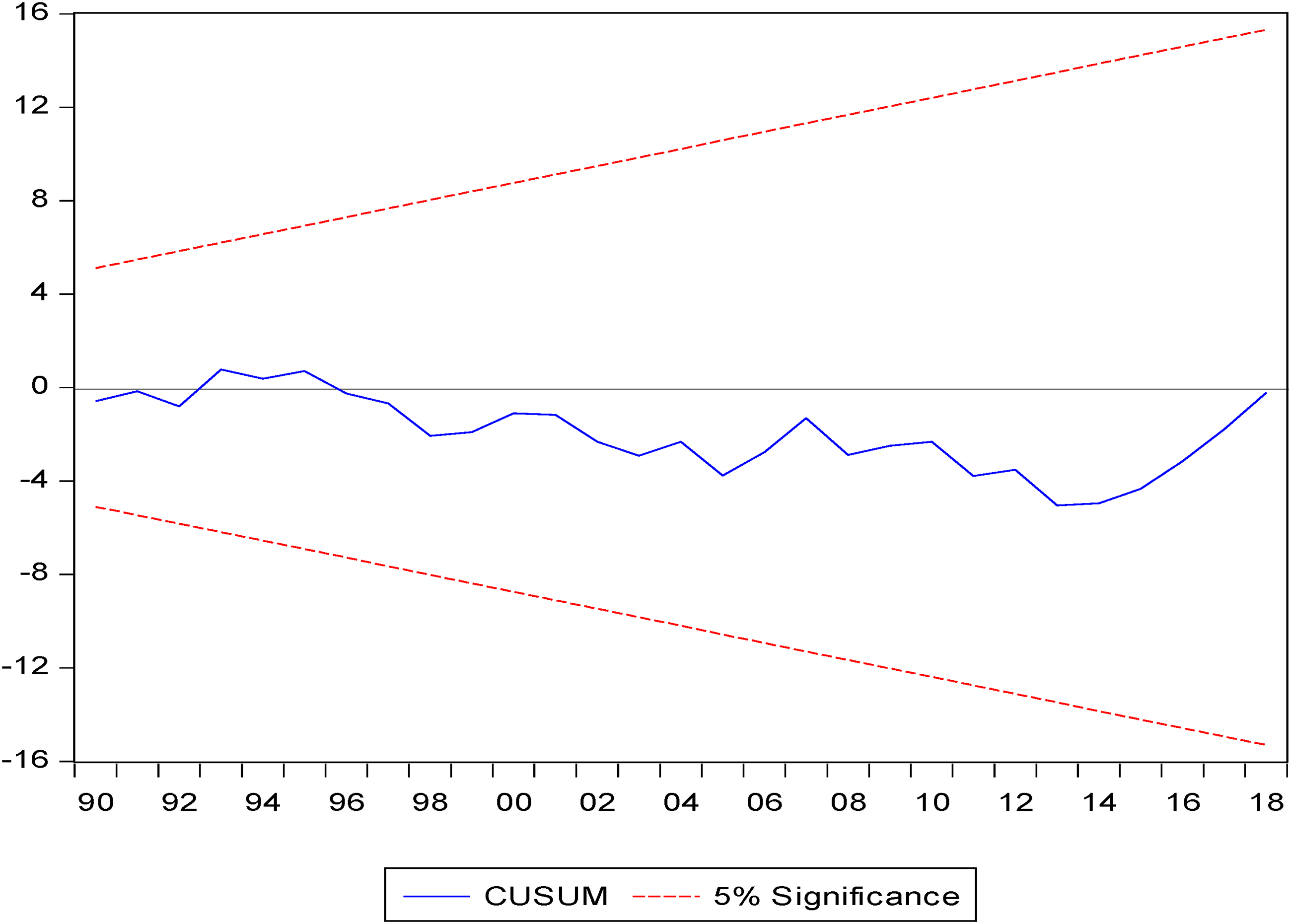
CUSUM (NARDL).
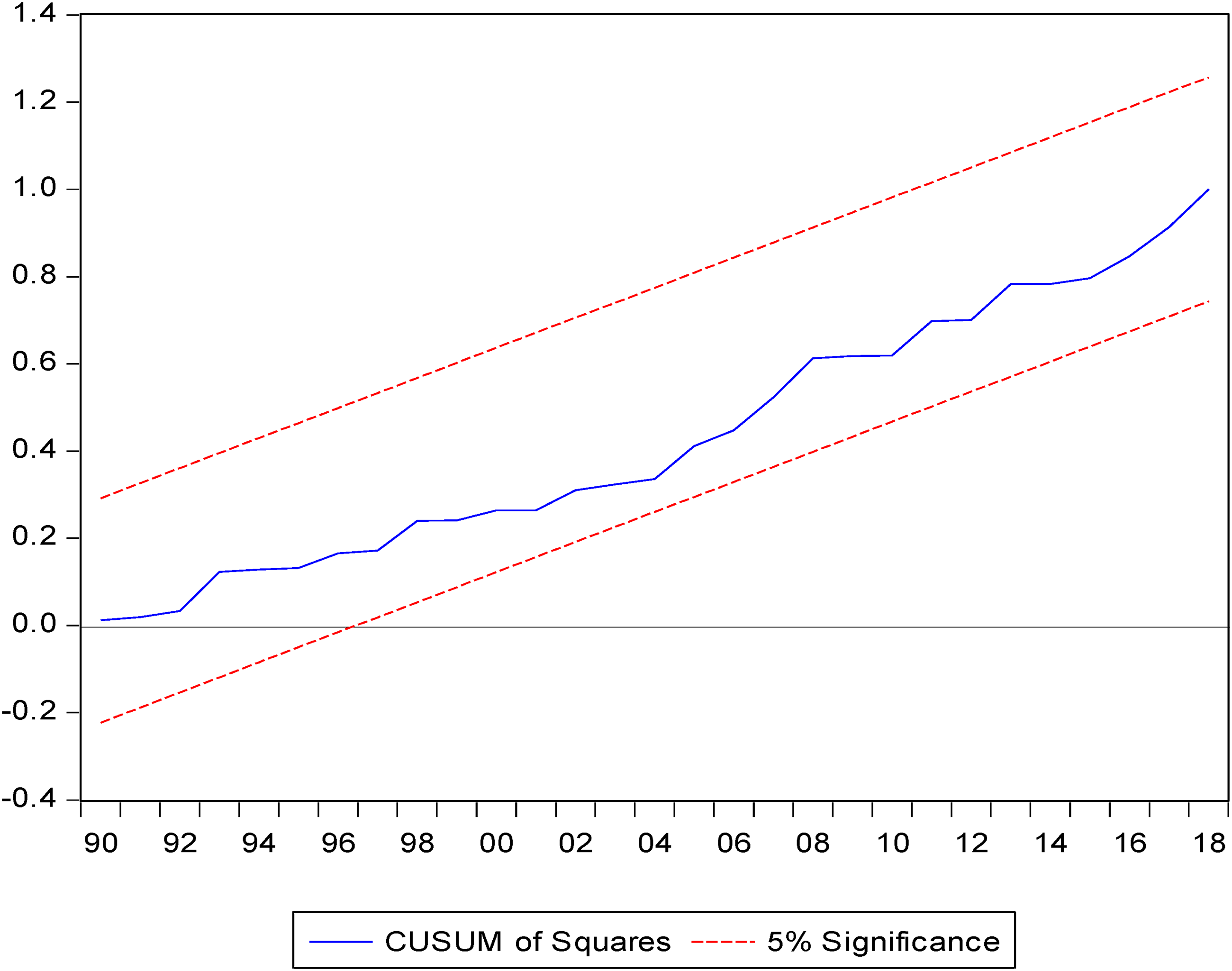
CUSUMSQ (NARDL).
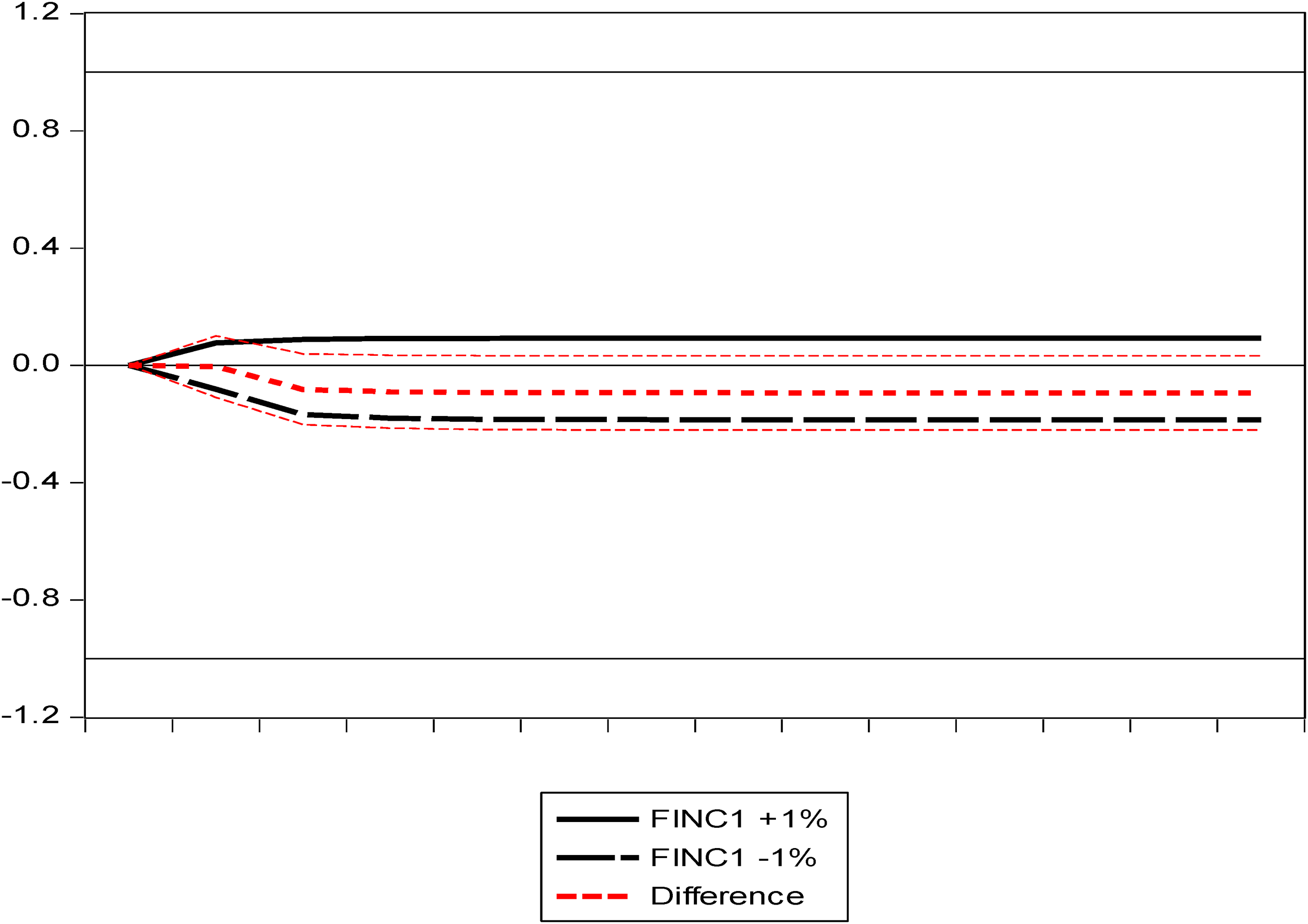
Multiplier graph.
Wald test estimates
The Wald test is specifically performed for the verification of long cointegration about the asymmetric analysis. The decision is devised on the standard that the long-run probability value must be significant and the short-run probability shows insignificant statistical value. Table 9 presents Wald test results.
Nonlinear estimation for Wald analysis.

Source: Authors own visualization by E-views.
Multiplier diagram
Concluding remarks with policies
The current research aimed at grabbing the attention of the asymmetric influence of FI on environmental sustainability under energy utilization, industrialization, urbanization, and human capital from 1975 to 2018 for Pakistan. For the estimation of FI, we employed PCA for the six proxies of FI. The symmetric finding of our research asserts that the directions of long and short-run FI indicated a significant positive link with CO2radiation in Pakistan. The consequence of FI advocates that in Pakistan, financial ease lead the economy toward more consumption of timeworn and conventional technologies such as fossil energy production, automobiles, and heavy use of electrical appliances that cause environmental degradation. The financial loans provide the nation with easy access to more automobiles, air conditioners, refrigerators, and other appliances that produce chlorofluorocarbons (CFCs) and deplete the ozone layer that degrades the environment. Moreover, the leasing facility creates a high increase in the number of personnel vehicles and luxury lifestyles.
Urbanization and industrialization are a phenomenon that occurs simultaneously. In our research, both urbanization and industrialization expressed significant positive findings in the long and short term for Pakistan under symmetrical and asymmetric analysis. Rapid urbanization has tremendous effects on a country's national resources, industrialization, labor forces, and economic growth. Pakistan is facing rapid urbanization; according to the economic survey report 2018, the urbanization growth is 36.38%. More urbanization results in more industrialization to provide job opportunities that eventually degrade environmental sustainability. Pakistan is still working on conventional methods for manufacturing that causes environmental pollution.
With symmetric and asymmetric findings, fossil energy utilization determined a significant positive role in degrading the environment in terms of the short and long run. Pakistan is part of those countries that import energy requirements from other countries, which has dual effects on the economy. On one hand, it imports fossil energy sources for daily needs and burdens economic growth. On the other hand, fossil energy utilization causes bad effects on the environmental sustainability of the economy. The developed and developing nations are facing the hazardous results of fossil energy use and are highly inclined toward alternative energy sources. Unluckily, due to political and economic instability, Pakistan remained in the planning process only and was not yet confined to adopting modern energy sources.
Human capital indicated negative outcomes for symmetric and asymmetric analysis in the short and long term for Pakistan. The findings explain that according to the national bureau of statistics, Pakistan holds the world's fifth highest population with the world's ninth labor force. Pakistan possesses 27% of youth bulge aged from 15 to 27 years. The government of Pakistan aims to improve the literacy rate by fourth SDGs and launching “Quality of Education” factors for attaining environmental sustainability. Furthermore, Pakistan developed the human development index and ranked 154th among 189 countries. Human capital works for the reduction of environmental degradation by applying modern ways of sustainable production.
The asymmetric results of an increase in FI (FINC+) designated a significance and positive link with carbon radiations in the long term. Moreover, a decrease in FI (FINCˉ) also expressed a significantly positive outcome in the long run that proves the asymmetric connection with carbon production in long-term findings. The findings describe that an increase or decrease in FI affects environmental sustainability. In a developing economy like Pakistan, timeworn technologies, harsh usage of fossil energy sources, and increasing financial credits move the economy toward environmental degradation.
Practical implications of research
The policy makers should introduce some environment-friendly strategies related to FI to reduce fossil energy consumption. Moreover, proper policies should be required in Pakistan for electricity consumption and working hours in Pakistan. Usually, the markets and shops remained open in Pakistan late at night which needs more lighting in the markets that eventually possess a heavy burden on national energy sources. Additionally, the government can provide subsidies for renewable energy sources to improve the environment. Furthermore, policy makers should discourage the utilization of fossil energy utilization and implement heavy taxes the carbon-emitting technologies. Besides fossil energy sources, alternative energy sources should be promoted in the country that provides environment-friendly production. Additionally, the research scientifically and practically contributes to FI policies formulation and implementation at the national level.
Many individuals in the economy harshly use the energy sources that put heavy pressure on national energy sources, ultimately putting a burden on economic growth. Therefore, policy makers should implement heavy taxes on petroleum oil consumption to a certain limit per individual in a periodic manner.
Government officials and policy makers should focus on balancing urban and rural populations. The government of Pakistan should provide equal resources and opportunities for rural and urban residents to avoid unnecessary migrations and traveling.
Policy makers should promote educational activities, sustainability training, and skilled staff to attain sustainable environmental goals.
Government personnel should discourage credit habits that result in more energy consumption. However, the government of Pakistan should launch subsidy plans for promoting environment-friendly appliances, especially in the case of transportation electrical vehicles or hybrid vehicles becoming of the utmost need in the current scenario of Pakistan.
Future perspectives of research
The present research defines some future directions to extend the present work in modern dimensions. First, research may be carried out through the quartile on regression technique to study the FI role in quarterly data sets. Second, research can be extended through the partial least square equations model to evaluate the secondary data. Third, future research can focus the sector-wise FI results on environmental sustainability. Moreover, a range of environmental proxies can be examined to get a clearer picture of environmental pollution.
Footnotes
Author's contribution
Dr Arsalan Tanveer: Conceptualization, complete writing, mathematical equations, data analysis, and econometric analysis. Professor Dr Huaming Song: Conceptualization, supervision, and analysis verification. Assistant Professor Dr Muhammad Faheem: Results verification, mathematical equations, and analysis verification. Dr Abdul Daud: Results support and references verification. Assistant Professor Dr Noreen Safdar: Mathematics equations and references verification.
Declaration of conflicting interests
The authors declared no potential conflicts of interest with respect to the research, authorship, and/or publication of this article.
Funding
The authors received no financial support for the research, authorship, and/or publication of this article.
Ethical approval
It is declared that our manuscript is only submitted in Energy and Environment.
Agreement to publish
All the authors agreed to submit and publish the manuscript in Energy and Environment.
Consent to participate
Not applicable.

Data availability statement
Data are grabbed through an online database and will be available on demand.