







Abstract
On the path to carbon neutrality by 2050, the expansion and improvement of high-voltage power transmission lines (HV-PTL) is a critical and unavoidable energy issue that may become a potential source of public conflict. However, the discussion on this issue in South Korea has been insufficient. In this study, we analyzed public attitudes toward HV-PTLs and classified people into subgroups based on their common characteristics using latent class models. In addition, we used the contingent valuation method to estimate the public's willingness to pay (WTP) for the conversion of overhead lines to underground cables, focusing on the differences among the identified subgroups. According to the empirical analysis, people in South Korea can be divided into four classes based on their perceived need for resident participation in the decision-making process, perceived health risk, and perceived property loss risk. According to the WTP analysis using the spike model, the estimated mean and median WTP values were KRW 4184 (USD 3.8) and KRW 2632 (USD 2.4) per household per month, respectively. In addition, we found a significant difference in WTP by class. Those who perceived HV-PTL as risky were less willing to pay for undergrounding projects compared with those whose perceived risk was relatively low. This study contributes to the understanding of academics and policymakers on the relationship between public attitudes toward HV-PTL and overhead to underground conversion.
Keywords
Introduction
To reduce greenhouse gas (GHG) emissions and meet the Nationally Determined Contribution (NDC) target, countries participating in the United Nations Framework Convention on Climate Change, including South Korea, are increasing the share of renewable energy in the power generation sector. South Korea aims to drastically reduce coal-fired power generation and increase renewable power generation by 2030. 1 In this process, large-scale renewable projects are being built away from major load centers around the metropolitan area of Seoul, the capital of South Korea. In this area, the large-scale expansion plan for semiconductor industrial complexes and construction plan for software company data centers will require a huge increase in electricity demand of at least 19 GW by 2034. In addition, given South Korea's current grid capacity, adding electricity infrastructure, including high-voltage power transmission lines (HV-PTL) from renewable energy sources, to the metropolitan area is inevitable. 2
In this context, research has shown that people are typically sensitive to and oppose the construction of HV-PTLs. The public's negative attitude toward them is mainly owing to several perceived risk factors, such as concerns about impacts on health, loss of property, and lack of contextual fit with their surroundings.3–6 Regarding public acceptance of large-scale national electricity infrastructure projects, one of the worst cases of conflict in South Korea was between local residents, the utility (Korea Electric Power Corporation, KEPCO), and government officials over the construction of a 765 kV transmission line in Miryang (South Gyeongsang Province) in the early 2000s. 7 This led to extreme protests, including armed clashes, and significant socioeconomic costs through an extended construction schedule and budget increases. Some residents strongly objected to the electromagnetic waves emitted by the facilities, believing that it would pose a threat to their health through cancer and other diseases. The Miryang case has taught the Korean government that considering public perception and acceptance is necessary when planning and implementing electricity infrastructure projects, such as grid expansion.
Consequently, mobilizing public support for a range of energy policies is a crucial factor in effectively implementing the energy transition plan and achieving the government's goal of a low-carbon society by 2050. Without this support, the nation's energy objectives cannot be accomplished through a techno-economic top–down strategy. Scholars have thus far focused on public acceptance of energy policy regarding the source change of electricity generation because coordinating the electricity mix is one of the most challenging tasks for a low-carbon society.8–11 Although an increase in renewable energy means higher energy costs, studies generally found that consumers are willing to pay more to increase the share of renewable energy generation in electricity.
Energy supply security and energy system transformation toward a higher share of renewable energy is accompanied by power grid modernization and expansion. Hence, to implement the “2050 Carbon-Neutral Strategy” scenarios, public acceptance toward not only energy mix change but also additional power grid construction should be considered. South Korea already has a larger density of power facilities compared with that in other developed countries such as Japan, the USA, and France. 12 Therefore, analyzing public acceptance before undertaking large-scale electricity infrastructure projects such as HV-PTL is essential for policymakers and practitioners. While building plans of energy facilities often face opposition, public opinion on energy facility siting is highly heterogeneous rather than homogeneous, according to public acceptance studies.13,14 A study on the siting of spent nuclear fuel facilities showed that acceptability can vary depending on the decision-making process, awareness about energy issues, and concern level for the environment. 15 In other empirical studies, people's preferences for electricity generation sources also varied according to socioeconomic conditions. The same phenomenon can apply to HV-PTL construction. Some people could actively oppose the construction of overhead transmission lines, while others could passively embrace it. However, because the media only exposes the most vocal opposers, empirical research on the heterogeneity of public perspective on HV-PTL and the reason for their assent or dissent is lacking. Consequently, not everyone is equally aware of the dangers posed by HV-PTL and the level of risk assessed by an individual can be different. Similarly, governments should correctly identify public perceptions, attitudes, and preferences toward national power transmission lines and their related facilities to establish public consensus and design a viable national power grid plan.
This study aimed to evaluate the heterogeneity in the public's attitudes toward HV-PTL and calculate their willingness to pay (WTP) for the conversion of overhead lines to underground cables, focusing on the WTP differences among identified groups. To the best of our knowledge, this is the first attempt in the energy policy literature to study the connection between public acceptance and WTP in HV-PTL study. To do this, we designed attitude and contingent valuation surveys and collected the data. We then categorized the sample into meaningful latent classes depending on their attitude toward HV-PTL by employing latent class analysis. Using the contingent valuation method (CVM), we elicited WTP for overhead-to-underground conversion projects of power transmission lines. Finally, we verified whether WTP differs by identified classes and estimated the total WTP of the entire population using estimates at the household level.
Literature review
Factors affecting residents’ attitudes toward the siting of energy facilities
Various theoretical models have been applied to explore public attitudes toward sitting energy facilities. The NIMBY (not in my backyard) phenomenon suggests that people are opposed to having energy facilities near their homes due to concerns about the negative impacts on their property values, health, and the environment. Risk perception theory posits that people are more likely to reject energy facilities if they perceive the risks associated with them as high and the benefits as low.16–18 Social trust theory argues that public rejection of energy facilities is associated to the level of trust people have in the organizations responsible for siting and regulating such facilities.19–22
Some attention has been given to public acceptance of HV-PTL from a public opposition and NIMBY perspective.23–25 In pioneering research, Furby et al. 4 proposed a conceptual framework explaining the acceptance of transmission line construction where property value effects, esthetics, human health and safety effects, and planning procedures were determinants of attitudes toward HV-PTL. Devine-Wright and Batel 26 studied public preference for high-voltage pylons and concluded that lower education levels, positive general attitudes toward transmission lines, and higher trust levels in utilities were associated with positive perceptions of the pylons design. Aas et al. 27 comparatively analyzed public preference for HV-PTL across three European countries (the UK, Norway, and Sweden) and found considerable differences among countries, notably lower levels of acceptance and trust in the UK. They also found that residents in Norway were most involved in decision-making around HV-PTL, followed by the UK and Sweden. Keir et al. 28 analyzed comments made by citizens during public meetings held by the US Department of Energy (DOE) for a power transmission project and found that core public concern was strongly associated with the quality of the decision-making process rather than physical aspects such as esthetics, health impacts, and property values. They suggested that the goal of the decision-making process is not to arrive at a predetermined outcome, but to meaningfully engage citizens in policymaking and planning. Cain and Nelson 5 also stated that robust public participation and the use of collaborative planning approaches could significantly reduce conflicts during power grid projects.
For the scope of this research, public attitudes toward power transmission lines were examined from the following perspectives: (1) residents’ participation in the decision-making process, (2) perceived health risks, and (3) perceived property loss risks.
Firstly, the degree of residents’ participation in the decision-making process of power transmission line siting and construction can impact their attitudes.29–31 Residents who are given opportunities to express their opinions and concerns and are involved in the collaborative process are more likely to accept the construction of power transmission lines.
Secondly, the perceived health risks associated with electromagnetic field exposure from power transmission lines can also affect public attitudes.32,33 Although scientific evidence on this topic is mixed, some people believe that prolonged exposure can lead to health problems such as cancer. 34 These concerns can lead to opposition toward the construction of power transmission lines, particularly when they are located close to residential areas.
Thirdly, the perceived property loss risk is another factor that can affect public attitudes toward power transmission lines.35,36 For instance, real estate located close to HV-PTL may experience a reduction in value due to the perceived negative impact on health and the environment. Therefore, residents may object to the construction of power transmission lines in their vicinity, particularly when they perceive that the compensation for property value losses is inadequate. Overall, public attitudes toward power transmission lines are complex and multifaceted and can be influenced by various factors.
Valuing the energy system transition
The quantitative valuation of energy system transition involves measuring individuals’ WTP in an environmental economics perspective. In particular, as energy mix changes directly influence the cost to consumers, scholars have focused on whether consumers are willing to pay more for green energy sources.8,37 Generally, the public dislikes the increase in nuclear and fossil fuel generation, preferring the increasing share of renewable energy sources despite the moderate increase in price.38–40 These negative attitudes toward nuclear energy increased following the 2011 Fukushima accident in Japan.41,42 However, while most studies only considered the positive aspects of renewable energy such as job creation, and a reduction in GHG and fine dust from fossil fuel generation, 12 the electricity infrastructure expansion and improvement requirements of newly built large-scale renewable energy sources to supply electricity was neglected. According to the 9th Basic Plan for Power Supply and Demand (2020–2034) of the Korean government, by 2034, the total transmission line length is expected to be 48,075 C-km, 1.39 times longer than that in 2019 (34,517 C-km). Consequently, 13,558 C-km will be built during 2020–2034. This HV-PTL plan is strongly associated with the construction of large-scale renewable energy sources located away from major load centers.
Undergrounding HV-PTLs has long been believed to be an alternative for mitigating the opposition of citizens to building new power lines and towers. Previous studies have attempted to measure the value of undergrounding transmission lines. The economic valuation of transmission line undergrounding can be divided into two main categories: first, using hedonic regression analysis, which utilizes real estate price data to estimate the impact of transmission lines on property values and second, using CVM, which measures the value expressed in terms of WTP by directly asking respondents.
Hamilton and Schwann 43 used hedonic regression analysis to explore the effect of HV-PTLs on property values in the US, revealing that the presence of transmission lines negatively impacted property values, which was influenced by the proximity of the property to the transmission lines. Sims and Dent 44 utilized hedonic regression analysis to examine the impact of high-voltage overhead power lines on residential property values in the UK. Their results indicated that the presence of power lines negatively impacted property values as influenced by the distance and visibility of the power lines. The study also found that the impact varied depending on the property type and local housing market conditions. Recently, Ishigooka et al. 45 evaluated the benefits of undergrounding utility lines in Japan using the hedonic approach to clarify the dependency of the residents’ WTP on the road width and building height, showing that the WTP for undergrounding utility lines was lower as the road becomes wider and the buildings along the road become higher.
Using CVM methodology, Navrud et al. 46 argued that the benefits of undergrounding, such as the esthetic impact and decreased wildfire and human health risks were three times the costs. Menges and Beyer 47 investigated 1003 household responses regarding underground cables and found that most people favored them above overhead power transmission lines but were reluctant to pay additional electricity prices, particularly renting households which tended to free-ride. McNair et al. 48 used conjoint analysis to estimate the marginal WTP (A$6838.00 per household) for underground transmission lines in Australia, with a marked sociodemographic variation. Lienert et al. 6 focused on the moderating effect of people's perceptions on energy transition on additional power line construction in Switzerland and found that planned energy transitions were positively associated with the approval of additional power grid. Mueller et al. 49 found that substituting overhead lines with underground cables did not improve risk expectations, attitudes, and protest behavior in Germany. Finally, Lienert et al. 50 found that providing additional information, such that underground cables can leave visible traces on the surface and are accompanied by electromagnetic field emissions, influenced and mitigated public acceptance.
Limitations of previous research and study objective
From the literature review, we found that previous studies on public acceptance of HV-PTL had three main limitations despite their contributions. First, researchers focused on identifying factors affecting the opposition to HV-PTL construction while overlooking heterogeneity in public attitudes toward it. Based on their analysis of spent nuclear fuel facilities, Woo et al. 15 emphasized that the heterogeneity of public preference for energy infrastructure should be carefully considered by policymakers. Similarly, people's attitudes toward HV-PTL could be heterogeneous, but the empirical research to support this is lacking. Second, the public attitudes toward HV-PTL and monetary valuation for cable undergrounding projects have been studied separately but not integrated into a unified research framework. Considering their apparent association, the people's WTP for undergrounding cannot be separated from their attitudes toward HV-PTL. Third, earlier studies predominantly focused on individual HV-PTL perspectives, public opposition, or NIMBY. To effectively implement the 2050 net-zero carbon emissions target, HV-PTL expansion and improvement are unavoidable. However, people are generally unaware of the necessity to expand the nation's power grid to achieve this goal because policymakers do not actively communicate this issue. Consequently, the public is arguing only between changes in the energy mix. Therefore, we need to investigate people's attitudes toward HV-PTL, classify them into meaningful subgroups, and calculate the WTP for overhead to underground conversion of HV-PTL from a GHG reduction perspective.
To achieve these research objectives, combining a structured survey questionnaire with CVM methodology has advantages over the hedonic regression methodology with revealed preference data. First, the structured survey data can account for the heterogeneity of attitudes among individuals with an appropriate clustering model, which we address in this paper, and provide a more comprehensive estimate of the value of undergrounding HV-PTL by combining the clustering result and CVM question. 51 This is because the survey simultaneously asks individuals the amount they are willing to pay for undergrounding HV-PTL and their individual level characteristics, which can estimate WTP changes according to groups who have different attitudes on HV-PTL. Second, the CVM provides a direct measure of the use and nonuse values of the HV-PTL undergrounding project from the perspective of the people who do and do not use it. 52 This can be particularly meaningful for projects financed by the public sector because taxpayers who don’t live in the study area may want to pay for it. CVM can assess the value of the HV-PTL undergrounding project for these people. Their perceived value is evidently related to the nonuse value, which the hedonic regression methodology cannot examine.
Methods
Overview
A two-step empirical analysis was conducted. We first determined distinctive classes of individuals based on their attitudes toward HV-PTL by latent class analysis. Subsequently, we estimated the WTP toward undergrounding projects according to the classes identified in the previous stage and other sociodemographic variables. Using the data retrieved, we accurately measured the different attitudes of people toward HV-PTL and provided a comprehensive understanding of its relationship with monetary values. Figure 1 describes the conceptual framework of this study.
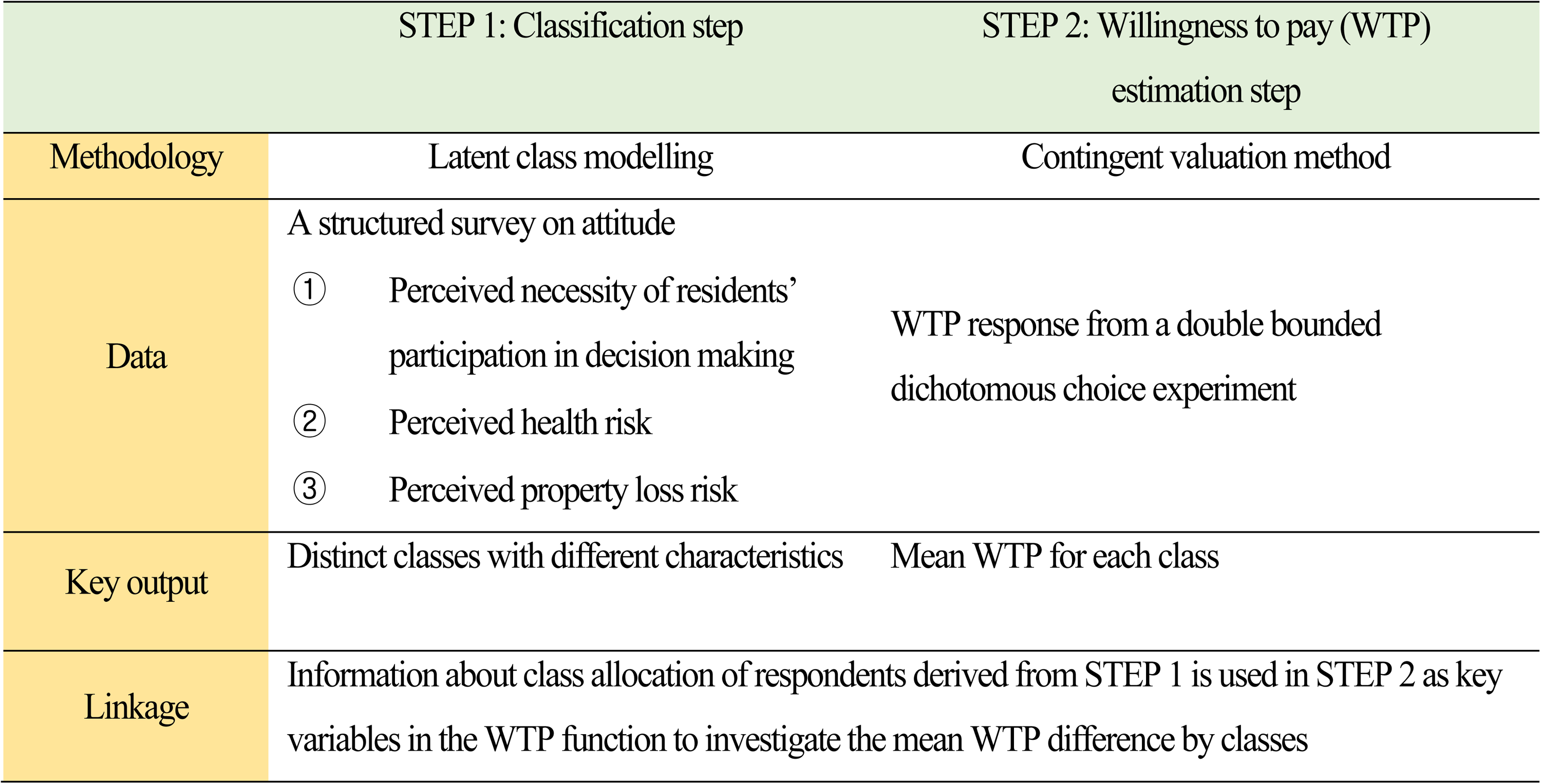
Conceptual research framework.
Consequently, we were able to explicitly identify subgroups of individuals within a population who share similar attitudes toward HV-PTL. By identifying subgroups within a population, latent class models can help policymakers target interventions to specific groups because its results provide information on the attitude, population share, and demographic information of each group. Moreover, the result of latent class modeling allowed us to account for unobserved heterogeneous groups that may be driving differences in WTP for undergrounding projects. That is, we analyzed WTP differences among latent classes. Hence, we applied two cascade steps using the latent class analysis and CVM in this study.
Latent class analysis
Latent class analysis is used to qualitatively identify different subgroups within populations that share certain distinctive characteristics. When observed data forms a series of categorical responses, the latent class model can successfully capture unobserved subgroups of individuals within a population by assuming that their membership can be explained by patterns of observed variables across survey questions, assessment indicators, or scale. 53 These unobserved subgroups are called (latent) classes.
To explain the statistical model, suppose we examined J observed categorical variables, each of which contains
The latent class model approximates the observed joint distribution of the manifest variables as the weighted sum of a finite number R. R is fixed prior to the estimation, based on either theoretical reasons or model fit.
Let




Contingent valuation method
After we identified latent classes based on attitudes toward HV-PTL in the first stage, the CVM was employed in the second stage to elicit WTP for the undergrounding project, focusing on the difference among classes. The economic values attached to non-marketed goods can be estimated in two ways: (1) the revealed and (2) stated preference data approaches. In the stated preference data approach, the CVM designs structured survey questionnaires and elicits WTP. The CVM is based on hypothetical questions about behavior with estimated values 55 and is a frequently applied method for assessing the value of non-market goods, including electricity infrastructure.56,57 CVM has become widespread, with significant improvements in its overall process and related scientific applications.58–62
Specifically, the CVM can be conducted in various formats according to the type of payment vehicle (tax, donation, charge) and survey structure (Single Bounded Dichotomous Choice [SBDC] and Double Bounded Dichotomous Choice [DBDC]). SBDC questions only occur once, whereas DBDC questions occur twice. In the DBDC model, if the respondents choose the answer “yes” in the initial bid, the bid question is followed twice. Alternatively, when the respondents answer “no,” the follow-up question proceeds to the half bid of the initial bid. In this study, we employed the DBDC as the CMV survey structure due to its advantages over the SBDC in terms of consistency and efficiency of the estimated parameters. 63 We used additional electricity charges as payment vehicles because they are likely to be familiar to most respondents and are realistic options in this context.
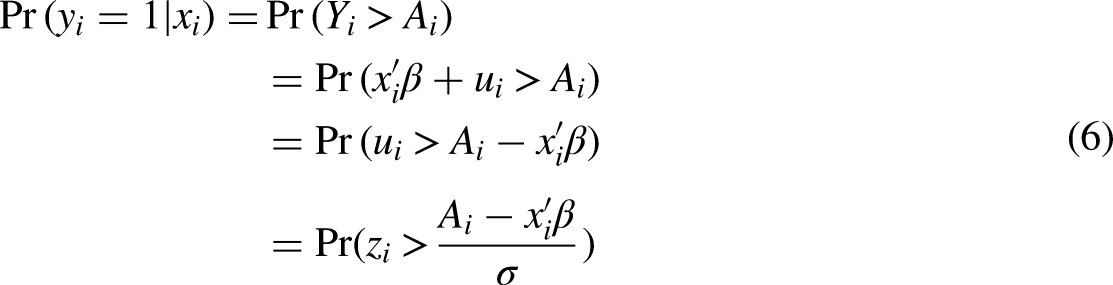
From a theoretical perspective, the CVM can be described as follows: For explanatory variable x, the utility Y of individual i is expressed as

In the conventional DBDC–CVM model, WTP is estimated by assuming that
Here,










Data
The survey was conducted by a professional online survey company (Embrain Survey) in January 2021. A sample was randomly drawn using purposive quota sampling based on the respondent's age, gender, and education level to representatively reflect the actual population in South Korea. To ensure the quality of responses, survey supervisors checked survey response time and treated respondents who quickly filled out the whole questionnaire as outliers.
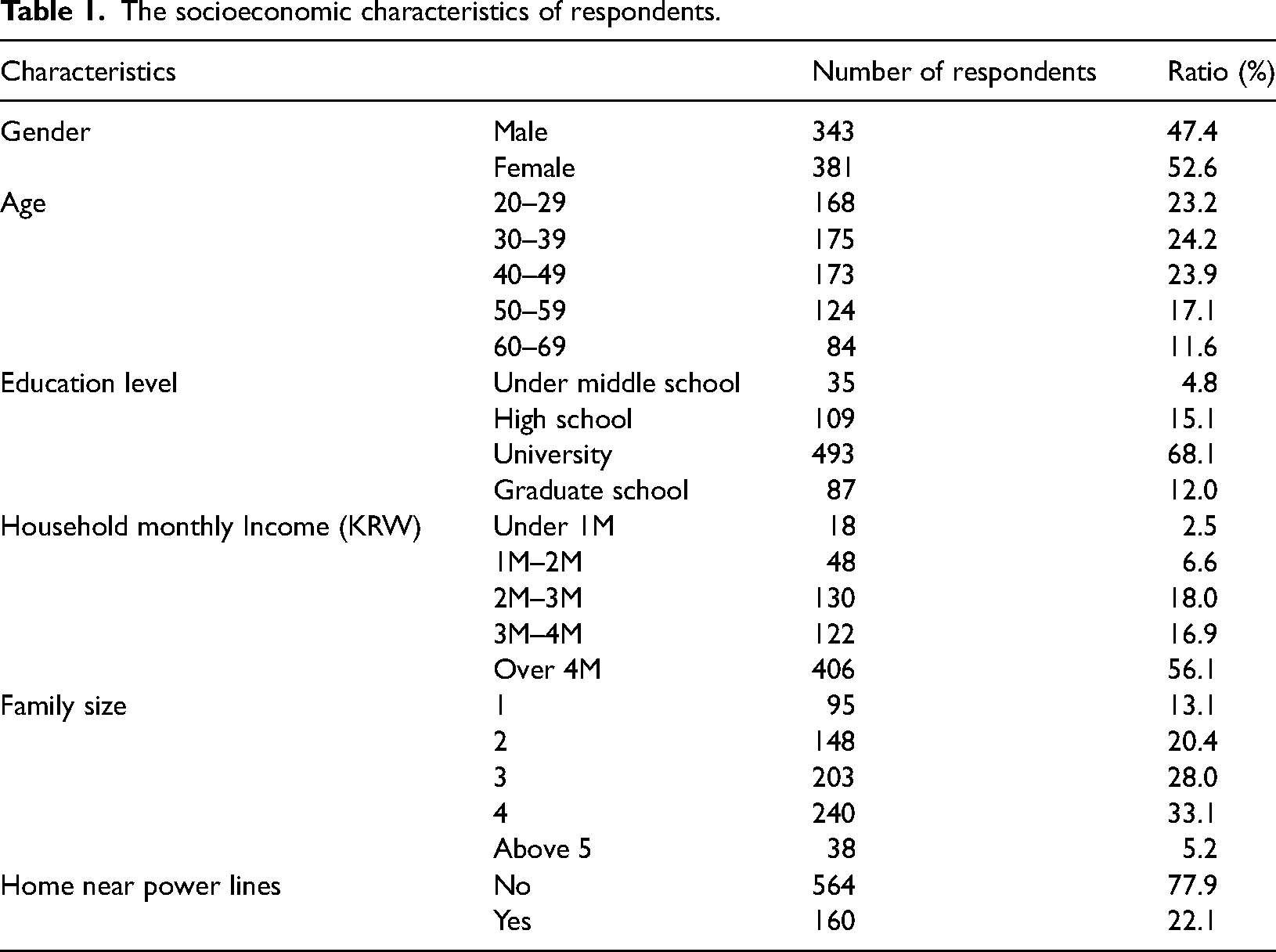
The questionnaire consisted of three parts. Part A included questions on respondents’ socioeconomic characteristics, including individual- and household-level variables (Table 1). Gender, age, and education level were individual-level variables, while household monthly income, family size, and home near power lines were household-level variables. The latter variable indicated whether a respondent lives within 500 m of the power transmission line, which could evidently influence WTP toward their undergrounding. Because family size is a critical variable in WTP determination related to energy infrastructure studies, it was included in the WTP estimation as a covariate. Overall, the demographic factors of the respondents reflected the population.
The socioeconomic characteristics of respondents.
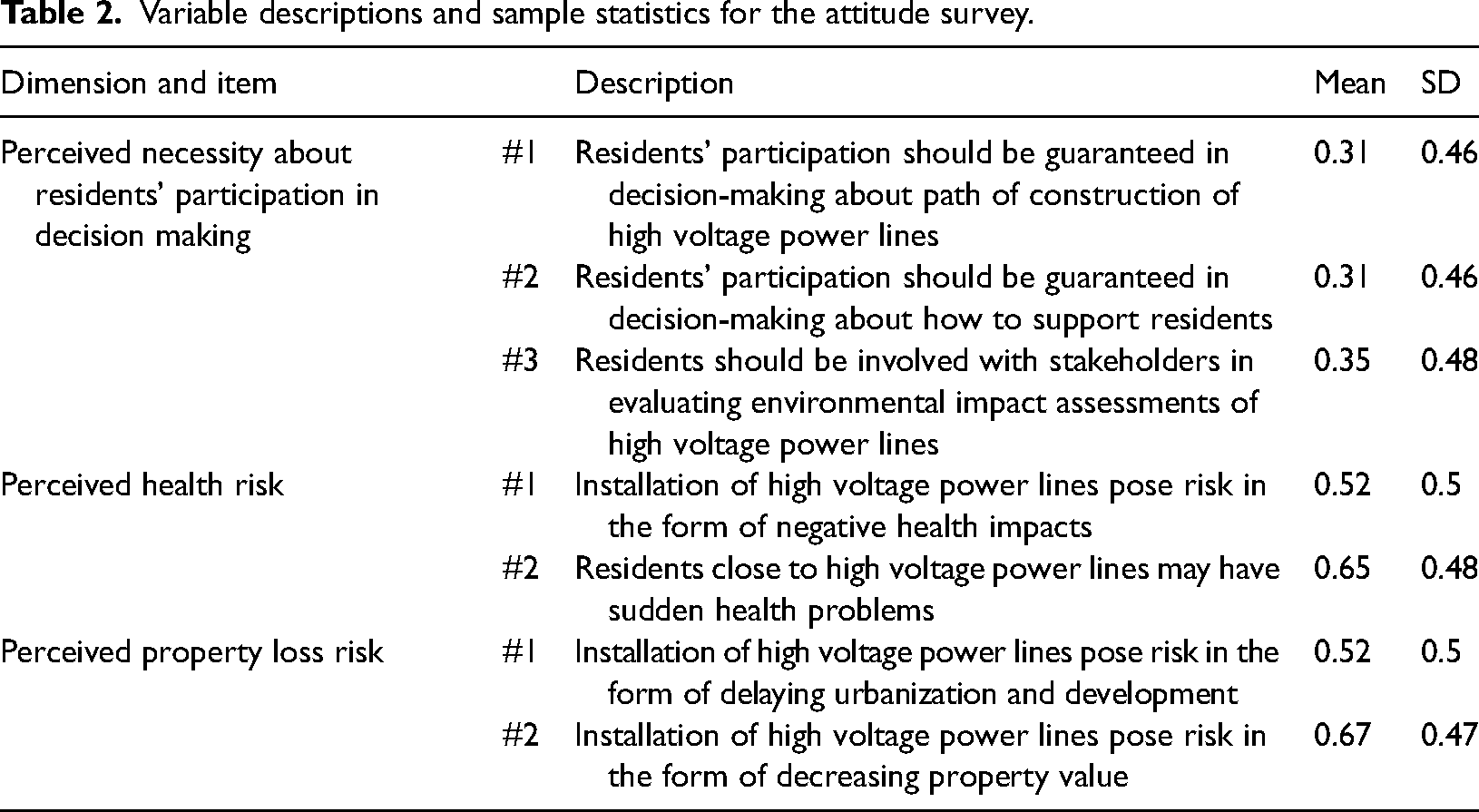
In Part B, the survey participants were asked about their attitudes toward HV-PTL. In particular, the questions asked about the necessity of their participation in the planning and decision-making process of HV-PTL construction, perceived health risk, and perceived property loss risk. These attitudinal variables were measured using dichotomous values (1 = agree and 0 = disagree) to apply the latent class model. That is, these binary categorical data can efficiently classify meaningful groups. The descriptions and sample statistics of public attitudes are presented in Table 2.
Variable descriptions and sample statistics for the attitude survey.
Part C included the CVM survey. Prior to any survey being undertaken, adequate description and information about the characteristics of a specific good should be provided to the respondents according to the guidelines of existing research.67–69 Here, respondents were given a brief introduction to the status of and potential improvements to power transmission lines in South Korea, with several well-illustrated visual cards presented. In particular, the study area was specified and described to respondents along with the status of the Korean power transmission system. The study area is a city in the southwestern Gyeonggi province that connects the thermal power plants of Chungcheong province with Seoul. Several power transmission towers are stationed the middle of this city. Table 3 shows the number of transmission lines and towers subject to undergrounding construction in this city.
Description of cable undergrounding project for contingent valuation analysis.

The WTP question requested each household to pay a particular amount of money each month for five years. Based on the results of the preliminary study and expert interviews, we set six initial bids from KRW 1000 to 6000 to propose an appropriate WTP and solve the starting point bias inherent in the CVM survey. Appendix A details the survey questions.
Empirical analysis and discussion
Segmentation by public attitudes toward power grids
The first step in using latent class analysis is determining the optimal number of classes. Different models were estimated by increasing the number of classes, and the optimal model was statistically selected after comparing the model fit with resepct to the number of classes. For instance, 

Model fit comparison.

Because there are four optimal latent classes according to the model fit comparison among different numbers of classes, we interpreted the latent class analysis results with these classes. Table 4 represents the item response probability, which shows the response patterns of the observed items for each class. By comparing item response probabilities among classes, the distinctness of each identified class could be assessed. The class membership probabilities in Table 5 indicate the likelihood that an individual is properly classified, thus enabling everyone to be categorized into their best-fitting class.
Item response probability for the four classes.
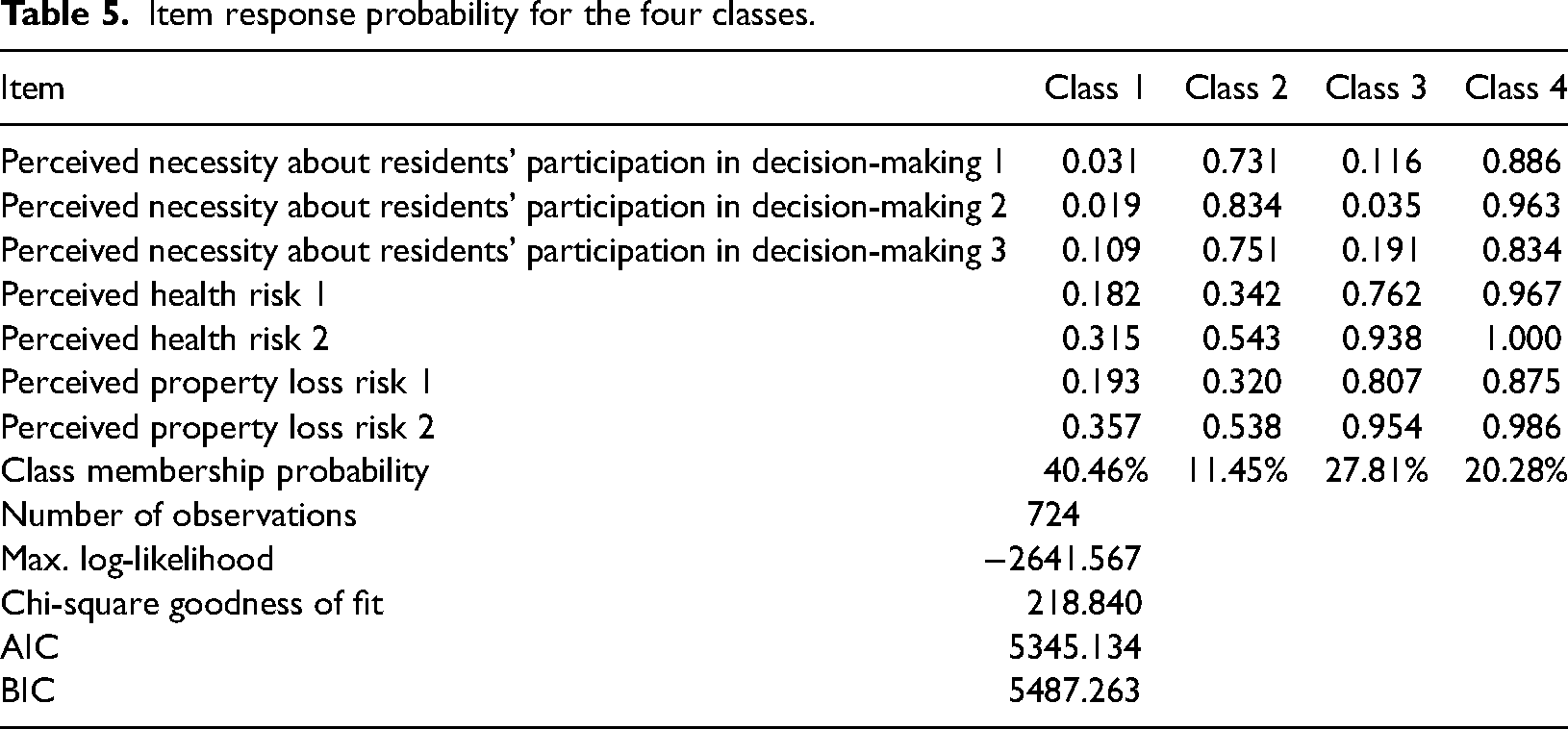
The item response probability results showed the common characteristics of each class. The results shown in Table 5 indicate the probability that the respondents in each class answered the question. First, regarding perceived residents’ participation in decision-making, most Class 1 respondents disagreed with question 1 from Table 2, while only 3% agreed. Conversely, in Class 4, the proportion of respondents who answered that resident participation is necessary (88.6%, 96.3%, 83.4%) was the highest among the four classes for the three questions. In the case of Class 2, 73.1%, 83.4%, and 75.1% responded in the affirmative to questions 1, 2, and 3, respectively.
Second, for perceived health risks, Class 4 showed the highest level with 96.7% and 100% of respondents agreeing to questions 1 and 2, respectively. For Class 1, only 18% and 31% positively answered each question, whereas for Class 3, 76% and 93% of people positively answered each question. In the case of Class 2, less than half agreed to the first question and slightly more than half agreed to the second question of the perceived health risk.
Lastly, for perceived property loss risk, Class 4 represents the highest level of perceived property loss risk followed by Class 3, whereas Class 1 represents the lowest level. For Class 4, 87.5% agreed to question 1 and 98.6% agreed to question 2. Although the response probability of answering in the affirmative for Class 2 was higher than that of Class 1, the results showed an overall low level of perceived property loss risk.
The representative characteristics of each class are summarized as follows. Class 1 had little concern for resident participation in the decision-making process regarding the construction of HV-PTL and low perceived health and economic risks. This class accounted for 40.46% of the total population, the largest share among the four classes. That is, the majority of those belonging to Class 1 have the lowest involvement in HV-PTL construction in South Korea among the four classes. Class 2 accounted for 11% of the total, and their most important characteristic is that they believe residents should actively participate in the decision-making process, whereas their perceived health and property loss risks were not high. Those in Class 3, 27% of the respondents, did not agree on the necessity for residents’ participation in the decision-making process but recognized a high level of risk for health and property damage. Class 4, which accounted for 20.28% of the total, showed the highest level of involvement, believing that resident participation in the decision-making process should be guaranteed and acknowledged both health and property damage risks.
WTP estimation
Many studies have presented the perceived advantages of underground cables, such as the esthetic value, as a means to increase public agreement with HV-PTL projects.30,32 From this perspective, and by using the CVM survey in the second stage of the empirical analysis, we estimated the public's WTP for cable undergrounding, particularly focusing on the WTP difference among the identified classes.
Table 6 highlights the distribution of respondents’ answers regarding monthly additional payments for undergrounding projects. Looking at the distribution tendency, with a larger initial bid, the overall proportion of respondents who answered “yes–yes” decreased and that of “no–no” increased. This is a natural outcome in CVM studies, which implies that the collected stated preference data are reliable. In addition, 250 out of 724 respondents answered “no–no–no,” demonstrating a refusal to pay and therefore zero WTP. These results support the application of the spike model as a reasonable approach for analysis.
Respondents’ answers to the initial bids proposed in the CVM survey.
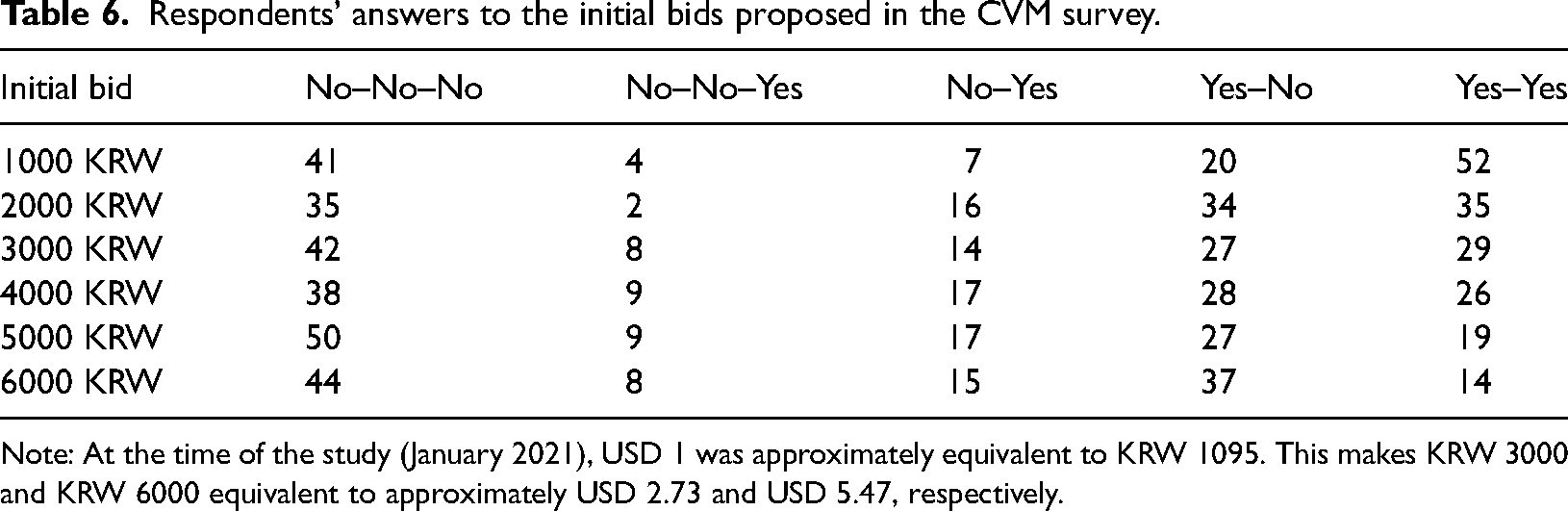
Note: At the time of the study (January 2021), USD 1 was approximately equivalent to KRW 1095. This makes KRW 3000 and KRW 6000 equivalent to approximately USD 2.73 and USD 5.47, respectively.
Table 6 shows the WTP estimation results for the conventional and spike DBDC models. To verify the statistical significance of the model, the likelihood ratio test was assessed for each model with the null hypothesis that all coefficients are jointly zero.
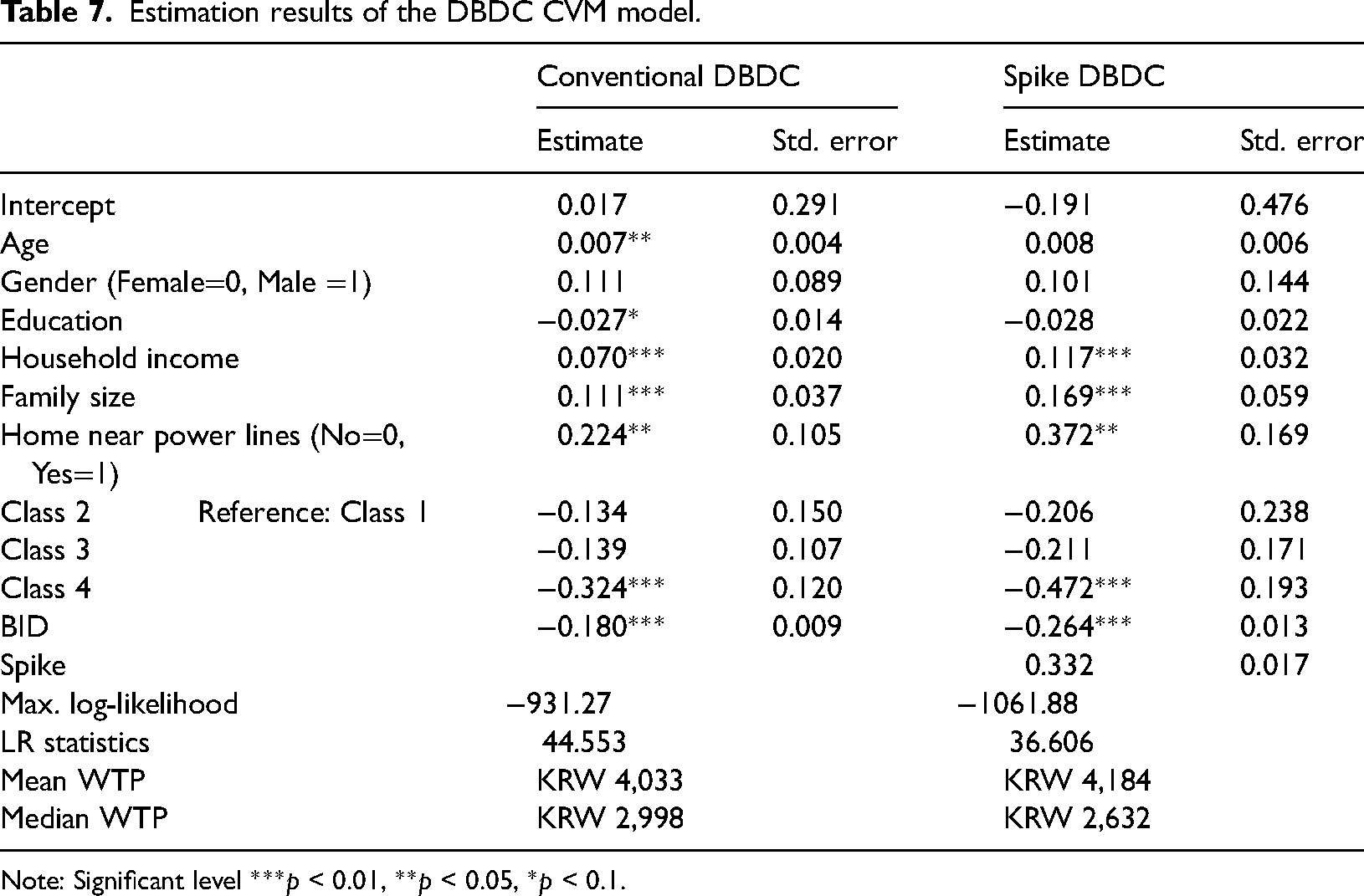
The estimation results of the conventional DBDC model in which the aggregated respondents who answered “no–no–no” and “no–no–yes” are presented in the second column of Table 7, and those of the spike DBDC model are presented in the third column. The estimated mean and median WTP values in the conventional and spike DBDC models were KRW 4033 (USD 3.7) and 2998 (USD 2.7), and KRW 4148 (USD 3.8) and 2632 (USD 2.4), respectively. By identifying people in the spike DBDC model who were not willing to pay at all, the mean and median WTP values slightly increased and slightly decreased, respectively. The coefficient of the bid price was statistically significant at the 1% level and was negative in both models, indicating that a higher bid price had a negative influence on the probability of obtaining a “yes” response. Based on the likelihood ratio test, the null hypothesis for both models was rejected with statistical significance at the 1% level, that is, the proposed model was statistically significant. The spike was estimated to be 0.332 and was statistically significant at the 1% level. The proportion of zero WTP responses was 34.5% (Table 6) and the spike was accurately estimated.
Estimation results of the DBDC CVM model.
Note: Significant level ***p < 0.01, **p < 0.05, *p < 0.1.
The CVM covariates were categorized as individual-level, household-level, and latent-class variables representing common attitudes. Among the individual-level variables, age was positive and statistically significant in the conventional DBDC model but not in the spike DBDC model. The statistical significance of gender and education level implies that these do not affect the likelihood of saying “yes” to a given bid. Among the household-level variables, household income was positive and statistically significant at the 1% level for both models, consistent with the findings of many previous studies that have analyzed WTP for energy infrastructure in Korea.70–72 The coefficient of family size had a positive effect, indicating that the larger the family, the higher the WTP. In addition, the coefficient of home near the power line was positive and statistically significant at the 1% level for both models, implying that people who live near HV-PTLs are more likely to pay more toward undergrounding.
To capture the relationship between attitudes toward HV-PTL and monetary value on undergrounding projects, we analyzed the possible differences in WTP by class. The reference was Class 1, containing respondents with essential characteristics of an overall low involvement in decision-making for HV-PTL construction with low perceived health and property loss risks. Moreover, this class represents the majority of the population compared with the other three classes. As a result of the analysis, the coefficients of Class 2, 3, and 4 all showed negative signs compared to Class 1, and those of Class 4 were only statistically significant at the 1% level for both models. These results imply that people who actively demand resident participation in the construction of HV-PTL and perceive that it will damage their health and property are less willing to pay for cable undergrounding projects.
Table 8 compares the difference in WTP according to a respondent's residential proximity to an HV-PTL and the difference in WTP according to the four identified latent classes of the empirical analysis. People living near transmission lines had a median monthly WTP value of KRW 3755 (USD 3.4) over a five-year period, which was about KRW 1400 (USD 1.3) higher than those not living near the lines. Two interpretations are possible; firstly, people living near power lines share similar problems in their daily lives, despite not living in the study area. This sympathy may make them willing to pay more for the project. Secondly, undergrounding projects in the study area may increase the expectation that their residential area will be undergrounded soon.
Comparison of WTP values by covariate change.
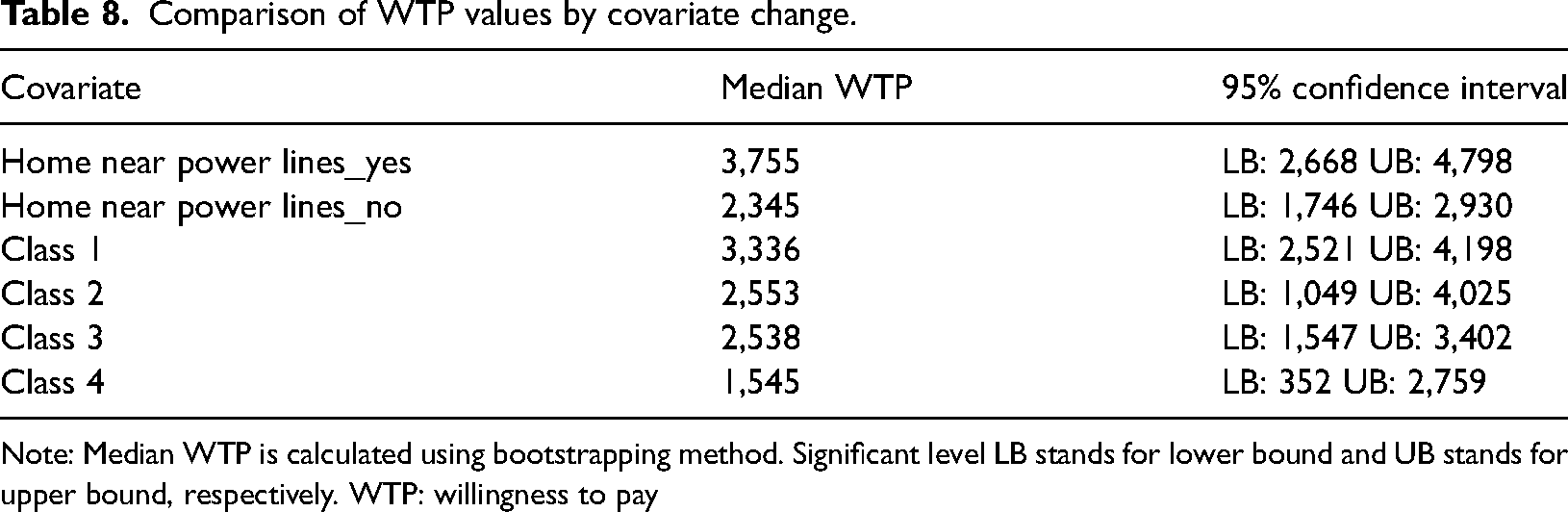
Note: Median WTP is calculated using bootstrapping method. Significant level LB stands for lower bound and UB stands for upper bound, respectively. WTP: willingness to pay
Examining the differences in WTP among the identified latent classes, those who did not consider transmission lines to be a major risk (Class 1) had a higher WTP than those who did (Class 4). The WTP of Class 1 was almost twice as high as that of Class 4, who were the most concerned about the issue. The lower WTP for the undergrounding project among those who have low public acceptance of HV-PTL may be of the opinion that the budget necessary for the undergrounding of transmission lines is not something that should be paid by the citizens. Class 1, on the other hand, was more receptive to the government's electricity infrastructure policy and places a relatively higher value on the government's projects.
Discussion
After collecting survey data on attitudes toward HV-PTL and the WTP for their undergrounding, the latent class model and CVM were applied sequentially. First, we found that people in South Korea can be classified according to multiple factors influencing public attitudes toward HV-PTL. Previous studies have attempted to determine these factors and identified that health and economic risks and the democratic decision-making processes that allow resident participation are critical.3–5 This study goes a step further and uses a clustering approach based on attitudes. Our empirical analysis revealed that most respondents did not believe they should participate in the decision-making process and were not concerned about the potential dangers of power lines. The preconception that negative attitudes toward HV-PTL will prevail was disproved by our study. Those who belong to Class 1 can be interpreted as a silent majority in other energy projects.13,14
Second, we quantitatively analyzed respondents’ attitudes toward HV-PTL using a latent class model and showed their heterogeneity and capability to be divided into four classes. In particular, some considered their participation in the HV-PTL construction decision-making process necessary but did not evaluate its potential risks, while others believed that they do not need to be involved in decision-making but that transmission lines themselves can cause serious health and property damages. Although a few studies have evaluated public acceptance toward energy infrastructure, such as spent nuclear fuel facilities 15 and renewable energy siting, 73 to the best of our knowledge, this study is the first to quantitatively evaluate the heterogeneity of public attitudes regarding HV-PTLs.
Third, the use of individual-level WTP can be interpreted into project-level economic benefits for the study area. The CVM results estimated a mean WTP value of KRW 4184 (USD 3.8) for undergrounding cables, with 33.2% of those surveyed unwilling to pay anything. For the expansion process, the estimated mean WTP value from the sample should be multiplied to the number of households in South Korea. According to the Ministry of Interior and Safety in South Korea, the registered number of households in South Korea was 23,472,895 in 2022. Therefore, the annual aggregate WTP amount for the undergrounding project in the study area is about KRW 787,256 million (USD 0.72 billion). Because the survey assumed that payments were only made over a five-year period, respondents represented their utility for the given scenario, which means the total benefit of the project is the summation of annual economic benefits in a five-year period. We can generate an estimate of the total economic benefit for the project by multiplying the estimate per household by the number of households. Consequently, the total public WTP for undergrounding projects is given as follows.
Fourth, we found that Class 4 was less willing to pay for cable undergrounding compared with Class 1. This result has two possible explanations. First, people who perceive the potential risk of transmission lines as serious are less willing to accept an increase in the electricity price for undergrounding. They feel that non-citizen stakeholders, such as government and utility companies, should unconditionally install underground cables at their own expense. Second, as supported by earlier studies, a significant number of people perceive cable undergrounding as dangerous. Similar to overhead HV-PTLs, those underground generate electric and magnetic fields and that right above and a few meters to the side of an underground line, the magnetic field is stronger than that right below the overhead. 6 Although underground cables can replace overhead infrastructure such as towers and are often seen as a means to avoid a negative visual impact on landscapes, undergrounding projects can cause considerable landscape changes depending on the circumstances.
Finally, the high proportion of respondents with zero WTP suggests that households may resist paying an additional electricity charge. Thus, the Korean government should continue to conduct public outreach to increase the WTP for cable undergrounding considering that this could be a viable strategy for accelerating planning and approval procedures required for a stable supply of electricity with newly built, large-scale renewable sources.
The results derived from this work can contribute to the literature and impact research and policy. Because public attitudes toward HV-PTL were heterogeneous, the people's negative perception against them was not definitive. Existing studies have mainly focused on identifying the factors influencing negative attitudes and neglected to investigate and categorize public perceptions. This study successfully identified subgroups of the population and described their common characteristics.
Policy implications
In 2020, South Korea proposed a long-term low GHG development strategy called the “2050 Carbon-Neutral Strategy.” It emphasized the movement toward green electricity by increasing the share of electricity generation from renewable energy sources, such as solar and wind power. Without understanding how South Koreans perceive HV-PTL, the Korean government will inevitably encounter public conflict during any power grid expansion. Despite the importance and urgency of this issue, none of the extant studies have thus far quantitatively examined the heterogeneity of public attitudes toward HV-PTL.
In many countries that strive to achieve carbon neutrality by the end of 2050, increasing the share of renewable energy in the power generation sector is an essential undertaking. In the EU, integration of large-scale and decentralized renewable energy sources is required; however, such integration requires substantial and rapid improvements to existing transmission grids.74–76 Owing to this, the continuing investment in transmission facilities to ensure a reliable supply of electricity from the source to the receiver is inevitable. 77
This study has several implications for policymakers in South Korea. First, because people's attitudes are heterogeneous and the majority have low involvement in this issue, making efforts to accurately understand citizens’ perceptions is necessary for effective communication. Second, the Korean government is expecting a dramatic increase in large-scale renewable energy sources and has thus been planning to extend the length of transmission lines by 13,558 C-km by 2034. 2 Consequently, analyzing social cost and benefit for the next power grid plan according to the South Korea 9th Basic Plan for Power Supply and Demand (2020–2034) is an essential task. The Korean government has thus far shown a lukewarm reaction to this issue in the “2050 Carbon-Neutral Strategy.” To prevent unnecessary public conflict and timeously establish a carbon-neutral society by 2050, government officials must comprehensively plan for HV-PTL, including undergrounding them. Because simultaneously converting overhead lines to underground cables is impossible, priorities should be determined following a regional cost-benefit analysis and proceed sequentially.
Limitations
Despite its theoretical and practical implications, this study has several limitations. First, although the CVM is a suitable approach for measuring the monetary value of non-market goods, it may suffer from a hypothetical bias. The hedonic pricing approach can partially overcome this limitation because it can conceptually measure the fall in land prices due to overhead transmission lines. A service replacement cost method could also access the value of undergrounding cables, which has yet to be attempted in this field. 78 Second, respondents’ attitudes can change if HV-PTLs are built near their residential areas, although this study already includes respondents who live near power lines. To overcome this limitation, a panel survey and dynamic analysis of the same respondents could show how people's perceptions change over time.
Conclusion
We investigated the relationship between public attitudes toward HV-PTL and the WTP for undergrounding projects and found that South Koreans had considerably heterogeneous attitudes on the subject. We also related the different characteristics of four groups with the acceptability of undergrounding projects and determined differences in WTP for each. This provided a deeper understanding of how perceived attitudes toward HV-PTL affect people's monetary valuation of undergrounding projects. Identifying public acceptance in multifaceted dimensions is imperative because a silent majority could passively agree, potentially having a higher WTP for undergrounding projects than those who are strongly opposed.
Footnotes
Declaration of conflicting interests
The author(s) declared no potential conflicts of interest with respect to the research, authorship, and/or publication of this article.
Funding
The author(s) disclosed receipt of the following financial support for the research, authorship, and/or publicationof this article: This paper was supported by Konkuk University in 2022

Contingent valuation method questionnaire.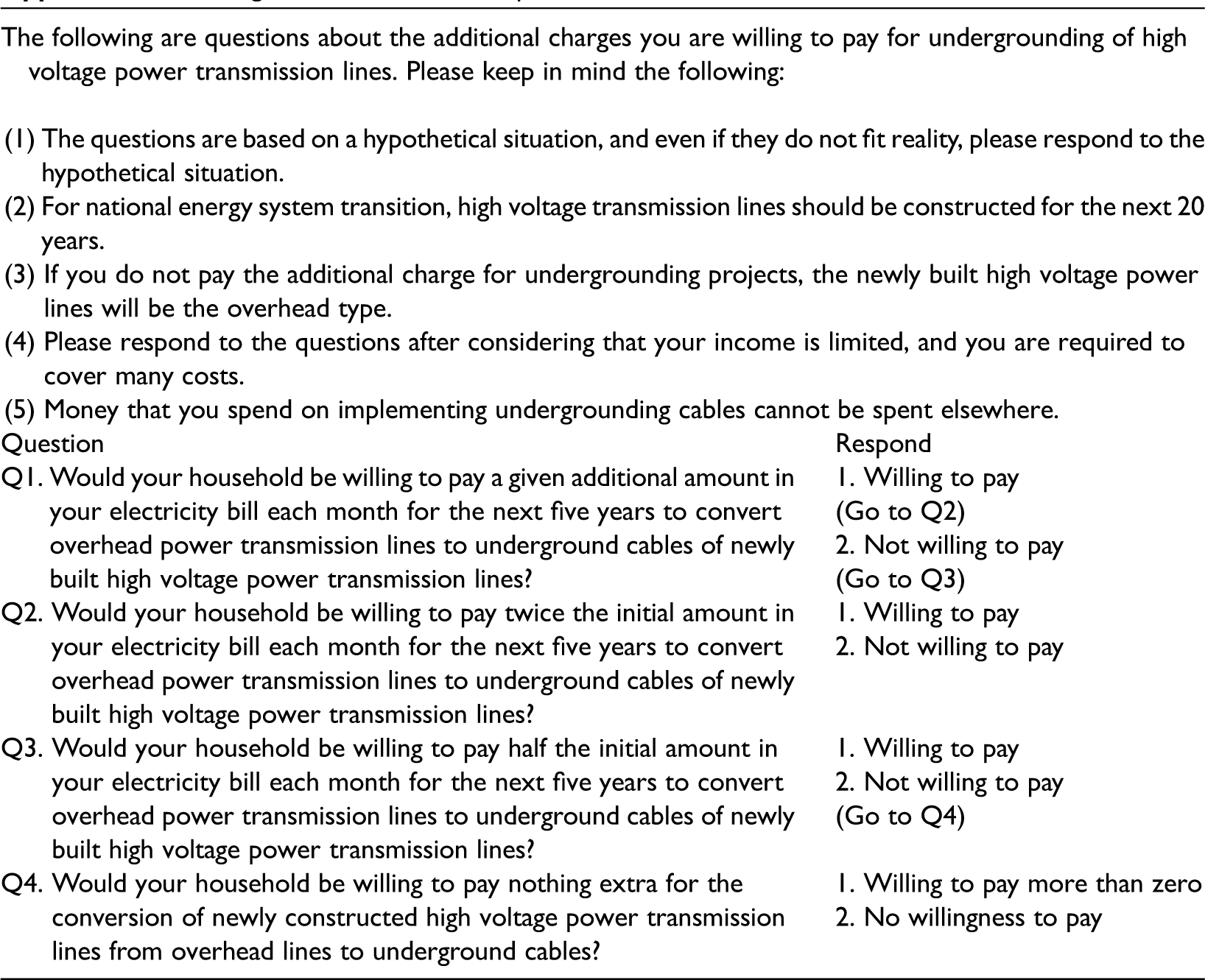
The following are questions about the additional charges you are willing to pay for undergrounding of high voltage power transmission lines. Please keep in mind the following:
(1) The questions are based on a hypothetical situation, and even if they do not fit reality, please respond to the hypothetical situation.
(2) For national energy system transition, high voltage transmission lines should be constructed for the next 20 years.
(3) If you do not pay the additional charge for undergrounding projects, the newly built high voltage power lines will be the overhead type.
(4) Please respond to the questions after considering that your income is limited, and you are required to cover many costs.
(5) Money that you spend on implementing undergrounding cables cannot be spent elsewhere.
Question
Respond
Q1. Would your household be willing to pay a given additional amount in your electricity bill each month for the next five years to convert overhead power transmission lines to underground cables of newly built high voltage power transmission lines?
1. Willing to pay
(Go to Q2)
2. Not willing to pay
(Go to Q3)
Q2. Would your household be willing to pay twice the initial amount in your electricity bill each month for the next five years to convert overhead power transmission lines to underground cables of newly built high voltage power transmission lines?
1. Willing to pay
2. Not willing to pay
Q3. Would your household be willing to pay half the initial amount in your electricity bill each month for the next five years to convert overhead power transmission lines to underground cables of newly built high voltage power transmission lines?
1. Willing to pay
2. Not willing to pay
(Go to Q4)
Q4. Would your household be willing to pay nothing extra for the conversion of newly constructed high voltage power transmission lines from overhead lines to underground cables?
1. Willing to pay more than zero
2. No willingness to pay