







Abstract
Nowadays, renewable energies are capturing the world's attention, particularly in light of the phenomenon of climate change and carbon dioxide emissions, which have caused major environmental damage. As a result, many investors have recently focused on developing investments in renewable energy projects worldwide, specifically photovoltaic and concentrated solar power plant projects. These solar technologies are considered among the most profitable solutions for generating power from a natural, free, and unlimited energy source. This review paper discusses one of the most significant issues affecting the performance of these solar systems, which is known as soiling. It has been supported by several studies in various nations with different climatic conditions, which offered accurate empirical data on the degradation rate of photovoltaic and concentrated solar power systems’ production due to the soiling effect. Furthermore, it provides various mitigating soiling ways, including manual and autonomous cleaning methods for both solar technologies. Ultimately, it summarizes each cleaning technique's main advantages and drawbacks, specifying its applicability according to the location characteristics and climatic conditions. Additionally, the review results reported in this work are intriguing enough to warrant further development of concentrated solar power and photovoltaic technologies.
Introduction and background
The production of absolute green electricity and the elimination of CO2 emissions are currently the main goals that all experts and researchers in the energy domain are striving to achieve soon. This challenge makes photovoltaic (PV) and concentrated solar power (CSP) solar technologies the focus of many worldwide investors, especially in recent years. They are considered the best energy systems in terms of efficiency, reliability, and long lifespan. 1 The first one converts sunlight directly into electrical energy. While the second use the thermodynamic cycle to convert the sun's heat into electricity. Due to the significant drop in worldwide costs, PV technology has witnessed significant expansion and development. In contrast, CSP technology has grown moderately due to its capacity to store thermal energy at a low cost and later use. 2 In addition, according to the predictions, by 2040, renewable energy sources will generate 14% of overall energy production. 3 The following parts of this introduction are dedicated to providing a series of statistics concerning PV and CSP development over the past years, as well as forecasts of their progress and goals to be achieved shortly. Also, the critical issue that affects the power generation process of both technologies, which is the main subject of this work, will be discussed.
The CSP solar system is a promising electricity source, attracting the attention of numerous countries such as Spain, Morocco, South Africa, India, the United States, China, Portugal, and others. This solar technology is known in four different types; parabolic trough collectors (PTCs), solar tower (ST), linear fresnel reflectors (LFRs), and parabolic dish collectors (PDC); where the difference between them is in terms of design and potential. CSP technology with a PTC configuration has many advantages, including a promising return on investment, mature technology, extensive operational experience, and simplicity of coupling with fossil fuels and other renewable energy sources. 4 Nevertheless, based on the comparative analysis presented in 5 between these four configurations, it has been shown that although the PTC is the most exploited technology, it has a smaller improvement potential than others. Whereas LFR, ST, and PDC have considerable improvement potential making them more attractive for research projects. On the other hand, due to the ST system's capacity to work at greater temperatures than the PTC system, it is expected that the ST system will become the most predominant by 2025. 6
The CSP technology was mentioned in various energy scenario studies as an effective way to mitigate global CO2 emissions. 7 The production of solar thermal electricity (STE) generated by CSP plants worldwide has developed significantly since 2010. 8 Then, in 2019, CSP production grew by 34%, adding nearly 600 MW of CSP capacity, exceeding the 2011–2018 annual average of 24%. Nevertheless, in order to meet the Sustainable Development Scenario SDS goal, yearly capacity growth must increase to 8 GW annually by 2030, a significant increase from where they are now (see Figure 1). 9 South Africa, Morocco, and China are the leading countries where the majority of the rise in CSP capacity is expected to come from them, as they will be bringing online the most significant facilities with the longest storage hours. 9 In addition, in the sunniest regions, a total of 83GW might be installed by 2030, rising to 342GW by 2050; this predicted power output will come from the Middle East (55%) and Northern Africa (30%), with the remaining 15% coming from European countries, presuming that CSP technology develops modestly. 10
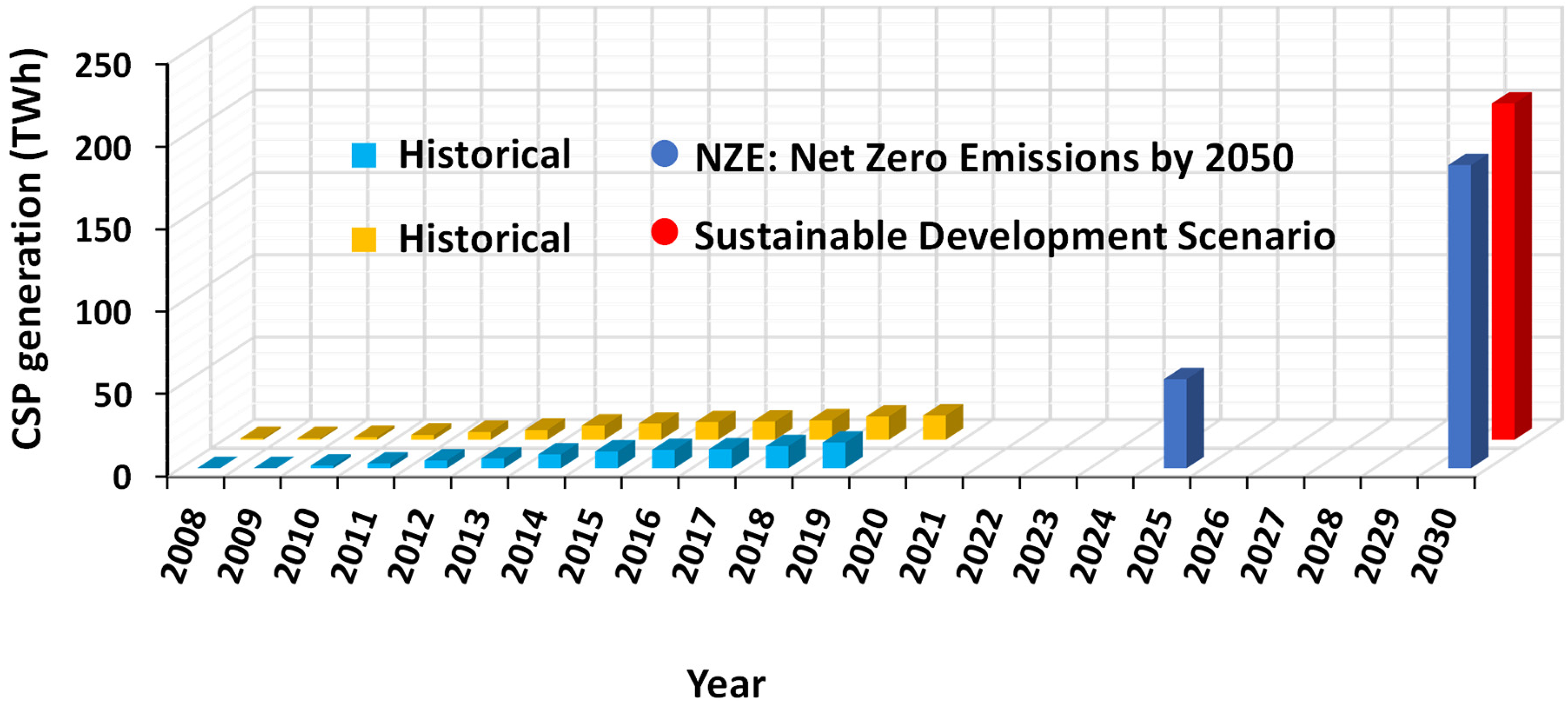
On the other hand, the IEA has established an objective for CSP system power production of 630 GWe by 2050. 11 Based on the studies conducted on climate change mitigation in the long term, a substantial progression of CSP plants is anticipated by 2050. 8 In this context, a worldwide viewpoint was provided by IEA (2011), in which it expects a hypothetical decrease in long-term global energy-related CO2 emissions at around one-tenth of current levels—beyond 2060. It is based on the assumption that the share of electricity in final energy consumption will be substantially higher and that by 2050, installed CSP capacity will be six times greater globally than it is now, producing up to 25,000 TWh of STE. 8
In 2020, the world experienced a severe economic crisis due to the emergence of the coronavirus disease 2019 (COVID-19) pandemic, which had a direct and negative impact on human life, the environment and industry. According to the study conducted by the IEA (2020) on the influence of COVID-19 on the growth of renewable electricity generation, the COVID-19 crisis has resulted in a considerable decrease in global electricity demand due to movement restrictions, lockdowns, and economic stagnation. It is evident from the statistics that was conducted in April 2020 compared to those conducted in April 2019, which showed that energy consumption had decreased by 5% in the US, 12% in Germany, 18% in Spain, and 23% in India. 12 However, green electricity production has not ceased and has continued despite the slow progress due to the epidemiological situation of COVID-19. For example, in the CSP industry, the production capacity increased by about 200MW in 2020, but this increase was in China alone, which was 66% lower than in 2019 and well below the average of the previous ten years. 13 Unfortunately, as demonstrated in Figure 1, the total CSP production in 2020 remained almost the same as in 2019.
As the figure above demonstrates, the CSP expansion trend is not toward the NZE scenario by 2050. Thus, the IEA has estimated that at least 31% of the average annual development between 2020 and 2030 is required to reach the Net Zero Emissions with an average of 204 TWh of energy production from CSP in 2030, which corresponds to an addition of about 6.7 GW of capacity each year. 13 Furthermore, from 2015 to 2020, the majority of generation capacity additions were made in China, Morocco, and South Africa, and these countries are expected to continue to dominate deployment soon, as well as the UAE. 13 In brief, the previous figure demonstrates the difference between the goal of the SDS that was in the previous year and the new objective of the NZE by 2050 Scenario, since the latter aims to increase even more the CSP capacity, thus its expansion around the world by the next ten years.
On the other side, although the energy produced by CSP plants is considered better than PV plants in terms of quality thanks to the thermal energy storage system that allows to stock the supplemental generated power and use it later thereby maintaining the stability of the grid, some constraints hinder the growth of CSP systems, such as the large solar field investment that accounts for nearly 50% of total cost and 40% of energy losses, leading to the expensive electricity generation. 16 For this reason, several studies in the recent years have been carried out to minimize the cost of producing electricity from CSP technology to make it more economical and attractive to investors in this sector.17–21
Regarding PV systems, they have become the dominant solar technology worldwide and are more commercialized than other renewable technologies, particularly in recent years. Germany and Italy were among the European countries where solar PV was widely deployed. Then, China began sweeping the market in 2013, followed by Japan and the United States. 22 Before the beginning of 2019, the global electricity production from PV solar technology has risen by 31%, increasing productivity with more than 136 TWh of overall renewable energy technologies. 23 Furthermore, it has been predicted that PV electricity production will reach nearly 3300 TWh in 2030, compared to 580 TWh in 2018. 23 In the 2014 IEA technology roadmap, it has been forecasted to increase the percentage of power production from PV solar technology to 16% by 2050, as described in Figure 2, more than 11% predicted in the 2010 roadmap. 24
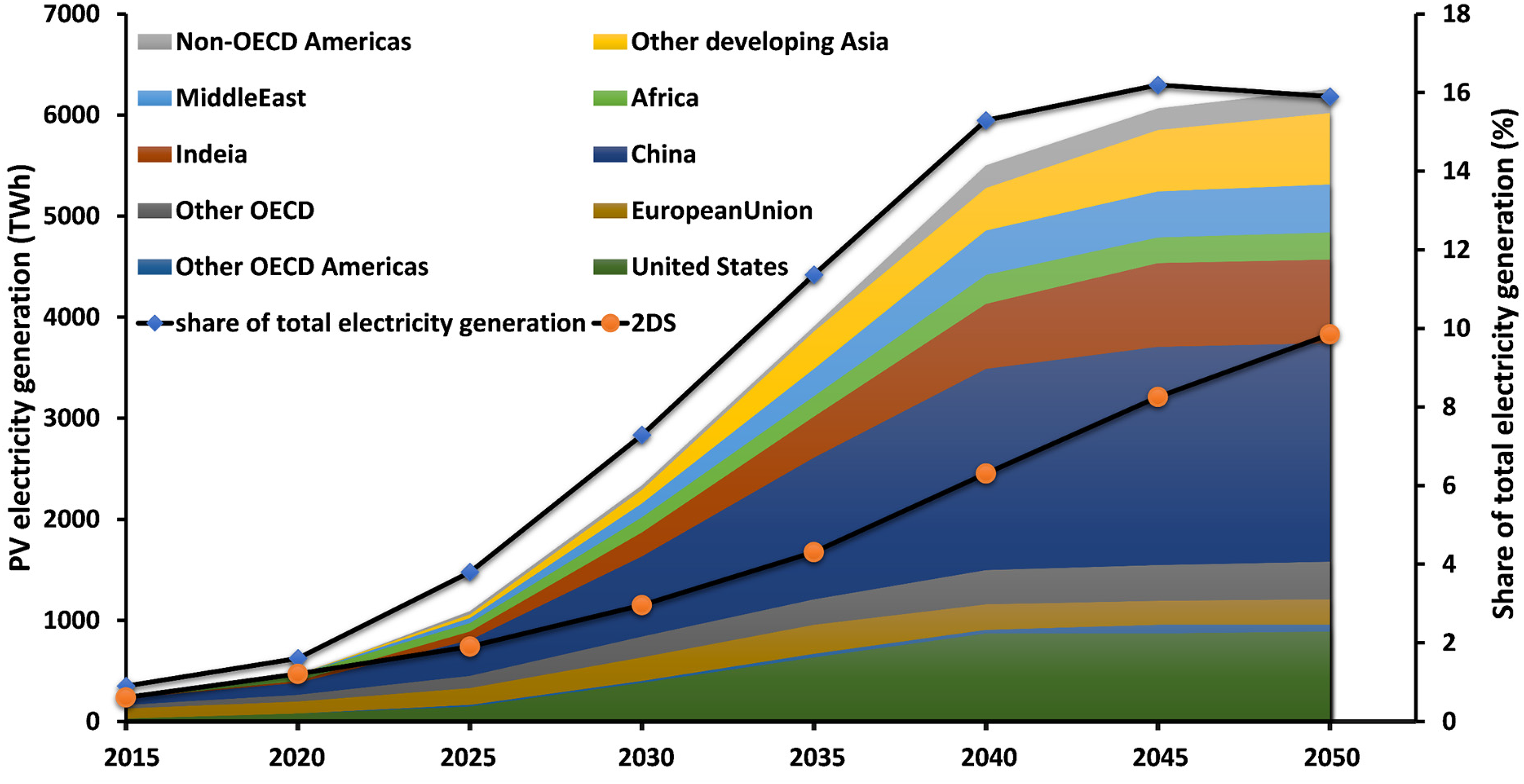
Forecasts for the development of global electricity production through photovoltaic systems by 2050. 24
According to the IEA (2021) report, the power production from solar PV technology witnessed an increase in 2020 than other renewable technologies, which reached 821 TWh due to the 156 TWh of power capacity production that has been added, corresponding to 23%, allowing it more attractive in the markets for the next years due to its motivated cost. 25 Besides, the NZE by 2050 scenario has set a new target for the near future that is more ambitious than the previous sustainability scenario, which aimed to add 630 GW of net electricity generation capacity from solar PV technology in 2030, representing an average annual production of 24% between 2020 and 2030 (see Figure 3).
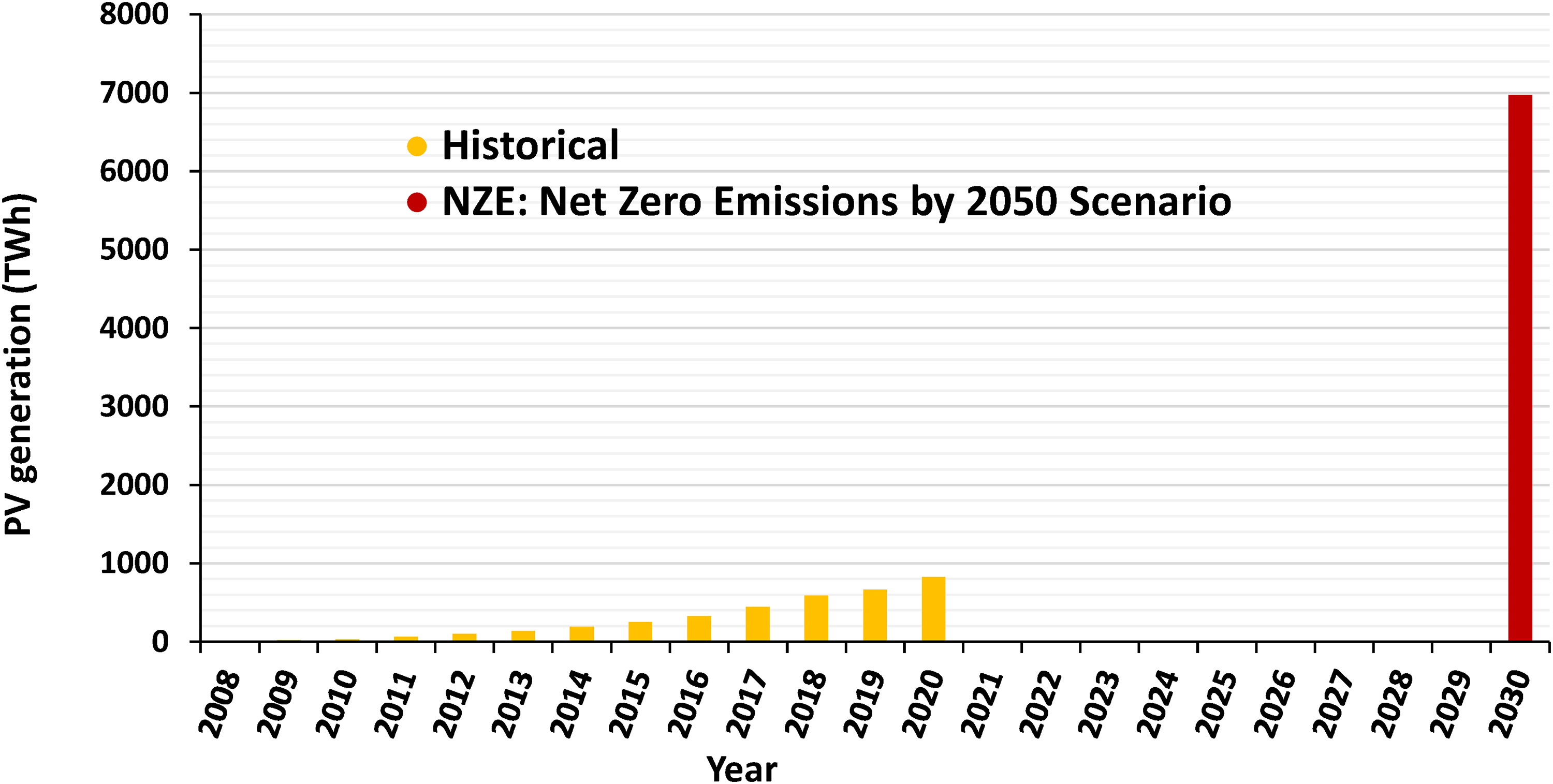
Solar photovoltaic (PV) power generation in the NZE scenario, 2000–2030. 26
Recently, the IEA issued a new report (IEA 2022) on the global progress of solar PVs. It is stated that 2021 saw a record-breaking 179 TWh rise in solar PV electricity production, a 22% increase over 2020, which is divided primly between China; the first and the most generator one in the world with an average of 38% of capacity added in 2021; 17% was for the United States, and 10% was for the European Union. 27 Nevertheless, IEA has clarified that to adhere to the Net Zero Emissions by 2050 Scenario, yearly production increase must average 25% from 2022 to 2030. 27 Therefore, many researchers have proposed in the last few years to combine the energy produced by PV systems with that of CSP systems to solve the constraints of CSP and PV plants and exploit solar energy to the fullest extent possible. In fact, there are various hybridization techniques, including the PV-CSP hybrid system, which uses just solar electricity and has been demonstrated to be profitable. With the maturation of PV and CSP technologies over the last few years, the progress of the PV-CSP hybrid system has rapidly advanced. It is, for now, the primary topic of research in the solar energy domain.28–31
The economic viability of all solar technologies is determined by the direct normal irradiance (DNI) (for CSP) and Global Horizontal Irradiance (for PV) levels available at the chosen location. However, there is a variety of negative factors that influence the performance and the lifetime of PV solar cells, especially when working outdoor under real climatic conditions effects without control, including ambient temperature, relative humidity, radiation intensity, wind speed, and ultraviolet (UV) radiation,23,32 which the same thing applies also on CSP systems. Besides, dust accumulation and soiling are also among the crucial issues that have a high impact on the performance of PV panels and CSP mirrors, lowering significantly their power production efficiency.
Indeed, soiling poses a significant challenge to both solar PV and CSP technologies. Factors such as dust accumulation, bird droppings, industrial emissions, sandstorms, and various forms of pollution gradually lead to a noteworthy decline in the performance of solar systems over time, particularly when a cleaning schedule is not implemented. Since 2000, extensive research has been conducted on the soiling effect on the performance of PV systems in various locations with different environmental characteristics33–37. The efficiency of PV modules has been observed to decrease by approximately 35% due to the accumulation of dust on their front surfaces.38,39 Whilst in CSP plants, the presence of dust-laden atmospheres can cause considerable decreases in the solar field's optical performance, resulting in significant losses in thermal and electrical generation. In addition, CSP plants are generally installed in the desert regions, where DNI levels are high. These regions are typically characterized by water scarcity, which contributes directly to the increasing cleaning costs; therefore, the levelized cost of energy (LCOE) increases.
Dust particles deposition and other pollutants on the CSP mirrors and tubes, as well as on the PV module surfaces is known as soiling; this frequently caused a significant reduction in power generation, rendering an installation commercially unviable, thus necessitating its removal.40,41 By 2023, soiling losses will have increased dramatically to 4%–7%, resulting in 4–7 billion € in economic losses. 40 Moreover, when dust or other impurities collect on the PV module's glass surface, certain incident rays are absorbed or reflected, decreasing the amount of light transmitted into the solar module surface. In dusty settings, soiling-related losses to PV energy yield can easily surpass 1% loss per day. 42 On the other side, regarding CSP technology, soiling causes modification of solar ray's reflection characteristics during the optical processes, and the internal reflections inside the glass are increased. This operation can produce a 5–10 times worse soiling effect than PV. 43 In addition, cleaning the CSP system mirror's surface necessitates monitoring maintenance procedures, which commonly include distilled water. Besides, regular cleaning in certain areas, notably those where the labor and water are costly or limited usually needs high operation and maintenance (O&M) expenses, which leads to a high LCOE. 44 Therefore, various methods are developed for enhancing the cleaning techniques, like manual or automated cleaning methods, dry or wet cleaning ways, and other cleaning tools like brushes, chemical products, etc. In addition, utilizing the natural cleaning processes of wind, rain, and gravity is another way to mitigate the soiling rate.45,46 Thus, a great deal of research has been carried out on developing of anti-soiling coatings to maximize the natural cleaning effect.44,47–49
Over the next decade, solar programs in the sun-drenched Middle East, North Africa, China, the United States, and India have set hundreds of Gigawatt targets. In the majority of these places, in addition to having high concentrations of airborne and sediment particles, sandstorms, extreme pollution, or other difficult weather conditions, they also frequently have limited water supplies, which hampers certain cleanup and restoration operations. 50 Different cleaning technologies are developed in the “Cleaning techniques description” section.
Generally, the accumulation of dust and dirt on PV surfaces comes mostly from the air, which is the main source of PV module soiling, since it contains different dust sources such as sand, soil, rock, construction, traffic emissions, and also bird droppings, pollens, and others, as illustrated in Figure 4. 51 The nature of soiling differs from place to place worldwide depending on the environmental characteristics of the location.
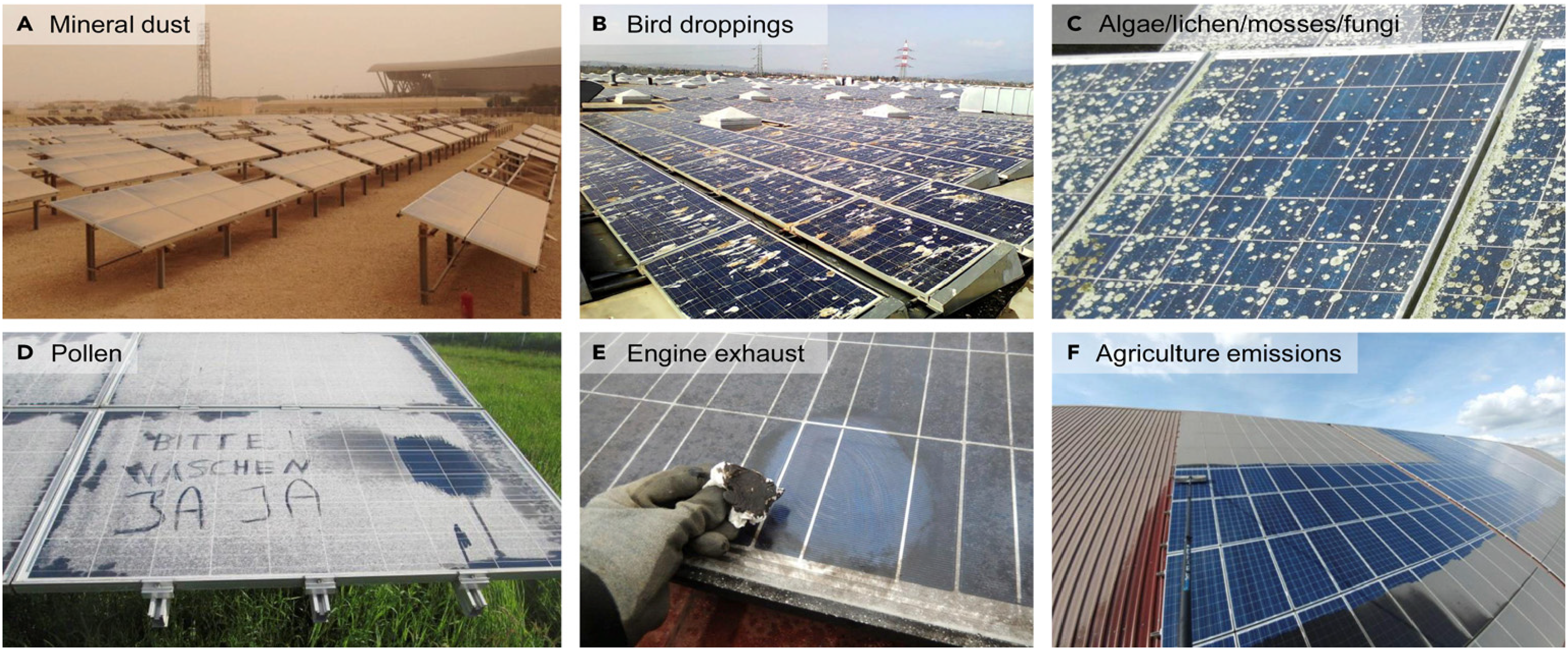
Photographs showing real-life instances of many forms of dirt: Mineral dust deposits (A), bird droppings (B), biofilms of bacteria, algae, lichen, mosses, or fungi (C), plant debris or pollen (D), engine exhausts or industry emissions (E), and agricultural emissions such as feed dusts (F). 41
Depending on the region's environment, the type of contaminants differs from one place to other. Among the most dominant types of pollutants in urban regions are airborne particles from industries, particles from construction, and vehicle emissions. While in rural areas, there are other kinds of contaminants like windswept soil, plant waste, or a variety of fertilizers. The soiling cycle consists of four steps, which are listed as follows: particle generation, particle transport, dust particle deposition, and particle surface adherence. 40 The PV performance deterioration is caused by three factors, namely, primary dust material (chemical composition), the dust particle size distribution (expressed by mean diameter and standard deviation), and the dust layer density that is on the PV panel surface. 52 Also, the fine particles influence strongly on PV cell efficiency than coarse particles, as they are capable of screening efficiently the incident sunlight. 52
On the other hand, since CSP plants are usually implemented in dry regions, these locations are more characterized by dust and sand in the air. Thus, this leads to the accumulation of dirt and dust on CSP mirrors, absorption and scatter of direct sunbeams, mirror reflectance decreases, and the solar fields’ efficiency and electricity sales are also impacted. 53 In this context, A.A. Merrouni et al. have conducted a real study about the soiling effect on CSP plants of Morocco and Portugal in terms of thermal performance, power generation, and LCOE. 54 The findings revealed that Morocco is more affected by dust and dirt accumulation compared with Portugal, with an average daily soiling rate of almost 1.6% and 0.06%, respectively. The results also demonstrated that both countries are suitable for CSP installation. Similarly, according to the research conducted by Bellmann et al., 55 in which they compared the optical soiling losses of CSP and PV technologies when the presence of the same dust quantity on their main optical surfaces. They found that the soiling losses in CSP technology are greater than PV technology by about 8 and 14 times. Furthermore, light rain and wind's combined effect severely pollute the mirror's surfaces, while strong rainfalls effectively eliminate the adhering dirtiness. 56
This paper is structured into three primary sections. The “Introduction and background” section, which was given first, started by providing background information on the progress achieved by solar PV and CSP technologies over the past years, as well as new projections and targets’ proposed for the near future. Then, it concluded by presenting an overview of the soiling effect on solar PV and CSP technologies, which is among the major problems that seriously affect the output effectiveness of these solar systems. The “Literature on soiling impact on PV and CSP performance” section presents an exhaustive literature on the impact of dust and dirt accumulation on PV and CSP plants, known as soiling. In order to solve this problem and enhance the performance of these solar technologies, regular cleaning is mandatory. However, choosing the most practical cleaning method and frequency depends on the environmental circumstances. In this regard, various cleaning techniques, whether manual, semi-automatic, or fully automatic, that are used to remove settled dust particles from PV and CSP front surfaces are described in the “Cleaning techniques description” section. The primary goal of this study is to investigate different cleaning methods used for cleaning PV and CSP solar systems in order to find the most technically and economically advantageous method according to the climatic and environmental conditions of the location, seeking to optimize cleaning costs and electrical power production.
Literature on soiling impact on PV and CSP performance
PV system
Recently, several researchers from different regions have investigated the soiling effect on the PV module's performance. For instance, a new approach was suggested in the work of Araujo et al. 57 to evaluate the dust and dirt accumulation on PV modules via a machine learning approach to enhance power production and efficiency of PV technologies. Five different machine learning models were employed. As a result, the MLP model was among the proposed models that showed high efficiency compared to others. In different locations in Tamil Nadu, India, Laarabi et al. 58 evaluated the impact of soiling on samples of PV panels in terms of transmittance across separate time periods, in which they utilized two different tilt angles. considering the climatic and environmental circumstances, the authors found as a result that the soiling issue is not easy to eliminate as it depends strongly on the site properties, the exposure time, and other parameters. Another study on the dust formation effect on solar PV cells’ transmittance was performed by Enaganti et al. 59 for 4 months, which were tested in various inclination degrees and without any cleaning system applied. After the end of PV panels’ exposure time under natural conditions, the results showed that the most PV panels that were highly affected by dust accumulation were those installed horizontally with an average transmittance drop of 17.48%, while 7.94% was for vertical ones, and 14.13% for local tilt angle position. In the same context, Hussain et al. 60 have investigated the contribution of tilt angle, temperature, wind speed, and humidity in increasing dust accumulation and, therefore, reducing PV output. The results obtained regarding soiling loss due to the tilt angle factor are as follows: 25.71% for 0°, 19.57% for 33.6°, and 15.8% for 60°. Moreover, under the weather conditions of Benguerir, Morocco, Ammari et al. 61 have examined the difference between Poly-Si and CdTe solar PV systems in terms of performance and temperature due to soiling impact during a complete year. The findings revealed that Poly-Si panels are more influenced by dust accumulation than CdTe, with an average of 15% per day in power reduction for Poly-Si, and 13% for CdTe. Furthermore, concerning the effect of soiling on module temperature for both systems, the authors found that Poly-Si panels experienced a temperature rise of around 1.5 °C per day, while CdTe reached 1.3 °C per day. Other researchers 62 have examined the impact of airborne dust particles on the effectiveness of PV power production by simulating the energy generation using the PVLIB-Python model. They found that the electricity produced by solar PV technologies in highly dusty environments, including deserts, has considerably decreased by over 50% when no cleaning process is applied and only rainfall (low rain). As a result, the authors highlighted the importance of adopting a cleaning program for PV panels, especially those installed in arid regions. In Tehran, Iran, an experimental study was conducted by 63 during 70 days without rain, in which the authors investigated the dust formation effect on PV power generation. After the end of the test period, it was found that the PV energy produced was decreased by 21.47 (%) due to dust buildup on front PV surfaces, which reached 6.0986 (g/m2). Unlimited studies in the literature regarding the soiling effect on PV systems have recently been conducted in various countries worldwide.64–70
CSP system
Table 1 presents various studies of the soiling impact on CSP efficiency conducted by many researchers in diverse locations worldwide.
Overview on the recent studies carried out on the soiling effect on CSP performance.
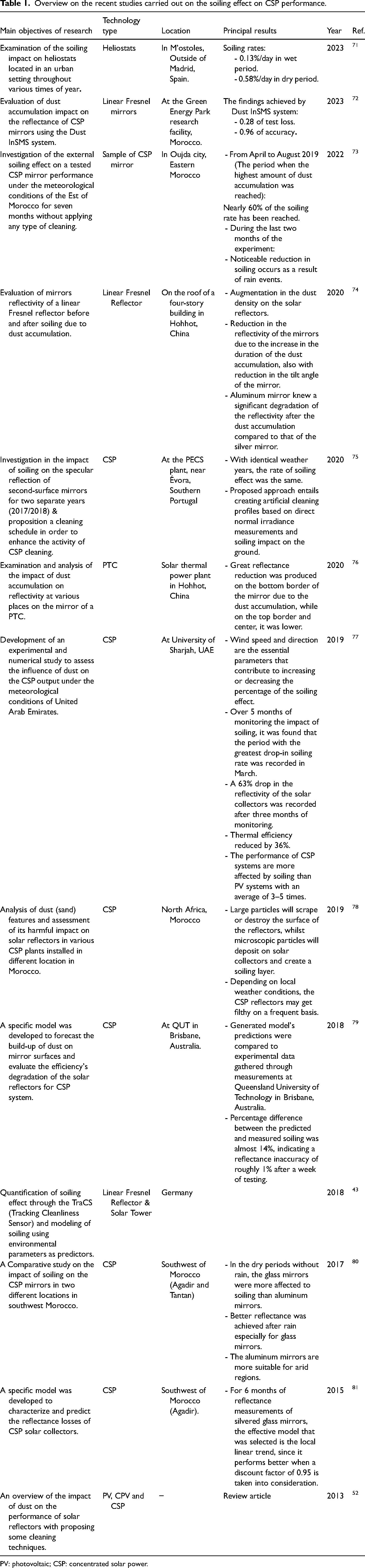
PV: photovoltaic; CSP: concentrated solar power.
Cleaning techniques description
Many cleaning approaches are discussed in the literature, whether manual or autonomous (semi-automatic and fully automatic). Each of them has specific characteristics that could be efficient for some regions and inefficient for others, depending on the characteristics of the location, existing resources, and climatic conditions. For example, some cleaning robots require a lot of water to perform the cleaning operation. Therefore, they are unsuitable for dry regions, where water is scarce, making them more expensive and inappropriate for large-scale solar installations. Thus, there is currently no cleaning method that is universally regarded as the best because the efficiency of a cleaning changes with the changeability of the environmental and meteorological conditions of the site as well as the cleaning strategy adopted. On the other hand, in addition to the cleaning methods developed by humans, certain environmental factors naturally contribute to removing dust and soil from the surfaces of panels and mirrors without any need for human intervention. Factors such as rainfall, wind, and gravity can be occasionally effective in reducing soiling rates, although sometimes the opposite can occur. Figure 5 illustrates the main types of cleaning techniques and what makes them different in terms of investment and labor costs. 41
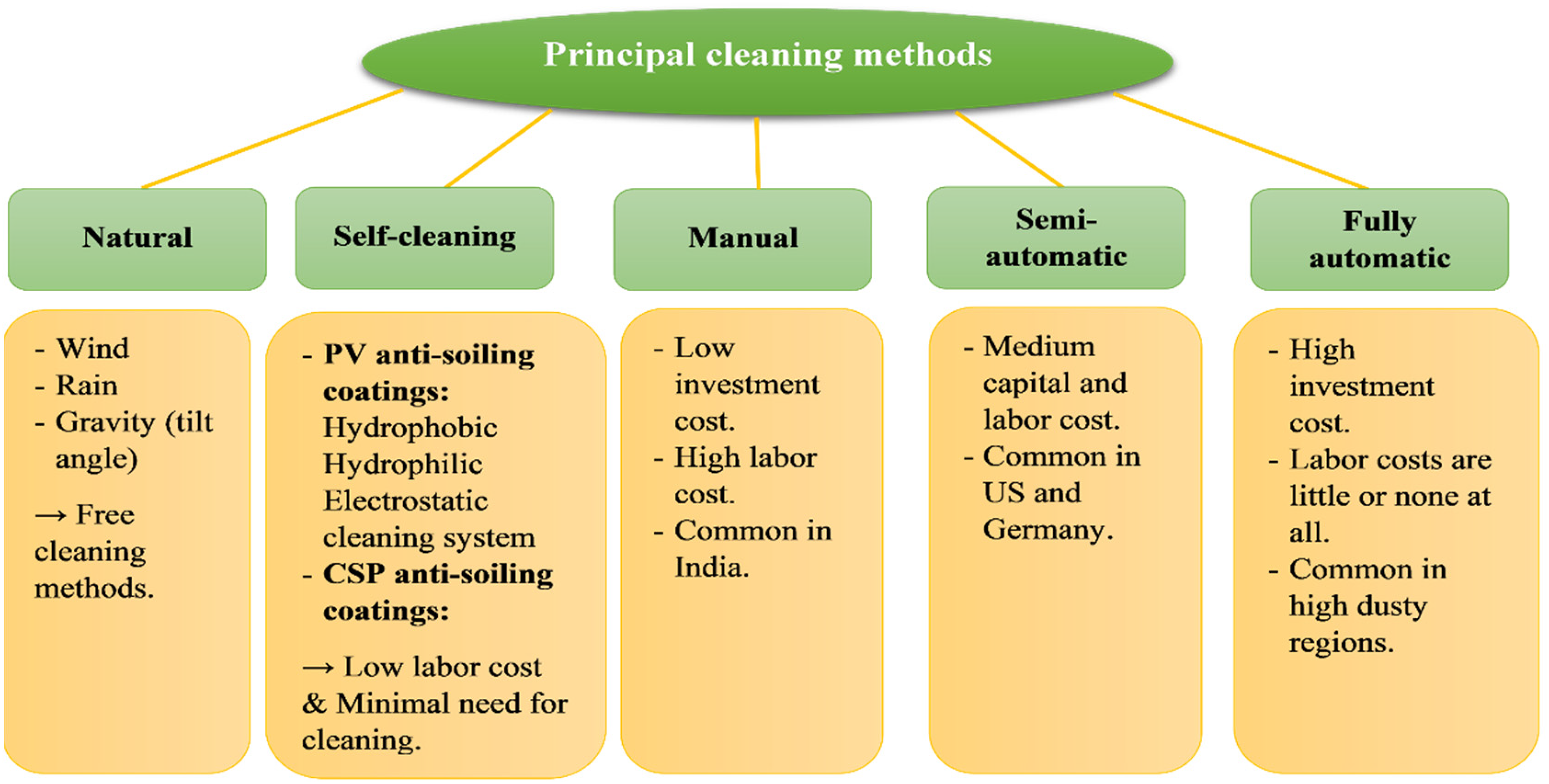
Main categories of cleaning methods.
In order to improve performance and reduce the LCOE for both PV and CSP technologies, cleaning processes must be optimized. Before installing PV systems, three elements are necessary to take into account to achieve cost-effective deployment of the system: Increased initial performance, reduced system cost, and reduced output loss over time. 82 Furthermore, other factors influence PV modules’ and CSP mirrors’ performance like temperature, relative humidity, solar radiation, wind speed and direction, and dust.83,84 More specifically, dust accumulation and other impurities can significantly influence the PV and CSP systems’ performance, affecting their efficiency, reliability, and deployment cost. The following section discusses various cleaning techniques used to remove dust and dirt from the PV panels’ and CSP mirrors’ surfaces. In fact, there are many automatic cleaning solutions, but in some cases, it is necessary to revert to the manual cleaning, especially when the surfaces are covered with adhesive dirt that can only be removed by human intervention. On the other hand, manual techniques remain a necessary option, as they require more effort, additional labor, and a variety of cleaning tools, resulting in an increase in maintenance costs. Therefore, many experts and researchers have been focused on seeking better ways to address this issue.
Natural cleaning effect on PV and CSP Solar Systems
Natural cleaning by either rainfall, wind, or gravity, is performed without the need of any materials or human intervention.85,86 At the same time, without requiring for any additional cleaning expenditures as they are free and available in the environment. However, these factors have positive and negative effects, strongly dependent on climatic conditions and site characteristics. For example, rainfall is the most effective environmental agent for removing dirt and dust from PV and CSP surfaces and enhancing their power production because water is the most efficient cleaning substance that can significantly reduce the soiling rate. However, higher precipitation rates can significantly reduce the amount of soiling, but precipitation, especially in dry areas, occurs rarely. Hence, it is not a reliable method for cleaning.40,83 Besides, the wind is also considered an interesting factor, which can moderately contribute to removing dust particles from the surfaces of solar systems, thus relatively enhancing their performance. Still, it can have a negative impact on PV and CSP performance, depending on factors such as the orientation of PV module surfaces, the position of CSP mirrors, wind speed and direction and dust deposition.87–90 Also, the tilt angle is another important parameter to consider during the PV and CSP installation process. Due to gravity's effect, dust accumulation on the front surface of PV modules and CP mirrors can decrease relatively. However, it may also reduce the amount of solar energy absorbed. For this reason, it is not easy to determine the optimal inclination angle as it is strongly influenced by the soiling effect and other factors.91,92
Dust deposition and its impact on PV panels were investigated by Jaszczur et al.. 93 They demonstrated that successful mitigation of dust from PV surfaces occurs in the case of high-intensity rain, while in the case of low rainfall, it affects PV panels negatively. Also, they revealed that the percentage of dust accumulation increases when the inclination degree (tilt angle) is almost negligible, especially in the absence of rain and wind. As mentioned above, the wind also impacts reducing or increasing dust formation depending on weather conditions. According to this, Raillani et al. 94 offered a workable solution for lowering the buildup of dust on PV panels through the installation of a wind barrier against the PV panel front, taking into account the appropriate distance for installing the barrier so that not cause a shadow and thereby affect PV performance.
PV cleaning approaches
PV solar panel cleaning can be done in several ways, which can be categorized into two primary categories: Manual and automated. The former is mainly based on human effort, making it more expensive, especially in large facilities. While the latter is usually done via cleaning robots, making it more employed in large-scale plants. Another interesting automated cleaning method has been adopted in many regions, which is called self-cleaning by using anti-soiling coatings. This cleaning approach can also contribute relatively to reducing the need for cleaning, but to date, no anti-soiling technology has definitely eliminated the requirement for cleaning. Various cleaning methods are covered in full in the following section.
Cleaning by a traditional process
Cleaning PV panels using the traditional way, known as the manual method, to eliminate and reduce dust and dirt formation on the module surfaces is the most commonly used method in many countries for different reasons. First, it is efficient in removing soiled adhesive particles like bird excrement or cemented dust thanks to the manpower efforts, which can clean the panels manually using some cleaning tools like wipers, brushes, fluids, support structures, etc.95,96 Second, it is the only cleaning approach that does not require a high capital cost. On the other hand, among the significant drawbacks of this cleaning method: (a) Need a high labor cost, especially in large facilities. (b) The utilization of some cleaning tools’ types may damage or crack the PV glasses if the cleaning operation is not done carefully. 96 In addition, according to the study conducted by Younis and Onsa, 97 it is showed that many researchers found that the manual cleaning method is the cheaper one compared to the other methods in terms of capital cost, but it consumes a large water quantity, needs intensive labor, and is not suitable for large scale plants.98–100
Automated cleaning techniques
The automated techniques for cleaning PV panels can be divided into two main categories: Self-cleaning systems and cleaning robots. The self-cleaning systems such as anti-soiling coatings have been created to address labor costs and clean parts of the PV surface that are inaccessible to humans. They are considered a beneficial option to keep the solar cells’ efficiency from being decreased by dust formation.101,102
The property of lotus leaves; the water wraps itself in spherical droplets to escape from the surface, commonly called the lotus effect; gave rise to the idea of creating self-cleaning materials and engineering artificial surfaces. These surfaces with varying wettable features offer a better understanding of the natural superhydrophobic roughness, which can be imitated to create low-wettable and highly transparent solar cells. 104 Self-cleaning surfaces could be used as solar panel coatings as they make it easier to eliminate accumulated dust and enhance energy conversion efficiency and light transmission. These surfaces can be classified into two categories: Hydrophobic and hydrophilic surfaces.103–105 According to research by Khan et al., 106 hydrophilic anti-soiling coatings are more effective in humid, moist surroundings while hydrophobic coatings are more beneficial in desert settings.
Hydrophobic coatings
The role of super-hydrophobic surfaces is much like the lotus leaves in their features, as they are characterized by high hydrophobicity and deficient wetting properties. When the raindrops touch the hydrophobic coating surface, they immediately roll across the surface and remove any dust particles thanks to the coating nanostructure that is able to increase the contact angle by over 150°. 107 The PV panels’ efficiency can be improved with a super-hydrophobic coating, which can effectively decrease dust deposition 108 ; as demonstrated experimentally, Alamri et al. 109 have compared the power production of three similar solar PV modules with different situations. The first module was coated with a hydrophobic SiO2 nanomaterial coating, the second without a coating but cleaned manually day-to-day, and the last one was without cleaning or coating. The findings showed that the efficiency of the PV panel with hydrophobic coating was augmented by 15% compared to the one without coating or cleaning and by 5% compared to the one cleaned manually. In the current study by Elamim et al. 110 the authors have assessed how well PV solar panels in the harsh climate of Benguerir, Morocco, function with hydrophobic coatings, detergent washing, and antistatic protection during two different periods. At the end of the cleaning period (the first period in 3 months), the authors found that the protected PV cells by coatings achieved an average efficiency of almost 10% compared with the tested panel (uncoated and without cleaning). In contrast, they achieved only 5% after the end of the no-cleaning period (the second period in 5 months). Another comparison was conducted by Pan et al. 111 between four PV panels; one was uncoated and the others were coated with different types of self-cleaning coatings, with one panel that was coated with hydrophobic silica sol. The results of the experimental study revealed that the panel tested by a super-hydrophobic coating with micro-nano structures produced the best outcomes in terms of high spectral transmittance and keeping efficiency against degradation due to dust accumulation. Almost the same experience was performed by Wang et al., 112 in which they tested two kinds of super-hydrophobic films (fluorine and silicon). The findings of their experience showed that the fluorine super-hydrophobic film has a low dust effect on the output efficiency of PV panels compared with silicon super-hydrophobic film.
Hydrophilic coatings
Titanium dioxide (TiO2) is the most famous super-hydrophilic film as it has both a hydrophilic and a photocatalytic features. The cleaning process of this self-cleaning kind involves two phases. First is a photocatalytic operation, in which TiO2 disintegrates organic particles under the influence of UV rays. In the second stage, raindrops, instead of congregating in one spot, distribute across the whole surface and carry away the dust particle, thanks to the super-hydrophilic feature. 107 Elnozahy et al., 113 investigated the impact of using hydrophilic nano-coating material on the performance of PV panels incorporated into buildings and compared it with the performance of uncoated panels with manual cleaning and without cleaning. The obtained results demonstrated the importance of harnessing nano-coating for PV panels, which had harvested an efficiency of 11% compared to 9% and 6% for clean and dirty panels, respectively. Another experiment was performed by Al Bakri et al. 114 under the outdoor circumstances of the Levant area, the Kingdom of Jordan, in which they examined the development in efficiency and power production of PV panels using a creative self-cleaning approach called SurfaShield G. It is an innovative coating with a TiO2 foundation. The comparison analysis between the coated and uncoated panels, showed that with the nanomaterial SurfaShield G, the power generation and efficiency of the panels have increased by 20% and 2.3% respectively.
Electrostatic cleaning system
Electrostatic cleaning is also one of the self-cleaning methods, which is highly recommended in harsh environments, as it does not need water to carry out cleaning operations. This cleaning technique uses moving waves of electric charge to remove dust particles from PV panel surfaces. The study conducted by Altınta and Arslan 115 and Kawamoto 116 are among the research works that were performed on the subject of electrostatic cleaning systems, in which they demonstrated the excellent efficiency of the electrostatic cleaning method in increasing the performance of PV modules and protecting them from deterioration, as well the property of no water required for cleaning operation will encourage the large facilities to adopt this technology, especially those applied in desert areas. However, the installation price of electrostatic cleaning panels on PV panels is rather high, which is considered the primary drawback of this cleaning technique. 115
On the other hand, using cleaning robots is also among the innovative solutions for independently cleaning PV panels. In this context, plenty of research was done to improve the effeciency of PV panels by innovating new cleaning robots and developing other exciting techniques. Among these researches, Amin et al. 117 have recently designed and developed a dry-cleaning robot that can autonomously detect dust formation and clean PV glasses through an image processing system and color analysis of the PV panel surfaces. Similarly, Khadka et al. 118 have developed an automatic cleaning device particularly suited to arid regions, as it is capable of efficiently removing dry dust deposited on the front surfaces of PVs, and is designed to autonomously anticipate the most opportune time to perform the cleaning operation. Likewise, another inventive cleaning robot was suggested by Fan et al., 119 suitable for places with limited access to water, as it is a unique water-free cleaning robot composed of a rolling brush and negative pressure to avoid dust from scattering during the cleaning process. Other researchers 120 have presented various cleaning vehicles intended mainly to clean solar PV panels to improve power production and achieve peak performance. These vehicles are described in Table 2. Although these cleaning techniques are technically profitable, each one has some disadvantages like high cost, high water consumption, a control operator, or requiring conventional energy.
Fully automatic cleaning robots.
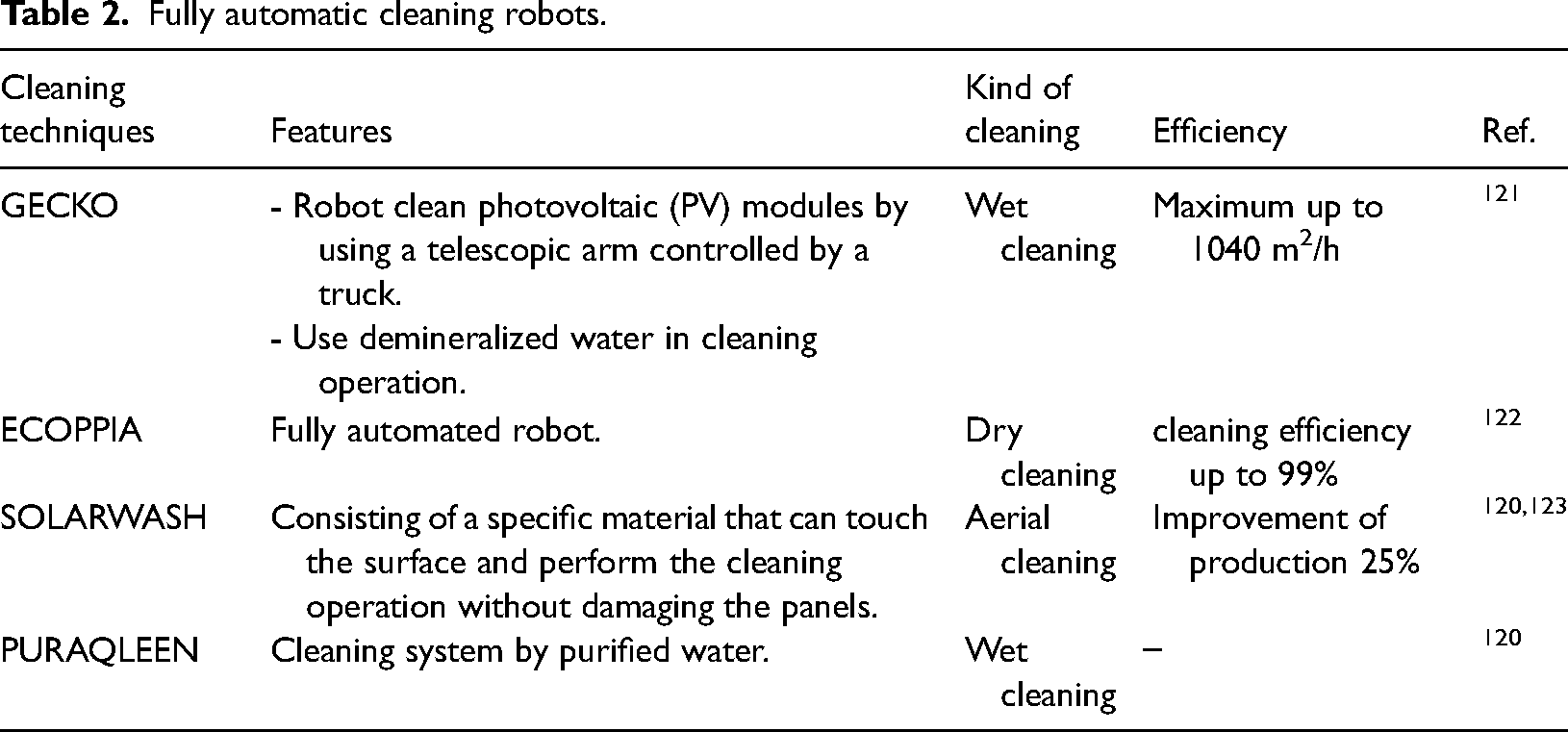
The extensive research performed by Derakhshande et al. 124 summarizes the principal characteristics of each automated cleaning method dedicated to cleaning PV panels, in which they compared them in terms of cost, efficiency, labor, water consumption, and cleaning time. Figure 6 summarizes this comparative analysis by specifying each cleaning system's main advantages and disadvantages.
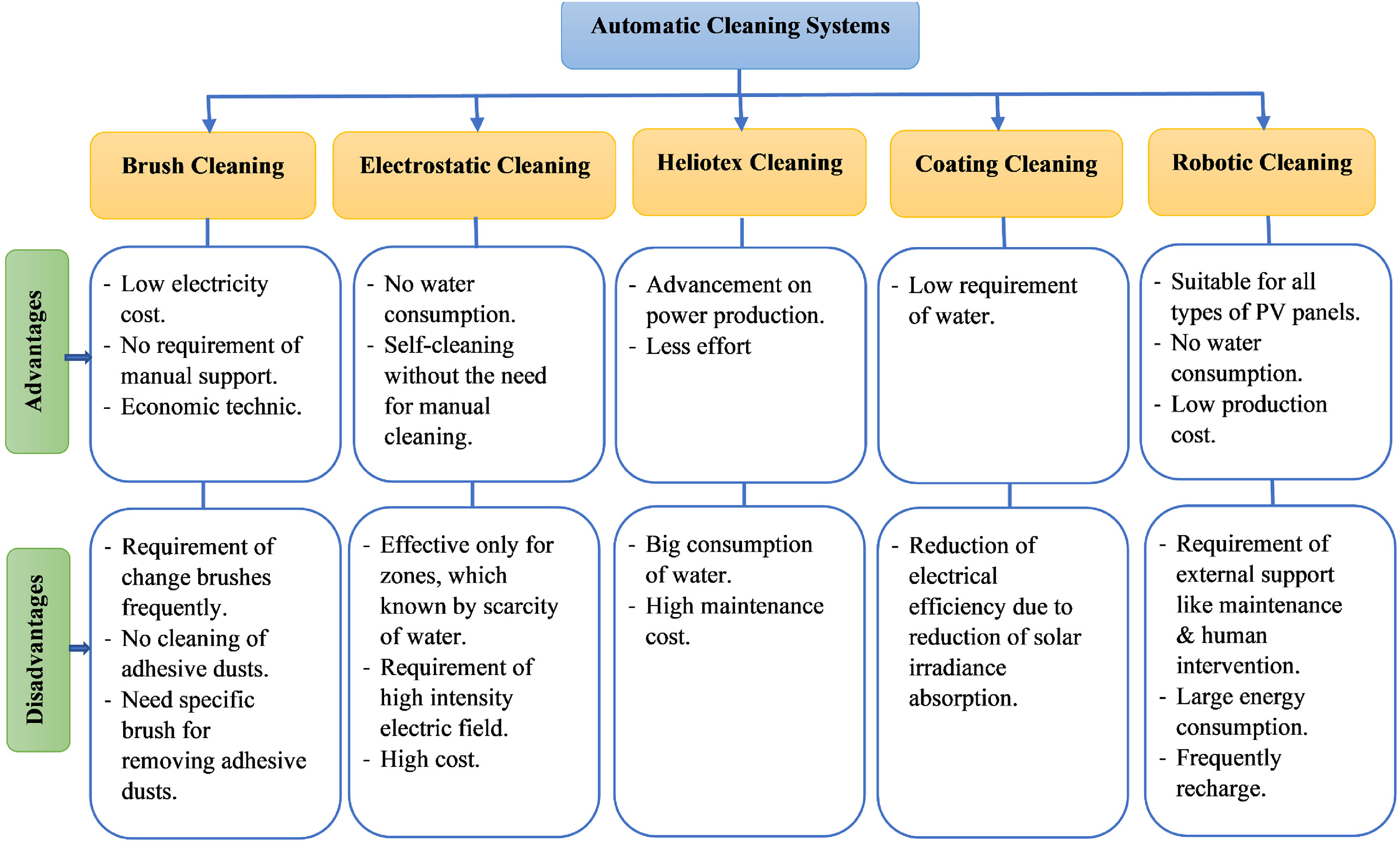
Summary of the comparative study of automatic cleaning techniques.
CSP cleaning techniques
Many environmental factors can drastically reduce the reflectivity of CSP reflectors, like dust storms with light rain and dew formation with dust that clings firmly to the mirror's surface. For this reason, cleaning mirrors regularly is a complicated (O&M) work in CSP systems. 80 In addition, based on the study conducted by Azouzoute et al., 30 in which they compared the cleaning schedule for CSP and PV systems; placed under similar climatic circumstances in the mid-south of Morocco; in terms of cleaning costs and energy losses. The findings obtained reveal that CSP technology is more affected by dust deposition on its surfaces than PV technology, particularly during the hot season of the year. Thus, weekly cleaning is more lucrative for CSP systems than twice-weekly cleaning, saving monthly 15$ when the cleaning operation is done manually and 13% of cleaning cost reduction if done independently with a cleaning robot. Whereas for PV systems, a single cleaning per month will produce greater financial returns than not cleaning at all; on the other hand, in order to protect the PV glasses from abrasion damage, it will be more effective than extensive cleaning every day, every week, or bi-weekly. In the work of Picotti et al., 125 a new experience was conducted to enhance the heliostats cleaning methods by comparing two innovative cleaning strategies, A Mixed-Integer Linear Program (MILP) model and a simplified heuristic method, which were applied in two ST plants located in different regions with different environmental conditions. Comparing these two cleaning approaches’ results demonstrates that the MILP model is the most beneficial approach for maximizing ST plants’ performance and minimizing LCOE. Another study has been carried out by Fernández-García et al. 53 to evaluate the performance of some cleaning approaches, which were applied to several reflector samples installed in CSP plants under the climatic conditions’ effect of a dry region. The findings demonstrated that the best cleaning method is demineralized water with a brush, representing an efficiency rate of 98.8% during wet months and 97.2% during dry periods.
For CSP systems, cleaning techniques can be divided into three categories: Manual, semi-automatic methods by using cleaning vehicles, and fully automatic cleaning techniques with the utilization of cleaning robots; Thus, recently, it has been started to apply the anti-soiling coatings like in PV systems.
Manual cleaning approach
The selected study concluded that cleaning by either wiping or spraying is the most popular method of cleaning mirrors manually, especially in small-scale systems. However, although manual wiping does not require a considerable quantity of water and is more profitable, it takes a long time and can be expensive, as it demands hard effort, and therefore, more human resources. On the other hand, while spray cleaning consumes a lot of water, it is non-destructive to the surface and ecologically friendly. 126 Nevertheless, this conventional method remains an efficient and economical solution, and we turn to it when labor costs are low or the number of reflectors is lower.
Self-cleaning materials
Plenty of research has been carried out about the application of anti-soiling coatings on the front surface of PV panels; as mentioned above, it is considered one of the efficient ways utilized to mitigate the soiling rate from the panel surfaces. Thus, contributing to minimizing the efficiency decrease. Nowadays, investigations toward self-cleaning coatings have been also conducted for CSP systems to apply these coatings across all solar technologies,127–129 but those for CSP reflectors are very limited in the market. Wette et al. 128 have assessed the effectiveness of anti-soiling coatings compared to uncoated ordinary glass-surfaced material to improve CSP plants’ reflectance. Another comparison between four different samples of anti-soiling coatings in terms of the impact of environmental factors on the performance of CSP reflectors has been reported by Pescheux et al.. 130 Also, Lopes et al. 131 realized a comparison between a group of coated and uncoated mirrors that were left under natural conditions in different situations since this comparison was executed through the tracking cleanliness sensor to examine the soil accumulation’ rate for each sample of the coated and uncoated mirror. Another study was carried out by Polizos et al. 132 assessed the efficiency of anti-soiling coatings with nanostructured surface characteristics in the mitigation of soil since they were applied to solar reflectors.
Semi-automatic cleaning techniques
Cleaning filthy reflectors with semi-automatic cleaning techniques is conducted through vehicles that are either cleaning one row of reflectors; by brushing, wiping, or scrubbing the dirty surface; and then returning to the adjoining row or cleaning two rows confronting each other at the same time. 133 Based on the conventional semi-automatic cleaning presented in the work of Bouaddi et al., 133 it shows that this type of cleaning is the most exploited for cleaning CSP systems in many countries. Typically, the semi-automatic cleaning systems are trucks consisting of a tank and pump unit as well as the essential cleaning tools as shown in Figure 7, which presents a real example of cleaning procedure of parabolic through collectors and heliostats trough a semi-automatic technique were applied in Noor II and III, Morocco. In addition, most of them usually require less labor to perform the cleaning operation.
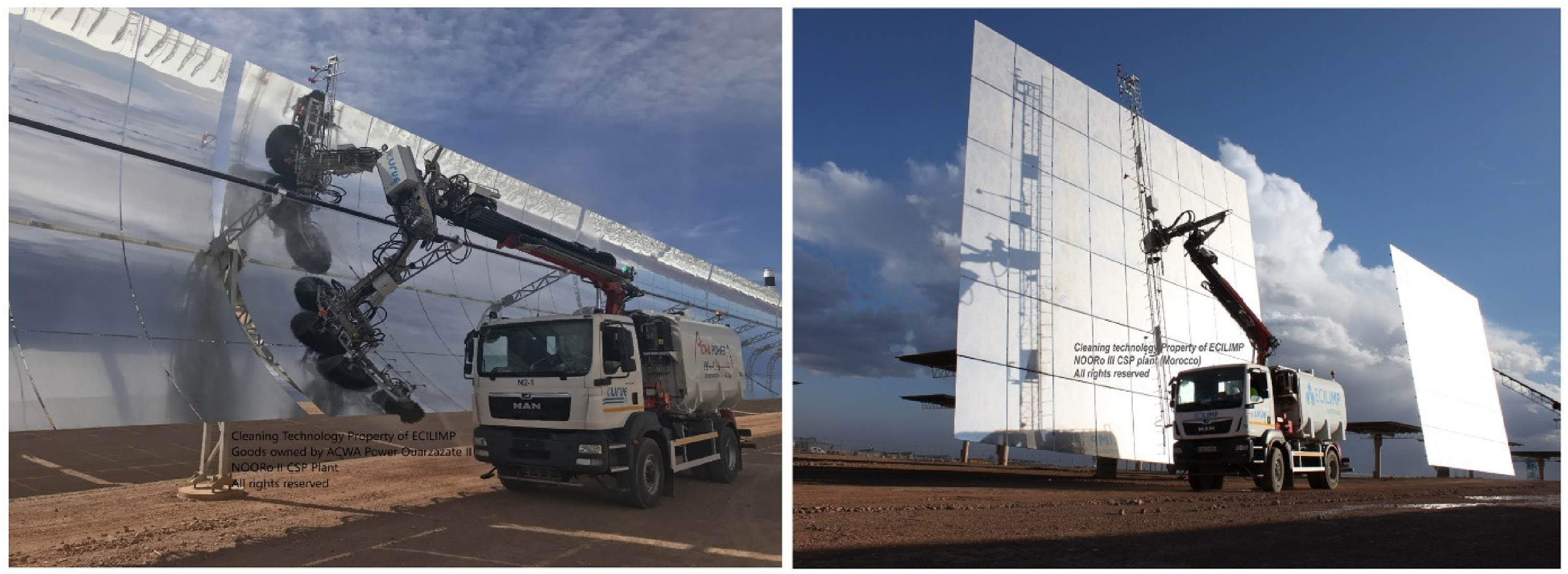
Real pictures of semi-autonomous cleaning procedure of parabolic trough collectors in Noor II (left) and for heliostats in Noor III (right). 134
Indeed, some studies in the literature investigate semi-automatic cleaning for CSP plants, but there are several types of cleaning vehicles on the market. For example, in Ain Beni Mathar Integrated Solar Combined Cycle Power Plant, Morocco, using a semi-automated cleaning machine (truck) for washing mirrors of PTCs, with demineralized water (of an intermediate demineralization degree) sprayed on mirrors for once per month. 135 The NOOR I solar power plant of Ouarzazate, Morocco, uses two types of cleaners, either brush or high-pressure trucks, depending on the soiling rate. 136 The former is applied when there is little soil on the mirrors, while the latter is applied when the mirrors are so filthy and to protect mirrors from damage due to brushes. Also, Shams 1 Solar Power Station near Madinat Zayed, Abu Dhabi, UAE, where Shams uses parabolic trough technology, cleans the mirrors with trucks with brushes once or twice every week. 137 Another example is the Ivanpah solar electric generating system (ISEGS) in California's Mojave Desert, which is the largest solar thermal power plant in the world and uses ST technology. 138 The latter uses two kinds of vehicles to clean the heliostats: The Near Tower MWM, a washing machine powered by a tractor and the Far From Tower MWM, a machine that is mounted on a truck. 139 Moreover, in the study conducted by Sansom and Patchigolla, 140 different examples of cleaning vehicles are presented. Table 3 summarizes the principal characteristics of these vehicles.
Different semi-automatic cleaning vehicles operated for CSP systems.
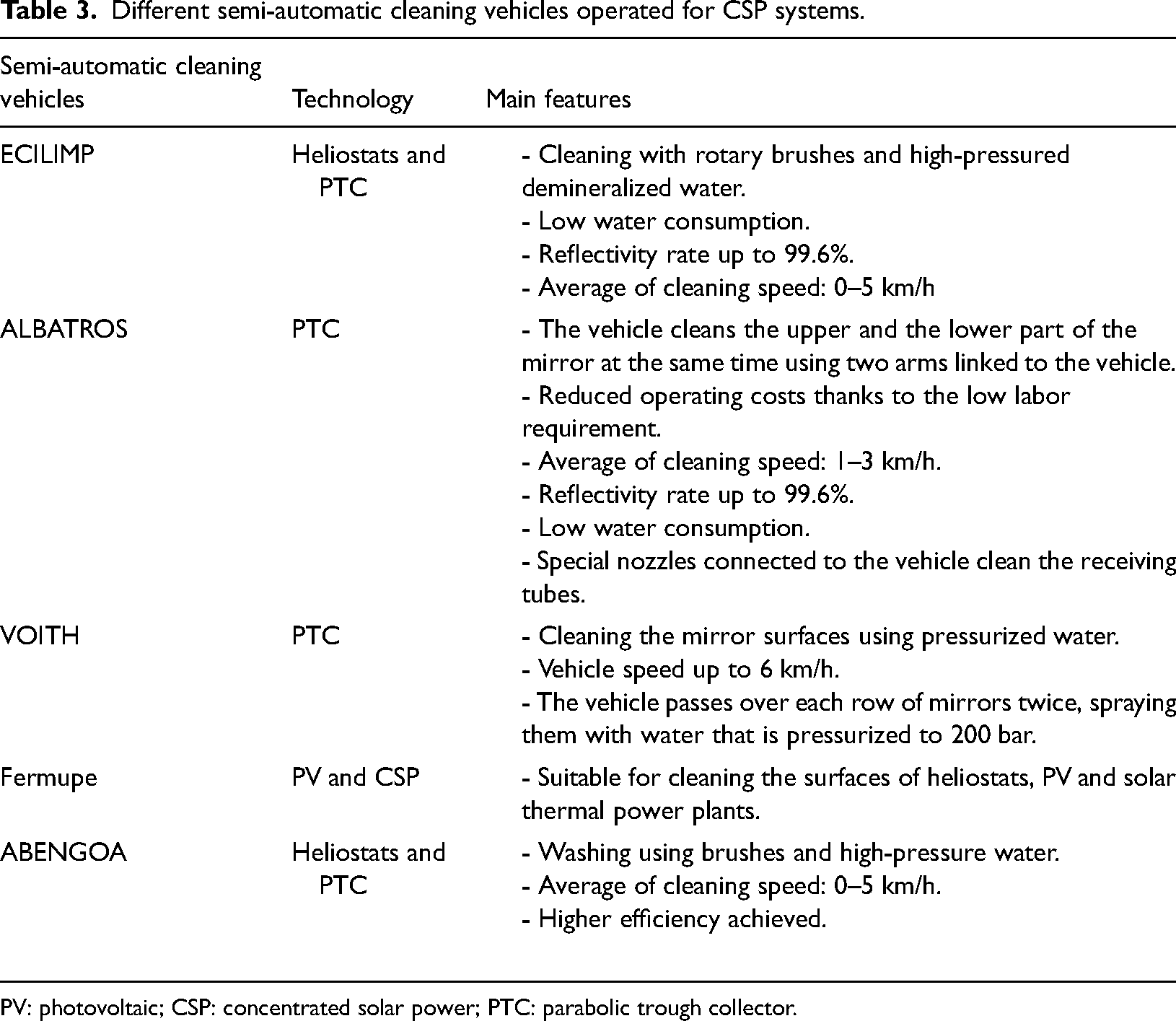
PV: photovoltaic; CSP: concentrated solar power; PTC: parabolic trough collector.
Fully automatic cleaning techniques
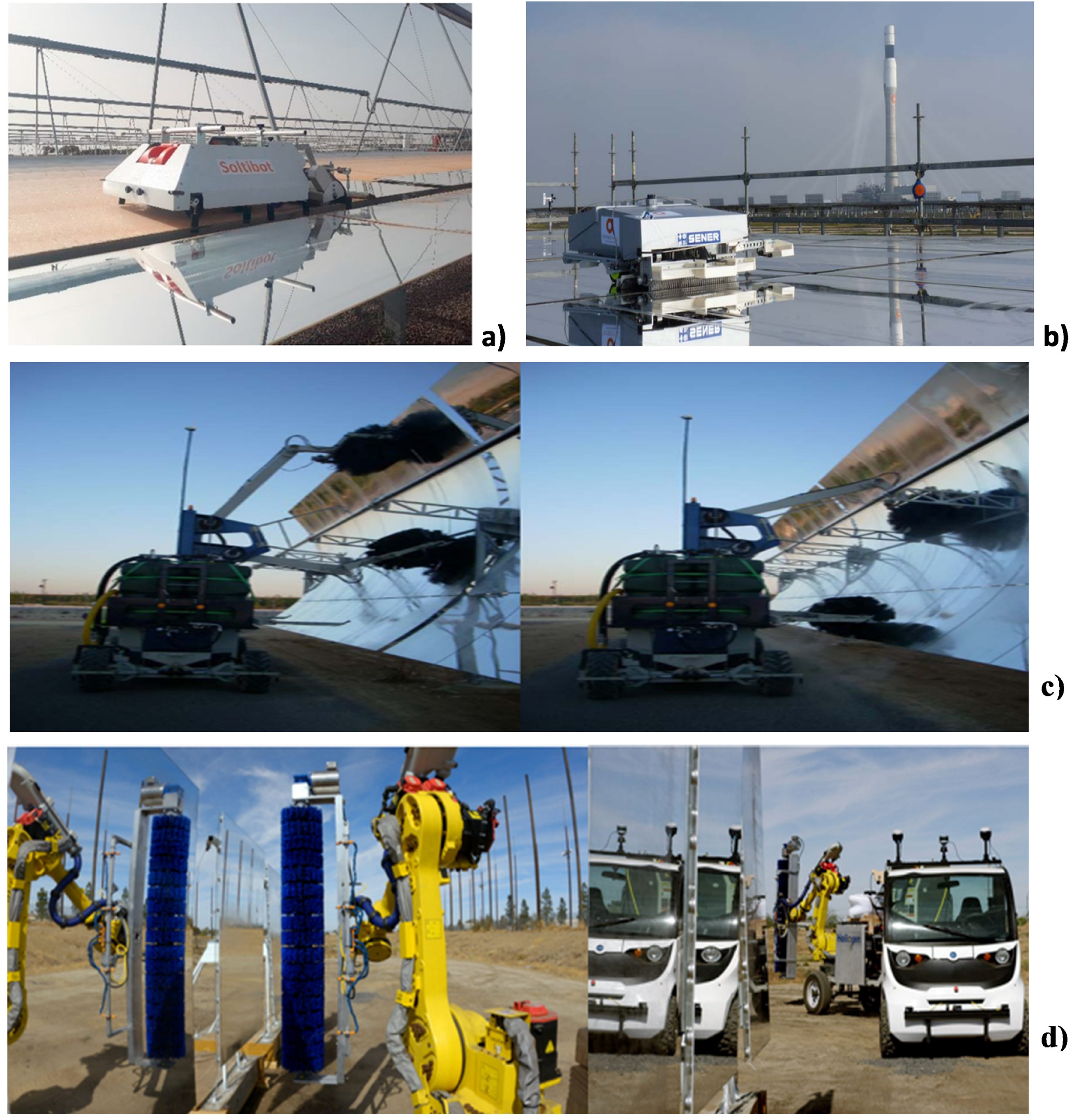
There are many cleaning robots on the market dedicated to cleaning the CSP reflectors, and some of the most famous of them have been selected to be exposed in this work.
- “ - “ - “ - “
A summary of the PV and CSP cleaning approaches provided in this study.
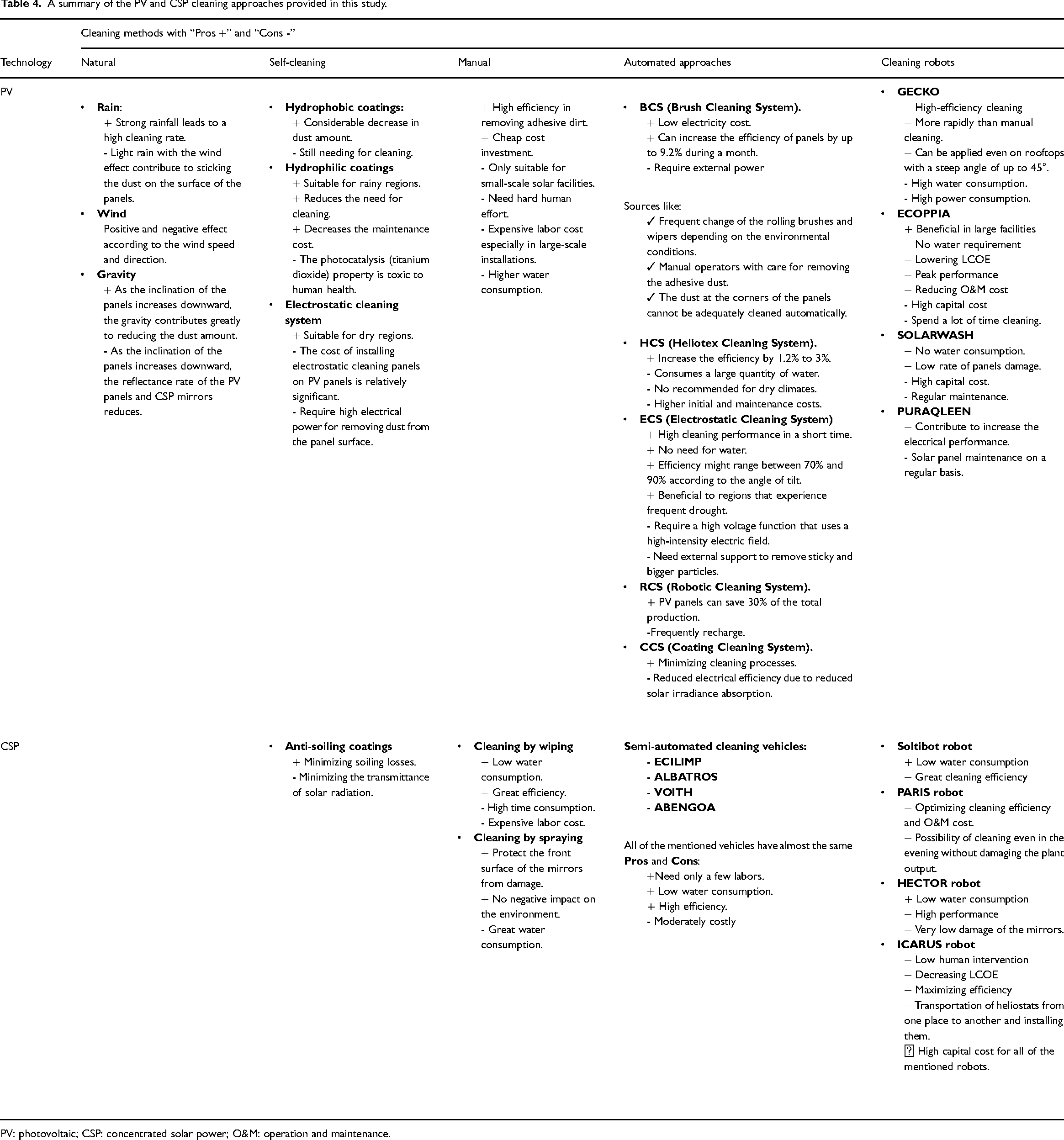
PV: photovoltaic; CSP: concentrated solar power; O&M: operation and maintenance.
Fundamental scientific principles underlying cleaning methods for solar systems.
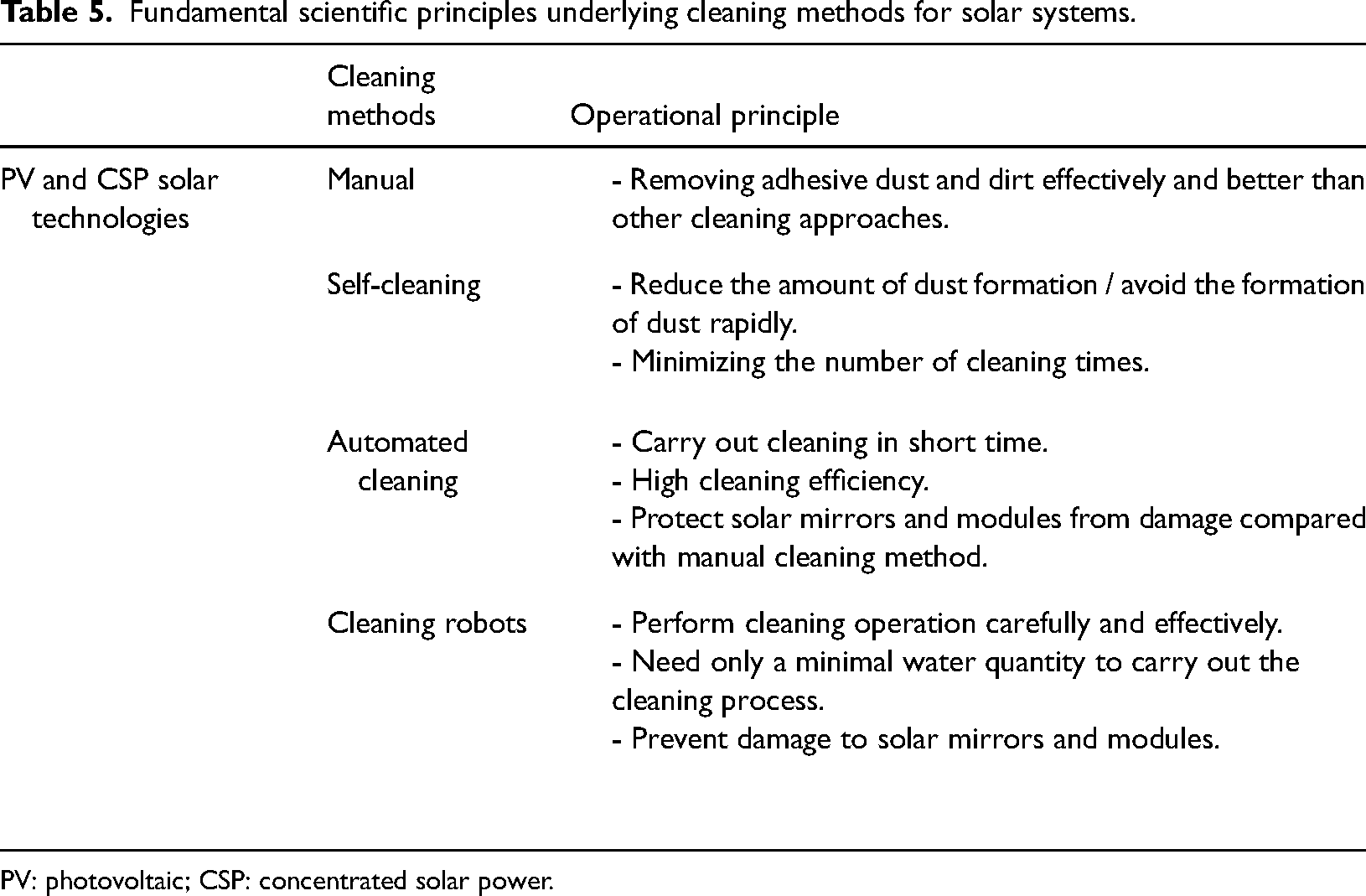
PV: photovoltaic; CSP: concentrated solar power.
Discussion and conclusion
This review article addresses a fascinating topic that has attracted the attention of several researchers in recent years. This study is mainly focused on the primary obstacles facing solar technologies during electricity production operations, with several proposed solutions. The dust and dirt deposition on the front surface of PV modules and CSP mirrors are among the crucial issues hindering the power production process of these solar technologies, causing high energy yield losses. Thus, leading to a significant decline in their performance. The soiling impact degree on both solar technologies is so distinctive, as the CSP system is more susceptible to dust formation than the PV system due to site properties and weather conditions. Therefore, regular cleaning of the mentioned technologies’ surfaces is necessary to achieve high production efficiency and reduce the LCOE. This work addresses, various cleaning approaches of PV and CSP solar systems, such as natural, manual, semi-autonomous, and fully autonomous cleaning methods, including self-cleaning mechanisms. The following section summarizes the main results and notes included in this review, which could be used as a helpful reference for developing several future searches and subjects to improve the efficiency of these technologies.
The natural cleaning by either rainfall, wind, or gravity is beneficial at times and detrimental at others, as it is highly dependent on climatic and environmental conditions. As a result, relying on such environmental agents for cleaning PV and CSP surfaces is futile, as their effect remains very limited, especially in deserts with considerable dust. The manual cleaning method is a traditional way to eliminate the hard dust particles from PV and CSP surfaces based on manpower. It is most practical in small-scale plants, as it does not require a high investment cost. On the other hand, with the increasing rise of solar energy exploitation worldwide, manual cleaning is becoming insufficient and the requirement for automated cleaning techniques is becoming extremely important, especially in large-scale facilities, as it needs more labor and thereby, will be more expensive and require a long cleaning time if it conducted with this conventional technique. The PV panels’ anti-soiling coatings, with either hydrophobic or hydrophilic coatings, are an economical solution to minimize the regular cleaning needs and, thereby, the cleaning cost. In addition, these coatings, contribute effectively to reducing the surface soiling rate, but they simultaneously affect the transmittance of solar radiation. Besides, the Electrostatic Cleaning System is an effective self-cleaning method for lowering the dust accumulated on the PV front surfaces. It is more practical in dry regions since it does not consume water but is based more on electrical power consumption. The anti-soiling coatings applied to CSP mirrors are comparatively advantageous in enhancing their power output. The negative impact of these coatings on CSP reflectors is a reduction in solar radiation transmittance. In addition, their limited availability on the market is the real drawback of this cleaning invention. Based on the conducted study in this review paper, it is shown that the most common automated cleaning techniques exploited for cleaning CSP mirrors are vehicles driven by a man and equipped with cleaning tools such as wipers or brushes, water tanks, etc. It has been noticed that they are the most practical in the world, particularly in large-scale plants, due to their economic savings since they need just a few workers and a medium capital cost. The PV and CSP cleaning robots are the more recent cleaning techniques adopted in some developed countries. However, these robots generally have a high investment cost, which makes them very expensive to exploit. On the other hand, many investors have developed plenty of robots worldwide, as they are considered an economical solution in terms of water consumption and labor cost.
As a result of this study, determining the most beneficial cleaning method worldwide in terms of technical and economic efficiency is a complicated task, as it is strongly dependent on the characteristics of the location, available resources, and weather conditions. This means that each method, with specific features, can be suitable for certain regions with particular conditions and unsuitable for others. Therefore, the present work is considered an exciting reference for investors to help them choose the best cleaning approach for their solar plant project, and simultaneously, a useful work for future researchers that will facilitate them to precise the real problem hindering the electricity production process and thereby create new solutions for it. Moreover, the cleaning frequency must be also determined in conjunction with the cleaning method, which has an important role in enhancing solar plant productivity. In this regard, Picotti et al., 125 Abraim et al., 146 Rohani et al., 147 Chiteka et al. 148 and many other researchers have worked to improve the cleaning schedule of the PV panels and CSP mirrors, aiming to achieve maximum power production with low water consumption and cleaning costs. Future work might focus on this subject.
Highlights
An overview of the PV and CSP developments is reported.
A state of the art of the published articles on soiling effects is presented.
A variety of soiling mitigation approaches and cleaning techniques are discussed.
A summary of the advantages and drawbacks of the selected cleaning methods is conducted.
Footnotes
Declaration of conflicting interests
The authors declared no potential conflicts of interest with respect to the research, authorship, and/or publication of this article.
Funding
The authors received no financial support for the research, authorship, and/or publication of this article.
