






Abstract
The contemporary era confronts formidable obstacles, including environmental deterioration and energy consumption, which jeopardize the rapid advancement of the worldwide financial system. The hazards mentioned above encompass depletion of natural resources, eutrophication, and climatic catastrophes. Within this framework, the discourse surrounding strategic planning centers on institutional positioning and economic prospects, with the incorporation of alternative energy resources serving as a significant metric of economic advancement, as underscored by the COP26 objectives. This research examines the correlation between the quality of institutions and environmental quality, as measured by carbon emissions. A fixed effect regression methodology was utilized to estimate the relationship, utilizing panel data from the South Asian Association for Regional Cooperation economies covering the period from 1990 to 2021. The results show that if there is a 1% increase in the government regulatory quality and renewable energy, carbon emissions decrease by −0.102% and −1.125%, respectively, underscores institutions’ significance in advancing sustainable growth policies within the South Asian Association for Regional Cooperation region. Moreover, if there is a 1% increase in political instability, inbound foreign direct investment, and economic growth, carbon emissions increase by 0.199%, 0.042%, and 0.129%, respectively, suggesting the presence of rent-seeking conduct and pollution haven hypothesis, adversely affecting the ecological system. The study offers significant perspectives for policymakers who aim to foster sustainable regional development.
Keywords
Introduction
A healthy, natural environment is essential for human flourishing and is widely recognized as a means of enhancing human well-being. Management of natural resources and conservation of the environment are important issues to the government and other oversight bodies. 1 The extraction and processing of minerals and other natural resources are crucial to the growth of any economy and the provision of any products or services. 2 Carbon emissions, a gas that absorbs and emits thermal radiation, are a crucial contributor to greenhouse gases (GHGs). However, the expenditure on natural resources increases via burning fossil fuels. In recent decades, carbon emissions worldwide have been blamed for most of the damage done to the environment and the warming of the planet's climate.3–5 As economic growth (EG) in South Asian Association for Regional Cooperation (SAARC) countries continues, their contribution to global carbon emissions will rise. Increasing levels of GHGs, especially carbon emissions, pose a danger to our planet's environment.6–9 In 2015, 196 nations convened in Paris to negotiate a solution to the problem of climate change, and the result was the Paris Agreement on Climate Change. A binding agreement to limit global warming to far below 2 °C by the end of the 21st century was agreed upon by the world's economies.10–13 Institutional issues in each country will determine the long-term success of the Paris Agreement and other environmental policies.14–17 Eliminating carbon emissions and GHGs may be organized by institutions. Factors that impact institutions may be broadly classified into four categories: economic, political, social, and administrative.18–20 Scholars and scientists have focused much on investigating the institutional variables that influence environmental quality (EQ) over the last several decades. Research into this subject has made use of a variety of proxies of institutional characteristics in order to arrive at empirical estimates of the impact that various policies and tactics of institutions have on EQ. However, the primary metric utilized in the aforementioned works is governance, and the many kinds of excellent governess, such as political instability (PINS), regularity, the rule of law, and corruption, which are pillars of good governess. 21
Policymakers and academics in the SAARC region have been more interested in studying the correlation between institutional characteristics, income, and EQ in recent years. 22 This research project investigates the factors that shape institutions and how these factors influence the state of the environment in SAARC countries. From its inception in 1985, these states vary in size, population, ecology, and income, they are all similar in terms of the kinds of people they produce and how their economies have evolved. Although all member nations of this alliance have enormous development potential and immense natural resources, they cannot manage faster EG due to a number of impediments, chief among them being low standards of institutional quality (IQ). 23 More advanced institutional development and the subsequent economic impacts are necessary for sustainable development. 24 The research aims to examine how various institutional factors in the SAARC nations have affected EQ. Community members make sense of institutional elements via the lens of economic and ecological progress. 25 CO2 is a critical parameter that captures global pollution, and the research primarily focuses on the relationship between carbon emissions and other macroeconomic factors. It would seem that carbon emissions are a significant cause of environmental degradation. While environmental conditions do tend to improve as economies expand, more development is associated with more pollution and other environmental issues. 26 EG and environmental stability are more likely to follow from government action and robust institutions.27,28 Consequently, we value top-notch institutions more highly for their ability to lessen the impact of environmental problems on the world economy. 29
Arminen and Menegaki, 30 Godil et al. 31 Le and Ozturk, 32 and Yasin et al. 33 are just a few illustrations of the many research that have focused on a particular institutional feature without considering the factors that interact with it. To address this gap, this study examines the impact of SAARC institutions on EQ. Second, even after including additional factors like corruption and the rule of law, previous studies have yet to be able to reach clear conclusions due to the intricacy of the topics investigated. This study aims to contribute to the current body of knowledge by shedding light on the influence of institutional factors on EQ in rising countries, with a specific emphasis on the SAARC region. Lastly, carbon emissions are a more significant issue in underdeveloped nations, though these areas have needed more focus in the research thus far. By looking at the SAARC nations through the lens of IQ and EQ, this study expects to fill that information vacuum. Based on this discussion, the study focuses on the relationship between institutional factors, that is, regularity quality and PINS, and their impact on EQ, despite these variables receiving less attention in the existing literature and particularly from the perspective of SAARC countries. Stand-in for IQ in the present research is based on regularity quality. PINS and its effects on the environment are seen as significant contributors to environmental deterioration.28,34 Improving EQ and reducing environmental degradation require government institutions to be more efficient and even enforce the application of laws and regulations for a quality environment. 35
This research intends to examine institutional characteristics and EQ in SAARC economies. The study's questions are as follows: first, what institutional characteristics are most important for SAARC economies to enhance EQ? This research aims to learn how institutions affect EQ and what function they play in creating the environment. Second, Why were SAARC economies selected for empirical assessment in this study? This study adds to the existing body of knowledge by concentrating on the SAARC nations, which are in the formative phases of economic development. As a result, policymakers in these nations may get a deeper appreciation for the connection between institutional conditions and ecological health. Third, how can issues such as carbon emissions and institutional factors affect environmental considerations? As environmental deterioration is hastened not only by any one factor but by the interplay of several, this research aims to investigate how diverse institutional elements affect EQ. Finally, does the governor's leadership help lower GHG emissions? The research looks at how the government can significantly lower carbon emissions and improve EQ, which would benefit both the planet and people. The study aims to improve local and global knowledge of the relationship between IQ factors and EQ in SAARC economies. Specifically, the study seeks to contribute to the literature by examining the role of institutions in shaping EQ in these economies and providing insights into how policymakers can enhance EQ in the region. The study hopes to inform policymakers and researchers about the link between institutional factors and EQ in developing countries, particularly in the SAARC region. The study aims to improve local and global knowledge of the importance of effective institutions in promoting environmental sustainability and reducing carbon emissions.
In light of this matter, the study proposes the following research aims:
To examine the relationship between institutional factors and the EQ of SAARC nations. To investigate the influence of inward foreign direct investment (FDI) on EQ in the presence of economic expansion across countries, and To determine the role of green energy demand in mitigating carbon emissions.
Using suitable panel statistical approaches, including panel fixed effect model (FEM), Granger causality, and innovation accounting matrix, the study could accomplish its goals and provide concrete suggestions for policy change.
The existing body of information from this study is expanded upon in significant ways, and new insights are offered. The SAARC emerging economies are the primary emphasis at the outset. This research fills a gap in the literature by examining these countries, in particular, better to understand the relationship between institutional features and EQ. Complex factors influence environmental repercussions in rising economies; this new approach may help us comprehend them. This study analyses how IQ characteristics affect environmental policy, not whether wealth equals emissions. This study examines institutions’ involvement in sustainable development and EQ to illuminate the complicated relationship between institutions and environmental consequences. This strategy may help us determine how various institutions affect environmental sustainability. One virtue of this study is its concentration on low-income countries, notably in SAARC. The current study risks disregarding rising country issues since it focuses on industrialized countries with intact ecosystems. The study's sole emphasis on pollution and environmental degradation in low-income countries fills a fundamental gap in the research. It discusses how institutions may enhance EQ in developing nations and solve environmental issues. The information provides policy suggestions along with scientific findings. The innovation accounting matrix, Granger causality, and panel FEM are all examples of panel statistical approaches that provide robust results that policymakers may use. Other developing countries facing similar challenges may find the proposed policies helpful in enhancing EQ and sustainability in SAARC economies. Finally, this study stood out because it focused on low-income nations, offered practical policy recommendations, examined the relationship between institutional aspects and EQ, and paid particular emphasis to the SAARC economies. By expanding our understanding of the relationship between institutional frameworks and environmental outcomes, the study's innovative approach and findings contribute to our understanding of how to promote environmental sustainability in developing countries.
On a global and regional level, this study intends to shed light on the SAARC economies’ EQ and IQ. Academics and politicians in the SAARC area should find this helpful study. By zeroing in on the specifics of the SAARC countries, which are only starting to see economic development, the research hopes to fill gaps in our understanding of the relationship between institutional frameworks and environmental health. Policymakers in the SAARC region would do well to reevaluate the importance of robust institutions if they want to advance environmental sustainability and decrease carbon emissions. In order to enhance EQ in SAARC countries, the study aims to propose practical policy improvements. This study adds to what is already known about the subject and helps to close a gap in the existing literature. Significant problems include pollution and environmental degradation; this article stresses the importance of looking at SAARC countries, which have a low per capita GDP. Research shifts focus from wealthy nations with perfect surroundings to developing nations and their institutions’ roles in environmental policymaking. Researchers and policymakers throughout the globe who are concerned about lowering carbon emissions and promoting environmental sustainability might take heart from this study's findings.
Literature review
Carbon emissions and macroeconomic indicators have been studied extensively. Carbon emissions are critical indicators of environmental degradation and its effects on the global economy. Despite the lack of prior research, we examined the impacts of institutions on REC, income, inbound FDI, and EQ. Globalization, inbound FDI, trade openness, and alternative energy sources affected carbon emissions. According to Acheampong et al., 36 renewable energy consumption (REC) and FDI reduced CO2 emissions, while trade liberalization increased air pollution in 46 Sub-Saharan African (SSA) nations from 1980 to 2015. FDI and regulatory moderation also reduced CO2 emissions and IQ. They proposed that politicians use government laws to promote EQ. Abid 37 examined financial, economic, and institutional determinants of CO2 emissions in 25 SSA nations from 1996 to 2010. Income and emissions rise monotonically, refuting the environmental Kuznets curve (EKC) theory. The rule of law and regulatory quality positively impact carbon emissions, whereas PINS, corruption, and democracy negatively affect them. These findings indicate institutional structures and their variables to reduce environmental degradation. Bhattacharya et al. 38 examined economic development and carbon reduction across income levels and geographies. Institutions and REC's effect were thoroughly examined. The study included yearly data from 85 industrialized and developing countries from 1991 to 2012. REC increases revenue and decreases CO2 emissions. Institutions increase EG and reduce carbon emissions. According to the results, institutions must collaborate to promote RE usage internationally to keep economies growing while reducing carbon emissions. Hashmi and Alam 39 examined carbon pricing and green technologies to reduce emissions. This study investigated their dynamic relationship. Using 1999–2014 OECD data, the STIRPAT approach estimates this complex relationship. Environmentally friendly patents and carbon emissions were negatively correlated with increased OECD environmental tax revenues. It optimizes patents and carbon pricing for climate change policies. Le and Ozturk 32 quantified income–emissions interactions. The EKC model was applied to REC data from 47 developing nations from 1990 to 2014. Governance actions are shown to increase CO2 emissions considerably. Globalization requires extensive REC for sustainable EG. Acheampong and Dzator 40 examined 45 SSA countries from 2000 to 2015 using cutting-edge econometric tools to evaluate how IQ affects CO2 emissions. After relaxing the homogeneity assumption in the sample and creating a new sample based on the institution's place of origin, it became clear that institutions significantly impacted CO2 emissions. Improved institutional structures are essential to attaining and maintaining SDG-13. Egbetokun et al. 41 found EKC in the presence of pollution and examined the link between income, emissions, and IQ in Nigeria. An EKC for carbon emissions shows that Nigeria's green development aim, which has been pursued so far, needs ongoing work. Pollution-related factors did not affect the country's income. Improving Nigerian institutions to reduce economic environmental pollution is imperative for sustained growth. Khan et al. 42 estimated how IQ, environmental factors, and financial development (FD) affect global CO2. Empirical estimate employed 2002–2019 panel data. Income and FD decrease EQ, whereas REC and FDI increase it. The IQ interaction emphasizes the importance of a clean, green environment. Many countries’ IQs cannot safeguard the environment. This investigation confirms EKC and supports the pollution halo concept. This study's findings may help environmental policymakers to empower regulatory quality. Awan and Sroufe 43 concluded that circular economy enterprises must make sustainable judgments. Sustainable decision-making leads to more efficient production via technological progress. 43 Industrial decarbonization is still needed to improve EQ, 44 which requires innovative process thinking to improve governance. 45 Regulation quality improves green innovation programs 46 and institutional ability to reduce environmental damage. 47 Based on the study, the investigation's preliminary hypothesis was:
EQ in the SAARC region is likely to be enhanced by the implementation of effective government regulations and policies that promote sustainability.
Due to increased RE demand and cleaner technologies that accelerate green growth, strict environmental regulations may cut carbon emissions.48,49 Carbon pricing may mitigate climate change by encouraging the development of green energy sources. 50 Chaib and Siham 51 examined Algeria's 1995–2011 IQ-FDI association. The study indicated that increasing economic freedom and institutional robustness will attract long-term FDI to Algeria. Muhammad et al. 52 examined environmental parameters and FDI in 110 developing and developed nations. EKC in 110 nations shows an inverted U-shaped relationship between emissions and income. Rising FDI is the leading cause of this environmental degradation. Multinational enterprises’ green and clean technology developments may assist emerging and developed countries, and the research suggests that they help create a healthy local environment. Romuald (2011) evaluated how democratic institutions affect EQ as measured by carbon emissions and sulfur per capita in 112 developing and wealthy nations. Democratic systems reduce EQ via direct and indirect processes like investment and wealth disparity. Climate change and acid rain mitigation are affected directly. International investors also choose countries with democratic systems, even if they harm the environment. The research found that emerging countries require environmental education. Farhani et al. 53 estimated the Middle East and North Africa (MENA) panel regression of CO2 emissions and drivers. According to the EKC, energy use, affluence, and urbanization in MENA countries increase atmospheric CO2 emissions. Energy waste degrades the environment. Thus, MENA nations must develop the best strategy to stabilize income and trade. Lau et al. 54 examined how IQ affects EKC in 100 poor and developed countries. Income and emissions were U-shaped for established nations but not developing ones. Corruption avoidance reduces developed countries’ carbon footprints. The rule of law protects the environment in all economies, saving poor ones. This research suggests that high-quality institutions reduce CO2 emissions. FDI reduces carbon emissions in high-income nations but not in low-income ones. The study stressed the need for wealthy and developing countries to implement environmental and economic policies to increase EG and reduce pollution. Muhammad et al. (2019) examined governance and CO2 emissions. Better governance lowered BRICS carbon emissions, the research found. These results demonstrate the necessity of governance and rule enforcement in sustaining a healthy and clean environment. Awan et al. 55 used panel data from 1971 to 2015 to determine the impact of economic expansion and globalization on MENA carbon emissions. Financial advancement and globalization negatively affected carbon emissions. The study found that MENA governments should promote RE sources to minimize CO2 emissions and promote sustainable development. The government should emphasize energy efficiency and institutional efficiency. Liu et al. 56 tested the EKC hypothesis for five economies from 1996 to 2017. Empirical studies show that successful political, institutional, and economic governance improves EQ. Policymakers should assess how effectively good governance improves and protects EQ.
An efficient global sustainable value chain helps create cleaner manufacturing, 57 which should be understood regarding RE sources.58,59 Development requires energy,60,61 which increases industrial production. 62 Nuclear energy demand aids carbon neutrality. 63 Alternative energy may decrease GHG emissions. 64 Based on the cited literature, the second hypothesis was formed:
The adoption of renewable energy sources and sustainable economic policies in the SAARC region is expected to lead to a reduction in carbon emissions, promoting environmental sustainability and long-term EG.
Globalization's rapid speed harms the environment.65,66 The green agenda requires natural resource conservation. 67 Sustainable financing and alternative energy may help this objective.68,69 Green development techniques and lowering emissions safeguard economic and environmental resources.70–72 Mehmood et al. 73 examined three growing states from 1996 to 2016. According to a study, quality institutions and EG differ in developing nations. Pakistan's CO2 emissions increased with IQ, unlike Bangladesh and India. As a result, Bangladesh and Pakistan have an inverted U-shaped EKC but not India. Zhang et al. 47 examined Brazil, Russia, India, China, and South Africa (BRICS) institutions and carbon emissions. Institutional shocks were negatively correlated, including government stability, law and order, corruption, and long-term carbon emissions. Institutional shocks increase long-term emissions. These data demonstrate that institutional variables, directly and indirectly, impact CO2 emissions in the BRICS nations. Institutional aspects promote healthy, sustained development, according to the study. Hunjra et al. 74 examined how IQ affects South Asian countries’ financial and EQ. 1984–2018 panel data were obtained from five countries. FD for money accumulation increased CO2 emissions, according to studies. Monetary expansion may harm green and sustainable environments, while a good institutional framework can counteract this. The research found that upgrading South Asian institutions is necessary to maintain sustainable development and a green environment. Ali et al. 75 examined IQ and EQ. This study found that carbon emissions and environmental impact increase as IQ decreases. The study suggests that emerging countries improve environmental alliances to achieve sustainability. Azam et al. 76 examined how IQ affected the environment and energy consumption (EC) of 66 developing nations from 1990 to 2017. They used administrative prowess, democratic accountability, and governmental stability to calculate IQ. IQ, carbon emissions, and forest cover correlate positively and statistically. Fossil fuels boost IQ and energy use. Economic globalization has also harmed the environment in several developing economies. Wang et al. 77 examined IQ, FDI, and EQ in 1999–2017 African oil-producing and non-oil-producing nations. According to the study, high-quality institutions promoted EQ and EG in oil-exporting nations. African policymakers may choose from numerous green and sustainable development policies. Emerging countries can only achieve long-term growth by emphasizing clean and healthy environments. Ahmad et al. 78 evaluated the association between environmental degradation and economic development in emerging countries using IQ and human capital. The CS-ARDL model was used for data from 1984 to 2017 emerging nations to offer short- and long-term conclusions. Financial growth increased ecological footprints, lowering EQ. IQ and human capital gains reduce ecological footprints. Environmental footprints lower EG and financial institution quality. The research found that emerging countries may do better environmentally if they reform their institutions and invest in their people's human capital. Ashraf et al. 79 examined how the Belt Road Initiative's (BRI) policies and institutions influenced South Asia's economic and ecological health from 1984 to 2019. IQ and carbon emissions were positively correlated, and trade openness and EC affected EG. They suggested concentrating on IQ to reduce carbon emissions, noting that political structures threaten economic progress and emission reduction. Since 2013, BRI's economy has grown. By improving governance, EG may reduce CO2 emissions. Salam et al. 15 aim to examine how IQ affected income development and carbon emissions in a cross-country sample of three nations from 1990 to 2016. The interaction term of CO2 and the quality institution variable was positively correlated, suggesting a drop in carbon emissions and an economic increase. EC, strong institutions, and free trade boost the economy. Regulations and institutional strengthening may cut carbon emissions while the economy thrives. Khan et al. 80 assessed the impact of fiscal decentralization on carbon emissions in seven OECD nations from 1990 to 2018 in light of human capital and IQ gains. Fiscal decentralization improves EQ empirically. Fiscal decentralization and EQ improve human capital and institutions. The research found that when human capital and EG are expanded, authorities must cut CO2 emissions to meet environmental SDGs. Long and Tang 81 examined how social and economic institutional change affected China's agriculture sector's CO2 reduction efforts. Empirical evidence from 1991 to 2018 time series data and Kaya computation and analysis support the EKC theory. Pesticides, fertilizers, oil, plastic films, and tillage were the main agricultural emissions. EG and agriculture emissions were cointegrated. Black carbon emissions are driven by technological advancement. China's agriculture sector should invest in green technologies to reduce carbon emissions and boost the economy. Based on the cited studies, the study's third hypothesis is as follows:
The impact of inbound FDI on EQ in the SAARC region depends on the sustainability of the financing instruments used.
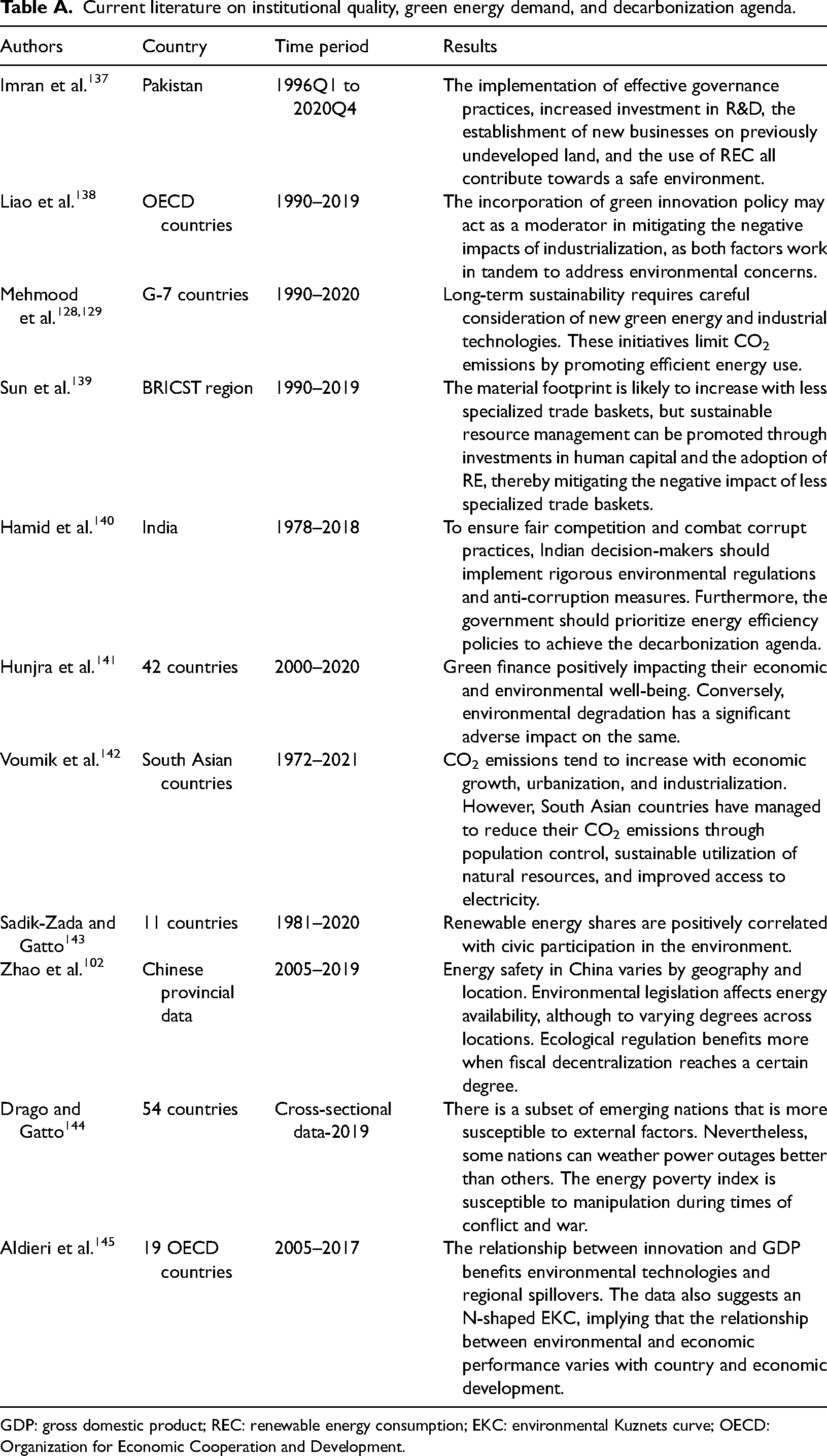
Recent investigations in this field are summarized in Table A of Appendix A. This research departs from the scholarly canon in two key respects: first, while many studies have examined the correlation between income and emissions, this one focuses on the role that IQ plays in shaping environmental policy. Second, there is a disproportionate amount of focus placed on wealthy nations and the clean and natural environments that exist in such nations; to the exclusion of low-income economies such as those found in SAARC countries and other places where the issue of a degraded and polluted environment is even more glaring. Panel FEM is best suited to check the study's objectives as it accounts for unobserved heterogeneity between panel units and eliminates omitted variable bias, making it a valuable tool for causal inference in empirical research. The study transitions from the introduction to the theoretical and econometric framework in the “Literature review” section. The findings are presented and analyzed in the “Materials and methods” section, and the study concludes with a final section.
Materials and methods
Theoretical framework
Institutions may include a set of regulations, rights, and decision-making procedures related to environmental degradation that governments implement at all levels of society. Anthropogenic climate change and the possible role of institutions as both causes and barriers. 82 The impacts of institutional factors on environmental deterioration are contested, and this is reflected in the existing research. There is a school of thought among ecologists that holds that institutions benefit the environment's health. In contrast, another school of thought holds that they can be detrimental, as countries with solid institutional backgrounds tend to attract investment that is bad for the environment's health. The effect of institutional characteristics on EQ has been the subject of several previous research, including those by Bernauer and Koubi, 83 Hosseini and Kaneko, 84 and Li and Reuveny. 85 These thinkers correctly inferred that greater access to information and political power would increase support for environmental causes, raise public awareness of environmental issues, and result in stronger environmental laws.86,87 They also stress that democracies are more sensitive to the public's environmental demands in times of transition. Similarly, Payne 88 and Weiss and Jacobsen 89 indicate that institutions within the framework of laws and regulations and quality of human life foster economic freedom and sustainable development, improving EQ. Figure 1 shows the theoretical linkages between the variables for ready reference.
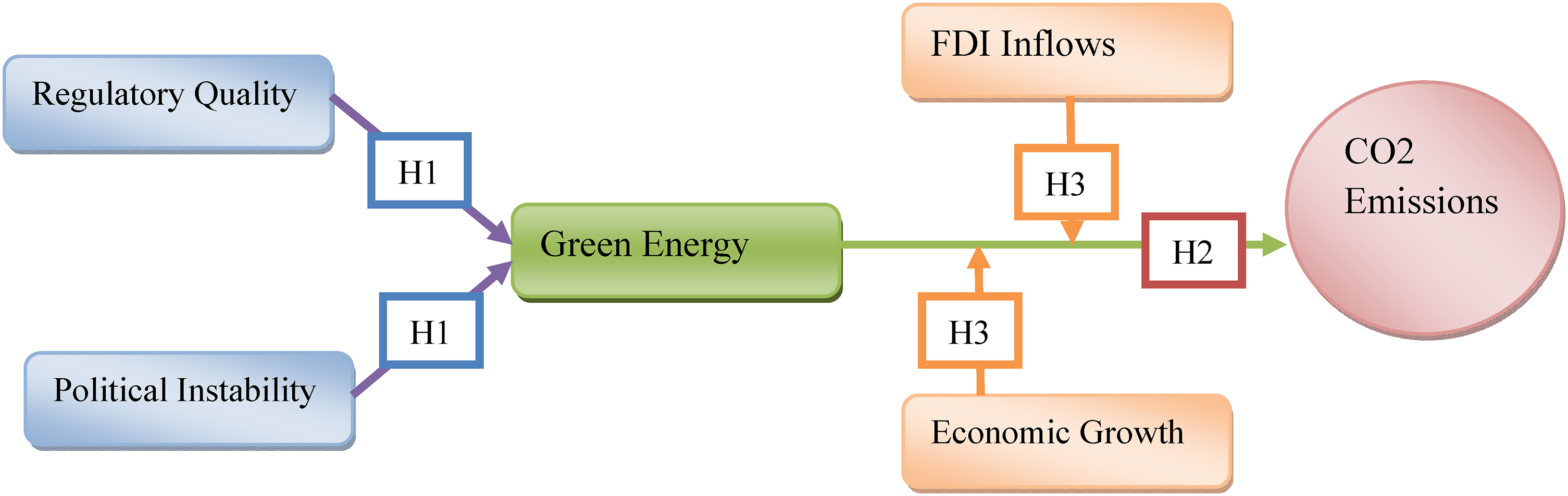
Conceptual framework. Source: Author's extract.
Figure 1 shows that South Asian economies are likely to reduce their carbon emissions because institutional factors, such as government rules and political stability, enhance the demand for renewable energy. In addition, the pollution hallo hypothesis is supported by the expectation that incorporating FDI will further reduce carbon emissions. There is likely to be a negative correlation between regional EG and carbon emissions due to the region's shift towards sustainable development.
Data source and variables
This research used data for 24 years, from 1990 to 2021, from SAARC countries. Carbon emissions were estimated using data from the World Development Indicators data. As per the study conducted by Bekaert et al., 90 the measure of IQ was obtained through the use of the World Governance Indicators. 91 This indicator was derived by summing the variables of PINS and regulatory quality. The income per capita and REC were utilized as indicators of economic health. The FDI inflows control variable was also sourced from World Development Indicators. 92 Table 1 shows the list of variables.
List of variables.
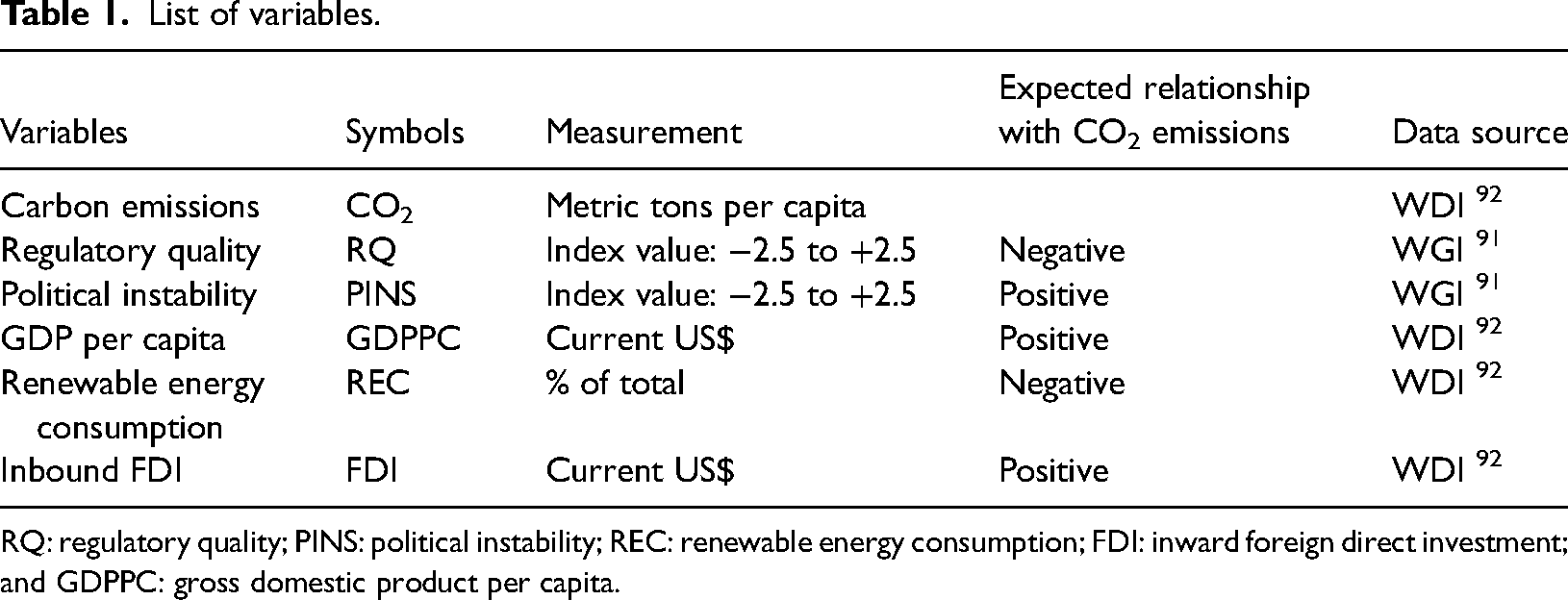
RQ: regulatory quality; PINS: political instability; REC: renewable energy consumption; FDI: inward foreign direct investment; and GDPPC: gross domestic product per capita.
The research spanned the years 1990–2021, using time series data. Several considerations led to the selection of this historical period. First, this length of time for a thorough examination of the association between institutional features and EQ in SAARC economies across a considerable period. The study intended to capture trends, patterns, and changes in the relevant variables by looking over a somewhat long time horizon. The second reason why 1990–2021 was chosen is that data from reliable sources like the World Bank and other international databases were readily available. Data from these sources is reliable since it is consistent and standardized across many nations and historical periods. Furthermore, the selected time enables us to contribute uniquely to the current research by assessing the long-term effects of institutional features on EQ. The study wanted to thoroughly understand the long-term connection between institutions and environmental outcomes in the SAARC economies by including this temporal component. Although there may be other studies in the literature that concentrate on various periods, the data from 1990 to 2021 is complete and consistent, providing useful analysis and insights into the problems we set out to investigate. In the next part, we will use statistical approaches, and a flowchart depicting this procedure is shown in Figure 2.
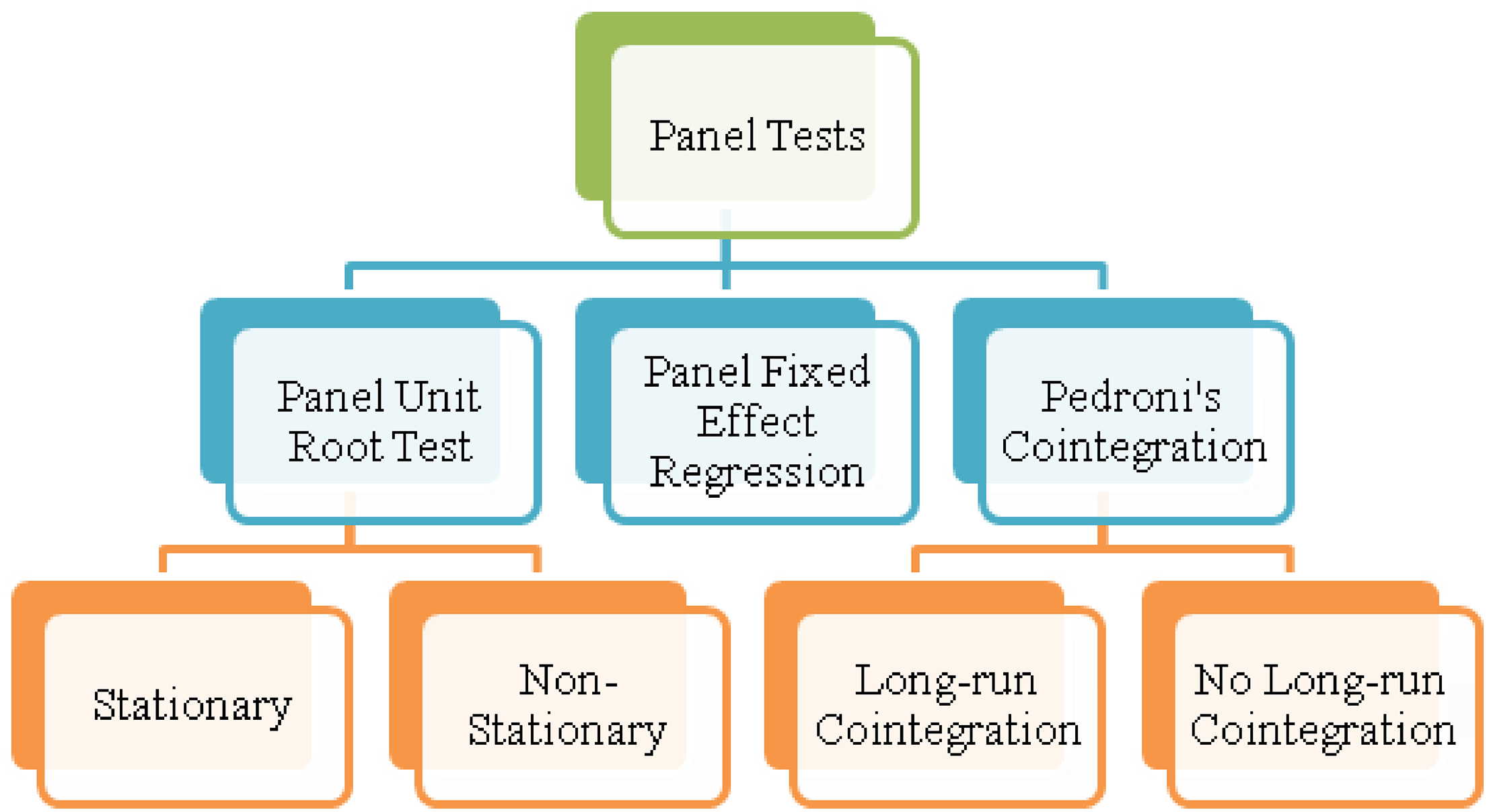
Methodology flowchart. Source: Author's extract.
Econometric framework
More active institutions may influence ecological devastation. Institutions have a significant influence in promoting rapid economic expansion, which may lead to a rise in carbon emissions and, eventually, environmental deterioration. This problem must be checked by appropriate institutional regulation. This objective rests on a testable primary hypothesis based on an empirical model. It will be up to the empirical model to decide how best to use the yearly dataset's time series and cross-national measures for that estimate.
93
The following panel regression model equation (1) is estimated to test our hypotheses:
The study used a panel FEM regression model supported by the findings of the Hausman test and linked it to the innovation accounting matrix. The panel FEM assumed that the cross-sections have different intercepts due to their country's specific characteristics rather than common intercepts. Further, the panel random effect model (REM) argued that the randomness exists in equation (1) due to different countries’ specific intercepts along with the new error term that was included due to the exclusion of Asian countries in the panel. The chosen factors were then subjected to the Granger causality test to determine their interdependence. The F-test assesses whether the underlying variables are one-way, two-way, or impartial, albeit highly correlated. Long-term growth strategies may be established using causality inferences. The comprehensive explication of the statistical formulas referenced is provided in Appendix B for convenient consultation.
Results and discussion
Appendix Tables B and C provide a comprehensive overview of the variables, including their descriptive statistics and correlation matrix. These details are available in Appendix C. In order to investigate the stationarity and cointegration of the variable series, the study employed the Levin, Lin, and Chu unit root test and Pedroni cointegration test, and the results of these tests are presented in Table 2.
Unit root and Pedroni cointegration test estimates.
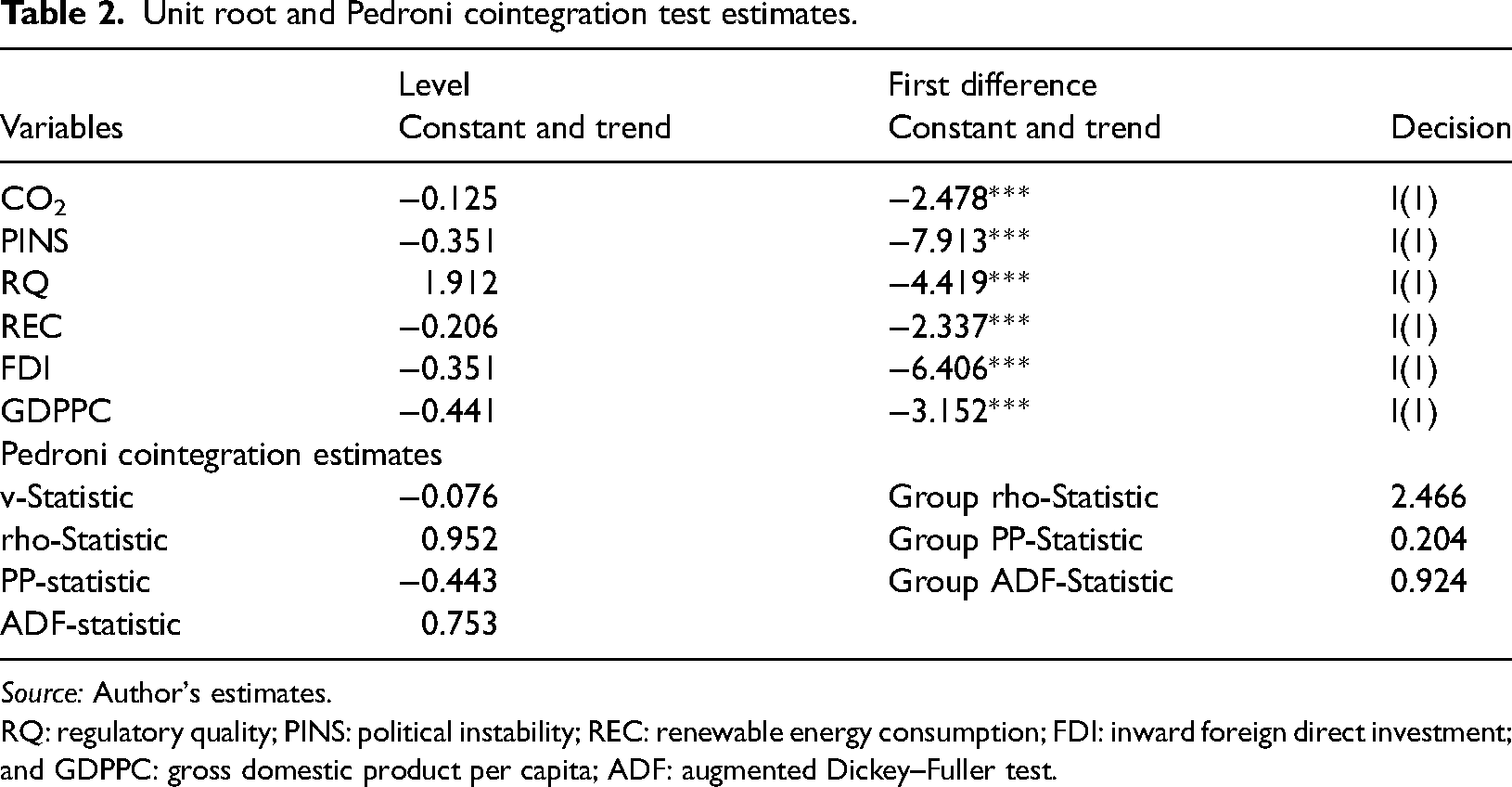
Source: Author's estimates.
RQ: regulatory quality; PINS: political instability; REC: renewable energy consumption; FDI: inward foreign direct investment; and GDPPC: gross domestic product per capita; ADF: augmented Dickey–Fuller test.
The study findings indicate that although all variables exhibit differenced stationary characteristics, suggesting I(1) series, the Pedroni cointegration estimates indicate that there is no cointegration relationship between the variables. Therefore, the panel FEM was employed to estimate the parameters.
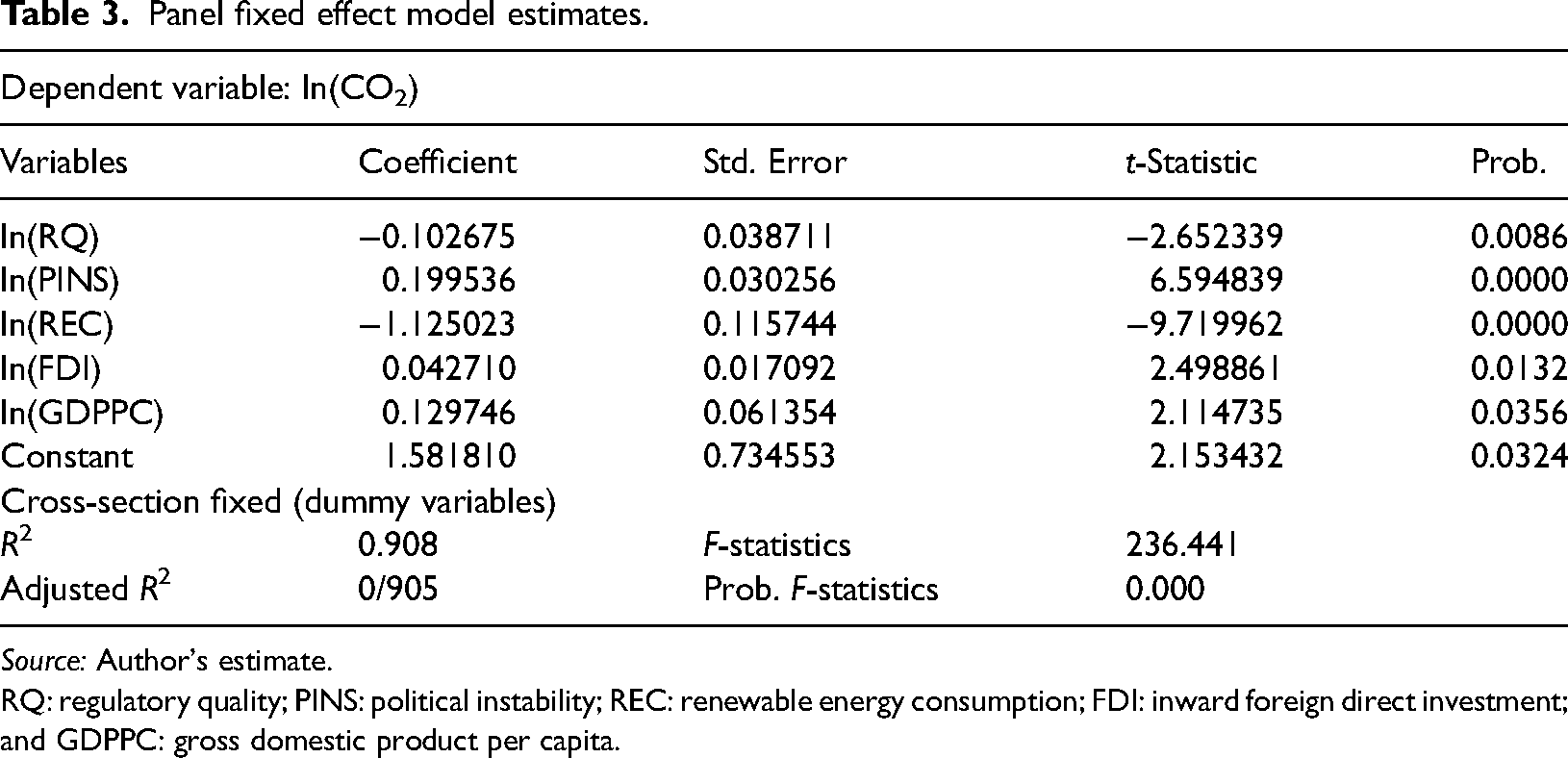
Using a FEM, the accuracy of the computed values was assessed. The REM's superiority over the FEM may be assessed using the Hausman test. The FEM is appropriate if the test outcome is statistically significant. The Hausman test result favours the FEM for this particular investigation (see, Table D in Appendix C). The panel FEM estimates are shown in Table 3. From the estimations of IQ factors, RQ is negatively connected with carbon emissions. In contrast, PINS is positively related to CO2 emissions with elasticity values of −0.102% and 0.199%, respectively. Reduces carbon emissions by shutting down loopholes in the law and making environmental legislation far more effective. 94 Companies use more efficient, environmentally friendly, creative manufacturing methods and RE, resulting in less CO2 emissions throughout the economy.95,96 Carbon emissions are reduced because high-quality regulations underpin the command and control system. 97 Political unrest is strongly correlated with carbon emissions due to weak political situations, and it has the biggest estimate, confirming that a better political condition worsens the economy. 98 This demonstrates how political unrest has become a root cause of environmental harm, encouraging rent-seeking behavior among nations. These findings are associated with the results of Khan et al. (2020), Wang.99,100 Our findings are consistent with previous studies that have also reported a negative relationship between RQ and carbon emissions.101–103 However, our study is unique in identifying the positive relationship between PINS and CO2 emissions, which has not been extensively explored in previous research. We have added this point to the study to highlight the novelty of our results.
Panel fixed effect model estimates.
Source: Author's estimate.
RQ: regulatory quality; PINS: political instability; REC: renewable energy consumption; FDI: inward foreign direct investment; and GDPPC: gross domestic product per capita.
Statistics show a negative link between CO2 emissions and the REC coefficient. A 1% increase in REC reduces CO2 emissions by 1.1 25%. As REC improves, EQ will rise, and economies will boost green energy infrastructure. According to earlier studies, REC and emissions are negatively correlated.104–106 Our study advances the literature by assessing this connection more thoroughly and accurately. Additionally, our study shows that REC is essential to EQ promotion and carbon neutrality. Naz et al. 107 found that using alternative fuels in power investments could reduce CO2 emissions, while rigid security standards could help disregard the adverse effects of inefficient production and achieve clean growth objectives. According to Anser et al., 108 the most effective way to limit polluting industries is by implementing stringent efforts and regulating suitable standards. That is because many people attribute globalization to the liberalization of trade and banking. 109 Zaman and Abd-el Moemen 110 stated that pursuing economic advancement at the cost of the environment is a kind of irresponsible expansion. The developed world is already feeling the economic effects of climate change due to the dangers posed by rapid EG and power emissions to human health and the environment. 96 As Vo and Zaman 111 discovered, economic literacy may significantly impact green investment management programs’ ability to improve air quality. It is possible that funding might be helpful in sectors such as RE, fuel diversity, socially conscious startup efforts, and equipment for long-term development. 112 Anser et al. 113 stressed the need to use clean and efficient technology solutions, an alternative energy mix, ecologic credentials, anti-dumping price requirements, and environmental pollution to restrict carbon, coal power, and global warming in water, electricity, and agricultural land. These instruments would help achieve global ecological goals, benefiting everyone.
Coefficient estimates for inward FDI are positive, indicating that rising FDI levels are associated with rising CO2 emissions by 0.042% per year. Those numbers point to FDI as the root driver of pollution and climate change. Duc Hong et al., 114 Nassani et al., 115 Zaman, 116 and Hishan et al. 117 found similar results, concluding that FDI has a significant and beneficial effect on carbon emission, with the resulting increase in carbon emissions serving as evidence against the displacement theory and the pollution haven hypothesis. That is why it is crucial to enact stringent laws and regulations to prevent environmental deterioration and promote a green and clean investment climate. 118 Since GDP growth is positively and strongly connected to carbon emissions (income led to a 0.129% rise in emissions), governments should continue prioritizing economic expansion above carbon reduction. Egbetokun et al., 119 Zaman et al.,58,59 Imran et al., 120 and Huang et al.'s 121 research on the link between economic development and reduced carbon emissions supports this hypothesis. Generation biofuels may serve as a superior alternative to fossil fuels. They do not harm the ecosystem and allow the distribution network to go beyond the boundaries sustainably. More tech-centric rules are needed for ethical manufacturing, purchasing, and shipping. This will allow people to take the next step in adopting Computing channels and become more active participants in the trade process. 122 The strategy is based on the idea that the nation ought to lower its carbon footprint and its use of fossil fuels while simultaneously increasing environmental rents that work to slow the rate at which the planet is warming.123,124
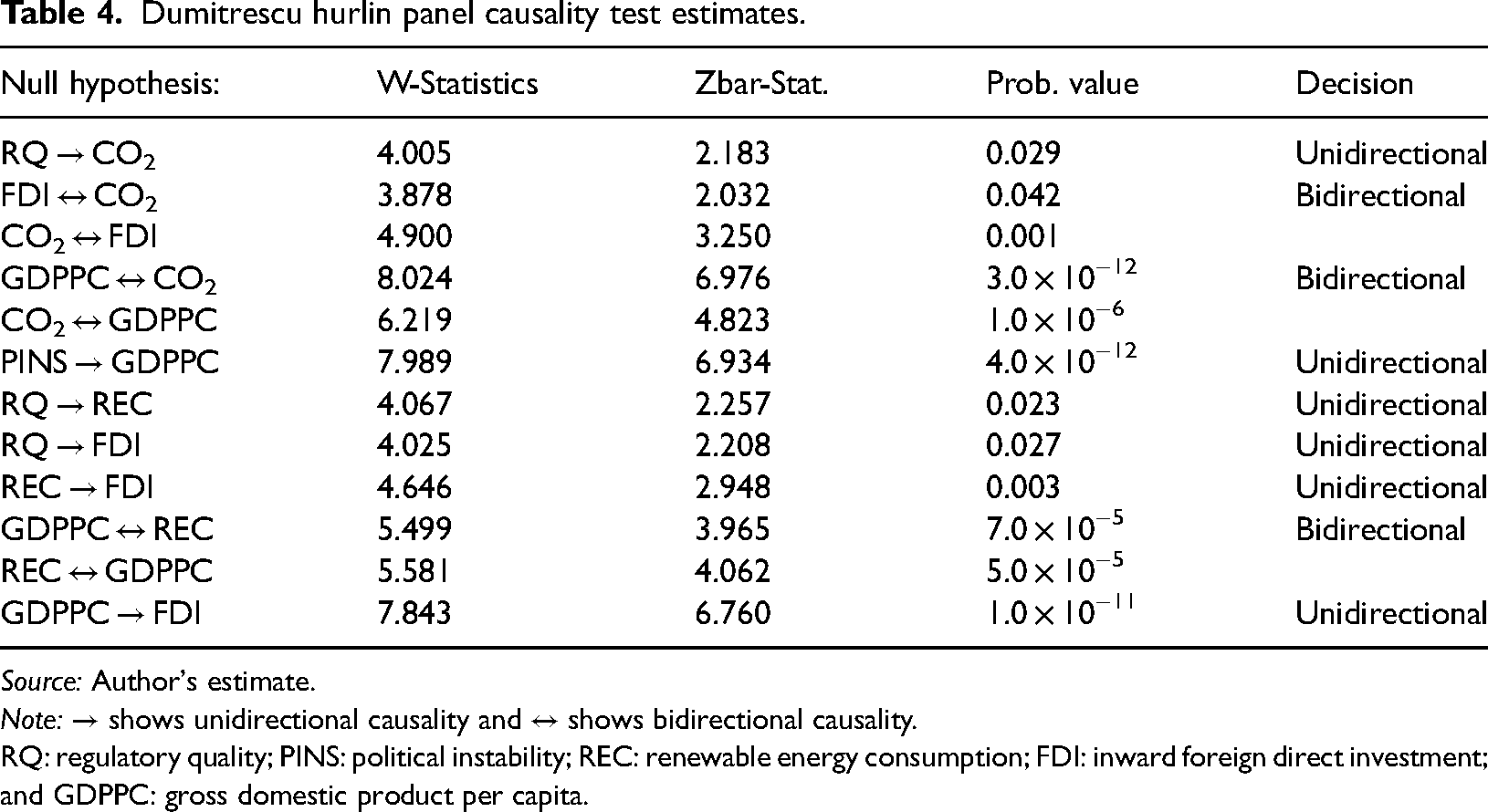
The effects of fuel efficiency, specialized upgrades, business exposure, and institutional grade on the environment in Asian countries are highlighted by Wenlong et al. 125 Although our research is limited to the SAARC economies, the results are consistent with those of other studies examining the role of institutional and technological advancements in enhancing EQ. The role of renewable energies in decarbonizing the energy industry and reducing GHG emissions is discussed by Osman et al. 126 Their observations on the decreasing prices of solar and wind energy and the possible implications of climate change on various renewable sources add weight to our study's focus on green energy demand and its significance in lowering carbon emissions. The long-term asymmetry between political stability and environmental deterioration is the focus of analysis by Kartal et al. 127 Their research is limited to the United Kingdom, but it backs up our claim that IQ is a major factor in environmental outcomes. Mehmood et al.128,129 looked at how a shift towards greener manufacturing practices in Pakistan has affected the country's carbon intensity. Similar to our findings, they highlight the significance of technological advancement and environmentally responsible manufacturing practices in mitigating GHG emissions. Androniceanu and Georgescu 130 analyze the interplay between income growth, CO2 emissions, power usage, and FDI in the European Union. While we concentrate on SAARC economies in our research, these other studies’ conclusions provide credence to our own and show how these factors interact to affect sustainable growth. For your convenience, Table 4 displays the Granger causality estimates.
Dumitrescu hurlin panel causality test estimates.
Source: Author's estimate.
Note: → shows unidirectional causality and ↔ shows bidirectional causality.
RQ: regulatory quality; PINS: political instability; REC: renewable energy consumption; FDI: inward foreign direct investment; and GDPPC: gross domestic product per capita.
To confirm regulatory and growth-led emissions in a panel of SAARC nations, the causality estimations suggest that RQ and income cause emissions. The relationship between FDI and emissions is two-way. However, a correlation was shown between income expansion and increased carbon output. Granger causation feedback between income and RE sources is confirmed. RQ, REC, and income Granger cause inbound FDI to support governance-led the overseas investment, REC-led FDI inflows, and income-led foreign investment in the SAARC region. Global economic expansion and demand for RE are key causes of PINS and RQ.
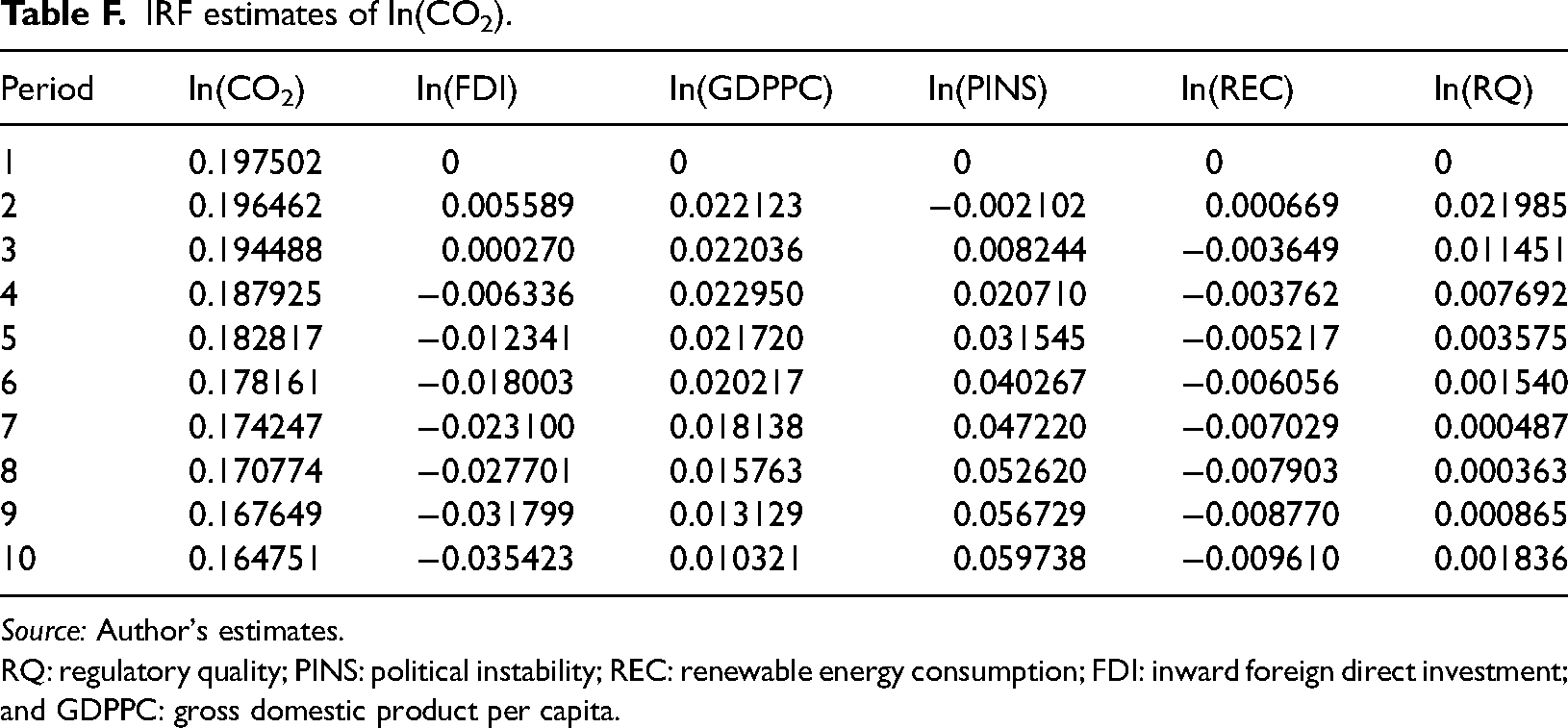
Tables E and F in Appendix C show the VDA estimates and found that PINS would likely to influenced greater on carbon emissions with a variance of 4.209%, followed by inward FDI, EG, and RQ for the next 10 years time period. Combining the independent variables FDI, GDPPC, PINS, REC, and RQ leads to a variation in carbon emission forecasts of 0.197 units in the first period and 0.594 units in the tenth period. Short-term (within two years), CO2's own shocks account for 98.716% of the variation in prediction error, whereas FDI accounts for just 0.039%, GDP for 0.62%, PINS for 0.005%, REC for 0.0005%, and RQ for 0.61%. The variance decomposition of CO2 over the medium term (the fifth period) reveals that the shocks in CO2 are explained by its shocks (97.64%), 0.11% from the influx of FDI, 1.046% from GDPPC, 0.79 from PINS, 0.029 from REC, and 0.36% owing to RQ. CO2 accounts for almost 59% of the prediction error variance in the long run (10th period), whereas FDI, GDP, PINS REC, and RQ each account for 1.16 percentage points, 4.20 percentage points, 0.91 percentage points, and 0.19 percentage points, respectively. These findings indicate PINS’ significant contribution in explaining 4.20 percentage points of the variation in the prediction inaccuracy. PINS’ contribution to understanding the forecast error variance of carbon emission is more significant than other variables, particularly over the long run. Appendix Table F shows the IRF estimates for ready reference. The sudden changes in the variables across time may be understood in terms of the impulse response. Multiple variables experience multiple shocks during the included 10-year response. For instance, if a country receives a large influx of FDI and its associated carbon emissions are initially positive but then become negative, it has now embraced environmentally friendly practices. Additionally, during the next decade, carbon emissions are expected to rise due to economic development, political instability, and poor regulatory quality. Demand for RE is expected to fall in response.
Conclusions and policy recommendations
The United Nations’ Agenda 2030 seeks to advance humanity, the economy, and the planet by emphasizing ending extreme poverty and protecting the planet for future generations. The shift to a blue economy and the promotion of sustainable development in Asia's fuel economy rely on inclusive growth, which promotes environmentally friendly firms, employment, and innovation. By employing panel data from 1990 to 2021 from all SAARC countries, this research addresses a significant need by empirically investigating the dynamic link between IQ, carbon emissions, REC, and inbound FDI. Institutional concerns, including RQ and PINS, have been largely ignored in prior studies despite their obvious impact on SAARC nations’ environmental health. While PINS, FDI, and wealth contribute to increasing global carbon emissions, the results show that RQ and RE demand lead to lower emissions. Using a Granger causality analysis, we can see that RQ is the first chain link that includes carbon emissions, REC, and FDI inflows. Furthermore, income and carbon emissions, income and EG, and REC and EG have two-way causation. PINS Granger causes income in the SAARC panel, whereas incoming FDI is caused by REC and income Granger. PINS will considerably affect the variability of carbon emissions over the next decade, as shown by the variance decomposition study.
Achieving higher conservation and healthy development goals are challenging for many areas, particularly for the SAARC nations. The effectiveness of a country's environmental management and ability to maintain a clean environment are directly related to the quality of its governing institutions. Due to efforts to combat corruption and improve government, pollution levels have decreased. Regulations impact harmful emissions explicitly and implicitly via investment and EG, highlighting the significance of institutional elements in SAARC countries’ efforts to tackle climate change. The mentioned system integration pertains to the integration of sustainable power and emission control strategies within the SAARC region. The system integration in the SAARC region is different from that of other regions because it requires a focus on linked businesses’ financial growth and economic development, incentivizing foreign companies to adopt eco-friendly governance structures and sustainable technological advancements, and modifying trading structures for the long-term SAARC developmental agenda.131–133 Moreover, the development and use of sustainable power in the SAARC region require substantial funds to be spent on research and development in the power industry, which may result in the lowering of the price of energy technologies.134–136 The impact of these measures on CO2 emissions must be considered when planning for long-term implementation. Environmentalism has come to the forefront as the global economy has grown dramatically, and today it stands as a significant impediment to even more astounding expansion. Overseas investment between countries is vital for EG and job creation, but it has also led to environmental degradation in many of its host countries. This problem highlights the need for the SAARC governments to cooperate proactively to ensure the region's continued peace and prosperity.
Footnotes
Acknowledgements
Researchers Supporting Project number (RSP2025R87), King Saud University, Riyadh, Saudi Arabia.
Declaration of conflicting interests
The author(s) declared no potential conflicts of interest with respect to the research, authorship, and/or publication of this article.
Funding
The author(s) disclosed receipt of the following financial support for the research, authorship, and/or publication of this article: Researchers Supporting Project number (RSP2025R87), King Saud University, Riyadh, Saudi Arabia.
Ethical approval
N/A.
Consent to participate
The study was conducted with equal participation by all authors.
Consent to publish
The paper's publication is permitted by all of the authors.
Availability of data and materials
The data is freely available at World Development Indicators published by the World Bank
92
at  .
.
Appendix A: Literature review
Current literature on institutional quality, green energy demand, and decarbonization agenda.
| Authors | Country | Time period | Results |
|---|---|---|---|
| Imran et al. 137 | Pakistan | 1996Q1 to 2020Q4 | The implementation of effective governance practices, increased investment in R&D, the establishment of new businesses on previously undeveloped land, and the use of REC all contribute towards a safe environment. |
| Liao et al. 138 | OECD countries | 1990–2019 | The incorporation of green innovation policy may act as a moderator in mitigating the negative impacts of industrialization, as both factors work in tandem to address environmental concerns. |
| Mehmood et al.128,129 | G-7 countries | 1990–2020 | Long-term sustainability requires careful consideration of new green energy and industrial technologies. These initiatives limit CO2 emissions by promoting efficient energy use. |
| Sun et al. 139 | BRICST region | 1990–2019 | The material footprint is likely to increase with less specialized trade baskets, but sustainable resource management can be promoted through investments in human capital and the adoption of RE, thereby mitigating the negative impact of less specialized trade baskets. |
| Hamid et al. 140 | India | 1978–2018 | To ensure fair competition and combat corrupt practices, Indian decision-makers should implement rigorous environmental regulations and anti-corruption measures. Furthermore, the government should prioritize energy efficiency policies to achieve the decarbonization agenda. |
| Hunjra et al. 141 | 42 countries | 2000–2020 | Green finance positively impacting their economic and environmental well-being. Conversely, environmental degradation has a significant adverse impact on the same. |
| Voumik et al. 142 | South Asian countries | 1972–2021 | CO2 emissions tend to increase with economic growth, urbanization, and industrialization. However, South Asian countries have managed to reduce their CO2 emissions through population control, sustainable utilization of natural resources, and improved access to electricity. |
| Sadik-Zada and Gatto 143 | 11 countries | 1981–2020 | Renewable energy shares are positively correlated with civic participation in the environment. |
| Zhao et al. 102 | Chinese provincial data | 2005–2019 | Energy safety in China varies by geography and location. Environmental legislation affects energy availability, although to varying degrees across locations. Ecological regulation benefits more when fiscal decentralization reaches a certain degree. |
| Drago and Gatto 144 | 54 countries | Cross-sectional data-2019 | There is a subset of emerging nations that is more susceptible to external factors. Nevertheless, some nations can weather power outages better than others. The energy poverty index is susceptible to manipulation during times of conflict and war. |
| Aldieri et al. 145 | 19 OECD countries | 2005–2017 | The relationship between innovation and GDP benefits environmental technologies and regional spillovers. The data also suggests an N-shaped EKC, implying that the relationship between environmental and economic performance varies with country and economic development. |
GDP: gross domestic product; REC: renewable energy consumption; EKC: environmental Kuznets curve; OECD: Organization for Economic Cooperation and Development.
Appendix B: Econometric equations
It is possible to discern the following causal relationship between the variables:
Unidirectional causality: CO2 emissions Granger causes PINS, RQ, REC, FDI, and GDPPC but not the other way around. Reverse causality: PINS, RQ, REC, FDI, and GDPPC Granger cause CO2 emissions but not the other way around. Bidirectional causality: The variables have a feedback relationship between them. Neutrality: No evidence from the variables points to a causal relationship between the factors being examined.
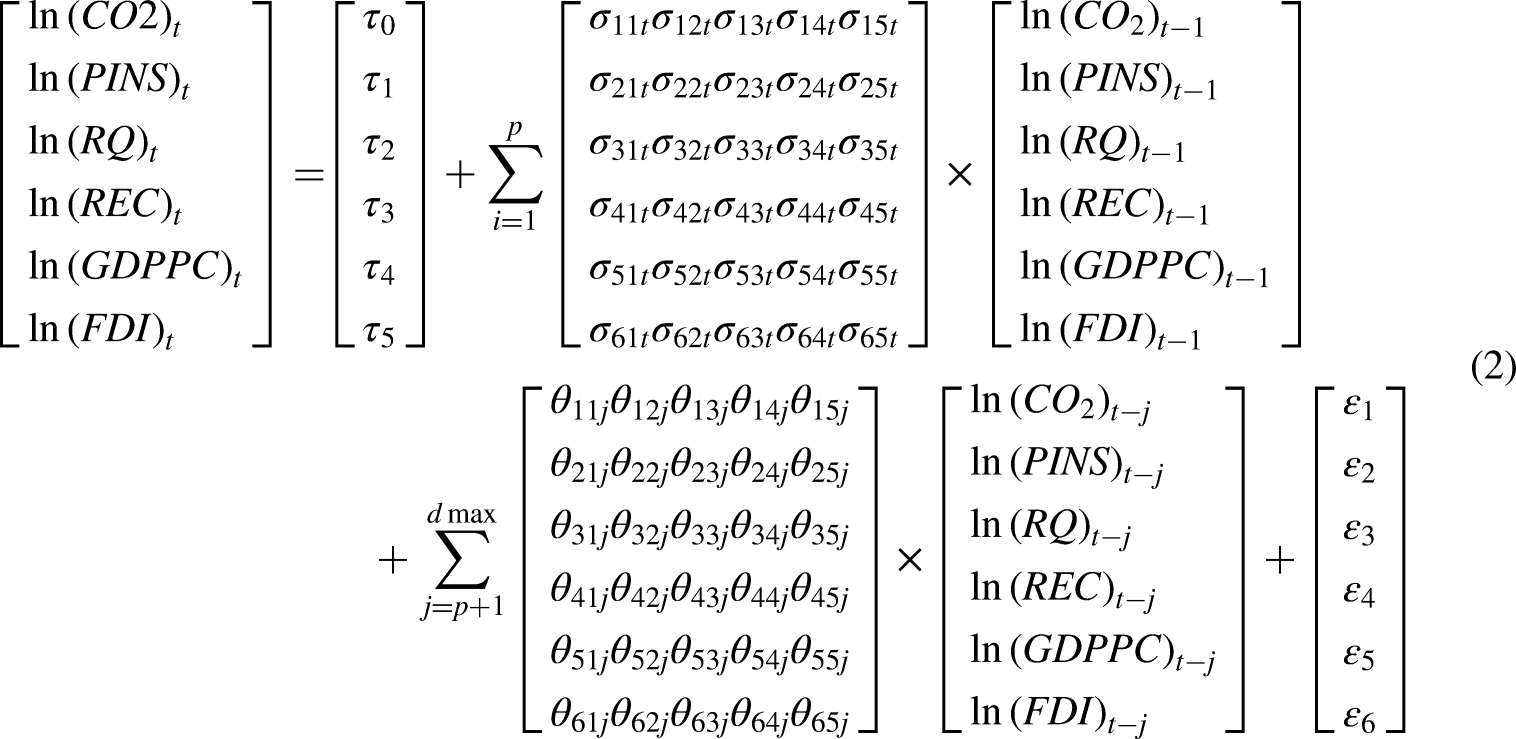
The VAR framework (equation (2)) is employed for Granger causality analysis, that is,
Appendix C: Results
IRF estimates of ln(CO2).
| Period | ln(CO2) | ln(FDI) | ln(GDPPC) | ln(PINS) | ln(REC) | ln(RQ) |
|---|---|---|---|---|---|---|
| 1 | 0.197502 | 0 | 0 | 0 | 0 | 0 |
| 2 | 0.196462 | 0.005589 | 0.022123 | −0.002102 | 0.000669 | 0.021985 |
| 3 | 0.194488 | 0.000270 | 0.022036 | 0.008244 | −0.003649 | 0.011451 |
| 4 | 0.187925 | −0.006336 | 0.022950 | 0.020710 | −0.003762 | 0.007692 |
| 5 | 0.182817 | −0.012341 | 0.021720 | 0.031545 | −0.005217 | 0.003575 |
| 6 | 0.178161 | −0.018003 | 0.020217 | 0.040267 | −0.006056 | 0.001540 |
| 7 | 0.174247 | −0.023100 | 0.018138 | 0.047220 | −0.007029 | 0.000487 |
| 8 | 0.170774 | −0.027701 | 0.015763 | 0.052620 | −0.007903 | 0.000363 |
| 9 | 0.167649 | −0.031799 | 0.013129 | 0.056729 | −0.008770 | 0.000865 |
| 10 | 0.164751 | −0.035423 | 0.010321 | 0.059738 | −0.009610 | 0.001836 |
Source: Author's estimates.
RQ: regulatory quality; PINS: political instability; REC: renewable energy consumption; FDI: inward foreign direct investment; and GDPPC: gross domestic product per capita.