







Abstract
The climate-adaptive net-zero energy building design is an effective trend for achieving a carbon-neutral environment and reducing global energy demand, especially, in India where building energy consumption recorded substantial growth in the past decade. This review article focuses on the development of net-zero energy buildings in tropical climates through the analysis of 44 real case studies. This study investigates the building envelope parameters, advance technologies, and their effectiveness on the building energy models. In the first phase of this study, fourteen net-zero energy buildings or high-performance buildings in the USA, China, and India considering energy-efficient design features and their significant effect on energy consumption have been examined. Moreover, the role of building simulation tools in improving energy efficiency is discussed. The second phase investigates the thirty best practices of net-zero energy buildings in tropical climates worldwide based on envelope choices, heating, cooling, and lighting features. Furthermore, this review discusses the evolving definitions, challenges, and inconsistencies in terminologies of net-zero energy building and illustrates India's initiatives towards net-zero development. The objectives of this review study are to highlight the challenges in building material research, advanced lighting, heating, ventilation, and air conditioning technologies, and integration of renewable energy compared to developed nations. Additionally, the gaps that are the barriers to the development of net-zero energy building in India have been identified. The review eventually concludes by providing policy recommendations and suggesting areas for future research to facilitate net-zero energy-building development in India.
Keywords
Introduction
Net-zero energy buildings (NZEBs) are an effective way of helping the world achieve its sustainable development, climate mitigation, and zero carbon emission goals by 2050.1,2 The global building sector, including commercial and residential buildings, utilized ∼ 29% of total end energy by 2020. 3 According to the International Energy Agency (IEA) report, energy usage in buildings is expected to rise by 32% between 2015 and 2040. 4 Moreover, buildings were responsible for 39% of carbon emissions in 2018, with 11% attributed to the production of building materials like steel, cement and glass.5,6
The building sector of India stands as one of the principal consumers of end-use energy.7–9 It is continuously booming with a growth rate of 10%, against the global growth rate of 5.2%. It is predicted to add 40 billion m2 of the newly built-up area by 2050.10,11 The total built-up area of commercial buildings in India was recorded as 659 million m2 in the base year 2010. It is estimated to exceed 1900 million m2 by 2030.12,13 Figure 1 depicts the annual growth rate in commercial building footprints in India.
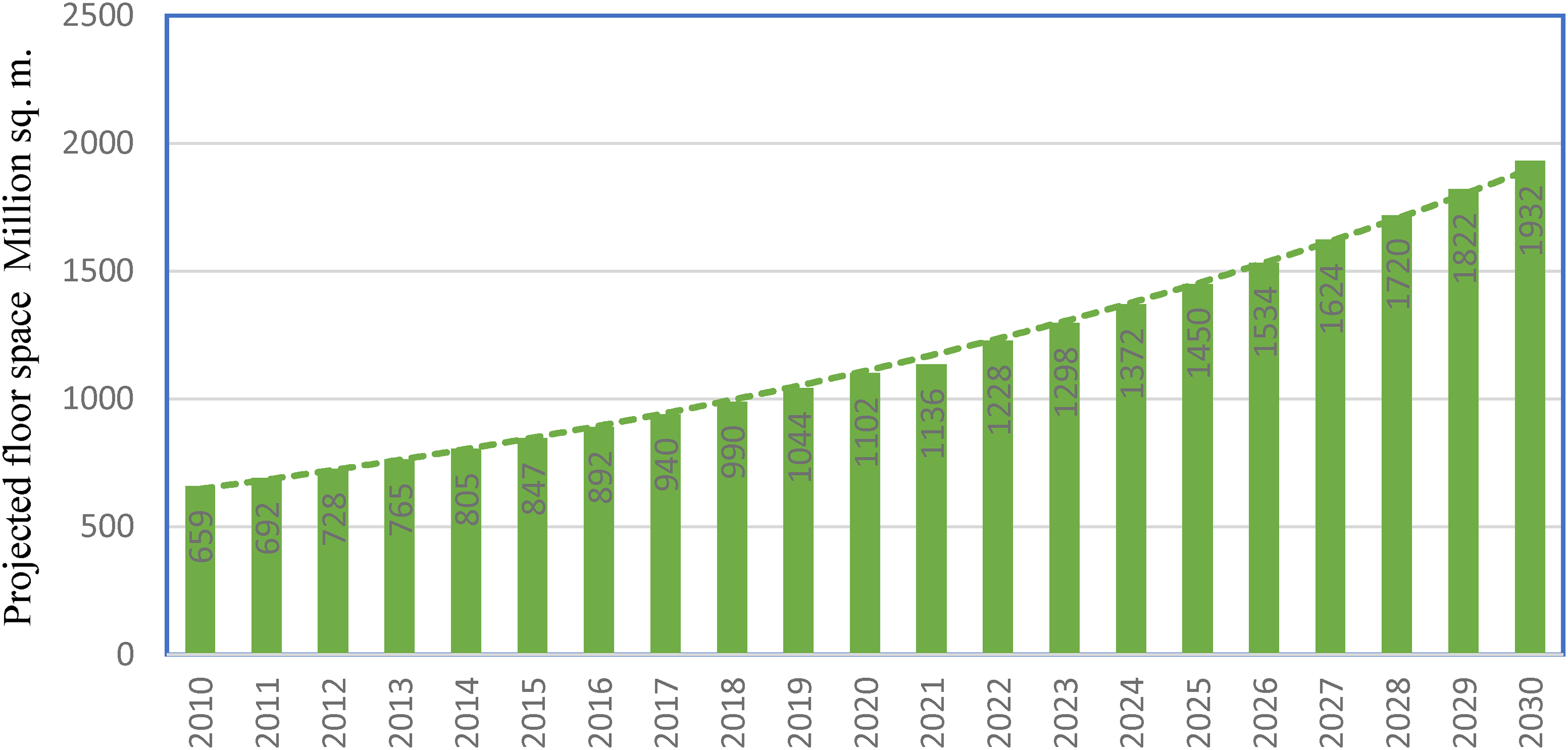
Buildings accounted for 33% of electricity consumption in India in 2018–2019. It is predicted to rise 3 to 5 times by 2031. 14 India has a huge territory with a complex geographical environment that leads to vast climatic boundaries. The tropical climate covers 80% of the total country's physical boundary, where air-conditioning is required to maintain an indoor thermal environment. 15 Figure 2 shows the magnitude of required cooling degree days in metropolitan cities in India compared to China and the USA. It reflects that Indian cities need higher cooling demand, which causes greenhouse gas (GHG) emissions.16,17 India is the fourth largest carbon emission country after China, the USA, and the European Union (EU), which produced 2309.1 Mt/year of carbon emissions in 2018. India is experiencing continuous growth at a rate of 3.5%, surpassing the global growth rate of 2.6% by 2050. 18 There are two approaches to reducing the escalating levels of energy consumption and carbon emissions, which are energy-efficiency management systems (EEMSs) and renewable energy sources (RESs). EEMS focuses on the combination of efficient architectural design and promoting energy-efficient measures. Whereas RES focuses on fulfilling the building operational energy demands either off-site or on-site using the RESs.19–21
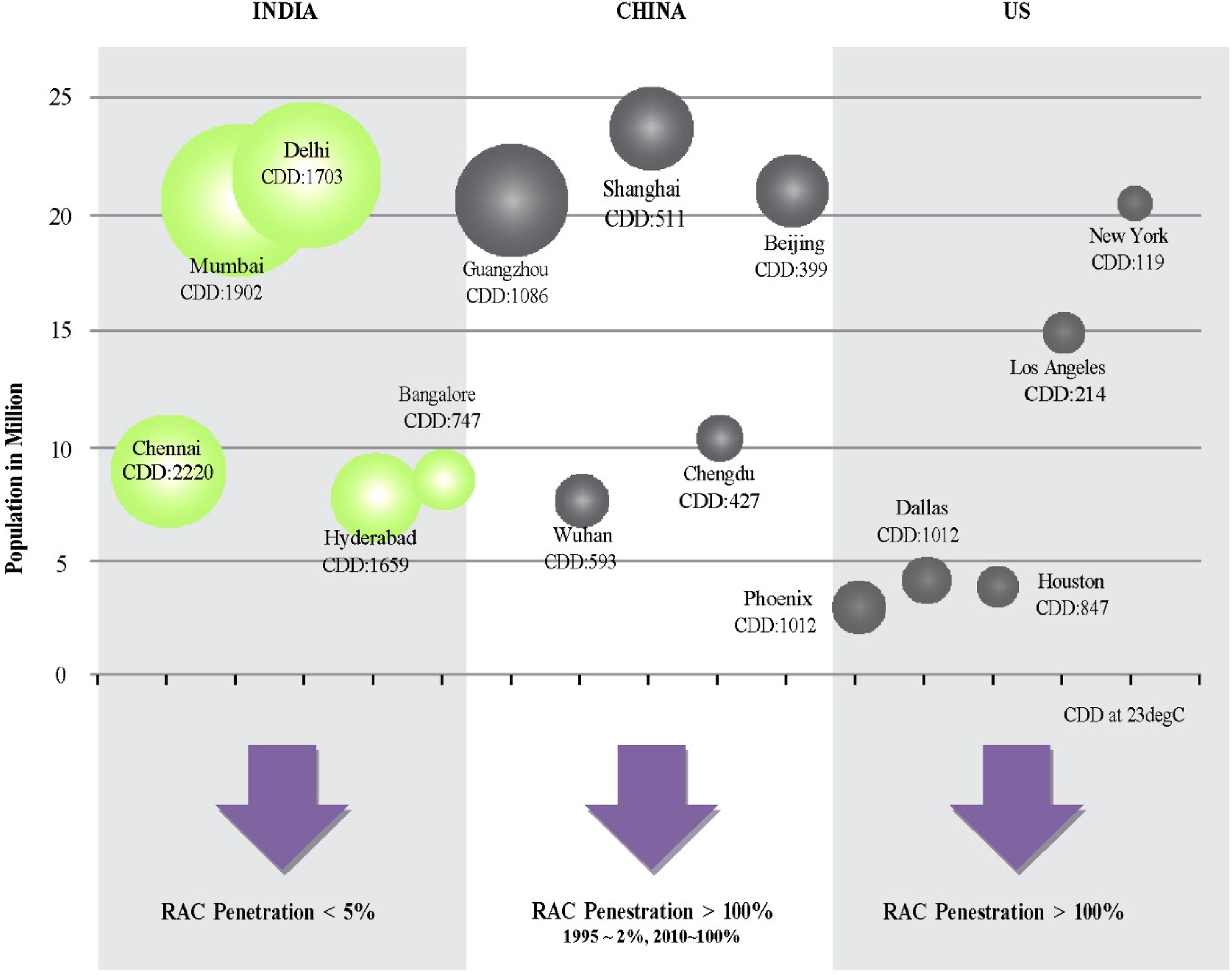
Cooling demand requirement in India, China, and the USA 17 (CDD: cooling degree days; RAC: room air-conditioning).
The deployment of NZEB has been considered a promising strategy for a few decades to overcome all these energy-related issues. NZEBs ensure a balance between energy consumption and generation through RESs over time while simultaneously ensuring minimum energy demands and zero carbon emissions. 22 Previous research emphasized on design optimizations of building envelopes, heating, ventilation, and air conditioning (HVAC) systems, renewable energy (RE) technologies, and specific net-zero energy (NZE) strategies.23–25 Researchers have used various simulation and optimization tools for the design of NZEBs.26–28 Moreover, many studies demonstrated passive design features and the effectiveness of insulating materials to reduce the penetration of solar radiation and maintain an indoor thermal environment.29,30 Researchers have also investigated the effect of natural ventilation on occupant comfort and derived the mechanism for the integration of natural and mechanical ventilation to reduce the building's cooling energy demand. Chen and Yang 31 investigated the various types of centralized and decentralized heating and cooling systems for high-performance building design. Moreover, the application of building-integrated photovoltaic (BIPV) systems and their integration with building façades reduced the heat gain through the envelope, fulfilled building demand, and contributed to achieving net zero.32,33 Meanwhile, a few studies exist in the literature that focused on the state-of-the-art NZEBs research on the adoption of various envelope design features and advanced energy measures for lighting, HVAC, and RE based on the practical experience of designing and operating actual case studies.
There is a lack of extensive research that illustrates the impact of active and passive design strategies on the energy consumption of commercial NZEBs in the tropical climate of India compared to the most developed nation, the USA, and the developing country, China, in real scenarios. Therefore, this study illustrates a comprehensive review of 44 certified energy-efficient/NZEB case studies located in tropical climates of different countries that reduced their energy consumption and achieved “Net-Zero” status. This review also focuses on key factors of energy savings, including the building envelope, lighting, HVAC systems, and RE technologies, which can significantly contribute to NZEB's developments and carbon-neutral environments. The main objective of this research is to investigate and analyze various real-world case studies of NZEB in tropical climates to identify their present features, climate-responsive design approaches, technology integration, and energy performance. The research further aims to establish best practices for NZEB design and technological choices specifically tailored to the tropical climate of India. The significance of this research is to identify the barriers to NZEB development in India, such as technological challenges, materials research, and the resilience of policies and standards. Finally, the policy recommendations that lead to contributing to NZEB in India have been discussed.
This article is summarized into eight major sections as depicted in Figure 3. The “Introduction” section summarizes the needs and requirements of NZEB. The “Definitions and India's initiatives towards NZEB” section demonstrates the worldwide definitions of NZEB, India's existing government policies, and the mainstream for NZEBs. The “Methodology” section includes methodology, which summarizes the selection criterion of fourteen NZEB case studies that are the best practices in tropical climates of the USA, China, and India. The “Analysis of reviewed case studies” section emphasizes on the critical comparative assessment of reviewed case studies (RCSs), accounting for key design features of passive designs, technological choices, and energy performance. The “Assessment of 30 NZEBs” section summarizes the best practices of 30 real-world high-performance NZEB case studies. The “Technological options and strategies for NZEB” section introduces the different technological options and strategies for NZEB development. The “Conclusion and policy recommendations” section illustrates the challenges and barriers at various scales to NZEB design in India and suggests policies and recommendations for future NZEB development. Finally, future research and limitations are discussed in the last section.
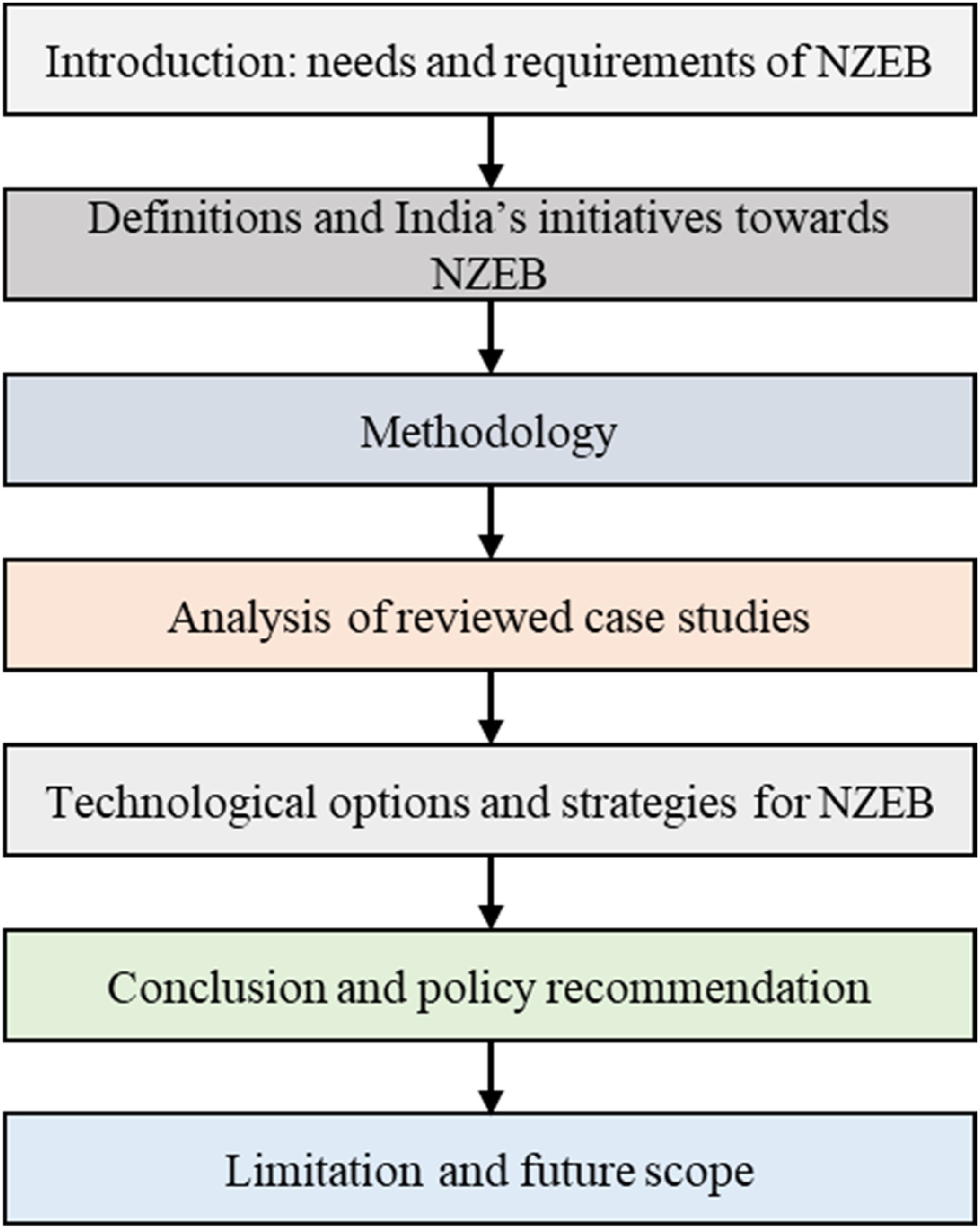
Research outline.
Definitions and India's initiatives towards NZEB
Definitions of NZEB around the globe
A precise definition of NZEB is essential to evaluate the various design, technical, operational, and methodological approaches adopted to address the crucial aspects of enhancing building energy performance. 34 Singh and Verma 35 highlighted that the absence of standardized practices and a robust definition would result in limited actual instances of zero energy buildings (ZEBs). Therefore, this section illustrates the definitions and metrics to guide the NZEB development in India.
Previous literature reported various definitions and frameworks for the energy performance assessment of NZEB as per the region-specific conditions.36,37 The theory of NZEB in building science was introduced in 1976 by Esbensen and Korsgaard from the University of Denmark, with subsequent definitions proposed by various countries over time. 38 Torcellini et al. 39 categorized NZEBs based on RE supply options whether on-site or off-site. Figure 4 illustrates a building equipped with passive design, energy-efficient measures, and RE supply provided through on-site or off-site generation, which is considered as NZEB (option 0). 40 Figures 5 and 6 represent the hierarchy of RE supply options, respectively. 41 Table 1 shows the categorization of NZEB as per on-site and off-site availability of RES.
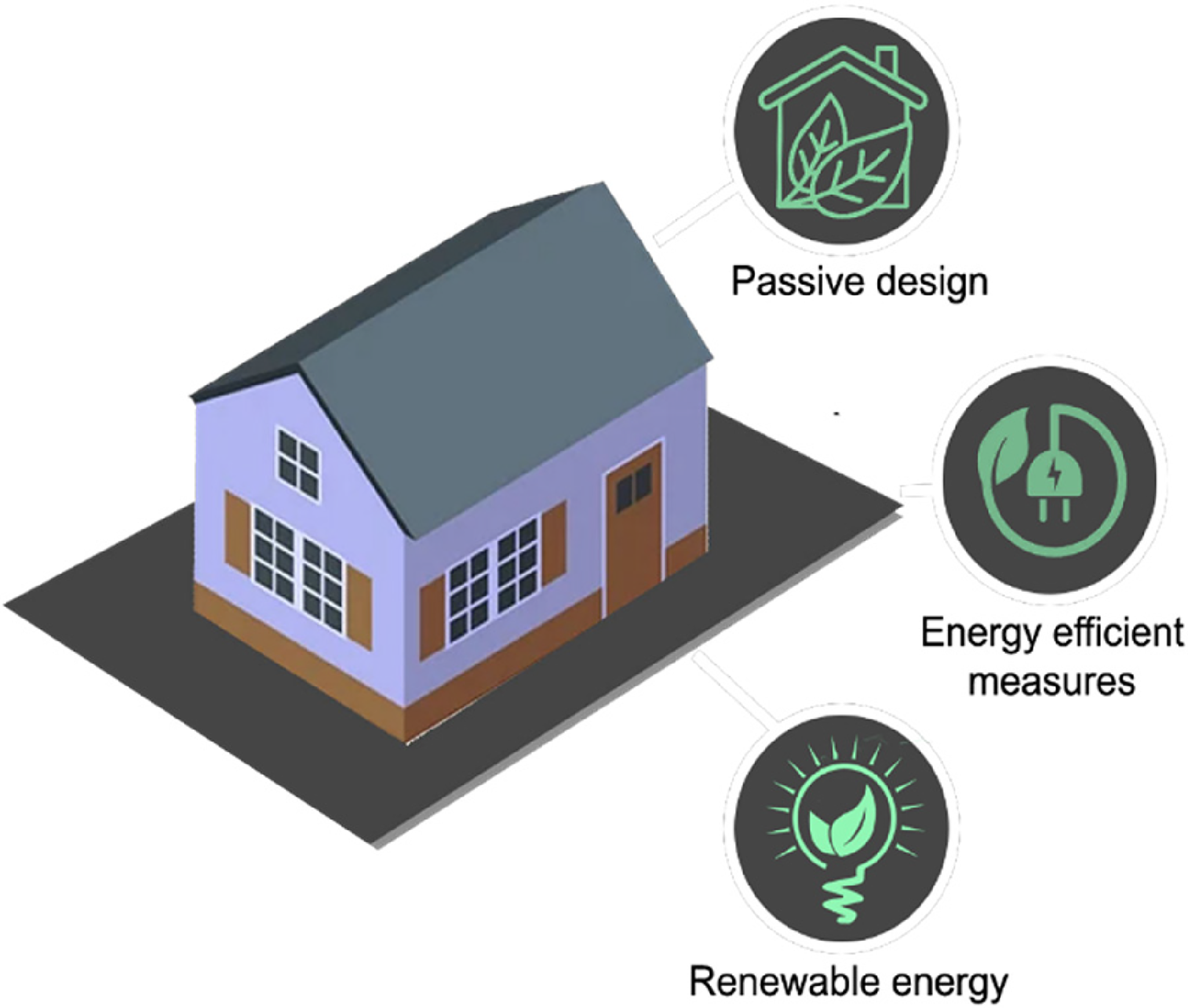
Hierarchy of renewable energy supply options for net-zero energy building (NZEB) – (option 0). 40
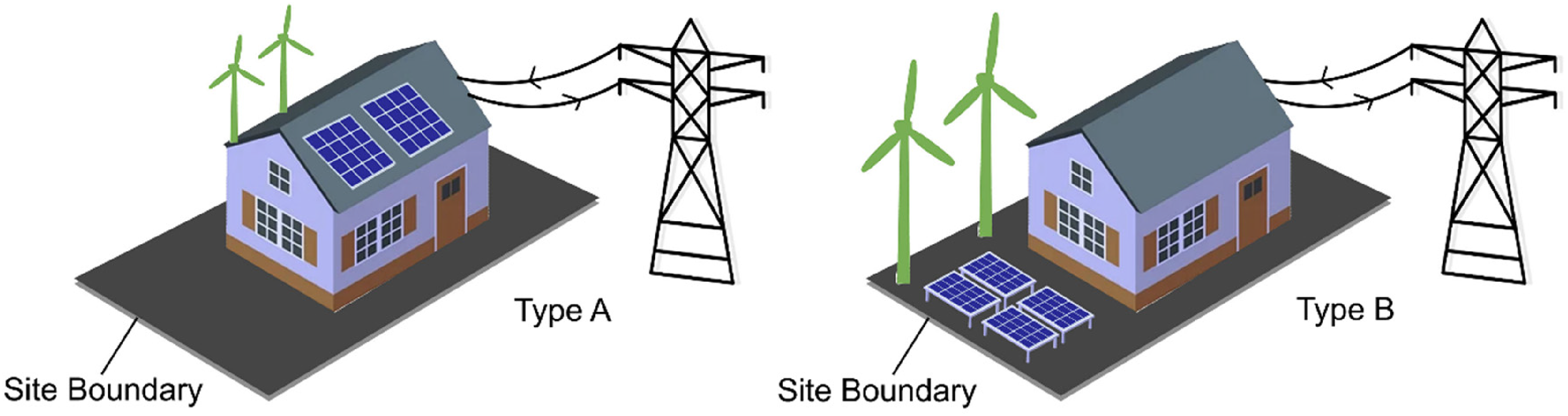
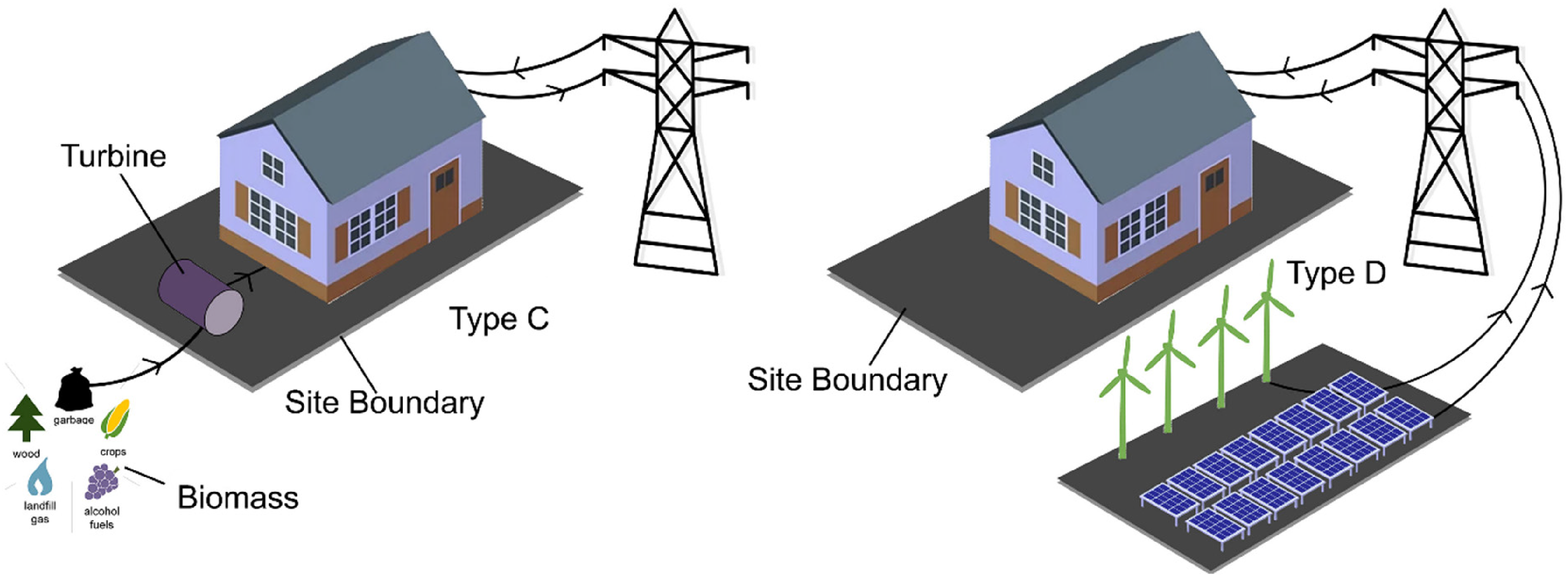
Categorization of NZEB as per renewable energy supply options and RE ranking.
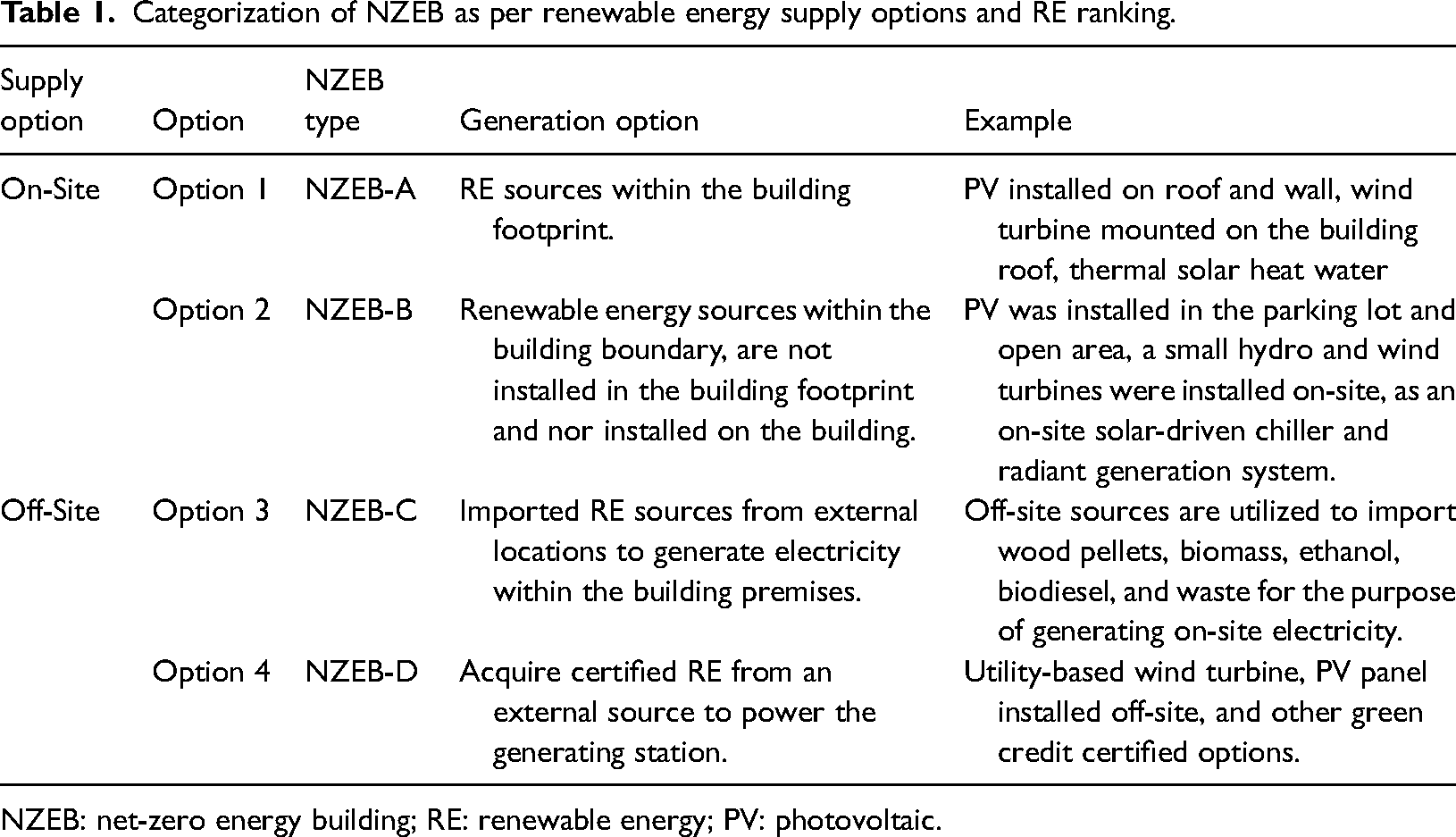
NZEB: net-zero energy building; RE: renewable energy; PV: photovoltaic.
Consequently, each NZEB comprehensive definition and metric emphasized on sustainable development, and energy neutrality for the built environment. 42 However, prerequisites and accreditations of NZEB vary across the nations, leading to diverse terms such as zero energy house in Denmark, energy-autonomous house in Germany, ZEB in the USA, zero carbon home in the UK, nearly ZEBs in the EU, net zero emission building in Australia, net zero energy home in Canada and ZEB in India.44,45 In response to that, there is no one particular definition for ‘net zero’ energy buildings. 25 Despite heterogeneous characteristics, these definitions aim to reduce fossil fuel energy demand by maximizing RESs, optimizing building energy efficiency, and ultimately achieving the zero or nearly ZEB status.43,46 Table 2 provides a recapitulation of all the ZEB definitions given by various developed and developing nations, international organizations, and other standards. Each country and organization used different metrics such as system boundaries (on-site or off-site RE generation); balanced demand (site energy and GHG emission); end-use and life cycle energy (operational and embodied) for measuring and evaluating the building's performance. The assessment criterion considered in Table 1 defines on-site electricity generation using RESs within the building boundaries (perimeter of the site), or the building footprint (wall and roof). Off-site electricity generation includes importing electricity generated from RESs outside the building's physical boundary or importing RESs to produce on-site electricity. Site energy addresses the RE generation equivalent to the annual operational energy demand and includes transported energy losses from the energy grid to the building utilization process. Carbon emissions are considered as CO2 emissions resulting from the use of utilities and services in buildings, which should be compensated with RE. Operational energy is considered as the end uses HVAC and lighting energy demand of the building entire year fulfilled by the RE. Embodied energy described as total carbon emission in the entire life cycle of the building is compensated through generations of RE.47,48
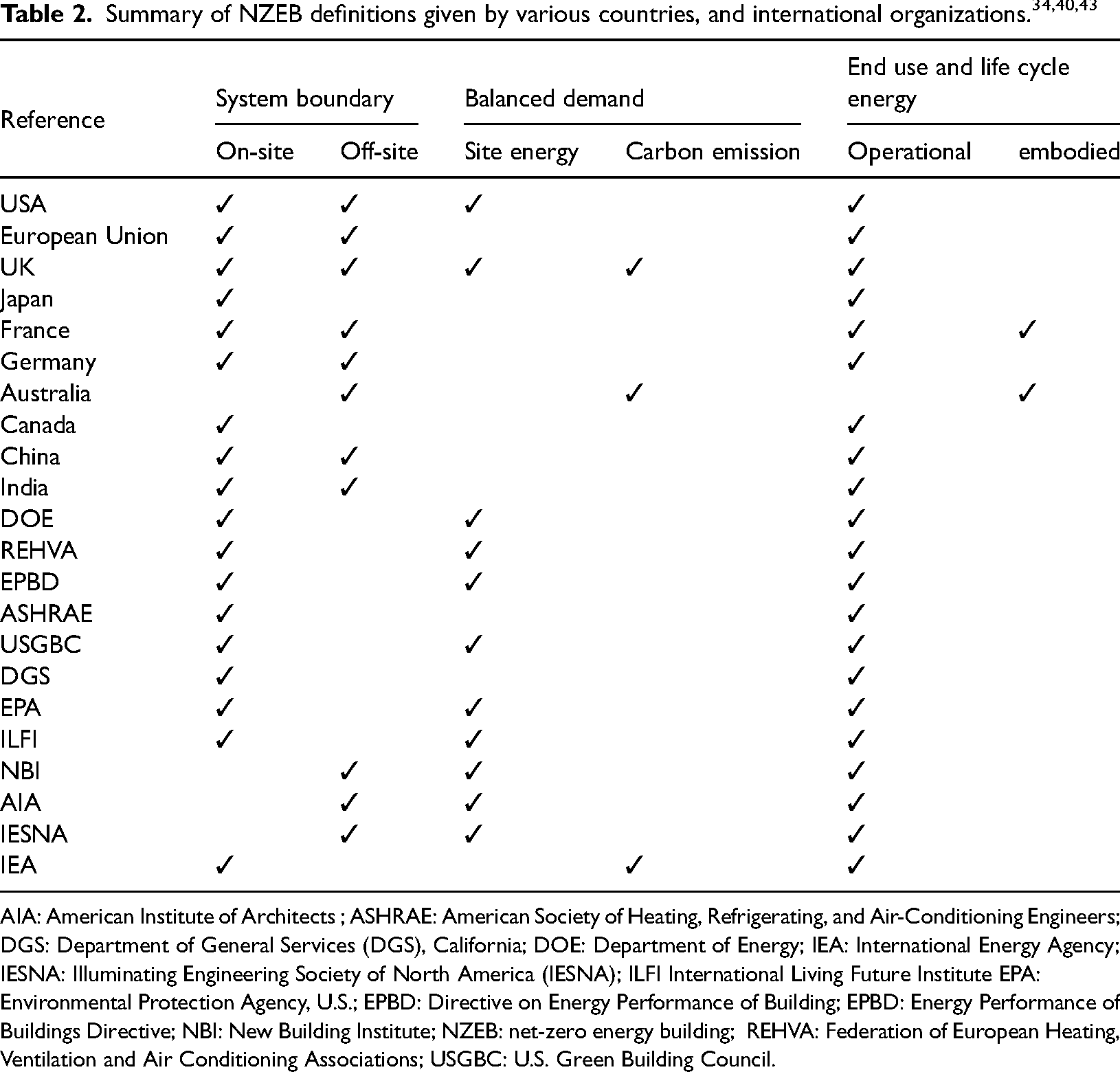
AIA: American Institute of Architects ; ASHRAE: American Society of Heating, Refrigerating, and Air-Conditioning Engineers; DGS: Department of General Services (DGS), California; DOE: Department of Energy; IEA: International Energy Agency; IESNA: Illuminating Engineering Society of North America (IESNA); ILFI International Living Future Institute EPA: Environmental Protection Agency, U.S.; EPBD: Directive on Energy Performance of Building; EPBD: Energy Performance of Buildings Directive; NBI: New Building Institute; NZEB: net-zero energy building; REHVA: Federation of European Heating, Ventilation and Air Conditioning Associations; USGBC: U.S. Green Building Council.
In response to that the terminology of NZEB has been characterized by different ambiguous and inconsistent calculation methods. Meanwhile, acknowledging the lack of homogeneity among the ZEB definitions requires a recognized universal definition due to ZEB becoming the main research stream across the world. 49 The absence of intrinsic consistency in the accepted ZEB not only affects the creation of an unambiguous profile for the global community and consequently a unified goal for global energy-efficient building policy but also poses significant challenges in comparing diverse solutions stemming from various contexts. 50 As a result, the core of NZEB is to reduce the building energy demand by architectural design, and energy efficiency measures and achieve the residual energy demand from RE sources. Therefore, a numerical indicator namely energy performance index (EPI) kWh/m2/year has been introduced by European countries. 44 It defines the annual primary energy use in heating, cooling lighting, ventilation, and hot water. Therefore, in this work, the authors have employed EPI as the primary indicator to assess the building's performance. Moreover, it summaries the existing NZEB's state-of-the-art related to building design, energy systems, and technical solutions and discusses the potential impact on EPI and meeting the NZEB status.
In this review, NZEB case studies that follow the definition of NZEB given by the US Department of Energy have been investigated. According to this definition, an energy-efficient building is one in which the actual annual energy consumption is either equal to or lower than the amount of on-site RE generation.
Initiatives towards NZEB in India
India has always been a country full of ethical values that focus on conserving nature. These values and practices are deeply ingrained in all Indian mythologies and have been influenced by various philosophies over the centuries. In architecture, the concept of Panchabhoota, representing the five core elements of nature, plays a crucial role and symbolizes sustainable development. Prithvi represents site efficiency, Jal signifies water efficiency, Agni represents energy efficiency, Vayu describes indoor environmental quality and Akash relates to the outdoor environmental quality.51,52 The fundamental philosophy of NZEB emphasizes the “3Ps” (people, planet, and profit) criterion of sustainability such as social (user satisfaction), environmental (energy efficiency and CO2 emissions), and economic (cost-effectiveness) to protect the 3Ps as depicted in Figure 7.53–55 The Government of India has recognized the sustainability aspects of the construction sector and has implemented several policies over the past two decades to address them.
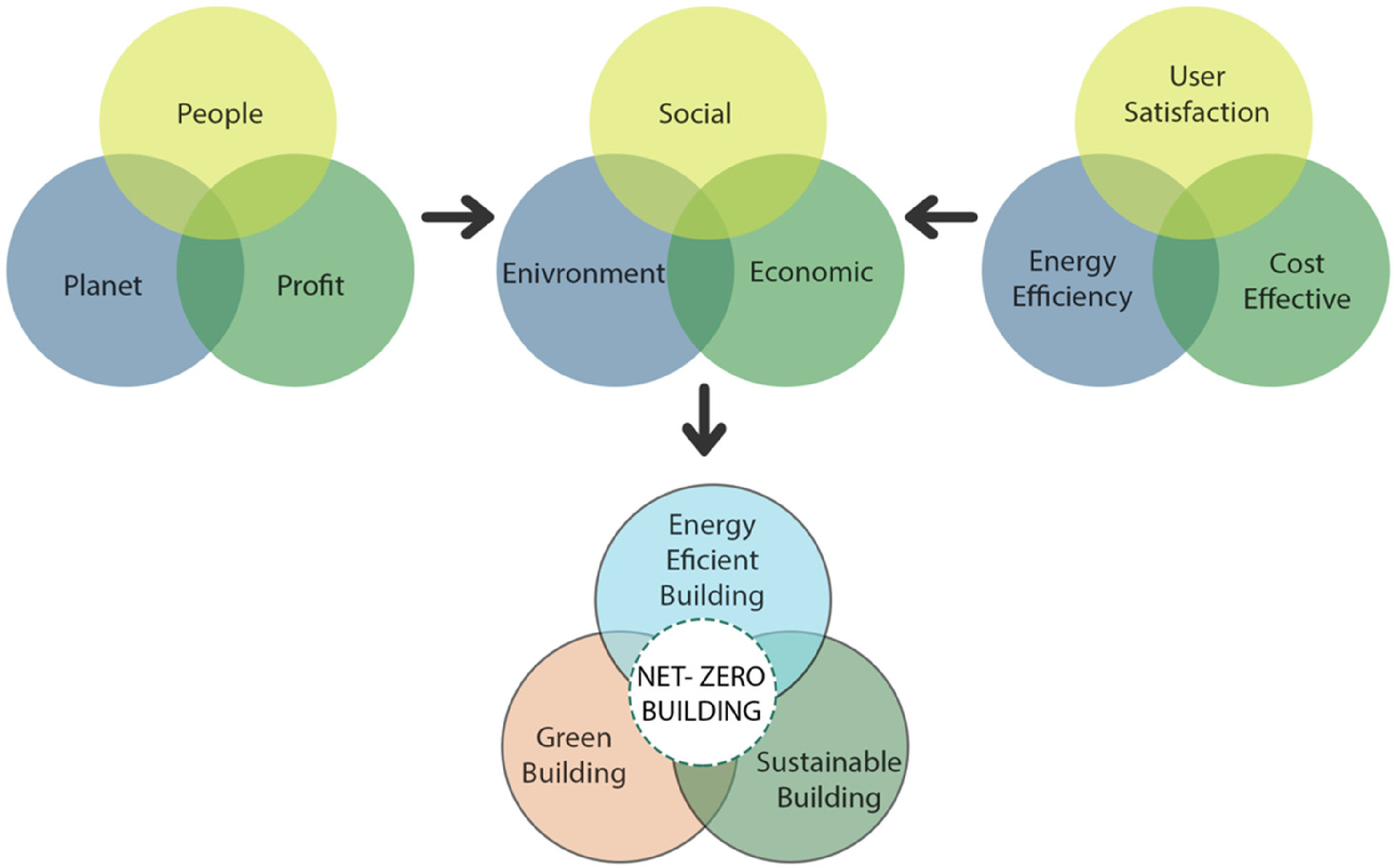
Syllogism structure of net-zero energy building (NZEB) according to the sustainability concept.
Efficiency in the building sector is critical for economic growth and energy security. India has made remarkable strides in energy efficiency since the passage of the historic energy conservation (EC) Act in 2001. To promote modern building materials and construction techniques, a unified national building code (NBC) was launched in 2005 and revised in 2015. 56 Additionally, to achieve energy efficiency in the building sector Bureau of Energy Efficiency (BEE) launched the EC building code (ECBC) in 2007 followed by an updated version in June 2017. 57 Figure 8 shows the various initiatives taken by the Indian government to achieve energy efficiency. 58
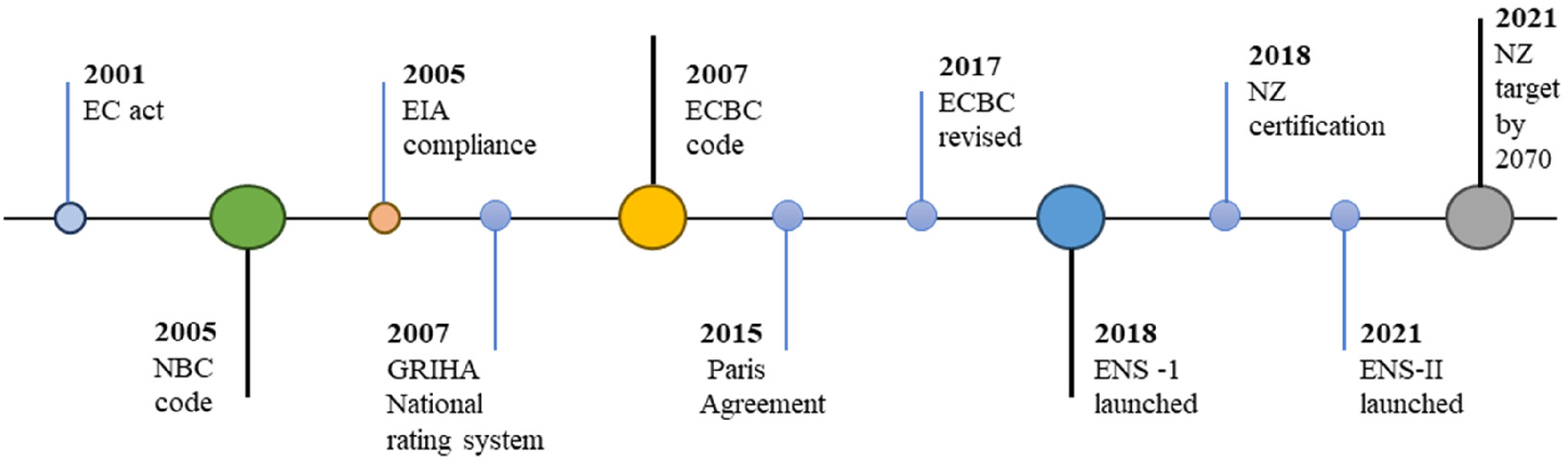
India's energy efficiency initiatives in the building sector.
Moreover, India has collaborated with international organizations to promote green energy and energy efficiency. Initiatives such as the Partnership to Advance Clean Energy (PACE) between India and the United States aimed to focus on energy efficiency, RE research, ECBC implementation, and clean energy financing. The Indo-Swiss BEEP is a collaborative effort taken by the Federal Department of Foreign Affairs of the Swiss Confederation (FDFA) and the Ministry of Power (MoP) of the Government of India. The project aimed to assist building designers in developing structures that are more energy-efficient through the creation of novel techniques, regulations, and instruments. Recently, collaboration has been made by India with the USA to establish the Centre for Building Energy Research and Development (CBERD). The primary aim of the center is to create a five-year action plan to facilitate green energy production and promote EC. With funding support from the Department of Science and Technology (India) and the UK Research Council and the Newton Bhabha Fund, India and the UK have taken an initiative to reduce the energy demand for built structures. This initiative caters to four categories: reducing residential building energy demand in India, implementing the Integrated Urban Model for Built Environment Energy Research (iNUMBER), achieving Zero Peak Energy Demand for India (ZED-I), and addressing Community Scale Energy Demand Reduction in India (CEDRI).59–62 In November 2021, during the 26th UN climate change conference (COP 26), India proposed its agenda to achieve net-zero emissions by 2070, demonstrating its commitment to combating climate change.
India remains progressive and one of the front runners in achieving energy efficiency through various initiatives and programs for buildings such as the PAT scheme, standard and labeling (S&L), Unnat Jyoti by affordable LEDs for all, BEE star rating, EESL building energy-efficiency program, nearly ZEB, Shunya labeling for NZEB. It was found that through the implementation of programs, 249.88 BU of annual electricity was saved which is equivalent to 202.41 million tons of carbon emission. Around 365 buildings were in compliance with the ECBC by 2021–2022 and saved 79.19 MU of electricity (equivalent to 1.4 mt CO2 emission). Under the national green rating system “GRIHA” 61 existing buildings are compliance which contributed to achieving 88.20 MU of electrical energy saving. Through the star rating of the commercial building program, 264 buildings are certified. The Shunya labeling program for net ZEB of nearly NZEB was launched in 2021. The Eco-Niwas Samhita (ENS) part-1 was launched in 2018 to achieve energy efficiency in residential buildings and their second version was launched in 2022. Through the implementation of ENS 2.42 MU of energy was saved which is equivalent to 0.00021 MT of carbon emission. Labeling program of residential building estimated potential to reduce energy demand by 388 BU. Under the PAT scheme of phases, 4, 5, and 6 total of 55% of energy was saved which is equivalent to 6514 tons of oil combustion. 58 However, despite all these initiatives, India needs to take more stringent action to achieve the net zero status. Therefore, more robust strategies and actions are needed to address the current energy efficiency challenges and achieve net-zero status by 2070.
Methodology
NZEBs are experiencing rapid growth in developed nations while encountering various challenges and barriers in developing nations. 63 In the past research, it has been illustrated that the EPI of the commercial buildings in India falls in the range of 86–179 kWh/m2 which is much higher than that of the USA and China. 64 Therefore, there is a substantial gap between construction practices, efficient materials, significant technologies, and modeling approaches among the nations. Consequently, an immediate review is required of NZEB for economic development, reducing environmental impact, and climate change.
The methodology of this proposed review consists of two phases. In the first phase, energy data and design strategies of 14 NZEBs/energy-efficient buildings in the tropical climate of the most developed nation, the USA, and the most developing countries, China and India have been collected. The selection criterion for RCSs and their performance assessment is shown in Figure 9 and elaborated in the “Selection of reviewed case studies and their assessment” section. A comparative assessment has been conducted with their respective countries’ energy-efficiency standards, namely ASHRAE 90.1.2010, GB50189-2015, and ECBC 2017 for the USA, China, and India, respectively. Finally, the inferences have been drawn from the imbalances in the technological and materials research. It has also been observed that the implementation and enforcement of energy-efficiency codes in the application of NZEB in India are more resilient than in the USA and China, which pose barriers to the development of NZEB. In the second phase, 30 NZEB case studies from India, South Asia, and other countries have been investigated based on the implementation of active and passive features and their impact on the EPI. The key design factors for NZEB development have also been discussed briefly. The steps for the selection of reviewed case studies and their assessment are as follows:
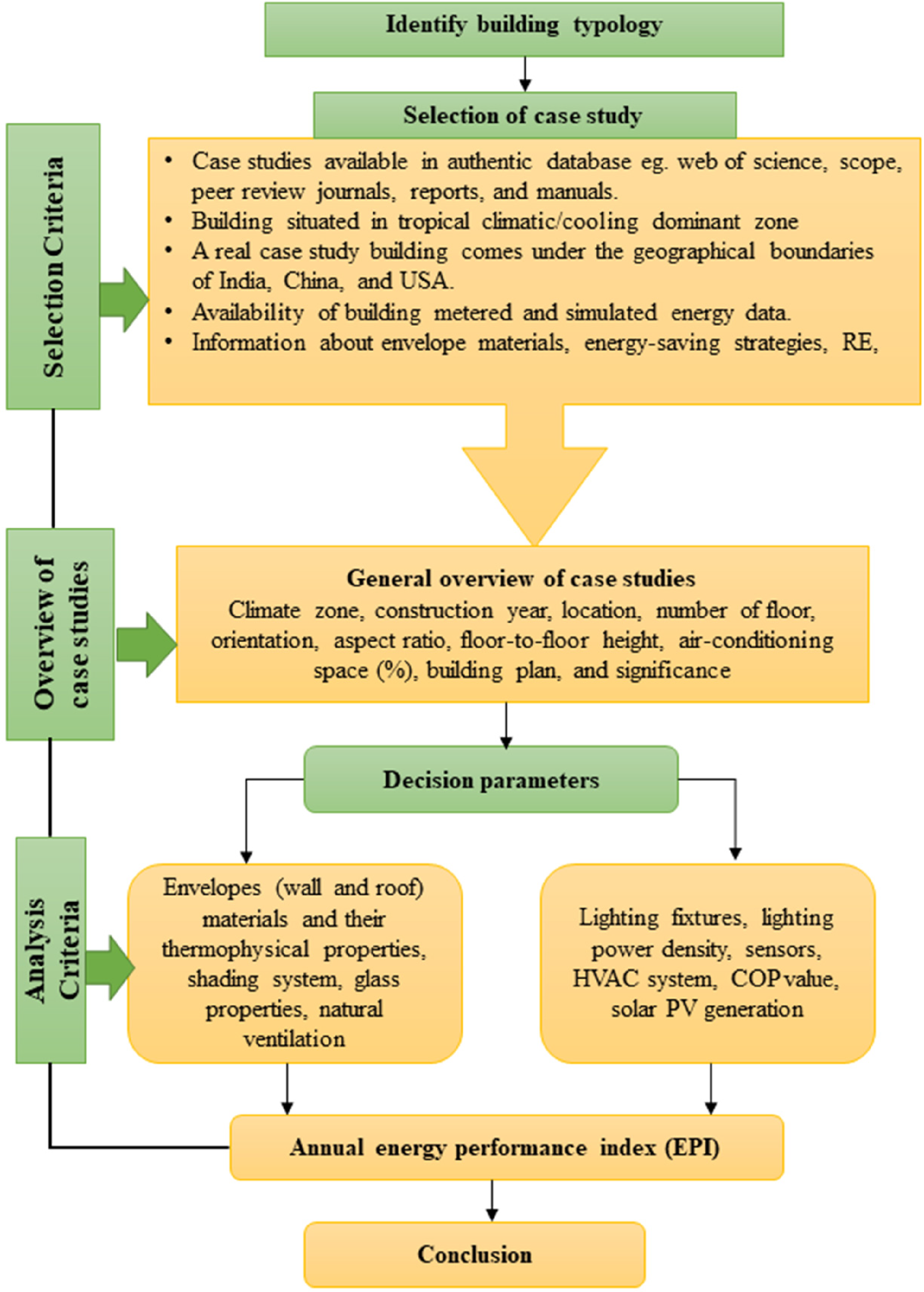
Methodology of case studies selection, assessment, and analysis criteria.
Selection of reviewed case studies and their assessment
Reviewed case studies have been selected based on inclusion and exclusion criteria. Web of science, Scopus, google scholar database, government-published reports, and manuals are used with the different keywords pertaining to NZEB for searching the case studies.
The selected studies have been filtered out based on climatic conditions (tropical/cooling dominant) and the availability of simulated or metered energy data.
The buildings in the selected case studies have already been assessed and evaluated according to one of the existing rating systems and energy-efficiency standards.
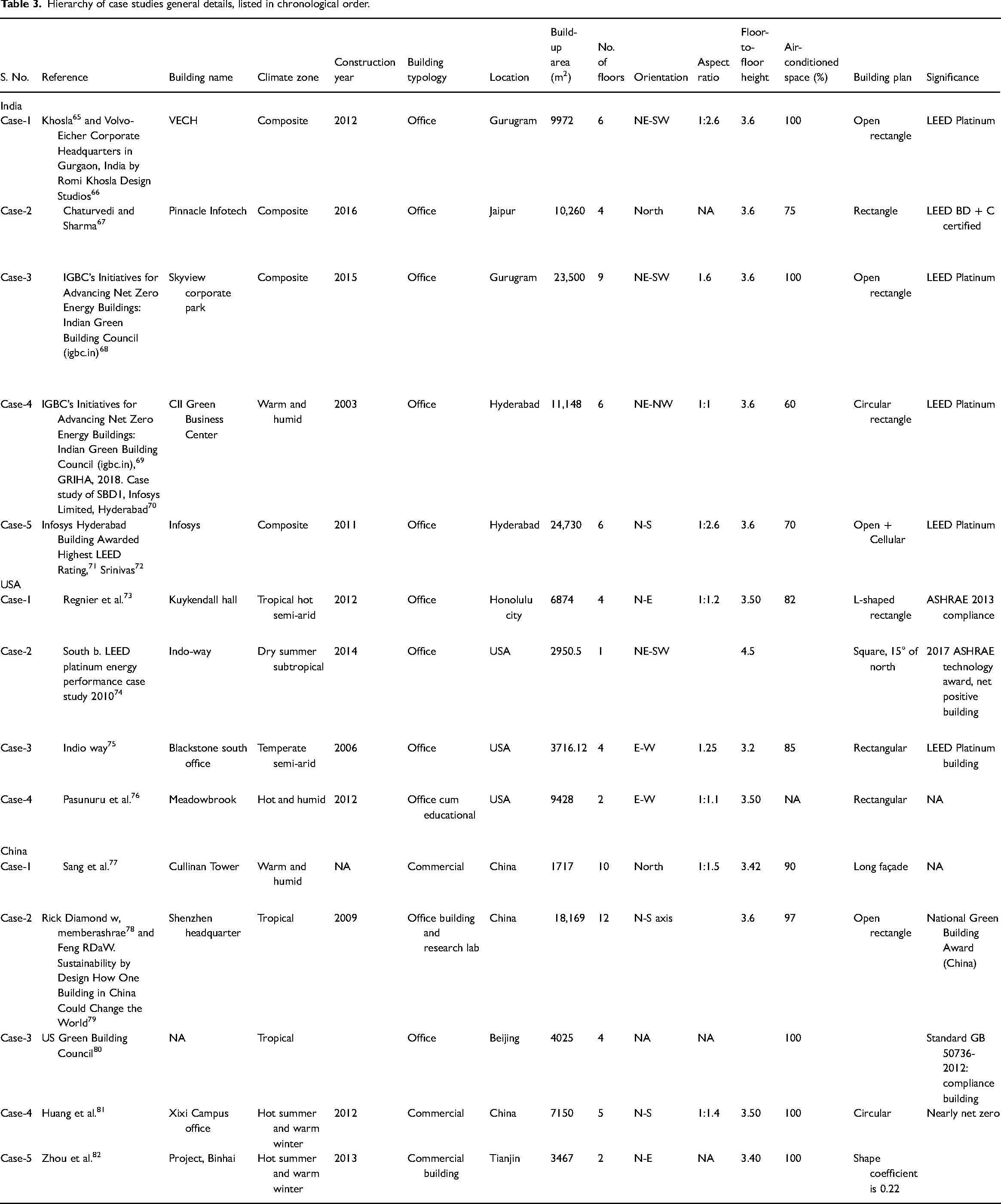
General criteria such as construction year, build-up area, orientation, aspect ratio, floor-to-floor height, and building plan to obtain insight regarding selected case studies have been taken into account which are listed in Table 3.
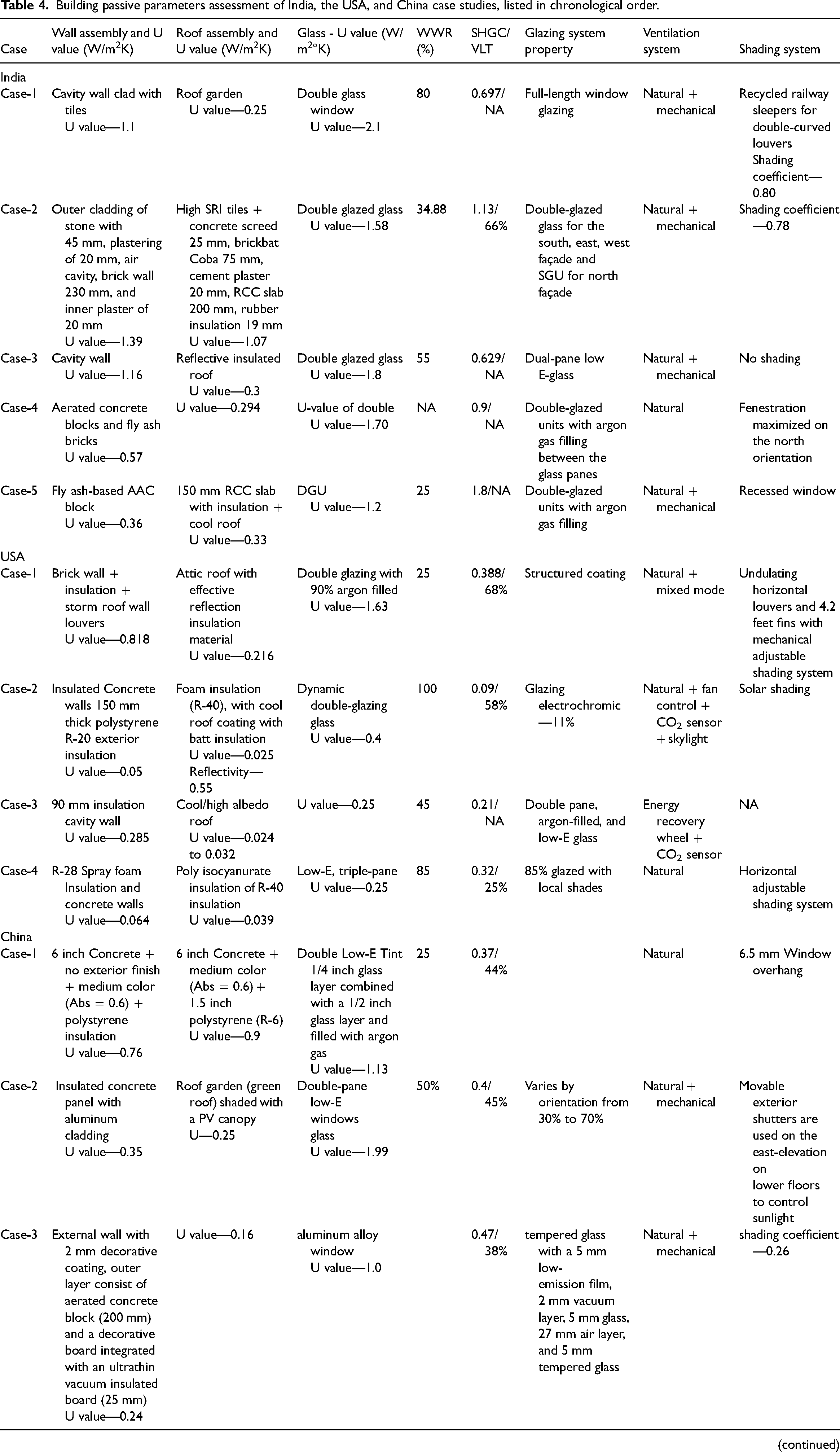
Further, various passive design strategies including wall, roof, glazing configuration, and their thermophysical properties, natural ventilation, and shading systems have been identified. Their critical investigation is illustrated in Table 4. Active design strategies including lighting, HVAC systems, RE generation, and their effectiveness on building performance are listed in Table 5.
Finally, inferences have been drawn from the critical assessment of case studies to identify suitable design measures and technologies to enhance the building energy model and make it net zero.
The energy efficiency of the building has been assessed by considering the annual EPI which is determined by dividing the total energy consumed in the building, measured in kilowatt-hours (kWh), by its gross floor area over the course of one year.
Analysis of reviewed case studies
Building envelop assessment
An efficient envelope design can reduce 70% of the building's energy demand. External walls are responsible for enhancing the thermal and acoustic comfort of occupants. Thermal performance plays a significant role in building performance. An average of 30% of energy consumption is due to heat losses through the external wall.10,83 In reviewed case studies, the authors calculated that the average U-value of the wall in the tropical climate of India is 1.04 W/m2K which is much higher than the ECBC 2017 energy-efficiency standard of 0.40 W/m2K. Similarly, the average wall U-value of buildings in China that experience hot summers and cold winters is 0.416 W/m2K which is lower than the energy-efficiency standard for commercial buildings, GB50189-2015 of China, that is, 1.5 W/m2K. In the same manner, the average wall U-value of the USA buildings, that experience a hot humid climate is 0.30 W/m2K which is lower than the ASHRAE 90.1 2010 requirement of 0.52 W/m2K.
Hierarchy of case studies general details, listed in chronological order.
Building passive parameters assessment of India, the USA, and China case studies, listed in chronological order.
Building active parameters assessment of India, the USA, and China case studies, listed in chronological order.
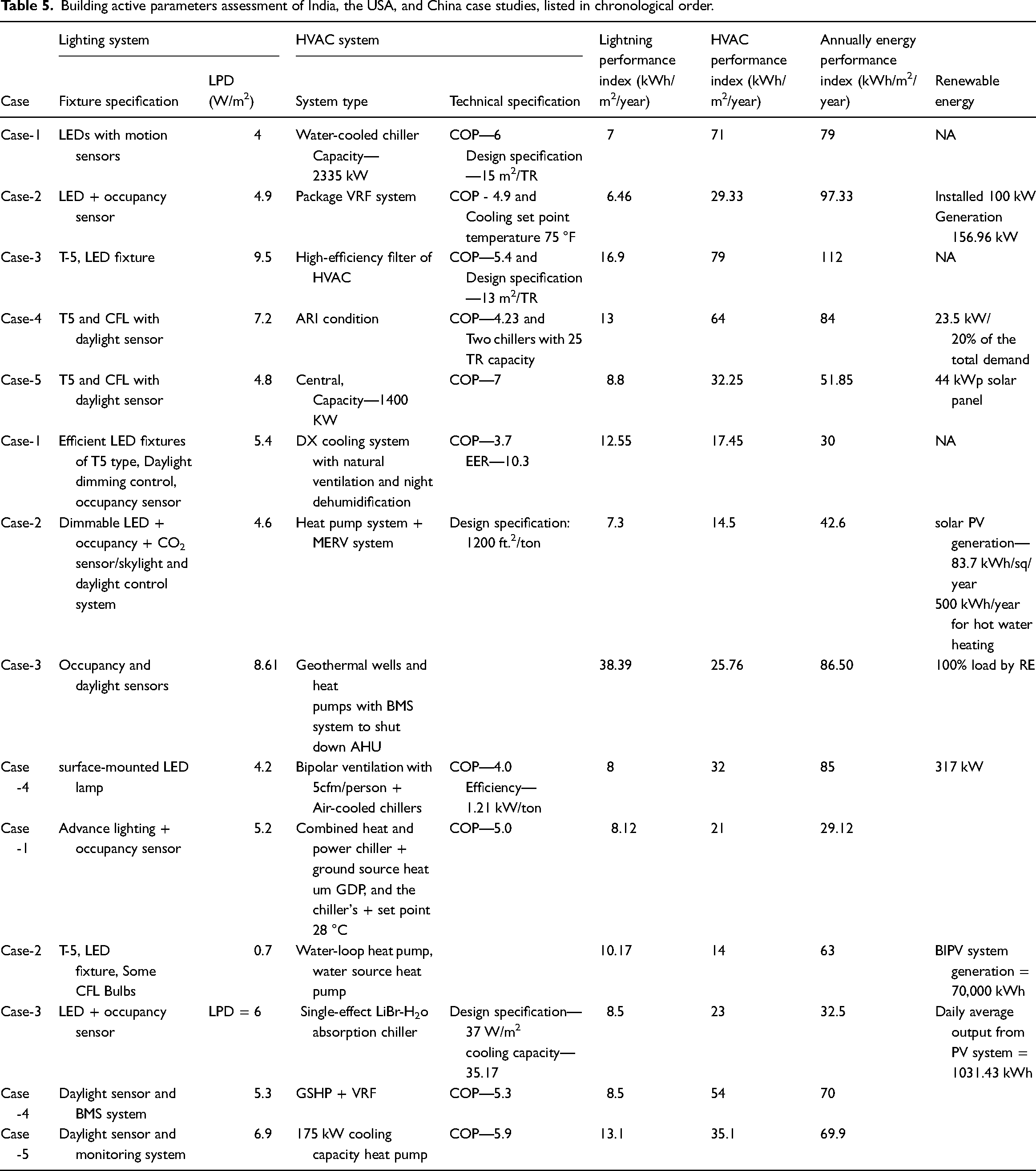
Figure 10 reveals that developed countries such as the USA's NZEBs/energy-efficient buildings have more stringent thermal integrity than other developing countries such as China and India. Increasing the thermal mass of the wall through insulation, cool/low VOC paint, cavity hollow walls, and installing green walls reduce the heat from solar radiation and enhance the thermal performance of the building.
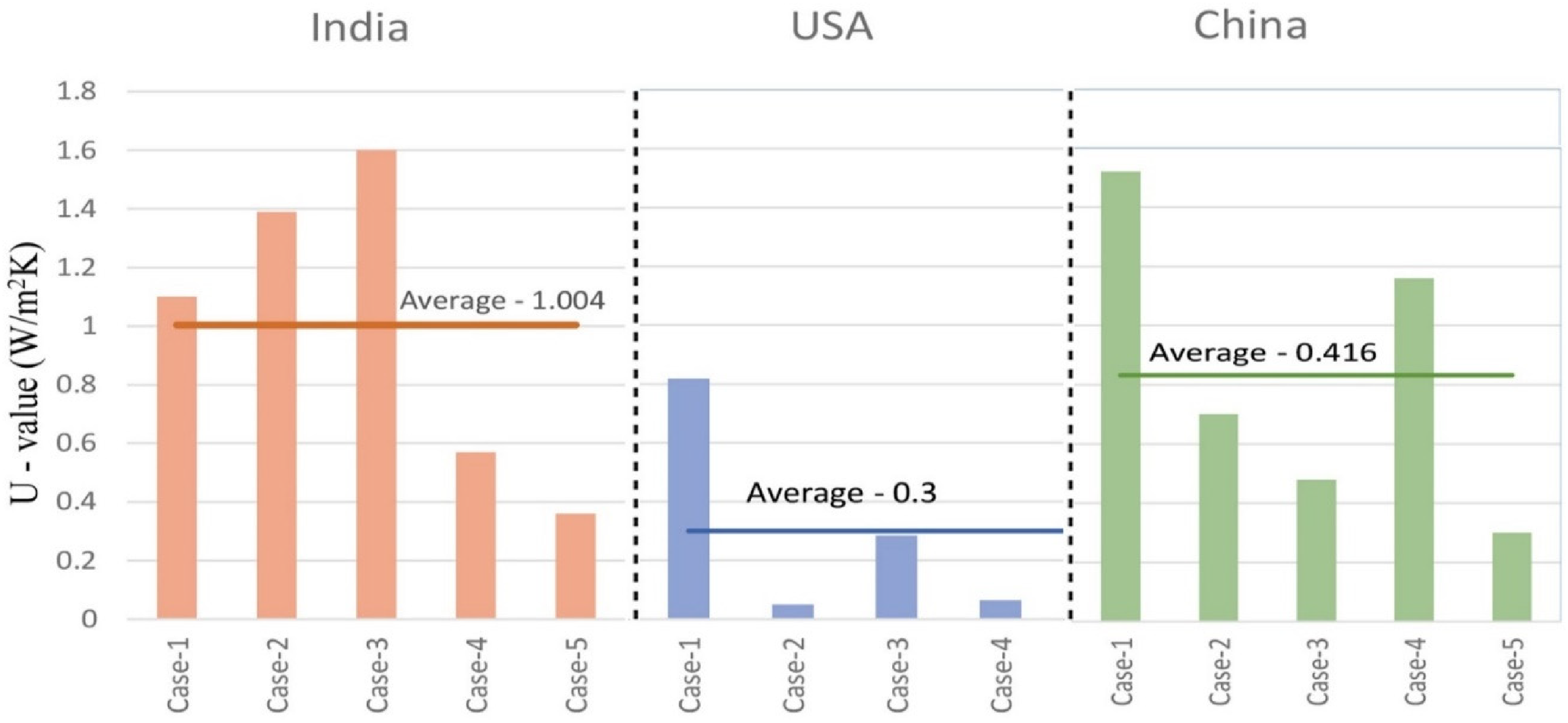
U-value of wall for India, the USA, and China.
The roof accounts for 8%–10% of total energy consumption due to heat losses through conduction and radiation. 84 Figure 11 shows that the average of the Indian RCS roof's U-value is 0.44 W/m2K which is below the ECBC standard of 0.30 W/m2K. Similarly, the average roof U-value of China and the USA RCS is 0.41 and 0.077 W/m2K, respectively, which fares much better than their standard, 0.9 W/m2K of GB50189-2015 of China and 0.272 W/m2K of ASHRAE 90.1, 2010 of the USA, respectively. After overall comparisons, it has been observed that the USA and China buildings’ roofing systems are more efficient and have higher thermal mass than Indian roofing systems.
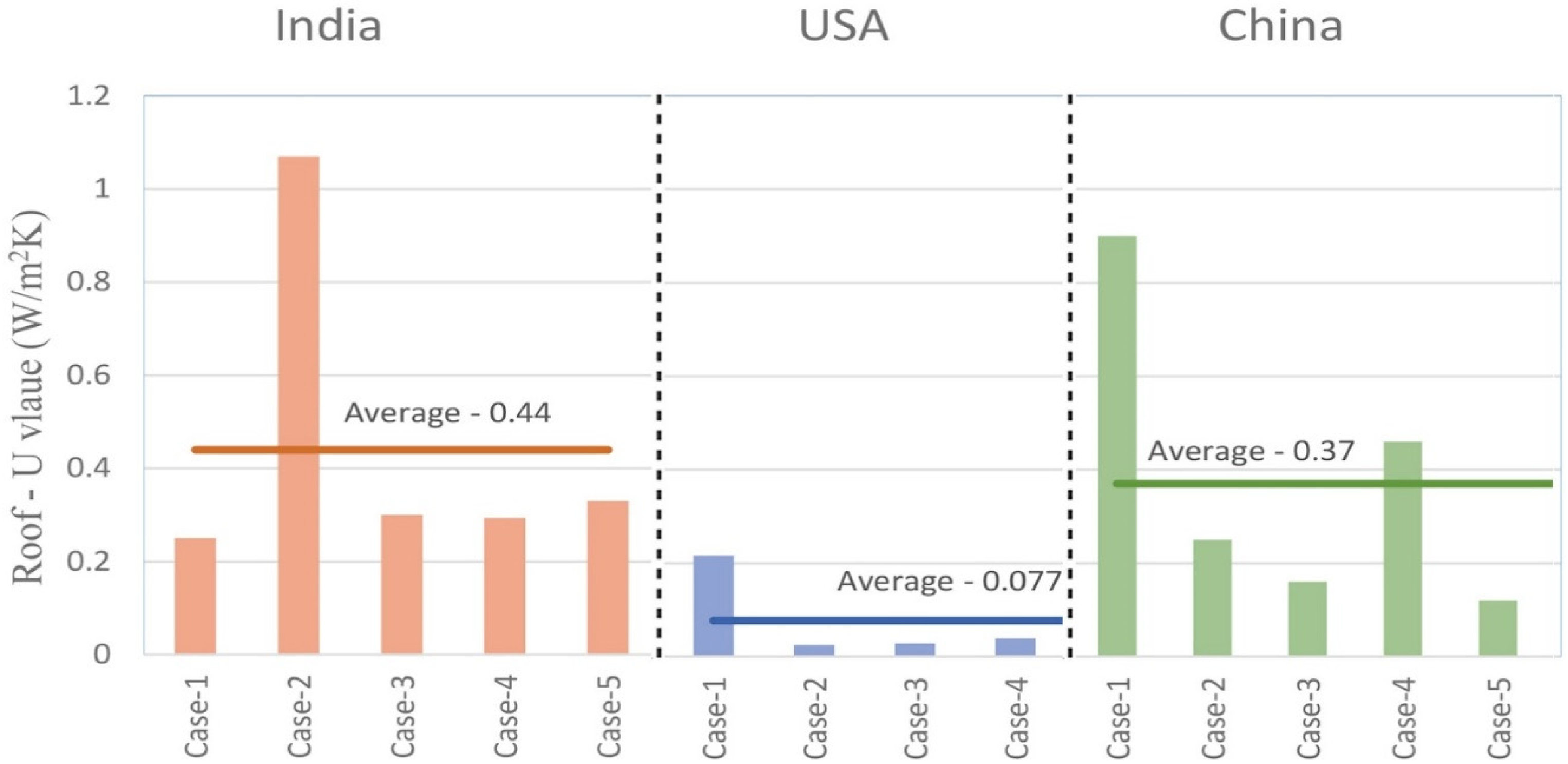
U value of roof - India, the USA, and China.
Further, glass also plays a significant impact on the building's energy load, thermal, visual, and acoustic comfort. An appropriate selection of glass enhances thermal and visual comfort by 13%–30% and 50%–85%, respectively. Also, changing the window-to-wall ratio (WWR) according to climate conditions can cut down cooling demands from 24% to 50%.85,86 Figure 12 shows the average glass U-value of RCS in India as 1.67 W/m2K which is better than ECBC 2017 standard of 3.0 W/m2K. Similarly, China and the USA RCS average glass U-value is 1.63 and 0.58 W/m2K%, respectively, which is better than the standard value of 3.4 W/m2K, ASHRAE 90.1, 2010. Figure 13 shows the solar heat gain coefficient (SHGC) of RCS, India as 1.03 which is < 0.27, the value of ECBC standard 2017.
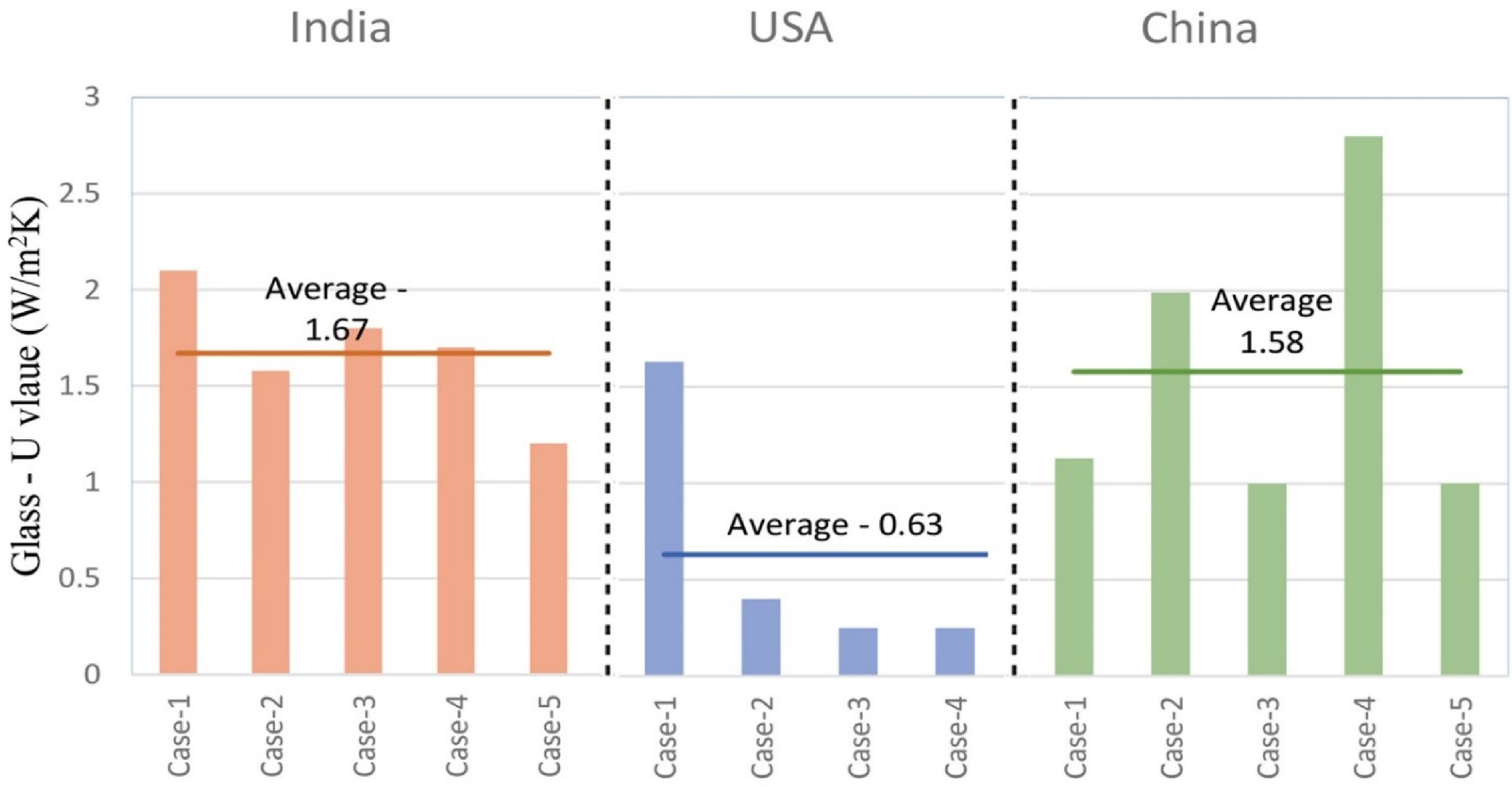
U-value of glass for India, the USA, and China.
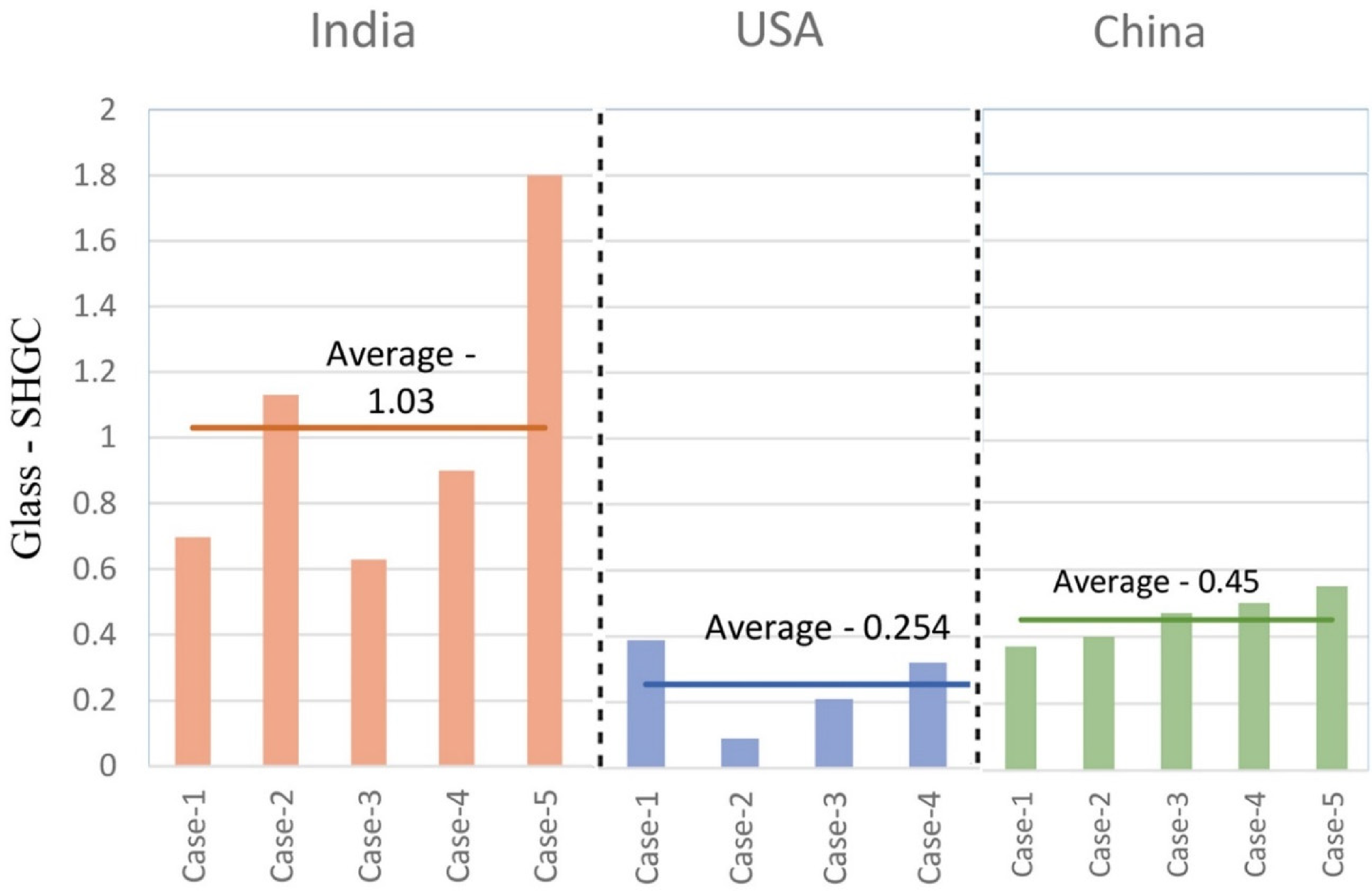
Solar heat gain coefficient (SHGC) of glass for India, the USA, and China.
Infosys and Confederation of Indian industry (CII) green business net-zero buildings use double-glazed, low E-coated glass with 25% WWR. A higher WWR increases the cooling demand due to heat leakage and airtightness and a higher visual light transmittance (VLT) increases the daylight availability. Therefore, the optimal selection of WWR and VLT in a particular climate zone enhances comfort level, daylight availability, and indoor air quality (IAQ). According to ECBC 2017, an average of 40% WWR and 0.27 VLT are required for energy-efficient built structures to maintain a comfortable indoor environment.
Energy-efficient measures
Electrical lighting appliances consume an average of 15% of the building's energy. 87 Lighting power density (LPD) of RCS in India is 6.6 W/m2 which is not adequate when compared to China and USA buildings having LPD values of 5.6 and 3.9 W/m2, respectively. Further, cooling systems design is more dominant in tropical climates and it consumes 50%–60% of the building's operational energy. Figure 12 shows that the HVAC EPI of the RCS of the tropical climate of India is 55.2 kWh/m2/year which is much higher than that of the USA and China RCS of hot-humid climate having EPI of 22.50 and 30.2 kWh/m2/year, respectively. The average air conditioning, coefficient of performance (COP) of RCS in India and China is 5.38 and 4.9, respectively, that is, equivalent to the ECBC 2017 standard. On a similar note, cooling dominant zones in the USA have an average RCS HVAC systems COP of 3.42 which is much better in comparison to India's ECBC standard. Currently, variable frequency drives for automatic control systems and bipolar ionization systems are used with the HVAC systems. Thus, the building lighting and cooling energy demand have a significant impact on the building's annual performance index. Figure 14 illustrates that Indian RCS of tropical climate has an annual EPI of 84.33 kWh/m2/year which is much higher than that of the USA and China buildings having EPI values of 61.02 and 52.88 kWh/m2/year, respectively.
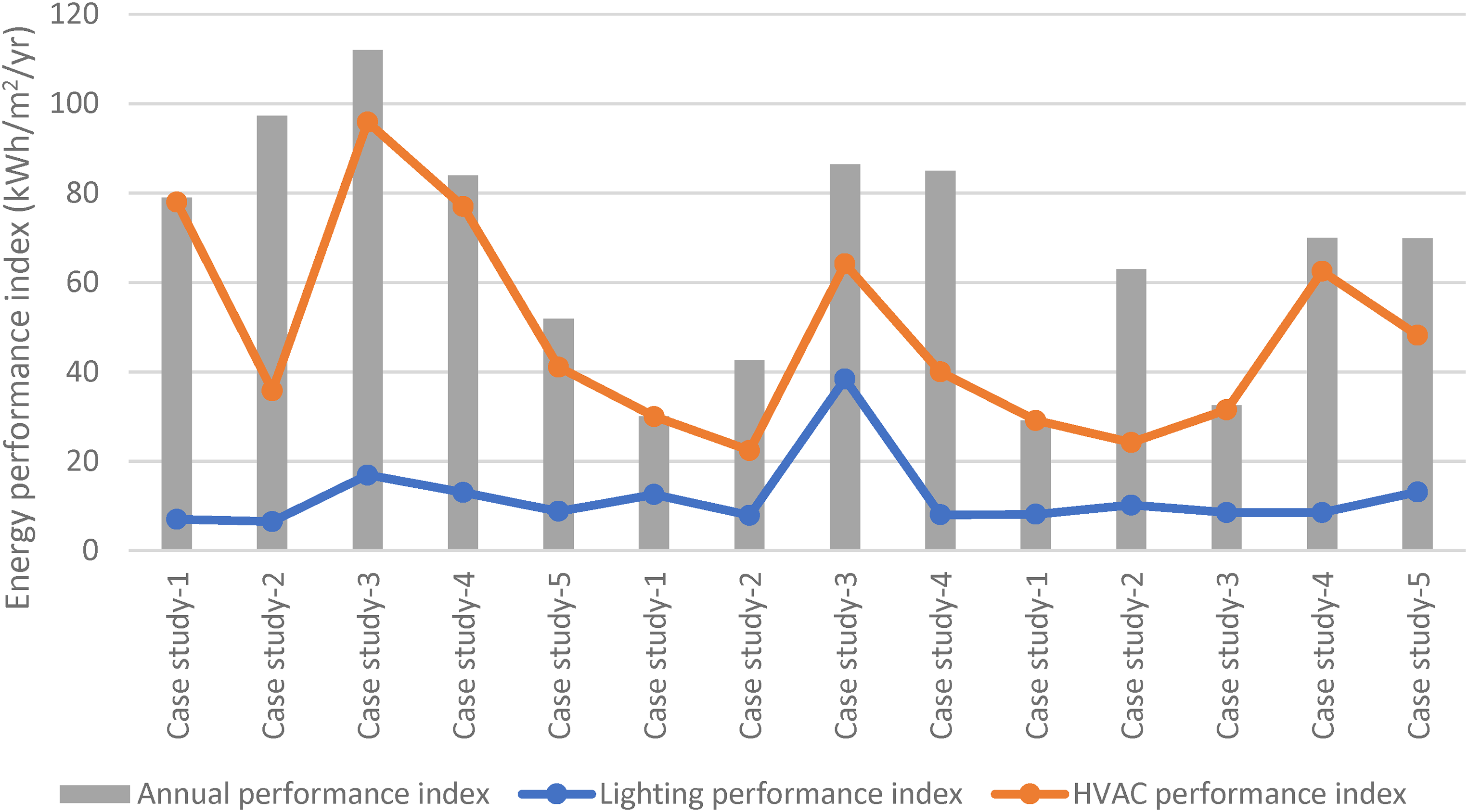
Lighting performance index, cooling and heating performance index, and annual energy performance index for India, the USA, and China.
Moreover, geothermal energy from ground-source heat pumps (GSHPs) is commonly used in NZEB for cooling and heating. It has higher COP, the least pollution, and lower maintenance costs. Most of the case study buildings have the provision of natural ventilation through the atrium, circular courtyard, and a solar chimney that reduces cooling demands and enhances thermal comfort. Infosys building has a passive radiant mechanical cooling system with an efficient variable air volume (VAV) that reduces HVAC consumption. The skyview park and pinnacle InfoTech buildings are equipped with mechanically ventilated systems to enhance thermal comfort. The occupant behavior also plays a vital role in reducing heating and cooling energy demand. The results of this analysis draw focus to a constraint in India's simulation and computational methods, which hinder their ability to guide decisions towards attaining energy efficiency and optimal building performance during the initial design phase. Despite this limitation, simulation and optimization strategies play a pivotal role in shaping decisions regarding NZEB design. 20 These methods effectively tackle intricate architectural challenges, encompassing passive parameters in tandem with energy-efficient strategies and the incorporation of RE sources. Additionally, it provides the optimal trade-off solution by computing an iterative relationship of building performance objectives over the various building decision variables. 88
Application of building performance assessment tool
Building simulation tools offer potential solutions for both new constructions and necessary interventions in existing buildings to enhance energy efficiency. The integration of algorithmic optimization with simulation tools is the growing trend in building design research to map out the decision support for maintaining a comfortable built environment, conserving energy and environment, and reducing building costs. 89 This approach proves valuable in selecting and refining control strategies and HVAC designs. Furthermore, it proposes control strategies during building operations based on model predictive control strategies. Bano and Sehgal 90 investigated the performance of existing public buildings situated in India's tropical climate using the Design Builder tool. This research evaluates the potential of various influential parameters such as orientation, geometry, envelope properties, thermal mass, lighting, and HVAC and their significant impact on the energy performance of government and public buildings. Gunjan et al. (2020) explored the energy performance benchmarks of existing high-rise residential buildings in the hot and humid climatic zone using simulation techniques. This work focused on the implementation of building envelope features which are mentioned in ENS and ECBCs, through the EnergyPlus tool. It reveals that implementation of the computational tool at the early design stage can reduce the cooling energy demand by 7%–37%. 91 Similarly, Bano et al. (2020) analyzed the existing NZEB (IPB, New Delhi; AUB Panchkula Hariyana; PTM Malaysia) features including building layout and planning, passive designs, active measures and RE technologies and their iterative impact on daylight, thermal, thermal, and energy performances. Consequently, all suitable features were applied to a reference building model namely “Skyview Cooperative Park” which had an initial EPI of 111.3 kWh. The conclusion illustrates that the simulation tool provides the decision support to reduce the energy demand by 6.38% through site planning, followed by 12.31%, and 52.03% through envelope improvement, and by lighting, HVAC, and utilizing natural ventilation. Finally, overall, 63.07% saving is achieved long with achieves the net-zero status. The case studies and simulation results suggest that NZEB design requires ∼ 34–44 m2 of floor area and 1 kW of PV panel power output. 92 Rajesh et al. (2015) identified the energy-saving potential through the modeling and simulation of hotel building buildings in the tropical climate of India. This study utilized the eQuest tool to assess the impact of envelope design and advanced energy measures on energy consumption and revealed potential savings of 53%–61% at the early design stage which led to net-zero status. 93 Similarly, Ankur et al. (2012) found that building simulation tool guide for retrofitting of buildings and helps to suggest 17%−42% energy saving. 94 Mayank et al. (2018) developed a reference building model by optimizing various samples of existing buildings. 95
Assessment of 30 NZEBs
This section demonstrates the assessment of 30 NZEB studies in which 10 from India, 11 from South Asian countries, and nine from other countries are included. The concept of an NZEB mainly focuses on three factors which are building sufficiency, building efficiency, and RESs. 96 Figure 15 addresses the paths for NZEB during the design stage. Energy sufficiency emphasizes climate-adaptive design and building passive features such as natural ventilation, daylight, building geometry, advanced envelope, and insulation that do not require operational energy in execution. Energy efficiency includes energy-efficient technologies such as appliances, HVAC systems, artificial lighting, and heat storage systems that can reduce RE demand. RE systems to fulfill the building's operational demand. 97
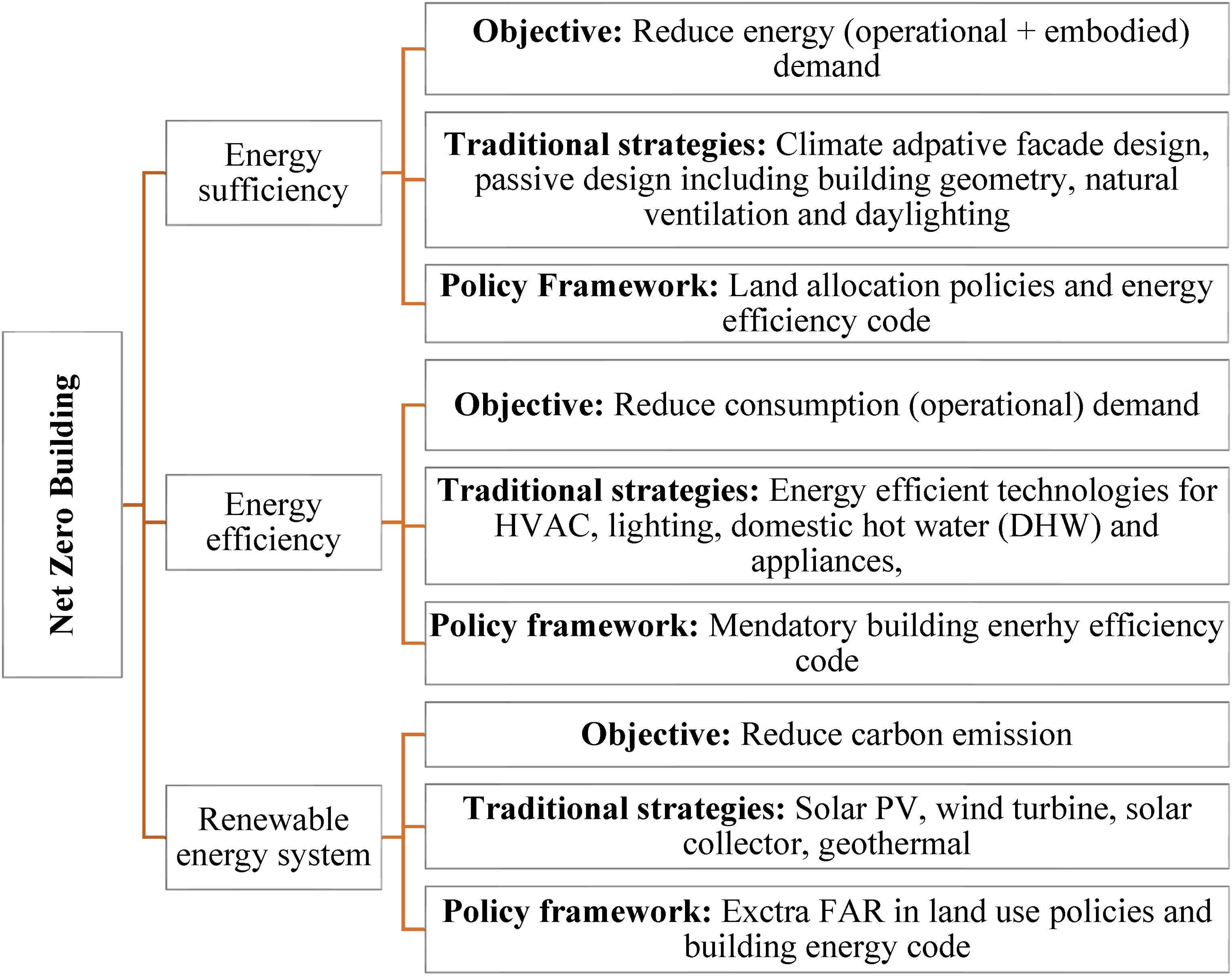
Path of net-zero energy building design. 96
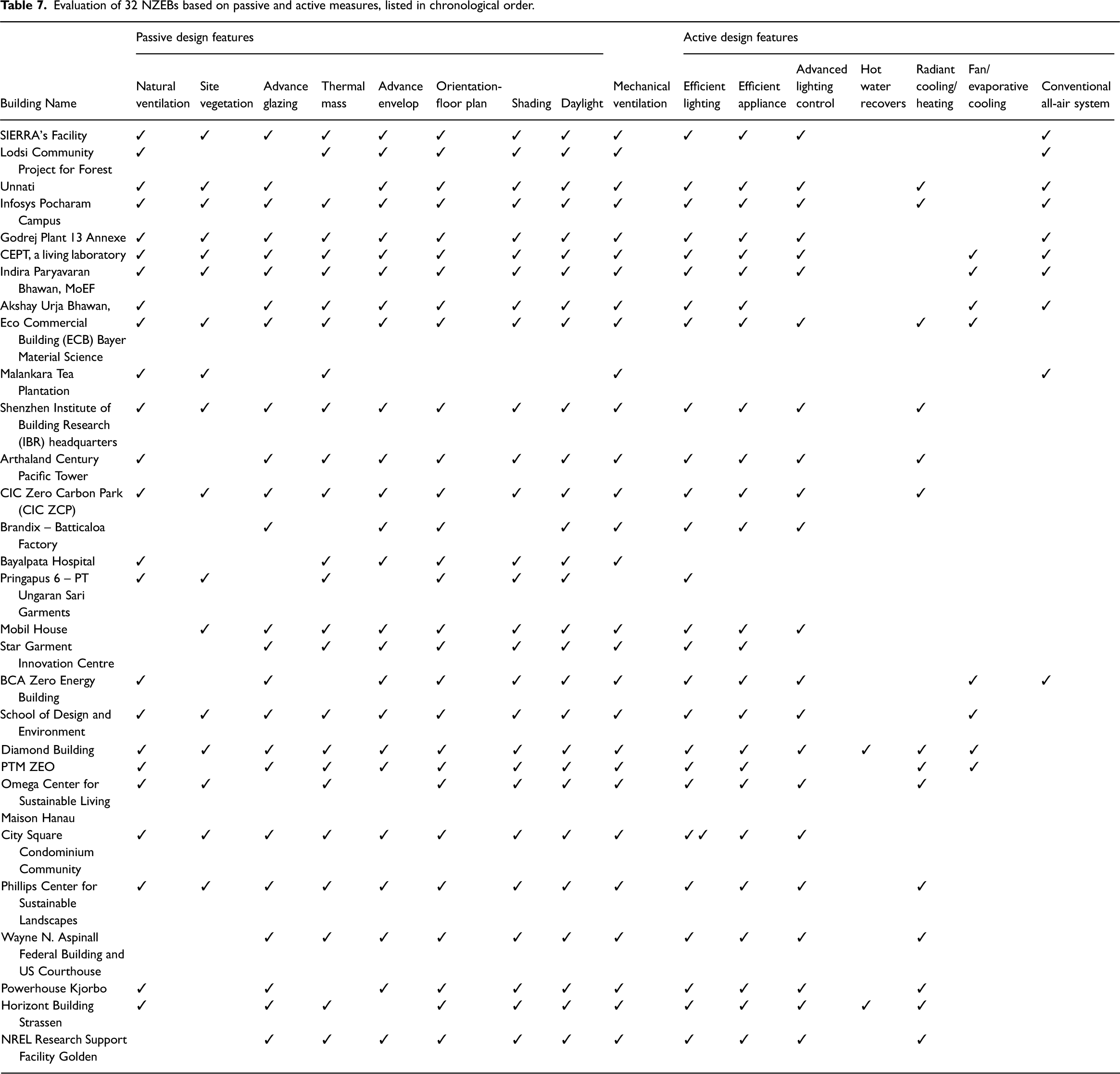
The authors investigated thirty NZEBs based on implemented active and passive design strategies and their impact on building energy performance. Also, identified and illustrated different passive design strategies and technological options such as lighting and HVAC systems that can reduce energy demand. Moreover, state-of-the-art passive design features such as building envelope, advanced glazing, shading, and thermal mass are defined to reduce the cooling demand and enhance occupant productivity that can contribute to climate-adaptive NZEB design and the RE supply options that play a significant role in achieving the carbon neutral environment. Table 6 addresses the general details of 30 investigated high-performance NZEB. It reveals that most of the buildings are commercial and certified by the region-specific net-zero building norms. Moreover, all NZEB studies come under hot humid, and tropical (cooling dominant) climates. Except for one building (Malankara Tea Plantation), all NZEBs have grid connectivity to balance the demand and generation side. The active and passive design parameters that are considered for the evaluation of NZEB are illustrated in Table 7. Passive design is divided into eight groups which are natural ventilation, site vegetation, advanced glazing, thermal mass, advanced envelope, orientation, shading, and daylight. Active design technologies include mechanical ventilation, efficient lighting, efficient appliances, advanced lighting control, domestic hot water, radiant cooling and heating, and evaporative cooling.
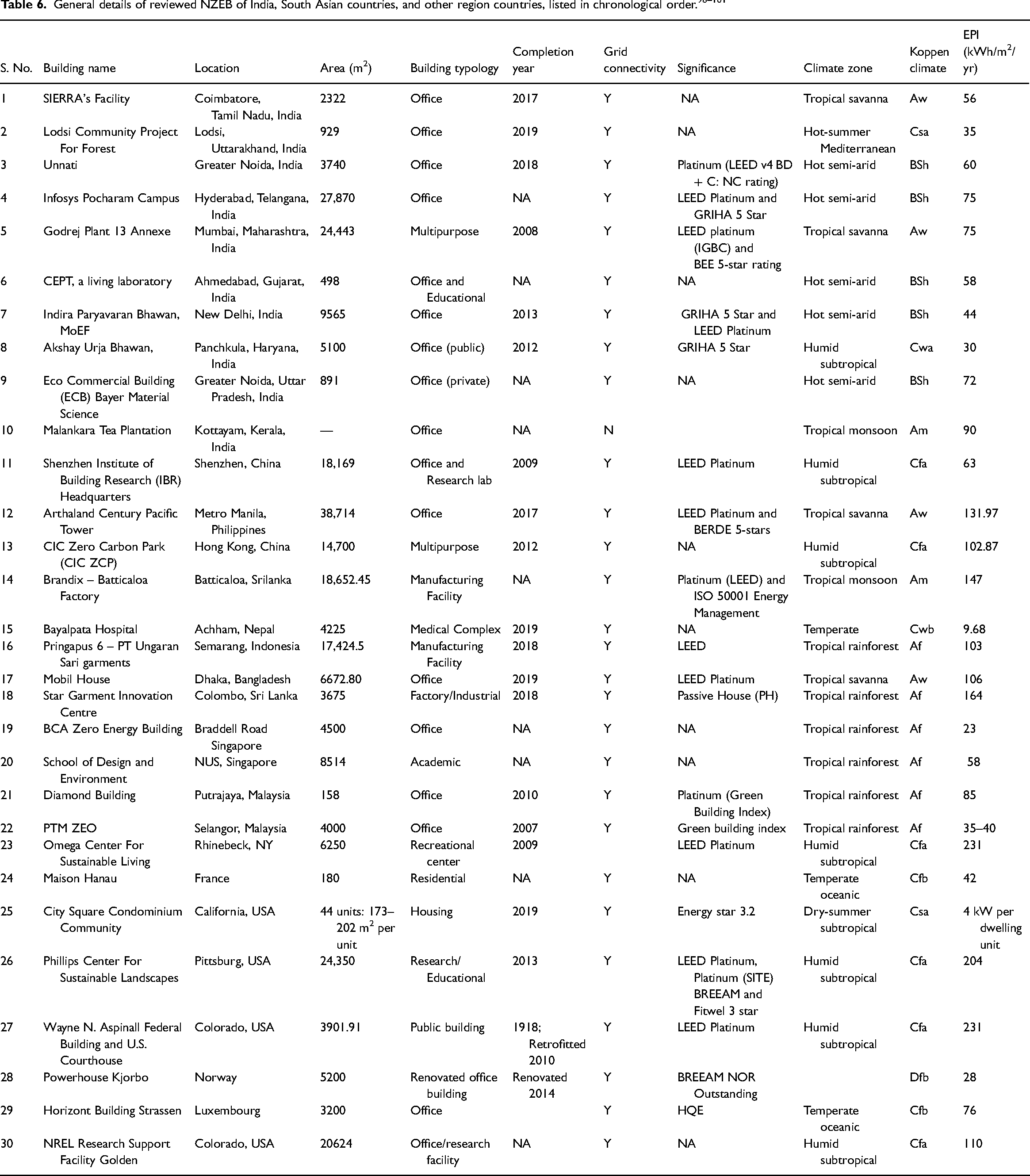
Evaluation of 32 NZEBs based on passive and active measures, listed in chronological order.
Technological options and strategies for NZEB
Climate-adaptive architectural design and passive features increase thermal and visual comfort while also reducing the building energy demand. The passive techniques emphasize on solar heat protection, heat modulation, and heat extraction parameters of the building configuration which are shown in Figure 16(a) to (c), respectively.96,102
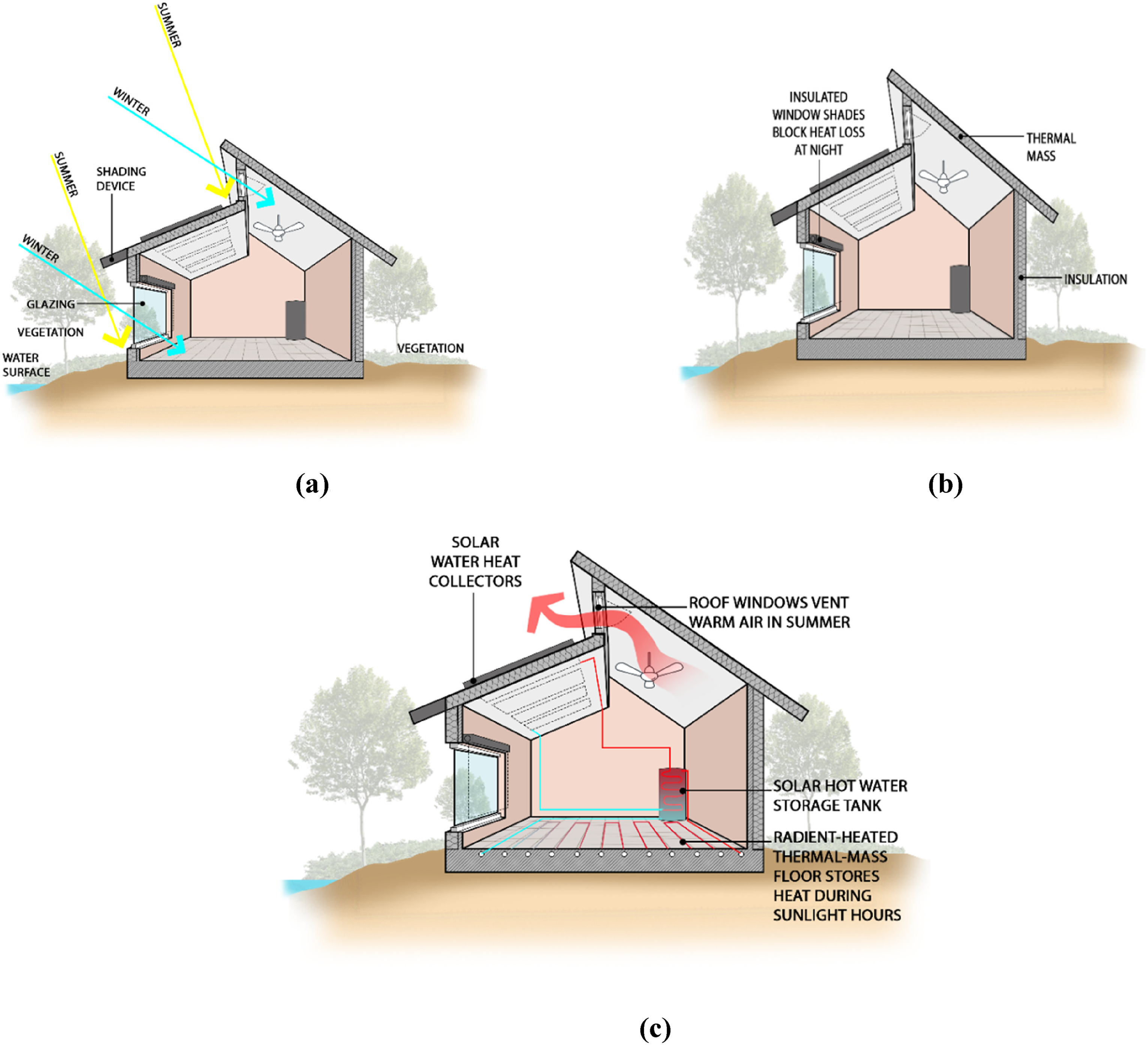
(a) Heat protection passive technique, (b) heat modulation passive technique, and (c) heat extraction passive technique.
Tropical climate NZEBs adopted green vegetation, water surfaces, advanced glazing, and shading systems for heat protection. Heat modulation systems include natural ventilation, phase change materials (PCMs), and thermal mass. This passive heat modulation technique emphasizes restraining the heat inside the building due to air leakage and solar heat through building walls, roofs, and glass by conduction, convection, and radiation. The heat extraction techniques include the free cooling system installed in the building. It includes convection cooling systems (wind-driven ventilation, Trombe wall, solar chimney, and stuck ventilation), radiative cooling systems, and direct and indirect evaporative cooling systems. The active technique focuses on enhancing occupant comfort. It consists of artificial lighting, air-conditioning, mechanical ventilation, appliances, plug-load systems, hot water systems, monitoring, and control systems. The authors identified some passive and active strategies for the assessment of 30 NZEBs and Figure 17 illustrates the number of times each strategy is used.
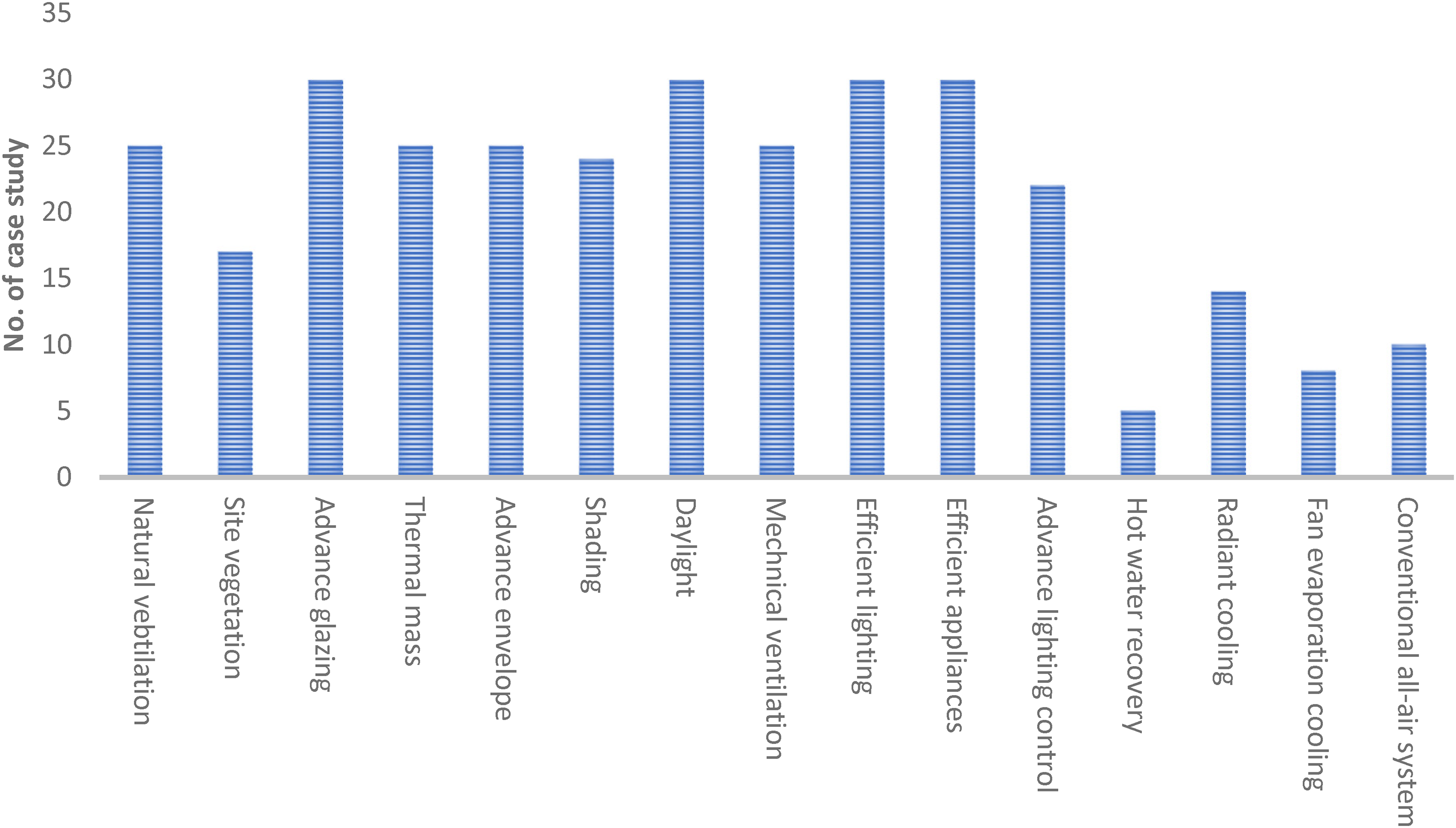
Number of active and passive design strategies used in net-zero case studies.
Passive techniques
Passive techniques focus on increasing energy efficiency through building geometry. The building geometry includes orientation, building form, shape, shape proportion, volume, and aspect ratio. Moreover, these techniques also focus on the orientation of the building with respect to the sun's movement around the building. The heat inside the building can be reduced through optimization of building orientation. Natural ventilation plays a significant role in reducing the cooling demand and it also improves the thermal comfort of the occupants. Most NZEBs in India incorporate an atrium and courtyard for natural ventilation to circulate fresh air, reduce heat, and improve indoor air quality.
Building façade design
This focuses on creating an optimal envelope design for the building. Envelope design consists of building wall, roof, floor, ceiling, and foundation system. There are several wall strategies used in NZEBs to reduce the solar heat gain of the building which are Trombe walls, autoclaved aerated concrete (AAC) walls, double skin (cavity) walls, PCM walls, and green wall systems. Some NZEBs reviewed in this article used green wall and roof systems to reduce heat gain and improve aesthetics. In general, the different types of roofing systems used in NZEB design are the high roof, double roof, valuated roof, dome roof, ventilated, micro-ventilated roofing system, and cool roof. For cool roofing, high albedo insulation material coating is used over the roof surface and outdoor pavements. Two types of insulation used in roofing include reflective type (aluminum foil) and resistive type (polyurethane). Reflective solar radiation roofing system reduces the cooling load by 7%–57% depending on the climatic conditions and the city's heat island effect. 78 Moreover, insulation materials have the capability to enhance the thermal characteristics of the building envelope. These materials are categorized into various groups based on the specific properties of the insulation compound such as organic insulation (sheep wool, cotton wool, cellulose, polystyrene, phenol, melamine, and cork), inorganic insulation (glass wool, stone wool, and foam), combined insulation (siliconized calcium, gypsum, and wood wool), and special insulation (transparent and dynamic).
Glazing system
Window glazing is responsible for 60% of heat generation inside the building space. 103 Appropriate selection of the glazing material can prevent solar heat gain. The selection of the glazing system includes thermophysical characteristics such as U-value, SHGC, visual light transmission, and light-to-solar gain. In general, there are two types of glazing systems which are static and dynamic glazing systems. Static glazing has constant thermal and optical properties and it includes tinted glazing, low-emittance glazing, anti-reflective coating glazing, aerogel glazing, and inherent gas-filled double glazing. Dynamic glazing has inherent optical switching technology and it includes thermochromic, electrochromic, PV electrochromic, gasochromic, and liquid crystal glazing systems.
Thermal mass
Thermal mass refers to a material's capacity to function as a thermal barrier by absorbing, storing, and releasing heat. High-density materials, such as concrete and PCMs possess greater thermal mass. However, higher thermal mass does not provide the guarantee of thermal comfort and energy consumption because such materials demand more time to heat/cool given that the building is in a steady-state condition. PCM reduces the temperature fluctuation of building envelope configuration and provides better thermal comfort. Twenty-five of the reviewed NZEBs used the concept of thermal mass for energy efficiency. Out of these, 17 NZEBs used PCM to decrease the temperature difference between day and night.
Shading system
Incorporating the building shading system's position angle according to the sun's movement reduces the peak heat gain, and cooling energy demand and provides glare-free natural daylight. Depending on the working mechanisms, the shading devices are categorized as fixed, manually adjustable, and dynamic-controlled shading systems. Choosing the right active shading system in tropical climates can reduce the cooling demand by 12%–15%.
Active design technologies
Lighting system
Efficient use of lighting and control systems can reduce the building's operational energy demand. According to ECBC, artificial lighting control such as occupancy and illuminance modulation sensors are mandatory provisions for energy-efficient and net-zero commercial buildings. The motive of the controlling sensor is to optimize maximum daylight availability, reduce energy demand, and improve occupants’ visual and thermal comfort. The selection of lighting fixtures and designing for NZEBs should follow these principles:
Fixture design and position: Artificial light should provide a sufficient amount of light on the horizontal floor at work plane height (0.8 m) so that human activities and tasks can be performed efficiently and comfortably.
104
Efficient source of lighting: The fixtures should have higher illuminance, higher efficacy, low consumption, and low cost. The ECBC recommends the lowest lighting power density for lighting design. It can be calculated by the space function method and building area method. Smart controlling: ECBC says that 90% of interior lighting should be equipped with an automatic controlling system for building space larger than 300 m2.
HVAC system
NZEBs located in tropical climates witnessed higher cooling demands. Most of the HVAC systems are conventional all-air, radiant, and evaporative cooling systems used in the buildings as depicted in Table 7. Conventional all-air systems use air as a medium for meeting both ventilation and heat transfer. 105 Radiant cooling systems are the most efficient cooling system and alternative to conventional all-sir systems. They enhance thermal comfort and reduce 10%–40% of power consumption, unlike other active cooling systems. 106 This review illustrates that 14 reviewed case studies used radiant cooling systems and others 10 and eight buildings employed conventional all-air and evaporative cooling systems, respectively. In India, most of the buildings have conventional all-air systems aligned with water-cooled chillers for cooling. In hot humid climates, radiant cooling of the NZEBs becomes expensive in terms of energy consumption due to high moisture and latent heat in outdoor air. Therefore, dehumidification processes are required to get fresh air. This is achieved using humidity and temperature control methods such as deep multi-row cooling coils and energy recovery wheels. There are a few examples of commercial buildings in India that have radiant cooling systems namely Infosys Pocharam Campus, Unnati, and Eco commercial buildings, as mentioned in Table 7. On the other hand, evaporative cooling is most popular in conventional and residential buildings. It has a higher potential for heat rejection than other active cooling systems. Different available cooling strategies are direct and indirect evaporative cooling, ground-coupled, heat recovery, chilled ceiling, desiccant cooling, ejector cooling, and variable refrigerant flow. The efficiency of the cooling system depends on the COP. Increasing the COP can reduce cooling energy demand by 15%–58%.
RE production
Installation of RE systems to attain operational energy (heating, cooling, and lighting) is a promising method of achieving net-zero. Many NZEBs use rooftop solar photovoltaic (PV) systems for this purpose. However, the performance of PV panels is affected by the environmental conditions, maintenance, cleaning, panel resistance, system size, and degradation factor. Since, high-rise buildings have a limited amount of roof space and therefore, to fulfill the demand, intelligent hybrid systems and building integrated systems are used. During summer seasons, PV panels attain high temperatures that reduce the PV efficiency and increase the heat gain of the building. To tackle this, the newly developed NZEBs use natural ventilation and a double-skin façade to reduce the heat gain behind the PV panel. Furthermore, hybrid PV thermal (PV/T) systems are the most popular kind of technology employed to reduce heat gain. More commonly, the flat plate building-integrated PV/T (BIPV/T) and concentrating BIPV/T systems are used in NZEBs.
Conclusion and policy recommendations
This section illustrates the effectiveness of design strategies on the performance of NZEBs. Furthermore, it also summarizes the challenges in materials, technologies research, and policy implementation in real construction practices compared to other nations. Finally, it concludes with policy recommendations for NZEB developments in India as depicted in Figure 18.

Hierarchy of review outcomes.
In summary, this review critically investigated 44 NZEB/energy-efficient buildings and demonstrated that the adoption of archetype passive design interventions and advanced technologies can lead to energy savings. An analysis of this research found that NZEB can be achieved by mainly in three pathways: active, passive, and RE. The first way emphasizes the reduction of building energy load by passive techniques such as natural ventilation, daylight, building envelope, smart glazing, and thermal mass to ensure meeting the actual performance goal. The second strategy relies on active parameters such as efficient light systems, HVAC, plug load, and smart monitoring and control systems that contribute to meeting the required load using less energy. With these two strategies, the building becomes low energy demand, and then the third strategy is required to fulfill the energy demand, which is focused on the installation of RESs such as solar PV, biomass, and geothermal to achieve net-zero status. Through extensive analysis, it has been found that NZEBs in the tropical climates of the USA and China tend to have measures that are more stringent than the country's energy standards. Therefore, there are substantial gaps in the adoption, implementation, and enforcement of energy-efficiency codes and standards in India. Furthermore, it has been observed that the average annual EPI of Indian tropical climate buildings is 84.33 kWh/m2/year which is significantly higher than the cooling dominant buildings in the USA and China, which have EPIs of 61.02 and 52.88 kWh/m2/year, respectively. This reveals that technological upgradations and industrial innovations are required compared to other developed countries. Moreover, in the “Definitions and India’s initiatives towards NZEB” section, the authors discussed various passive cooling techniques that have the potential to reduce cooling demand but in real construction practices, they are not implemented. Thus, there is an ample research gap on how passive techniques can integrate with the building design processes and energy-efficiency standards. Finally, there is a lack of an extensive framework to distinguish NZEB requirements and especially assessment of performance level, energy uses models, and generation of RE.
Policy recommendations
India is required to adopt a pluralistic and fundamental approach at the policy level to achieve the country's net-zero targets by 2070. The previous section demonstrates that various initiatives for energy-efficiency have been taken by the country for sustainable development, which is the evidence for potential and opportunities of the NZEB development in India. Moreover, this review discussed that there are still hindrances or challenges in the development of NZEB/energy-efficient buildings in the country compared to other developed nations. These challenges can be at the research and innovation of materials and technological scale, lack of policies, standards, building codes, and public awareness levels. Based on this, the main recommendations are as follows:
Stringent building codes, adoption, implementation, and enforcement of building energy codes, and their upgradation are the leading drivers to ensure the development of NZEB. Countrywide energy standards and building laws play a vital role in the adoption of smart technologies, building innovations, and research. In this review, a strong correlation has been found between envelope performance and the USA and China's energy-efficiency standards. It illustrates that the USA and China's NZEB/energy-efficient building envelope thermophysical properties are very close and slightly better than their country's energy-efficiency standards. Thus, setting up stringent building codes and standards would help the adoption of social scale development of NZEB or advanced envelope technologies. For example, the inspiration is taken from France, where the Ministry of Environment Energy and Sea developed an act of energy transition for green growth in 2015, which states that new construction should be energy-positive by 2020. In the same manner, the California Public Utilities Commission (CPUC) launched a NZE action plan in 2015, which focused on the fact that all new residential and commercial construction will be net zero by 2020 and 2030, respectively. The Directive on Energy Performance of Building (EPBD) proposed the ZEBRA-2020 program, which states that all new construction will be nearly net zero by 2020. British Columbia Energy Step Code Council of Canada states that new buildings must be ready to NZE by 2032. Further, the continuous upgrading of building energy codes to incorporate more competitive energy performance requirements can lead to NZE development. In conclusion, to achieve the net-zero goal by 2070, the Indian government is required to develop a net-zero action plan, and its implementation is essential at the local level. Moreover, India should constitute an inter-ministerial coordination mechanism and develop a unified policy and national programme to promote NZEB and encourage architects, consultants, builders, and other stakeholders. Advance building technology and energy monitoring systems, application, and optimization of advanced building technologies (efficient lighting, HVAC, and energy monitoring), can ensure energy savings. Integrating smart energy monitoring and analytics systems provides real-time data on energy consumption patterns and load distribution. This could encourage users to develop sophisticated energy-saving strategies. There is a lack of technological innovations and inadequate energy monitoring and analyst methods compared to other developed nations’ standards and guidelines. Thus, enforcing research in technology development, optimization, and upgrading energy monitoring and analytics technologies will ensure the integral development potential of NZEB. Incentives policies for RE generation, economic measures, and policy stimuli are the principal drivers for the development of NZEB/energy-efficient buildings. The high upfront costs of installation for RE generation are the biggest challenge in developing nations. Thus, the government should take the initiative and strengthen the national-level incentive policies, financial subsidies, and additional floor-to-area ratio (FAR) to compensate for the global cost of building. It does not just help stakeholders but also enhances occupant productivity, comfort, and energy savings. Furthermore, it provides awareness of the future development of NZEB. For example, some developed countries, such as the USA, Germany, Italy, and Japan offer tax rebates and financial subsidies to promote low GHG emissions measures and on-site RE generation.
Limitations and future research
This review still has certain limitations, and further research is needed. As discussed above, the concept of NZEBs is still a relatively new concept in developing countries, yet it holds significant importance for sustainable economic development. In this article, only 44 case studies of tropical climates are discussed, and not all of them possess comprehensive design and performance data. Furthermore, due to the lack of data, the correlation and multicollinearity between envelope components, passive design strategies, technology, and energy performance index have not been explored. Therefore, it is necessary to document the best practices of NZEBs in the future and improve data transparency. Also, monitoring the operational behavior of buildings using an energy model would provide insights into the effectiveness of advanced passive and active design strategies during the operational phase. Further, compiling data on installed design, performance, and cost would enhance the credibility and persuasiveness of case studies when shared with the public. This is particularly important in emerging economies with tropical climates, as documenting best practices would not only showcase the effectiveness of NZEBs, but also help in overcoming barriers among stakeholders. In future research, in-depth analysis can be conducted with a larger sample size and data set.
Footnotes
Declaration of conflicting interests
The author(s) declared no potential conflicts of interest with respect to the research, authorship, and/or publication of this article.
Funding
The author(s) received no financial support for the research, authorship, and/or publication of this article
