







Abstract
Plug-in hybrid electric vehicles (PHEVs) are playing an increasingly important role in modern transportation systems, as a result of the ecological crisis and the energy crisis. The enormous potential of the storage capacity of the large fleet of PHEVs, together with the flexibility they can offer power systems through effective control, cannot be ignored. Meanwhile, renewable energy sources (RESs) present significant challenges for energy management scheduling. This article analyzes a microgrid comprising several RESs, such as photovoltaics, fuel cells, wind turbines, microturbines, a battery as energy storage, and PHEVs. Monte Carlo simulation is used to address uncertainties in model development. To account for possible inaccuracies in PHEV charging predictions, electrical load consumption, hourly energy price fluctuations, and RES power output, the study uses a 24-h simulation. Furthermore, a nickel metal hydride battery is used in the microgrid to evaluate the operational impact of different storage systems. The optimization aims to minimize the total cost of the network, including the cost of load supply, the cost of PHEV charging demands, and the cost of power losses. The complexity of the problem requires a novel optimization technique, in this case, the modified manta ray foraging optimization algorithm, which provides a comprehensive global search of the entire search space. Numerical results reveal that the modified manta ray foraging optimization technique demonstrates favorable convergence properties and lower generation costs compared to the classical manta ray foraging optimization method and other recent optimization algorithms.
Introduction
The world is facing environmental issues and an energy crisis, two of the fundamental challenges facing societies today, which require urgent solutions. A reliance on fossil fuels is a significant problem for countries that lack these resources, as it creates serious environmental issues when used for electricity generation in large power plants.1,2 Additionally, fossil fuel-based power plants incur high operating costs, lack flexibility in crisis conditions, and operate with low efficiency.3,4 Another issue is that transmitting power from large plants to distribution networks results in high losses and power quality problems. With advancements in infrastructure and smart grids, microgrids (MGs) were introduced by the Consortium for Electric Reliability Technology Solutions to integrate renewable-based power generation units into power systems.5,6 MGs are small-scale distribution networks that can operate in both standalone and grid-tied modes. They have distributed energy resources (DERs) installed near consumers, which increases power reliability, flexibility, and energy efficiency in distribution networks. Due to the interconnected nature of MGs, it is possible to exchange power, which significantly improves energy efficiency. Furthermore, by incorporating renewable energy-based DERs, MGs contribute significantly to reducing environmental pollutants and increasing distribution network reliability, particularly during crises.7–9 The main challenge is the optimal scheduling of DERs in grid-connected MGs. To optimize the operation of MGs, several objective functions must be considered, which must be maximized or minimized, considering technical and environmental constraints. 10 Proper DER operation benefits consumers and suppliers by minimizing electricity costs and improving power quality and stability. 11
Literature review
Numerous studies have addressed the optimal operation of MGs. In Abdeldjalil et al., 12 a genetic algorithm (GA)-based optimization is used to minimize lifecycle costs, environmental pollution, and maximize the integration of distributed generation (DG) into island MGs. In Quiggin et al., 13 linear programming is used to minimize emissions in MGs with DERs, storage, and responsive loads. The study by Chen et al. 14 focuses on maximizing MG profit. Rising fuel costs and environmental concerns are driving policymakers toward the use of electric vehicles (EVs) over traditional systems. 15 There is pressure to reduce emissions from traditional cars in the European Union, which necessitates the use of EVs. 16 Despite the advancements in EVs, challenges like high costs and storage technology requirements persist. Plug-in hybrid electric vehicles (PHEVs) present a solution, balancing price and performance with electric networks. 16 PHEVs combine internal combustion engines with electric batteries for extended travel distances, offering numerous benefits to public transportation systems. However, mass adoption can challenge distribution networks due to charging demands. 17 Simultaneous peak load and EV charging exacerbate operational issues and increase system costs. A smart charging system mitigates this. 18 The importance of MG storage is investigated in Chakraborty et al., 19 demonstrating system cost reductions. However, the impact of PHEVs remains unexplored. By 2017, America had one million PHEVs. 20 The whale optimization algorithm (WOA), inspired by the hunting techniques of humpback whales, is prominent in MG optimization. The bubble-net feeding technique guides prey encirclement and ascent. 21 WOA manages MG power flow through a combination of squirrel search algorithm and WOA. 22 It supports online control signals via parallel execution with real and reactive power oscillations. WOA optimizes battery sizing/placement at distribution voltage levels, reducing power losses. 23 The multiobjective WOA optimizes DER placement in the 69-bus system, considering hourly varying loads. 24 DERs include EV charging stations, photovoltaics (PV), and batteries. Two-stage day-ahead scheduling for integrated MGs with renewable energy sources (RESs), storage, and demand response (DR) programs is used to minimize operational costs. 25 The resiliency-oriented scheduling uses stochastic programming/robust optimization, allowing islanded mode operation in critical conditions. DER surpluses enable optimal transactive energy management among MGs. Optimal MG placement for PV systems, battery storage, and diesel generators is explored in Nematollahi et al., 26 aiming for grid independence and cost minimization. A novel MG scheduling model employs teaching learning-based optimization (TLBO) considering system uncertainties. 27 The MG integrates microcompressed air energy storage with DERs for minimal cost, emissions, and energy not supplied while respecting DER constraints. DR programs are used to address peak loads. Short-term energy and reserve market scheduling using a two-stage stochastic approach are proposed in Shams et al. 28 The multienergy carrier network minimizes total operation costs, considering RES output power and load uncertainties via scenario analysis. This enhances MG reliability and security. Integrated electricity and gas systems boost energy efficiency, supported by DR programs to improve security and cost-efficiency. The multiobjective optimization scheduling of MGs with EVs and DERs in Bagherzadeh et al. 29 aims to minimize costs and emissions. Beta and Weibull distributions model RES uncertainties, solved by the cuckoo bird optimization algorithm. The fuzzy approach identifies optimal solutions, applied to a 33-bus system for day-ahead scheduling.
Contribution
Based on the previously mentioned studies, the impact of high penetration of PHEVs on the optimal scheduling of MGs has not been thoroughly explored. It is evident that PHEVs exhibit unpredictable behavior within distribution networks, and their influence must be accounted for in the efficient operation of MGs. It has been noted that if PHEV drivers choose to charge their vehicles during peak load periods, it can lead to significant operational challenges for the MG. Without effective management of PHEV charging, costs for the MG may escalate, and charging may become unfeasible due to peak load conditions. This article proposes a smart charging strategy for PHEVs aimed at shifting their charging times from peak to off-peak hours. By implementing this smart charging model, overall costs for the MG can be reduced while accommodating a higher integration of PHEVs. The MG under consideration incorporates various DERs and a battery for energy storage. The model also accounts for several uncertainties, including the output power from RESs, electricity prices, load demand, and PHEV charging requirements, which are critical for achieving accurate results. However, previous research has overlooked the influence of PHEVs and their associated uncertainties on the optimal functioning of MGs. Given the rise of PHEVs and their growing prevalence in transportation systems, it is crucial to assess their potential as storage solutions within distribution networks to minimize overall costs. The primary aim of this study is to optimize MG scheduling by factoring in the impact of PHEVs. The behavior of PHEVs is significant due to their stochastic nature when drivers charge their vehicles. To address this uncertainty, MCS is employed in this research. Probability density functions (PDFs) are utilized to model the uncertain parameters. The modified manta ray foraging optimization (MMRFO) algorithm is applied to enhance the operational model, incorporating three enhancements to improve the algorithm's overall search capabilities. The proposed model is tested on a typical grid-tied MG featuring multiple DERs.
The article is structured as follows: the Molding of PHEV charging demand section discusses PHEV charging models. The Formulating of problem section outlines the objective function and constraints. The MMRFO algorithm section introduces the improved optimization algorithm. Simulations are compared in the Results of simulation section, with Conclusions in the final section.
Molding of PHEV charging demand
PHEVs feature rechargeable batteries that can be replenished through connections to the electrical grid, and they can also discharge energy while driving or when reattached to the grid. As hybrids, PHEVs can utilize fossil fuels for longer trips when needed. To effectively model the performance of PHEVs, it is crucial to consider specific factors that reflect their operational dynamics, including charger types and the ratio of usable energy to the battery's total capacity. The demand for charging PHEVs is inherently variable whether at public charging locations or in residential environments. Typically, PHEV charging occurs during two main time frames: early morning departures and evening returns from work. For the sake of simplifying the problem formulation, short trips are excluded from short-term hourly planning. Upon returning home, PHEVs generally connect to the grid around 18:00, and prior research suggests using a PDF to represent charging times within a concentrated range around this hour.

In the coordinated charging method, PHEVs owners prefer to connect their cars to the main grid in off-peak conditions, so that they are not connected to the utility grid in peak load conditions and the system costs are reduced as much as possible. With the help of this method, the charging time of PHEVs shifts to after 21:00. The model of the coordinated charging method is given as


The state of the charge (SOC) of the battery is presented according to the travel and its all-electric range in grid-tied mode


The various states of PHEVs charging are depicted in Table 1. 31 The levels related to home charging are levels 1 and 2. On the other hand, the commercial and public transportation level is identified through level 3. Based on the parameters of PHEV and battery capacities, charging classes can be divided into four various types based on features and their share in the market as depicted in Figures 1 and 2. 31
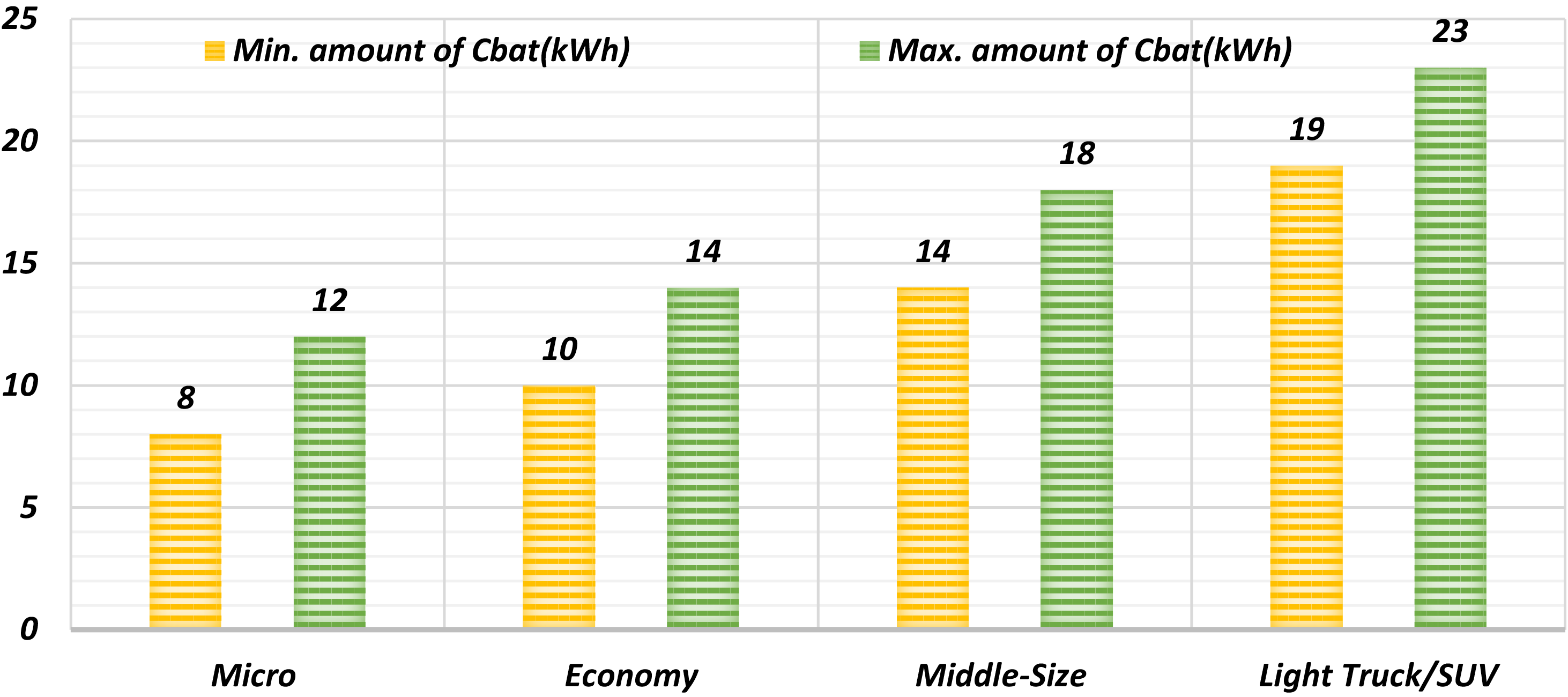
Structures of several modules of PHEV.
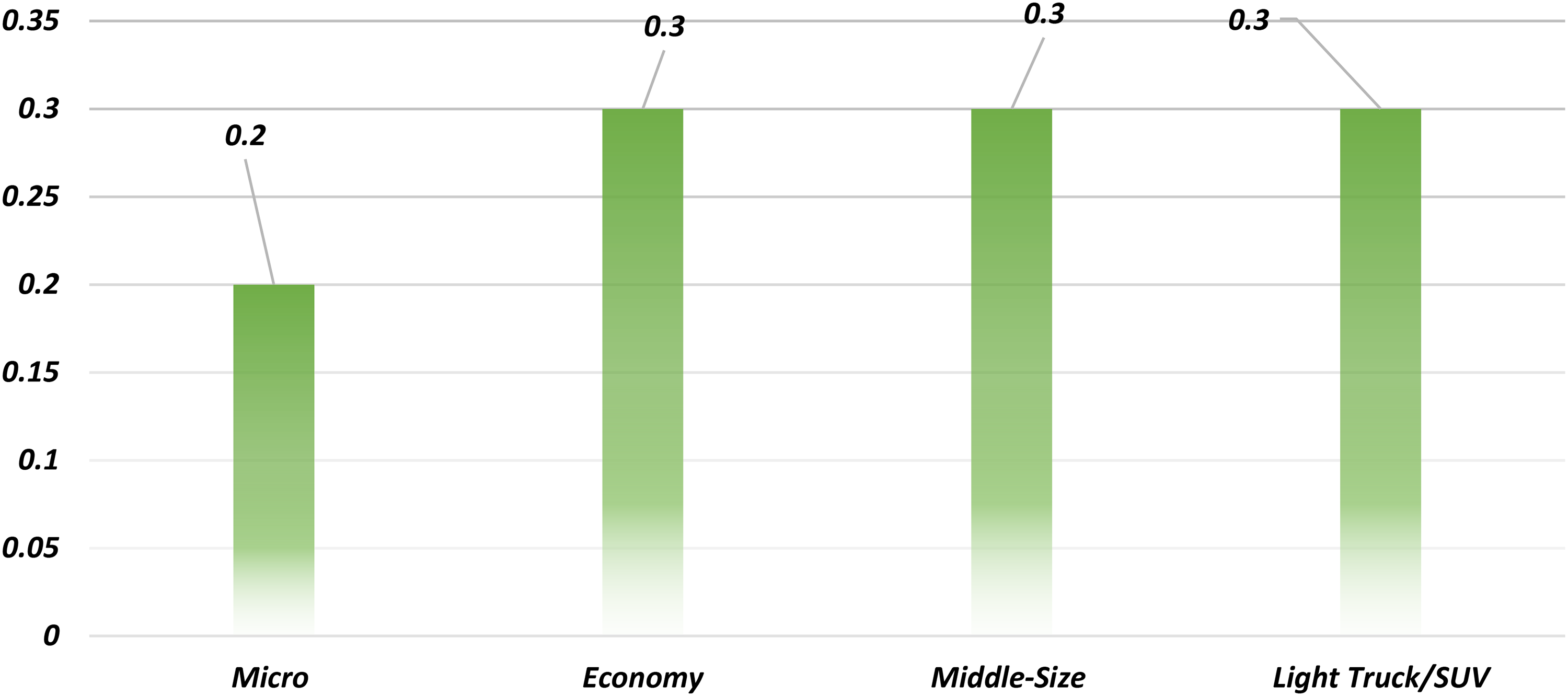
Market share of PHEV.
Various type states of PHEVs charging.
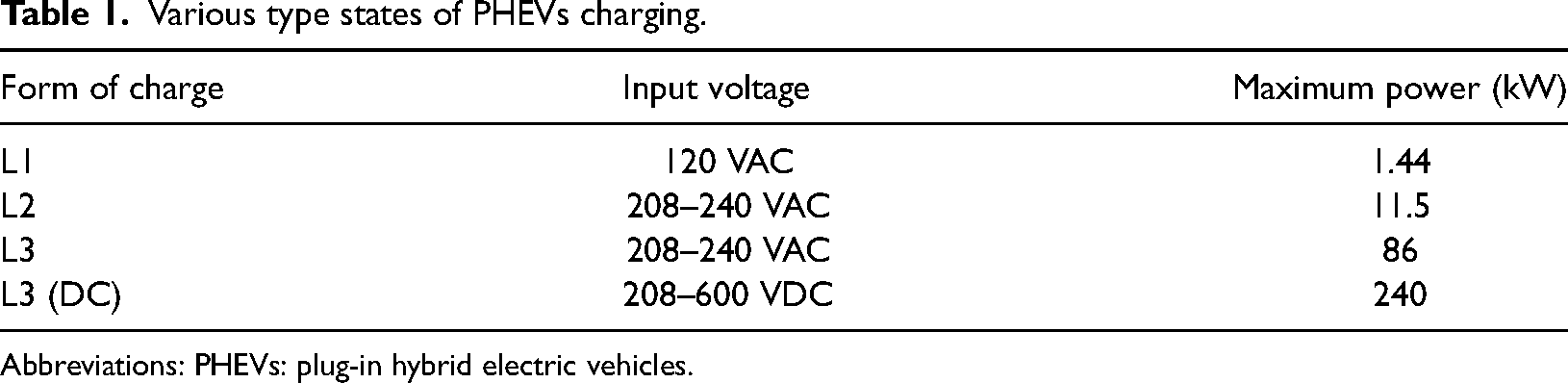
Abbreviations: PHEVs: plug-in hybrid electric vehicles.
Formulating of problem
The MG comprises various DERs and storage systems located within a compact area, accommodating controllable and sensitive loads. These energy sources are strategically positioned close to the loads, providing high flexibility to meet demand effectively. 8 The integration of MGs utilizing renewable energy and storage solutions significantly enhances the overall efficiency of the power system. By leveraging clean and renewable resources, pollution from conventional bulk power generation can be substantially reduced. Additionally, the ability of the MG to operate in island mode enhances consumer reliability. 9 This study focuses on optimizing the scheduling of the MG, particularly concerning PHEVs while minimizing costs.
Objective function
An MG incorporates various DERs that provide high reliability and allow for power exchange with the main grid during periods of energy surplus or deficit. The primary role of the DERs within the MG is to meet its own energy demands. When there is excess energy generation, the MG can export power to the utility grid, and conversely, when production is insufficient, it can draw power from the grid. From an economic perspective, the volume of power purchased or sold to the grid is significantly influenced by energy prices. In certain scenarios, even when the MG's DERs could supply the loads, it might be more cost-effective to purchase electricity from the grid due to lower prices. Furthermore, if the MG is equipped with energy storage systems, these devices can charge during periods of low electricity prices and discharge during high-price periods to optimize costs. To implement economic dispatch in the MG via a microgrid central control, it is essential to establish the following objective function
10


Pg and Ug can be formulated as
Technical constraints
Load demand and generation modeling
One critical technical constraint in the economic dispatch of MGs is maintaining power balance between generation and consumption for each hour in short-term planning. For simplicity, this study does not account for losses. According to the power balance requirement, the total load and charging of PHEVs must equal the combined output from DERs, the discharge from all storage systems, and any power purchased from the main grid. These constraints can be expressed as
9

Restrictions of generating
Power generation units are restricted by8–10
Battery energy storage constraints
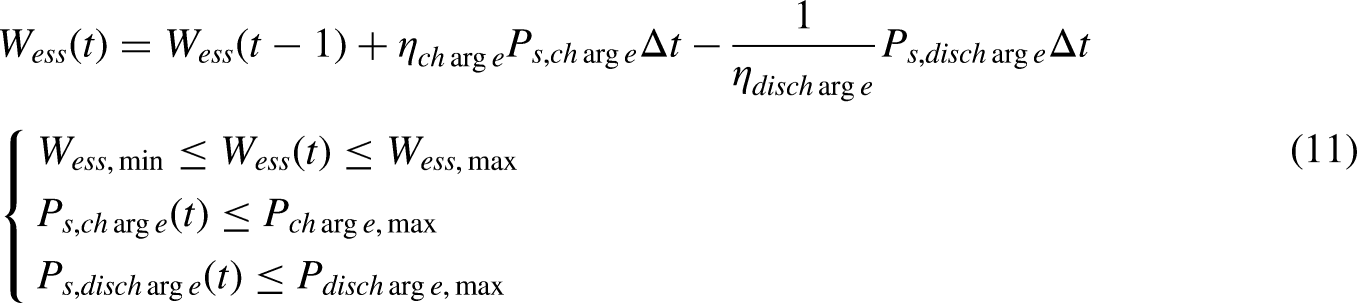
The battery storage systems can be charged (Pscharge) or discharge (Ps discharge) based on the requirement. Equation (10) indicates the charging/discharging limitation of Ps in storage devices. The stored energy and charging/discharging rate of batteries can be formulated as
9
MMRFO algorithm
The manta ray foraging optimization (MRFO) algorithm mimics the foraging behaviors of manta rays to find global optima within a search space. This approach has proven effective in optimizing various problems. MRFO is inspired by three main foraging strategies: chain foraging, cyclone foraging, and somersault foraging, each playing a distinct role in exploration and exploitation phases. When applied to optimization problems, MRFO employs specific update mechanisms based on these three behaviors, detailed mathematically as follows
32
:
In chain foraging, manta rays align in a head-to-tail formation to create a chain. Each manta ray moves not only toward the food source but also follows the one in front of it. The corresponding formula is

When manta rays discover a patch of plankton in deep water, they initiate a long foraging cyclone chain. During this behavior, each individual not only tracks the manta ray ahead but also spirals toward the food source. The mathematical representation is




In this process, the food location acts as a pivot point. Each manta ray swims around this pivot, somersaulting to new positions while adjusting their locations based on the best-known location identified. This can be expressed mathematically as
MMRFO algorithm
The algorithm applied has shown promising results in solving optimization problems. However, it occasionally converges too quickly, resulting in local optima for the problems analyzed. Developed manta ray foraging optimization (DMRFO) algorithm is shown Figure 3. To mitigate this issue, two widely used strategies are implemented. The first strategy employs self-adaptive weighting, which modifies the algorithm's convergence rate. This approach involves updating individuals’ positions to adjust random values. In the MRFO algorithm, initial candidates explore with a larger step size. As iterations progress, this step size gradually decreases to promote a more localized search within the solution space. This adjustment is applied to enhance the randomness of somersault foraging as follows

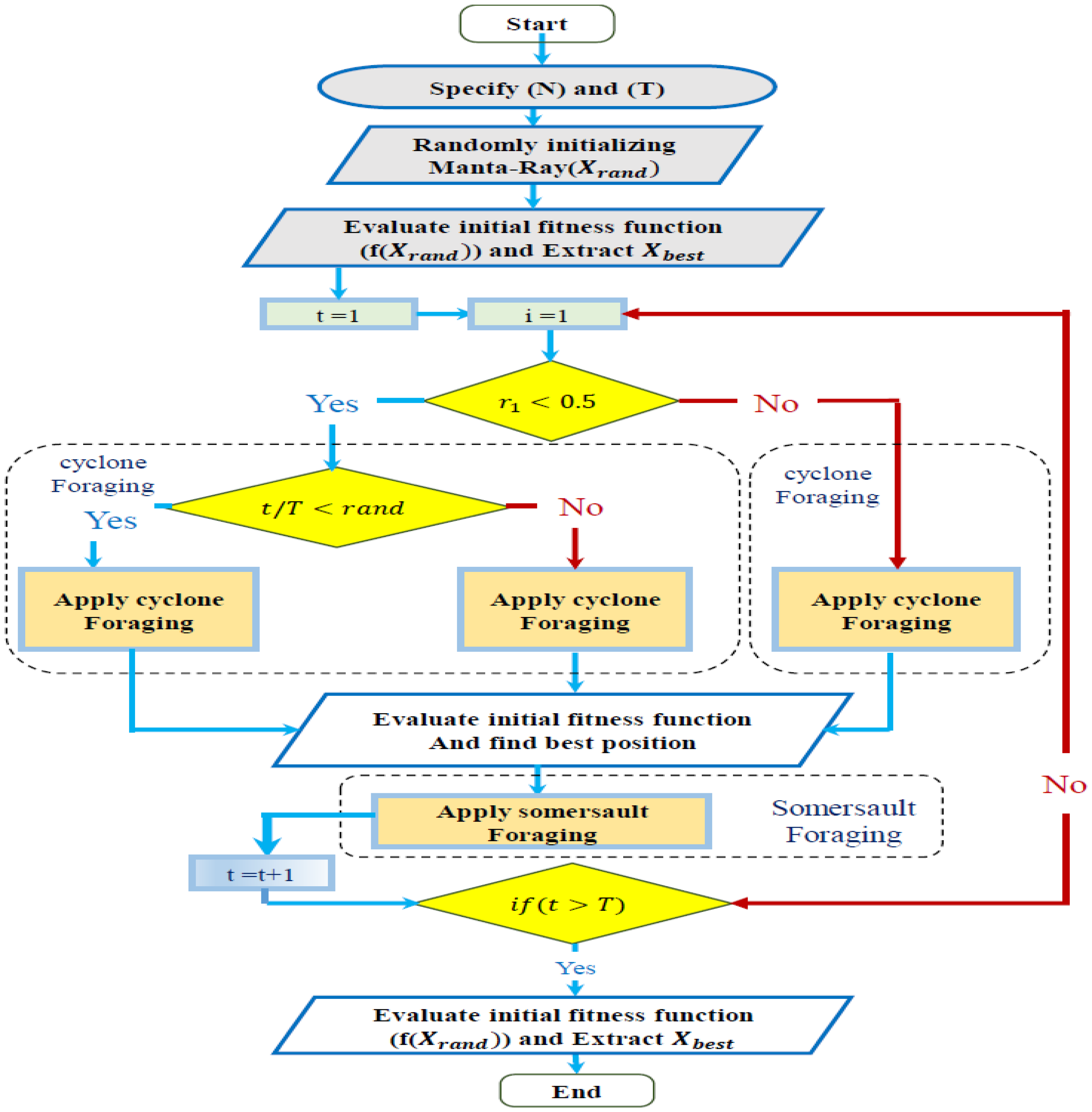
The MMRFO algorithm.
This method increases the weight of foraging performance to narrow the disparity between the worst solution (WS) and best solution (BS). The second approach utilizes chaos theory to tackle local optimization challenges and reduce time complexity. It generates pseudorandom values through a sequence characterized by randomness, which greatly benefits the algorithm. Specifically, the logistic map is used to adjust three parameters of the algorithm. Below are the update formulas for these parameters



Results of the simulation
In this section, an MG including various DERs and storage systems such as fuel cell (FC), wind turbine (WT), microturbine (MT), a PV and a nickel metal hydride battery is used for evaluation. The desired MG structure in connection with the main network is shown in Figure 4. The purpose of this section is to show the results of 24-h planning and determine the output of DERs and storage systems in each interval with minimum cost. In order to make it easier, DERs operate at the unity power factor, and in other words, they do not produce reactive power in the MG. Numerical values related to electricity price and DER limitations are shown in Table 2. The forecasted output power of WT and PV system is also given with high accuracy in Figure 5. The market price is also shown in Figure 6, as well as the predicted amount of load demand is given in Figure 7. To evaluate the MMRFO optimization algorithm and the performance of the proposed model in the presence of PHEVs, two different scenarios have been considered for simulations. These two different scenarios include the use of the optimal operation model for MG with and without considering PHEVs.33–35
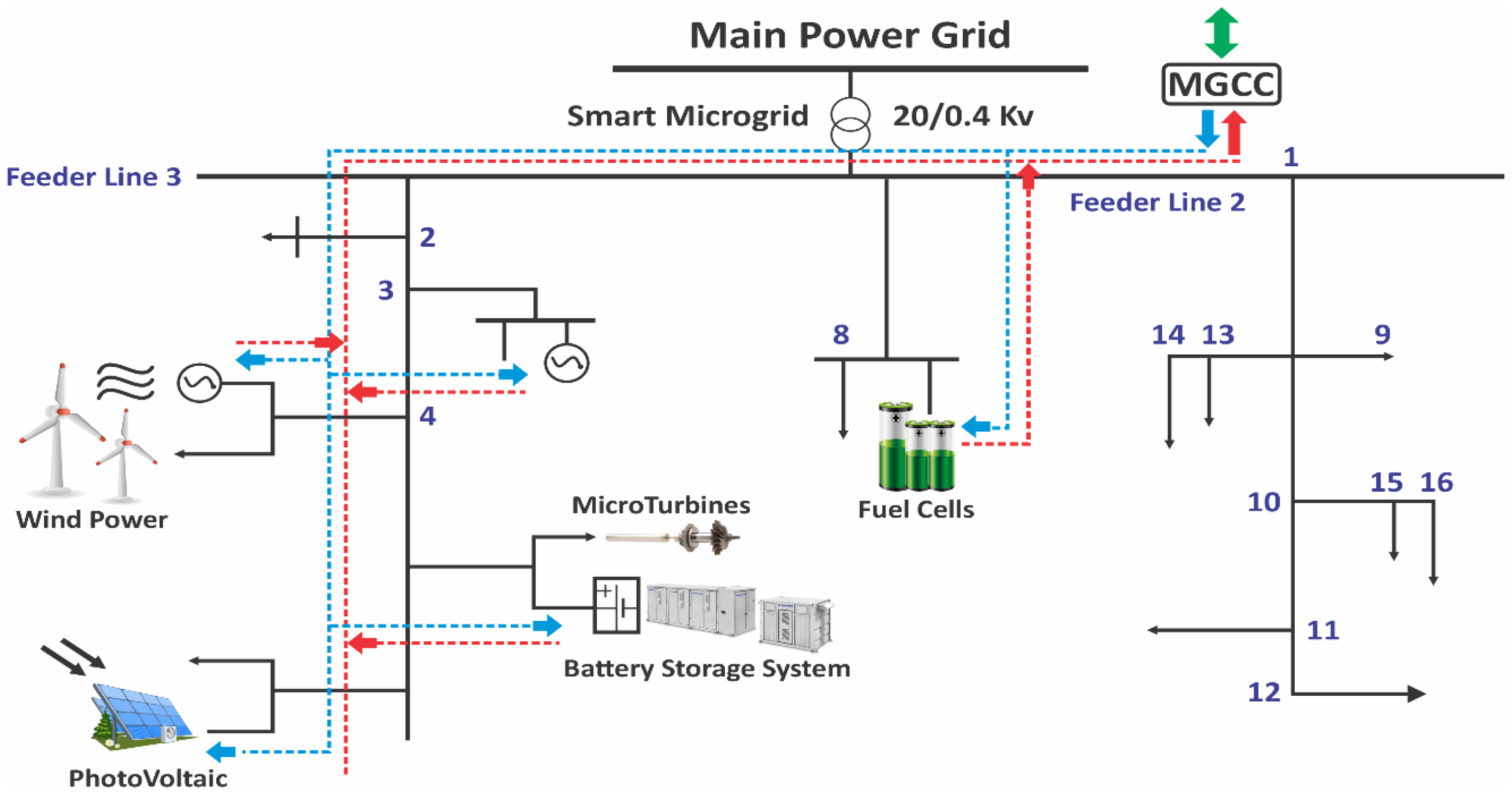
MG test system.
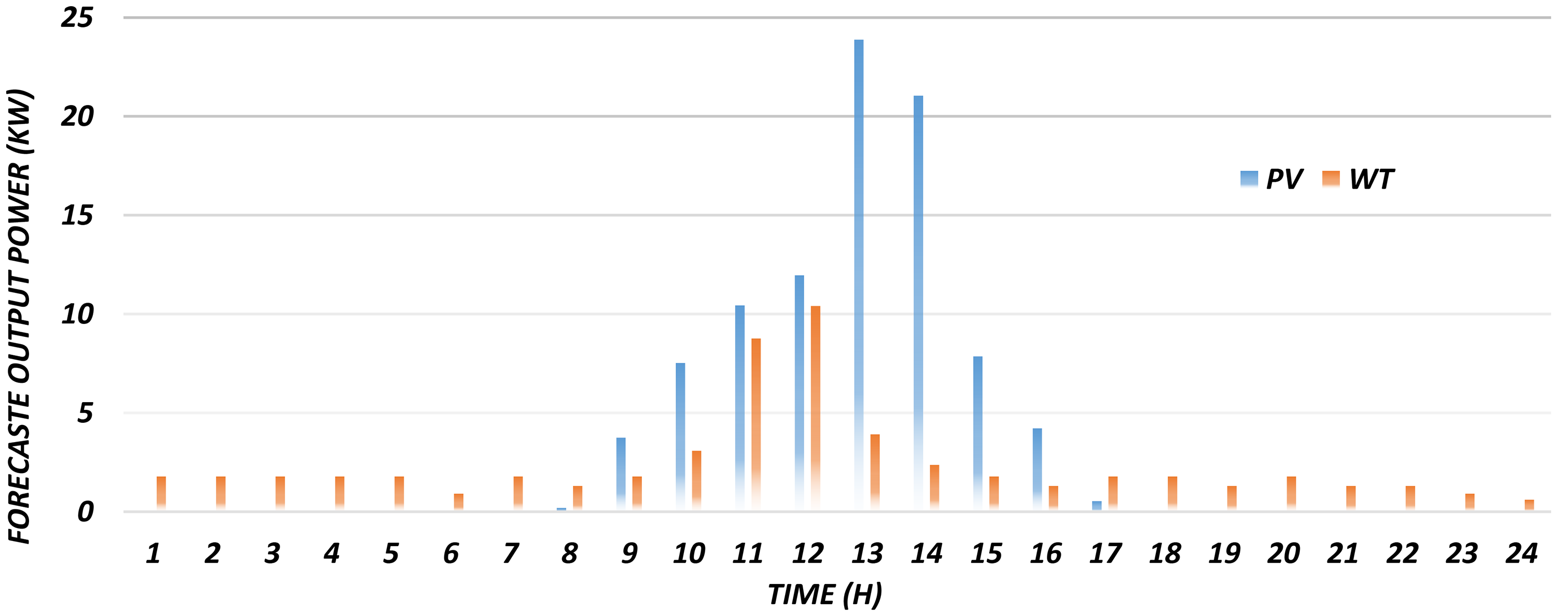
Forecasted power output from the wind turbine and solar photovoltaic systems.
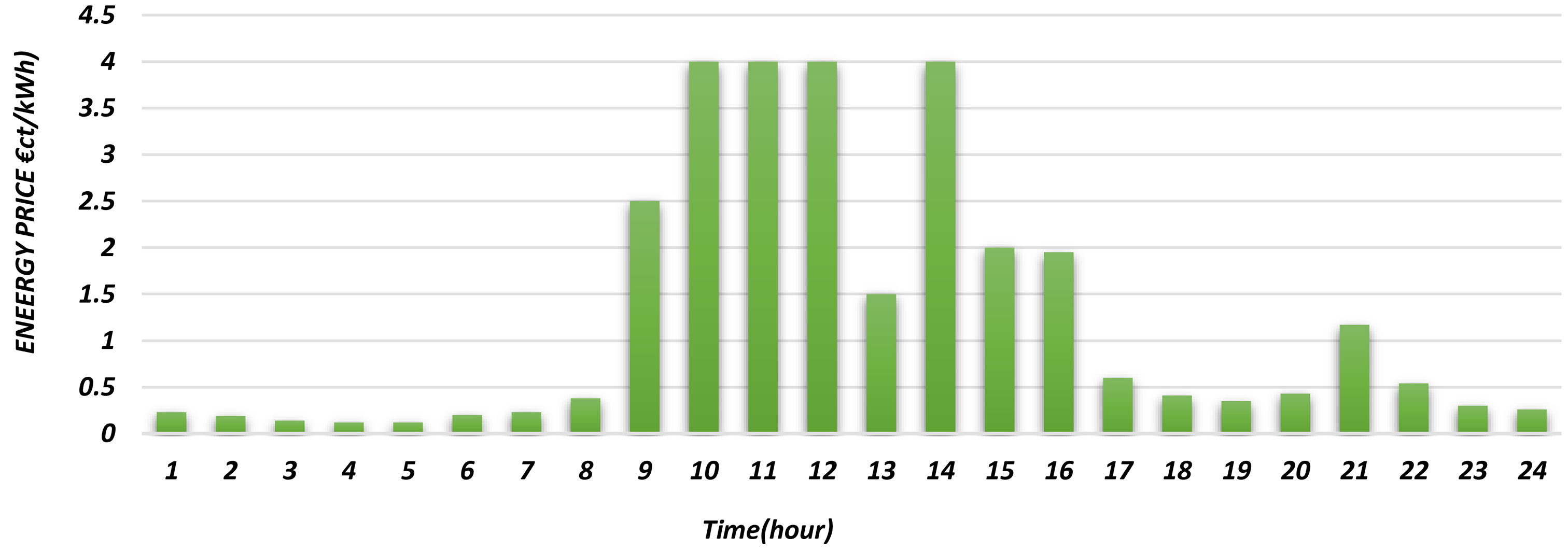
Variations in hourly market prices.
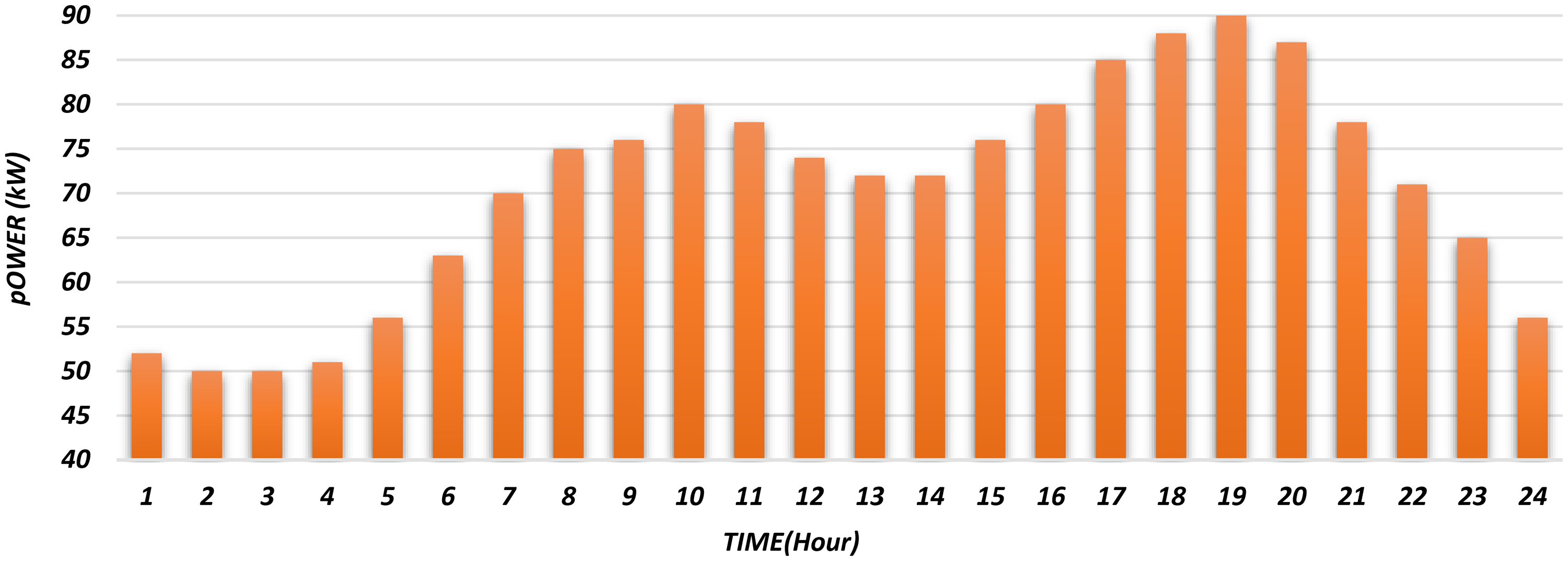
Estimated load demand.
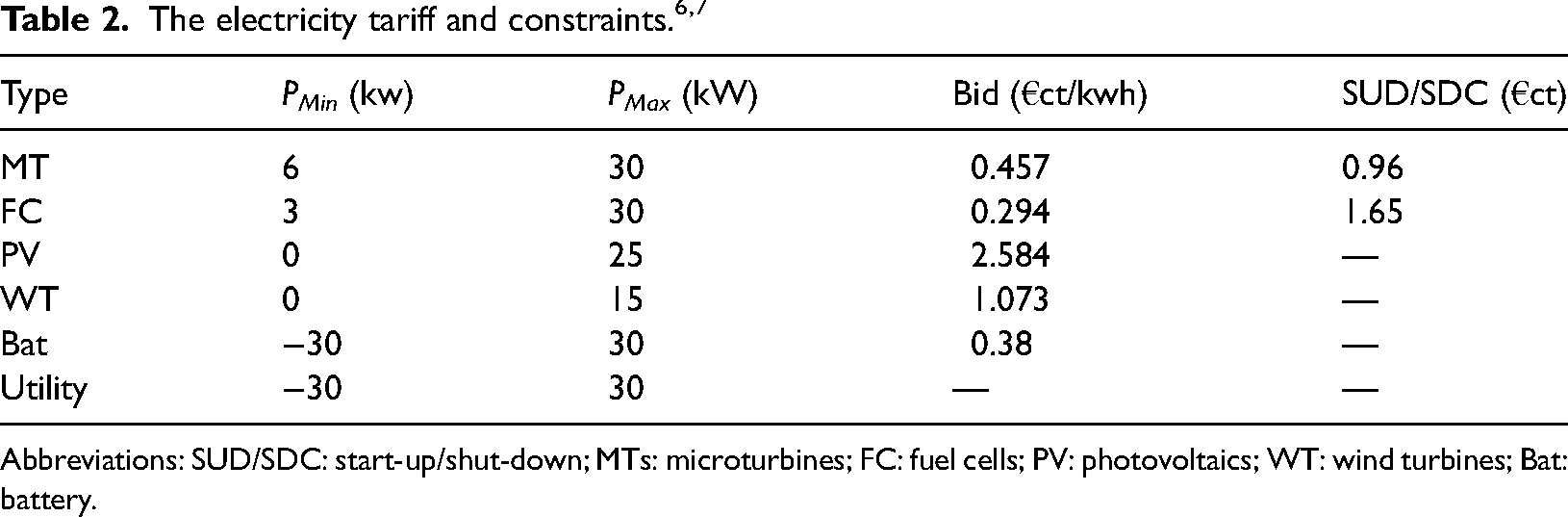
Abbreviations: SUD/SDC: start-up/shut-down; MTs: microturbines; FC: fuel cells; PV: photovoltaics; WT: wind turbines; Bat: battery.
Comparative results of different approaches_case 1.
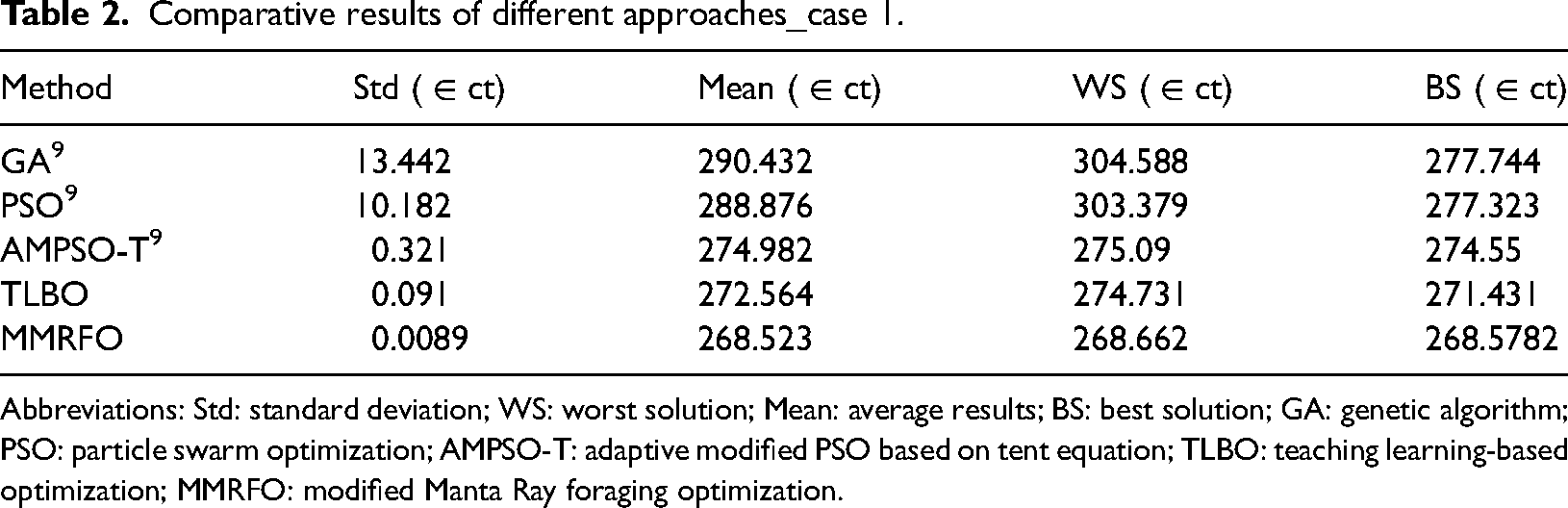
Abbreviations: Std: standard deviation; WS: worst solution; Mean: average results; BS: best solution; GA: genetic algorithm; PSO: particle swarm optimization; AMPSO-T: adaptive modified PSO based on tent equation; TLBO: teaching learning-based optimization; MMRFO: modified Manta Ray foraging optimization.
The first scenario is based on the full charging of the batteries and the presence of all DERs in the MG during 24 h, while in the second state, the batteries are not originally charged and DERs can be started or shutdown. Due to the low costs of operation of renewable-based resources, the amount of production of WT and PV will be at its maximum in both scenarios. The power generation of these resources in their maximum amount has a supporting aspect for these resources because the initial investment of these units should be depreciated after some years. Moreover, three various states including (a) considering uncontrolled charging (UC) demand, (b) considering controlled charging (CC) demand, and (c) considering smart charging demand are considered to show the PHEVs effect on the MG.
First scenario (without PHEV)
The problem of optimal operation in this article is evaluated during 24 h. The proposed model can be easily developed for weekly, monthly, and yearly planning with acceptable performance. This possibility of development this model without any restrictions shows the advantage of this method over other methods. Figure 8(a) and (b) show during the early hours, due to the low tariff, the battery start to charging, however, the output of expensive units in the MG is reduced. Instead, during the hours when the price of electricity is high, the battery is discharged and also the amount of production of DERs inside the MG is maximized and the exported power increases to reduce overall costs. MT is one of the expensive DERs that produces the minimum amount in the early hours when the price of energy is high. However, between 9:00 and 17:00, when the price increases, it is more economical to increase the amount of MT production in order to reduce total costs. FC is one of the cheap units that are planned in such a way that this unit operates at its maximum level till the costs are reduced. For the battery, it start charging in the first 6 h because of the cheap price of energy in the main grid, but during the hours from 8 to 14, owing to the high price of energy in the main grid, as shown in Figure 8, the battery starts discharging. Table 2 compares the performance of the optimization algorithms by considering BS, WS, average results (Mean), and standard deviation. According to the outcomes, MMRFO algorithm shows better performance in resolving operation management to MG problems optimization than other approaches. The cost trajectory in the proposed algorithm is given in Figure 9(a). Figure 9(b) also illustrates the time of solving the problem. As can be seen, 5.87 s is needed to solve the optimal operation with the MMRFO. However, the time solution for GA, particle swarm optimization (PSO), and TLBO, are 12.33, 10.33, and 7.95 s, correspondingly. Figure 4 is also shows the comparative BSs of the different algorithms.
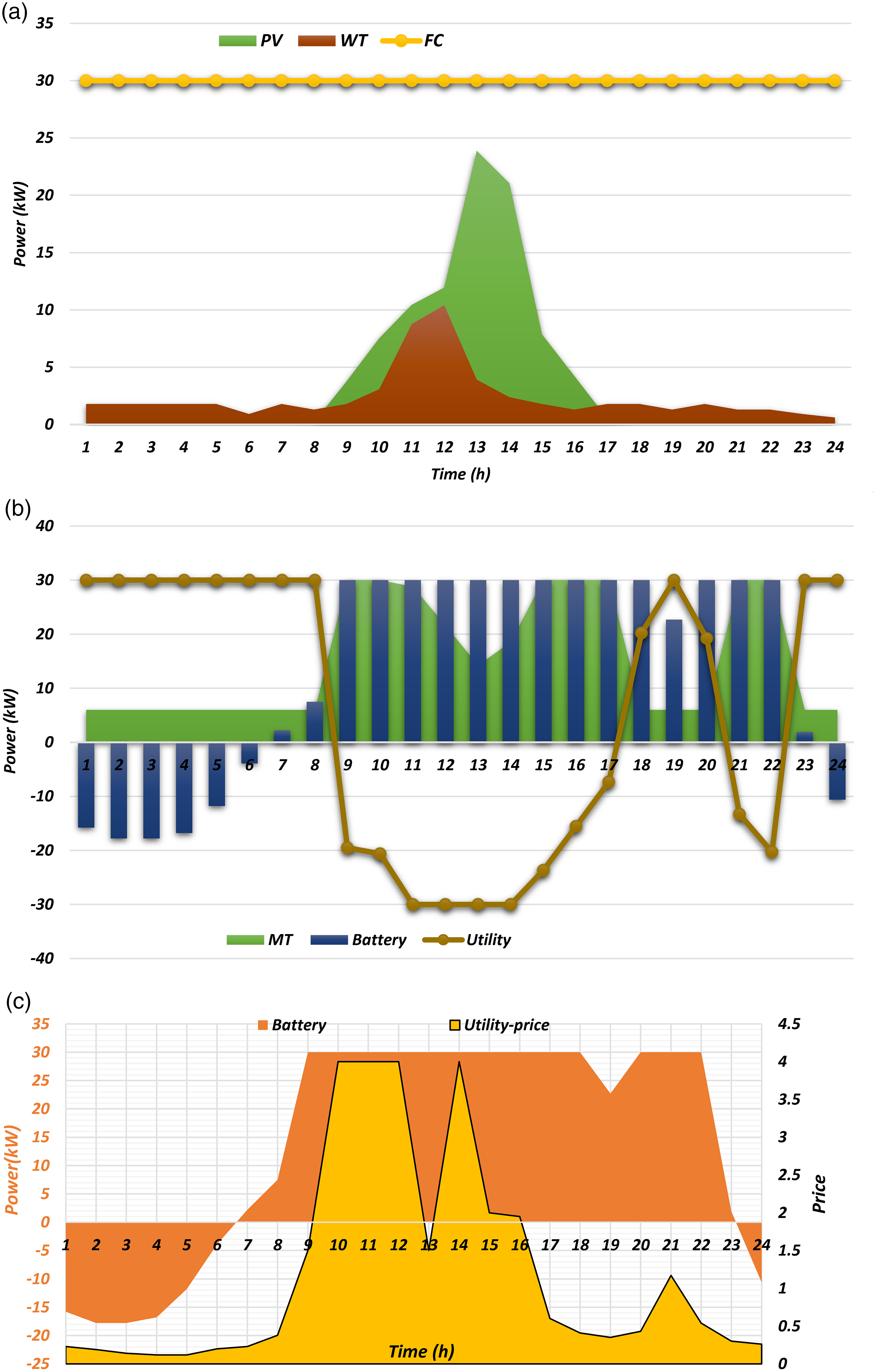
(a) Power generation from the (FC), PV, and WT. (b) Power output from the MT along with battery charging and discharging activities. (c) The performance of the battery and electricity tariff.
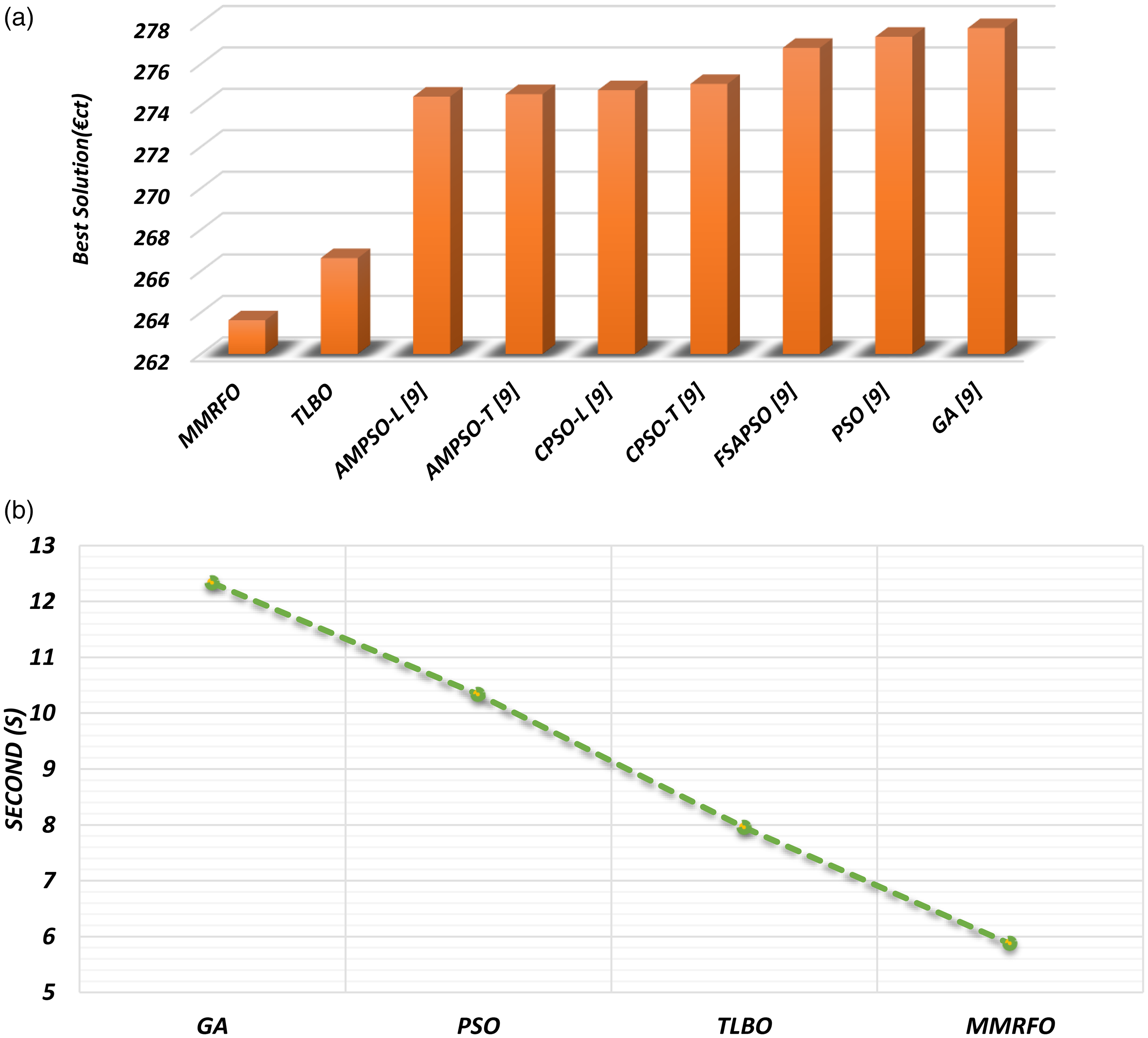
(a). Comparative results of different approaches. (b) Mean solution time in Case 1.
Second scenario (without PHEV)
In this context, the battery must be charged during the early hours when it is depleted to ensure it can be discharged under necessary conditions to minimize costs. As illustrated in Figure 10(a) and (b), the MT, which is a costly unit, plays a crucial role in charging the battery during these initial hours. By employing this strategy, it becomes feasible to reduce MG costs by discharging the battery during peak load periods when electricity prices are high. The main grid and FC are additional DERs that can assist in charging the battery during early hours to further reduce expenses by discharging it at higher rates. It is important to note that since the MT is an expensive unit, it is not cost-effective to utilize it for battery charging at other times of the day; therefore, it should remain OFF when electricity prices are low. The MMRFO algorithm has been compared with several established algorithms, with simulation results repeated across 40 trials to evaluate the best, worst, and average outcomes. The results in the table demonstrate that the MMRFO algorithm outperforms other methods by finding solutions that are closer to optimal more easily. Additionally, the enhanced MMRFO algorithm has shown improved performance compared to the original version. It was also anticipated that the costs associated with the MG in the second scenario would be considerably higher than those in the first scenario, a prediction that was clearly supported by the simulation results. According to Figure 10(c), the battery undergoes charging during the initial 8 h due to the lower energy prices from the main grid. Subsequently, it discharges between 8:00 and 14:00 to take advantage of the higher energy costs, thereby minimizing system expenses. Table 3 compares the cost functions in the second scenario. To validate the effectiveness of the MMRFO algorithm, well-known algorithms such as GA, PSO, and TLBO were employed. Figure 11(a) illustrates a comparison of the optimal solutions obtained by these different methods, indicating that the MMRFO algorithm significantly reduces MG costs, outperforming all other algorithms. Additionally, Figure 11(b) shows the solution time for the MMRFO algorithm, which is recorded at 5.19 s substantially quicker than the other methods. Figure 6 also provides a comparative view of the BSs from various algorithms.
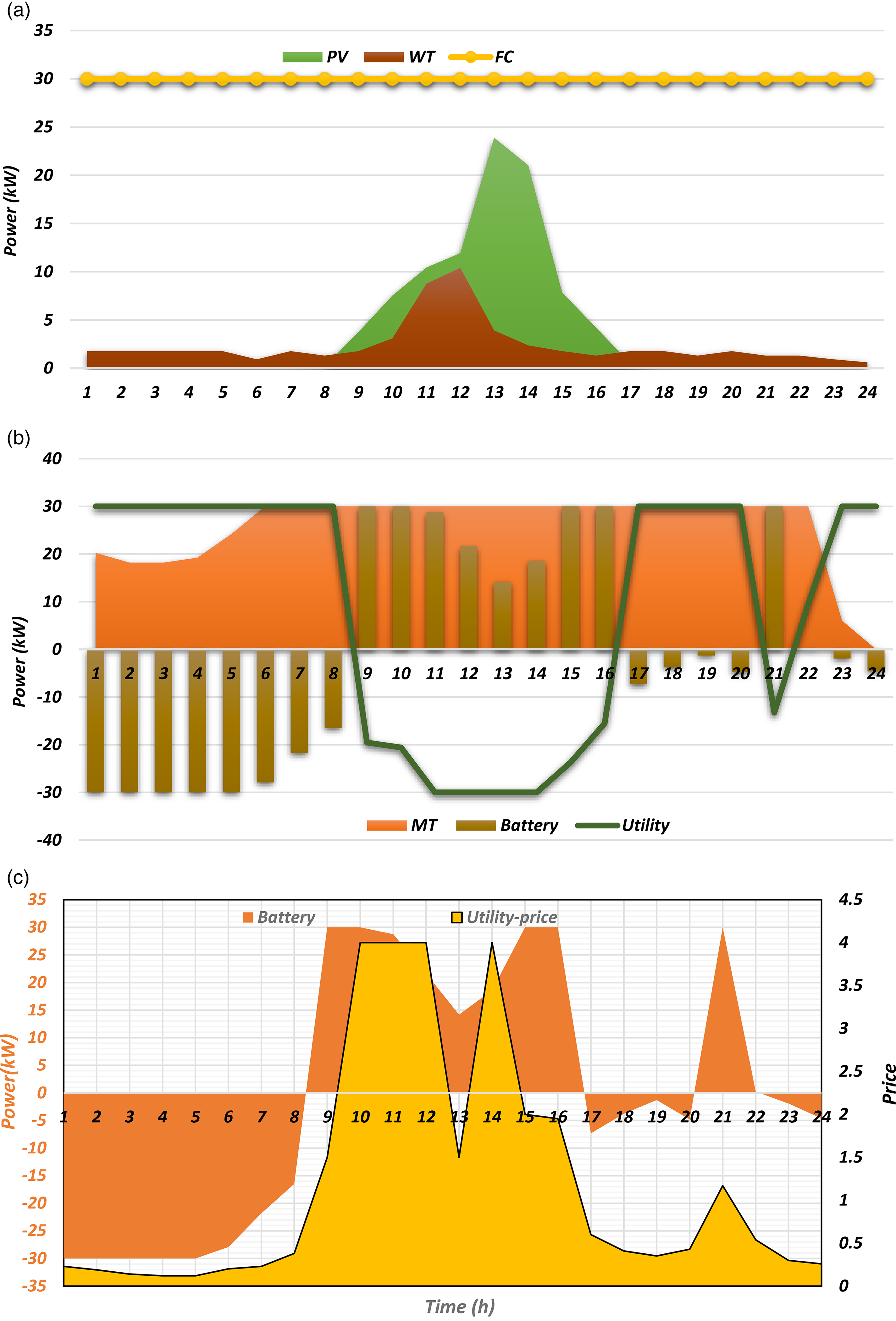
(a) Combined output power from the FC, PV, and WT systems. (b) Power produced by the MT and its related battery charging/discharging operations. (c) Battery generation metrics alongside market electricity pricing.
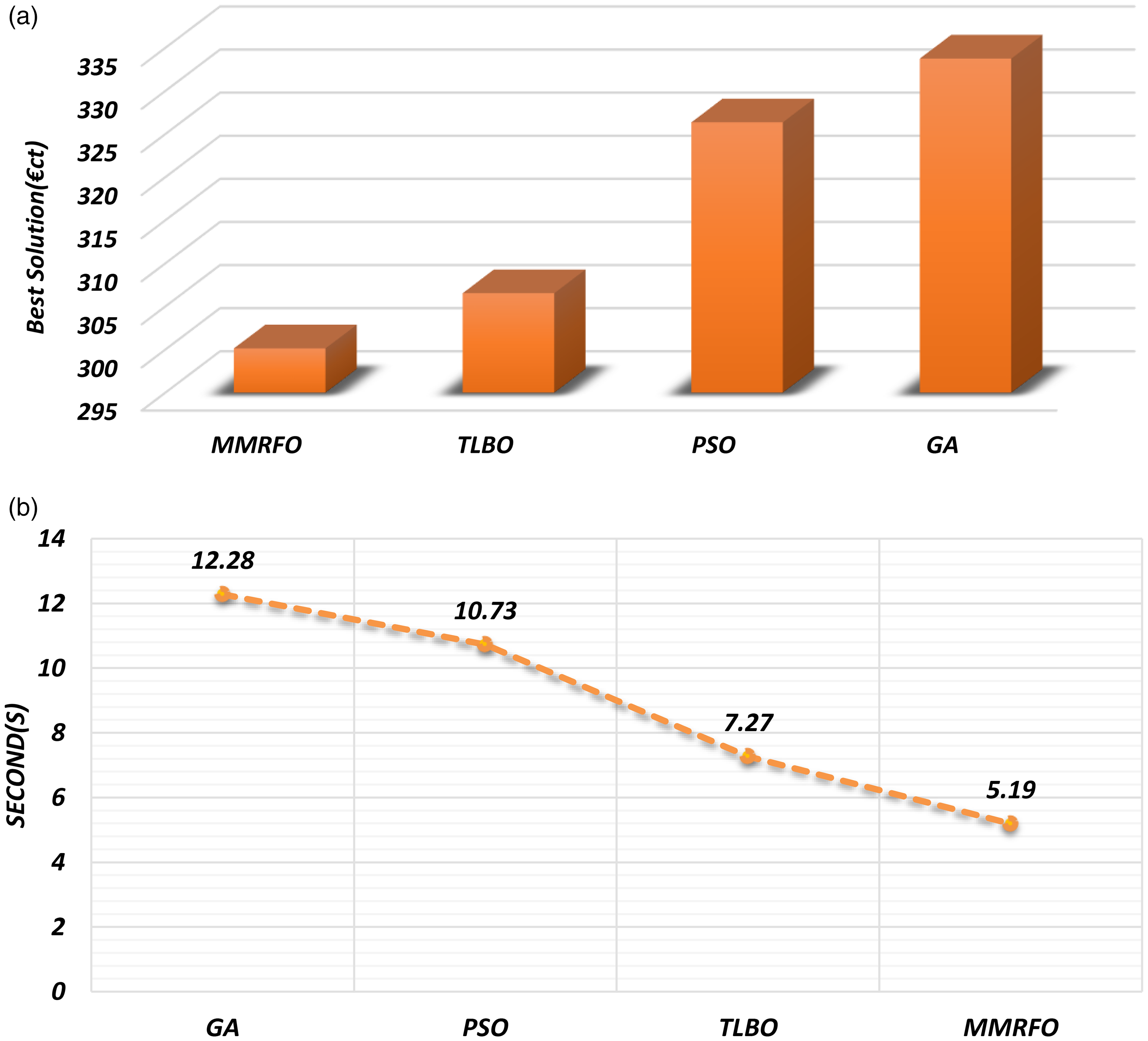
(a). Comparative results of different approaches. (b) Mean solution time of various approaches _Case 2.
Total operating costs obtained from the studied methods _case 2.
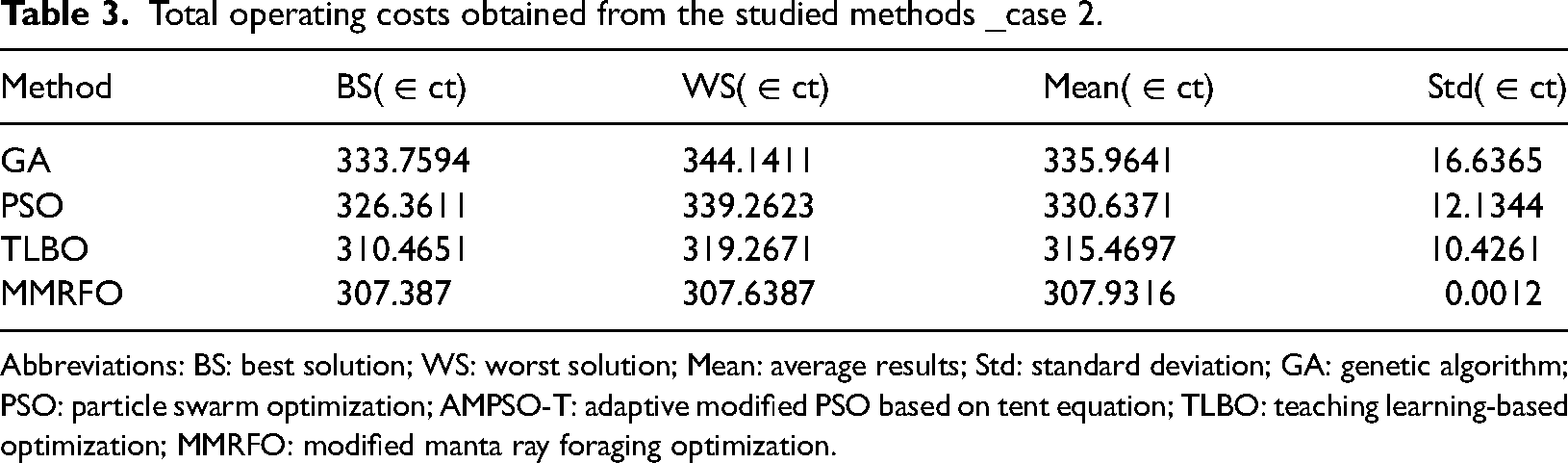
Abbreviations: BS: best solution; WS: worst solution; Mean: average results; Std: standard deviation; GA: genetic algorithm; PSO: particle swarm optimization; AMPSO-T: adaptive modified PSO based on tent equation; TLBO: teaching learning-based optimization; MMRFO: modified manta ray foraging optimization.
Considering of PHEV
In the following, the charging demands of PHEVs will be considered. For this purpose, it has been assumed that the penetration percentage of PHEVs is 30% and the number of 70 PHEVs is considered. Moreover, the uncertainties are fully modeled to get the correct results. The Monte Carlo simulation, which is a very accurate method, has been used to model the uncertainty of the problem. For this purpose, Monte Carlo simulation is first formulated and added to the model of optimal scheduling, and uncertainties in the charging demands of PHEVs, load, electricity price, and output power of WT and PV are taken into account. UC, CC, and smart charging are considered here for evaluation. Figures 12 to 19 illustrate the results of this part. The BS in the first scenario depicted in Table 4. In light of the additional load posed by charging demands for PHEVs, the power drawn from the main grid is projected to rise from 30 kW to 120 kW. This increase in injected power into the MG is necessary to meet internal demand. It is evident that adjustments to the limitations of the MG test system and PHEV charging requirements are essential; implementing these changes will enhance power supply to accommodate PHEV demand. Due to the fact that some of the limitations of the test MG have changed in this section, the results of the scenarios here have been obtained by updating the new capacities. Figures 10 to 12 and Table 5 show that the UC scheme is faced by increasing the imported power from the main grid and charging battery in nonpeak load conditions. Since the MT is very expensive source, it is not a main generator in the MG. It depicts that in CC of PHEVs, for minimizing the cost of the MG, MT is OFF is some hours and the imported power from the main grid is improved. In controlled and smart charging approach, the reduction of cost of MG can be seen by proper scheduling of the PHEVs energy demands. It shows that in UC mode, the imported power from the main grid in peak conditions between hours 15 and 17, the cost of MG will be increased. On the other hand, the cost of the MG will be minimized in smart charging scheme through importing power in off-peak load conditions. Table 6 represents average solution time that shows good performance of the suggested method.
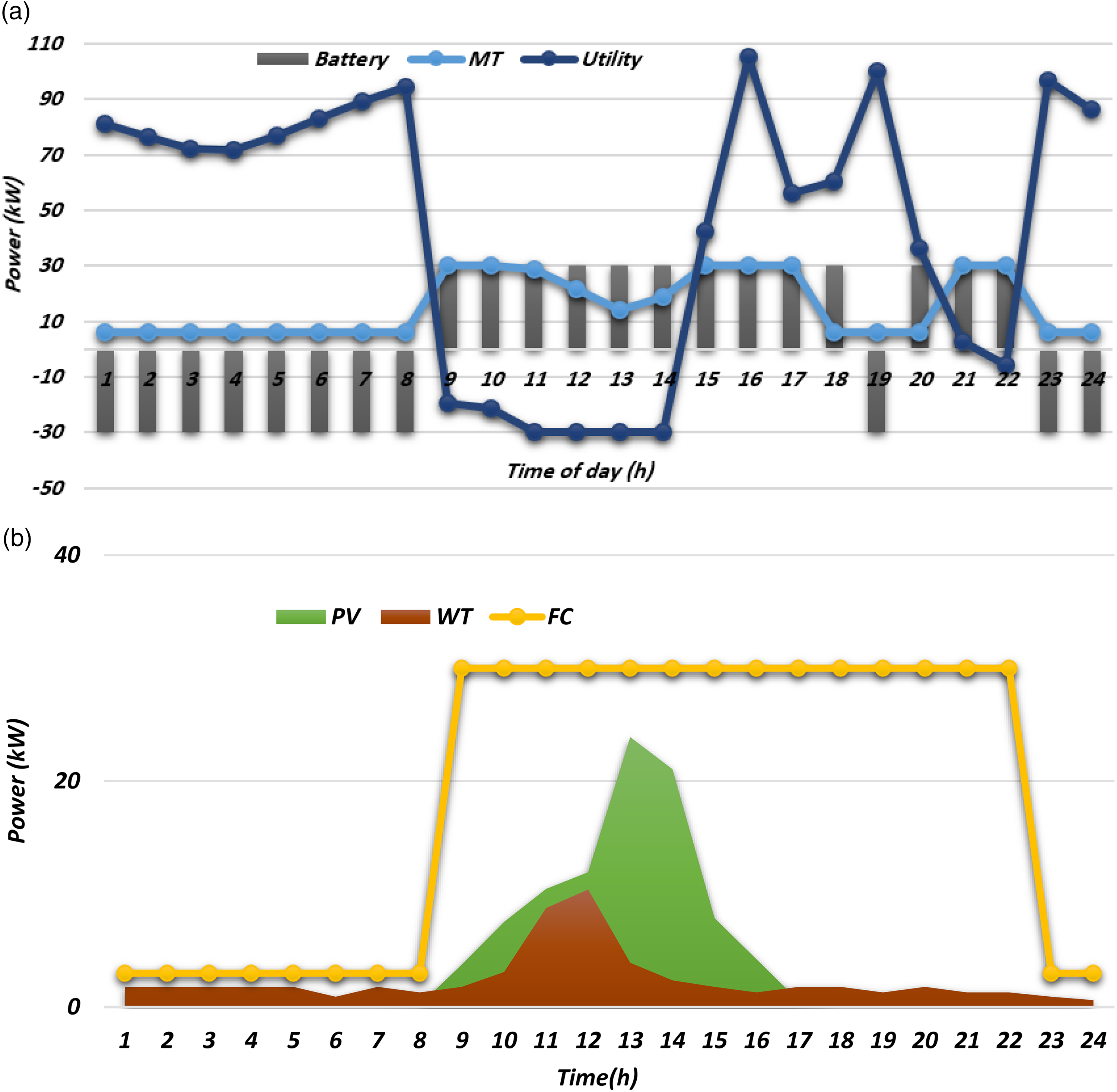
(a) and (b) Power outputs from DGs during uncontrolled charging scenarios (case 1).
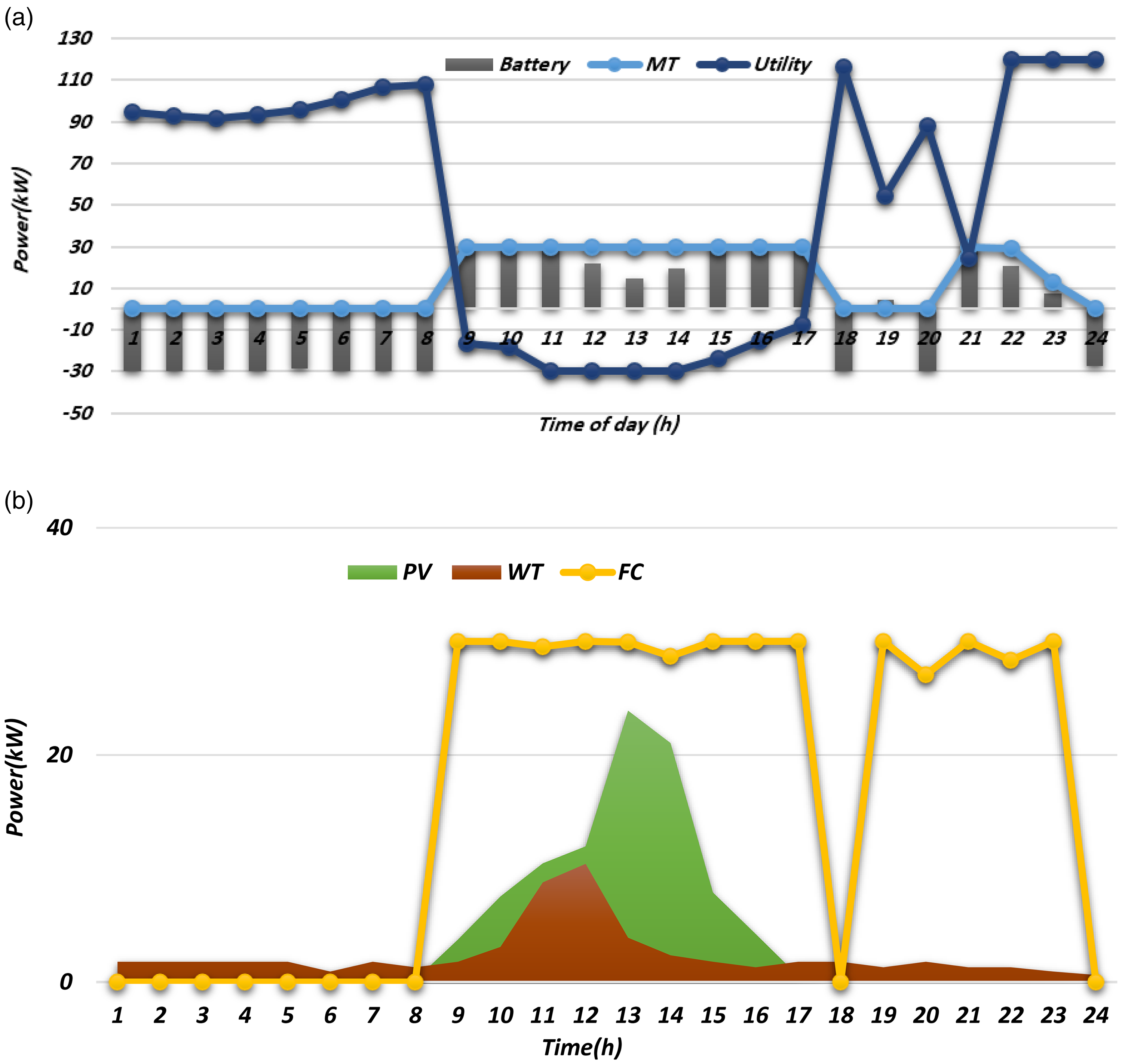
(a) and (b) Power outputs from DGs under controlled charging conditions (case 1).
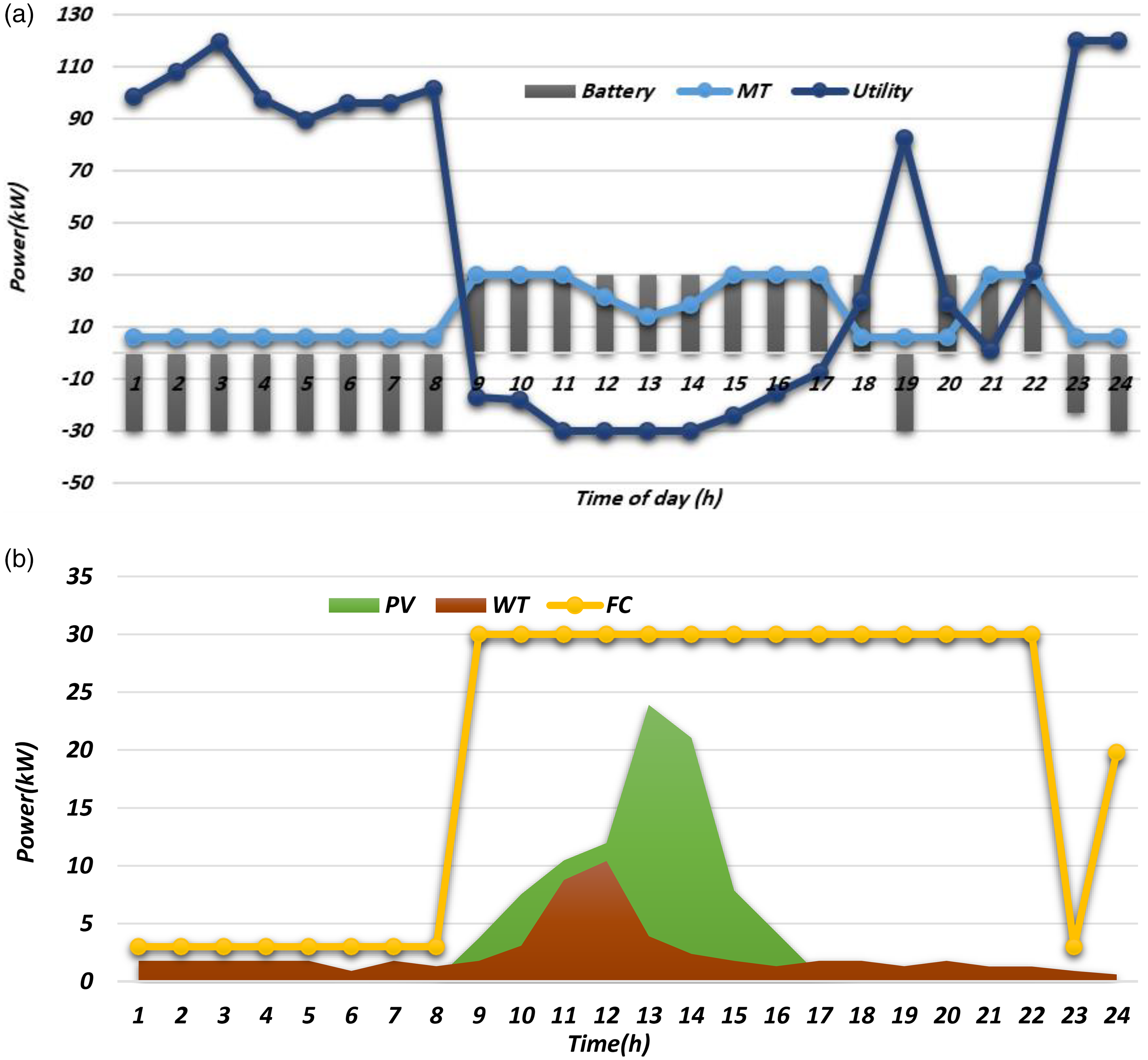
(a) and (b) Power outputs from DGs in smart charging scenarios (case 1).
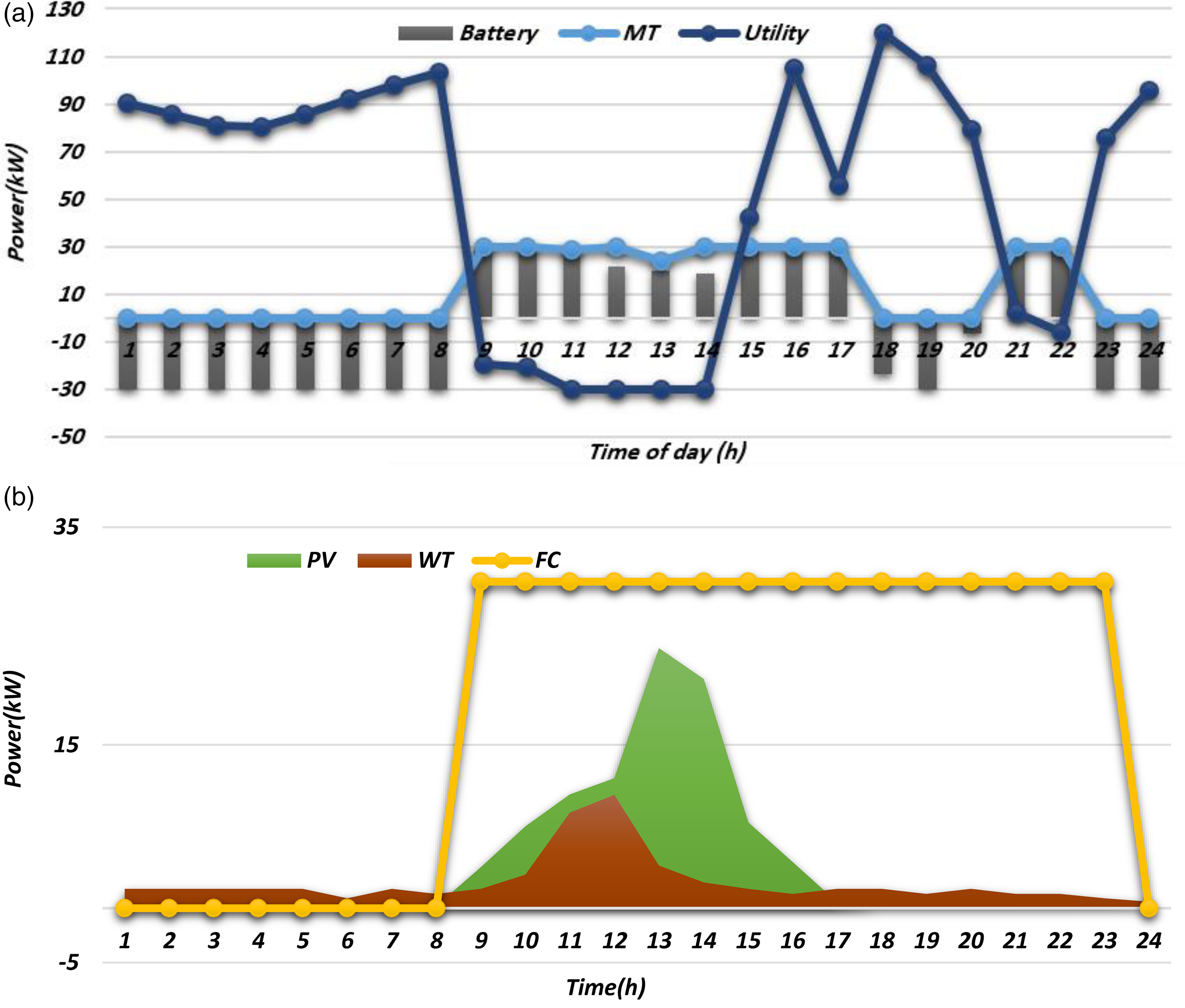
(a) and (b) Power outputs from DGs following the UC approach in case 2.
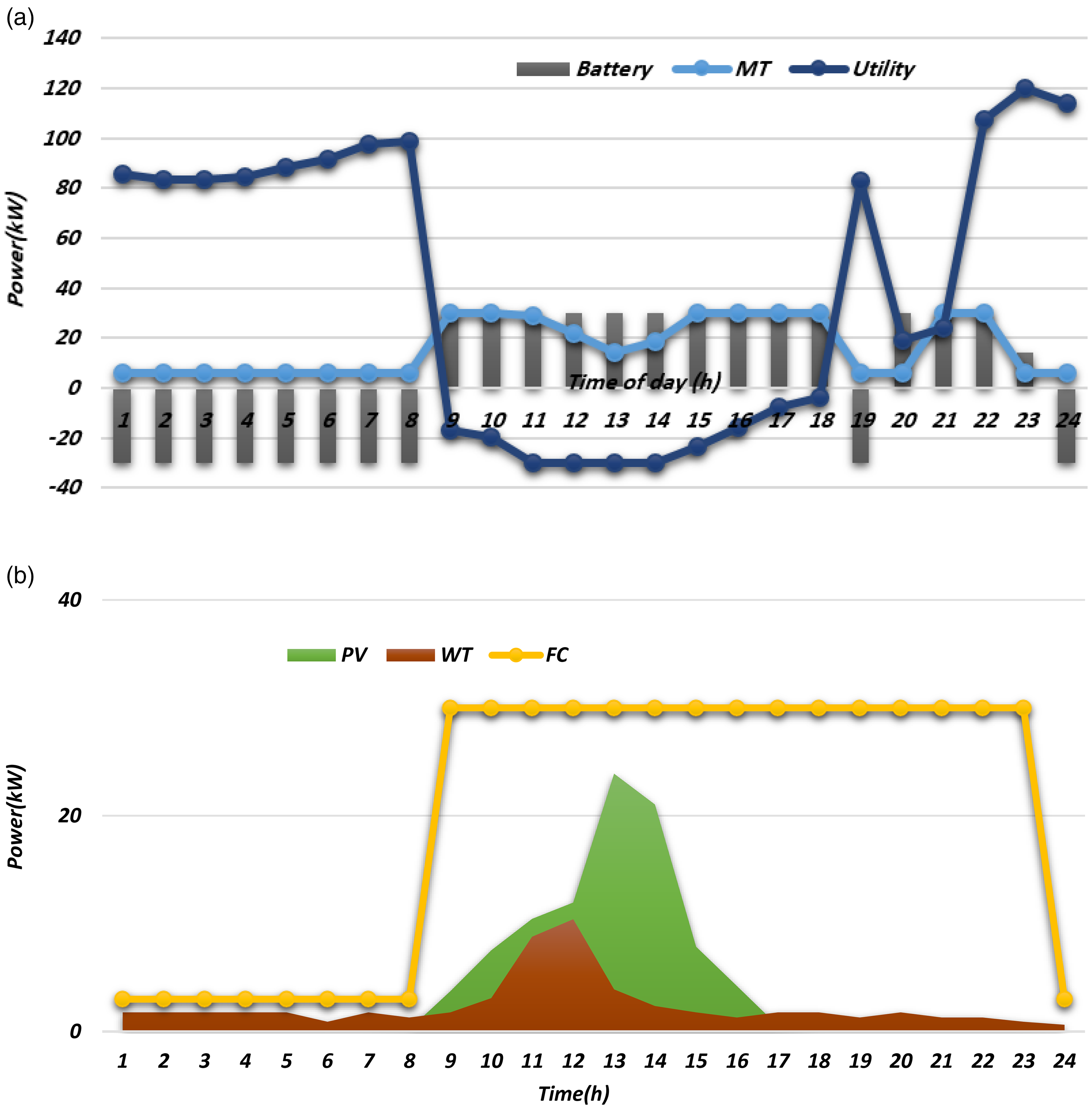
(a) and (b) Power outputs from DGs during CC in case 2.
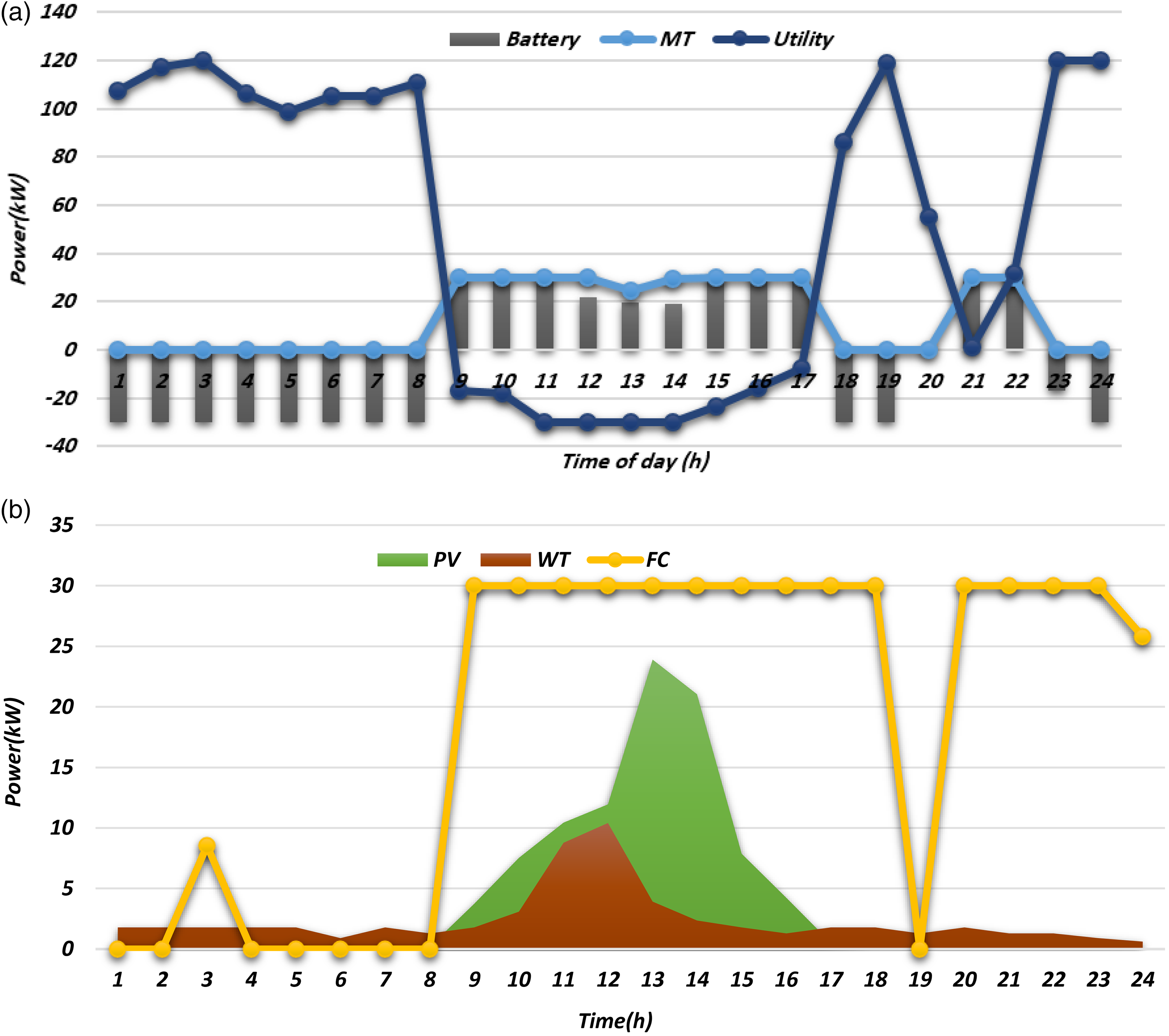
(a) and (b) Power outputs from DGs in SC conditions for case 2.
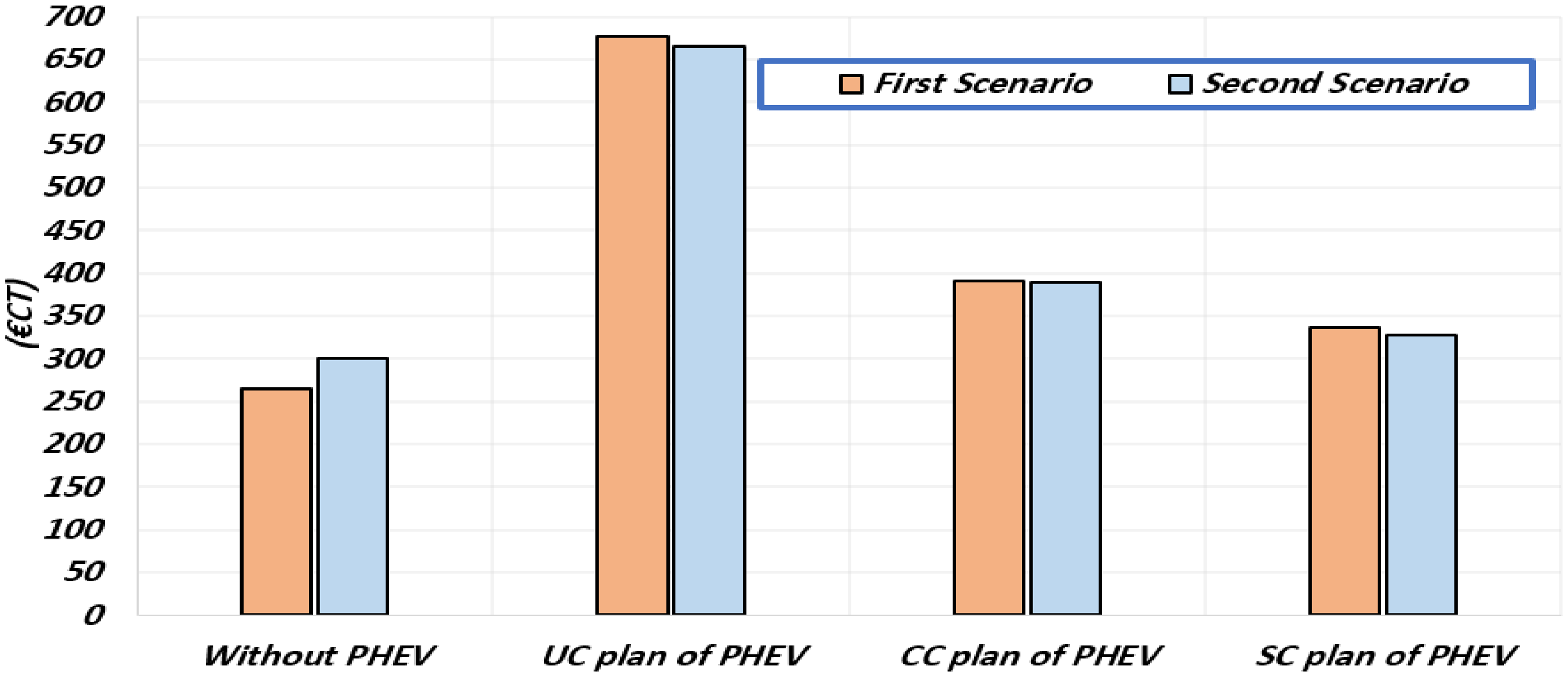
Total costs presentation with/without PHEVs in cases 1 and 2.
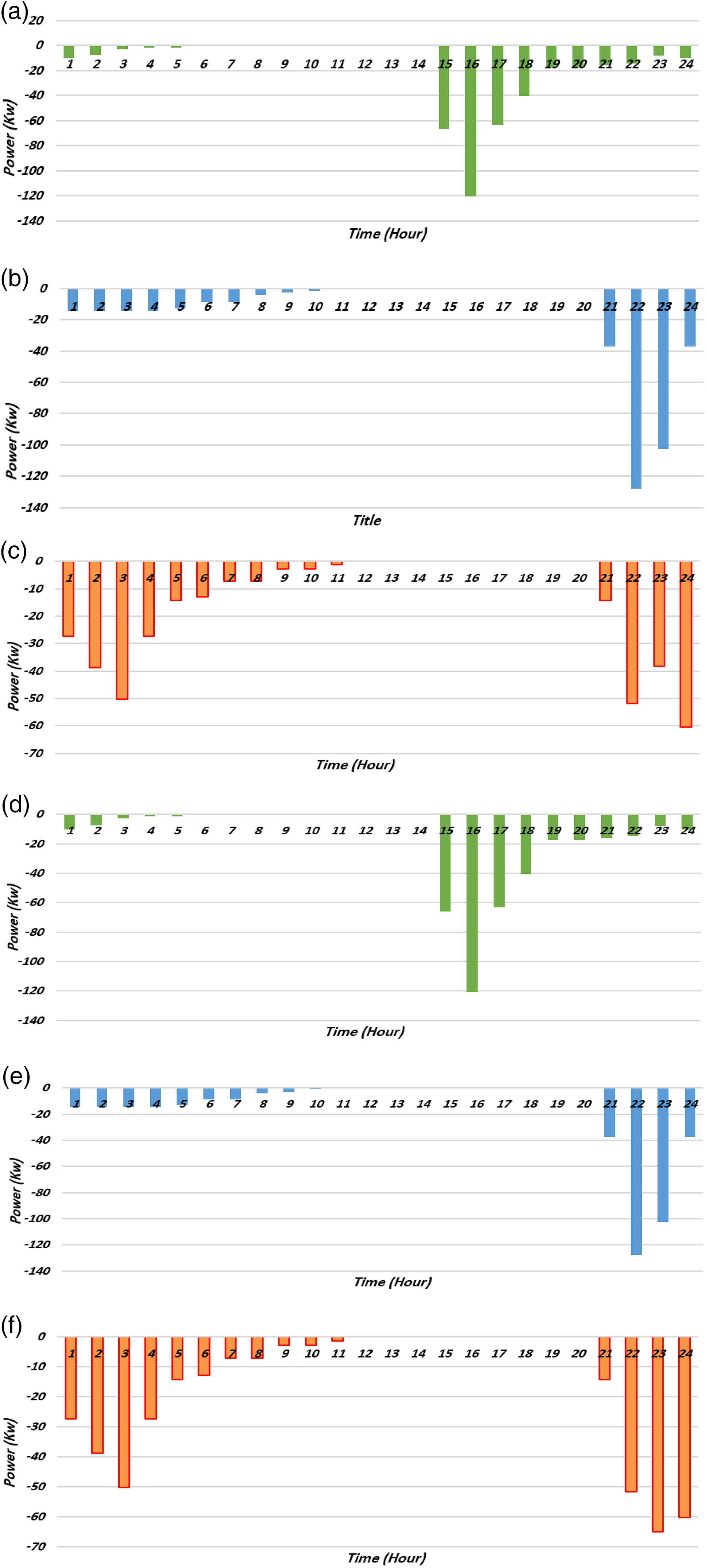
(a) PEHVs charging UC_ Case 1. (b) PEHVs charging CC_ Case 1. (c) PEHVs charging SC_ Case 1. (d) PEHVs charging UC_ Case 2. (e) PEHVs charging CC_ Case 2. (f) PEHVs charging SC_ Case 2.
Best solution of different first scenario.
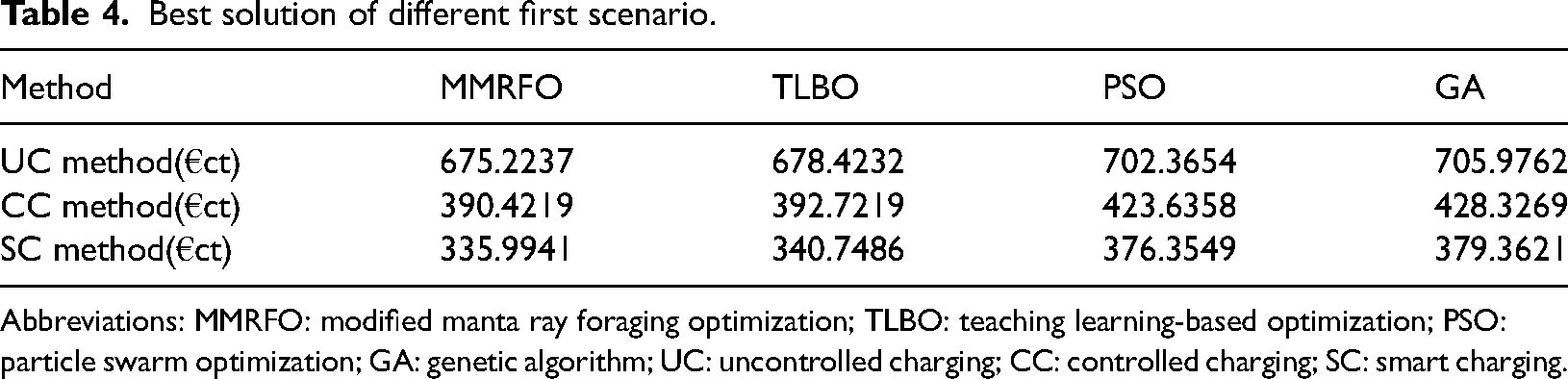
Abbreviations: MMRFO: modified manta ray foraging optimization; TLBO: teaching learning-based optimization; PSO: particle swarm optimization; GA: genetic algorithm; UC: uncontrolled charging; CC: controlled charging; SC: smart charging.
Results _ case 2.
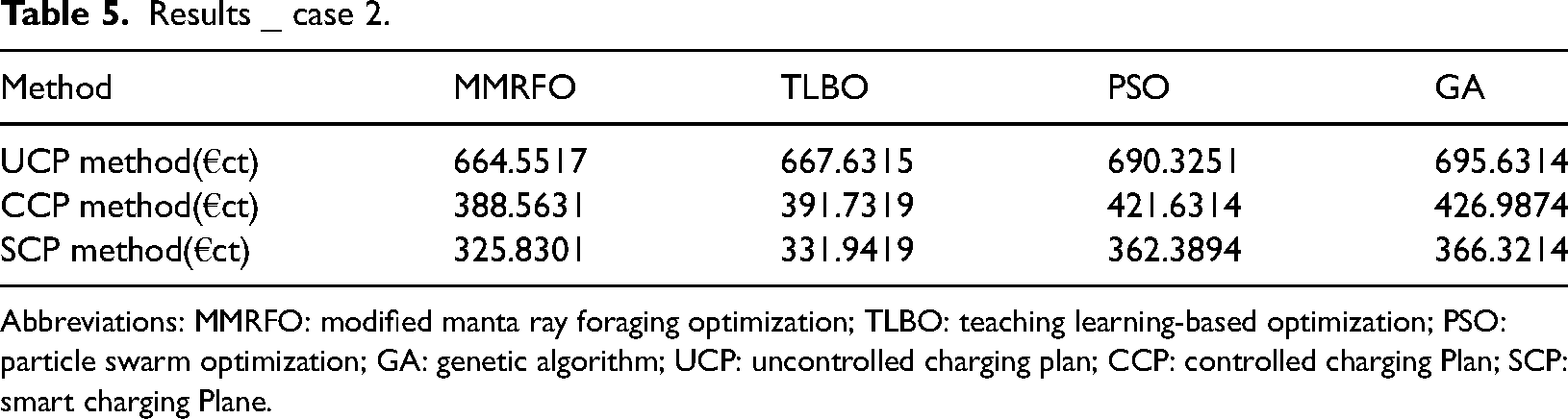
Abbreviations: MMRFO: modified manta ray foraging optimization; TLBO: teaching learning-based optimization; PSO: particle swarm optimization; GA: genetic algorithm; UCP: uncontrolled charging plan; CCP: controlled charging Plan; SCP: smart charging Plane.
Average solution time.
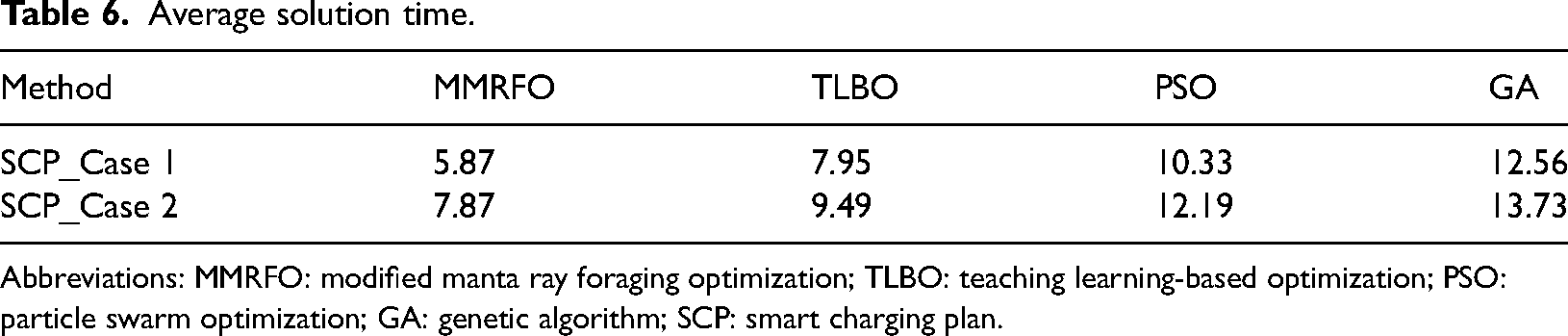
Abbreviations: MMRFO: modified manta ray foraging optimization; TLBO: teaching learning-based optimization; PSO: particle swarm optimization; GA: genetic algorithm; SCP: smart charging plan.
Discussion
In the first part of the simulation, the performance of the MMRFO algorithm was compared to other well-known algorithms in the optimal operation of the MG without considering the uncertainties. It is assumed that the battery is full charge and DERs must be operated during the day. On the other hand, the battery is started with zero SOC for the second scenario. As seen in Table 5, even though the MT is costly unit, it is operated in some hours to charge the storage system. The recommended MMRFO algorithm showed better performance than other famous algorithms considering index such as BS, WS, Mean, and standard deviation. The role of various charging pattern are investigated in the third case study, while considering the uncertain parameters include load, charging demand, output power of WT/PV, and price of electricity in the problem formulation. As stated in simulation results, the MMRFO algorithm has superior performance than other approaches. Figure 18 compares the role of with/without PHEVs in the first and second scenarios. Moreover, for the UC pattern, it was required to increase the imported power and the capacity of the transformer to supply load and charging pattern. In addition, due to the high cost of the MT, it is not necessary to operate it in all times. Figures 19(a) to (f) shows the PEHVs charging in different mode.
Conclusion
This research investigates the charging demands of PHEVs within a renewable-based MG, emphasizing optimal operation amidst uncertainties. To address the challenges associated with integrating EVs into MGs, a new smart charging pattern is proposed. This innovative charging strategy is applicable at public charging stations and can significantly reduce operational costs through effective management. The primary objective of this study is to assess how PHEV charging demand influences the optimal management of a MG that includes various DERs such as WT, PV, FC, and MT. To further minimize costs during peak demand periods, battery storage is also incorporated into the MG. The study considers both smart and UC patterns, employing the MMRFO algorithm for optimization. This algorithm demonstrated superior performance compared to traditional methods across all scenarios analyzed. Implementing a smart charging strategy for PHEVs can substantially lower the operational costs of the MG, thereby addressing the challenges posed by high PHEV penetration. Conversely, without smart charging, overall costs rise, and system reliability diminishes during peak load conditions. The findings indicate that incorporating PHEVs into MGs not only reduces costs but also mitigates environmental impacts compared to scenarios without PHEVs. This approach provides valuable insights into leveraging PHEVs within MGs to achieve cost reduction and lower emissions when utilizing such storage solutions. The MMRFO algorithm successfully minimizes costs to 268.5 €ct/day in scenario 1, outperforming GA, TLBO, and PSO. For scenarios 2 and 3, the costs are recorded at 307.3 €ct/day and 335.9 €ct/day, respectively.
Footnotes
Data availability statement
The data that support the results of this study are available from the corresponding author upon reasonable request.
Declaration of conflicting interests
The authors declared no potential conflicts of interest with respect to the research, authorship, and/or publication of this article.
Funding
The authors received no financial support for the research, authorship, and/or publication of this article.
