







Abstract
This study explores the dynamic relationship between trade, foreign direct investment (FDI), population growth, carbon emissions, exchange rates, and economic growth for Ghana from 1990 to 2020 using the annual frequency. The study employs the autoregressive distributed lag (ARDL) model, augmented with variance decomposition, impulse response, and causality tests to estimate both the short-run and long-run effects of the variables. The empirical results shows that FDI and CO₂ emissions have a positive long-run impact on economic growth, while exchange rate volatility and trade openness have a negative short-run impact on economic growth. The term for the error correction confirmed the presence of a stable equilibrium in the long run. Furthermore, the results show that the economic growth of Ghana remains associated with a higher environmental pollution, reflecting the first phase of the environmental Kuznets curve (EKC) hypothesis. The growth in population has marginal but persistent impacts from the impulse response models, showing that the population pressure without productivity increases in the short term. Additionally, the model converges at eight to ten periods, a result which shows that the economy adjusts to exogenous shocks, and returns to the long-run equilibrium as time progresses. Policy suggestions also incline towards further promoting green investment channels, environmental regulations, and adjusting trade and FDI policies in order to promote sustainable development.
Keywords
Introduction
Globalization has increased economic interdependence by extending trade, investment, and finance chains of flows across international borders.1,2 Although integration of this type has fueled industrialization, urbanization, and productivity gains, it has also had enormous environmental consequences, as seen from increased greenhouse gas emissions and increasing climatic volatility.3–5 It has become harder for most of the economies in the current times to reconcile growth in income and protection of nature since world consumption and production patterns still continue being unsustainable to nature. 6 The persistent search for the world's wealth through business and foreign direct investment (FDI) has thereby offered opportunities and environmental risks.7,8 Industrialization and the exploitation of natural resources have driven economic transformation but at the same time increased deforestation, pollution, and carbon emissions and hence intensified climate change.9–11 On the contrary, environmental degradation threatens the foundations of economic activity and susceptible global supply chains, infrastructure investment, and production schemes.12,13 This interconnectedness also highlights the need to understand how trade, FDI, and global climate change are related to determine sustainable development implications.14,15 Early works by Smith 16 and Ricardo 17 established the foundation for linking trade and expansion via specialization and comparative advantage, while contemporary evidence is presented as a function of capital mobility, technology diffusion, and global market integration to productivity improvement.5,18,19 FDI involves the people of a country buying shares of another country in order to take over the operation of a firm. 20 It focuses on exploiting foreign clusters of technology for use of in-house strengths. 21 FDI guarantees technology transfer and employment generation while trade openness (TOP) guarantees efficiency and competitiveness.22,23 However, the recent rapid development of such processes has realized environmental impacts that raise doubts regarding long-term sustainability.
Furthermore, the economic growth of Ghana over the past few decades has been influenced by increasing trade and foreign investment inflows.24,25 However, it has been accompanied by rising ecological stress, deforestation, air and water pollution, and greater vulnerability to climate risk in the shape of floods and drought.4,26,27 Such subtleties raise very fundamental issues regarding how openness and investment returns are to be traded off against environmental conservation and long-term growth firmness. One of the less explored grounds of this relationship is the role of exchange rate (EXE) dynamics. Export competitiveness, prices of imported capital goods, and the profitability of foreign investment projects are all influenced by exchange rate volatility. Exchange rate volatility can therefore divert the direction and magnitude of the trade-FDI-growth link and thus the extent of environmental pressure from economic activity. In spite of its implication, in the recent past there have been comparatively fewer empirical explorations of the function of EXE fluctuations in influencing trade, FDI, and climate change indicators in producing sustainable growth paths. That recognition of the exchange rate as a principal transmission mechanism in this nexus makes an important theoretical advancement over earlier strategies for connecting globalization and environmental transformation is substantial.
There have been few empirical studies that have used the ARDL method, accompanied by variance decomposition and response impulse analysis, to determine the short- and long-run relationships under the assumption of the EKC hypothesis. Bridging these gaps in studies, this paper introduces Ghana-specific empirical analysis that accounts for fluctuations in exchange rates and population growth and produces more meaningful results on the driver's driving globalization as well as environmental change. Also, regarding originality, this research makes specific context and methodological contributions within the trade–investment–environment relationship, therefore capturing the growing imperative of understanding the interaction between trade openness, FDI flows, and carbon emissions in determining economic growth in Ghana with specific emphasis on the role of exchange rate volatility. With the use of the autoregressive distributed lag (ARDL) approach, variance decomposition, impulse response, and causality tests, the study is carried out both in the short-run and long-run dynamics of the variables for the period. The study also re-examines the Environmental Kuznets Curve (EKC) hypothesis to determine if Ghana's growth pattern is characteristic of the first stage of development with increasing environmental deterioration. By this, the study illustrates whether volatility in exchange rates complements or offsets the roles played by trade and FDI in impacting growth and environment. Lastly, the study contributes to macroeconomic and environmental determinants with regard to globalization by revealing the underestimated sphere of exchange rate dynamics in influencing such interlinkages. The findings inform policy formulation for achieving sustainable development that balances macroeconomic stability, investment promotion, and environmental protection, and will inform future research on the interlinkages between trade, FDI, exchange rate management, and climate change in developing countries.
Besides the introduction, the rest of the study is organized as follows: Section Two presents the literature review and Section Three presents the methods, data sources, and theory base. Chapter Four presents the results and discussions, and Chapter Five presents the conclusions, policy recommendations, and directions for future research.
Literature review
A number of studies have established a positive correlation between exchange rate fluctuations and GDP growth rates,28,29 and GDP performance can be influenced by different exchange rate regimes. 30 Fixed regimes will typically guarantee stability and development whereas flexible regimes appear to have comparatively less influence. 31 Possessing a low-value currency is capable of accelerating development in middle- and low-income countries, 32 but volatility in the exchange rate may undermine growth prospects. Flows of FDI also have context-dependent, multi-dimensional effects on GDP. Evidence demonstrates that FDI contributes to GDP, particularly in countries with good fiscal institutions or high social capital.9,18 But abundant natural resources can hinder this effect by reducing the benefits of FDI. 33 Sub-regional studies, such as in the ASEAN-5, indicate that economic expansion, in conjunction with exchange rate trends, trade openness, and inflation, stimulates FDI inflows. 34 FDI also encourages sustainable development from green innovation and the utilization of clean renewable energy, as the case is in China and parts of the EU.3,35
Trade is strongly related to GDP, the impact of which is conditioned by institutional quality and export.36,37 The relationship is generally non-linear, where national income levels are what determine the magnitude of the impacts on GDP; for instance, positive effects only when per capita GDP is above $35,118. 38 TOP also affects social results, including gender disparities, 39 and plays its part in contributing to globalization, the digital economy, and environmental sustainability.4,40 Trade institutions, however, rely on limited perspectives of sustainability, and hence inclusive policies become vital to ensure long-term environmental conservation and fair development. 41
Empirical findings confirm that the relationship between CO₂ emissions and GDP is not linear across countries but rather follows an inverted U-shaped curve in line with the Environmental Kuznets Curve.42,43 Research in Pakistan and India indicates the influence of CO₂ emissions on energy consumption and growth, where environmental factors are incorporated into policy for growth because of the need.44,45 The effective mitigation measures incorporate renewable energy, green agriculture, and low-carbon economic growth.46–48
Population growth has a complex, spatiotemporally varying relationship with GDP.5,49 Existence of a U-shaped relationship is indicated from MENA nations, whereas industrialized economies experience bidirectional causality. 25 In developing nations, population growth could be a cause of GDP based on infrastructure endowments, policy interventions, and resource mobilization.50,51 A global strategy aims to synchronize population growth with the carrying capacity of the earth in order to achieve sustainable growth.52,53
Generally, these findings capture the mixed and interconnectedness of GDP, exchange rate volatility, FDI, trade openness, population growth, and environmental performance. All these have been examined individually,54–56 but there is no study that puts them into groups to capture their aggregate effect on sustainable development in Ghana. One of the fastest developing economies in West Africa, Ghana has experienced industrialization, enhanced trade, and FDI flows together with increasing environmental pressures through CO₂ emissions, deforestation, and depleting resources. The combined effect of trade openness, FDI, population growth, and exchange rate volatility on GDP and environmental pressures remains untested and thus relevant questions remain unanswered. This study fills these gaps with empirical evidence of how determinants as a whole affect economic performance and environmental quality in Ghana, both short- and long-run dynamics, using an ARDL model. With the interaction, the study distinguishes inaccurate non-linear relationships postulated in the literature, such as Environmental Kuznets Curve, threshold effects of trade, and effects of population growth. The findings supply policymakers with pragmatic conclusions and policy recommendations informed by evidence to balance economic development and environmental sustainability and make contributions towards the design of green investment strategy, climate resilience, and sustainable long-term development in Ghana.
Methodology
Data
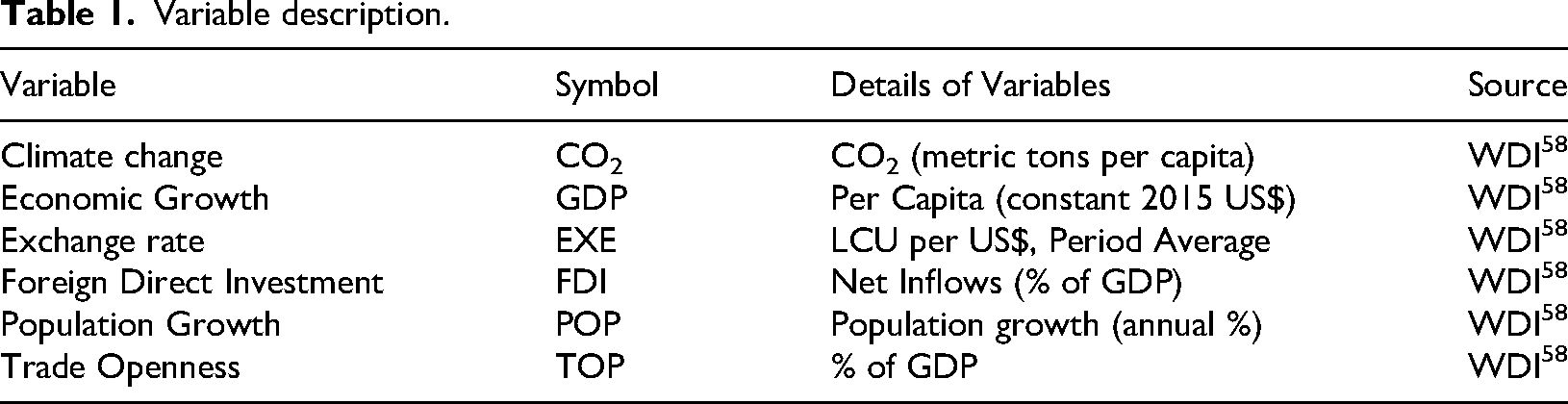
For this study, time series data from 1990 to 2020 were used for official exchange rates (EXE), foreign direct investment (FDI), openness to trade (TOP), climate action measures (CO2 emissions), economic growth (GDP), and annual population growth (POP). The period was chosen in particular because there was readily comparable data for all the required constructs available in Ghana. Selection of variables was informed by theoretical relevance and empirical convention in the literature on overlap between trade, FDI, economic growth, and the environment. Economic growth is measured using the gross domestic product (GDP), while trade (TOP) and foreign direct investment (FDI) describe the degree of global economic integration. The exchange rate (EXE) is introduced to reflect the influence of currency fluctuations on trade and investment levels. This factor has been routinely overlooked in previous studies of Sub-Saharan Africa. Carbon dioxide (CO₂) emissions in metric tons per capita are used as a proxy for environmental pollution and climate change, consistent with previous studies that employ the Environmental Kuznets Curve (EKC) framework. 57 Although CO₂ is not comprehensive for all greenhouse gases or the qualitative aspects of environmental quality, it is a reliable and valid measure for quantifying long-term ecological stress. Population growth (POP) has been added to reflect demographic forces affecting economic performance and resource consumption. Table 1 comprises evidence on the unit of measurement and data source for the chosen constructs. Figure 1 illustrates the trend of the variables, depicting the variability and growth patterns.
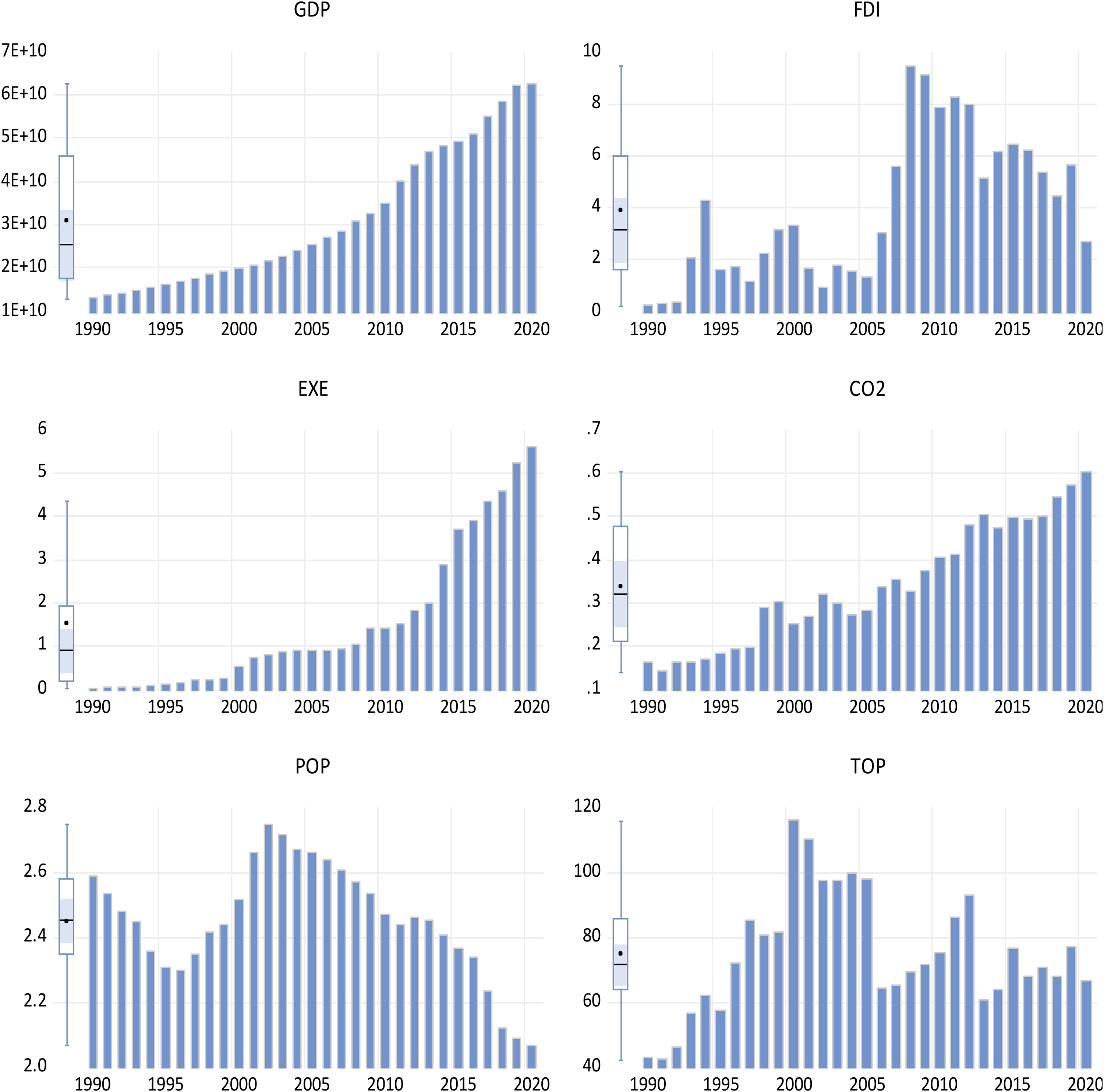
Graph of official exchange rates (EXE), FDI, TOP, climate change measure (CO2) emissions, and annual population growth (POP).
Variable description.
Graphical representation of variables
(Figure 1).
Theoretical framework and empirical model
The Environmental Kuznets Curve (EKC) theory posits a hypothetical link between environmental degradation and economic growth paths. 59 During the early phases of economic development, when per capita income begins to rise, environmental degradation rises as industrialization and urbanization increases pace. However, once a particular income level is reached, environmental quality can even improve as the country implements cleaner technologies, tougher regulation, and a higher level of public consciousness regarding the environment. The central hypothesis of this research is that economic growth, in the form of per capita income, is a major driver of ecological change. The theory of the Environmental Kuznets Curve (EKC) also assumes that policy reforms and technological developments are the fundamental forces behind stopping environmental decline. With economic growth, economies invest in clean technology and employ cleaner methods to mitigate their ecological footprint. 60 Economies with more wealth also boast better ecological standards, which prompt governments to implement stricter controls and emissions levels. The tools employed to create economic incentives for corporations to invest in cleaner production are environmental taxes, pollution regulation, and green incentives.
In the context of this research that deals with the nexus between FDI, climate change, TOP, and sustainable development in Ghana, EKC theory is a useful research instrument for study on the nexus between environmental pollution and economic growth. As countries enter global trade and FDI in a bid to finance economic advancement, they are able to experience enhanced pollution with industrial output and energy usage. 43 This is as per the first rising phase of the EKC in which expansion is linked with declining environmental degradation. But with ongoing economic growth, nations can begin emphasizing sustainability by investing in green policy-making as well as clean technology.60,61 Therefore, FDI and trade openness will facilitate best practices diffusion and green technology diffusion and enable us to transition to sustainable development trajectories. 3
The position of Ghana on the EKC is indirectly inferred through the analysis of the impact of economic growth on environmental quality, which is measured by CO₂ emissions. An increasing and significant correlation between GDP and CO₂ emissions would imply that Ghana is still on the rising part of the EKC, where economic growth still deteriorates environmental quality. However, negative or low correlation would imply that Ghana is moving towards the decreasing half of the EKC, which is a stage where economic growth is increasingly succeeded by improved environmental performance. The approach facilitates empirical testing of the EKC hypothesis from Ghana's perspective as it provides for control of the impact of trade openness, FDI, population growth, and exchange rate forces on environmental status. Thus, following the adoption of EKC knowledge, the current research will be able to analyze how climate change and sustainability of conservation are entwined with FDI, economic growth, and trade and therefore contribute to a deeper understanding of processes driving sustainable development outcomes. Based on the theoretical foundations that have been studied, the following statement is stated at time 

Estimation approach
The ARDL bounds method for cointegration, proposed by Pesaran et al.,
62
is employed to examine the long-run association between the variables. Compared to more traditional methods, this cointegration test also possesses several strengths through the order of integration.63,64 Analysis in such a situation is feasible when the variables are found to be stable with an integrated order of 1 or 0. The ARDL estimation utilizes an optimal lag structure to capture the data generation process accurately and operates under a general-to-specific model framework. In order to check whether the variables are cointegrated, the ARDL F-statistic is applied within the framework of the ARDL model.
65
The test used the Akaike Information Criterion (AIC) for selecting the suitable lag length (l) of the F-statistic. The shortest lag time was chosen to match the lowest AIC values. The cointegration between the variables may be inferred from an ARDL's F-statistic estimation that surpasses a specific upper critical constraint. The lack of cointegration concerning the constructs is shown when the F-statistic falls below the lower critical threshold. When the F-statistic falls between the upper and lower critical boundaries, the empirical results lack definitiveness.
66
The ARDL method is preferred due to its efficiency compared to other methods, unlike the fully modified ordinary least squares, dynamic ordinary least squares, and the vector error correction model, which are applicable when the variables are integrated of the same order. The ARDL uses the combination of I(0) and I(1) as long as none of the variables are I(2). Additionally, the ARDL method provides insight into the short- and long-run effects of the variables. The accompanying Equation (3) gives an approximate foundation for the ARDL limits analysis in investigating cointegration.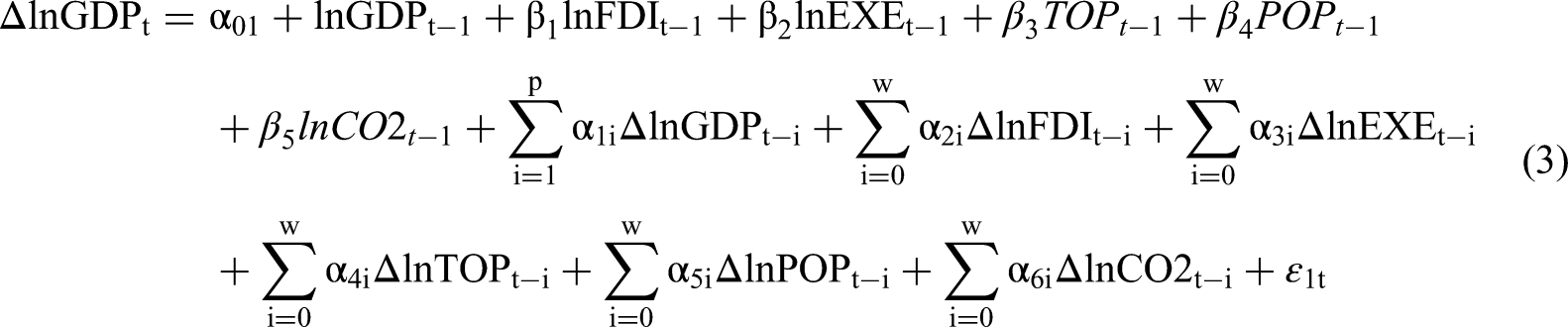
Where 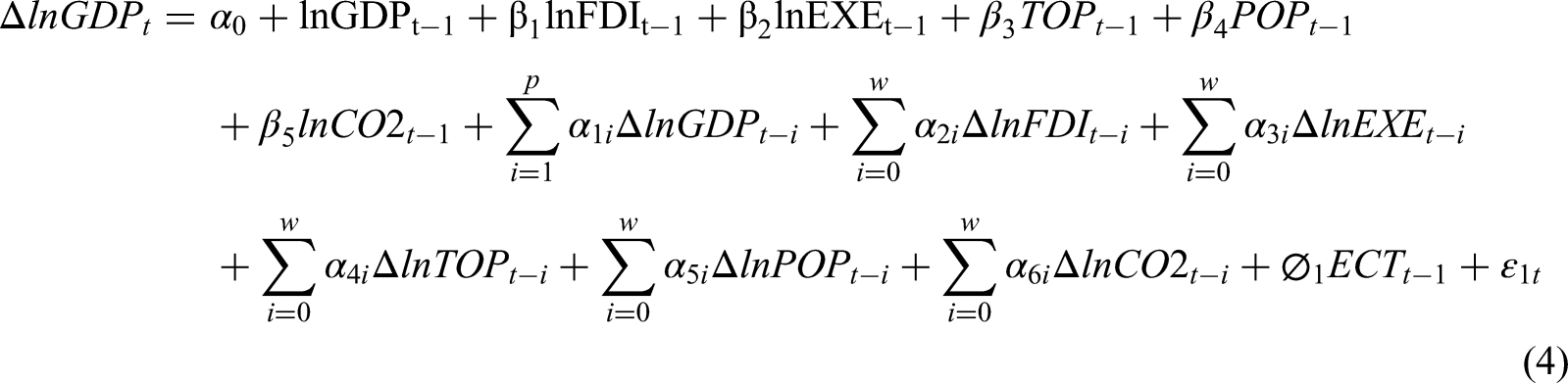
Causality test
The causality among the variables was investigated using the paired Granger causality test.
68
Causality, in the context of a statistical definition of causation through prediction, is employed in this research due to its numerous advantageous features over alternative techniques for time-series data analysis.
69
Let the future movement of an independent time series X be predictable through the assistance of a time series Y. Coefficients are estimated using ordinary least squares (OLS) regression. Granger causality between the Y and X components is tested using F-tests at each time t, the notations 
Results and discussion
On average, the economy exhibits a substantial size, with a mean logarithmic GDP of 24.043, as shown in Table 2. Moreover, a notable average level of trade openness, as indicated by lnTop at approximately 4.286, suggests a significant engagement with international trade. Population size is fairly low, approximately 0.893. To variability, standard deviations inform of dispersion of statistical points from their respective means in this economy. For instance, the relatively high standard deviation of 0.988 informs of high variability in FDI in this economic environment. The CO2 standard deviation is relatively big (0.432) and varies in CO2 emissions. In addition, the levels of skewness and kurtosis shows the shape of the distribution. FDI, as an instance, is negatively skewed with positive kurtosis, which is a left-skewed distribution with heavier tails than the normal distribution. Jarque-Bera test results and associated probabilities also indicate non-normality in some variables. The correlation coefficient between lnFDI and lnGDP is 0.716, which further endorses the positive and significant link between FDI inflows and economic growth as indicated in Table 2. Similarly, the correlation coefficient between the natural logarithm of GDP (lnGDP) and the natural logarithm of carbon dioxide emissions (lnCO2) is 0.964, indicating a very high positive relationship between GDP and climate change.
Descriptive statistics and correlation matrix.
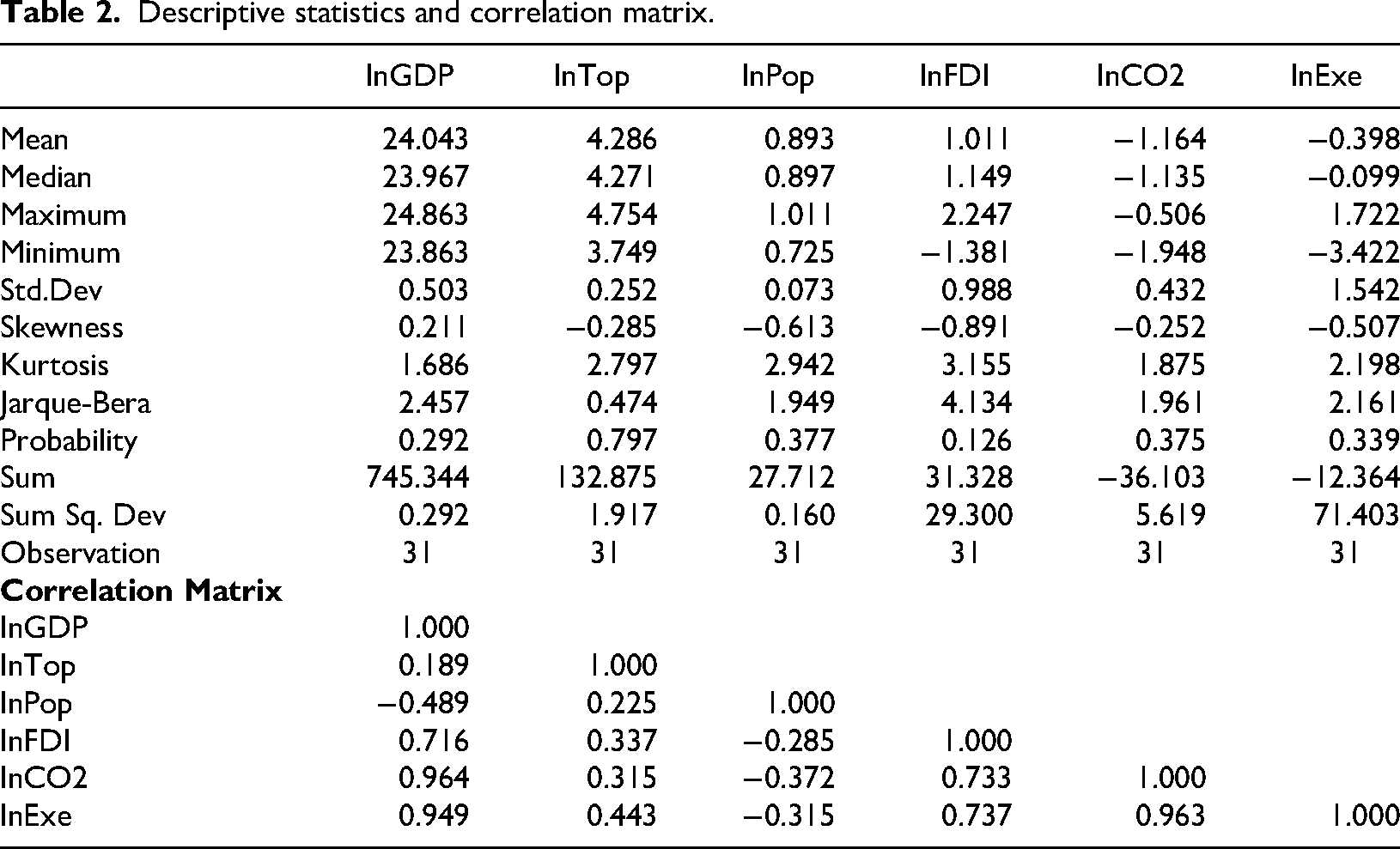
The correlation between lnGDP and official exchange rate (lnExe) is 0.949, which shows a high positive relationship between economic growth and exchange rate changes. The correlation coefficient between lnGDP and lnTop (trade openness) is 0.189, indicating a weak positive relationship between GDP and trade openness. Finally, the correlation coefficient between lnGDP and the rate of population growth (lnPop) is −0.489, indicating a weak adverse correlation between GDP and population growth.
Stationarity check
Before using the model's estimated variables in a cointegration test, the integration order must be established by determining the stationarity of the series. 65 Using the correlations between the outcome variable and its explanatory components, this work initially sought to determine the integration order of the dataset. Furthermore, not all variables must be periodic or integrated into the first order. Moreover, the effort to avoid the I (2) series is defended as untrue and asserts the ability to provide inaccurate findings. Any variable exhibiting non-stationarity may also be incorrect. The move to I(2) is still new and exacerbates issues stemming from the small sample size. The current work thus sought to determine whether a unit root exists using the ADF and PP tests. The purpose of the unit root test was to demonstrate that no variable exceeded the integration order, thereby confirming the procedural robustness of the ARDL estimate. The results of unit root tests on the constructs used in the study, using the ADF test and the PP test, are shown in Table 3. These tests assess a unit root, a non-stationarity indicator, at two integration levels (0 and 1). The ADF and PP tests reveal that lnGDP is non-stationary at level 0 but achieves stationarity after taking the first difference (level 1), indicating that lnGDP is integrated of order one. While the PP test demonstrates stationarity at level 1, the ADF test shows that lnFDI is stationary at level 0. These results can vary from the evident assumptions and approaches applied in each test. Similarly, the PP and ADF tests also confirm that lnTop is not level 0 stationary. However, it becomes stationary after taking a first difference (level 1), that is, it is integrated of order one. For lnCO2, the tests also indicate non-stationarity at level 0; lnCO2 becomes stable after first differencing, once again suggesting integration of order 1. lnPop displays the same: not stationary at level 0 but stationary at level 1, confirming it is integrated of order 1. The findings for lnExe indicate non-stationarity at level 0, and the PP test is non-conclusive. The ADF test does, however, reveal that lnExe turns stationarity after first differencing, though further research could be needed in order to ascertain its order of integration for goodness. Such findings of unit root tests deeply impact the remainder of the analysis and model strategy. Since non-stationary level 0 but stationary after differencing I (1) variables are utilized to encompass the short-run dynamics as well as the long-run equilibrium relationships, these are incorporated in an ECM as well as a cointegration analysis. Non-stationarity has to be addressed in time series data to avoid spurious regression results and accurate inference. Such test results dictate required differencing or transformation of each variable before further analysis, e.g., cointegration tests or estimation of the ARDL model, can proceed.
Unit root test.
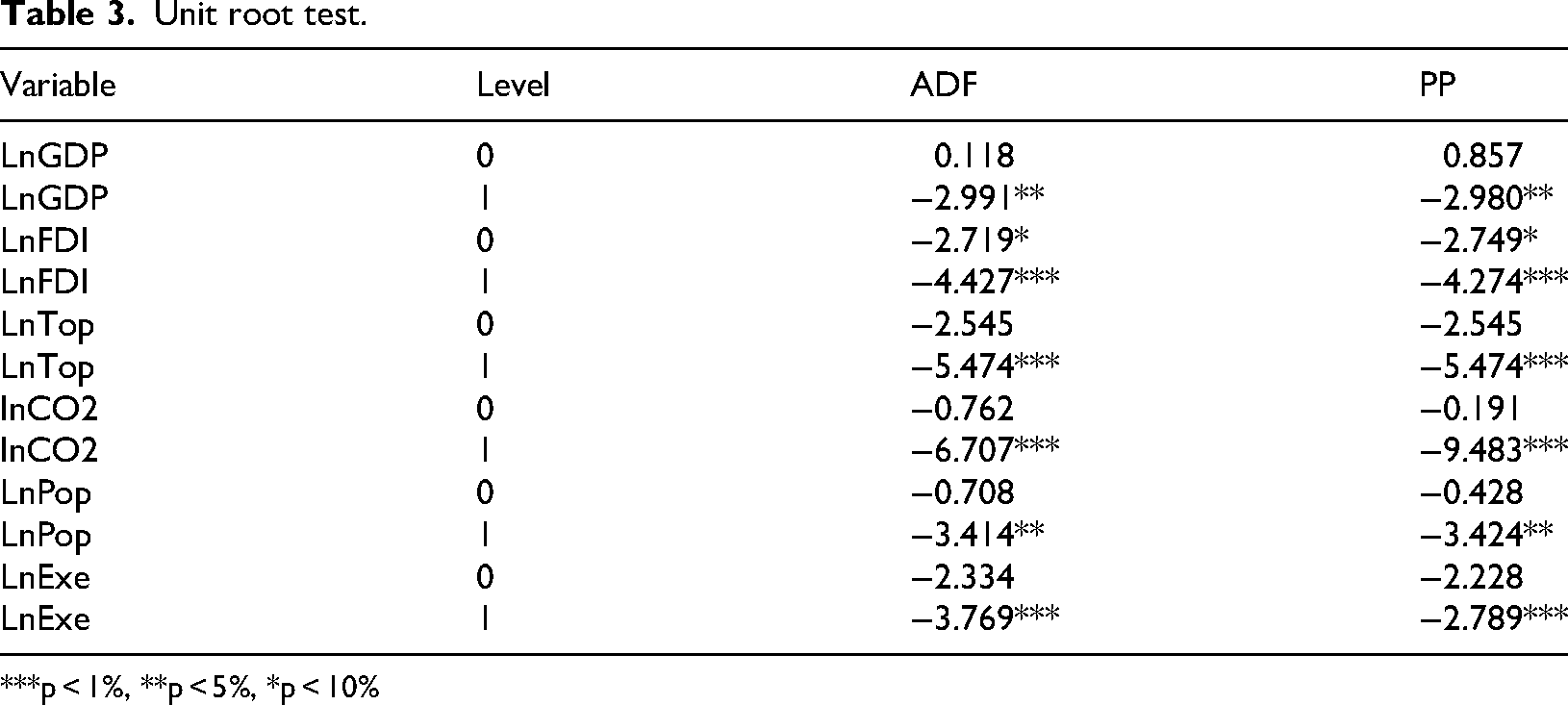
***p < 1%, **p < 5%, *p < 10%
ARDL bound test cointegration results
The ARDL Bounds Test on Table 4, which is suitable for variables integrated at different orders I (0) or I (1), confirms a long-run cointegrating relationship between them. This is suitable with macroeconomic time-series data, where the variables are likely to be integrations of different orders. Estimated F-statistic is 22.333. Three significance levels for critical values of the upper bound I (1) and lower bound I (0) exist: 1%, 5%, and 10%. For example, at the 5% significance level, the upper bound critical value is 3.38, while the lower bound critical value is 2.39. The optimal lag structure for the ARDL model, selected based on the AIC, is (2, 3, 3, 3, 3, 3), indicating that each independent variable and GDP have specific lags determined by this criterion. At all the levels of significance (10%, 5%, and 1%), the F-statistic value of 22.333 is above upper bound critical values, strongly rejecting the null hypothesis of no cointegration. This suggests there is long-run cointegrating relationship among GDP, exchange rate, trade openness, foreign direct investment (FDI), population growth, and CO2 emissions, in contrast with Misati et al. 27 for Kenya and Radmehr et al. 4 for 62 nations.
ARDL bound test.
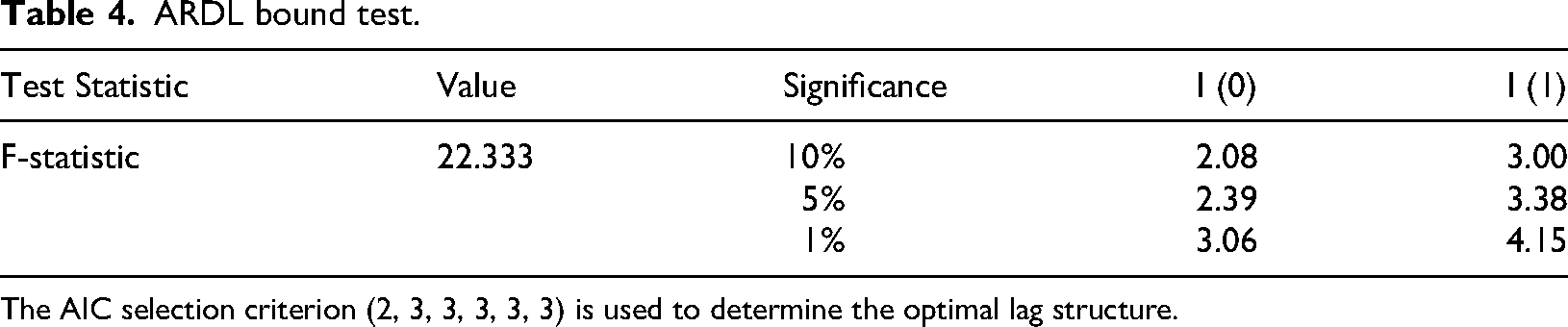
The AIC selection criterion (2, 3, 3, 3, 3, 3) is used to determine the optimal lag structure.
In the presence of a long-run cointegration relationship, ARDL model tests both long-run and short-run coefficients, whereas ECM is the adjustment rate to the long-run equilibrium. The relationship implies that there is a long-term stability between the independent variables and GDP so that the variation in exchange rate, FDI, trade openness, population growth, and CO2 emissions can influence economic growth in the long run. 5 Empirical evidence from research conducted by Lianos et al. 52 supports cointegration findings that economic growth could be determined by population growth in labor supply, demand for services and goods, and dependency ratio. Economic growth could also be determined in the long run by environmental determinants since studies utilizing the utilization of CO2 emissions as a proxy to climate change in cointegration analysis claim. 43 Climate change may influence economic growth because of resource constraint, natural disasters, and adaptation and mitigation efforts. The study also exhibits long-run causality between trade openness and economic growth. 36 Greater trade openness might be capable of sustaining growth through specialization, economies of scale, and technology and knowledge diffusion. Equally, FDI inflows have long-term impacts on growth in the economy, as suggested by previous research, which, in turn, confirms that FDI generates growth through capital accumulation, productivity spillovers, and transferring technology. 18 Finally, the cointegration results support a long-run relationship between the EXE and GDP, and the changes in EXE affect economic growth through the process of capital flows, 35 inflation, and trade competitiveness. 29
Results of ARDL long- and short-run
Table 5 presents the ARDL model results analyzing the long-run and short-run associations. The adjusted R2 of 0.97 indicates that the independent variables explain 97% of the variation in GDP, while the model overall explains 98% of the variance in economic growth. The coefficient for trade openness is −0.021 and statistically insignificant, suggesting that trade openness does not substantially influence economic development in this model, partially aligning with. 39 Similarly, the coefficient for population growth is 0.041 but statistically insignificant, indicating no significant long-run impact on economic growth, which contrasts with findings from Tandan et al. 13 The FDI coefficient is 0.032 and statistically significant at the 5% level, indicating a positive and substantial long-run impact on economic growth. 9 The coefficient for CO2 emissions, as a proxy for climate change, is 4.160 and highly significant, showing a solid positive long-run influence on economic development. 70 Consequently, the coefficient of the exchange rate is −0.029 and nonsignificant, which means that it does not contribute to the long-run GDP, contrary to findings by Jakob. 30
ARDL results.
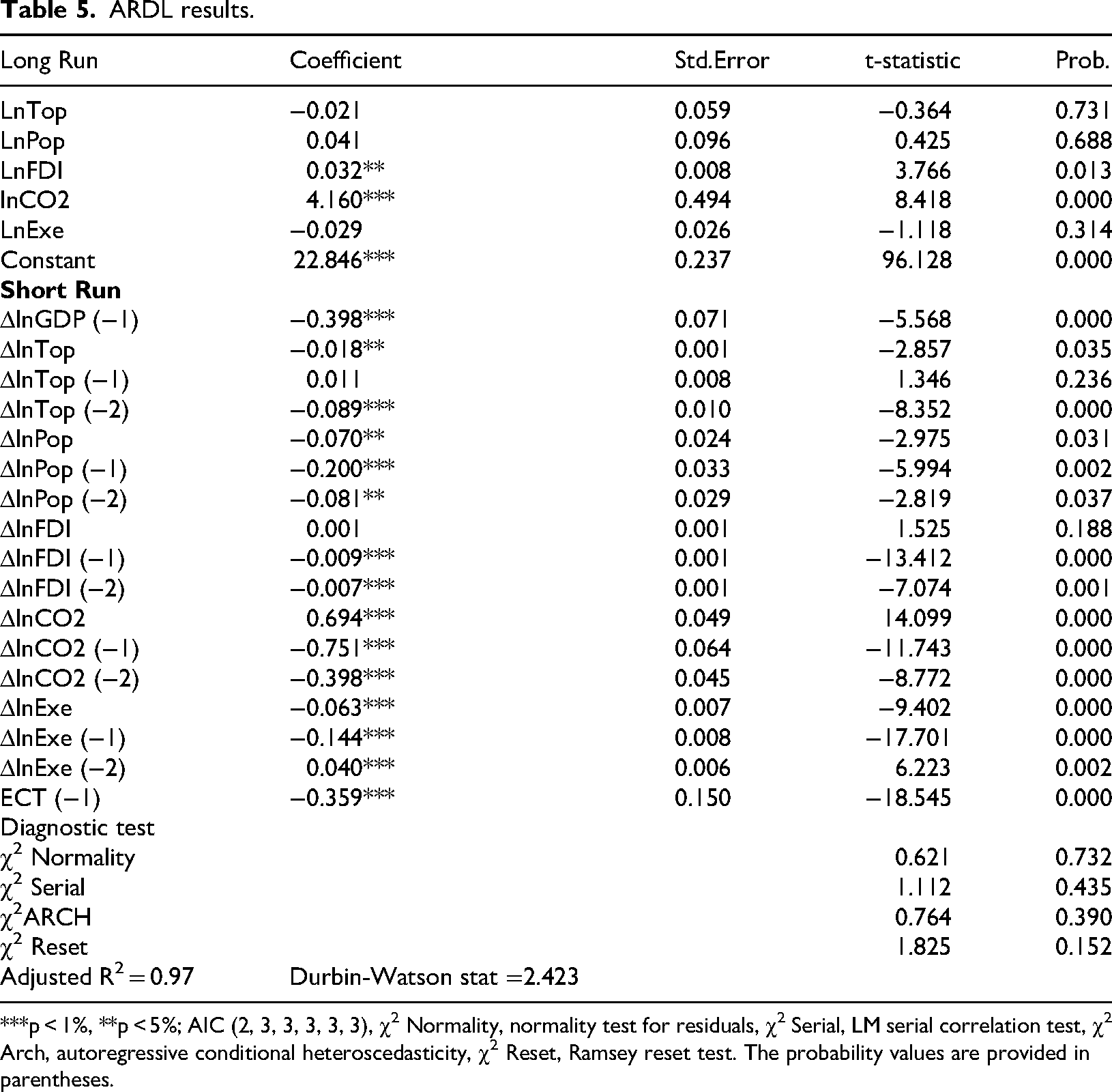
***p < 1%, **p < 5%; AIC (2, 3, 3, 3, 3, 3), χ2 Normality, normality test for residuals, χ2 Serial, LM serial correlation test, χ2 Arch, autoregressive conditional heteroscedasticity, χ2 Reset, Ramsey reset test. The probability values are provided in parentheses.
Short-run coefficients can capture the dynamic relationships between the variables. Lagged variables, such as lnTop(−1) and lnPop(−2), can capture the effects of the past on current economic growth. Openness to trade has mixed short-run effects, with the positive and negative coefficients reflecting a complex relationship with economic growth across time. Population growth coefficients are predominantly negative and statistically significant in the short run, suggesting population growth could be detrimental to economic growth. 51 FDI coefficients reveal that, although the prevailing effect is small, lag effects are negative and statistically significant, suggesting there could be a short-run negative effect of historical FDI inflows on economic growth. 71 The CO2 emissions exhibit a complex short-run relationship with GDP as the current coefficient is significant and positive but the coefficients lagged are negative and significant. 46 Similarly, short-run coefficients of the exchange rate are mostly negative and significant, which reflects negative short-run effects on the economic growth. 56 The error correction term is −0.359 and highly significant, which implies that any excess in the long-run equilibrium is corrected at around 35.9% each period. The long-run findings are that FDI and climate change (with CO2 emissions as proxy) have a significant impact on economic growth, while exchange rate, population growth, and trade openness have no long-run significance. The short-run findings reflect subtle and dynamic connections, with certain variables showing a positive or negative impact on economic development at different lags. The fact that the important ECM term exists indicates that the model is adjusting toward the long-run equilibrium and hence offsetting any short-run deviations in the longer term. These findings support the importance of long-term as well as short-term factors in examining interlinkages between foreign investment, international trade, economic growth, and climate change. 38 The findings are imperative to policymakers and stakeholders for designing sustainable development strategies providing an equilibrium between economic growth, foreign investment, environment, and trade policy. The findings from the ARDL model validate the complex interdependencies between such variables and support the need to have a wide and elastic policy to attaining stable economic growth, climatic resilience, and foreign investment trends.
Diagnostic tests
Table 5 diagnostic tests examine the stability of the model estimates—the normality of the regression model residuals or errors. Its corresponding p-value of 0.732 has the chi-square statistic value of 0.621. Residuals appear to be normally distributed because the p-value is larger than the typical significance cutoff levels so that one could not reject the null hypothesis of normality. The Breusch-Godfrey LM Test for Serial Correlation identifies whether the residuals are serially correlated or exhibit autocorrelation. The p-value for the chi-square statistic is 0.435, while its value is 1.112. It is not possible to reject the null hypothesis that there is no serial correlation, as the p-value is larger than the significance level and as such the residuals are not serially correlated. Autoregressive conditional heteroscedasticity (ARCH) test is carried out to find heteroscedasticity or non-constant variance in the residuals. The p-value of the chi-square statistic χ2 is 0.390, and the value itself is 0.764. The null hypothesis for constant variance (homoscedasticity) cannot be rejected since the p-value is greater than the significance level, the residuals have constant variance. The validity of the specification of the regression model is examined via the Ramsey regression equation specification error test (RESET Test).
The value of the chi-square statistic p-value is 0.152 and its value is 1.825. The model is well explained since the p-value is greater than the significance level. This indicates that the null hypothesis of the absence of missing variables or functional form error is rejected. The Durbin-Watson statistic (2.423) is used to check whether there is any autocorrelation of residuals. There also does not seem to be any autocorrelation that can be measured when the value is near 2. The diagnostic test results indicate that the regression model of this study satisfies the following assumptions: homoscedasticity, no serial correlation, normality, and correct specification. These diagnostic tests ensure the validity and reliability of the study's result and explanation by confirming the dependability and correctness of the regression analysis used in studying the correlation between foreign investment, international trade, climate change, and economic growth. The CUSUM statistics below hereafter do not go above the 5% significance lines from 2016 to 2020. This shows that the regression model's parameters are constant, and no significant structural breaks or model instability is present within this time frame. The CUSUM of Squares measure is below the 2016–2020 5% significance lines. This once again confirms the stability of the regression model parameters and absence of abrupt changes or shifts in the model during the period. Therefore, both the CUSUM tests and CUSUM of Squares tests in Figure 2(a) and (b) show that the regression model used in the study is stable and significant during the period of interest. The tests do not identify significant breaks or structural changes in the model parameters during this period. Further, Figure 3 reiterates the model stability.
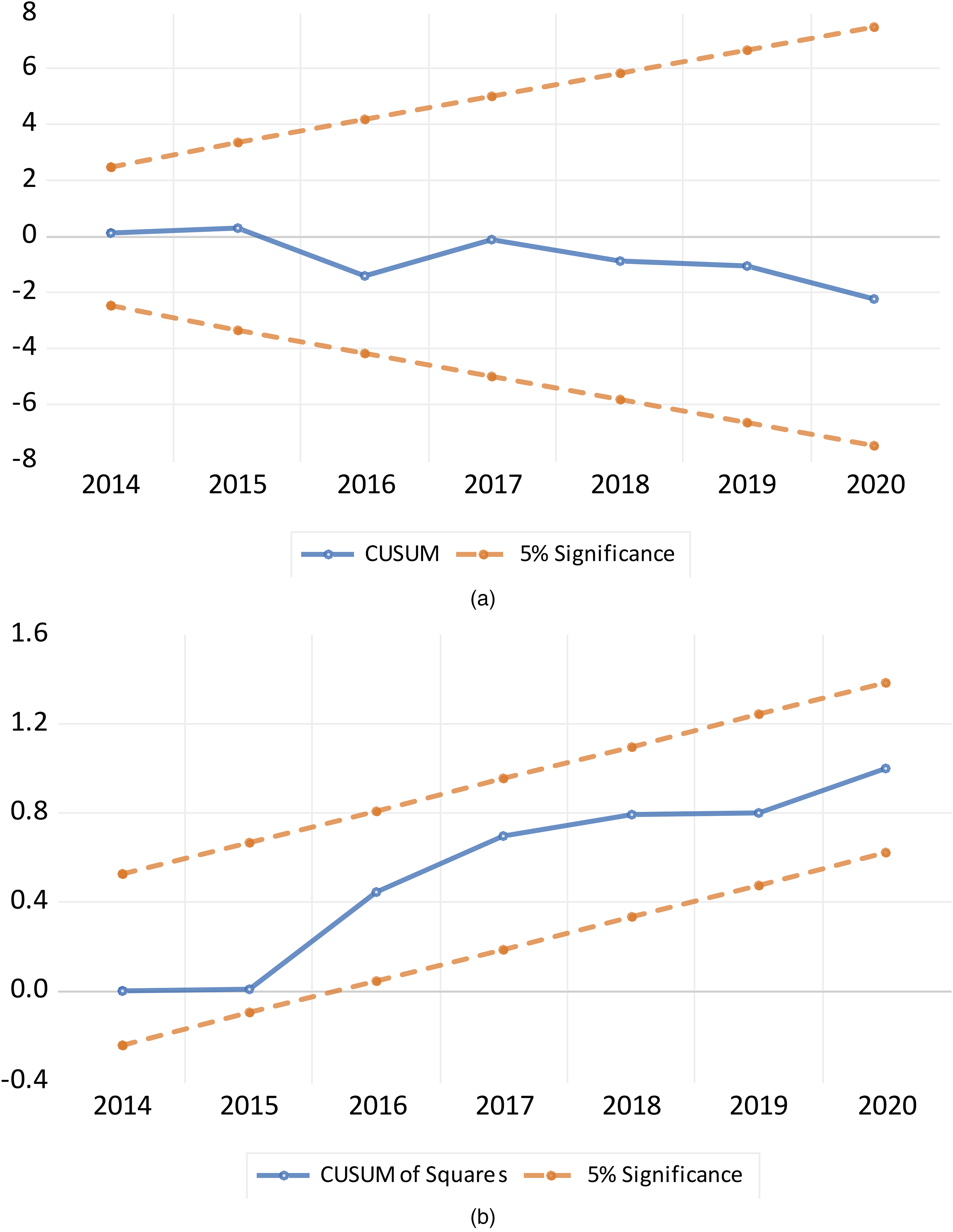
(a) Cumulative sum of recursive residuals. (b) Cumulative sum of squares of recursive residuals.
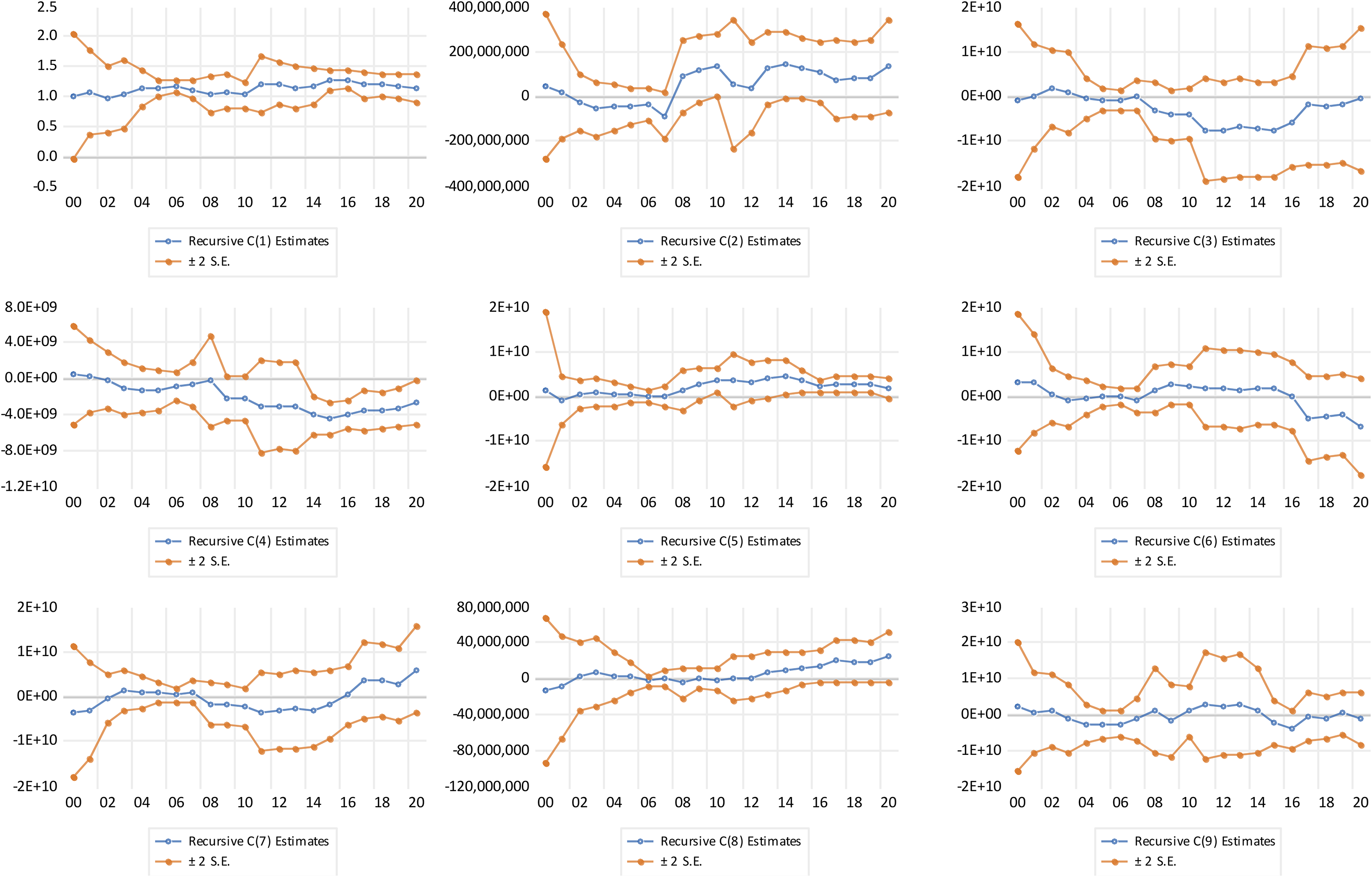
Recursive estimates.
The variance decomposition output presented in Figure 4 provides more precise explanations of the dynamic relationships among economic growth, trade openness, FDI, population growth, exchange rate, and carbon emissions within the ARDL–EKC model. The findings reveal that, in previous periods, all GDP shocks are explained by their own innovation, with a clear indication that Ghana's economic growth is self-initiated chiefly in the short run. However, over time, the effect of FDI, CO₂ emissions, and exchange rate changes becomes the dominant force, indicating that external and environmental factors have increasingly greater effects on economic performance. 57 The rising share of CO₂ emissions within the variability of GDP ratifies the growing environmental sensitivity of the economy according to the initial stage of the Environmental Kuznets Curve (EKC) hypothesis, where economic development is followed by environmental degradation. Conversely, population growth and trade openness have persistent but moderate impacts since they exert indirect and lagged impacts on the growth-environment nexus.52,53 Decomposition ceases to fluctuate around approximately eight to ten periods, which suggests that the system converges to a dynamic equilibrium where the economic and environmental variables interact more synchronously. This move emphasizes the appeal to Ghana to adopt greener growth paths by aligning its FDI and trade policies with green targets in order to enable the economy to transition into the downward-sloping segment of the EKC curve.
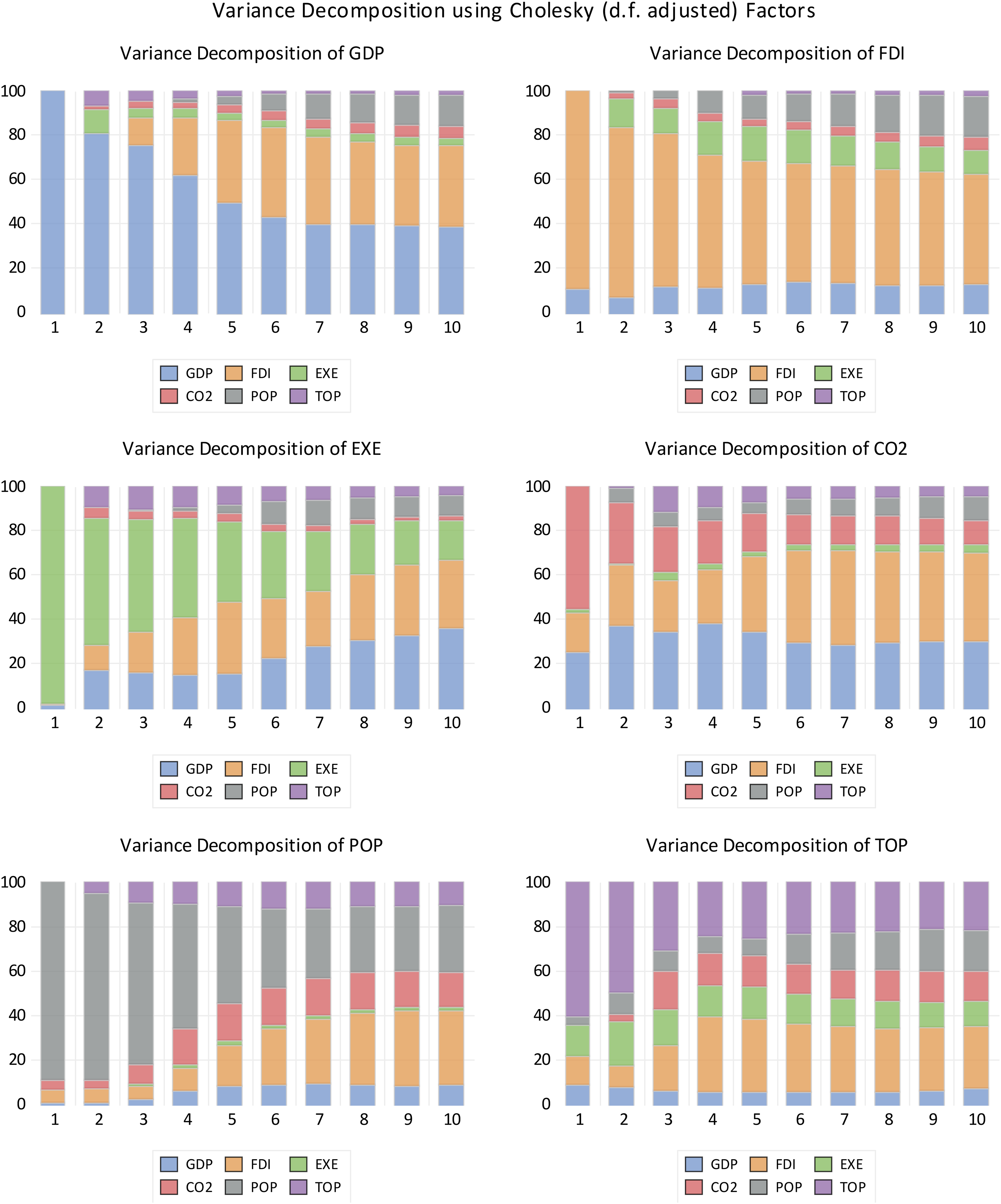
Variance decomposition after cointegration estimation.
The impulse response functions in Figure 5 suggest the dynamic adjustment trajectories of other variables and GDP to one standard deviation shocks and express the responsiveness of the economy and shock transmission internal and external. The evidence establishes that shocks in FDI give rise to a persistent positive response in GDP, which attests to the growth-stimulating role of foreign investment in the Ghanaian economy. By contrast, exchange rate shocks first impose a contractionary impact on GDP, potentially catching up with import price pressures and macroeconomic short-run volatility, eventually converging to equilibrium long run. Trade openness responses to GDP shocks exhibit volatile patterns, suggesting that liberalization can be capable of raising output initially but then possibly introduce volatility or competitiveness pressures, as consistent with the imprecise findings usually prevailing in open economies.52,53 Concurrently, the CO₂ emissions response to GDP shocks reveals a smooth increasing pattern, supporting the evidence that economic development still remains tied with environment deterioration, a finding confirming the initial stage of the environmental Kuznets curve (EKC) hypothesis. Population growth presents relatively weak but sustained effects, exposing population pressure without an increase in productivity in the short term. Interestingly, the system converges after eight or ten periods, a finding that shows the economy converges to the long-run equilibrium slowly as it adapts to exogenous shocks. The stabilization reflects the adaptive characteristics of Ghana's macrostructure and policy interventions that will drive FDI and trade towards green growth in order to ease the economy into the turning point of the EKC trajectory.
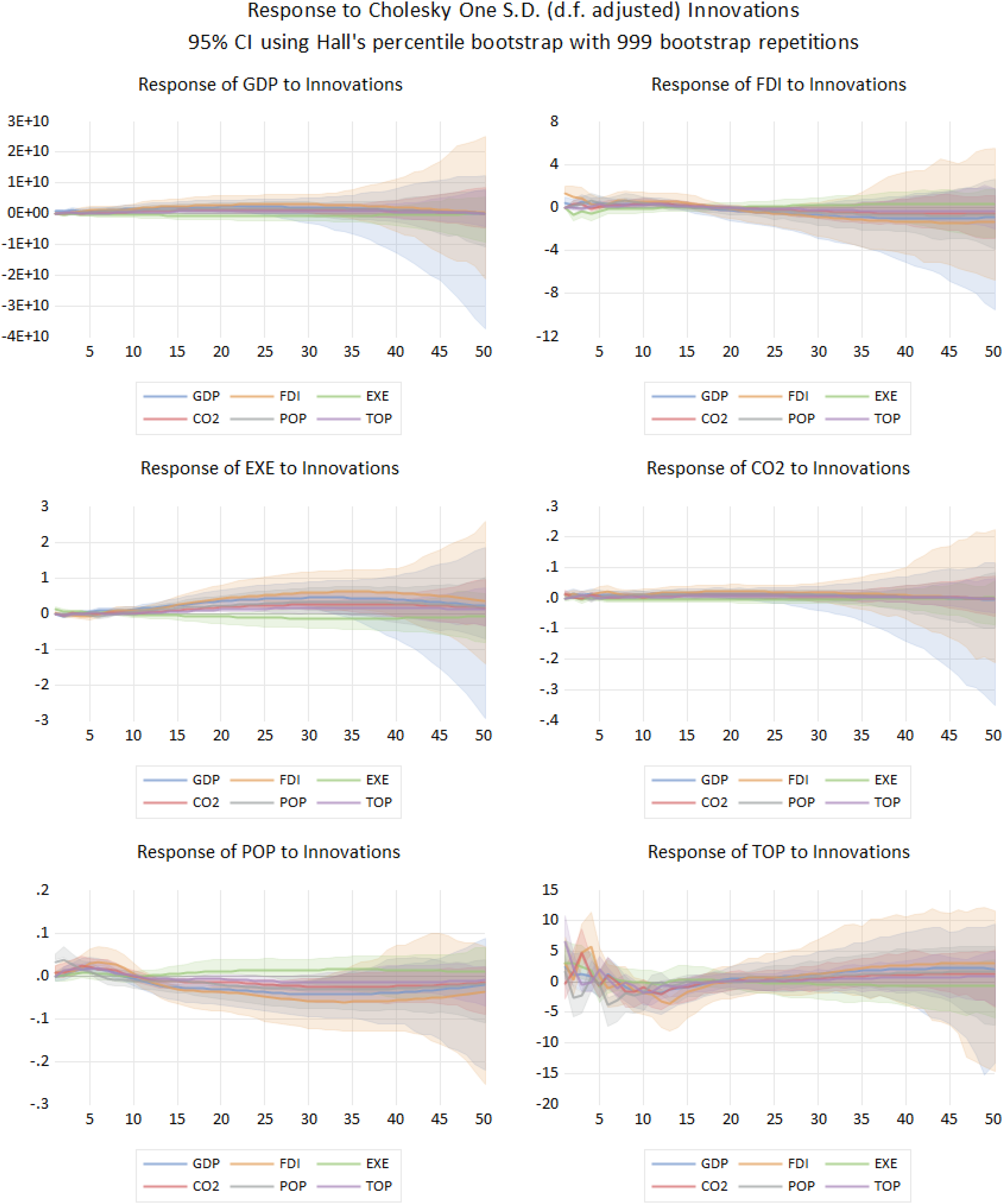
Impulse response graphs.
Causality test
The causality test is used to assess whether there may be a causal link between two variables, given that one has previous values, and helps in predicting the future values of the other. Table 6 displays the test findings. The table gives the associated p-value (Prob.) and the F-statistic for every null hypothesis. It is suggested that Variable X Granger causes Variable Y if the p-value is smaller than the selected significance threshold (usually 0.05 or 0.01). On the other hand, no Granger causality is shown, and the null hypothesis is not rejected if the p-value exceeds the significance threshold. Considering the one-way causality, we get that CO2 emissions are Granger-caused by GDP. This result implies that economic growth is a predictor of CO2 emissions, which themselves are an indicator of climate change. A growing economy is expected to result in increased energy consumption, industrial production, and emissions of greenhouse gases. 18 This outcome is a reflection of policies that enhance economic growth and combat climate change simultaneously. Carbon pricing instruments, renewable energy support, and energy efficiency support are some of the policies that accomplish this. The openness to trade encourages population increase, and it shows that a higher level of world trade can forecast change in population growth rates. Increased trade openness has the capacity to influence population dynamics by changing migratory flows, economic opportunities, and population movements. 72 The above observation highlights the need to consider the interface between labor mobility, population dynamics, and trade policy at the international level in developing development plans.
Granger causality test.
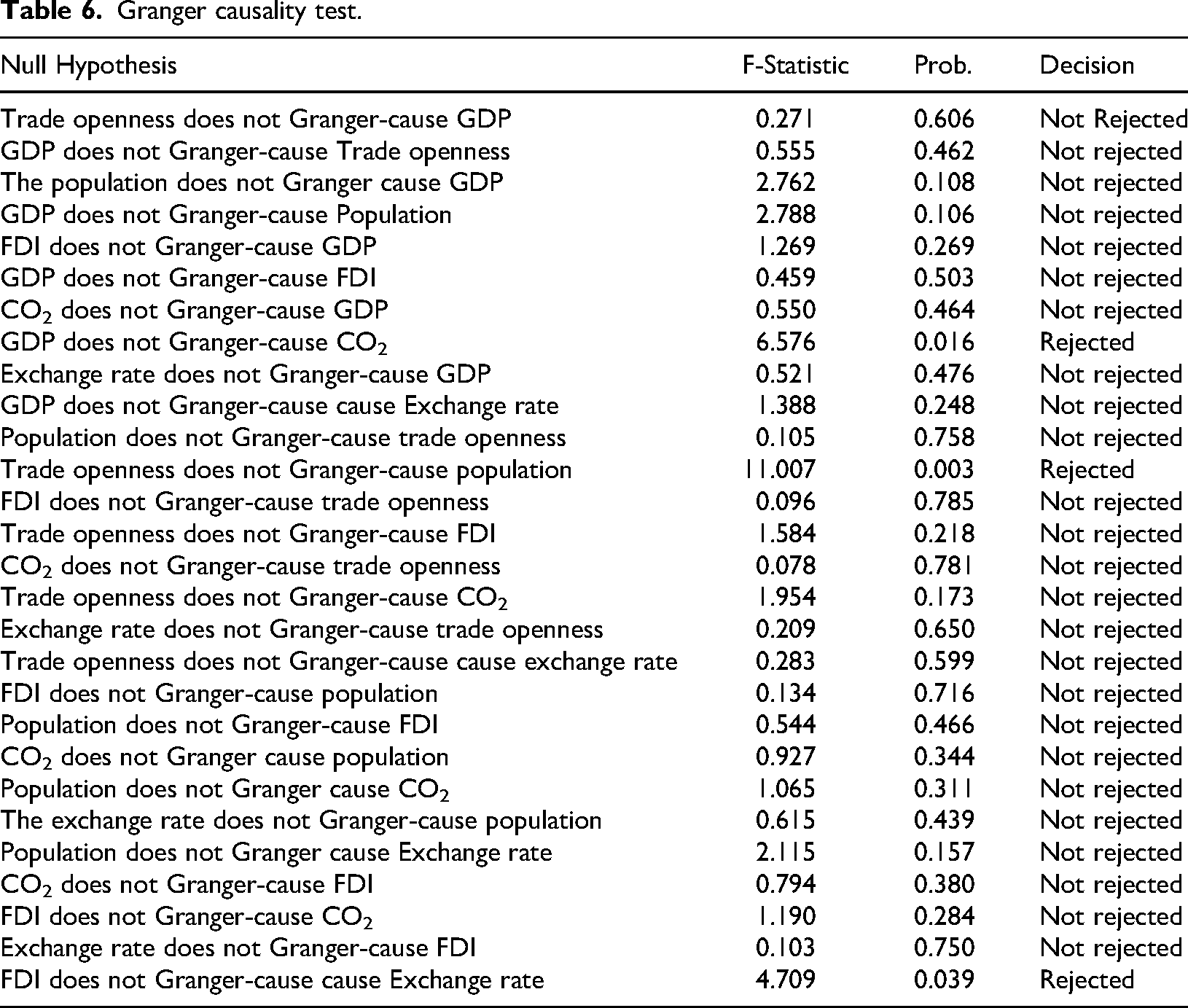
FDI causes the exchange rate. FDI inflow can be used to make forecasts regarding changes in the official exchange rate of the country. The trade balance and competitiveness, as well as payments of a nation, can be down by excess FDI as it can lead to increased demand for the domestic currency and, therefore, currency appreciation. 3 This finding indicates policymakers’ need to carefully observe FDI flows and consider the potential exchange rate effects, particularly for countries that are export-dependent. There is a complex link between these variables as evidenced by two-way causality between the exchange rate and CO2 emissions. 73 In contrast, economic activity-based variations in CO2 emissions can affect trade balances, competition, and the perception of ecological risk by the public, which can have an effect on the exchange rate. 29 Conversely, exchange rate fluctuations have the potential to affect industry competitiveness within the region, energy importation, and adoption of greener technology, all of which have the potential to affect CO2 emissions. 32 This result reiterates that there is need for an integrated strategy that considers the relationship between trade behavior, environmental policy, and EXE administration. The lack of causality between some of the variables does not necessarily imply that they do not correlate or are not associated with one another; it only means that the past values of one variable are not a forecast for future values of the other constructs. Since the dynamics and interconnections may change due to changing global goals and policies, technological innovations, and shifting economic conditions, these are to be continuously monitored and analyzed.
Conclusion and policy directions
This research highlights the importance of responding to environmental concerns and the potential benefits of foreign investment. The short-run dynamics impose a wide range of positive and negative impacts upon growth with varying lags. In the face of such affluence, policy needs to be designed with due attention to both short- and long-run considerations. The estimates of causality identified several significant causalities like trade openness influencing the population growth, economic development influencing CO2 emissions, and FDI influencing the exchange rate. The results highlight interdependencies between variables and policy spillover effects across domains. Two-way causality between CO2 emissions and exchange rate reflects the complex feedback relation between environmental and economic variables. This renders it more imperative to ensure carefully elaborate policy announcements containing these interdependencies. The paper explains the EKC hypothesis of a negative U-shaped link between environmental degradation and economic growth. Long-term economic growth and CO2 emissions are intertwined with one another as the first stage of the EKC predicts, which assigns greater incomes to more adverse environmental effects. EKC hypothesis states that Ghana will reach some level at which there will be some threshold after which economic growth will cause the reduction of environmental degradation. Ghana has to invest initially in induction of cleaner technology, stronger environment law, and transition to a more environmentally friendly economic system to challenge the later stage of the EKC in which economic growth and environmental degradation disentangle. As FDI has long-term potential to lead to economic growth and induction of new technology, green ideas, and environmentally friendly methods of doing business, such a shift would be more feasible.
Based on empirical results, policymakers and stakeholders in Ghana must adopt a multidisciplinary approach with regard to the interconnectedness of economic, social, and environmental considerations. Policy for sustainable development must facilitate inclusive GDP at the same time driving climate change adaptation and mitigation. It may be through green investment incentives, facilitation of the use of renewable energy, resource efficiency, and climate-resilient infrastructure development. Cooperative action between governments, businesses, civil society, and global institutions will be necessary in tackling the particulars of this nexus and making scope for more sustainable and more affluent times ahead. Additionally, ongoing research, monitoring, and policy-making will also be essential in confronting the ever-changing parameters of international trade, investment flows, and the environment, as the study suggests. Lastly, we add to the wider sustainable development conversation by shedding light on the interdependent nexus between economic, environmental, and social considerations. The research emphasizes the importance of cultivating win-win synergies for enhancing the wellbeing of future generations and enhancing the environment and common economic prosperity. By overcoming the adversity of the meetings because of climate change, unlocking the potential of foreign investment, and initiating a transition process towards a greener economic system, Ghana traces the curve of the EKC in that it is able to sustain its economic development without compromising the integrity of its natural environment.
Further, the Ghana government also needs to collaborate with external agencies in developing trade and investment agreements that enshrine environmental sustainability strategies such as green technology incentives, carbon pricing mechanisms, and policy opposition to environmentally damaging methodologies. Facilitating technology transfer through facilitating the transfer of clean and efficient technology from developed nations to developing nations in the form of favorable investment and trade policy can help developing countries skip unsustainable paths of development and prevent environmental degradation. Enhancing global cooperation on climate change through more international coordination of adaptation and mitigation actions, ambitious targets for greenhouse gas emissions reduction, exchange of best practices, and economic and technological cooperation with developing nations is also required. Green finance and encouragement of innovation through global processes and programs to induce research, development, and access to green finance instruments like green bonds and carbon markets can spur green investments and projects. Promoting good business practice through the development of global standards and guidelines on sustainable conduct along international supply chains and operations, including environmental reporting, carbon reporting, and environmental, social, and governance (ESG) compliance.
Ghana specifically should develop a national sustainable development strategy that balances economic development opportunities and mechanisms for protecting the environment. The strategy should have goals for exploiting renewable sources of energy, re-afforestation, and emissions reduction, as well as the creation of green industries such as green agriculture and ecotourism. Strengthening the green FDI climate by using incentives and policy instruments like tax holidays, less regulation, and investment in renewable energy infrastructure can drive FDI into green sectors. Stimulating export diversification and greening industrialization through encouraging green industries development and supporting to diversify exports towards cleaner and higher-value-added products through technology assistance, financial access, and training for SMEs in the green industries is also required. In addition, climate-resilient investment in infrastructure such as flood protection, drought-resistant agriculture systems, and efficient transport systems can reduce the effects of climate change as well as promote sustainable economic growth. Regulations and enforcement of environmental protection need to be strengthened by reviewing and updating regulations established based on international best practice, implementing them effectively through regulatory capacity development, establishing monitoring and compliance mechanisms, and increasing public awareness of environmental issues. Encouraging public-private partnerships for sustainable development through encouraging agreements between the government, private sector, and civil society organizations to collectively develop and implement projects like public-private partnerships for green energy projects, waste management technologies, and conservation by the community is also encouraged. Lastly, increased climate change knowledge and climate change awareness through education initiatives and public awareness campaigns can raise the level of public knowledge and understanding of climate change issues and the importance of green practices, hence encouraging behavioral changes and support for green policies from citizens and businesses.
Limitations and future research
The current study is solely based on Ghana, therefore, future studies on more than one nation may provide more universal results, and utilization of data, specifically for some variables, over an extended period. Future research can also investigate sectoral impacts (mining, energy, services, and manufacturing) and transmission channels through which trade, FDI, and global warming influence economic growth, inspect the role played by individual procedures, regulations, and known standards to determine the respective relationships found, and utilize other environmental measures beyond CO2 emissions, and instrumental variable and machine learning models for new insights in other African countries or cross-country observations.
Footnotes
Abbreviations

Author contributions
Funding
The authors received no financial support for the research, authorship, and/or publication of this article.
Declaration of conflicting interests
The authors declared no potential conflicts of interest with respect to the research, authorship, and/or publication of this article.