






Abstract
The rapid growth of lithium iron phosphate (LFP) batteries has made the efficient recycling of their cathode materials a critical research priority. Current industrial recycling predominantly relies on traditional metallurgical techniques, which are energy-intensive and environmentally polluting. In contrast, nondestructive strategies such as direct regeneration show great potential by addressing root causes of failure, such as lithium loss. The innovation of this review lies in moving beyond a mere listing of technologies, proposing a novel analytical paradigm that directly links “failure mechanism diagnosis” with “material performance recovery.” Based on this framework, we systematically demonstrate that the spectrum of technologies—from destructive metallurgy to precise direct regeneration—constitutes a continuum of targeted remediation for structural damage at varying scales. A critical assessment of their efficacy and underlying scientific interconnections is provided. This review systematically summarizes the failure mechanisms of LFP batteries and provides an in-depth discussion of recent advances in pyrometallurgy, hydrometallurgy and direct regeneration, offering new insights for researchers.
This is a visual representation of the abstract.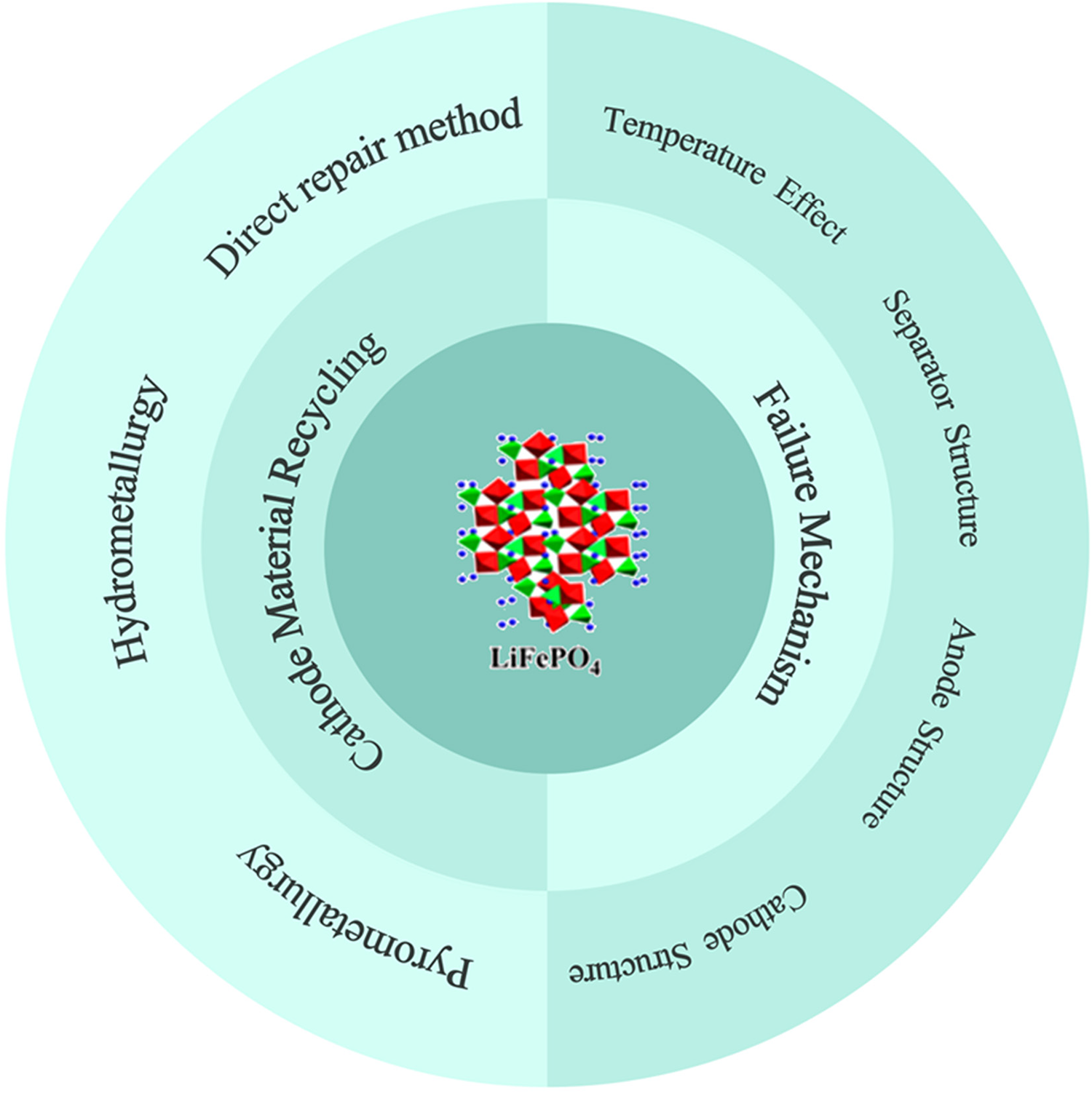
Keywords
Introduction
Lithium-ion batteries (LIBs) serve as crucial electrochemical energy storage devices. Since their commercial introduction in the 1990s, continuous iterations in energy density, cycle life, and safety have profoundly propelled the global transition towards transportation electrification and clean energy. 1–4 Entering the 21st century, driven by the widespread adoption of portable electronics and the booming new energy vehicle industry, global demand for LIBs has experienced exponential growth. In 2023, global power battery installations reached 957 GWh.5,6 Among these, lithium iron phosphate (LFP) batteries, leveraging their core advantages of high safety, long lifespan, and low cost, saw their market share rise significantly to over 45%.7–10
However, the first massive wave of power batteries deployed is now gradually reaching its end of life. Improper handling of the enormous resulting waste stream poses severe environmental and resource security challenges.11–13 The International Energy Agency forecasts that global retired power batteries will reach 11 million metric tons by 2030, increasing further to 40 million metric tons by 2040. These spent batteries contain heavy metals such as lithium (Li), nickel (Ni), cobalt (Co), and fluoride-based electrolytes.14–17 Leakage can lead to heavy metal concentrations in surrounding soil exceeding standard limits by 2 to 5 times, constituting a long-term threat to ecosystems and public health.12–19
Consequently, developing efficient battery recycling technologies to achieve circular utilization of critical metals has become a consensus and urgent priority for global sustainable development strategies. On one hand, large-scale recycling can significantly alleviate dependence on virgin mineral resources.20–23 Effective closed-loop recycling could reduce consumption of virgin lithium and cobalt ores by 60–75% and lower carbon emissions associated with mining and smelting by 30–40%.13–25 On the other hand, establishing a recycling system is vital for securing the supply chain of critical raw materials. 26 From a market perspective, alongside the continued expansion of the global EV industry and rising power battery demand, the battery recycling market holds immense potential. The global market is expected to reach USD 38 billion by 2026, with LFP battery recycling estimated to account for over 40%.13–30
Currently, the standardized management of retired batteries primarily follows two pathways.31–35 The first is cascade utilization. This involves reassessing, sorting, and repurposing power batteries when their capacity degrades to approximately 80% of the rated value for applications with lower performance requirements, such as energy storage systems and low-speed electric vehicles.36–39 This practice extends the overall battery lifecycle; for instance, cascading 1 GWh of LFP batteries can reduce CO₂ emissions by approximately 12,000 metric tons. Preliminary standards for this process have been established.40–43 However, cascade utilization merely delays the final disposal; material recycling and regeneration represent the ultimate goal for achieving a resource closed loop. Presently, material recycling technologies for LFP batteries fall into two main categories. The first comprises traditional methods like pyrometallurgy and hydrometallurgy. While these can extract elements like lithium and iron, they are generally plagued by high energy consumption (pyrometallurgy: 800–1200 kWh/t; hydrometallurgy: 300–500 kWh/t), complex processes, high chemical consumption, and potential secondary pollution.24–49 The second category is direct regeneration. This approach focuses on nondestructively restoring the electrochemical performance of cathode materials by replenishing lithium and repairing crystal defects. Theoretically, its energy consumption can be reduced to 1/3–1/2 of that of metallurgical methods, while maximally preserving the intrinsic structural value of the materials.50–58 Nevertheless, the transition of direct regeneration from the laboratory to large-scale industrialization faces several serious challenges. These include poor adaptability to the complex and variable nature of spent feedstocks, difficulties in precisely controlling lithium replenishment, and low batch-to-batch consistency of the regenerated products.50–61
To systematically review the current research landscape in spent LFP battery recycling and clarify the application prospects and development pathways for direct regeneration technology, this review will first provide an in-depth analysis of the key failure mechanisms of LFP batteries during long-term cycling. It will then critically examine the latest research progress and fundamental principles of metallurgical recovery technologies and direct regeneration strategies. By conducting a comprehensive comparative analysis of the energy consumption, economic cost, and environmental benefits of different technological routes, this review aims to elucidate the current major technical bottlenecks. Finally, integrating industrial needs and academic frontiers, it will propose targeted insights for future technological breakthroughs. The objective is to provide a valuable reference for promoting the large-scale application of efficient and green recycling technologies for LFP batteries.
Failure mechanism of LFP batteries
LFP exhibits an olivine-type crystal structure as illustrated in Figure 1(a).62–63 The material crystallizes in the Pmna space group.
64
As a high-performance energy storage material, it demonstrates superior specific capacity, exceptional thermal stability, outstanding cycling performance and high charge/discharge efficiency.64–66 Nevertheless, it exhibits certain limitations including relatively low energy density, suboptimal low-temperature performance and limited charging rate.67–68 The charge/discharge mechanism of LFP cathode material relies on the reversible migration of Li+ within the crystal lattice. During the charge/discharge processes, the intercalation/ deintercalation of Li+ induces a phase transformation between FePO4 and LiFePO4, as represented by equation (1).

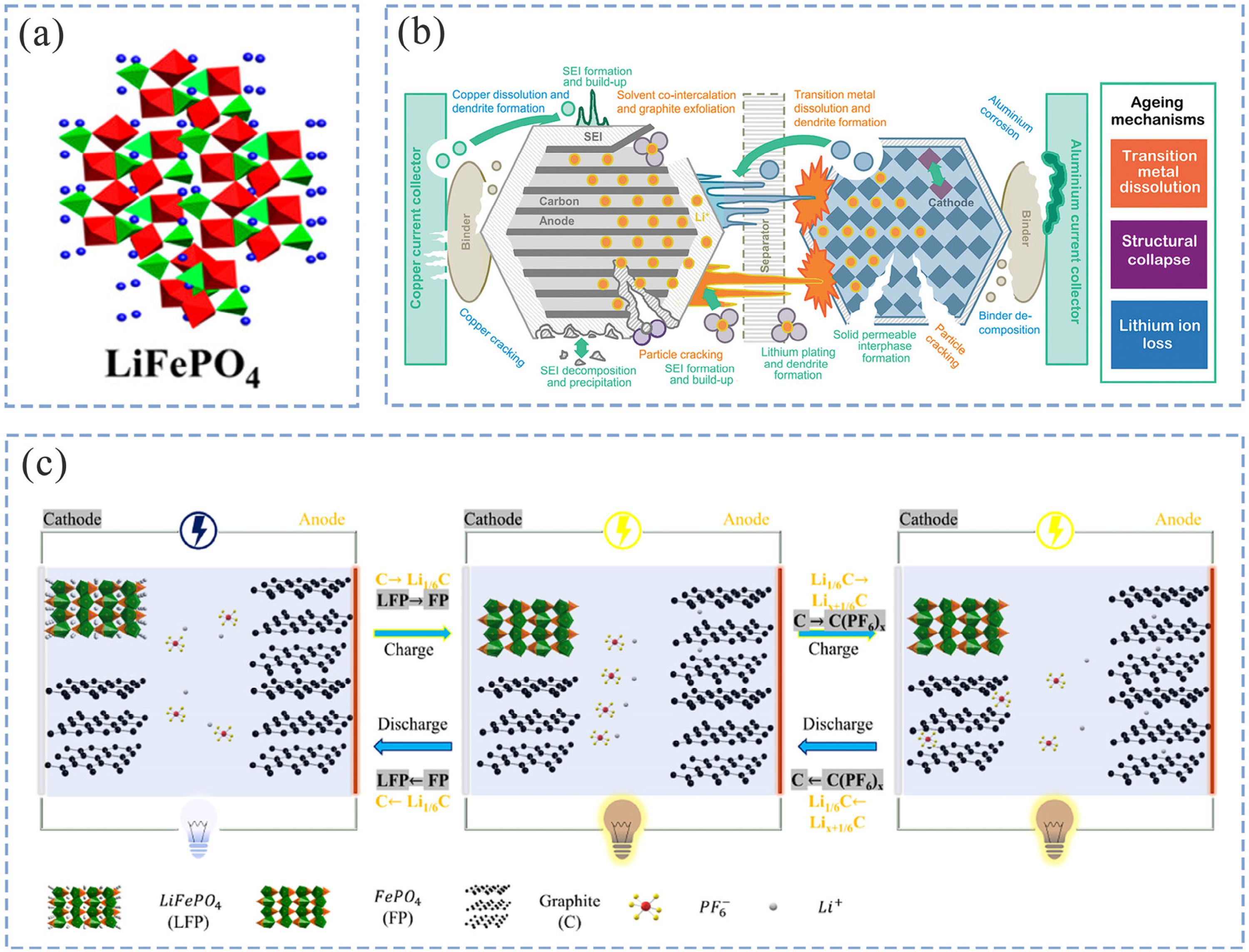
(a) The crystal structure of LFP.62(b) schematic diagram of lithium-ion battery damage mechanism70(c) working mechanism of full cell with LFP and graphite72.
LIBs undergo gradual performance degradation and structural evolution across multiple components during extended operation, as illustrated in Figure 1(b). Capacity fade and increased internal resistance act as primary failure indicators, which stem from three fundamental mechanisms including loss of lithium inventory, growth of the solid electrolyte interphase (SEI) layer and degradation of the active material's structure.68–71
Degradation mechanism of the cathode structure
The delithiation/intercalation mechanism of LFP batteries is characterized by a two-phase transition between the orthorhombic LiFePO4 and hexagonal FePO4 phases, as illustrated in Figure 1(c).72–73 Repeated volume changes of the unit cell, with an expansion/contraction rate of approximately 6.8% induced by Li+ intercalation and deintercalation, generate cumulative stress within the particles.74–77 This stress ultimately leads to the propagation of crystallographic defects in the cathode material, a process that has been precisely captured by techniques such as in-situ X-ray diffraction and neutron powder diffraction.
The formation of these defects primarily stems from the one-dimensional diffusion of Li+ within the LFP structure, which occurs predominantly along the [010] crystallographic direction due to its minimal diffusion energy barrier.78–81 Recent theoretical calculations based on first-principles simulations confirm that the Li+ diffusion barrier along the [010] direction is as low as 0.28 eV, significantly lower than the barriers exceeding 0.6 eV in other directions, thereby solidifying the identification of this path as the dominant diffusion channel.78–84
Extensive delithiation leads to the oxidation of Fe2+ to Fe3+, thereby inducing a phase transformation from LiFePO4 to FePO4. Recent characterization via neutron pair distribution function analysis has revealed that this phase transition is accompanied by the formation of Fe–Li antisite defects.75–88 Owing to the similar ionic radii of Li+ and Fe2+, the oxidized Fe3+ readily migrates into vacant lithium sites. The strong electrostatic repulsion between Fe3+ and neighboring O2− ions then hinders the return of Fe ions to their original sites. This process distorts and blocks the Li+ diffusion pathways, causing the Li+ diffusion coefficient to drop from the order of 10−1⁰ cm2/s to 10−13 cm2/s.89–92
It is noteworthy that the degradation mechanisms exhibit significant rate dependence. Under high-rate cycling, structural degradation induced by stress accumulation is the dominant failure pathway.93–95 In contrast, during low-rate cycling, the accumulation of side reaction products and the consumption of active lithium become the primary contributors.66–96
During prolonged cycling, the accumulation of these defects results in severe particle cracking, leading to reduced electrode conductivity, overall capacity loss, and increased impedance.97–99 Typically, unmodified LFP exhibits a capacity retention of less than 80% after 500 cycles. However, strategies aimed at suppressing Fe–Li antisite defect formation can significantly improve performance, with capacity retention reported to reach up to 94.9%.11–100
Anode structure failure mechanism
The copper foil current collector on the anode side is susceptible to electrochemical corrosion and can undergo gradual dissolution over repeated charge/discharge cycles.101–102 Recent studies have confirmed that the onset potential for copper dissolution is 3.2 V. During overdischarge or external short-circuit conditions, the anode potential can readily exceed this threshold, leading to substantial dissolution of the copper foil. In extreme cases, the dissolved amount can reach up to 20% of the total mass of the current collector.103–106 This degradation of the anode structure, combined with phase transformations in the cathode material, is a major contributor to the capacity fade and impedance rise observed during the operational lifetime of LIBs.107–109 The dissolved copper ions migrate through the electrolyte and deposit on the surface of the active anode material, forming deposits such as Cu, Cu₂O, and CuO. These deposits not only obstruct Li+ diffusion channels but also catalyze electrolyte decomposition, further exacerbating interfacial impedance growth.65–110 Furthermore, repeated charge/discharge cycles result in the continuous formation and evolution of the SEI on the graphite anode.111–113 While the initially formed SEI facilitates Li+ ion transport, it acts as an electronic insulator. This property effectively prevents the reductive decomposition of the electrolyte on the graphite surface, thus providing a protective function.114–116 However, the inherent instability of the SEI during prolonged cycling remains a major challenge.114–117 In-situ transmission electron microscopy observations have revealed that conventional SEI layers are prone to brittle fracture due to their “intrinsic brittleness,” leading to sluggish interfacial Li+ transport kinetics and the potential induction of lithium dendrite growth. Recent research has proposed a “plastic inorganic-rich SEI” design strategy.88–118 Additionally, susceptibility to copper dissolution is strongly influenced by the choice of electrode material.119–120 For example, silicon–graphite composite anodes, compared to pure graphite anodes, exhibit more pronounced volume expansion effects.121–122
Failure mechanisms induced by other structures in batteries
Parasitic chemical reactions occurring at the electrodes, in the electrolyte, and on the separator collectively contribute to the accelerated failure of LIBs. Specifically, reactions between the electrolyte and Li+ ions generate products that readily precipitate and deposit onto the anode surface, further exacerbating the degradation. 71 The presence of this surface layer (i.e. SEI) impedes Li+ ion intercalation into the anode. As decomposition reactions proceed, the thickness of the SEI layer increases continuously. The repeated expansion and contraction of the graphite anode during cycling cause mechanical instability within this layer, resulting in crack formation. Subsequent side reactions at these newly exposed surfaces lead to the eventual detachment of active material particles from the current collector. The continuous formation and repair of the SEI layer represent a primary cause of irreversible lithium loss. This process increases the charge transfer resistance, raises the overall internal resistance, and causes pore blockage within the carbon electrode, thereby limiting Li+ ion access to electroactive sites and resulting in a progressive accumulation of irreversible capacity loss. 87
Influence of temperature on the lifespan of LIBs
Temperature is a critical factor influencing the performance and aging behavior of LIBs. 123 Generally, LIBs operate within an optimal performance window under a suitable temperature range. Exposure to excessively low or high temperatures can trigger different aging mechanisms. 118 At low temperatures, both the discharge voltage plateaus and the discharge capacity are reduced. This phenomenon is mainly due to the decreased Li+ diffusivity within the solid cathode matrix. Additionally, as temperature drops, the ionic conductivity of the electrolyte and the lithium-ion diffusivity in the electrode materials are significantly reduced, thereby collectively contributing to the lowering of the discharge voltage plateaus. 124 Under elevated temperatures, trace amounts of moisture can trigger the decomposition of LiPF6 in the electrolyte, producing hydrogen fluoride (HF). The generated HF actively corrodes the surface of the LFP cathode, leading to iron dissolution. These dissolved iron ions subsequently catalyze the growth of the SEI and may further induce lithium plating under high-rate operating conditions. Excessive SEI formation exacerbates irreversible lithium inventory loss and raises the overall cell impedance.100–102
The failure mechanisms of LFP batteries are summarized in Table 1. Therefore, the primary strategies for rehabilitating degraded LFP batteries should focus on: (i) replenishing active lithium ions; (ii) remedying irreversible phase transitions; (iii) reducing dissolved Fe3+ back to Fe2+; (iv) rationally managing the electrolyte composition; and (v) broadening the suitable operating temperature window.
Summary of failure mechanisms in LFP batteries.
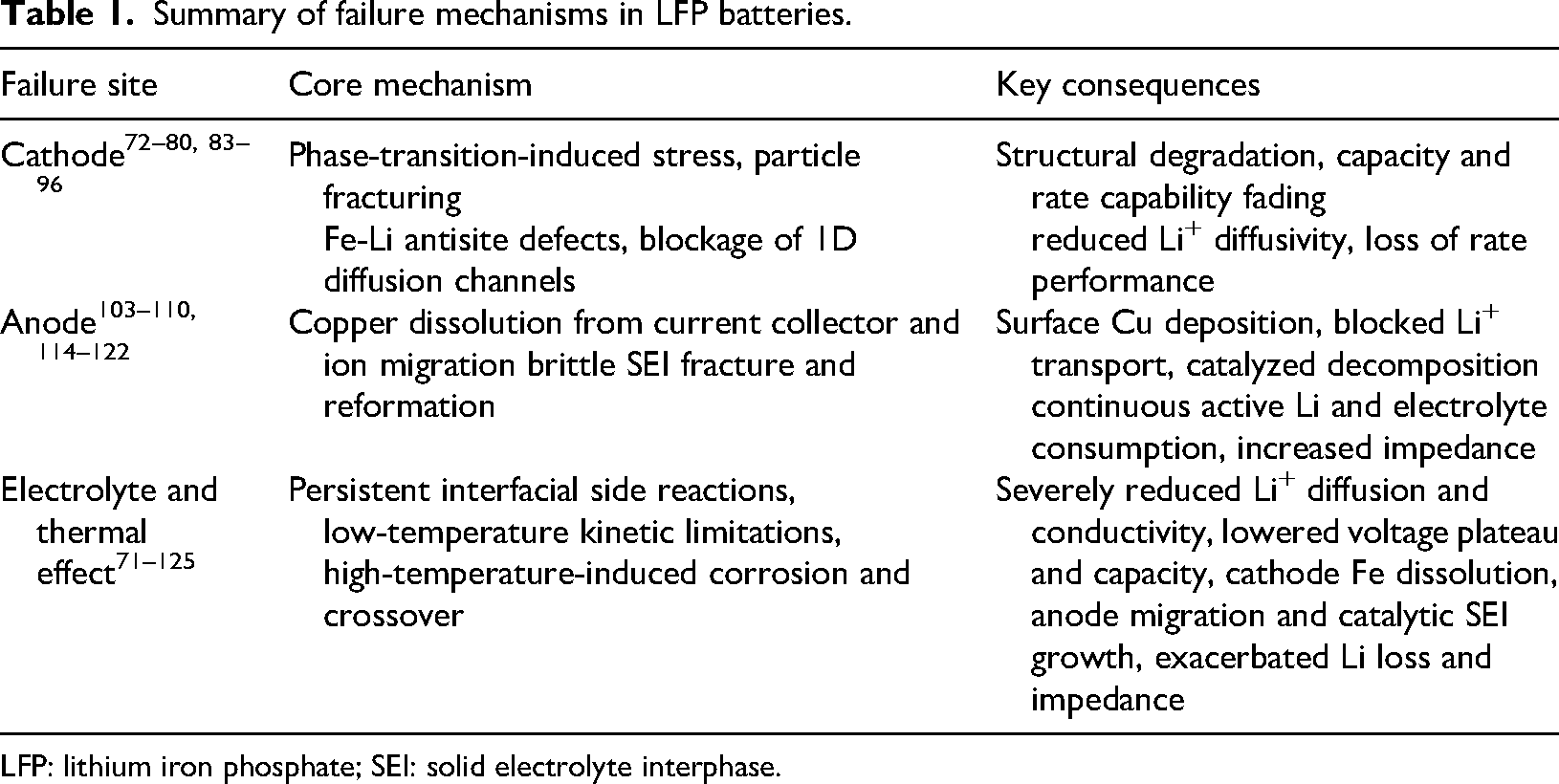
LFP: lithium iron phosphate; SEI: solid electrolyte interphase.
Recycling and regeneration methods for spent LFP battery cathode materials
Current mainstream recycling methods for LIBs primarily include pyrometallurgy and hydrometallurgy. Both processes involve the decomposition of cathode compounds into elemental states (atoms) and subsequent resynthesis into new compounds, which is energy-intensive and chemically complex. However, these conventional methods face challenges such as multistep processes, high operational costs, significant energy consumption and risks of secondary pollution. In comparison, direct regeneration has emerged as a promising alternative that follows a “molecule-to-molecule” mechanism. This technique avoids breaking the crystalline framework of cathode materials and enables structural and compositional repair without full decomposition. This review systematically assesses the advantages and limitations of these recycling routes, with the objective of proposing an efficient recycling framework for retired LFP batteries and a tailored direct regeneration strategy. The overarching aim is to develop a highly adaptable and optimized recycling system that can be precisely tuned to meet specific material and economic constraints.
Pyrometallurgy
Among various recycling methods for end-of-life LFP batteries, pyrometallurgy is regarded as the most commercially mature technology. Owing to its relatively simple process flow, ease of scaling up and adaptability to diverse battery compositions, pyrometallurgical recycling was the first to achieve large-scale industrial application.
Pyrometallurgical processing utilizes high-temperature smelting to treat spent LIBs. The output typically comprises recovered valuable metals or their alloys, slag, and flue gases. Although the combustion of organic components (e.g. electrolytes, binders, and carbonaceous anodes) can contribute to the energy balance of the process, it simultaneously leads to the release of hazardous gaseous emissions. 96 The reducing agents used in this process facilitate the reduction of metal oxides into their corresponding alloys (e.g. Co, Ni, Fe, and Cu). Given the increasing strategic importance of lithium, its efficient recovery has become a critical objective. As shown in Figure 2(a), a major advantage of the pyrometallurgical process is its ability to directly process whole cells or battery modules without disassembly. This technology can be classified into three primary categories: direct roasting, in-situ reduction roasting and salt-assisted roasting.125–127
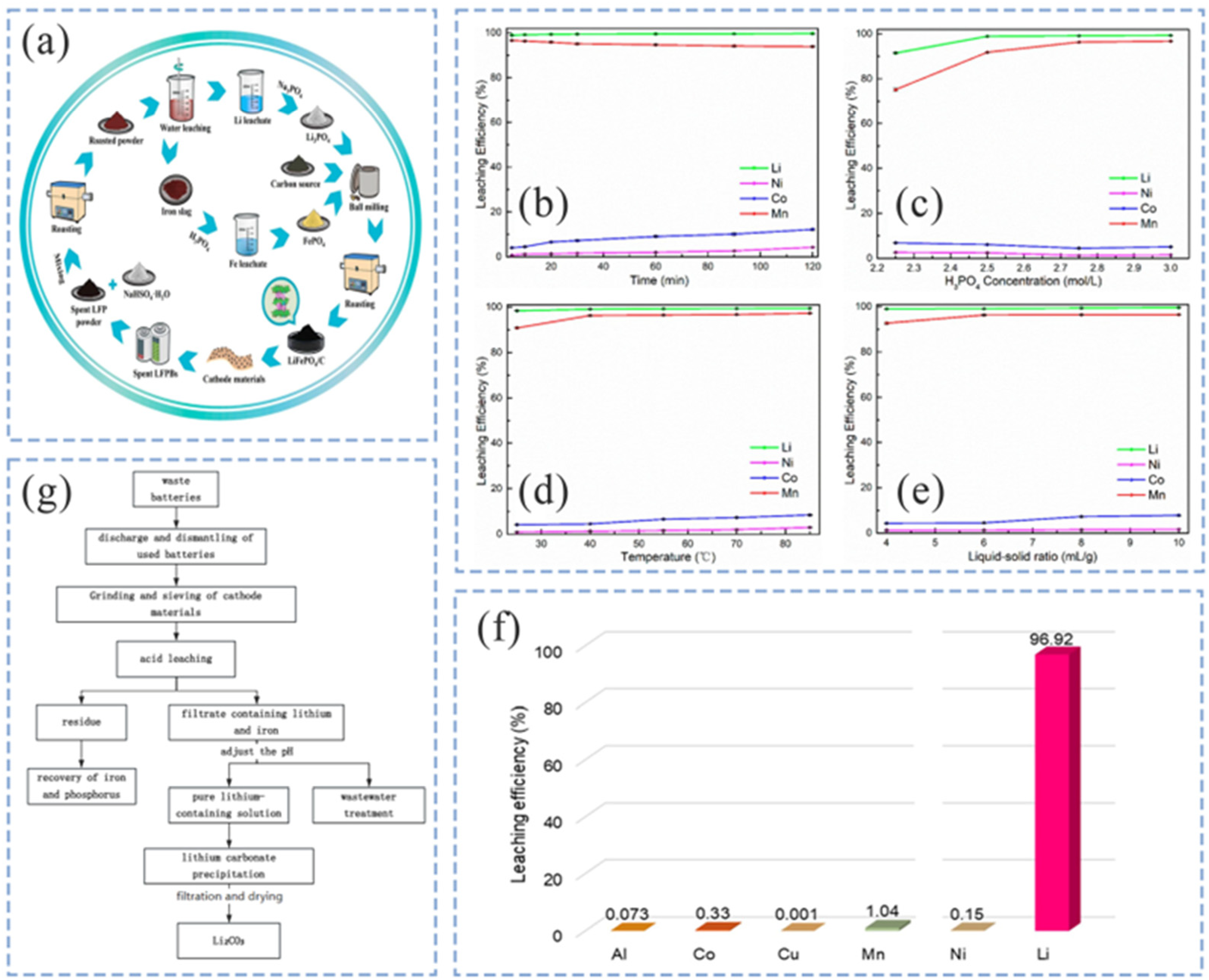
(a) Flow chart of the recycling process for spent LFP cathode materials 127 ; leaching efficiency of metal elements in H₃PO₄ solution under different conditions: (b) effect of leaching time (2.75 mol/L H₃PO₄, 40°C, liquid–solid ratio = 6 mL/g); (c) effect of H₃PO₄ concentration (40°C, 10 min, liquid–solid ratio = 6 mL/g); (d) effect of leaching temperature (2.75 mol/L H₃PO₄, 10 min, liquid–solid ratio = 6 mL/g); (e) effect of liquid–solid ratio (2.75 mol/L H₃PO₄, 40°C, 10 min). 128 (f) leaching rate of Li; 130 (g) schematic diagram of hydrometallurgy.
Pyrometallurgy demonstrates limited applicability for recycling spent LFP batteries owing to several inherent limitations. First, the complex composition of the batteries which includes elements such as lithium, iron, phosphorus, aluminum, and copper presents considerable challenges for efficient separation and recovery through pyrometallurgical methods. In particular, lithium and phosphorus show low recovery rates. Second, the process requires high-temperature conditions, resulting in substantial energy consumption and high equipment costs, which reduce its economic feasibility. Moreover, high-temperature treatment produces hazardous gases and dust, which increase the environmental management burden and may cause secondary pollution if it is not strictly controlled. More critically, lithium tends to volatilize at high temperatures, resulting in considerable loss of this valuable element and significantly reducing the overall recovery value. Meanwhile, phosphorus is apt to form high-melting-point compounds under high-temperature conditions, further hindering its recovery. Finally, pyrometallurgy involves high capital investment and operating expenses, combined with generally low recovery efficiency, leading to limited economic performance.
Direct roasting
Direct roasting is one of the earliest developed pyrometallurgical techniques. This process reduces metal oxides into metallic alloys through reactions with reducing agents at high temperatures. The resulting alloys are subsequently purified via hydrometallurgical methods to obtain pure metals. 125 In this conventional pyrometallurgical process, spent LIBs and reducing agents are initially subjected to high-temperature calcination. A flux is subsequently added to separate the metallic alloy from the slag phase. Metals such as aluminum (Al), lithium (Li), and manganese (Mn) report to the slag, leading to both resource loss and potential environmental pollution. Zhang et al. 128 developed an innovative process for valuable metal recovery, which involves mixing LiNixCoyMn1–x–yO2 cathode powder with anode graphite, roasting the mixture at high temperature and then leaching it in an H₃PO₄ solution, as shown in Figure 2(b)–(e). Under optimized conditions, leaching efficiencies exceeding 99% for Li and 96% for Mn were achieved. Qu et al. 96 demonstrated that ammonium sulfate-assisted roasting could convert spent LIB cathodes into water-soluble sulfate salts, thereby facilitating the efficient recovery of valuable metals.
In-situ reduction roasting
In-situ reduction roasting is a process that thermally converts spent LIBs into high-value products, such as metallic compounds, pure metals and soluble lithium salts under a vacuum or inert atmosphere without introducing external additives. Compared with direct roasting, this approach reduces the conversion temperature of cathode materials, simplifies the process flow and lowers the overall recycling cost. In a study by Xiao et al., 129 in-situ reduction of cathode materials was accomplished through vacuum pyrolysis, wherein the anode material served as a reducing agent to generate lithium carbonate. After pyrolysis, lithium carbonate was recovered via water leaching. This method provides an environmentally benign route for the in-situ recovery of lithium carbonate from mixed electrode materials of spent LIBs.
Molten salt roasting
To further reduce roasting temperatures and improve metal recovery efficiency, various molten salt-assisted roasting technologies have been increasingly studied for recycling spent LIBs. This method has garnered considerable interest owing to its efficient metal extraction, reduced energy consumption and greenhouse gas emissions, as well as broad applicability—not only to lithium cobalt oxide (LCO) and nickel cobalt manganese oxide (NCM) batteries, but also to LFP batteries. The core principle of molten salt roasting involves disrupting the crystalline structure of cathode materials at relatively low temperatures, facilitating the complete conversion of their constituents into water-soluble salts. This mechanism considerably enhances overall metal recovery efficiency and minimizes wastewater production. Lin et al. 130 systematically investigated the transformation mechanism and managed sulfur behavior during modified sulfate-assisted roasting. It demonstrated that this method could efficiently extract lithium from complex cathode materials without causing secondary pollution. As illustrated in Figure 2(f), an Li leaching rate of 96.92% was obtained. However, molten salt roasting still faces challenges such as the emission of hazardous gases (e.g. SOx, Cl₂, and NOx) and the requirement for further reduction in roasting temperature. Zhang et al. 131 adopted NaHSO4·H2O as the flame retardant to achieve selective lithium (Li) extraction without adding external acid. The mass ratio of NaHSO4·H2O to spent LFP materials was 1.5:1, and the mixture was roasted at 600°C for 1 h followed by water leaching at 30°C for 1 h. The Li recovery efficiency reached as high as 98%, while the leaching rates of iron (Fe), aluminum (Al), and phosphorus (P) were all below 1%, indicating that this method exhibits extremely high selectivity for Li. Qu et al. 132 adopted (NH₄)₂SO₄ as the reaction medium to achieve rapid and selective lithium (Li) extraction under an air atmosphere. Only 5 min of roasting at 300°C was required for the reaction to convert LiFePO4 into Li2SO4 and FePO4. The Li recovery efficiency reached as high as 98%, and Li was efficiently leached in the form of soluble Li2SO4, while FePO4—a directly recoverable product—was obtained simultaneously. This method features an extremely fast reaction rate, low temperature, utilization of air oxidation, high selectivity for Li, and an extremely short process flow. Zhang et al. 133 employed Na2CO3 as an activator and combined it with the carbothermal reduction method to achieve efficient recovery of lithium (Li) and iron (Fe) from LiFePO4 without the use of strong acids. Under Na2CO3 activation, LiFePO4 was reduced to Fe, NaLi2PO4, and LiNa5(PO4)2 at a moderate temperature, and the products could be separated via magnetic separation, with a Li recovery rate of 99.2%. This method optimized the process by screening different sodium salts and completed a 400-g-scale roasting-separation verification, providing a feasible route with industrialization potential for the acid-free recycling of spent LFP batteries. Some typical pyrometallurgical process cases are presented in Table 2.
Summary of pyrometallurgical process cases for spent cathode materials.
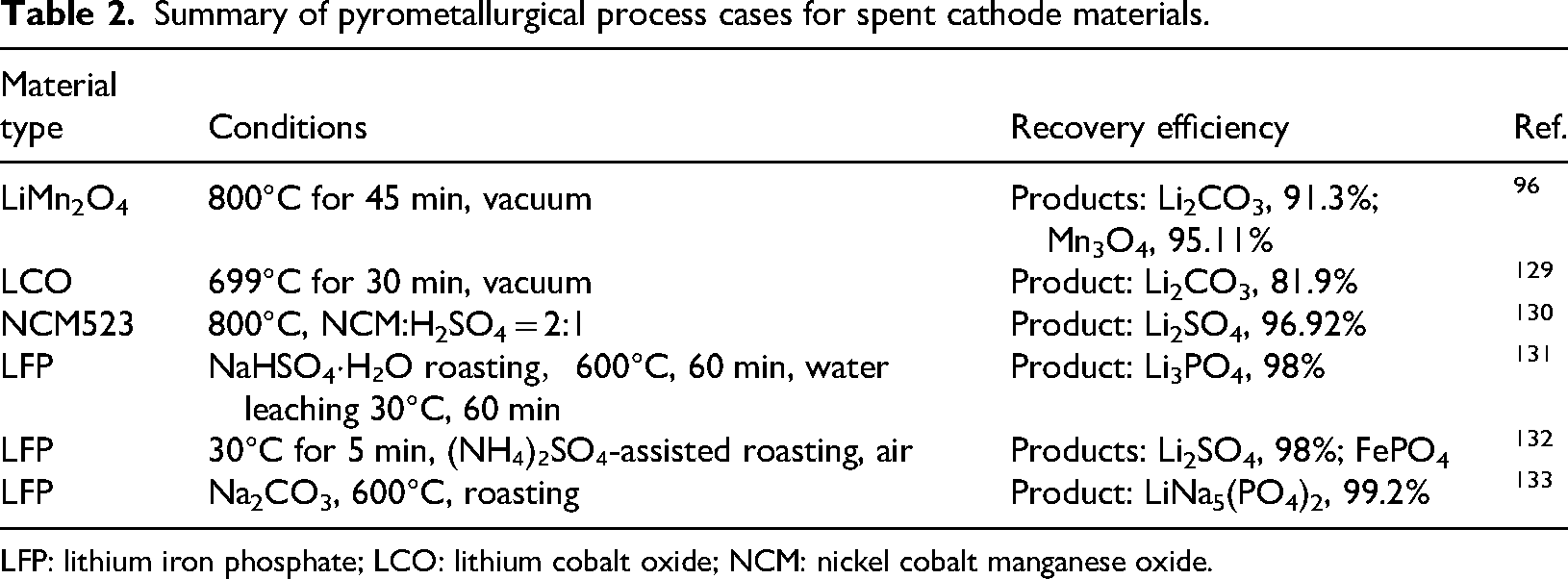
LFP: lithium iron phosphate; LCO: lithium cobalt oxide; NCM: nickel cobalt manganese oxide.
In terms of performance, pyrometallurgical technologies have evolved from direct roasting to in-situ reduction roasting, and further to molten salt-assisted roasting. The core progress lies in the significant optimization of lithium recovery rate and energy consumption. As the most traditional method, direct roasting boasts mature technology and scalability. However, high temperatures lead to substantial lithium volatilization and the formation of intractable phosphorus-containing compounds, resulting in low recovery efficiency. In-situ reduction roasting reduces reaction temperature and achieves selective lithium conversion by utilizing the reactions of internal battery components under an inert atmosphere, thereby improving recovery efficiency. Currently, molten salt-assisted roasting exhibits the optimal performance: it breaks down the crystal structure through medium-low temperature reactions, efficiently converting lithium into soluble salts. For LFP batteries, the lithium recovery rate can exceed 98% with exceptional selectivity, representing the cutting-edge of current pyrometallurgical recycling technology.
Regarding technical feasibility and industrialization prospects, significant differences exist among the three methods. Direct roasting has the highest industrial maturity due to its simple process and strong adaptability, but its inherent low lithium recovery rate severely restricts the economic viability of LFP battery treatment. In-situ reduction roasting lowers the reaction temperature and simplifies subsequent processes, yet the requirement for vacuum or inert atmospheres poses challenges to the cost and reliability of large-scale equipment. Although molten salt-assisted roasting demonstrates excellent applicability and high recovery efficiency for LFP batteries in laboratory settings, it has the lowest industrial maturity. Key engineering bottlenecks hindering its transition from laboratory to large-scale application include molten salt selection, harmful gas control, and salt recycling.
Environmental footprint is a critical indicator for evaluating the sustainability of recycling technologies. Direct roasting imposes the heaviest environmental burden, as its ultra-high temperature process consumes substantial energy and generates large quantities of harmful gases (e.g. HF, P2O5) and heavy metal-containing slag. In-situ reduction roasting is conducted in a closed environment, effectively suppressing harmful gas emissions and minimizing solid waste, resulting in significantly improved environmental performance. While molten salt-assisted roasting drastically reduces energy consumption, it may release gases such as SOx and Cl₂ during the process. This shifts environmental risks from high-temperature pollution to chemical emission pollution, necessitating the installation of efficient waste gas purification systems to avoid secondary environmental issues.
In summary, the core challenges facing various pyrometallurgical recycling methods vary in focus: direct roasting is plagued by the fundamental flaw of low lithium and phosphorus recovery rates; in-situ reduction roasting needs to overcome the engineering challenge of low-cost large-scale atmosphere control; and advanced molten salt roasting must address the economic and technical issues of harmful gas emission control and molten salt recycling while maintaining high recovery efficiency. Since a single pyrometallurgical process struggles to achieve an optimal balance between recovery efficiency, environmental friendliness, and economic cost, the current development trend has clearly shifted toward pyrometallurgical–hydrometallurgical hybrid processes. Specifically, pyrometallurgy (especially low-temperature roasting) is used as an efficient pretreatment step to decompose materials and realize directional lithium conversion, followed by hydrometallurgical processes for high-purity and high-yield separation and purification. This approach enables the resourceful and green recycling of spent LIBs, particularly LFP batteries.
Hydrometallurgy
Hydrometallurgy is widely used to separate and recover valuable metals from spent LIBs. The process typically utilizes leaching agents to extract metal ions into solution, from which specific metals are subsequently isolated and recovered as solid compounds through the addition of precipitating agents. 134 This method provides advantages including high recovery efficiency, operational simplicity and relatively low cost. In general, the hydrometallurgical recycling process comprises four key stages: pretreatment, leaching, purification and separation, and material regeneration, as shown in Figure 2(g).
Inorganic acid leaching
Common inorganic acids employed as leaching agents include hydrochloric acid (HCl), sulfuric acid (H₂SO₄), and phosphoric acid (H₃PO₄). Under identical experimental conditions (i.e. temperature, concentration, and reaction time), the lithium (Li) leaching efficiencies of these three acids are approximately similar, all reaching about 80%. Consequently, efforts to enhance the leaching efficiency of inorganic acids have increasingly focused on supplementing them with various reducing agents. In a study by Li et al., 135 potassium pyrosulfate (K₂S₂O₇) and hydrogen peroxide (H₂O₂) were employed as leaching agents. Under optimal conditions, leaching efficiencies of 99.83% for lithium and 0.34% for iron were achieved. In a study by Rao et al. 136 as illustrated in Figure 3(a), over 97% of lithium was effectively extracted using oxygen and sulfuric acid under oxygenated pressure, while 99% of iron remained in the residue during the leaching process. This approach provides a valuable strategy for the highly efficient and selective extraction of lithium from LFP materials. Wang et al. 137 investigated the effects of air oxidation and hydrogen peroxide oxidation on the acid leaching behavior of LFP. Under air oxidation conditions, oxygen oxidizes Fe2+ in LFP to Fe3+, disrupting the stable olivine structure and forming Li₃Fe₂(PO₄)₃ and Fe₂O₃. Subsequent leaching with sulfuric acid achieved a lithium extraction rate as high as 97.48%. In contrast, when unroasted LFP was leached solely with sulfuric acid, a significant difference in iron leaching efficiency was observed, as clearly illustrated in Figure 3(b)–(g).
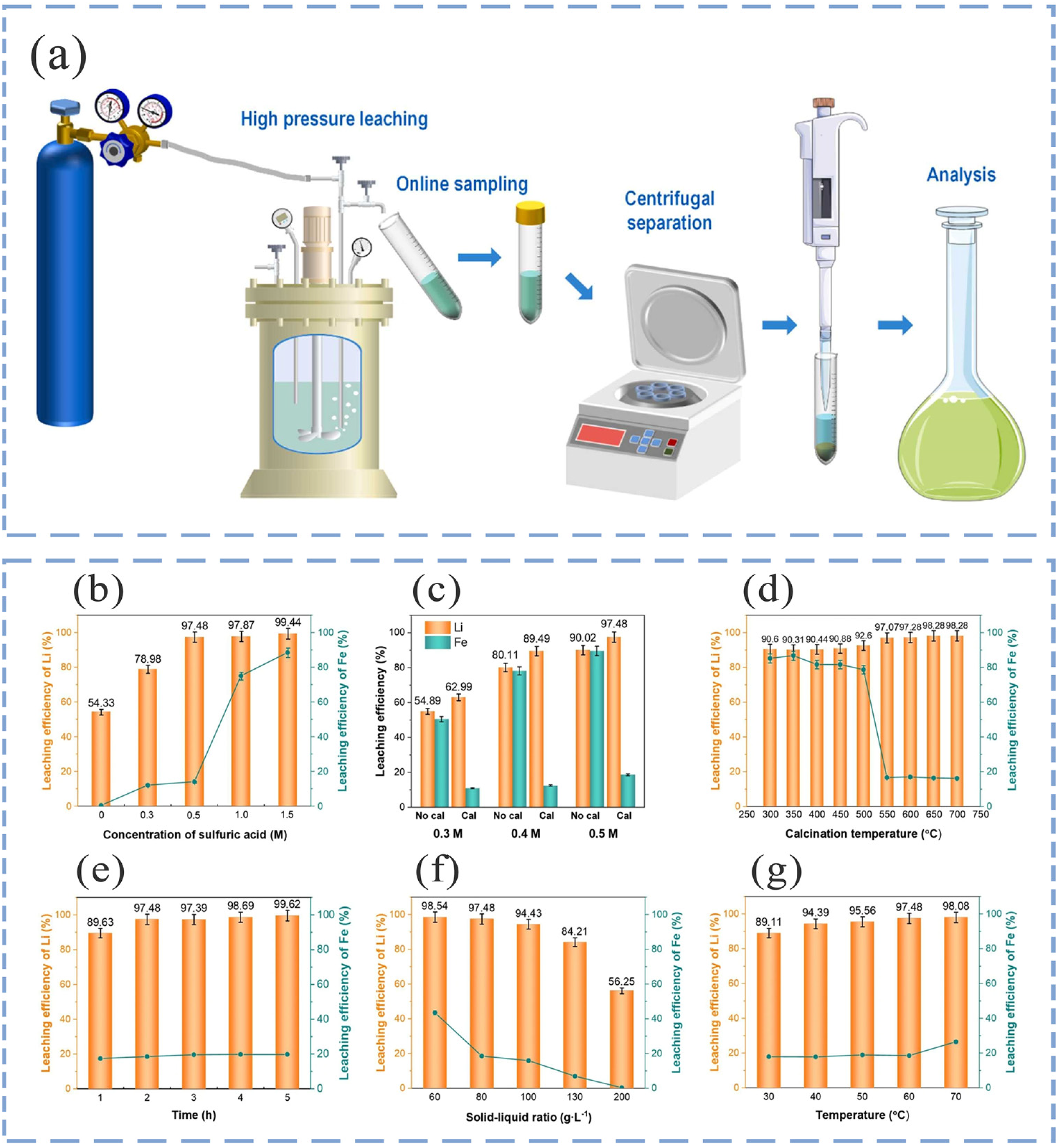
(a) Schematic diagram of the oxygen pressure leaching experiment. 136 (b) Leaching rates of Li and Fe under different acidic conditions; (c) Difference in leaching efficiency between roasted LFP and original LFP; (d) Leaching efficiency of Li and Fe from roasted products at different roasting temperatures; (e–g) Leaching efficiency of Li and Fe under different times, solid-to-liquid ratios, and leaching temperatures. 137
Organic acid leaching
Organic acids used as leaching agents present several advantages, such as reduced environmental impact, high biodegradability and lower contamination risks to soil and water systems. They also demonstrate lower corrosivity to equipment, low volatility and effective performance at relatively low temperatures. In addition, the by-products formed during leaching are generally simpler to handle and treat.
Zhao et al. 138 employed formic acid as the leaching agent and oxygen as the oxidizing agent, combined with the single-factor variable method and mechanistic analysis of the E-pH diagram of the Li-Fe-P-H₂O system, to achieve efficient and selective leaching of lithium from LiFePO4 without the use of strong acids. Under the optimal conditions (formic acid concentration: 2.5 mol/L, oxygen flow rate: 0.12 L/min, liquid-to-solid ratio: 25 mL/g, reaction at 70 °C for 3 h), lithium in the LiFePO4 was selectively leached. After product separation, the lithium leaching rate reached over 99.9%, while the iron leaching rate was only 1.7%. When air was used as a substitute for oxygen, the lithium leaching rate still reached 97.81% with an iron leaching rate of 4.81%. This method optimized the process by systematically investigating key process parameters and verified the feasibility of replacing oxygen with air. The chemical reagents used only contain C, H, and O elements and are environmentally friendly, providing a feasible route with both green sustainability and industrialization potential for the acid-free recycling of spent LFP batteries. Chai et al. 139 employed low-concentration oxalic acid as the leaching agent, combined with the characteristic that Li3PO4 has significantly lower solubility in aqueous solution than Li2CO3, to achieve selective recovery of Li and Fe from LiFePO4 as well as closed-loop regeneration without the use of strong acids. Under this process, through two-stage selective leaching, the Li leaching rate reached 99% while the Fe leaching rate was only 2.4%. After the leach solution was purified, Li could be recovered as Li3PO4 by adjusting the pH of the system, and Fe could be retrieved as FeCO3·2H2O, which could be reprocessed into LiFePO4 materials. This method optimized the process route by leveraging the solubility difference of substances and realized closed-loop resource utilization, providing a green and sustainable feasible route for the acid-free recycling of spent LFP batteries. Wang et al. 140 employed a pyruvic acid/H₂O₂ leaching system to recover Li and Fe from spent LiFePO4 cathode powder, using the recovered products as raw materials for the preparation of LFP. Under the optimized leaching conditions—pyruvic acid concentration of 3.0 mol/L, H₂O₂ volume of 2 mL, solid-to-liquid ratio of 0.1 g/mL, reaction at 80°C for 20 min—the leaching efficiency of Li reached 96.56%. The leaching residue was identified as FePO4 with an Fe/P molar ratio of 0.974. By adjusting the pH of the leachate to 12.0 and stirring at 80°C for 2 h, Li was recovered via in situ precipitation in the form of Li3PO4 with a purity of 96.5 wt.%. By optimizing the leaching parameters and elucidating the kinetic mechanism, this method provides a feasible technical pathway for the resource recovery and high-value regeneration of spent LFP batteries.
Other leaching methods
Alkaline leaching is a metal extraction process performed under alkaline conditions, which commonly uses sodium hydroxide (NaOH) or potassium hydroxide (KOH) as leaching agents. In contrast, ammonia leaching utilizes ammonia-based solutions as lixiviants and is particularly suitable for recovering specific metals. This method enables the formation of stable metal–ammonia complexes, thereby improving metal solubility and offering high selectivity, especially for metals such as copper (Cu) and nickel (Ni). Ammonia leaching is widely employed for the extraction of target metals such as copper, nickel, and precious metals including gold (Au) and silver (Ag). In a study cited by Zheng. 141 ammonium sulfate was employed as the leaching agent and sodium sulfite as the reducing agent. The total selectivity of Ni, Co, and Li in the first leaching step exceeded 98.6%, while that of Mn was only 1.36%. By systematically investigating the influence of parameters such as leaching reagent composition, leaching time, stirring speed, and temperature, the study revealed that manganese remained primarily in the solution in the form of metal ions or complexes. Although this method has been applied to other types of spent batteries, it may also be applicable to the recycling of spent LFP batteries, thereby offering a promising new strategy for the recovery of valuable materials from end-of-life LFP systems. Typical hydrometallurgical process cases discussed above are summarized in Table 3.
Summary of hydrometallurgical process cases for spent cathode materials.
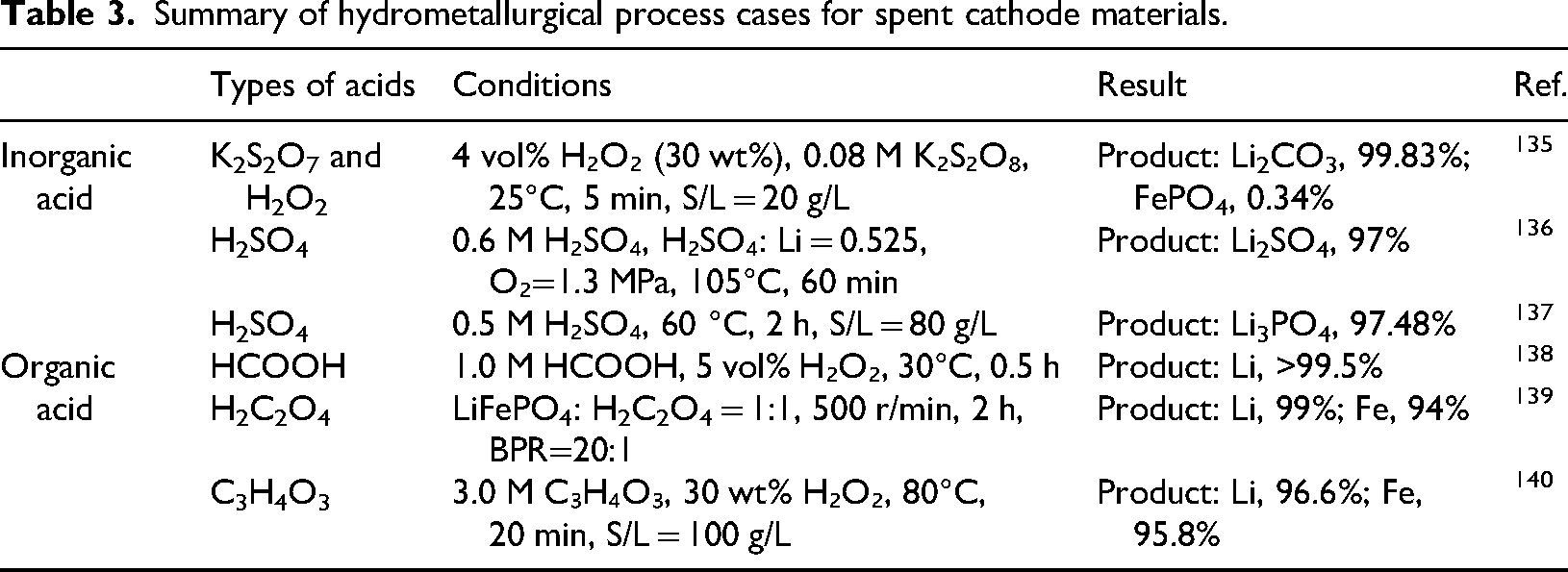
In terms of performance, the core differences among various leaching methods lie in leaching efficiency, selectivity, and product pathways. Inorganic acid leaching (e.g. sulfuric acid) exhibits strong absolute dissolution capacity but inherent poor selectivity, leading to the simultaneous massive leaching of lithium and iron. By introducing oxidants (e.g. H₂O₂) or combining with preoxidation, it can be transformed into an efficient “oxidation-acid leaching” process, increasing the lithium leaching rate to over 97% while inhibiting iron in the residue, thus achieving performance optimization. Organic acid leaching (e.g. formic acid, oxalic acid) boasts inherent high selectivity. It enables nearly complete lithium leaching (>99%) with an extremely low iron leaching rate (<5%)under mild conditions. Moreover, it facilitates the direct acquisition of high-purity intermediate products (e.g. FePO4), which is conducive to closed-loop material regeneration. In contrast, other methods (e.g. ammonia leaching) have weak selective leaching capabilities for LFP cathode materials, as they are originally designed for metals such as nickel and cobalt, resulting in poor performance when applied to LFP recycling.
Regarding technical feasibility, the industrialization prospects of each leaching method vary significantly. Inorganic acid leaching, especially the optimized processes, features the highest technical maturity and compatibility with existing hydrometallurgical industrial systems, enabling easy scalability. However, its process tends to be complex due to the addition of oxidation steps. As an emerging green route, organic acid leaching currently has low industrial maturity. The main obstacles to its large-scale application include the high cost of organic acid reagents and the techno-economic challenges associated with the efficient recovery and recycling of organic substances in waste liquids during scaling-up. For other methods, the inherent mismatch between their technical principles and LFP recycling results in no advantages in economy or efficiency, leading to low feasibility.
In terms of environmental footprint, the environmental characteristics of different leaching methods are distinctly different. Inorganic acid leaching imposes a heavy environmental burden: the use of strong acids is prone to generating corrosive acid mist and large volumes of heavy metal-containing acidic wastewater, resulting in high subsequent neutralization and treatment costs as well as significant environmental management pressure. Organic acid leaching demonstrates prominent green advantages: the reagents used are generally biodegradable and low-corrosive, with low on-site safety risks and better overall environmental friendliness. Nevertheless, the subsequent treatment of organic waste liquids still requires attention. Methods such as ammonia leaching necessitate strict prevention of ammonia nitrogen pollution risks, as improper handling can easily cause eutrophication of water bodies.
To summarize, the core challenges of each leaching method are as follows. For inorganic acid leaching, the challenge lies in balancing high efficiency with high environmental costs, i.e. controlling the consumption of strong acids and oxidants as well as the high cost of wastewater treatment. For organic acid leaching, the bottleneck is the excessively high reagent cost and the recycling difficulties during scaling-up, with economy being the key constraint to its promotion. For other methods, the fundamental challenge in LFP recycling is the mismatch of technical principles, leading to poor process performance and uneconomical operation. Since a single hydrometallurgical process struggles to reconcile the contradictions between performance, cost, and environmental impact, the future development trend will focus on developing low-cost, renewable green leaching agents and constructing short-process, low-wastewater-discharge integrated leaching-regeneration processes. This approach aims to comprehensively address the tradeoffs among performance, cost, and environmental sustainability in the recycling of spent LIBs, particularly LFP batteries.
Direct repair method
Direct regeneration is a technique that restores the lithium content and structural integrity of cathode materials based on their well-preserved crystalline framework, which offers a streamlined strategy to simplify recycling and lower costs. In comparison with conventional pyrometallurgical or hydrometallurgical recycling routes, direct regeneration exhibits distinct advantages including simplified processing, reduced energy consumption, minimal environmental impact and the feasibility of directly reusing the regenerated cathode in new batteries. Based on the mechanism of lithium replenishment and structural recovery, regeneration methods for degraded cathodes are broadly classified into five categories: solid-state calcination, solvothermal regeneration, eutectic molten salt treatment, wet chemical relithiation and electrochemical regeneration. This review systematically analyzes and compares the key features, applicability and limitations of each direct regeneration strategy.
Solid-state calcination method
Solid-state calcination is a commonly used technique for the direct regeneration of degraded cathode materials. This method involves sintering a mixture of spent cathode powder and a lithium source (such as LiOH or Li2CO3) under controlled high-temperature conditions to reconstruct the original cathode structure. The process functions by relithiating the lithium-deficient lattice, thereby effectively restoring the electrochemical performance of the cathode.
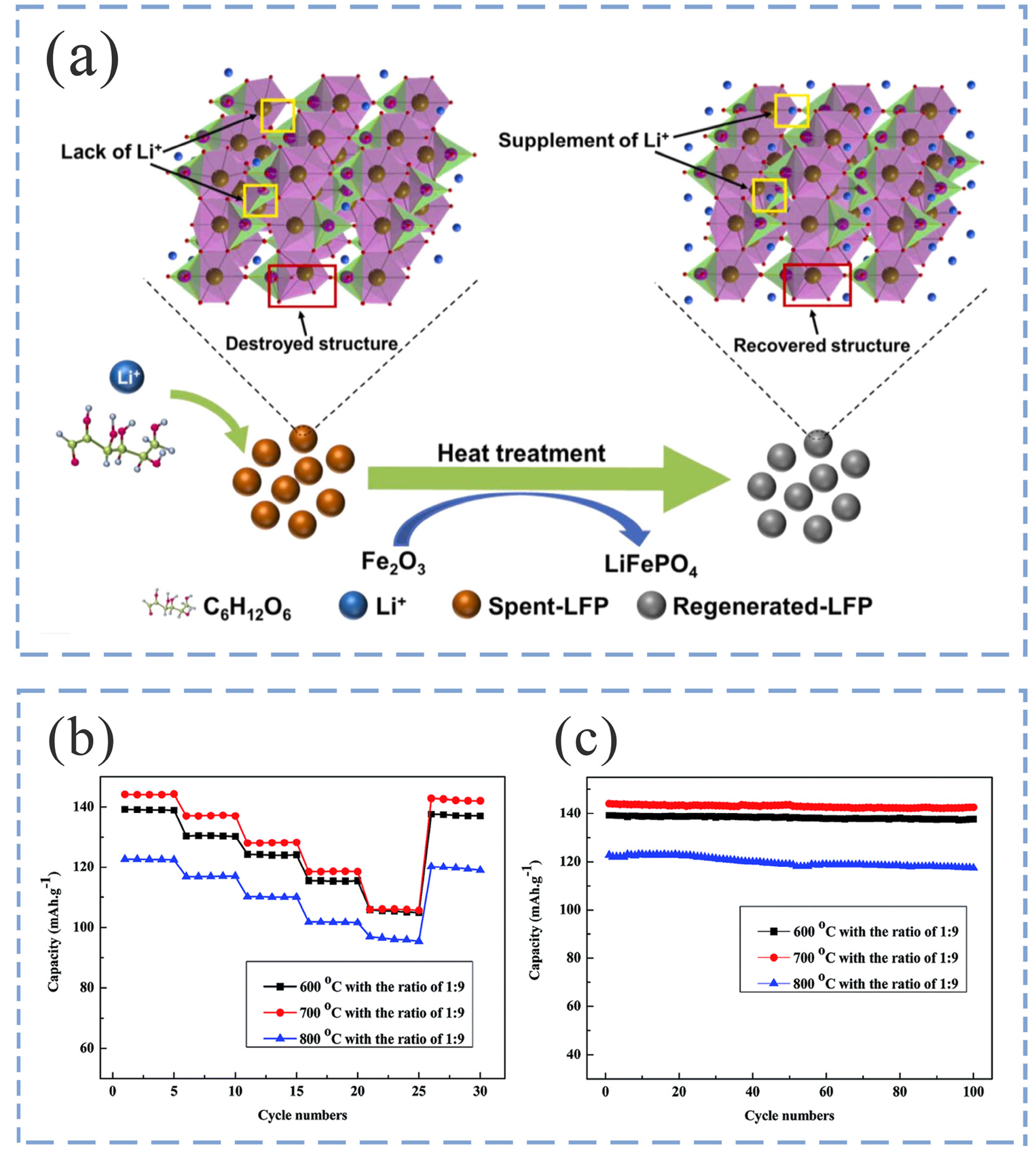
Qi et al. 54 disassembled spent pouch cells and separated the electrodes, which were then annealed in a muffle furnace at 600 °C for 5 h in air to remove polyvinylidene fluoride (PVDF), carbonaceous components, and other impurities. The obtained powder was ball-milled with glucose and a lithium source (Li2CO3) to form a homogeneous mixture. The regeneration process consisted of a two-stage heating procedure: first at 350 °Cfor 2 h, followed by 900°C for 6 h. A schematic diagram of the entire LFP regeneration process is presented in Figure 4(a). After regeneration, the elemental composition was restored to near-stoichiometric levels, and the crystal structure was repaired with enhanced crystallinity, resulting in significantly improved electrochemical performance of the regenerated LFP cathodes. Li et al. 55 mixed the spent cathode material with Li2CO3 and calcined the mixture in an Ar/H₂ atmosphere at different temperatures. The regeneration process was conducted at 600, 650, 700, 750, and 800 °C for 1 h. They found that at 650 °C, impurities such as PVDF were effectively decomposed, which reduced particle agglomeration and improved the average particle size, tap density and electrochemical performance. Compared with other temperatures, the material regenerated at 650°C demonstrated optimal physical and electrochemical properties, satisfying the requirements for reuse in LIBs. Song et al. 142 blended the recovered spent cathode material with fresh LFP powder at mass ratios of 1:9, 2:8 and 3:7, followed by solid-state calcination at elevated temperatures (600 °C, 700 °C, and 800 °C) for 8 h under an inert atmosphere. As shown in Figure 4(b) and 4(c), the results demonstrated that cells fabricated with a blend ratio of 1:9 and regenerated at 700°C exhibited optimal rate capability and cycling stability, which would satisfy requirements for practical reuse in LIBs.
The preceding sections have discussed conventional lithium compensation sintering and solid-state regeneration methods that utilize residual lithium. These approaches provide simple and efficient routes for regenerating spent cathode materials, offering an innovative strategy for cathode recycling. Meanwhile, they can be readily integrated into existing production infrastructure because they closely mirror the industrial synthesis processes of cathode materials, which have great prospects for large-scale application. Nevertheless, several challenges need to be addressed. These include the requirement for precise control of lithium supplementation amounts and sintering parameters. For spent cathodes with diverse degradation levels and chemical compositions, excessive lithium addition may result in the formation of residual lithium compounds (e.g. Li2CO3 or LiOH) on the regenerated material surface, whereas insufficient lithium compensation can lead to incomplete structural repair.
Solvothermal method
The solvothermal method involves treating spent cathode materials by immersion in a concentrated lithium-containing solution within a sealed high-pressure autoclave, where structural repair and relithiation occur. During this process, Li+ ions diffuse through the solvent and are reinserted into the vacant sites of the defective crystal lattice under elevated temperature and pressure.
Wang et al. 56 successfully regenerated LFP composite materials using hydrothermal and carbothermal methods, respectively, employing two distinct recycled products, Li3PO4 and FePO4, as direct precursors. The results demonstrate that the regenerated LFP not only exhibits an orthogonal phase structure, low impurity content and favorable morphology, but also delivers electrochemical performance closely matching that of commercial LFP, as illustrated in Figure 5(a)–(h). Jing et al. 143 proposed a green and efficient one-step hydrothermal method for the direct regeneration of spent LFP. Soluble lithium sulfate was employed as the lithium source, while hydrazine (N₂H₄) served as both a reducing agent and an electron donor during the reaction, which effectively maintained a low redox potential in the solution. As shown in Figure 5(i)–(l), under the optimal hydrothermal conditions of 200°C for 3 h with a lithium content of 12 g/L and 1.0 mL of reducing agent, the regenerated LFP exhibited a high discharge capacity of 145.2 mAh/g at 0.2C. Furthermore, the regenerated material demonstrated excellent electrochemical performance, as illustrated in Figure 5(n). Shi et al. 144 proposed a nondestructive method for regenerating cathode materials through hydrothermal treatment of cycled electrode particles followed by short-term annealing. They demonstrated that this approach fully restored the specific capacity and cycling stability of LCO without altering its original morphology or size distribution. Furthermore, the regenerated particles exhibited enhanced rate capability compared to those restored via solid-state synthesis. These methods may also be applicable to LFP batteries, offering a feasible strategy and methodological reference for their efficient recycling.
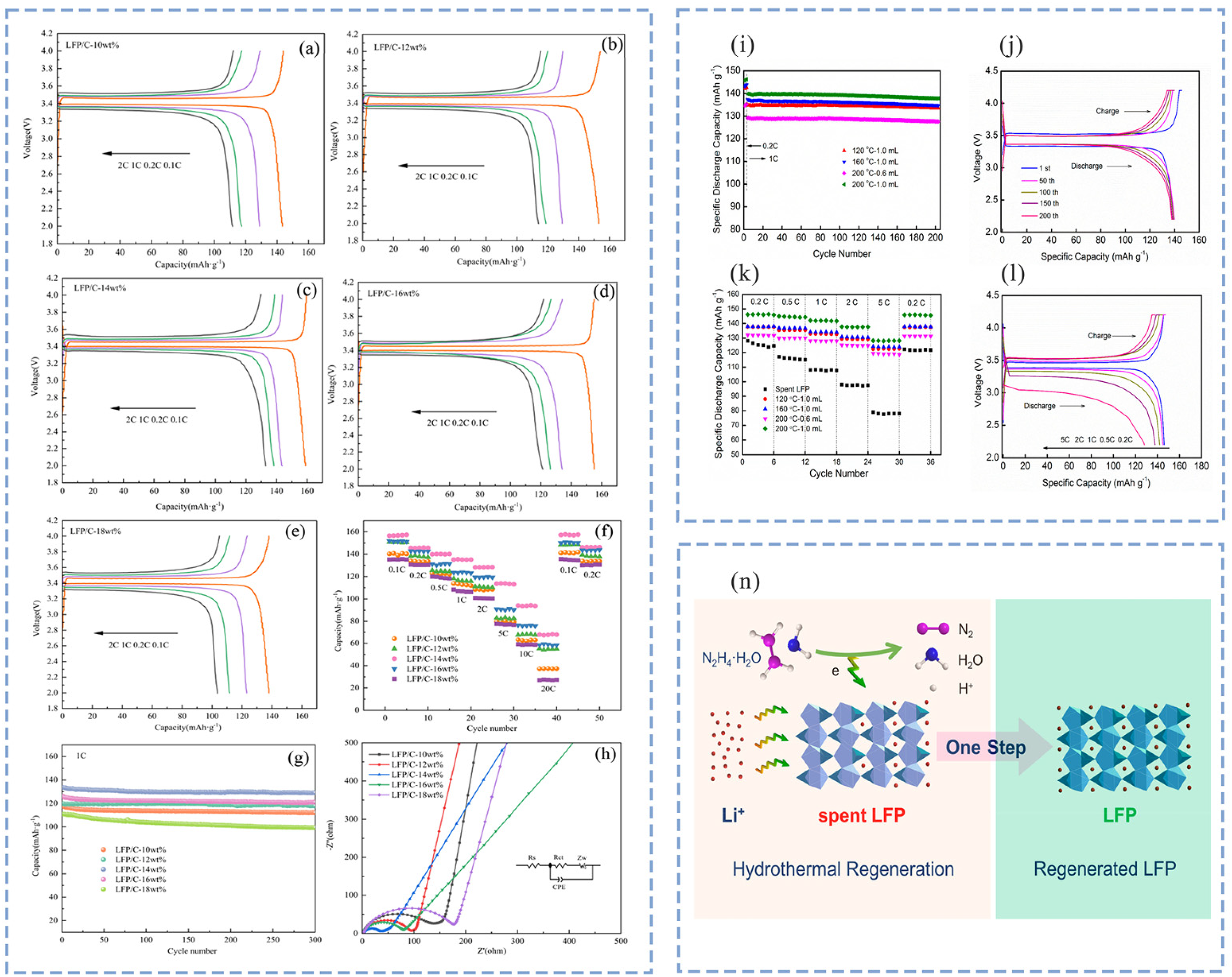
(a–h) Initial charge–discharge curves, rate capability, cycling performance at 1C, and EIS curves at different scan rates 56 ; (i–l) Electrochemical performance of LFP samples obtained under different hydrothermal conditions 143 ; (n) Schematic diagram of the regeneration theory for repaired LFP. 144
The solvothermal method enables Li+ replenishment through reactions conducted entirely within a solvent medium and demonstrates self-limiting characteristics that avoid the need for precise stoichiometric lithium addition. This process operates under relatively mild temperatures, requires short reaction durations and consumes less energy. It is applicable to various spent cathode materials for effective lithium compensation and permits simultaneous processing of different cathode chemistries, which shows strong potential for large-scale industrial recycling. Nevertheless, this approach may leave residual lithium compounds on the regenerated surface. These residual lithium species can form alkaline residues in humid environments that will negatively impact electrochemical performance. Furthermore, challenges such as the high cost of concentrated lithium sources and the potential environmental risks associated with organic solvent usage need to be addressed.
Eutectic molten salt method
The eutectic molten salt method employs a low-melting-point molten salt system to facilitate the decomposition of spent LFP cathode materials under mild conditions and enable direct regeneration of high-performance LFP. The molten salt medium provides efficient transport channels for lithium ions and enhances the contact between the lithium source and degraded material during relithiation. Lithium-based eutectic salts can function as both the reaction medium and lithium source for synthesizing regenerated cathode materials. The process typically involves separating the cathode material from spent batteries, mixing it with the eutectic salt and heating the mixture above the eutectic temperature to induce relithiation and crystal restructuring. This method reduces the required annealing time and temperature while it can maintain high crystallinity. However, it does not always fully restore the crystal structure and may require additional annealing steps to achieve optimal crystallinity. Thus far, this technique has been more widely applied in the recycling of LCO than LFP batteries. 145
Alam et al. 146 developed an innovative and environmentally friendly ionic liquid thermal energy storage (ITES) system for the recovery of novel lithium co-intercalation compounds from spent LiFePO4/C (LFP/C) cathode materials. The ITES leaching system comprises a quaternary ammonium salt-based hydrogen bond acceptor and a hydrogen bond donor, forming a deep eutectic solvent (DES) via hydrogen-bonding interactions. Direct contact between the ITES leaching agent and the cathode material enabled highly efficient recovery of lithium-intercalated compounds, as confirmed by scanning electron microscopy. This ITES method provides a sustainable alternative to conventional LIB recycling processes and facilitates the targeted regeneration of functional lithium metal compounds. Yang et al. 147 utilized a LiOH–KOH–Li2CO3 eutectic molten salt system as a reaction medium for the direct regeneration of degraded LCO. The LiOH–KOH alkaline molten salt system has a lower melting point than any of its individual components. Meanwhile, Li2CO3 which possesses higher reactivity than LiOH functions as a supplementary lithium source. The results demonstrate that LCO regenerated at 500°C exhibits excellent electrochemical performance with high capacity and improved cycling stability which are resulting from the reconstruction of a well-defined crystal structure and a uniform particle size distribution. Yang et al. 148 mixed degraded LiNi₀.₅Co₀.₂Mn₀.₃O₂ (NCM523) cathode material with an excess eutectic lithium salt mixture with lithium nitrate (LiNO3) and lithium hydroxide (LiOH) in a 3:2 molar ratio. The mixture was initially heated at 300 °C to promote lithiation and then washed to eliminate residual salts. Subsequently, the material was sintered with 5 wt% excess Li2CO3. The results indicate that this approach effectively restores the specific capacity, cycling stability, and rate performance of the degraded cathode to levels comparable to pristine NCM523. Deng et al. 149 mixed spent cathode material with KCl, KNO₃, and LiNO3 in a mass ratio of 1:8:8:0.8. The 20 g mixture was placed in an alumina crucible and sintered at 750°C. The results show that the regenerated NCM523 cathode nearly completely recovered its original crystal structure and exhibited a specific capacity of 160 mAh·g−1. This method offers an effective approach for carbon impurity removal, lithium replenishment and crystal structure restoration of degraded cathode materials.
The eutectic molten salt method facilitates the relithiation of degraded cathode materials via a molten salt or ionic liquid medium, dramatically lowering the temperature required for lithium replenishment. This method provides significant advantages in safety, scalability, cost efficiency and environmental sustainability.
Electrochemical method
In contrast to solid-state, molten salt, or solvothermal regeneration techniques, the electrochemical method avoids the need for high temperatures to address elemental deficiencies in cathode materials. This approach operates by establishing an electrochemical cell to drive the insertion or deposition of missing ions into the degraded lattice, thereby enabling effective restoration of the cathode material.
Qin et al. 57 proposed a green, efficient and low-cost anode electrolysis method (Figure 6(a)) for the selective recovery of lithium from spent LFP. Under optimal conditions, the lithium leaching efficiency reached 96.31% with Li/Fe selectivity exceeding 99.99%. The process produced FePO4 with a well-retained structure and preserved particle morphology. Through direct regeneration, LFP was regenerated from the recovered FePO4 and the resulting material demonstrated excellent electrochemical performance, delivering a specific discharge capacity of 144.5 mAh·g−1 at 1C rate. The research team led by Tang 58 developed a solution system with low redox potential, as shown in Figure 6(b). This system incorporates anions that exhibit either low redox potentials or moderate redox activity at high concentrations. The LFP regenerated using the ascorbic acid and LiOH solution system (Figure 6(c)) delivered a high discharge capacity of 144 mAh·g−1 at 1C rate and exhibited excellent cycling stability, maintaining 96% capacity retention after 500 cycles at 5C.
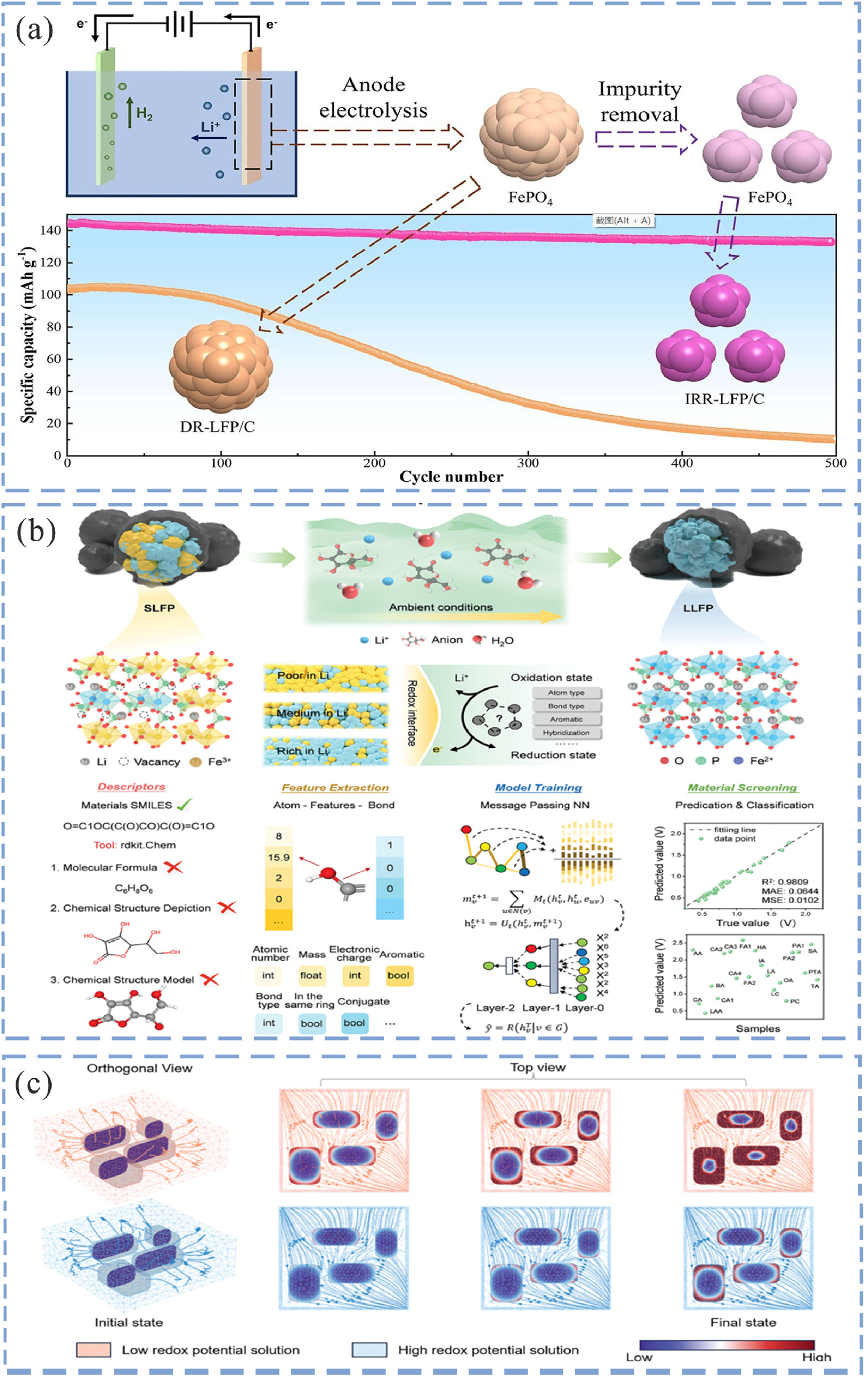
(a) Schematic diagram of LFP regeneration 57 ; (b) Schematic diagram of SLFP lithiation and the process of predicting the redox potential of organic compounds using MPNN (molecular graph neural network); (c) Lithiation simulation results via finite element method in solutions with different redox potentials, schematic diagram of physicochemical processes on solid and solution surfaces, comparison between LFP potential and redox potentials of anions in solution, and a machine learning (ML)-assisted screening system. 58
Zhang et al. 150 developed an electrochemical lithium replenishment method to directly regenerate LCO cathode materials using spent LCO electrodes as substrates. Li+ ions were successfully intercalated into the LCO structure, and the replenishment rate increased significantly with higher Li2SO4 concentrations or increased cathodic current densities. This method offers an efficient and low-energy consumption pathway for closed-loop recycling of high-value LCO materials while providing new insights for LFP recovery. This approach shows considerable potential for promoting sustainable development throughout the power battery industry chain. Some typical direct regeneration process cases are summarized in Table 4.
Summary of direct regeneration process cases for spent cathode materials.
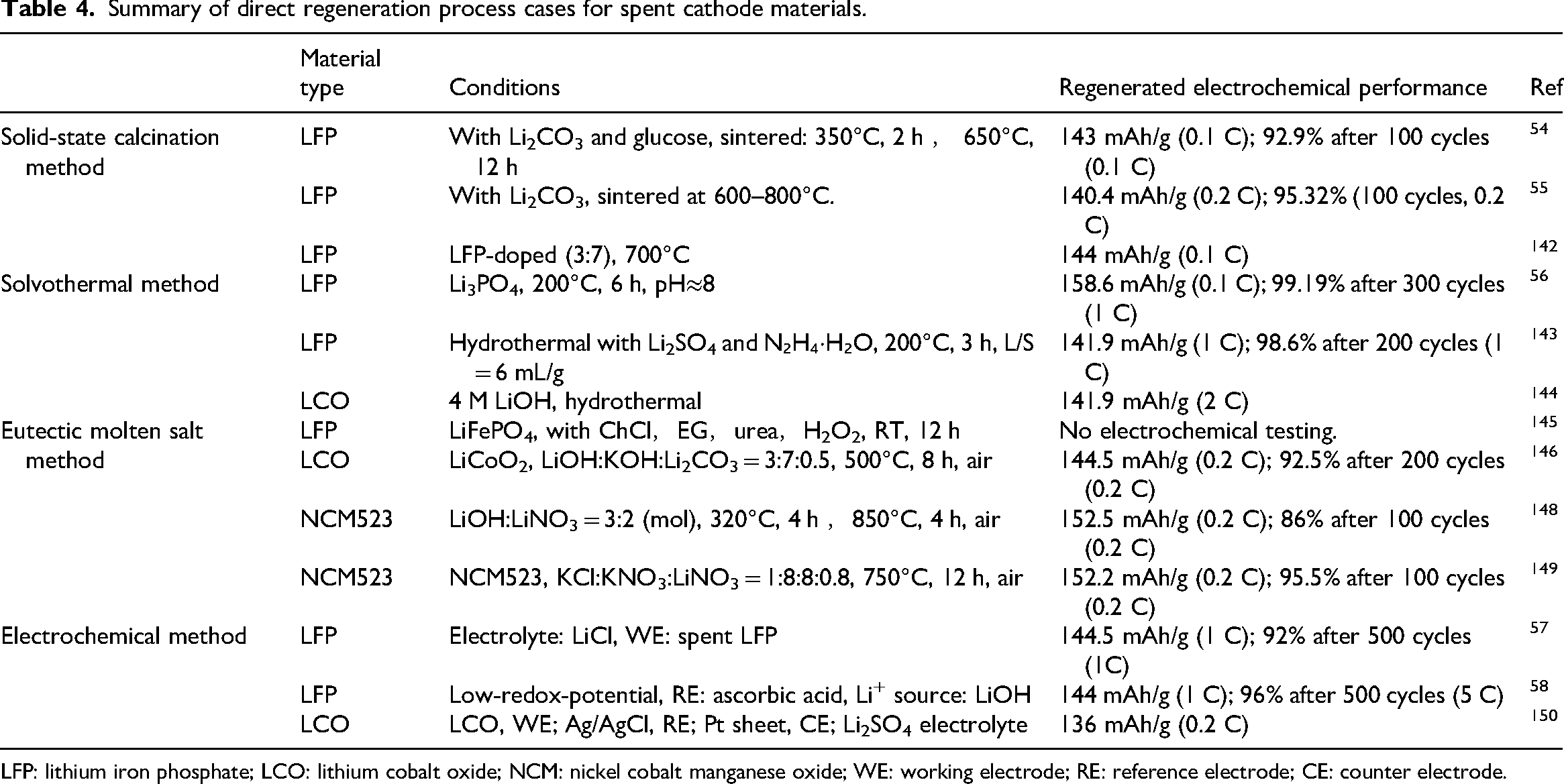
LFP: lithium iron phosphate; LCO: lithium cobalt oxide; NCM: nickel cobalt manganese oxide; WE: working electrode; RE: reference electrode; CE: counter electrode.
In terms of performance, all direct regeneration methods share a highly consistent target product (i.e. regenerated cathode materials), but differences exist in their repair mechanisms, reaction conditions, and effectiveness. The solid-state roasting method supplements lithium and repairs the crystal structure through high-temperature solid-state reactions. Its process is closest to the original synthesis route of cathode materials, resulting in regenerated materials with high crystallinity and excellent recovery of electrochemical performance. However, the high-temperature process may cause excessive particle growth or lithium volatilization. The solvothermal method achieves lithium supplementation via ion diffusion in the liquid phase, with a significantly reduced reaction temperature, which can better preserve the original particle morphology but may fail to fully repair deep-seated crystal defects. The eutectic molten salt method enhances mass transfer through a molten salt medium, further lowering the reaction temperature (down to 300–500°C) and enabling efficient lithium supplementation and structural repair under mild conditions. The electrochemical method is the most unique: it drives lithium ions to re-embed directly into defective lattices through an external circuit, theoretically offering the potential for atomic-level precise repair. Conducted at room or low temperatures, this method is currently more suitable for repairing mildly degraded materials.
Regarding technical feasibility and industrialization prospects, significant discrepancies exist in maturity and economy. The solid-state roasting method exhibits the highest compatibility with existing cathode material production equipment and relatively leading technical maturity, facilitating easy large-scale integration. However, its core challenge lies in the precise control of lithium salt dosage and sintering parameters for waste materials with complex degradation states; otherwise, insufficient lithium supplementation or residual lithium impurities may occur. As medium-temperature repair routes, the solvothermal method and eutectic molten salt method have lower energy consumption and equipment requirements compared to high-temperature roasting. Nevertheless, the former faces challenges related to the high cost of high-concentration lithium sources and the safety of high-pressure reactors, while the latter needs to address issues such as molten salt recovery, recycling, and potential corrosion. Operating under mild conditions, the electrochemical method theoretically boasts high energy efficiency but is the most technically challenging route for industrialization. Key engineering hurdles include complex reactor design, low processing efficiency (predominantly batch-wise), and the stable treatment of complex electrochemical states in actual waste materials.
In terms of environmental footprint, direct regeneration methods are generally superior to pyrometallurgical and hydrometallurgical processes, as they avoid the complete separation and resynthesis of elements. Among them, the solid-state roasting method still incurs a certain degree of energy consumption and potential emissions due to the high-temperature process. For the solvothermal method, if organic solvents are used or lithium-containing wastewater is generated, solvent recovery and wastewater treatment require attention. The environmental friendliness of the eutectic molten salt method depends on the selection of the molten salt system (e.g. ionic liquids, DESs) and its recyclability. Under ideal conditions, the electrochemical method consumes only electrical energy and theoretically achieves zero reagent consumption, making it a potential route with the smallest environmental footprint.
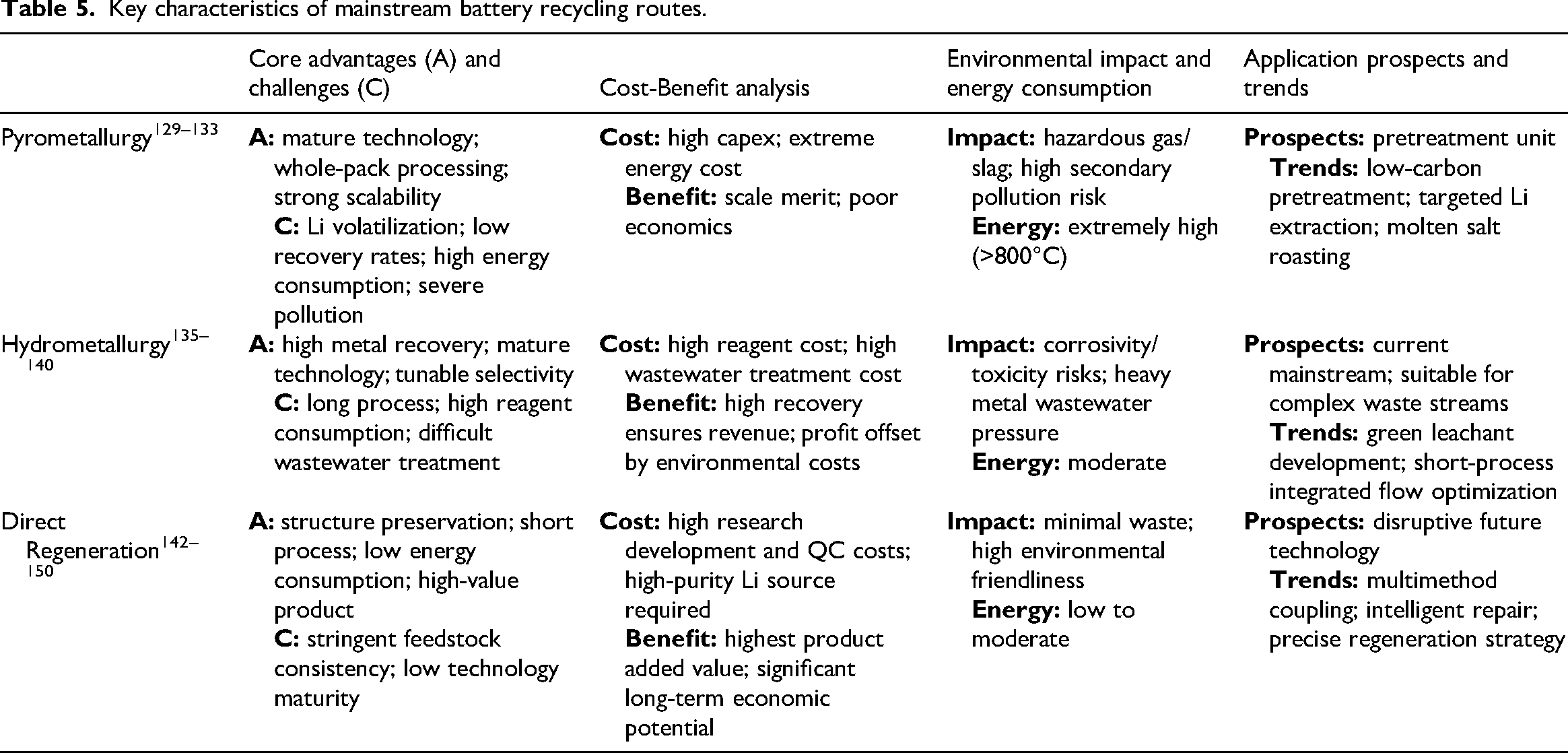
This section systematically reviews and compares the three mainstream recycling routes for spent LFP batteries: pyrometallurgy, hydrometallurgy, and direct recycling. To clearly present their technical characteristics and overall performance, four critical dimensions: core advantages and challenges, cost-benefit analysis, environmental impact and energy consumption, and application prospects and development trends are summarized in Table 5. It aims to provide a decisive reference and theoretical basis for selecting appropriate technological pathways according to different recycling scenarios and objectives (e.g. scale, economy, environmental requirements), as well as for guiding the development of next-generation green, low-carbon, and high-value recovery technologies.
Key characteristics of mainstream battery recycling routes.
Conclusions and perspectives
This review summarizes failure mechanisms and recycling technologies for spent LFP batteries, analyzing research progress from fundamental principles and technical perspectives. While significant advances have been made in LIB recycling, the direct regeneration of cathode materials and the green, efficient recovery of valuable metals remain at an early stage. A key scientific challenge is developing technologies capable of fully restoring the physicochemical and electrochemical properties of degraded cathode materials. This is compounded by critical bottlenecks such as the lack of rapid lithium detection methods, high material heterogeneity, incomplete regulatory standards, and poor compatibility across recycling systems. These issues collectively impede large-scale application by undermining product consistency, economic viability, and industrial integration. In response to the outlined challenges, the following future research directions are proposed:
Footnotes

Funding
The authors disclosed receipt of the following financial support for the research, authorship, and/or publication of this article: This work was supported by the Zhejiang Province Public Welfare Technology Application Research Project (Grant No. LGG22E010003).
Declaration of conflicting interests
The authors declared no potential conflicts of interest with respect to the research, authorship, and/or publication of this article.
Statements and declarations
The authors declare that they have no known competing financial interests or personal relationships that could have appeared to influence the work reported in this article.