







Abstract
Employee voice in multinational companies has been mainly studied in voluntarist, Anglophone industrial relations systems, and much less in other European countries. This article examines employee voice in foreign-owned multinational companies operating in Spain, using a sample of over 240 companies. It identifies the determinant factors in employee voice at macro and micro levels. The findings are interpreted in a comparative perspective, considering those approaches predominantly used in Anglophone and other west European countries, such as France and Germany.
Introduction
How employees express their views, expectations and concerns about their working conditions is a central issue in industrial relations, and a substantial literature has been generated over the past decades (Benson, 2000; Dundon et al., 2004; Freeman and Medoff, 1984; Gollan, 2003; Kaufman, 2015; Lavelle et al., 2010; Tüselmann et al., 2003, 2006, 2015; Wilkinson et al., 2004). Although most studies have been rooted in Anglophone countries (particularly Britain, Ireland and Australia), scholars have highlighted the need to investigate employee voice in less permissive host countries such as Spain, Italy or France (Marginson et al., 2010). This is the first quantitative study of employee voice in multinational companies (MNCs) in Spain. The research aim of this article is twofold. First, it patterns employee voice mechanisms used in foreign-owned MNCs located in Spain, providing descriptive data from 242 companies. Second, it uses binary regression analysis to identify the institutional and the organizational-level effects that constitute the antecedents of employee voice within Spain. I discuss the findings comparatively, in relation to the incidence of employee voice in other European contexts.
Employee voice
While employee voice is generally viewed as a multidisciplinary concern (Kaufman, 2015; Wilkinson et al., 2010), being the focus of numerous studies in the organizational behaviour and human resource management (HRM) fields as well as in sociology and labour law, this article takes an Employment Relations approach. There are many definitions of employee voice, but for the sake of simplicity and to facilitate comparative analysis, I restrict the concept to ‘any type of mechanism, structure or practice, which provides an employee with an opportunity to express an opinion or participate in decision-making within their organization’ (Lavelle et al., 2010: 396). Employee voice has been classified into two types, direct and indirect. Direct voice embraces any channel through which employees are involved with management in decision-making on any issues affecting their work and workplace, such as ‘formally designated teams, problem solving groups, attitude surveys, suggestion schemes, appraisal systems and meetings between management and employees’. Indirect voice encompasses the articulation of ‘some form of collective employee representation’, union or non-union, through which employees influence their working conditions (Lavelle et al., 2010: 396).
Some scholars have developed this dichotomy into four different approaches: direct, indirect, dualistic and minimalistic (Lavelle et al., 2010; Tüselmann et al., 2003, 2006, 2015). Indirect approaches are found in MNCs that rely primarily on indirect mechanisms while deploying direct mechanisms rarely. Conversely, direct approaches characterize MNCs relying heavily on direct mechanisms without any kind of employee representation structure. Dualistic approaches are used by MNCs adopting a combination of direct and indirect mechanisms in the workplace. Minimalist approaches are those of MNCs that offer neither direct nor indirect mechanisms of employee voice.
Many MNCs, such as US-owned companies and those operating in specific sectors, refuse to engage with employee representation structures, and scholars researching such companies have focused on direct and minimalist approaches (Gall and Dundon, 2013). These two approaches are possible in voluntarist industrial relations systems where employers have considerable latitude to accept or reject union representation (Roche, 2001). Notable examples of voluntarist systems are those in Britain, Ireland, the USA and Canada. In these contexts, direct approaches to employee voice are normally linked to direct consultative and participative structures that are a two-way communication channel between managers and employees (Marginson et al., 2010; Roche, 2001).
However, in other countries with rights-based industrial relations systems, it makes little sense to speak of a pure direct or minimalist approach. For instance, in some European countries, a union avoidance approach cannot easily be pursued at company level if the organization is subject to legislation prescribing collective representation mechanisms or is bound by a sectoral, national or regional collective agreement. As Gumbrell-McCormick and Hyman (2006) note the notion of non-union employee representation, as the term is usually understood in the English-speaking world, has little resonance in most countries of continental Western Europe. Anglo-Saxon usage has three typical implications. First, whether to establish representative mechanisms, and if so in what form, is at the discretion of the employer. Second, in-house machinery may be created with the deliberate purpose of union exclusion. Third, it can be tailored to fit company-specific approaches to the management of employees as individuals. (p. 473)
Rights-based systems define a wide range of rights and responsibilities to which social actors have to respond; in particular, employers do not benefit from unrestricted management prerogatives. In most of Western Europe, companies employing at least 50 workers are obliged to deal with collective employee representatives (whether or not formally union-based) by statutory provision. This is the case in Germany, France, Italy, Spain or Portugal (Gumbrell-McCormick and Hyman, 2006; Molina, 2014). I therefore propose a model of four employee voice approaches more fitting to rights-based industrial relations systems, drawing on the typology of Lavelle et al. (2010) (see Figure 1).
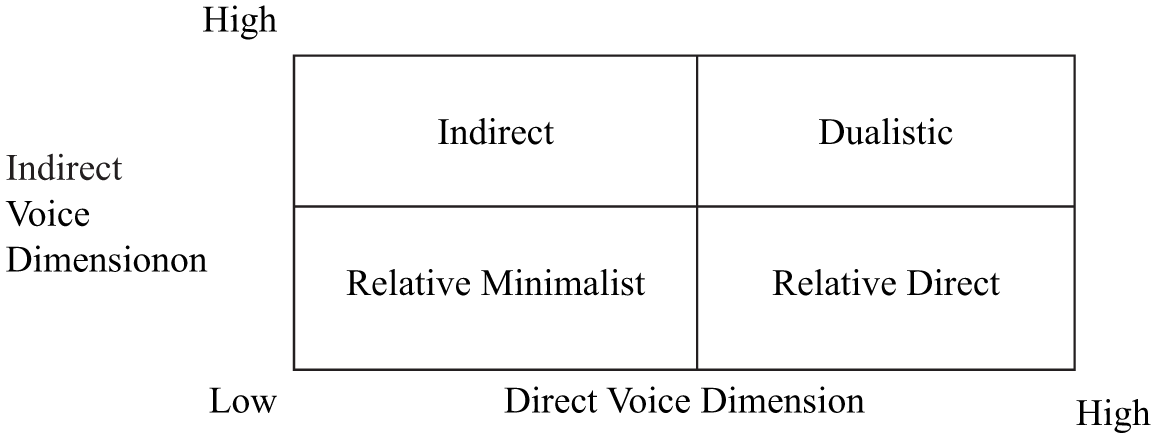
Approaches to employee voice in rights-based systems.
The main difference from their typology is that there is no pure direct voice dimension in rights-based systems. There are, however, relative direct approaches that make use only of direct voice mechanisms at company level, entailing an absence of indirect mechanisms at firm level, even when covered by collective agreements with which all companies need to comply. There are also relative minimalist approaches, whereby MNCs deploy neither direct nor indirect mechanisms of employee voice at firm level while they operate under collective agreements.
Antecedents of employee voice in MNC subsidiaries
As noted above, most research on employee voice in MNCs operating in Europe has been undertaken in Anglophone countries, Britain and Ireland. In this section, I summarize the determinant factors that the literature has linked to the use of employee voice mechanisms in these two countries, as a basis for comparison with the Spanish context. Research has centred primarily on the identification of institutional effects (macro) and organizational-level effects (micro).
Macro-level effects
Country-of-origin effects have been widely linked to the approaches of MNCs to employee voice (Marginson et al., 2010). British MNCs are known to adopt distinctive and often localized approaches in dispersed host locations such as the USA, Germany or Japan (Ferner et al., 2005). On the other hand, US-owned MNCs have a tradition legacy of union avoidance policies, particularly in countries where legislation facilitates these (Dundon, 2002; Gunnigle et al., 2005, 2009; Logan, 2006; Marginson et al., 2010). As Marginson et al. (2010) note there is a potential asymmetry between MNCs headquartered in countries such as the USA, with a tradition of anti-unionism, and those based in the countries of continental western Europe, which provide institutional and legal support to collective employee representation and consultation, in choice of voice practice in an institutionally permissive host environment such as the UK. (p. 155)
Taking stock of the evident intra-model variation that US-owned MNCs present, that is, variation in employee representation approaches by sector of operations or size of subsidiaries, recent studies show evidence that US companies still prefer non-union approaches while pursuing direct voice mechanisms (Colling et al., 2006; Marginson et al., 2010).
Variations in the approaches to employee representation are also shaped by the country of operations and its national labour market legislation, industrial relation system and union legacy (Almond and Ferner, 2006; Fenton-O’Creevy et al., 2008). Scholars often distinguish between permissive host countries such as the USA or Ireland and regulated host countries such as those in Southern Europe. There is increasing literature showing that MNCs pursuing direct employee voice strategies in their country of origin are more likely to do so in their foreign operations located in permissive regimes than in more regulated host countries (Belizón et al., 2014; Dundon, 2002; Gunnigle et al., 2009). One would therefore expect US-owned MNCs operating in Spain to be more likely to report either a relative direct or relative minimalist approaches to employee voice than their non-US counterparts.
Micro-level effects
An excessive focus on institutional determinants of employment practices in MNCs has been subject to criticism (Bechter et al., 2012; Lamare et al., 2013; Marginson et al., 2010). It is argued that research should examine sub-national levels, where the transfer and implementation of employment practices occur, including firm-specific factors.
The presence of a European Works Council (EWC) for the European operations might encourage an inclination for MNC management to favour indirect employee voice across Europe (Marginson et al., 2004, 2013). More often than not, its existence implies a tendency to engage with collective employee participation and consultation, possibly in the form of indirect or dualistic employee voice. According to Marginson et al. (2004), EWCs are usually built on ‘industrial relations platforms’ whereby there is a cross-national presence of collective employee representation structures in the largest subsidiaries of MNCs. Hence, it is common to find EWCs in the manufacturing industries where indirect employee voice mechanism prevail (Hancké, 2000; Waddington and Kerckhofs, 2003). One would therefore expect that those MNCs in Spain that have not established a EWC will be more likely to report either a relative direct or relative minimalist approach to employee voice, in comparison to those where an EWC exists.
At subsidiary level, an increasing interest has been shown in the potential impact on industrial relations practices of the sector of operations (Bechter et al., 2012; Lamare et al., 2013; Marginson et al., 2010). First, sectoral collective agreements are a central institution of industrial relations in most western European countries. Second, levels of unionization are usually much higher in the manufacturing sector than in private services (Lamare et al., 2013). Thus, we expect MNCs in the services sector to be more likely to report either dualistic, relative direct or relative minimalist approaches than those operating in manufacturing.
Product diversification can significantly influence how MNCs approach employee representation. Marginson et al. (2010) argue that MNCs focused on a single business are more likely to favour direct channels of employee representation; while those with more diversified activities are less inclined to avoid union presence and hence are more likely to have a variety of employee representation channels. Lamare et al. (2013) also find that organizations pursuing a single product or service strategy were more inclined to report a higher incidence of collective employee representation than those with a diversified strategy. Given these findings, one would expect MNCs with a product diversification strategy in Spain to be more likely to report either a relative direct or minimalist approach to employee voice than those with a single product strategy.
At departmental level, individual-oriented HR practices have been linked to the incidence of direct employee voice mechanisms, because of their capacity to provide benefits beyond those offered by conventional employee representation (Roche, 2001). Some scholars have noted the role of ‘soft’ individual-oriented HR practices in substituting or preventing unionized representation (Gunnigle et al., 1998). These ‘soft’ practices include individualized pay, training and direct communication. Individualized practices foster a direct relationship between employer and employee as a disincentive to collective employee representation (Roche, 2001). In the light of these arguments, one would expect MNCs offering individual-oriented HR practices in Spain to be more likely to report either a relative direct or minimalist approach.
One of the characteristics of the Spanish national business system, which in turn affects employment practices, is its malleability (Bayo-Moriones et al., 2013; Quintanilla et al., 2008). The plasticity of the Spanish business system allows flexibility in the adoption of practices, and it makes Spanish managerial approaches more idiosyncratic than in many other countries. This plasticity reflects a historical lack of large corporations and an economy that only opened internationally in the late 1960s, in the last decade of Franco’s dictatorship. Up to then, the Spanish economy survived thanks to the agricultural sector and small local enterprises. Some scholars have alluded to Americanization to describe the evolution of HR practices in Spain up to the 2000s. Spanish managers are often inclined to adopt HR practices of foreign origin that are somewhat more sophisticated than traditional Spanish ones and more fitting to their business needs (Quintanilla et al., 2008): in the 1990s, managers in Spanish multinationals did not find a proper legacy of employment practices and looked to their foreign counterparts to incorporate practices such as payroll and recruitment systems or diversity management (Guillén, 2005). Yet, the Spanish labour market is considered one of the most rigid in Europe (Almond and Ferner, 2006; Hamann, 2012). The onset of democracy 40 years ago brought about the legalization of union organization and collective bargaining at national, sectoral and regional (provincial) levels (Hamann and Martínez-Lucio, 2003). Collective agreements in Spain are mandatory and include all employees and firms in the constituency covered by the agreement.
Methods
This article uses data from the largest empirical study of employment practices in MNCs operating in Spain (Quintanilla et al., 2010). The large-scale survey was conducted by the Spanish node of the INTREPID project (Investigation of Transnationals’ Employment Practices: an International Database), which involved research teams undertaking parallel surveys in MNCs in different countries.
The survey covered foreign-owned firms employing at least 500 employees worldwide and at least 100 in Spain. The difficulty of finding an accurate list of MNCs operating in the country led the Spanish team to compile a population which comprised 894 foreign-owned MNCs. All were invited to participate in the study via postal letter and in some cases by phone and e-mail. The administration of the face-to-face questionnaire took place between June 2006 and August 2008. The questionnaire was designed to investigate the key domains of employment practice in MNCs, and took 75 minutes on average to complete. A total of 242 firms participated, a response rate of 27 percent.
The dependant variables were measured through dichotomous items asking whether the MNC had adopted in its Spanish operations:
An indirect employee voice approach (union or non-union) (0 = no; 1 = yes);
A relative direct employee voice approach (0 = no; 1 = yes);
A dualistic employee voice approach (0 = no; 1 = yes);
A relative minimalist employee voice approach (0 = no; 1 = yes).
The independent variables were the following. The institutional effect is represented by country of origin, which was identified and then grouped into the following categories: USA, UK, France, Germany, rest of Europe and rest of the world.
At the micro level, organizational factors include the sector of operation, which was a simple binary item (0 = manufacturing, 1 = services), and diversification of product or service, measured through a categorical variable (1 = a single product or service that accounts for more than 90%; 2 = a number of products and services but one of these accounts for more than 70%; 3 = a number of products and services but no single one of these accounts for more than 70%; 4 = a range of unrelated products and services).
Individual-oriented HR practices were measured through a number of binary items in relation to the largest occupational group (LOG): pay levels above the market average; formal appraisal system; forced distribution of performance ratings (with a fixed quota for each grade); employee share ownership scheme; profit-sharing; variable pay for the LOG, variable pay for managers; formal succession planning system; and formal development programme.
The control variables used in the regressions are: number of employees in Spain (1 = 100–499; 2 = 500–4999; 3 = + 5000): age of the subsidiary (0 = before 1980, that is, 5 years after the restoration of democracy in Spain and 1 = after 1980); mode of entry (1 = merger or acquisition, 2 = greenfield); and new investments (1 = investment within the last 5 years, 0 = no new investment).
Sample descriptive data
Of the 242 foreign-owned MNCs, 55.8 percent operate in the service sector. Over a third have headquarters in the USA (37.2%), while the remainder are mainly European: UK (10.7%), France (16.1%), Germany (13.2%) and the rest of Europe (17.4%) as illustrated in Table 1 along with other demographics.
Sample characteristics.
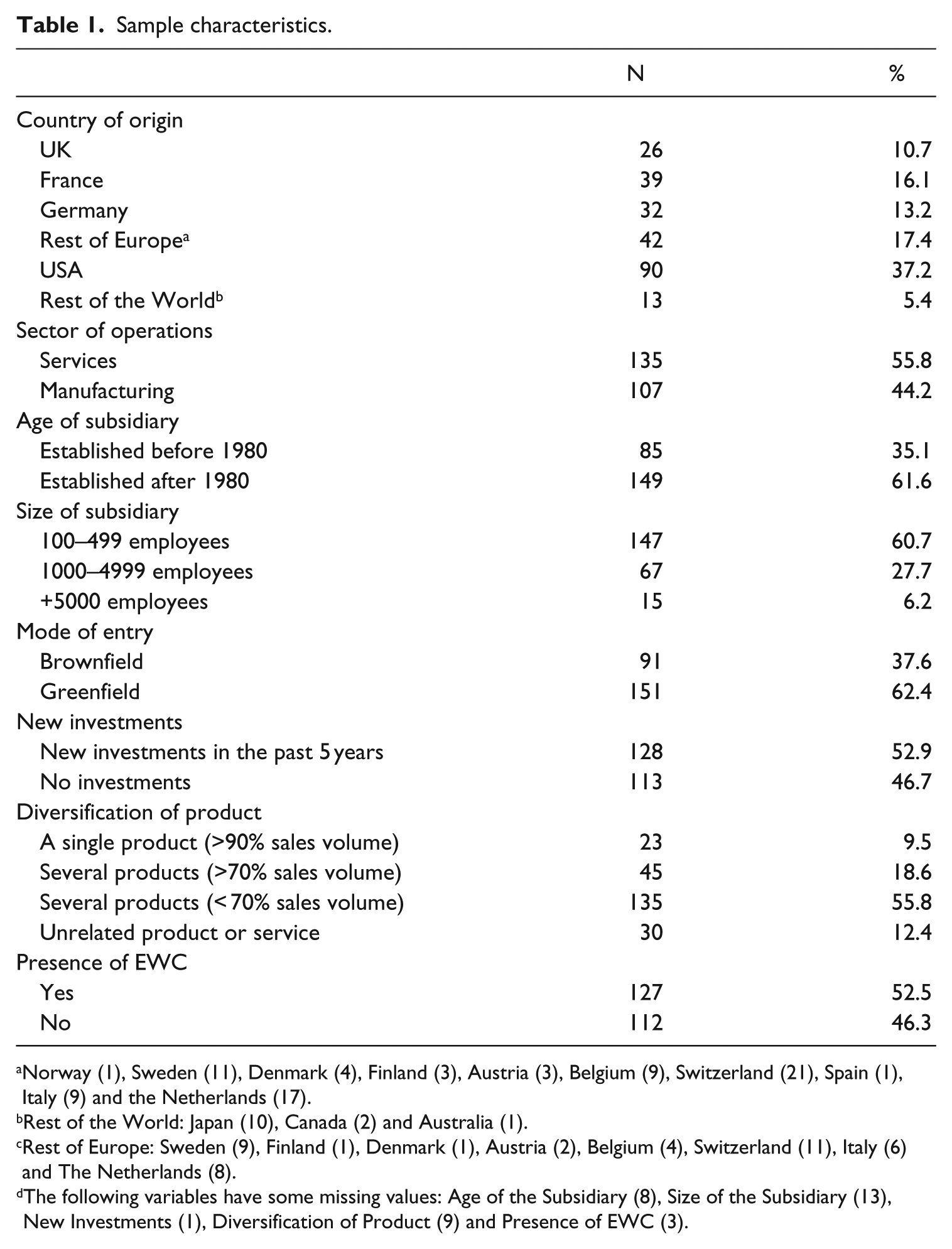
Norway (1), Sweden (11), Denmark (4), Finland (3), Austria (3), Belgium (9), Switzerland (21), Spain (1), Italy (9) and the Netherlands (17).
Rest of the World: Japan (10), Canada (2) and Australia (1).
Rest of Europe: Sweden (9), Finland (1), Denmark (1), Austria (2), Belgium (4), Switzerland (11), Italy (6) and The Netherlands (8).
The following variables have some missing values: Age of the Subsidiary (8), Size of the Subsidiary (13), New Investments (1), Diversification of Product (9) and Presence of EWC (3).
Approaches to employee voice
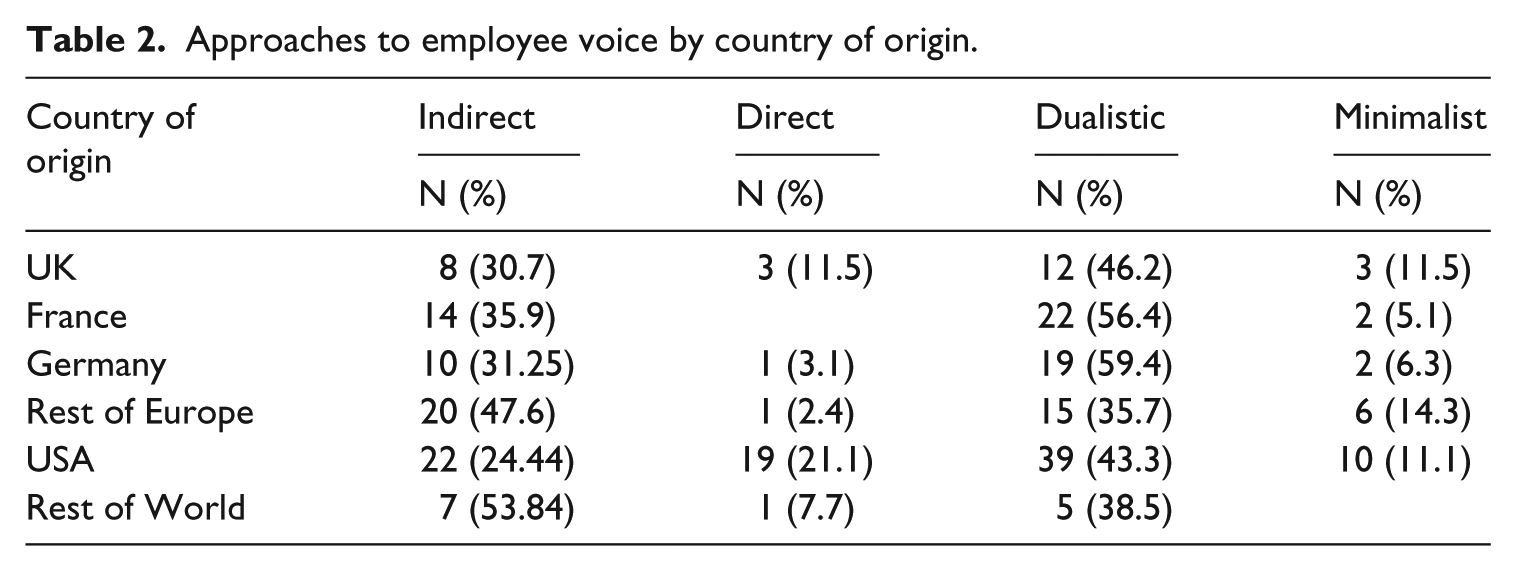
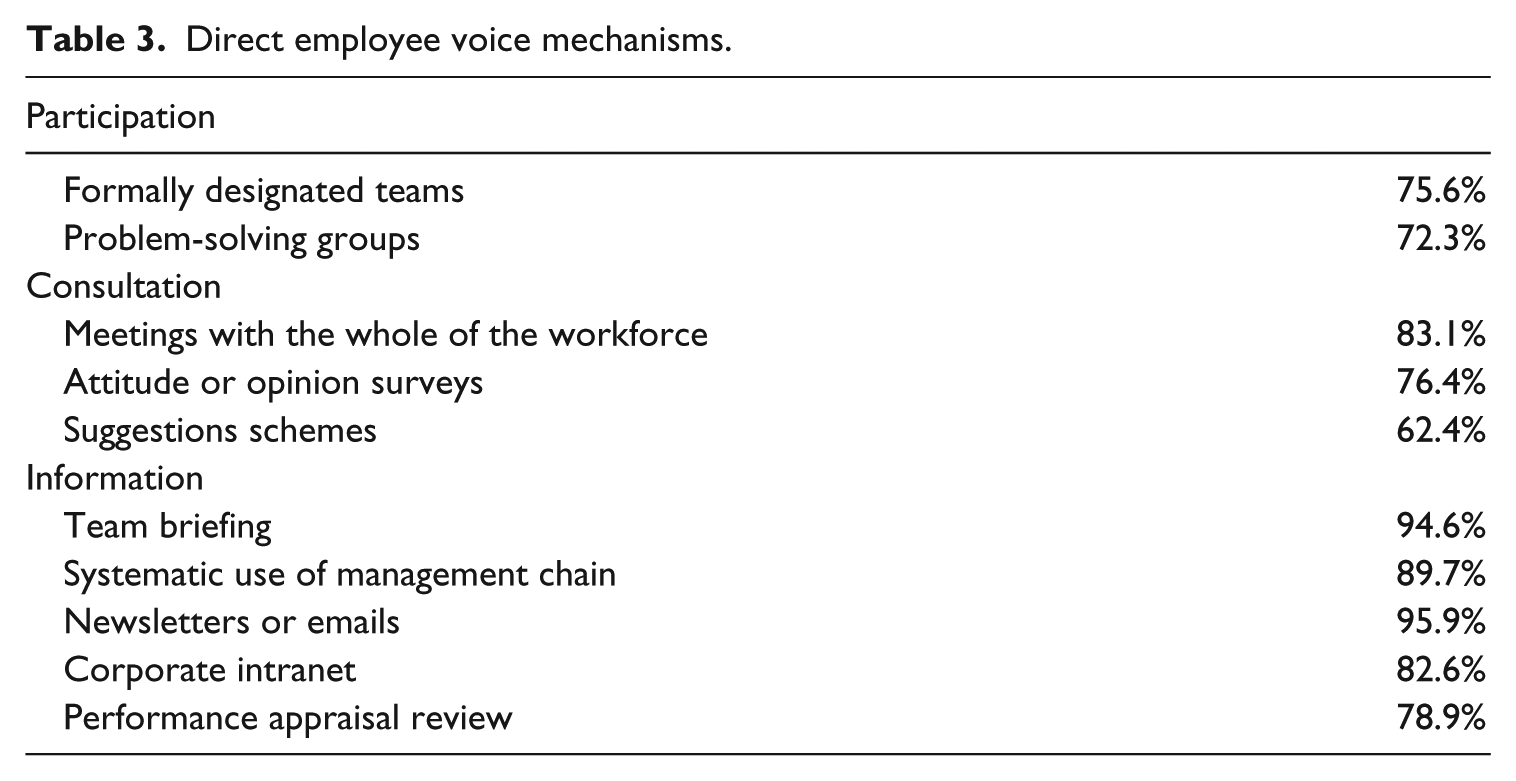
The dualistic approach to employee voice is used by some 46.3 percent of MNCs, while another 33.5 percent use only indirect voice mechanisms (union or non-union). Only 10.7 percent make use of relative direct employee voice mechanisms alone, and 9.5 percent have adopted a minimalist approach. Table 2 shows the use of these four approaches by country of origin. Within the direct employee approach, information provision mechanisms are overall more predominant than participation and consultation mechanisms (for details see Table 3).
Approaches to employee voice by country of origin.
Direct employee voice mechanisms.
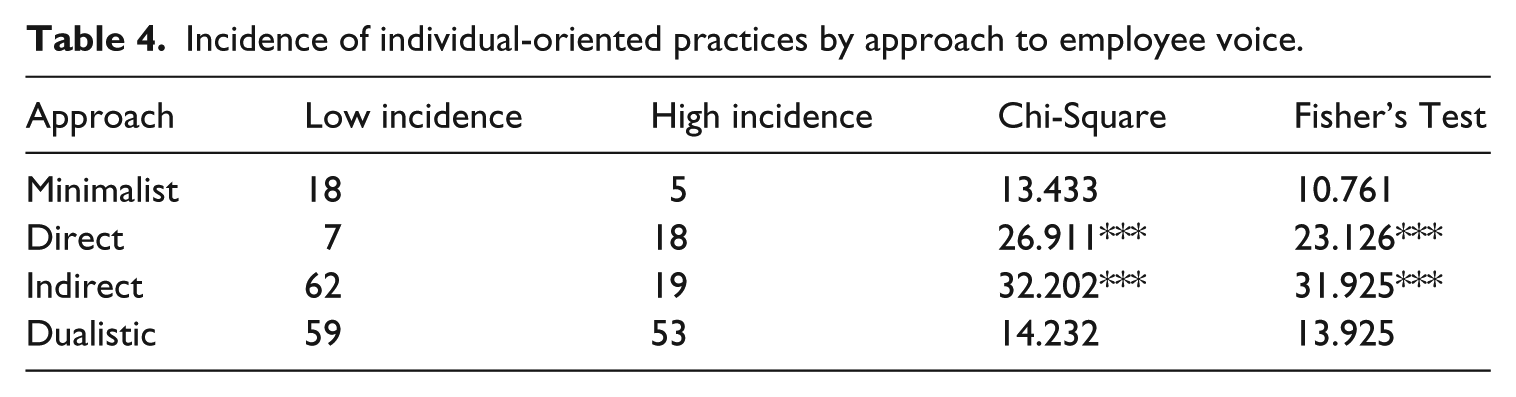
In relation to the use of individual-related HR practices, foreign-owned MNCs operating in Spain reported a high usage of variable pay for managers (97%) and for the LOG (72.7%), a formal appraisal system for the LOG (78.9%) and a formal development programme for employees (76%). Over half of the sample reported a formal succession planning system (56.2%) while slightly fewer pay above the market salary average (45.9%). Few foreign-owned MNCs employ forced distribution review systems (32.5%), share ownership schemes (24.8%) or profit-sharing schemes (20.7%). Table 4 shows the incidence of individual-oriented HRM practices by MNC approach to employee voice. MNCs adopting a relative direct approach report a high incidence of individual-oriented HRM practices, while MNCs adopting either an indirect or relative minimalist approach report a low incidence of these HRM practices. MNCs following a dualistic approach report medium levels of individual-related HR practices.
Incidence of individual-oriented practices by approach to employee voice.
Model specification and findings
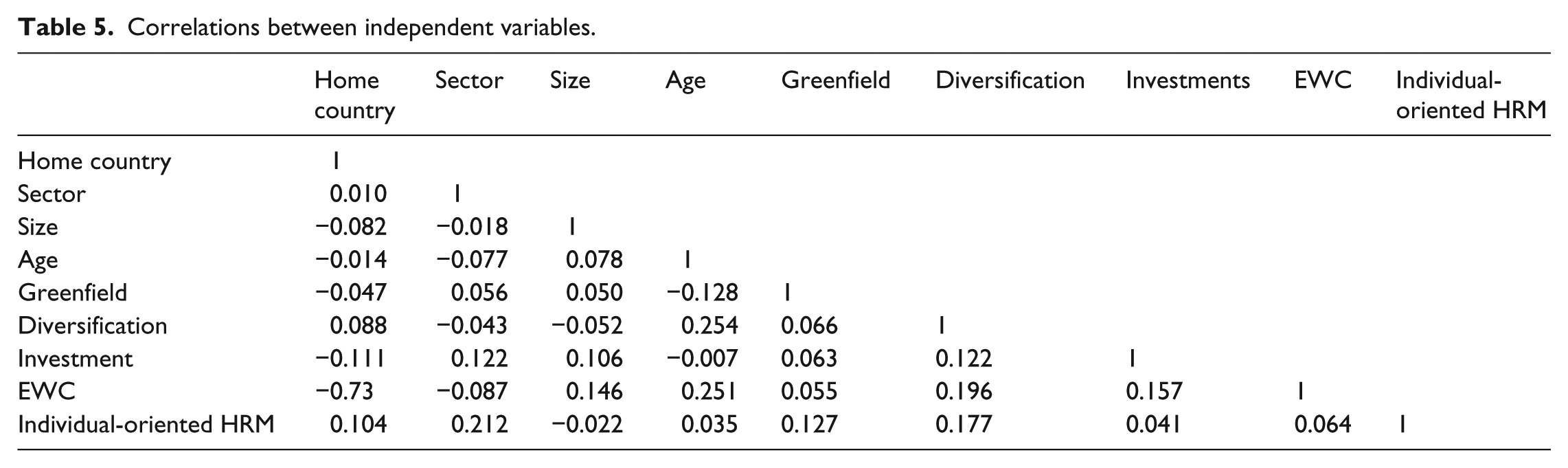
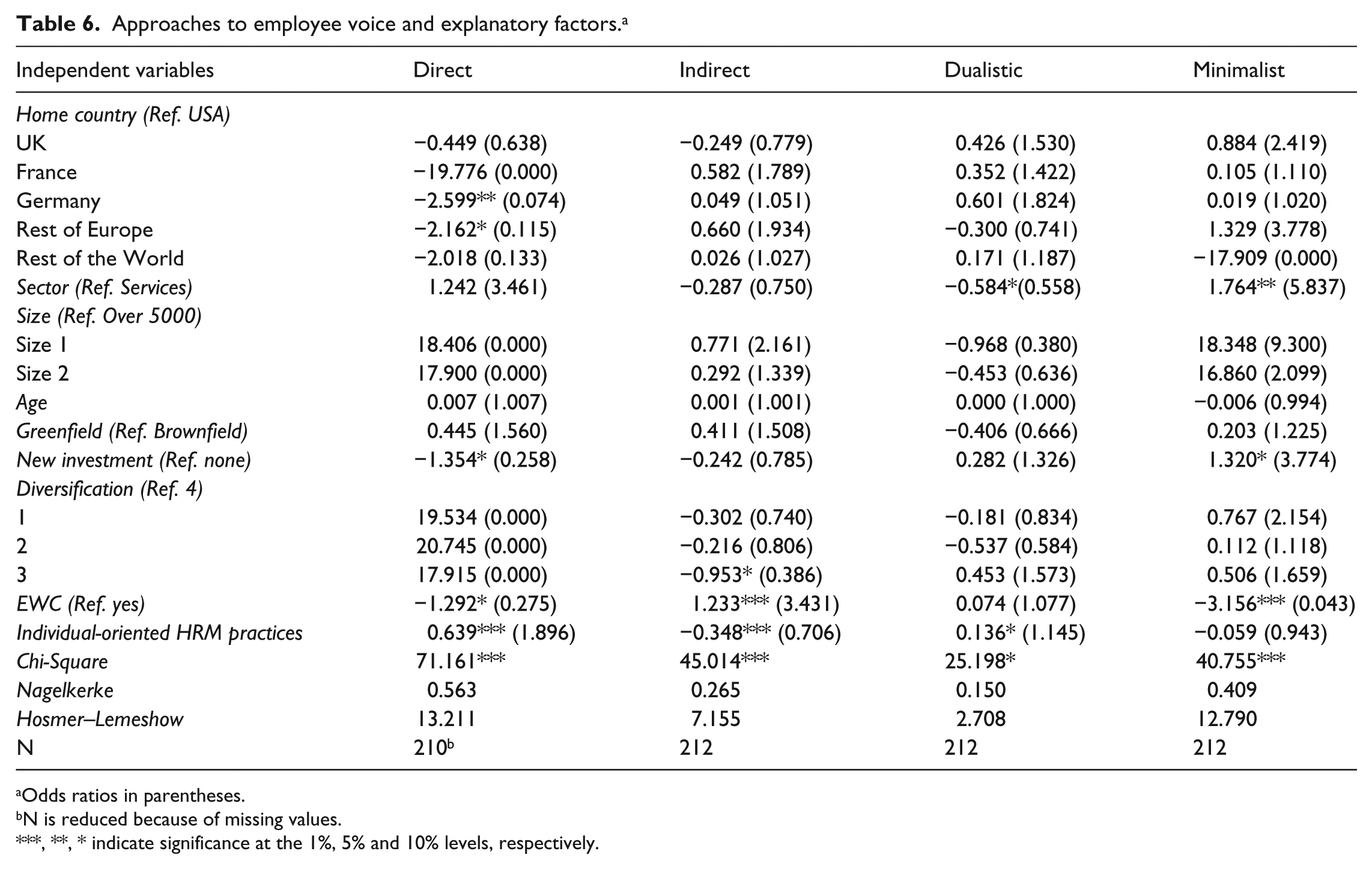
Correlations between the independent variables are fairly low. The highest figure obtained was 0.254 (see Table 5). We also ran collinearity tests, and the results were within the normal established limits. Four binary regression analyses were carried out, one for each employee voice approach. Findings pertaining to the four models are shown in Table 6.
Correlations between independent variables.
Approaches to employee voice and explanatory factors. a
Odds ratios in parentheses.
N is reduced because of missing values.
***, **, * indicate significance at the 1%, 5% and 10% levels, respectively.
Indirect voice approaches. The presence of an EWC is the most significant indicator of indirect voice approaches. There are two other significant factors. MNCs relying on the use of indirect voice mechanisms are more likely to report a low level of individual-related HRM practices, and those with little product diversification are less likely to use indirect voice than those MNCs with no diversification at all. Roughly 40 percent of MNCs reporting an indirect voice approach do not offer any of the listed individual-related HRM practices. The low proportion of MNCs using individual-related HRM practices prefer to use forced distribution, employee share ownership schemes, profit-sharing and variable pay.
Relative direct voice approaches are positively related to the incidence of individual-oriented HRM practices. According to the odds ratios, this is the most relevant and significant factor. There are two other indicators of relative direct employee voice approaches: the absence of an EWC and the incidence of new investments. MNCs which reported not having established an EWC are more prone to use employee direct approaches as well as those that have undertaken new investments (opening new sites within the host country within the previous 5 years). Country of origin proves to be significant to a lesser extent; MNCs from the rest of Europe are less likely to report direct voice than those originating in the USA. Some 96 percent of these MNCs report individual-related HRM practices. The preferred individual-related HRM practices reported by these MNCs are, in order of importance, variable pay for the LOG, profit-sharing, employee shared ownership schemes, variable pay for managers and formal succession planning programmes.
Dualistic voice approaches are also positively related to the incidence of individual-oriented HRM practices, being the most significant indicator. Sector of operations proves to be significant to a lesser extent: MNCs operating in services are less likely to report dualistic voice than those in manufacturing. Some 83 percent of these firms report the use of individual-related HRM practices, in particular a medium level of usage of profit-sharing, employee share ownership schemes and variable pay.
Relative minimalist approaches are highly related to the sector of operations. MNCs in services are more likely to report relative minimalist voice than those in manufacturing. Those that have undertaken new investments in the last 5 years are more likely to use relative minimalist voice mechanisms than those that have not. MNCs without an EWC are more likely to report a relative minimalistic approach than those with one. Some 13 percent of these MNCs do not provide any individual-related practice for their employees. Their usage is, however, considerably low. The two most preferred practices are employee share ownership and forced distribution.
Discussion and conclusion
What are the most prominent employee voice approaches adopted by foreign-owned MNCs in Spain, and how does this compare with other European countries? As expected, dualistic and indirect mechanisms predominate, being used in 80 percent of MNCs operating in Spain. The incidence of collective employee representation at company level (union or non-union) is slightly lower than the proportions reported in France and Germany (Gumbrell -McCormick and Hyman, 2006) and higher than those found in Ireland and the UK: dualistic and indirect voice combined amounts to roughly 57 percent of MNCs in Ireland and 45 percent in the UK (Lamare et al., 2013; Lavelle et al., 2010).
Our findings reveal the importance of EWCs as mechanisms of indirect voice in subsidiaries operating in Spain. The presence of an EWC – if accepted willingly by the MNC – may simply reflect a desire to optimize managerial decision-making and communication across foreign subsidiaries (Lecher et al., 2001; Weston and Martínez-Lucio, 1997), but this outcome sheds light on the role of an EWC as a counterpoint to the gradual fragmentation of industrial relations evident in recent years. It seems that indirect employee voice in MNCs operating in Spain remains particularly strong under the auspices of a pan European structure of collective representation. This can be explained by the possibility of unions devising transnational strategies to safeguard the interests of employees across countries (Hamann and Martínez-Lucio, 2003). Whittall et al. (2017) note that EWCs in some German companies such as Volkswagen have promoted transnational company agreements through which employee representatives in other European locations have strengthened their positions. In addition, our findings suggest that the collective nature of indirect employee voice under a European leadership seems to allow little scope for individual-related HRM. Hence in MNCs where indirect representation prevails, preferences for practices of an individualistic nature are not common.
Conversely, MNCs adopting a direct approach to employee voice in Spain certainly are American, as expected, although country-of-origin effects are also substantially overshadowed by organizational (micro-level) factors. Direct approaches are significantly associated with absence of EWCs and a high usage of individual-related HRM practices, focused on variable pay, profit-sharing and formal succession planning. These findings echo the phenomenon of Americanization of HRM practices (Quintanilla et al., 2008) whereby US-owned subsidiaries in Spain predominantly adopt American practices, assisted by the malleability of the system. This provides the opportunity to bypass collective employee representation at company level, in contrast to many other European countries (Gumbrell-McCormick and Hyman, 2006; Gunnigle et al., 2009; Roche, 2001). Comparatively, the proportion of MNCs in Spain operating in this way is relatively small, but this is perhaps a sign of the ‘erosion of national industrial relations systems and conditions of employment’ which some scholars have identified in other countries in Europe (Hyman, 2015; Roche, 2001): other MNCs may look to these companies to replicate their practices in Spain. Longitudinal studies of are certainly needed to visualize the scope of such a shift in employee voice approaches. These findings echo the idea of institutional ‘layering’ (Streeck and Thelen, 2005), whereby MNCs are often in a position to challenge a country’s national settings and legal arrangements (Ferner et al., 2012; Geary and Aguzzoli, 2016), in this case by circumventing industrial relations regulations with a bundle of individual-related HRM practices coupled with channels of direct employee voice.
However, it is worth noting that while this is the approach of some 10 percent of MNCs operating in Spain, roughly 45 percent report medium incidence and another 45 percent low incidence of individual-related HRM practices. This is the case particularly in MNCs using indirect and dualistic employee voice mechanisms through which collective employee representation is obviously present. Turning to insights on Spanish business culture, some scholars have indeed found clear signs of high power distance in the workplace. This leads to the argument that employees working for MNCs with a collective employee representation legacy might well be more inclined to hold on to a high power distance approach, preferring indirect mechanisms over flexible, flatter and more individualistic approaches (Cabrera and Carretero, 2005). The power-distance argument has also been witnessed in the difficulties the Volkswagen EWC encountered when trying to implement codetermination practices in Spain: the process was slowed down and diluted with local adaptations in form and terminology, referred to as ‘information provision’ and ‘consensus’ (Whittall et al., 2017: 410). Spanish managerial opposition in this case shows that emphasis on hierarchy is still on vogue.
Special consideration should be given to those MNCs adopting a relative minimalist approach, providing their employees with neither direct voice nor indirect communication channels. This small group of MNCs is interesting since not only is the use of individual-oriented HRM practices very low but also the few such practices adopted are ‘hard-HRM’ practices, such as forced distribution and employee shared-ownership schemes. These firms may belong to that breed of MNCs that follow hostile approaches to HRM and industrial relations, and are not particularly interested in their employees’ views. Nearly 50 percent of this cluster is of American origin, reflecting the comparatively common US use of the minimalist approach (Tüselmann et al., 2015). These findings are in line with research undertaken in the UK, Ireland and France, pointing towards a reluctance to view employee voice (direct or indirect) as a necessary component of the workplace. Further research might focus on the deterrent methods used by these MNCs to prevent employees from exercising their collective rights.
Footnotes
Acknowledgements
Besides acknowledging the financial support noted below, the author thanks Professor Javier Quintanilla (IESE Business School, Universdad de Navarra) for granting access to the Spanish data.
Funding
The author(s) disclosed receipt of the following financial support for the research, authorship, and/or publication of this article: The research received financial support from the European Commission International Research Staff Exchange Scheme (FP7 IRSES-GA-2008-230854 INTREPID), the Spanish Ministries of Education and Science (Ref. SEJ2007-03096, Award 01/0010/2006), Science and Innovation (Ref. ECO2009-10287) and the Fundación BBVA (Ref. 216/06).