






Abstract
This article explores how collective bargaining addresses workforce ageing by comparing sectoral agreements in Italy and the Netherlands. The study investigates whether workers aged 55 and over are effectively represented in sectoral bargaining and what regulatory logics underpin age-sensitive provisions. Through a systematic content analysis of the most representative sectoral agreements in both countries, complemented by interviews with unions and employers’ associations, the paper identifies five bargaining logics – defensive, transformative, symbolic, adaptive, and exit-oriented – and maps how they emerge across institutional contexts. The findings reveal that Dutch agreements contain a high number of age-related provisions primarily guided by an adaptive logic aimed at sustaining employability through organisational adjustments, while Italian agreements include fewer clauses, most of which are symbolic. The paper explains differences by considering the interaction among three causal packages based on the Varieties of Capitalism literature, the Power Resource Approach, and Ideational Institutionalism. The analysis shows that strong coordination and shared ideas about senior workers as valuable resources enable more proactive bargaining, whereas fragmented systems and a perception of senior workers as close to retirement limit regulatory innovation. The article concludes by highlighting the need for more substantive strategies to address demographic change through collective bargaining.
Keywords
Introduction
Over the past twenty years, industrial relations scholars have focused on the major transformations facing capitalist economies, such as climate change, digitalisation, and energy transition. These shifts have led to a greater focus on how these transitions influence bargaining practices at the supranational, national, and company levels, as well as how the strategies of key actors can help create or limit the social externalities they generate.
Alongside these structural transitions, however, another significant change has received less attention in the industrial relations literature: the demographic transition. The gradual ageing of the workforce in many advanced capitalist countries represents a long-term trend with deep and lasting impacts on labour market dynamics and on the organisation of work (Eurofound, 2024). Between 2009 and 2023, the number of employed individuals aged 55 to 64 in European countries grew from 23 million to 39 million, while the number of workers aged 15 to 29 decreased from 37 million to 35 million. 1 This structural change is coupled with a second process of political and institutional nature: pension and welfare system reforms in many European countries have raised the retirement age, making the later stages of working life both longer and more significant.
This growing share of older workers has specific needs regarding work–life balance, sustainable workloads and working hours, access to training, career development opportunities, and sustainable pathways for transitioning into retirement (Eurofound, 2024). However, despite the increasing quantitative significance of this group and the presence of age-specific interests of older workers, the industrial relations literature has so far overlooked the representation of older workers’ interests (Raspanti et al., 2024). Existing studies have primarily focused on work adaptation (Masso et al., 2019), retirement (Flynn, 2014), intergenerational collaboration (Muller-Camen et al., 2011), and the implementation of the 2017 Framework Agreement on Active Ageing and an Intergenerational approach by European social partners (Ball and Flynn, 2021). As a result, a comprehensive approach to the role of collective bargaining in addressing the effects of workforce ageing is still lacking.
This article fills this gap by examining whether collective bargaining effectively represents the interests of workers aged 55 and older. Following a two-step design, it pursues two goals. First, it develops and applies an analytical typology of representation logics, which distinguishes not only whether ageing enters bargaining agendas but also how substantively it is translated into regulatory commitments. Second, it explains the factors driving the emergence of these national models through the interaction of three causal packages, drawn, respectively, from the Varieties of Capitalism (VoC) literature, the Power Resource Approach (PRA), and Ideational Institutionalism.
Our analysis is comparative. Although Italy and the Netherlands face similar ageing pressures, they regulate work for those aged 55 and over through markedly different sectoral strategies. To capture these strategies, we conduct a systematic content analysis of the most representative sectoral agreements in the two countries, coding age-related clauses according to five representation logics. We complement this mapping with qualitative interviews with union and employers’ representatives, which shed light on how actors interpret workforce ageing and on the institutional, organisational, and cultural factors behind each national model.
The paper is organised into six sections. The second section discusses the theoretical framework and proposes a classification of representation logics by reviewing the literature on the role of collective bargaining in regulating the employee relation. The third section explains the methodological design. The fourth section presents the findings of the content analysis in the two countries, highlighting both quantitative and qualitative differences in representation logics. The fifth section interprets these differences through a configurational approach (Thelen and Mahoney, 2015), integrating insights from VoC, PRA, and Ideational institutionalism. The sixth and final section offers concluding reflections on the role of collective bargaining in regulating workforce ageing, along with the paper’s contribution to the industrial relations literature.
While the contrast between Italian and Dutch industrial relations systems may appear institutionally predictable, the paper shows that the direction and content of age-related bargaining are far from self-evident. In particular, the marginal role of workforce ageing in Italian sectoral agreements, despite the high share of older and retired union members, and the limited emphasis on exit-oriented solutions in the Netherlands challenge common expectations.
Collective bargaining and ageing: A theoretical framework
Over the last two decades, changing labour markets, shifts in the balance of power among collective actors, and, more generally, the transformation of the role of trade union representation itself have been at the centre of analysis of industrial relations scholars (Baccaro and Howell, 2017; Gumbrell-McCormick and Hyman, 2013; Visser, 2016). A key area of research has focused on how crises – especially the 2008 Great Recession (Glassner et al., 2011) and, more recently, the COVID-19 pandemic (Ebbinghaus and Weishaupt, 2022) – have affected the structures and functions of collective bargaining. In many countries, the Great Recession has accelerated trends that were already underway, such as the strengthening of company-level bargaining and the partial disintegration of sectoral and national coordination mechanisms (Baccaro and Howell, 2017). Nevertheless, sectoral and national bargaining has not disappeared. Instead, numerous studies emphasise their ongoing importance, even though they have been significantly transformed compared to the past (Brandl, 2022; Gumbrell-McCormick and Hyman, 2013).
Representation logics.
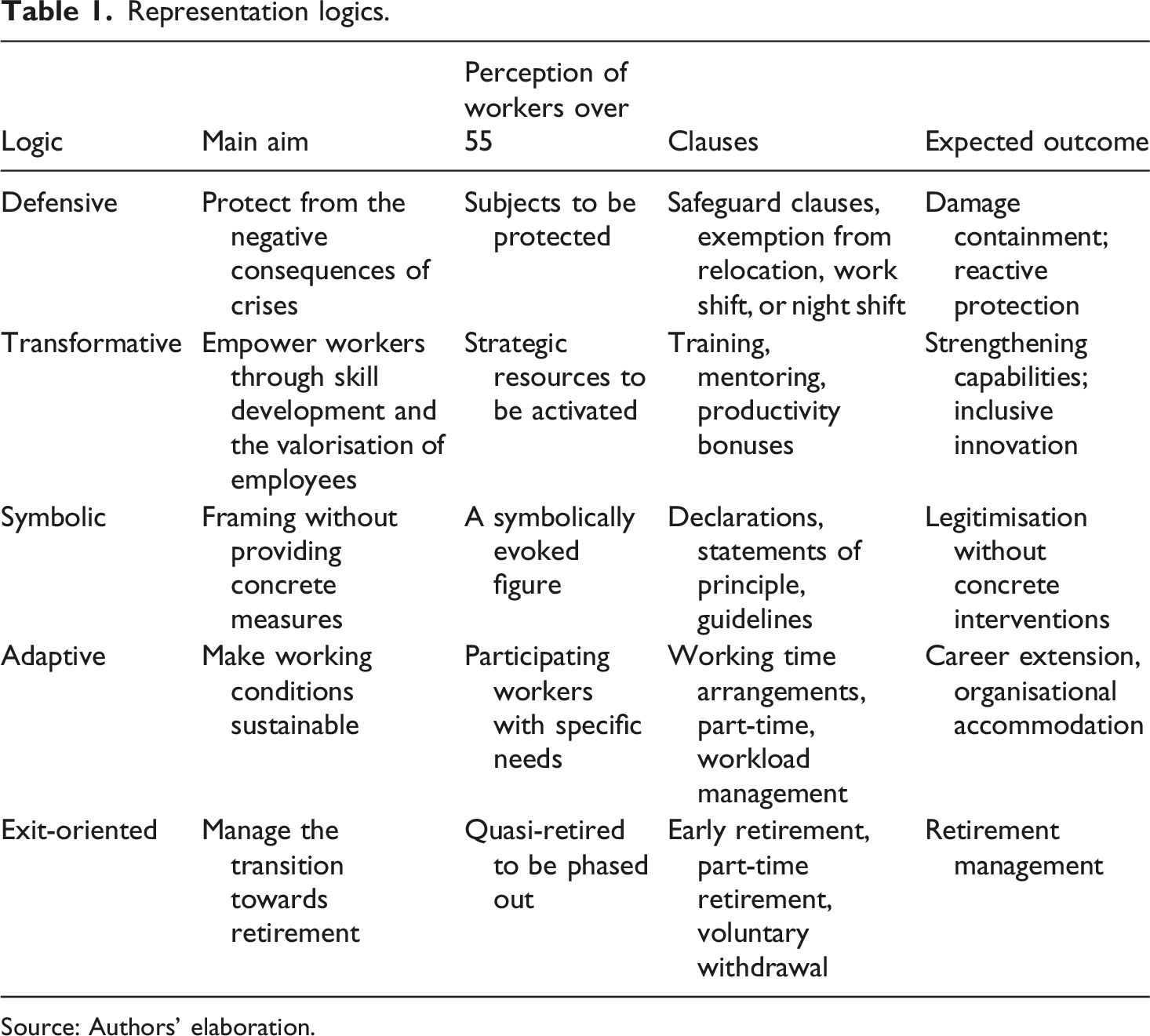
Source: Authors’ elaboration.
The defensive logic includes provisions preserving the status quo of older workers against changes in employment conditions (e.g. pay or work organisation), preventing their displacement, reorganisation, or overburdening without questioning the overall organisation of work. Here, employees over 55 appear as actors in need of protection. This logic also includes bargaining in response to restructuring processes or external shocks. Concession bargaining falls under this logic, as social partners negotiate to preserve employment levels or contain wage decreases (Roche et al., 2015). This type of bargaining emerged strongly during the Great Recession and persisted in sectors exposed to international competition, as shown by comparative studies of the European private sector (Glassner et al., 2011; Pulignano and Stewart, 2012). Under this logic, Bargaining thus plays a reactive function: it does not aim to transform the existing system but to limit the negative effects of company crises on workers, particularly older ones.
The second logic is transformative. Collective bargaining can assume a proactive approach by promoting innovative organisational arrangements on skills and working conditions (Brandl, 2022) to boost productivity (Doellgast and Benassi, 2020). Collective agreements foster organisational and technological advancements when backed by strong institutions of representation and structured social dialogue (Addison et al., 2016; Ornston, 2013). This approach emerges even during company-level crises, where social partners bargain over measures favouring job transitions over job protection, such as training (Pulignano, 2011). When applied to older workers, a transformative logic involves social partners anticipating and managing economic and technological change by developing solutions that enhance older workers' inclusion and productivity. Transformative clauses imply an investment-oriented logic that seeks to redefine older workers’ roles, skills trajectories, and productive contribution. Here, older workers are no longer viewed as a constituency to be protected, or a problem to be managed but as a resource to be empowered.
The symbolic logic is characterised by the predominance of the discursive dimension of bargaining. Clauses are classified as symbolic when they address ageing in declarative terms, without specifying operational instruments, rights, or binding commitments – that is, when the issue is acknowledged but not operationalised within the agreement. Symbolic bargaining can represent a form of political or value-based protection of workers’ interests. However, it can also assume a ritualistic character, for example, when statements are repeated without producing practical effects, and the issue remains unaddressed. In some cases these clauses serve to set the social partners’ agenda; in others, they risk reproducing a rhetoric of inclusion that masks the absence of practical interventions. Keune (2021) and others (Carrieri, 2012; Gumbrell-McCormick and Hyman, 2013) observe that symbolic bargaining can also reflect structural and associational weaknesses among the social partners, or a misalignment between negotiating capacity and declared ambitions. General introductory statements without an explicit ageing-related reference were not included in the coding.
A fourth logic is adaptive: agreements intervene to accommodate work organisation to workers’ needs, with the goal of maintaining sustainable working conditions. Older workers are considered fully integrated into the workforce but with specific needs requiring organisational adjustments (Foster et al., 2021). Research on age-related human resource management clarifies this logic: employers may implement accommodation measures to compensate for age-related declines in work ability – reducing workload, limiting night shifts, or reallocating physically demanding tasks – that aim to maintain acceptable performance rather than to enhance skills or prepare workers for new roles (Van Dalen et al., 2015). Related provisions include regulations on working hours, workload, shifts, and ergonomics. They are common in collective and company agreements (Chung and Tijdens, 2013), although they rarely focus on older workers.
Finally, the exit-oriented logic addresses the need to manage transitions out of employment in a sustainable way. Trade unions have defended the right to retire in response to pension cutbacks and the raising of the retirement age (Ebbinghaus, 2017). Exit-oriented bargaining is widespread because of the meaning unions attribute to retirement: liberation from dependence on wage labour, a reward for years of work, a means of enabling generational turnover (Muller-Camen et al., 2011), and a way to prevent employers from cutting the wages of those close to retirement (Duncan et al., 2000). The large number of members approaching retirement age strengthens this trend (Flynn, 2014). Measures under this logic include early retirement, part-time retirement, and support for older workers’ voluntary exit.
The five logics are not mutually exclusive, as they can coexist within the same contract. By examining how they are configured, we can identify which logics dominate in each country, allowing us to compare them.
Three approaches to explain the emergence of representation logics
The five logics described above offer an interpretive framework for examining the regulatory role of collective bargaining in addressing complex changes such as the demographic transition.
However, the current contribution also seeks to understand why bargaining follows certain paths. To do this, we examine three theoretical perspectives that can help explain the conditions and factors that make the emergence of one logic more likely than another across various institutional contexts. 2
VoC scholars place institutions at the centre of their analysis, emphasising their role in shaping employers’ strategies to address coordination problems (Hall and Soskice, 2001). In liberal economies, sectoral collective bargaining is weak as employers seek to manage the workforce unilaterally at the plant level (Thelen, 2001). In mixed market economies, the fragmentation of interest representation hinders – but does not preclude – the development of collaborative relationships among social partners (Molina and Rhodes, 2007). In coordinated economies, industrial relations serve as a key mechanism for coordination between employers and the organised workforce on wages, working conditions, and training (Hamann and Kelly, 2008), while also supporting the retention of workers with industry-specific skills and reducing information asymmetries in workforce management (Doellgast and Benassi, 2020). We therefore expect the composition of representation logics to vary across institutional configurations: transformative and adaptive logics should be more likely to emerge in coordinated systems, whereas defensive, symbolic, or exit-oriented logics should tend to dominate where bargaining is fragmented and cooperation weaker.
The second theoretical perspective is the Power Resource Approach (PRA), which focuses on how industrial relations actors mobilise associational resources (Korpi, 1978). Among the power resources available to – institutional, structural, ideational, and relational (Arnholtz and Refslund, 2024) – associational power is rooted in membership and organising capacity (Delahaie and Perez, 2021). However, the capacity to mobilise this resource does not necessarily translate into the representation of a particular interest. As Meardi (2024) stresses, power occupies an intermediate position between interests (the willingness to represent a demand) and action (the concrete expression of that demand). A large membership base therefore does not guarantee agenda-setting influence. What matters is how unions convert membership into bargaining power through organising, strategic positioning, and coalition-building. Employers’ power resources must also be considered (Arnholtz and Refslund, 2024). Where employers face labour shortages or productivity concerns, they may have incentives to invest in older workers, thereby encouraging more transformative approaches.
Ideational institutionalism offers a third perspective to understand the emergence of representation logics. Ideas, values, and cognitive frames play a crucial role in both problem definition and problem solving (Béland and Cox, 2011; Schmidt, 2008). They help actors identify issues and determine how to address them. In collective bargaining, ideas guide social partners in diagnosing problems and framing responses (Hauptmeier and Heery, 2014). Older workers could be viewed as skilled and experienced assets to be valued (Ball and Flynn, 2021), as a group needing managed transitions into retirement (Ebbinghaus, 2017), or as protected insiders whose high status and low occupational risk reduce the need for age-sensitive policies (Foster et al., 2021). These representations influence which issues are prioritised, which are excluded from the agenda, and which provisions are included in agreements.
These three perspectives represent the components of a heuristic configuration of causal factors rather than offering alternative explanations (Thelen and Mahoney, 2015). By combining them, we can account for cross-country variation in observed representation logics. In other words, the differences found in collective agreements are not the result of a single explanatory factor but rather of specific combinations composed of institutional constraints, power resources, and cultural frames.
Research design and methods
The paper follows a two-step research design. In the first step, it provides a systematic empirical mapping of how ageing is addressed in collective bargaining in the two countries. In the second step, it develops a theory-informed explanation of the observed cross-country differences, drawing on the presented strands of literature. This design is particularly appropriate for underexplored phenomena such as age-related collective bargaining, as it allows for an initial mapping of the field before developing an explanatory framework.
Following this research design, the paper combines a content analysis of the most representative sectoral agreements in force in Italy and the Netherlands at the time of data collection, 3 and semi-structured interviews with representatives of trade unions, employers’ organisations who signed the analysed agreements, and expert actors relevant to the regulation of ageing. The agreements analysed are the most recent ones available at the time of data collection, and the relevant agreement periods are reported in Tables A and B in appendix.
Italy and the Netherlands were selected because they have strong sectoral bargaining systems, publicly accessible repositories of sectoral agreements, and similar demographic pressures. However, the Netherlands features a coordinated system with robust social dialogue, whereas Italy has a more fragmented and less coordinated collective bargaining system. These differences provide a valuable opportunity to explore diverse approaches to regulating an ageing workforce through collective bargaining.
We first conducted a content analysis of 25 Italian sectoral agreements retrieved from the CNEL database. 4 The Italian sample includes the most representative agreements in terms of coverage, accounting for 72.5% of total employees covered by private sector industry-wide agreements. 5 We then selected 16 Dutch agreements from the Ministry of Business repository in sectors chosen to ensure comparability with the Italian sample 6 ; Dutch agreements cover 73.6% of employees covered by private-sector industry wide agreements in 2023. 7
We also conducted a sector-level robustness check by examining the distribution of representation logics by agreement and sector. 8 The Dutch prevalence of adaptive clauses appears across both manufacturing and service sectors, while the Italian pattern remains largely symbolic and defensive also in manufacturing- and construction-related agreements. Although descriptive, this check suggests that the cross-country divergence is not simply an artefact of sectoral composition.
The content analysis proceeded in two steps. The documentary analysis was based on a full reading of all selected agreements. Search terms were used only to identify provisions explicitly referring to ageing, older workers, or later-life work transitions. The initial screening focused on references to older workers, older age, later career, workforce ageing, proximity to retirement or pension age, an explicit advanced-age threshold functioning as a later-life condition, or another ageing-related status, condition, or transition. However, the subsequent coding of first-level dimensions and second-level representation logics was not keyword-based. 9 Indeed, once the ageing-explicit text units had been identified, they were coded according to their substantive meaning and regulatory effect.
In the first step, each extracted passage was assigned a code corresponding to the specific dimension of employment relations it concerned. The coding scheme comprises 12 dimensions that capture the full range of issues through which ageing can enter collective agreements. 10 These include statements framing ageing as a challenge for sectoral firms; calls for sectoral or company-level analyses; the creation or functioning of bilateral governance bodies; workforce management issues such as recruitment, working time, and work organisation; career development, training, and health and safety. Additional dimensions cover negotiated welfare arrangements and retirement-related provisions. Finally, a multidimensional category identifies clauses that simultaneously address more than one of these areas – for example, provisions linking working time, health, and training. In the second step, we grouped the first-level codes into the five types of representation logics described above: defensive, transformative, symbolic, adaptive, or exit-oriented. 11
The unit of analysis is the individual measure rather than the article of the contract, allowing multiple measures within the same provision to be identified and coded separately. The coding procedure assigns one dominant logic to each coded text unit. Accordingly, different logics may coexist at the agreement, sectoral, or national bargaining system levels, while each text unit is classified under one logic only.
To address potential overlap across logics, each measure is assigned to a single category based on a structured coding protocol that considers (a) the stated aim of the provision, (b) its eligibility rules, and (c) the specific accompanying measures it entails, as well as whether the measure explicitly targets older workers. In cases of ambiguity, coding decisions were discussed among the authors to ensure consistency in classification. Thus, ambiguous cases are classified based on the stated aim, eligibility rules, and accompanying measures. For instance, phased retirement is coded as exit-oriented when it is linked to early exit pathways, and as adaptive when it is framed as a measure to sustain employment through a gradual reduction in working time. Similarly, provisions were not coded according to possible indirect consequences, but according to the regulatory effect explicitly established in the contractual text.
To ensure coding reliability, each researcher independently coded the full set of agreements and then compared the results. Before the full coding process, the researchers held an initial shared discussion to align the coding framework and category boundaries. Once coding had progressed, the results were compared collectively, and divergences were discussed and resolved through intercoder discussion. This process strengthens the internal validity of the coding scheme and reduces the risk of individual bias in identifying and classifying age-sensitive provisions.
A further concern is that clause counts may reflect drafting granularity rather than substantive content. However, a robustness check on matched agreements in key sectors shows that Italian agreements are substantially longer than Dutch ones yet contain fewer age-related provisions (see note 12), suggesting that the cross-country differences are unlikely to depend on textual granularity alone. 12
The two-step coding process allows us to develop a comparative map of age-sensitive provisions by identifying their quantitative (how many provisions address ageing) and qualitative dimensions (what these provisions do). Second, we analysed the underlying regulatory logics behind the selected provisions. In other words, the coding scheme distinguishes between the presence of an issue and its substantive regulation, thereby providing an indicator of collective bargaining’s capacity to provide meaningful responses to the needs of older workers.
To move beyond a descriptive inventory of age-sensitive provisions and representation logics, we explored the conditions associated with the prevalence of one regulatory logic rather than another. We conducted 22 semi-structured interviews in 2024–2025 (Table E − Appendix): 13 in Italy and 9 in the Netherlands, with representatives from trade unions, employers, public institutions, and financial institutions. Initial interviewees were identified through the analysis of agreements, related documents, and bargaining actors relevant to the selected sectors; further participants were recruited through snowball sampling. Some interviewees had a direct role in bargaining, while others were selected as privileged informants able to clarify the broader institutional and sectoral context. In the Dutch case, institutional actors were particularly relevant in light of the policy salience of labour shortages and sustainable employability.
The interviews were used in the second step of the research design. More specifically, they helped reconstruct how actors framed workforce ageing, which issues they prioritised in bargaining, and how institutional, power, organisational, and ideational factors shaped bargaining outcomes.
Finally, the study relies on systematic triangulation from multiple sources. We combined the content analysis of collective agreements with semi-structured interviews and reviews of academic and policy documents. In the interpretive phase, we explicitly cross-checked contractual texts and actors’ narratives, connecting the formal regulation of ageing with the institutional arrangements and cultural frames described by unions and employers.
Italy and the Netherlands are among the European countries with the highest numbers of workers aged 55 and over, a share that has risen steadily above the EU27 average and more than doubled since 2002, driven by population ageing and pension reforms that postponed the effective retirement age. In both countries the sectoral level is important, yet the organisation of representation differs markedly: Italy has a far more fragmented union landscape – 47 federations against 19 in the Netherlands – and this fragmentation coexists with higher union density (30.0% vs 13.8%), partly because Italian unions organise large numbers of retired workers (Leonardi and Pedersini, 2023).
The representation of older workers in sectoral agreements in Italy and the Netherlands
The analysis of sectoral agreements reveals a clear difference between Italy and the Netherlands, both in the number of age-related clauses and in the representation logics they reflect. While there are similarities in demographic pressures faced by both countries, the way collective bargaining approaches workforce ageing varies significantly. Figure 1 displays the distribution of clauses across the five logics, and Table 2 offers a detailed breakdown by policy dimension and regulatory logic. These findings highlight distinct national paths in the contractual representation of workers aged 55 and over. Provisions by representation logic (% of national total) Source: Authors’ elaboration. Distribution of age-related clauses by dimension and logic. Source: Authors’ elaboration.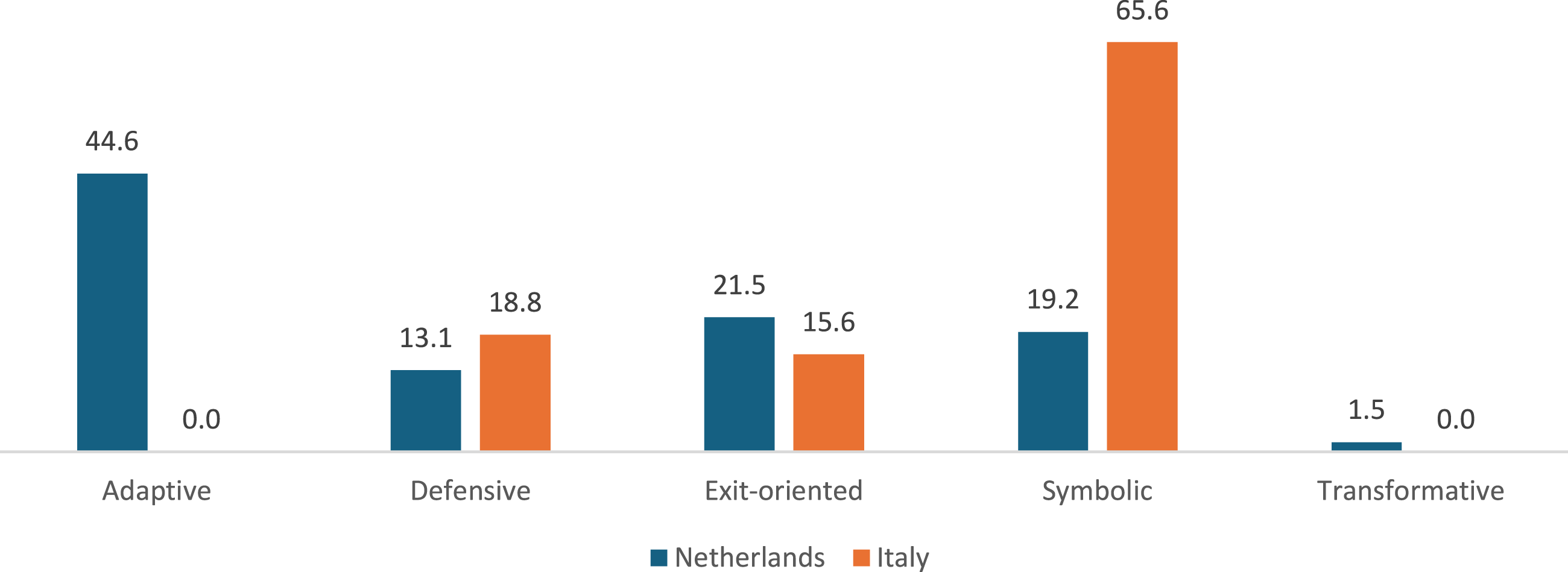
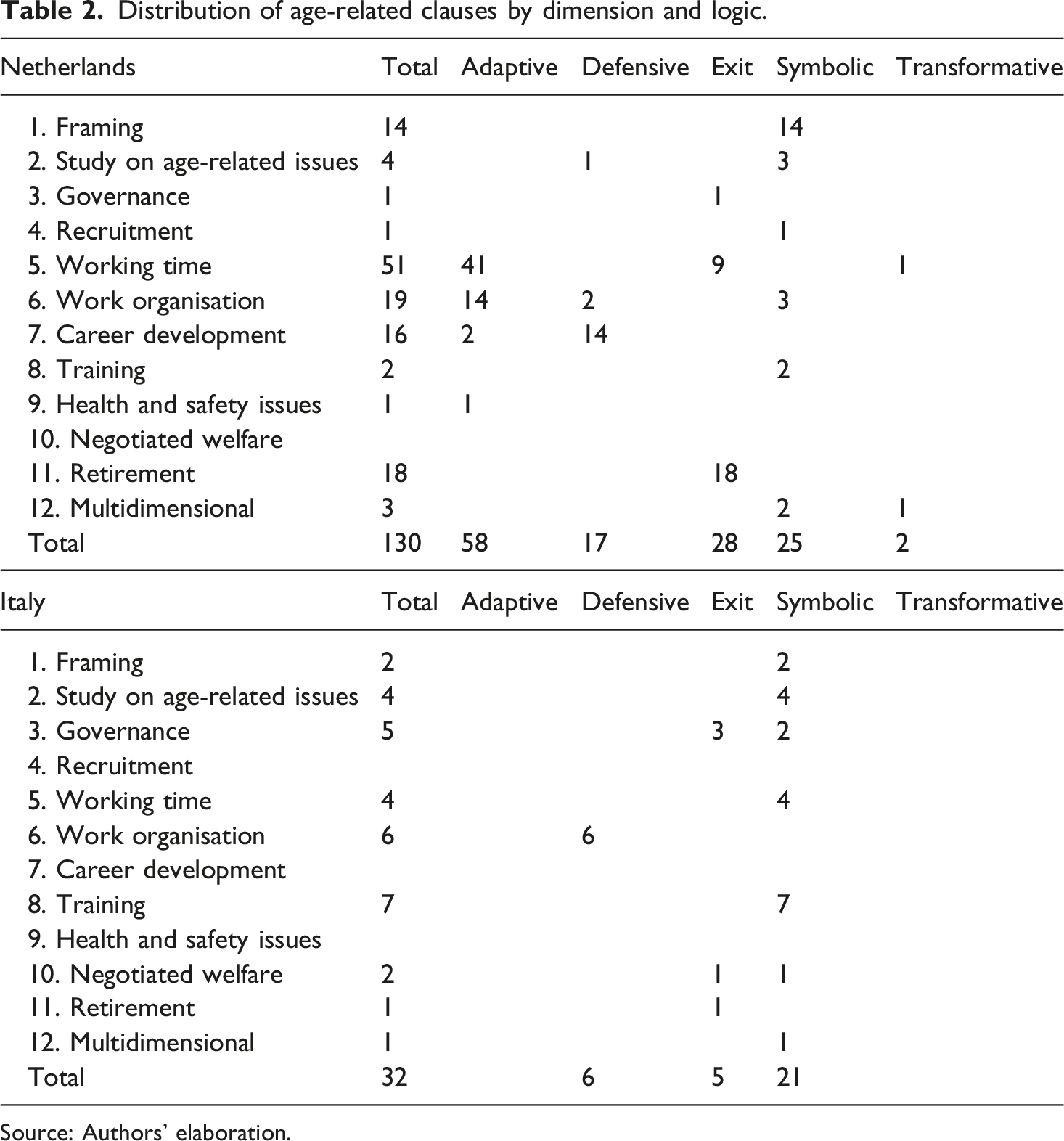
In the Netherlands, provisions concerning older workers are relatively common and are distributed broadly across bargaining issues. A total of 130 age-related clauses were identified in Dutch agreements – more than four times the number found in Italy. The adaptive logic is the predominant regulatory orientation: 58 clauses (44.6%) are designed to adjust work organisation, workloads, and working time arrangements to maintain employability and workability at older ages.
This focus on adaptation aligns with a long-standing tradition in Dutch industrial relations, where working time flexibility, ergonomic adjustments, and job redesign have been used to support labour-market participation amid a tight labour supply. Working-time provisions are particularly significant: 51 out of 130 clauses address some form of time adjustment, from reduced hours to customised shift patterns, highlighting the key role of working-time management in the Dutch system (Visser and Hemerijck, 1997).
These interventions indicate that Dutch social partners see ageing as a crucial process that can be turned into an opportunity by implementing coordinated adjustments across organisational domains. This configuration reflects a bargaining system in which organisational solutions to workforce ageing are possible and supported by social partners.
In Italy, by contrast, sectoral agreements take a more limited and fragmented approach to ageing. Only 32 age-related clauses were identified across all the agreements analysed. The dominant approach is symbolic, as 21 clauses (65.6%) include statements of principle, general acknowledgements of demographic change, or calls for further monitoring, none of which introduce binding or operational provisions. These clauses are characterised by key terms including ‘believe’ and ‘call for consistent legislative measures’ signalling the social partners’ recognition of the issue, while stopping short of establishing concrete regulatory mechanisms to achieve the stated objectives. Symbolic clauses represent the largest group in the Italian sample, although this pattern is partly influenced by the chemical-pharmaceutical agreement, which contains several symbolic references to active ageing and intergenerational exchange (see Table F – Appendix). Sectoral bargaining in Italy, therefore, shows two intertwined dynamics: the lack of age-related regulation in most agreements, and the symbolic nature of the limited provisions that do exist. The main cross-country difference lies in the extent to which explicit ageing-related references are translated into operational provisions. In Italy, such references more often remain declaratory or programmatic, whereas Dutch agreements more frequently include concrete provisions concerning working time and work organisation.
Defensive clauses account for 18.8% of the Italian sample and generally offer protection against undesirable changes in work organisation, including mobility, shift changes, or job reassignment. Exit-oriented provisions represent a minor share and are limited to mechanisms inherited from previous bargaining cycles, such as facilitated retirement or limited forms of part-time exit. No references to financial incentives supporting delayed retirement were found in either the Italian or the Dutch agreements. Notably, no transformative or adaptive clauses were identified in the Italian agreements, indicating a lack of organisational or developmental strategies to support older workers’ retention and engagement.
These differences lead to contrasting views of older workers within the two bargaining systems. In the Netherlands, older workers participate in work processes like other parts of the workforce, with continued employment requiring organisational adjustments and job redesign. The widespread use of adaptive clauses suggests that social partners see ageing not only as a challenge but also as an opportunity to maintain labour supply and productivity through negotiated adjustments. In Italy, the dominance of symbolic clauses, together with a smaller number of defensive and exit-oriented provisions, indicates that older workers are often seen as individuals nearing retirement. Social partners recognise the importance of workforce ageing for firms’ operations and employees’ well-being but do not use sectoral agreements to implement measures that would alter work organisation or commit employers to invest in empowering older workers.
The difference between the two countries involves not only the number of ageing-related provisions but also their overall focus. While Dutch agreements incorporate ageing into the framework of work and employment, Italian agreements tend to place it at the margins of bargaining agendas, either as a symbolically recognised issue or as a matter to be managed through traditional protective measures. These different strategies reflect contrasting views of older workers: in the Netherlands, they are regarded as an active part of the workforce whose participation can be maintained through negotiated organisational changes; in Italy, they are often seen as a group transitioning toward retirement, more to be protected than actively engaged.
Notably, the analysed agreements contain no explicit references to the 2017 Framework Agreement on Active Ageing and an Intergenerational Approach, nor do they include intergenerational provisions directly connected to older workers. This suggests a limited translation of the European framework into sectoral bargaining practices in the two countries studied, a pattern also observed in the implementation of other European framework agreements (Meardi et al., 2021).
Understanding this divergence requires analysing how institutional configurations, power relations within and between the social partners, and the ideas through which actors interpret ageing combine to shape the logics that emerge in collective bargaining. The next section elaborates on this explanation by drawing on the three theoretical approaches outlined above.
Interpreting the differences
The previous section highlighted that Italy and the Netherlands take significantly different approaches to representing workers aged 55 and over through sectoral collective agreements. This section does not aim to establish linear causal relationships, but to interpret the observed patterns by reconstructing plausible configurations of institutional, organisational, and ideational factors, which can be further explored and tested in future empirical research.
The differences shown in the comparative analysis not only concern how provisions are distributed but also reveal fundamentally different logics in representing older workers: mostly adaptive in the Netherlands and symbolic in Italy. This divergence raises the question: why are measures to support and promote older workers’ participation much more common in the Netherlands, while in Italy, the relevant provisions are fewer and mainly symbolic? This section develops an interpretative model based on causal packages (Thelen and Mahoney, 2015) informed by the three theoretical perspectives introduced in the second section: the VoC approach, the PRA, and Ideational institutionalism. The findings suggest that no single factor – institutions, power resources, or ideas – can account for the observed patterns. Instead, specific combinations of these elements help explain why certain representation logics become more prominent than others.
In the Netherlands, the prevalence of provisions based on an adaptive logic to support older workers’ participation can be understood as a functional outcome of the institutional context. From a Varieties of Capitalism perspective, the Dutch case reflects a coordinated industrial relations system, comparable to other Continental European countries, characterised by sustained coordination and negotiated compromise among social partners. This institutional configuration creates incentives for solutions that rely on negotiated adjustments within existing employment relationships. At the same time, since the 1980s, the expansion of part-time work and reduced-hours arrangements has become a core component of this model, shaping both employers’ strategies and unions’ bargaining agendas. As a result, adaptive measures – such as working-time flexibility and workload management – are both feasible and consistent with established bargaining practices. In a context characterised by widespread part-time employment and increasing labour shortages, sustaining the employment of older workers through negotiated adjustments also represents a viable strategy.
As a Dutch policy officer noted: Ageing in combination with a shortage of work, we see quite often in this analysis […] with jobs that are maybe physically more demanding or mentally very demanding, it requires a little bit more to invest in their employability, because otherwise it becomes more difficult to expect people to carry out that work until retirement age (NL_Ministry_2).
As an FNV officer notes: What we see now in the Netherlands, because there is some disturbance in the market, companies are eager to find good employees, but they cannot find them. So, they say at the negotiation table, if we are going to let a lot of people go with these kinds of schemes [early retirement schemes] then we have a bigger problem to run our business, so they don't want to implement it (NL_Union_4).
Social partners tend to promote forms of cooperation focused on sustainability and inclusion, which are also regarded as components of competitiveness (Hall and Soskice, 2001). Collective bargaining in the Dutch system thus reflects a broader model of cooperative governance between unions and employers’ organisations, in which collective agreements support the development of inclusive, competitive strategies. The Dutch system appears to provide favourable conditions for the inclusion of older workers’ interests in sectoral agreements. The role of institutional infrastructure – especially the stability of concertation systems – ensures that unions can rely not only on their membership power, which includes a significant number of older workers, but also on external mechanisms for effective representation.
However, social partners do not merely react to structural conditions or mobilise organisational power, but they also shape priorities through cultural perspectives, normative visions, and cognitive frameworks (Hyman, 2001). Dutch social partners share a common understanding of ageing and the role of older workers in the workforce. In the Netherlands, staying in the labour market is widely seen – by both unions and employers – as a shared goal. The following quotation shows that older workers are viewed as resources to be activated rather than as individuals nearing retirement, a perspective rooted in a long-standing tradition of investing in sustainable workability. This interpretive framework encourages the development of an adaptive logic, which is reflected in agreements that include measures to adjust working conditions and hours. Adaptive provisions align with a broader model of active ageing and capacity-building, where the participation of older workers is promoted through organisational investment rather than facilitated retirement. That’s the biggest key word: sustainable employability. To keep a healthy pathway towards pension. That’s what we always talk about […] That group [over 55] is vulnerable – but at the same time very reliable and very experienced (NL_Union_5).
The predominance of a symbolic logic, complemented by a limited number of age-sensitive provisions, clearly distinguishes the Italian approach to workforce ageing from the Dutch case. While older workers represent a significant share of union membership, this does not translate into agenda-setting power in collective bargaining. This represents a notable puzzle. From a Power Resources perspective, the relatively high organisational weight of older workers would lead us to expect a stronger presence of age-specific issues in bargaining agendas. However, this is not what we observe. Instead, unions tend to prioritise other groups and issues, particularly in a context where they face increasing difficulties in recruiting younger workers and sustaining their organisational base. As one interviewee notes: There is definitely more focus on young people because that’s where we’re objectively struggling more. Additionally, there’s a policy, so to speak, around union leadership: you develop workers who then become union officials and, in the future, also union leaders. So, it’s a different kind of investment (ITA_Union_7).
This mismatch suggests a limitation in the explanatory power of the Power Resources Approach in this context and points to the need to consider additional mechanisms shaping the translation of workers’ interests into bargaining outcomes. In particular, ideational factors play a key role. Among Italian social partners, older workers are primarily framed as relatively protected insiders or as workers close to retirement. On the one hand, they are seen as already covered by general protections; on the other, their proximity to retirement reduces the perceived need for targeted interventions. As a result, ageing is more likely to be acknowledged in general terms than translated into substantive regulatory provisions.
From an institutional perspective, the Italian case presents a more complex picture. As highlighted in the Varieties of Capitalism literature, Italy is characterised by a fragmented and hybrid system of industrial relations (Molina and Rhodes, 2007), where coordination is uneven but collective bargaining can still provide detailed and problem-solving oriented responses in several domains. However, this capacity does not extend to ageing-related issues. This suggests that institutional configuration alone is not sufficient to account for the observed patterns. Rather, it is the interaction between institutional features and the ways in which ageing is interpreted and prioritised that shapes bargaining outcomes. As a result, symbolic and defensive logics tend to prevail, with limited development of targeted and operational provisions. In this sense, the Italian case is particularly informative, as it shows that the absence of age-specific provisions cannot be explained by a lack of institutional capacity alone.
In summary, the differences between Italy and the Netherlands are best understood by considering institutional factors, the mix of power resources, and cultural frames together. While in the Netherlands, proactive bargaining shows a balance between economic interests, strong associations, and viewing older workers as productive parts of the workforce, in Italy, the lack of a clear representation of senior workers results from a more complex set of factors: weaker coordination, a mainly defensive view of union roles, and a culture of representation that sees seniority as a step toward retirement rather than a resource to develop. Understanding this difference requires recognising that the regulatory role of collective bargaining is never neutral. It reflects and also sustains specific ideas about work, power distribution, and the features of the institutional and labour-market environment.
Conclusions
The comparison between Italy and the Netherlands shows that workforce ageing enters sectoral bargaining in markedly different ways, and that its translation into concrete provisions varies substantially across the two cases. Although workforce ageing is well advanced in both countries, this analysis highlights distinct paths in collective bargaining. In the Netherlands, regulation is mainly adaptive, focussing on maintaining older workers’ participation and productivity through organisational adjustments and inclusive strategies. This approach aligns with the broader cooperative governance model typical of the Dutch system. In Italy, sectoral bargaining rarely translates workforce ageing into operational provisions. Where ageing is explicitly mentioned, it is often framed through symbolic commitments, defensive protections, or limited exit-oriented provisions. Older workers tend to appear at the margins of bargaining agendas, and sectoral agreements demonstrate limited capacity for regulatory innovation. This conclusion should be read in light of the paper’s focus on explicit ageing-related provisions. Age-neutral working-time, training, health and safety, or work-organisation clauses may still affect older workers without referring to them explicitly. However, we were interested in exploring whether and how sectoral bargaining addresses workforce ageing directly through specific provisions. Our analysis shows that workforce ageing is rarely problematised as a distinct issue in Italian sectoral agreements.
The paper interprets this divergence through the notion of causal packages (Thelen and Mahoney, 2015). We argue that institutional, organisational, and cognitive factors together help explain how older workers, and more broadly, workforce ageing, are represented in sectoral bargaining. In the Netherlands, strong coordination, stable concertation mechanisms, and shared ideas about sustainable employability appear to support social partners in recognising older workers as valuable resources and implementing adaptive measures that reorganise work and support their ongoing participation. In Italy, by contrast, weaker coordination, the decline of unions’ organisational power, and a cultural view that sees older workers mainly as insiders nearing retirement appear to limit the potential for age-sensitive bargaining. Although older workers hold a significant share of union membership, this does not translate into influence over agenda-setting because unions focus more on recruiting younger workers.
The paper offers two main theoretical contributions. First, it develops a classification of regulatory logics – defensive, adaptive, transformative, symbolic, and exit-oriented – that provides a structured framework to analyse how collective bargaining addresses workforce ageing. While it applies to this specific case, the representation logics have broader conceptual significance. They highlight the key strategies social partners use to respond to new or debated issues and can be applied to other areas of collective bargaining where the nature of representation is changing, such as digitalisation, ecological transition, health and safety, or work–life balance. By distinguishing between these logics, the classification provides a versatile analytical tool for examining how unions and employers formulate regulatory responses to emerging challenges. In this way, it advances comparative industrial relations research by offering a framework applicable across diverse topics and institutional contexts.
Second, the paper emphasises the importance of a multi-causal analytical approach that combines institutional, organisational, and ideational factors. The integration of VoC, PRA, and ideational institutionalism shows that neither institutions, power resources, nor cultural frames alone can explain the observed cross-country differences. Instead, it is their interaction that provides a plausible explanation of how older workers’ interests are represented and which regulatory logics dominate. This approach highlights the value of analysing collective bargaining outcomes as the result of causal combinations, where structural, strategic, and cognitive mechanisms work together to shape the direction and scope of negotiated regulation.
Empirically, the paper contributes to a still-emerging field of research. Workforce ageing has often been viewed as a matter of public policy rather than a collective bargaining issue. The fact that regulatory logics differ between two countries with strong union traditions and widespread bargaining coverage shows that the issue concerns more than just the amount of bargaining; it primarily pertains to its quality and the representations that support it. At the same time, by focussing on workforce ageing, the paper illustrates more broadly how collective bargaining constructs new social categories and problems, revealing the conditions under which emerging issues are either substantively regulated or symbolically acknowledged.
The comparative evidence also suggests specific implications for trade unions’ strategies. In the Netherlands, unions have long integrated ageing into a broader agenda of sustainable employability. The prominence of adaptive clauses indicates that Dutch unions already possess the institutional tools to negotiate organisational solutions for older workers. Yet, the continued increase in older labour-market participation implies that unions could further strengthen their role by linking working-time adjustments with long-term skill development and job redesign. In Italy, by contrast, the limited presence of substantive older worker-specific clauses suggests that older workers occupy a relatively marginal position within unions’ strategic priorities despite their numerical importance within membership. Italian unions may therefore consider reframing ageing not as a pre-retirement condition but as a phase requiring negotiated organisational innovation. This would entail expanding their bargaining agenda to include issues such as workload adjustments, sustainable shifts, and age-sensitive training, rather than leaving these topics to company-level negotiations. Across both countries, the findings point to a broader opportunity: unions can shape ageing not only as a welfare transition but also as an integral part of the employment relationship – and thus as a domain of proactive collective regulation.
This study also points to several avenues for future research. Expanding the comparison to a broader set of European countries would help examine whether the distribution of representation logics observed in Italy and the Netherlands appears in other industrial relations systems, and whether the patterns identified here reflect country-specific trajectories, a wider north–south divide in collective bargaining, or broader differences between more and less coordinated bargaining systems. A second avenue involves examining multi-level dynamics, focussing on the company level where more specific or innovative solutions may develop. Third, future research should further assess the configurational explanations proposed in this paper empirically. The analytical typology and the reconstructed combinations of institutional, organisational, and ideational factors could be tested and refined through comparative designs involving additional countries, levels of bargaining, or longitudinal analyses. A further avenue concerns the limited translation of the intergenerational dimension of the European Framework Agreement on Active Ageing into sectoral bargaining. Future research should examine whether the weak presence of provisions linking older workers’ extended working lives with opportunities for younger workers reflects a specific feature of the Italian and Dutch cases, a broader implementation gap in European social dialogue, or a shift in social partners’ priorities away from intergenerational approaches.
In conclusion, collective representation of workers aged 55 and over is not merely the sum of provisions and clauses, but an institutional arena in which the social recognition of a crucial phase of working life is negotiated. Analysing it involves examining not only what agreements specify but also what they convey: visions of work, priorities of intergenerational justice, and future directions of sustainability that shape the course of industrial relations systems.
Supplemental material
Supplemental material - Collective bargaining in the age of demographic transition: Regulating an ageing workforce in Italy and the Netherlands
Supplemental material for Collective bargaining in the age of demographic transition: Regulating an ageing workforce in Italy and the Netherlands by Luigi Burroni, Dario Raspanti, and Giulia Cavallini in European Journal of Industrial Relations.
Footnotes
Acknowledgements
We are grateful to the anonymous reviewers for their constructive and insightful comments, which helped us improve the manuscript. We also thank the participants in the SASE 2025 session ‘New Solidarities and the Revival of Collective Bargaining’, where an earlier version of the paper was presented, for the helpful discussion.

Funding
The authors disclosed receipt of the following financial support for the research, authorship, and/or publication of this article: This work was supported by the Next Generation EU, in the context of the National Recovery and Resilience Plan, Investment PE8 – Project Age-It: ‘Ageing Well in an Ageing Society’. This resource was co-financed by the Next Generation EU [DM 1557 11.10.2022]. The views and opinions expressed are only those of the authors and do not necessarily reflect those of the European Union or the European Commission. Neither the European Union nor the European Commission can be held responsible for them.
Declaration of conflicting Interests
The authors declared no potential conflicts of interest with respect to the research, authorship, and/or publication of this article.
Supplemental material
Supplemental material for this article is available online.
Notes
Author biographies
References
Supplementary Material
Please find the following supplemental material available below.
For Open Access articles published under a Creative Commons License, all supplemental material carries the same license as the article it is associated with.
For non-Open Access articles published, all supplemental material carries a non-exclusive license, and permission requests for re-use of supplemental material or any part of supplemental material shall be sent directly to the copyright owner as specified in the copyright notice associated with the article.
