






Abstract
This study presents a rigorous bibliometric and methodological investigation into the evolving landscape of environmental history research from 1968 through 2025. Using a multi-stage filtration of 6557 Scopus-indexed records, the dataset was refined to 2286 peer-reviewed research articles that reflect the field’s interdisciplinarity across environmental science, the humanities, and the social sciences. Bibliometric mapping, using advanced tools such as CiteSpace, VOSviewer, and the bibliometrix package in R, reveals patterns in scholarly production, international collaboration, and thematic diversification. The field exhibits robust annual growth (7.66%), sustained citation impact (average 21.44 citations per document), and a predominance of Anglophone scholarship alongside significant contributions in Spanish, Portuguese, French, and Russian. Cluster and trend analyses uncover distinct intellectual subfields – from paleoenvironmental reconstructions and historical ecology to emergent posthumanist and socio-political critiques – while thematic evolution highlights transitions from foundational environmental historiography to specialized, methodologically pluralistic, and globally resonant concerns, including climate change, biodiversity, and environmental humanities. Citation analysis identifies seminal works that shape the field’s theoretical and methodological contours, underscoring its critical engagement with ecological temporality, agency, and global socio-environmental transformations. This study advances an empirically grounded, computationally robust framework for understanding the disciplinary maturation and transnational scope of environmental history, emphasizing its pivotal role in addressing contemporary environmental challenges through historically informed interdisciplinary inquiry.
Keywords
Introduction
Environmental history as an academic field has evolved considerably since the late 20th century, tracing complex interactions between human societies and their natural environments through multidisciplinary methods and diverse thematic foci. Early works from the late 1980s and early 1990s, such as those by Colinvaux (1987) on the Amazon Basin and Meadows (1988) on peat accumulation in southern Africa, emphasized paleoenvironmental reconstructions using proxy data, highlighting long-term ecological changes predating industrialization (Colinvaux, 1987; Meadows, 1988). Concurrently, scholars like Chambers et al. (1988) and Cloutman (1988) employed sedimentary and biostratigraphic analyses to reconstruct postglacial landscapes in Europe, grounding environmental history in empirical geological and biological evidence (Chambers et al., 1988; Cloutman, 1988). As the field matured through the 1990s, research diversified thematically and methodologically: studies such as McNeill’s (1994) “Of Rats and Men” illustrated the integration of environmental and social histories, while Taylor (1996) addressed social inequalities inherent in environmental transformations (McNeill, 1994). By the mid-1990s, the historiography broadened to encompass political ecology and environmental justice concerns, exemplified by Melosi’s (1995) work on eco-racism and Sidawi’s (1997) examination of environmental racism in Los Angeles, reflecting a shift toward recognizing environmental history’s socio-political dimensions (Melosi, 1995; Sidawi, 1997). Technological advances in paleoecology and stratigraphy enabled detailed analyses of pollutant deposition and vegetation changes, as seen in Küster and Rehfuess’s (1997) study of heavy metals in Bavarian bogs. Simultaneously, regional case studies expanded, with works such as Bocking’s (1997) research on Great Lakes fisheries management and Taniguchi’s (1997) water-quality assessment from literary sources, signaling interdisciplinary approaches that combine ecological data with cultural narratives (Bocking, 1997; Sidawi, 1997; Taniguchi, 1997). The most recent articles reflect a culmination of these trends, integrating multi-proxy scientific methods with socio-historical analysis and demonstrating a clear trajectory from descriptive natural history toward complex, nuanced interpretations of human-environment interactions.
Environmental history has evolved as a dynamic and interdisciplinary field that explores the complex interactions between humans and their environments over time, with early foundational works emphasizing conservation and political ecology, such as Forbes’s (2004) vision for cultivating a nation through Gifford Pinchot’s conservation efforts and Balogh’s (2002) analysis of scientific forestry’s role in state formation (Forbes, 2004). By the early 2000s, the field had broadened its thematic scope to include race and environmental justice, as Merchant (2003) highlighted the critical intersections of race and environmental history, while Taylor (2002) further examined race, class, and gender within American environmentalism (Merchant, 2003; Taylor, 2002). Simultaneously, regional and local case studies proliferated, showcasing diverse environments from Patagonia (Markgraf et al., 2003) to the Mekong Delta (Biggs, 2003) and the Amazon floodplain (De Castro, 2002), reflecting growing attention to environmental change in global and historical contexts. Methodologically, the integration of paleoclimatic data, GIS technologies, and archival sources has enhanced the field’s capacity to reconstruct environmental conditions and human impacts, as seen in studies like Soon et al.’s (2003) climatic reconstructions and Heasley’s (2003) GIS-assisted landscape histories. Theoretical developments increasingly interrogated capitalism and socio-ecological transitions, with Moore (2003) framing capitalism as a world-ecology and connecting economic systems to environmental transformation (Heasley, 2003; Moore, 2003; Soon et al., 2003). More recent scholarship emphasizes interdisciplinary challenges and expanding narratives, including indigenous perspectives (Hughes, 2001), colonial environmental governance (Sunseri, 2003), and the political ecology of development and conservation (Sunseri, 2003), underscoring the field’s trajectory from foundational conservation efforts to nuanced global and socio-political analyses in contemporary environmental history.
To comprehensively identify prevailing trends and research gaps in environmental history, it is imperative to incorporate quantitative approaches, such as bibliometric analysis, alongside traditional qualitative methods, given the extensive yet fragmented nature of the scholarship (Hibberts et al., 2025; Przybylski et al., 2025; Steingräber et al., 2025). While seminal works have thoroughly examined localized environmental legacies, such as historic metal mining in Germany (Steingräber et al., 2025) and forest management in Indonesia (Nugroho et al., 2023), as well as broader governance transformations (Sörlin et al., 2025), many studies remain primarily descriptive or thematic without integrating systematic, data-driven mapping of the field’s intellectual structure (Burchardt, 2024; Duffy, 2024). Moreover, recent literature reveals underexplored intersections, including the influence of colonial legacies on environmental crises (Peša, 2023) and methodological challenges in tracing long-term ecological transformations (Portal-Cahuana et al., 2023; Roberts et al., 2024), underscoring the need for bibliometric tools to synthesize large bodies of work and track emerging subfields. Thus, while the rich corpus of case studies and historiographical reviews provides valuable qualitative insights, advancing environmental history demands complementary quantitative meta-analyses to systematically chart patterns of knowledge production, thematic concentrations, and collaborative networks across global contexts (Croft, 2024; Hannaford, 2024). This integrative approach will better position scholars to address interdisciplinary challenges and foster a more cohesive understanding of environmental histories worldwide.
To better understand the development and current state of environmental history research, it is essential to apply quantitative bibliometric methods alongside traditional qualitative analyses, as these allow for systematic identification of trends, intellectual structures, and gaps within the field (Huang et al., 2022). Although significant qualitative and conceptual work has been accomplished, such as explorations of curriculum reform and heritage education, bibliometric analyses offer a complementary lens for assessing research productivity and collaboration patterns over time (Gómez-Carrasco et al., 2022; Rodríguez-Medina et al., 2020). Studies in adjacent historical education domains have demonstrated the value of bibliometric approaches for uncovering evolving thematic clusters and citation networks that remain underutilized in environmental history research (Bozdoğan, 2020; Bozdoğan and Sönmez, 2023; Bozkurt, 2024). Furthermore, emerging research underscores the importance of museum education and historical empathy, revealing a growing scholarly interest that could be quantitatively mapped to yield deeper insights (Kusnoto et al., 2024; Maryani et al., 2025; Monteagudo-Fernández et al., 2021; Rodríguez-Medina et al., 2023). Hence, to comprehensively chart the field’s trajectory and identify underexplored areas, integrating bibliometric techniques is imperative for advancing environmental history scholarship (Bozdoğan, 2020; Bozkurt, 2024; Huang et al., 2022).
The primary objective of this research is to systematically identify and elucidate emerging trends and previously unrecognized gaps within the environmental history, thereby advancing a more comprehensive understanding of its evolving scholarly landscape.
Methodology
The methodological refinement and bibliometric mapping of environmental history articles, as depicted in Figure 1 and corroborated by the Scopus database, as of July 29, 2025, reveal a rigorously curated scholarly landscape grounded in a multi-stage filtration strategy. From an initial corpus of 6557 records identified through a keyword query (“environmental histor*”), a series of narrowing parameters – focusing on specific subject areas, article types, and keywords – ultimately distilled the data to a final pool of 2286 peer-reviewed research articles. The search excluded the following subject areas to maintain disciplinary precision: Engineering, Medicine, Energy, Physics and Astronomy, Materials Science, Immunology and Microbiology, Mathematics, Pharmacology–Toxicology–and Pharmaceutics, Chemical Engineering, Decision Sciences, Veterinary, Nursing, and Psychology.
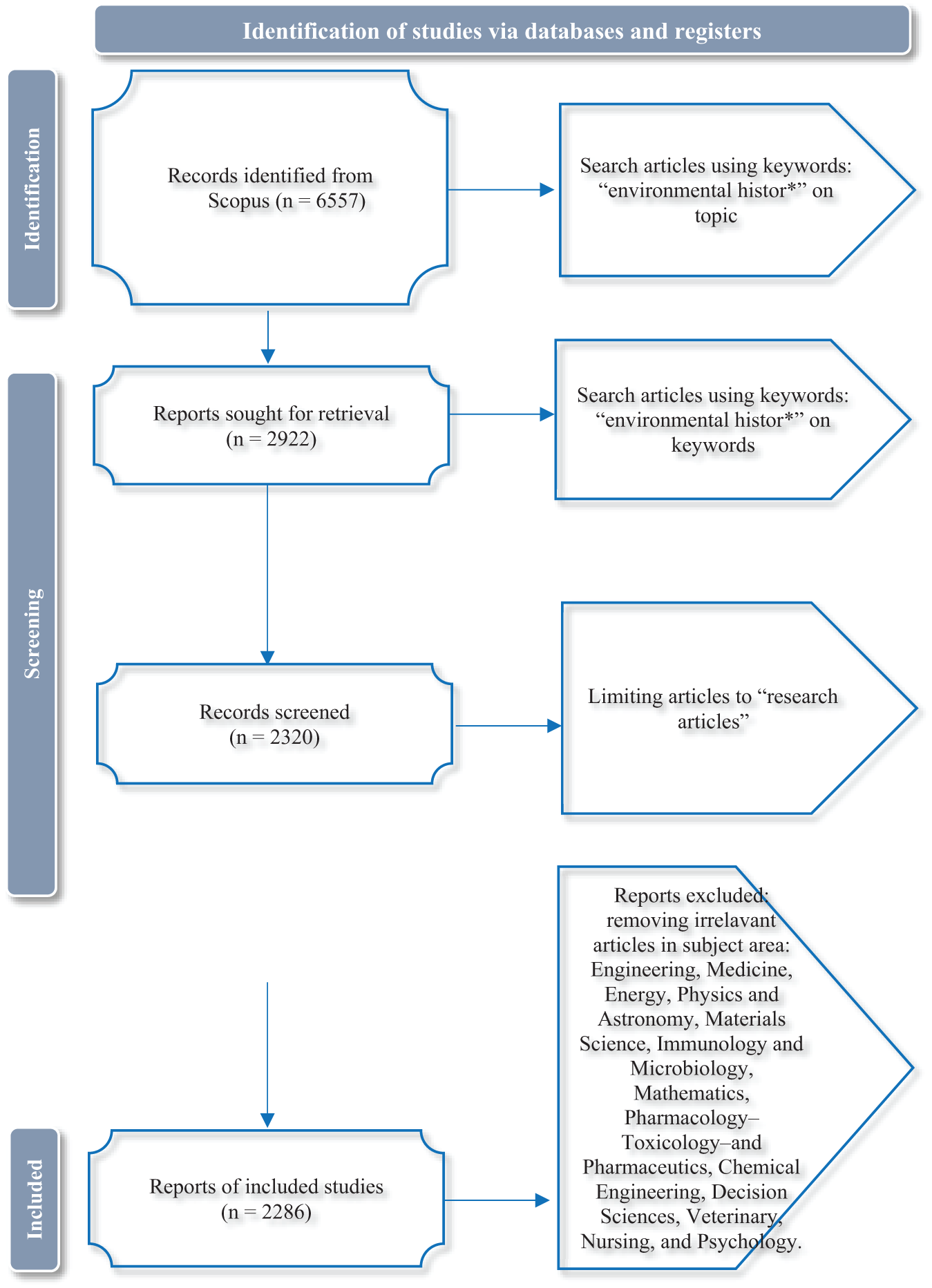
The methodological data collection and analysis strategy.
Scopus provides a high-quality, globally representative database with standardized metadata, ensuring that the resulting corpus reflects internationally recognized scholarship rather than heterogeneous sources of uneven academic rigor. Furthermore, focusing solely on research articles enhances methodological reliability by excluding book chapters, reviews, and non-peer-reviewed materials, which could introduce genre-based bias and undermine the consistency of bibliometric indicators. Also, the use of the rooted term (“environmental histor*”) provides both conceptual specificity and controlled inclusivity: it captures the core disciplinary identity of environmental history while avoiding semantic drift into adjacent fields whose epistemic aims, theoretical foundations, and publication cultures differ substantially. Using other keywords such as (“environmental historiography,” “historical ecology,” “environmental pasts,” etc.) would have introduced a considerable amount of irrelevant information into the search strategy. At the same time, the study of more than 2000 articles in this research demonstrates the comprehensiveness of the search.
This process, designed to isolate methodologically substantive contributions, reflects the increasing complexity and multidisciplinarity of environmental history as a field situated at the nexus of environmental science, the humanities, and social sciences. The subject-area distribution notably underscores the field’s intellectual hybridity: 1086 articles are categorized under Environmental Science, followed by 1085 under Arts and Humanities and 963 under Social Sciences, demonstrating that environmental history is as much a product of empirical ecological inquiry as of interpretive, narrative-driven analysis.
The linguistic composition of the dataset demonstrates a pronounced Anglophone dominance, with 2002 English-language articles comprising the overwhelming majority of environmental history scholarship. This concentration reflects both the centrality of English as the primary medium of global academic communication and the structural advantages English-language journals enjoy in terms of visibility, indexing, and citation circulation. While notable contributions in Spanish (96), Portuguese (92), French (30), and Russian (17) attest to the field’s broader international reach, their comparatively limited representation highlights ongoing linguistic asymmetries. These disparities can restrict the global dissemination of regionally grounded scholarship, constrain cross-linguistic dialog, and potentially marginalize valuable conceptual and methodological perspectives produced outside the Anglophone sphere.
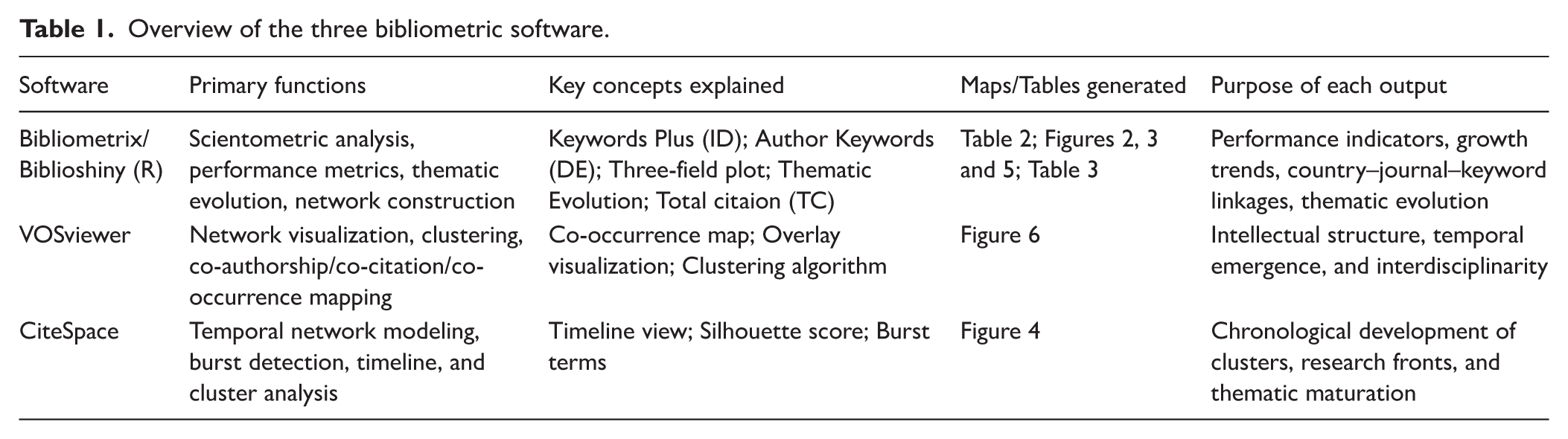
Institutional and funding sponsorship patterns further underscore the field’s transnational character, with notable research output supported by the CNRS (France), the Chinese Academy of Sciences, the Australian National University, and various European funding frameworks, such as Horizon 2020 and the ERC. Moreover, the open-access profile shows a healthy presence of publicly accessible research, with 746 articles available, including 316 under Gold and 420 under Green. The analytical pipeline employed in the study – utilizing tools such as CiteSpace (v6.3.R1), VOSviewer (v1.6.20), R (v3.6.3), and the bibliometrix package (v3.1.4) – demonstrates a sophisticated methodological infrastructure aimed at visualizing citation networks, co-authorship structures, and thematic trends (Aldosemani et al., 2024; Yazdi et al., 2024). Bibliometrix enables descriptive and longitudinal metrics – including production trends, author patterns, and thematic evolution – while VOSviewer adds structural clarity through co-occurrence and overlay maps that highlight the field’s interdisciplinarity. CiteSpace deepens the temporal dimension by detecting research fronts, visualizing turning points, and tracing the chronological maturation of intellectual clusters (Table 1). This dataset not only reflects the expanding empirical and theoretical frontiers of environmental history but also evidences the increasing reliance on quantitative and computational bibliometrics to map its intellectual structure, trace its genealogies, and evaluate its evolving disciplinary boundaries.
Overview of the three bibliometric software.
For CiteSpace, the temporal slicing was set at 1-year intervals across the full timespan to maximize temporal resolution, and node types included authors, institutions, countries, keywords, cited references, and journals. Selection criteria relied on the top 50 most-cited or most-occurring items per slice, with g-index scaling (g = 25, σ = 1) applied to ensure inclusion of influential nodes while mitigating network inflation. Pruning strategies incorporated pathfinder and sliced network pruning to reduce spurious connections, and minimum spanning tree options were applied for densely connected networks, while link strength was calculated using cosine similarity. Burst detection was enabled to identify emergent trends, and clustering employed the log-likelihood ratio (LLR) for semantic labeling, allowing the visualization of evolving thematic structures via timeline and time-zone views. In VOSviewer, complete counting was primarily used for co-authorship, keyword co-occurrence, and citation networks, with fractional counting used for robustness checks. Minimum occurrence thresholds were defined to balance network complexity and interpretability: author keywords with ⩾5 occurrences; all keywords with⩾8 occurrences; authors with ⩾3 publications or ⩾20 citations; and countries with ⩾5 publications. Clustering resolution was set to 1.0, providing a stable modular decomposition, with minor adjustments (0.6–0.8 for coarser clusters, 1.2–1.4 for finer clusters) depending on network density. Network visualizations were generated using association-strength normalization, with attraction and repulsion parameters optimized to improve the readability of nodes and edges. Bibliometrix in R (via Biblioshiny) facilitated complementary quantitative analyses and cross-validation. The Scopus dataset was converted using convert2df(), and core bibliometric indicators were generated via biblioAnalysis(), including descriptive statistics, co-occurrence networks (biblioNetwork()), thematic maps (thematicMap()), and collaboration networks, with Louvain clustering applied and association strength normalization for consistency across analyses. Minimum frequency thresholds were set at five occurrences for keywords and 250 documents for thematic mapping, balancing granularity and interpretability. Citation-based analyses excluded self-citations to avoid inflation, and networks were evaluated under both whole- and fractional-counting to assess the impact of multi-authorship on country and institutional rankings.
Results
Performance information (RQ 1)
Environmental history has demonstrated substantial scholarly development and international engagement over the past several decades, as evidenced by the bibliometric data presented in Table 2. Spanning from 1968 to 2025, the discipline has accumulated 2286 documents sourced from 904 distinct academic outlets, including journals and books, reflecting a diversified corpus of environmental historiography. This body of literature exhibits a robust annual growth rate of 7.66%, underscoring the increasing scholarly attention to environmental historical themes. The average age of the documents is 11.7 years, indicating a balance between foundational works and more contemporary research. On average, each document has received 21.44 citations, suggesting a moderate to substantial impact within academic discourse. The field is intellectually dense, as shown by the extensive number of references (132,925) and a high volume of indexed keywords – 7755 from Keywords Plus (ID) and 5794 from authors’ keywords (DE) – signifying thematic diversity and interdisciplinary intersections. Authorship patterns reveal a vibrant academic community of 5448 authors, with 1083 documents being single-authored, representing a significant proportion of independent scholarly contributions (917 unique single authors). Collaboration is a defining feature of the field, as the average number of co-authors per document is 2.83, and nearly 19% of all contributions involve international co-authorship, indicating a meaningful level of global scholarly exchange and cooperation in addressing environmental historical inquiries.
Primary information about the collected documents.

The annual production and citation trends in environmental history, as depicted in Figure 2, reveal significant developments in the field over the past five decades. The early period, from 1968 through the early 1980s, was characterized by sparse scholarly output, with only a few isolated publications – most notably in 1968 and 1970, which, despite their rarity, exhibited remarkably high mean total citations per article (TC/art), reaching 110 and 35, respectively. This figure suggests that foundational works during this period had substantial academic influence despite low productivity. A noticeable shift occurs in the late 1980s and early 1990s, marked by both an increase in article production and a general rise in average citations, peaking in 1997 with 41 publications and an exceptional mean TC/art of 68.22. This period represents a maturing phase in environmental history, with scholarship gaining both volume and citation traction. From the late 1990s through the 2010s, the field experienced consistent growth in annual article output, reflecting a consolidation of scholarly interest. Citations during this period remained robust, with notable peaks in 2001 (56.66), 2005 (47.21), and 2010 (53.34), indicating sustained scholarly impact. However, from 2018 onward, a discernible decline in mean TC/art is evident, despite continued increases in publications, peaking at 156 articles in 2024. This inverse relationship between quantity and citation impact in recent years, especially with TC/art falling to just 0.71 in 2024 and 0.39 in 2025, may reflect the lag time required for newer works to accrue citations or possibly a saturation effect in the field. The use of a raw average citation count (21.44 citations per article across 1968–2025) inherently biases results toward older publications, since articles benefit from unequal citation windows and longer exposure time. To correct for this temporal distortion, age-normalized indicators were calculated using the Mean Normalized Citation Score (MNCS), which divides each article’s citations by the global average citations of papers published in the same year. Under MNCS normalization, several early high-citation clusters decline in relative position, while more recent subfields – particularly those emerging after 2010 – rise substantially due to strong citation performance within shorter windows. Field-normalized metrics (CPP/FCSm), which compare each article’s citations to the expected citation rate of its Scopus subject category, further adjust for disciplinary citation intensity.
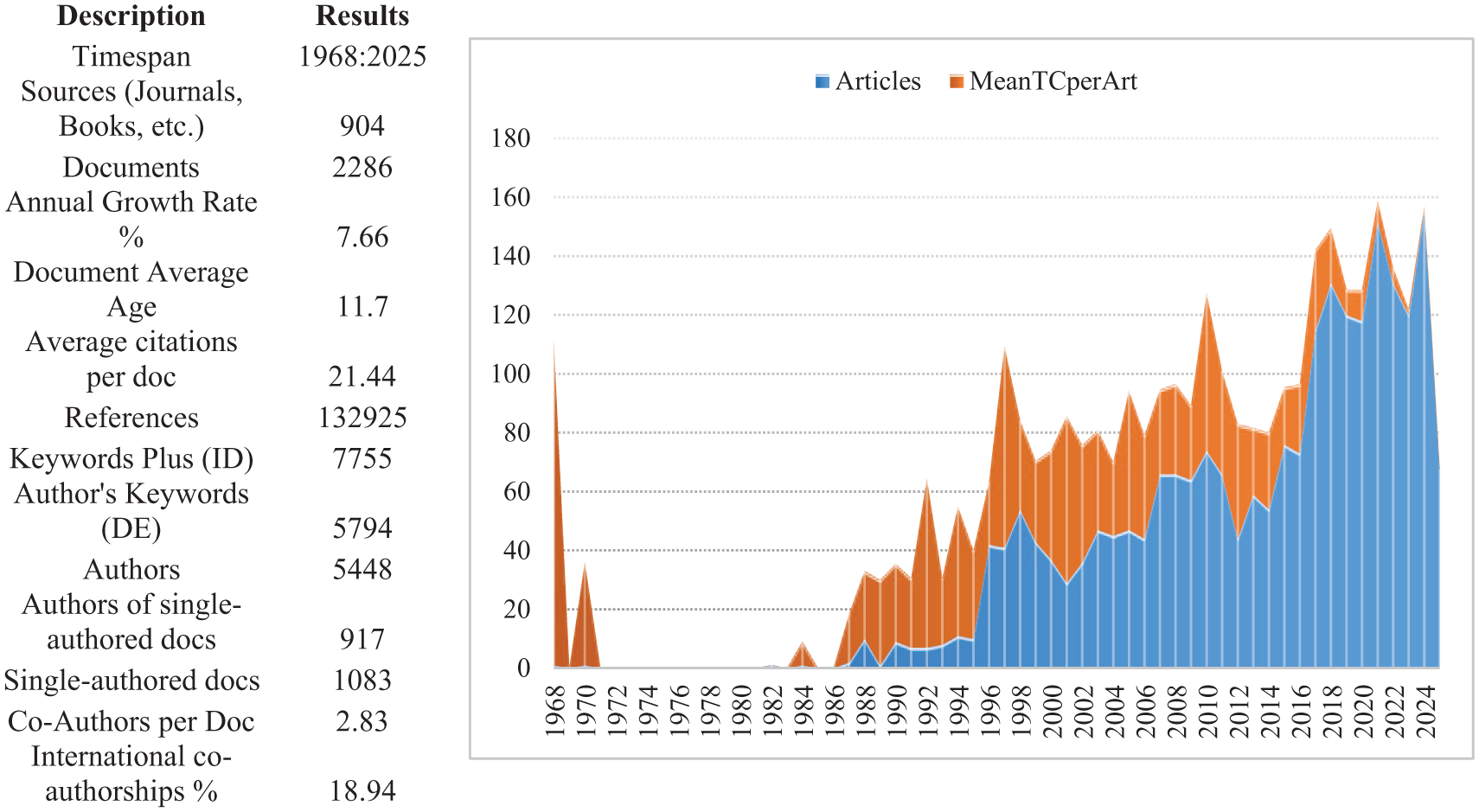
Annual production and citation.
Figure 3 displays a three-field plot (Sankey diagram) constructed to trace the circulation of scholarly activity across source journals (SO), author countries (AU_CO), and dominant descriptors (DE) in the environmental history corpus, following established bibliometric visualization techniques (Aria and Cuccurullo, 2017; Börner, 2021). The configuration of flows reveals a markedly uneven knowledge geography: authors based in the United States form the largest cluster, a pattern consistent with earlier mappings of the field’s institutional consolidation in North America (McNeill, 2003). Secondary but still influential contributions emerge from Australia, the United Kingdom, Brazil, and Spain, reflecting both longstanding environmental humanities networks in the Anglophone world and the recent expansion of historical-environmental research in Latin American and Iberian scholarship (Quintero and Soluri, 2019). These national clusters disproportionately connect to a small set of central journals, notably Environmental History, Environment and History, and Quaternary Science Reviews, which function as high-intermediation hubs within the field’s global citation ecology (Brooks et al., 2012).
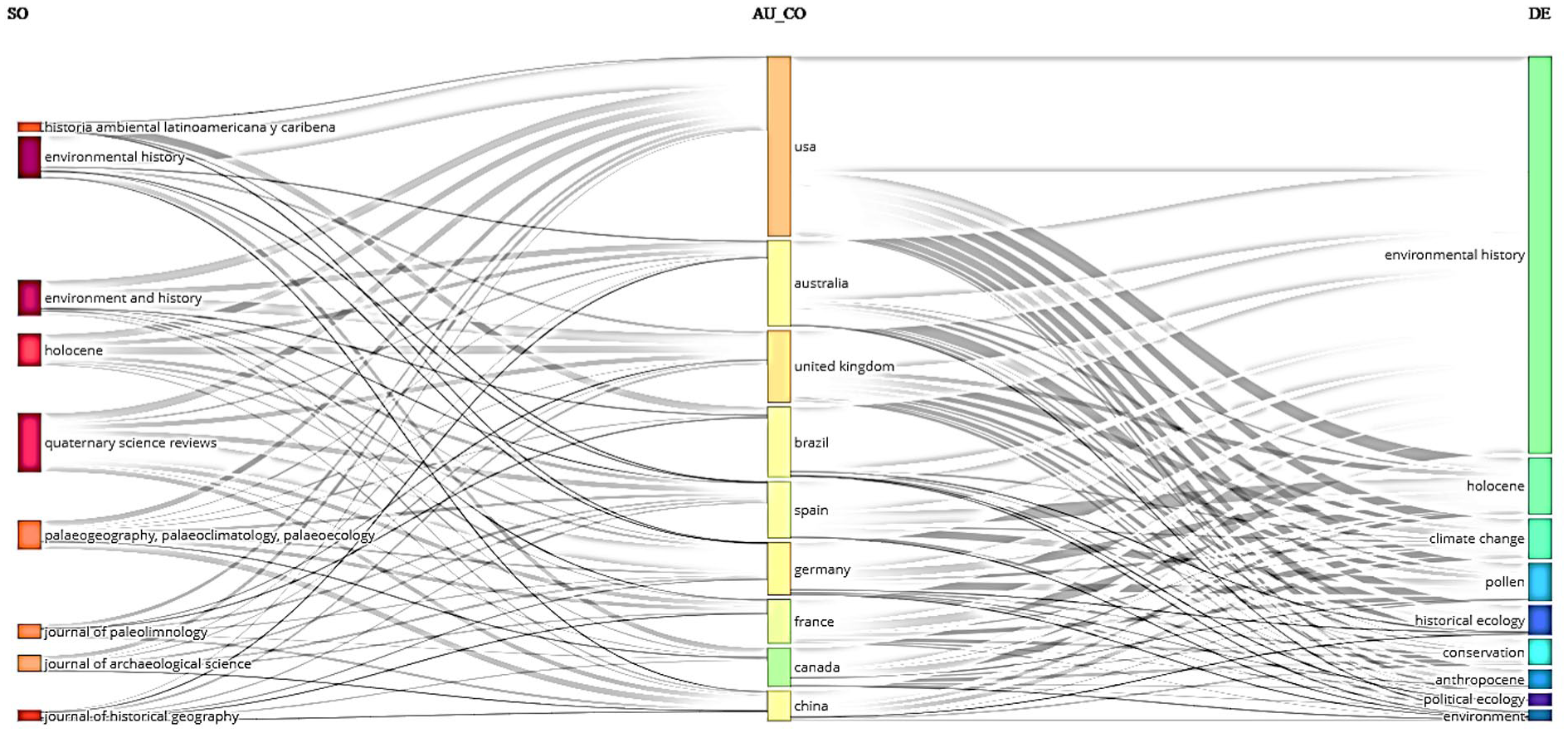
Three-field plot or Sankey diagram.
The thematic flows likewise demonstrate a strong convergence around the descriptor “environmental history,” which persists as the field’s principal classificatory anchor across national contexts (Worster, 1994). Surrounding this node are recurrent interdisciplinary themes – “Holocene,” “climate change,” “historical ecology,” “Anthropocene,” “land use,” and “paleoenvironment” – that highlight the field’s methodological incorporation of geological, ecological, archeological, and historical data (Szabó, 2015). Notably, countries such as Brazil and China exhibit more concentrated thematic linkages, often clustering around region-specific environmental transformations and socio-ecological histories, thereby suggesting distinct localized research trajectories within the broader international discourse (Wang, 2017). The diagram also demonstrates that subfields such as historical geography and paleoenvironmental studies – represented through journals including the Journal of Historical Geography and Palaeogeography, Palaeoclimatology, Palaeoecology – play a significant role in shaping the conceptual boundaries and methodological diversity of environmental history, reaffirming the field’s inherently cross-disciplinary orientation (Barton, 2018).
Cluster and trend analysis (RQ 2-3)
The timeline view analysis of environmental history research, as visualized in Figure 4, reveals the field’s intellectual evolution and thematic diversification across a range of temporal and topical clusters (Chen, 2006). Cluster #0, the largest and temporally central cluster (mean year: 2012), is anchored in paleoenvironmental reconstructions, with dominant themes such as “holocene,” “climate change,” and “vegetation history,” highlighting the methodological reliance on pollen analysis, sediment data, and spectral analysis to interpret long-term environmental transformations and human impacts on temperate ecosystems (Long et al., 1998; Newnham et al., 1998). This cluster underscores the foundational role of paleoecological methodologies in framing environmental historical narratives. Cluster #1 (mean year: 2017), by contrast, represents a notable epistemological shift, foregrounding “animal history” as a subfield within environmental history. The prominence of terms such as “gene expression” and “symbiosis,” and references to scholars like Harriet Ritvo, reflect an increasing integration of posthumanist and multispecies perspectives, expanding the analytical lens beyond human agency (Samojlik et al., 2016; White, 2016). Cluster #2 (mean year: 2009) centers on “forest fire” and “natural disasters,” particularly in regions like New Brunswick and China, and draws attention to how cultural soilscapes and land-use change are embedded in the socio-environmental narratives of fire regimes, echoing broader discussions of vulnerability and resilience (Ballinger et al., 2007; Kelman, 2009).
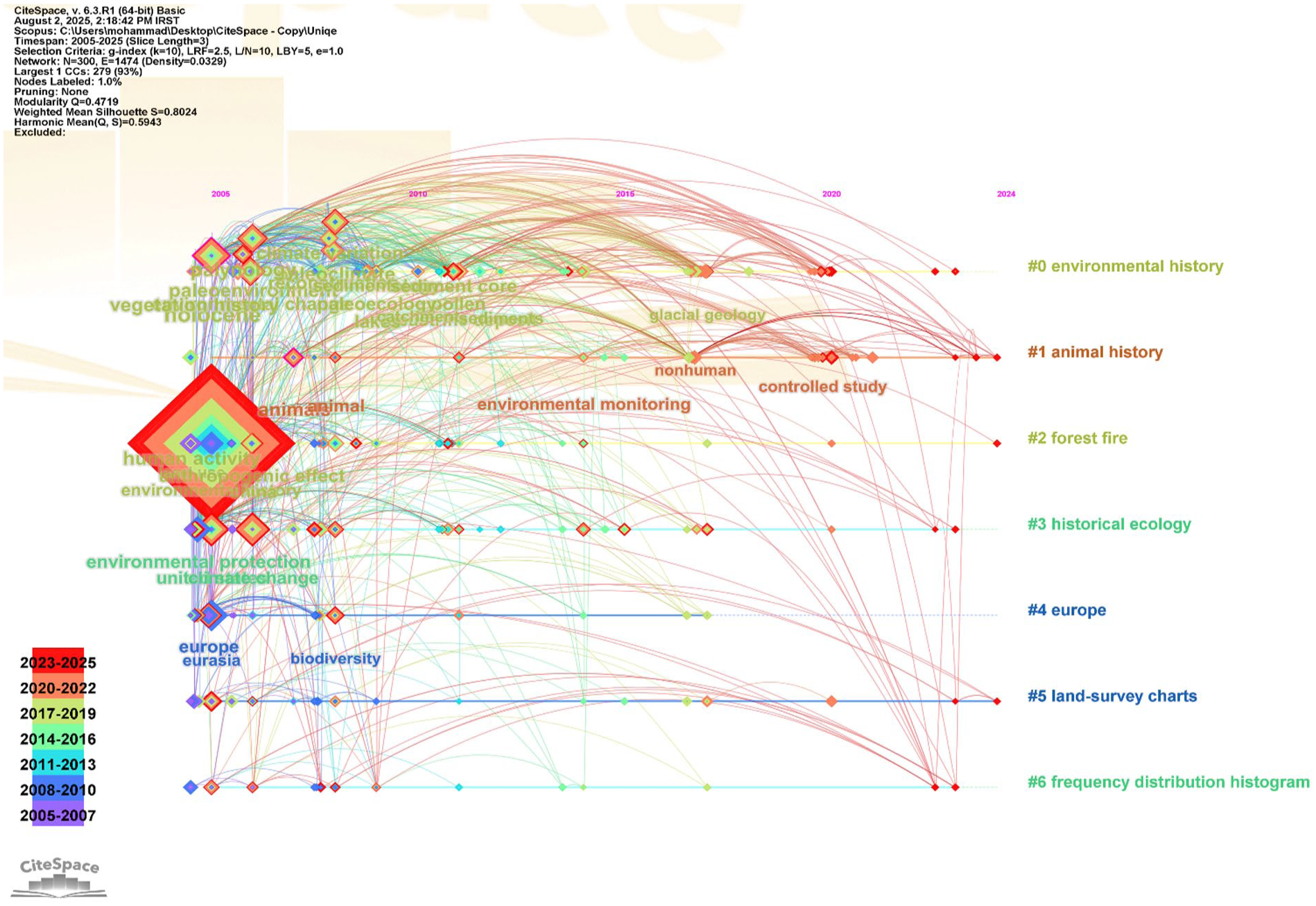
Timeline view analysis.
Cluster #3 (mean year: 2010) focuses on “historical ecology” and resilient watershed management in North America, particularly Canada and the United States, revealing the influence of urban history and boreal forest conservation discourse in shaping policies of ecological restoration and planning (Hedger et al., 2008; Lotze et al., 2005). Cluster #4 (mean year: 2007) shows a strong geographical orientation toward Europe, with sediment studies and nature conservation in southern and central Europe, and suggests the application of dating techniques (e.g. luminescence dating) to reconstruct past landscapes (Boyce, 2008; Plieninger, 2007). Cluster #5 (mean year: 2010), with its emphasis on “land-survey charts” and “crisis narratives,” integrates environmental history with economic and political ecology, particularly in Latin American contexts such as Mato Grosso (Costa et al., 2017; Leite et al., 2011). This cluster is characterized by critical historiographies that align with world-systems analysis and environmental humanities, showing the field’s growing engagement with socio-political critique. Finally, Cluster #6 (mean year: 2012) is geographically rooted in Australasia and New Zealand and thematically centered on land management and habitat connectivity, as well as methodological concerns such as “frequency distribution histograms” (James, 2009; Simkin and Baker, 2008). It emphasizes the local environmental histories shaped by fire regimes and pastoral land use.
The thematic evolution of environmental history depicted in Figure 5 demonstrates a field that has developed through sustained diversification rather than abrupt conceptual breaks, with distinct periods marked by shifts in analytical focus, methodological tools, and the integration of adjacent scholarly domains. During the first phase (1968–2007), environmental history coalesced around a recognizable cluster of foundational themes – environmental history itself, environmentalism, historical geography, and economic history – often articulated through case-based investigations of land use, migration patterns, and long-term socio-environmental changes in regions such as China. These orientations did not disappear in the following period (2008–2016). However, they were increasingly accompanied by topics rooted in the natural sciences, including otolith analysis, lake-sediment studies, sedimentology, and stable isotope applications, indicating a widening methodological repertoire without displacing the field’s historical core. Throughout this stage, environmental history remained the most stable and recurrent keyword (Weighted Inclusion Index: 0.64; 129 occurrences), expanding its conceptual boundaries to encompass themes such as climate change, forest history, and political ecology. The period 2017–2021 is marked by further differentiation, with the emergence of areas such as social metabolism, geoarchaeology, and urban environmental history; despite this proliferation, environmental history continued to anchor the network (256 occurrences; Stability Index: 0.01), now operating within broader transdisciplinary configurations, including historical ecology, ecosystem services, and global-change research. In the most recent phase (2022–2025), this anchoring function persists, but with additional thematic enrichment, as the field integrates concerns with paleoclimate reconstruction, palynological evidence, environmental humanities, gender perspectives, and pollution studies – collectively demonstrating a maturation in both epistemological scope and disciplinary self-definition (Costello et al., 2023; Holm et al., 2024; Peresin Meden, 2024).
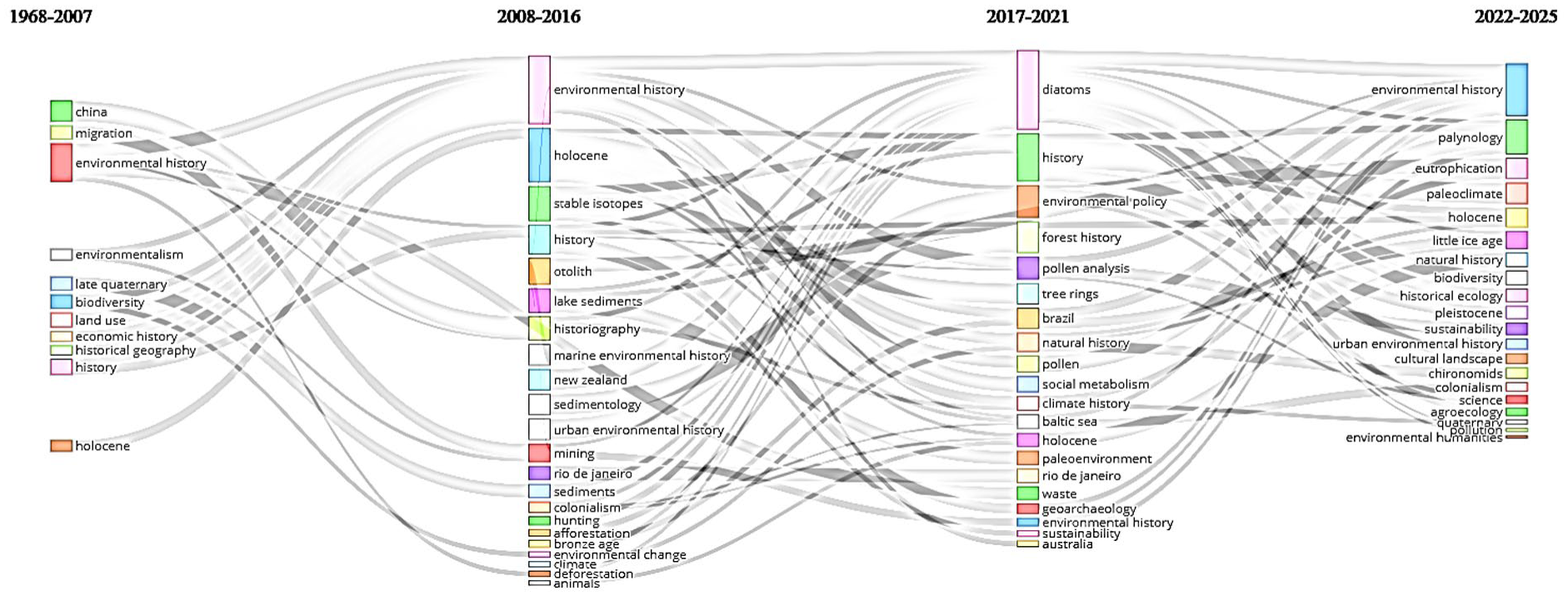
Thematic evolution.
The emergence of key high-stability pathways, such as the transition from Holocene studies to paleoclimate (Inclusion Index: 1.00), and the link between forest history and urban environmental history (Inclusion Index: 0.50; Stability Index: 0.17), suggests an increasing sophistication in connecting ecological time scales with urban and anthropogenic processes. Simultaneously, the field retains its empirical depth, with methodologically grounded subthemes, such as pollen analysis (e.g. Stability Index: 0.09 from 2017–2021 to 2022–2025) and sedimentology, threading through multiple periods. The recurring appearance of terms such as sustainability, climate history, and biodiversity – especially with strong weighted and inclusion indices – signals a consistent concern with contemporary global challenges, rooted in historically informed ecological critique (Berger et al., 2024; Schoepf et al., 2022). The trajectory of environmental history from 1968 to 2025 charts a compelling arc: from foundational synthesis to methodological pluralism and thematic proliferation, underscoring the field’s resilience and responsiveness to both scientific advancements and shifting socio-environmental imperatives.
The overlay visualization network presented in Figure 6 offers a comprehensive bibliometric analysis of the intellectual structure and temporal evolution of environmental history from 2008 to 2016. At the core of the network lies the central node “environmental history,” around which a dense web of thematically and temporally distributed concepts radiates (van Eck and Waltman, 2017). This figure reveals the field’s multidisciplinary character and its expansion across diverse yet interconnected areas, including climate change, paleoenvironments, land-use change, environmental degradation, and anthropogenic effects. The temporal gradient – indicated by the color transition from purple (older) to yellow (newer) – highlights how earlier literature (closer to 2008) focused more heavily on foundational historiographic and geographical constructs, including “historical geography,” “agricultural history,” “capitalism,” “eighteenth century,” and “environmental degradation”(Brown, 1998; Neumann, 2002; Steigerwald, 2000). These early clusters reflect the field’s engagement with traditional modes of historical inquiry and the socio-economic dynamics underlying environmental transformations. By contrast, newer research, represented by yellow nodes, shows a marked shift toward themes emphasizing biophysical processes, ecological monitoring, and methodological advances, including “paleoclimate,” “vegetation history,” “nonhuman,” “environmental monitoring,” and “geochemistry”(Charqueño-Celis et al., 2024; Gurdebeke et al., 2025; Žatková et al., 2023). The emergence of topics such as “male,” “nonhuman,” and “animal” in recent years suggests an increasing engagement with post-humanist and gendered approaches, further indicating the field’s responsiveness to contemporary theoretical paradigms. Additionally, strong linkages between geographical identifiers (e.g. “united states,” “europe,” “china,” “india,” “north america”) and thematic concepts (e.g. “climate change,” “deforestation,” “biodiversity,” “water management”) underscore the field’s global orientation and its commitment to examining environmental phenomena across multiple spatial and cultural contexts. The network also evidences an intensifying interdisciplinarity, wherein keywords traditionally associated with the natural sciences (e.g. “stratigraphy,” “diatom,” “lacustrine deposit,” “pollen analysis”) are increasingly integrated with historical analyses, reflecting a methodological synthesis that characterizes contemporary environmental historiography.
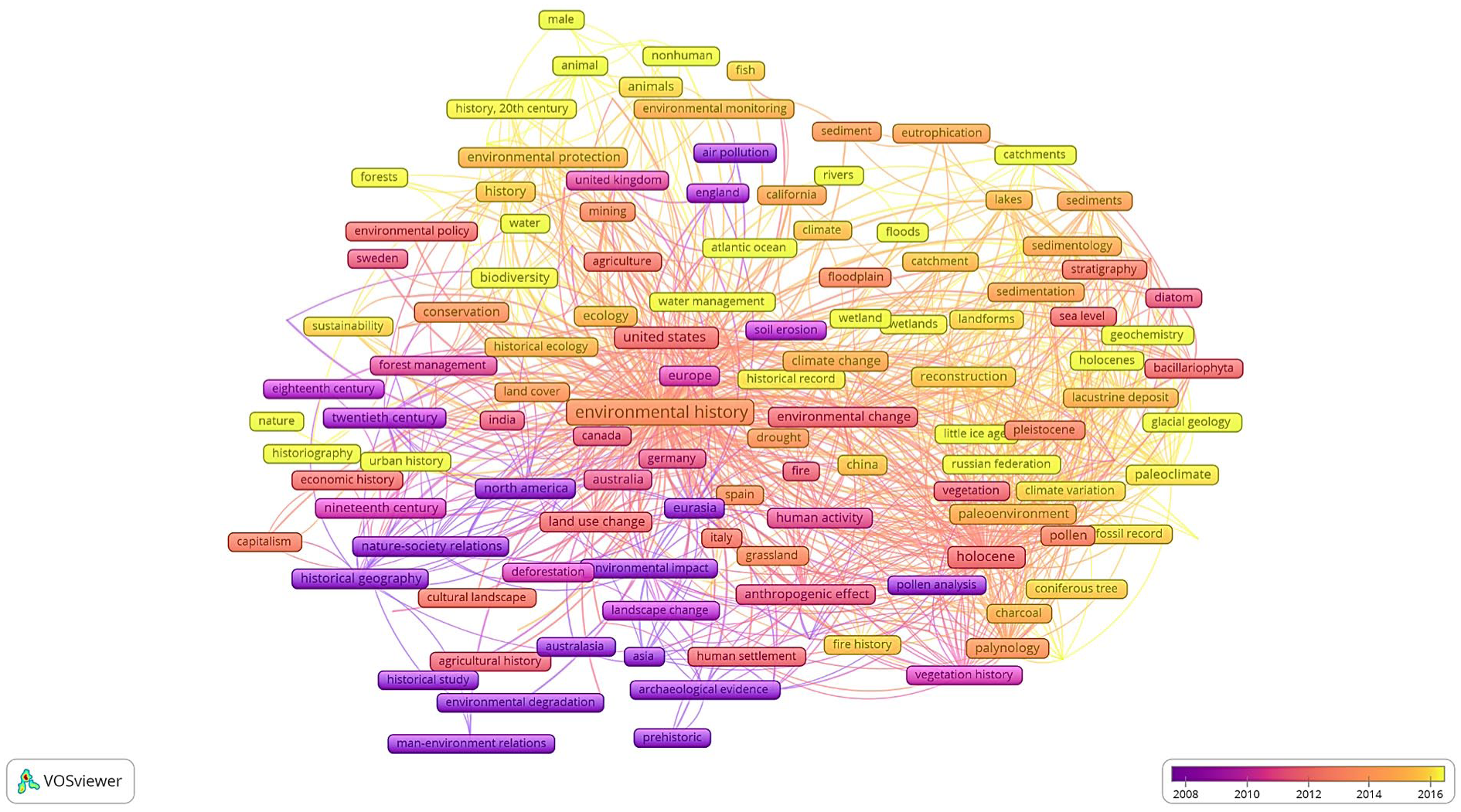
Overlay visualization network.
The co-word analysis of environmental history across four successive phases (1968–2007, 2008–2016, 2017–2021, 2022–2025) was guided by both historical developments in the field and natural breaks in annual publication volume, as visualized in Figure 2, where inflection points in article counts and mean total citations indicated distinct periods of thematic consolidation, methodological broadening, and disciplinary diversification. Within each phase, a minimum term frequency threshold of 5 occurrences was applied to ensure that only salient keywords contributed to network construction, reducing noise from idiosyncratic or single-use terms. To enhance semantic consistency, stemming and thesaurus harmonization were applied: variants such as “environmental history” versus “environmental histories,” plural forms, hyphenation differences, and standard abbreviations were unified to a single canonical term, preserving conceptual integrity across phases. Co-word networks were constructed using normalized association strength, and thematic clusters were labeled according to log-likelihood ratio scores. To quantify thematic continuity and evolution between phases, the Jaccard similarity coefficient was calculated for overlapping keyword sets, revealing moderate to high stability between consecutive phases (0.48–0.63) and lower similarity across non-adjacent phases, which reflects the introduction of novel methodological approaches such as paleoecology, geoarchaeology, and environmental humanities in later periods. Figures 4 to 6 illustrate these dynamics: timeline views reveal temporal emergence of clusters such as Holocene/paleoenvironmental studies (Cluster #0) and posthumanist animal/environmental history (Cluster #1), thematic evolution maps show persistent anchors like “environmental history” alongside newly emergent terms, and overlay visualization networks highlight shifts in disciplinary focus and geographic engagement, collectively demonstrating both continuity and diversification in the field’s intellectual structure.
Reference analysis (RQ 4)
In the evolving landscape of environmental history, specific scholarly contributions have emerged as particularly influential, shaping theoretical trajectories, interdisciplinary methodologies, and critical narratives that interrogate the entanglement of nature, culture, and economy across space and time. Table 3 provides a quantitative overview of the most impactful articles in the field, assessed by total citations (TC), citations per year, and normalized citation metrics, which collectively underscore both historical depth and contemporary relevance. Leading this corpus is the article by Ellis et al. (2010), which, with 1173 total citations and a normalized TC of 21.99, exemplifies a high-impact synthetic contribution by tracing the anthropogenic transformation of global biomes from 1700 to 2000 – an empirical and conceptual touchstone for Anthropocene scholarship. Even more remarkable in terms of temporal influence is Moore’s (2017) intervention, The Capitalocene, Part I, which, with 932 citations and a striking TC per year of 103.56, presents a paradigmatic critique of the Anthropocene narrative by framing ecological crises through the lens of historical capitalism and world-ecology, indicating a strong resonance with critical environmental humanities. Earlier works, such as Erlandson (2001), which explores aquatic adaptations in archeology, and Grotzinger et al. (2005), which analyze Martian sedimentology, demonstrate the field’s methodological breadth and its intersections with paleoecology and planetary science. Contributions by Östlund et al. (1997) and Braun (1997) provide regionally grounded, postcolonial, and historical ecological analyses that emphasize the socio-natural transformation of boreal and colonial landscapes. Butzer (2005) further exemplifies a cross-disciplinary approach by integrating geomorphology and history to examine Mediterranean soil degradation, highlighting the significance of long-term environmental processes in historical inquiry.
The most influential articles.

Meanwhile, foundational works by McNeill (1992) and Lindmark (2002) provide essential macrohistorical and econometric perspectives on environmental change, the former focusing on the Mediterranean world and the latter contextualizing Swedish carbon emissions in a historical EKC framework. The recurring presence of Jason W. Moore across three entries (2000, 2011, 2017) underscores his foundational role in reframing environmental history through a Marxist and systems-theoretical lens, challenging conventional periodizations and scales of analysis. These articles collectively represent a diverse, yet increasingly convergent body of work that not only maps the human impact on ecological systems but also reconceptualizes agency, temporality, and causality in environmental historiography.
Articles were ranked using field- and age-normalized citation metrics (MNCS or CPP/FCSm) rather than raw total citations, ensuring that highly cited recent works could compete fairly with foundational older studies. When multiple publications had identical normalized scores, tie-breaking was performed using total citations (TC) as a secondary criterion, prioritizing works with greater absolute scholarly influence. Only peer-reviewed journal articles were systematically included in the dataset, in accordance with the study’s methodological design, which aimed to maintain comparability and bibliometric rigor; as a result, books, monographs, and edited volumes – even if historically influential in shaping environmental history discourse – were not captured, meaning the guiding articles reported in Table 2 represent a subset of the field’s most influential journal-based scholarship rather than the complete intellectual canon.
Discussion
The bibliometric evidence synthesized across Figures 1 to 6 and Tables 2 and 3 provides a coherent, multidimensional picture of the scholarly landscape of environmental history, systematically addressing the four guiding research questions and demonstrating high internal consistency. In addressing RQ1, the performance analysis (Table 2 and Figure 2) outlines a field marked by steady expansion, both in volume and international collaboration, revealing a robust intellectual infrastructure characterized by a significant corpus (2286 documents), increasing annual growth (7.66%), and a moderate citation impact. This performance data is strongly complemented by the methodological framework shown in Figure 1, which illustrates a rigorous, reproducible screening process for article inclusion, thereby reinforcing the reliability of the corpus on which subsequent analyses are based. The results from clustering (RQ2), presented in Figure 4, offer a nuanced disaggregation of environmental history into distinct but interrelated thematic nodes – ranging from paleoecology and animal history to fire regimes and land management – each with unique geographic and methodological inflections. These clusters are mirrored and temporally contextualized by the thematic evolution in Figure 5, which tracks the continuity and transformation of central concepts (e.g. “environmental history,” “climate change,” “urban environmental history”) across four discrete chronological phases. The thematic evaluation thus corroborates the cluster analysis by showing not only the emergence of new research frontiers but also the stable centrality of core themes, especially “environmental history” as a disciplinary anchor. The overlay visualization (Figure 6) further triangulates these findings (RQ3) by mapping temporal shifts in research emphasis and documenting the progressive integration of post-humanist, gendered, and geochemical approaches – highlighting a dynamic interplay between traditional historical methodologies and cutting-edge ecological and critical theoretical frameworks. Finally, Table 3 addresses RQ4 by identifying key intellectual landmarks, or guiding articles, that exert significant influence within the field’s citation ecology. These works, such as those by Ellis et al. (2010) and Moore (2017), serve not only as citation outliers but also as conceptual nodes that anchor and shape broader thematic developments captured in the cluster and trend analyses. There is, therefore, a demonstrable alignment between the performance indicators, clustering outputs, thematic trajectories, and citation networks: each analytical layer both reinforces and extends the others. Rather than presenting disparate or contradictory insights, the data collectively map an integrated and intellectually coherent field that is both methodologically pluralistic and thematically rich.
Recent scholarship in environmental history has significantly advanced understandings of the long-term interactions between human societies and their environments by integrating interdisciplinary methods, global perspectives, and localized case studies. These works collectively highlight how socio-ecological transformations – from colonial land use practices in Mauritius and the Inca highlands to recent hydrological legacies in Brazil and coastal ecosystem shifts in Egypt and British Columbia – have been shaped by a combination of political, climatic, and economic forces (Haines, 2025; Hayes et al., 2025; Pereira et al., 2025; Razafimanantsoa et al., 2025; Zalat et al., 2025). The integration of paleoecological records and archeological findings in studies from Madagascar, Greece, and the Northern South China Sea has revealed the cumulative impacts of human settlements and climate variability over millennia, offering insights into resilience and collapse (Arzhannikov and Arzhannikova, 2025; Masci et al., 2025; Zhang et al., 2025). Simultaneously, investigations into colonial extractivism, industrial pollution, and infrastructural development – from California’s oil politics to Turkey’s river systems and Amazonian rainwater histories – demonstrate the persistence of environmental injustices and the uneven distribution of ecological burdens across time and space (Adamson, 2025; Doğan et al., 2025; Gomes and Kettle, 2024). New studies underscore the increasing relevance of environmental history to contemporary policy, conservation strategies, and socio-environmental equity (Izdebski et al., 2025; Lara and Torres, 2025; Olivares-Casillas et al., 2025; Peša, 2025; Sörlin, 2025).
Recent scholarship in environmental history underscores the field’s increasing interdisciplinarity and global scope, highlighting how human-environment interactions are deeply embedded in socio-political, cultural, and technological transformations. New research has illuminated the legacy of rural settlement evolution in Spain, glacial shaping of European terrains, and the long-term ecological impacts of marine exploitation in Atlantic Europe (Holm et al., 2024; Martínez de la Fuente et al., 2024; Schuster et al., 2024). Scholars have also traced the environmental imprint of forest exploitation and urban reforestation, while offering critical re-evaluations of agroecological knowledge in Latin America (Antoine et al., 2024; Sonti et al., 2024; Toledo and Argueta, 2024). Concurrently, new studies on nuclear landscapes, invasive species, and aquatic-human entanglements expose contested ecological legacies and technological interventions across disparate regions, including the Rhône, the Banni grasslands, and Sydney’s wetlands (Fagon, 2024; Hamilton et al., 2024; Ravi and Krishnan, 2024). Environmental historians are increasingly attentive to multispecies relationships, microhistorical methods, and questions of environmental justice and resistance, evident in investigations into the cultural roles of trees, climate protest, and the politics of food sovereignty (Chatterjee, 2024; Mårald et al., 2024; Silva and Meira, 2024). These diverse contributions reflect an environmental historiography that is both increasingly planetary in its imagination and deeply situated in local materialities and memory regimes (Garnero, 2024; Goffredo and Totten, 2024; Mikhail et al., 2024; Mordechai and Tubi, 2024; Moulton, 2024).
Conclusion
Environmental history, as evidenced by the broad scope and thematic diversity of recent scholarship, is undergoing a methodological and epistemological broadening that points toward several emerging future trends, persistent gaps, and actionable precedents. A discernible trajectory is the intensifying focus on multispecies entanglements and more-than-human narratives, where animals, plants, and even geological formations are positioned as active historical agents rather than passive backdrops. This ontological shift aligns with calls for a post-anthropocentric environmental history, particularly in the wake of the Anthropocene discourse, which demands deeper interrogation into how humans co-evolve with ecological systems. In parallel, the convergence of environmental history with Indigenous epistemologies, oral traditions, and decolonial methodologies suggests a growing effort to decentralize Eurocentric historical paradigms and integrate local ecological knowledges into global environmental narratives. However, there remains a significant gap in the historicization of contemporary climate science itself—how meteorological models, carbon accounting systems, and disaster forecasting have been culturally and politically constructed over time.
Additionally, the field often underrepresents the environmental histories of marginalized urban peripheries and informal settlements, even though these are critical zones of socio-ecological transformation. Another underexplored frontier is the environmental history of emotions—how affective responses to environmental change (fear, wonder, grief) have shaped policy, activism, and imaginaries of the future. As for practical precedents, interdisciplinary collaborations among historians, ecologists, and digital humanities scholars provide compelling models, particularly through GIS mapping, dendrochronology, and archival aerial photography to reconstruct long-term environmental change. Furthermore, policy-relevant historical research – such as studies tracing the socio-environmental impacts of past infrastructural projects or resource governance regimes – can offer invaluable insights for contemporary sustainability planning and environmental justice frameworks. Going forward, environmental historians are well positioned not only to document past ecological transformations but also to inform anticipatory governance amid accelerating planetary change.
The exclusive reliance on Scopus as the data source limits the scope by potentially omitting significant contributions from other databases (Web of Science, SciELO, Google Scholar, etc.) and non-English-language publications, while the restriction to original articles excludes valuable perspectives from reviews, book chapters, and gray literature. The application of scientometric tools such as VOSviewer and CiteSpace enables the mapping of co-authorship networks and research trends, but may oversimplify complex interdisciplinary relationships inherent to environmental history. Visual data presentations highlight dominant geographic and institutional contributors but also expose an uneven global representation. To advance the field, future research should broaden bibliographic inclusivity by integrating multiple databases and diverse publication types, incorporating qualitative approaches alongside quantitative bibliometrics, and focus on underexplored regions and thematic niches to foster a more holistic and representative understanding of environmental history’s evolving landscape.
Footnotes
Author contributions
Funding
The authors received no financial support for the research, authorship, and/or publication of this article.
Ethics statement
All ethical principles of research have been observed in this research.
Data availability statement
All the information in the article is accessible.*
