







Abstract
The chronology of the founding and abandonment of the Minyue State’s capital (Chengcun Han City Site) is crucial for understanding the historical development of the Minyue State and the process of Sinicization in southern China. This study applied optically stimulated luminescence (OSL), thermoluminescence (TL), and single-grain (SG) dating techniques to sediment and burnt clay samples from the West City Gate (WCG) section and West Water Gate (WWG) section of Chengcun Han City Site. The single aliquot regenerative-dose (SAR) protocol and standardized growth curve (SGC) method were employed to determine depositional ages and evaluate the reliability of the dating approaches. Results indicate: (1) OSL ages from the WCG, 1.84 ± 0.09 ka and 2.19 ± 0.08 ka, correspond to the construction and destruction phases of the city gate, while OSL ages from WWG, 2.01 ± 0.24 ka to 6.61 ± 0.32 ka, reflecting sedimentation in the water gate and moat. (2) Consistent OSL, TL, and SG ages for burnt clay at WCG suggest a conflagration event, likely linked to warfare and site abandonment following forced migration, though abandonment appears slightly later than the recorded fall of the Minyue State. (3) Combined dating results and environmental indicators show changing sedimentary dynamics at WWG: between 7.0 and 4.0 ka, sedimentation was mainly climate driven; after 4.0 ka, human activity became dominant. The rise of the Minyue State promoted local production and cultural dissemination in the upper reaches of Min River.
Keywords
Introduction
The Minyue State was a highly autonomous vassal kingdom situated along the southern coast of China during the early Han Dynasty. It provides direct evidence for the Han central dynasty’s governance over the Baiyue ethnic groups in southern China. In 202 BCE (2.23 ka BP2026), Wuzhu, leader of the Minyue tribe (the vassal tribes along the southeastern coast of China), was ennobled as the Vassal King of Minyue State for his assistance to Liu Bang, founding emperor of Han Dynasty, in defeating Xiang Yu, Vassal King of Chu State in the late Qin Dynasty. Soon afterward, Wuzhu and his descendants had constructed several walled cities emulating the ceremonial systems of the Han imperial dynasty of China. The most well-preserved city was the Chengcun Han City at the foot of Wuyi Mountain, coast area of South China, which was renowned for its strategic location that was easy to defend but difficult to attack. In 110 BCE (2.11 ka BP2026), the central government of the Han Dynasty launched a military campaign against the Minyue State and forcibly relocated its subjects to the area between Yangtze River and Huai River, leading to the state’s demise (Lin, 2003; Zhang et al., 2015). However, scholars disagree on the site’s occupation period, primarily due to differing interpretations of archeological materials. In the early stages of research, Chen (1961) conducted a typological analysis of the roof tiles and pottery unearthed at the site. This analysis revealed that their stylistic characteristics bore a high degree of similarity to those of the Nanyue State in Guangdong (204BCE–111BCE, one of the Baiyue vassal states in South China). Consequently, he advanced the hypothesis that the Chengcun Han City should be dated to the late Western Han Dynasty to the early Eastern Han Dynasty. This perspective has been corroborated by subsequent research, with Jiang (1978) and Lin (1990) further elaborating that the site was more likely a military outpost established by the Han Dynasty after the fall of the Minyue State, with its material cultural characteristics reflecting the Han court’s direct control over the former Minyue territories. However, Yang (1990) has expressed a divergent perspective on this matter. This study hypothesizes that the site was constructed in early Western Han Dynasty. Conclusion is based on archeological analysis of evolutionary sequences in architectural components and iron artifact assemblages. Site abandonment is directly linked to Emperor Wu’s military campaign against Minyue State. To resolve this chronological controversy, optically stimulated luminescence (OSL) dating was applied to systematically sample and date key cultural layers within site stratigraphy. This approach allows determination of absolute chronological range for major architectural remains.
The study further explores correlations between stratigraphic deposition processes and historical records of political changes in Minyue State.
Luminescence dating can be categorized into thermoluminescence (TL) and OSL based on the principle of signal excitation. As a core method in Quaternary chronology, OSL dating has demonstrated unique advantages in archeological chronology research, particularly for sites lacking organic materials (e.g. burnt clay, pottery, and heated stone tools; Solongo et al., 2019; Zink et al., 2012). In comparison with conventional 14C dating, luminescence dating has the capacity to directly ascertain the burial time of sediments or the time of the final heating event. Furthermore, it possesses a more extensive dating range (Aitken, 1985; Anderson and Feathers, 2019; Huntley et al., 1985; Janz et al., 2015). In particular, the development of single-grain dating techniques has enabled researchers to analyze the OSL characteristics of individual mineral grains, effectively identifying mixed sediments or post-depositional disturbances, significantly enhancing the reliability of chronology in complex archeological sites (Duller, 2008). While OSL has been used in the Min River basin to study Holocene sea-level changes, high-resolution chronologies for mountainous settlements remain scarce (Jin et al., 2021, 2022; Wei et al., 2023).
Burnt clay, as an artificially heated product, holds special chronological significance in archeological sites. It functions as direct evidence of human use of fire and resets the TL signal during its firing process, thus making it an ideal material for precisely determining the timing of human activities (Fan et al., 2020; Wang et al., 2022). The Chengcun Han City Site is located in the mountainous region of northern Fujian Province, southeastern China. The archeological remains excavated from this site reflect the natural and social environmental changes under the highly autonomous local regime of the Minyue State, which was under the central government of the Han Dynasty. This finding carries considerable significance for advancing understanding of cultural development in the region. This study focuses on the West Water Gate (WWG) and West City Gate (WCG) sections at Chengcun Han City Site in southeastern China. A robust sedimentary chronology was established using OSL dating, and multiple luminescence methods were employed to cross-validate the key burnt clay cultural layer. Combined with historical records marking the collapse of the Minyue State around 110 BCE, this research provides high-precision age constraints for the burnt clay deposits, laying a firm chronological foundation for clarifying the establishment and abandonment of the Minyue capital. Additionally, the study identifies close links between the sedimentary characteristics of the sections, natural environmental changes, and human activities. The results yield valuable insights into human environment interactions during early urbanization in East Asia.
Geophysical setting
The study area is located in the northern part of China’s Southeastern mountainous area, within the Zhenghe–Dabu fault zone that separates the Wuyi Mountain Range of northern Fujian from the Central Fujian Mountain System. Since the Neotectonic period, the region has undergone sustained, episodic uplift coupled with intense fluvial dissection, giving rise to a characteristic South China hilly landscape dominated by medium to low elevation mountains and hills. Topographically, the area slopes from northwest to southeast. Rivers are predominantly mountainous, often flowing through deep valleys with steep channel gradients; where they cross intermontane basins, broader valleys develop (Wu et al., 2000). Situated within this uplifted setting, Chengcun Village lies on the margin of the Chongyang River valley basin.
Chengcun Han City Site (27°32′43.36″N, 118°2′41.46″E) is situated in Chengcun Village, Xingtian Town, Wuyishan City, Fujian Province. Covering approximately 4.8 × 10⁵ m2, the site occupies elevations between 172 and 180 m, in a transitional zone between the southeastern foothills of the Wuyi Mountains and the hilly basins of northern Fujian. It is flanked to the north and west by the undulating foothills of the Wuyi Mountains, while its eastern and southern sides are bounded by the Chongyang River, a principal upper tributary of the Min River. A pronounced bend in the river southeast of the site, together with a natural gully to the west, creates a peninsula like elevated terrace surrounded on three sides by water. The settlement was constructed on a second terrace or piedmont plateau, standing 10–20 m above the adjacent alluvial plain (Wang, 1990).
Chengcun has a humid subtropical monsoon climate, strongly influenced by the East Asian monsoon system. The region is warm and humid, with a mean annual temperature of 18.3°C and moderate seasonal temperature variation. A distinct wet–dry seasonal pattern is present: summers are hot and rainy under the southeast monsoon, while winters, though occasionally affected by cold northerly air masses, remain relatively mild due to topographic shielding, with only brief frost episodes. Mean annual precipitation ranges from 1500 to 2000 mm. The area is well-endowed with water resources, mainly fed by the Chongyang River, which originates in the central part of the Wuyi Mountains. The river features a relatively stable discharge regime, with an average annual runoff of 4-6 × 10⁹ m3. As a navigable tributary in the upper Min River system, it offered a downstream waterway connecting to the Fuzhou Basin in eastern Fujian via the Jian River and Min river.
Material and methods
Section description and sampling
WCG Section (27°32′43.57″N, 118°2′27.49″E, 185 m) is situated on the secondary river terrace of the southern part of the west wall of the site. The sampling location is presented in Figure 1c. The section is characterized by generally loose texture and low moisture content, with a predominance of sandy grains. Layer 1 (0–10 cm) comprises dark brown silt, representing modern topsoil under grassland vegetation. Layer 2 (10–30 cm) consists of reddish-brown coarse silt, exhibiting bioturbation features, a soft consistency, and a loosely aggregated structure. Layer 3A (30–60 cm) is distinctly reddish, corresponding to a burnt soil horizon. Layer 3B (60–85 cm) is a red soil layer showing gradually increasing porosity downward. Layer 4 (85–100 cm) transitions toward the terrace substrate, with progressively coarser sediments. Two luminescence samples were collected from Layers 3A and 3B for dating.
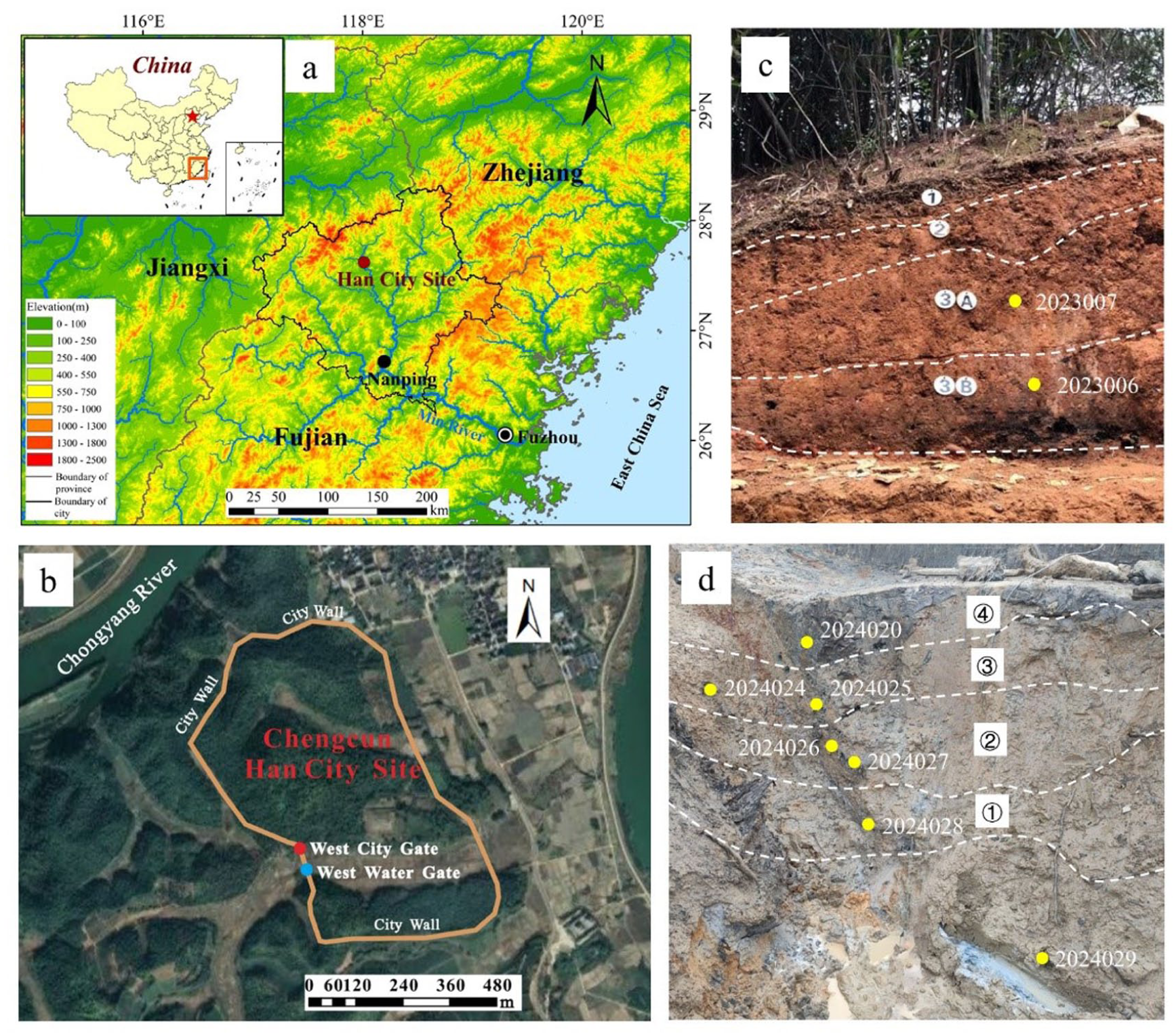
(a) Location of the Chengcun Han City Site in China and Fujian, respectively. (b) Location map of the sections at the site. (c) Lithostratigraphic classification and sampling positions in the WCG section. (d) Lithostratigraphic classification and sampling positions in the WWG section.
WWG Section (27°32′43.64″N, 118°2′25.72″E, 182 m) is located in a test pit in the western part of the site, and the sampling location is presented in Figure 1d. The section is characterized by a generally cohesive texture and high moisture content, with sediments predominantly composed of silt and clay. The upper stratum (0–120 cm) consists of grayish-blue mucky clay, with very fine grains, representing a cohesive upper soil layer. The lower layer 4 (120–160 cm) shows a distinct color transition, gradually shifting from gray to grayish-yellow, accompanied by increasing moisture content. The lower layer 3 (160–185 cm) is dominated by grayish-yellow clay, exhibiting a localized abrupt increase in grain size while maintaining an overall compact texture. The lower layer 2 (185–220 cm) primarily consists of grayish-yellow silt, intercalated with gray clay. The lower layer 1 (220–260 cm) is yellowish in color, with a dense texture and a compact blocky structure. The basal layer (260–350 cm) has high moisture content and relatively coarse-grained sediments. A total of seven luminescence samples were collected from the lower strata.
After collection, the luminescence samples were sealed in black plastic bags and brought back to the laboratory for storage. Nine luminescence samples were used in this study.
Sample preparation
All measurements were conducted using quartz grains as the material and all sample pretreatments were performed under subdued red light. After opening the sample, the first 2–3 cm of steel pipe from both ends, which may have been exposed, were removed. This portion of the sample was used to test the water content percentage. The dried sample was ground and tested for its U, Th, and K content. The mid-section of the steel tube, which was not exposed, was first treated with 30% H2O2 and then with 30% HCl to remove organic matter and carbonates, respectively. Once no small bubbles were visible, the sample was etched with 40% HF for 45 min to remove the feldspar and surface layers affected by alpha radiation. After neutralization and drying, magnetic minerals were removed using a strong magnet. The samples were then screened using a dry sieve to separate the grains into fractions of 38–63 µm and 63–90 µm for equivalent dose (De) testing. When preparing multi-grain test aliquots, grains from the sample are adhered to the test aliquot using silicone oil and excited once during testing, the adherent grains have diameters ranging 1 mm. Single-grain (SG) measurement involves placing 100 individual grains separately into 100 small holes (300 μm each) on a sample holder, followed by sequential stimulation during testing.
OSL/TL-SAR and SG-OSL protocol
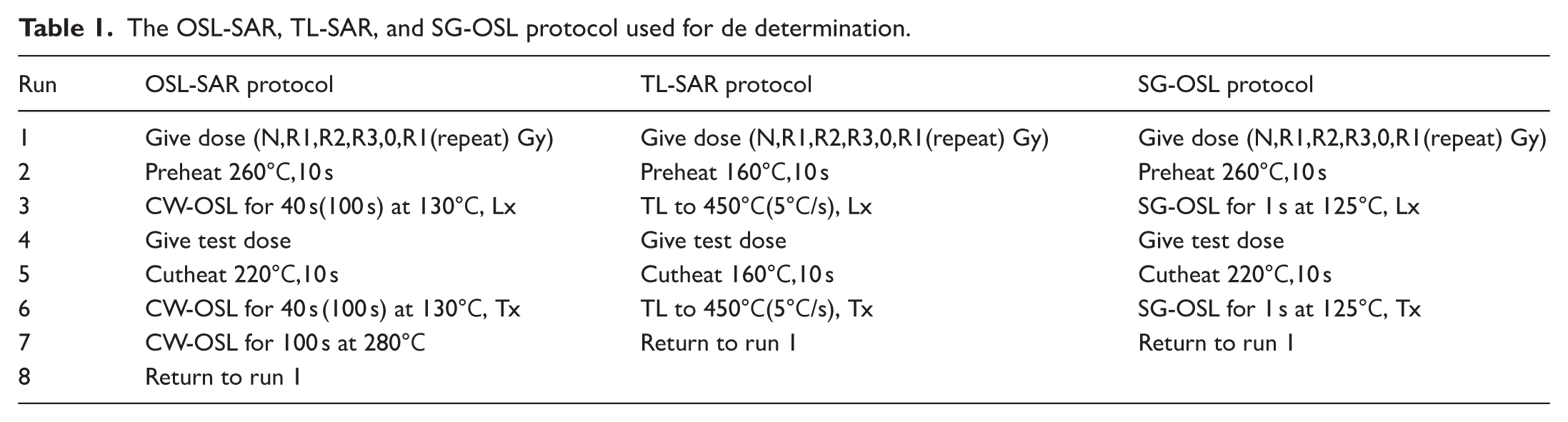
All OSL dating experiments were conducted at the Luminescence Dating Laboratory in the School of Geographical Sciences at Fujian Normal University. Three methods were employed for De measurements in this study: the single aliquot regenerative dose optically stimulated luminescence dating (OSL-SAR; Murray and Wintle, 2000; Roberts and Duller, 2004; Wintle and Murray, 2006); the single aliquot regenerative dose thermoluminescence dating (TL-SAR; Haustein et al., 2003; Richter and Krbetschek, 2006) and the single-grain optically stimulated luminescence (SG-OSL; Duller, 2006; Duller et al., 2003; Xie, 2020). De were measured for sample 2023006 using three luminescence dating methods, with all dose measurements conducted on aliquots of 9.8 mm in size. De measurements for the OSL-SAR and TL-SAR methods were performed using an automatic Risø TL/OSL DA-20C/D instrument equipped with a 90Sr/90Yβ source with a dose rate of 0.086 Gy/s, a 470 nm blue diode and a 7.5 mm Hoya U-340 filter (Bøtter-Jensen et al., 2003). De value measurements for SG-OSL were performed using an automatic Risø TL/OSL DA-22C/D instrument equipped with a 90Sr/90Yβ source and a 532 nm green diode. The dose rate was 0.117 Gy/s and the instrument was fitted with a 7.5 mm Hoya U-340 filter (Bøtter-Jensen et al., 2003). OSL-SAR, TL-SAR and SG-OSL procedures are detailed in Table 1. The standardized growth curve (SGC) in this study was established using the SGC calculator (Lai, 2006).
(1) For OSL-SAR: different sample preheating temperatures were selected based on preheat plateau tests. Blue LED was stimulated at 130°C for 40 s. For samples 2023006 and 2023007, the stimulation time was 100 s (Table 1). All samples were tested with 250 integration channels. The initial luminescence signal of 0.8 s was selected for integration calculation and the last 50 integration channel signals were used as background values for subtraction.
(2) For TL-SAR: Prior to stimulation, the sample was preheated for 10 s to 160°C to remove the TL peak of quartz at 110°C. The sample was then heated from 20°C to 450°C at a rate of 5°C/s to obtain the TL glow curve. The TL test also uses 450 integration channels, with a single-channel width of 1.0°C (Table 1). The integration temperature range is determined based on De and R1/N zone experiments, with the thermoluminescence signals from the first 50 s selected as the background value for subtraction.
(3) For SG-OSL: The preheating temperature combination of preheat 260°C and cutheat 220°C was selected. The sample was stimulated with a green LED at 125°C for one second (Table 1). The sample was set to 50 integration channels and the initial luminescence signal over 0.2 s was selected for integration calculation. The final 10 integration channel signals were used as the background value for subtraction.
The OSL-SAR, TL-SAR, and SG-OSL protocol used for de determination.
Dose rate
Dose rate (Dr) of quartz was measured using an indirect method, U and Th contents were determined using an inductively coupled plasma mass spectrometer (ICP-MS), while the K content was measured using inductively coupled plasma atomic emission spectrometry (ICP-OES; Aitken, 1998; Liritzis et al., 2013; Zhang, 2012). The contributions of these elements to the Dr value were then calculated using conversion factor coefficients proposed by Guérin et al. (2011) The water content was calculated as the actual water content, that is, (wet weight – dry weight)/dry weight × 100%. The contribution of cosmic rays was calculated using the formula proposed by Prescott and Hutton (1994). The Dr value was calculated using the DRAC v1.2 age calculator (Durcan et al., 2015).
Results
Before conducting OSL dating experiments, it is essential to select the correct preheating temperature. Sample 2024025 was selected for preheat plateau experiments. At preheating temperatures between 240°C and 280°C, the De value exhibited a distinct plateau region, with a recycling ratio ranging from 0.9 to 1.1 and a stabilized recuperation below 1%. We therefore selected 260°C as the preheating temperature and 220°C as the cutheating temperature. We validated the reliability of the procedure through dose recovery experiments (Figure 2). Component decomposition results showed that the fast components of all nine samples accounted for over 70% of their natural initial OSL signals, indicating that they are typical samples dominated by fast components (Figure 3). Therefore, the conventional SAR procedure, which is designed for samples dominated by fast components, is suitable for these samples and can effectively determine the De value. Analysis of the OSL signal decay curves and growth curves of samples 2024024 and 2024029 revealed that the OSL signals were strong and decayed rapidly to background levels within the first 2 s. This confirms that the samples were dominated by fast component. Growth curves were established by interpolating four regeneration dose points on each sample and De values were obtained through exponential fitting (Figure 4a and b). The SGC was obtained by averaging the SAR growth curves of all quartz sections in the sample and projecting the natural dose signal onto the SGC to obtain the SGC-De (Figure 4c and d). Since the samples are relatively young, all growth curves exhibit a similar linear growth pattern. Therefore, the SGC for the section samples was fitted using a “linear plus exponential” model (Yang, 2022).
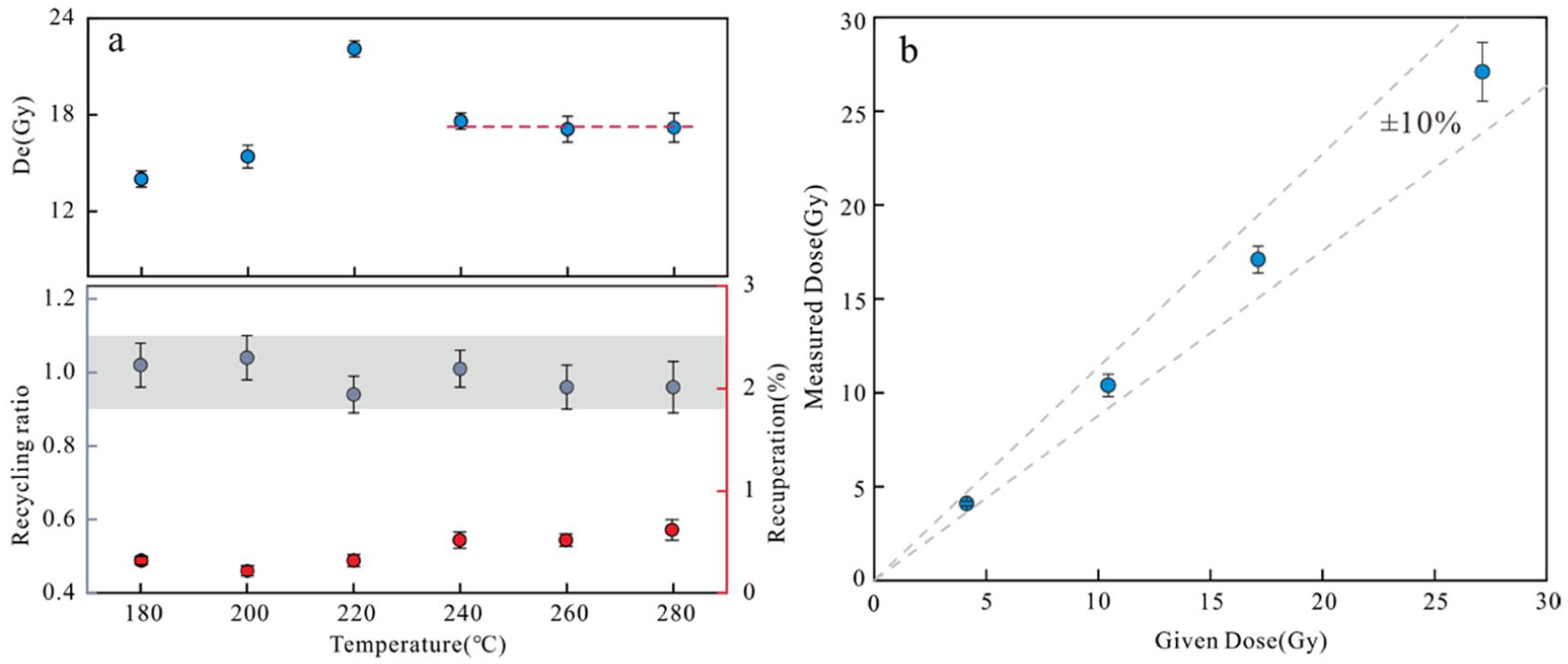
(a) Sample 2024025 preheat plateau test in OSL. Red dotted line is preheat plateau chosen for integration; gray band denotes the 10% band; the gray dots represent the cycling ratio and the red dots represent the recuperation. (b) Sample 2024025 dose recovery test in OSL. Gray dotted line is the 10% band.
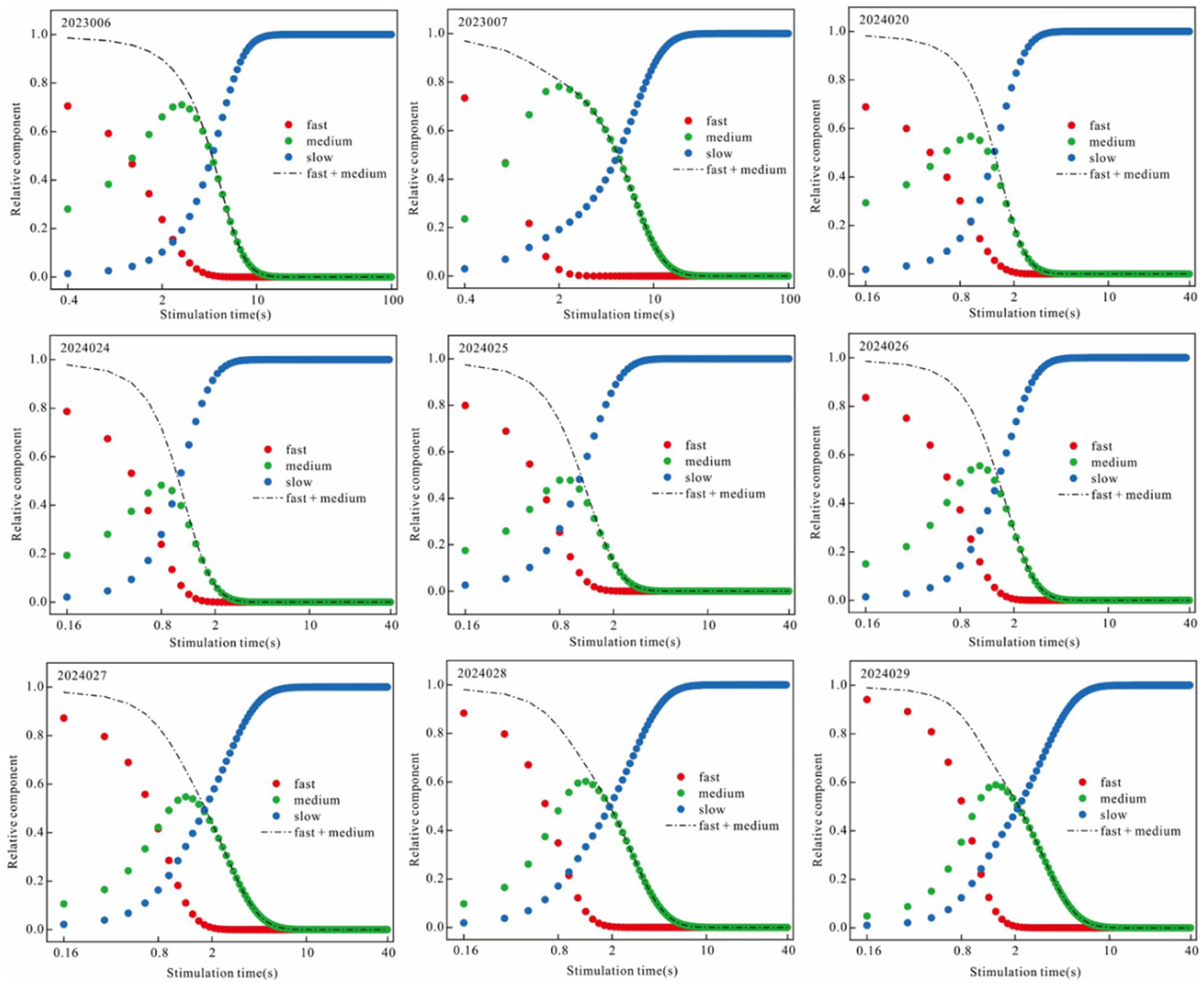
Quartz OSL signal component decomposition.
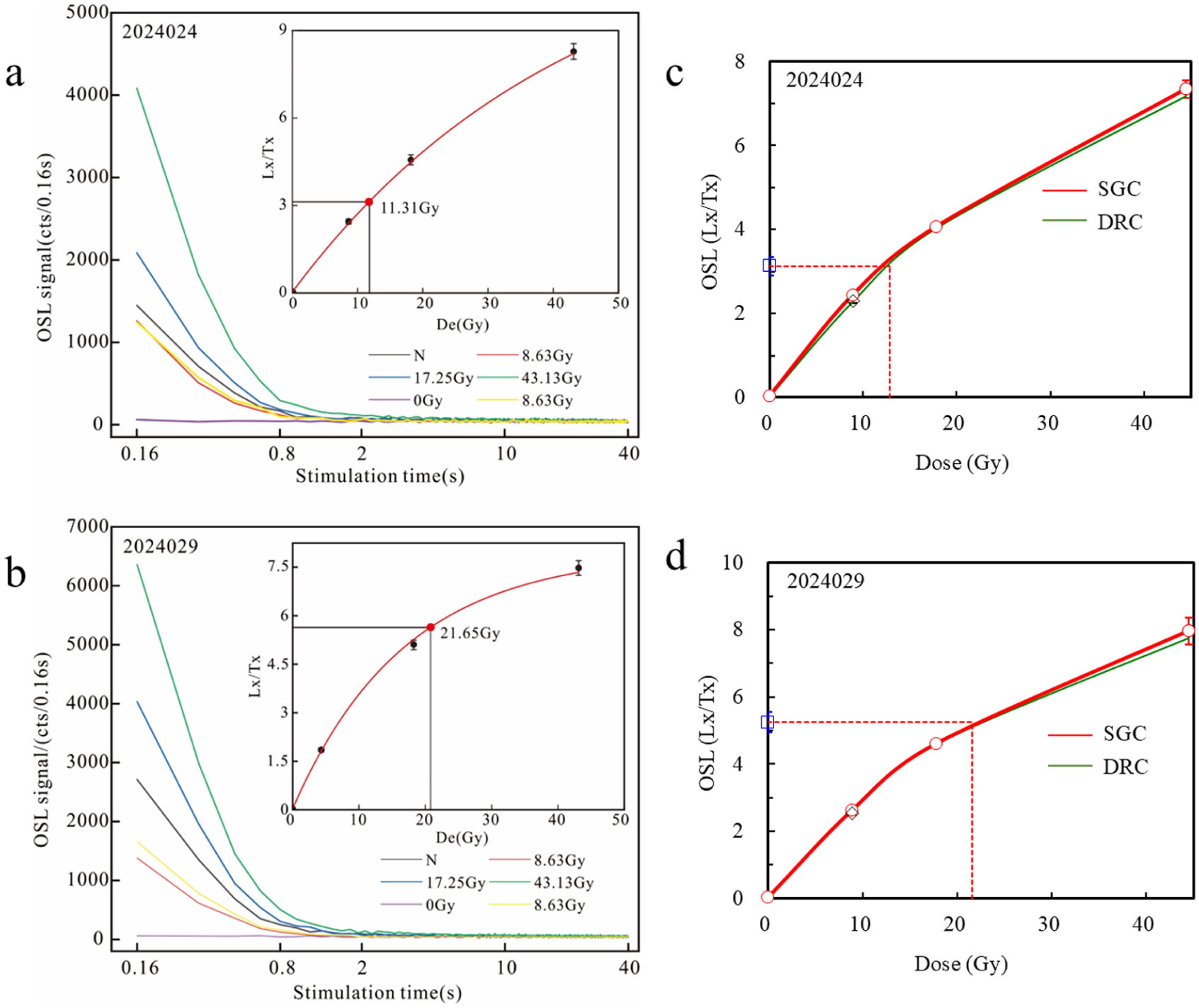
(a) OSL decay curves and growth curves of sample 2024024. (b) OSL decay curves and growth curves of sample 2024029. (c) SGC and dose response curve (DRC) of sample 2024024. (d) SGC and dose response curve (DRC) of sample 2024029.
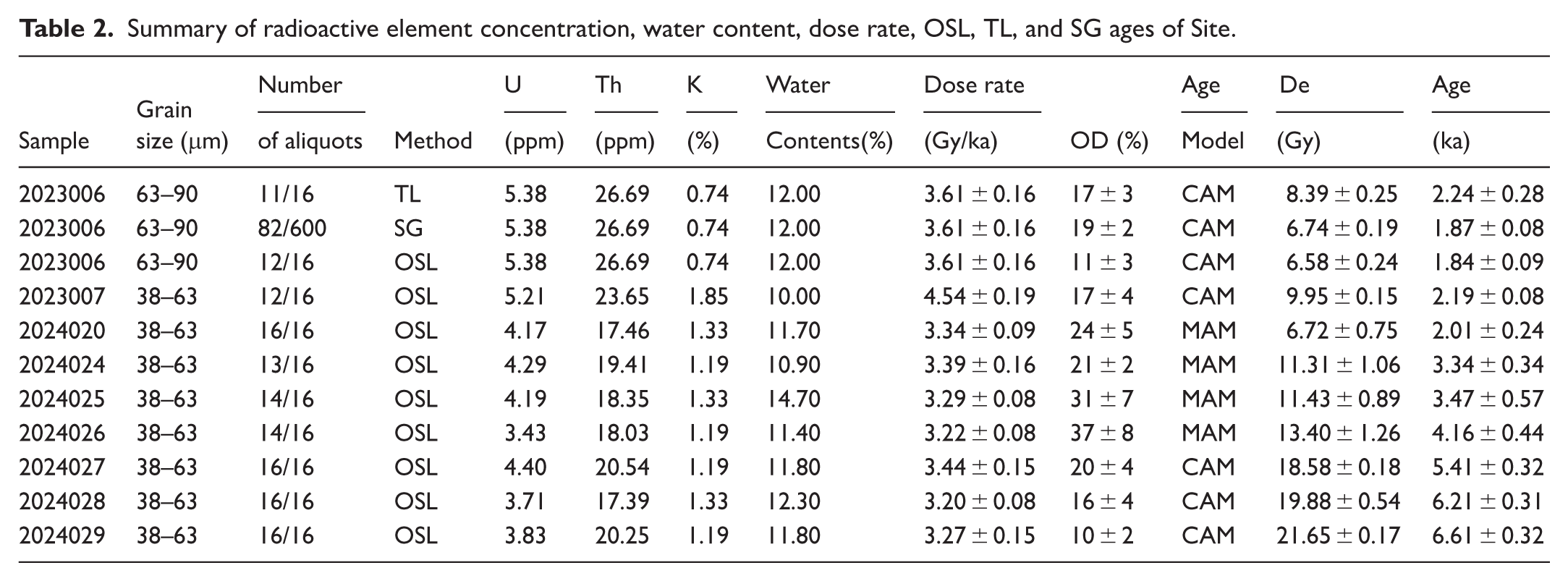
The De distributions for all the samples are plotted in Figure 5. It is shown that for most samples (2023006, 2023007, 2024027, 2024028, and 2024029), their De values are generally center clustered, indicating these samples had been well bleached before burial, and the Central Age Model (CAM) was used to determine their final De values (Figure 5). For other samples (2024020, 2024024, 2024025, and 2024026), most accepted aliquots tended toward the lower edge of the De distributions, suggesting partial bleaching before burial, and the Minimum Age Model (MAM) was adopted (Galbraith and Roberts, 2012). A σb value of 0.11, the average of the overdispersion (OD) values of well-bleached samples, was adopted in the MAM calculation. The WCG section consists of burnt clay layers which may have undergone high-temperature burning, resulting in the internal luminescence signals being largely depleted. As the bleaching degree of quartz grains is relatively uniform, the CAM is used to calculate the De value. These ages of 1.84 ± 0.09 ka and 2.19 ± 0.08 ka, which align with the duration of the Minyue State. Previous studies have demonstrated that the WWG section consists of riverine sediment deposits and the grains have undergone incomplete bleaching due to short-distance transport with residual luminescence signals present internally (Ding et al., 2011). Therefore, the MAM was used to calculate the De value, ages ranging from 2.01 ± 0.24 ka to 6.61 ± 0.32 ka from top to bottom. This documents the sedimentary history from the Neolithic period in northern Fujian to the fall of the Minyue State. The dating results are presented in Table 2.
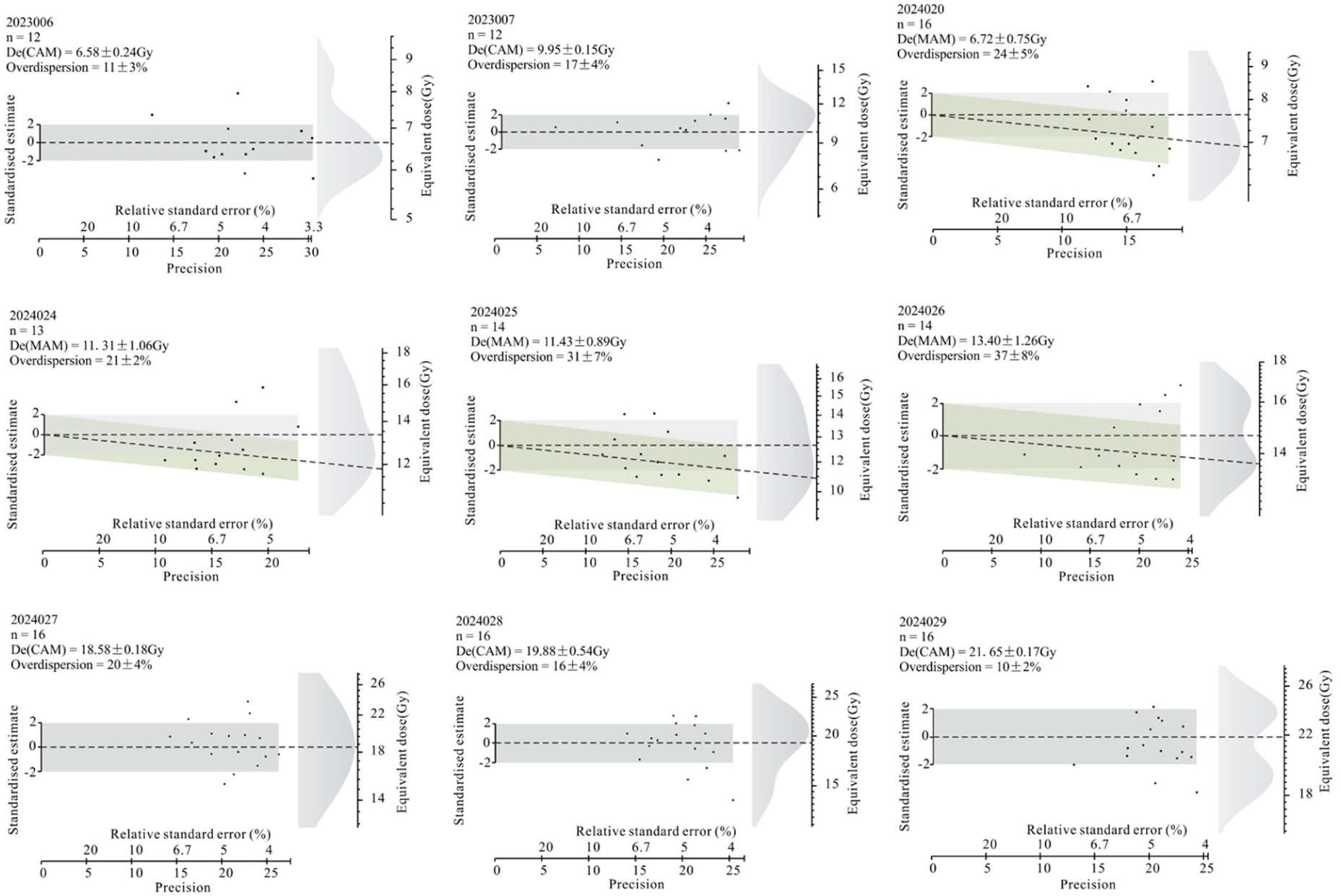
Abanico plots and frequency density diagrams showing the distribution of Des value of OSL samples (the gray band represents the CAM, and the green band represents the MAM).
Summary of radioactive element concentration, water content, dose rate, OSL, TL, and SG ages of Site.
This study employs TL-SAR, and through experiments in the De zone and R1/N zone, the optimal integration temperature range for stable De determination can be established (Richter et al., 2014; Vieillevigne et al., 2007). Therefore, for sample 2023006, the trend of De values as a function of the integration temperature range was calculated starting at 200°C, with intervals of 4 integration channels. In parallel, the R1 TL signal intensity was normalized to the natural (N) TL signal intensity to obtain the R1/N TL signal ratio as a function of temperature. Based on these two methods, the TL integration temperature range for this sample was determined to be 340°C–400°C (Figure 6a and b). The natural TL signal of the sample exhibited a distinct TL peak at 325°C, which is considered a relatively easily photobleached TL signal (Aitken, 1985). Notably, except for the zero dose and natural signals, all other regeneration doses exhibited a distinct TL peak at 210°C. Using the corrected natural and regeneration dose TL signal intensities, a “linear plus exponential” fit was applied to the dose-response curve, yielding an age of 2.24 ± 0.28 ka.
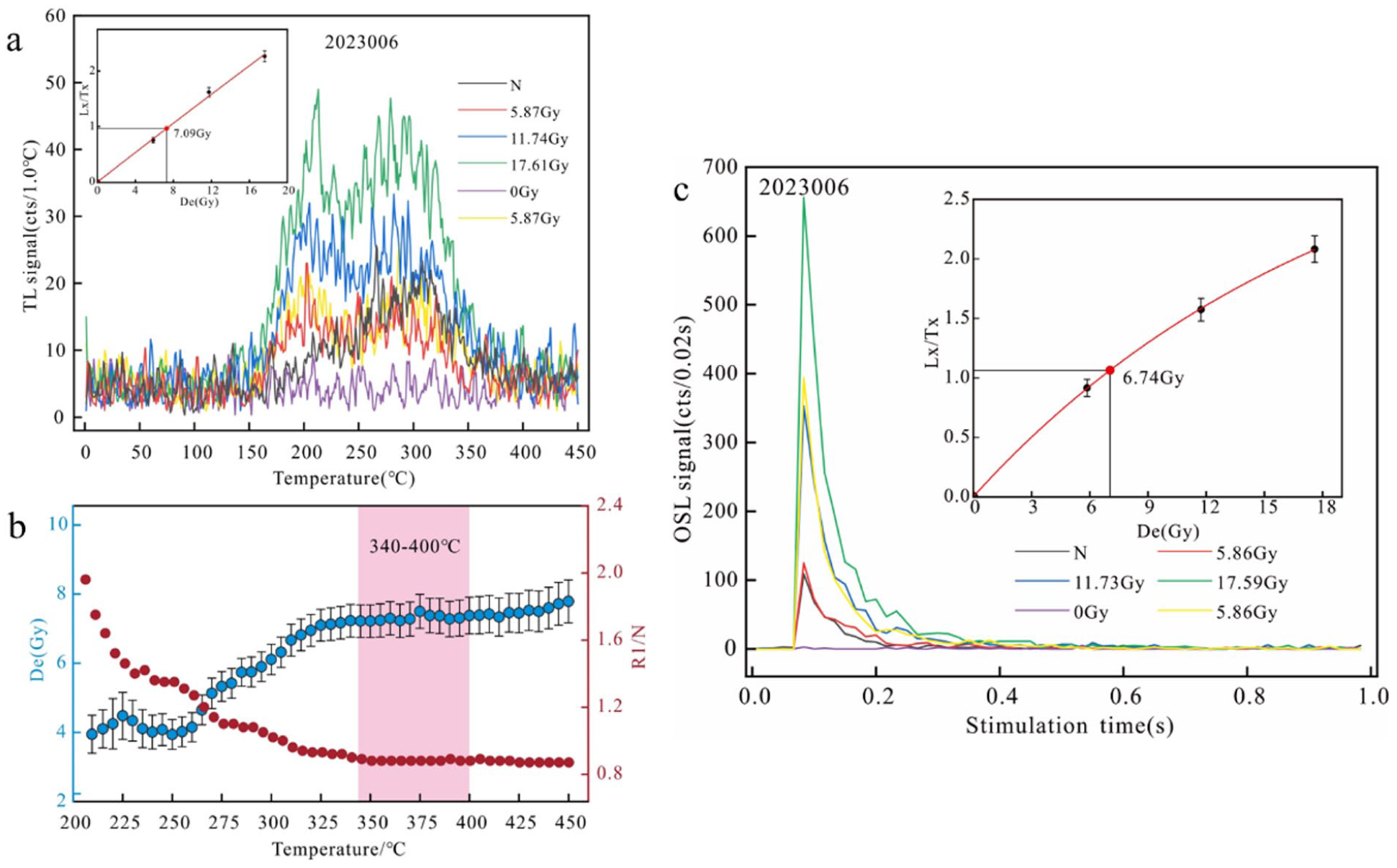
(a)TL glow curve and DRC of sample 2023006. (b) De plateau and R1/N plateau for sample 2023006. (c) SG signal curve and DRC of sample 2023006.
The SG-OSL dating method for quartz has been widely used for sediment dating, and the acceptance criteria for SG De value were: (1) the initial Tn signal is greater than 3σ relative to the background value; (2) the recycling ratio is between 0.7 and 1.3; (3) the recuperation is less than 10%; (4) the dose response curve fits well (Duller, 2008). A total of 600 grains were tested for 2023006, with 82 grains accepted. The decay curves showed bright signals, meeting the criteria for De testing (Figure 6c). Calculations using data from grains meeting the criteria yielded an age of 1.87 ± 0.08 ka.
Discussion
Comparative analysis of age determinations obtained by various dating methods
Burnt clay, a prevalent artificial heating product, has been identified in archeological contexts. Its accurate dating is paramount for historical reconstruction (Wang et al., 2022). In this study, systematic OSL, TL, and SG dating were conducted on a burnt clay sample 2023006 from the Chengcun Han City Site. When combined with the results of the archeological context and historical records, an accurate chronological framework for the site’s abandonment process was reconstructed, with equivalent dose results presented in Figure 7. The three dating results yielded a discernible chronological sequence: The TL age (2.24 ± 0.28 ka) is the oldest, the SG age (1.87 ± 0.08 ka) is intermediate, and the OSL age (1.84 ± 0.09 ka) is the youngest. This sequence aligns well with the 14C dates (2014–2160 cal yr BP) of charred organic materials excavated from the northern city gate area of the site, validating the reliability of the dating results and holding significant archeological chronological implications (Ge et al., 2020).
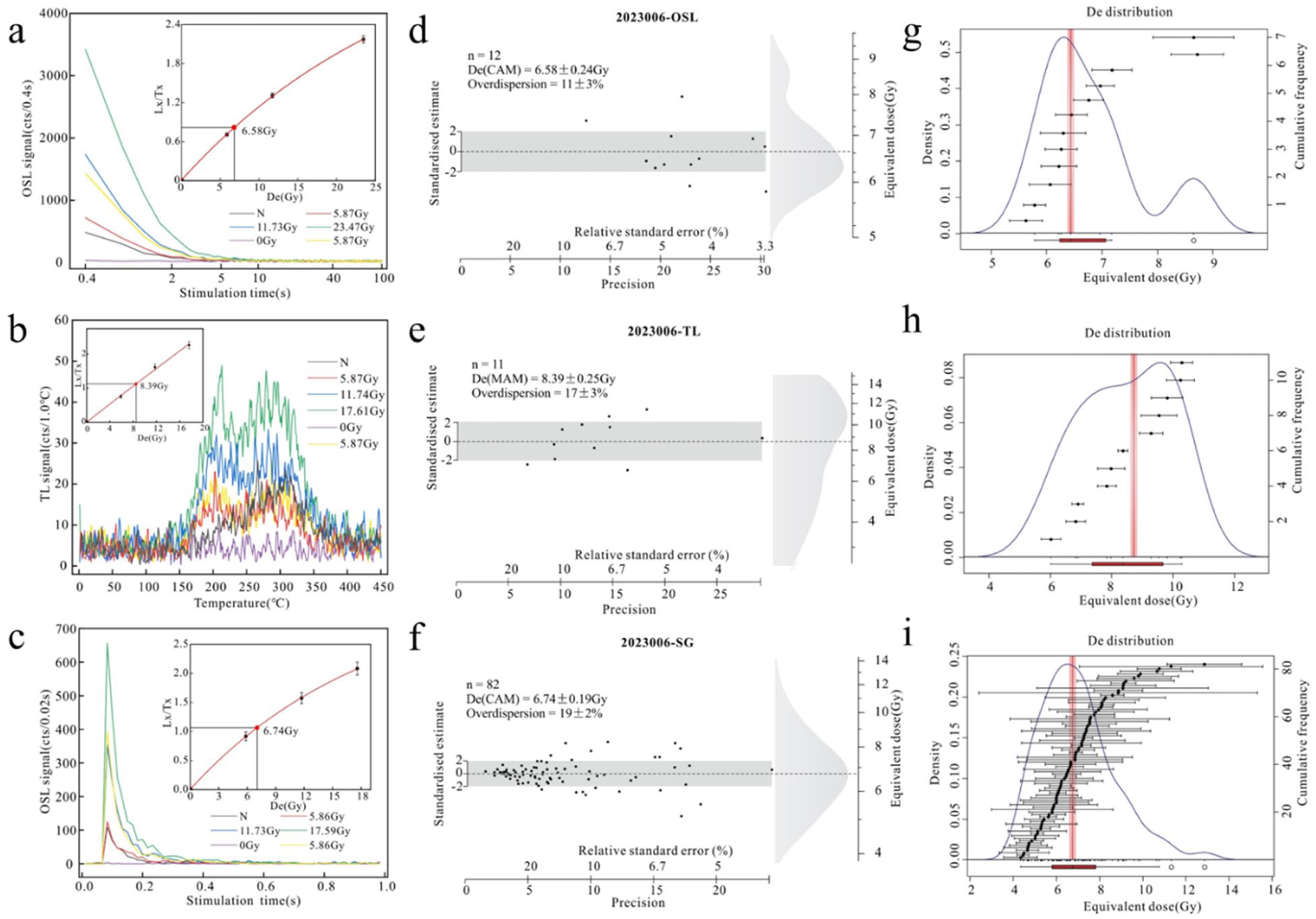
Comparison of De obtained by OSL, TL, and SG for burnt clay dating. (a) OSL decay curves and growth curves. (b) TL glow curves and growth curves. (c) SG decay curves and growth curves. (d) De value distribution plot of OSL. (e) De value distribution plot of TL. (f) De value distribution plot of SG. (g) Frequency distribution curves of De values for OSL. (h) Frequency distribution curves of De values for TL. (i) Frequency distribution curves of De values for SG.
The OSL age (1.84 ± 0.09 ka) obtained in this study is highly consistent with the SG age (1.87 ± 0.08 ka) within their respective errors, with only a minor numerical difference between the two datasets. This indicates that the quartz grains in the burnt clay sample were well exposed to sunlight before burial and thus fully bleached. Furthermore, the sample was not significantly affected by post-burial disturbances such as human activities, stratigraphic disturbance, or groundwater flow, and no secondary accumulation or fading of the luminescence signals occurred in the quartz grains. These results further support the following archeological interpretation: the burnt clay deposits at the Chengcun Han City Site formed immediately after the structures were burned and were rapidly buried shortly after the burning event, without prolonged surface exposure or reworking (Duller, 2008; Ou et al., 2015). Compared with the OSL result, the central value of the TL age (2.24 ± 0.28 ka) is relatively older, but the two ages overlap within the 2σ error range. This suggests that the difference is not caused by methodological errors, but is closely related to the formation process of the burnt clay. Combined with the TL signal characteristics (Figure 7), the TL signals of the burnt clay sample are generally weak. It is inferred that the main reason is that the temperature during the conflagration was insufficient to reach the critical temperature for complete resetting of the TL signal, leaving a small residual dose in the quartz grains and thus leading to a slightly overestimated TL age (Aitken, 1985; Roberts et al., 2015). In addition, the inherent error of TL dating is generally larger than that of OSL and SG dating. The error is further amplified when the luminescence signal is weak. Nevertheless, the agreement between TL and OSL ages within the 2σ error range in this study further confirms the overall reliability of the dating results.
Based on the above analysis, this study recommends adopting the OSL age of 1.84 ± 0.09 ka as the depositional age of the burnt clay layer to constrain the formation timing of the associated stratigraphy at the site. Meanwhile, the relatively older central TL age indirectly implies that the burning temperature during the formation of the burnt clay was in the medium-low range, suggesting that the fire affecting the structures was limited in extent and did not develop into a large-scale, high-intensity burning event.
This study highlights nuanced discrepancies between historical records and archeological evidence, providing a more precise date for when the site was abandoned. While historical records suggest that the Minyue State was conquered in 110 BCE, the abandonment of the city may have been asynchronous with its conquest. TL dating results suggest that this layer of burnt clay is likely a remnant from the burning of the Han City during the outbreak of war. However, OSL and SG dating results imply that the abandonment of the Chengcun Han City Site occurred slightly later than the fall of the Minyue State. The rapid burial of sediments aligns with historical records indicating that the site was abandoned due to migration, reflecting the asynchronous collapse of peripheral regional governments. Comprehensive multi-method luminescence dating provides a precise chronology for understanding the archeological timeline of the decline of the Minyue State’s city site.
Luminescence-based chronology of the WWG section and its implications for regional environmental evolution
Based on the OSL dating results from the WWG section, the chronology of human activity in the Chengcun area can be precisely determined. To analyze the relationship between the sedimentation processes and environmental changes at the WWG section of the Chengcun Han City Site, radiocarbon dating data were utilized from this study and a comparative analysis was conducted using environmental proxy indicators. These included the charcoal concentration in the northern Wuyi Mountain borehole, China (Ma et al., 2016), the average humidity index of the southern region of China (Ran and Feng, 2013), the palynological content of evergreen broad-leaved forests in LTY drill, Fujian (Yue et al., 2012) and the δ18O of Sanbao Cave, China (Wang et al., 2008), as shown in Figure 8. This clarifies the environmental context of human activities and cultural development in the inland regions of northern Fujian.
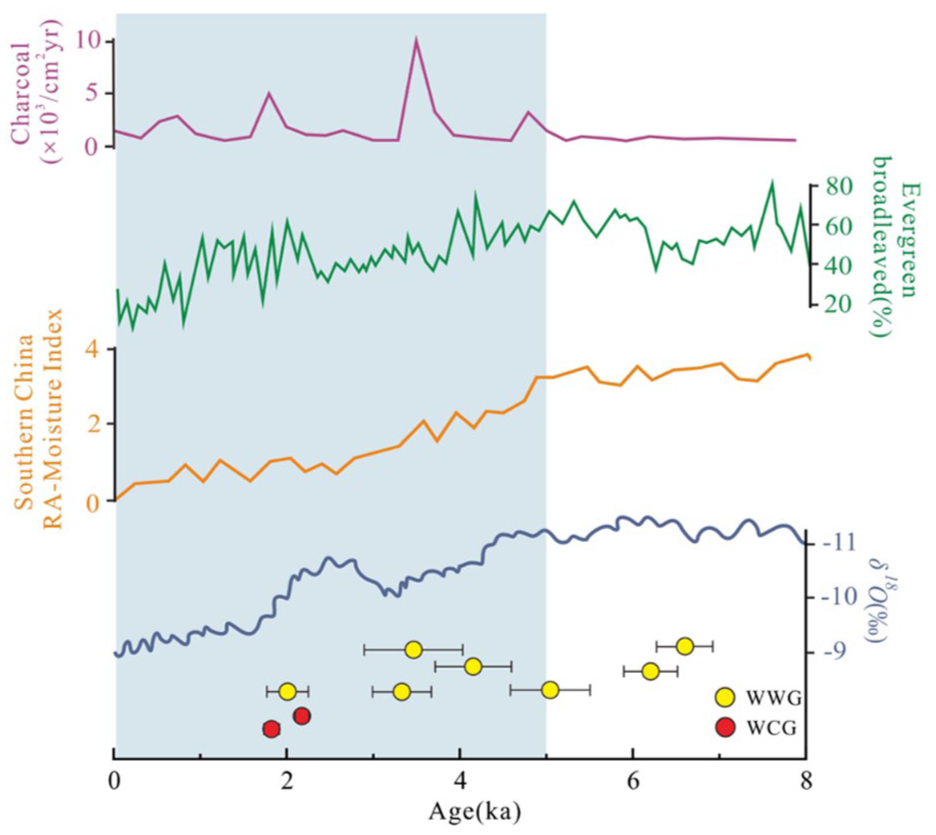
The OSL age of the Chengcun Han City Site quartz compared with the charcoal concentration in the northern Wuyi Mountain borehole, China (Ma et al., 2016), the palynological content of evergreen broad-leaved forests in LTY drill, Fujian (Yue et al., 2012), the average humidity index of the southern region of China (Ran and Feng, 2013), and the δ18O of Sanbao Cave, China (Wang et al., 2008). The blue band indicates the period of human activity.
7.0–4.0 ka: Climate-dominated depositional stage
The OSL ages from the WWG and WCG sections at the Chengcun Han City Site are concentrated in the high-sea-level period since 7.0 ka, corresponding to the Holocene climatic optimum (Zeng, 1991). The robust East Asian summer monsoon (EASM) led to heightened precipitation in a southern region of China. Furthermore, the elevated pollen content of evergreen broad-leaved forests in Pingnan County, Fujian province, along with the substantial accumulation of organic matter in the Tianhu Mountain peat bogs, collectively indicate the prevailing warm and humid environmental characteristics of this epoch (Figure 8; Yue et al., 2012; Zeng et al., 2024). Furthermore, there is a paucity of inland sites in Fujian from the same period, and the charcoal concentration in the Wuyi Mountain borehole approaches zero, indicating that sedimentation during this stage was primarily controlled by climatic factors, with minimal human influence. Since 5.0 ka, with the weakening of the EASM, the regional climate shifted toward a drier and colder pattern, which is consistent with the trend of changes in the humidity index in southern China. Pollen records also indicate a slight decrease in the coverage of evergreen broad-leaved forests in Fujian Province(Figure 8). During this period, phytolith evidence of rice characteristics was discovered at the Niubishan site, suggesting that humans began to settle in the northern Fujian region and cultivate rice around 5.0 ka. The increase in charcoal concentration, alongside pottery shards excavated from the Longtoushan site during the same period, suggests that humans had mastered fire and could manufacture tools to meet their survival needs (Lin, 2023; Wei et al., 2024). However, due to the relatively low population density at this time, the impact on the environment, particularly vegetation cover, was limited. This contrasts sharply with the middle and lower reaches of the Yangtze and Yellow Rivers, where primitive agriculture had already developed significantly during the early Holocene (Hosner et al., 2016).
4.0–2.2 ka: A period of intensified human–environment interaction
Pollen records from this period indicate a sharp decline in plant cover. Charcoal concentrations also suggest a significant increase in the frequency of forest fires in the Wuyi Mountain region around 3.5 ka (Figure 8). This trend is attributed not only to the drying and cooling effects of the weakening EASM, but also to the expansion of human activities during the Xia Dynasty, Shang Dynasty, and Zhou Dynasty. Evidence from rice phytoliths indicates that rice in the upper reaches of the Min River was fully domesticated during this period, greatly promoting population growth in the region. The rapid increase in the number of sites also reflects this trend (Lin, 2023; Ren et al., 2021). This increase in sites and population density made large-scale slash-and-burn cultivation and agricultural planting possible.
Since 2.2 ka: The stage of social complexity
The recovery of the EASM has slowed the trend of drought, providing favorable conditions for agriculture. The synchronous increase in wood pollen and charcoal concentrations indicates that humans adapted to the natural environment of northern Fujian, enabling them to engage in large-scale agricultural development (Figure 8; Ma et al., 2016; Yue et al., 2012). The WWG section top layer, the WCG section layer 3A and the burnt clay layer were all deposited during this stage, accompanied by significant changes in soil color and grain size. This indicates a sharp increase in the impact of human engineering on soil deposition and erosion. During this period, settlement sizes expanded, agricultural technologies improved and land use patterns became more intensive, laying the economic foundations for the rise of the Minyue State. As an important central city of the Minyue State, Chengcun Han City demonstrated a high level of development in water management and military defense. The west water gate was primarily used to divert floodwaters from the Chongyang River, combining flood control with defense. The ceramic pipe system at the site signifies the refinement of water resource allocation technology. The west city gate made use of the eroded terrain of the concave bank, with the city walls and moats forming a “mountain-water-city” triple defense system that strengthened military defenses and optimized the urban layout (Wang et al., 2024). Archeological excavations suggest that significant progress was made in production tools and pottery-making techniques during the Minyue State period. A large number of pottery and iron tools were found at the Chengcun Han City Site, while pottery shards and roof tiles with various patterns were uncovered at the Jinjishan Site in Pucheng County, approximately 80 km northeast of Chengcun. This suggests that there was close cultural exchange among the various regions of northern Fujian during this period and that the activities of the ancient population were expanding (Gao and Lin, 2011). The discovery of these tools suggests that the southward expansion of Han culture was the primary driving force behind the advancement of ancient cultures along the upper reaches of the Min River into the Iron Age. The fusion of Han and Yue cultures resulted in the development of the distinctive Min-Yue culture, which subsequently impacted the lower reaches of the Min River and other river basins in Fujian Province (Wu, 1995).
In addition to climatic conditions, topographical factors have long influenced human activities. The northern Fujian region, characterized by mountainous and hilly terrain, constrained early human activities, prompting them to settle along rivers in order to meet their agricultural and domestic water demands (Li, 2017). Consequently, the Han City settlement in Chengcun emerged in the alluvial plain of the Chongyang River, where continuous sedimentation not only formed a floodplain but also ensured stable hydrological conditions. Together with the high elevation, this created stable hydrological conditions and topographical foundations that allowed the site to be used continuously over time.
Conclusion
This study focuses on nine sediment samples taken from the WWG and WCG sections of the Chengcun Han City Site, located in the upper reaches of the Min River. OSL-SAR dating was used to determine the ages of the samples, while TL-SAR and SG-OSL dating were applied to samples from the burnt clay layer. The study investigated the luminescence properties of quartz, as well as the impact of the various dating methods on the results. It also explored the significance of the burnt clay layer and the environmental context of the sedimentary processes in the sections. The results are as follows:
(1) The OSL dating results for the WWG section ranged from 2.01 ± 0.24 ka to 6.61 ± 0.32 ka, while those for the WCG section range from 1.84 ± 0.09 ka to 2.19 ± 0.08 ka. Sample 2023006 from the WCG burnt clay layer yielded ages of 1.84 ± 0.09 ka (OSL), 2.24 ± 0.28 ka (TL), and 1.87 ± 0.08 ka (SG).
(2) The three dating methods are consistent within the 2σ error range. The burnt clay layer is most likely the remains of conflagration during the warfare that destroyed the Han city, indicating rapid sediment burial. This is consistent with the historically recorded abandonment of the site due to forced migration, which led to the final demise of the Minyue State. Therefore, this study suggests that the construction date of the Chengcun Han City Site corresponds to the establishment of the Minyue State, while its abandonment may postdate the collapse of the Minyue State slightly.
(3) OSL dating results and environmental indicator analyses suggest that during the 7.0–4.0 ka of the WWG section, the sedimentary process was primarily controlled by climatic factors; since 4.0 ka, human activity has been the dominant driving force in the evolution of the sedimentary environment. The establishment of the Minyue State during the historical period further promoted the spread and development of Han culture in the Min River basin and throughout Fujian Province.
Footnotes

Author contributions
Zian Wang: Writing – review & editing, Writing – original draft, Software, Methodology, Formal analysis, Data curation. Jianhui Jin: Writing – review & editing, Software, Investigation, Funding acquisition. Jianlong Lou: Resources, Investigation. Chao Wei: Resources, Investigation. Xinxin Zuo: Software, Resources, Investigation. Zhiyong Ling: Software, Methodology. Junjie Wei: Software, Methodology. Jiayan Xu: Software, Resources. Junjie Qiu: Software. Zhizhong Li: Investigation.
Funding
The authors disclosed receipt of the following financial support for the research, authorship, and/or publication of this article: This work was supported by National Natural Science Foundation of China (Grant No.42571007), Project of Fujian Provincial Department of Science and Technology (Grant No.2024R1038) and Natural Science Foundation of Fujian Province, China (Grant No. 2024J01444 and No. 2024J02012).
Declaration of conflicting interests
The authors declared no potential conflicts of interest with respect to the research, authorship, and/or publication of this article.