






Abstract
This paper presents the results of a mixed methods study of interlending and resource sharing in UK public libraries, based on the results of a survey distributed to both senior library managers and interlending staff, and in-depth follow-up interviews with 20 respondents. We present an analysis of perspectives towards rates of interlending, the rationales and strategies for providing the service, the perceived value for money offered by various interlending schemes, the impact of the current digital environment, and views on the future of interlending in the UK. Our findings suggest that while interlending services are undoubtedly threatened by the drastic cuts to public library funding, and that demand for the service is more generally in decline, resource sharing is viewed by some as a potential means of mitigating the effects of increasingly limited acquisitions budgets, and ensuring the public library system continues to provide access to a wide range of resources for its users.
Introduction
The widely offered and low-cost interlending service that was found in the public library system for much of the 20th century has been increasingly jeopardised by large cuts to public sector funding. Interlending is just one of many public library services under threat, and as such there is currently a widespread public debate about the future role libraries could or should play in our common future. At the same time, advances in technology have not only increased the potential scope and functionality of online library catalogues, but have also made digital content more easily accessible to users elsewhere on the Web, whether it be through commercial e-commerce sites or open access repositories. With budgets shrinking, and alternative means of sourcing information apparently available, public libraries are increasingly debating whether interlending should remain a key offering, and if so what models might be employed to sustain it. Recent discussion of interlending on forums such as the LIS-PUB-LIBS JISCMail public library email discussion list, prompted by library staff representing authorities considering ceasing interlending services, demonstrates not only the current relevance of the debate, but also the strength of feeling from contributors on all sides.
This paper presents an investigation by a team from the Information School at the University of Sheffield of the factors influencing interlending and resource sharing in public libraries. The research was commissioned and funded by the Management Board of The Combined Regions (TCR), a collaboration of regional and national library ‘regional or national library organisations in Britain and Ireland’. It was motivated by a need to better understand the apparent decline in rates of interlending indicated by falling rates of both searching and lending through the TCR-managed UnityUK system, a resource-sharing and interlibrary loan (ILL) service which offers subscribing library authorities access to a union catalogue with ILL management functionality. There was also the aim to map out the current strands of the debate around interlending. The study has addressed the following research questions:
What are the perceived levels of interlibrary loan provision in public libraries?
What are the rationales and strategies for delivering interlending services?
To what extent are interlending schemes perceived to offer value for money?
What impact is the current digital environment having on interlending services?
How do librarians view the future of interlending?
Literature review
Current levels of provision
There is a widespread belief that rates of interlibrary loan are declining globally (e.g. Boukacem-Zeghmouri et al., 2006; Echeverria and Barredo, 2005; Missingham and Moreno, 2005; Pfleger, 2008; Sagnert, 2007). In the UK, data from UnityUK offers perhaps the clearest indication of current levels of provision, and recent trends. The latest figures, as at March 2014, show 222,000 searches and almost 89,000 requests placed in 12 months, a decline of 11.7% and 15.3% respectively over the previous 12-month period. 1 A similar decline in demand for the British Library’s Document Supply Service has been noted, with current levels of provision less than a quarter of that in 2000 (Appleyard, 2015). A wide range of factors have been suggested to explain this decline, including the emergence of the Internet as a source of rare and niche material that was once the preserve of ILL (Goldner and Birch, 2012), and of freely available open access content (D’Elia et al., 2011; Koyama et al., 2011). In addition, declining public library budgets mean increased sensitivity to ILL charges, and pressures to reduce or eliminate associated staff costs. The increasing reliance on passing costs on to users has also limited use of the service (McGrath, 2011), and budgetary constraints are believed to be limiting memberships of specialisation schemes, and the capacity of libraries to maintain stores of out-of-print items. It is of course possible, indeed likely, that these aggregated national statistics hide differing trends among constituent regional and sub-regional partnerships, although extensive searching was not able to produce data for more than a few regions (e.g. Libraries and Information East Midlands (LIEM)), who all show a decline in ILL. Johnson (2011), however, presents results of a survey of interlending staff from libraries both academic and public, showing that around 20% of respondents reported a moderate increase in patron ILL requests.
Rationale and strategy
The rationale for interlending has been described as follows: ‘the library’s mandate to serve its community goes beyond what can be satisfied by its own collection’ (Tague and Wolfe, 1998: 132). This perspective is complemented by a belief that knowledge should be unrestricted by ownership. As Kaser (1972: 398) describes it: The centuries-old practice of one library lending its books to another is based upon the premise that although books may physically be the chattel of the institution that bought and paid for them, they belong intellectually to the general cultural heritage of mankind and ought somehow to be made available to all men.
While the Public Libraries and Museums Act of 1964 falls short of explicitly mandating the provision of ILL, it is sometimes interpreted as doing so in spirit, in particular the requirements presented in Section 7(1): It shall be the duty of every library authority to provide a comprehensive and efficient library service for all persons desiring to make use thereof …
The moral and social argument, therefore, which can be seen as an underlying rationale for ILL, is supported in the UK at least partially by legislation. However, it should be noted that this argument is not universally accepted. Several authors have noted that the small proportion of users served by ILL cost libraries disproportionately large amounts of time and money (e.g. Robinson, 1983; White, 1987). There is also an acknowledged and inherent imbalance in the demands placed on libraries depending on their status as net borrowers and lenders. As Kaser notes, the labour-intensive nature of ILL led to a re-assessment by larger libraries in the 1960s and 70s of the extent to which they were willing or able to essentially subsidise the collection deficiencies of smaller libraries. This tension between perceived moral duty and pragmatic realism is now perhaps more acute than ever.
Various strategies have been applied to the issue of costing ILL. CONARLS, a cooperative of national and regional library organisations, maintains the Inter-Regional Unit (IRU) Cost Scheme, which sets a fixed fee of £6 for loans between participating libraries. This fixed price stands in contrast to the plethora of regional and sub-regional pricing models and reciprocal arrangements that make up the interlending landscape (Goldner and Birch, 2012). One point of common ground for virtually all these schemes is that at least some (and often all) of these transaction costs are passed on to the library user requesting the loan (McGrath, 2011). While some observers argue that the imposition of these charges is restrictive at best, and elitist at worst (Tague and Wolfe, 1998), others appear to view patron charges as an inevitable element of the ILL system (Potts, 2008).
Beyond the UK, three types of public library models of cooperation are notable: national schemes such as Danish Libraries (Danish Agency for Libraries and Media, n.d.), regional schemes such as OhioSearch (Westerville Public Library, n.d.) and thematic schemes such as MusicPal (An Chomhairle Leabharlanna, n.d.). The Danish scheme in particular, where ILL requests are user initiated and unmediated (Petersen et al., 2009), has generated considerable interest in the UK (McGrath, 2011: 62).
Value for money
Value for money studies of ILL are rare (McGrath, 2013), and as such it is difficult to gauge the extent to which interlending schemes are perceived to offer value for money to participating libraries. There are perhaps several reasons why such studies are lacking in the literature. At a practical level Pernot et al. (2007) note that even traditional methods of determining the costs of ILL can be problematic, although they also suggest that utilising a time-driven activity-based costing (TDABC) approach can be effective. Perhaps more significant is the moral or philosophical justification frequently given for maintaining interlending services. The implication of this argument is that ‘value’ is an intangible commodity, which naturally resists attempts to measure quantitatively.
Different approaches to this issue have been taken. One means of circumventing the problem is to consider how other proposed or hypothetical models of ILL delivery might be costed, which serves to highlight potential economic inefficiencies in the current system. This approach is used by Potts (2008), who suggests that implementing a national online system for unmediated user access and requests, combined with home delivery, might save £1.5m per year across the sector by circumventing what is currently a lengthy back-office procedure. An alternative means of dealing with the moral argument is to reject the premise. Robinson (1983) and White (1987) argue that interlending serves only a minority of users at a high cost, and is therefore elitist and unfair.
Other researchers and practitioners have attempted to make the counter case – that ILL does, or at least could, save money for library services. Kohl and Sanville (2006) argue that shared technical and discovery systems, along with coordinated acquisitions policies, might lead to improved efficiency. Their argument also highlights the cost-savings associated with centralised or distributed book storage, and they further suggest that consortia interlending reduces the need for ad hoc purchases. This latter point is echoed by Goldner and Birch (2012), who note that contrary to a common perception that purchasing is cheaper than borrowing, many books requested through ILL are obscure or rare, and as such command high purchase prices even on Amazon.
A final approach is to make some attempt to measure the value of ILL services of users. This has been done in general terms for all library services (e.g. Nitecki and Abels, 2013), and Little and Leon (2015) report a study on the value of ILL services to users of three US libraries, including one public library. They find that access to extensive global collections was the main value perceived by public library users, 82% of whom rated ILL services as ‘very important’. While useful evidence for advocates of ILL, the study’s findings do not offer much assistance to attempts to calculate value for money in financial terms.
Impact of the digital environment
There has long been a belief that the increasing prevalence and effectiveness of online discovery systems will aid physical resource discovery (see for example Martin, 1983), and that this will in turn increase demand for ILL as library users are better able to connect with material held beyond the walls of their local library (Goldner and Birch, 2012). This in turn makes possible visions for interlending that disintermediate the physical library completely by delivering requested items direct to users’ homes (e.g. Potts, 2008). Levien (2011) describes a ‘spectrum of possibilities’ relating to the extent to which virtual (i.e. online) services combine with or supersede physical services.
While the emergence of new technology has undoubtedly streamlined interlending workflows and increased efficiency, it has also introduced challenges for librarians. Posner (2014) suggests that understanding and capitalising on the interoperability of ILL-related systems is one such challenge, as is the need for librarians to become knowledgeable about the supporting software. Systems must also be adapted to facilitate the request and delivery of ILL through mobile devices, and integrate freely available resources into collections (De Jong and Nance, 2014; Sanville, 2007). Further problems emerge for librarians in attempting to navigate complex licensing terms, particularly the restriction associated with sharing and distributing material (Goldner and Birch, 2012; Percy, 2013; Posner, 2012). As has been noted, matters are complicated by the imposition of different restrictions for various types of users (Appleyard, 2015). It should be noted here that UK copyright law has recently changed (Cornish, 2015), and whilst there is still no explicit legal provision for ILL, the legislation does in practice deal with interlibrary supply, and introduces simpler processes (e.g. the electronic submission of declaration forms), thereby reducing librarians’ workloads.
Another form of digital content of particular relevance to ILL is the ebook. From an ILL perspective it has been observed that ‘there is no comprehensive way to borrow or lend ebooks via the traditional interlibrary loan framework’ (Litsey and Ketner, 2013: 120). A recent survey has found that most libraries cannot or will not include ebooks in ILL offerings (FIL, 2012), and although there have been examples of ebook lending through consortia, licensing restrictions mostly do not allow sharing beyond this level (Moreno and Xu, 2014). This has prompted some observers to call for the library community to work towards creative solutions, including the creation of a global ebook platform (Litsey and Ketner, 2013).
A final point to note about the evolving digital environment is the impact it has had on the range and scope of services that might be seen as competition to libraries and their ILL services. Public libraries cannot compete with corporate giants such as Amazon, Google and Netflix. As Levien (2011) notes, a single Kindle can connect to more e books than a user would find in most large libraries, while Amazon will deliver print items at low prices in days.
Methodology
The study utilised a sequential mixed-methods explanatory approach consisting of two phases; an online survey distributed to interlending librarians and senior managers, and a series of interviews with key stakeholders. Consideration was given during the planning stages to the potential for collecting data from public library users. However, it was decided that since the research questions centred on strategic issues related to service models and delivery systems, it was most appropriate to focus the resources available for data collection on professional stakeholders.
Phase 1: Survey
The development of questions for the survey was guided by both the original objectives of the project, and themes that were found to emerge from a review of the relevant literature. This resulted in a total of six categories:
about you;
current levels of provision;
rationale and strategies;
value for money;
library users and the digital environment;
the future of interlending.
A combination of multiple choice, Likert-scale and open-ended questions was utilised, and the survey questions can be found in Appendix 1. The survey was created using Limesurvey. 2 A pilot study ran from 9 to 24 February 2015, and was distributed to TCR contacts in LIEM, which generated eight responses. Feedback from respondents resulted in the removal of one question relating to local archives, and some minor wording changes to improve clarity. It also revealed the standard time taken to complete the survey (15 minutes). Since there were no significant changes to the survey, results from the pilot study are included in the final analysis.
The survey proper was distributed by email to Society of Chief Librarians (SCL) members on 11 March 2015, and ran until 5 May 2015. The invitation asked that the survey be completed ‘at a sufficiently senior level’ to address ‘policy and strategy considerations’. Representatives of 179 geographic regions were included on the distribution list: 21 completed responses were received. Including the pilot study, a total of 29 responses were received (i.e. 16.2% response rate). The survey was then distributed to the UnityUK mailing list, inviting any interested parties to participate. The only changes made were the removal of the question about governance plans, and the introduction of ‘Don’t know’ options to questions that less senior staff members might not be able to answer. This ran from 1 to 19 May 2015, and 48 complete responses were received. Of these, respondents from outside the public library sector were excluded from the final analysis, leaving 36 valid responses. A summary of the survey distribution and responses can be found in Table 1.
Responses to the survey.

Phase 2: Interviews
The aim of the interview phase was to generate detailed comments from ILL practitioners, service managers and informed commentators regarding current interlending schemes and the future of the service. Three methods were used to recruit participants. Survey respondents were invited to enter an email address to indicate their willingness to be interviewed, which resulted in the recruitment of seven interviewees; 10 additional participants were recruited through word of mouth recommendations by other participants or interested parties, and a further three from responses to the LIS-PUB-LIBS survey invitation. All participants work in the public library sector, with the exception of P16, who works for a university.
The interview questions focused on a range of issues identified in the literature review (see Appendix 2). Interviews were conducted by telephone, and recorded using Call Graph software. Prior to each interview participants were emailed an information sheet detailing the aims of the project, and specifying the restrictions and safeguards that would be placed on any data collected. Informed consent was obtained through the return of a signed form, or verbally at the start of each interview.
Audio recordings of each interview were transcribed and uploaded to NVIVO qualitative analysis software. Thematic analysis was used to iteratively generate a codebook based on the themes to emerge from the literature review, augmented with codes that that were grounded in the data. Once the codebook was completed all transcripts were coded, allowing the full dataset to be analysed thematically (Braun and Clarke, 2006).
Results
Phase 1: Survey
Survey respondents were first asked whether their service employed staff with a dedicated responsibility for interlending. Overall, around three-quarters of respondents (72.3%, n=47) stated that their service did employ such staff. However, significant differences were observed in responses to this question between the two surveys. Respondents from the UnityUK list were very likely to have dedicated staff for interlending (86.1%, n=31).This is unsurprising, since the respondents from the UnityUK list are to an extent self-selecting with interlending responsibilities. Among the senior managers, the services represented in our survey showed a relatively even split between those with dedicated staff (55.2%, n=16) and those without (44.8%, n=13). Responses to all other survey questions from SCL respondents were analysed to determine whether results differed between these two groups (i.e. with dedicated staff and without), but no significant differences were observed.
Participants were also asked to indicate whether their service participated in various types of interlending schemes – UnityUK, CONARLS, and regional and sub-regional schemes (see Figure 1 for results). A majority of respondents (75.4%, n=49) used UnityUK ‘Often’ or ‘Very often’. Unsurprisingly, the responses to the survey distributed to the UnityUK mailing list show very high levels of use. A majority of respondents (72.2%, n=47) also stated that their organisation participated in a regional scheme, with around half (49.2%, n=32) using the scheme ‘Often’ or ‘Very often’. Involvement with sub-regional schemes was found to be slightly lower, with around half participating (49.8%, n=32), and around a third (31.3%, n=21) using the scheme ‘Often’ or ‘Very often’.
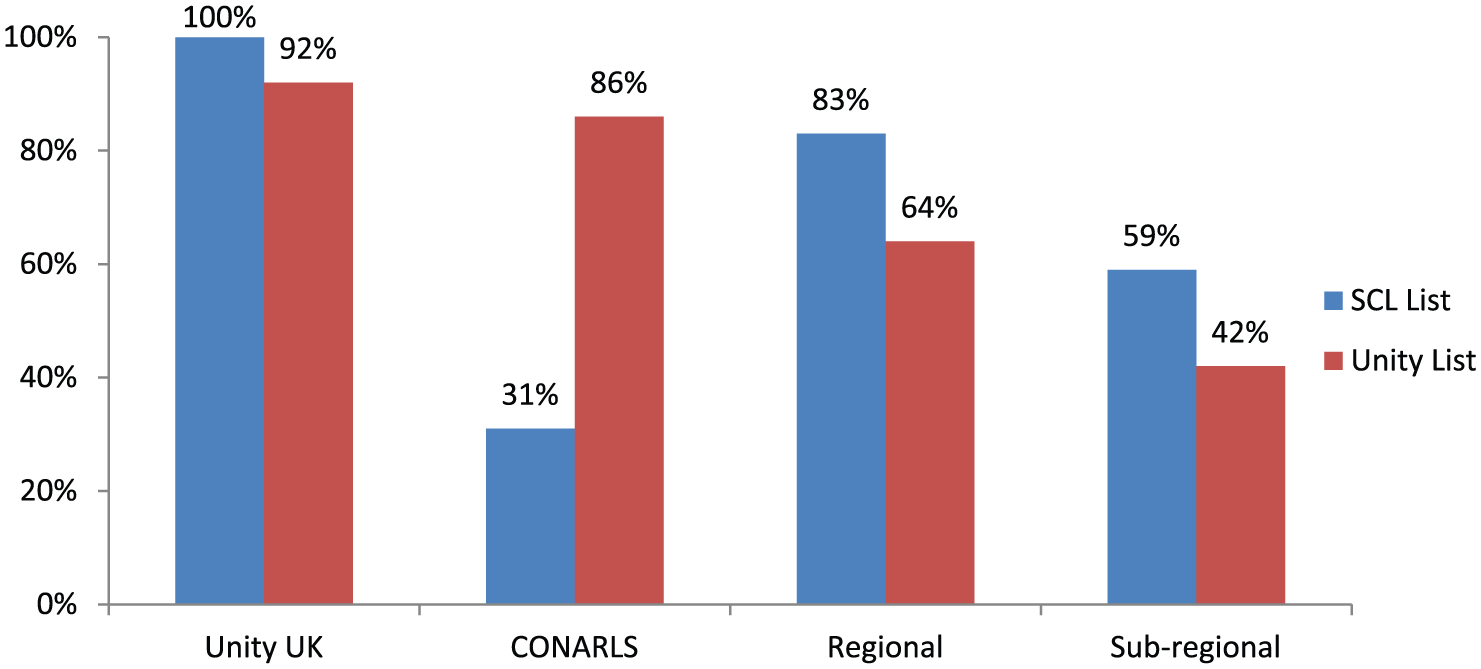
Participation rates for the four types of scheme.
Due to the relatively low response rate, and the methods of survey distribution, it is questionable whether the responses to these questions are representative of general participation levels in the various schemes, particularly with regard to UnityUK and CONARLS.
For both surveys, the majority of respondents (89.2%, n=58) said they were not actively involved in the development of any new interlending schemes. Results were significantly different between the surveys (X2 (1, N=65) = 5.363, p<.05), with respondents from the UnityUK List less likely to be exploring new schemes. It seems likely, however, that the development of new interlending schemes would be driven by senior management, and it is therefore possible that responses from the UnityUK list do not accurately reflect engagement in developing new schemes.
The survey asked respondents to state whether their service was a net borrower or lender. No significant differences were observed between SCL and UnityUK list responses, and in general respondents were more likely to represent services that were net lenders (47.5%, n=28). Around a quarter of respondents (28.8%, n=17) reported being net borrowers, with the remainder (23.7%, n=14) being neutral.
The survey asked respondents to assess the importance of a range of factors as underlying reasons for offering interlending services: user demand, a responsibility to serve the community, facilitating access to the long tail, the economics of collection development, and competing with commercial services. Figure 2 shows the proportion of respondents from each mailing list who viewed each factor as either ‘Very’ or ‘Extremely important’. Results suggest that meeting user demand and the responsibility to serve the community represent the core reasons for providing interlending services, with facilitating access to niche items seen by library staff in particular as almost as important. The economics of collection development appears to be a significant but secondary consideration, whilst competing with commercial services generally seen as not or only slightly important.
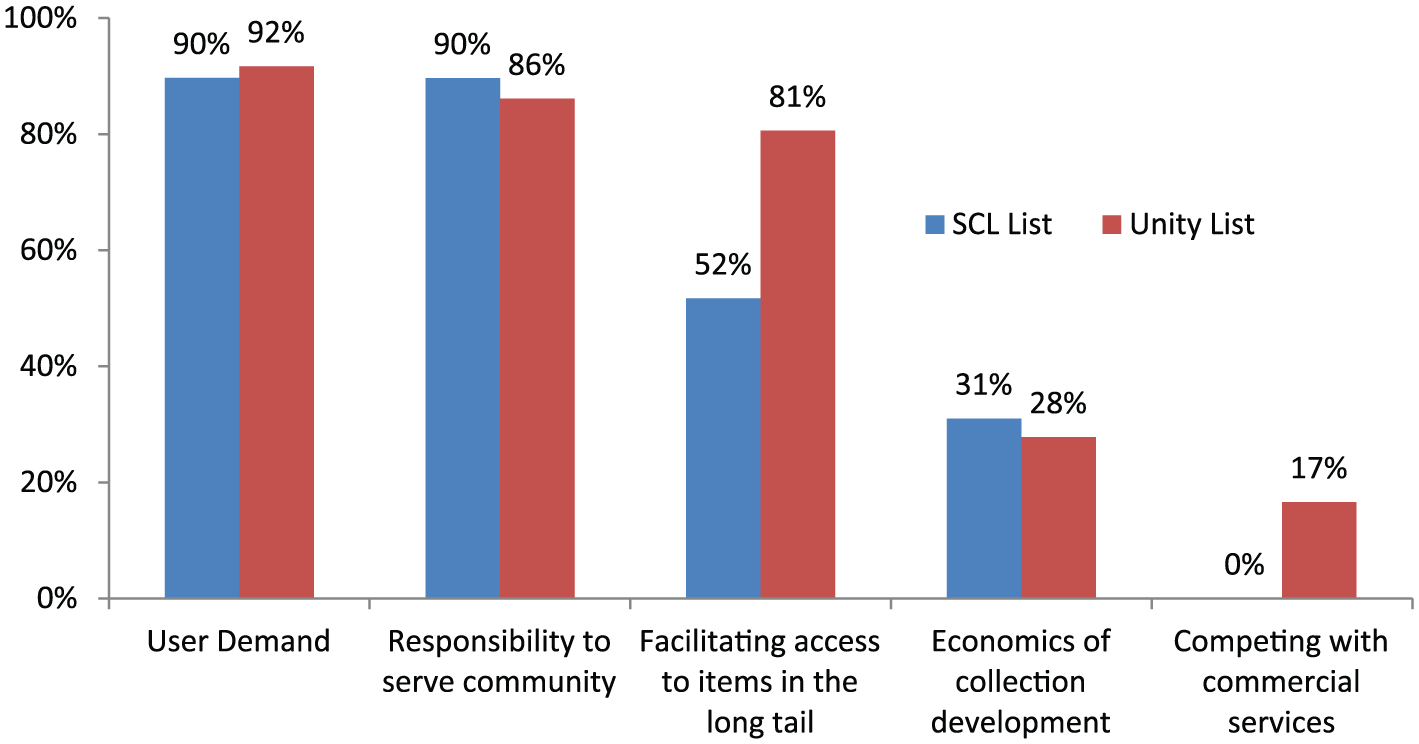
% of respondents from each mailing list viewing factors as ‘Very important’ or ‘Extremely important’ underlying reasons for offering interlending services.
Respondents were also asked to assess the extent to which the different types of interlending scheme offered value for money. Figure 3 summarises the results for this question. Overall it appears that interlending is rarely seen as poor value for money, with regional and sub-regional schemes more likely to offer very good or excellent cost-effectiveness.
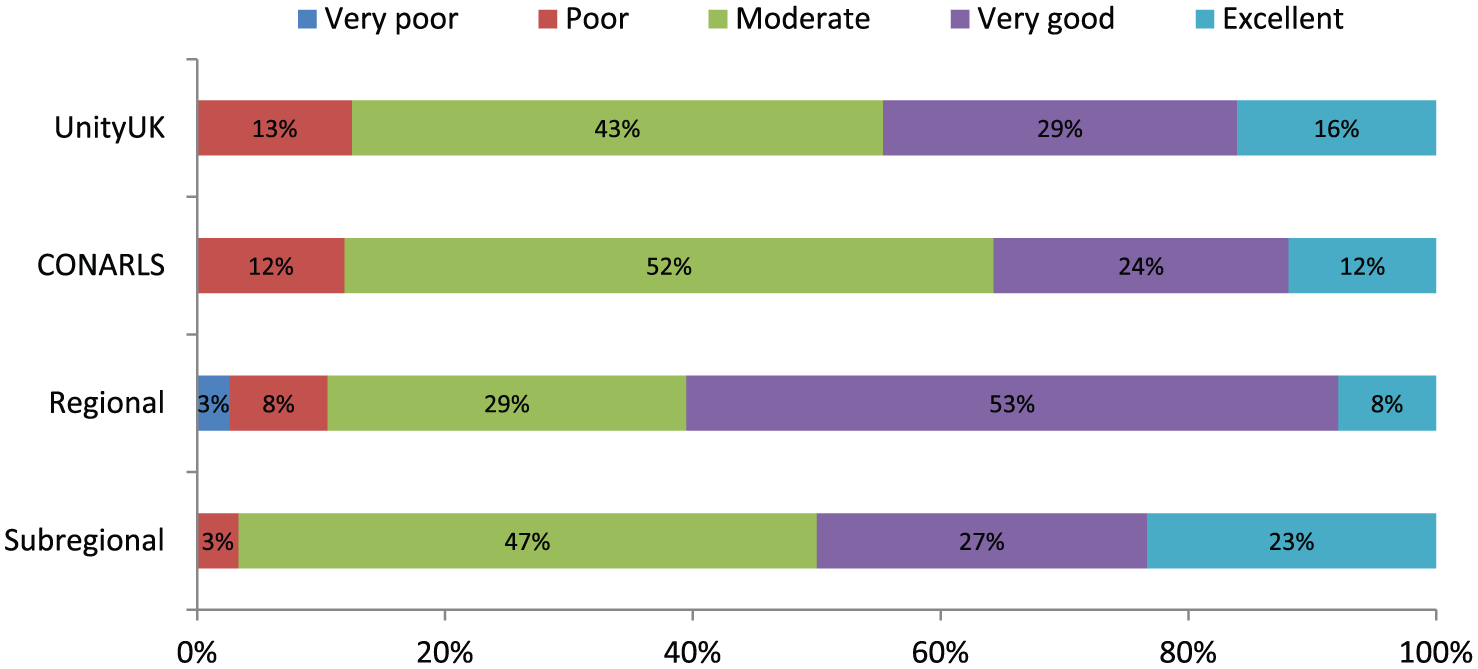
Distribution of ‘value for money’ responses by scheme type (all respondents).
One key potential development in delivering interlending is the facility for users to drive the process by directly requesting interlibrary loans through shared or union catalogues. Respondents were asked about the extent to which this functionality represented the future of interlending. Over half of all respondents, and a large majority (72.4%, n=21) of senior management respondents agreed that a user-driven service represented the future of interlending. Only a small number of respondents actively disagreed with the statement, while just under half (41.7%, n=15) of UnityUK respondents remained neutral.
Phase 2: Interviews
Current provision
Interviewees were first asked to describe the interlending services offered by their authority, and the schemes employed. While responses revealed huge variations in schemes and their perceived effectiveness, there was almost universal agreement that rates of interlending were in decline. Exceptions to this tended to relate to smaller sub-regional schemes, which several interviewees felt had been proved to be highly successful, and for which demand was increasing.
Some interviewees spoke of the effects of funding cuts on interlending, and of the uncertainty and complications they have caused. Cuts have naturally affected acquisitions, which some participants saw as threatening the future of ILL. An alternative argument was that some local authorities felt forced to rely more on interlending for those current publications which traditionally would not be considered typical ILL items (e.g. popular new fiction titles). Several participants noted that larger or wealthier services can find themselves subsidising poorer services, leading to dissatisfaction with interlending in general. The issue is further complicated by the variations in fees from library to library, meaning that in some cases it was perceived as preferable to be a net lender.
Another common observation was that the increasing financial hardship of libraries was resulting in more costs being passed on to users of the service, which clearly angered some respondents. For balance it should be noted that one interviewee took a different perspective, and argued that charges could be justified to users of ILL. A final key consequence of funding cuts related to staffing. Several interviewees noted the decline both in staffing numbers and expertise, with one observing that library managers were increasingly disconnected from library work itself.
Rationale
The most common reasons for offering an interlending service related to libraries’ duty to help users access the material they need. While it may be going too far to say this was always perceived as a moral requirement, many interviewees felt that this represented a core part of the library offering. One interviewee also felt this argument was a powerful way of selling the importance of the scheme to senior stakeholders. A related argument was the importance of interlending as a means of broadening collections, and limiting demands on acquisitions budgets. This point in turn related to another response, which described how interlending could support strategies for maintaining stock coverage of rare and expensive items, and storing last copies. Interlending was therefore perceived as providing a mechanism for ensuring access for all to the widest possible range of material whilst also limiting expenditure.
Other participants suggested that it was time to reconsider some fundamental principles of ILL. For one, this meant potentially applying value judgements to the item being requested: we will virtually borrow anything for anybody if it is available to borrow from another library if we don’t have it in stock. Where I think that some of the stuff that we borrow, you might on an intellectual level question why are we borrowing it. (I5)
More generally, it was argued that the rationale for interlending should be revaluated in the current economic context: What is the purpose of interlending in the 21st century library service against the backdrop of changing community needs? … The ways that people learn and gain knowledge have changed massively. So that is not to say there isn’t a role for interlending but I think it should start from first principles around what it is there to do in that changing climate. (I18)
For many participants, consortia were seen as a means of improving service quality whilst reducing costs. Some stressed the appeal of cheaper interlending, and several participants spoke in general terms about consortia encouraging cooperation and sharing beyond simply interlending. Economies of scale were also cited as a benefit of consortia. These were to be found in a range of areas, including stock purchasing and system procurement (LMS procurement was also a crucial factor in joining or founding consortia). The ability to address problems from a group perspective manifested itself in other service areas too, and a commonly identified benefit of regional or sub-regional consortia related to book delivery and transport models, such as a van delivery network, which reduced expensive postage costs. This delivery strategy was also found by one interviewee to encourage expansion of the consortium to ensure unbroken geographical coverage. This contrasts with the views of another participant, who suggested that for services operating on a small scale, expansion might increase costs. Several interviewees also mentioned the training benefits offered by consortia, as well as forums to share and develop best practice, and the potential for consortia to undertake advocacy work and raise awareness of the service to potential external partners.
Value for money
Interviewees were asked how value for money could be demonstrated. Almost all perceived this as a challenge, both in the way in which the value judgements of key stakeholders in the process would differ, and in the difficulty of applying cost judgements to a service several felt libraries had a duty to provide. One interviewee described how these competing perspectives complicated decision making regarding ILL.
Many interviewees saw interlending as offering value to money for library users. One took a broad view, emphasising that securing items that were unobtainable through any other method offered value in and of itself regardless of the cost, and while many participants acknowledged that the cost to customers has risen, they argued that the subsidised nature of the fees meant that users were still receiving value for money. One interviewee suggested that more work was needed to communicate the value of ILL to those being charged. This idea of educating the public was echoed in the comments of another interviewee, who suggested that attitudes towards fees could be changed if the associated costs were explained: Initially people object to paying extra money … When the actual costs of an interlibrary loan are explained to them a lot of people are seeing it as a very good service. And very cost effective because they are paying a fraction of what it actually costs to obtain an item. (I8)
Several interviewees, however, disagreed with this perspective. For these participants, current ILL fees meant that the service no longer provided good value when compared to other potential means of customers sourcing an item, with one interviewee feeling that ILL did not represent value for money as the fees themselves were higher than those required simply to cover costs.
Many interviewees also discussed the extent to which interlending was seen to provide value for money for libraries, and by extension to the funders of libraries. As one interviewee [put it] stated: To local authorities it is an overhead on their costs. Operationally and in terms of stock management. (I17)
However, the academic librarian stated that even if they receive requests from students that could be fulfilled by public libraries their preferred route is to use the British Library because the processes involved are simpler, even if the cost of the actual loan is greater: In terms of the automated nature of what we’ve got set up with the British Library that is quite effective for us. So we have taken out a lot of the human intervention in that kind of process. (I16)
A number of participants explained that although this was an interesting question, it was not one they had been asked to address by senior management, although some felt this was likely to change. It is interesting to note that one participant acknowledged that thinking pragmatically about the cost of services ran counter to the instinct of some librarians: I think that unless you are recovering full costs it is very difficult to demonstrate value for money … I think where people aren’t recovering the full costs of the service, and councils are having to withdraw so many services that are fundamental to people’s lives, it would seem to be politically unacceptable to do that. However much professionally we find that difficult. (I18)
Participants also noted some difficulties establishing value for money, principally because of accounting structures, or because of the time required to conduct a rigorous analysis. Comparing interlending costs to other methods of document supply was mentioned several times, most often with regard to the British Library, whose charges were commonly seen as very high. Other interviewees saw ways in which interlending could be shown to provide value for money, primarily in terms of saving acquisitions costs and balancing borrowing costs. Finally, two participants saw strong reasons to approach the question of value for money from a national perspective, be that in analysing national rates of lending or creating proper benchmarks against which to determine value.
The digital environment
Most interviewees recognised the changing modes of information discovery and consumption prompted by the emergence of digital resources and access. One interviewee provided a neat summary of the effects of the digital environment and the challenges for libraries: We are in to a … shifting environment where the methods by which people access and find information are always changing, and what the library service has to do to survive in this area of work is to have added value … What you want to replicate for the user who might be using a mobile device or a computer is the library experience. (I1)
This response clarifies the two principle challenges of the digital environment for libraries: providing systems to facilitate the discovery of material, and the means of delivering it electronically.
Provision of digital content was seen as a crucial requirement for public libraries if they are to meet the evolving needs and expectations of library users, although it should be mentioned that a small minority of interviewees emphasised the importance of not overstating the potential for digital material, with one despondent about the apparently inexorable march towards e-resources: With a bit of luck I won’t see the complete transformation of the library service into a bank of servers whirring away. (I4)
It was notable that very few participants mentioned open access (OA) material, with the exception being related to the scanning of copyright free material for universal access, and OA did not emerge from the interviews either as a significant challenge or potential benefit to public libraries and interlending. This is surprising, given the extent to which the licensing issues were perceived to be the major factor impeding delivery of e-content. Licensing issues that are challenging for individual libraries were perceived as insurmountable in the context of interlending digital material. Additional problems were seen to lie in the purchasing processes for digital content. Several interviewees described the reluctance of publishers to provide e books to public libraries, and the challenge of overcoming those difficulties, noting the impact of these restrictions on customer expectations. In addition, e-publishers were perceived by one interviewee as slow to enter into consortia purchasing agreements.
From a systems perspective, several participants saw a need for more streamlined and connected services to exploit fully the potential of connected services. To illustrate how limited the adoption of technology has been within some library workflows, one interviewee described the extensive process of form-filling and processing required (I17). One potential solution suggested by two participants was to better connect UnityUk with individual library ILL systems, while another suggested that interoperability between various proprietary systems was the key solution, although the mechanism and practicalities of achieving this was perceived as a significant challenge.
Several interviewees described participating in consortia based on a shared LMS. The benefits of this system were clearly described by several participants, while others described imminent plans to implement this functionality. In practice, these shared systems were found to essentially facilitate user self-service, leading several participants to wonder whether this could actually be described as interlending or as an internal reservation.
Other participants noted the potential benefits of shared LMS arrangements, but described practical or strategic reasons, including contractual complications, for not entering into shared LMS arrangements, or maximising their functionality.
Interviewees were also asked for their views on the potential for a national public library catalogue, with most generally supportive of the idea. The consensus opinion was summed up neatly by one participant: I think that the opportunities are huge and the difficulties are huge. (I11)
Many interviewees saw the potential befits to users of a single discovery tool, which in turn would aid the exposure of individual library stock. However, several participants noted that offering improved discoverability to users has consequences for their expectations of the service they will receive, particularly if the system does not incorporate reservation functionality. The lack of fulfilment functionality was seen by these interviewees as a highly significant weakness of any system that sought solely to aggregate records, with several participants describing past attempts at union catalogues which had proved unsuccessful for this reason.
Further potential issues with the development of a national catalogue related to the accuracy, currency or completeness of the bibliographic records within the catalogue. These points were often illustrated with reference to other union catalogues that participants have been involved with, and linked closely to technical challenges identified by other interviewees, particularly the interoperability of underlying catalogues.
Finally, it was somewhat surprising that FABLibraries was mentioned by only a small number of interviewees, given that it represents a fledgling national catalogue. Of the three interviewees to mention the system, one referred to library users’ lack of awareness. The other two participants broadly welcomed its development, and believed it was a valuable discovery tool, but felt that without universal coverage and additional functionality to fulfil loan requests it was not addressing the key requirements of a national catalogue: The problem is of course you can go on to FABLibraries but it is at one remove from Unity, and it doesn’t have everybody on there. But it is, if you are looking for something obscure, an out of print book or something else, it is useful to have that facility. (I2)
The future of interlending
It is unsurprising that for almost all interviewees, the future of interlending was tied inextricably to the current economic climate. Some interviewees addressed the question from a practical and relatively short-term perspective relating to costs and charges. Their opinion was that rising costs would lead to rising charges, which in turn might cause a decline in demand: A lot more library services have moved towards full cost recovery model and some have stopped interlending altogether. I do think there is an issue … with the cost effectiveness of the service and the reluctance of the end user to pay for it. (I8)
Several other interviewees identified the impact of falling acquisitions budgets, arguing that they would have consequences for the availability of specialist items in the future, as well as making it difficult for borrowers to identify libraries willing or able to fulfil requests. It was also argued that the scale of the financial crisis means that services even more fundamental to the library offer than interlending are under threat, making support for interlending difficult to justify if it was at the expense of these other services.
While most participants saw a bleak future for interlending, some did not. It was notable that in some (but not all) cases this view seemed to be based on a belief that the principles of interlending were considered too important to be allowed to disappear, rather than an assessment of the functional value of the service: I read somewhere that one authority was thinking about scrapping it … and thought Oh my god. You do read these things and think is that really true? And it was a county! I personally think it is a core part of what we do here. (I11)
Another response represents a quite different interpretation of senior managers’ perceptions of interlending: Dying. Dying. That is my personal comment. But basically I would like to see it go away. If they could politically get away with not doing it they would. (I17)
As well as their views on the immediate future of interlending services, interviewees were also asked to speculate about the need for alternative schemes to meet the resource-sharing requirements of tomorrow’s libraries, and how those schemes might look. Three interviewees observed that their current schemes were operating effectively enough, and there was no need to create alternatives. Others suggested that expanding the CONARLS membership, and otherwise standardising nation provision, would have a positive impact on interlending. Many saw a national catalogue with reservation functionality as being of great benefit, although technically problematic. While this in itself represents a vision of the future for interlending, one participant saw this as important: It becomes almost self-serve rather than interlending. Not that that bothers me. I don’t mean that in a protective sense … as far as the customer is concerned, if they can get to it straightaway, brilliant …. That is how the world needs to move I think. (I11)
It was also suggested that a catalyst for change was needed, with one interviewee observing that OCLC were well positioned to play a significant role in reshaping interlending towards the self-service model. It was also argued that the future of interlending lies in solely digital content: Frankly, I do think that we are quite stuck in the past as a sector. I find it difficult to believe that we are still transacting bundles of paper around at this stage and something that I’ve argued for in the past … is that we should be looking at moving to purely electronic document supply. (I6)
A final participant argued that a radical rethink of the library’s role was required: There are lots of ways that libraries can support information and knowledge and people’s demands are actually and how they access that are have changed and interlending isn’t the only way. Engage with MOOCs for example. There are lots of ways libraries can develop their skills and their knowledge that weren’t there in the past. And interlending is just one part of a much bigger picture. (I18)
Discussion
In attempting to make sense of the data collected during the course of this project it quickly became apparent that participants offered contradictory or conflicting perspectives on many aspects of interlending. This section first discusses these contradictions, before addressing areas of consensus. From this discussion, a number of policy recommendations have emerged.
Contrasting and contradictory results
Use of interlending terminology
While it may seem a relatively minor point, it was noticeable that the terminology relating to resource sharing was not used consistently by participants in the research. This was particularly evidenced in the different applications of the terms ‘interlending’ and ‘interlibrary loan’. For the majority of participants participating in regional schemes, sharing between members of the consortium was considered interlending, while ILL related to transactions with non-consortia members. There were, however, exceptions to this rule. One interviewee referred to both types of transaction as ‘ILL’, whereas others appeared to use the terms interchangeably. Other participants, generally those participating in shared LMS consortia with self-service, typically did not term this activity either interlending or ILL, but rather a ‘reservation’. While this issue may at first seem unimportant, it does have implications for our understanding of perspectives on resource sharing. Take for example one comment made by a survey respondent: ‘We offer interlending but ILL is falling as it is not really promoted’. It is not clear from this sentence whether the terms interlending and ILL are being used interchangeably, or if the respondent is carefully distinguishing between different types of resource sharing (for example consortium vs. CONARLS lending). The differing interpretations significantly affect meaning.
An explanation for these varying terms may lie in the extent to which participants identify with certain aspects of the fulfilment process. Do the terms principally distinguish staff activities (involving different modes of request fulfilment), or finances (distinguishing between free or low cost regional lending and higher priced CONARLS or BL lending) or geography (including consortia allowing requests to be sourced more locally)? It seems likely that the established vocabulary of resource sharing has not been consistently adapted to the modern landscape of interlending. We suggest that establishing a consistent terminology for interlending is a vital step towards coherent policy making and service delivery.
How schemes operate
Analysis of the various descriptions of national, regional and sub-regional schemes reveals significant variation in all aspects of service delivery. These include the transfer of stock (post vs. van), library to library fees (free vs. nominal vs. cost price), mediation (self-service vs. librarian instigated), patron fee (free vs. subsidised vs. full recovery), and systems used (shared LMS vs. union catalogue vs. independent systems). The range and nature of these variables have a number of implications for our ability to construct a coherent picture of the state of interlending, and for future developments in the field.
Firstly, they affect perceptions of the value for money offered by individual schemes. Authorities were found to have different frames of reference against which to gauge cost-effectiveness, and while participants often seemed to be aware of the models employed by other consortia, there was little reference to formal analysis of the success or otherwise of individual schemes. This appears to be in large part due to the lack of a benchmarking framework against which the effectiveness and value of schemes can be judged. Value for money is instead most commonly calculated in reference to national schemes such as CONARLS (which is not necessarily a like-for-like comparison), or without any fixed point of comparison at all.
Secondly, the range of schemes significantly affects the ease with which models of best practice can be effectively shared. This point relates closely to a broader question regarding the predicating conditions of scheme creation and development. By this we mean the extent to which schemes are designed to build on or exploit existing local or regional conditions, practices and shared infrastructure, or instead as a means of implementing independently identified models of best practice. Our analysis suggests that most schemes are likely to fall into the former camp, which means the best practice to be shared relates not necessarily to the specifics of the scheme, but the ways in which the potential for cooperation was identified and maximised. We suggest that the creation of an inter-consortia forum for sharing best practice would be of considerable value.
Thirdly, the range of schemes available to some libraries for fulfilling a request often results in users being confronted with a confusing range of prices, delivery options and lead-times. As several participants noted, this is increasingly damaging to perceptions of the library service in an information environment that is offering users ever more convenient and simplified means of accessing content.
Finally, the range of existing schemes serves to greatly complicate attempts to develop national solutions to interlending. With interlending thoroughly embedded in shared systems and workflows, many of which are neither scalable nor replicable, any attempt to develop new unified approaches at a national level is contingent on overcoming the practical difficulties of persuading authorities to abandon wholesale their customised regional schemes. To this end we suggest that marketing tools should be developed to support managers and stakeholders in their lobbying of local authorities and national organisations.
The moral imperative
Opinion among our participants was divided over the extent to which public libraries operated under a moral imperative to offer interlending. We generally observed three broad perspectives on this issue. Some identified strongly with the moral argument, and viewed the provision of interlending as the realisation of a duty to meet any and all needs of library users in the spirit of the 1964 Act. For these participants, questions relating to the future of interlending focus not on the existence of the service, but its scope and operational capacity. A larger group shared this perspective in principle, but were more pragmatic about the likelihood of interlending being sustained in a harsh economic environment. A final group might be characterised as rejecting entirely the notion of a moral imperative to offer interlending, and instead question whether it is possible to justify the time and resources expended delivering an expensive service benefiting a small and declining number of users. A natural question of great significance to the future of interlending is the extent to which any one of these viewpoints represents a majority opinion at senior levels. We also note that interlending is founded on the principles of cooperation. If different authorities approach the issue of interlending from diametrically opposed positions this is likely to have a significant impact on the ability of public libraries to work together to share resources. A question worthy of further study is whether smaller, more local schemes are successful not only because of shared infrastructure, but because of shared values.
Impact of the digital environment
While all participants acknowledged that the new digital environment had affected modes of information access and consumption, there were clear differences of opinion regarding the extent to which e-content represents a future opportunity for interlending, or is instead a catalyst for its decline. It seems clear that there are significant challenges relating to the provision of e-content that need to be addressed, particularly the licensing of e books, integration of open access content, and the access to and functionality of publisher e-content platforms. However, the extent to which these issues are likely to affect interlending is disputed. Some see such barriers as insurmountable and think that the future rationale for interlending lies in its capacity to deliver print copies in an increasingly digital world, while others believe the widespread availability of digital content will terminally reduce demand for interlending. A third group advocates the embracing of digital document delivery as a means of preserving interlending by reducing costs and better meeting user expectations. These views are clearly related to disagreements over whether public library users expect and want digital content, or instead still prefer print. Differences in opinion are no doubt influenced by the differing demographics and needs of library users in different areas, and as such generalisations are problematic. Developing a digital strategy for interlending would seem to require two complementary facets: a comprehensive analysis of the perspectives of library users towards digital content, and a thorough study of the technical challenges associated with the digital publishing and licensing landscape. An issue related to the second of these points is the degree to which technological advances will facilitate increased interoperability between the constituent systems of the interlending process. While the value of this is not disputed, opinions vary as to the feasibility of such developments.
Interlending, collections and shrinking budgets
One of the starkest contradictions to emerge from this research was the difference between participants who see interlending as a means of coping with reduced budgets, and those for whom the reduced budgets themselves represent a threat to interlending services. Complications in this area arise from the fact that different schemes have different library-to-library charges. In most cases schemes were found to cost net lenders money, and several consortium agreements include arrangements to compensate for this. In a few instances, however, it was seen as preferable to be a net borrower. This view was based either on the pricing structure of library to library charges, or the calculation that the savings in acquisitions costs outweigh interlending costs. In both cases there was clear evidence from this study of tensions between net lenders and net borrowers within schemes. Far from being trivial, these tensions were found to have contributed to the collapse of certain consortia arrangements, and evidence suggests that the politics of consortium management and expansion are often centred on this issue. It was also noted that consortia that cooperate very closely (for example through a shared reservation system) feel the effects of borrowing and lending imbalances most clearly. Lenders in such schemes perceive it as being unfair that their stock is subsidising the collections of other libraries.
A further and related contradiction comes in the view that interlending is an effective means of coping with reduced book stocks, and saves the expense of purchasing specialist items. Several participants pointed out that this was unsustainable; interlending relies on libraries buying rare and specialist material, since if they do not there is no longer the opportunity for other libraries to borrow it. There would seem to be a clear risk here that a widespread reliance on interlending rather than collection development might fatally reduce the collective offering.
There appears to be no clear solution to these issues. Assuming that a perfect equilibrium is impossible, there will always be net lenders and net borrowers. The best that can be hoped for is that tensions are clearly and appropriately addressed at a consortium level, and compensation schemes for authorities disadvantaged financially by interlending clearly help in this regard.
Local efficiency vs. economies of scale
Although a formal evaluation of the cost-effectiveness of the various interlending schemes was beyond the scope of this project, results indicate that national schemes were in general perceived to offer poorer value for money. Results from the survey indicate that sub-regional schemes were most likely to offer the best value, while several interview participants described wider regional schemes as being cost-effective and preferable to national schemes. One notable contradiction arising from these results is that when asked to describe visions of future interlending schemes, participants most commonly spoke of potential national solutions. A frequently cited reason for this was the power of economies of scale, which was also commonly offered as a reason for expanding existing regional and sub-regional schemes. This leads naturally to a key question: if economies of scale are perceived as so important to cost-effectiveness, why do smaller schemes tend to offer the best value for money? The evidence from this study suggests three reasons for this. Firstly, the transport and delivery of material is perhaps the key cost associated with interlending, and it is apparent that smaller schemes are best able to develop cost-effective transport solutions to this issue that avoid postage costs, even if this was often viewed as hard to scale. Secondly, it appears that smaller schemes are more likely to involve closer cooperation, and be more central to the operations of participating libraries. Finally, regional and sub-regional consortia were perceived to offer benefits beyond simply the provision of interlending, including training and the sharing of best practices. The challenge, therefore, seems to be how best to capitalise on potential economies of scale which larger schemes might offer, whilst retaining the economic and cultural advantages offered by smaller schemes.
Areas of consensus
Declining rates of interlending
While the scope of the research did not allow for a thorough quantitative analysis of rates of interlending, the results overwhelmingly suggest that rates are declining. While some regional schemes were perceived to be successes, and some consortia are expanding, there was no clear evidence that interlending rates were rising even within those schemes. We are therefore comfortable describing the declining rates of interlending as a national trend.
A number of complementary factors emerged as potential causes of this decline. Many interview participants felt that public awareness of interlending services was low, and that it was predominantly utilised by older library users. The relatively high cost of some ILL schemes was seen as a deterrent, and the variety of schemes and prices on offer was perceived as confusing for typical library users. The increasing availability of digital content and the relative ease with which it can be found on the Web were also seen to contribute to the decline, as was the increasing convenience, breadth of offering and cost-effectiveness of e-commerce services such as Amazon. It is important to note that the root cause for some of these factors might reasonably be traced back to library budget cuts: the inability to subsidise interlending costs leads to increased user charges; the need to engage with low cost regional schemes leads to a confusing variety of delivery options being presented to users; longer delivery times caused by cost savings make speedy Amazon delivery more attractive. While there is no doubt some credibility to claims that demand for interlending is changing in a digital age, the clear danger is that declining rates will be interpreted solely as a fall in public demand for interlending in general terms, rather than as reflective of use of an increasingly expensive, complex and limited service. A better understanding of user needs and requirements for interlending in the digital age might help stave off a vicious cycle of service cuts leading to lower demand, which in turn leads inevitably to more cuts.
E-content sharing is a problem
While opinions varied on the overall impact of the digital environment, there was near unanimous agreement that the sharing of e-content was highly problematic. These problems are due in part to more general issues with acquiring e-content, with publishers sometimes perceived as being reluctant to offer e books to public libraries, and consortium purchasing difficult or not properly explored. Library managers also appear unsure how best to deliver this content to their users. From an interlending perspective there was a widespread view that licensing and technical issues make the sharing of e-resources extremely difficult. It was notable that this study revealed very little evidence of a desire to address this issue. While one participant spoke hopefully of JISC’s involvement in future work in this area, most participants seemed resigned to being unable to compete with the HE and commercial sectors. We recommend that further work be undertaken in this area to identify actions that need to be taken regarding e-content licensing particularly with regard to publisher education and liaison.
Lack of awareness of services
Many participants in this research spoke of a lack of public awareness about interlending. Even if aware of the service in general, users were also perceived to be confused by the variety of ILL schemes being offered, and the associated costs and delivery arrangements. This study also presents some evidence that educating library users about the costs and mechanisms of ILL leads to increased customer satisfaction, and a greater willingness to pay associated ILL charges, although such observations could in future work usefully be tested with users themselves. The evidence collected on users here represents the views of library staff and managers, and is to an extent anecdotal. Nonetheless, it appears likely that some libraries are failing to adequately ‘sell’ interlending to their users. The variety of interlending schemes utilised by libraries, and the different rationales for its provision, have perhaps contributed to the lack of a coherent message to be communicated to users. While we strongly advocate further research in this area that engages directly with library users, we suggest that the public library community might be well served collaborating on a unified approach to the marketing of interlending to users.
Conclusion
Addressing the research questions
RQ1. What are the perceived levels of interlibrary loan provision in public libraries?
Our results indicate that while almost all authorities continue to offer some form of interlending service to their users, most participants felt rates of interlending were in decline. A number of factors emerged as underlying causes for this decline, including increasing direct user costs, lack of public awareness of the service, increasing use of online resources, reduced funding for interlending and lack of staff expertise.
RQ2. What are the rationales and strategies for delivering interlending services?
Many participants felt that libraries had a moral obligation to offer interlending services as a means of connecting their users with the widest possible range of resources. Some also described an economic rationale for running interlending schemes, particularly in the sense of mitigating the effects of budget cuts on collection development. A wide range of national, regional and sub-regional services were described, with great variety observed in the technical and operational details of each scheme.
RQ3. To what extent are interlending schemes perceived to offer value for money?
Our research suggests that authorities and consortia lack the tools to effectively evaluate the cost-effectiveness of the various interlending schemes. Value for money judgements appear to be dependent on a range of variables, most significantly the net borrowing/lending status of the authority, the details of consortium arrangements, and the extent to which participating libraries’ acquisitions budgets have been affected by budget cuts.
RQ4. What impact is the current digital environment having on interlending services?
Our results indicate that the increasing availability of free information on the Web, and relatively low cost resources through online retailers such as Amazon, has significantly impacted demand for interlending, both in terms of users purchasing items themselves, and libraries purchasing material rather than utilising interlending. However, several participants recognised the fact that not all library users have the skills to discover and acquire information online, and that interlending remained a vital service for rare or expensive items. It was also noted that user expectations in the Web age make it more necessary than ever to develop seamless user-driven systems for interlending.
RQ5. How do librarians view the future of interlending?
Librarians appear divided on the extent to which interlending services both should and can remain a key public library offering. The savage cuts inflicted on services in recent years have understandably left many librarians deeply pessimistic about the future of public libraries, and there was a clear sense that although important, interlending was far from the most pressing issue facing the profession. While some participants clearly felt that increased cooperation and resource sharing represented a means of surviving, others suggested that the costs associated with delivering interlending were likely to become prohibitive. Many participants also spoke of the potential for a national system of interlending to be facilitated by a universal union catalogue, while noting the necessity for such a system to incorporate reservation functionality. We suggest that discussions should continue regarding the feasibility of such a catalogue, and whether investment in developing such a system (for example by enhancing the FABLibraries service) is justified.
Recommendations and future research
Several important areas for future research emerged from this project. While we offer a detailed analysis of librarians’ views, it would undoubtedly be beneficial to conduct user-focused research to understand the needs and perspective of those utilising the service (and those not), not least to ensure that staff perceptions are accurate. We also suggest that a detailed cost-benefit analysis of local and regional schemes might aid the development of benchmarking tools that allow authorities to determine the value for money offered by interlending.
We believe that this study has thrown light on some key issues at a local, regional and national level. We therefore summarise the recommendations already presented in this paper for stakeholders involved in planning and delivering interlending services:
to establish a consistent terminology for interlending that is used in discussions in order to promote coherence in policy making and service delivery;
to develop unified marketing tools, material and strategies for libraries keen to promote interlending, emphasising the value of the service to library users;
to develop further marketing tools for use by managers and senior stakeholders to lobby other organisations (e.g. other local authorities, HE providers) and national organisations (CILIP, SCL) to gain their support for developing a more unified approach;
to identify action that needs to be taken regarding licensing e-content, possibly including an education programme and liaison with publishers, followed by implementation of the identified actions;
to establish an inter-consortia forum for sharing best practice – perhaps facilitated by the FIL or TCR, or alternatively discussed in a free-standing summit;
to review the current relationship with other sectors, particularly the HE sector, with a view to developing possible synergies;
to coordinate discussion regarding the development of a comprehensive, national catalogue with universal and local reservation functionality (potentially by enhancing the FABLibraries system) and, specifically, to determine whether further investment is justified.
Such activities could play an important role in determining possible futures for interlending and resource sharing at a local, regional and national level.
Footnotes
Appendix 1. Selected survey questions
Appendix 2. Interview questions
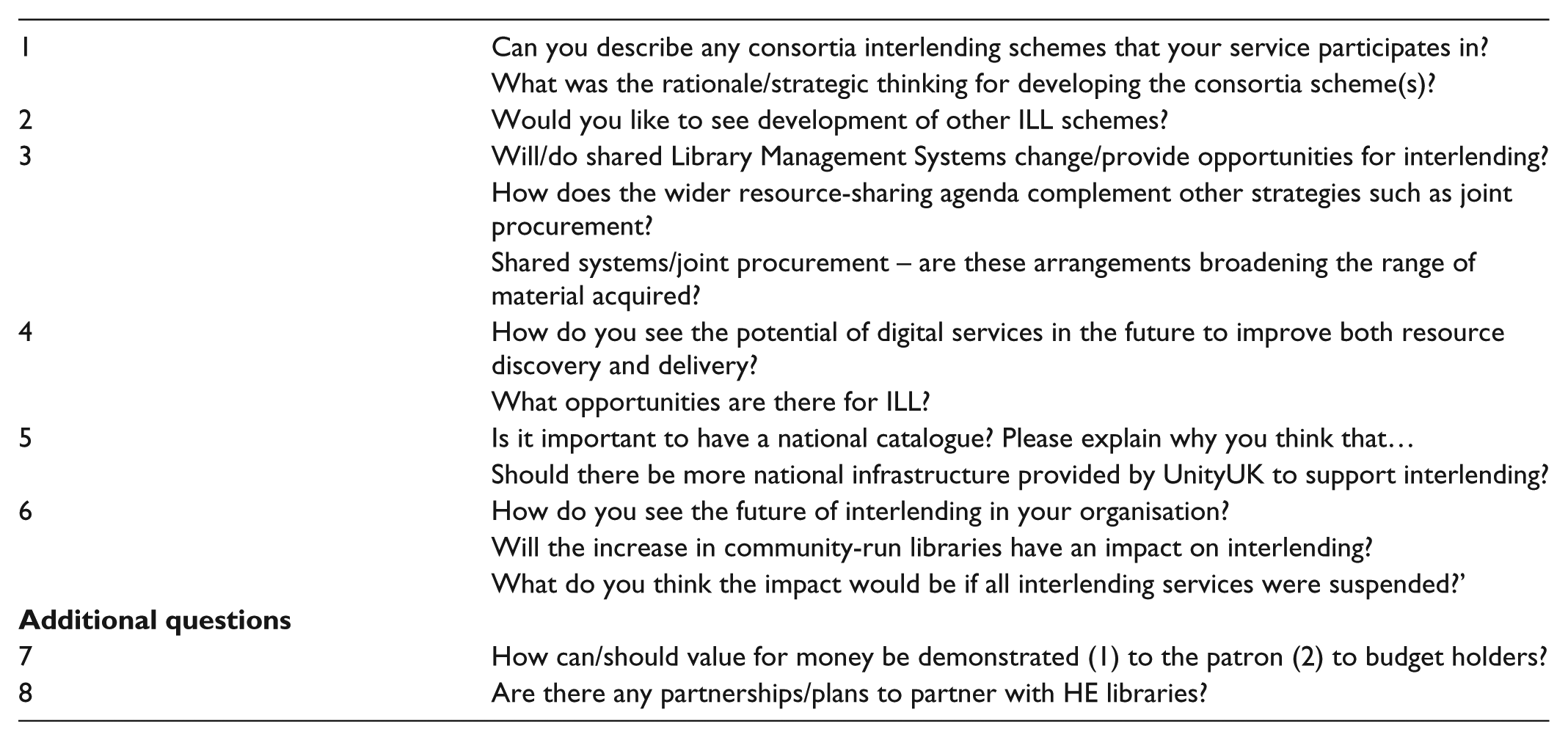
| 1 | Can you describe any consortia interlending schemes that your service participates in? |
| What was the rationale/strategic thinking for developing the consortia scheme(s)? | |
| 2 | Would you like to see development of other ILL schemes? |
| 3 | Will/do shared Library Management Systems change/provide opportunities for interlending? |
| How does the wider resource-sharing agenda complement other strategies such as joint procurement? | |
| Shared systems/joint procurement – are these arrangements broadening the range of material acquired? | |
| 4 | How do you see the potential of digital services in the future to improve both resource discovery and delivery? |
| What opportunities are there for ILL? | |
| 5 | Is it important to have a national catalogue? Please explain why you think that… |
| Should there be more national infrastructure provided by UnityUK to support interlending? | |
| 6 | How do you see the future of interlending in your organisation? |
| Will the increase in community-run libraries have an impact on interlending? | |
| What do you think the impact would be if all interlending services were suspended?’ | |
|
|
|
| 7 | How can/should value for money be demonstrated (1) to the patron (2) to budget holders? |
| 8 | Are there any partnerships/plans to partner with HE libraries? |
Acknowledgements
The authors are grateful to The Combined Regions (TCR) Management Board who funded this project, and specifically to Robert Gent and Lynn Hodgkins for their support throughout.
Declaration of Conflicting Interests
The author(s) declared no potential conflicts of interest with respect to the research, authorship, and/or publication of this article.
Funding
The author(s) disclosed receipt of the following financial support for the research, authorship, and/or publication of this article: This research was commissioned and funded by the Management Board of The Combined Regions (TCR), a collaboration of regional and national library organisations in Britain and Ireland.