







Abstract
There are more than 285 million blind and visually impaired people in the world, 90% of whom live in developing countries. The purpose of this paper is to present the findings of a study on visually impaired school teachers in Pakistan in order to examine how they identify, explore, select, organize, create, present, assess and apply information (IFLA’s Information Literacy Empowering Eight model) in teaching and everyday life. Interviews were conducted in January 2015 with 55 visually impaired teachers in 10 schools for the blind located in the province of Khyber PukhtunKhwa, Pakistan. The study also explores their ability to find, evaluate, and apply pedagogical information. Collected data revealed information on different aspects of information literacy skills. Although basic skills of the studied population were assessed; the study found that visually impaired teachers are highly skilled in terms of organizing the information and they prefer to take personal responsibility while searching for required information. They were found less skilled in using and apply new tools for information searching and lacking in ability to present the data effectively. This is the first research on the information literacy skills of visually impaired teachers in Pakistan. Results are useful for planners and experts to integrate IFLA’s E8 model of information literacy into several courses taught at the blind schools in order to enable the disadvantaged community to benefit from the information literacy skills.
Keywords
Introduction
The World Health Organization (WHO, 2014) in its factsheet declares that around 285 million people are visually impaired worldwide where 39 million are blind and 246 million are suffering from moderate to severe visual impairment. South East Asia and the Western Pacific account for 73% of moderate to severe visual impairment and 58% of blindness (Wellington, 2011). Of these visually impaired people, 90% live in developing countries where the promotion and maintenance of information literacy skills are recognized essential for individuals to operate effectively in society.
The term “information literacy” (IL) is not more than 50 years old and dates back when Paul Zurkowski elaborated the concept of premium learning and articulated the need for information to solve problems or make decisions (Horton, 2013). During 1960s and early 1970s, information was beginning to be viewed as a commodity, necessary for solving problems and making decisions. It is clearly argued by scholars and information professionals that learning how to search and retrieve information; organize and arrange it in appropriately convenient ways; communicate and use it effectively for the intended users; index and archive information for future use or possibly discard it if no longer needed, are all imperative in the information society.
IL in its simple meaning refers to a set of skills needed to manipulate information. This phenomenon is medium-independent and covers both paper and electronic resources. Narrower and newer terms, e.g. digital literacy, e-literacy, ICT literacy, media literacy, cultural literacy, visual literacy, multiliteracies, network and technological literacies, etc. have emerged, reflecting an individual’s ability to survive in the e-world. Martin (2005) describes all of these terms and stresses the need for literate individuals to develop an “understanding of the cultures and the contexts of the digital environments in order to operate effectively within them” (Morris, 2007: 2).
In educational institutions, technology enables users to access a variety of resources to suit their needs and requirements. The Internet has enabled visually impaired people to access the same resources using assistive technologies such as speech output, electronic braille output, and particularly screen magnification. Comprehensive guidelines have been developed by the World Wide Web Consortium (W3C) in the form of Web Accessibility Initiatives to ensure that people with any kind of disabilities, physical, intellectual, cognitive etc., can understand, navigate, perceive, and interact with the Web and can contribute effectively. The IFLA’s Media and Information Literacy (MIL) Recommendations and the Libraries Serving People with Print Disabilities (LPD) Manifesto were passed unanimously at the 37th UNESCO General Conference held in Paris from 5–20 November 2013. Member States are now asked to endorse these recommendations at a national level to further their citizens’ access to information. Following the MIL and LPD manifesto, many countries have put in place ICT applications and IL initiatives to improve public sector efficiencies for all their citizens. Previously, the Americans with Disability Act (ADA), subsequent requirement of Section 508 of the Rehabilitation Act, Assistive Technology Act 1998, Section 255 of the Communication Act, and recently the Web Accessibility Initiative (WAI) had all addressed the issue of free and unequivocal access to information for People With Disabilities (PWDs). UNESCO emphasizes and encourages Member States to implement IFLA’s Media & Information Literacy policies.
Historically, information professionals have worked to locate, compile, and analyze information before delivering the final product. Since more and more information resources are accessible from the Internet, further education is becoming essential to compete in the global jobs marketplace. In this context, IL does not remain an option; rather it is firmly embedded in the thoughts, behaviour and culture of intellectual and educational growth (Nelson, 2011). The American Library Association defines IL as the ability to “recognize when information is needed and have the ability to locate, evaluate, and use effectively the needed information”. In Pakistan, librarians and information professionals are working on IL because they are dedicated to fostering awareness through the capacity building of students and faculty. The Information Literacy Association of Pakistan (ILAP) is a non-profit organization rendering services in this regard.
This paper explores the IL skills of visually impaired teachers (VITs) using the Empowering 8 (E8) Information Literacy model (presented by IFLA) and discusses impediments to the effective implementation of said model in the context of developing countries such as Pakistan.
Profile of visually impaired teachers
Initially, the researchers insinuated themselves into the conversation about how to conduct this study because empirical data on the basic demographics of visually impaired people (VIPs) in Pakistan is not easily available. Therefore, a pilot study was conducted to collect information regarding the facilities available for VITs in Pakistan, their basic demographics, and information on how they perceive and use ICT which gathered useful insights into VITs’ interaction with the outer world. This paper, however, is focused on the IL skills of VITs because of their vital role in gathering, organizing, and disseminating information to their respective special audience.
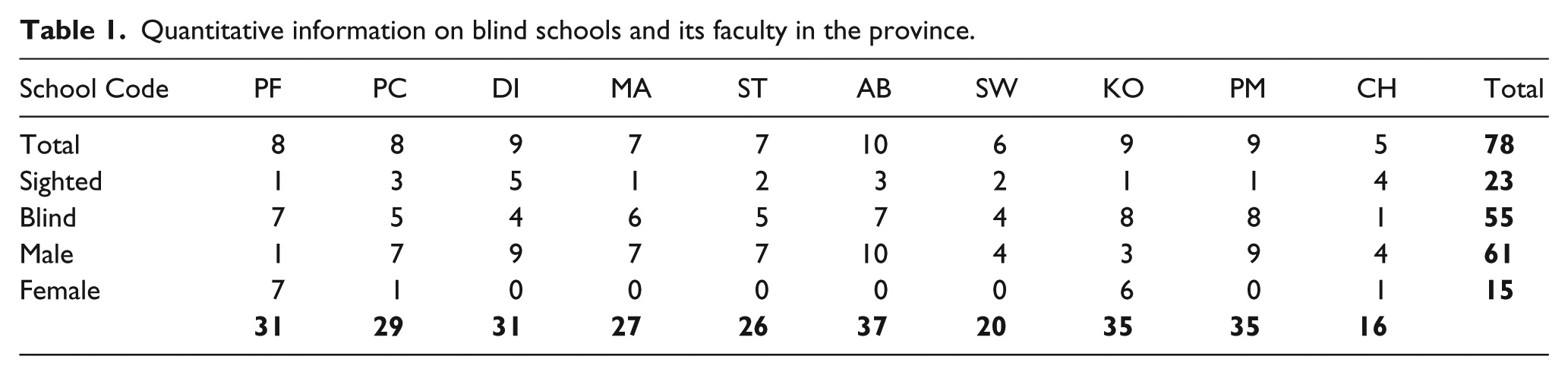
The State Bank of Pakistan established 10 schools for visually impaired people under the Social Welfare Department in the province of Khyber Pakhtunkhwa. The centre names are coded for data confidentiality as shown in Table 1. Currently, 78 teachers are working in these schools, of which 23 are sighted and 55 teachers are visually impaired. Of the VITs 36 are completely blind and 19 are partially blind; 61 VITs are male and 15 are female. The current enrolment in these schools is 298 students, of which 188 students are completely blind and 110 have partial or severe blindness. There are 223 male and 76 female students currently enrolled. The response rate for the data collection was 83%, i.e. 46 responses out of 55 VITs. Table 1 illustrates the number of total, sighted, blind, male and female teachers in 10 blind schools located in the province of Khyber Pukhtunkhwa, Pakistan. These teachers are involved in teaching the subjects of social sciences and humanities to their blind pupils. They also provide basic training on computers (such as fundamental computer operations, basics of word processing, Internet, and emailing) to their students with the help of assistive technologies in their personal capacity according to their expertise and the availability of computers.
Quantitative information on blind schools and its faculty in the province.
Purpose
Weigand et al. (2013) found that little attention has been paid to information and media literacy specifically for disabled people—especially for blind and partially sighted individuals. This research aims to analyze the skills required by VI people to participate in the knowledge society. In this connection, it is highly desirable to explore how they use information sources and services while teaching to blind students. The results of the study develop further understanding of VITs with particular reference to examine the level at which they use IL skills for their personal and professional needs. The researchers surveyed the VITs and tested their IL skills using IFLA’s IL skill set. Significantly, media and technology are more vital in the world of VIPs because IL skills imply personal independence and improved quality of life.
Methodology
Respondents of this study were either completely or partially blind, therefore data were collected through personal visits and one-to-one interviews conducted with the respondents. Each respondent was given details about the scope and purpose of the research, and was requested to respond to the questions verbally, using a 5-point Likert scale, i.e. never, rarely, sometimes, often, and always. Researchers helped to record each response on the printed questionnaire. The questions were translated into local language when the respondents were not able to understand the English language easily. Furthermore, 10% (i.e. six respondents) were contacted by telephone because they were not available during the visit of the researchers. It is highly desirable to acknowledge that the VITs demonstrated unprecedented support and provided open feedback during the data collection.
The research questionnaire was developed based on IFLA’s IL skill set initially comprised of 26 questions, i.e. four questions on demographics and 22 questions were comprising the E8 model’s test areas. The questions were basically designed to obtain required answers that reflect the respondents’ understanding on how they identify, create, organize, and utilize information related to their pedagogic needs. Two local experts (PhDs in the field of Library & Information Science) checked the questionnaire and provided their expert opinion. Subsequently, the questionnaire was pretested with 20 teachers having a Master’s qualification and teaching experience of 5 to 10 years. The experts proposed grammatical corrections and ease of language, while four questions (which received vague responses during the pretest activity) were deleted from the questionnaire. Finally, a questionnaire comprised of 22 questions was ready for data collection.
Before administering the questionnaire to the actual respondents, researchers intended to check the reliability of the research instrument (questionnaire). Cronbach’s Coefficient Alpha was calculated on the sample responses obtained from 20 people randomly selected among working colleagues. Internal consistency check of 22 items returned 0.80 Alpha value, which means that the instrument had a high level of consistency.
Cronbach alpha is well known reliability scale using internal consistency measurement of questionnaire where the desired value of α has been determined between 0.7 and 0.9 by several studies such as Cho and Kim, 2014; Cortina, 1993; Dunn et al., 2014; Henson, 2001; Ritter, 2010; Thompson, 2002; Zinbarg et al., 2006.
There are many models of IL, but the E8 model is specifically developed for Asia and the Pacific region. It includes the following eight stages: identify, explore, select, organize, create, present, assess, and apply. All areas of the E8 model were tested through simplified questions with a 5-point Likert scale response for “level of awareness” and “level of frequency of usage”. The scores were normalized to figure out the respondents’ overall compliance to E8 IL Skills. Responses were analyzed using Excel and & SPSS.
Literature review
The variety of literature on IL continues to grow but very little research focuses on the actual teaching of IL skills for the disabled community (Schiff, 2010).
Multiple bibliographical and online databases, e.g. emeraldinsight.com, Google Scholar, websites and books were consulted to identify relevant literature on IL. The basic purpose was to retrieve and review studies which focus on IL in the context of people (especially teachers) with visual impairment. An initial search on LISTA (Library and Information Science Technology Abstracts) showed no results on the basic theme of the study. Later, a search was carried out using different keywords such as information literacy for visual impairment, blind, vision disorders, visually handicapped, etc., and the retrieved records were analyzed from various angles to review studies pertaining to IL with special reference to people with disabilities – especially VIPs. Citation chaining (i.e. following citations in the retrieved articles) was also a used to search relevant studies. The initial approach was to include scholarly literature published in peer-reviewed journals; however, because such studies are very few, other types of readings such as published reports or chapters in books related to the subject were also included.
More than 5000 publications relating to IL and library instruction have been published and reviewed in the past 30 years. Rader (2002) conducted a 30-year review of IL studies and illustrated all the themes. Besides other themes, the author evaluated studies on assessment of IL skills and concluded that during the first two decades (i.e. 1980s and 1990s) measurement concerns related to how librarians performed as teachers whereas after the year 2000 onwards, more concern with evaluating students’ learning outcomes is recorded. Virkus (2003) conducted a literature review of studies on the development of IL in Europe and discussed the concepts of IL by European authors. Later on, Mounce (2010) presented a comprehensive literature review from 2000 to 2009, and discussed academic librarian and faculty collaboration to improve students’ IL skills. The author concludes that such collaboration is essential in order to foster the IL skills of both the students and the faculty. Recently, Sproles et al. (2013) analyzed literature on IL and library instruction from 2001 to 2010. The researchers examined 3527 articles and concluded that key topics like collaboration, assessment, and application of technologies have appeared consistently in the literature of IL over the past 10 years. Looking at these valued literature review studies, it is concluded that the majority of the publications on IL are related to user instruction in schools; user education in public and special libraries; IL skills enhancement and training at the workplace; and the assessment of IL skills and IL programmes on national and international levels.
The IL of teachers and pupils has also been the focus of many researchers. Merchant and Hepworth (2002) conclude that teachers were information literate but their skill and attitude towards information were not transferring to their pupils. Another study by Togia et al. (2014) concludes that teachers were not fully acquainted with relevant pedagogy to teach IL skills. Similarly, many studies (e.g. Korobili et al., 2011; Lundh and Limberg, 2008; Salisbury and Ellis, 2003) have investigated the IL skill of teachers in European countries.
Information is no longer bound to only text or simple illustration, but technological advancement has created a rich visual culture, influencing almost every walk of life including education (Cazden et al., 1996; Chaplin, 1997). Talking about IL for disadvantaged people, Nelson (2004) discusses the concept of visual literacy and library instruction. The author concludes that visual teaching methods should be incorporated in library instruction. Weigand, et al. (2013) specifically found that little attention has been paid so far to information and media literacy suitable for disabled people, especially for blind and partially sighted people. The environmental conditions for literacy development of 11 pupils in Norwegian mainstream schools, as well as their support from Braille and assistive technology was identified by Vik (2008). One of the noted works on IL and access for blind/visually impaired is a conference presentation by Whitesell and Roberson (2011) where the researchers detailed (in a presentation) a method of library support to fulfil the instructional needs of the faculty who teach visually impaired (VI) students. This conference presentation discussed the available resources for VI; the role of disability support services; and tips for classroom interaction with VI students.
Findings and discussions
The IFLA’s E8 skillset is designed to describe an individual’s understandings and abilities to identify personal need for information, assess current knowledge and identify gaps; locate, review and evaluate information and data, organize information professionally and ethically, and the ability to apply knowledge gained, and present the results.
However, these abilities and skills vary from basic to advanced level. For example, a person may be able to identify lack of knowledge in a subject area but may not be able to manage time effectively to complete a search. Similarly, an individual may be able to identify the types of information that best meet his/her need but, at the same time, may not be able to demonstrate the use of new tools as they become available. Therefore, the researchers (keeping in view the constraints of the subject population to be visually impaired and lacking opportunities to enhance IL skills easily) decided to assess the basic level skills of the subject population in order to examine the level of compliance to the E8 model skillset.
Measuring information literacy skills
Measurement standards that can be used to determine the level of information literally held by someone do not exist yet, so we are not able to measure the level of IL with certainty. However, Boeriswati (2012) refers to the concept of PCMM (Personal Capability Maturity Model) suggesting that the pattern of growth of e-literacy also illustrates the development of IL. The concept is helpful in determining the E8 model’s testing areas. Keeping in view PCMM, this study determines the level of IL skills described as follows:
Level 0 – if an individual neither understands nor performs a particular IL activity in everyday life;
Level 1 – if an individual understands but never exercises a particular IL activity;
Level 2 – if an individual is well aware, has sufficient knowledge of and exercises a particular activity rarely;
Level 3 – if an individual understands and is well-versed in exercising a particular IL activity regularly;
Level 4 – if an individual has mastery over a particular IL activity and exercises it always.
The mean of the item score is used to interpret the data. Mean satisfaction on a particular test area of IL skill is 3.75 on a 0=(never) to 4=(always) scale; with 16 items. This seems clearer than stating that the respondent’s score is 38 out of 64, meaning that the respondents comply with 59% of the E8 skill set. Similarly, the IL skills “identify”, “explore” and “organize” receives a mean score of more than 3 which shows that these skills are stronger than other skills. IL skills “create” and “present” are weaker than others, showing that VITs required to work on these skills.
Standardized mean score for each testing area of the E8 IL model
Table 2 shows the standardized mean score across test areas for each IL skill. It was found that VITs scored higher in “identifying the lack of knowledge” and “take personal responsibility to search for information” which means that VITs are able to identify a lack of information. The test area “construct strategies to locate information and data” received a mean score 0.7 which is unexpected as VITs may have hurdles in finding and locating information themselves and may get help from their sighted counterparts. However, results show that they are able to recognize the need for information and data using background information to underpin the search. Moreover, they take personal responsibility to search for information and are not dependent on their (sighted) counterparts.
Standardized mean score for each testing area of E8 IL skills.
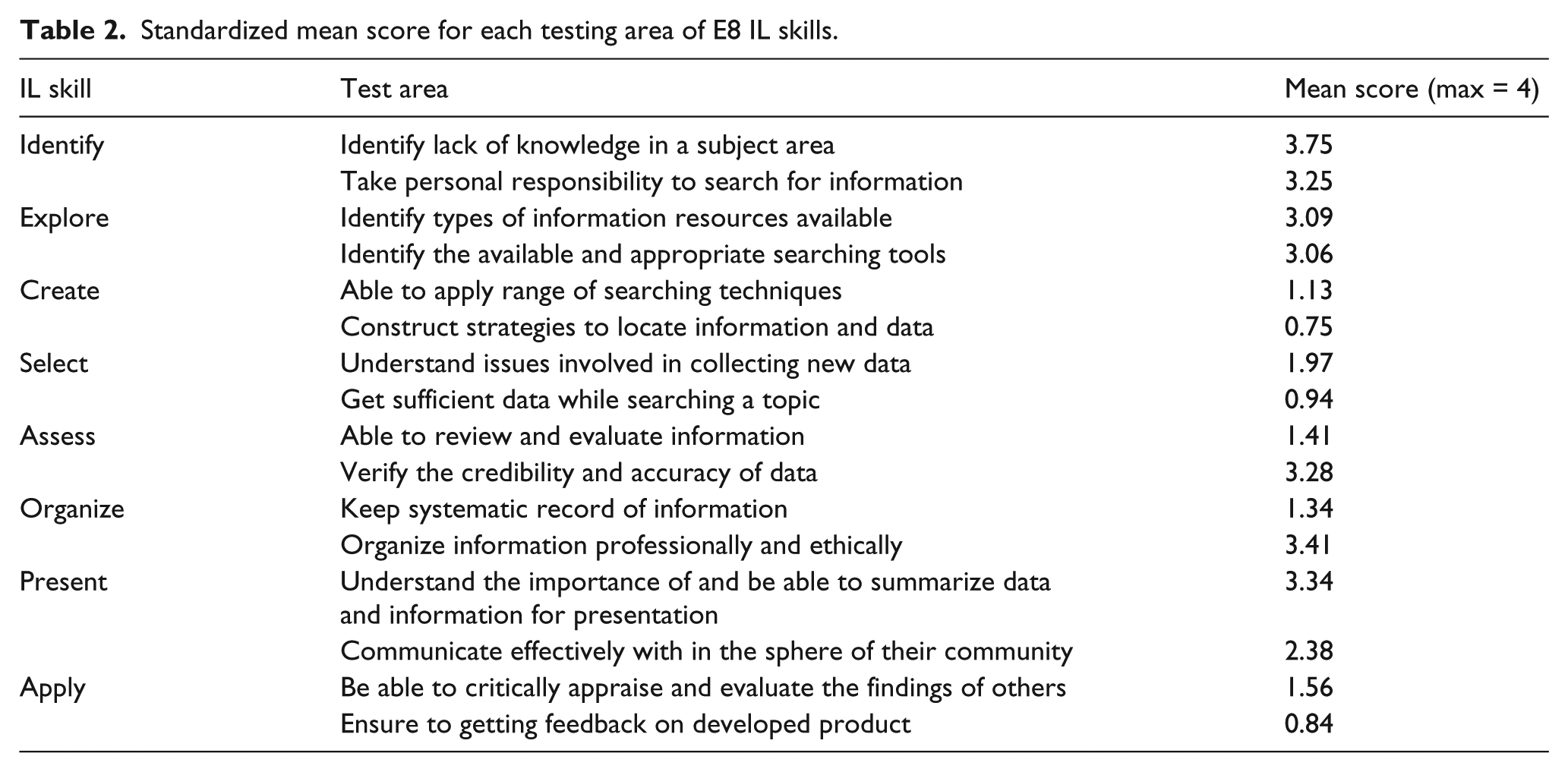
Further analysis, as shown in Table 2, illustrates that higher scores were obtained in the areas of “organize” and “assess”. This is clearly understandable since VITs are responsive towards sharing of information. They are comparatively well aware of the importance of appraising and evaluating results. The respondents in the area of “explore”, where they were asked questions about which type of information sources are available to them, obtained lower scores. Similarly, a lack of understanding about characteristics of different types of information resources and services was also recorded.
Average percentage score for IL skills by level of education
The results of this study strongly illustrate that education is a further edge in enhancing one’s IL skills. Respondents with higher level of education scored more than those with less as illustrated in Figure 1.
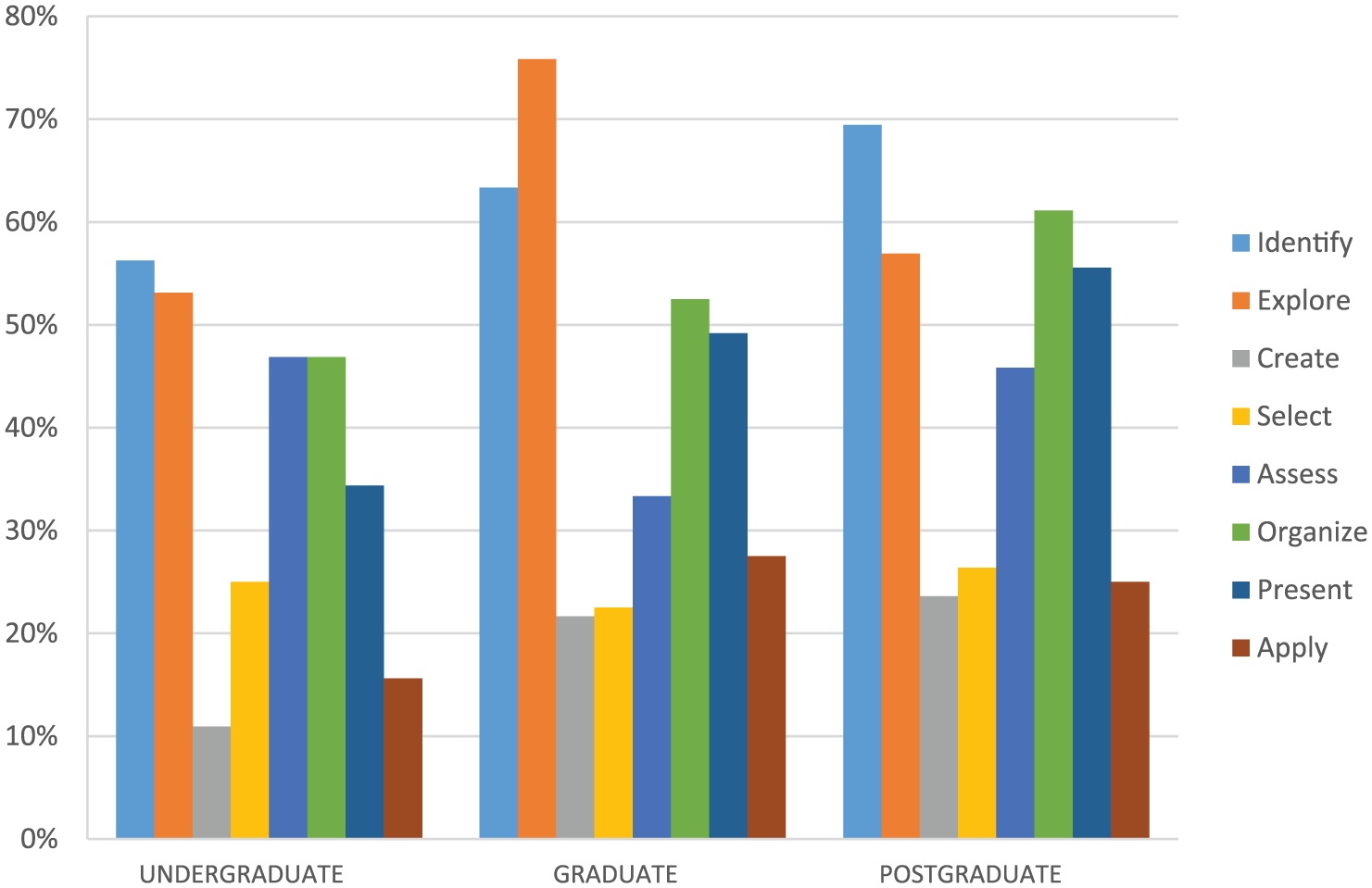
Education-wise average percentage score of each IL skill.
Average percentage score of each IL skill by gender
Analysis of gender-desegregated data revealed that gender difference (in particular) has no significant influence on demonstrating IL skills. However, female VITs were found to have strong skills in identifying new information resources and appropriate searching tools (Figure 2).
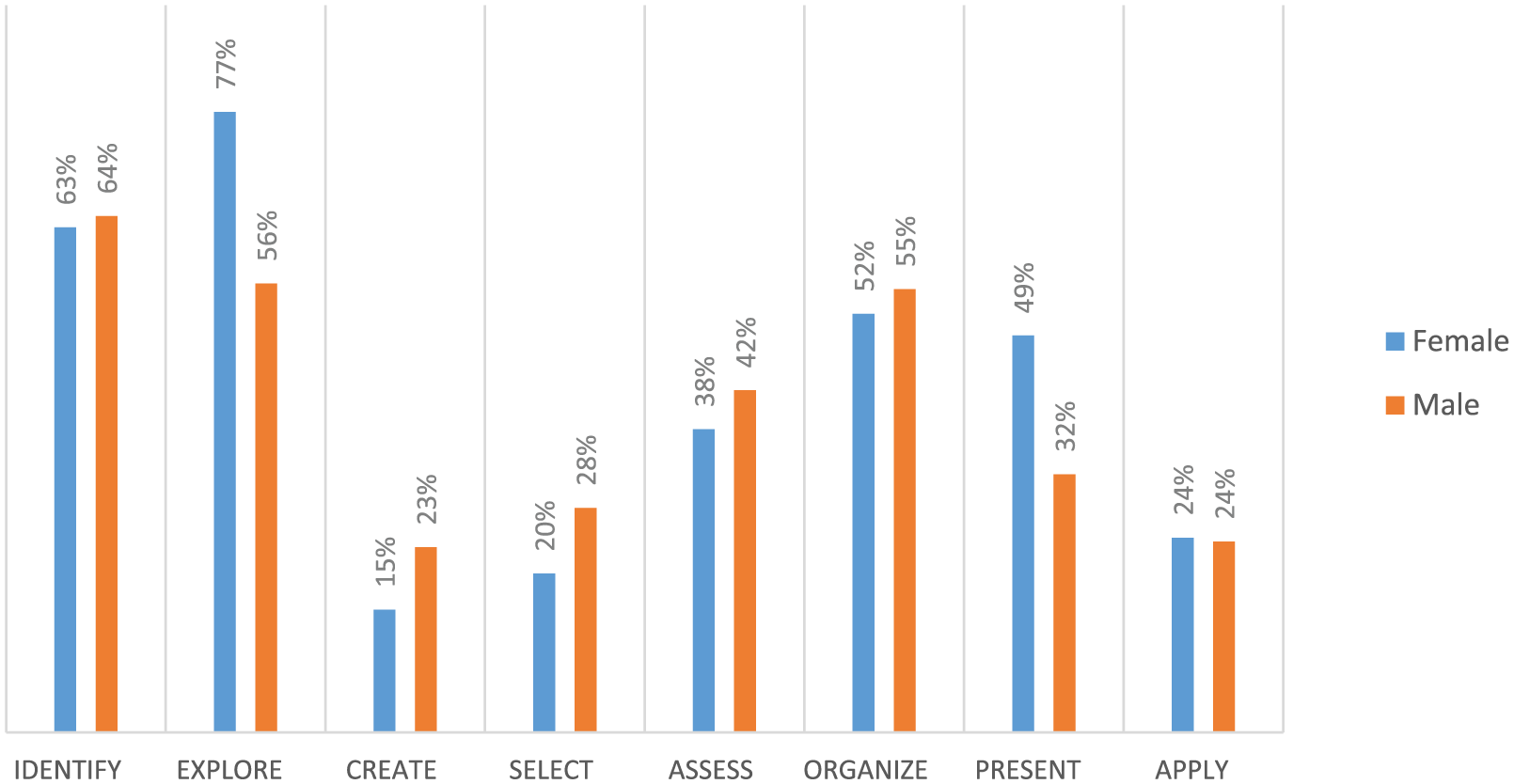
Average percentage score of each IL skill by gender.
Comparison of average percentage score for each IL skill between computer literate and non-computer literate VITs
The use of ICTs facilitates collaborative learning and enhances effective communication (Sim and Van der Meer, 2015). Computer literacy (CL) raises the level of awareness of an individual about how machine-aided support can help obtain data and information needed for problem solving or decision making (Horton, 1983). Similarly, if academic staff do not use electronic resources during their teaching, then students tends to ignore them too (Jackson, 2005). It was encouraging to find that VITs are using ICT fluently and some have even reported they are using graphic design software. Comparison of the computer literate (CL) and non-computer literate (NCL) respondents shows that computer literacy is crucial in enhancing the IL skills of any group. Unequivocally, the results (illustrated in Figure 3) reveal that computer literacy helps in all areas of E8 IL model, e.g. to identify, explore, create, select, assess, organize, and present data and information effectively and speedily.
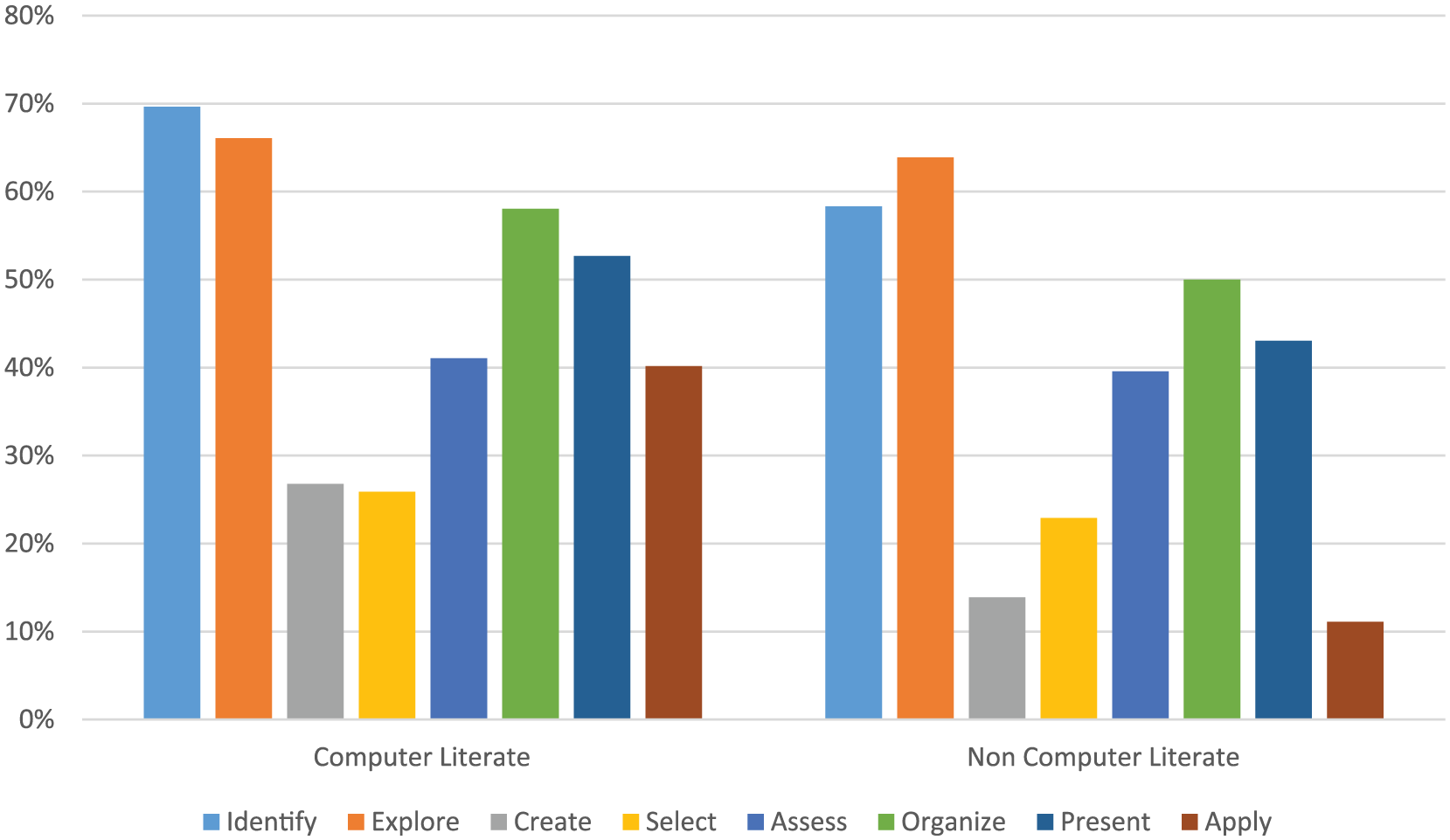
Average percentage score of each IL skill across computer literate and non-computer literate respondents.
Average percentage score for IL skills across years of experience
Little difference was found while examining the mean scores obtained by the respondents having a difference in years of work experience. Figure 4 shows that VITs having work experience of 11 to 20 years are only 6% more capable of understanding and applying IL skills. This difference may be because of the fact that those respondents who have work experience between 11 and 20 years are more regularly in touch with Internet and computer technology, thus enhancing their capacity to manipulate information and data more effectively.
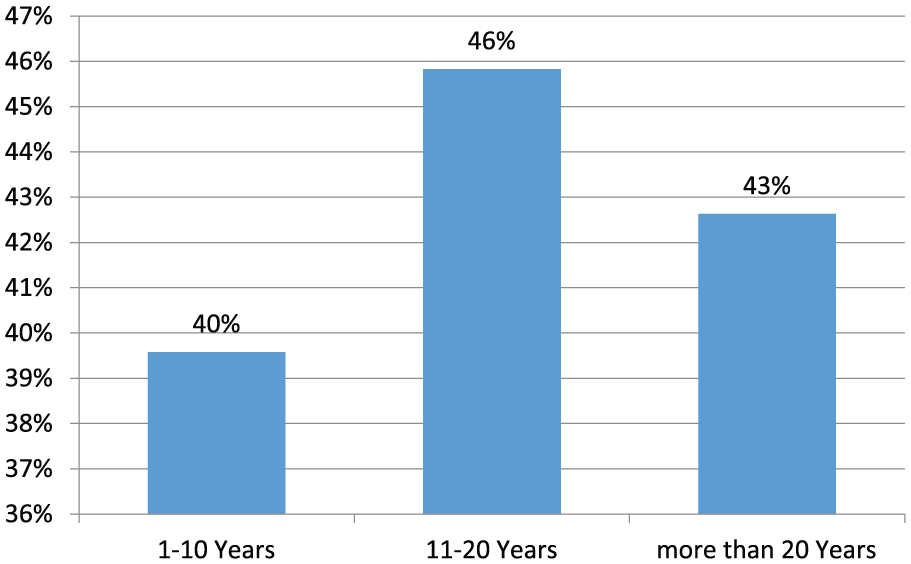
Average percentage score of IL skills across years of experience.
Overall percentage score of VITs regarding each E8 IL skills
The graph (Figure 5) shows that 63% of VITs have developed their skills to identify lack of knowledge in their specific subject area and to take personal responsibility to search for information themselves. Similarly, 65% VITs are able to identify types of information resources and appropriate searching tools to locate the required information. Moreover, 20% of VITs are able to apply a range of searching techniques and construct strategies to locate information and data. Regarding understanding the issues involved in collecting new data and acquiring sufficient data while searching a topic, 24% of the respondents are good. Exploring the fifth component of the E8 model, the study concludes that 40% VITs are able to review and evaluate information and also verify the credibility and accuracy of data. Looking at the ability of keeping systematic records of information and organizing information professionally and ethically, it was found that 54% of the respondents demonstrated this ability. The study further shows that 47% of VITs have developed the skills of understanding the importance of and are able to summarize data for presentation while communicating effectively. Only a few VITs (i.e. 24%) are able to critically appraise and evaluate the findings of others and ensure they get feedback on the developed product.
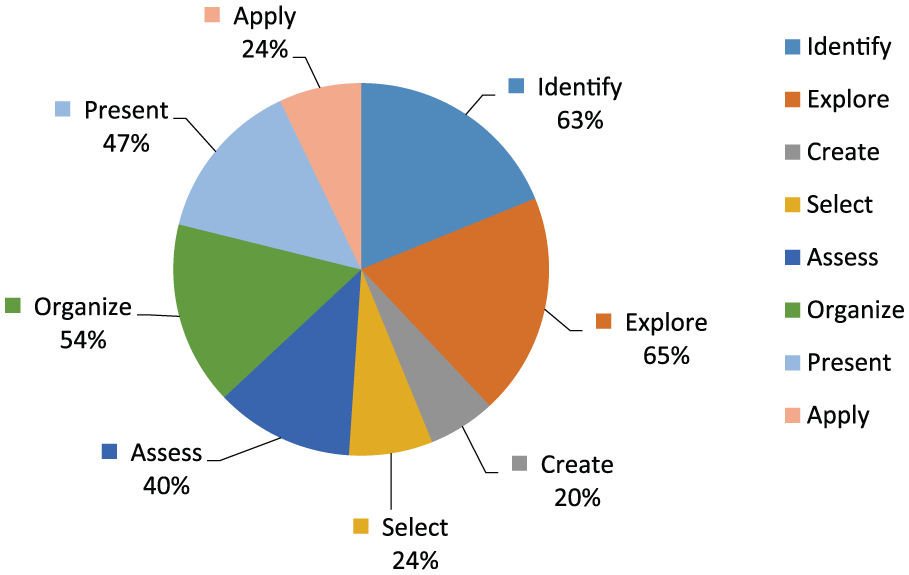
Overall percentage score of VITs regarding each E8 Information Literacy skills.
Conclusion
IL empowers people in all walks of life and the literature shows that it is imperative for people with disabilities because IL skills increase personal independence and quality of life through using, seeking, and evaluating information effectively to achieve their personal, educational, and social goals. As elaborated by UNESCO (2009: para 2), only “information literate people are able to access information about their health, their environment, their education and work, empowering them to make critical decisions about their lives”. It is equally important to note that blind people face many difficulties when undertaking a search, such as narrowing down the area of research or sorting through irrelevant results. Similarly, blind and visually impaired people are at greatest risk of being socially excluded because of poor access to information (Keefe et al., 2009). AlOshan (2013) pointed out that lack of coordination and an absence of networking among different centres and organizations are the factors most responsible for the restricted growth of such skills, inferior quality of services, and inappropriate vocational training.
This study concludes that visually impaired teachers (although performing an important task of educating the visually impaired students) are not adequately skilled in using search and retrieval tools. The study, however, shows that they respond positively to attaining the IL skills if appropriate tools are made available to them. For example, access to resources such as InfoEyes: A virtual reference service for the visually impaired; VIKO an interactive e-learning tool based on IL; and DAISY (Digital Accessible Information System) a worldwide coalition of libraries and institutions for digital audio-based information systems can enhance their IL skills considerably. However, the results show that VITs can do much better if vulnerable to specific types of information and given the opportunity to build their capacity and enhance their skills.
Footnotes
Declaration of Conflicting Interests
The author(s) declared no potential conflicts of interest with respect to the research, authorship, and/or publication of this article.
Funding
The author(s) received no financial support for the research, authorship, and/or publication of this article.